
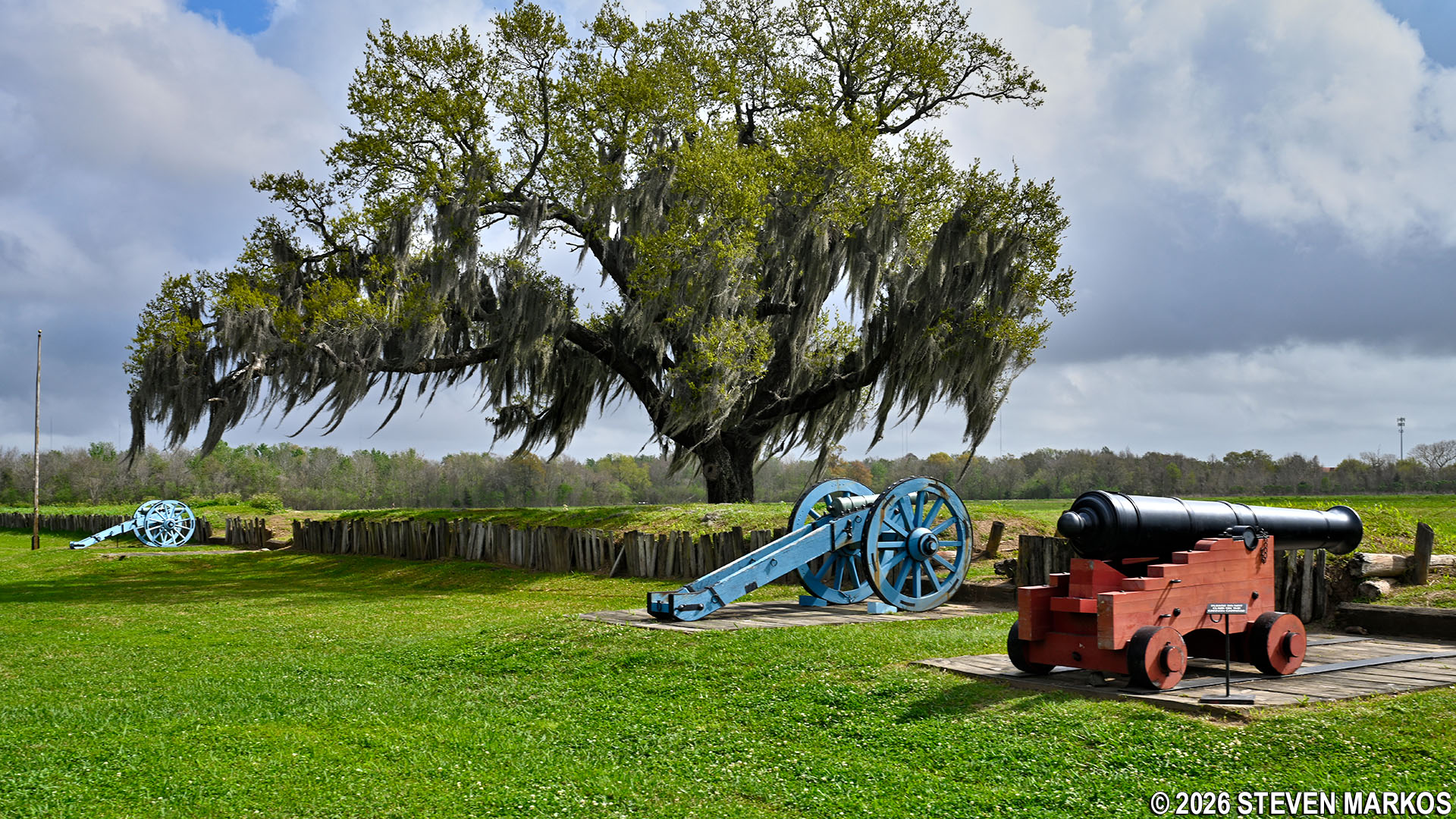
Artillery guns and the reconstructed rampart at Chalmette Battlefield, Jean Lafitte National Historical Park and Preserve
To learn about the events that took place at the Chalmette Battlefield, read the Battle of New Orleans essay here on National Park Planner.
GETTING TO THE BATTLEFIELD
Chalmette Battlefield at Jean Lafitte National Historical Park and Preserve is the site of the 1815 Battle of New Orleans, one of the final battles of the War of 1812. It is located in Chalmette, Louisiana, at 1 Battlefield Road and is open to visitors year-round from dawn to dusk. However, the entrance gate is only open to vehicles from 9 AM to 4:30 PM. There is a small parking area just outside the gate (spots for a dozen or so cars) for those who want to walk or bike in after hours.
In addition to driving to the Chalmette Battlefield, there is an option to visit by taking a ride on the Creole Queen, and authentic paddlewheeler that cruises the Mississippi River. The 2.5-hour trip departs from the Spanish Plaza, which is a short walk from the French Quarter Visitor Center. A local historian shares stories about the city and the battle during the cruise, and passengers can purchase a lunch buffet and drinks at the bar aboard the boat. For more information, check out the official web page for the Creole Queen.
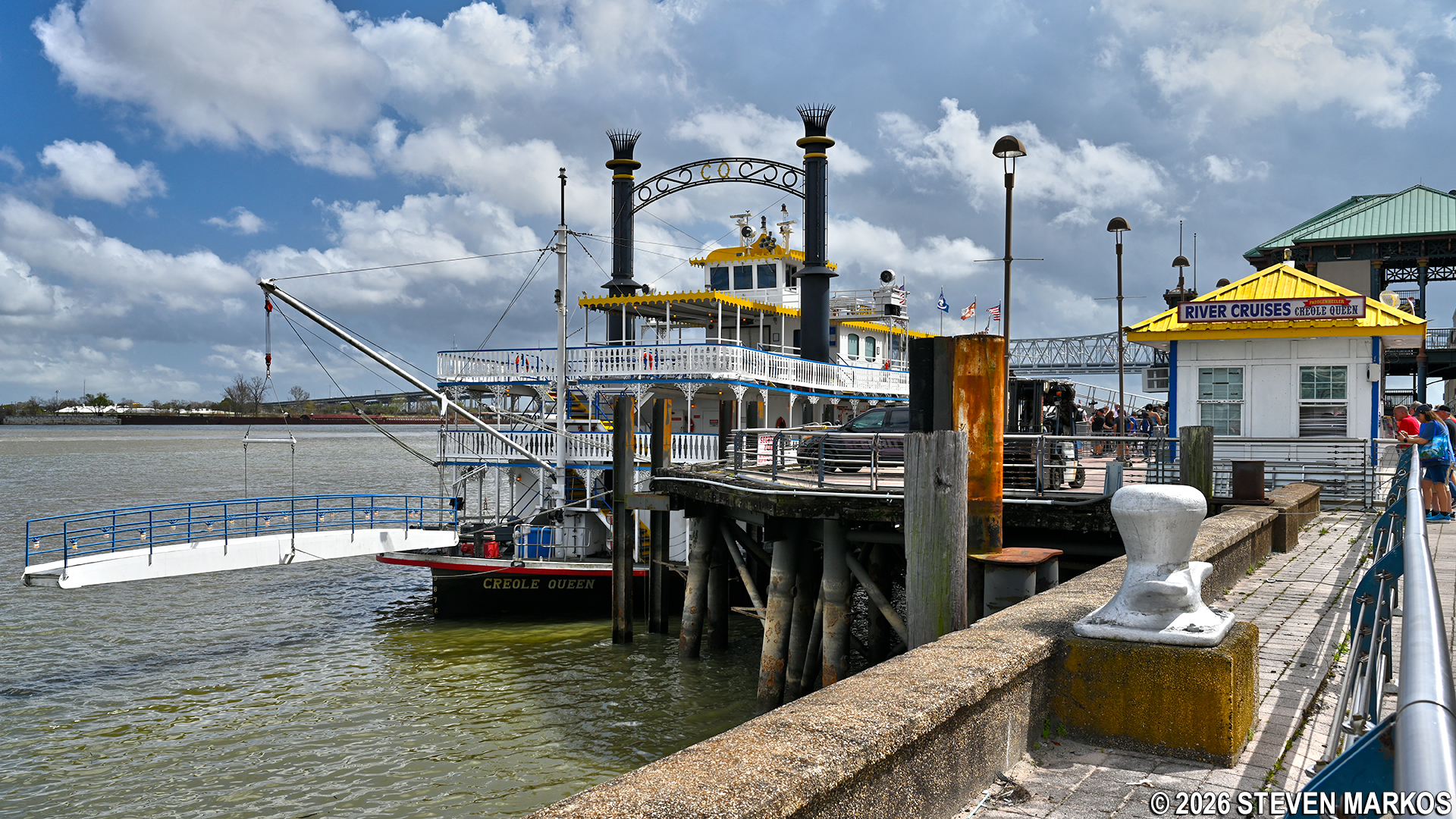
The Creole Queen docked at Spanish Plaza in the French Quarter of New Orleans
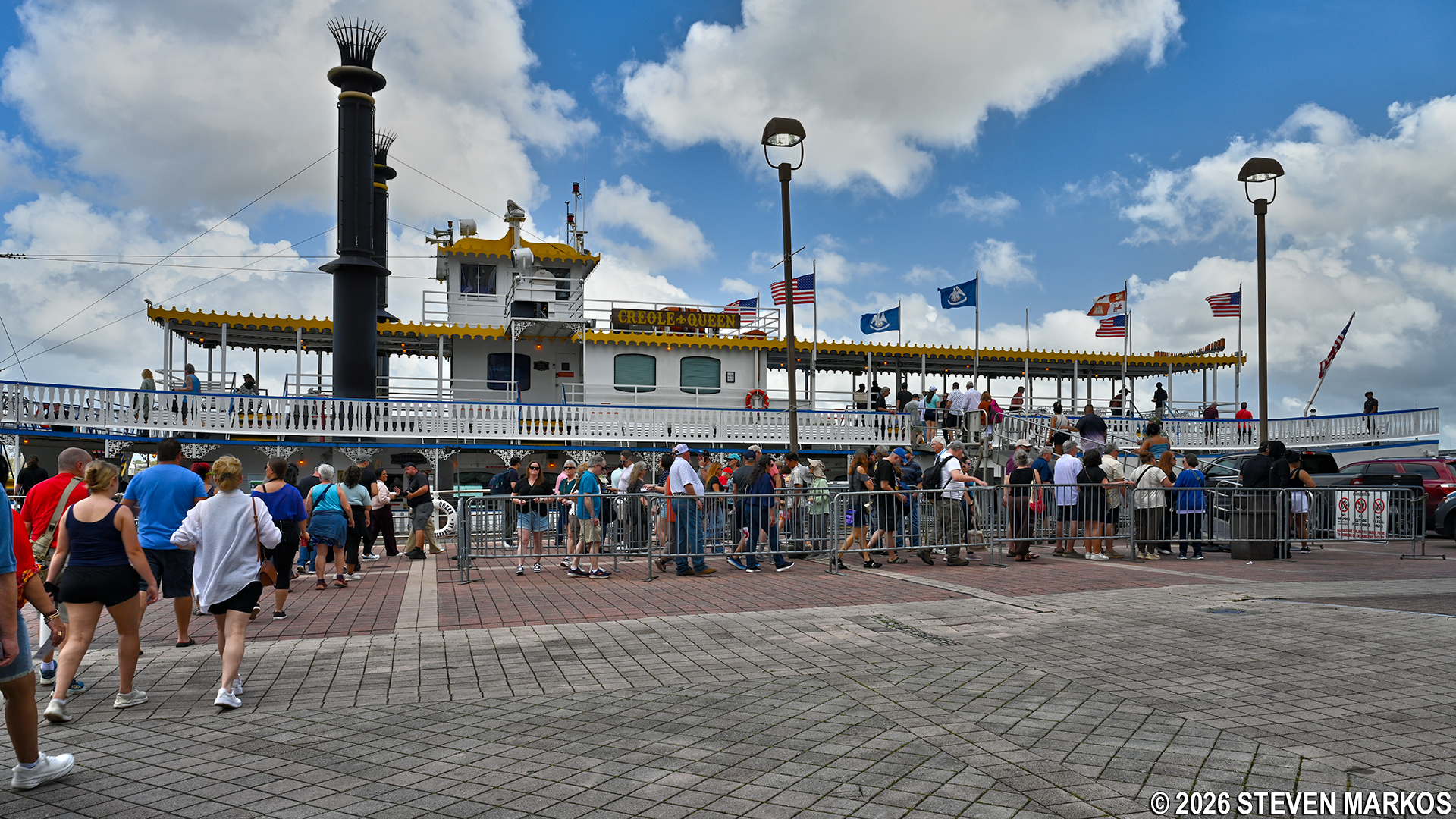
Guests boarding the Creole Queen at the French Quarter of New Orleans
Keep in mind that if you take the Creole Queen, you will only have an hour at the battlefield. This gives you time to briefly explore the museum at the Chalmette Battlefield Visitor Center and look over the battlefield. It is not possible to walk the 1-mile road around the battlefield or to see the Chalmette National Cemetery located next door. That being said, you can always drive back another day if there is still more you want to see. I recommend the Creole Queen for those more interested in a river cruise than the Chalmette Battlefield.
The Creole Queen docks near the Malus-Beauregard House, which served as the Chalmette Battlefield Visitor Center until it sustained damage from Hurricane Katrina in 2005. A National Park Service Ranger meets passengers at the house and gives a brief overview of the park and when to return to the boat. At that point, visitors can explore on their own and / or join the Ranger at the current Visitor Center for a lecture on the Battle of New Orleans that is given shortly after arrival.
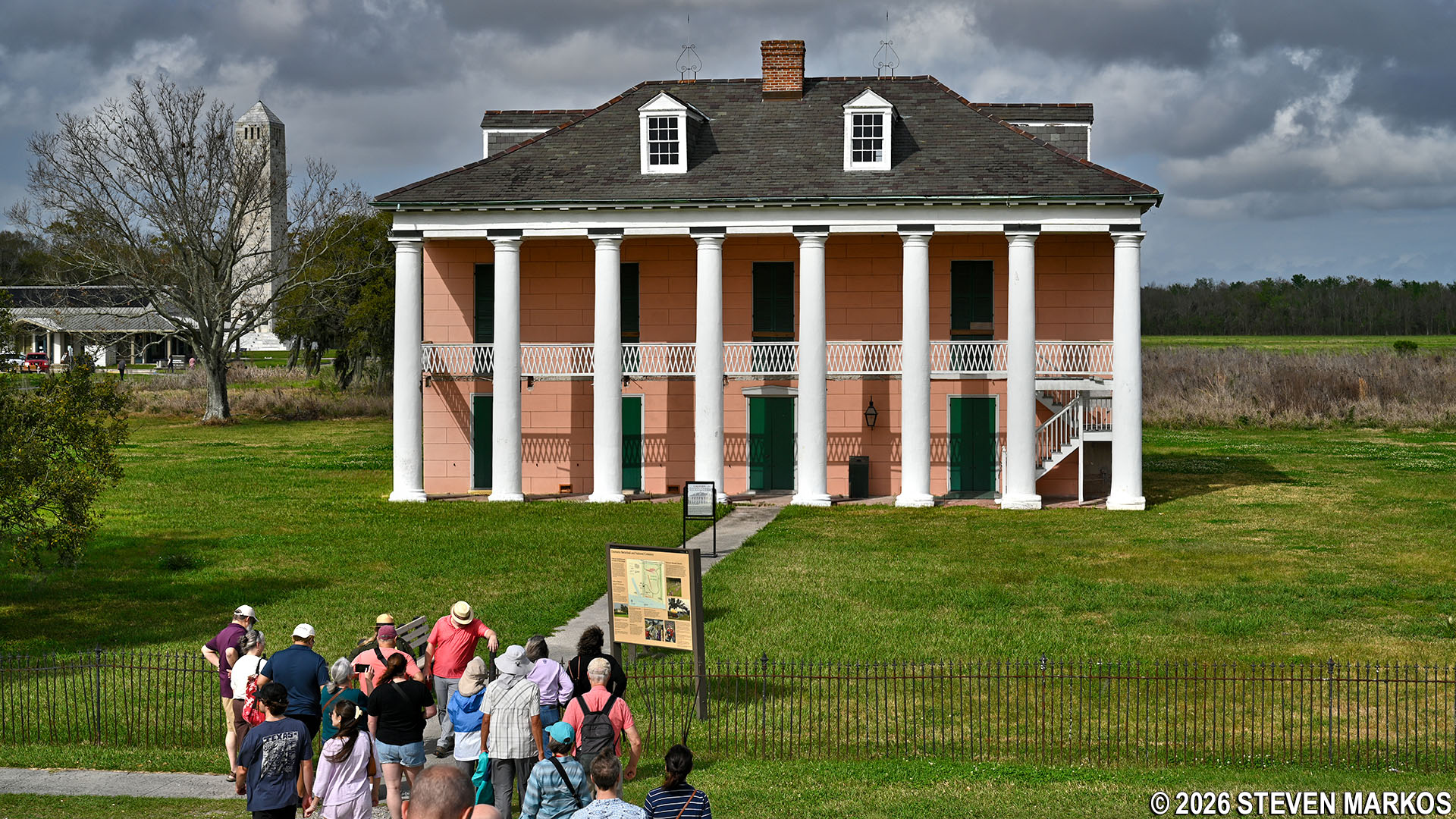
Creole Queen passengers arrive at the Chalmette Battlefield, Jean Lafitte National Historical Park and Preserve
CHALMETTE BATTLEFIELD ATTRACTIONS
CHALMETTE BATTLEFIELD VISTOR CENTER
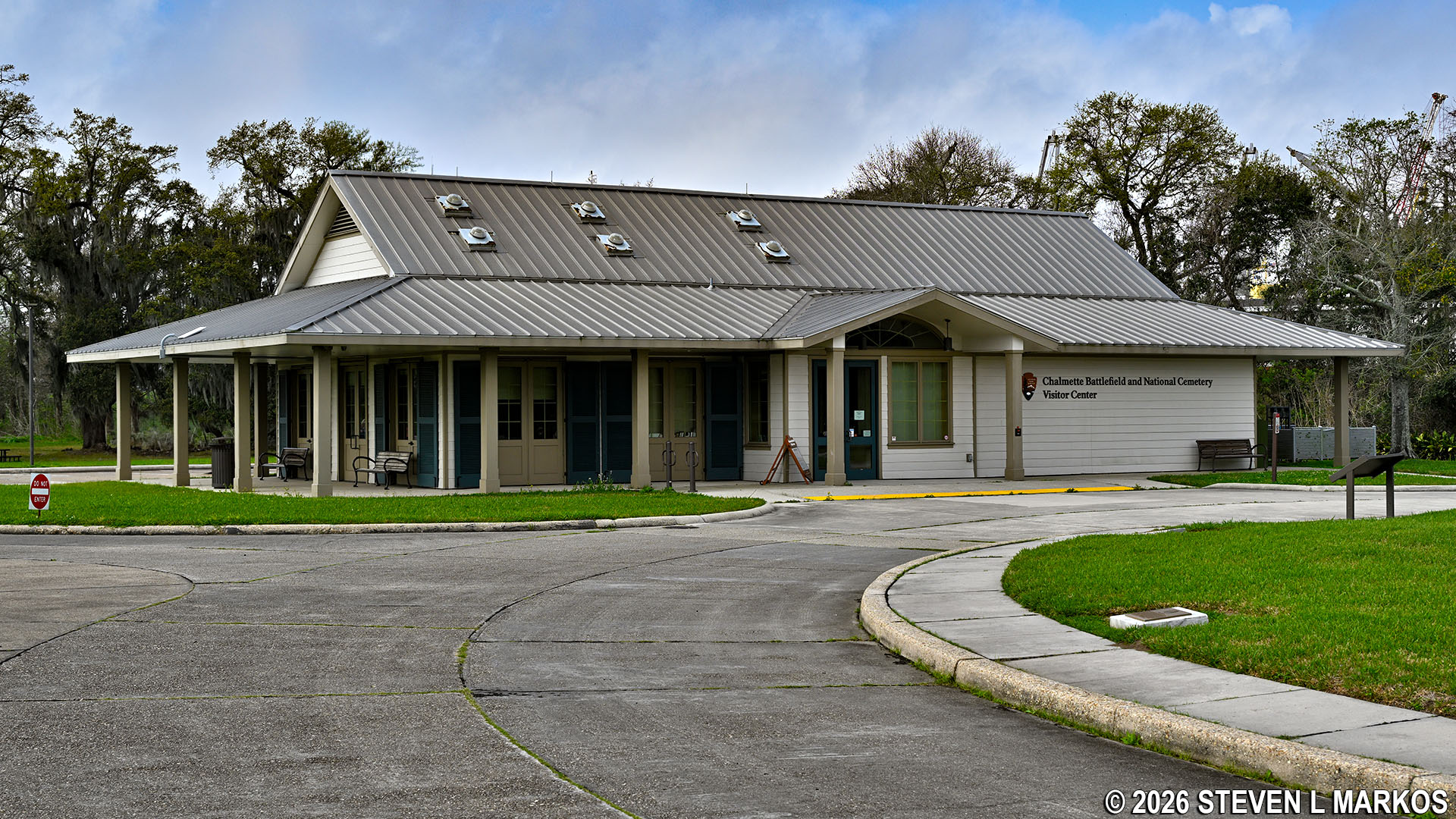
Chalmette Battlefield Visitor Center at Jean Lafitte National Historical Park and Preserve
The main attraction at the battlefield is the Chalmette Battlefield Visitor Center and its museum. See the Chalmette Battlefield Visitor Center web page here on National Park Planner for complete details and plenty of photographs.
CHALMETTE BATTLEFIELD
The majority of the park consists of an open field on which the Battle of New Orleans was fought on January 8, 1815. A perfectly flat 1-mile loop road circles the battlefield, and visitors are welcome to drive, walk, or bike it. Wayside exhibits along the path provide information from the point of view of both the Americans and the British. For those who want to drive the loop, there are a few parking areas located next to some of the exhibits.
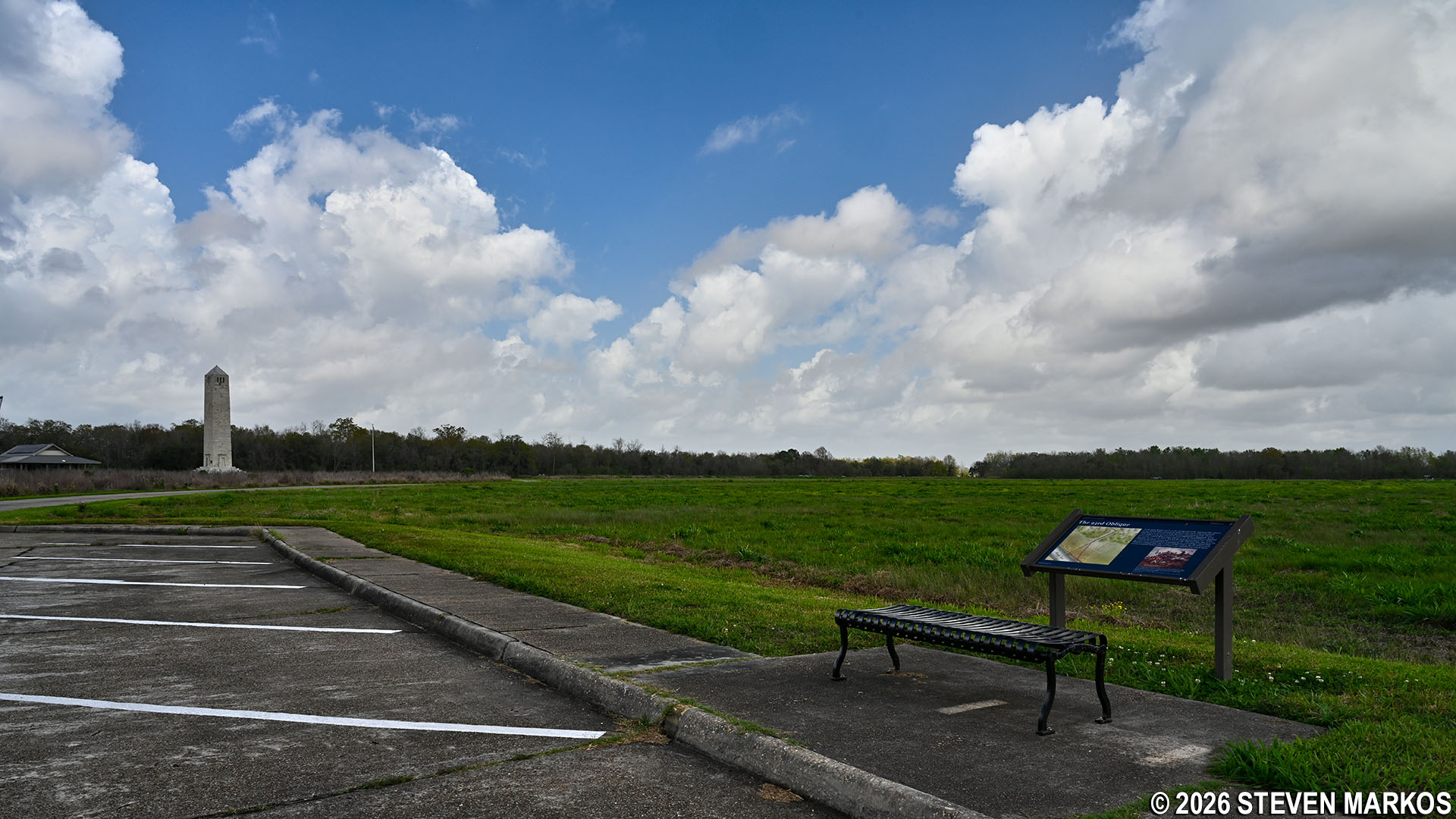
Wayside exhibit along Tour Loop Road at Chalmette Battlefield, Jean Lafitte National Historical Park and Preserve
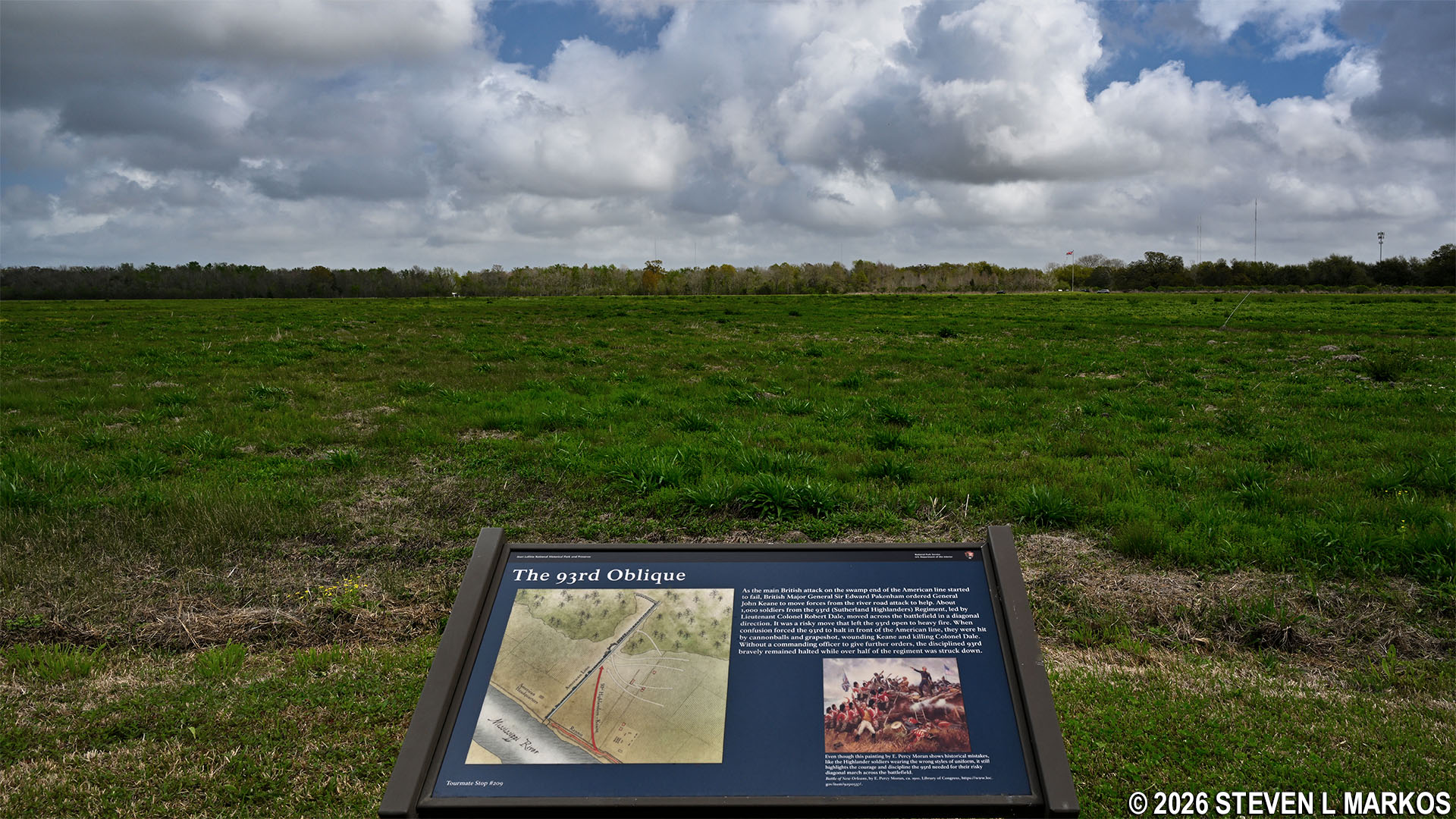
Wayside exhibit along Tour Loop Road at Chalmette Battlefield, Jean Lafitte National Historical Park and Preserve
On the western side of the battlefield (near the Visitor Center) is a reconstruction of the rampart (defensive wall) built by the Americans along the Rodriguez Canal, which once stretched from the Mississippi River to the edge of a cypress swamp that in 1815 was located near the battlefield entrance at West St. Bernard Highway. Eight artillery batteries were spread out along the rampart and manned by various military units. Replica artillery pieces now mark the locations of the batteries. The largest American gun used in the Battle of New Orleans, a 32-pounder cannon taken from the USS Carolina and operated by the U.S. Navy, was positioned at Battery Four. (Pounder refers to the weight of the shell that can be fired.)
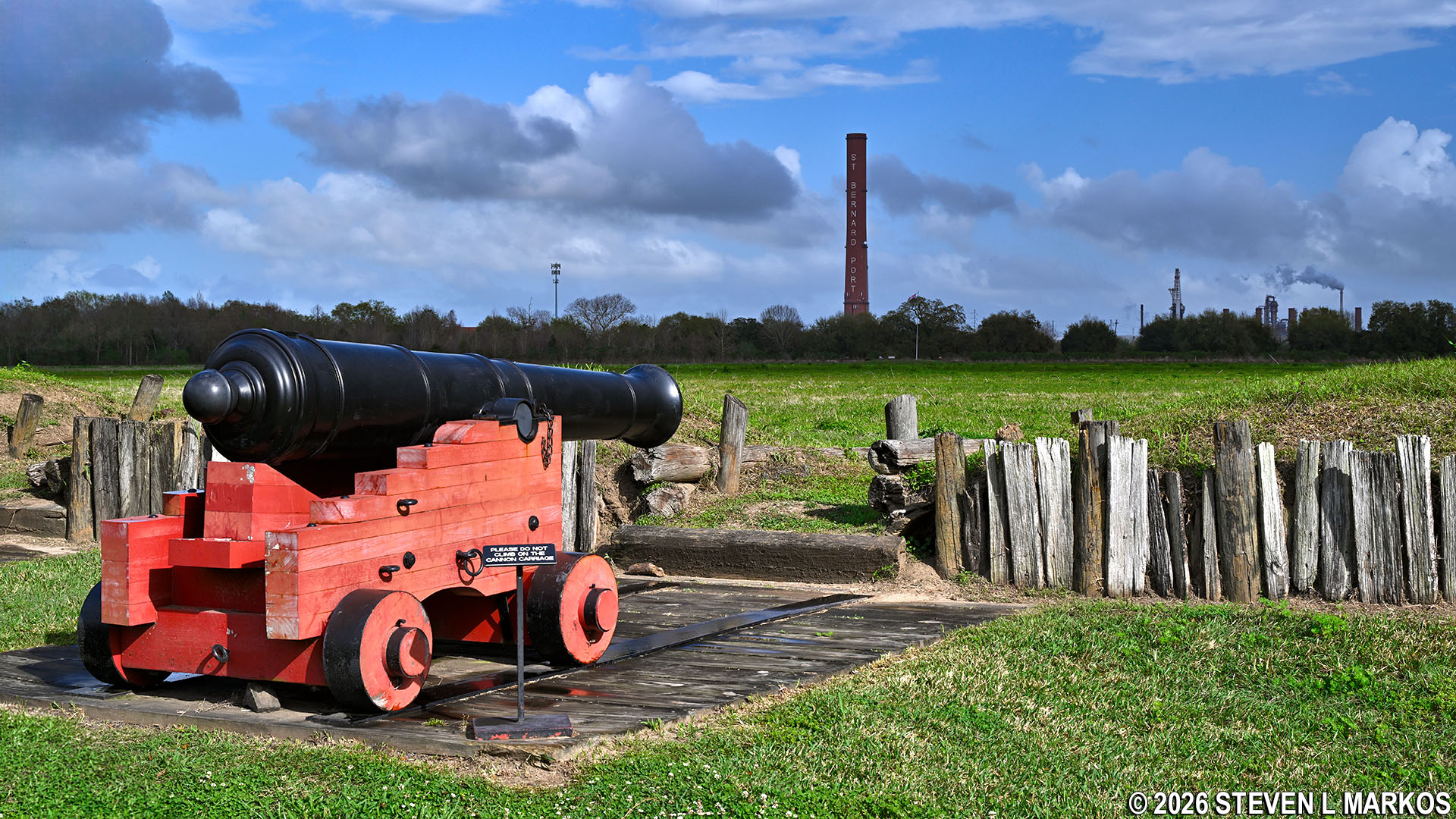
Replica 32-pounder cannon at Battery Four on the Chalmette Battlefield, Jean Lafitte National Historical Park and Preserve
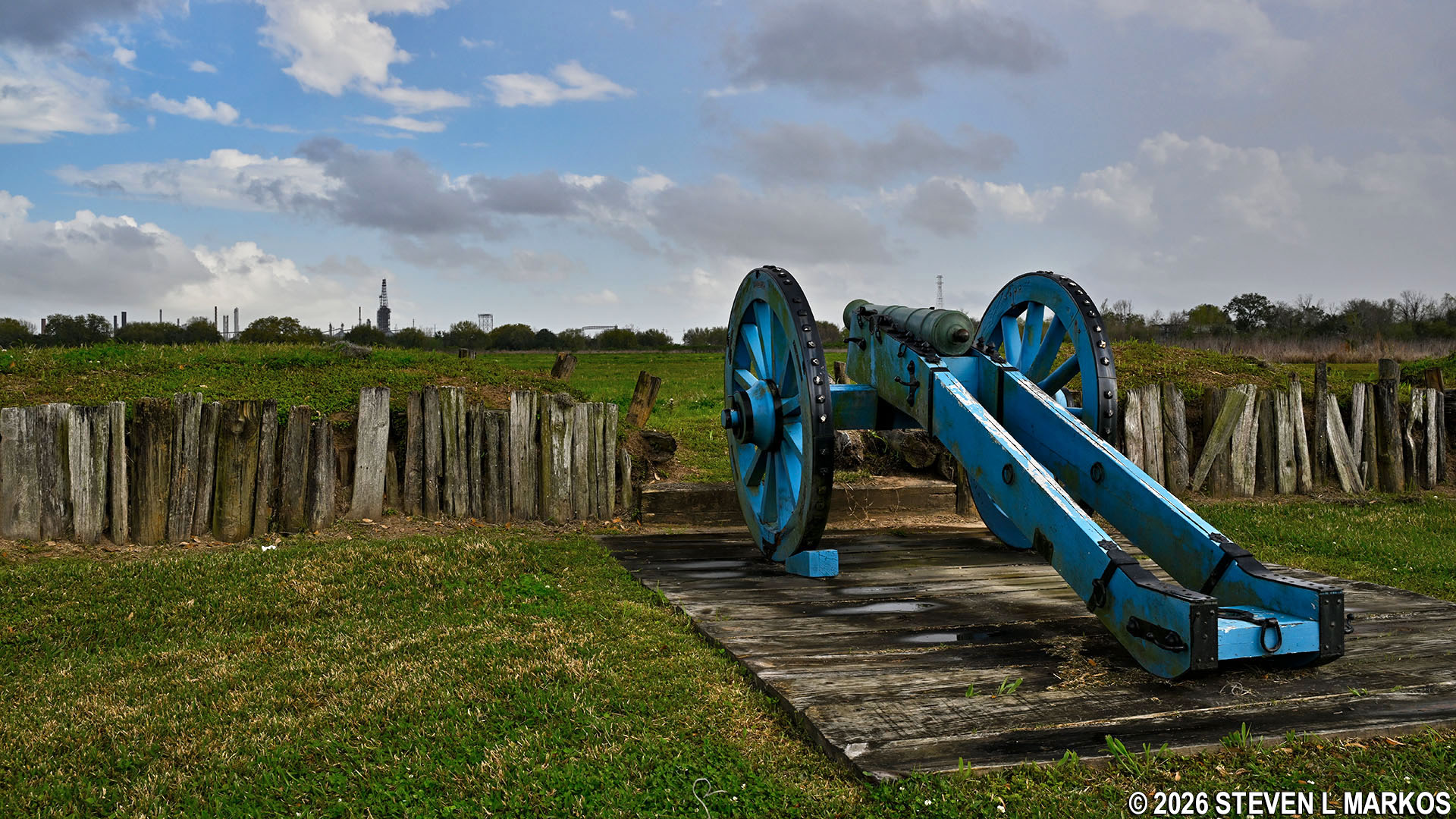
Replica howitzer artillery piece at Battery Four on the Chalmette Battlefield, Jean Lafitte National Historical Park and Preserve
CHALMETTE MONUMENT
The most eye-catching attraction at Chalmette Battlefield is just outside the Visitor Center—the Chalmette Monument. It was erected in 1855 to commemorate the American victory over the British at the Battle of New Orleans. Designed by local stone dealer Newton Richards, the monument is a 100-foot-tall, Egyptian-style marble obelisk. At one point in time, visitors could climb to the top of the tower, but that is no longer allowed on a regular basis.
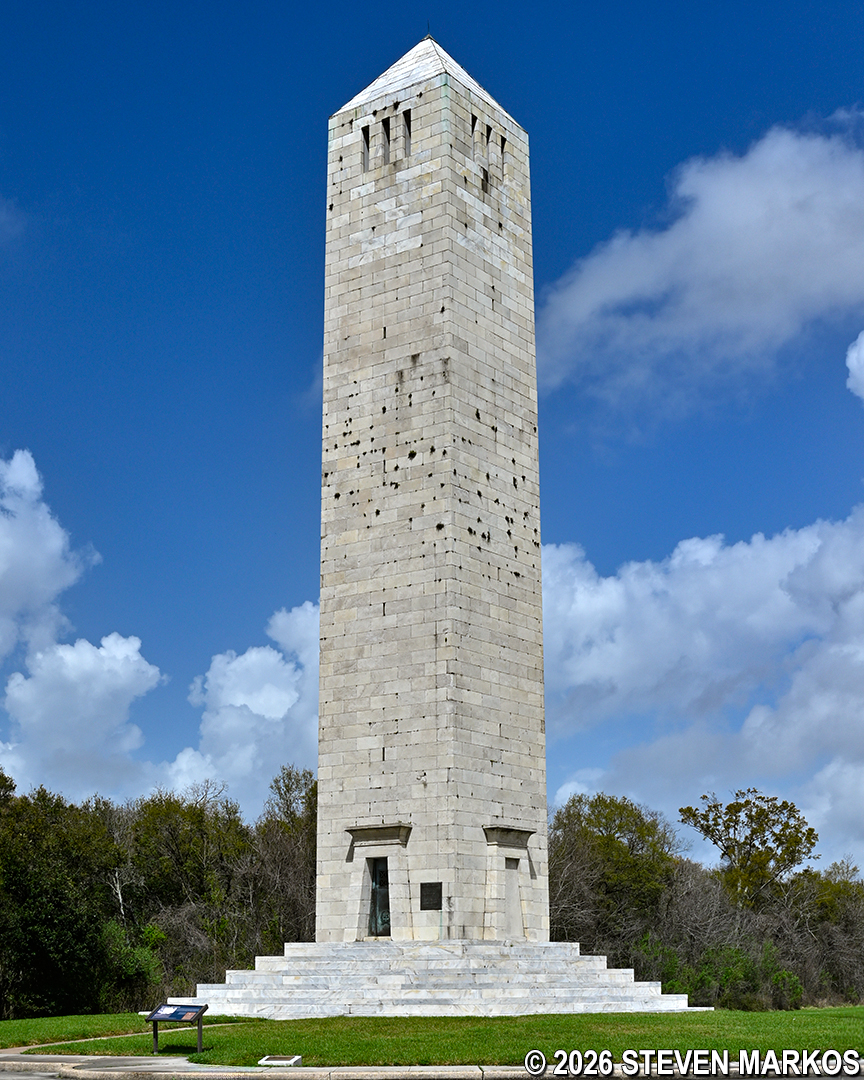
Chalmette Monument at Chalmette Battlefield, Jean Lafitte National Historical Park and Preserve
MALUS-BEAURGARD HOUSE
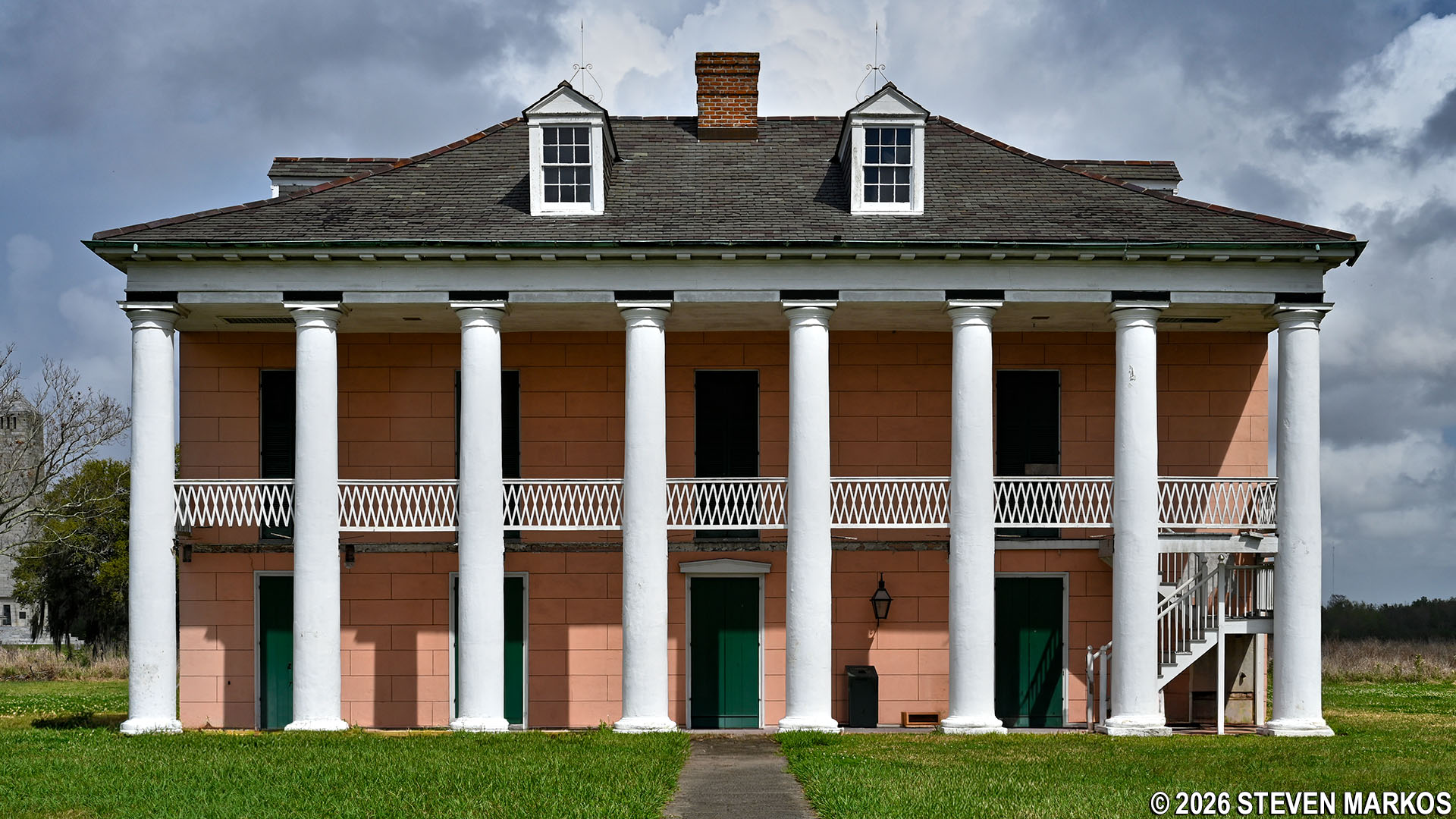
Malus-Beauregard House at Chalmette Battlefield, Jean Lafitte National Historical Park and
Preserve
The property on which the majority of the fighting during the Battle of New Orleans took place was the sugarcane plantation of Ignace de Lino de Chalmette (also spelled Chalmet). It was largely destroyed during the fighting, and the heirs of Lino de Chalmette (who died a month after the battle) sold it in 1817 to brothers Hilaire and Louis St. Amand, two wealthy, free Black men. They developed it back into a sugarcane plantation using slaves they owned—it was not uncommon for free Blacks in Louisiana to own slaves—before dividing the land into several parcels and selling it in 1832.
Alexander Baron purchased one of the parcels and built a house (c. 1833-34) for his widowed mother-in-law, Mrs. Guillaume Malus. This was the first iteration of what would become the Malus-Beauregard House. Originally in the French-Creole style, it was modified into a Greek Revival mansion in the late 1850s by a subsequent owner, and this is the house standing today (a 1905 wooden addition was removed by the National Park Service). Although not historically related to the Battle of New Orleans, the house is the only surviving structure from the 1800s on the Chalmette Battlefield.
Over the next seventy years, the house and property served as a country retreat for a succession of private owners, the last being Rene Toutant Beauregard (son of Confederate General P.G.T. Beauregard), who purchased the house and property in 1880. Beauregard held it for a little over 20 years before selling it to the New Orleans Terminal Company in 1904. The company did nothing with the house and eventually sold it to the state of Louisiana in 1949. The state then donated it to the National Park Service for inclusion in the newly created Chalmette National Historical Park, which consisted of the battlefield and the National Cemetery. In 1978, the battlefield, cemetery, Barataria Preserve, and the French Quarter Visitor Center were combined to form Jean Lafitte National Historical Park and Preserve.
At the time of this writing, the house is not open to the public due to its deteriorating condition, but a restoration process is underway as of early 2026. This article may not be updated in a timely manner, so the house may be open by the time you visit.
SPOTTS MONUMENT
To the west of the Malus-Beauregard House stands the Spotts Monument. It was erected in the 1890s to memorialize Major Samuel Spotts’s role in the Battle of New Orleans. He was a lieutenant at the time and is said to have fired the first artillery round for the Americans from Battery 6.
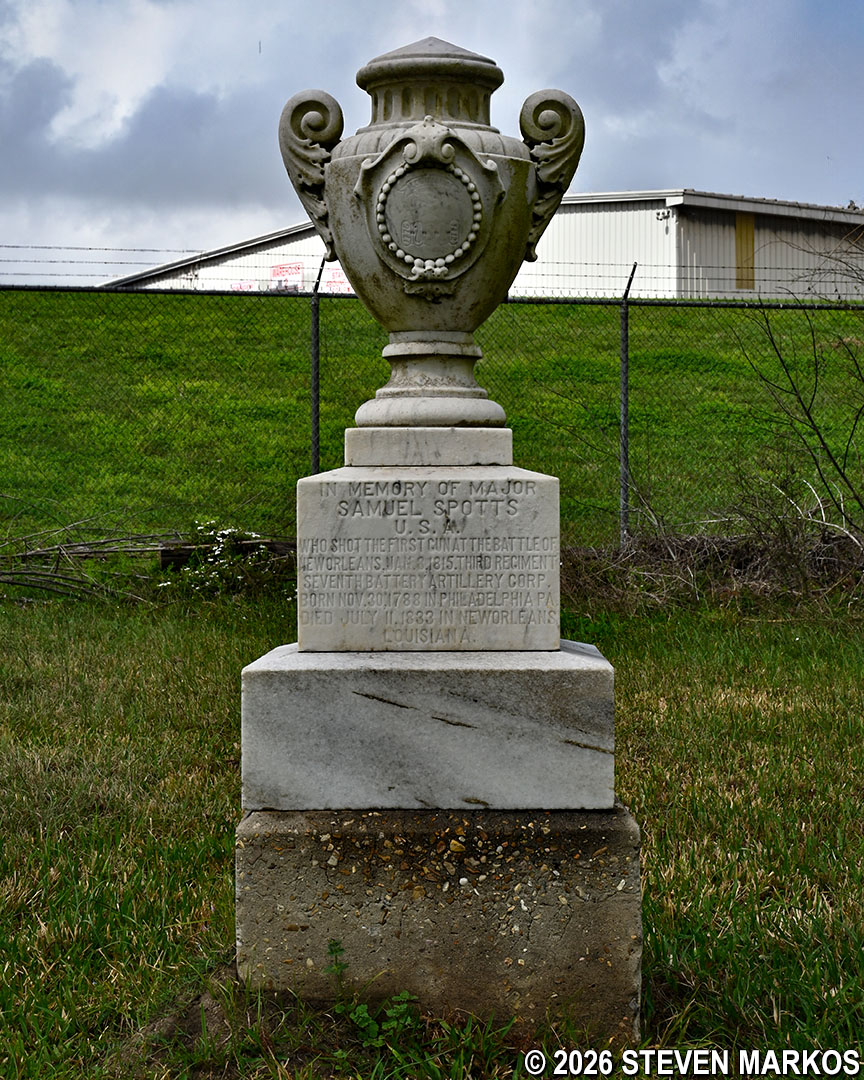
Spotts Monument at Chalmette Battlefield, Jean Lafitte National Historical Park and Preserve
CHALMETTE NATIONAL CEMETERY
On the east side of the Tour Loop Road is a very short cut-through path to the Chalmette National Cemetery. It is possible to exit the battlefield and drive a short distance to the cemetery, but if you are already at the battlefield, it is more convenient to park and just walk to it. For details and photographs, see the Chalmette National Cemetery web page here on National Park Planner.
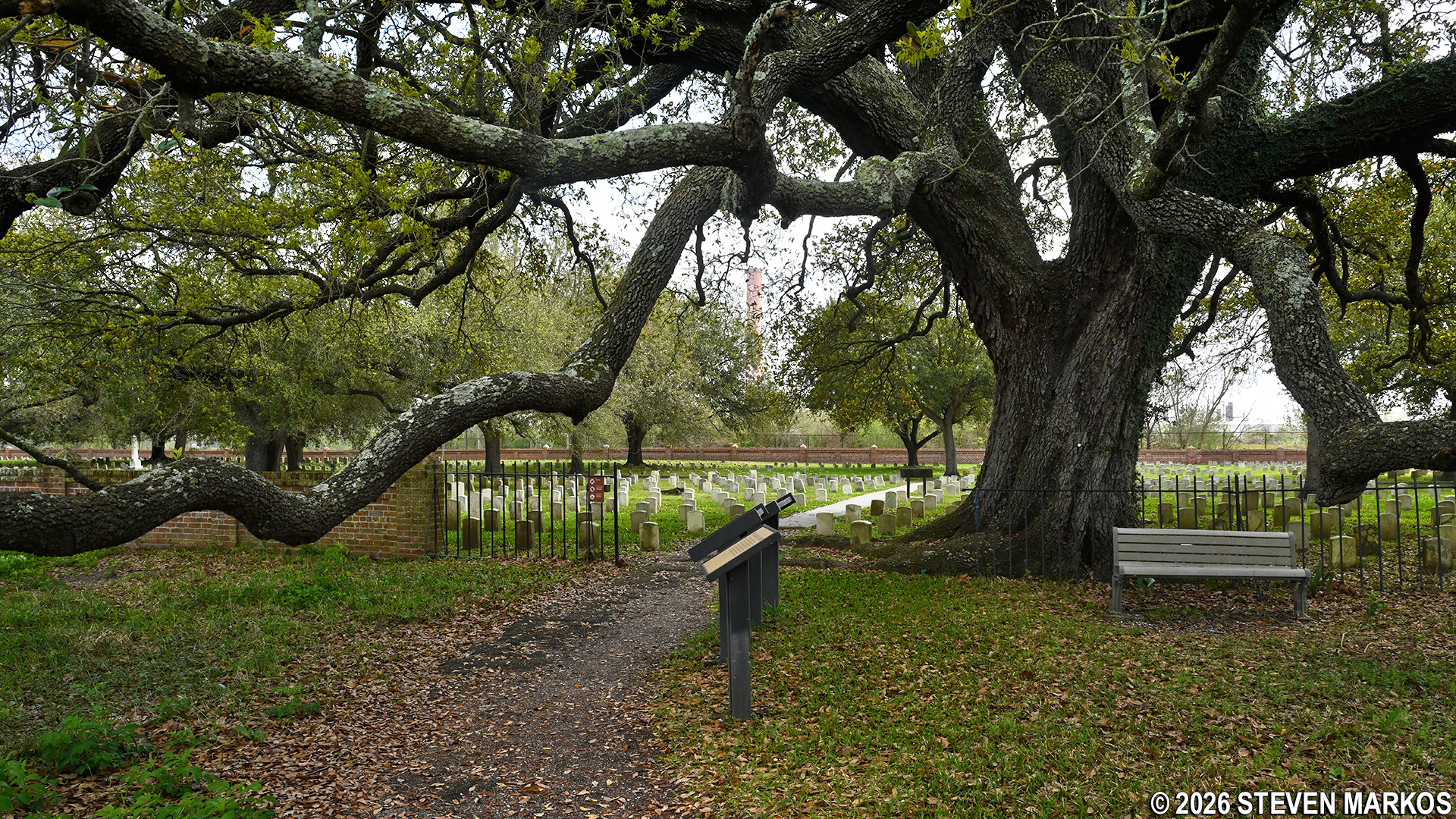
Entrance to Chalmette National Cemetery on the Tour Loop Road around the Chalmette Battlefield, Jean Lafitte National Historical Park and Preserve
With a few exceptions, use of any photograph on the National Park Planner website requires a paid Royalty Free Editorial Use License or Commercial Use License. See the Photo Usage page for details.
Last updated on September 2, 2026


