
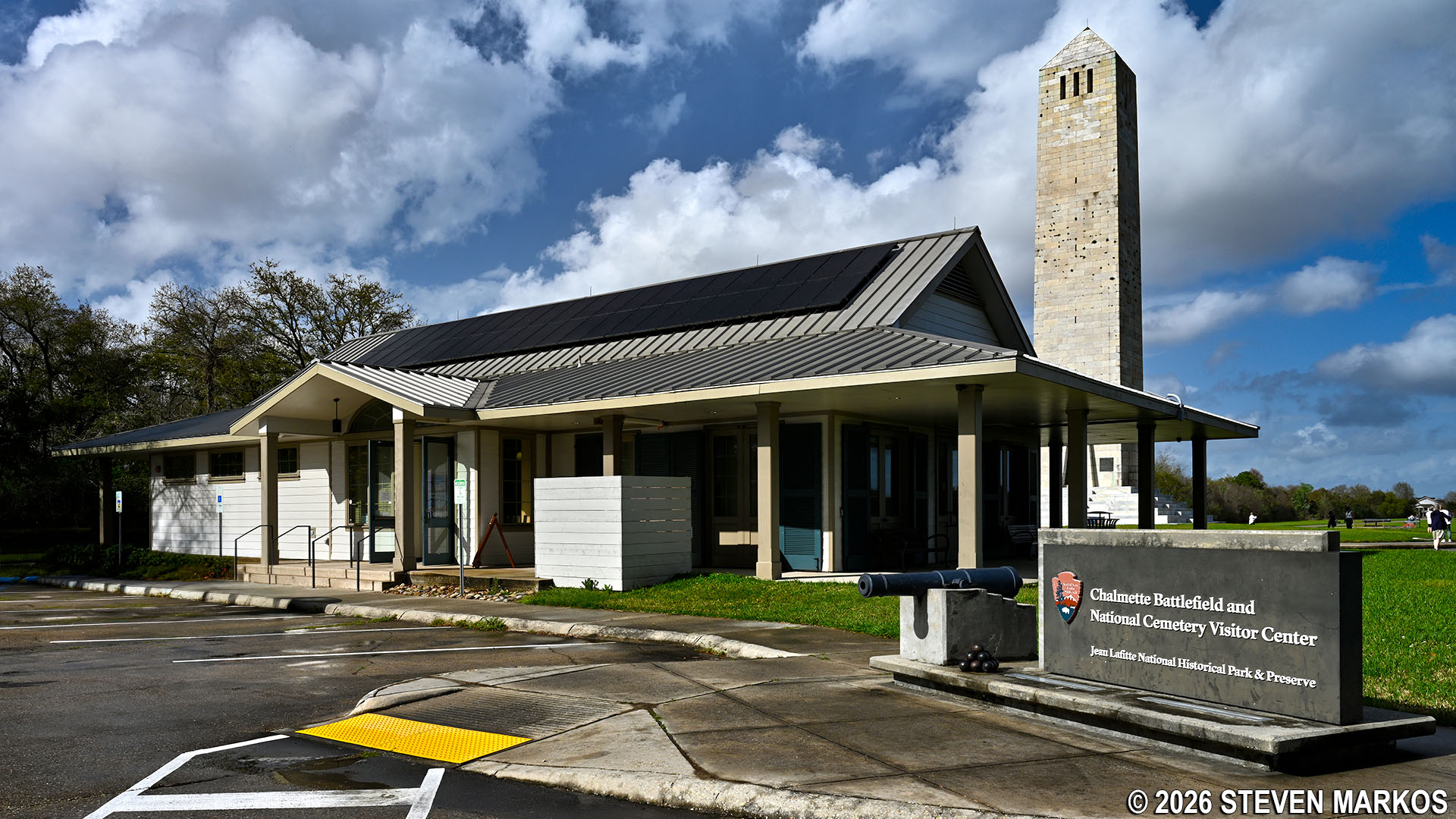
Chalmette Battlefield Visitor Center at Jean Lafitte National Historical Park and Preserve
ADDRESS
The Chalmette Battlefield Visitor Center is located in Chalmette, Louisiana, roughly six miles downriver from New Orleans, at 1 Battlefield Road.
OPERATING HOURS
The Visitor Center is open every day from 9:30 AM to 4:30 PM except when closed for federal holidays. Keep in mind that times can always change, so be sure to check the National Park Service’s official Chalmette Battlefield web page for the current schedule.
AMENITIES
- Ranger-staffed information desk where you can ask questions and pick up a park brochure
- Souvenir and bookstore
- Battle of New Orleans Museum
- Restrooms
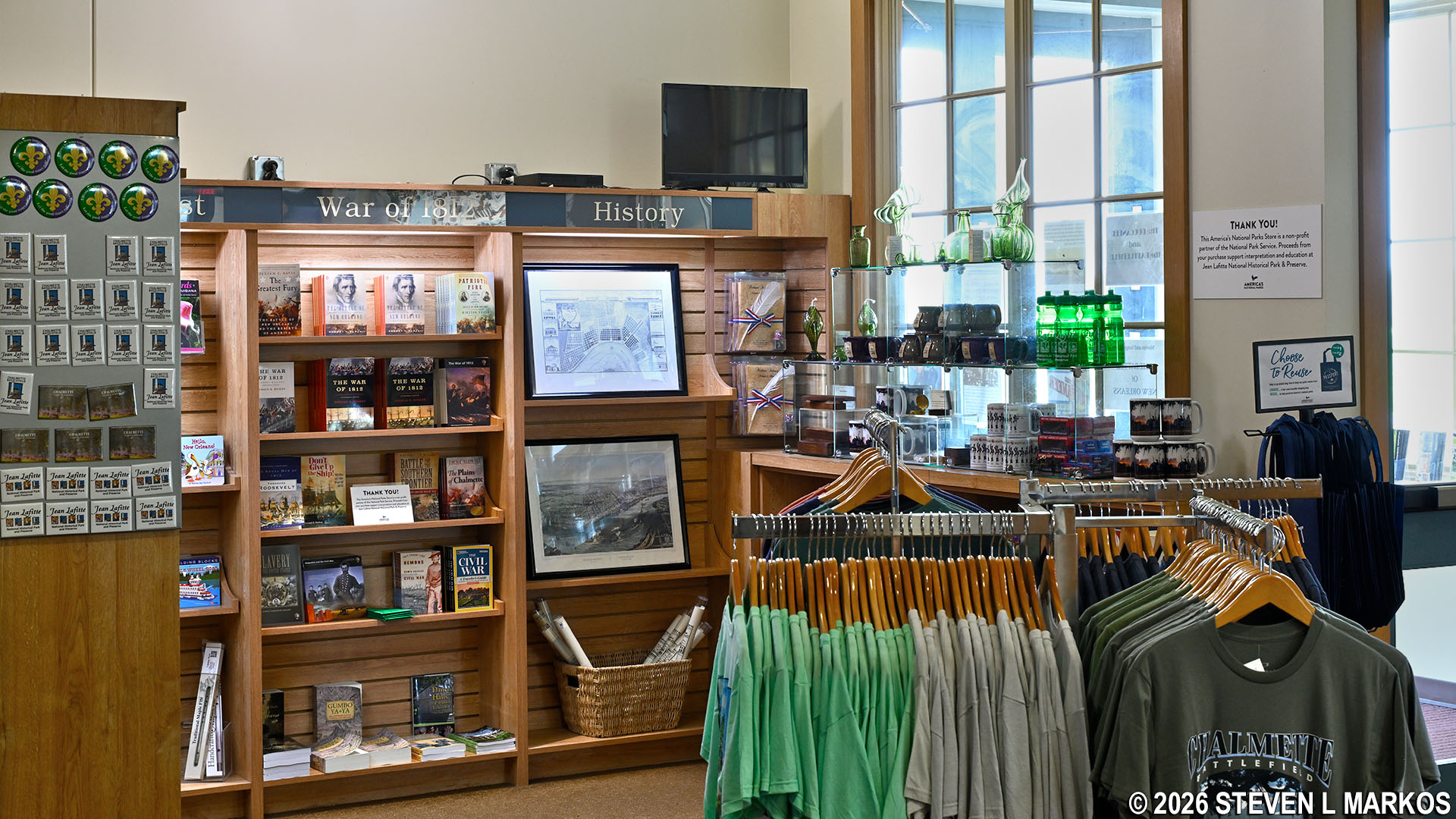
Souvenir and bookstore inside the Chalmette Battlefield Visitor Center, Jean Lafitte National Historical Park and Preserve
PARK FILMS
At the entrance to the small museum at the Chalmette Battlefield Visitor Center are three video screens above a map of the Mississippi River. A push button starts a 7-minute presentation about the Battle of New Orleans and the events that led up to it. To illustrate the fighting, the map is animated with blue and red lights to show the movements of the American (blue) and British (red) troops.
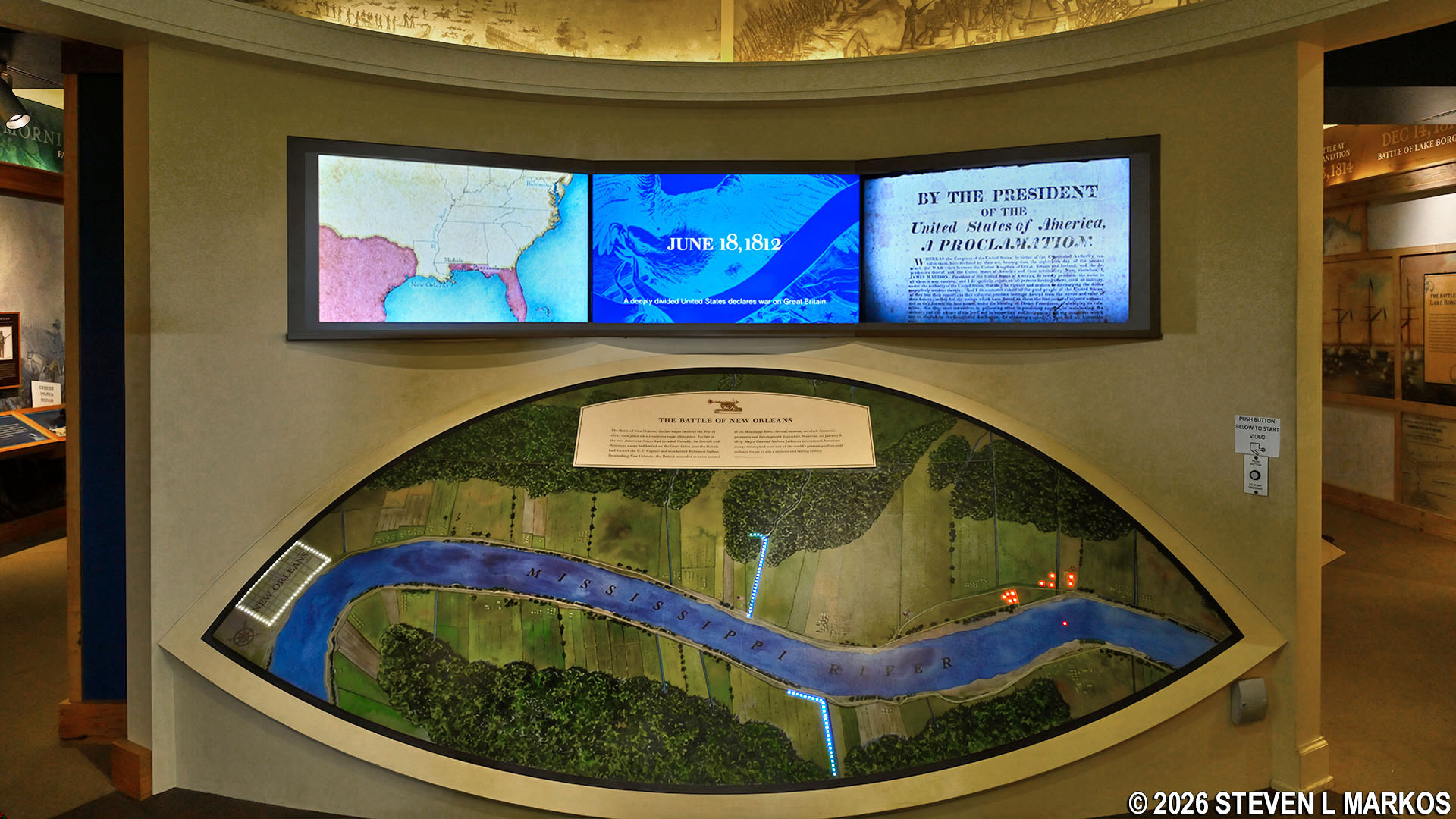
Video screens and map showing the Battle of New Orleans at the Chalmette Battlefield Visitor Center, Jean Lafitte National Historical Park and Preserve
There is another seven-minute film shown in a separate area of the museum. This one differs from the first in that it is only about the Battle of New Orleans, not the prior events. Much of the footage is live action, so there is lots of shooting and some blood shown. The film is not for little children, but any youngster who is familiar with death and war will not be traumatized by what is shown. Imagine a film somewhere between a G and a PG rating.
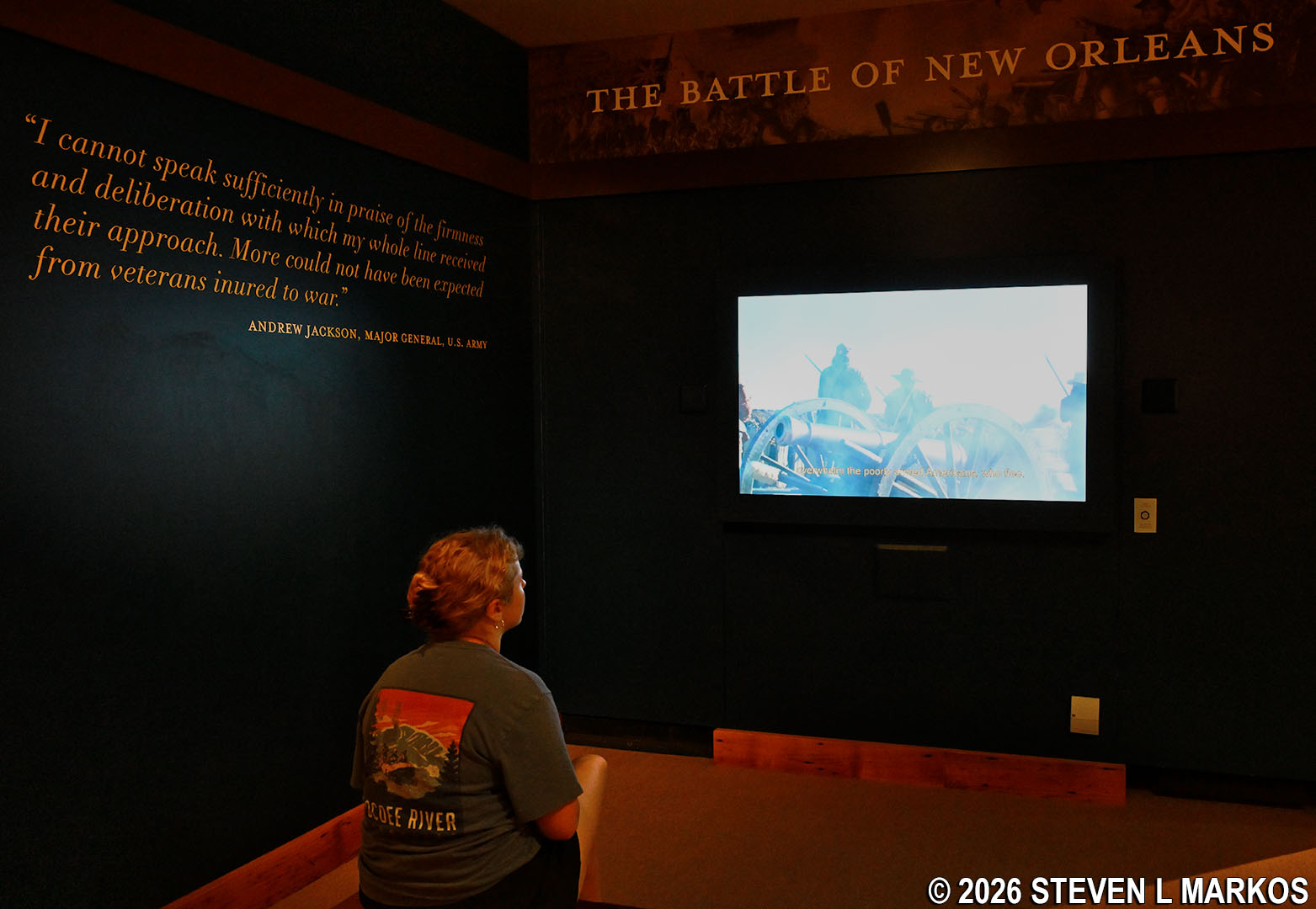
Battle of New Orleans video shows at the Chalmette Battlefield Visitor Center, Jean Lafitte National Historical Park and Preserve
BATTLE OF NEW ORLEANS MUSEUM
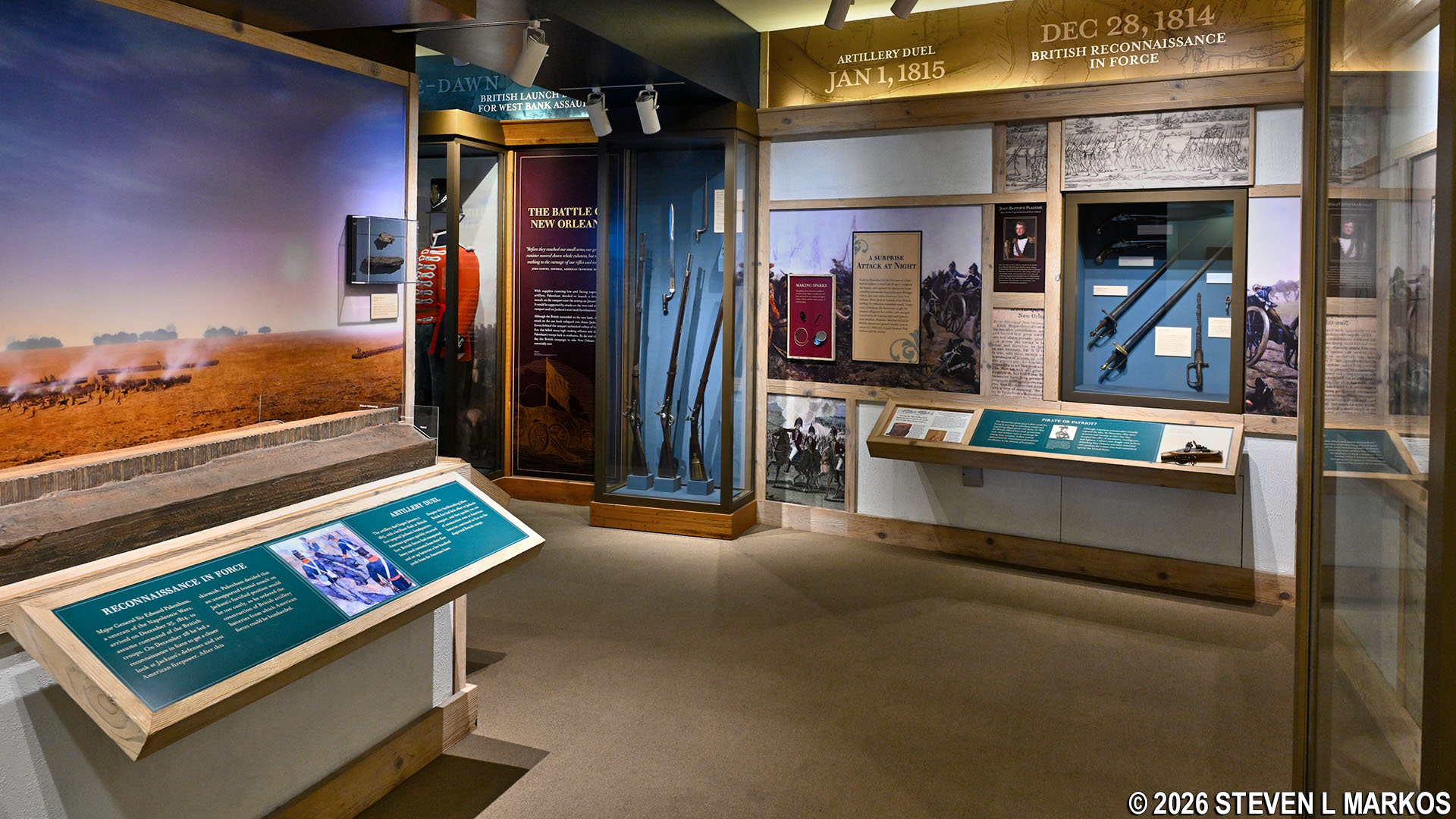
Battle of New Orleans Museum at the Chalmette Battlefield Visitor Center, Jean Lafitte National Historical Park and Preserve
The museum at the Chalmette Battlefield Visitor Center is dedicated to the 1815 Battle of New Orleans and the events that led up to it. When entering, it is best to start on the right and walk in the counterclockwise direction in order to follow the events in chronological order. The first exhibit, other than the abovementioned video and light-animated map presentation, is a map of the United States that shows major events of the war up to 1814.
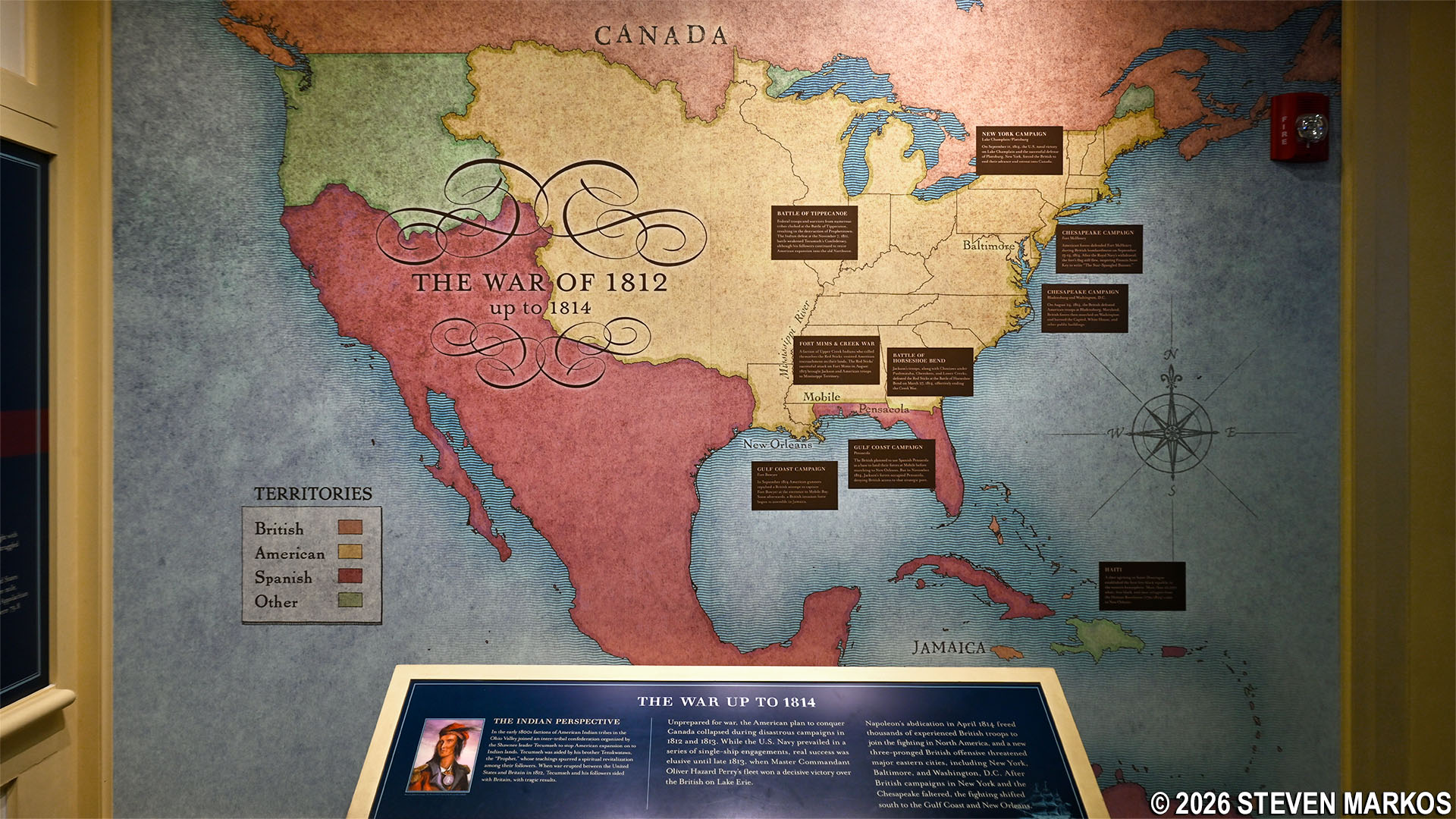
Map showing the war up to 1814 at the Chalmette Battlefield Visitor Center, Jean Lafitte National Historical Park and Preserve
The British attempt to capture New Orleans began in December 1814 with the Battle of Lake Borgne. The American troops were outnumbered, and all of their gunboats were seized. The British gained control of the lake and proceeded to use it as a staging area for their invasion of New Orleans.
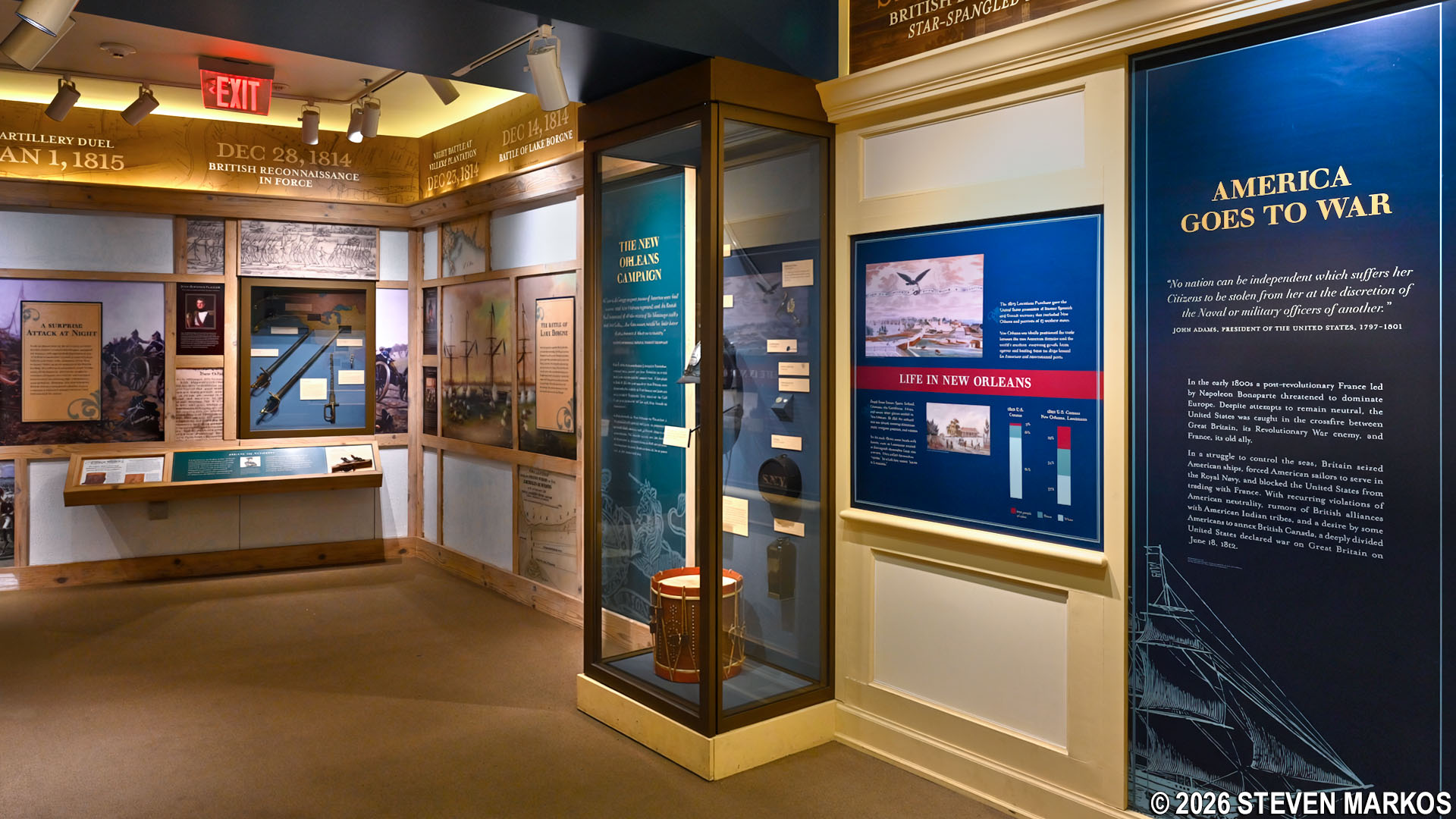
Exhibit highlights the events that led up to the Battle of New Orleans in the museum at the Chalmette Battlefield Visitor Center, Jean Lafitte National Historical Park and Preserve
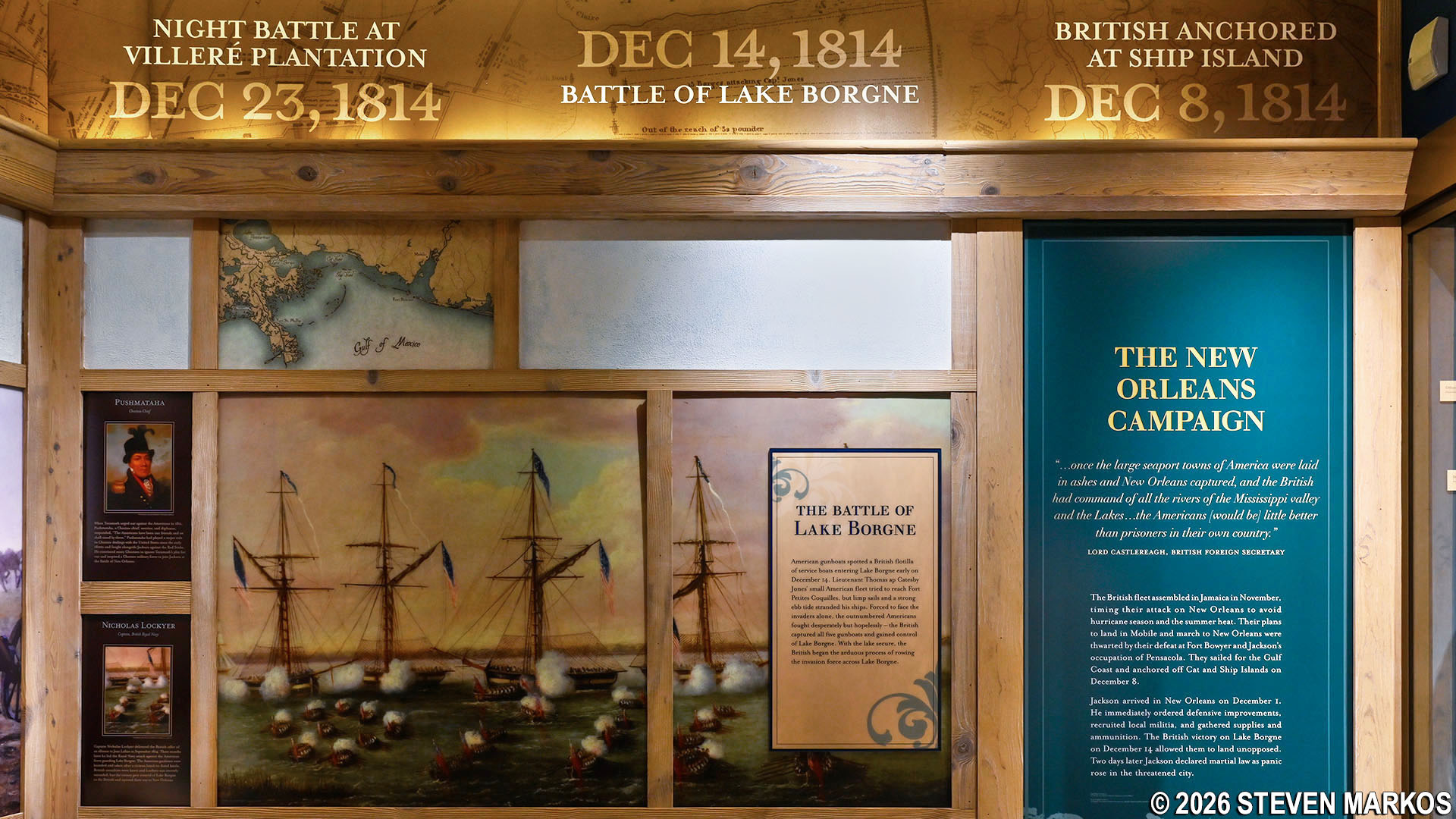
Exhibit on the Battle of Lake Borgne in the museum at the Chalmette Battlefield Visitor Center, Jean Lafitte National Historical Park and Preserve
An unsuccessful surprise attack on the night of December 23, 1814, resulted in Major General Andrew Jackson withdrawing his troops a couple of miles to the west of the British camp at the Lacoste and Villeré plantations to the Rodriguez Canal. Originally built as a millrace in the late 1700s during the Spanish colonial period, the canal had long been abandoned. The banks had collapsed, and the bottom was covered in grass, making it look more like a ditch than a canal. The Americans, along with slaves from local plantations, dug the dirt out of the canal and used it to build a rampart (protective wall) that ran from the Mississippi River on one end to a cedar-tree swamp on the other. This heavily fortified earthwork was known as Line Jackson. On display in the museum is a model depicting how the rampart was built along with two original wood fragments that were discovered during an archeological dig in 1984.
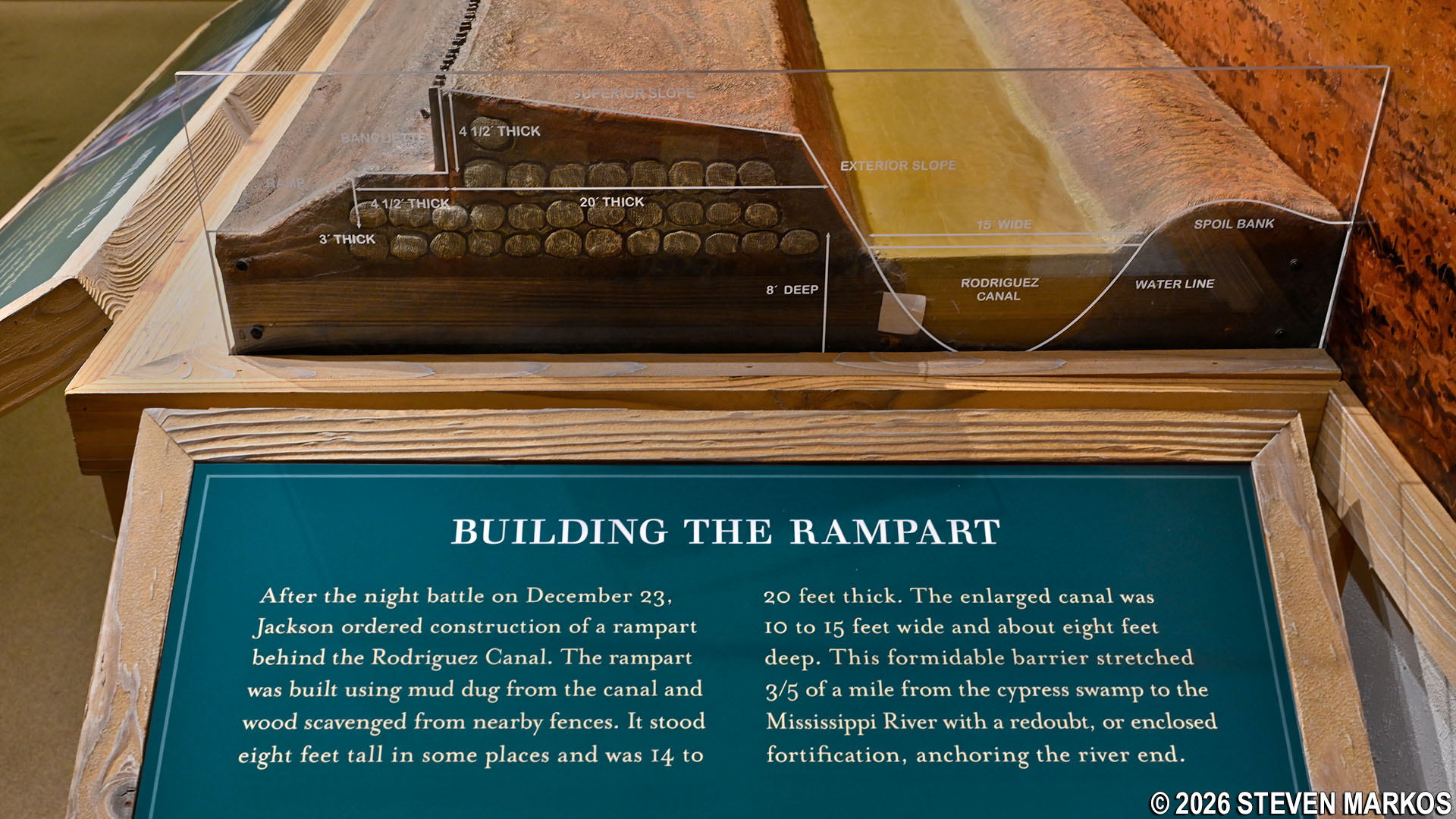
Exhibit on the Rodriguez Canal at the Chalmette Battlefield Visitor Center, Jean Lafitte National Historical Park and Preserve
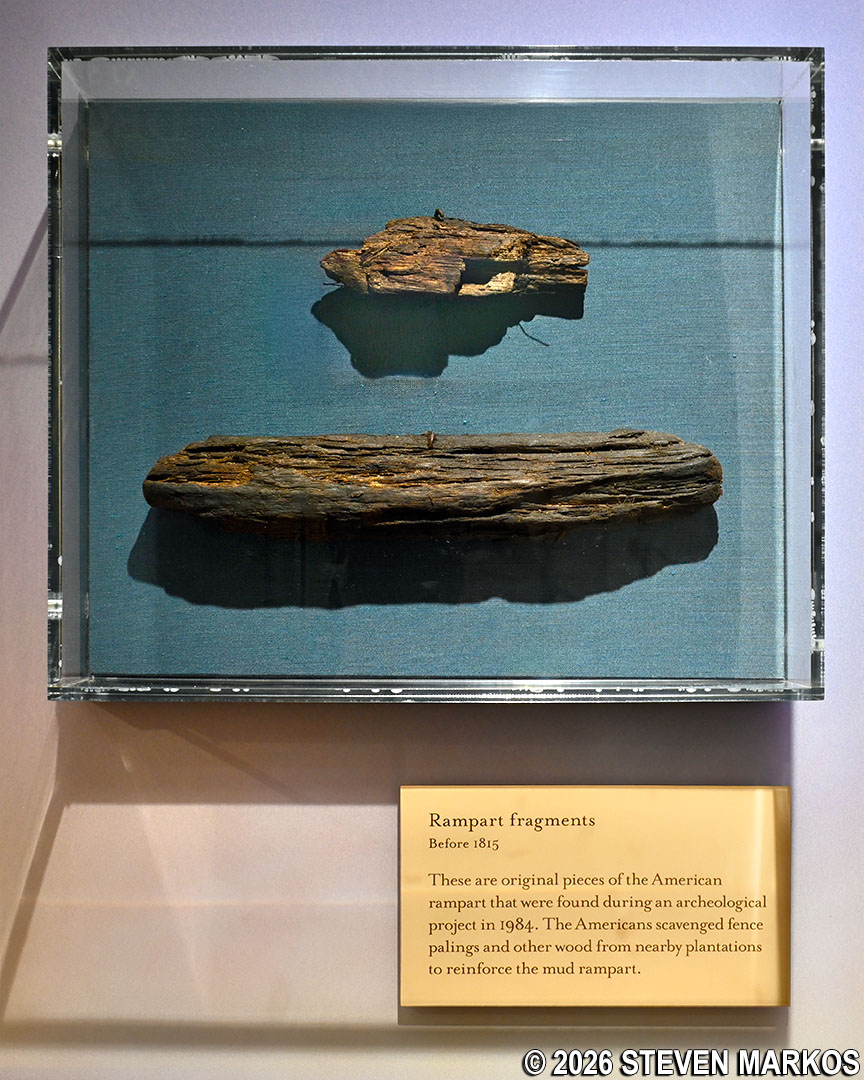
Original wood fragments used in building the Line Jackson rampart on display in the museum at the Chalmette Battlefield Visitor Center, Jean Lafitte National Historical Park and Preserve
As should be expected, a large section of the museum covers the January 8, 1815, Battle of New Orleans. Examples of both American and British uniforms are on display. One such item is a typical helmet worn by the American dragoons (soldiers who rode into battle on horses) during the War of 1812. Also present are a few rifles, muskets, and bayonets. All items are originals from the era but were not necessarily used in the actual Battle of New Orleans.
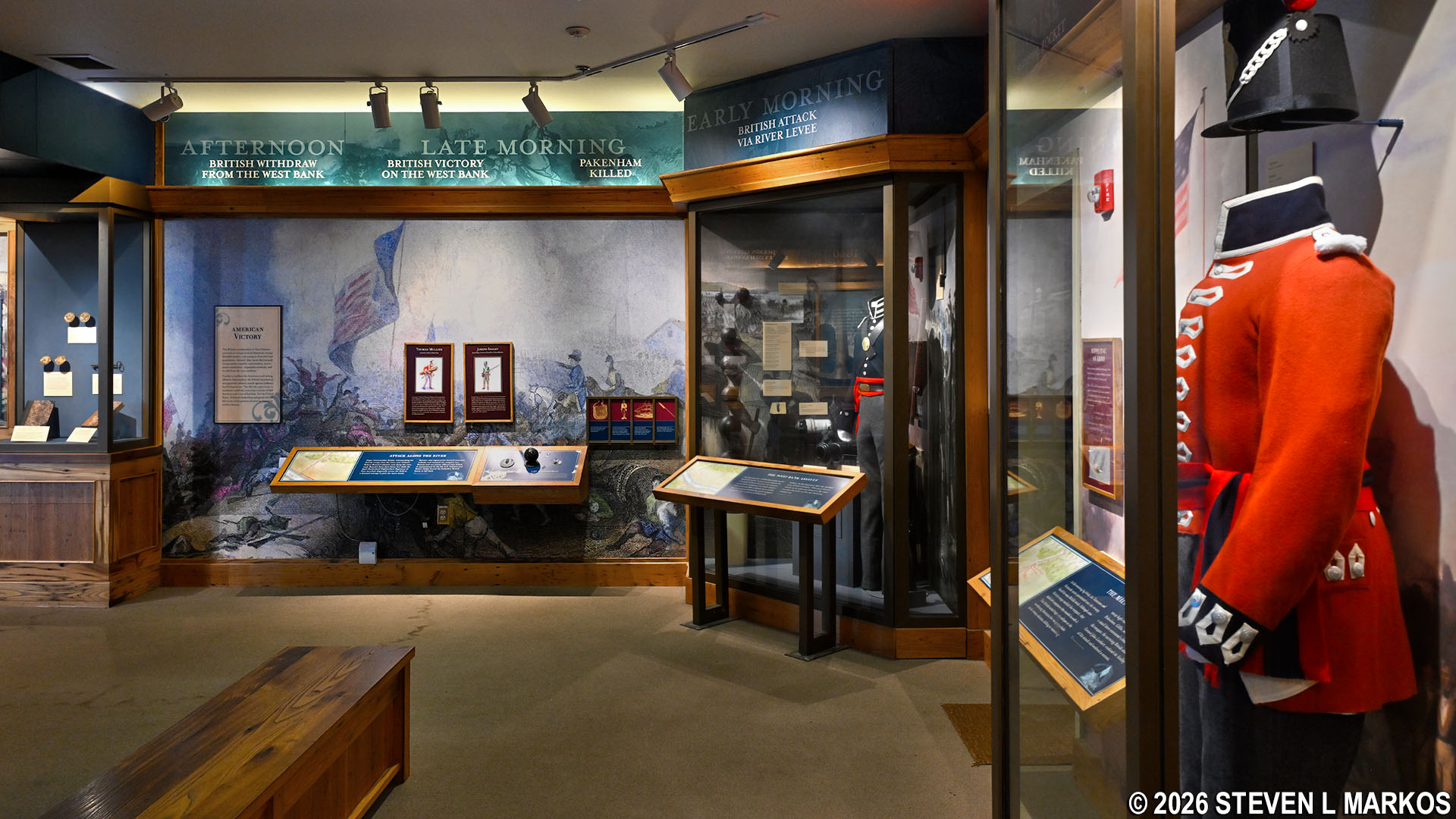
Military artifacts from the War of 1812 era in the museum at the Chalmette Battlefield Visitor Center, Jean Lafitte National Historical Park and Preserve
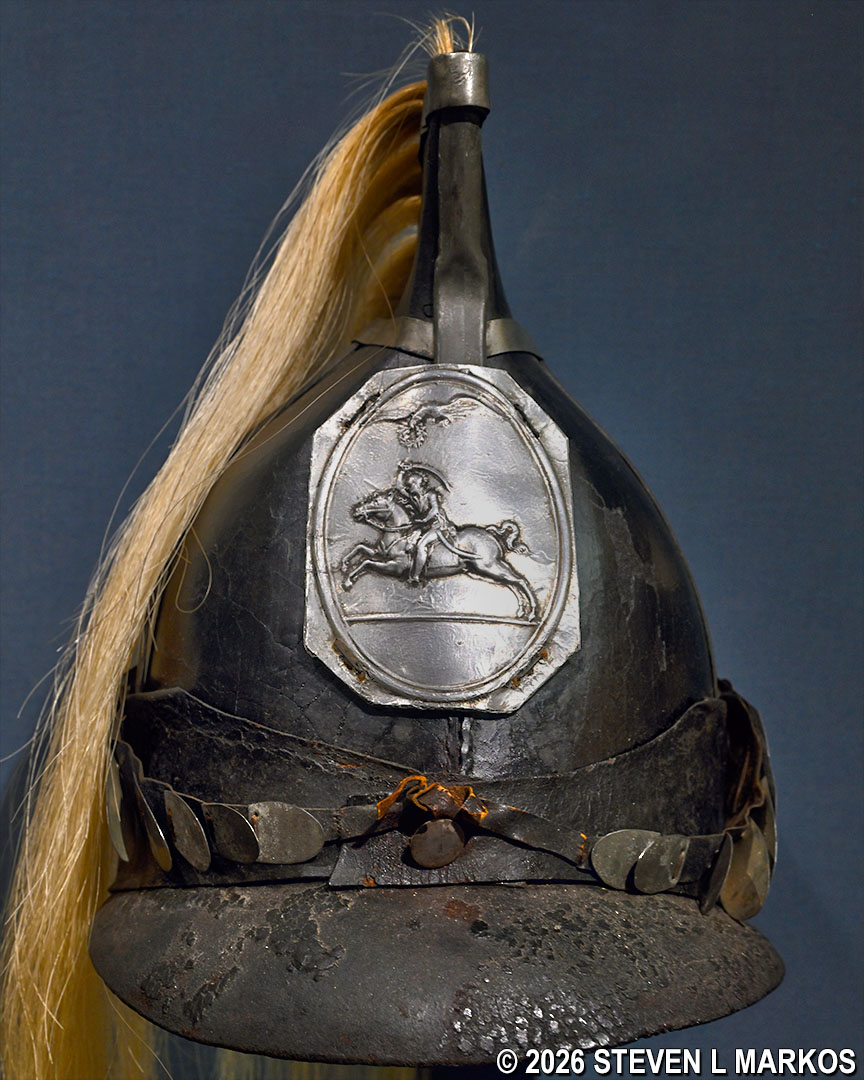
American dragoon helmet from the early 1800s on display in the museum at the Chalmette Battlefield Visitor Center, Jean Lafitte National Historical Park and Preserve
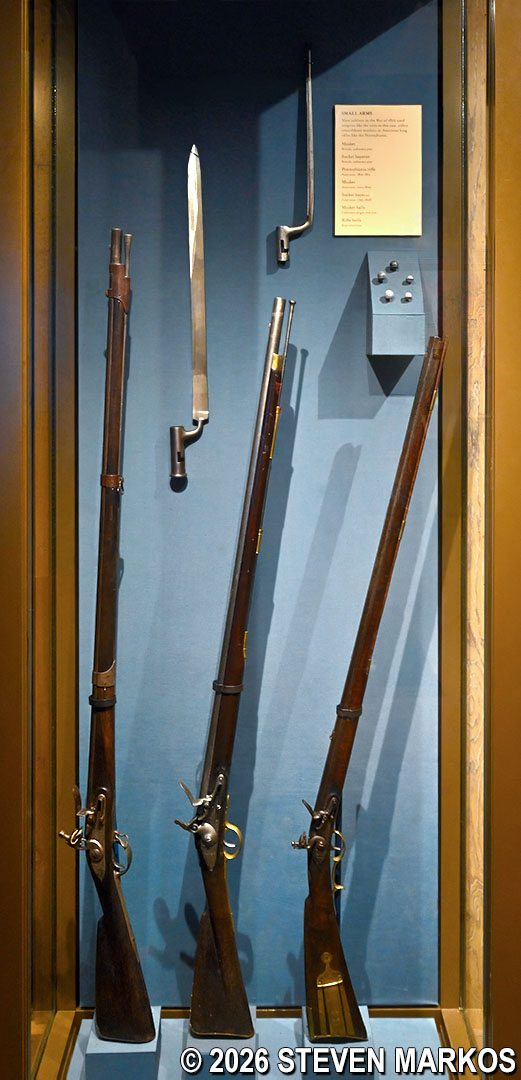
War of 1812-era weapons on display at the Chalmette Battlefield Visitor Center, Jean Lafitte National Historical Park and Preserve
The last section of the museum focuses on events that occurred after the Battle of New Orleans and the War of 1812 were over. Artifacts consist of commemorative medals from 1815 and sesquicentennial medals from 1965 celebrating 150 years of peace between America and Great Britain. A key to the Chalmette Monument presented to the United States Daughters of 1812, Chalmette Chapter, when the monument was completed in 1908 is displayed with the medals. Two books published a few years after the war, a memoir written by Major Arsène Lacarrière Latour (Jackson’s principal engineer) and a detailed account of the war written by British military historian and author William James, are also part of the exhibit.
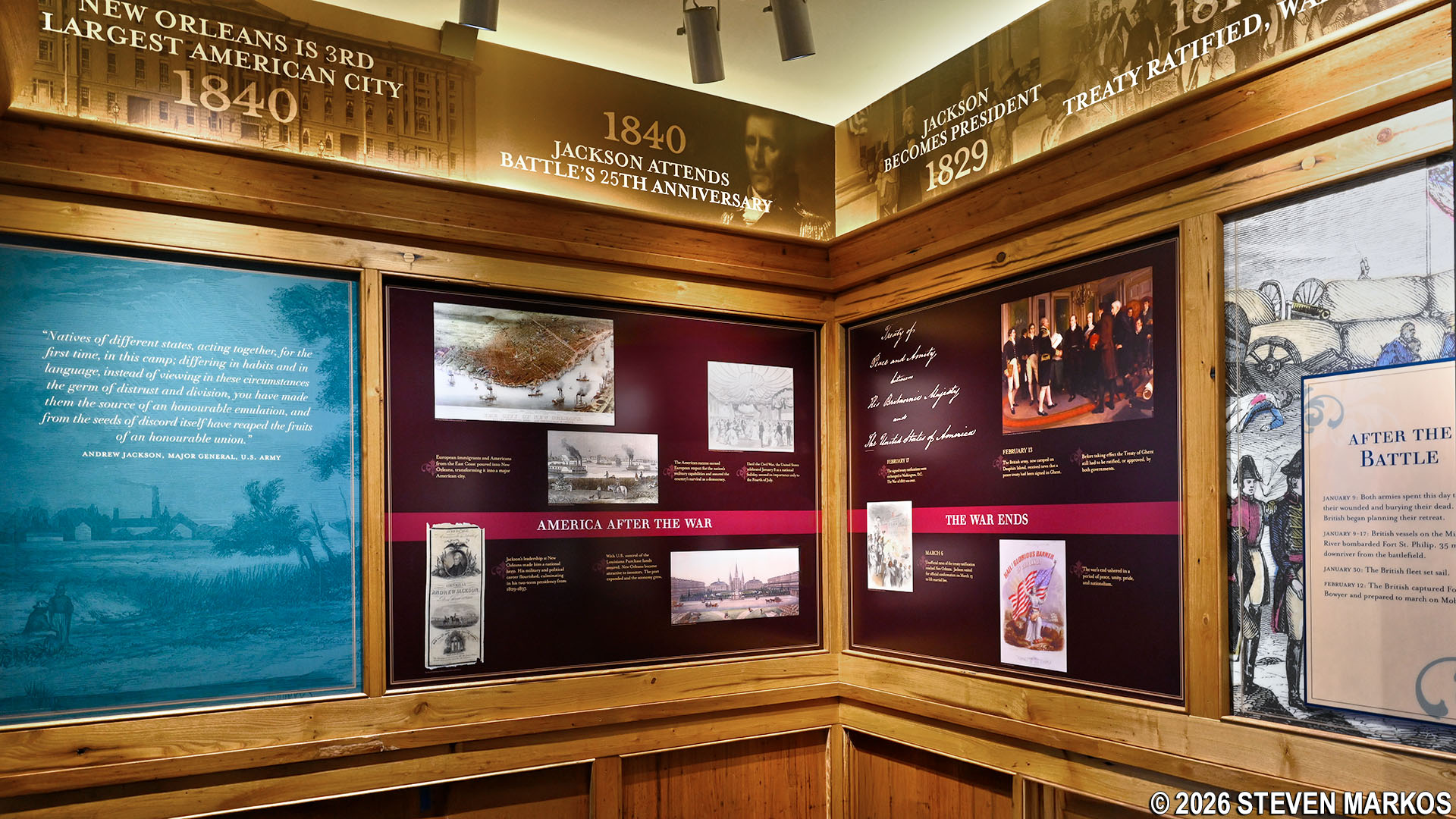
Exhibit on the events after the War of 1812 at the Chalmette Battlefield Visitor Center, Jean Lafitte National Historical Park and Preserve
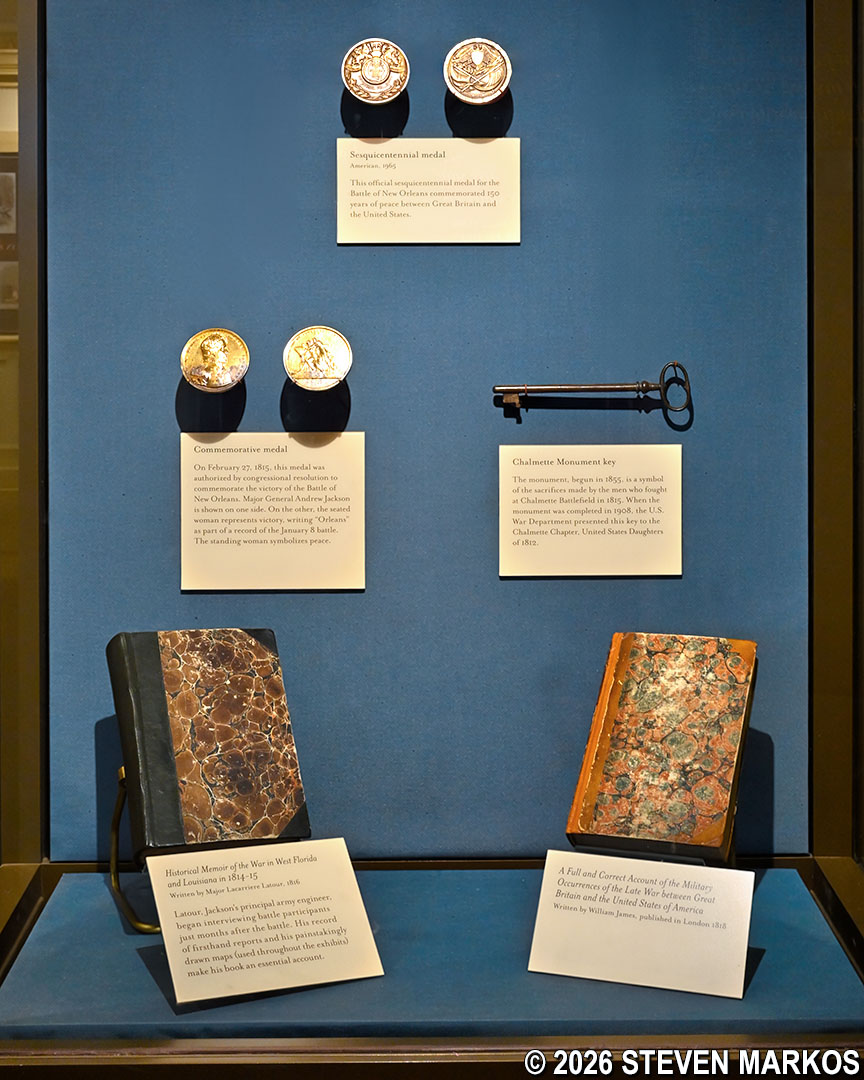
Medals, monument key, and historical books on display at the Chalmette Battlefield Visitor Center, Jean Lafitte National Historical Park and Preserve
Though the park is named for him, the only mention of Jean Lafitte is one exhibit in the Chalmette Battlefield Visitor Center. Lafitte was a French pirate who provided men and cannons for the defense of New Orleans. One of his hideouts was the swamps of Barataria Bay just south of New Orleans. Much of this area is now part of Barataria Preserve.
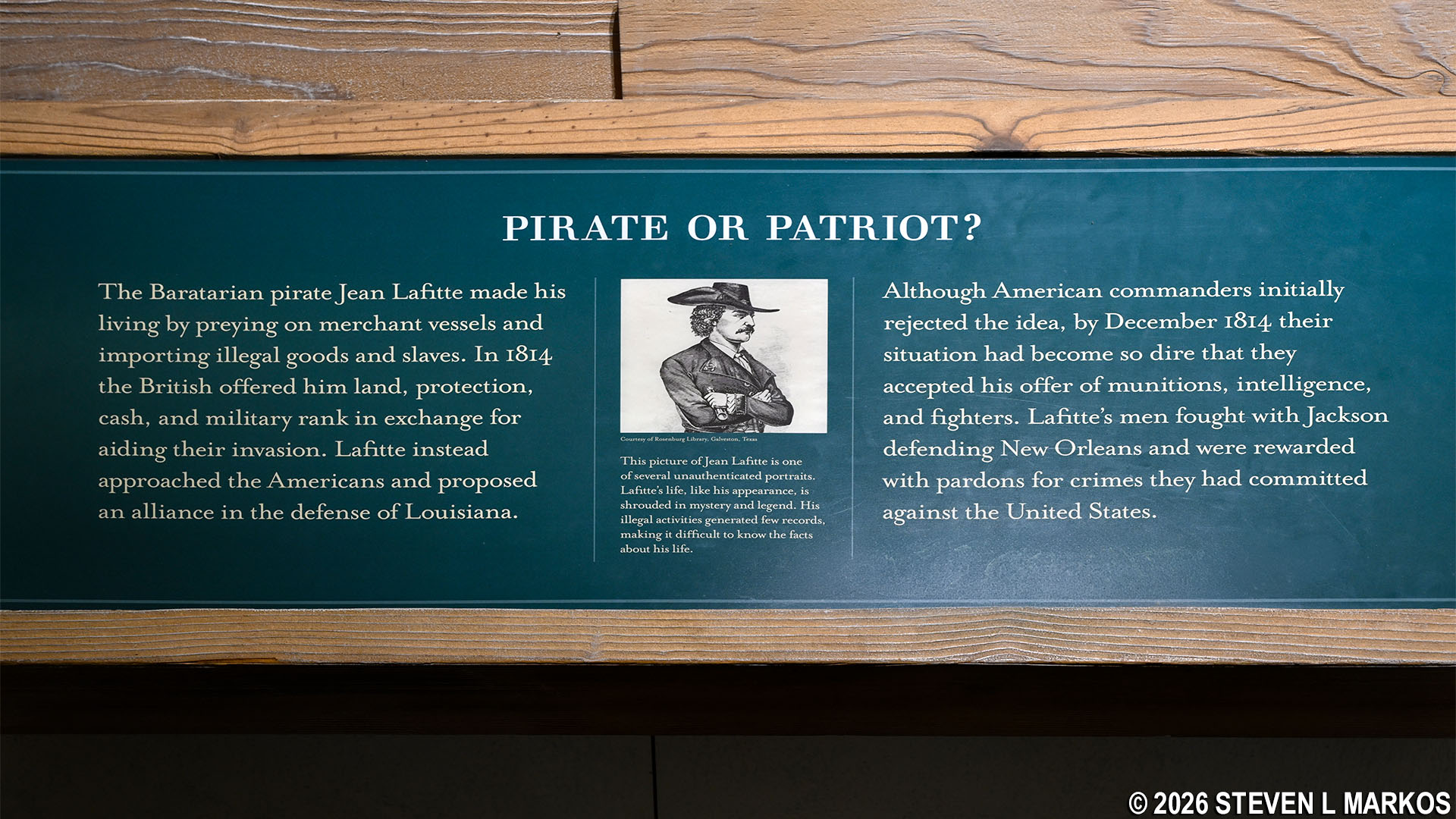
Chalmette Battlefield Visitor Center has the only mention of Jean Lafitte, the park’s namesake, Jean Lafitte National Historical Park and Preserve
SCHEDULING YOUR TIME
Plan to spend about 45 minutes at the Chalmette Battlefield Visitor Center if you want to read through all the information in the exhibit area. This also gives you time to watch the two films. For those who arrive at the battlefield via the Creole Queen riverboat, you only have a total of one hour for your visit, so if you do want to give the museum a thorough look, you will have to come back another time on your own.
With a few exceptions, use of any photograph on the National Park Planner website requires a paid Royalty Free Editorial Use License or Commercial Use License. See the Photo Usage page for details.
Last updated on September 7, 2026


