
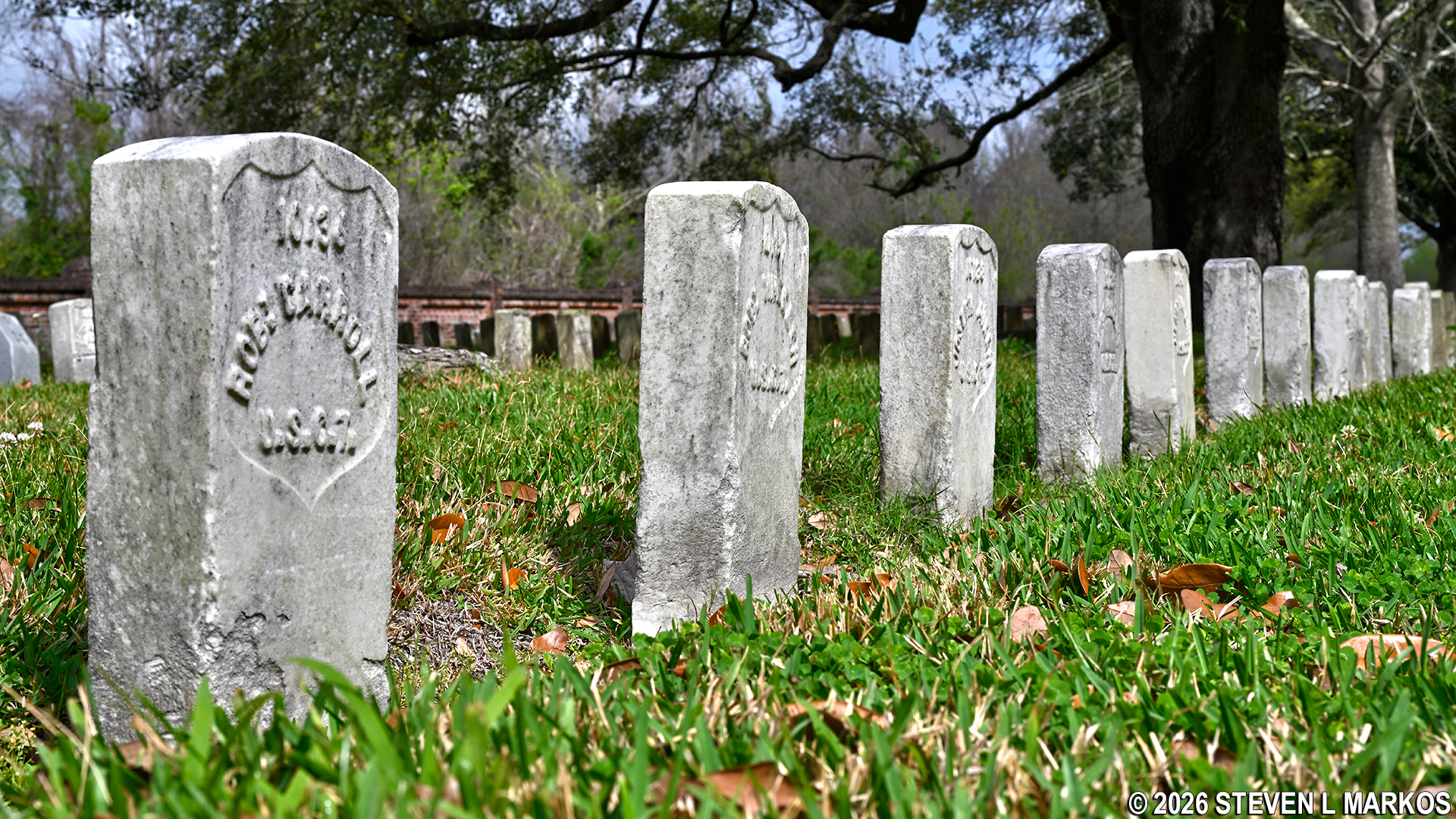
Chalmette National Cemetery, part of Jean Lafitte National Historical Park
Chalmette National Cemetery at Jean Lafitte National Historical Park and Preserve is located next to the Chalmette Battlefield in Chalmette, Louisiana. It is open to visitors daily from dawn to dusk. The entrance gate is only open from 9 AM to 4:30 PM for vehicles, but visitors can park in a small gravel parking area outside the gate and walk in. Keep in mind that times can always change, so be sure to check the National Park Service’s official Operating Hours and Seasons web page for the latest schedule.
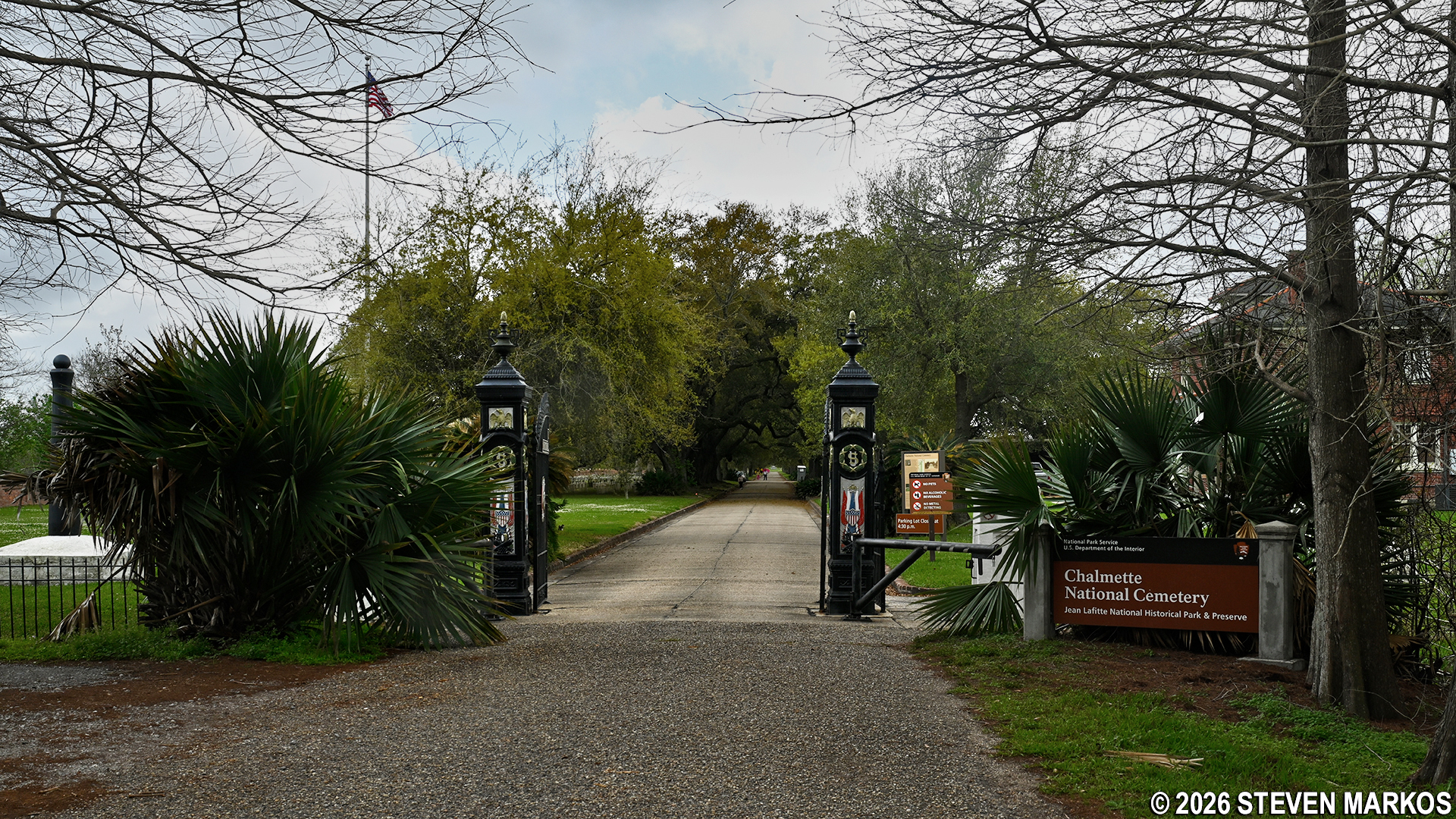
Entrance gate at Chalmette National Cemetery, Jean Lafitte National Historical Park and Preserve
Realizing that the inability to provide dignified burials for Union soldiers was a problem, President Abraham Lincoln signed a bill on July 17, 1862, establishing a National Cemetery system, with the first being Alexandria National Cemetery in Virginia. As of September 2026, there are 174 such cemeteries, and 14 of these, including Chalmette National Cemetery, are under the jurisdiction of the National Park Service.
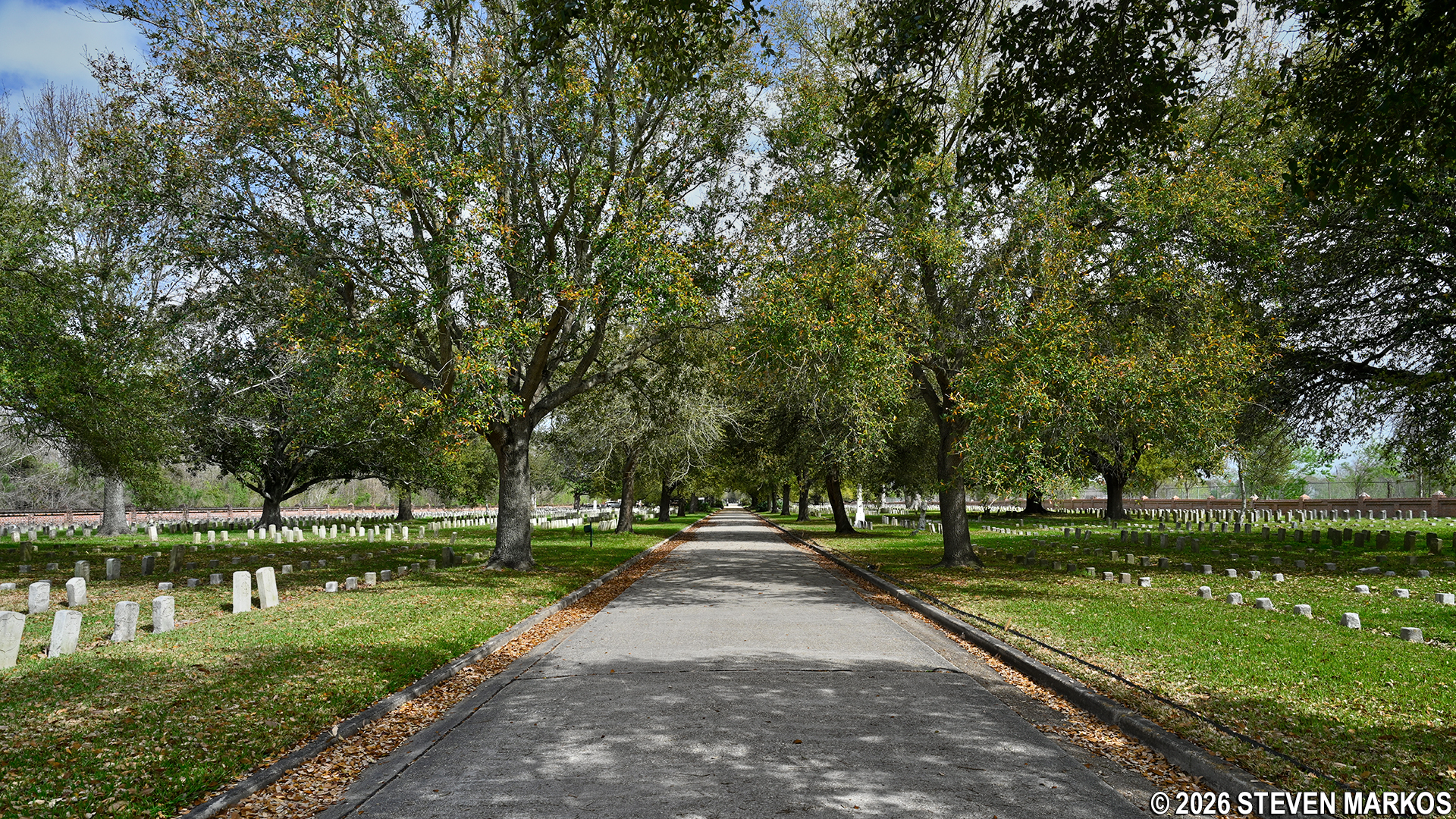
Chalmette National Cemetery at Jean Lafitte National Historical Park and Preserve
Chalmette National Cemetery is the oldest below-ground cemetery in the New Orleans area. It was established in 1864 to serve as a final resting place for Union soldiers who died in Louisiana during the Civil War. Over the years, soldiers from the Spanish-American War, World War I, World War II, and the Vietnam War have also been buried here. There are even four veterans of the War of 1812, one of whom was involved in the Battle of New Orleans. In all, more than 15,300 soldiers are buried at Chalmette National Cemetery, with 6,773 being unknown (mostly from the Civil War).
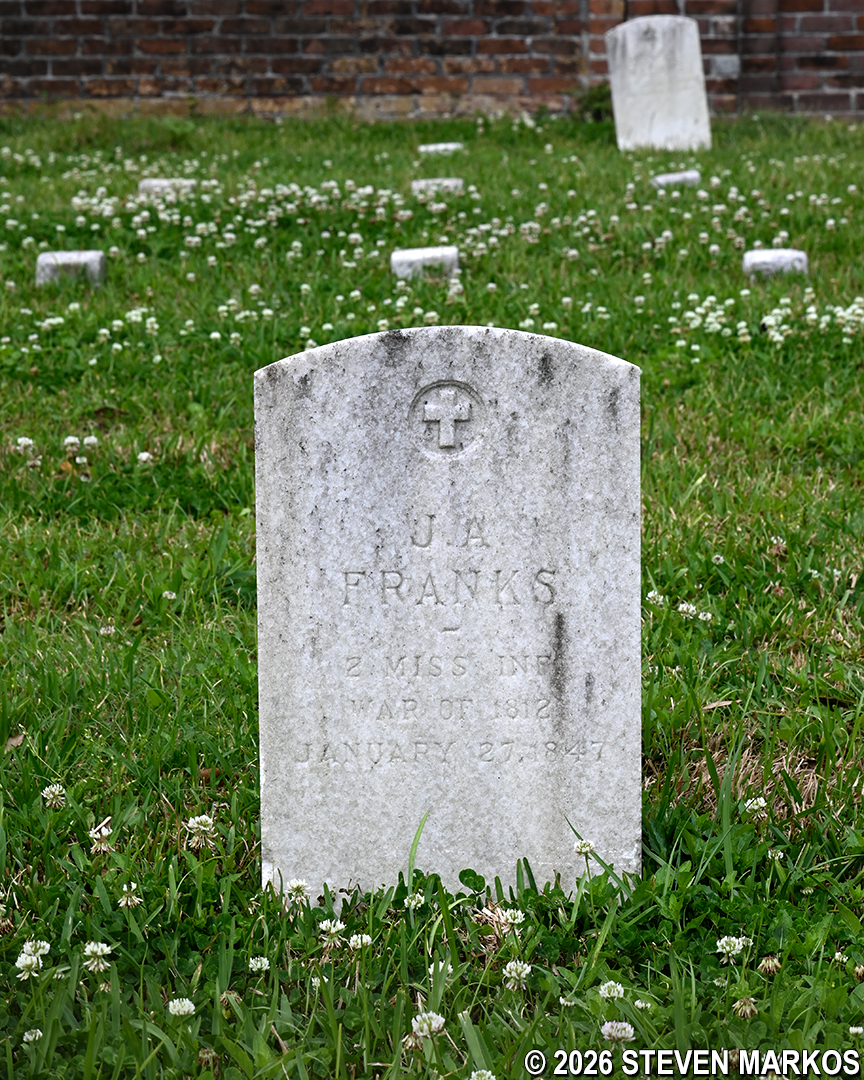
Marker for a War of 1812 veteran at Chalmette National Cemetery, Jean Lafitte National Historical Park and Preserve
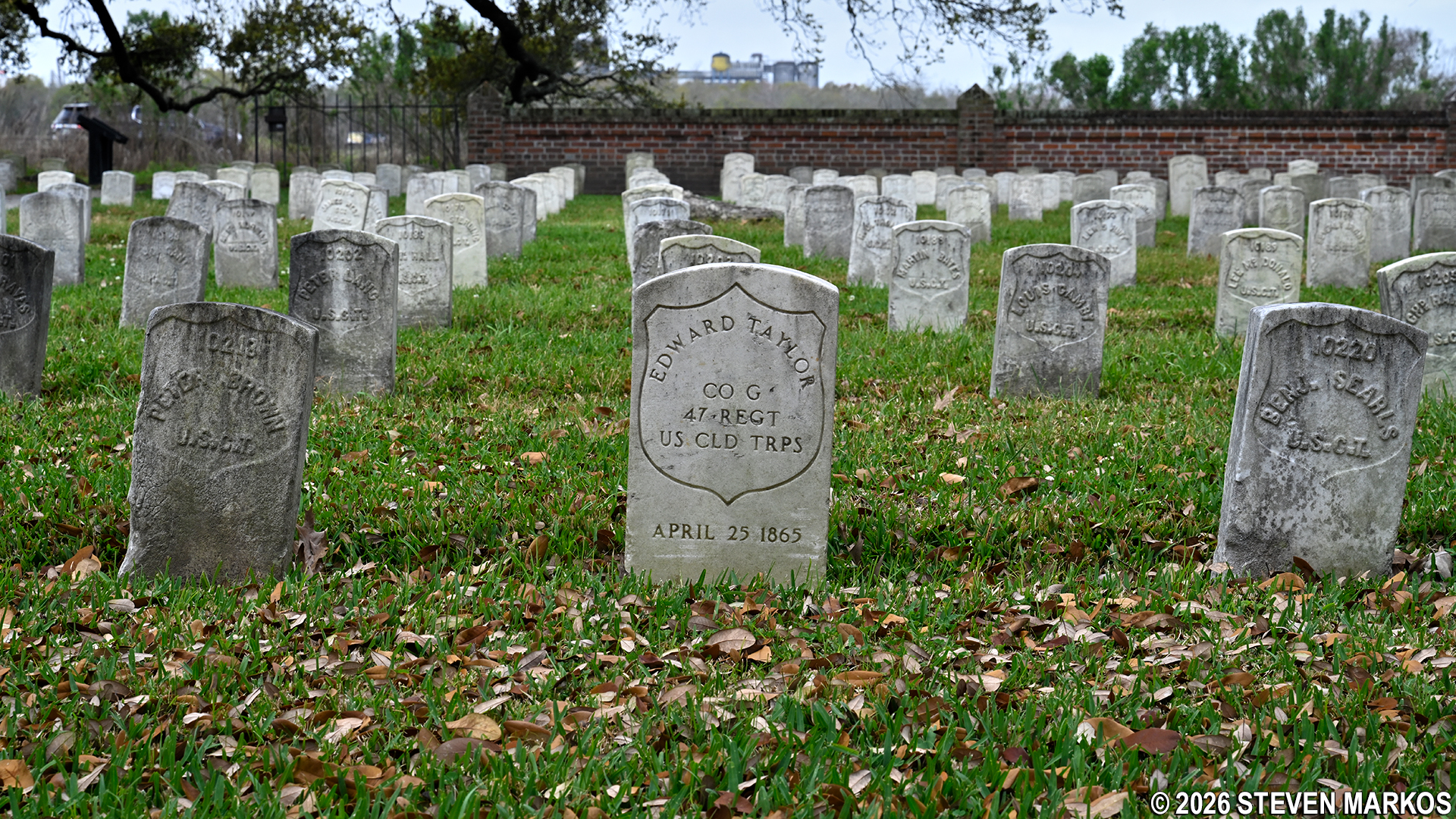
Marker for a Civil War member of the Colored Troops at Chalmette National Cemetery, Jean Lafitte National Historical Park and Preserve
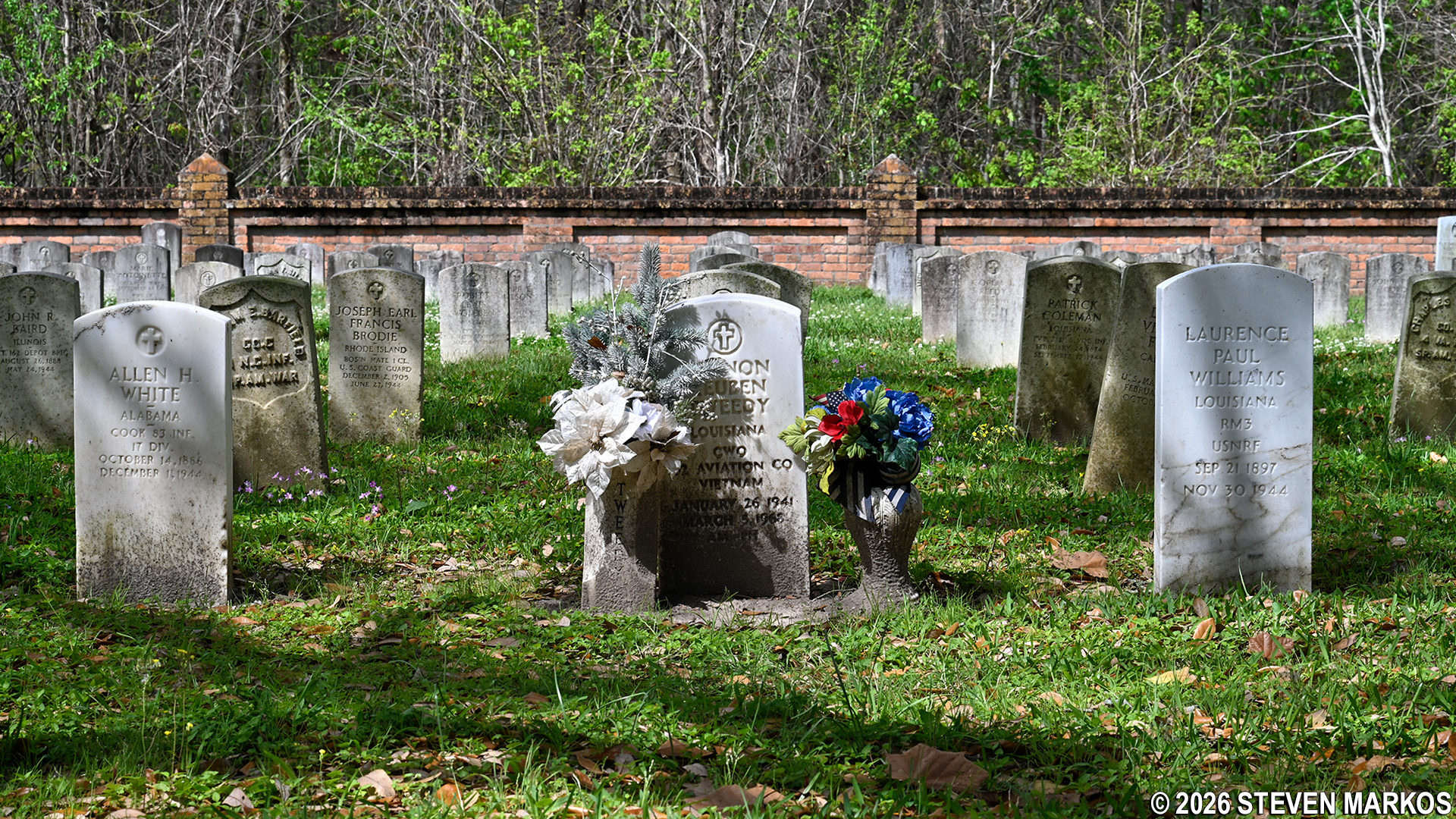
Marker for a Vietnam War soldier at Chalmette National Cemetery, Jean Lafitte National Historical Park and Preserve
National cemeteries are typically full of plain, government-issued markers. Standard tombstones bearing veterans’ names mark identified soldiers, while small, square stones with a number on top mark unknown graves. Some families choose to bear the expense of a personal monument, and these can be found throughout the cemetery, especially among the Civil War-era graves.
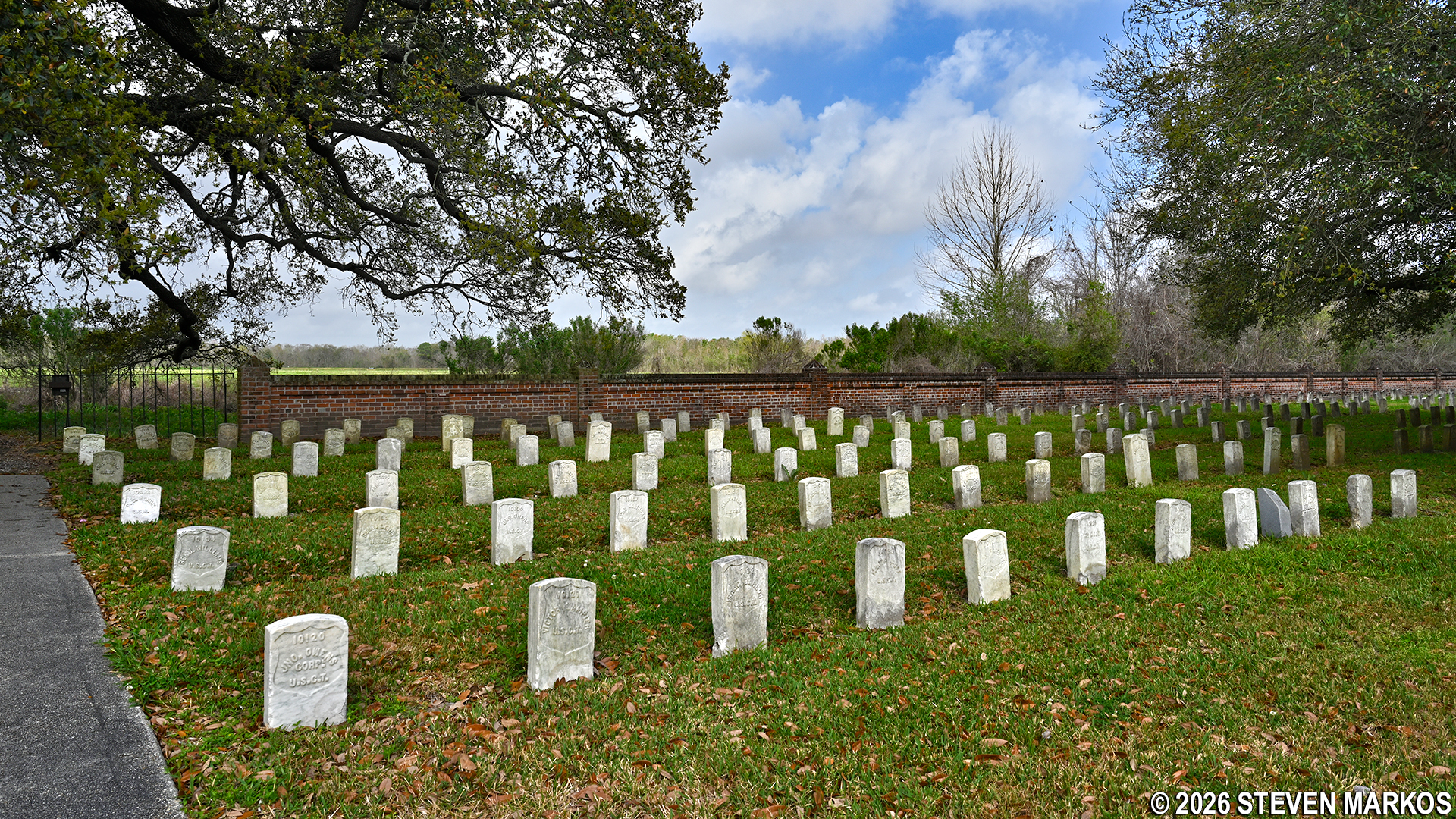
Government-issued grave markers at Chalmette National Cemetery, Jean Lafitte National Historical Park and Preserve
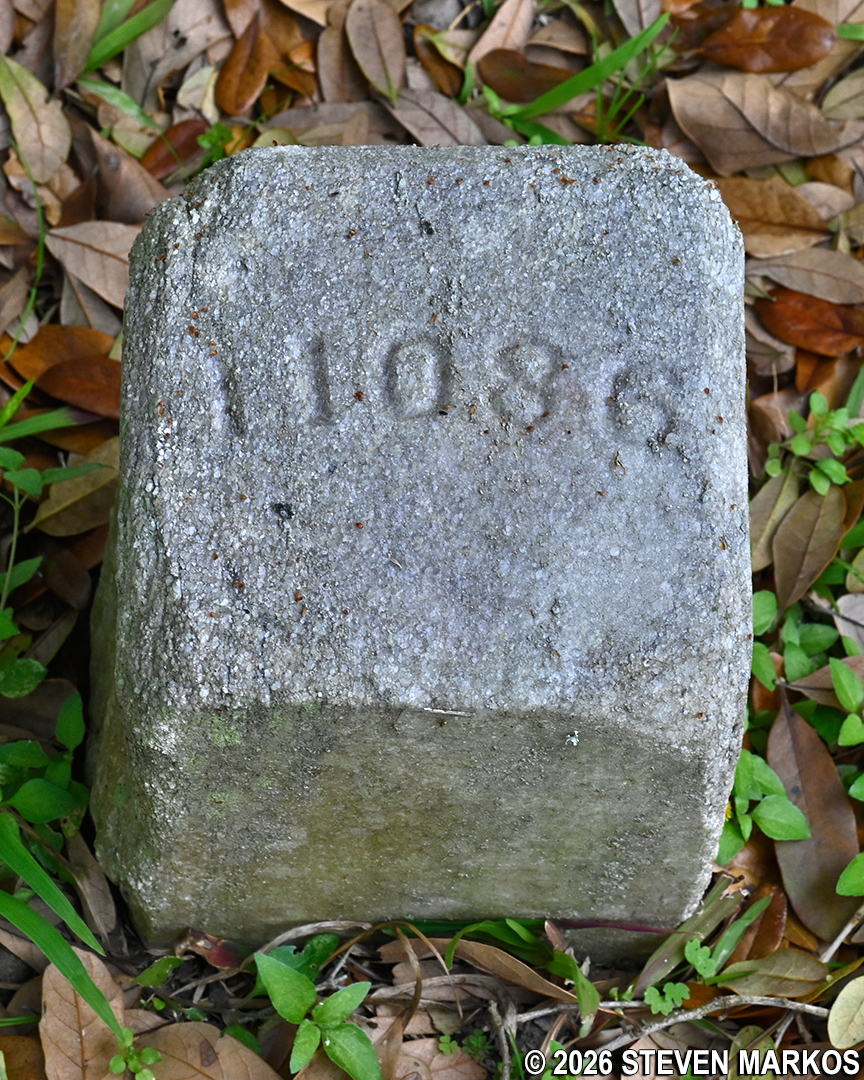
Marker for the grave of an unknown soldier at Chalmette National Cemetery, Jean Lafitte National Historical Park and Preserve
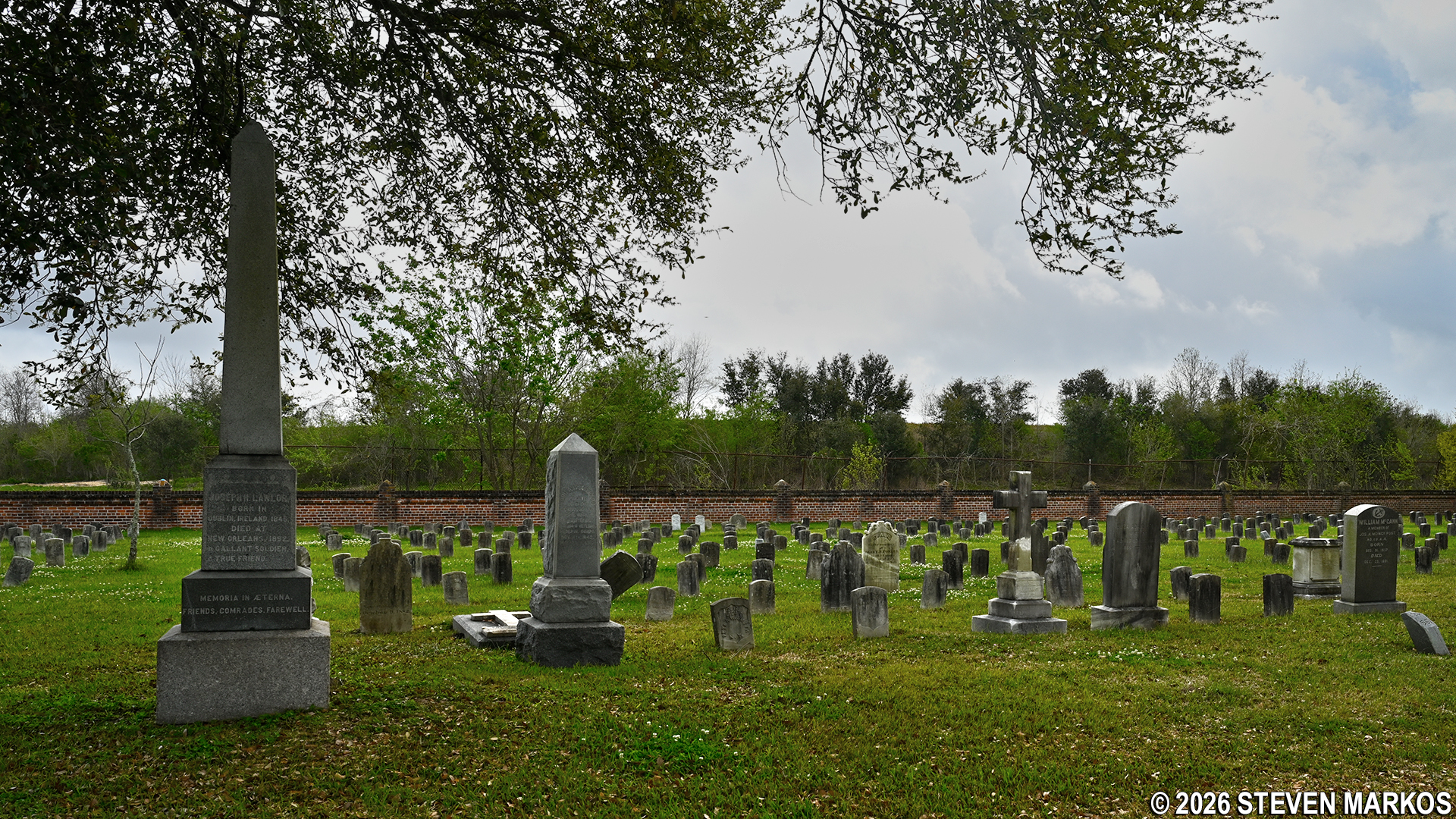
Assortment of privately-funded grave markers at Chalmette National Cemetery, Jean Lafitte National Historical Park and Preserve
Prior to its establishment as a national cemetery, Chalmette was known as Monument Cemetery. In the early part of the Civil War, it was used as a burial site for former slaves as well as both Confederate and Union troops. In 1864, when it became a national cemetery, the Confederate soldiers who were buried there were moved to the now defunct Cypress Grove #2 Cemetery in New Orleans, for with only rare exceptions, Confederate soldiers cannot be buried in a national cemetery. After the Civil War ended, nearly 12,000 Union soldiers (many unknown) who had been hastily buried on the battlefield were removed and reinterred at Chalmette National Cemetery.
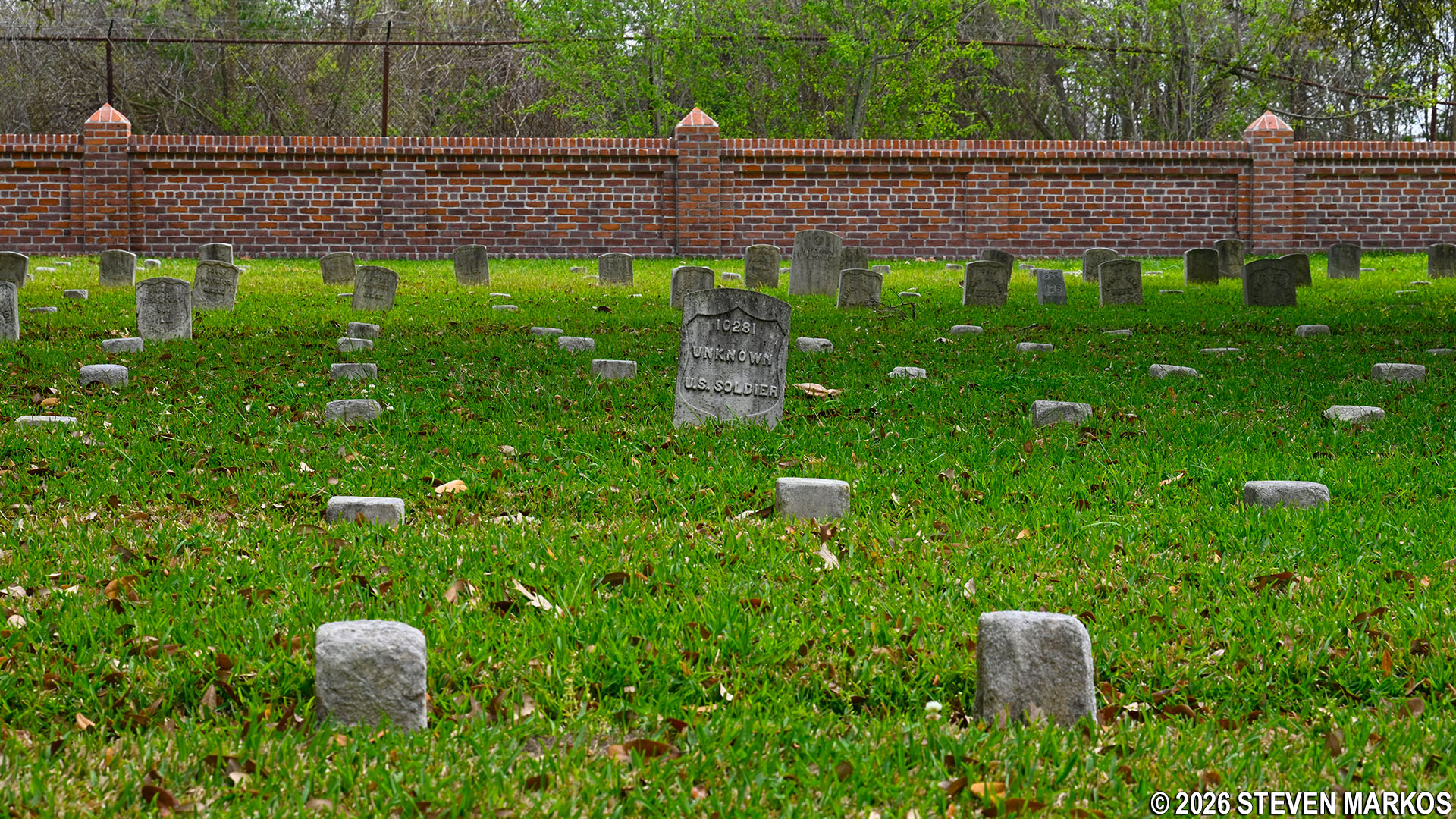
Section of unknown soldier graves at Chalmette National Cemetery, Jean Lafitte National Historical Park and Preserve
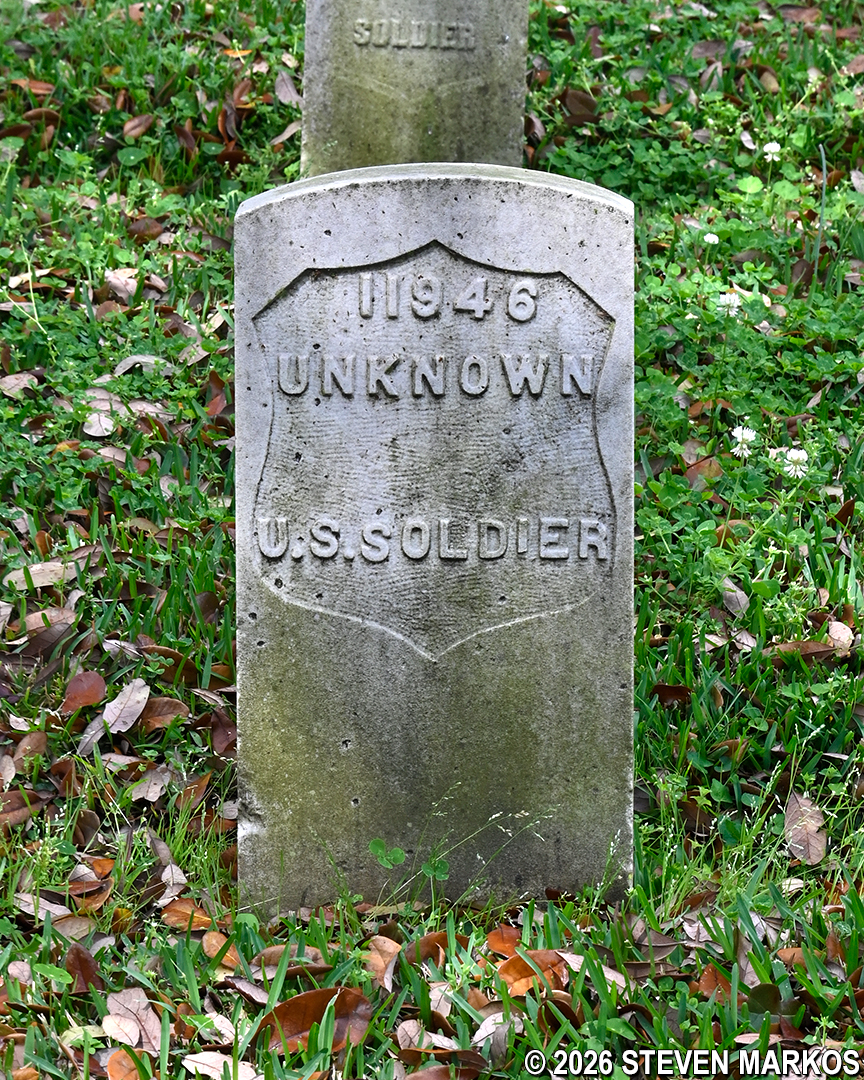
Grave of an unknown soldier at Chalmette National Cemetery, Jean Lafitte National Historical Park and Preserve
Four thousand former slaves who had been laid to rest during the Monument Cemetery days were eventually moved to the Freedmen’s Cemetery when it was established in 1867 by the Freedmen’s Bureau. The cemetery was located just outside the western wall of Chalmette National Cemetery on a four-acre lot. New burials came from those who died at the various Freedmen’s hospitals in Louisiana until 1869, at which time all such hospitals were closed. No new burials took place after that, and by 1872, the entire Freedman’s Bureau was shut down. With no government agency wanting to maintain the cemetery, it slowly fell into disrepair. Over the years, flooding of the Mississippi River gradually deposited more and more dirt on top of the graves, obscuring what remained. Today, aside from historical markers, there is little evidence left of the Freedmen’s Cemetery.
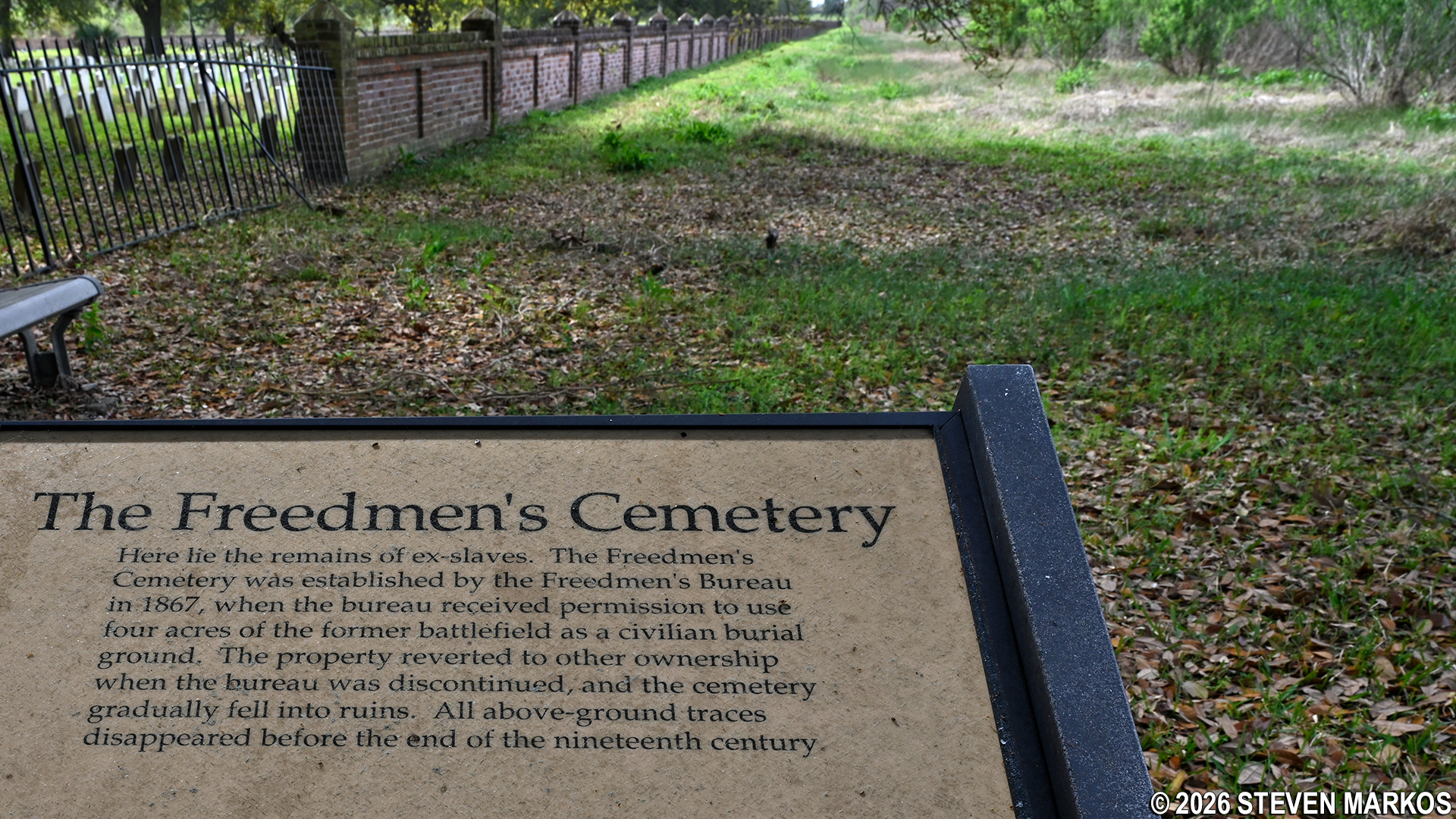
Location of the Freedmen’s Cemetery next to Chalmette National Cemetery, Jean Lafitte National Historical Park and Preserve
Chalmette National Cemetery was full by 1945 and was closed, with few exceptions, to new interments. In 1960, special permission was granted to a handful of local servicemen who were killed during the Vietnam War. Other than these men, the only new burials that could take place after the 1945 closure were for veterans who had been preassigned a spot and spouses of veterans who were already interred at Chalmette.
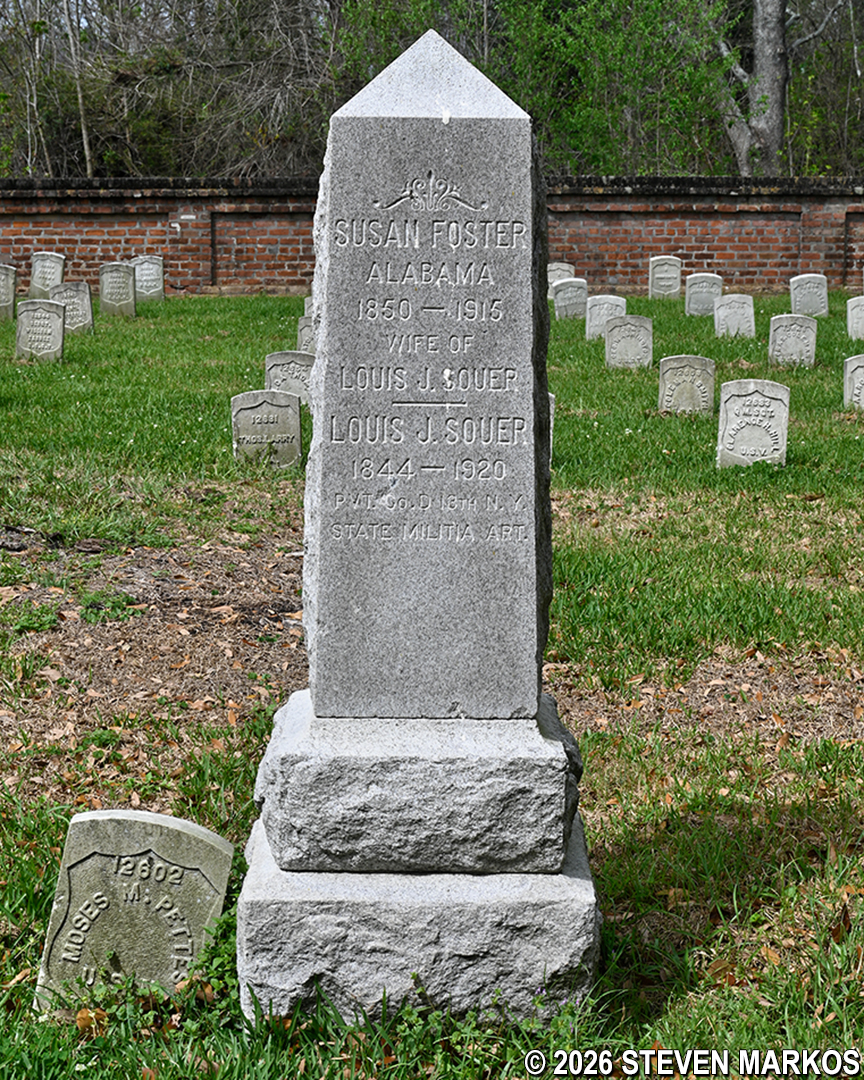
Soldier and wife buried together at Chalmette National Cemetery, Jean Lafitte National Historical Park and Preserve
At the southern end of Chalmette National Cemetery stands the Grand Army of the Republic Monument. Erected in 1882, it honors the Union soldiers who died in Louisiana during the Civil War. The Latin phrase Dum Tacent Clamant, which means While they are silent, they cry aloud, is inscribed on the monument.
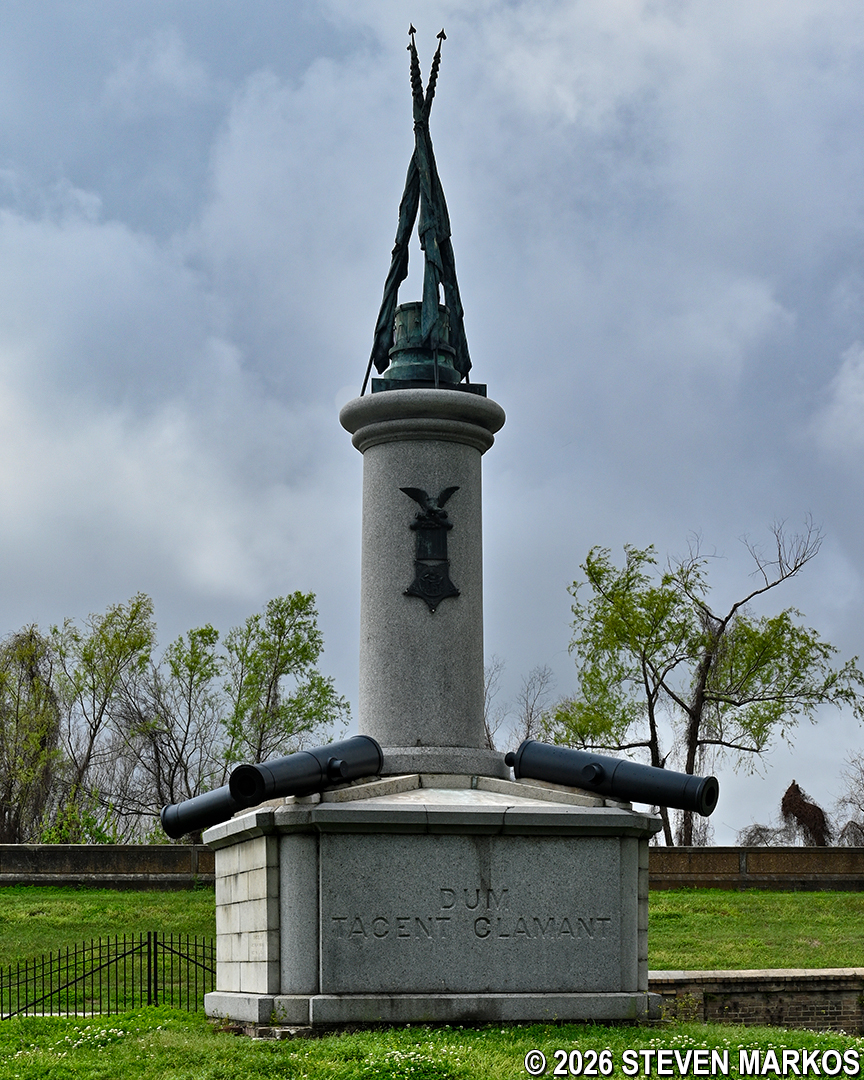
Grand Army of the Republic Monument at Chalmette National Cemetery, Jean Lafitte National Historical Park and Preserve
A brick superintendent’s lodge built in 1929 is at the northern end of the cemetery near the entrance. It is the fourth lodge constructed at the cemetery, with the previous ones having been situated at the southern end near the river. There is a plaque on the outside of the building featuring President Abraham Lincoln’s Gettysburg Address, which was read at the opening of the national cemetery in Gettysburg. The building currently serves as the administrative headquarters for Jean Lafitte National Historical Park and Preserve.
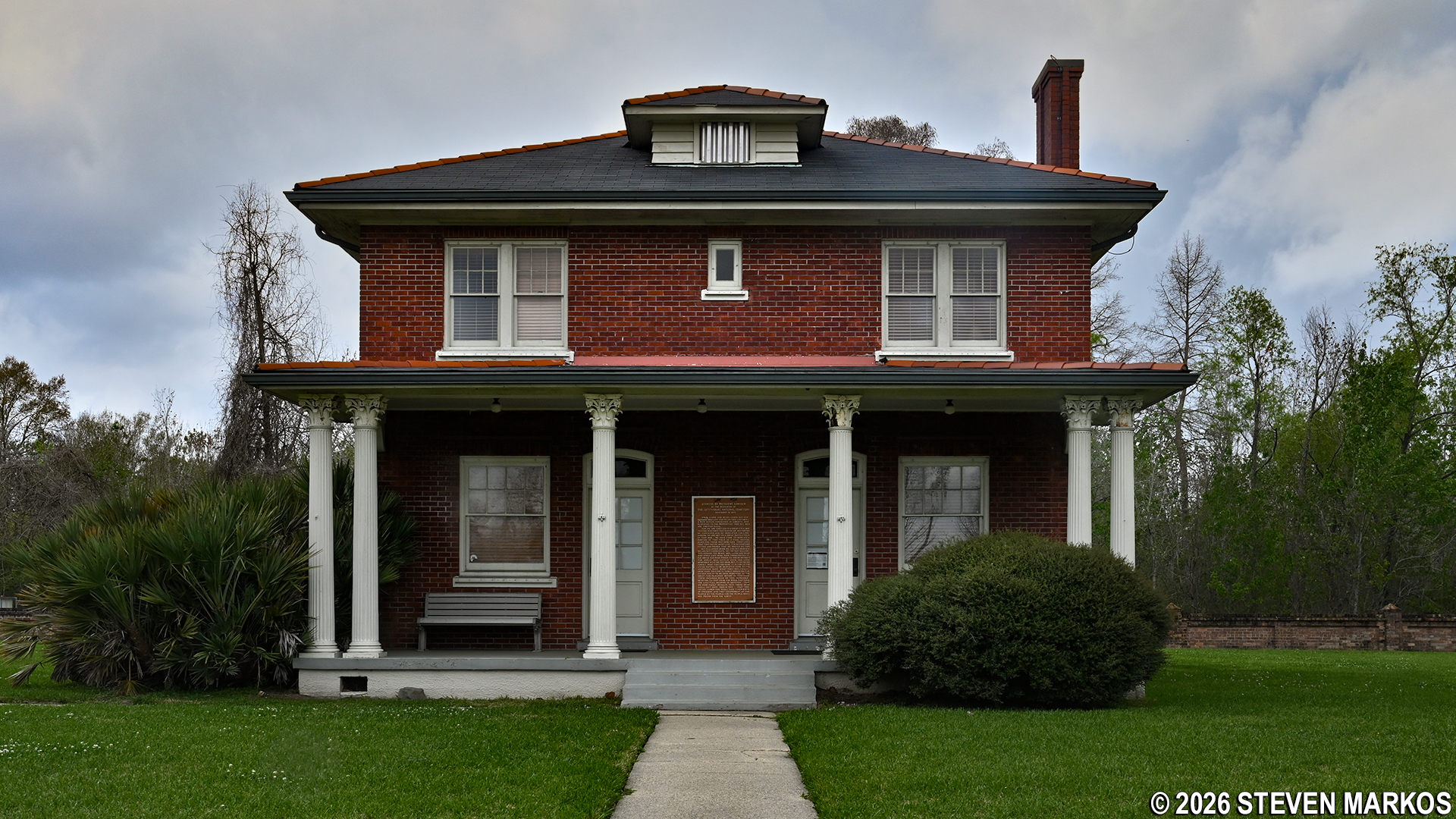
Superintendent’s Lodge at Chalmette National Cemetery, Jean Lafitte National Historical Park and Preserve
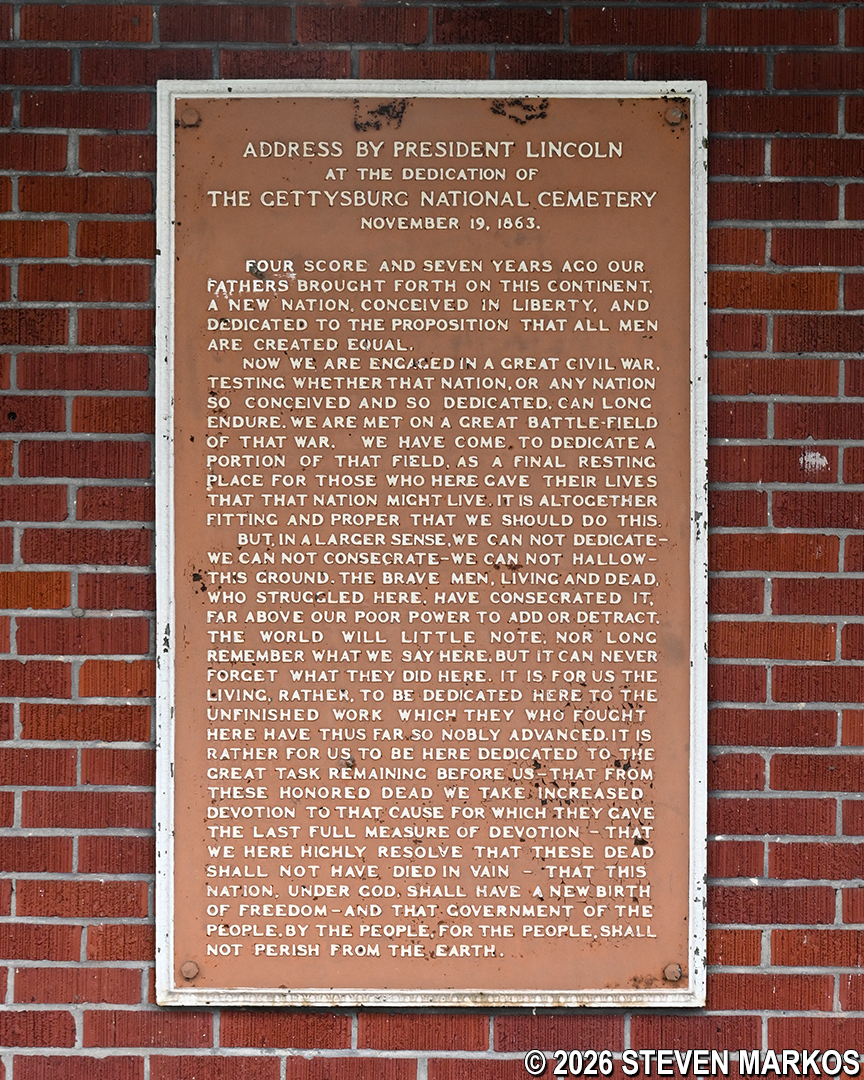
Gettysburg address plaque on the superintendent’s lodge at Chalmette National Cemetery, Jean Lafitte National Historical Park and Preserve
A half hour should be enough time for most visits to Chalmette National Cemetery. It is a half mile long, so seeing the entire grounds on foot requires a 1-mile walk from one end to the other and back. For those who cannot walk or who don’t have much time, it is possible to drive the road through the cemetery. There is a loop at the far end where the Grand Army of the Republic Monument is located, but keep in mind that the radius is very tight, so those in large RVs or vehicles towing trailers will not be able to make the turn.
With a few exceptions, use of any photograph on the National Park Planner website requires a paid Royalty Free Editorial Use License or Commercial Use License. See the Photo Usage page for details.
Last updated on September 4, 2026


