
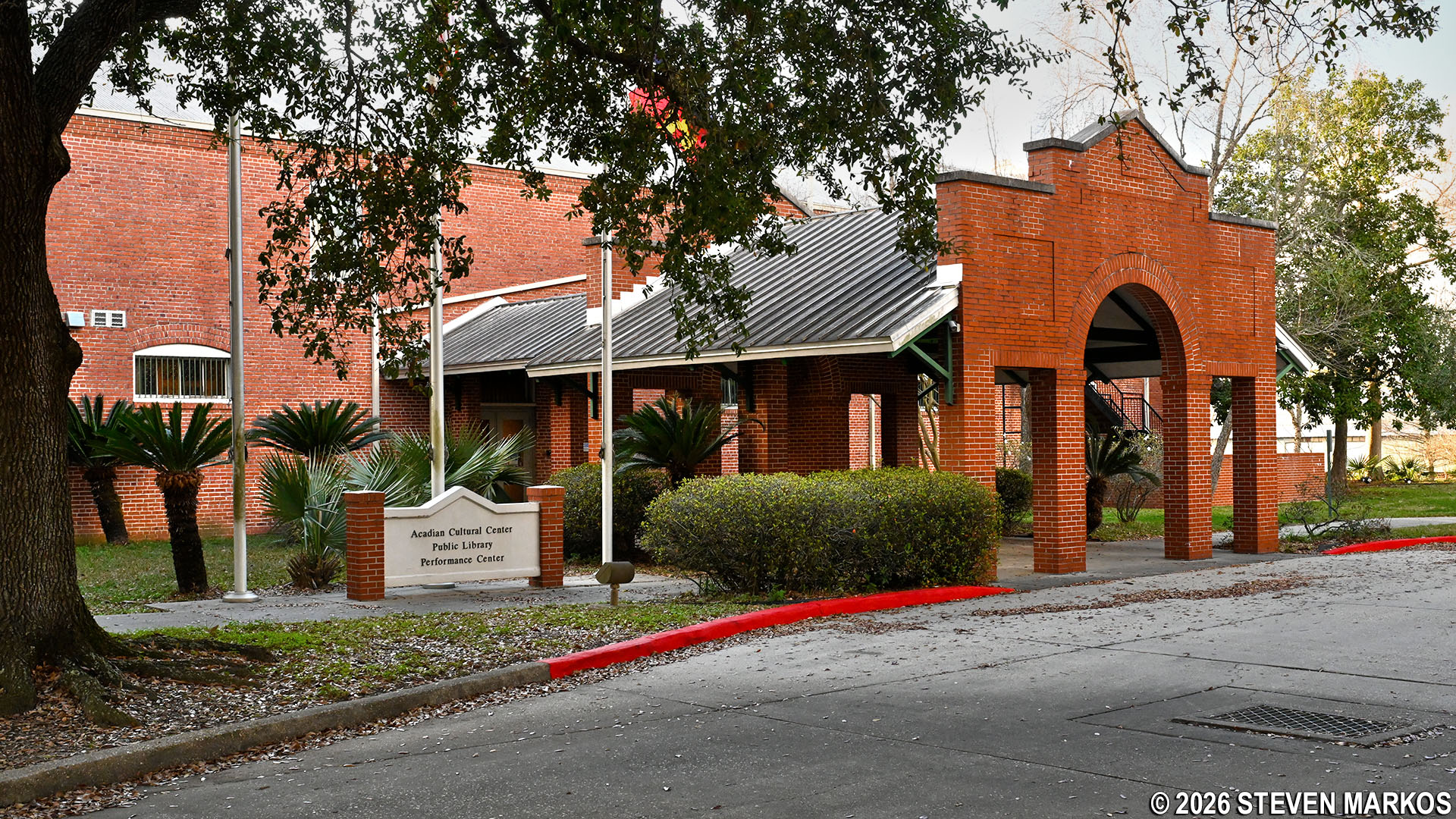
Wetlands Acadian Cultural Center at Jean Lafitte National Historical Park and Preserve
GENERAL INFORMATION
314 St. Mary Street
Thibodaux, LA 70301
The Wetlands Acadian Cultural Center at Jean Lafitte National Historical Park and Preserve is located in Thibodaux, Louisiana. The center helps keep alive the story of the Acadians who were exiled from Nova Scotia, Canada, in the mid-1700s and settled in the bayous of Louisiana.
OPERATING HOURS
The Wetlands Acadian Cultural Center is typically open Wednesdays through Saturdays from 9:30 AM to 4:30 PM, and on Tuesdays from 11 AM to 7 PM. Keep in mind that times can always change, so be sure to check the National Park Service’s official Wetlands Acadian Cultural Center web page for the current schedule.
AMENITIES
- Ranger-staffed information desk where you can ask questions and pick up a park brochure
- Souvenir and bookstore
- Park films
- Guided tours
- Exhibit area
- Restrooms
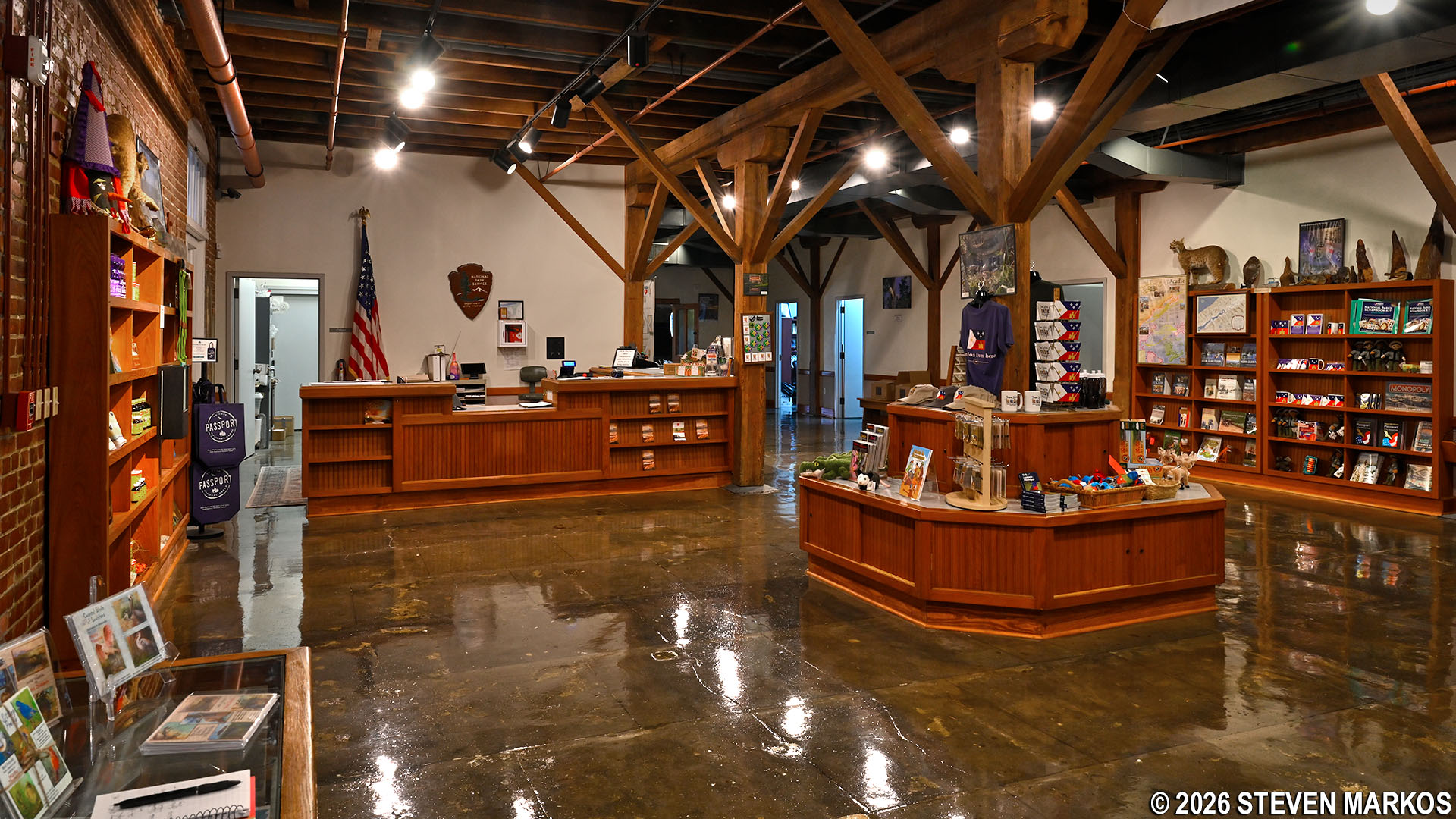
Information desk and souvenir store at the Wetlands Acadian Cultural Center, Jean Lafitte National Historical Park and Preserve
PARK FILMS
There are four different films available for viewing at the Wetlands Acadian Cultural Center: Echoes of Acadia; Battle of New Orleans; Jambalaya; and Mississippi in Motion. These play on demand, and visitors can choose which ones they want to watch. The films are available at each of the three cultural centers in Jean Lafitte National Historical Park and Preserve. Mississippi in Motion also plays at the French Quarter Visitor Center in New Orleans. I had already watched Echoes of Acadia at the Prairie Acadian Cultural Center, so I decided to go with Jambalaya and the Battle of New Orleans while I was here. I would catch Mississippi in Motion in New Orleans.
The 25-minute film Jambalaya is about the Cajun people who live in Louisiana. Cajuns today are descendants of the Acadians who came from Canada. Multiple individuals tell personal stories about growing up in the Mississippi River Delta. The film is scored with different music inspired by the bayou.
The 14-minute film Battle of New Orleans covers the history of the last major battle of the War of 1812. Narration accompanied by historical drawings and maps are used to explain the battle and the events that led up to it. If you are going to the Chalmette Battlefield, there are better and more modern films about the battle that are shown at the Chalmette Battlefield Visitor Center.
GUIDED TOURS
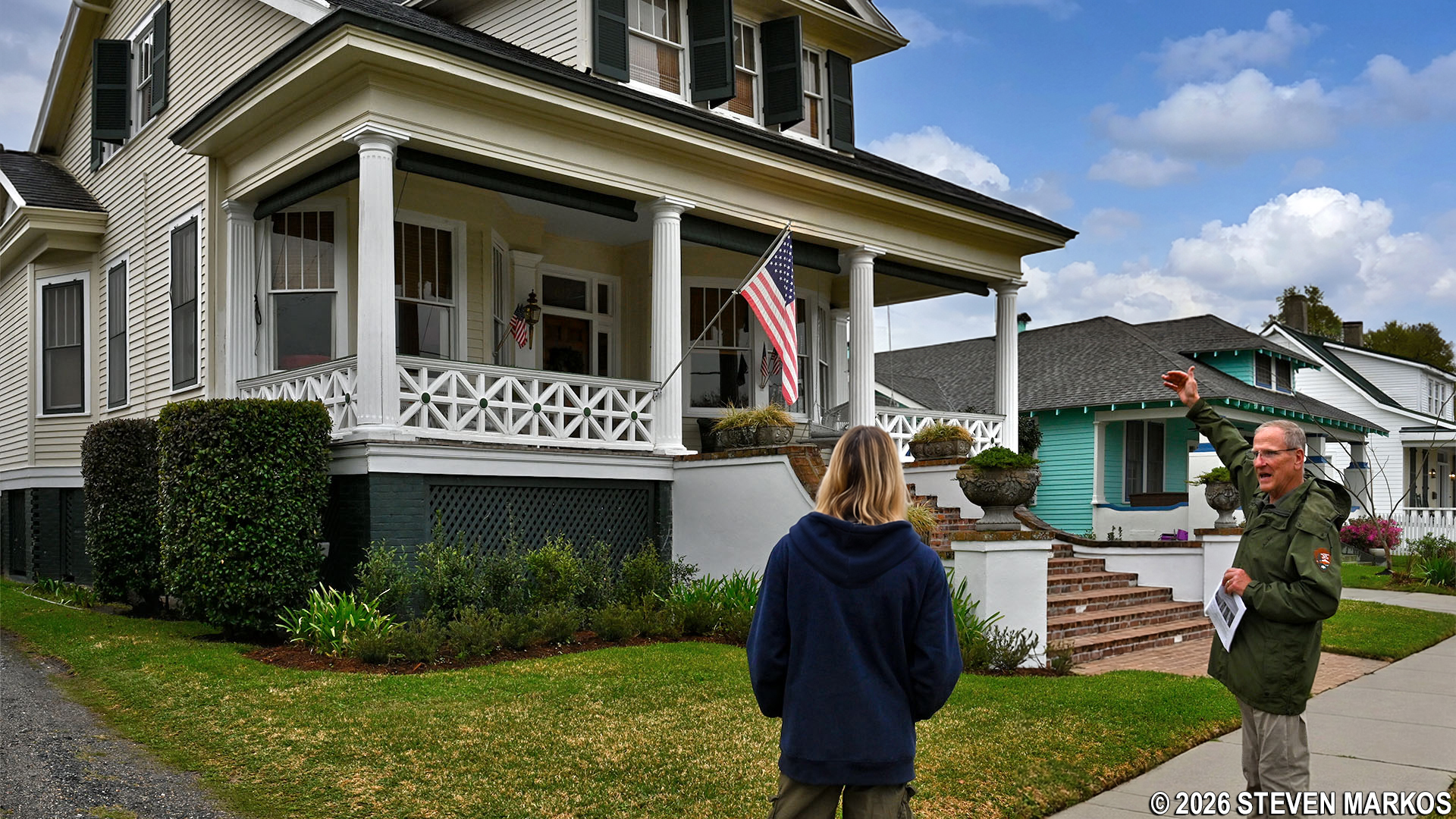
Ranger-guided walking tour of historic Thibodaux at the Wetlands Acadian Cultural Center, Jean Lafitte National Park and Preserve
There are a variety of tours and events available at the Wetlands Acadian Cultural Center. These include lectures, art exhibitions, concerts, and tours of historic Thibodaux. For a schedule of events, see the National Park Service’s official Calendar web page for Jean Lafitte National Historical Park and Preserve.
I attended the one-hour Ranger-guided walking tour of Thibodaux. There is a wide mix of architectural styles throughout the town. One notable stop on the tour is at a typical Creole cottage. It is made of cypress, a locally available and durable wood, and built off the ground to allow air to circulate, a common construction technique used in the days long before air conditioning.
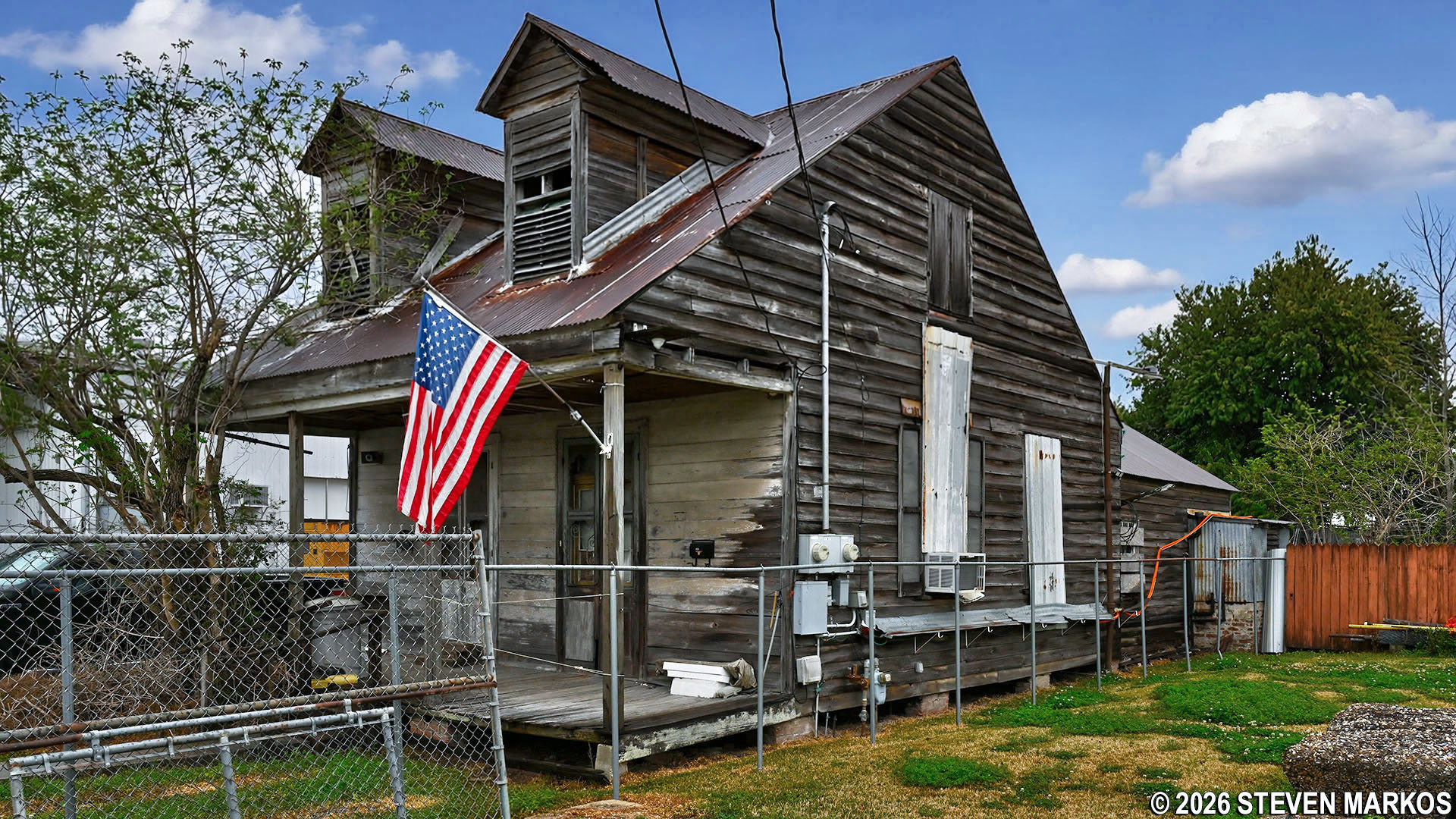
Creole cottage in historic Thibodaux, Louisiana
St. John’s Episcopal Church, one of the oldest Episcopal churches west of the Mississippi, is located in Thibodaux. It was founded by Leonidas Polk, the first bishop of Louisiana, and built in 1844 in the Greek Revival architectural style. The church’s cemetery has above-ground entombments, which is typical of the area.
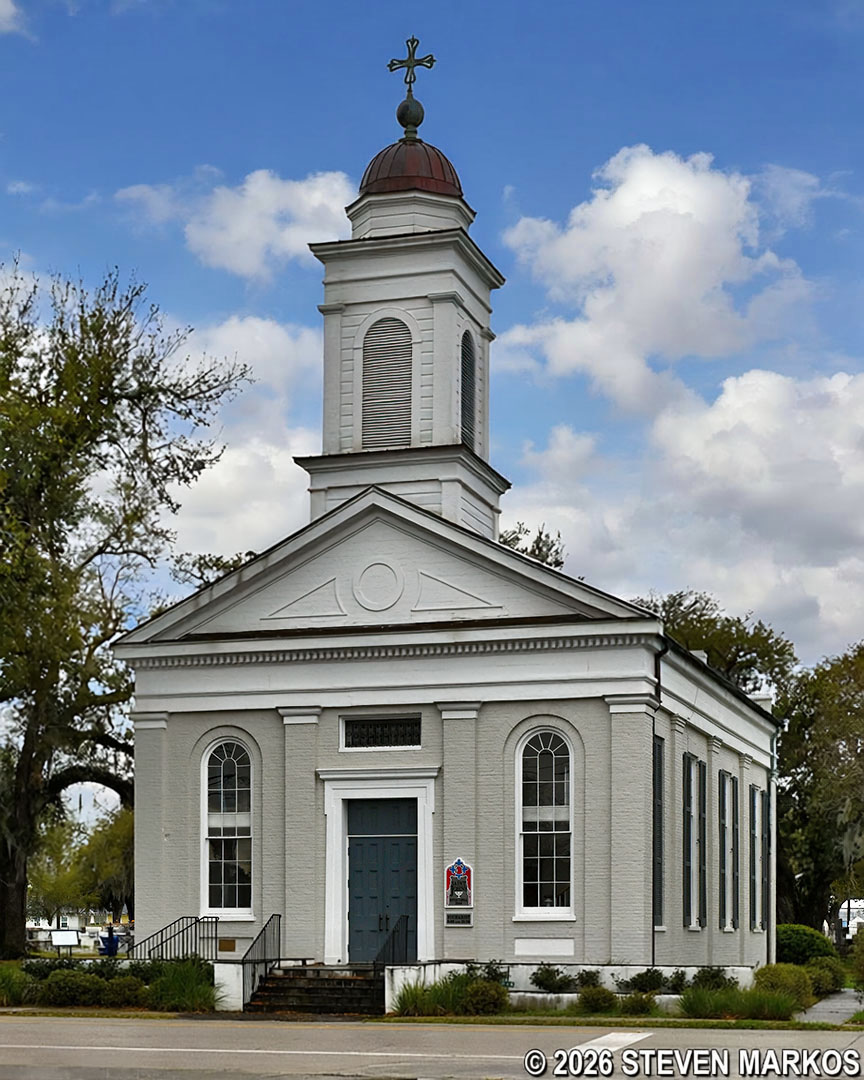
St. John’s Episcopal Church in historic Thibodaux, Louisiana
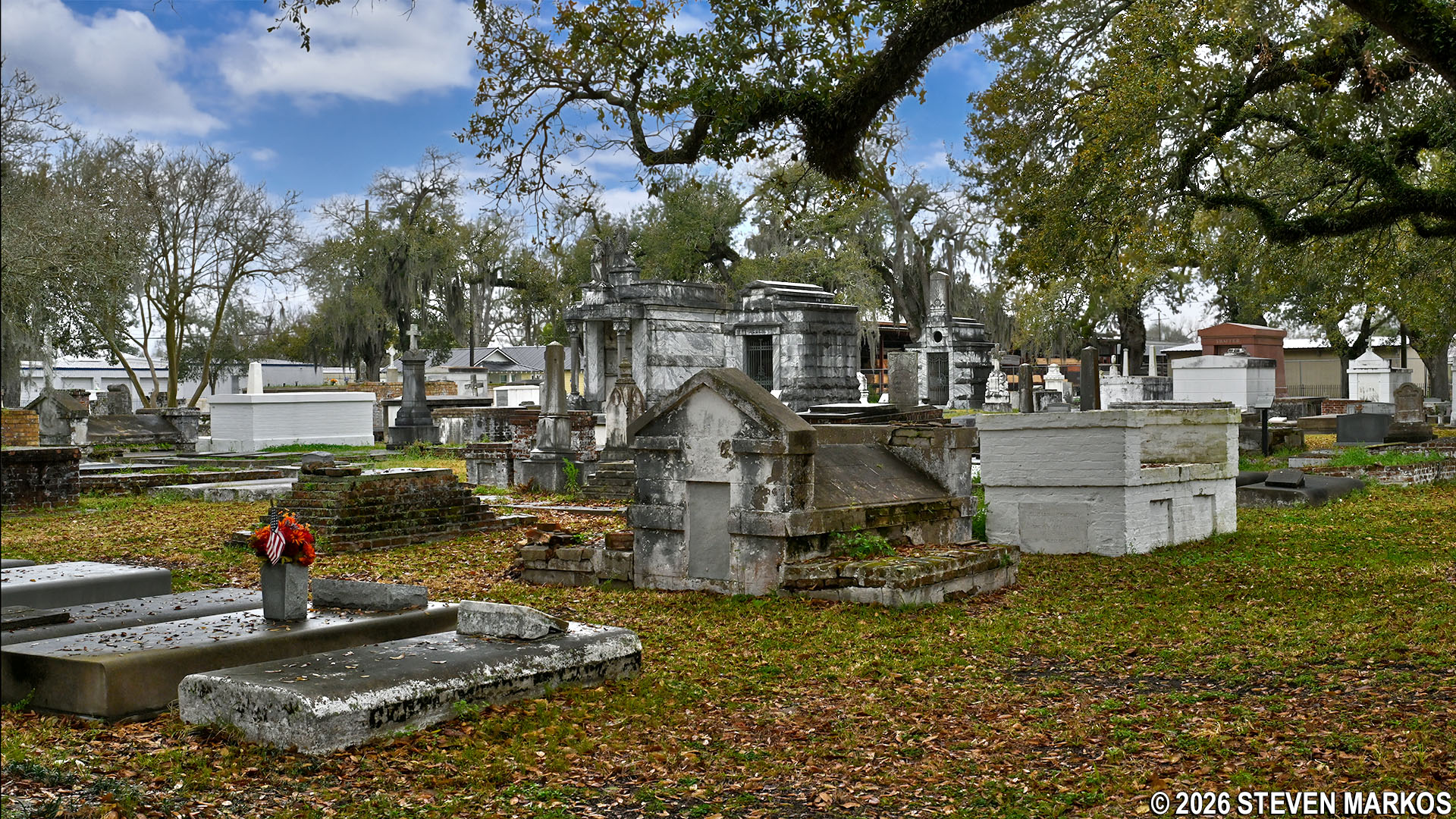
St. John’s Episcopal Church Cemetery in historic Thibodaux, Louisiana
Some of the homes that were constructed in the late 1800s and early 1900s have touches of the Victorian and Edwardian architectural styles. One house built in 1890 features a wraparound porch, scalloped shingles, and decorative trim known as gingerbread, which was typical of the Victorian style. Another home sports the Edwardian features of a rounded front portico with columns.
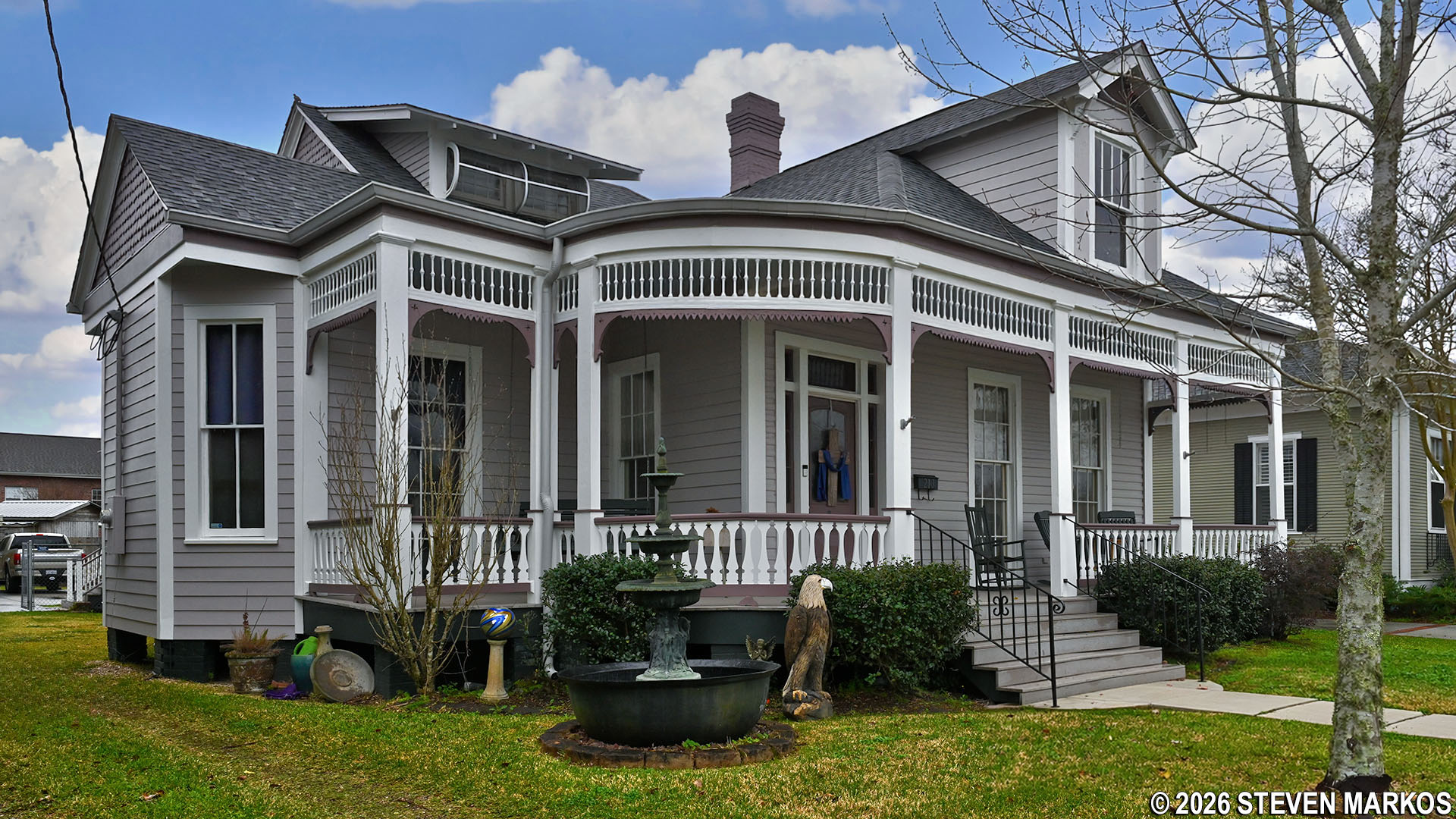
1890s Victorian-style house in historic Thibodaux, Louisiana
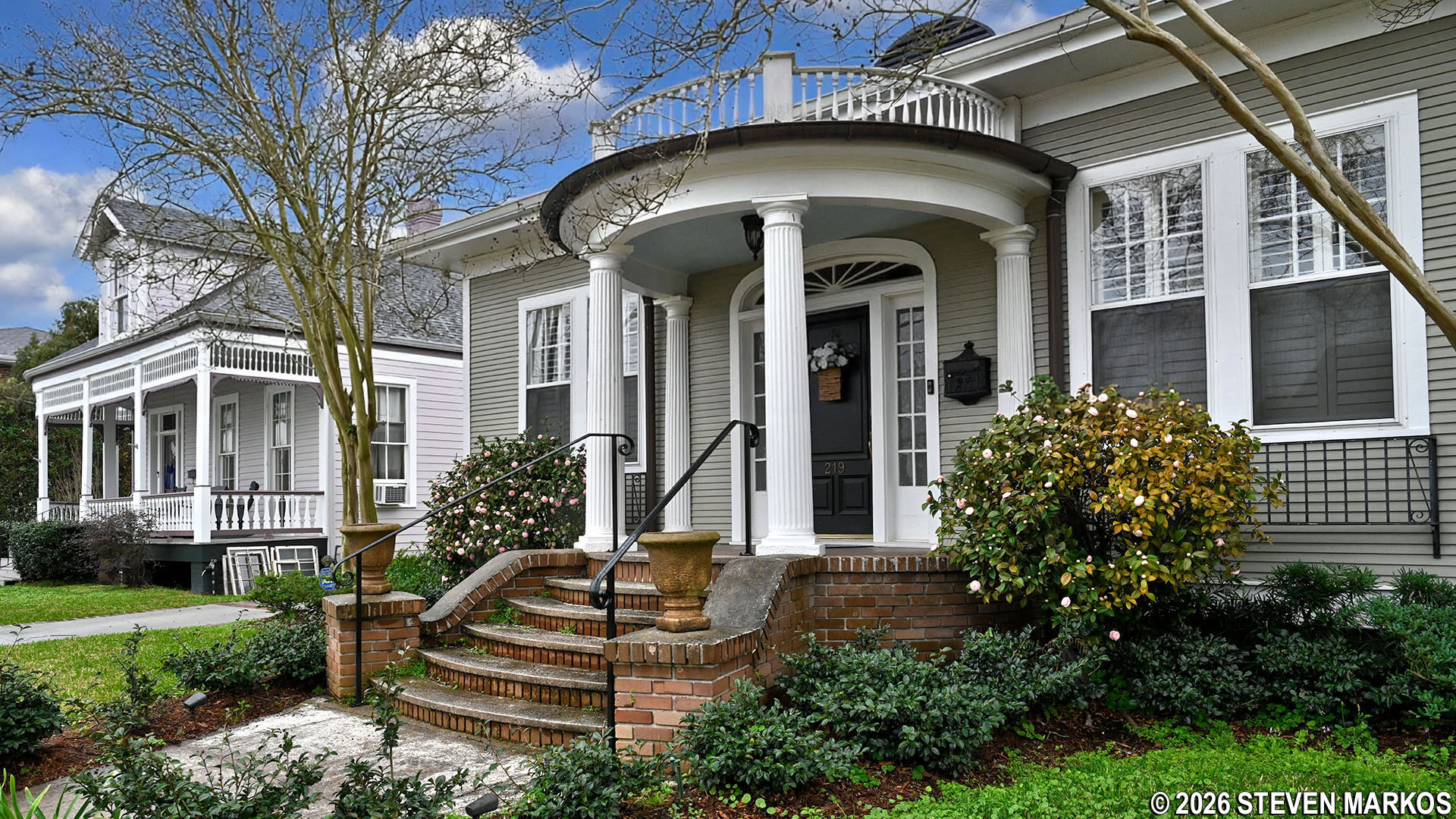
Early 1900s Edwardian-style house in historic Thibodaux, Louisiana
One of the largest homes in Thibodaux is the Dansereau House. It was originally built around 1850 as a raised cottage and later remodeled in the 1870s using the Italianate style that was popular in the United States at the time. For more than 100 years, it was the home and medical office of Dr. Hercules Dansereau and his family. It is currently run as a bed-and-breakfast and event facility.
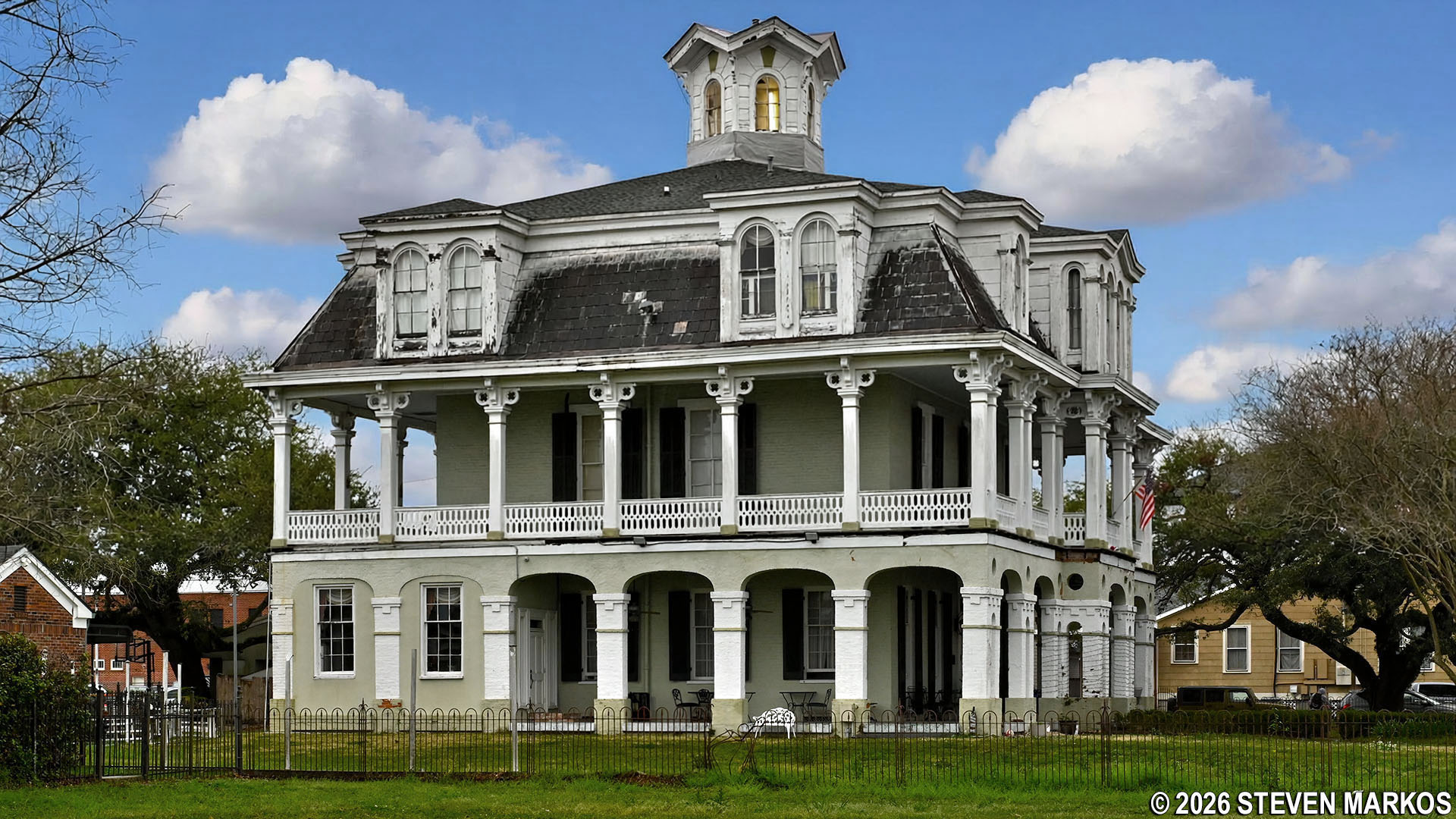
1850s Dansereau House in historic Thibodaux, Louisiana
Visitors can also take a guided boat tour on Bayou Lafourche, which runs right behind the Wetlands Acadian Cultural Center. The bayou is locally known as “the longest Main Street in the world” because the 100-mile waterway was once the main route of travel. Tours are offered from October through May, and tickets can be reserved by phone or email. For more information and prices, check out the National Park Service’s official Boat Tours of Bayou Lafourche web page.
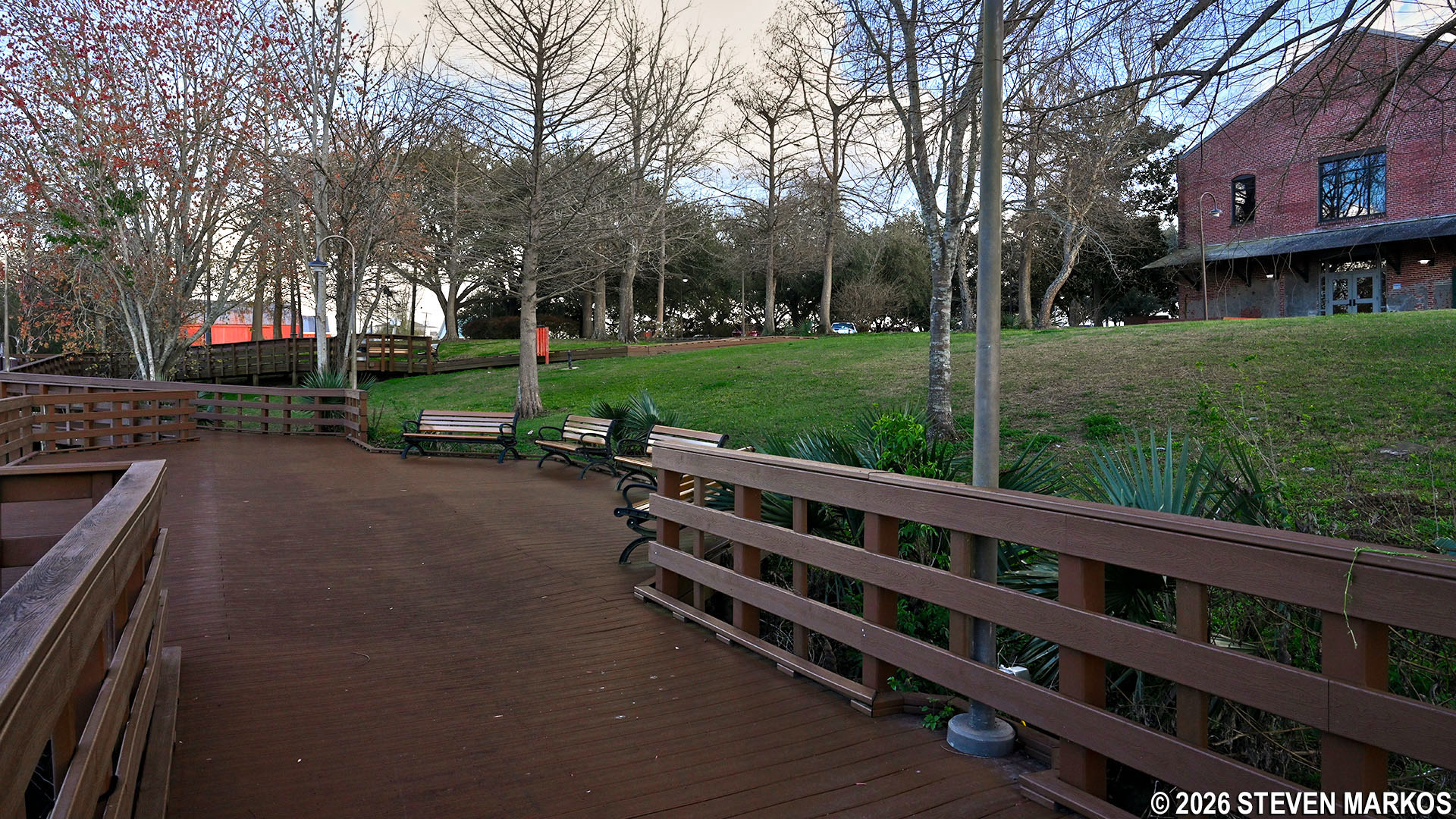
Boardwalk and boat dock behind the Wetlands Acadian Cultural Center, Jean Lafitte National Historical Park and Preserve
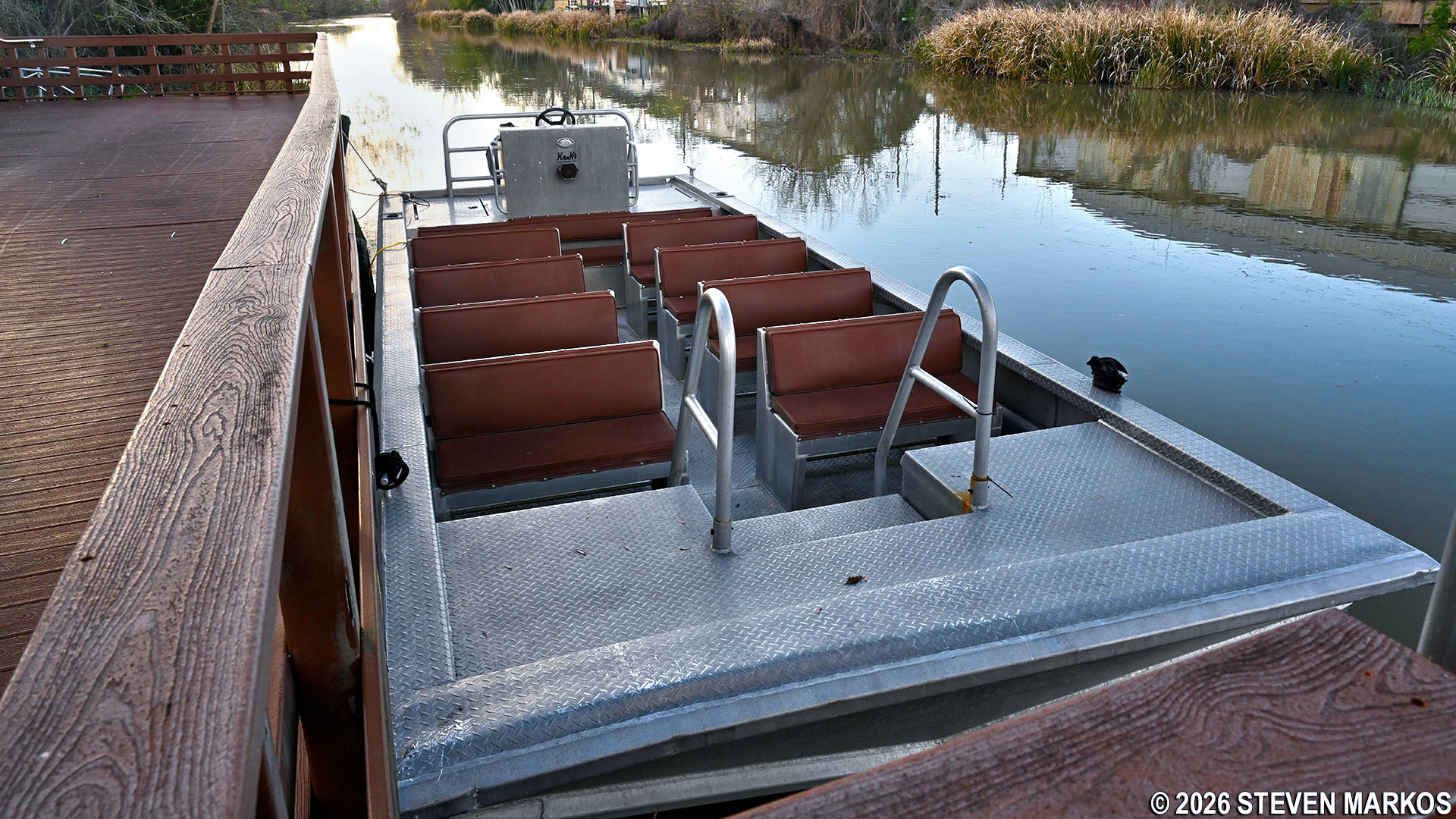
Boat used for tours of Bayou Lafourche at the Wetlands Acadian Cultural Center, Jean Lafitte National Historical Park and Preserve
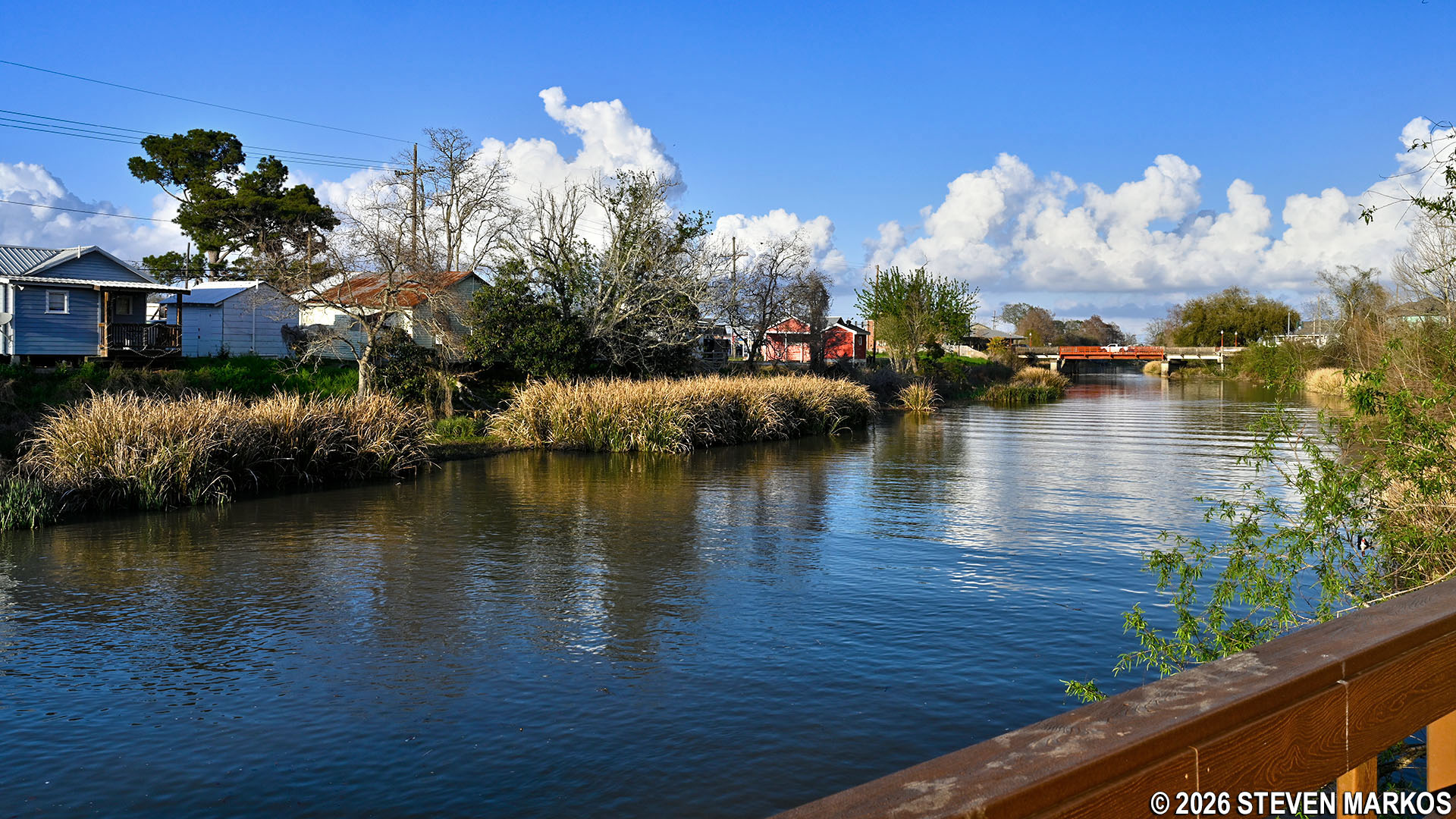
View of Bayou Lafourche behind the Wetlands Acadian Cultural Center, Jean Lafitte National Historical Park and Preserve
EXHIBIT AREA
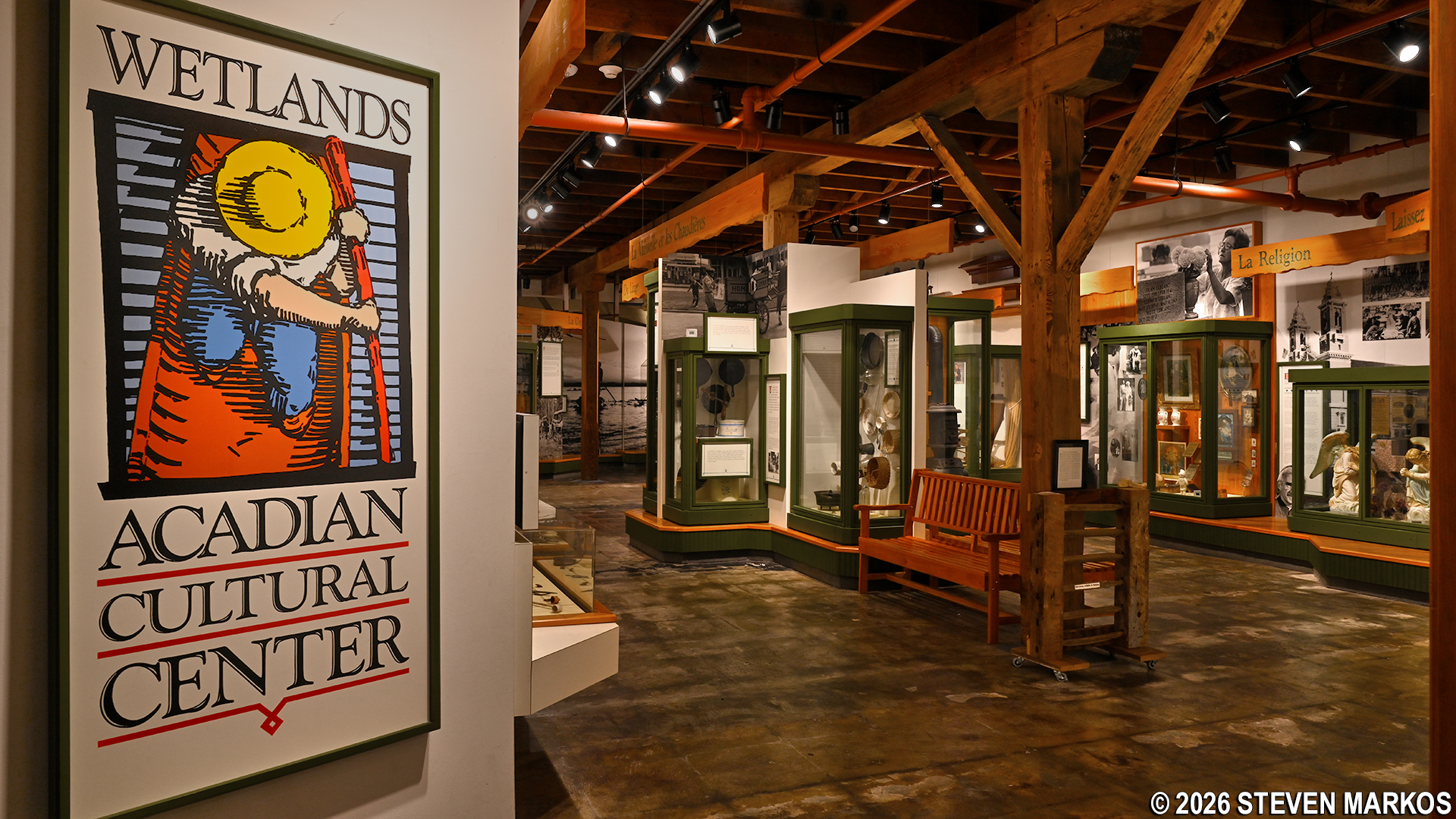
Exhibit area at the Wetlands Acadian Cultural Center, Jean Lafitte National Historical Park and Preserve
The exhibit area at the Wetlands Acadian Cultural Center is very similar in layout to the one at the Prairie Acadian Cultural Center. Both cover the history and culture of the Acadian people, though the Acadians who settled in the wetlands were more connected to the bayous and the ocean than those who settled in the prairies of Louisiana. The history of both, however, began in the early 17th century when French settlers arrived in the New France colony of Acadia (present-day Nova Scotia). After the British conquered Acadia in 1713, the Acadians’ refusal to sign an oath of allegiance to Britain led to their forced removal from Nova Scotia. Known as the Expulsion of the Acadians, the deportation of more than 11,000 people occurred between 1755 and 1764. In search of a friendly location, some Acadians decided to settle in Louisiana (then under Spanish rule) because of the good relations between France and Spain and their shared Catholic faith. One of the exhibits, L’Histoire, shows a historical timeline of the Acadians and their migration to Louisiana.
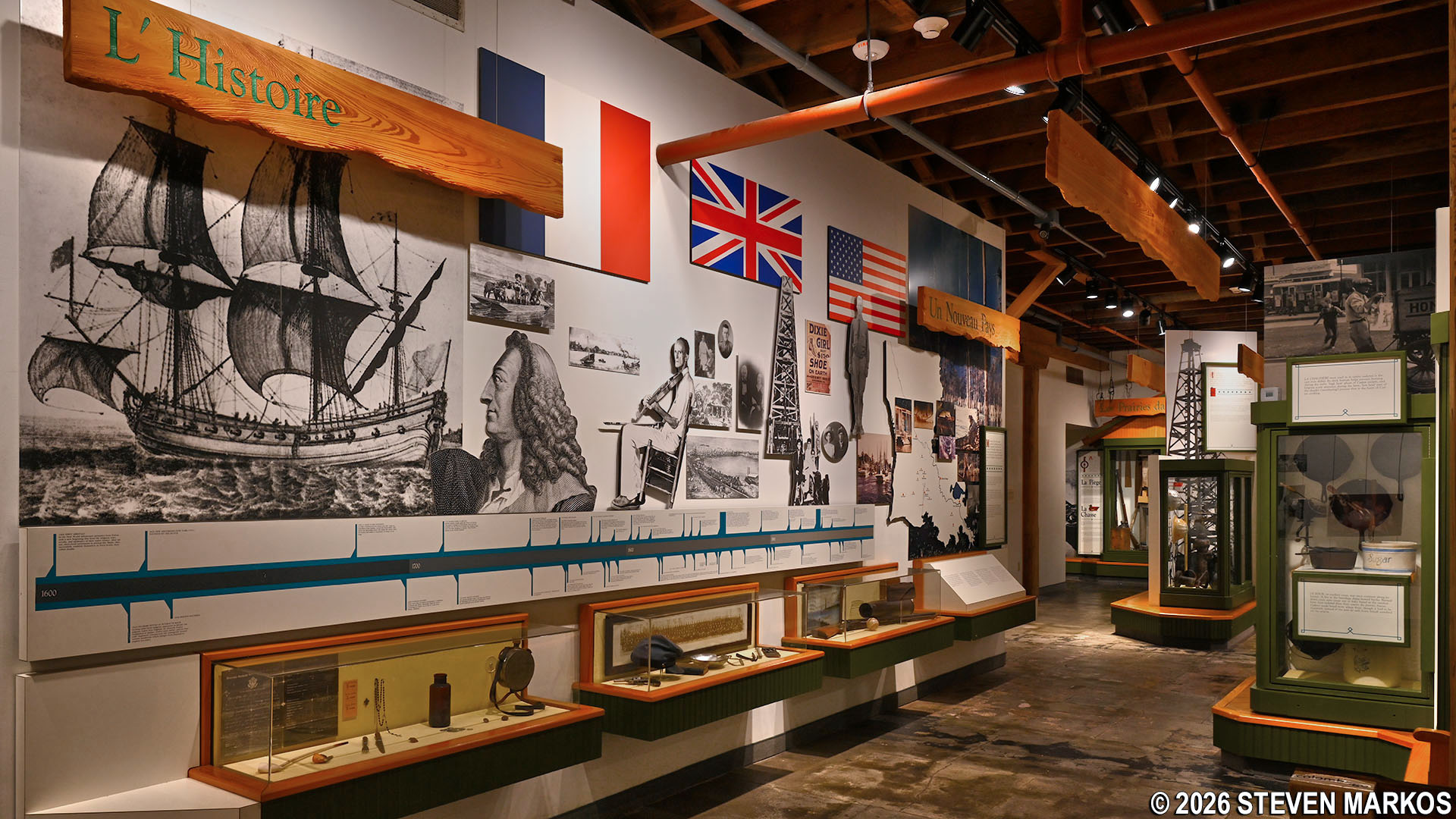
L’Histoire exhibit at the Wetlands Acadian Cultural Center, Jean Lafitte National Historical Park and Preserve
The exhibit area is divided into multiple sections, each covering a different top. The sections are identified by signs written in French, though the information itself is in English. The sections L’Huile and La Canne à Sucre (French for oil and sugarcane, respectively) focus on two of the largest industries in Louisiana. One of the display cases features store ledgers and trade tokens dating back to the 1920s from Laurel Valley, a sugar plantation built on Acadian land in Thibodaux.
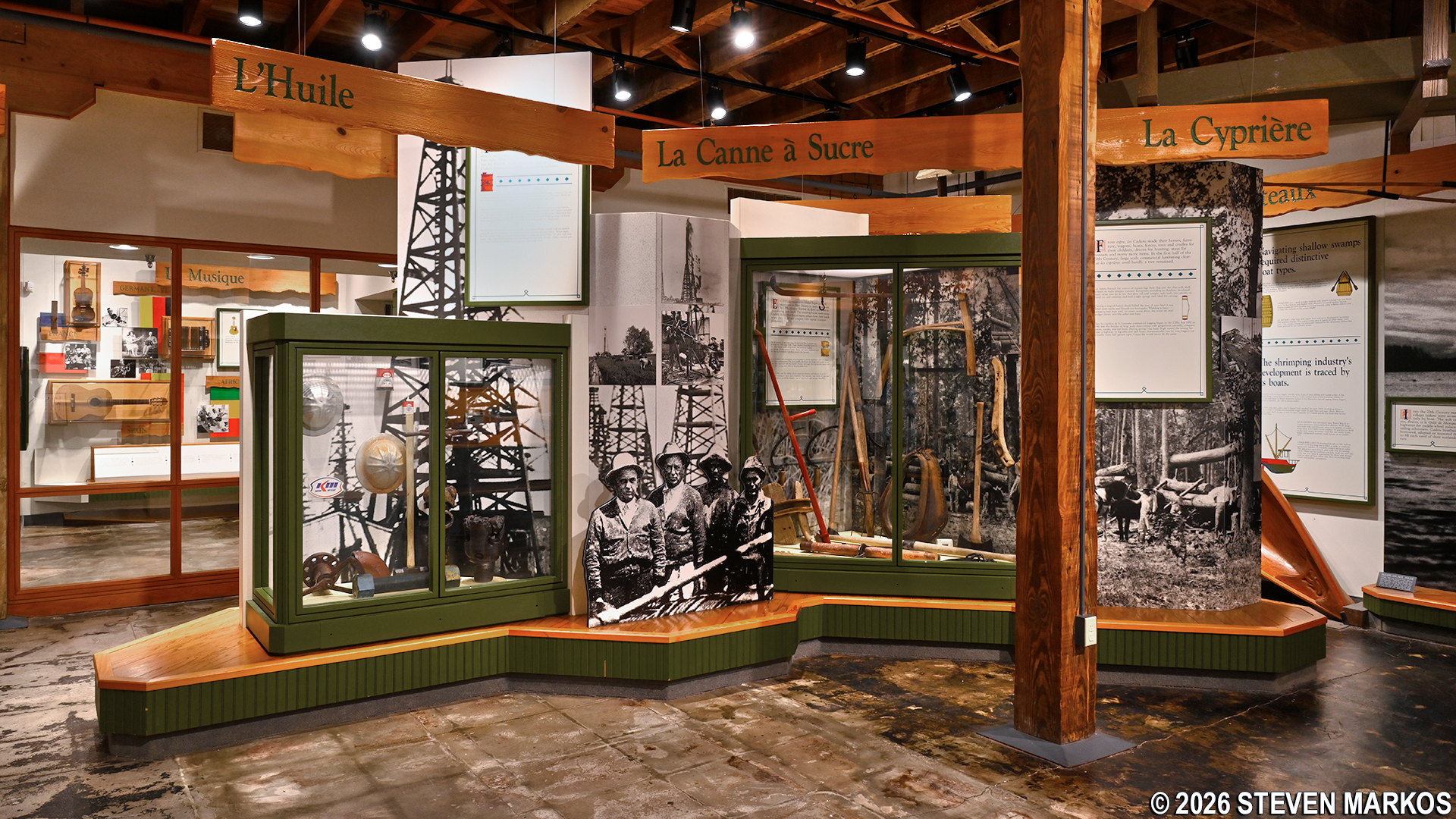
Exhibit on the oil and sugarcane industries of southern Louisiana at the Wetlands Acadian Cultural Center, Jean Lafitte National Historical Park and Preserve
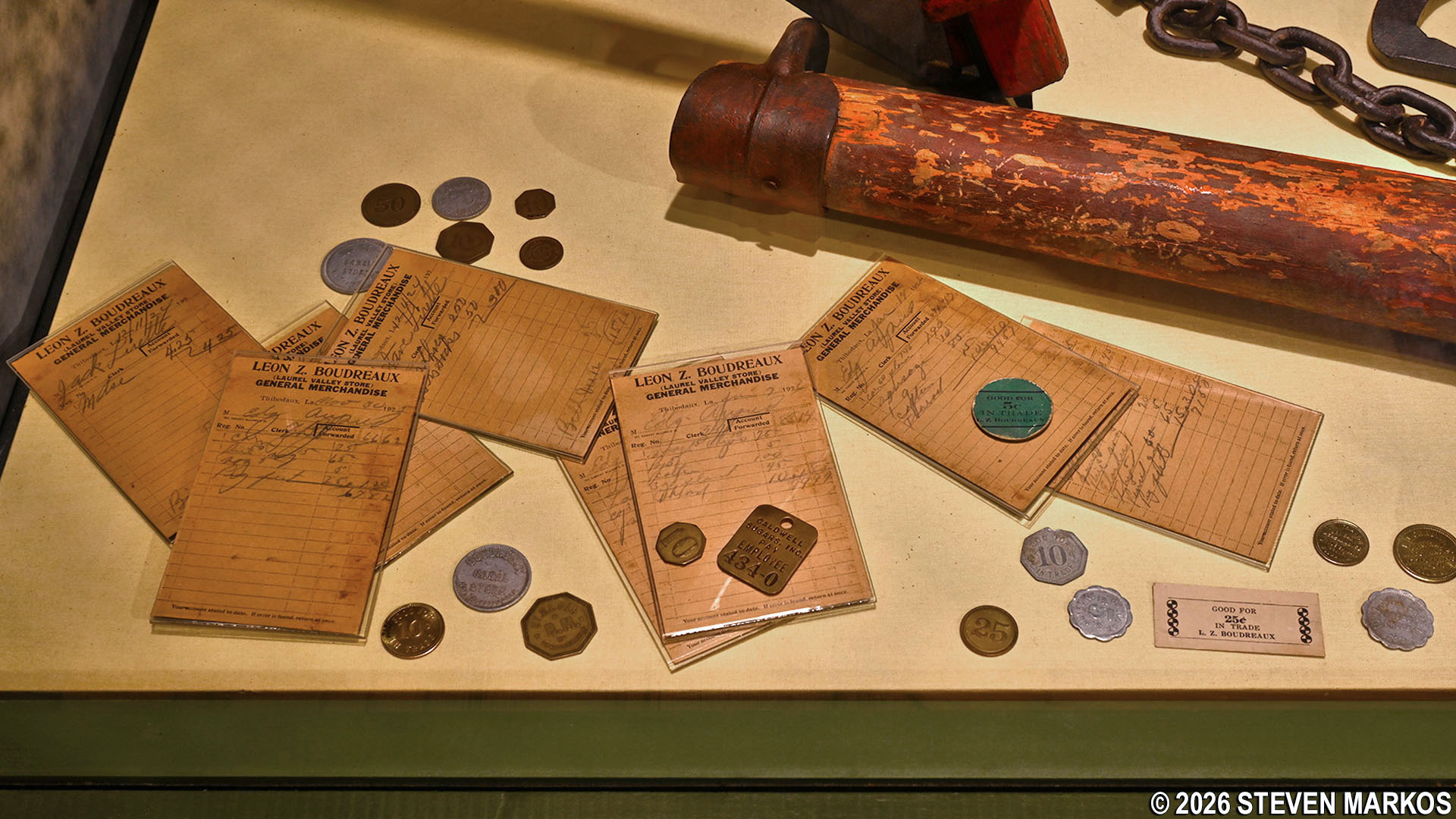
1920s store ledgers and trade tokens on display at the Wetlands Acadian Cultural Center, Jean Lafitte National Historical Park and Preserve
Living in the wetlands and the bayou, shrimp fishing was also a big part of Acadian life. Shrimp were abundant in Gulf waters, and as technology for preserving seafood improved, so did the industry. Models of different fishing boats are displayed in the exhibit area.
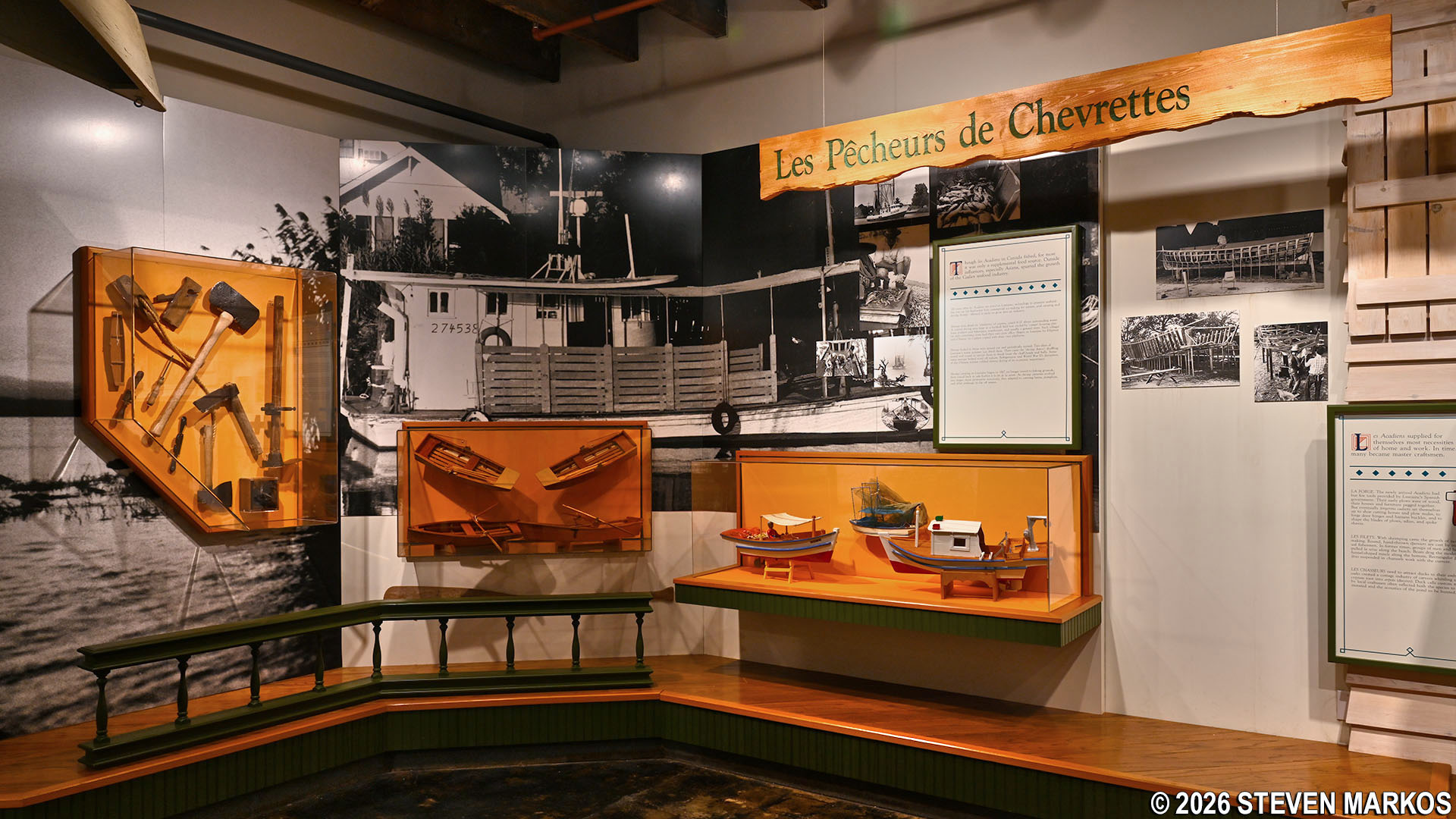
Exhibit on shrimp fishing at the Wetlands Acadian Cultural Center, Jean Lafitte National Historical Park and Preserve
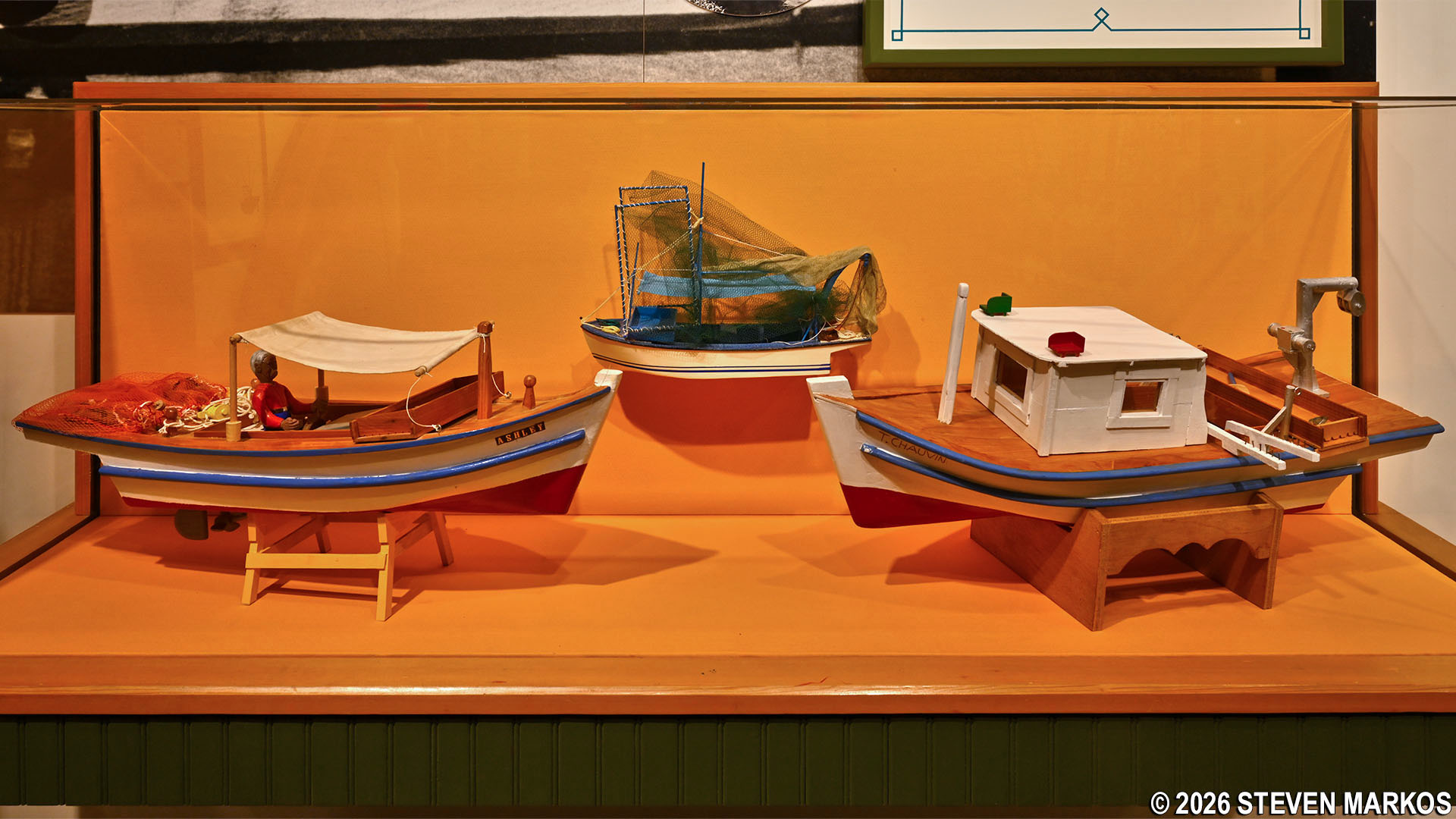
Models of fishing boats on display at the Wetlands Acadian Cultural Center, Jean Lafitte National Historical Park and Preserve
The influence of Acadian, Creole, French, and Spanish cultures led to a unique style of music synonymous with Louisiana. Known as Bayou Cajun, stringed instruments such as fiddles and banjos, accordions, and rubboards were typically played.
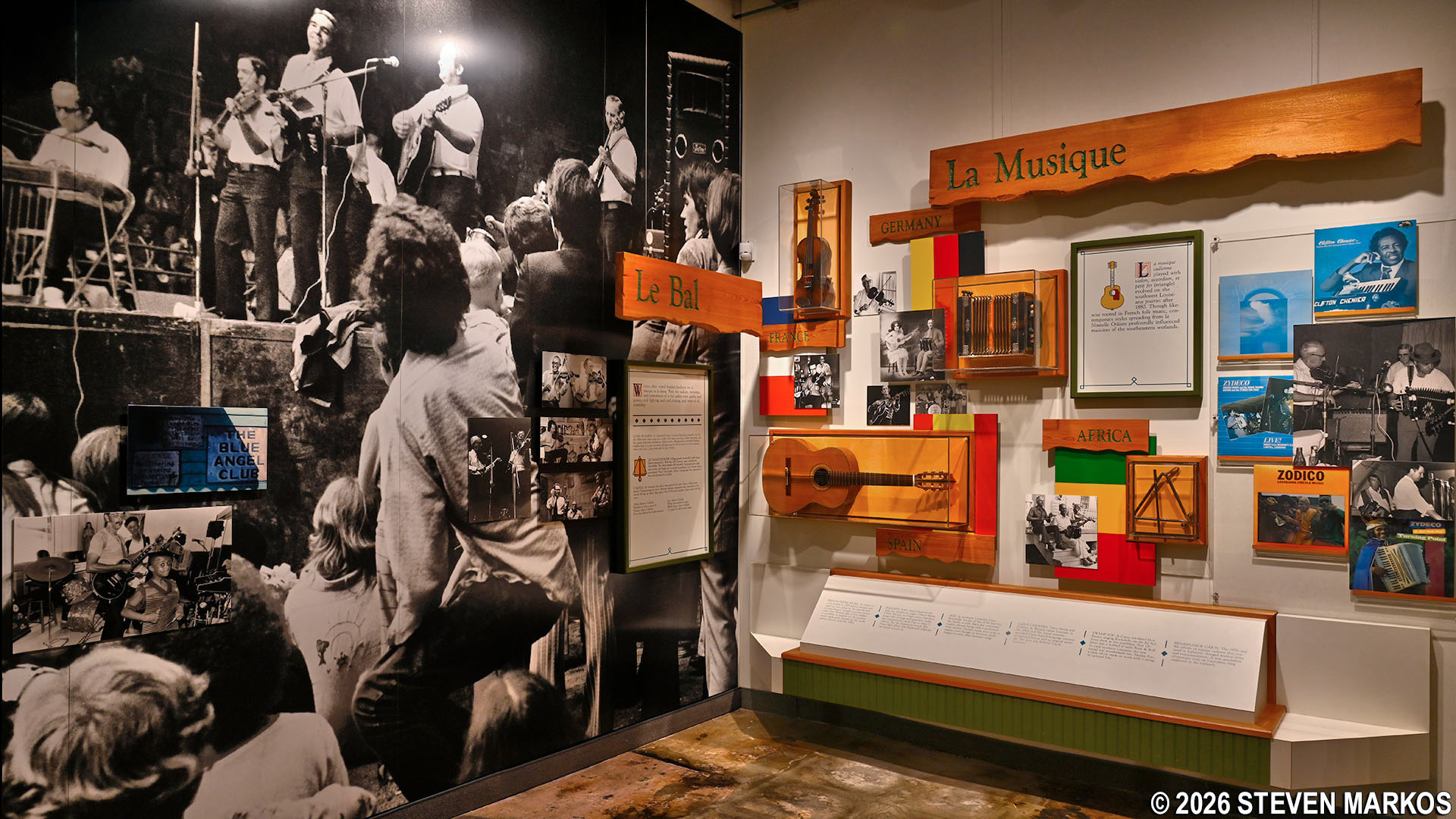
Exhibit on music and dance at the Wetlands Acadian Cultural Center, Jean Lafitte National Historical Park and Preserve
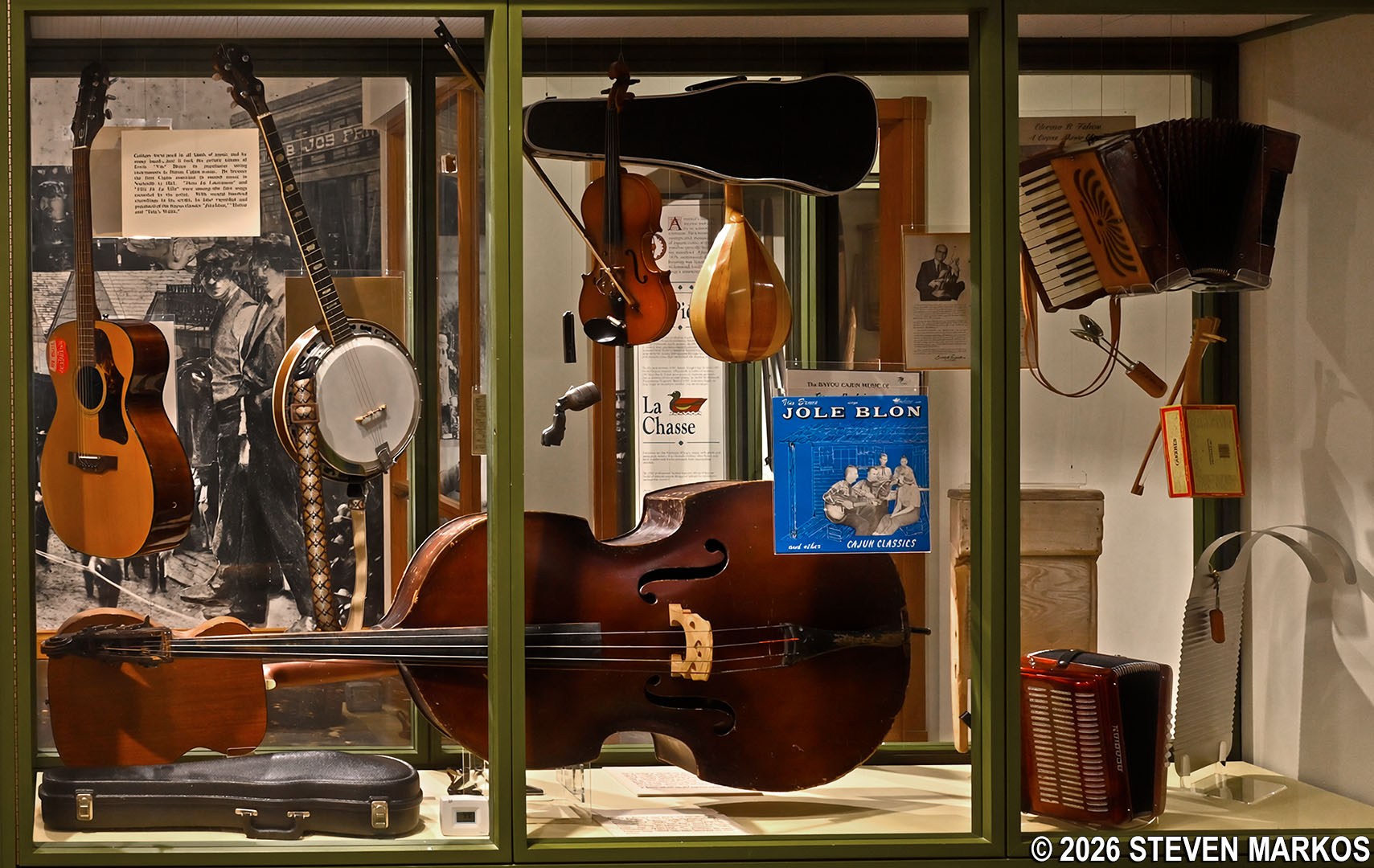
Instruments typically featured in Bayou Cajun music on display at the Wetlands Acadian Cultural Center, Jean Lafitte National Historical Park and Preserve
One thing the Acadians were known for was their love of dance. Social dances were hosted often and were one of the many ways the Acadians spent their free time. Dances were also an opportunity for flirting and courtship, and they would dress to the nines when attending.
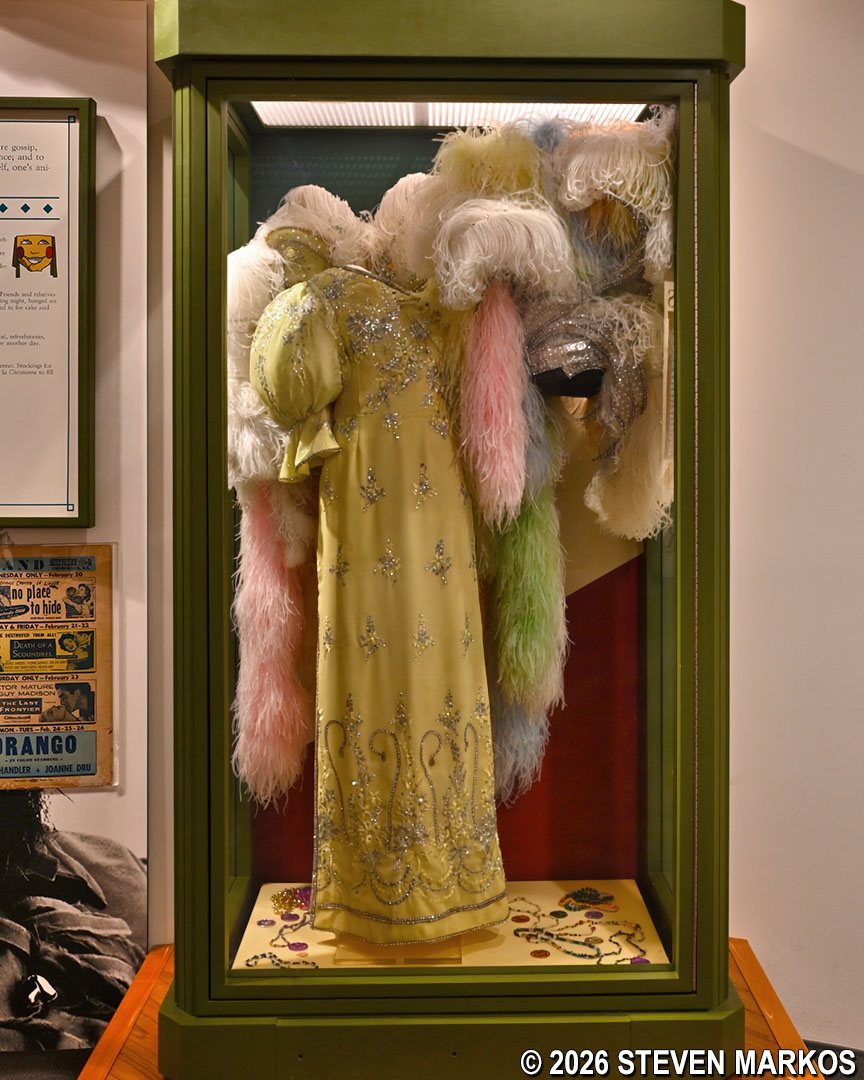
Fancy dress and accessories typically worn to dances on display at the Wetlands Acadian Cultural Center, Jean Lafitte National Historical Park and Preserve
Religion was also important to the Acadians. They were devout Catholics and held elaborate rituals to celebrate holy occasions. Copies of The Sacristy Manual (a guide to performing baptisms, marriage ceremonies, and other traditional rites) and Rituale Romanus (which contains all the services, sacraments, and blessings that a priest may perform) from the early 1900s are on display. Next to them are two church pamphlets in French, A Summary of the Christian Doctrine and The Infinite Value of the Holy Mass.
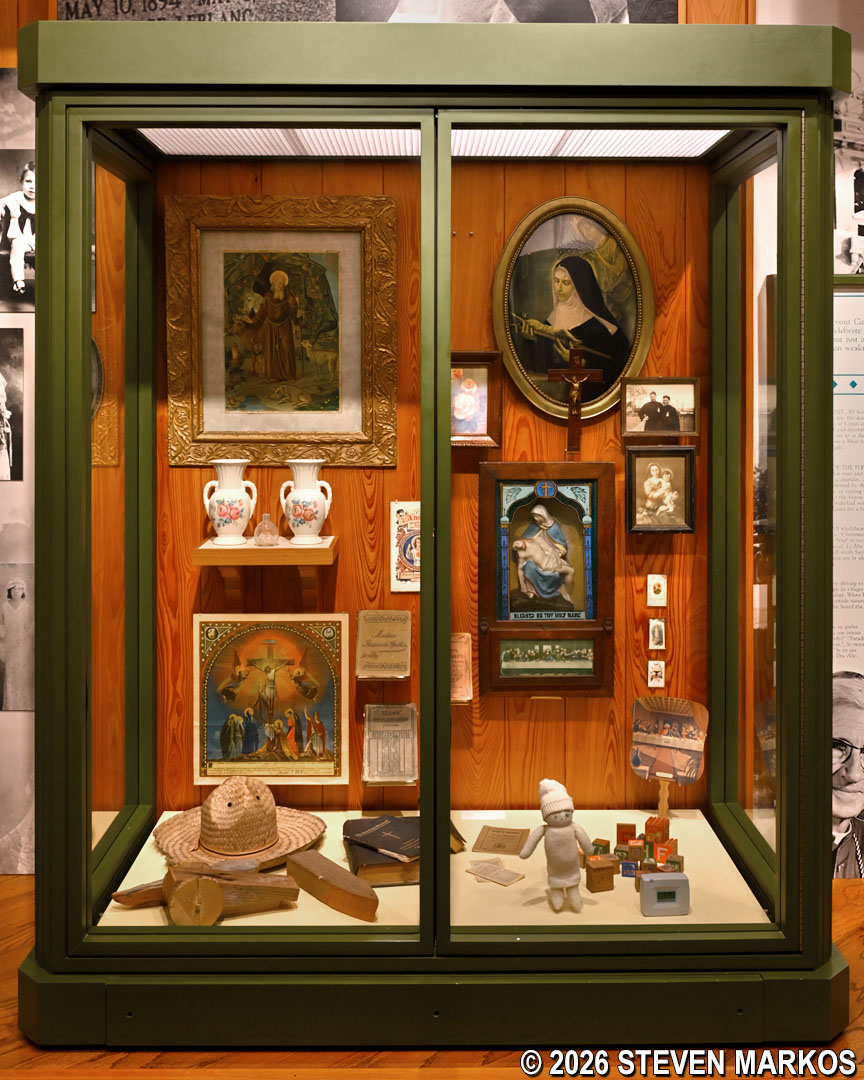
Church items on display at the Wetlands Acadian Cultural Center, Jean Lafitte National Historical Park and Preserve
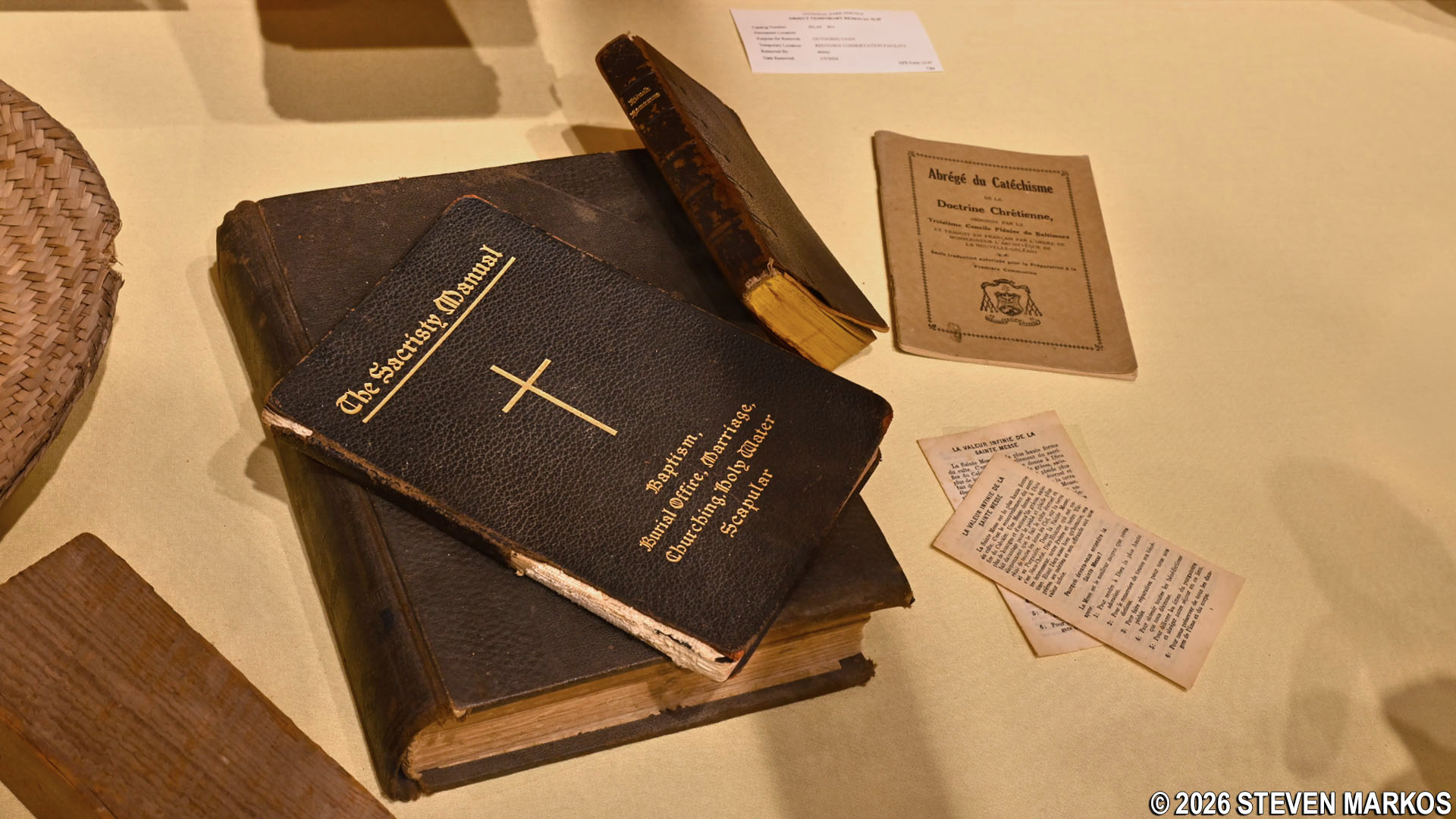
Religious books and pamphlets on display at the Wetlands Acadian Cultural Center, Jean Lafitte National Historical Park and Preserve
There is also a rotating art exhibit in the hallway at the Wetlands Acadian Cultural Center. When I visited, the current artists showcased their latest collection of watercolors and acrylic paintings.
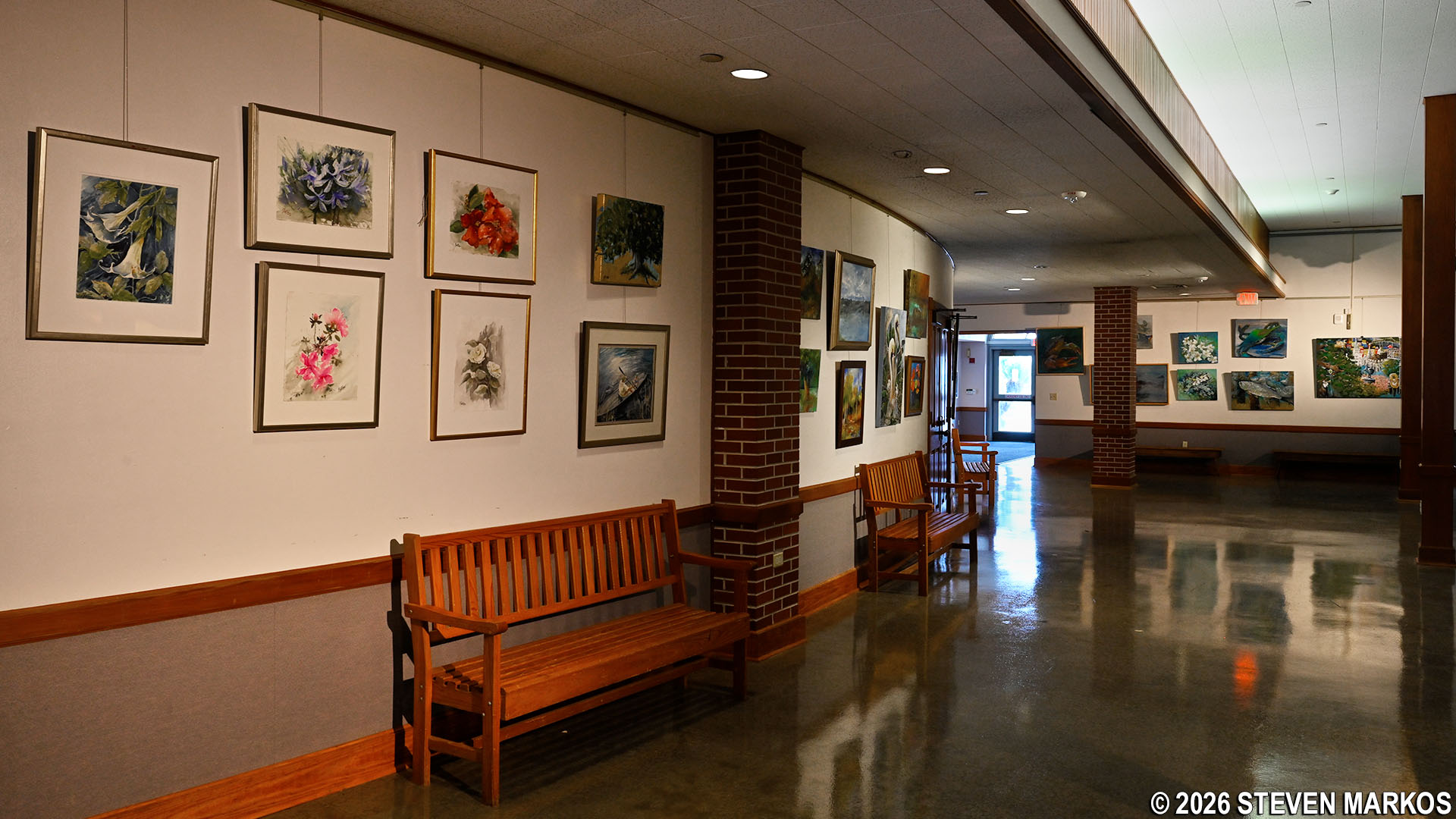
Rotating art exhibit at the Wetlands Acadian Cultural Center, Jean Lafitte National Historical Park and Preserve
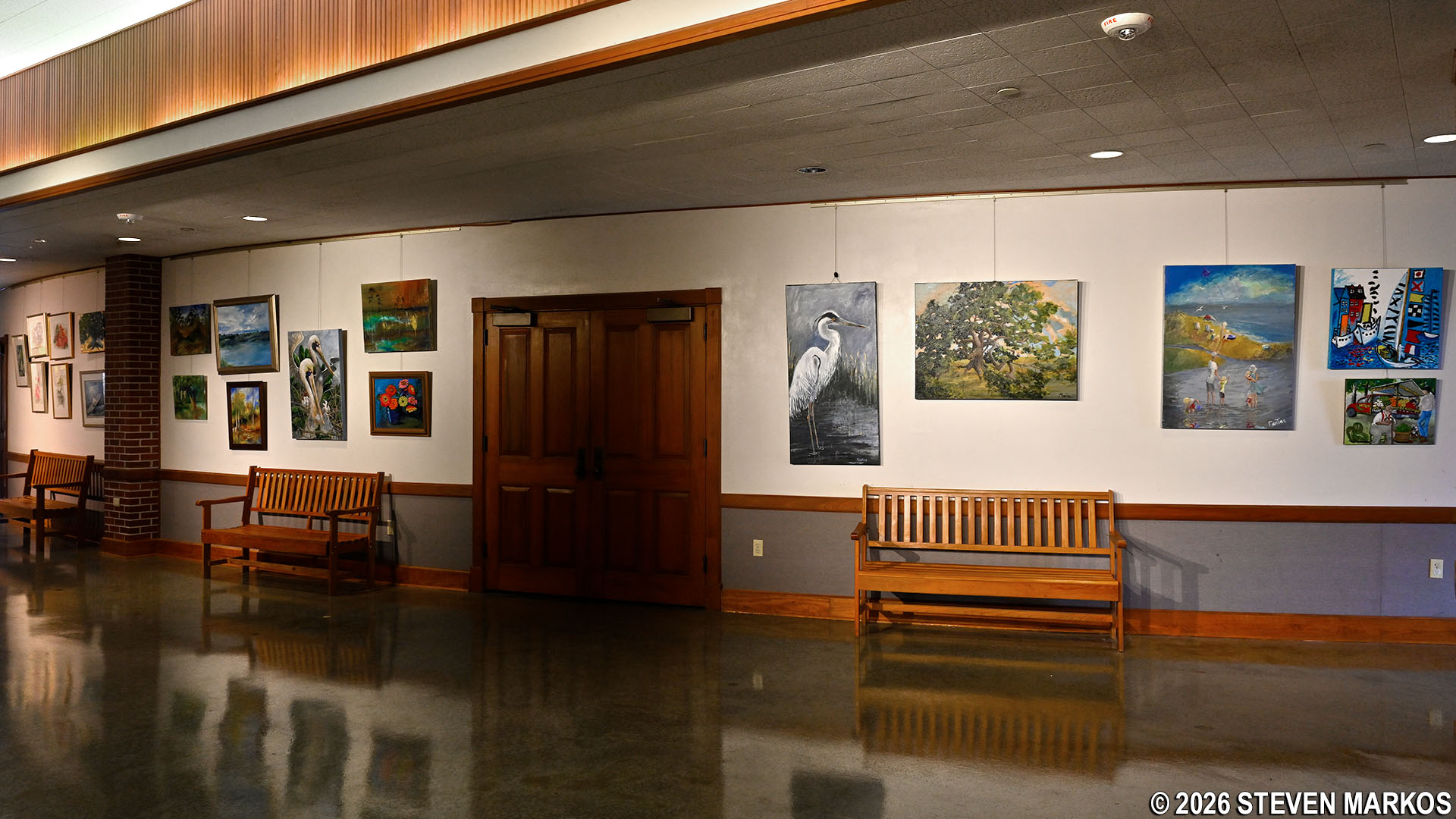
Rotating art exhibit at the Wetlands Acadian Cultural Center, Jean Lafitte National Historical Park and Preserve
SCHEDULING YOUR TIME
Plan to spend up to an hour at the Wetlands Acadian Cultural Center at Jean Lafitte National Historical Park and Preserve. This gives you enough time to check out the exhibit area and watch at least one of the films. Keep in mind that this time estimate does not include attending one of the tours or other events.
With a few exceptions, use of any photograph on the National Park Planner website requires a paid Royalty Free Editorial Use License or Commercial Use License. See the Photo Usage page for details.
Last updated on September 8, 2026


