
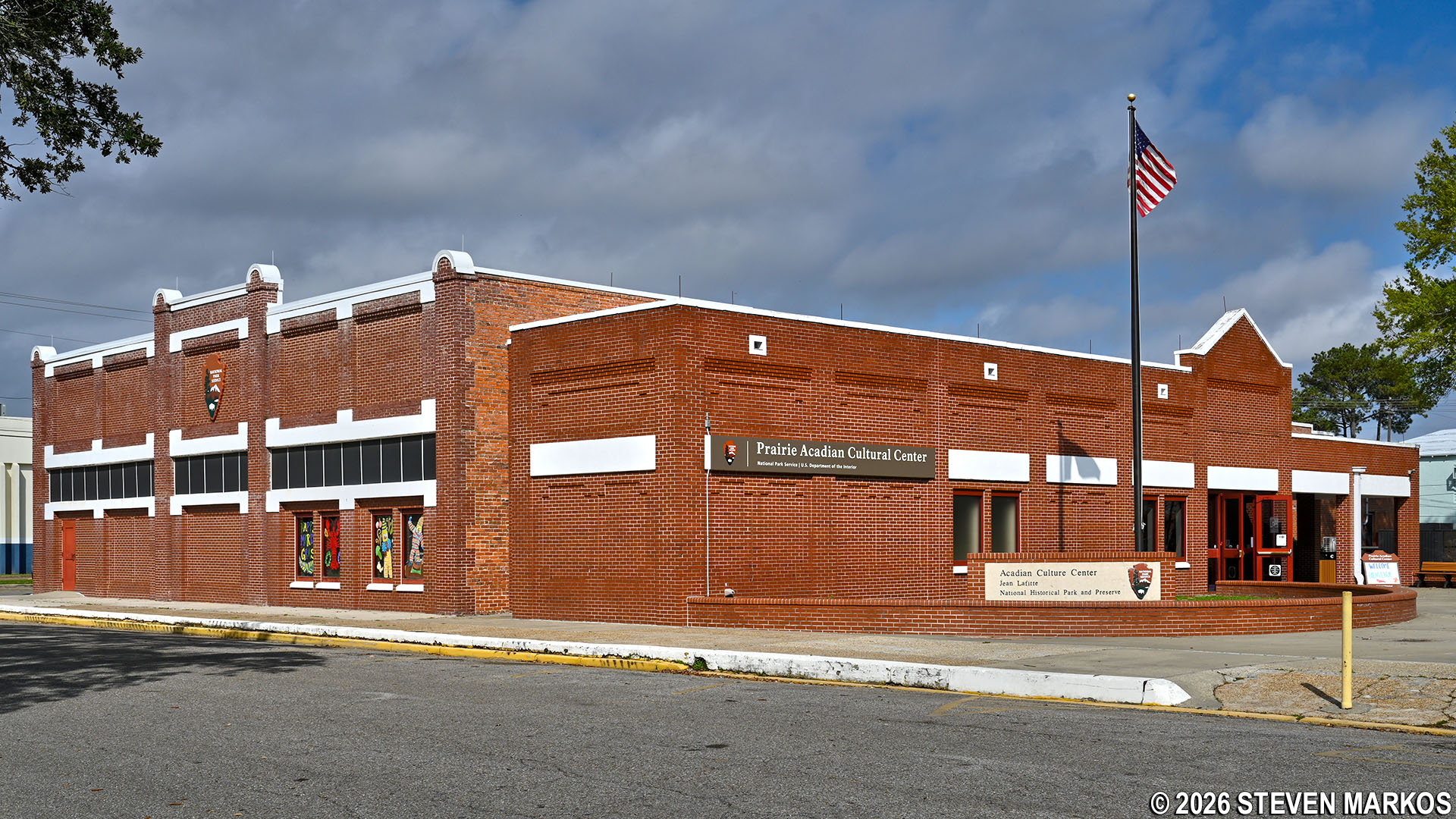
Prairie Acadian Cultural Center at Jean Lafitte National Historical Park and Preserve
GENERAL INFORMATION
250 Park Avenue
Eunice, LA 70535
The Prairie Acadian Cultural Center at Jean Lafitte National Historical Park and Preserve is located in Eunice, Louisiana. It helps tell the story of the Acadians who were exiled from Nova Scotia, Canada, in the mid-1700s. They settled Louisiana’s prairies and developed a unique cultural mix of Cajun and Creole. The center hosts cooking and craft demonstrations, concerts featuring local musicians, and traditional dances. See the National Park Service’s official Calendar web page for a schedule of events.
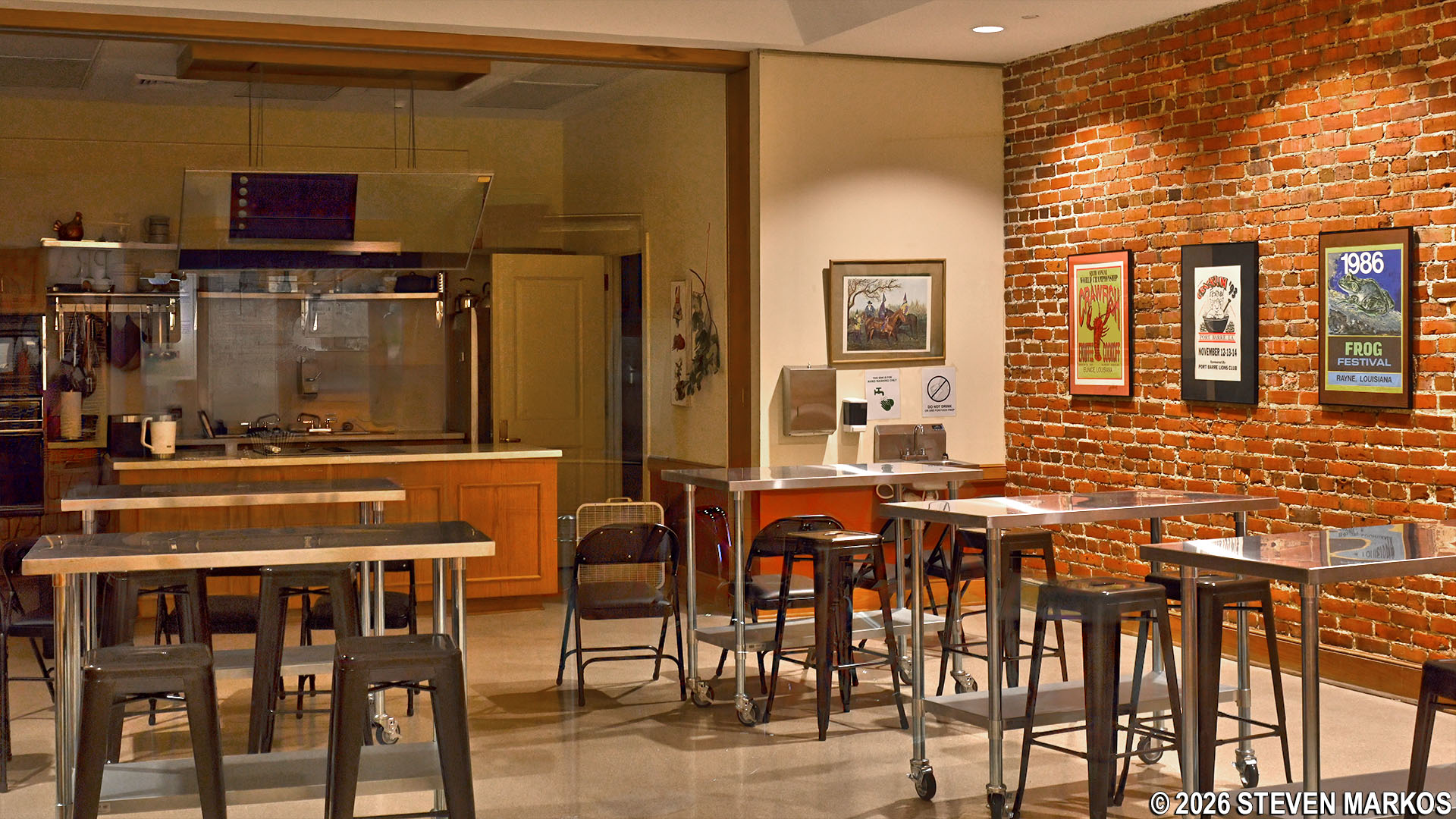
Cooking demonstration kitchen at the Prairie Acadian Cultural Center, Jean Lafitte National Historical Park and Preserve
OPERATING HOURS
The Prairie Acadian Cultural Center is typically open Tuesdays through Saturdays from 9:30 AM to 4:30 PM, except on Thursdays when it is open from 12 PM to 7 PM. Keep in mind that times can always change, so be sure to check the National Park Service’s official Prairie Acadian Cultural Center web page for the current schedule.
AMENITIES
- Ranger-staffed information desk where you can ask questions and pick up a park brochure
- Souvenir and bookstore
- Park films
- Exhibit area
- Restrooms
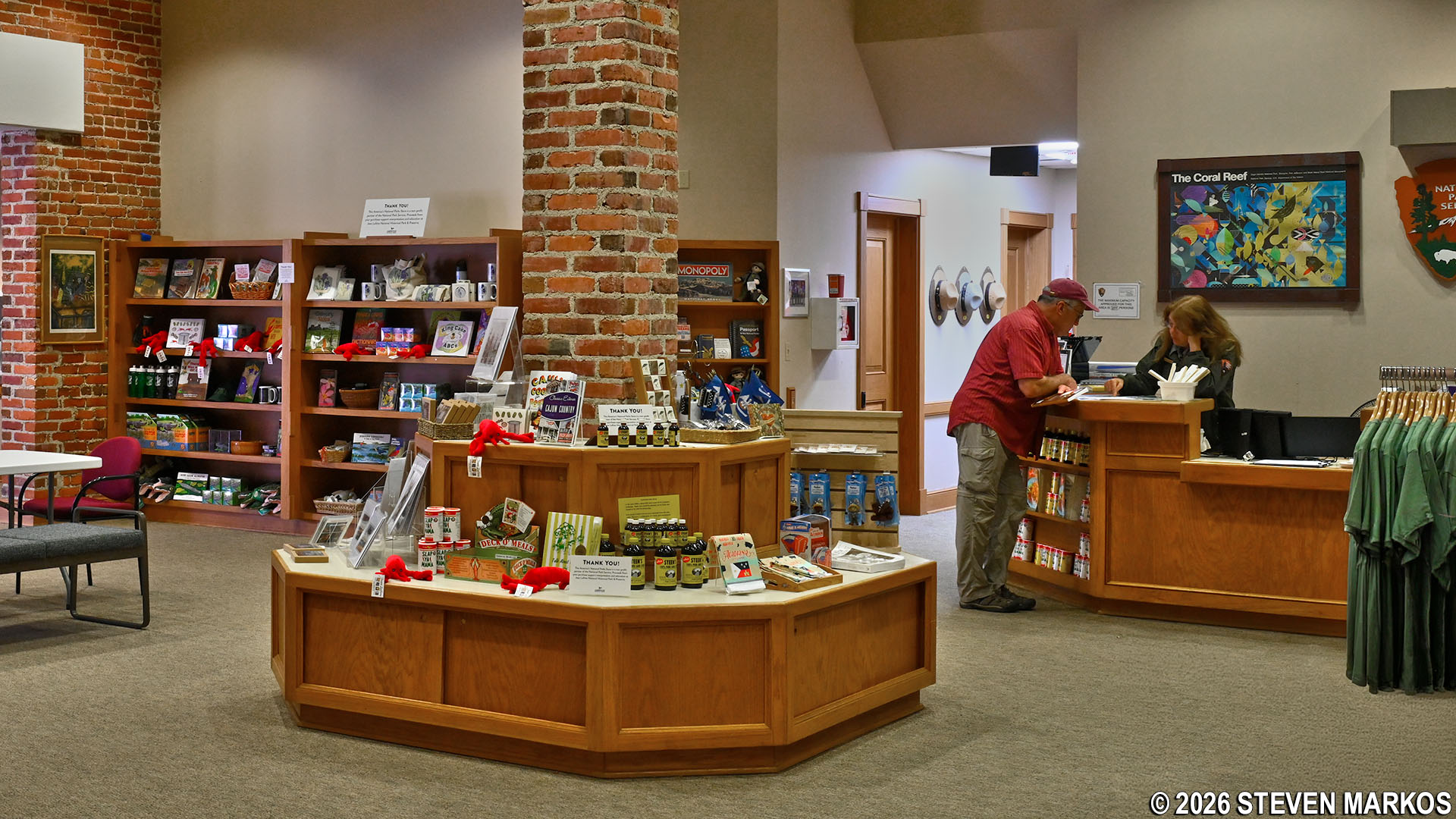
Information desk and souvenir store at the Prairie Acadian Cultural Center, Jean Lafitte National Historical Park and Preserve
PARK FILMS
There are four different films available for viewing at the Prairie Acadian Cultural Center: Echoes of Acadia; Battle of New Orleans; Jambalaya; and Mississippi in Motion. These play on demand, and visitors can choose which ones they want to watch. The films are available at each of the three cultural centers in Jean Lafitte National Historical Park and Preserve. I chose to watch Echoes of Acadia. This was the first cultural center I stopped at, and I planned to watch the other films at the other locations. The Battle of New Orleans also plays at the Chalmette Battlefield Visitor Center.
The 33-minute Echoes of Acadia explores the history of the Acadian people and their journey from Canada to Louisiana. There are two subtitle options for the film, one in French and the other in English. The film is suitable for all ages.
EXHIBIT AREA
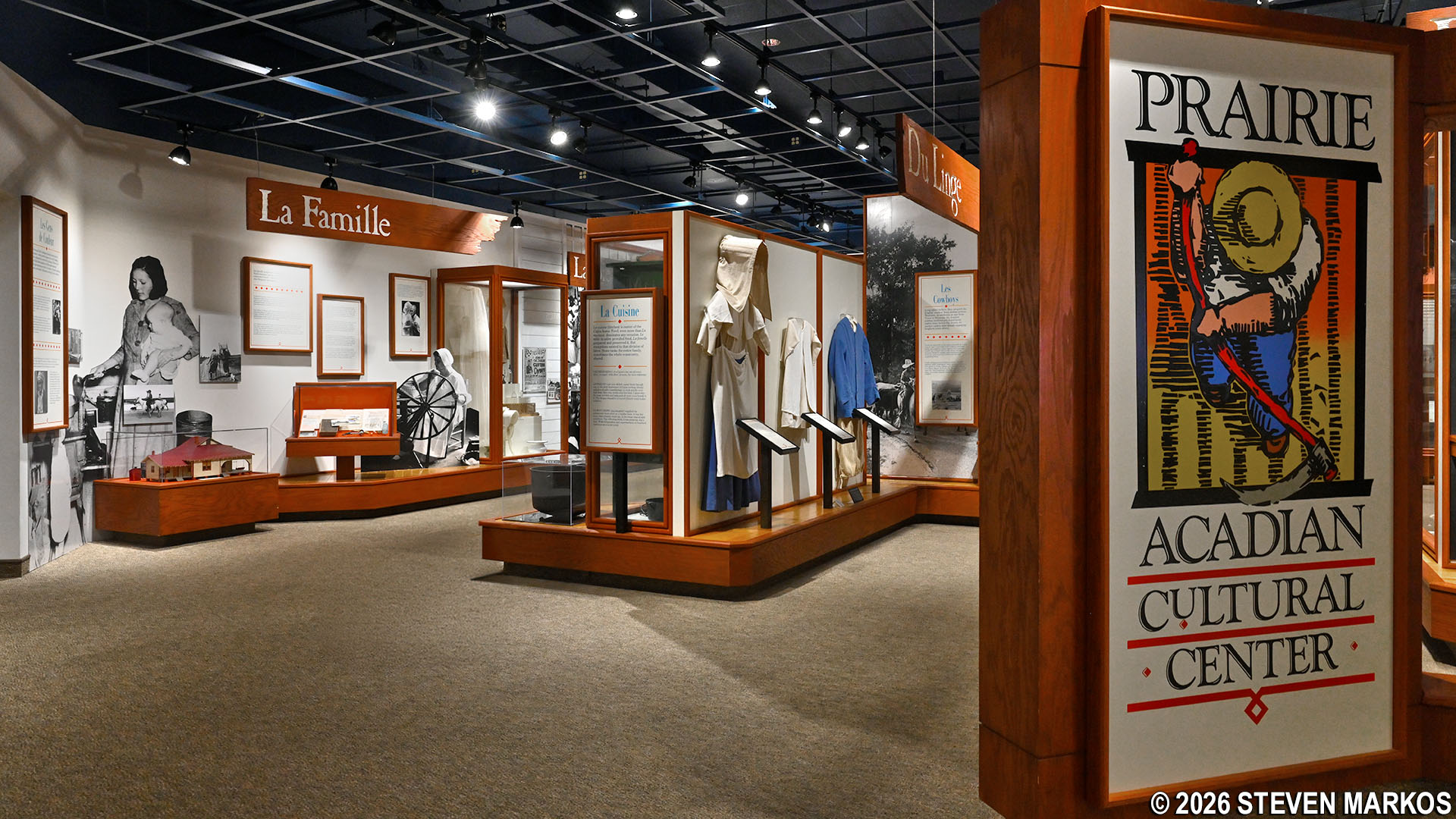
Exhibit area at the Prairie Acadian Cultural Center, Jean Lafitte National Historical Park and Preserve
The exhibit area at the Prairie Acadian Cultural Center covers the Acadian people and their history. In the early 17th century, French settlers arrived in the New France colony of Acadia (present-day Nova Scotia). After the British conquered Acadia in 1713, the Acadians’ refusal to sign an oath of allegiance to Britain led to their forced removal from Nova Scotia. Known as the Expulsion of the Acadians, the deportation of more than 11,000 people occurred between 1755 and 1764. In search of a friendly location, some Acadians decided to settle in Louisiana (then under Spanish rule) because of the good relations between France and Spain and their shared Catholic faith. Over time, the French word “Acadian” evolved and was eventually anglicized as the word “Cajun”.
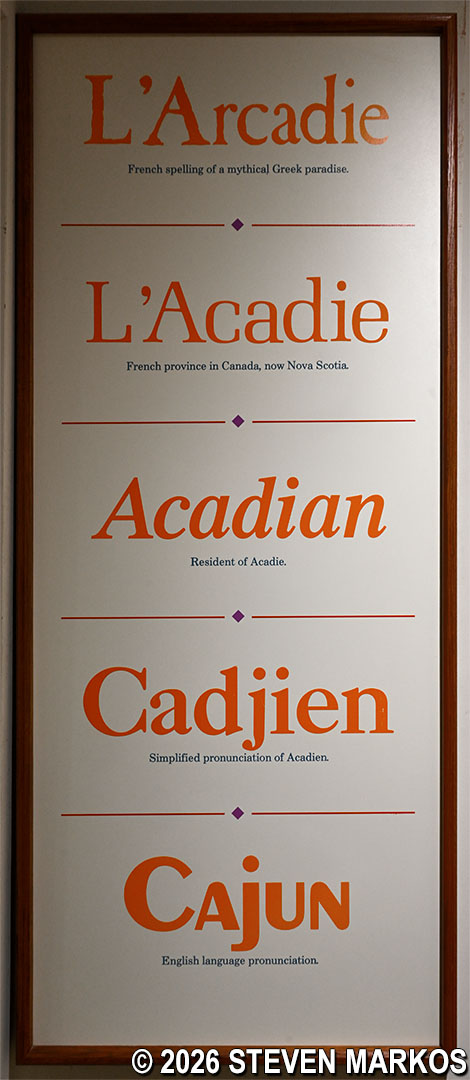
Evolution of the word Cajun at the Prairie Acadian Cultural Center, Jean Lafitte National Historical Park and Preserve
At the front of the exhibit area entrance is an antique carriage. When the Acadians first settled in Louisiana, the men rode on horseback while the women traveled in caleches (French word for horse-drawn carriage). Most of them were homemade, and building one required expertise in woodworking, blacksmithing, wheelwrighting, and leatherworking.
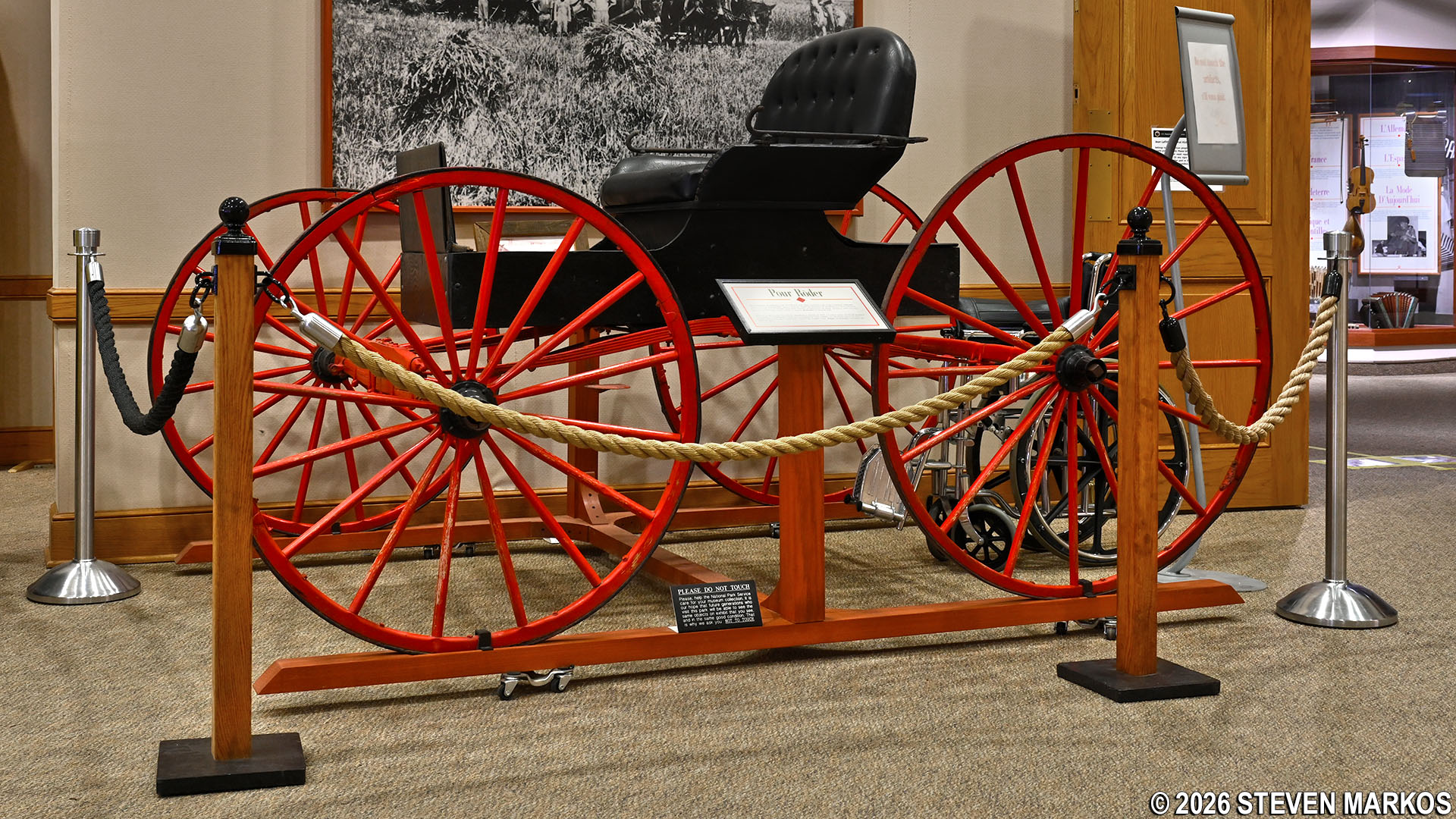
Horse-drawn carriage on display at the Prairie Acadian Cultural Center, Jean Lafitte National Historical Park and Preserve
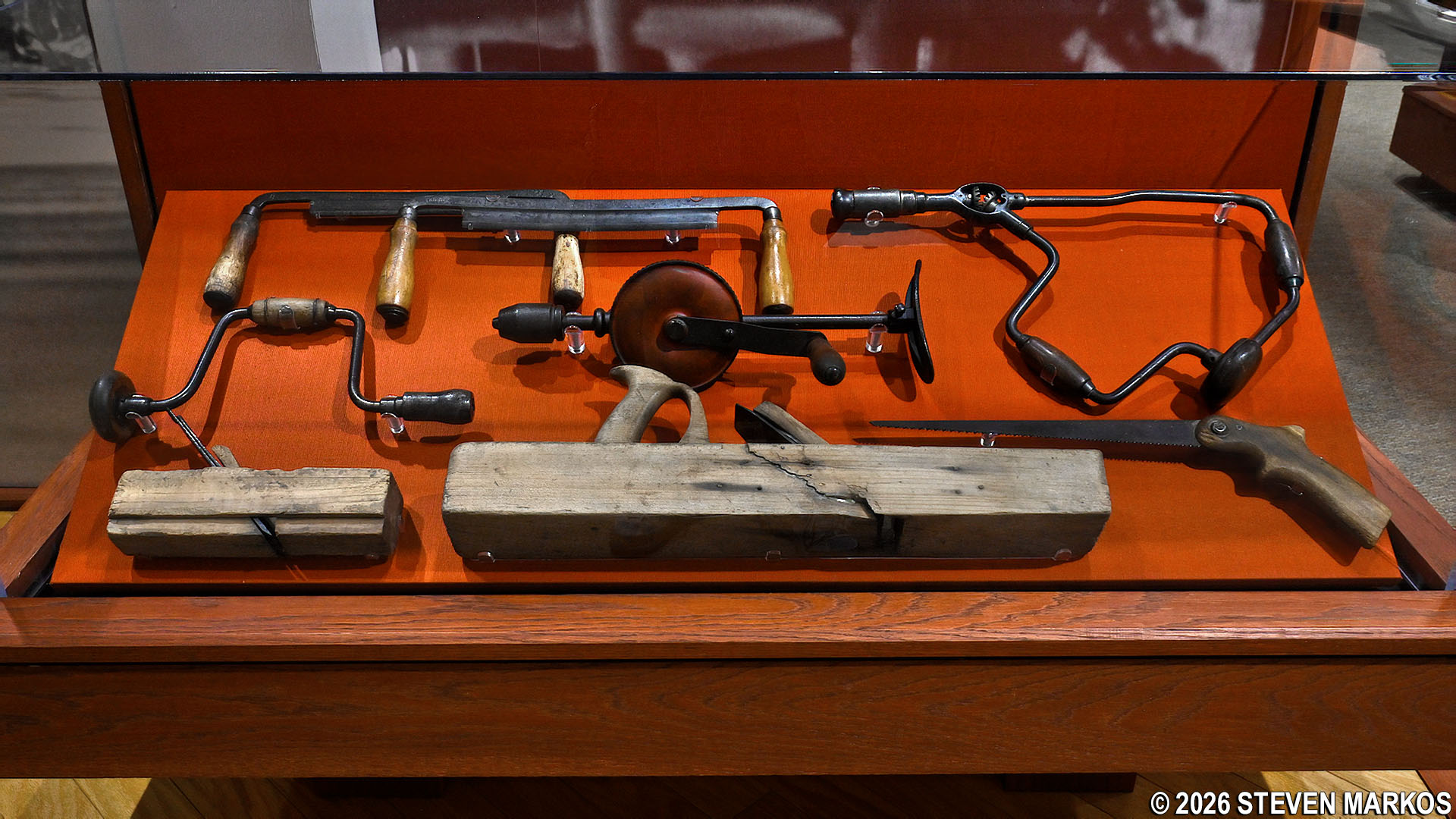
Woodworking tools on display at the Prairie Acadian Cultural Center, Jean Lafitte National Historical Park and Preserve
Inside the exhibit area are multiple sections, each covering a different top. The sections are identified by signs written in French, though the information itself is in English. The L’Histoire exhibit features a historical timeline of the Acadians and their migration to Louisiana.
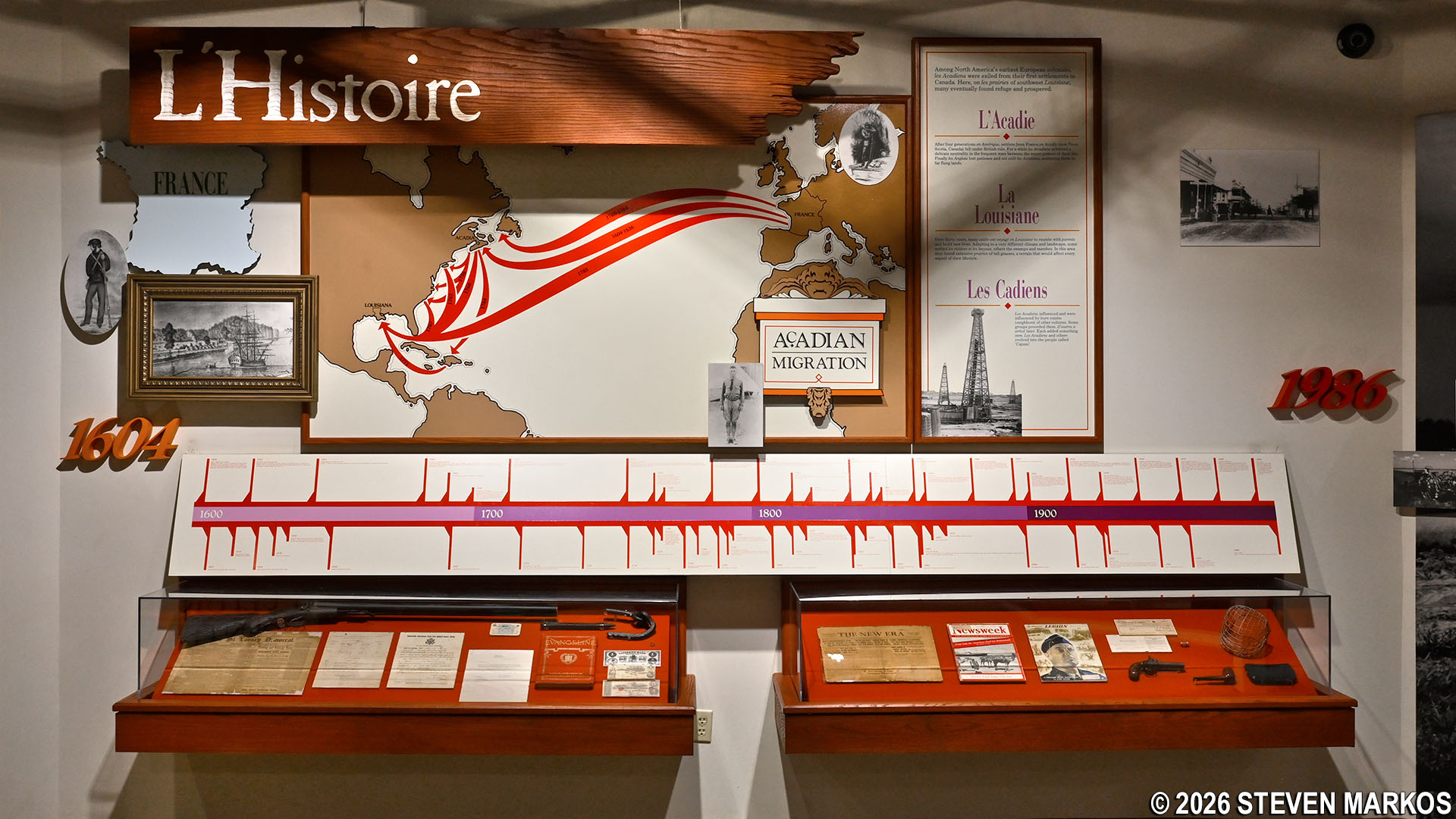
L’Histoire exhibit at the Prairie Acadian Cultural Center, Jean Lafitte National Historical Park and Preserve
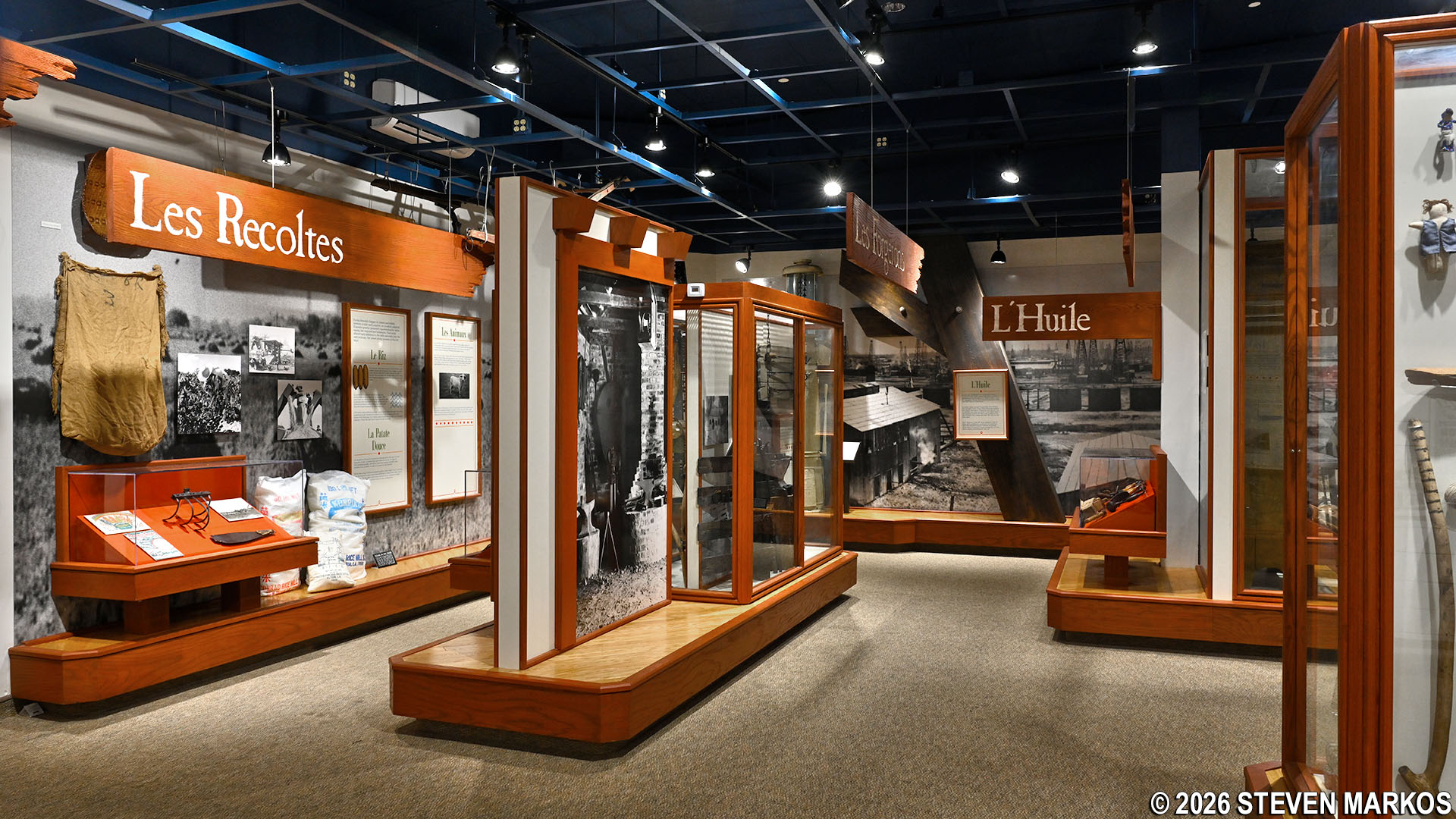
Exhibit area at the Prairie Acadian Cultural Center, Jean Lafitte National Historical Park and Preserve
In addition to some bank notes and military documents from the late 1800s and early 1900s in the L’Histoire exhibit, there is also a copy of Henry Wadsworth Longfellow’s 1847 epic poem Evangeline. Longfellow, also known for Paul Revere’s Ride, wrote the poem about an Acadian girl in search of her long-lost love during the Expulsion of the Acadians.
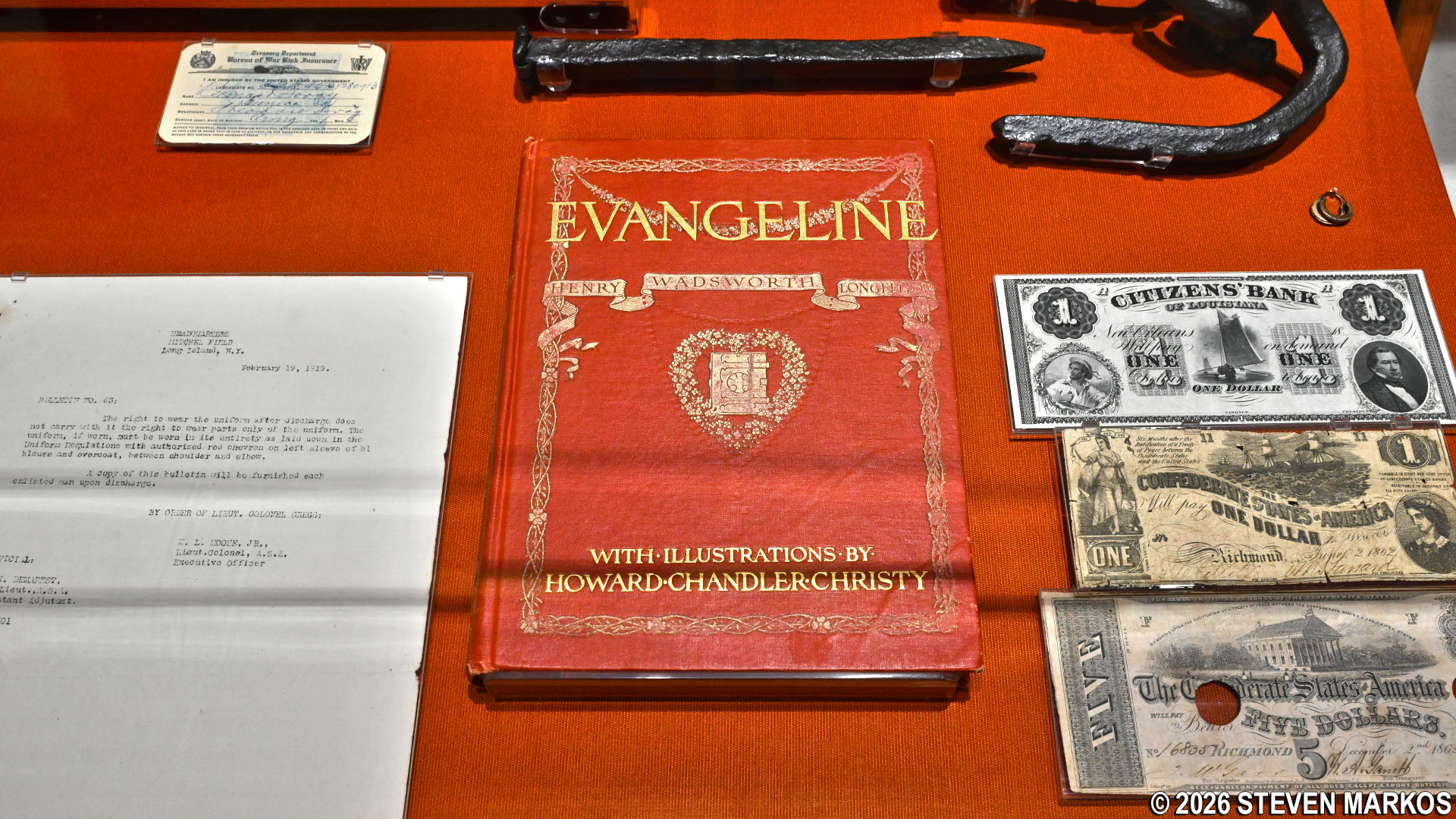
Copy of Longfellow’s Evangeline at the Prairie Acadian Cultural Center, Jean Lafitte National Historical Park and Preserve
Many of the exhibits focus on the Acadians’ way of life once they settled in the region. Most families were large and close-knit. Social gatherings were held frequently, and holiday celebrations turned into long, large events. One display case in the La Famille section features clothing and other items that the Acadians would have used in the late 1700s and early 1800s, including a wedding dress and a cigar press. Another case has a model of a typical Acadian cabin from the same time.
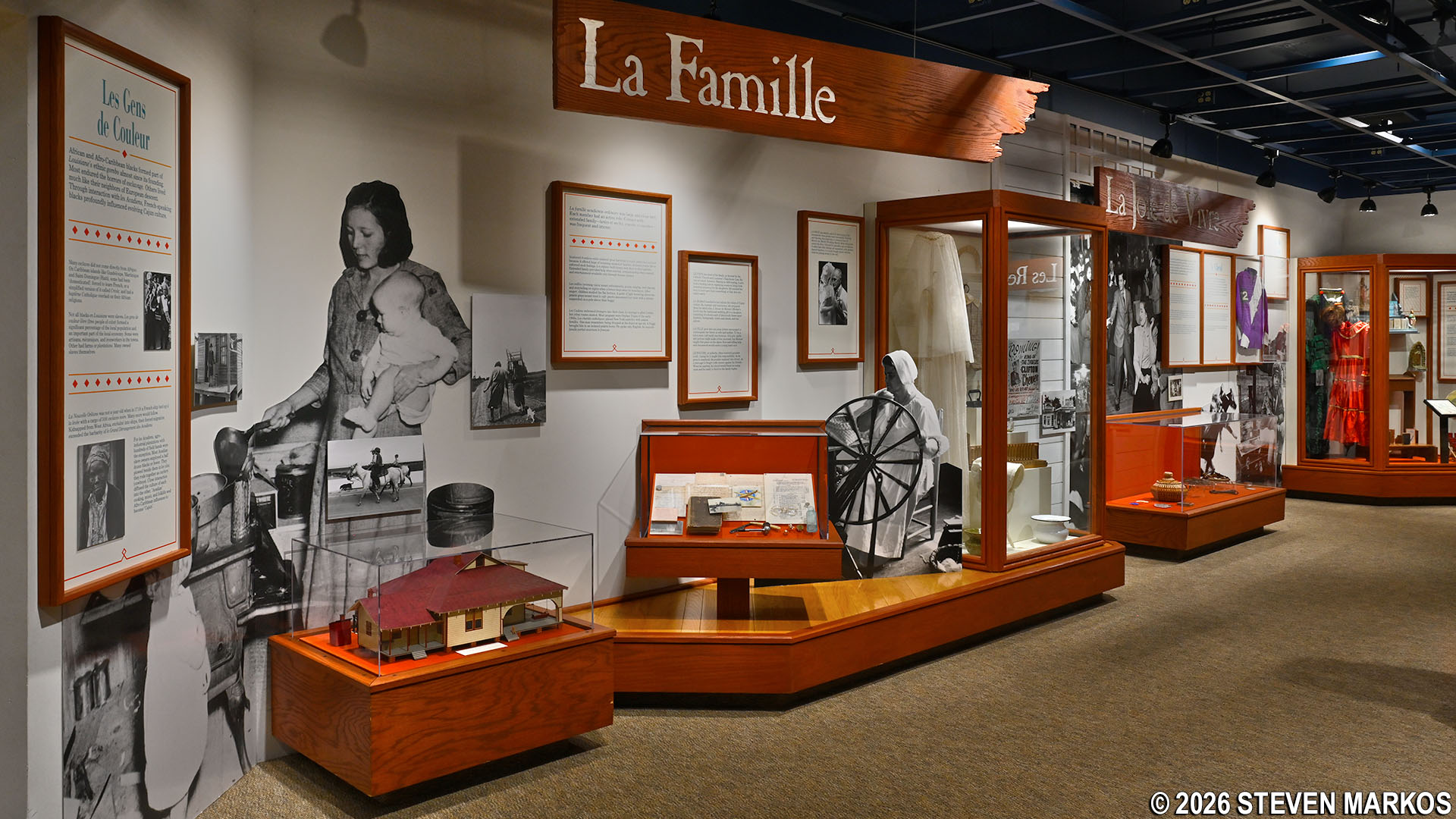
La Famille exhibit at the Prairie Acadian Cultural Center, Jean Lafitte National Historical Park and Preserve
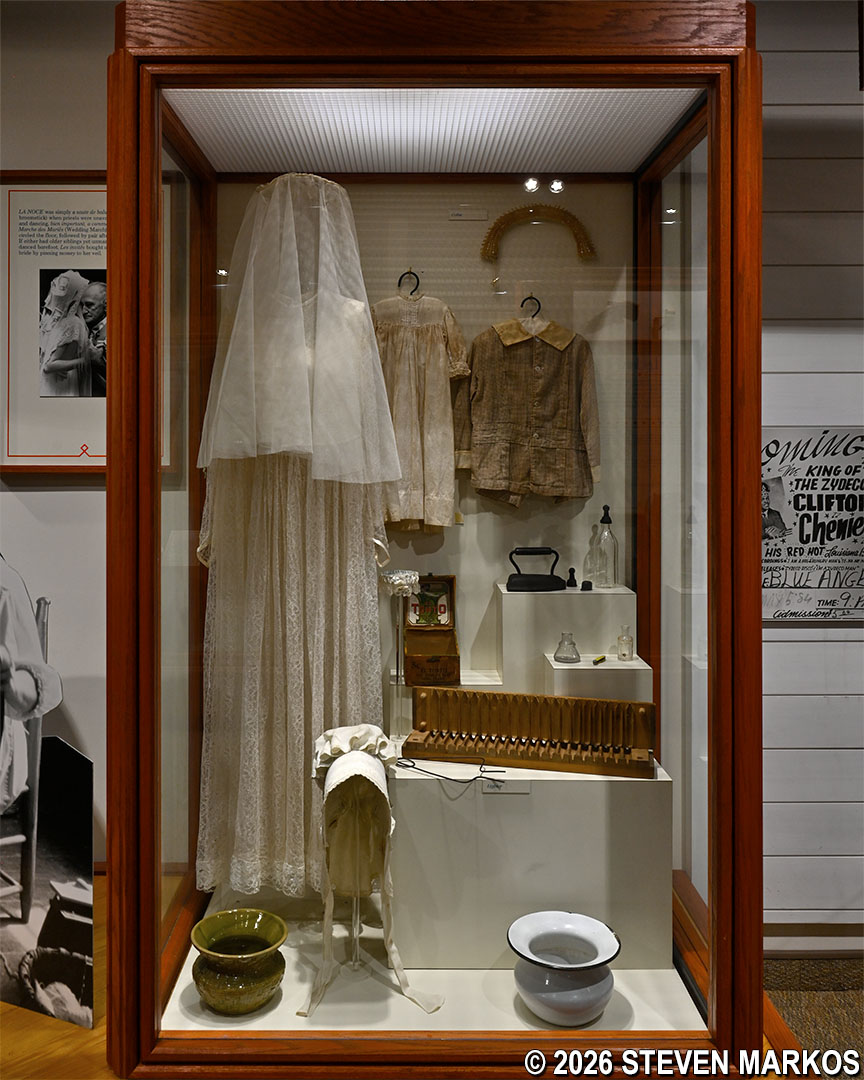
Typical Acadian wedding dress and a cigar press on display at the Prairie Acadian Cultural Center, Jean Lafitte National Historical Park and Preserve
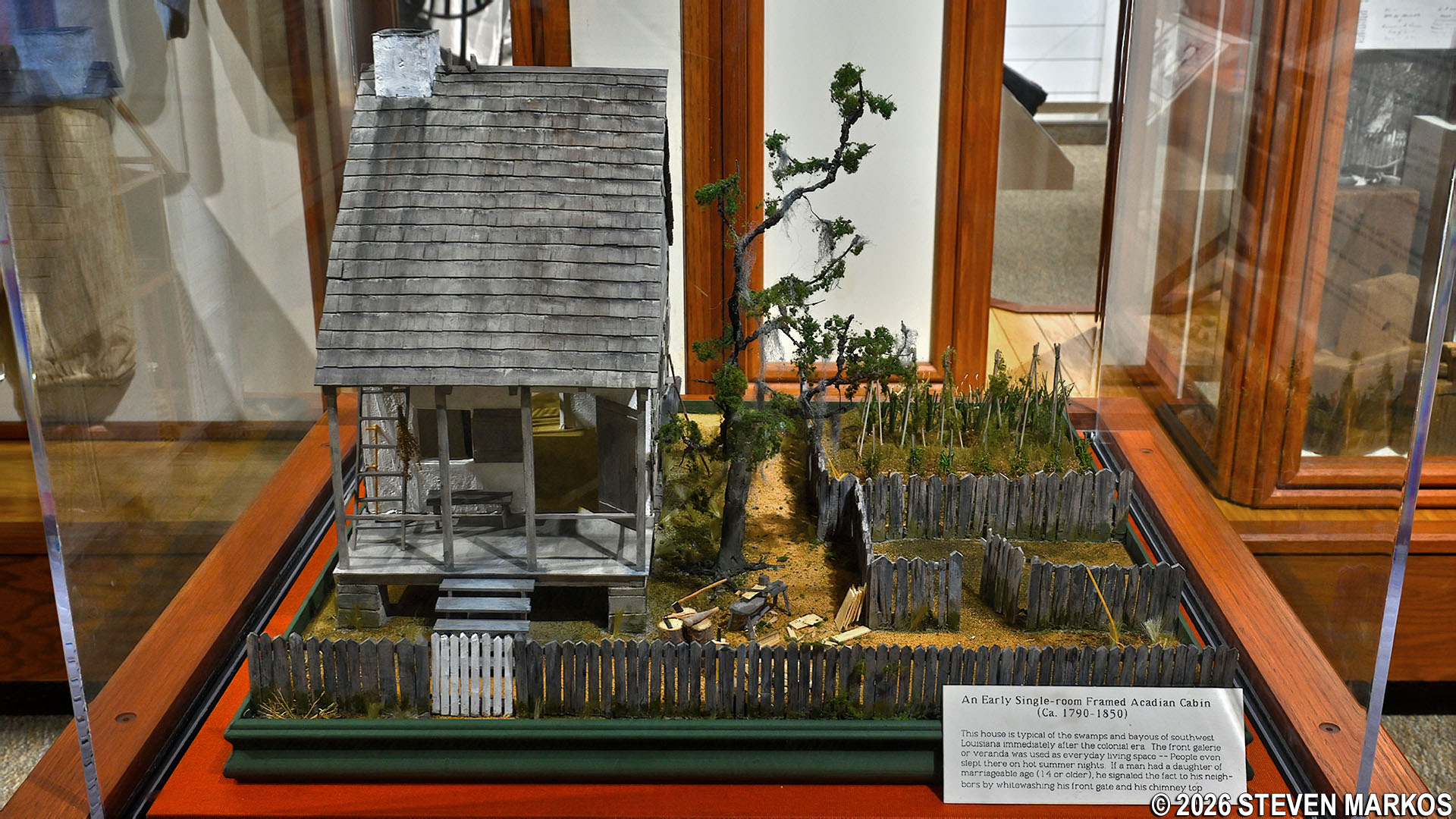
Model of a typical Acadian cabin on display at the Prairie Acadian Cultural Center, Jean Lafitte National Historical Park and Preserve
L’Eglise (French for the church) was usually the largest building in the town. The Acadians were devoutly Catholic and would hold elaborate rituals to celebrate holy feast days. Mardi Gras is a great example, as it was originally a French-Catholic tradition.
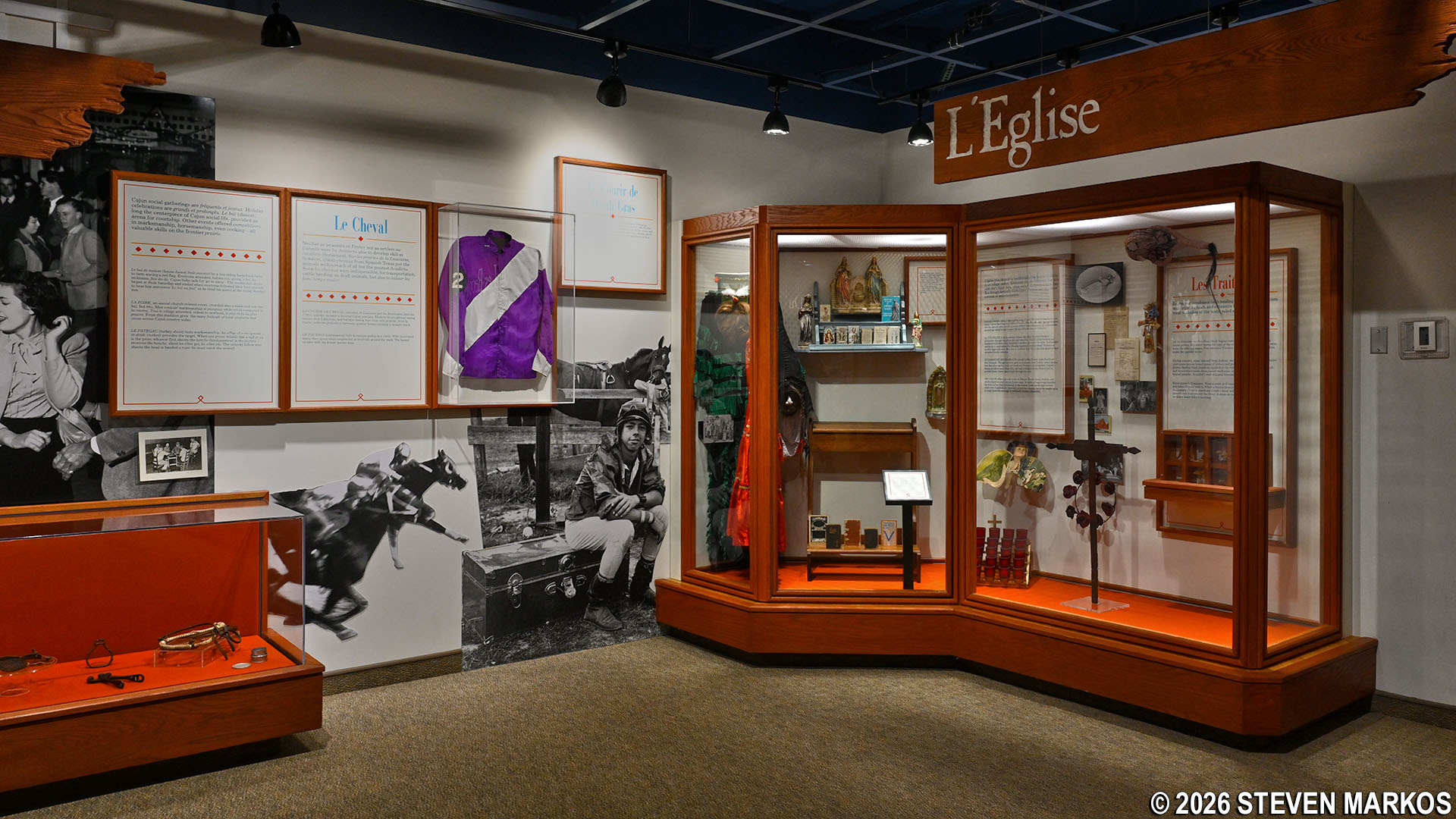
L’Eglise exhibit at the Prairie Acadian Cultural Center, Jean Lafitte National Historical Park and Preserve
There is a Junior Ranger Zone for kids of all ages at the Prairie Acadian Cultural Center. Books, games, and arts and crafts are available to use. There is even a large ring light for those wanting to make a video of themselves. Visitors can also learn the Cajun two-step using the footwork pattern on two rugs, one for the leader and one for the follower.
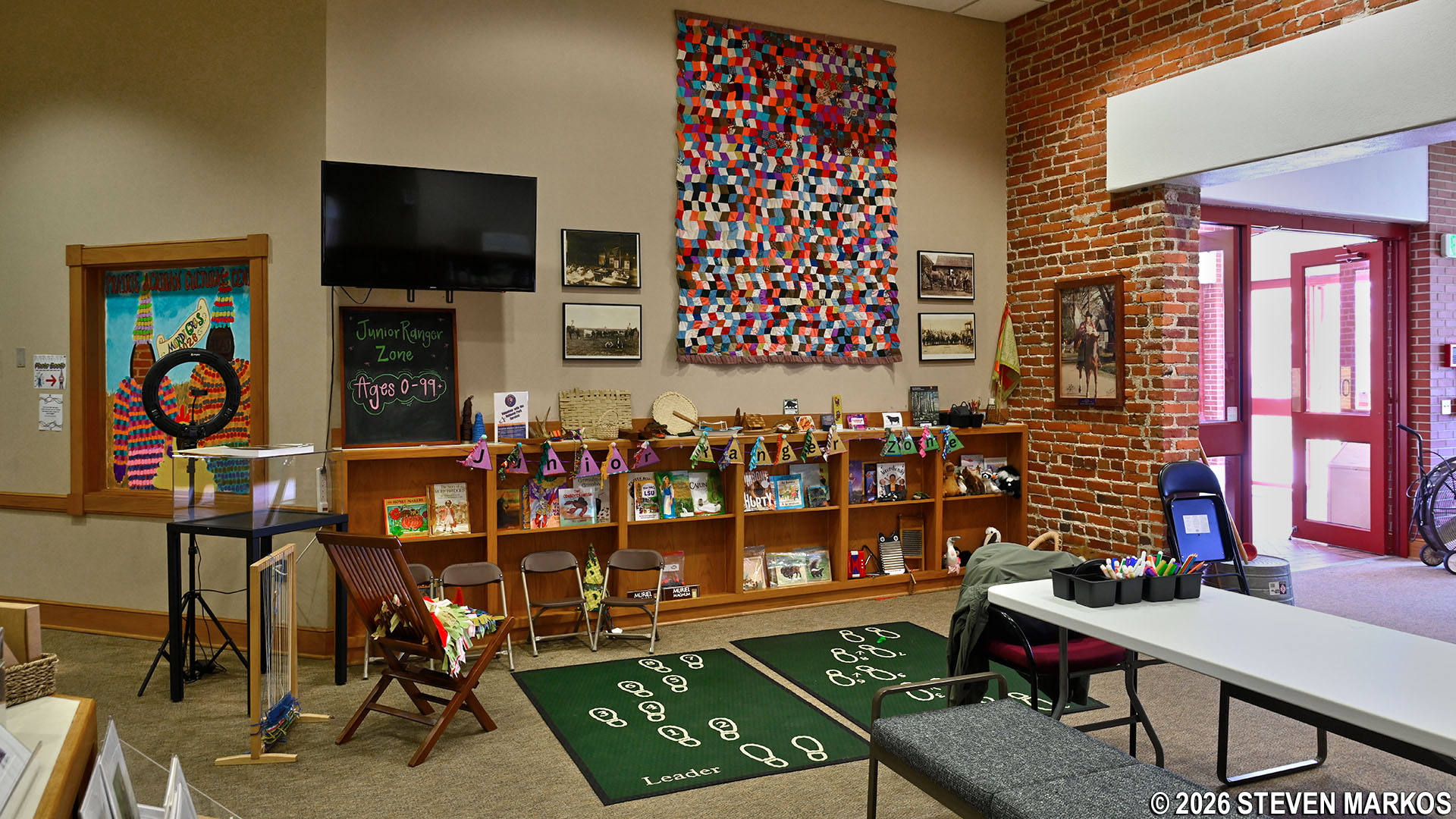
Junior Ranger Zone at the Prairie Acadian Cultural Center, Jean Lafitte National Historical Park and Preserve
There is also an art exhibit that changes periodically. When I visited, the exhibit Louisiana Through Wild Eyes showcased watercolors and wildlife photography by two local artists.
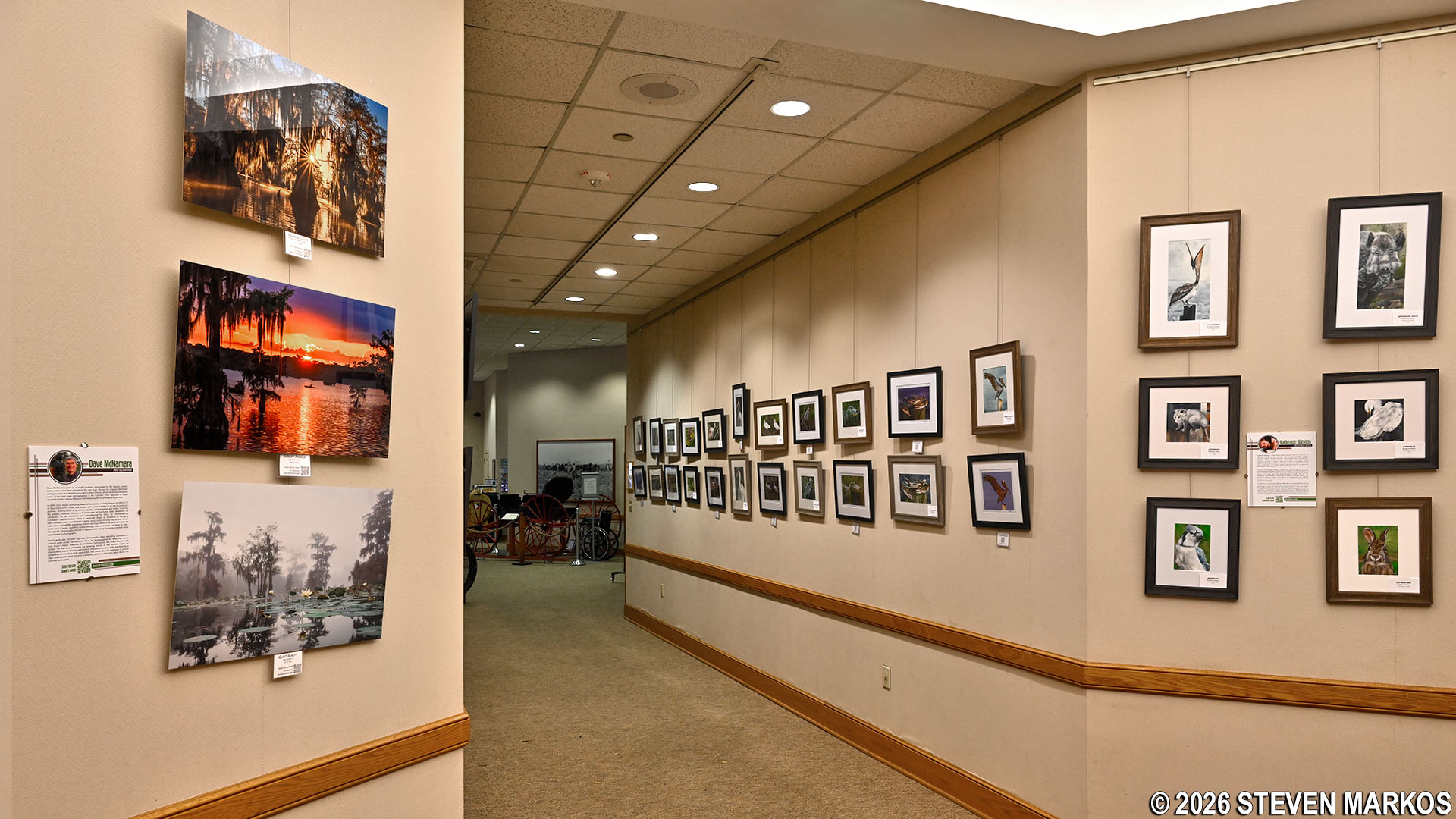
Rotating art exhibit at the Prairie Acadian Cultural Center, Jean Lafitte National Historical Park and Preserve
SCHEDULING YOUR TIME
Plan to spend between one and two hours at the Prairie Acadian Cultural Center at Jean Lafitte National Historical Park and Preserve. This gives you enough time to check out the exhibit area, watch the film (or films), and talk with a Ranger. If you don’t want to read all the information panels or watch more than one film, a visit can definitely be done in under an hour. Keep in mind that attending scheduled events will require more of your time.
With a few exceptions, use of any photograph on the National Park Planner website requires a paid Royalty Free Editorial Use License or Commercial Use License. See the Photo Usage page for details.
Last updated on September 7, 2026


