
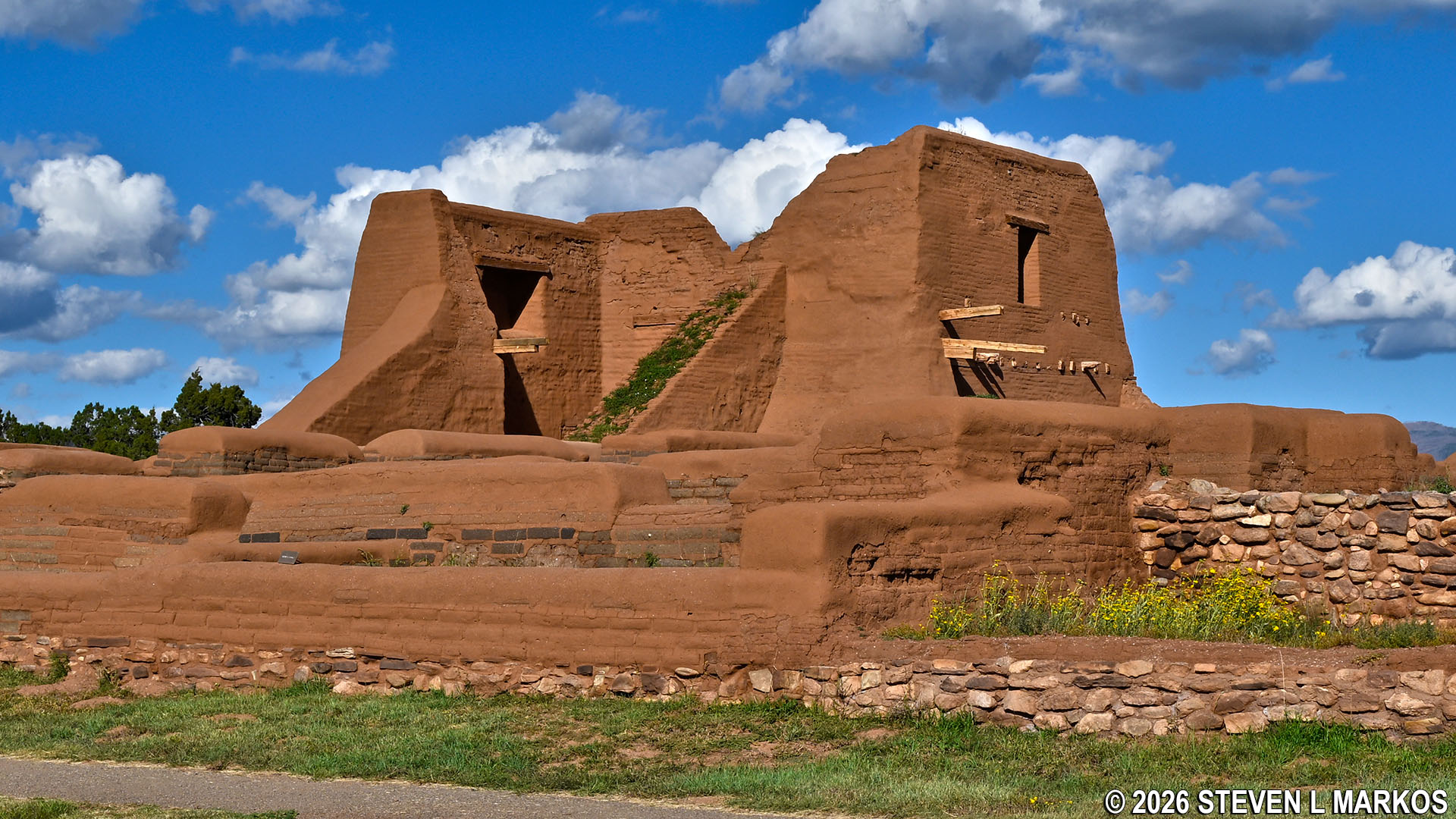
1717 Spanish Mission Church ruins at Pecos National Historical Park
This article covers the history of the Spanish Mission Church at Pecos National Historical Park. For a virtual tour of the church, which includes information about its various structures and plenty of photographs, see the Ancestral Sites Trail report here on National Park Planner. This trail is one way to see the church in person when visiting the park. The other way is to park at the picnic area, which is located next to the church—no hiking required.
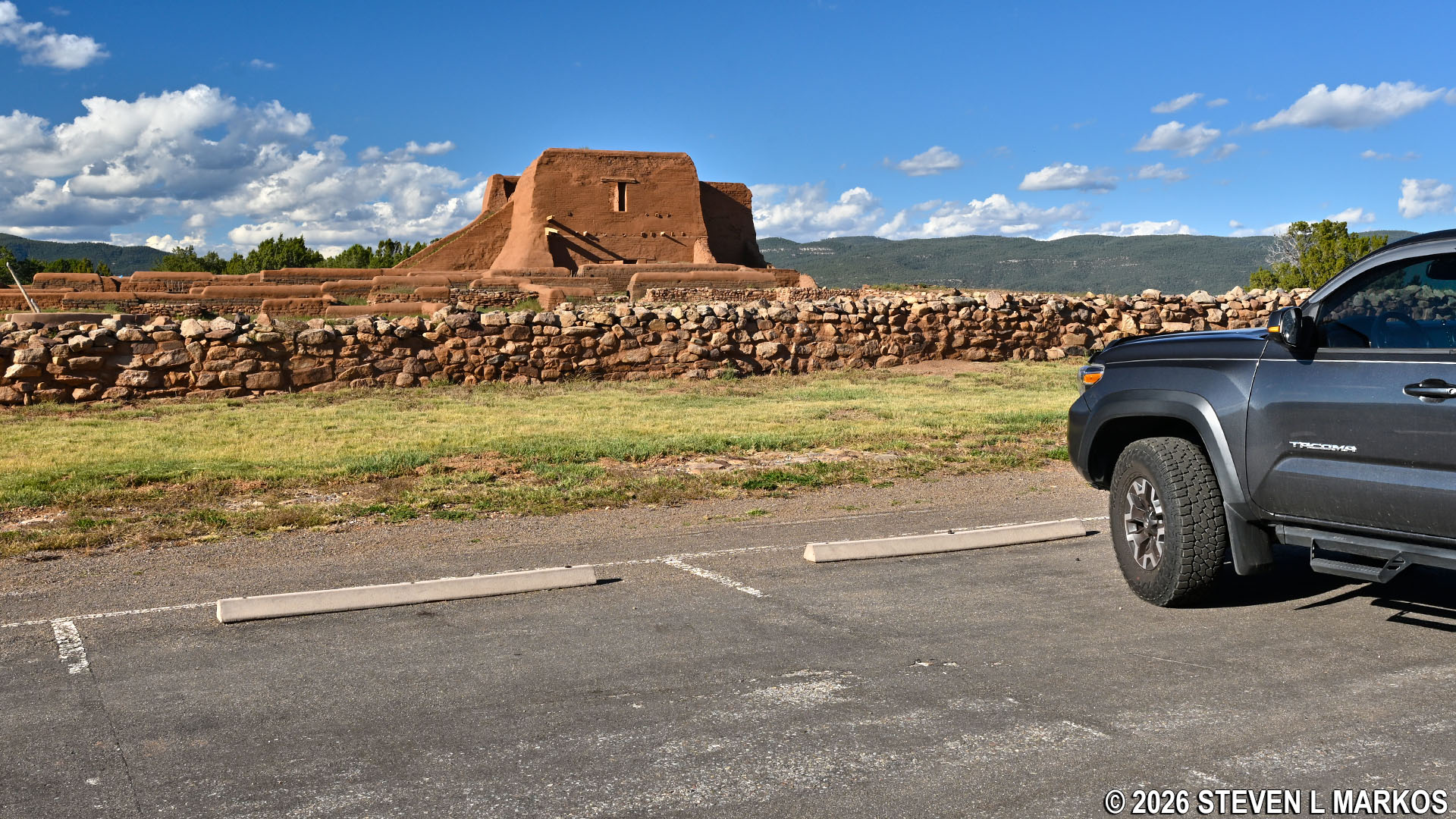
Parking lot at the Spanish Mission Church, Pecos National Historical Park
The ruins of the 1717 Spanish Mission Church at Pecos National Historical Park are rooted in a history that goes back nearly 500 years. In 1540, Spanish conquistador Francisco Vazquez de Coronado led a two-year expedition throughout present-day southwestern United States. Coronado was in search of the legendary (and mythical) Seven Cities of Gold that was rumored to be in the province of Cibola (present-day New Mexico). When Coronado arrived in July, he discovered that there was no gold. Hoping there were other more fruitful cities somewhere nearby, he and his army occupied Cibola and used it as a base to continue exploration.
Coronado then sent some of his men under the command of Hernando de Alvarado to the east, and they came across the Pecos Pueblo in the fall of 1540. The Pecos People (P’aékish), who knew of the Spaniards’ expedition from other tribes, welcomed them with music and gifts. Not long afterwards, Alvarado met a captive slave nicknamed El Turco (The Turk) who told him about another village full of gold and silver known as Quivira. Unbeknownst to the Spaniards, there were no riches in Quivira, and El Turco would lead them on a wild goose chase. This was a typical strategy of the native tribes in the Americas to get rid of the Spanish: the gold was always in the next village away. Frustrated that he had been duped (El Turco was executed) and finding the Pecos People not as friendly when he came back, Alvarado left the Pecos Pueblo in April 1542 and returned to Mexico along with the rest of Coronado’s men.
In 1598, the Spanish returned to the Pecos Pueblo. They knew there was no gold or silver, but the land was good for farming and raising livestock, and the native people could be converted to Catholicism, which to some Spanish was almost as good as finding gold. A Franciscan friar was assigned to Pecos, but due to excessive intolerance of the local religious customs, he had no luck converting the people.
Things began to change when Franciscan missionary Fray Andrew Juarez arrived at Pecos in 1621. Known as a healer and a builder, Juarez was able to improve the Church’s relationship with the Pecos People. He was also able to convince them to help build a church a short distance to the south of their pueblo (which can be seen from the church). Construction was completed in 1625. Made from at least 300,000 adobe bricks and huge log beams hewn from the pine trees of the Sangre de Cristo Mountains, the church had six bell towers and walls forty feet high. Everything was painted white. It was an impressive sight.
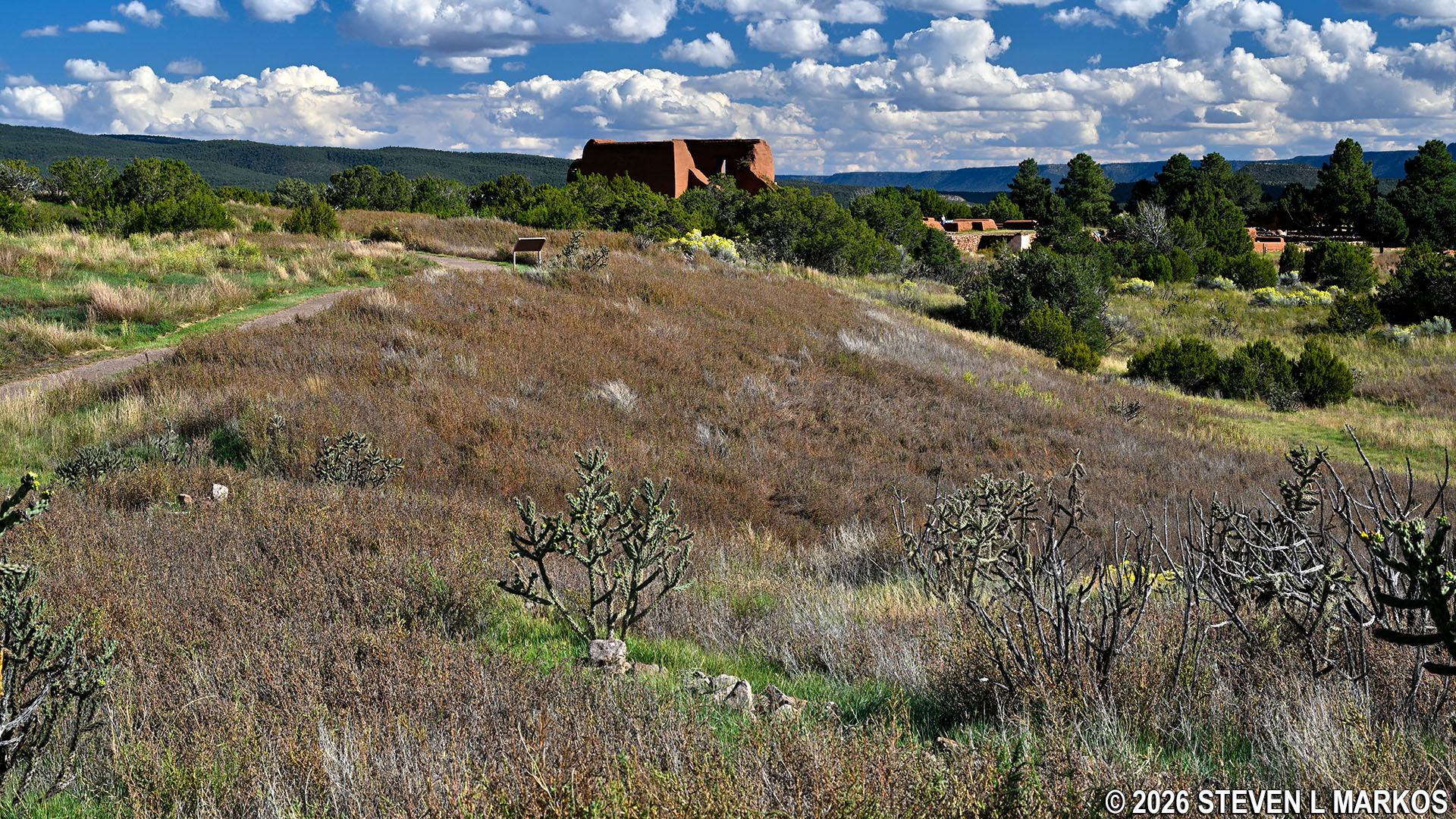
View of the Spanish Mission Church from the South Pecos Pueblo, Pecos National Historical Park
The Franciscan friars continued to struggle converting the native people throughout New Mexico. Those who wouldn’t convert were often persecuted. Tired of being brutally mistreated for following their own religious traditions, the Pecos People and those from nearly 30 other surrounding pueblos revolted against the Spanish in 1680. At Pecos, the Spanish Mission Church was destroyed and the priest was killed. The Puebloans were successful in driving the Spanish from their land, and they stayed gone for twelve years.
In 1692, the Spanish returned under the command of Diego de Vargas and reconquered New Mexico. At Pecos, they were actually welcomed back, and many of the Pecos People joined the Spanish in their fight for Sante Fe. They built a smaller church in 1717 on the site of the old church, and it is the ruins of this 1717 church that stand today. The foundation footprint of the original 1625 church still remains.
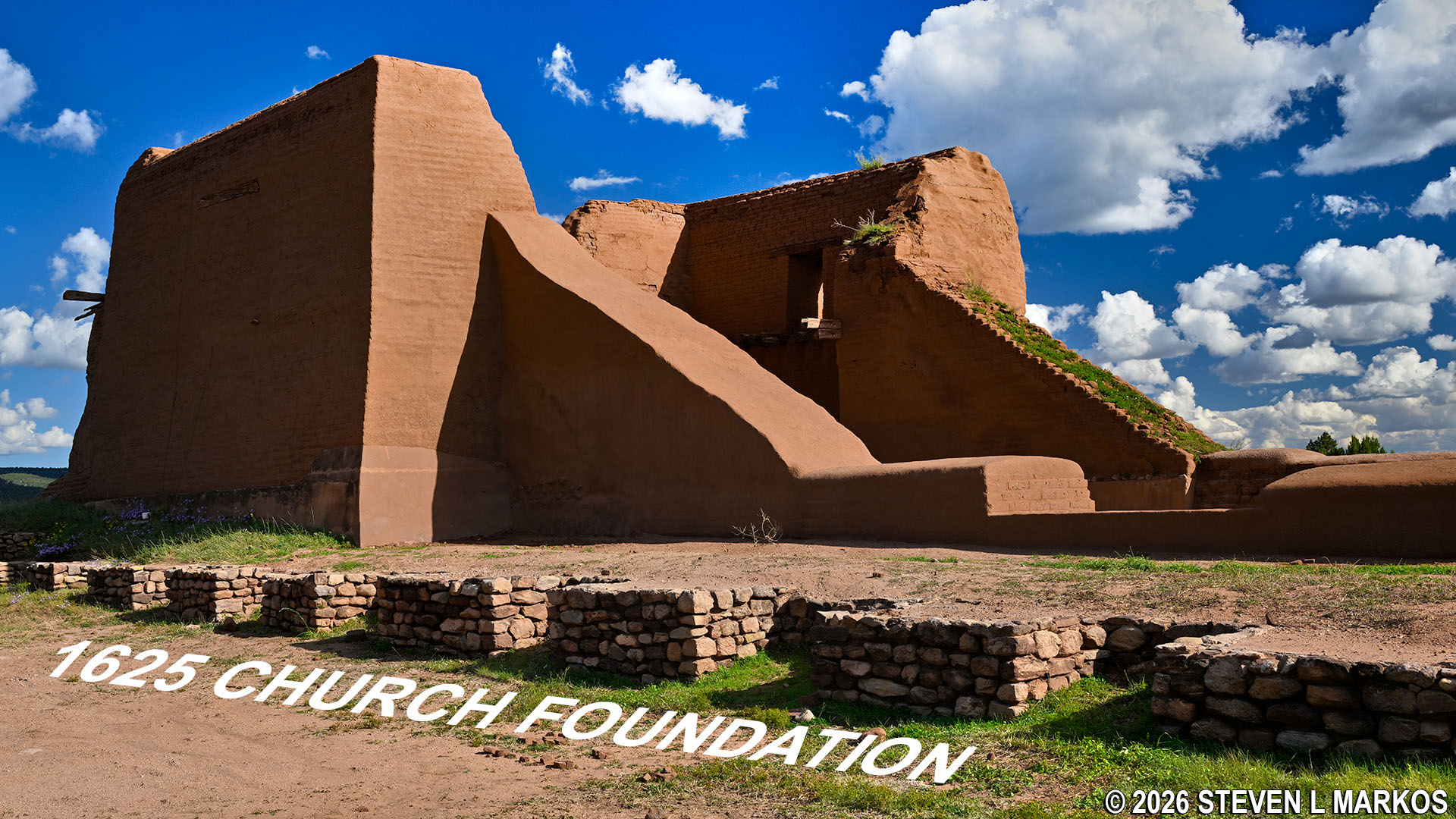
Smaller 1717 Spanish Mission Church sits within the foundation of the 1625 church, Pecos National Historical Park
With a few exceptions, use of any photograph on the National Park Planner website requires a paid Royalty Free Editorial Use License or Commercial Use License. See the Photo Usage page for details.
Last updated on August 7, 2026


