
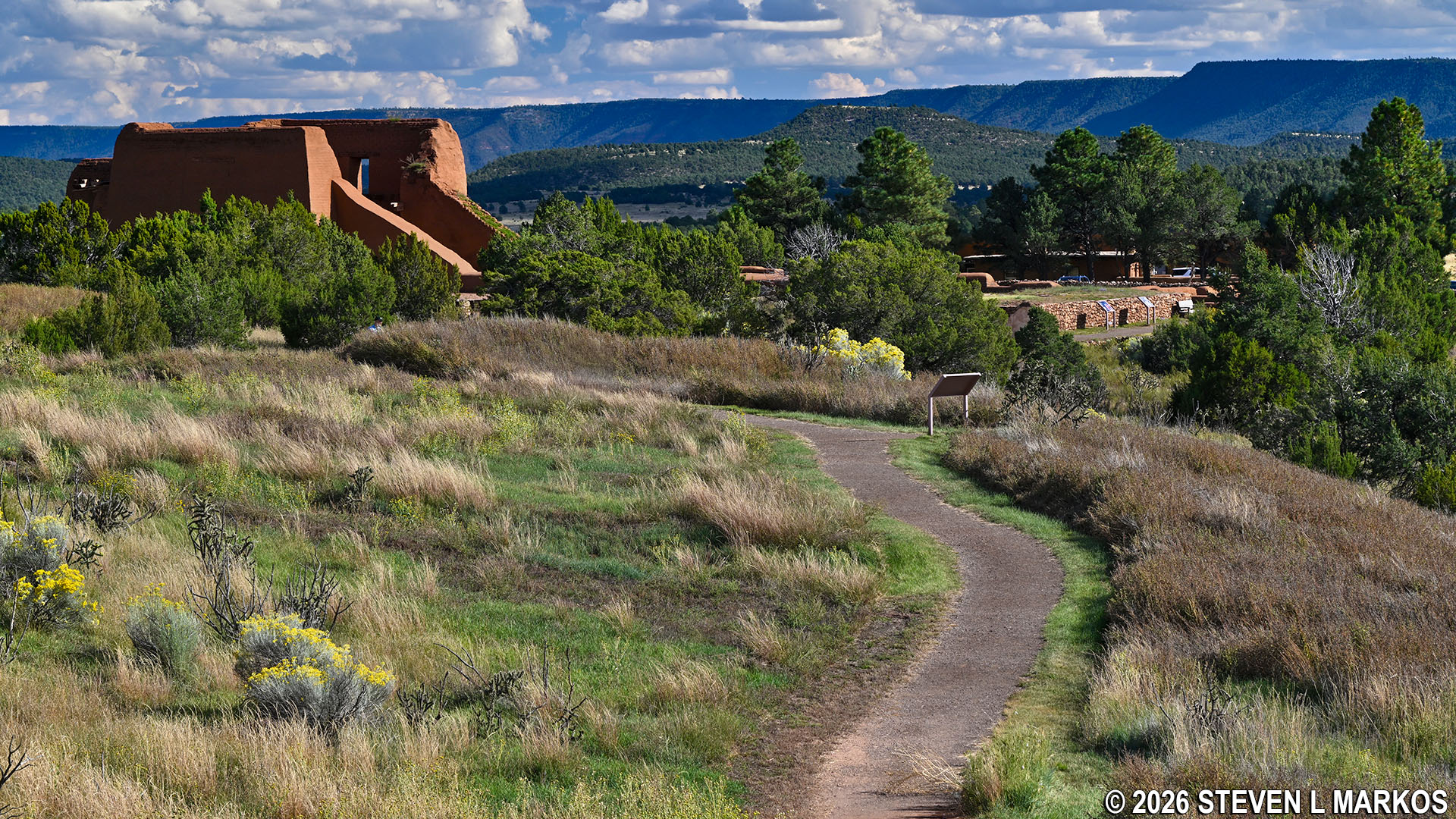
The Ancestral Sites Trail at Pecos National Historical Park
Length: 1.25 miles
Time: 1.5 hours (includes time to read the trail guide)
Difficulty: ★★☆☆☆
The Ancestral Sites Trail at Pecos National Historical Park is a 1.25-mile loop that takes visitors through the ruins of the Pecos Pueblo and an early 18th century Spanish Mission Church. The trail surface is hard-packed gravel and dirt (close in texture to pavement), and the terrain is slightly hilly, but those in wheelchairs can make it around with some assistance. There are a few steps within the church ruins, but there is plenty to see without entering these areas. Most of the trail is out in the open, so if avoiding the sun is important to you, make sure to wear a hat and apply sunscreen. Keep in mind that you can park your vehicle next to the church, but hiking the trail is the only way to see the pueblo ruins.
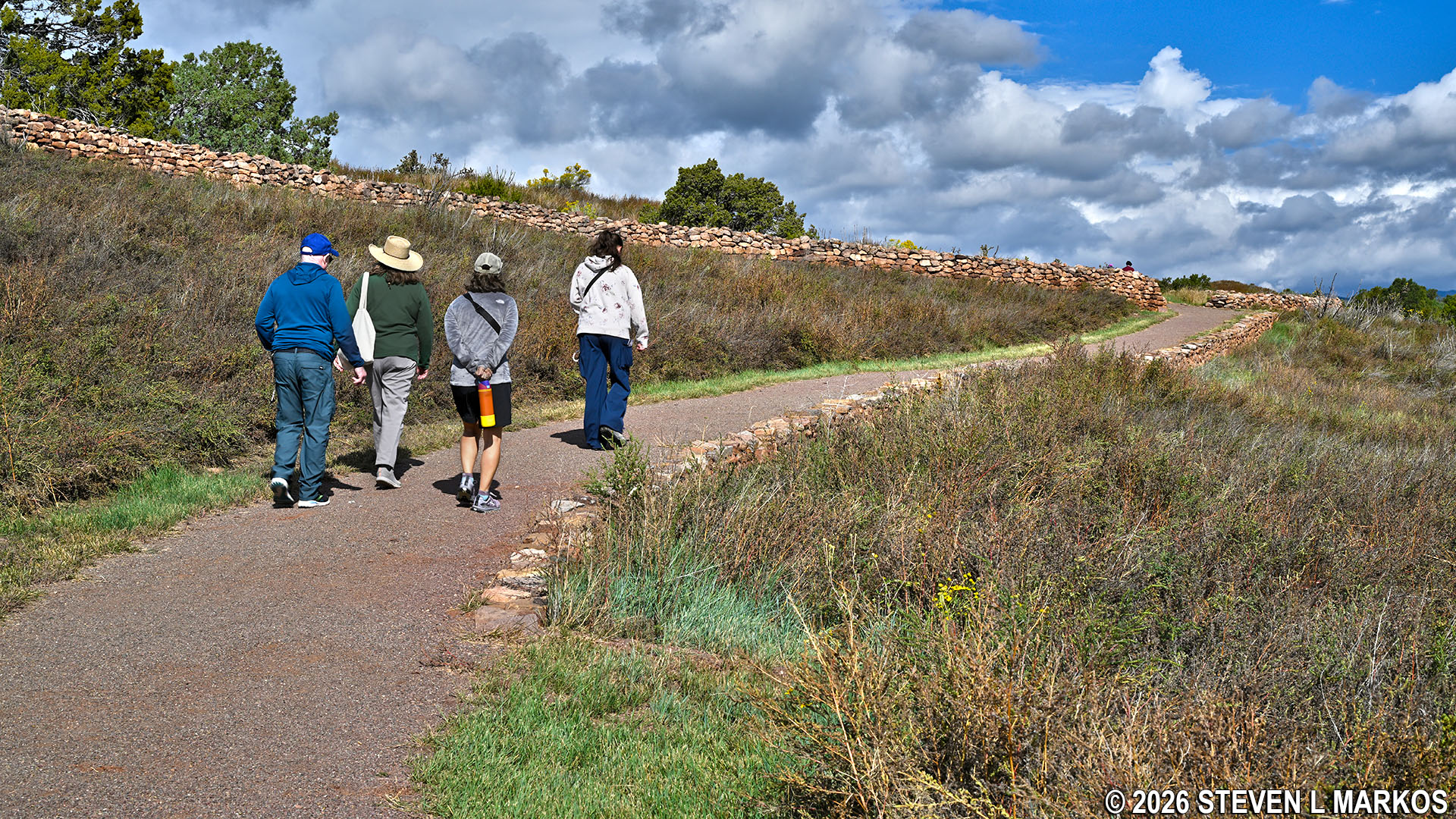
Typical hill on the Ancestral Sites Trail at Pecos National Historical Park
There are two ways to experience the Ancestral Sites Trail. One is to take a free guided walk that covers the first half of the trail. These are held every day from April through the end of October, typically at 10 AM. For the current schedule, see the National Park Service’s official Calendar web page for Pecos National Historical Park.
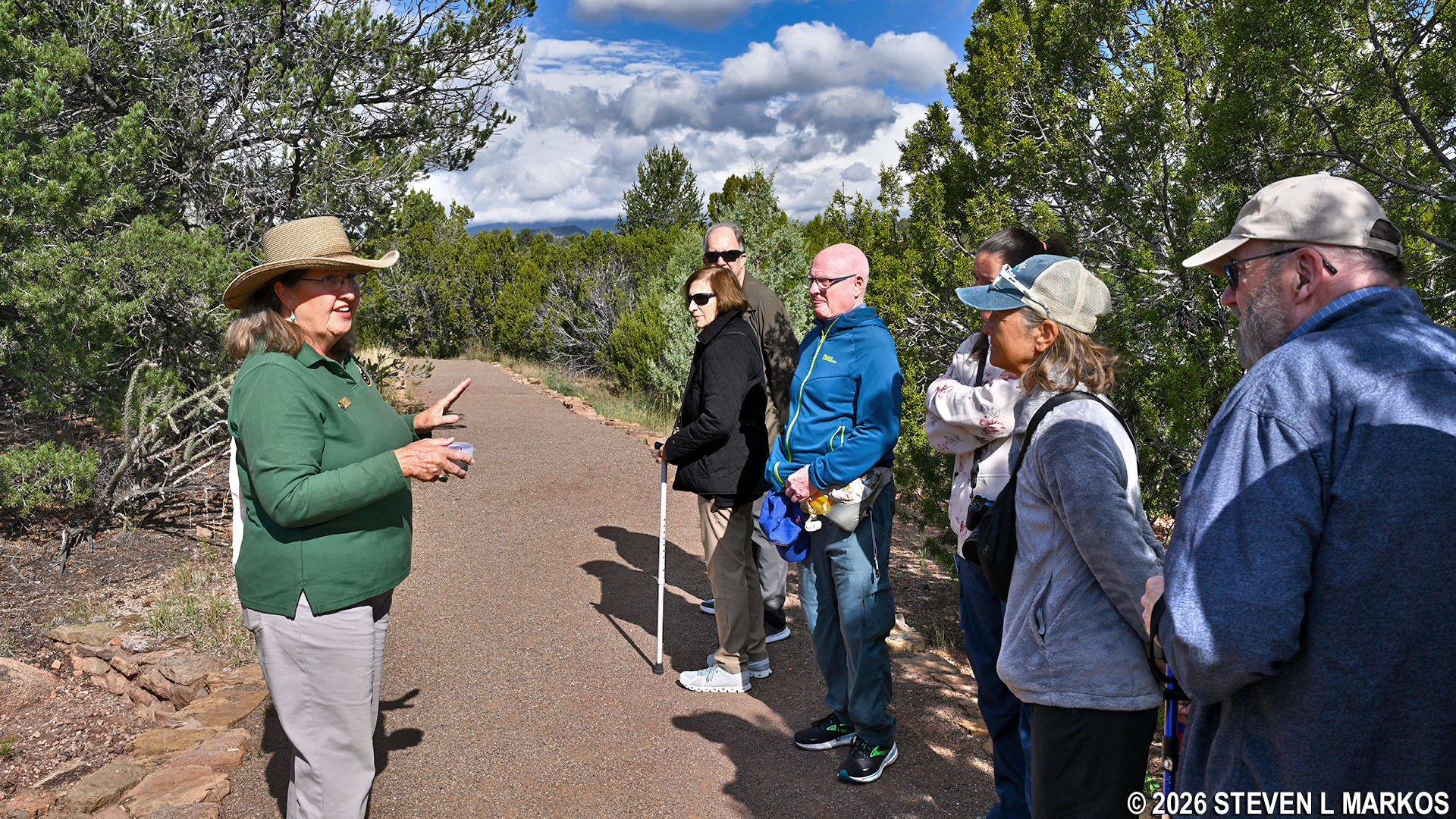
Knowledgeable park volunteer leads a guided walk on the Ancestral Sites Trail at Pecos National Historical Park
You can also hike the trail on your own anytime the park is open. You won’t have a guide to provide information about what you will be seeing, but there are sixteen numbered stops along the trail that correspond with information in a detailed trail brochure that is available for purchase at the Visitor Center. It’s just a couple bucks (credit and debit cards only) and certainly worth the money if you want to learn something.
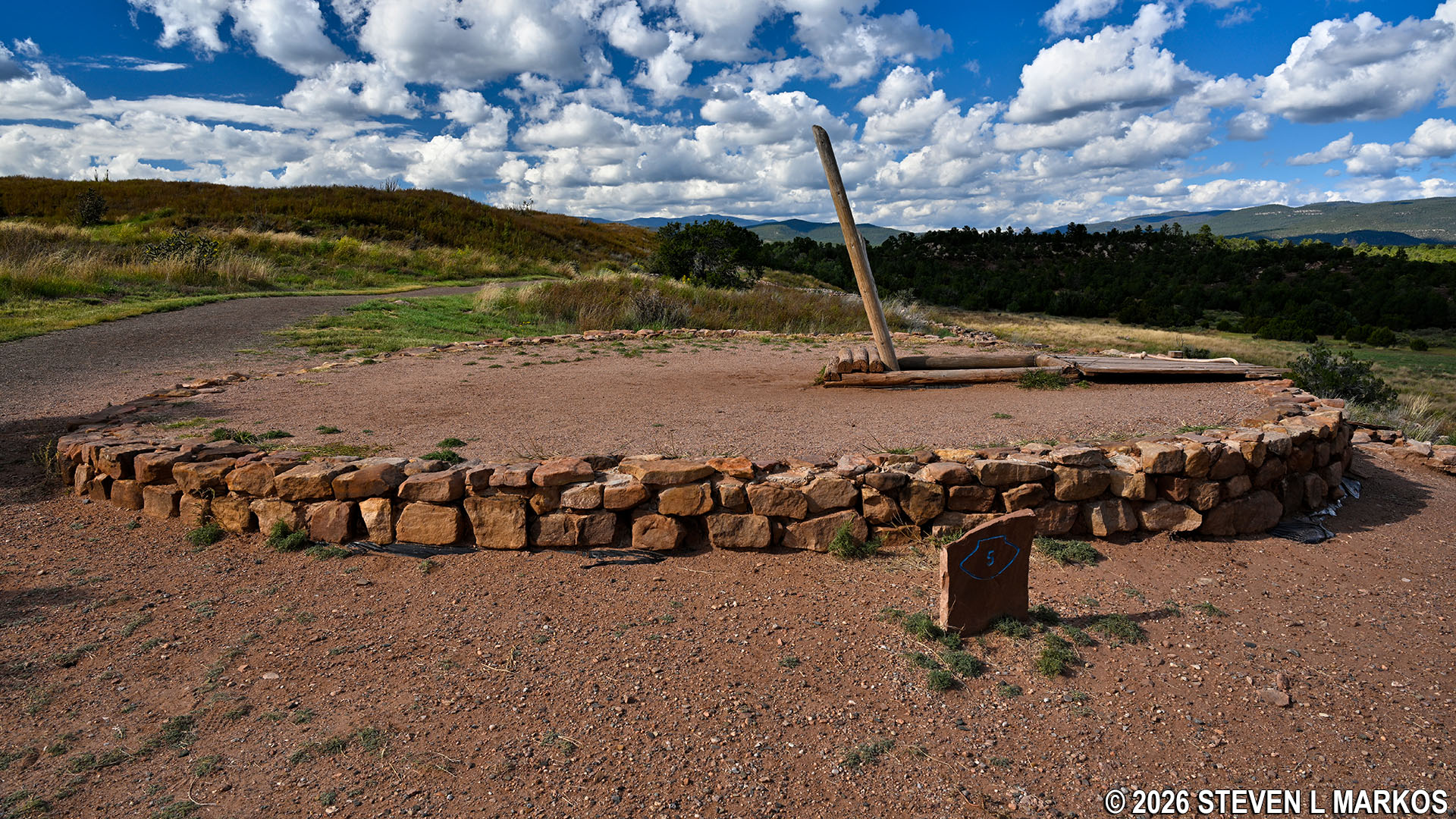
Numbered marker on the Ancestral Sites Trail at Pecos National Historical Park
The trailhead is located behind the Visitor Center, and from the start you can see the types of hills you must tackle in order to hike the trail, which in truth, are not very steep. As mentioned, those in wheelchairs can make it around with a little help.
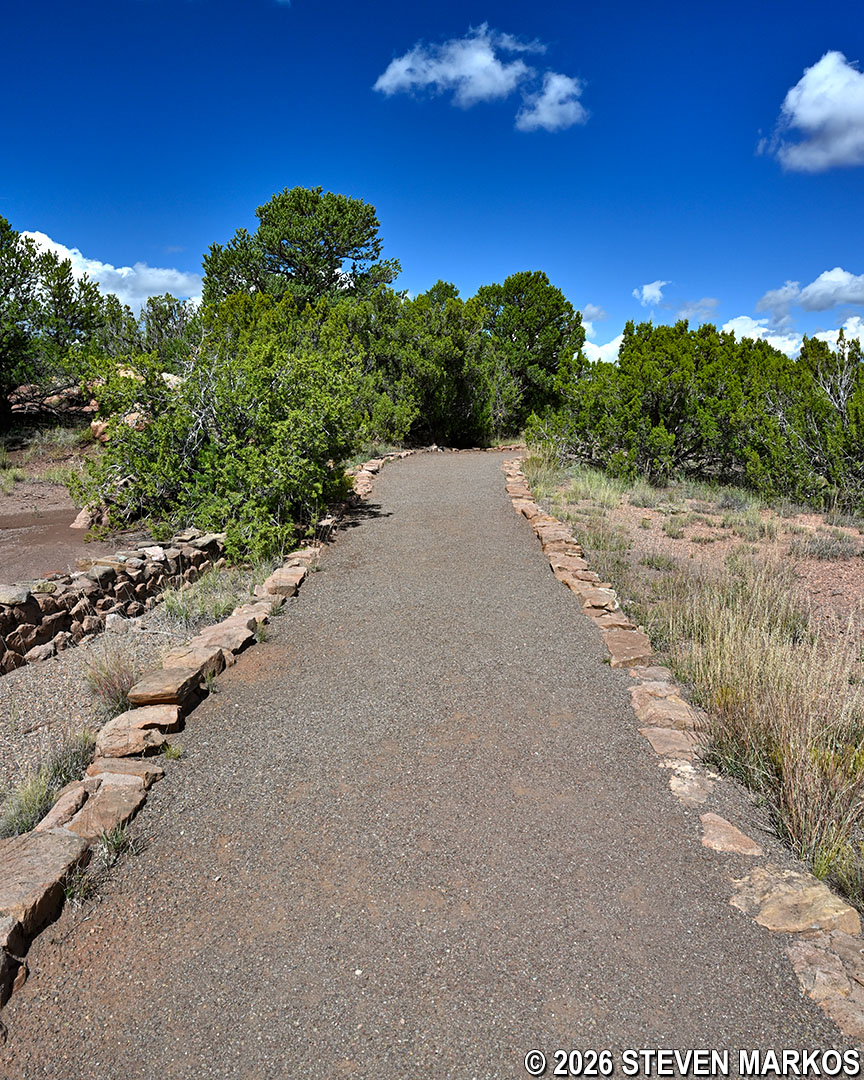
Typical terrain at the start of the Ancestral Sites Trail at Pecos National Historical Park
The first numbered stop on the Ancestral Sites Trail gives hikers a view of the northern end of the Pecos Pueblo (pueblo is a term for village or town, not the physical structures the people live in). At its height, Pecos was a regional center for commerce and often hosted trade fairs and markets. The field below the hills is where the markets were located, and still buried in the hills are the pueblo’s oldest structures. Known as the North Pueblo, this section was built in the 1400s.
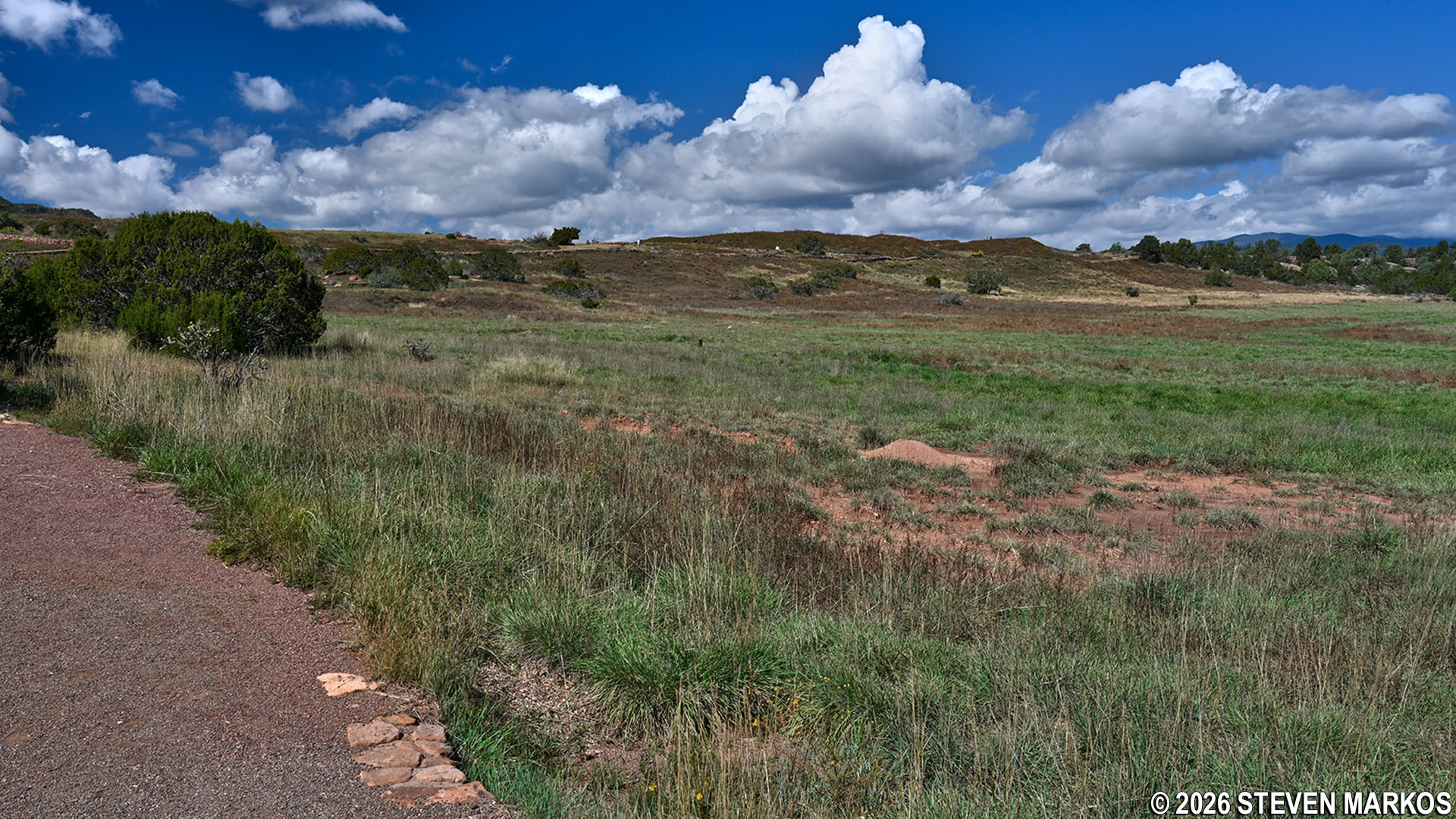
View towards the North Pueblo at Stop 1 on the Ancestral Sites Trail, Pecos National Historical Park
There is a nice view of the ruins of the Spanish Mission Church from Stop 2. Built in 1717, this was the second church at Pecos Pueblo. The first, which was built in 1625, was destroyed during the Pueblo Revolt of 1680.
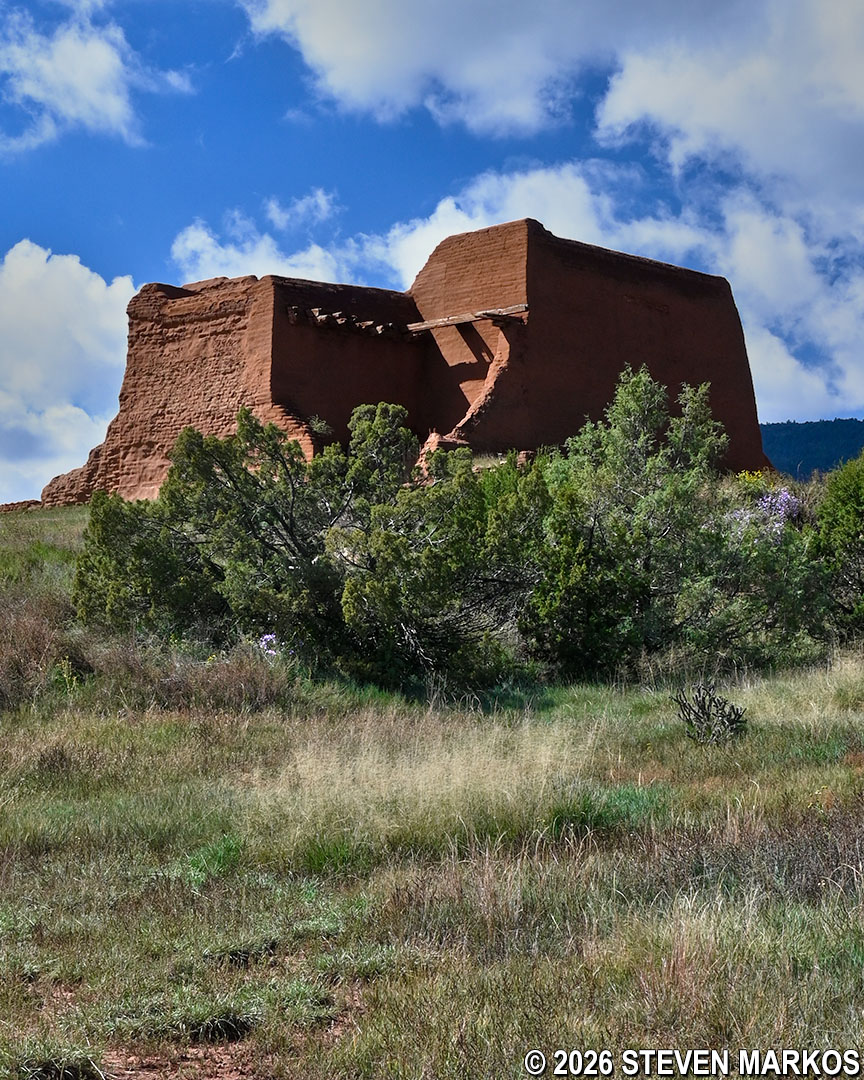
View of the Spanish Mission Church from Stop 2 on the Ancestral Sites Trail at Pecos National Historical Park
The trail begins a slight uphill climb on the way to Stop 3. Unlike most hills, this incline holds a much higher significance. In 1915, archeologist Alfred V. Kidder led an excavation at Pecos Pueblo. After uncovering artifacts such as broken pots and animal bones, he realized that the hill was actually a midden created by the Pecos People. A midden is an archeological term used to describe a trash pile (usually kitchen waste), and over time these can grow into substantial hills. As the middens are used less and less and eventually abandoned, they are naturally covered with dirt due to erosion, and vegetation takes hold.
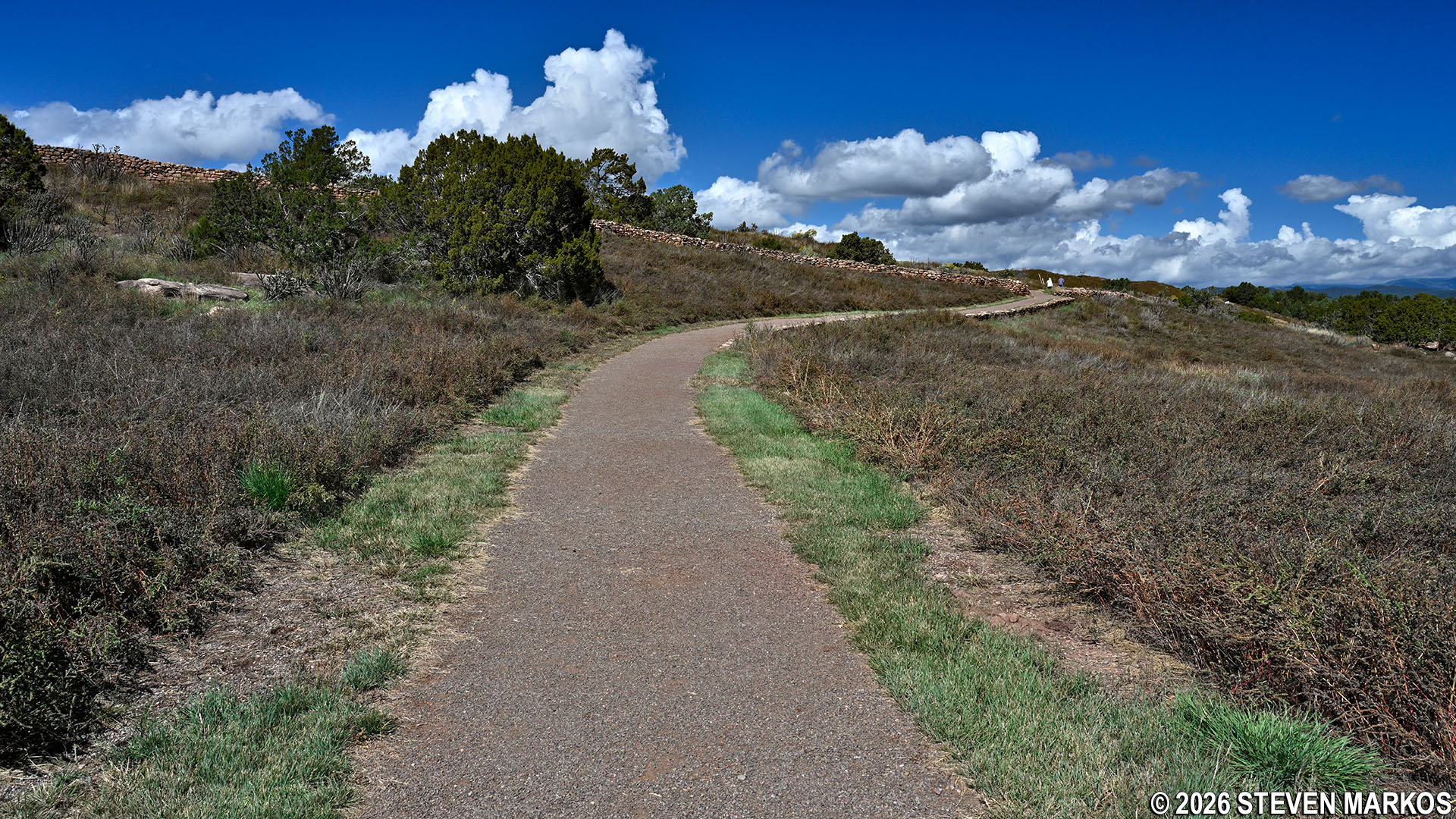
Uphill path across the midden on the Ancestral Sites Trail at Pecos National Historical Park
Kidder also uncovered the stone boundary wall seen at Stop 3 that was used by the Pecos people for defense. It was built using cobblestones from Glorieta Creek and conglomerate and sandstone from the Sangre de Cristo Mountains.
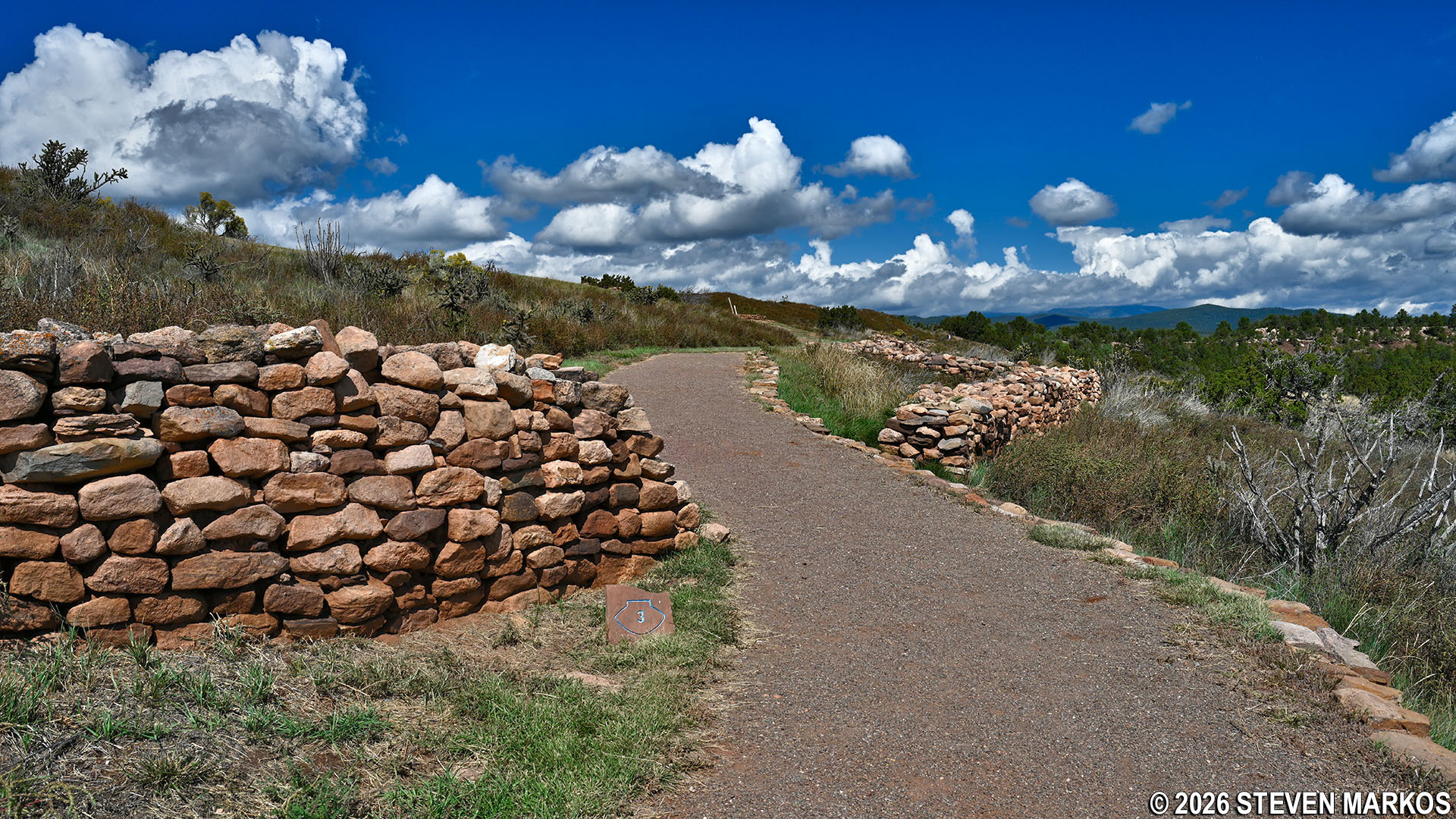
Stone boundary wall at Stop 3 on the Ancestral Sites Trail at Pecos National Historical Park
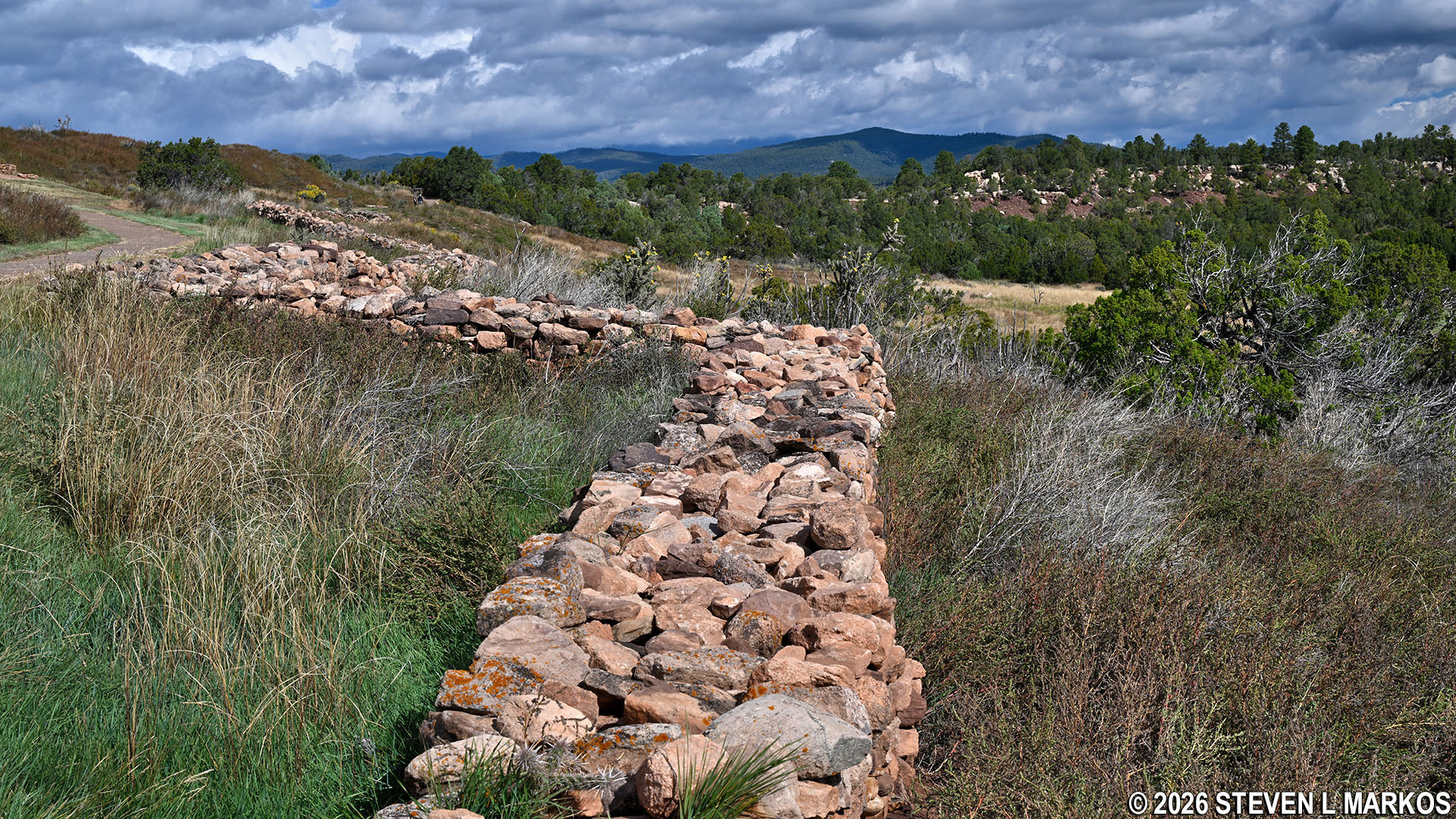
Stone boundary wall around the Pecos Pueblo, Pecos National Historical Park
The trail continues making its way up the midden, passing a section of the ruins known as the South Pueblo on the left (Stop 4). The South Pueblo was constructed in the 1500s to accommodate the expanding population. It was much smaller than the North Pueblo, which had structures four and five stories tall. The South Pueblo structures were only two or three stories.
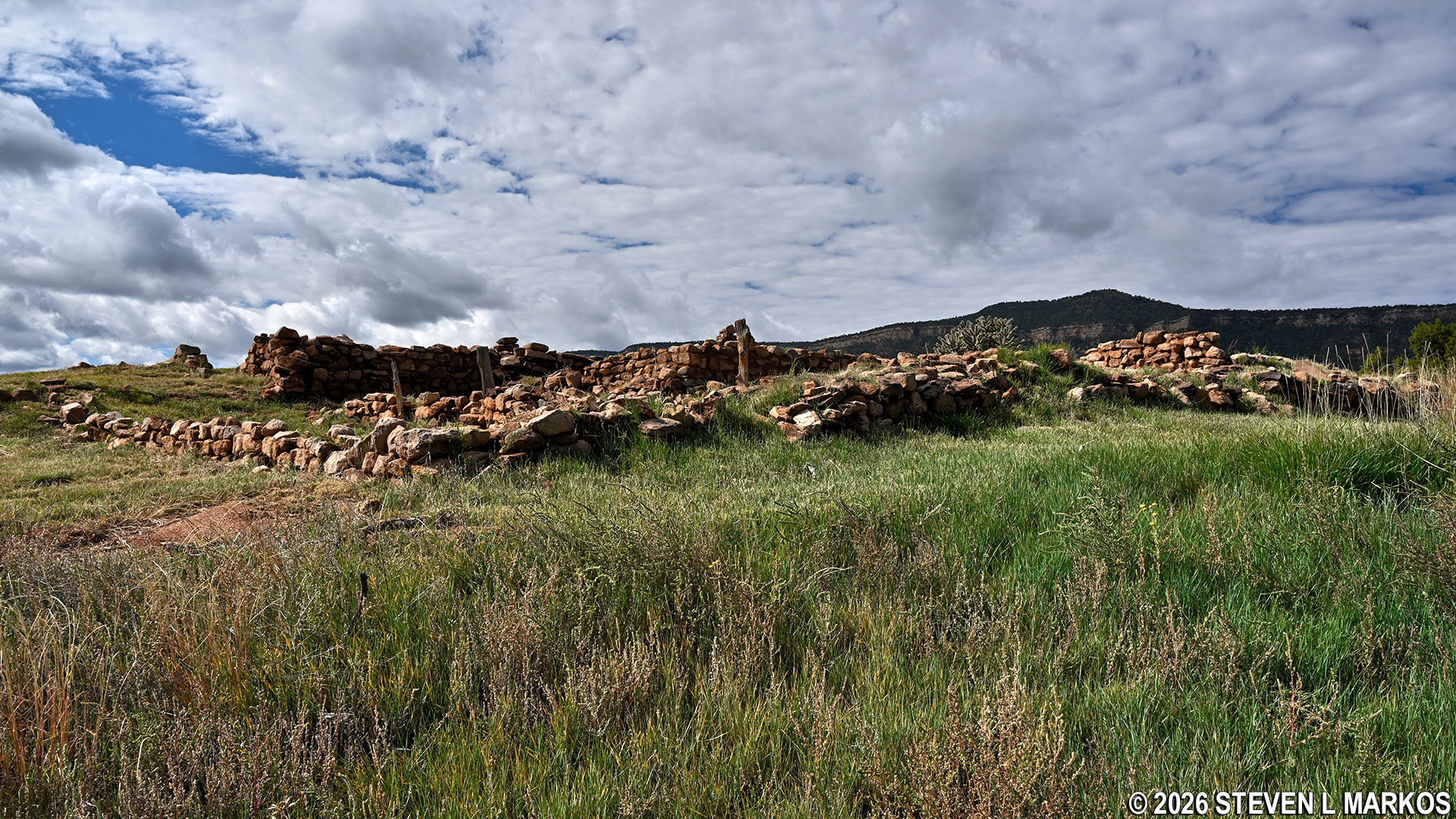
Section of the South Pueblo ruins at Stop 4 on the Ancestral Sites Trail, Pecos National Historical Park
At the top of the hill is Stop 5, a reconstructed kiva. A ladder at its center allows park visitors to climb down into it. Kivas are large, underground rooms (typically round, but not always) used by the Ancestral Puebloan people for spiritual ceremonies and social gatherings.
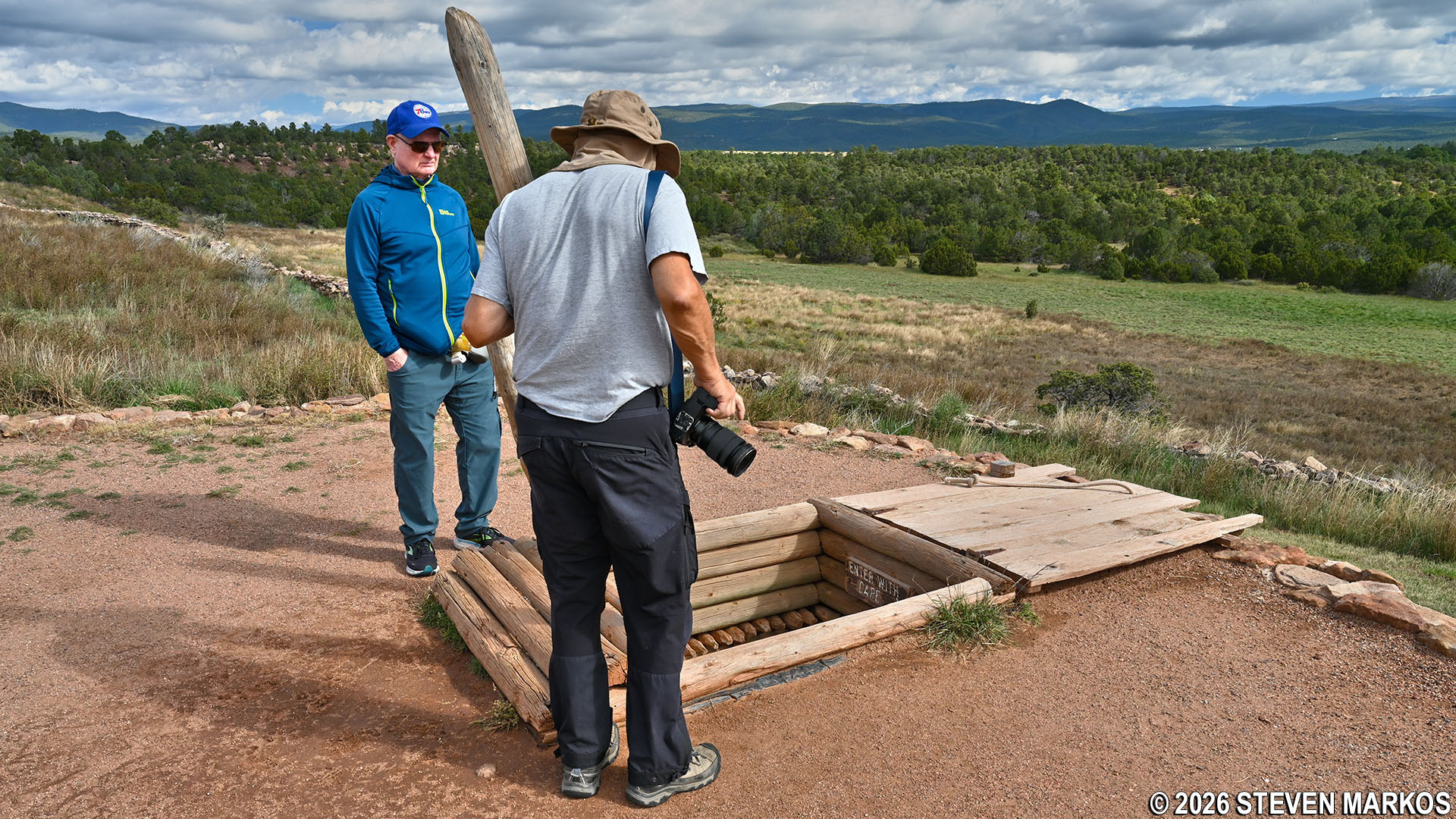
Kiva at Stop 5 on the Ancestral Sites Trail at Pecos National Historical Park
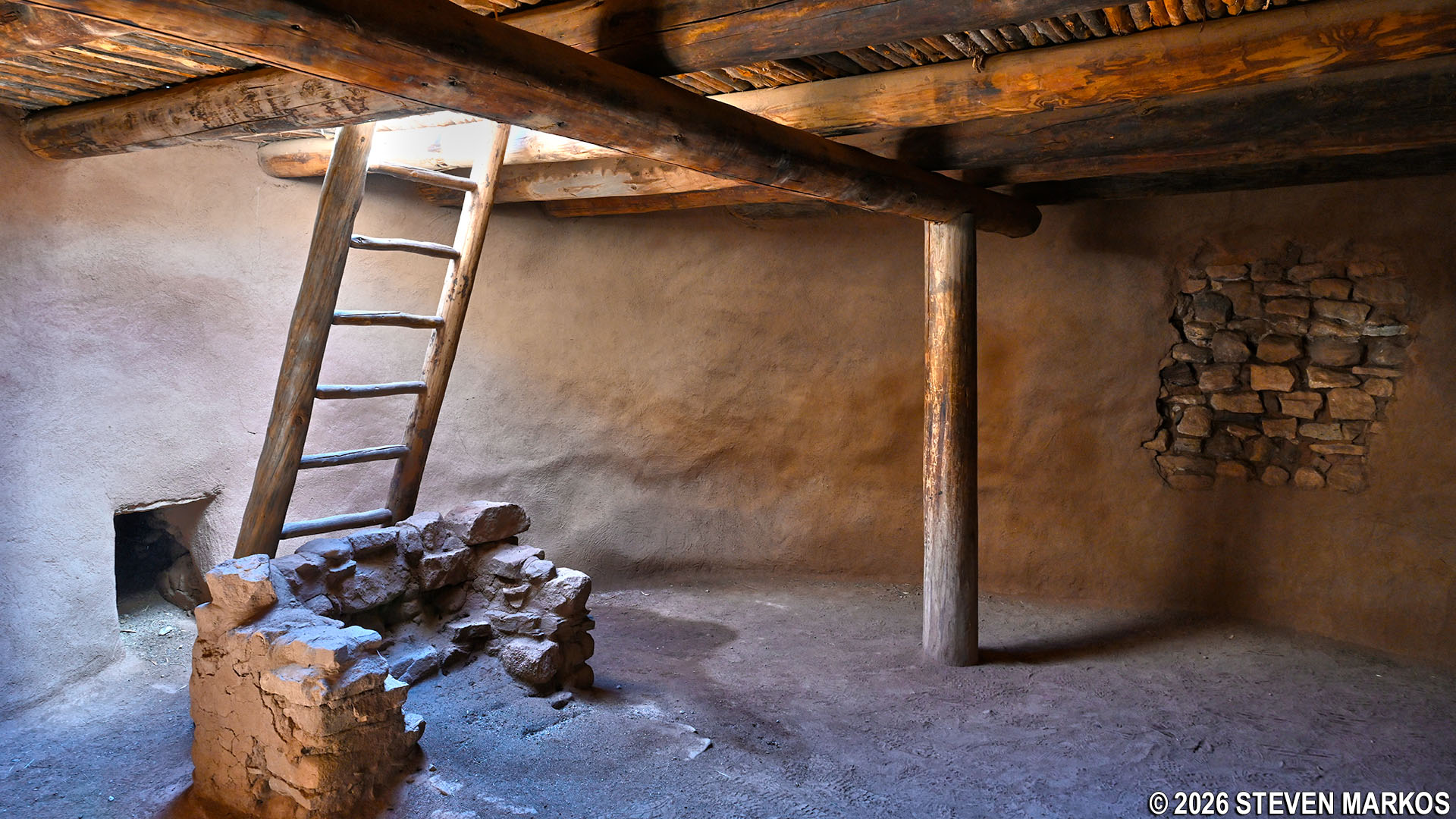
Inside the kiva at Stop 5 on the Ancestral Sites Trail at Pecos National Historical Park
Stop 5 is also where the loop around the Pecos Pueblo begins. The decision to take a left or a right all depends on what you want to do at this point. Knowing that the trail to the Spanish Mission Church is at the southern end of the loop plays an important part in this decision.
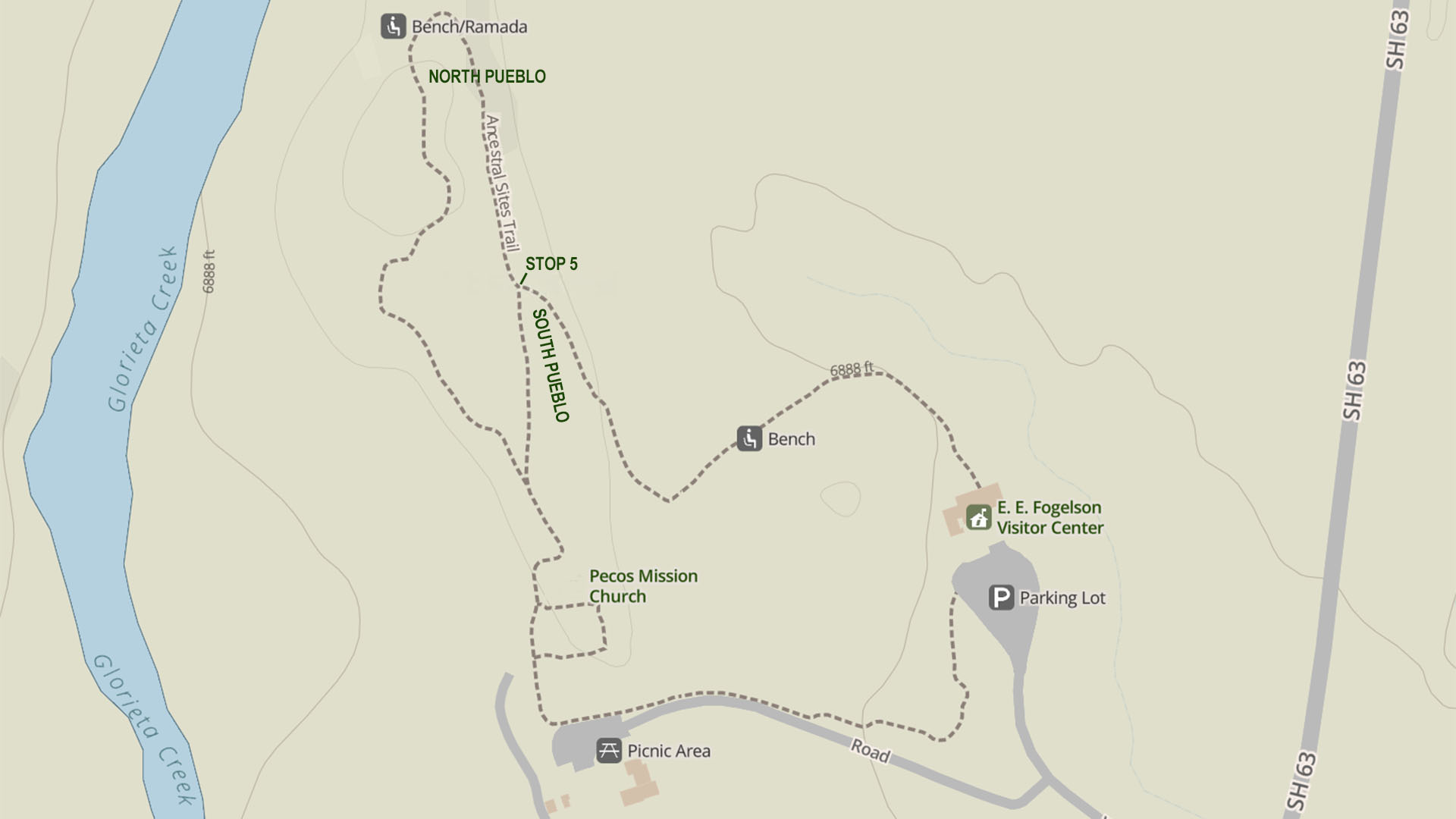
Ancestral Sites Trail Map
If you are on a guided tour, the hike turns to the left and heads directly to the church, bypassing the North Pueblo area altogether. In truth, other than some kivas, there aren’t any ruins worth seeing to the north. Even on your own, if you want a shorter hike (.4 miles shorter) and don’t mind missing some of the points of interest and some spectacular scenery on the northwestern side of the loop, take a left.
If you want to see everything on the Ancestral Sites Trail, take a right. This is also the way to go if you want to come to the numbered stops in chronological order. However, I suggest first taking a left to see the South Pueblo ruins, which end after just 250 feet, then return to Stop 5 and continue north around the loop (there is nothing to see past the ruins). The reason for this is that when you get to the intersection with the trail to the church, you don’t have to hike all the way back to Stop 5 to see the South Pueblo ruins and then turn around, which is a .2-mile round trip. Turning left now will save you about a tenth of a mile, as the round trip to the end of the South Pueblo and back is just a tenth of a mile. This is what I did, and the rest of this trail report is written from the perspective of hiking north, counterclockwise around the loop.
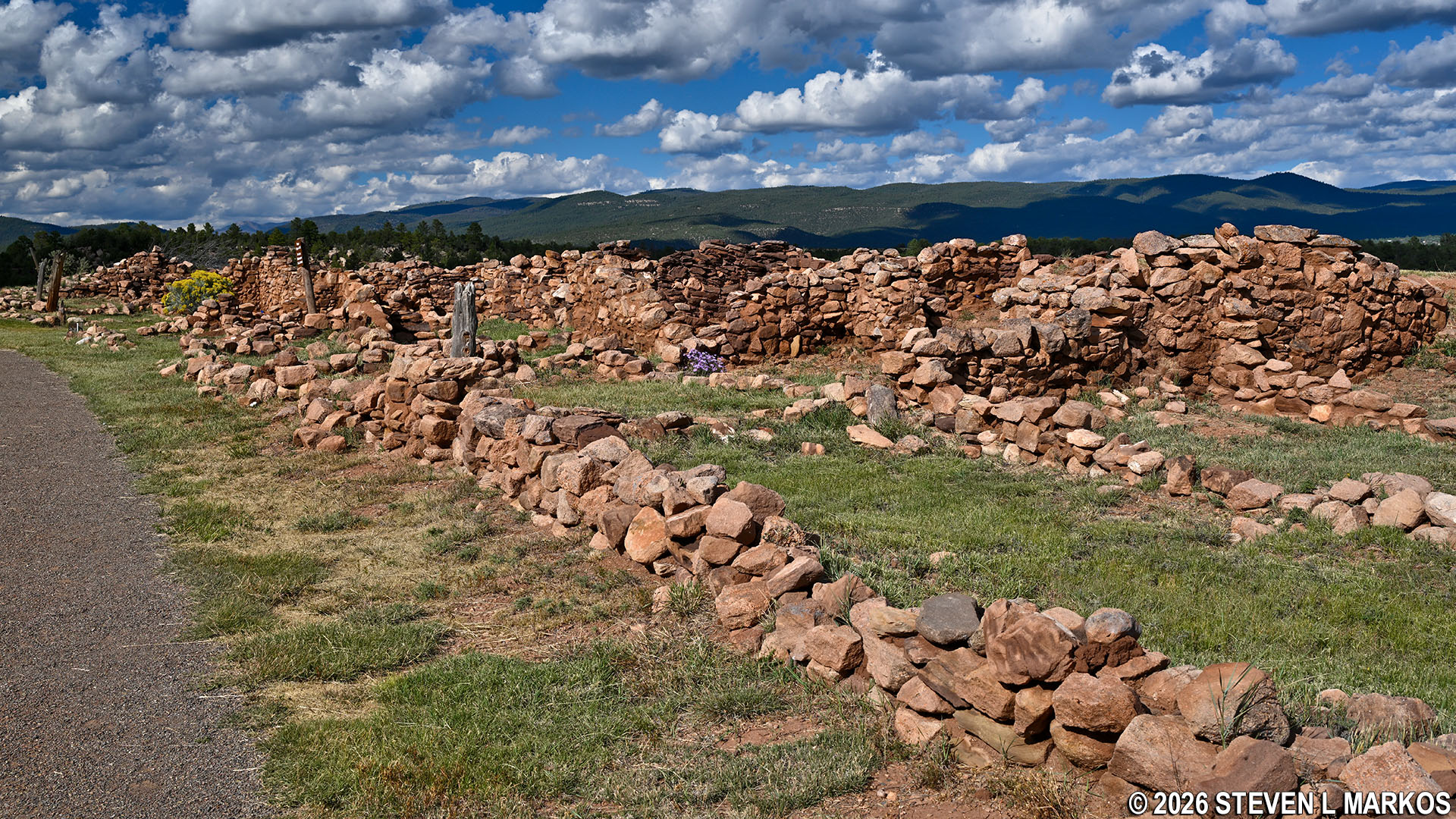
The South Pueblo ruins on the Ancestral Sites Trail at Pecos National Historical Park
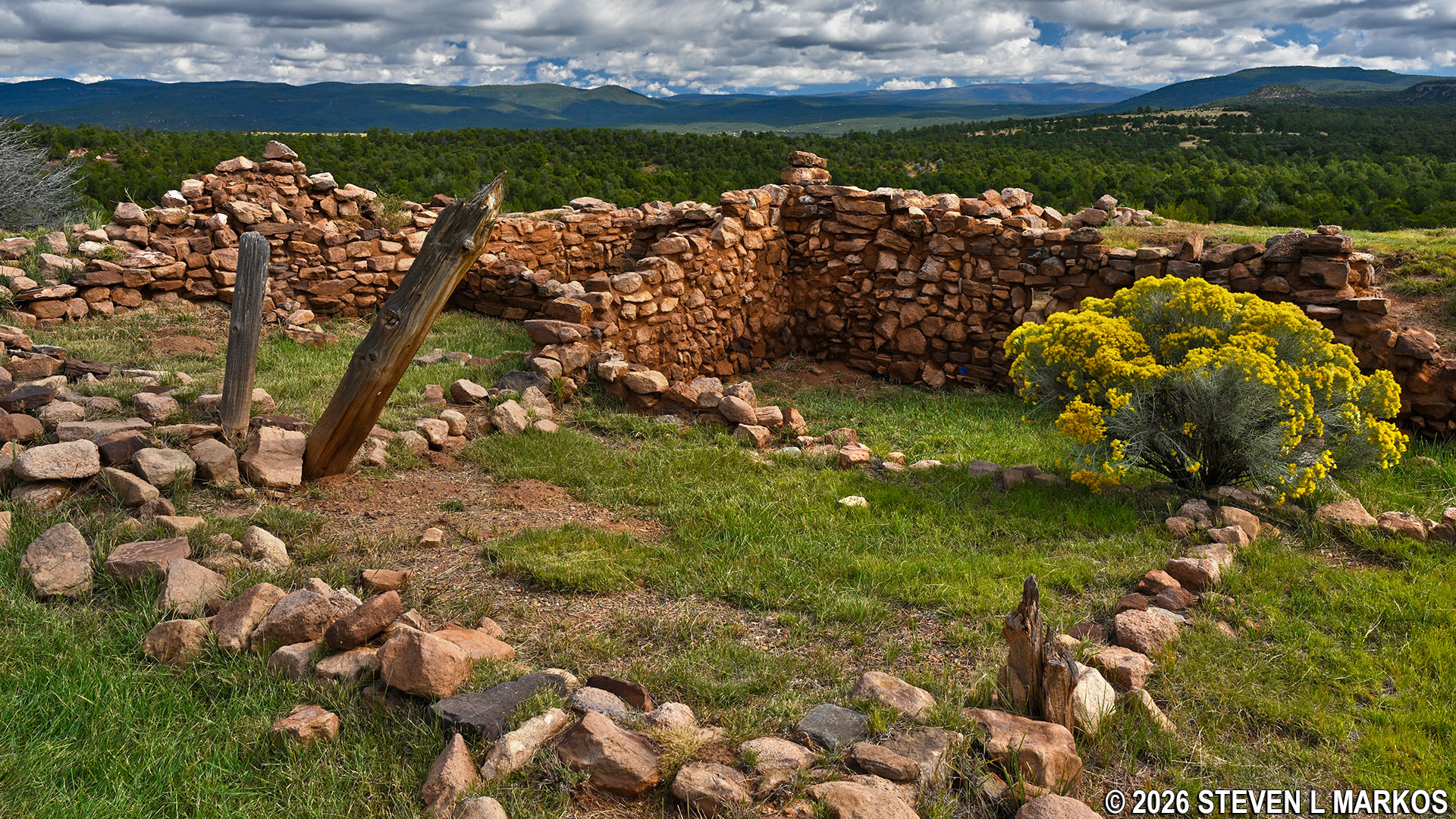
The South Pueblo ruins on the Ancestral Sites Trail at Pecos National Historical Park
The North Pueblo consisted of almost 900 rooms and more than 20 kivas (the South Pueblo is estimated to have had only 150 rooms). While much of the ruins are still buried, during Kidder’s excavation, the walls of a few kivas were partially reconstructed at their original locations. The trail passes a couple of them on the way to stops 6 and 7.
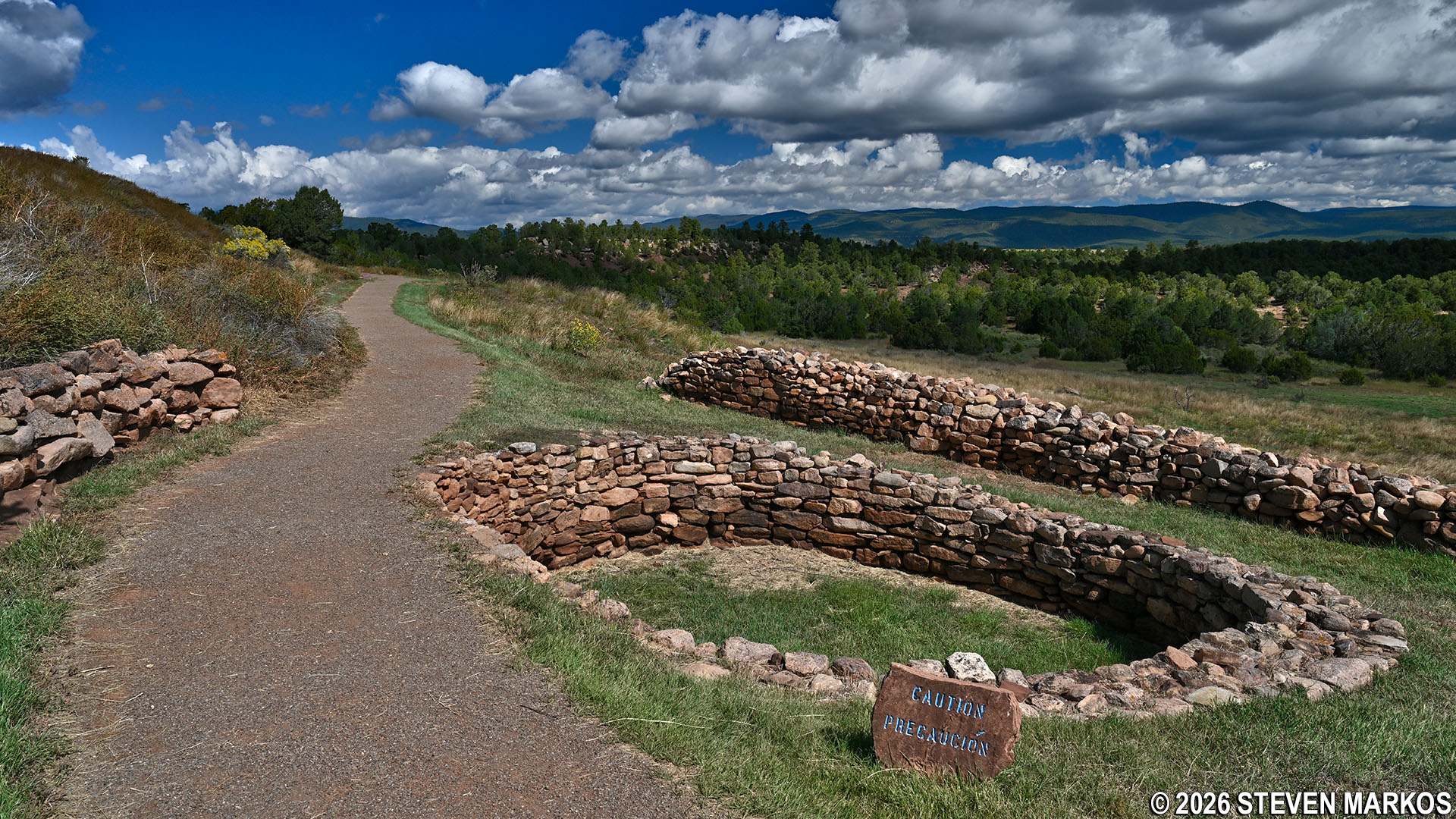
Partially reconstructed North Pueblo kiva along the Ancestral Sites Trail at Pecos National Historical Park
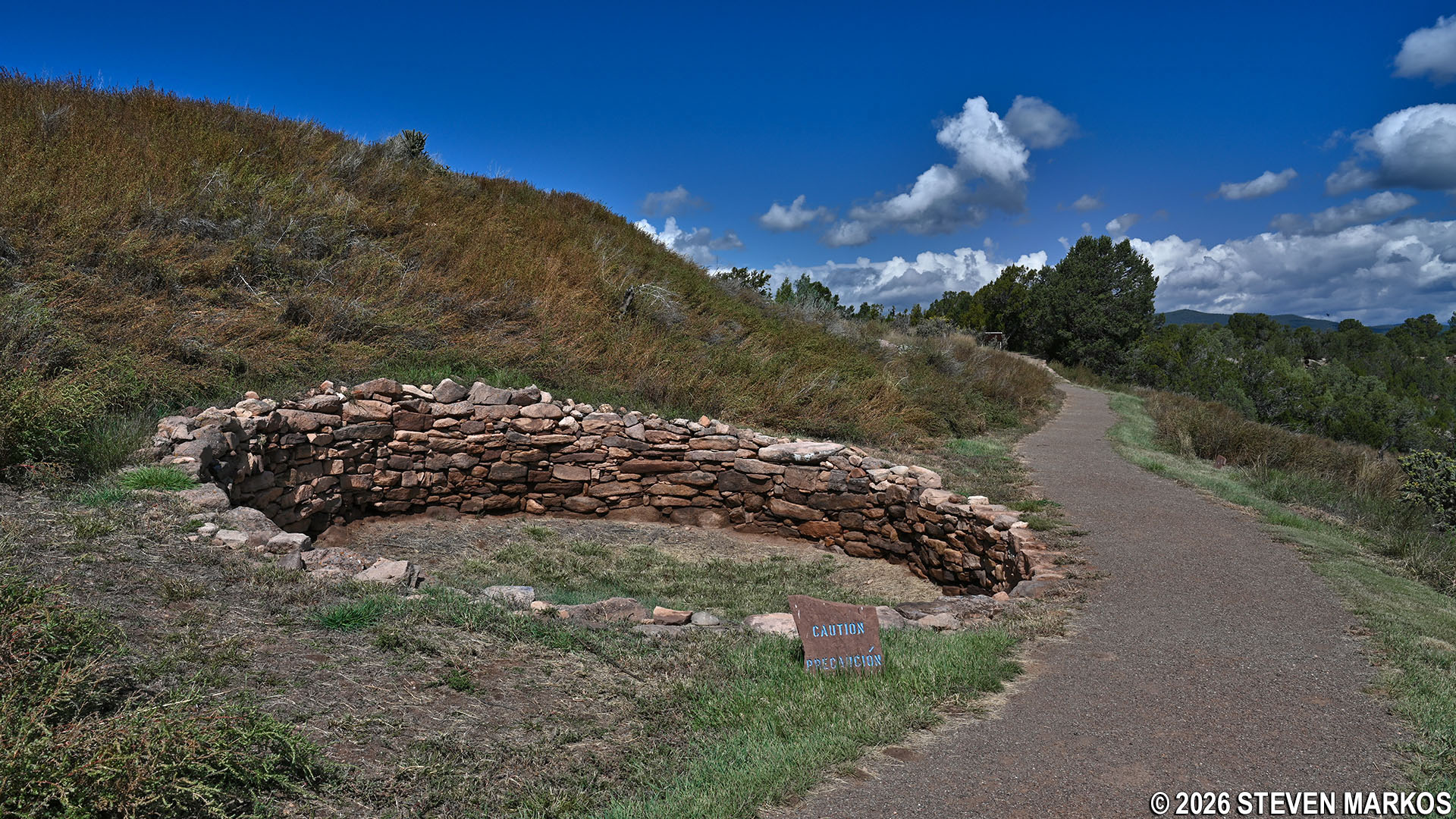
Partially reconstructed North Pueblo kiva along the Ancestral Sites Trail at Pecos National Historical Park
The far northern end of the loop comes a half mile into the hike. Another section of the stone boundary wall is visible from here. A caution sign warns of rattlesnakes, which I was lucky not to encounter, but there was a sighting made by another park visitor while I was there.
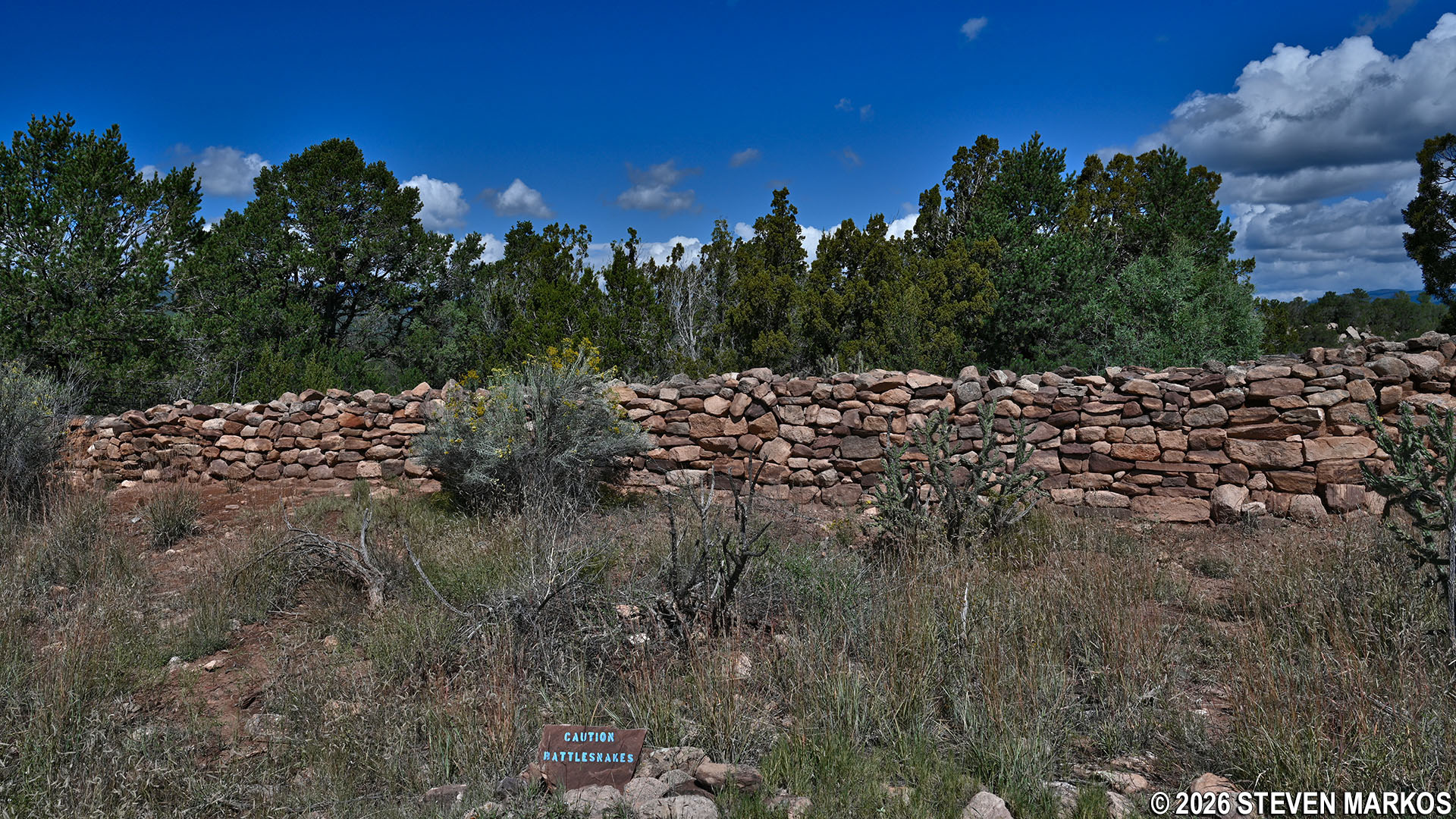
Stone boundary wall on the northern end of the Pecos Pueblo, Pecos National Historical Park
Just past the boundary wall is a wooden shade shelter just off the trail. There are built-in bench seats along two of the inside walls. This is one of the only opportunities to get out of the sun while hiking the Ancestral Sites Trail.
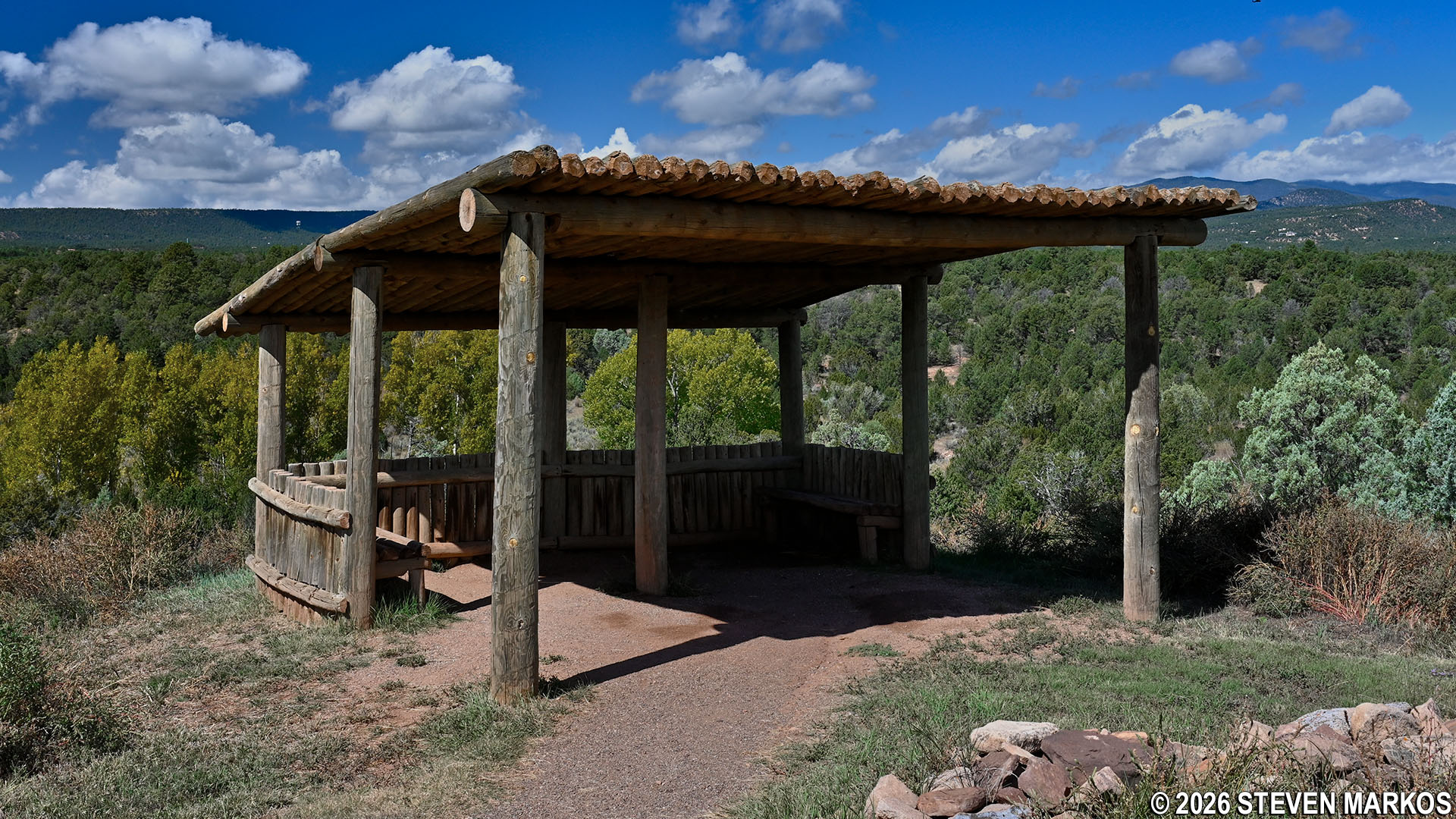
Shade shelter on the Ancestral Sites Trail at Pecos National Historical Park
A short incline after the shade shelter leads to some of the North Pueblo ruins that have been excavated. Visitors are allowed to walk on this section, but the steps are uneven, so make sure to watch your footing.
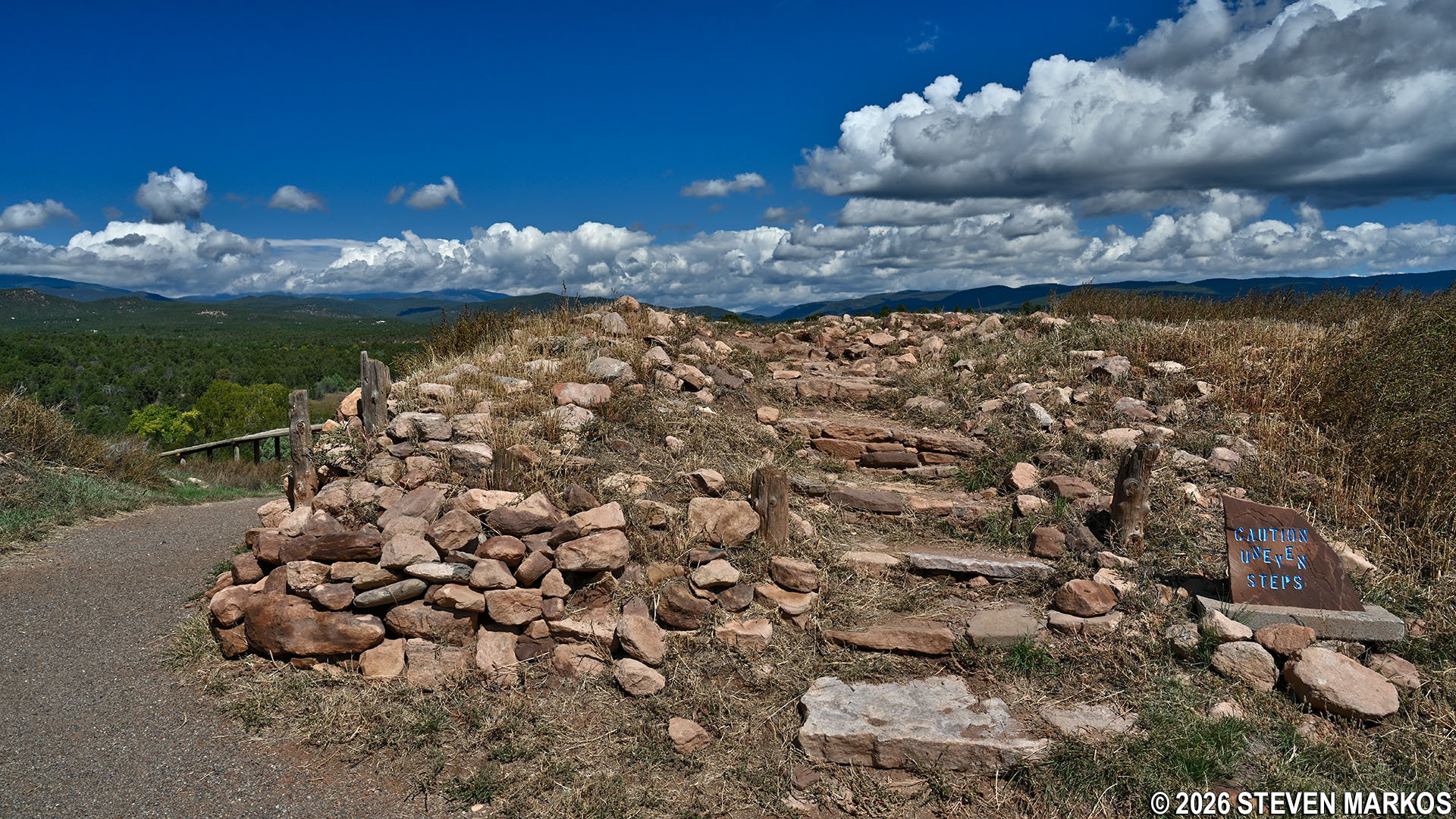
North Pueblo ruins on the northwestern side of the Ancestral Sites Trail at Pecos National Historical Park
At this point, the Ancestral Sites Trail begins heading downhill all the way to the church, but again, nothing that even those in wheelchairs cannot handle with a little help. This is also where the aforementioned beautiful scenery begins. The trail follows along Glorieta Creek to the west, but you can no longer see it because the vegetation has grown up over the years and now blocks the view. Its location is indicated, however, by the bright green trees growing along the banks. The geological formation in the distance is Glorieta Mesa.
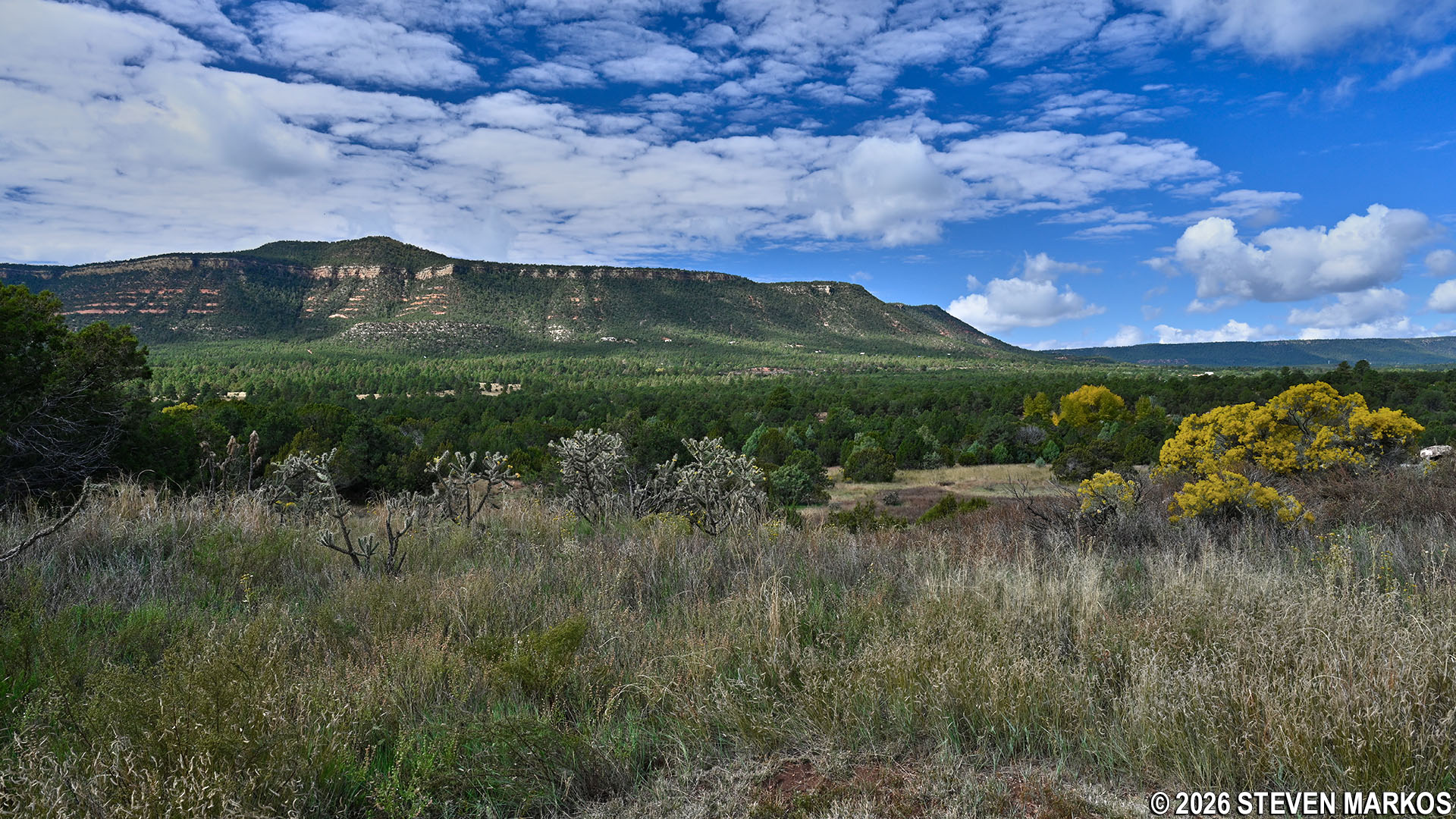
View of Glorieta Creek and Glorieta Mesa from the Ancestral Sites Trail, Pecos National Historical Park
After hiking .7 miles (.8 if you took a left to see the South Pueblo ruins), you will be at the southern end of the loop at the intersection with the trail to the Spanish Mission Church. If you didn’t check out the South Pueblo ruins earlier, take a sharp left (actually a U turn) and hike a tenth of a mile back to Stop 5. If you saw the ruins, continue straight to the church.
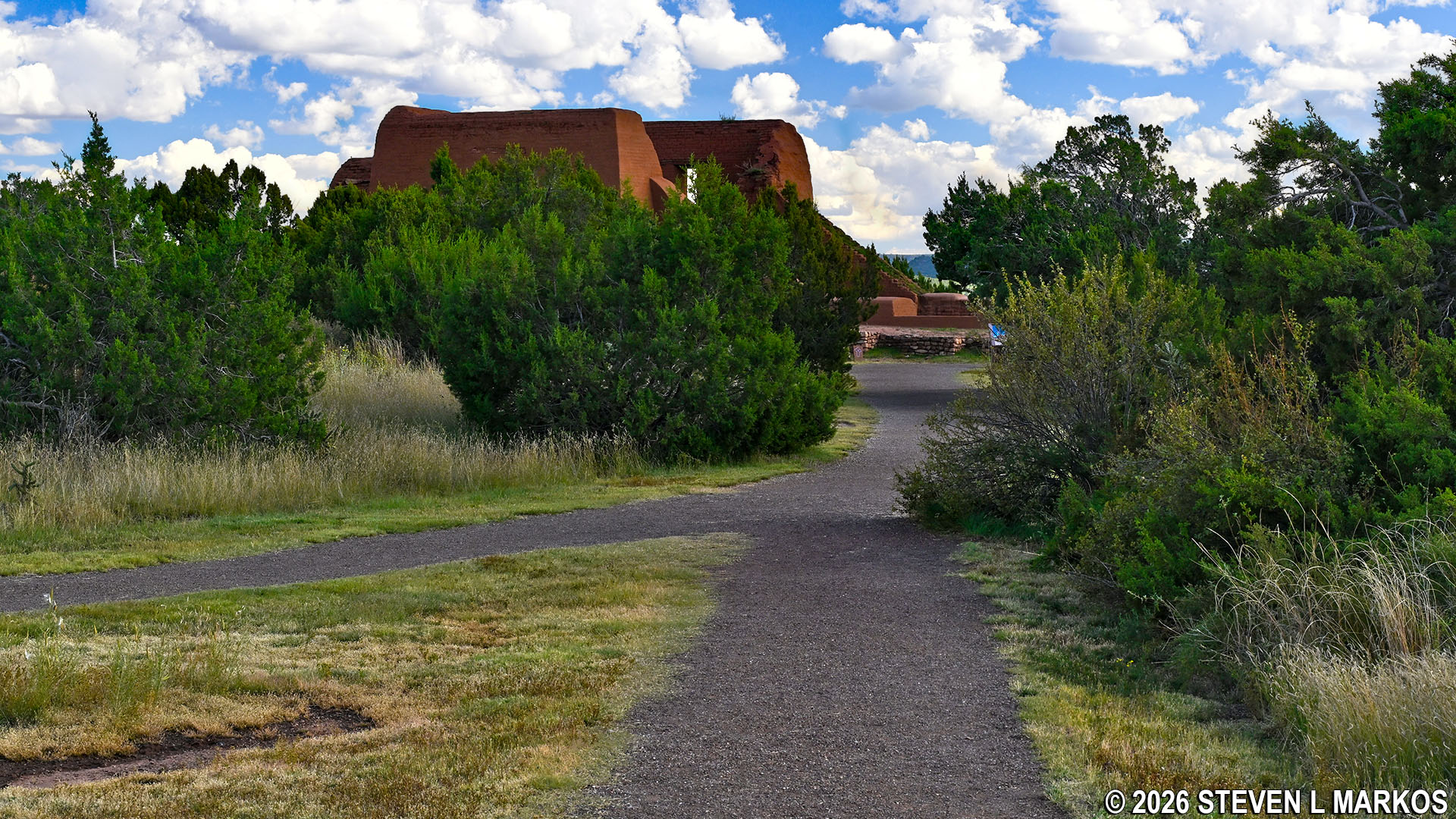
Intersection at the southern end of the loop around the Pecos Pueblo that leads to the Spanish Mission Church, Pecos National Historical Park
The ruins now standing are from the church built in 1717. It is much smaller than the original 1625 church. For reference, the stone foundation of the 1625 church is still intact, and the 1717 church easily fits inside its footprint.
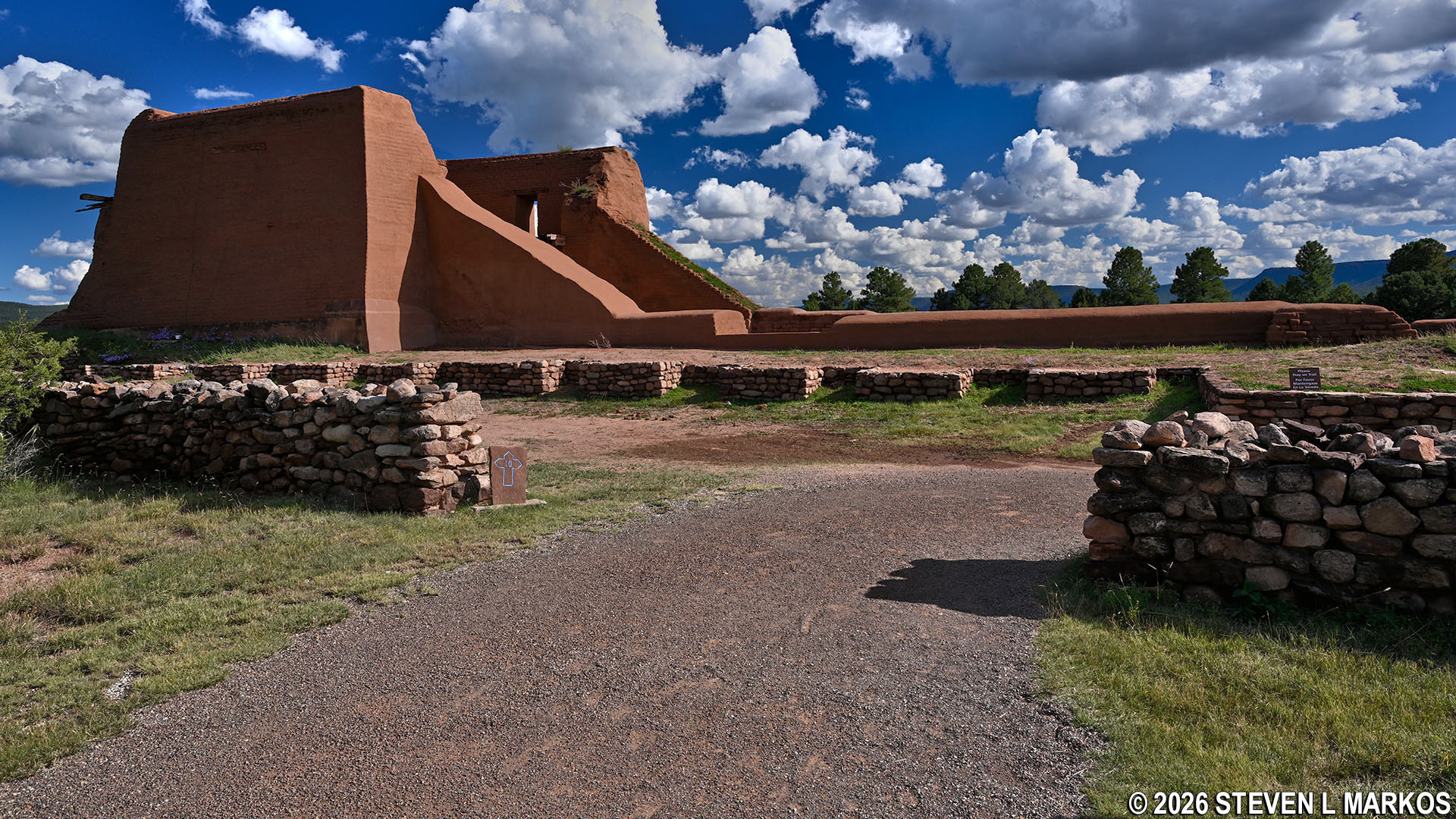
Spanish Mission Church ruins at Stop 10 on the Ancestral Sites Trail, Pecos National Historical Park
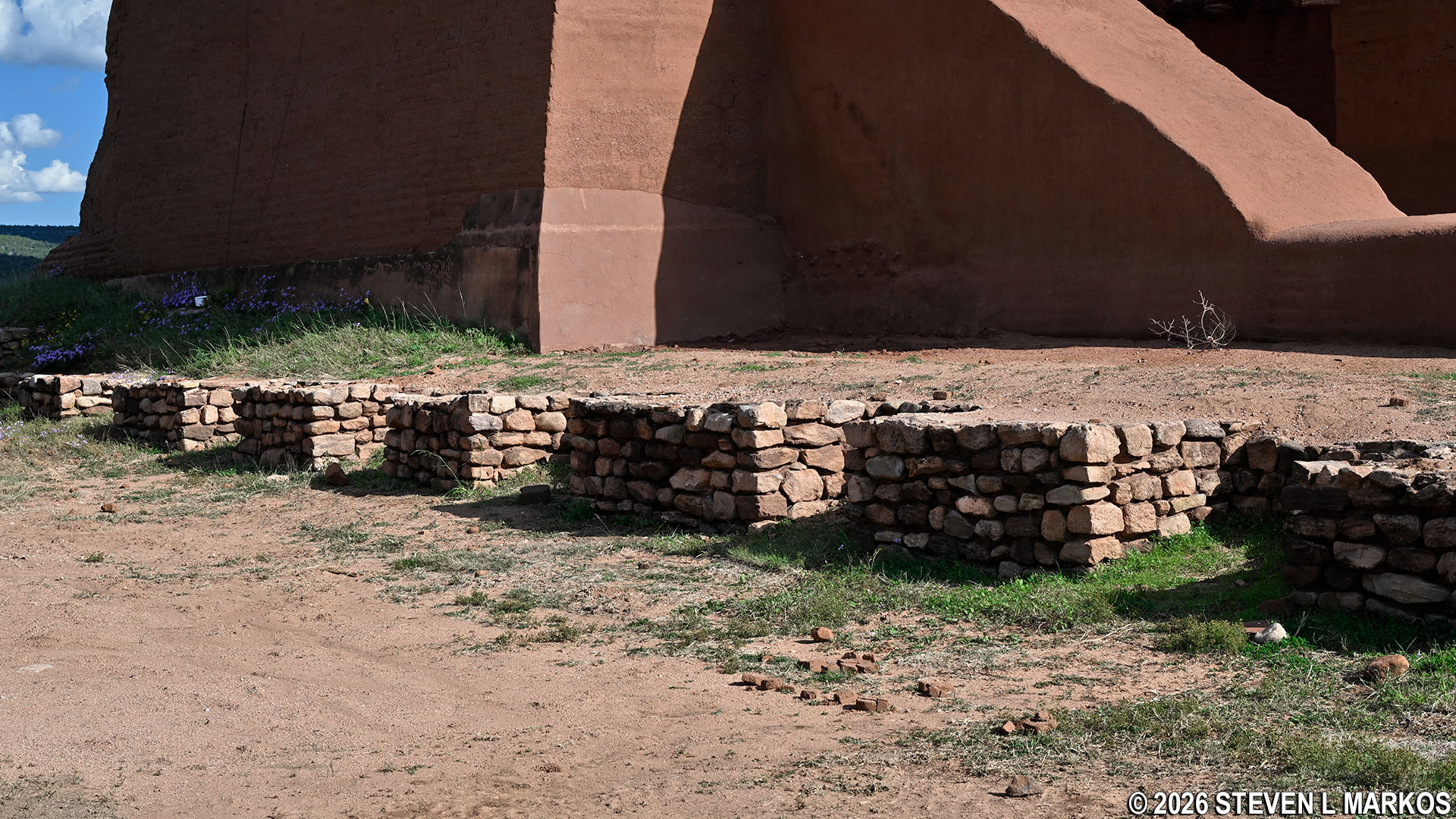
Stone foundation from the 1625 Spanish Mission Church at Pecos National Historical Park
The trail continues as a stone path, weaving its way through the different areas of the church ruins. Stop 11 on the south side of the church is at what was once the convento. This is where the friars and the missionaries of the church would have lived. There would have been a kitchen, offices, and sleeping quarters. The walls have been partially reconstructed, and the layer of brown adobe mortar on top is there to keep them from deteriorating.
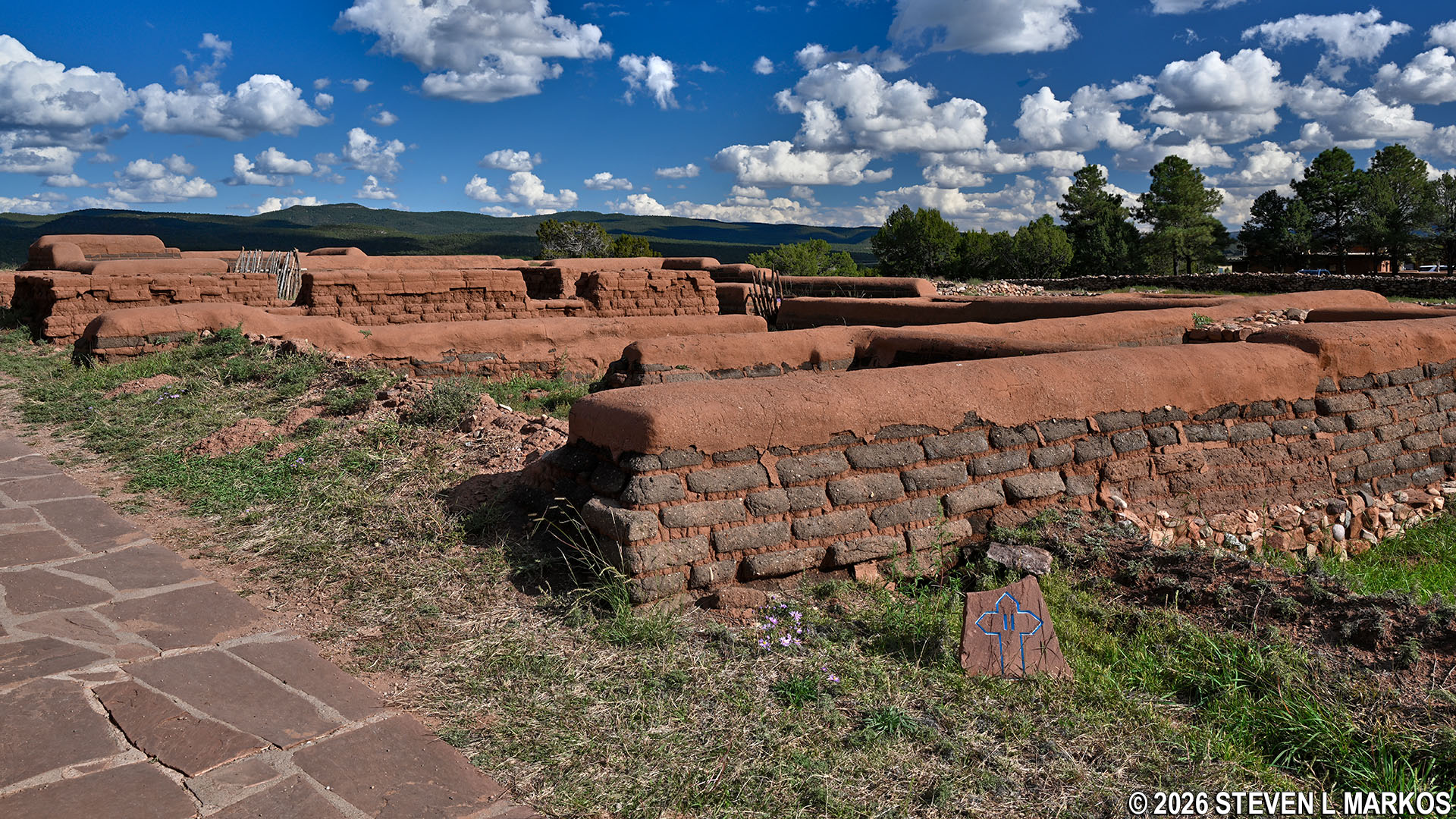
Convento ruins next to the Spanish Mission Church on the Ancestral Sites Trail, Pecos National Historical Park
After passing the convento, the trail leads into the interior of the church ruins. Stop 12 is at a section of the wall that still has some of the original adobe bricks from 1717. Unfortunately, adobe tends to break down pretty easily. The National Park Service continues to preserve as much of the ruins as possible by making its own adobe bricks and replacing the old ones as needed.
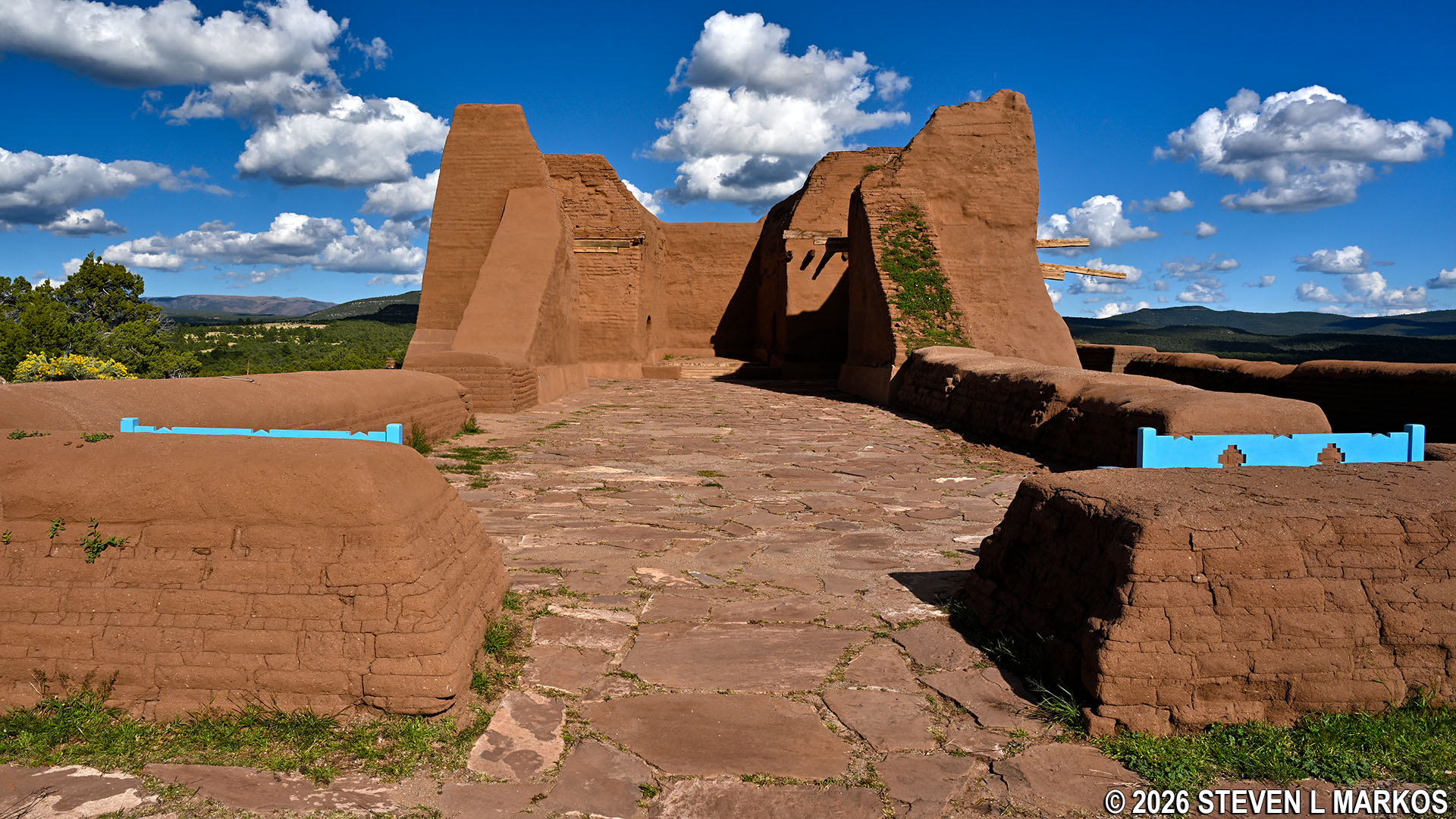
Ancestral Sites Trail leads into the interior of the Spanish Mission Church, Pecos National Historical Park
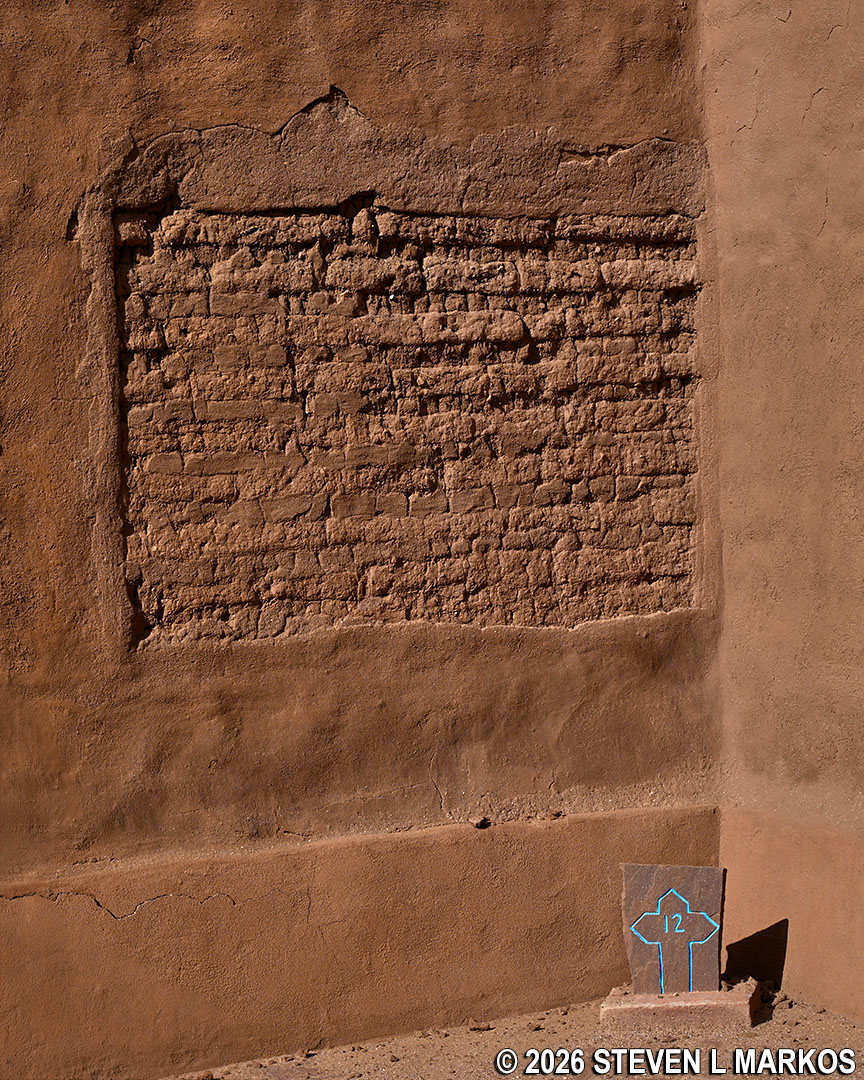
Original adobe bricks from 1717 Spanish Mission Church, Pecos National Historical Park
Protruding high up on some of the walls are multiple wooden beams. These would have been the floor of a mezzanine that overlooked the floor below. What appear to be windows near the beams are actually doorways.
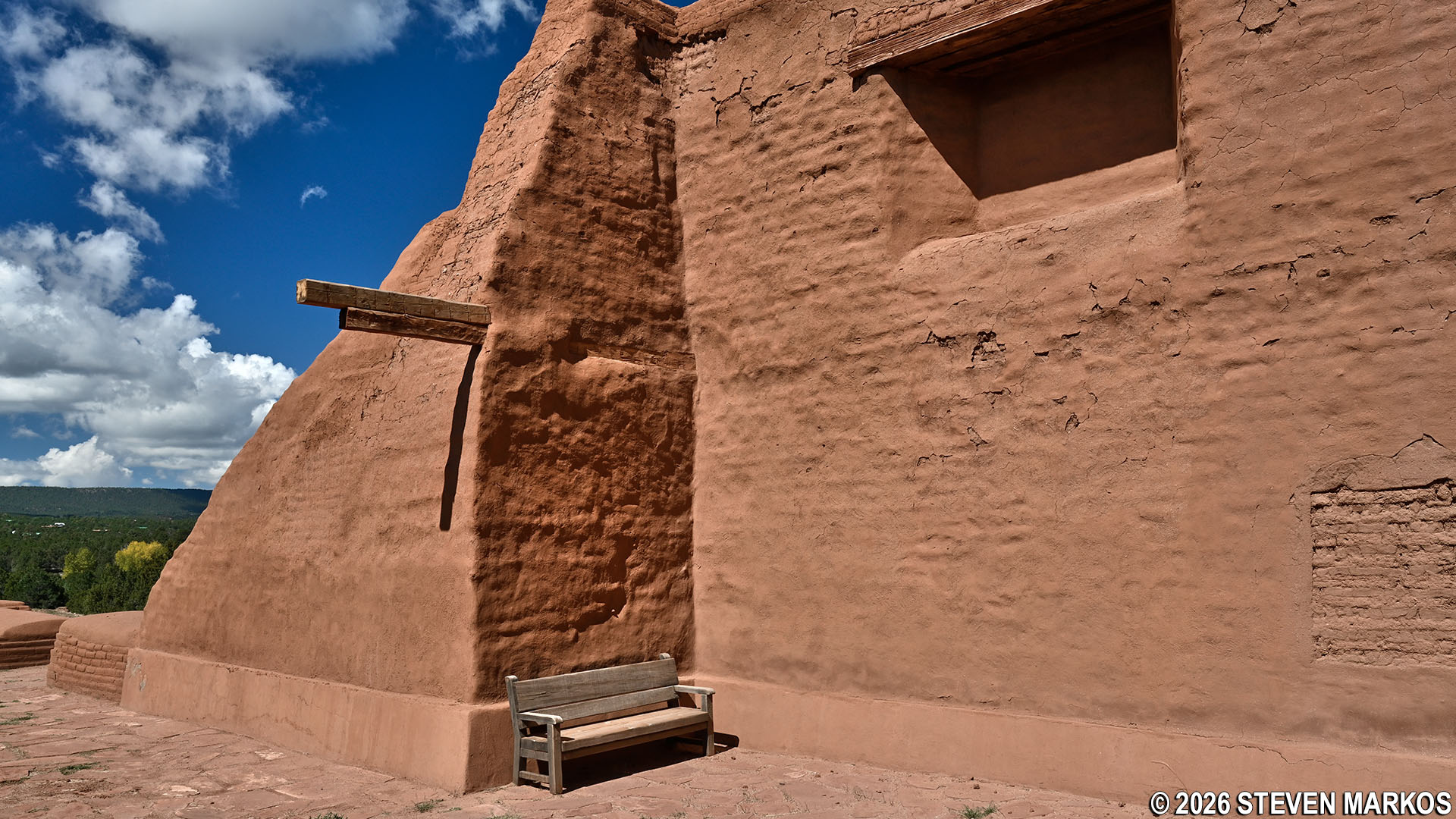
Wooden beams from the mezzanine floor of the Spanish Mission Church, Pecos National Historical Park
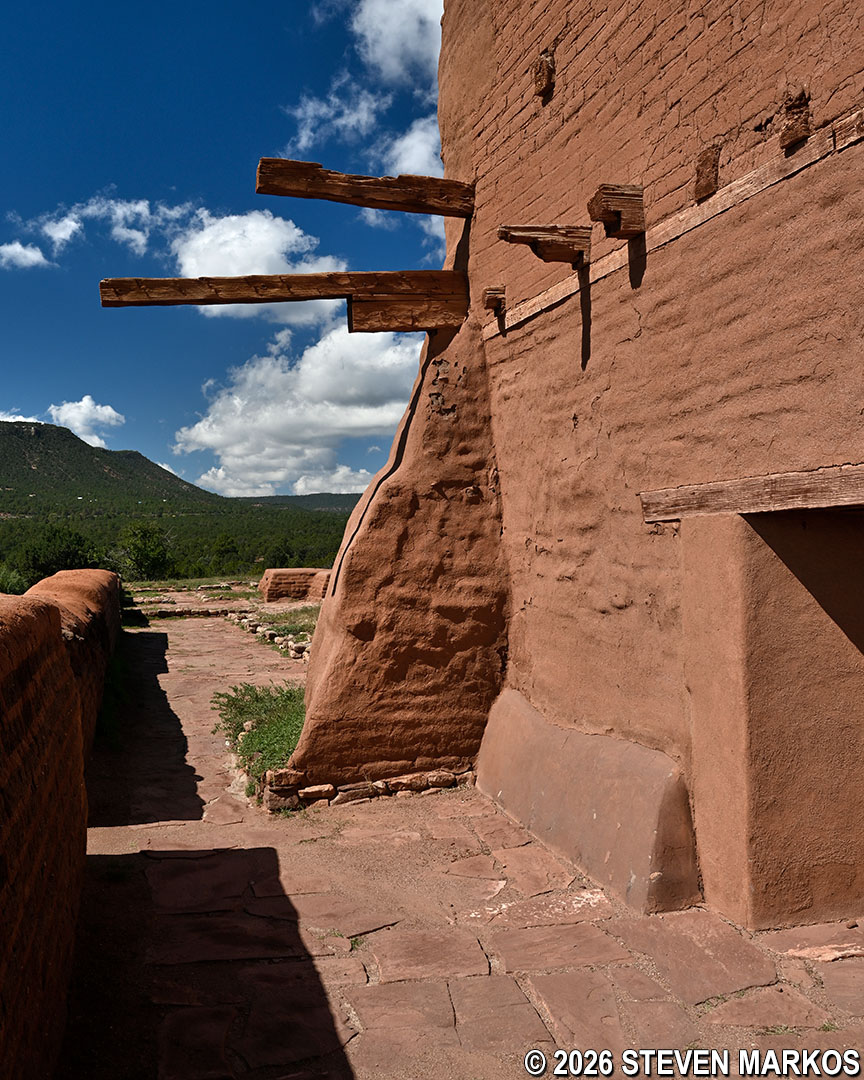
Wooden beams from the mezzanine floor of the Spanish Mission Church, Pecos National Historical Park
The trail exits the church and continues through more of the convento ruins.
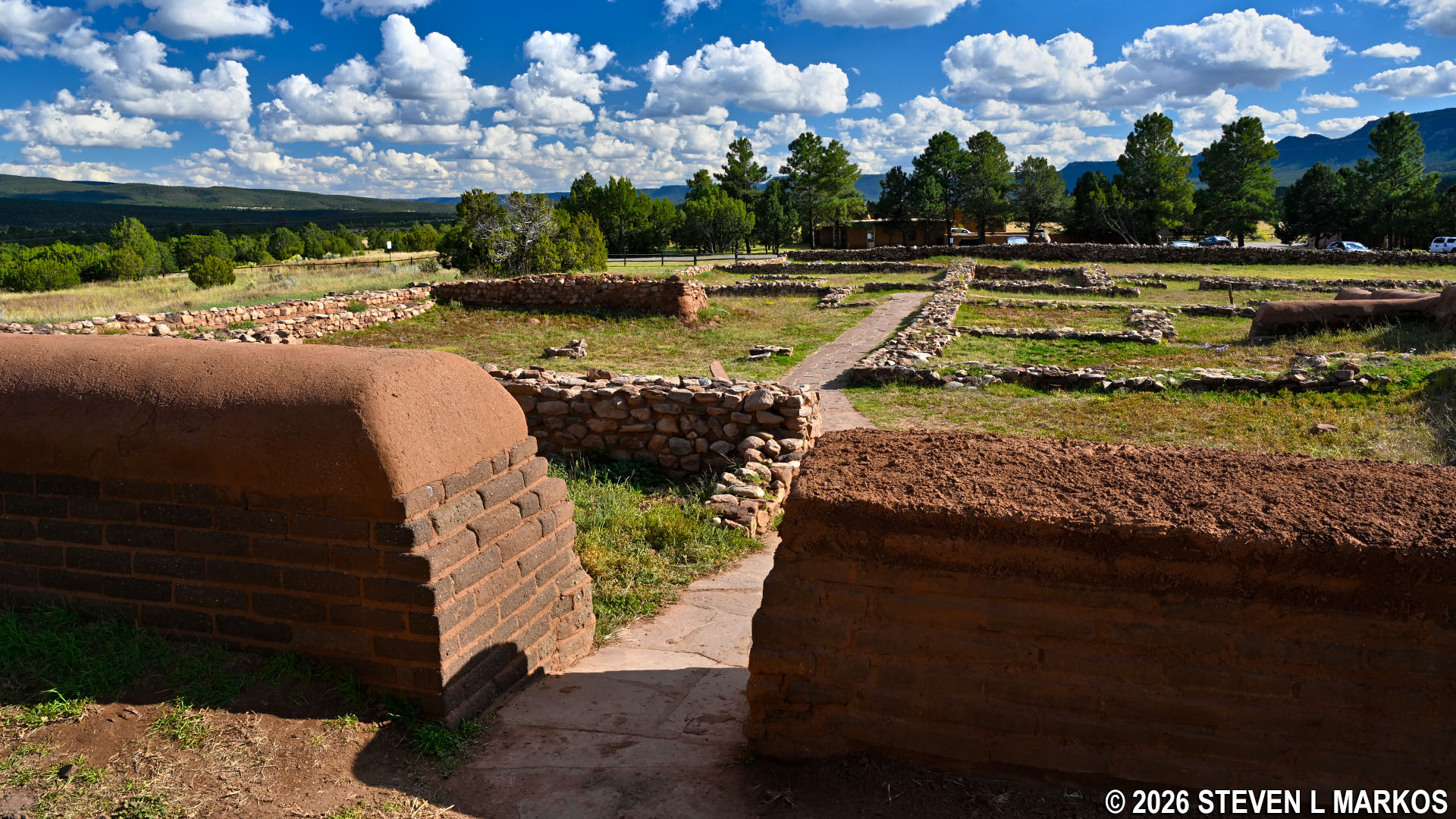
Convento ruins at the Spanish Mission Church, Pecos National Historical Park
When the Spanish returned to New Mexico in 1692, twelve years after the Pueblo Revolt, they were a little more cunning with regard to getting the Puebloan people to convert to Catholicism. One tactic was to incorporate into their methods some of the spiritual practices of the native people. An example of this is the kiva built at the church (Stop 15). This allowed the friars to hold Catholic discussions in a traditional Puebloan space. A ladder in the center of the kiva allows visitors to climb down into it.
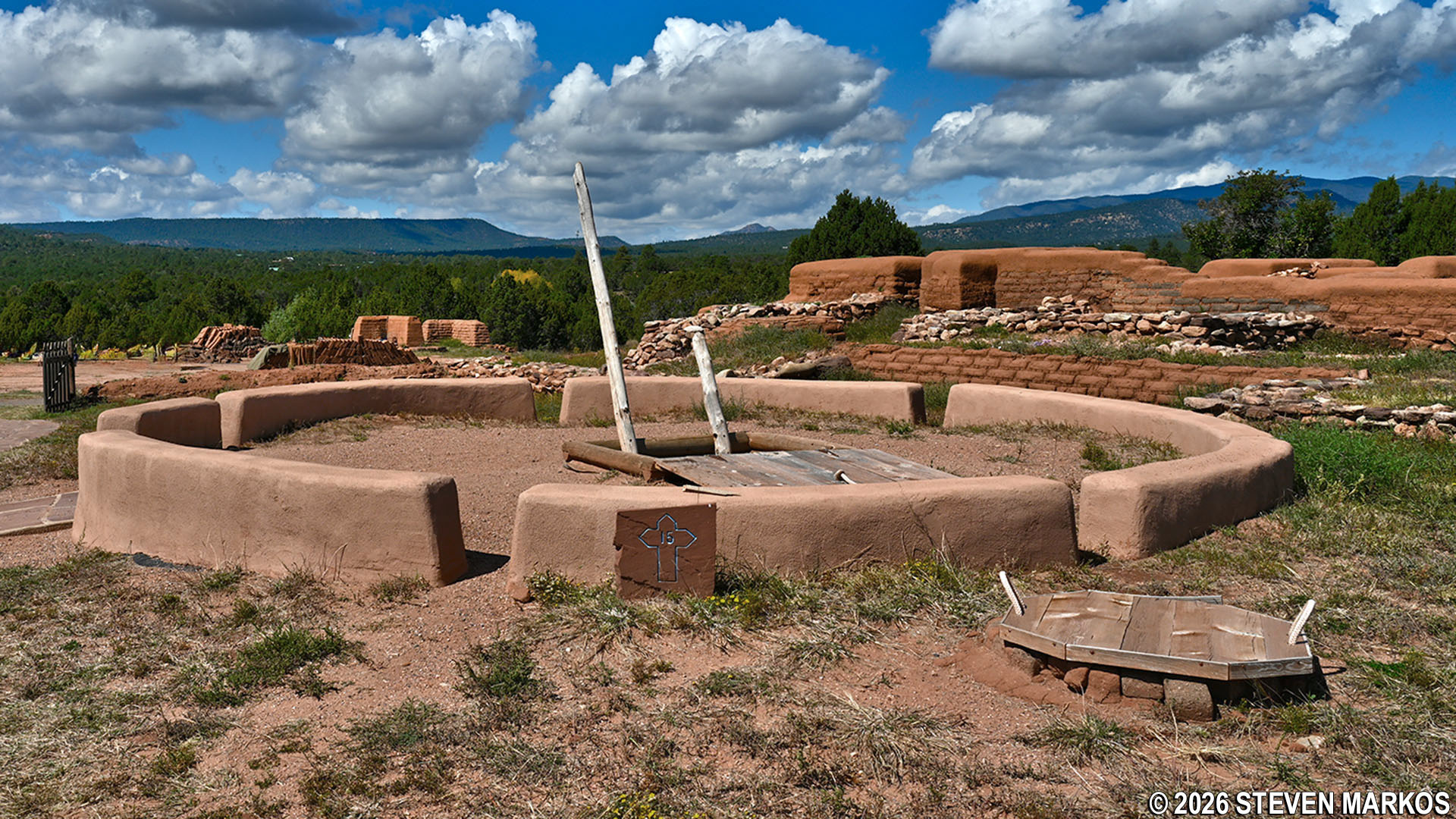
Kiva at Stop 15 on the Ancestral Sites Trail at Pecos National Historical Park
As the trail leaves the Spanish Mission Church area, notice the adobe brick yard of the Pecos National Historical Park’s preservation team. Mud and clay are dug on site and used to make replacement bricks for the church, just as the Pecos People would have done.
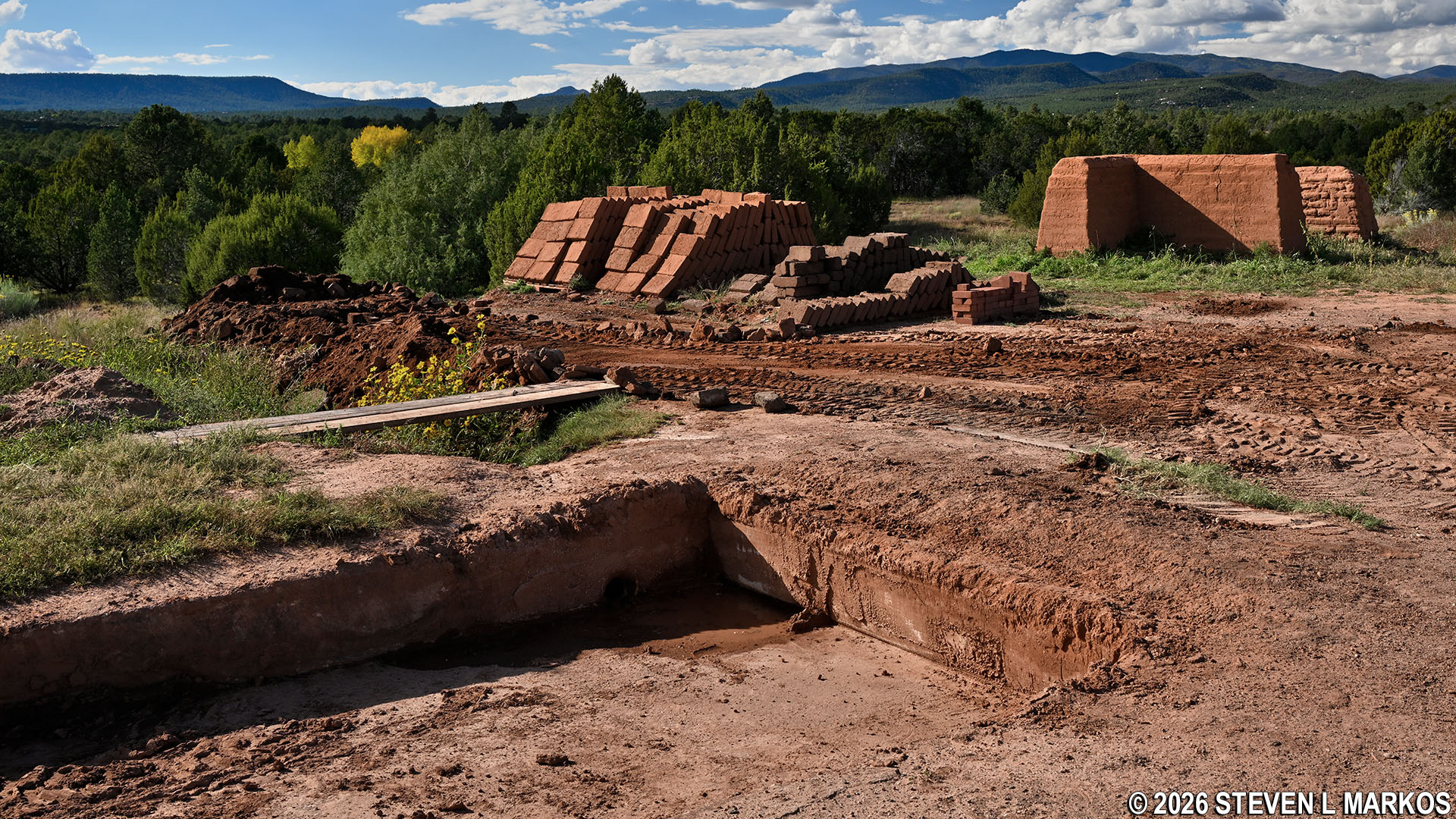
Site used by National Park Service preservationists to make adobe bricks for the Spanish Mission Church, Pecos National Historical Park
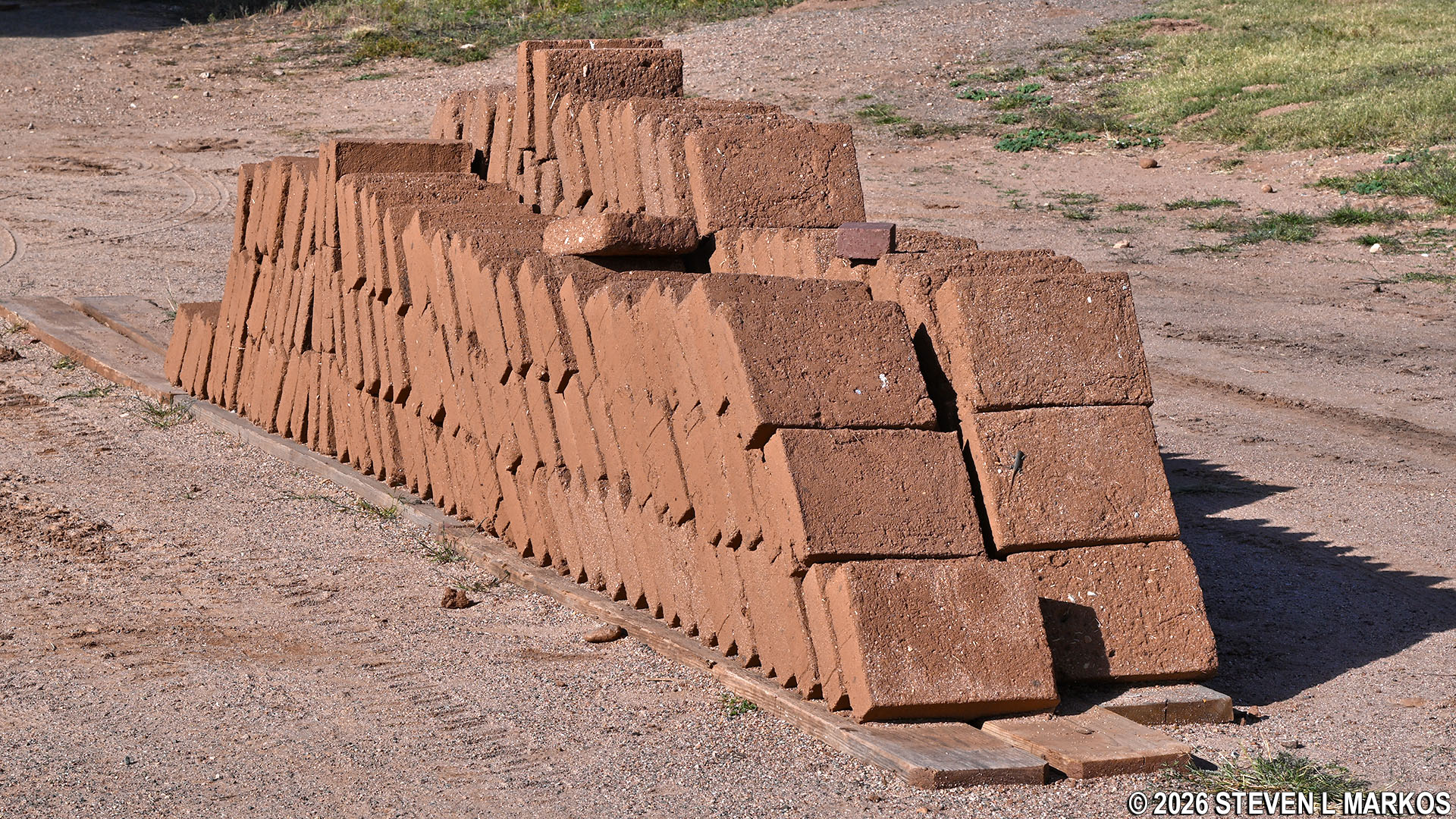
Adobe bricks made to preserve the Spanish Mission Church ruins at Pecos National Historical Park
Once done at the church, it’s time to head back to the Visitor Center. A sign at the far southeastern corner of the church ruins points the way.
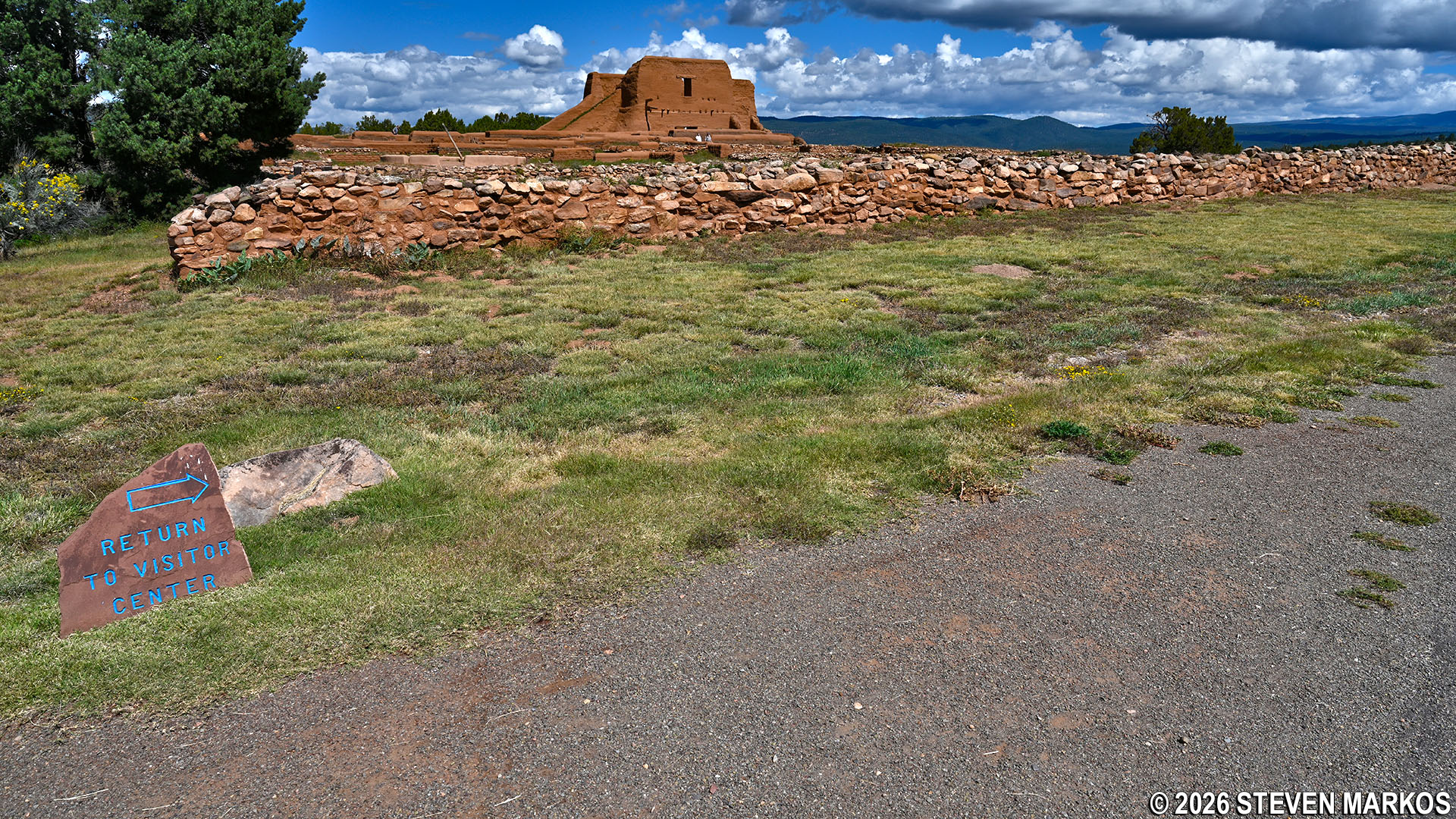
View of Spanish Mission Church ruins from the Ancestral Sites Trail return path, Pecos National Historical Park
The trail changes back to a gravel path and follows the road for a tenth of a mile before making a left into the woods. The rest of the hike is uneventful and slightly downhill all the way to the Visitor Center a quarter mile away.
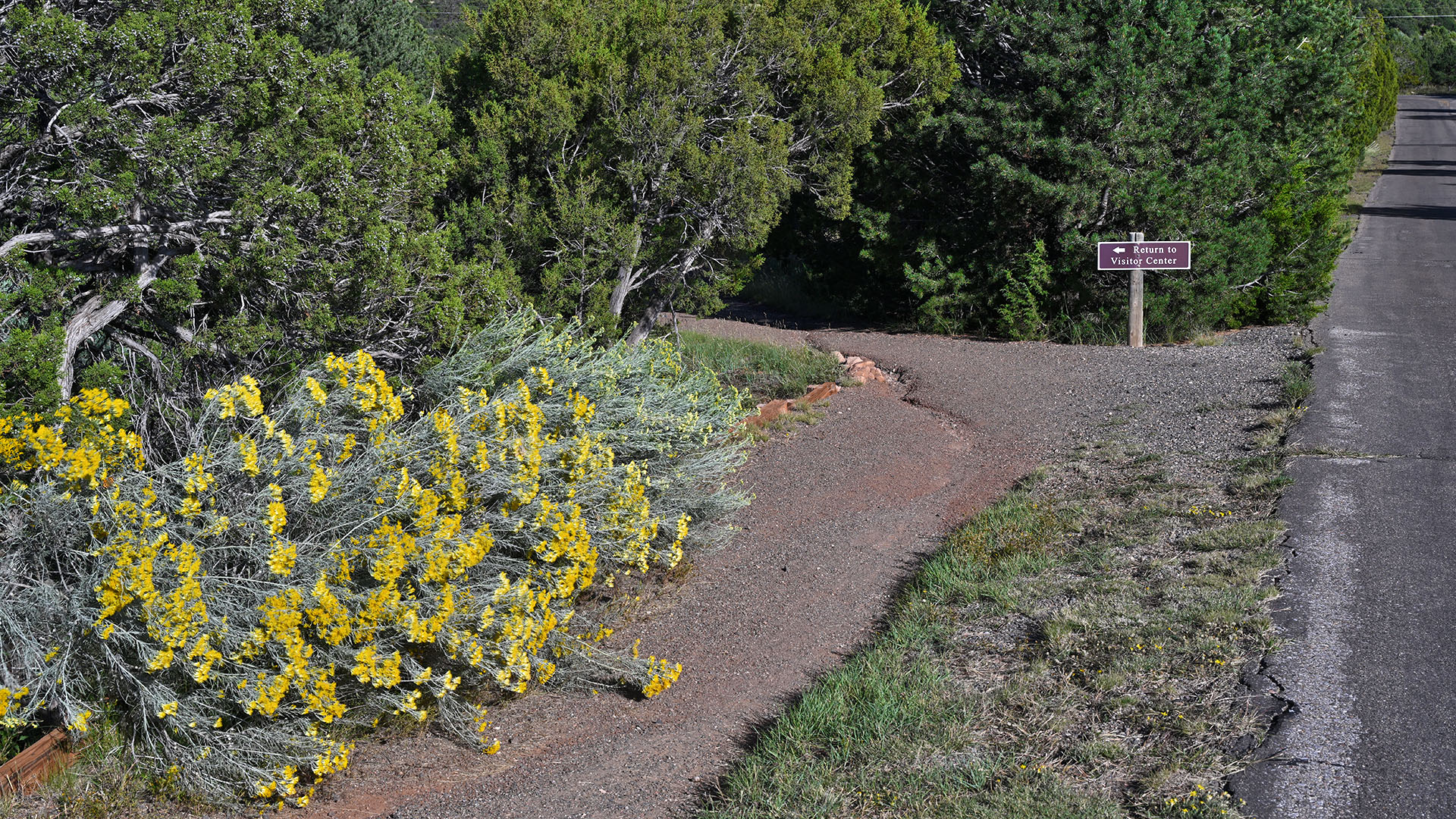
Ancestral Sites Trail back to the Visitor Center from the Spanish Mission Church, Pecos National Historical Park
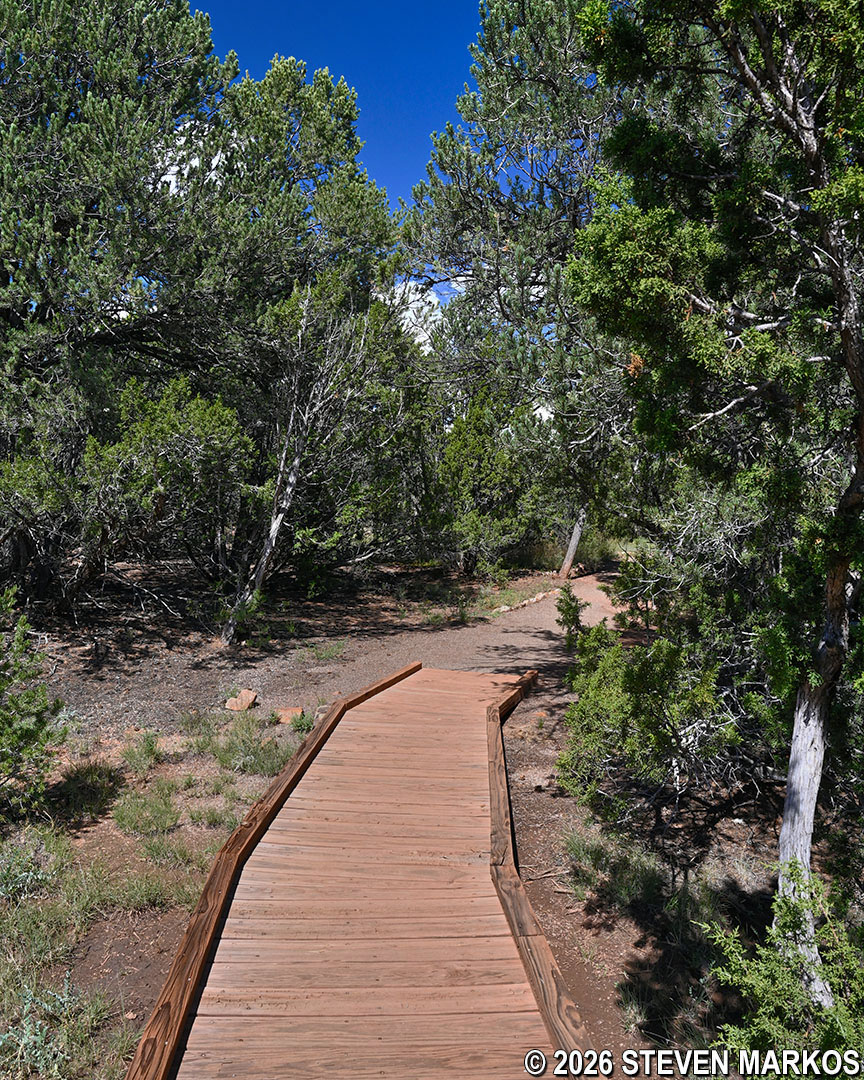
Footbridge on the Ancestral Sites Trail on the hike back to the Visitor Center from the Spanish Mission Church, Pecos National Historical Park
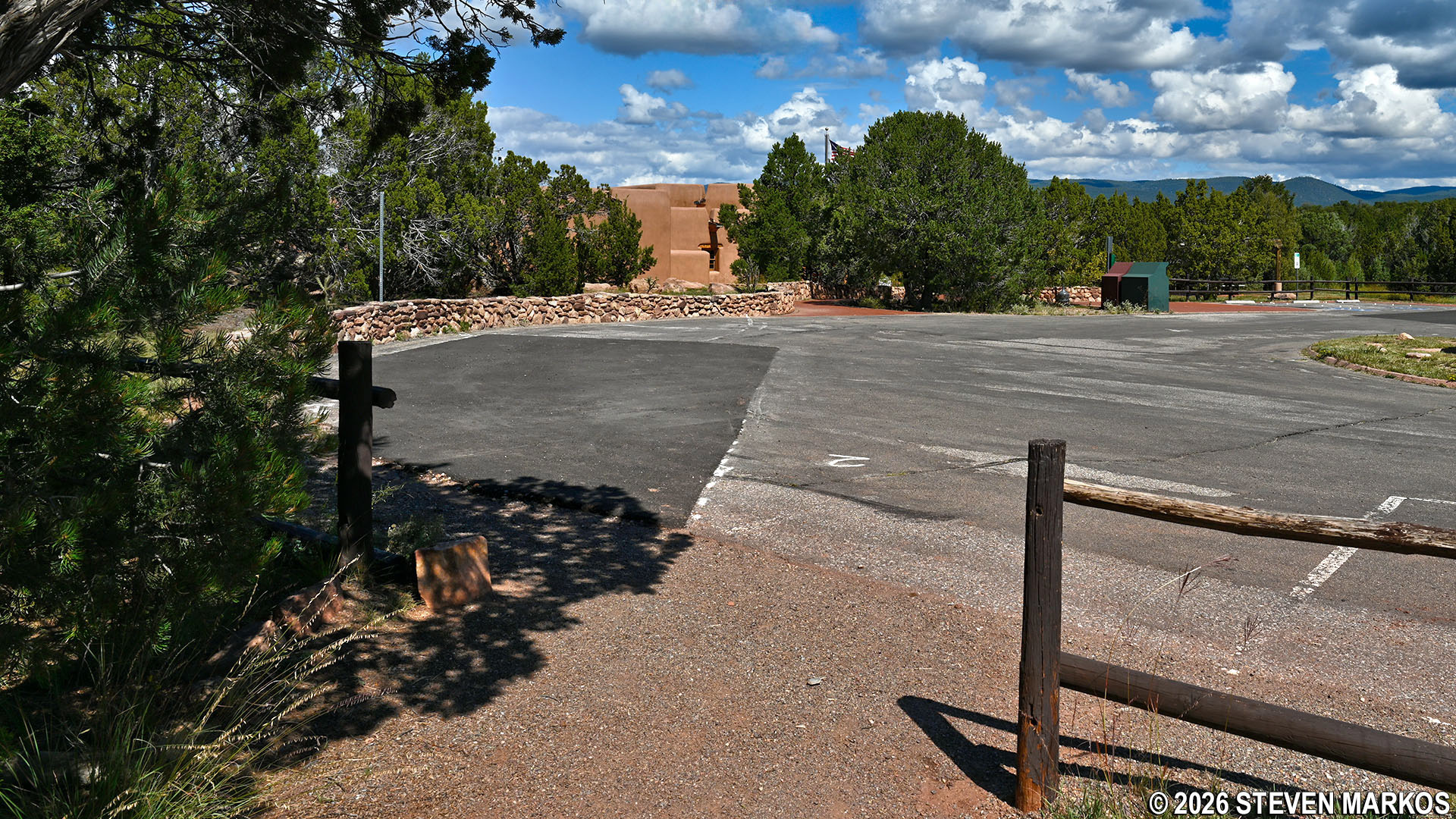
Ancestral Sites Trail ends back at the Visitor Center parking lot, Pecos National Historical Park
With a few exceptions, use of any photograph on the National Park Planner website requires a paid Royalty Free Editorial Use License or Commercial Use License. See the Photo Usage page for details.
Last updated on August 21, 2026


