
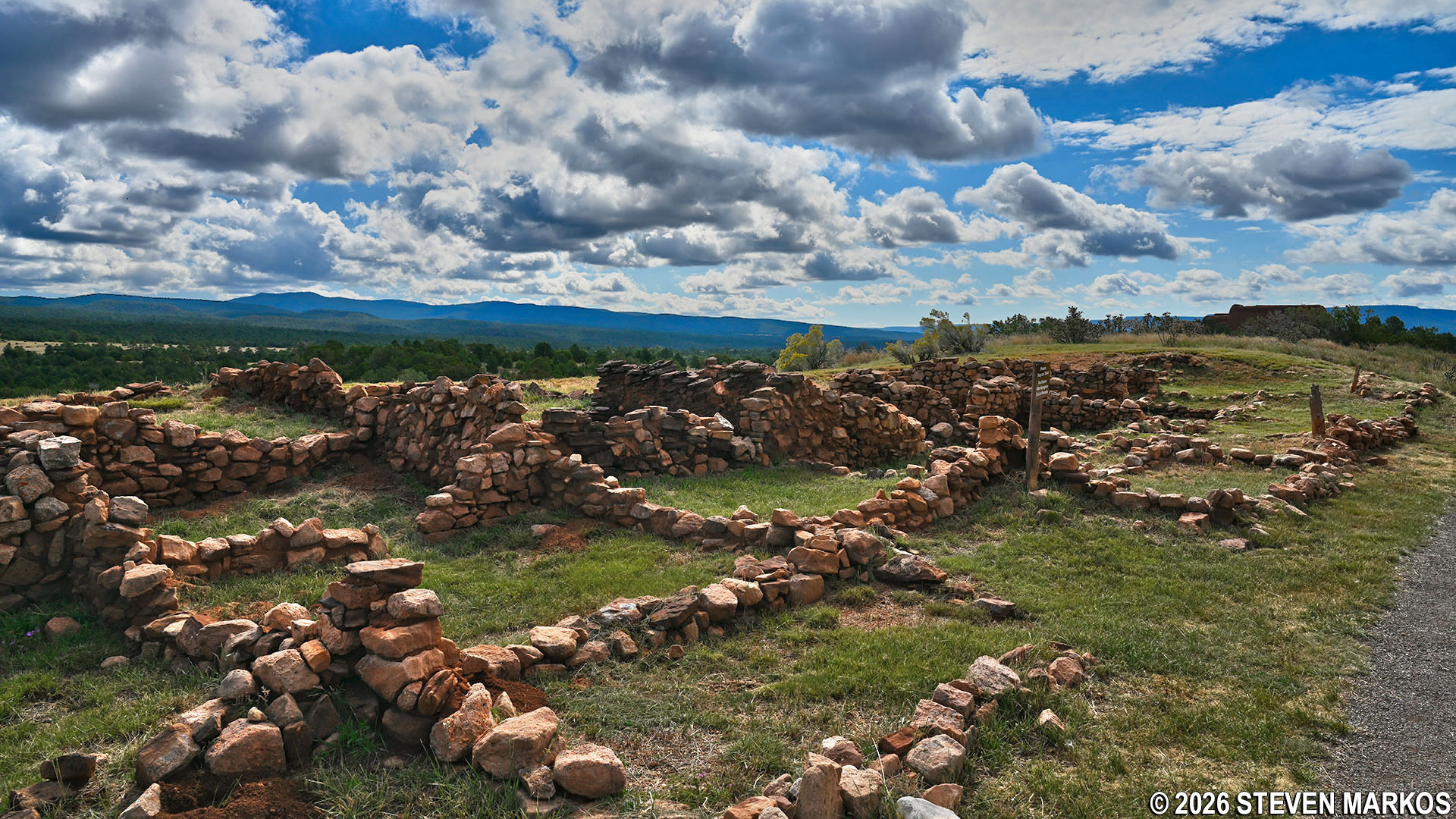
Pecos Pueblo ruins at Pecos National Historical Park
This article covers the history of the Pecos Pueblo at Pecos National Historical Park. For a virtual tour of the pueblo ruins, which includes information about its various structures and plenty of photographs, see the Ancestral Sites Trail report here on National Park Planner. Hiking this trail is the only way to see the Pecos Pueblo in person when visiting the park.
Pecos Pueblo (also known as Cicuye) was one of the largest and most powerful pueblos (village / town) in New Mexico during the 15th and 16th centuries. At its peak, the physical structures consisted of around 1,000 rooms, some rising to five stories, and it was home to roughly 2,000 people. Built on a ridge overlooking Glorieta Creek in the Pecos River Valley, its prime location near the Glorieta Pass trade routes allowed it to become a regional center for commerce and culture.
People began living in this area starting around 800 AD, typically in pit houses, which were houses buried partly in the ground and used on a seasonal basis. As the people began moving away from the nomadic hunter-gatherer lifestyle and towards a sedentary culture built around agriculture and domesticated livestock, there became a need for permanent housing. This led to a transition from pit houses to above-ground structures. By 1100 AD, the people were living in multiple villages with buildings made of rock and mud.
During the 1400s, the smaller villages that had been built in the area were combined into one large settlement now known as the Pecos Pueblo. The structures were much larger and made of stone and adobe mortar. Because of its large population base, Pecos Pueblo began hosting trade meets with the Plains tribes, Western Apache Indians, and the Rio Grande Pueblos. By the mid-1500s, it had become a prominent and well-known trade center throughout the region.
After the Spanish conquered the Aztec Empire in 1521, they began moving into the southwestern United States from Mexico and claiming the land for Spain. In 1540, Spanish conquistador Francisco Vazquez de Coronado led a two-year expedition throughout the region. His men came across the Pecos Pueblo later that year. This was the first of many encounters the Pecos People would have with the Spanish over the next few hundred years, and this slowly led to the demise of their culture. The Spanish made many attempts to settle in the area and convert the Pueblo people to Catholicism, often resorting to force and violence.
The Puebloan people, tired of being persecuted and mistreated by the Spanish, revolted in 1680. The uprising, which included Pecos and more than a dozen other Puebloan communities, resulted in the deaths of 400 Spaniards. The roughly 2,000 settlers who escaped with their lives were driven out of New Mexico, and for the next twelve years, the territory was back in the hands of the Puebloans.
The Spanish returned to New Mexico in the 1690s, and this time they remained for over 200 years until Mexico gained its independence from Spain in 1821. Surprisingly, they were are good terms with the Pecos People. However, by the 1780s the population of Pecos Pueblo had decreased to less than 300 people due to disease, declining commerce, Comanche raids, and Mexican migrants taking over the land. A severe smallpox epidemic in the early-1800s was the final nail in the coffin, and in 1838 the last inhabitants left Pecos to join the Pueblo of Jemez, where there descendants still live today.
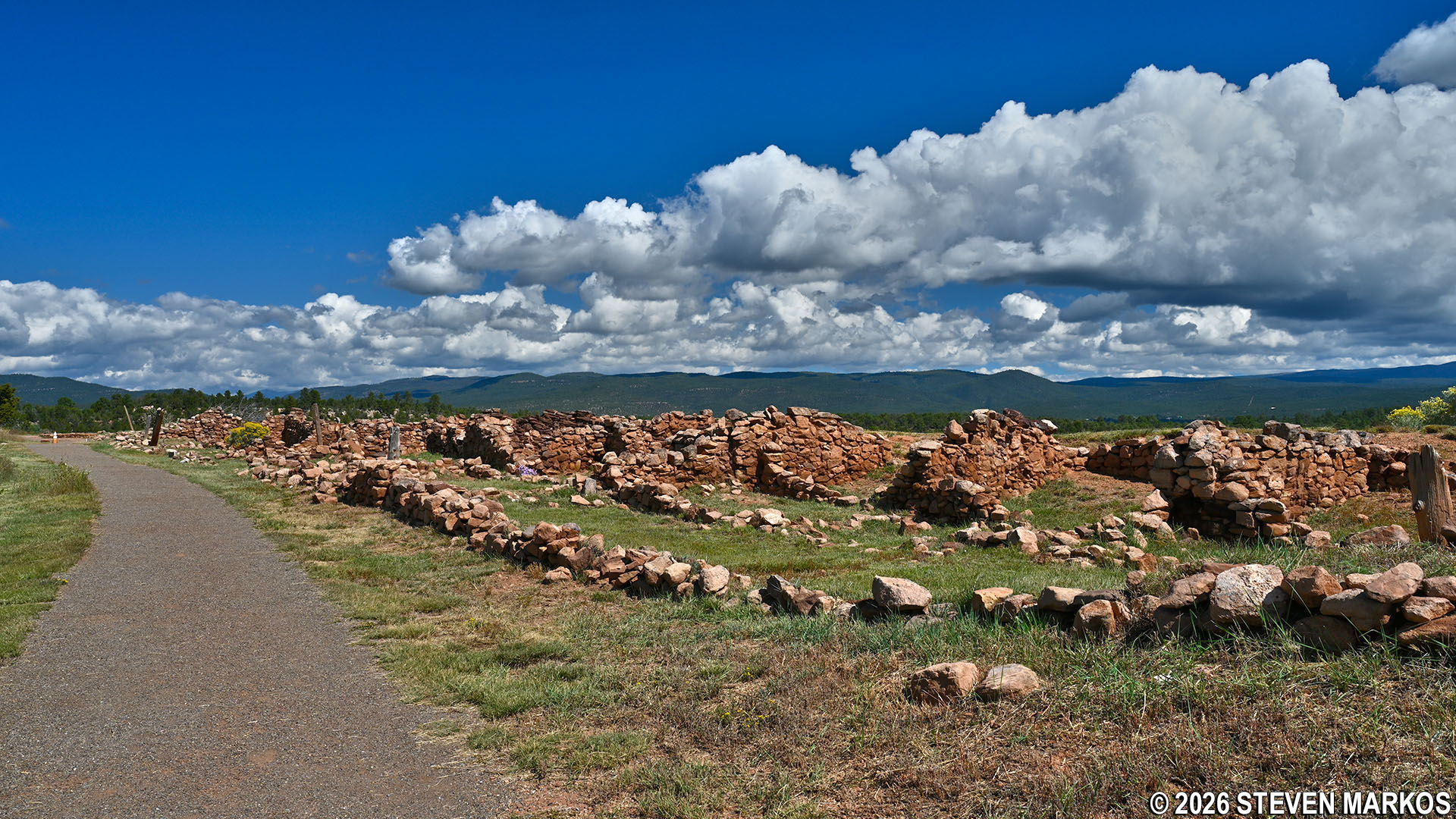
Pecos Pueblo ruins at Pecos National Historical Park
With a few exceptions, use of any photograph on the National Park Planner website requires a paid Royalty Free Editorial Use License or Commercial Use License. See the Photo Usage page for details.
Last updated on August 6, 2026


