
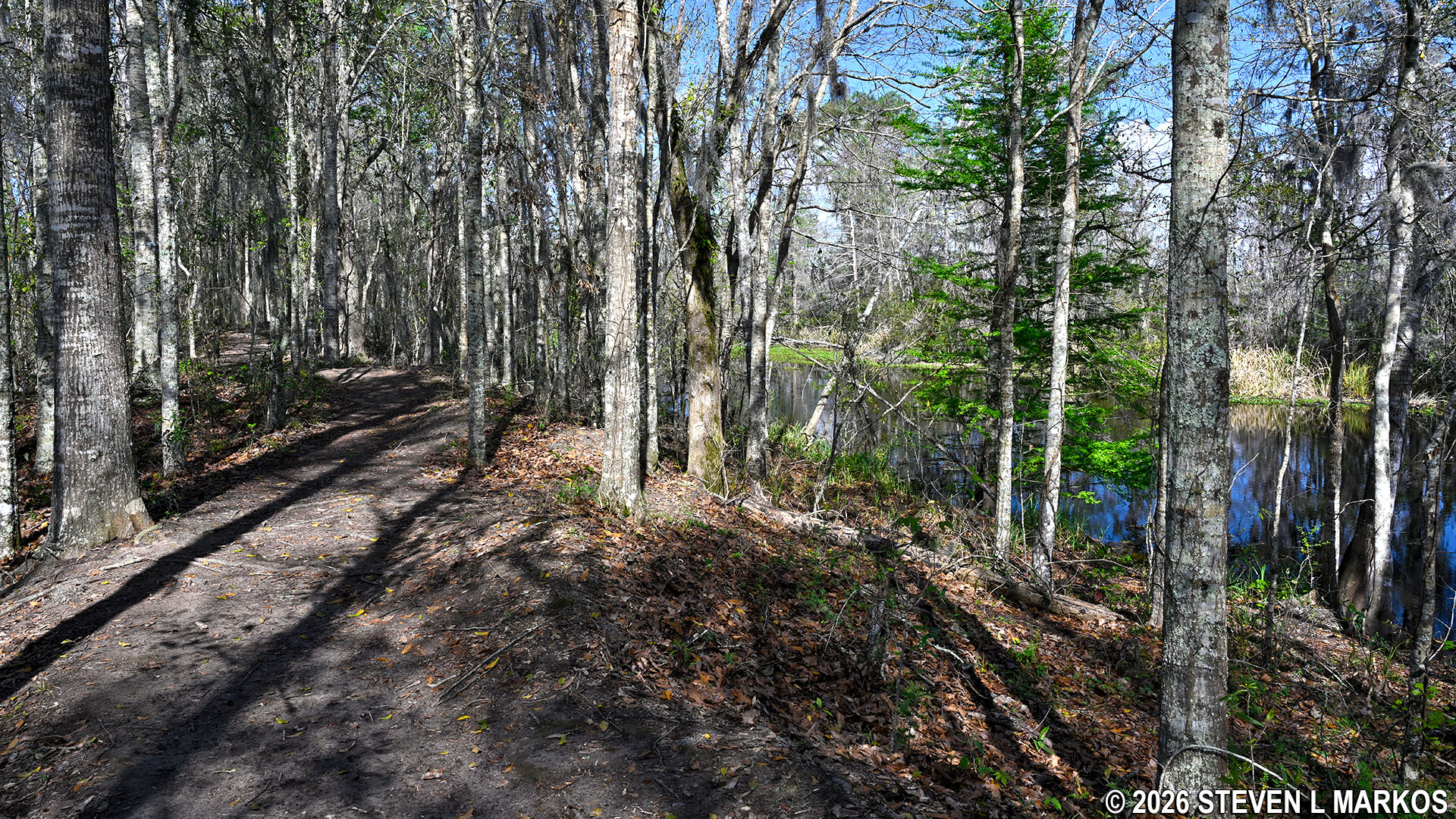
Twin Canals Trail in the Barataria Preserve at Jean Lafitte National Historical Park and Preserve
Length: 1.3 miles round trip
Time: 45 minutes
Difficulty: ★★☆☆☆
The Twin Canals Trail at Jean Lafitte National Historical Park and Preserve is located in the Barataria Preserve. It is a 1.3-mile, out-and-back trail with a canal on each side. The trailhead and parking lot are located right off Barataria Boulevard.
Before I even began my hike, I saw some of the wildlife the Mississippi River Delta is known for. There were three alligators sunbathing on some logs and another one taking a swim. There is a reason why pets are not allowed on any of the trails in the Barataria Preserve.
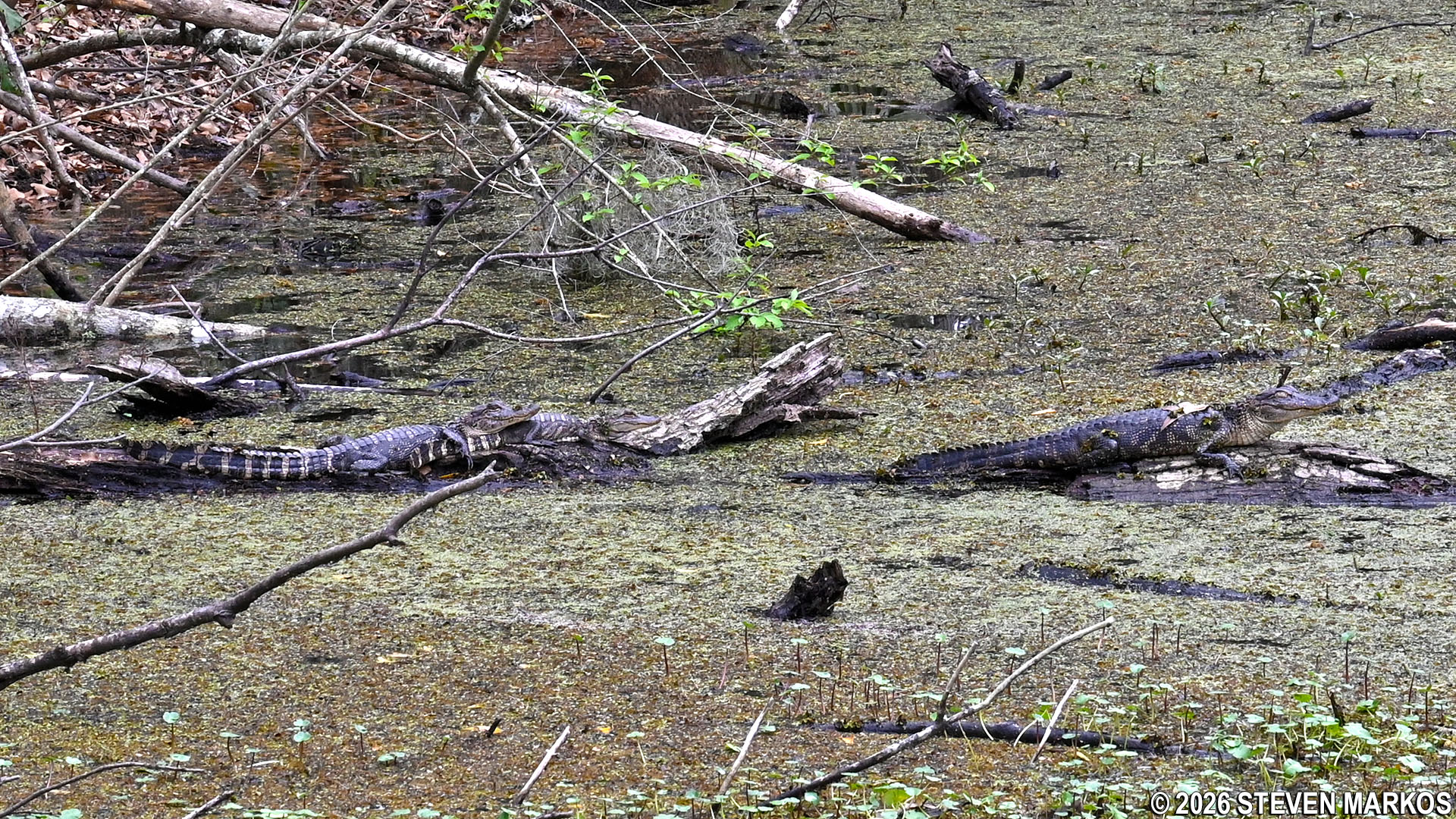
Alligators sunbathing at the Twin Canals Trail in the Barataria Preserve, part of Jean Lafitte National Historical Park and Preserve
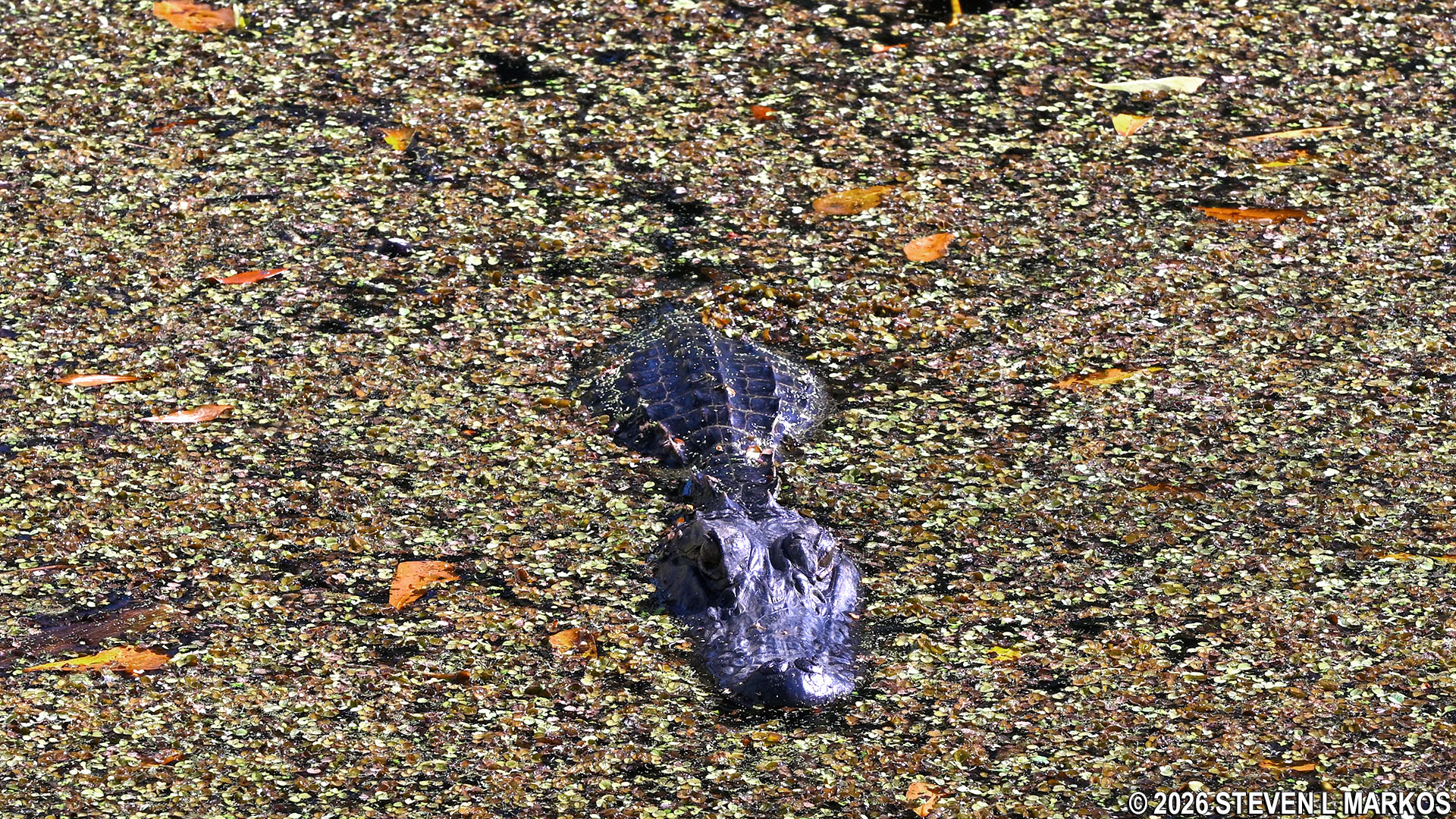
Alligator in the water at the Twin Canals Trail in the Barataria Preserve, part of Jean Lafitte National Historical Park and Preserve
From the parking lot, take the path next to the picnic table and concrete pad, and when it splits, stay to the left. A right leads to a canoe launch.
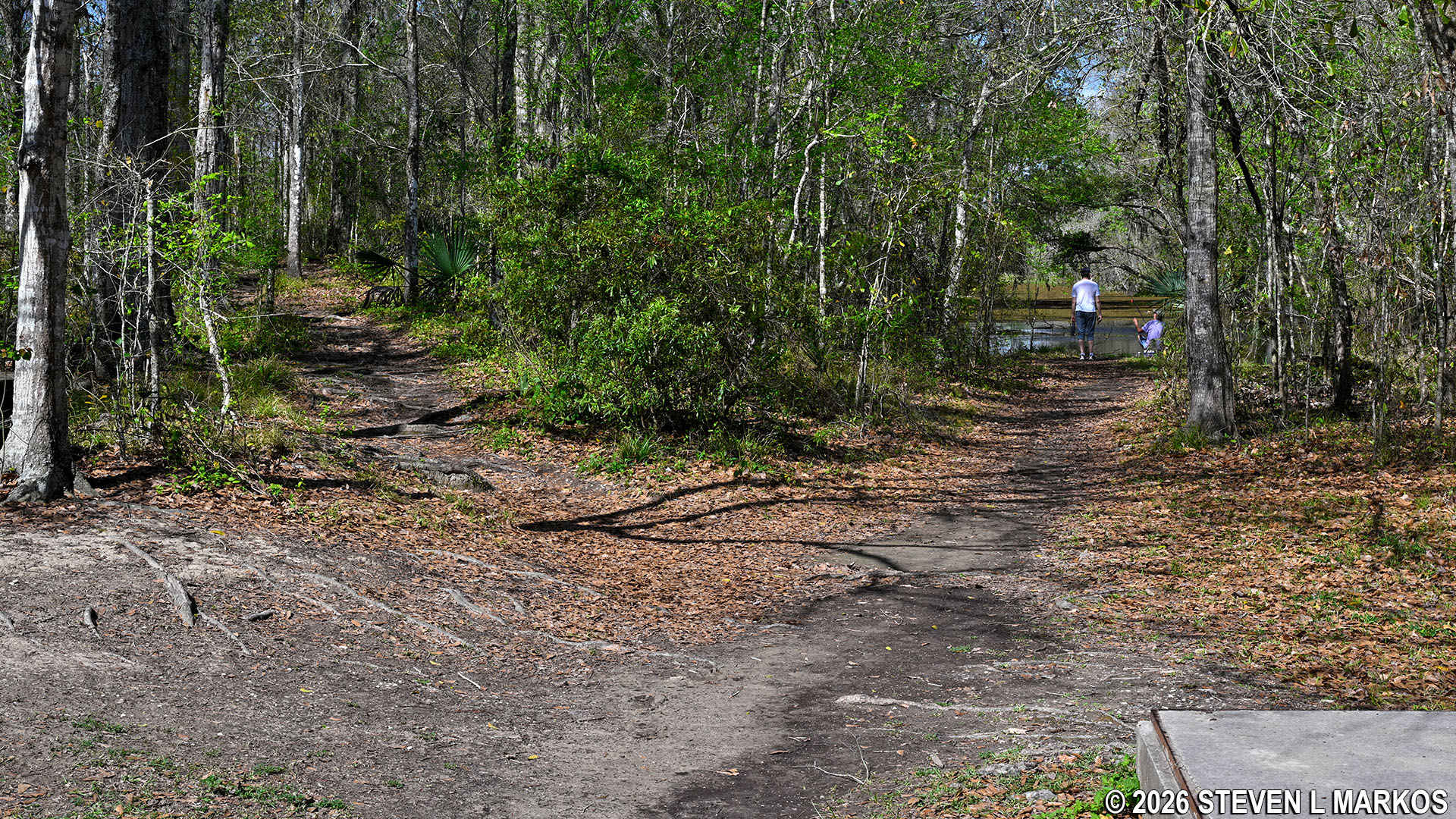
Path to the Twin Canals Trail (left) and canoe launch (right) in the Barataria Preserve, part of Jean Lafitte National Historical Park and Preserve
The Twin Canals Trail is an easy trail to hike that remains fairly level for its entire length. Much of its surface is smooth, but there are a few stretches with plenty of tree roots sticking up from the ground, especially at the beginning. There is no way to avoid them, so be sure to watch your step so you don’t twist an ankle.
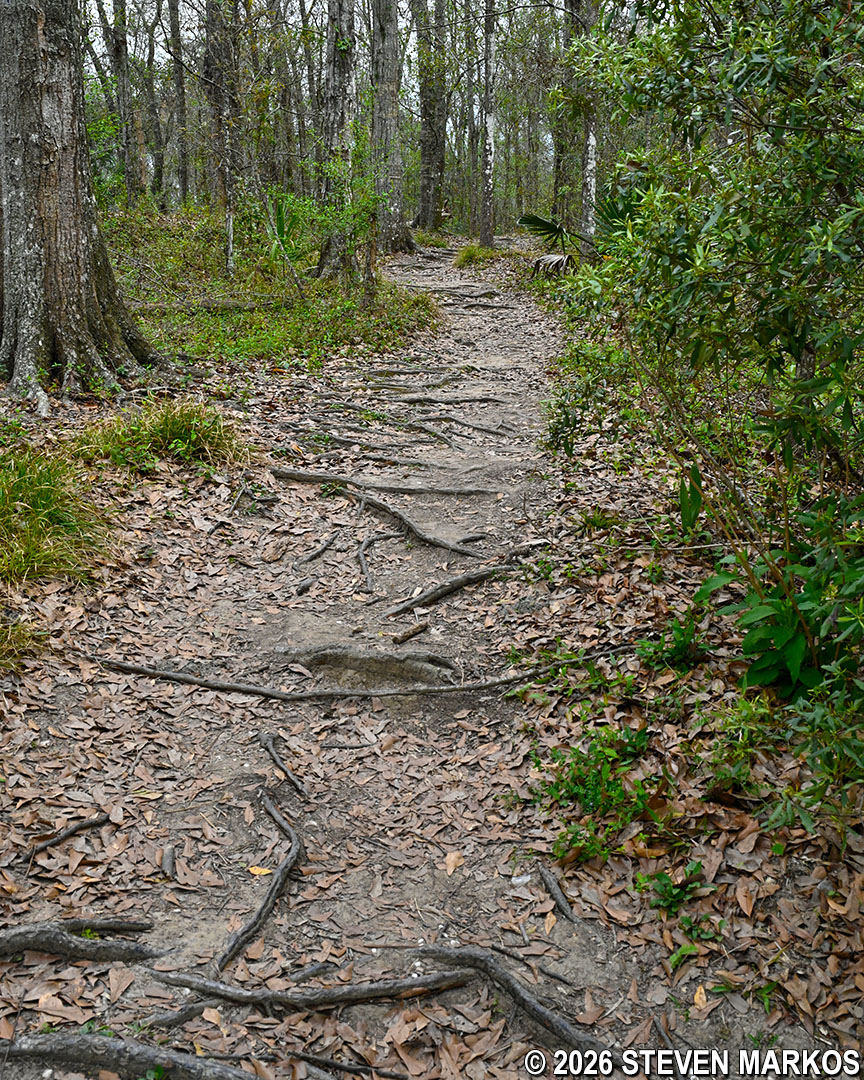
Tree roots across the path of the Twin Canals Trail in the Barataria Preserve, part of Jean Lafitte National Historical Park and Preserve
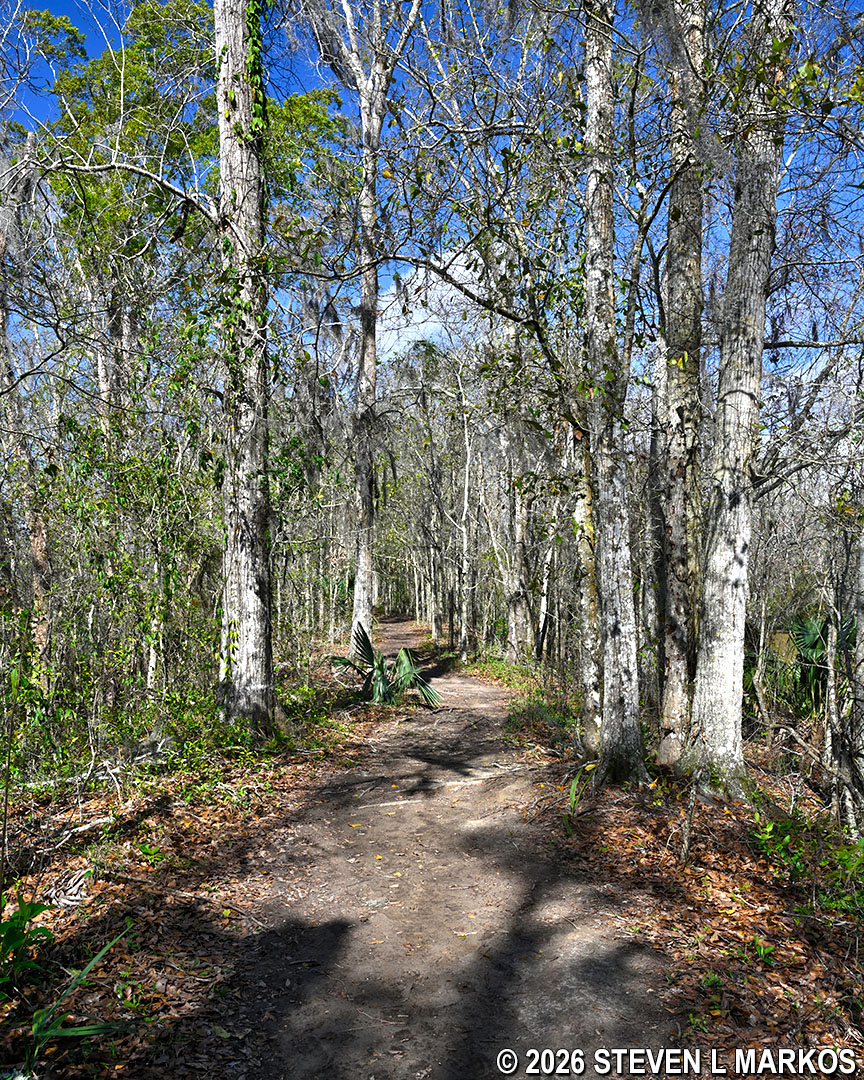
Smooth section of the Twin Canals Trail in the Barataria Preserve, Jean Lafitte National Historical Park and Preserve
Don’t be surprised if one of those roots starts moving, because it might be a snake (like the one I saw) slithering along the trail.
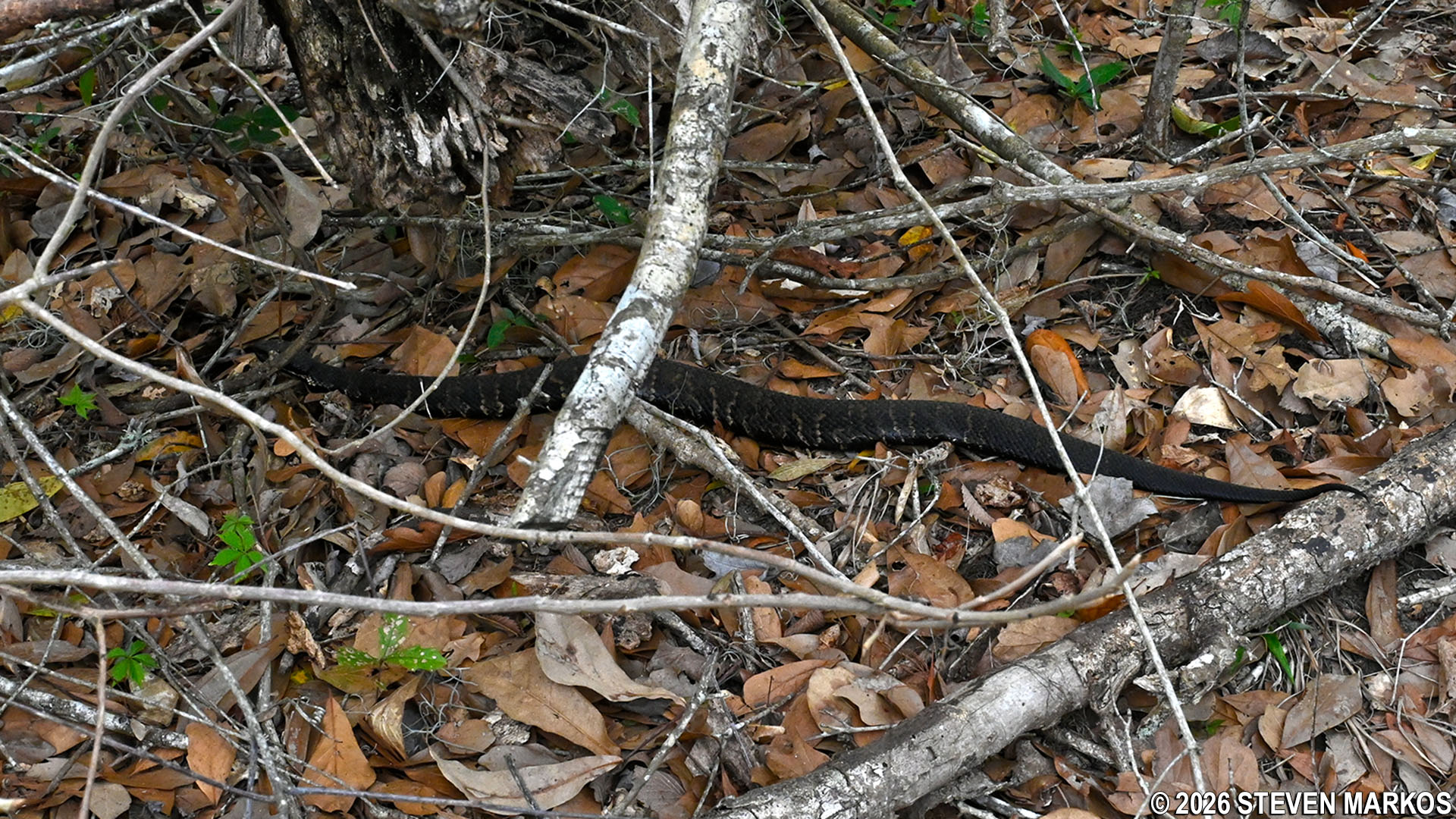
Snake slithering along the path of the Twin Canals Trail, Jean Lafitte National Historical Park and Preserve
There is a canal on each side of the Twin Canals Trail, hence the name. The canal on the south side (left) is completely filled in with vegetation year-round.
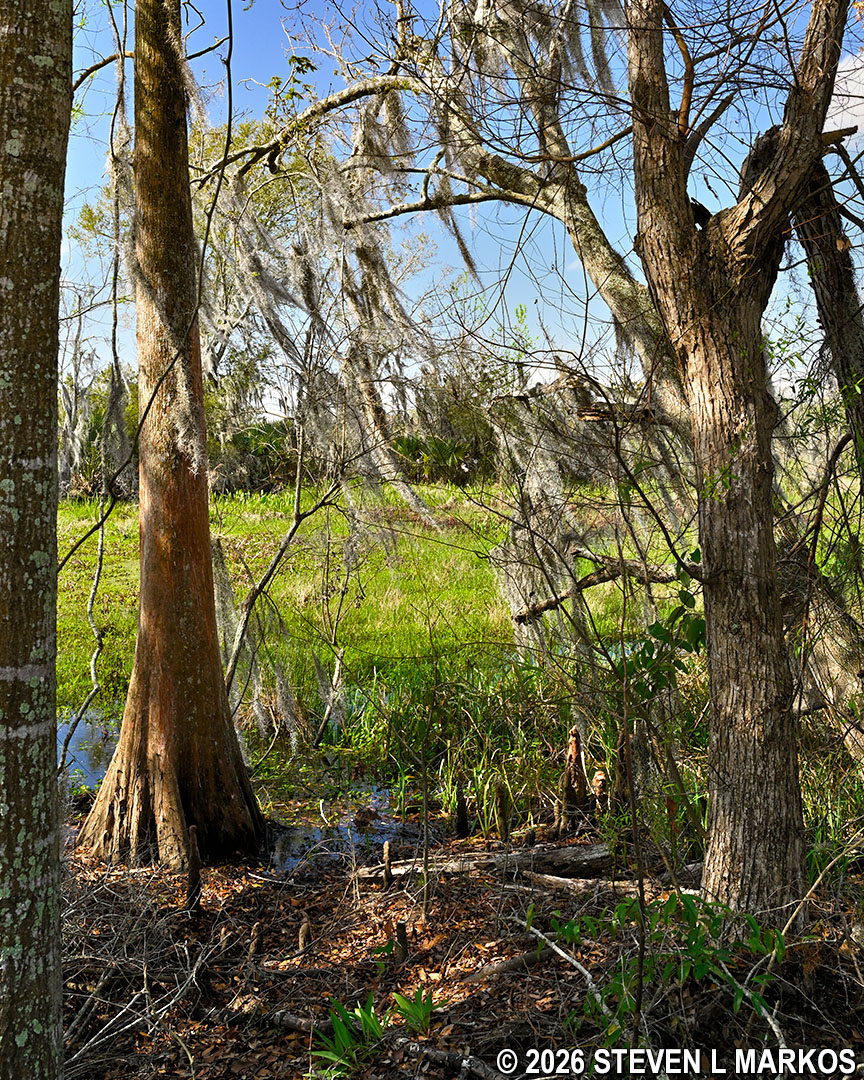
Overgrown southside canal along the Twin Canals Trail in the Barataria Preserve, Jean Lafitte National Historical Park and Preserve
The canal on the north side of the trail (right) is usually navigable in the winter and very early spring, but it begins filling with lilies and other vegetation as the weather warms, and by summer there is no way to canoe or paddle on it. If you want to get right down to the water for a good look or to go fishing, there is no need to bushwhack your way there. As you walk along the Twin Canals Trail, there are often clear paths that have been cut by previous hikers.
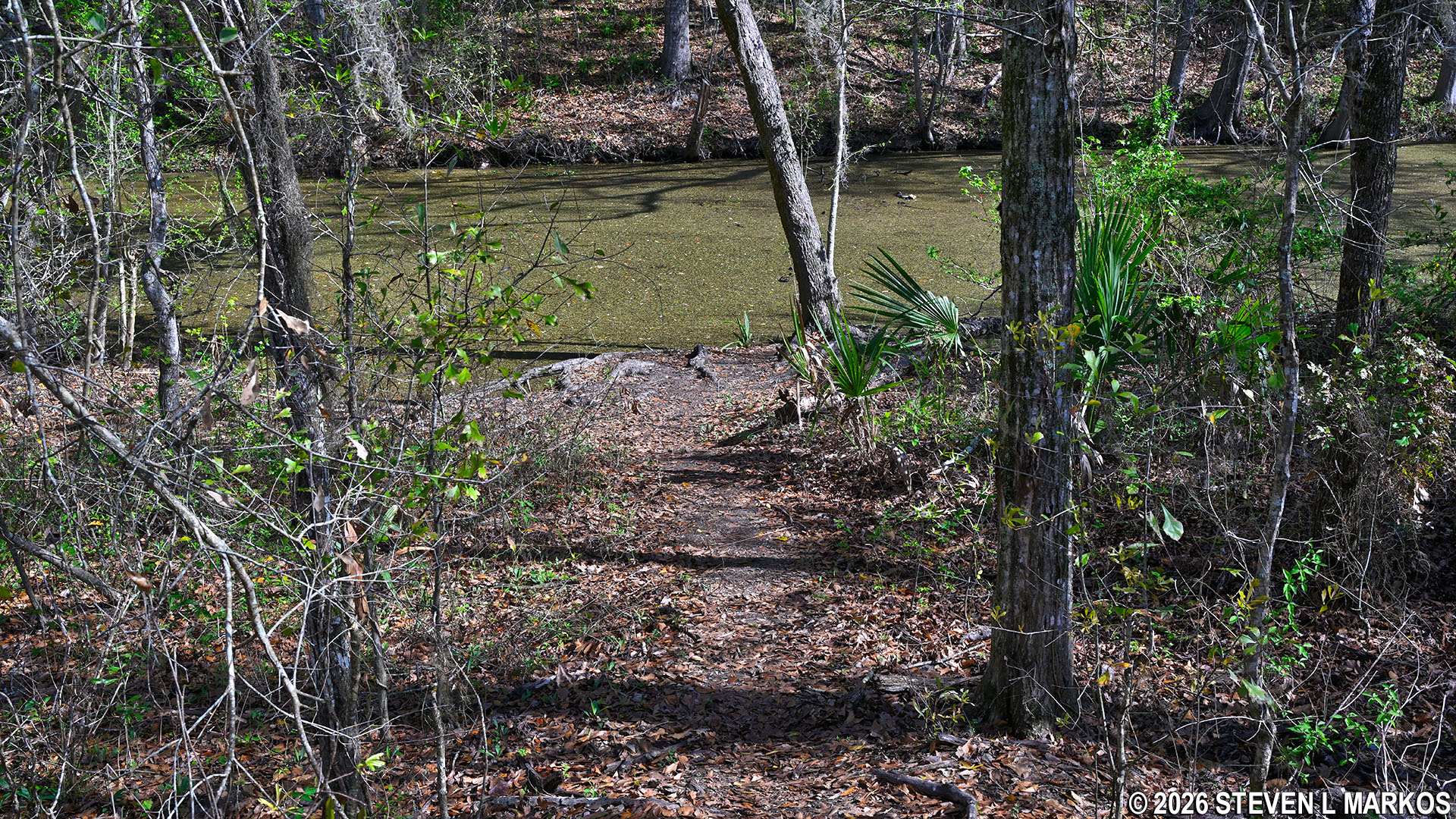
Path down to the northside canal on the Twin Canals Trail in the Barataria Preserve, part of Jean Lafitte National Historical Park and Preserve
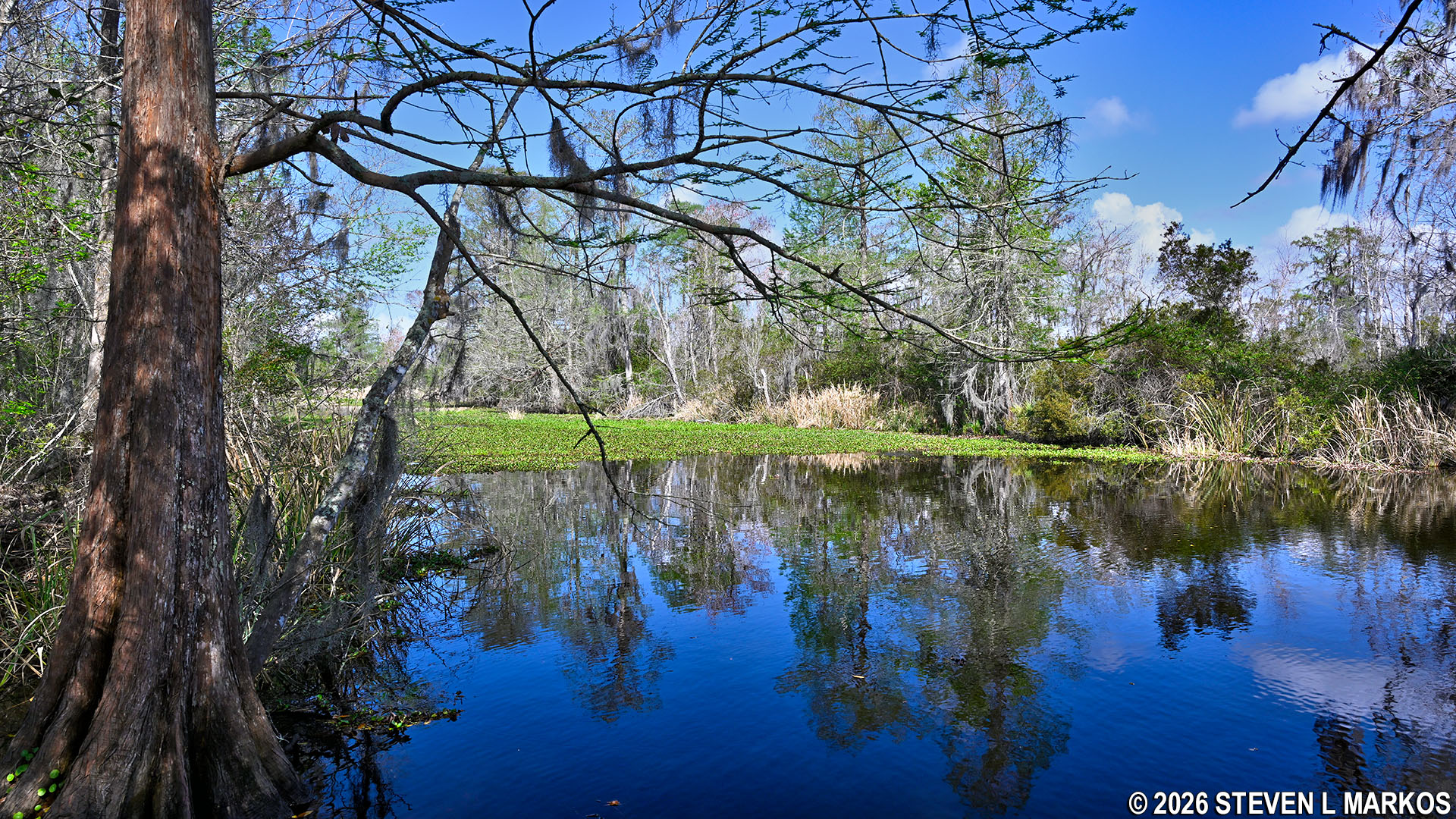
View of the northside canal along the Twin Canals Trail, Jean Lafitte National Historical Park and Preserve
Right around the .25-mile mark on the hike is a wooden plank bridge that crosses a short, swampy area. The path makes a quick right and then a left turn before straightening back out. Essentially, the (practically straight) trail just moved over because the southside canal widens at this point.
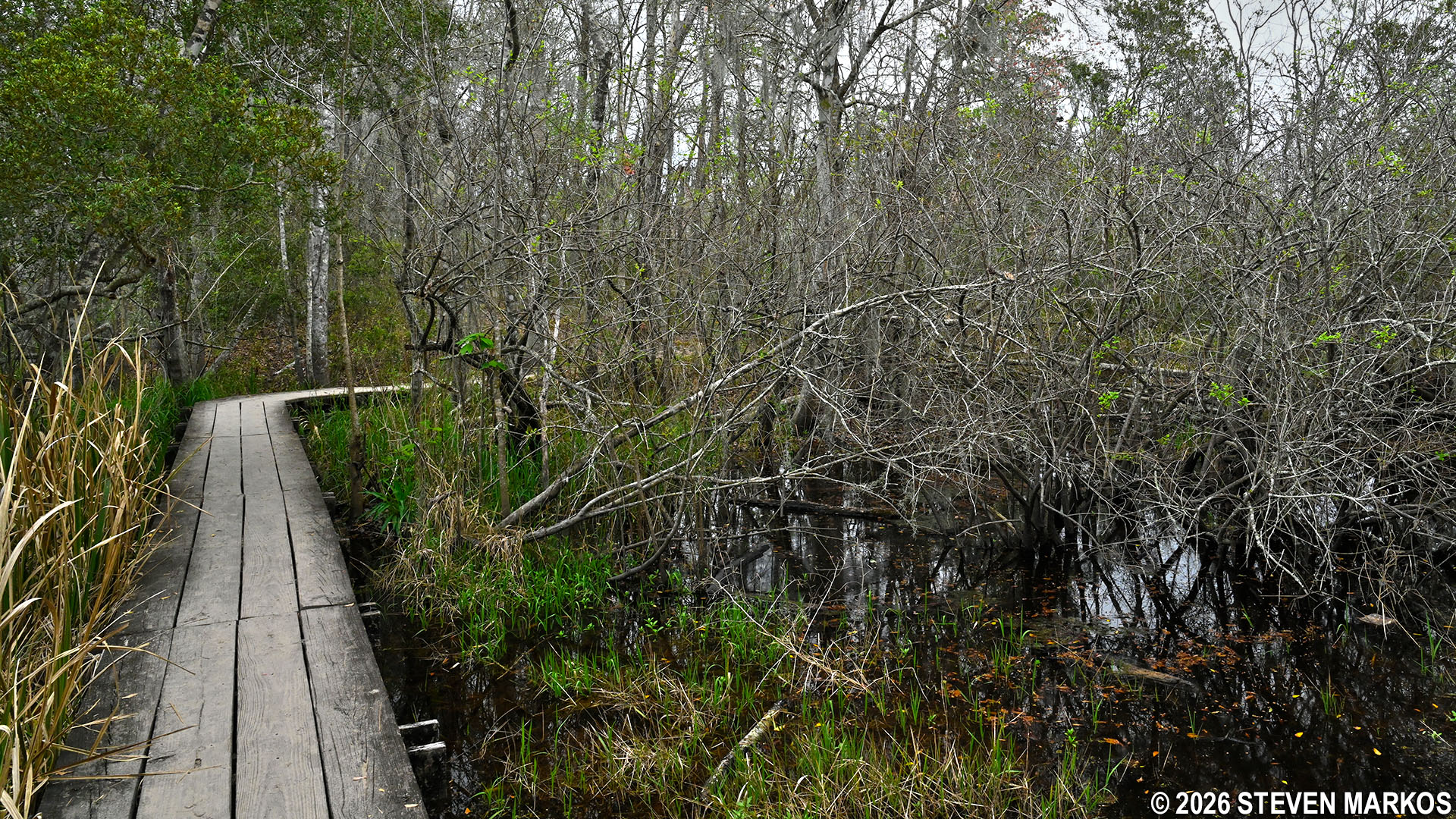
Wooden plank bridge on the Twin Canals Trail, Jean Lafitte National Historical Park and Preserve
When the Twin Canals Trail comes to an end a little less than three-quarters of a mile from the start, the two canals empty into a larger waterway that leads to Bayou Segnette. These are the only navigable canals in the entire Barataria Preserve, and even these may fill in with some vegetation by the time summer arrives.
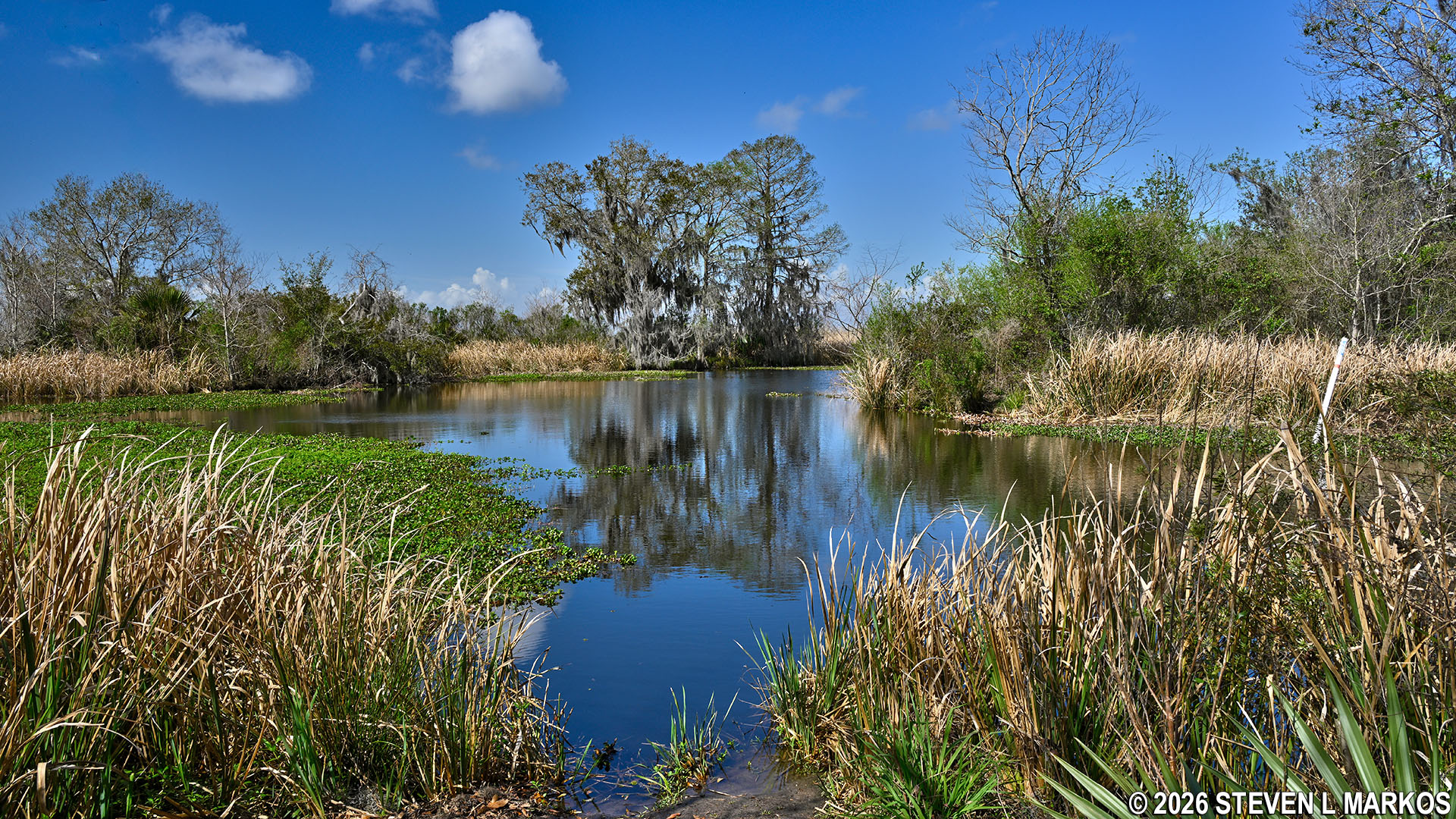
View at the end of the Twin Canals Trail, Jean Lafitte National Historical Park and Preserve
A bench at the end of the Twin Canals Trail provides hikers with the opportunity to take in the views, watch the wildlife, or enjoy some fishing. This is as far as you can go on foot, so once done with the sights or your fishing trip, return the way you came to get back to the parking lot.
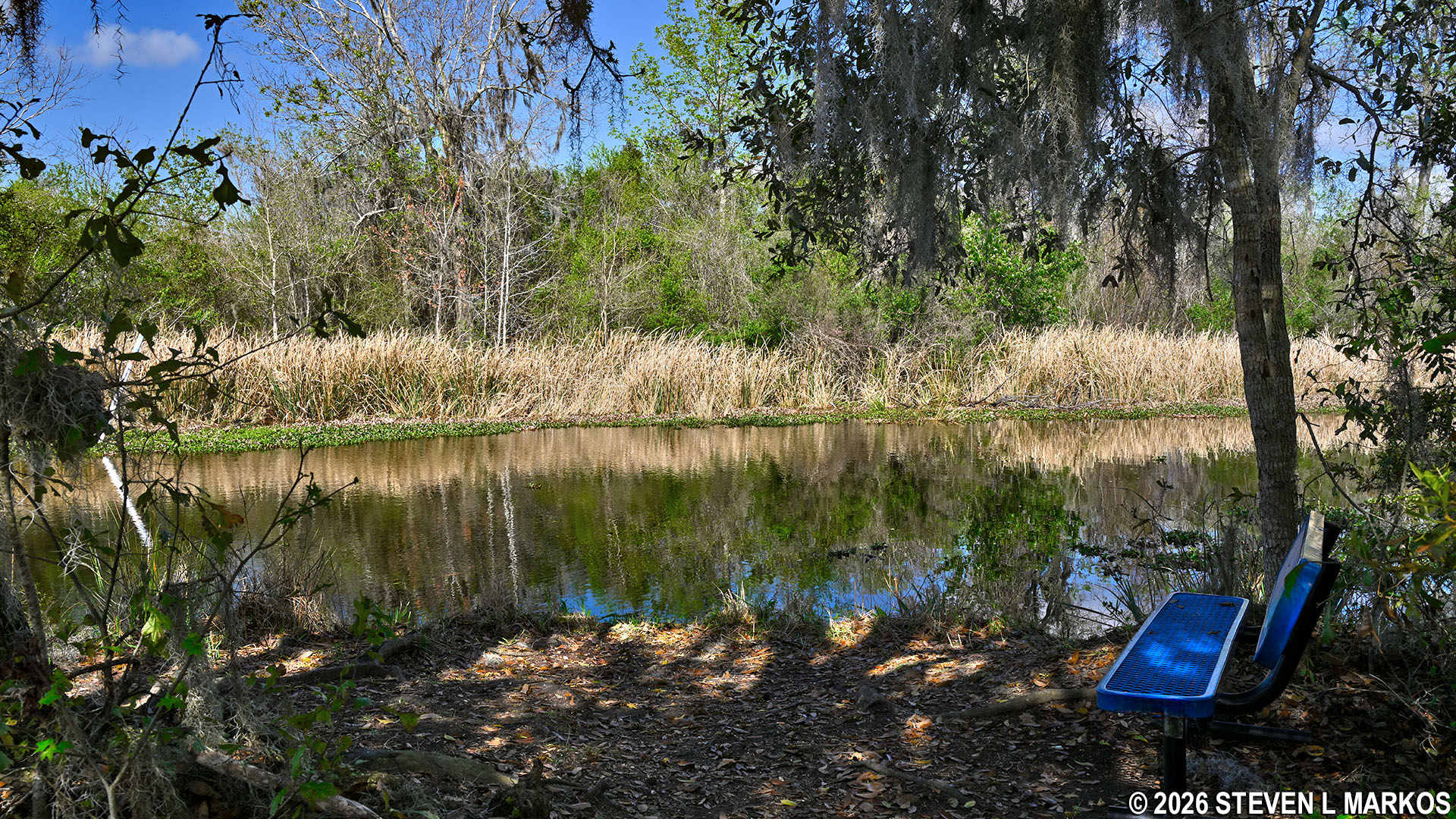
Bench at the end of the Twin Canals Trail, Jean Lafitte National Historical Park and Preserve
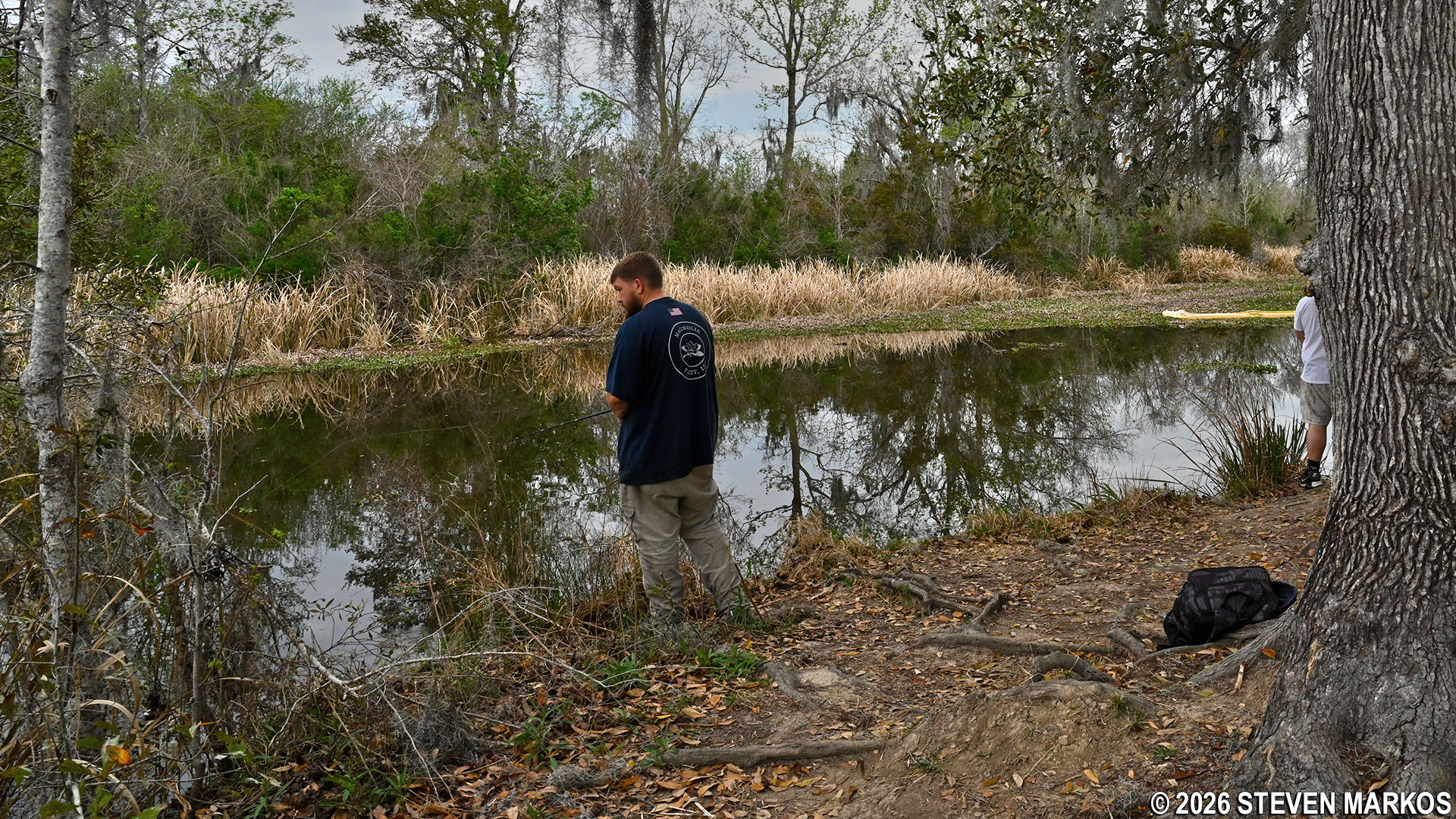
Fishing at the end of the Twin Canals Trail, Jean Lafitte National Historical Park and Preserve
With a few exceptions, use of any photograph on the National Park Planner website requires a paid Royalty Free Editorial Use License or Commercial Use License. See the Photo Usage page for details.
Last updated on September 9, 2026


