

Billings Farm and Museum in Woodstock, Vermont
The Billings Farm and Museum is a living-history dairy farm located across the street from Marsh-Billings-Rockefeller National Historical Park. While it is not technically part of park, it is a partner site, and in truth, it is the more interesting of the two. There is a fee to enter, and the operating schedule varies per season. To get the current schedule and ticket prices, see the Billings Farm and Museum website.
The dairy was part of a larger farming enterprise established in 1871 by Frederick Billings. When he died in 1890, he left a will stipulating that the estate remain intact as long as his wife, Julia, was alive. When she died in 1914, the surviving children—one son and three daughters—divided most of the property. The dairy, however, the only part of the original farm that was still in operation, became part of Billings Farm, Inc., an entity set up to manage the land that was to remain owned by all of the Billings Family descendants.
Unfortunately, by the 1970s the dairy was losing money, so when Lawrence Rockefeller, husband of Mary French (granddaughter of Frederick Billings and daughter of Mary Montague Billings French), proposed purchasing Billings Farm, Inc. in 1974, all of the family stockholders agreed. The Rockefellers rehabilitated the dairy, and in 1983, opened it to the public as the Billings Farm and Museum. In 1992, the couple donated the rest of their property to the federal government for the creation of Marsh-Billings-Rockefeller National Historical Park.
Billings Farm still operates as a dairy, with cheddar cheese being its only product. While the cows are milked at the farm—you can stop by to see them—the cheese is made in another facility. It is, however, sold in the gift shop.
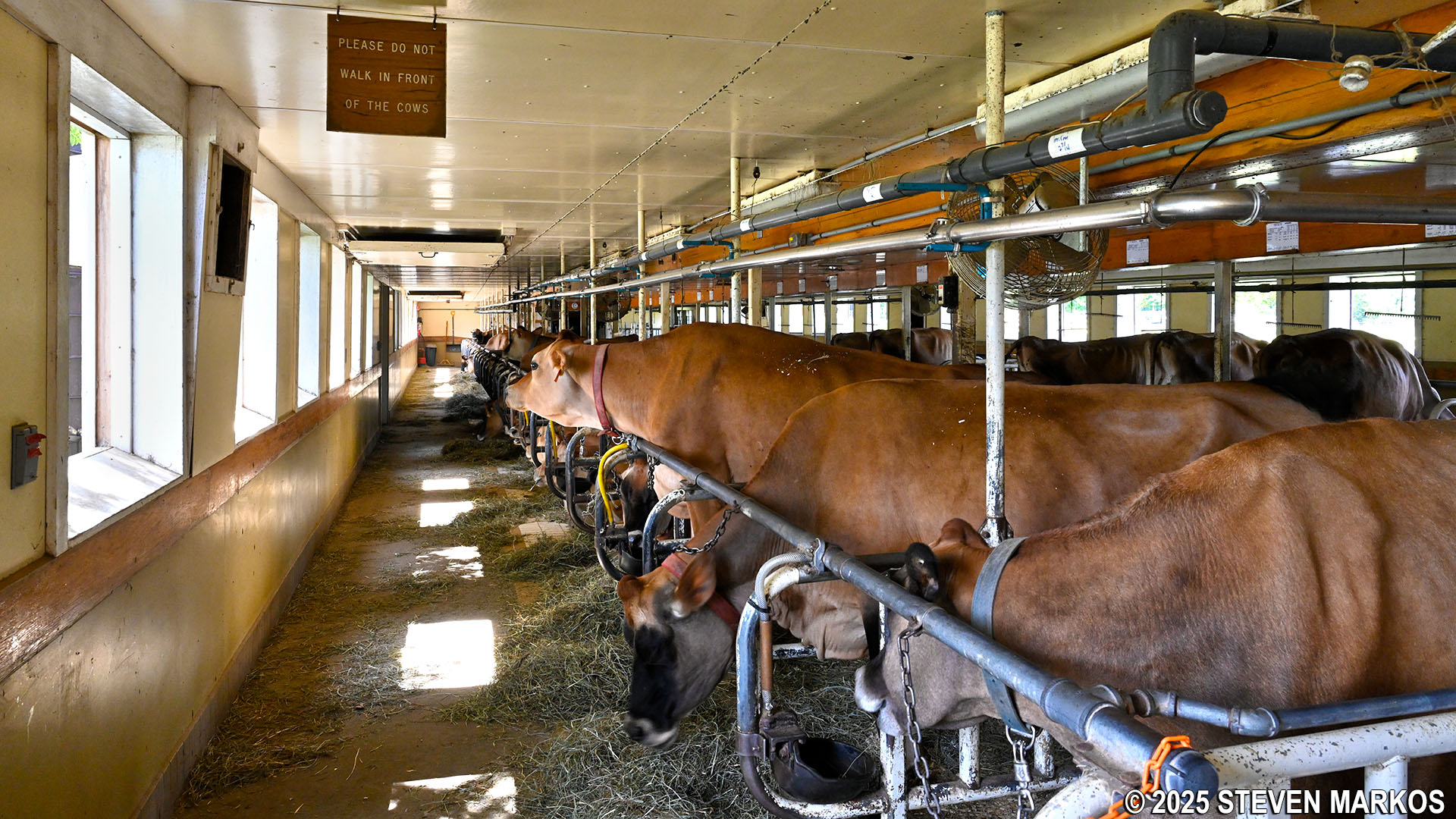
Dairy cows in the milking barn at Billings Farm and Museum in Woodstock, Vermont
The main educational attractions at the farm are the 1890 Farm Manager’s House that was built by Frederick Billings for farm manager George Aitken and the excellent Vermont Farm Life Museum. This is one of my favorites of all museums I have visited during my travels to National Parks.
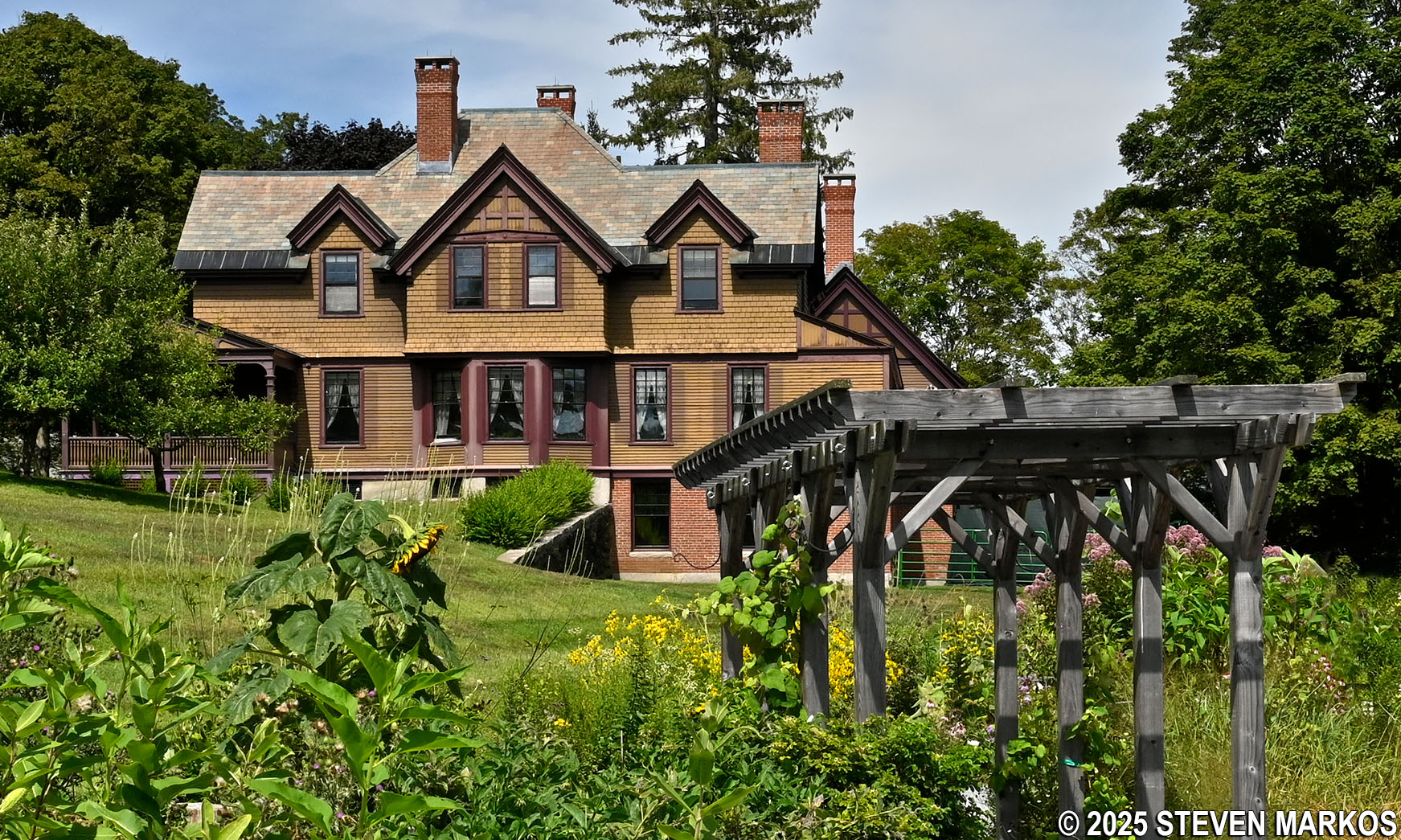
1890s Farm Manager’s House viewed from the gardens at the Billings Farm and Museum in Woodstock, Vermont
The majority of visitors to Billings Farm and Museum are families with children, and children want to see farm animals. There are plenty of daily programs where visitors can meet the various animals, which include cows, horses, sheep, goats, and chickens.
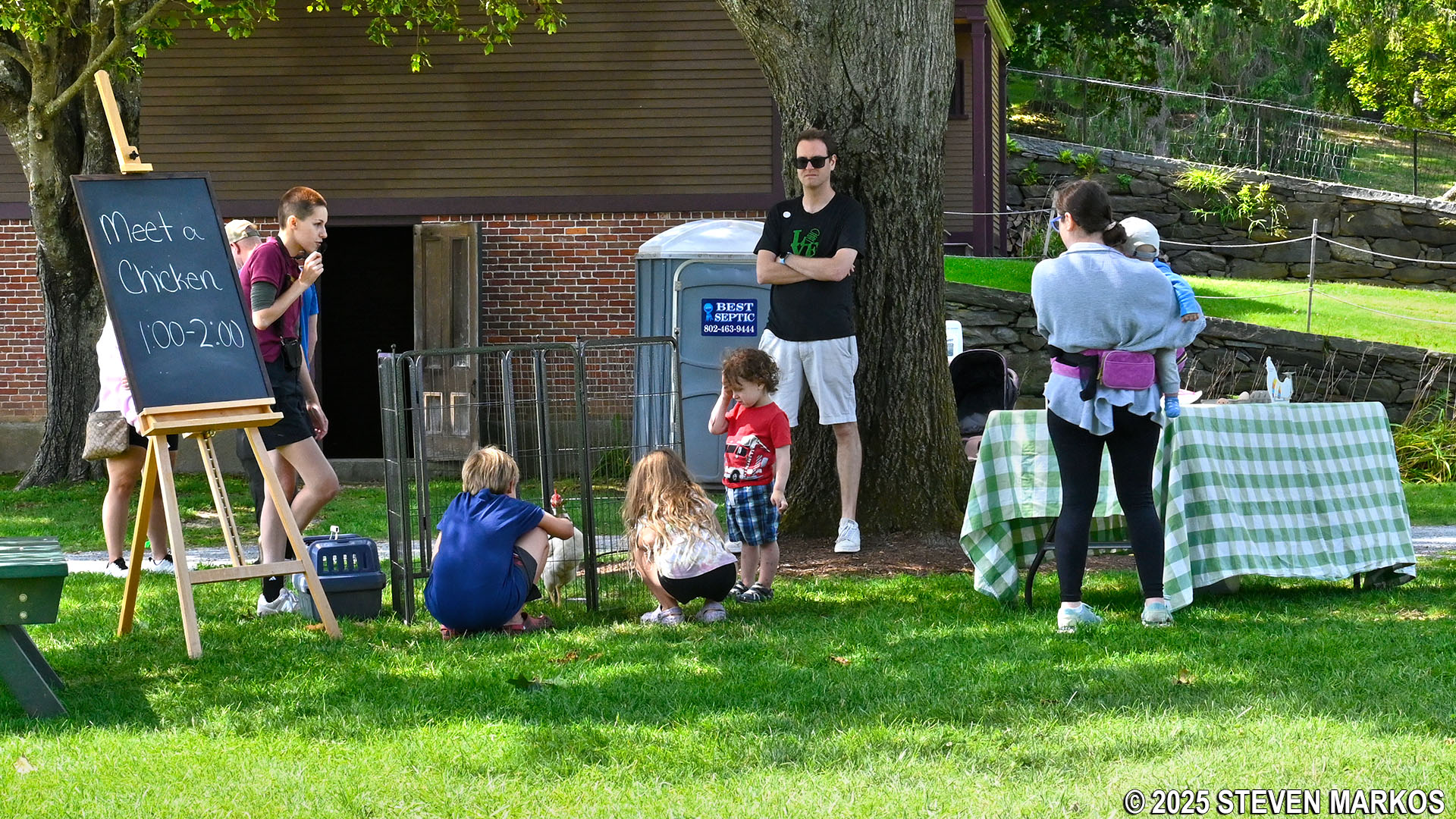
Meet a Chicken daily program at Billings Farm and Museum in Woodstock, Vermont
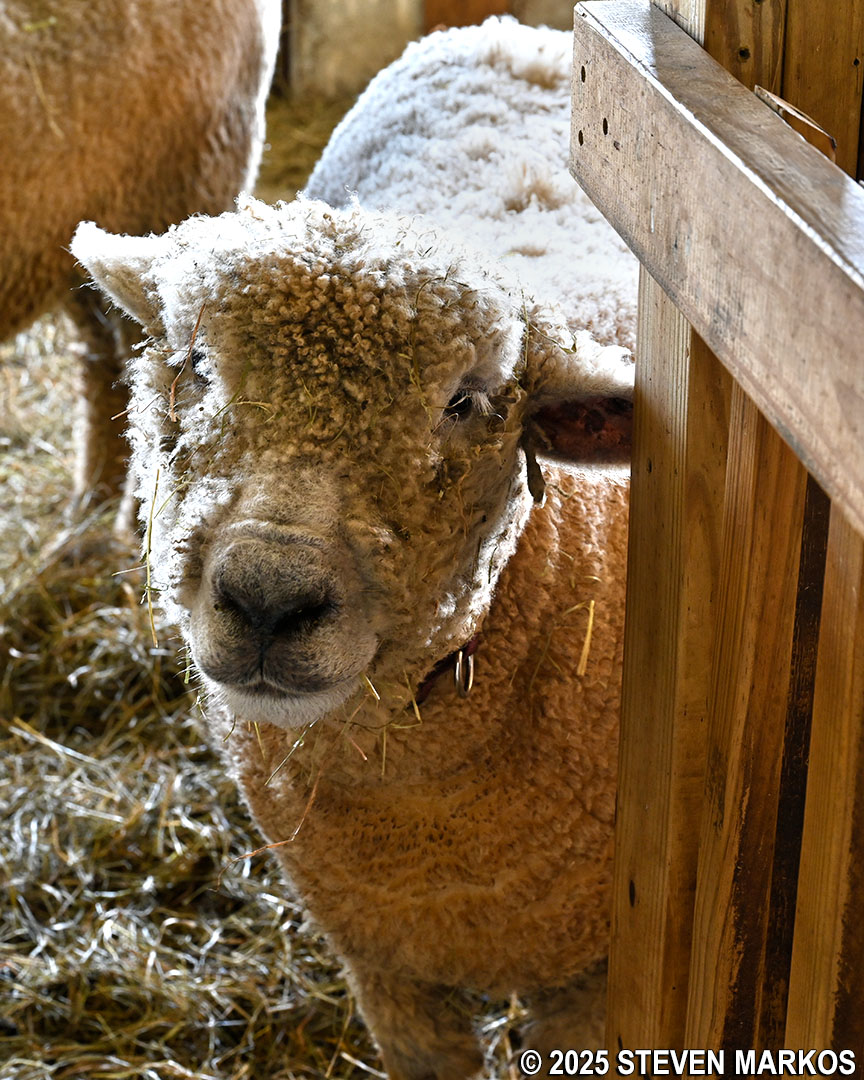
Sheep at Billings Farm and Museum in Woodstock, Vermont
The farm also offers daily demonstrations and lectures on topics such as butter churning and cow milking, yearly festivals, wagon rides in the summer and sleigh rides in the winter, sheep shearing, summer camps for children, and Thanksgiving and Christmas decorations. A schedule of all activities can be found on the Billings Farm and Museum website.
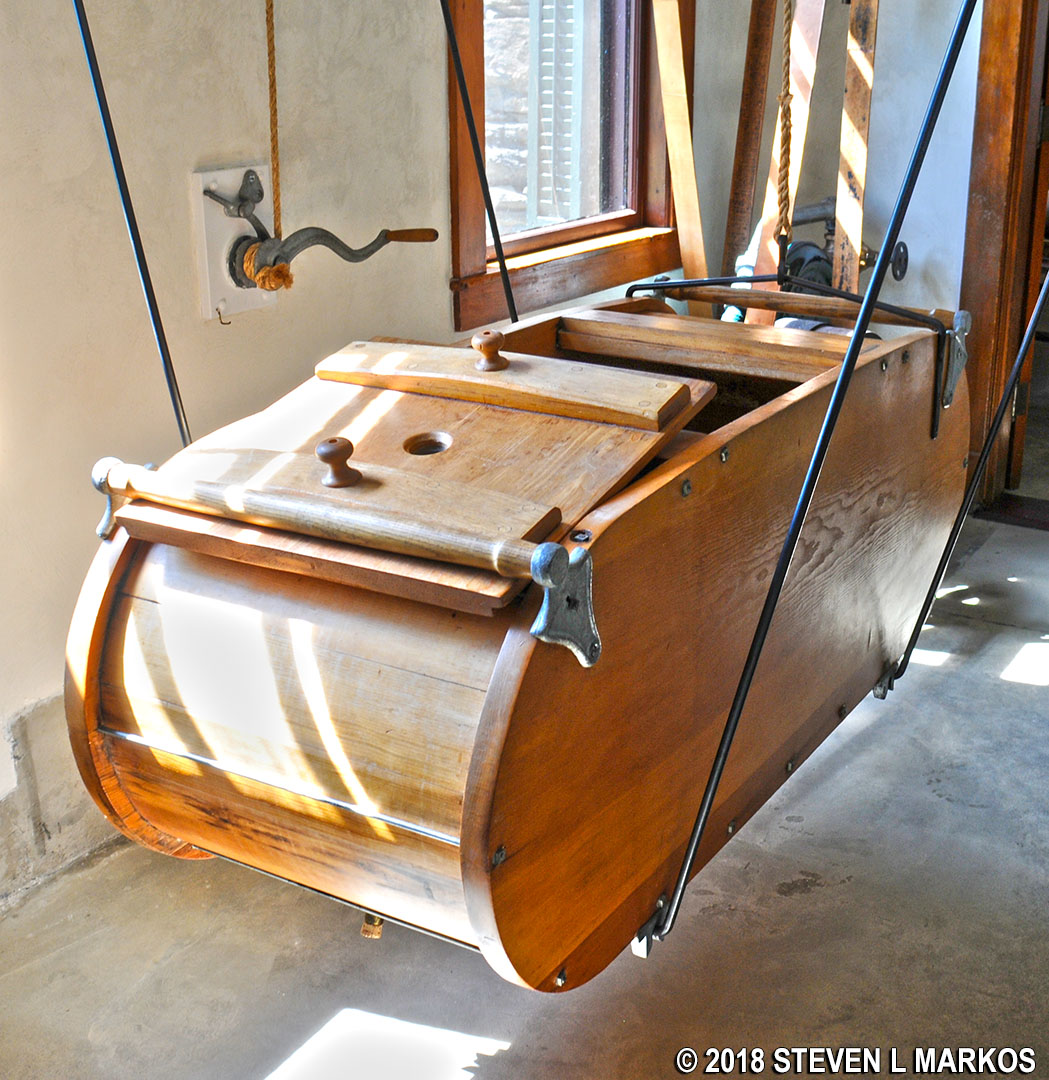
Butter churn inside the 1890 Farm Manager’s House creamery at the Billings Farm and Museum in Woodstock, Vermont
Visitors can also watch A Place in the Land, a 32-minute biographical film about George Perkins Marsh, Frederick Billings, and Lawrence Rockefeller, the three men who once lived at what is now Marsh-Billings-Rockefeller National Historical Park. The film was nominated for an Academy Award in the Best Documentary, Short Subject category in 1998. There is no objectionable material, so the film is suitable for all ages. However, it is a slow moving film and most likely will not appeal to children, or even teenagers who have no interest in history. The film is also shown at the Carriage Barn Visitor Center at Marsh-Billings-Rockefeller National Historical Park.
SCHEDULING YOUR TIME
The Billings Farm and Museum is an attraction itself, so you can visit it without stepping foot in Marsh-Billings-Rockefeller National Historical Park located across the street. I spent three hours at the farm, which is what I would consider the minimum amount of time required to see most of the attractions. I gave the Vermont Farm Life Museum and the 1890 Farm House a thorough visit, sat and ate some ice cream that I purchased from the snack bar, saw the milking barn, and talked for fifteen minutes with a guy about butter making. I did not, however, watch the film since I had already seen it at the Carriage Barn Visitor Center, and I did not attend any of the demonstrations, so it is certainly possible to spend much more time at the farm than I did. In fact, spending an entire day is not out of the question.
With a few exceptions, use of any photograph on the National Park Planner website requires a paid Royalty Free Editorial Use License or Commercial Use License. See the Photo Usage page for details.
Last updated on December 10, 2025


