

Front of the Billings Mansion, Marsh-Billing-Rockefeller National Historical Park
HOUSE TOUR INFORMATION
Tours of the Billings Mansion are held from Memorial Day weekend through the end of October whenever Marsh-Billings-Rockefeller National Historical Park is open (currently Thursdays through Mondays). Self-guided tours allow visitors to see the ground floor, whereas the Ranger-guided A Legacy of Stewardship: Introductory Mansion Program covers the second floor as well (third floor is not part of the tour). There are other specialty tours of the mansion and the grounds that are given on select days. All tours have scheduled entrance times, and all require fee-based tickets, including the self-guided tours.
Tickets are available at the Carriage Barn Visitor Center on the day of the tour on a first-come, first-served basis or in advance at Recreation.gov. Since space is limited on each tour, advance reservations are suggested. No cash is accepted at the park, so credit and debit card payments only. For a schedule, check out the National Park Service’s Calendar web page for Marsh-Billings-Rockefeller National Historical Park.
The Legacy of Stewardship tour begins at the Carriage Barn Visitor Center where the tour guide presents information about the three men for whom the park is named: George Perkins Marsh, Frederick Billings, and Lawrence Rockefeller. The group then proceeds to the house, first stopping on the porch overlooking the surrounding mountains. The mansion is wheelchair accessible, so everyone is welcome to join the tour.

Front porch of the Billings Mansion, Marsh-Billing-Rockefeller National Historical Park
When Mary French (granddaughter of Frederick Billings) and husband Lawrence Rockefeller donated the property to create the park in 1992, they left the house fully furnished, so everything you see belonged to either the Billings or Rockefeller families. They even left dozens of original paintings—collected largely by Frederick Billings—by artists such as Albert Bierstadt and Thomas Cole.
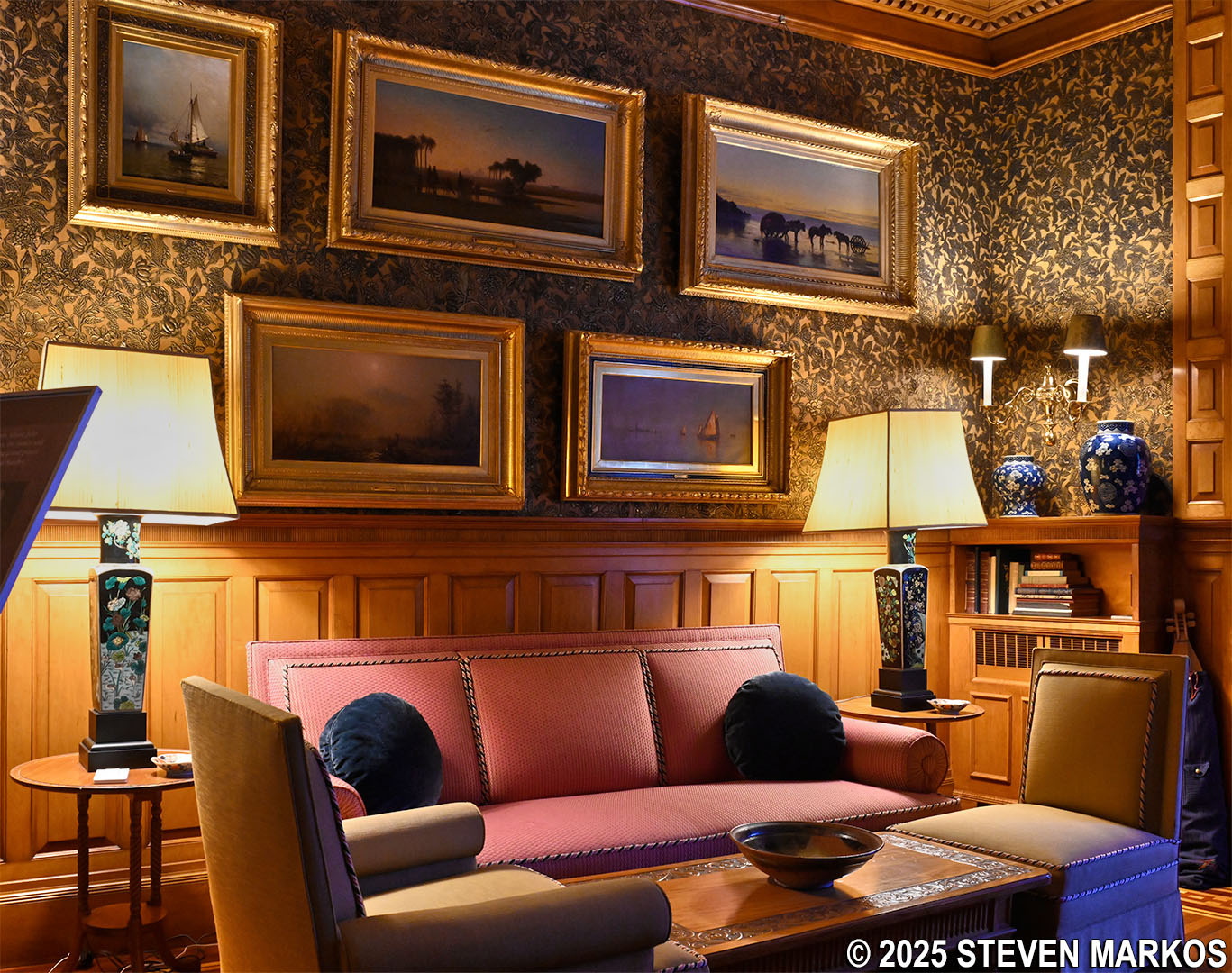
Paintings in the parlor of the Billings Mansion at Marsh-Billings-Rockefeller National Historical Park
The entrance to the Billings Mansion is on the east side of the house. A long hallway runs the length of the building east to west. The tour begins in the main hall, the first room on the right just past the entrance door. In Victorian times, guests who were just dropping in for a short, informal visit were brought to the main hall, and thus it was typically one of the more formal rooms with some of the best furniture and decor.
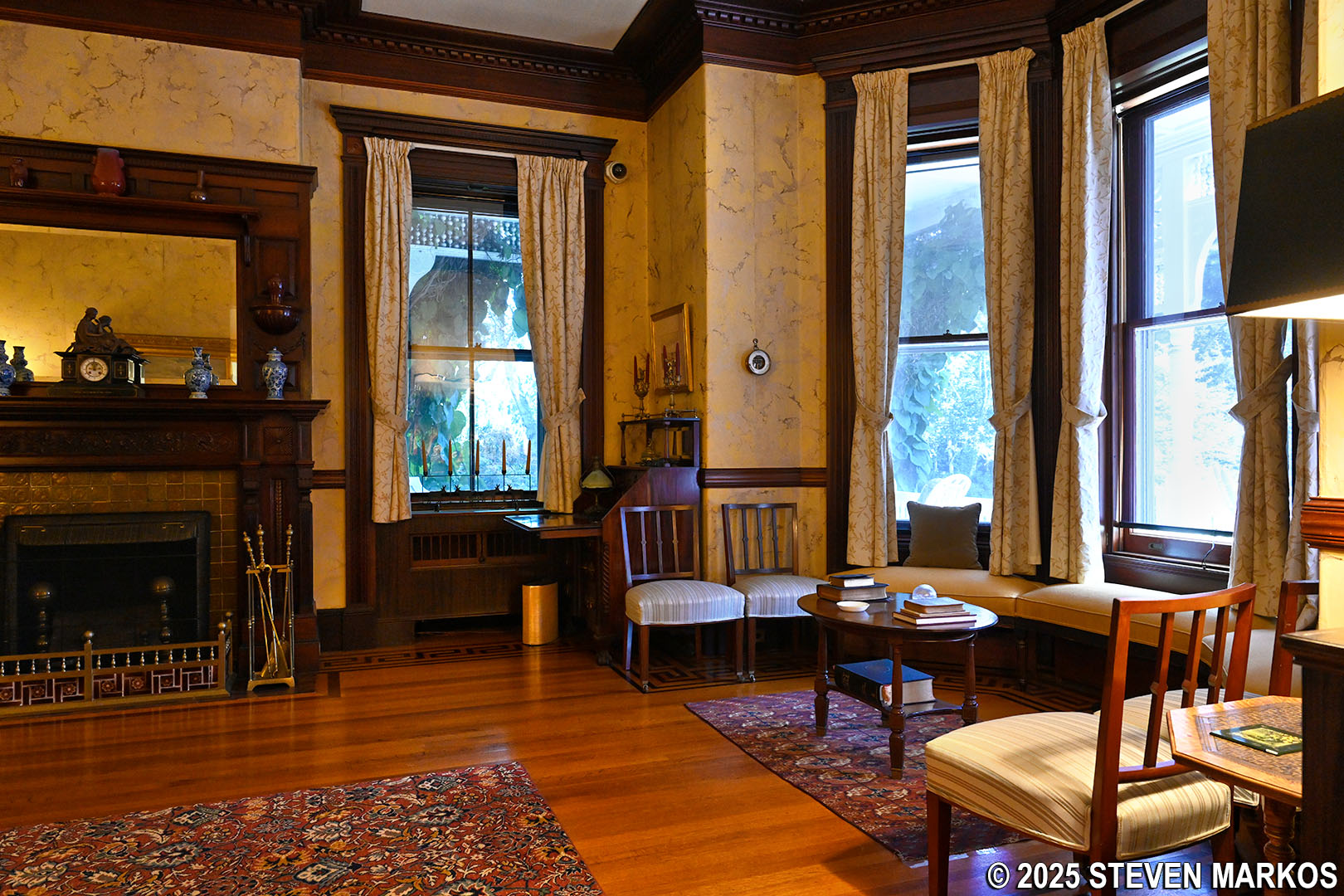
Main Hall of the Billings Mansion, Marsh-Billings-Rockefeller National Historical Park
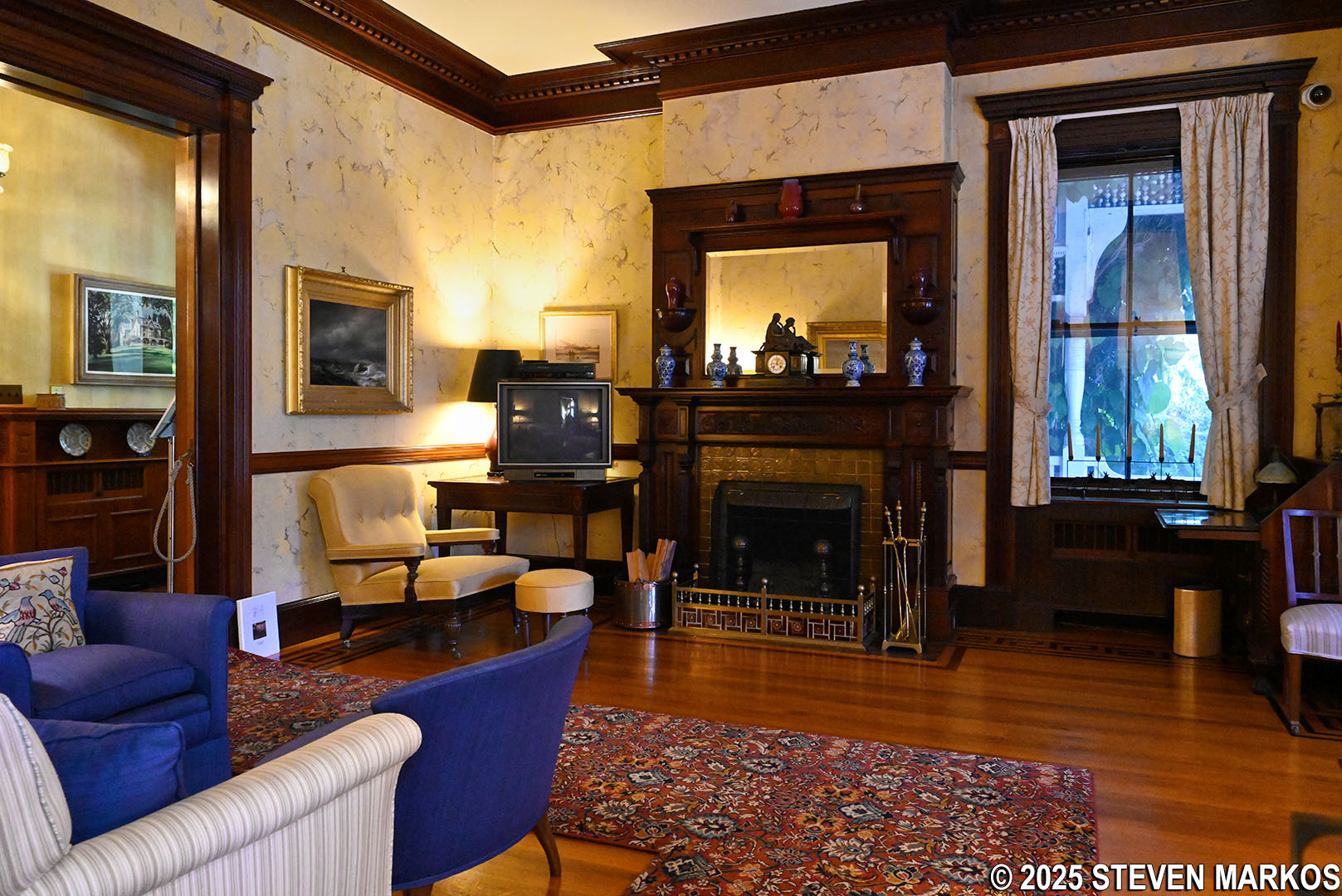
Main Hall of the Billings Mansion, Marsh-Billings-Rockefeller National Historical Park
For more formal and longer visits, guests were entertained in the parlor, which is located a little farther down the main hallway and on the left. This room often featured the best furnishings in the house. The parlor in the Billings Mansion is a large room—large enough to hold two separate groups of people and their conversations on each end. In fact, it was originally two rooms. The bay windows that split the room in half are where the main entrance once was, and each of these rooms was on opposite sides of what was then the entrance hallway. This is also why there are two fireplaces in the room.
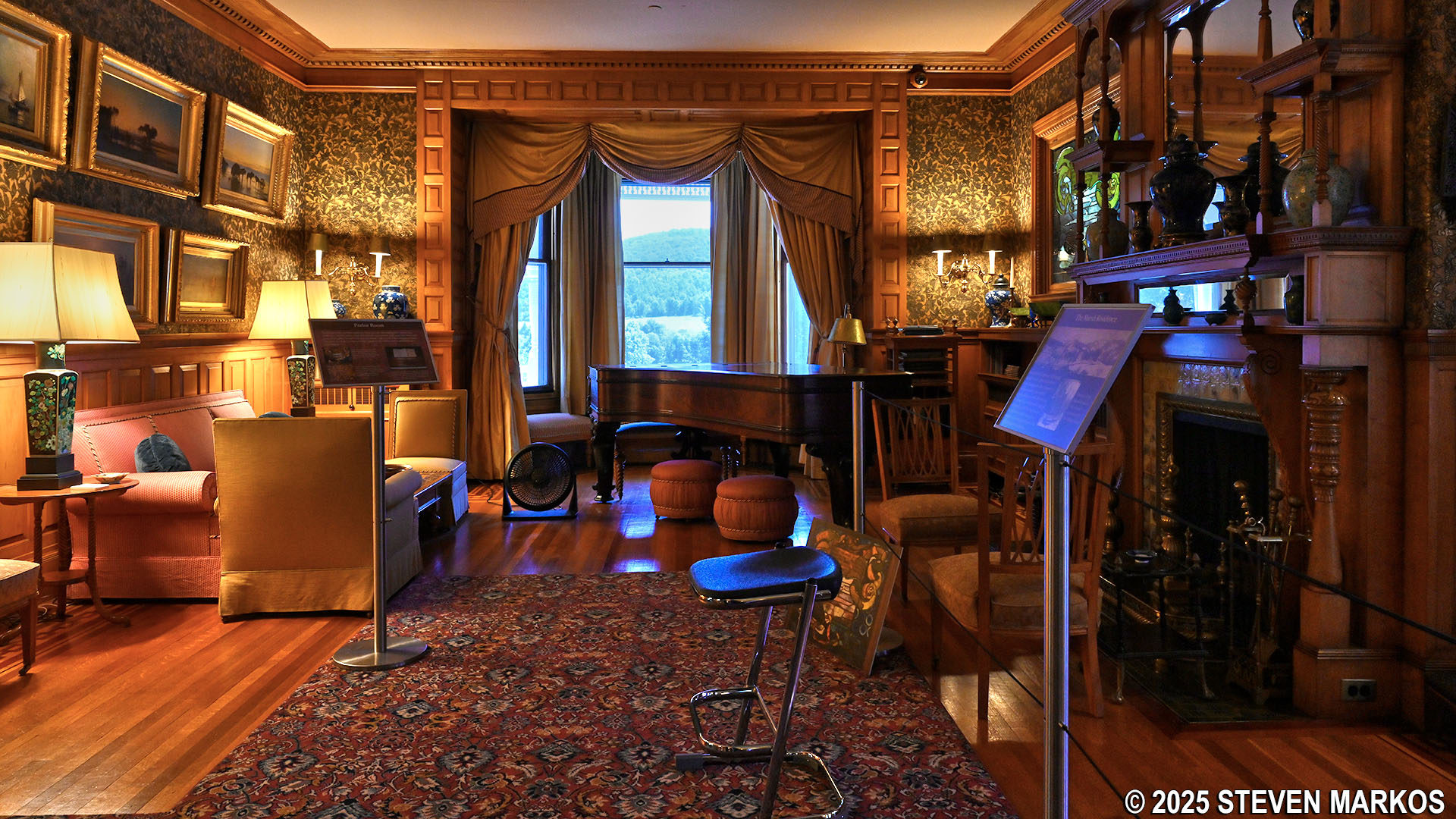
Eastern half of the parlor in the Billings Mansion at Marsh-Billings-Rockefeller National Historical Park
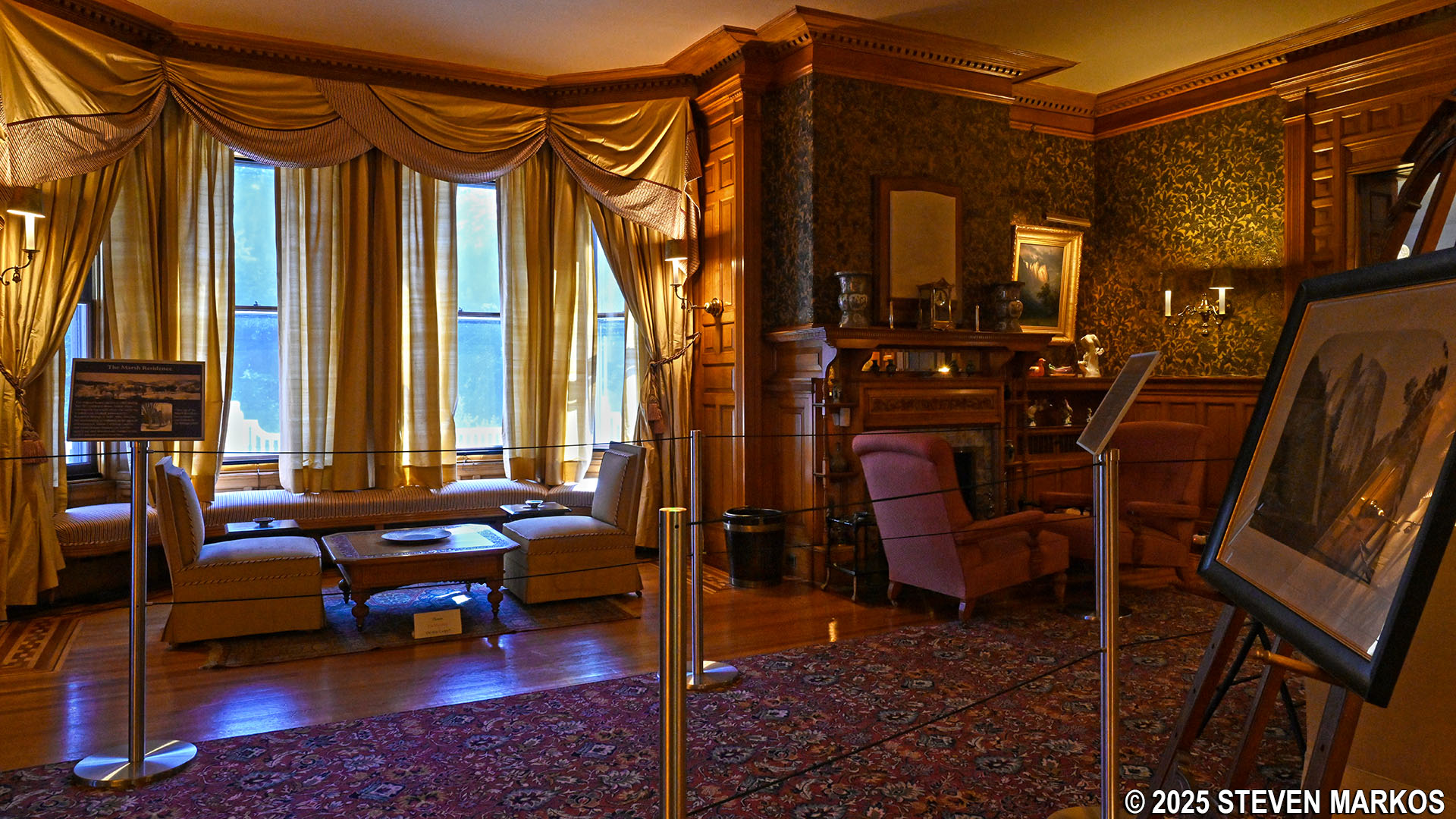
Central bay window and western half of the parlor in the Billings Mansion at Marsh-Billings-Rockefeller National Historical Park

Parlor in the Billings Mansion at Marsh-Billings-Rockefeller National Historical Park
Connected to the parlor is the library, which takes up the southwestern side of the mansion. The room also functioned as the everyday family room.
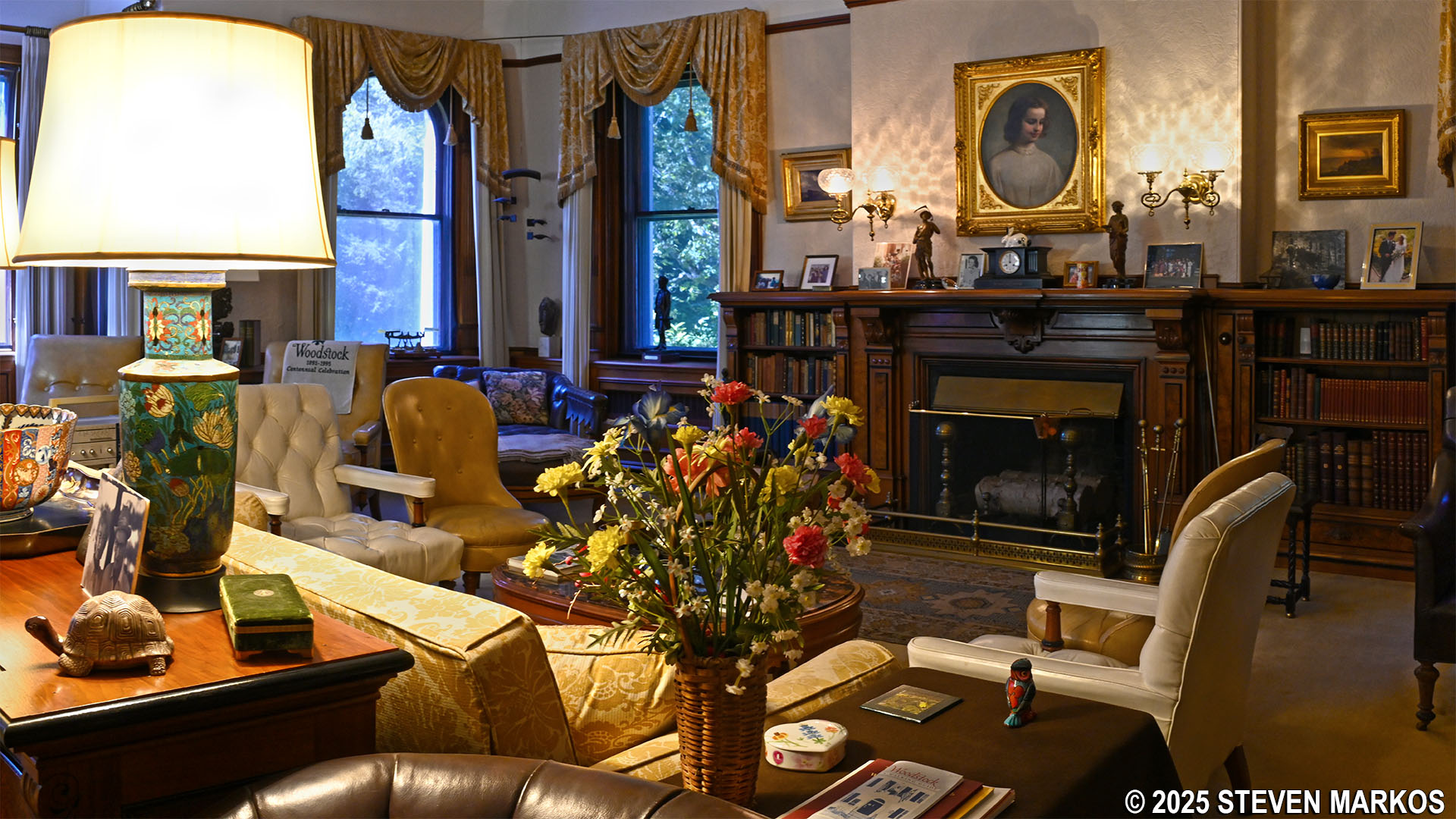
Library in the Billings Mansion at Marsh-Billings-Rockefeller National Historical Park
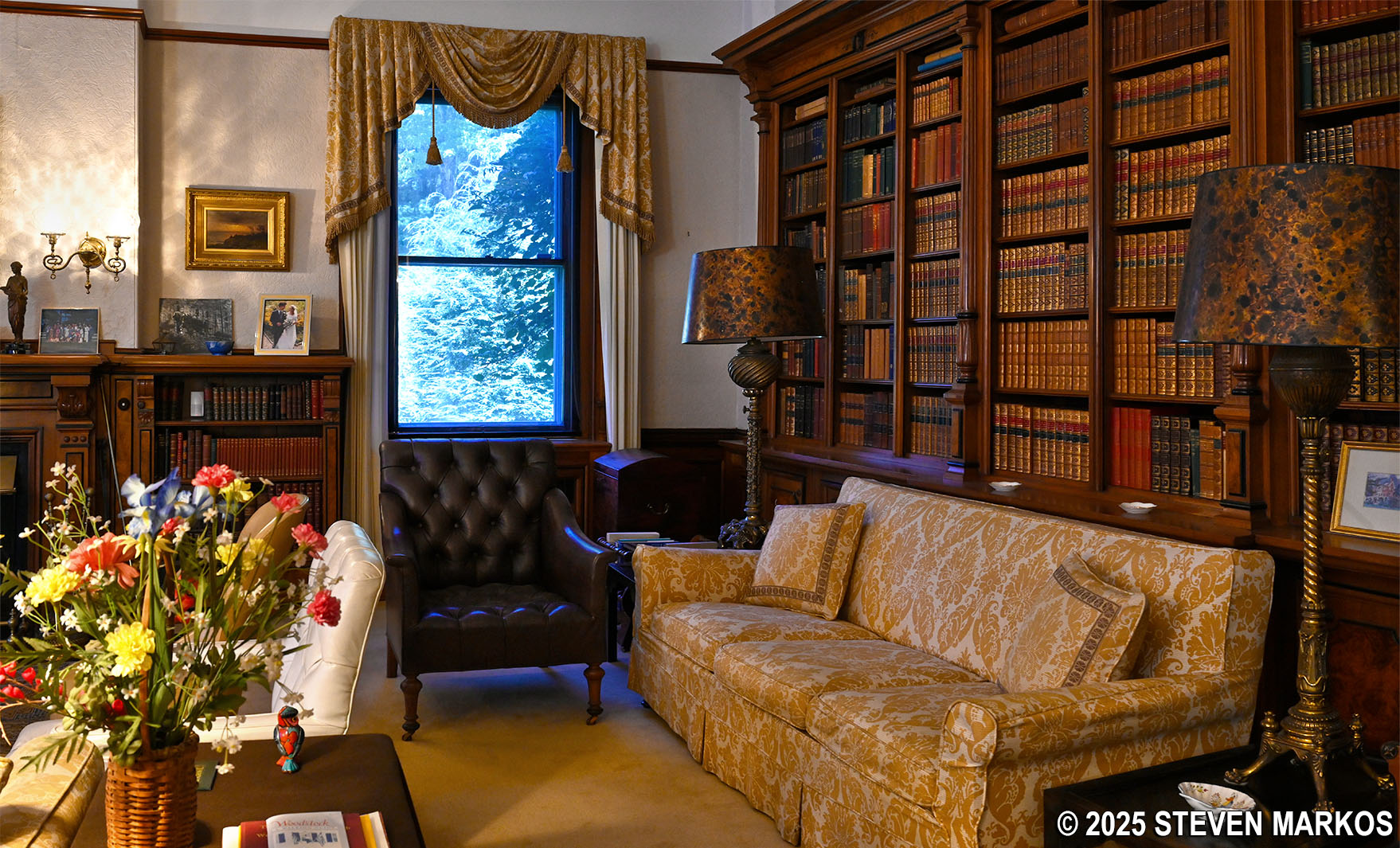
Library in the Billings Mansion at Marsh-Billings-Rockefeller National Historical Park
The second floor mainly consists of bedrooms. There are more bedrooms on the third floor, but as mentioned earlier, the tour does not cover that area of the house.
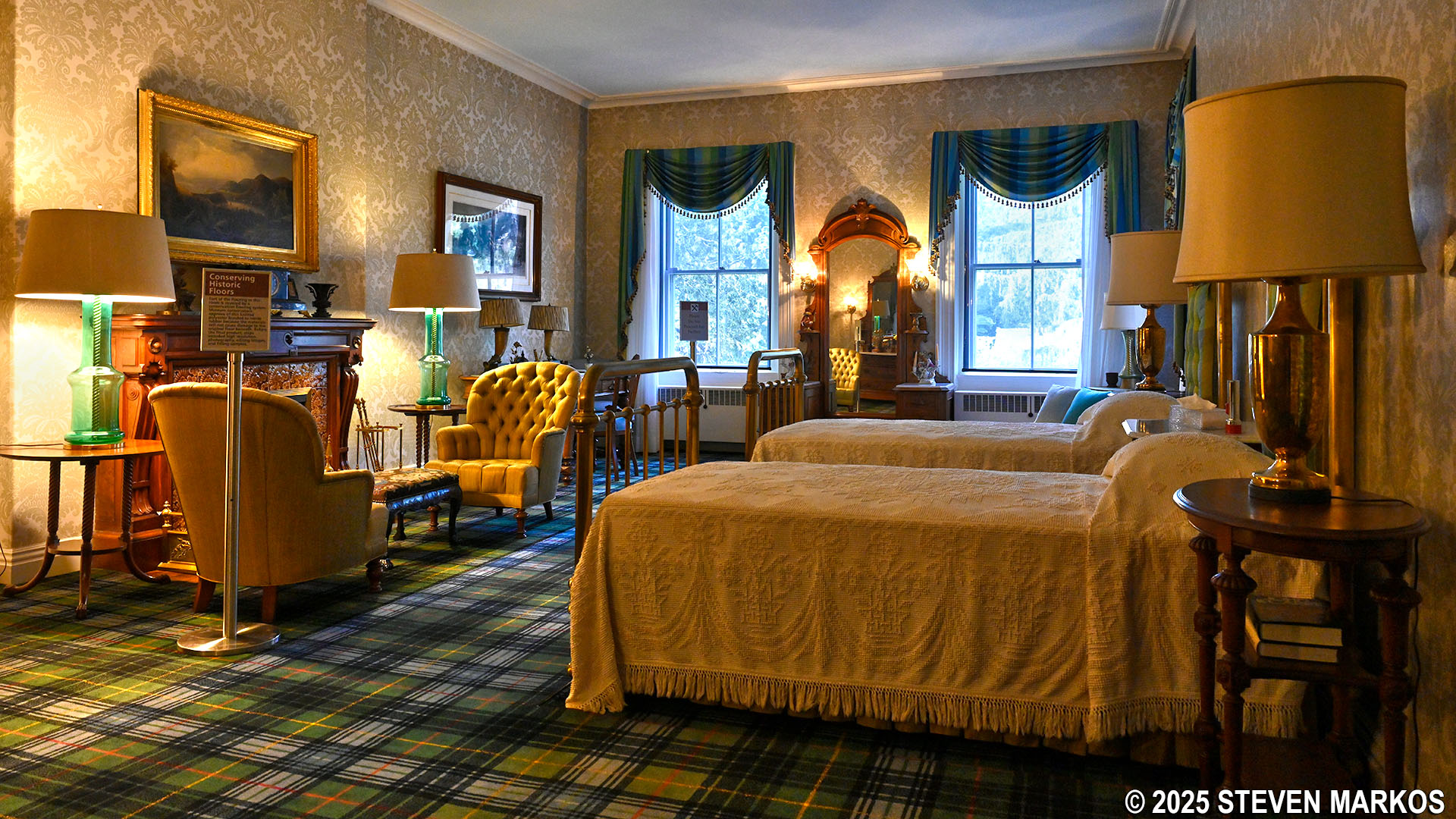
Bedroom on the second floor of the Billings Mansion at Marsh-Billings-Rockefeller National Historical Park
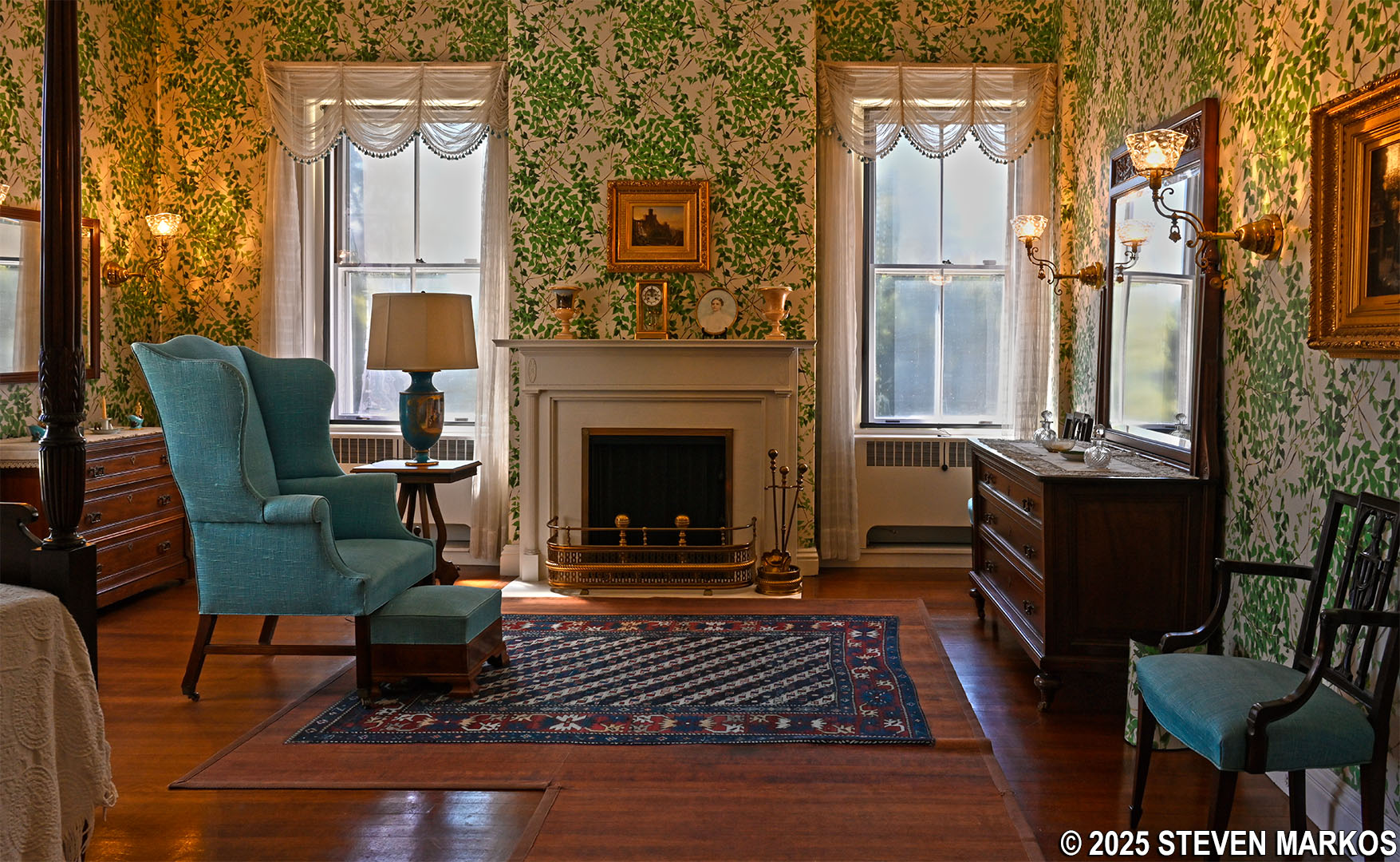
Bedroom on the second floor of the Billings Mansion at Marsh-Billings-Rockefeller National Historical Park
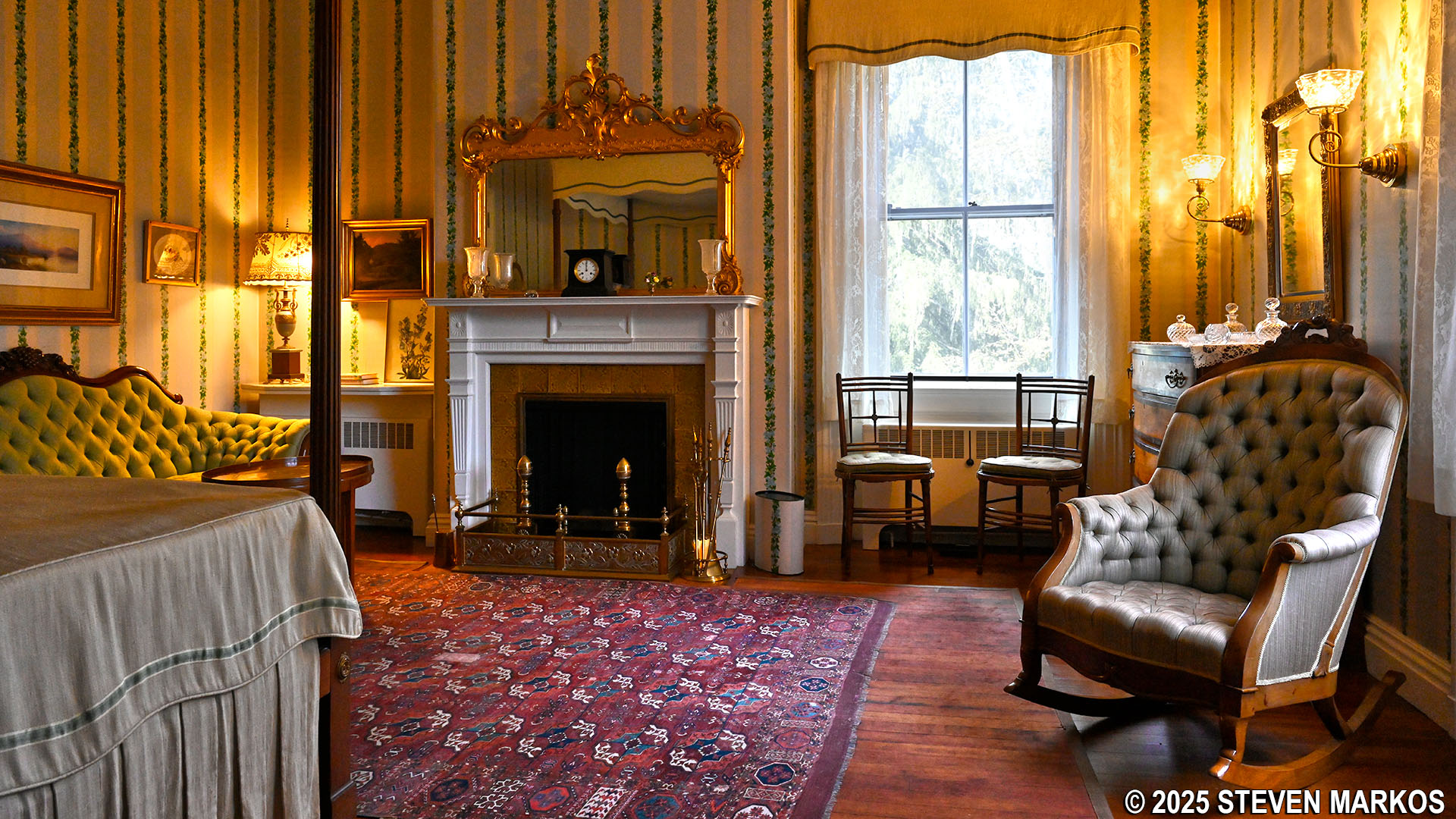
Bedroom on the second floor of the Billings Mansion at Marsh-Billings-Rockefeller National Historical Park
The master bedroom of Mary and Lawrence Rockefeller also has an attached study where two Albert Bierstadt paintings hang on the walls, one of the Grand Tetons and one of the Matterhorn in Switzerland. There is also a grandfather clock that is the only remaining piece of furniture from the Marsh Family, the original builders of the house. When Charles Marsh Jr. sold the house to Frederick Billings in 1869, he also auctioned off the contents. Billings purchased the clock and kept it at the house.
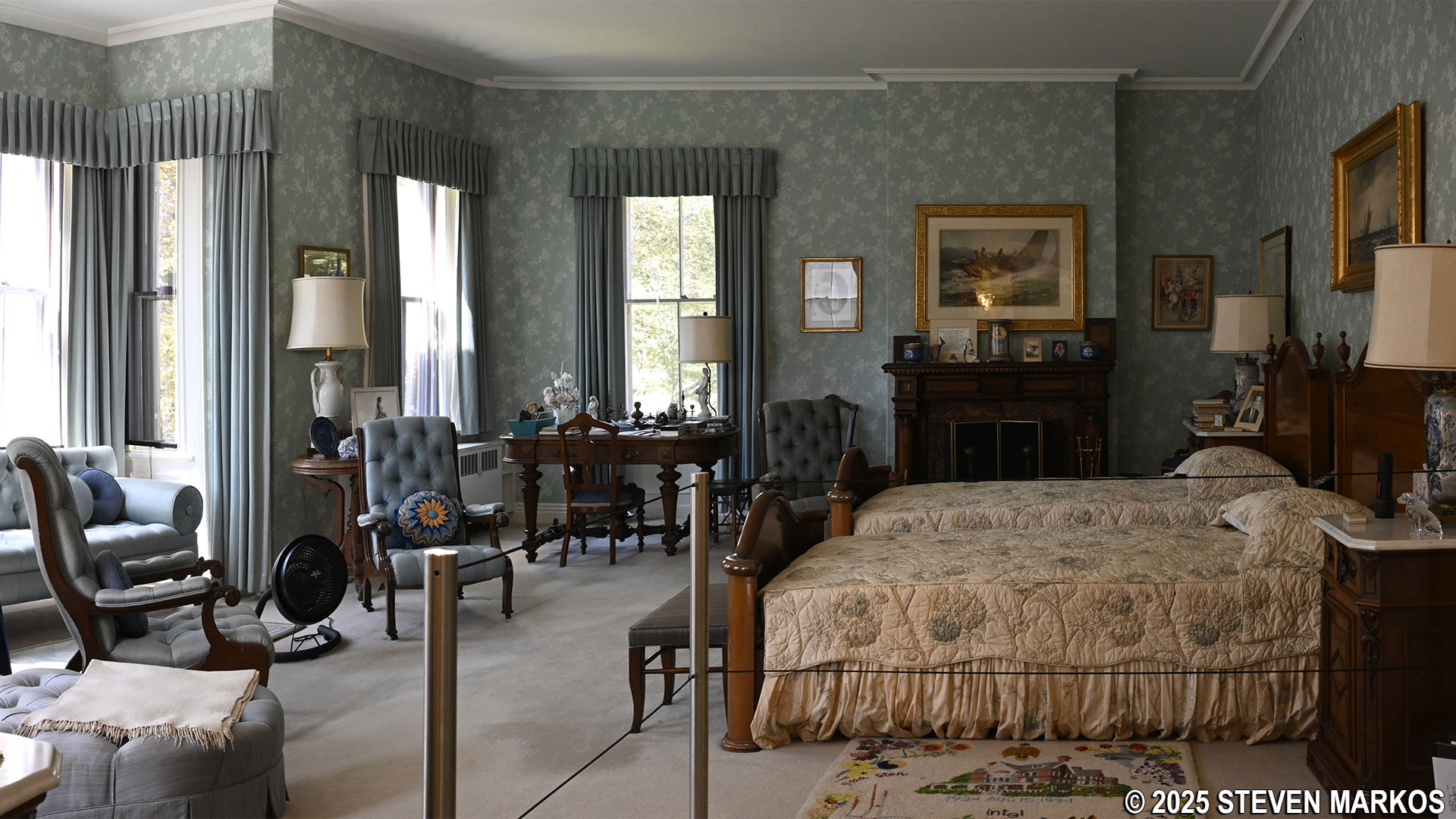
Master Bedroom in the Billings Mansion at Marsh-Billings-Rockefeller National Historical Park
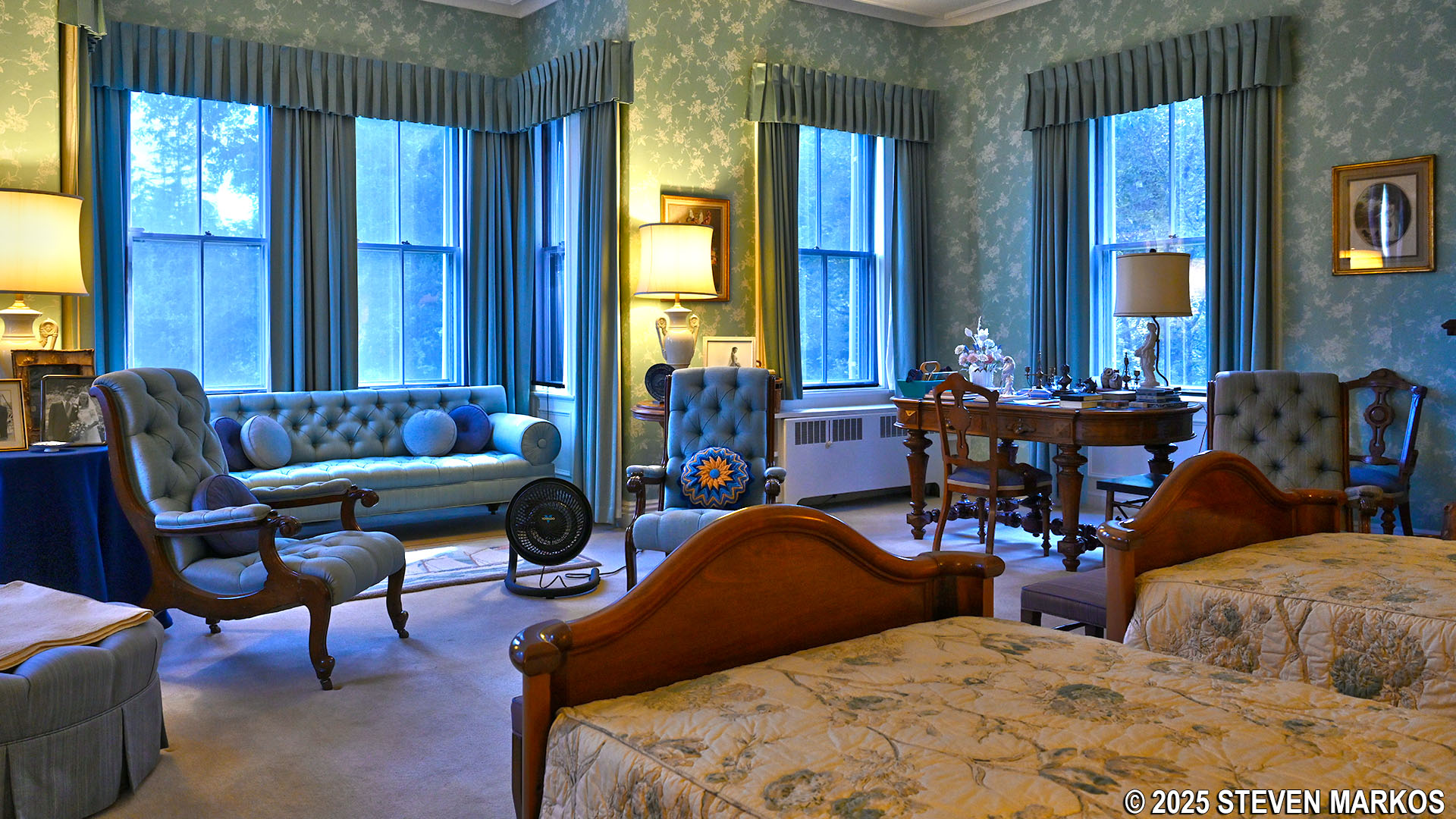
Master Bedroom in the Billings Mansion at Marsh-Billings-Rockefeller National Historical Park
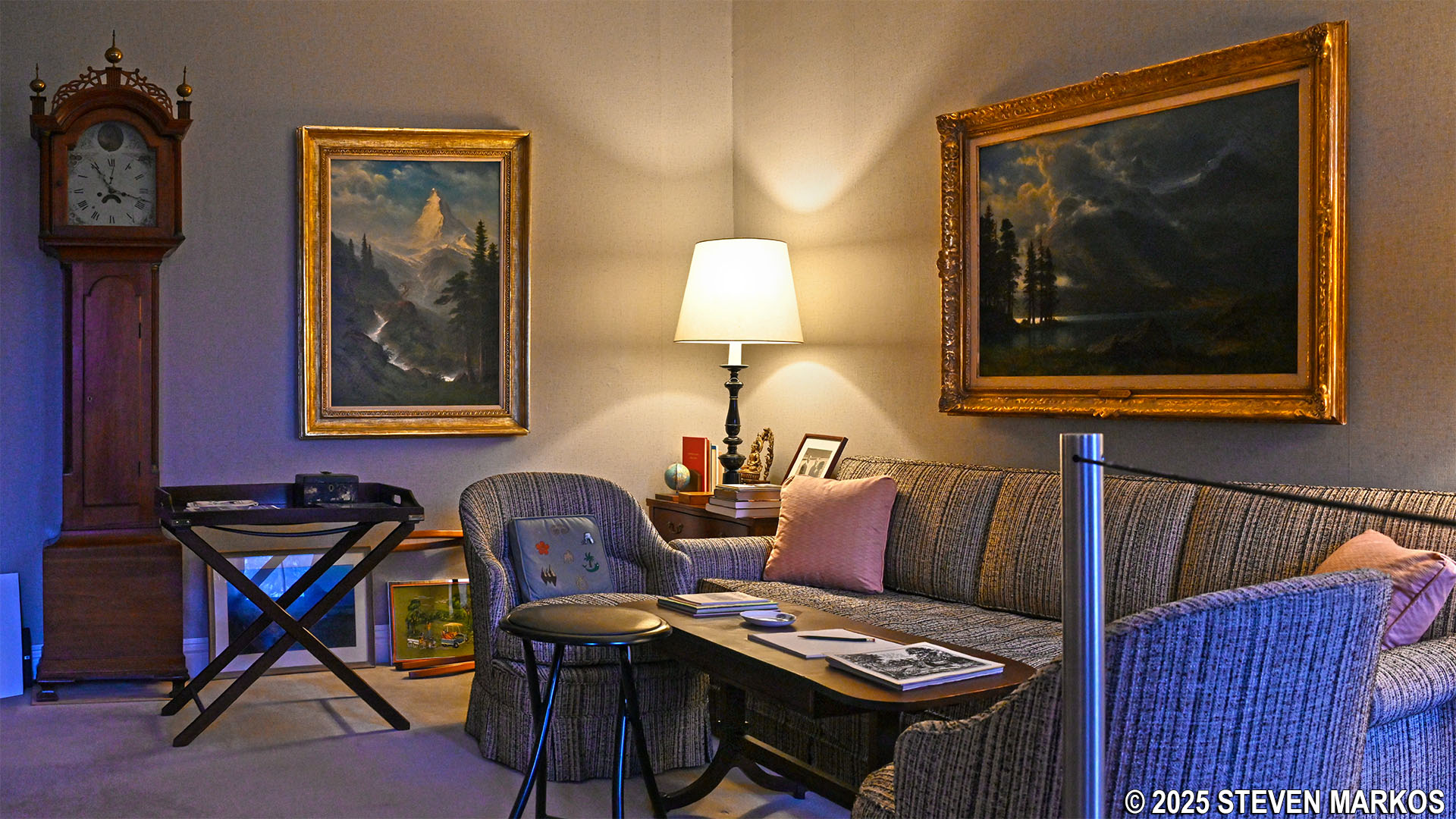
Study attached to the master bedroom in the Billings Mansion at Marsh-Billings-Rockefeller National Historical Park
The tour of the Billings Mansion ends at the back of the house near the gardens. These were originally designed between 1894 and 1898 by artist and landscape gardener Charles Platt. The National Park Service offers a garden tour on select days in July and August, but you are welcome to walk around on your own at any time.
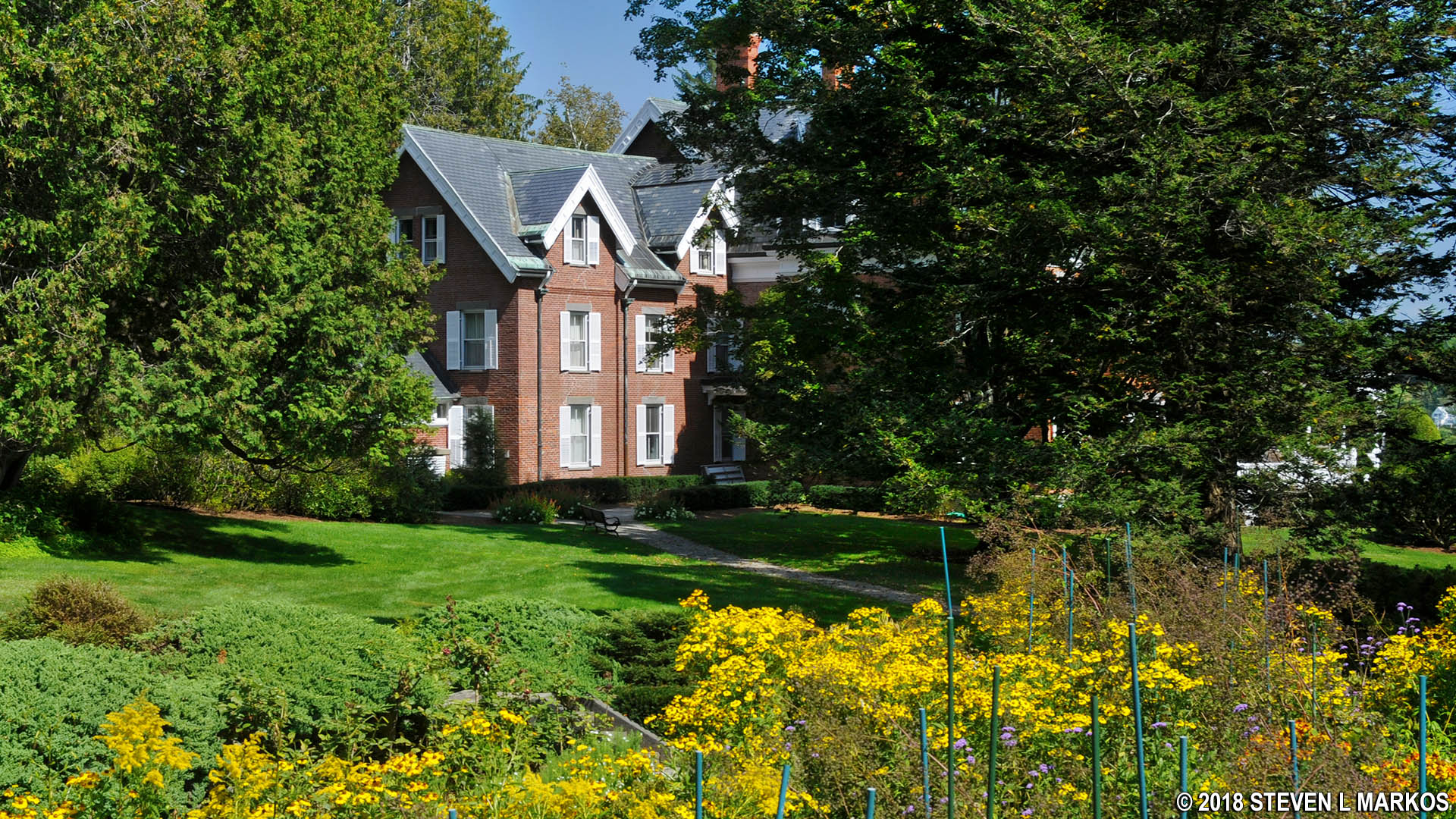
View of the Billings Mansion from the gardens, Marsh-Billing-Rockefeller National Historical Park

Italian fountain installed in the Billings’ garden in 1899, Marsh-Billing-Rockefeller National Historical Park
There is also a swimming pool and greenhouse near the mansion, though of course visitors cannot go swimming. The fancy white building is known as the Belvedere, and the long extension connected to it is the Bowling Alley (a real bowling alley). All of these structures were built by Frederick Billings between 1873 and 1874.
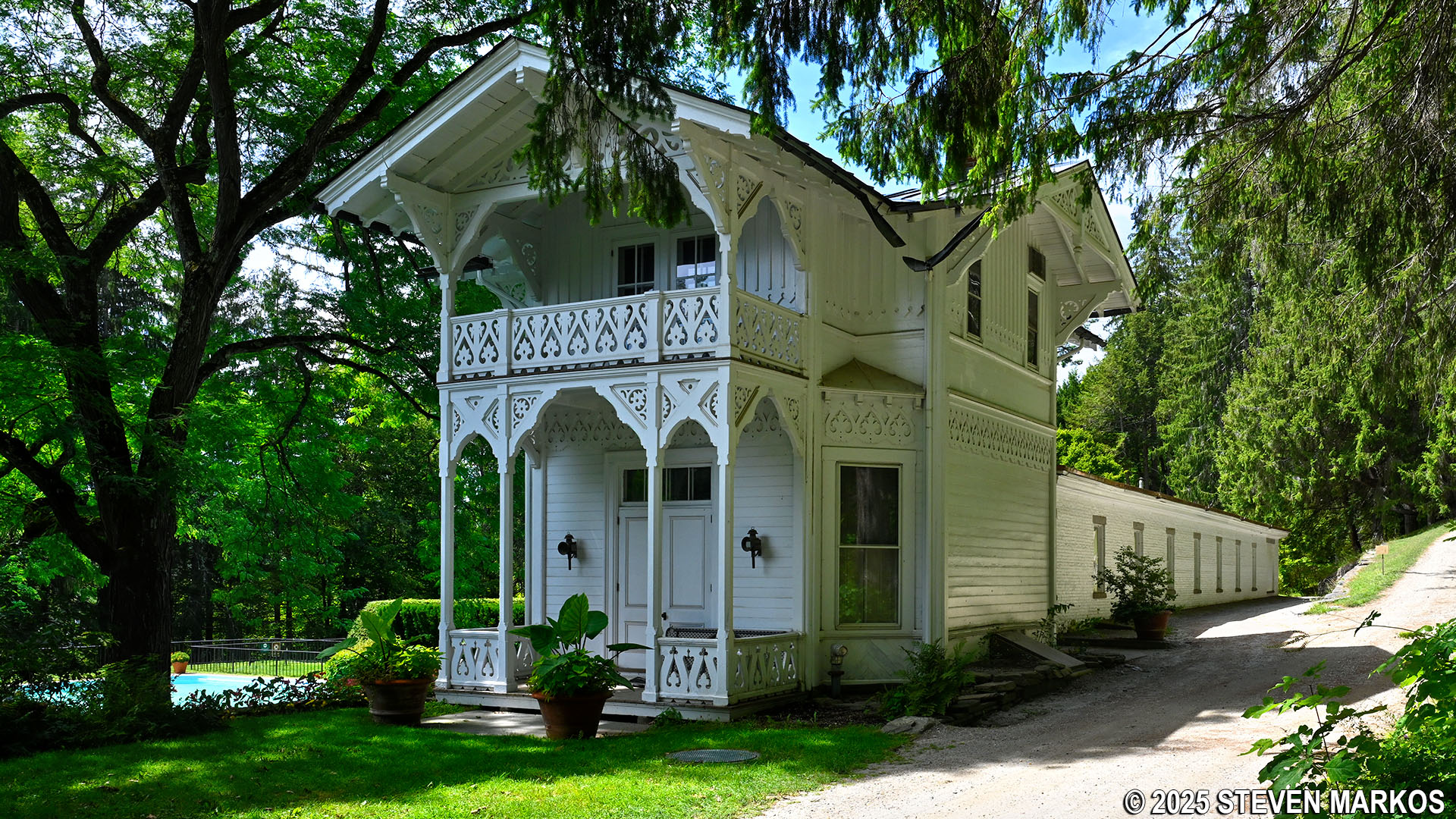
The Belvedere and Bowling Alley at Marsh-Billings-Rockefeller National Historical Park
Adjacent to the Bowling Alley is the Grapery, the glass-covered greenhouse.

Grapery at Marsh-Billings-Rockefeller National Historical Park
More greenhouses and support buildings were added in the early 1880s, but many of these structures became dilapidated and were torn down between 1900 and 1902. After the Great Depression hit, maintaining the remaining greenhouses, which were little used anyway, was not financially feasible, so everything but what stands today was removed in 1930. The swimming pool was built in their place the following year. Of course that’s rich-people poverty: “Sorry folks. We have to tear down the greenhouses because we can’t afford them anymore. But we will build a swimming pool, so all is not lost.”
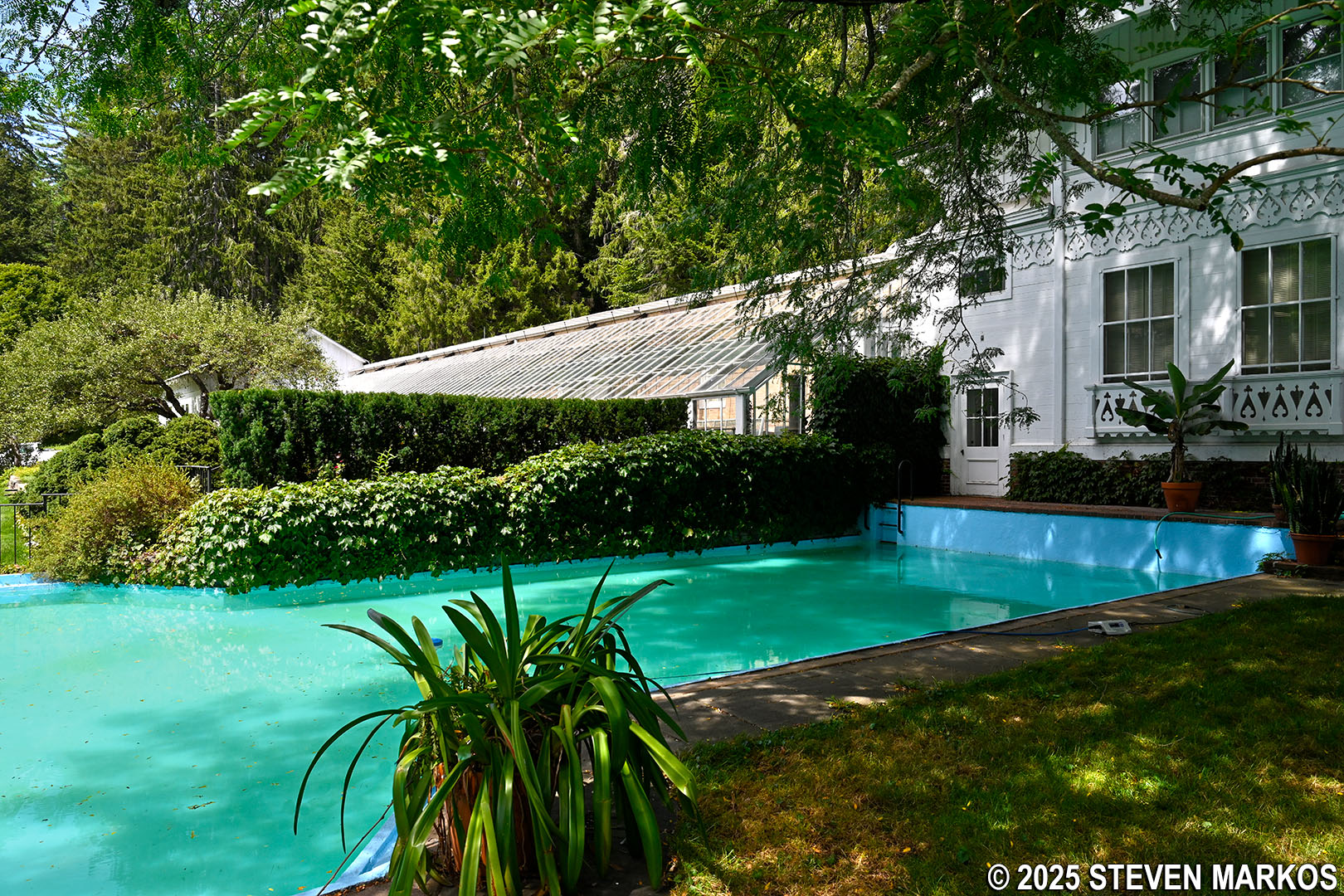
Swimming Pool at the Billings Mansion in Woodstock, Vermont
HOUSE AND GROUNDS HISTORY
The mansion at Marsh-Billings-Rockefeller National Historical Park originated as a modest, Federal-style brick house built by attorney and businessman Charles Marsh in 1807 on his farm. Charles was the father of George Perkins Marsh, who was born in 1801 in the Marsh’s original house that was located at the spot now occupied by the tennis court. George grew up in Woodstock, but after college he left and never returned other than to visit his family. In later life he became well-known as a conservationist after publishing the first book to link man to the destruction of the earth, Man and Nature; or, Physical Geography as Modified by Human Action.
The house and farm were eventually sold by the Marsh Family to Frederick Billings in 1869. Billings, a native of Woodstock, was a wealthy lawyer and industrialist, and it was he who took the Marsh’s house and renovated it into a Victorian Gothic-style house. When this became somewhat dated fifteen years later, he had it expanded into the 14,000-square-foot Queen Anne-style mansion that stands today. The renovation included adding a third floor to the building. The current house bears little resemblance to the Marsh house, or even Billing’s first renovation.

South side of the Billings Mansion, Marsh-Billings-Rockefeller National Historical Park
Frederick and his wife, Julia, had seven children: four sons and three daughters. When Frederick died in 1890, his will stipulated that the Woodstock farm was to remain intact and could not be divided until after the death of Julia. Only daughter Mary Montagu, who married John French in 1907, and unmarried daughter Elizabeth continued to live at the mansion with their mother.
By the time Julia died in 1914, three of her sons were no longer living. The surviving son, Richard, and daughter Laura Billings Lee had their own houses on nearby land that had been given to them earlier. It was Mary and Elizabeth who inherited the majority of what would eventually become Marsh-Billings-Rockefeller National Historical Park. When Elizabeth died in 1944, Mary Montagu French, the last living Billings sibling, became the sole owner.
The Frenches had a son, John Jr., and two daughters, Mary and Elizabeth. When Mary Montagu died in 1951, the property was passed to the three children, leaving them to work out the division. A parcel of land was left to the city of Woodstock and is now Billings Park. Mary, who had married Lawrence Rockefeller in 1934, inherited the mansion and surrounding grounds; John received the land south of The Pogue (a large pond on the property) known as Hill Top farm; and Elizabeth received a small lot across the road from the mansion. The rest of the estate was set up as Billings Farm, Inc. and included all of the forested grounds on Mount Tom and what is today the Billings Farm and Museum property, which at the time was run as a functioning dairy. All three siblings owned stock in the corporation.
Mary and Lawrence Rockefeller used the mansion as a summer home. Since the Great Depression, the grounds and gardens had not been well maintained, and the house was no longer the showplace it once was. However, with Rockefeller’s money, the two were able to renovate the grounds, a project that lasted from 1954 to 1961. It is interesting to note that two fallout shelters were built in case of nuclear war, one in the basement of the mansion and one in the basement of the Bowling Alley.
By the 1970s the dairy was losing money, so when Lawrence Rockefeller proposed purchasing Billings Farm, Inc. in 1974, all of the family stockholders agreed. He and Mary now controlled much of the historic Billings farm. They rehabilitated the dairy, and in 1983, opened it to the public as the Billings Farm and Museum. In 1992, they donated the rest of the property to the federal government for the creation of Marsh-Billings-Rockefeller National Historical Park. The Rockefellers retained the right to live at the mansion, doing so until 1998 while details of the new park were worked out (Mary died in 1997, so only Lawrence was around in 1998 when the park opened). Originally called Marsh-Billings National Historical Park, the name was changed to include Rockefeller a year later. (It should be noted that the forested grounds of Mount Tom had been open to the public since Frederick Billings owned the farm.)
With a few exceptions, use of any photograph on the National Park Planner website requires a paid Royalty Free Editorial Use License or Commercial Use License. See the Photo Usage page for details.
Last updated on December 15, 2025


