
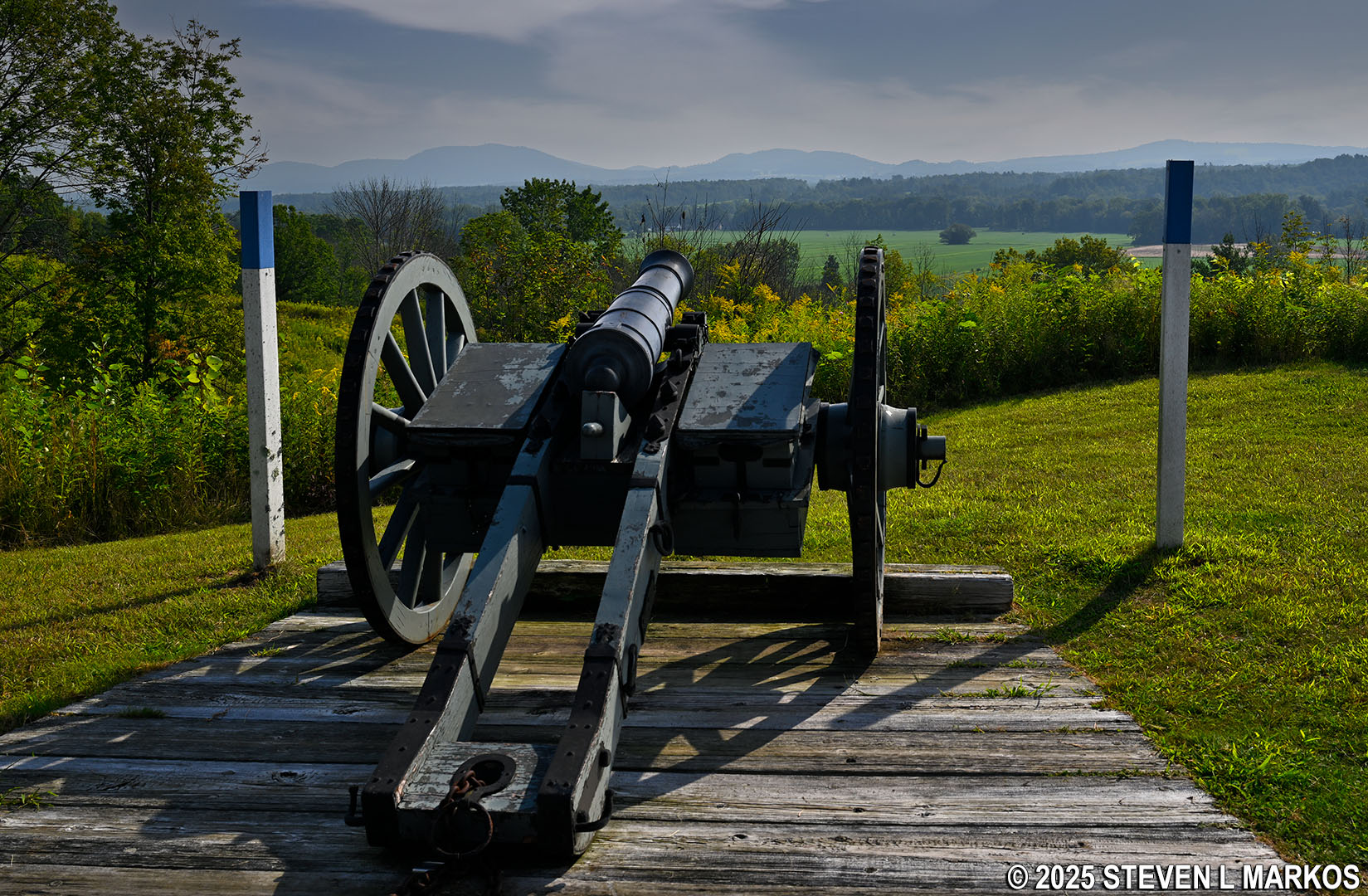
Cannon at Bemus Heights, Saratoga National Historical Park
PARK OVERVIEW
Saratoga National Historical Park in Stillwater, New York, preserves an American Revolution battlefield where the Americans and British fought two battles in the late summer and early fall of 1777. At the time, the closest town was called Saratoga (Schuylerville today). The first battle took place on September 19, 1777, at Freeman’s Farm, and while the Americans retreated, technically giving the British the victory, they only retreated back to their fortifications about a mile to the south. In the meantime, the British began constructing defensive fortifications of their own while they waited for promised reinforcements from New York to arrive. Little did they know that they were waiting in vain for the reinforcements and that the American army was growing larger every day as militiamen from around the area came to join the fight.
On October 7th, fighting broke out again when scouting parties from both sides clashed a little west of Freeman’s Farm. When American general Horatio Gates was informed of the fighting, General Benedict Arnold convinced him to launch a full-fledged attack. Arnold arrived with his men around 4 PM. This resulted in an American victory at what is now called the Battle of Bemus Heights. The next evening, the British withdrew to the village of Saratoga where they were eventually surrounded and forced to surrender on October 17th. This was the first time in history that a British army surrendered.
Start your day at Saratoga National Historical Park at the Visitor Center where you can watch a film about the battles at Saratoga and join a short history lecture given by a park Ranger. Afterwards you can tour the battlefield via a 9-mile road with ten stops of interest. Some of the stops have short trails, but the best hike is along the Wilkinson Trail, which covers the northern end of the park where both battles took place.
There are four other sites of interest a few miles north of the main park unit near Schuylerville. The Schuyler House is open on weekends during the tourist season. This is the house built by American general Philip Schuyler in 1777 shortly after the battles at Saratoga. It is a replacement of his original house that the British burned down during their retreat.
Victory Woods is where the British camped when they retreated to Saratoga. A short trail runs through the area.
A small memorial dedicated in 2019 is at the site where British General John Burgoyne surrendered his army to Horatio Gates.
On weekends, visitors can climb the 155-foot tall Saratoga Monument for great views of the Hudson River Valley.
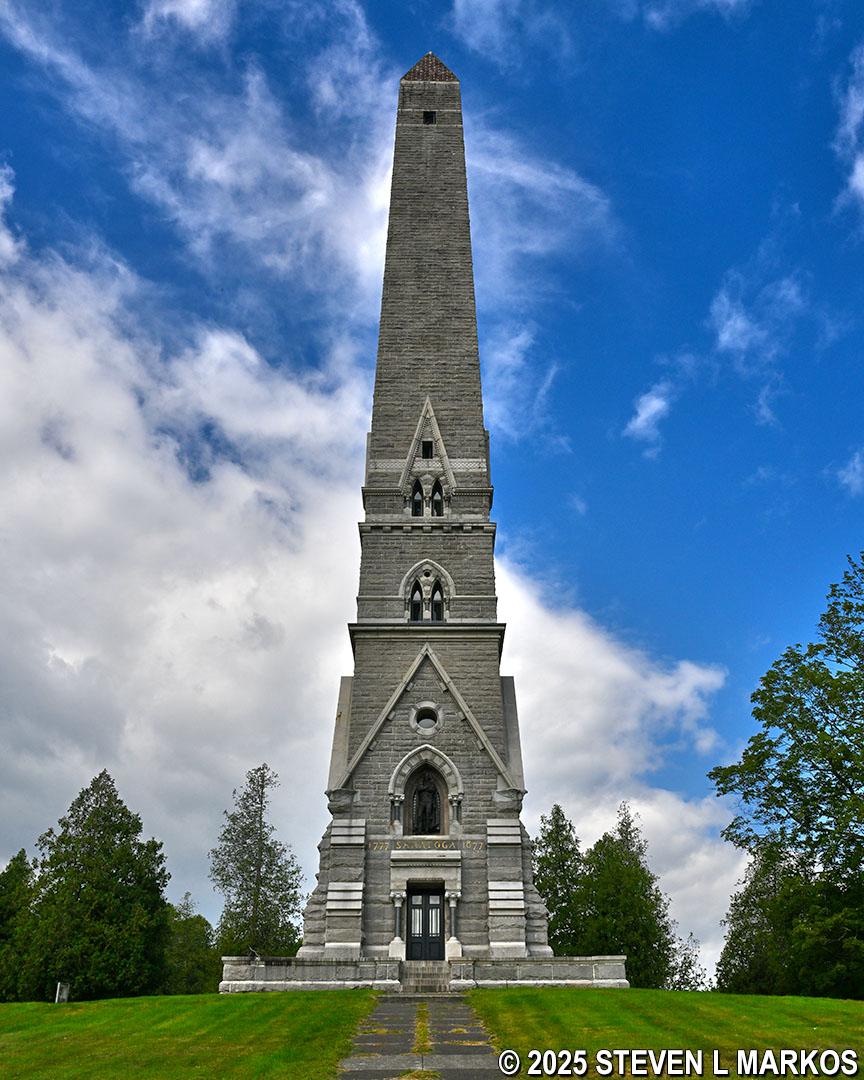
Saratoga Monument, Saratoga National Historical Park
OPERATING HOURS
The grounds and park road at Saratoga National Historical Park are open to hikers and bikers year-round from sunrise to sunset, except when the park is closed on Federal holidays. Vehicles can access the park road from April until the end of November. It is closed to vehicles from December through March due to winter conditions. From June 1st through Labor Day, the road is open 9 AM to 6 PM. For the rest of the year it is open until 5 PM, except in November when it closes at 4 PM.
Victory Woods and the Surrender Site are open year-round from sunrise to sunset.
The Visitor Center, the Neilson House, the Schuyler House, and the Saratoga Monument have schedules that change constantly depending on the season. For the current schedule, visit the National Park Service’s official Operating Hours and Seasons web page for Saratoga National Historical Park.
ENTRACE FEES
There is no fee to visit Saratoga National Historical Park.
SCHEDULING YOUR TIME
Visitor Center
allow 30 minutes to two hours
Battlefield Tour
allow 2.5 to 6 hours, depending on whether you hike the trails at the tour stops
Saratoga Monument
allow 30 minutes if it is open for climbing
Saratoga Surrender Site
allow 20 minutes
Schuyler House
allow 30 minutes for a tour
Victory Woods
allow 45 minutes to walk the trails
Wilkinson Trail
allow 2.5 hours
With a few exceptions, use of any photograph on the National Park Planner website requires a paid Royalty Free Editorial Use License or Commercial Use License. See the Photo Usage page for details.
Last updated on September 17, 2026


