
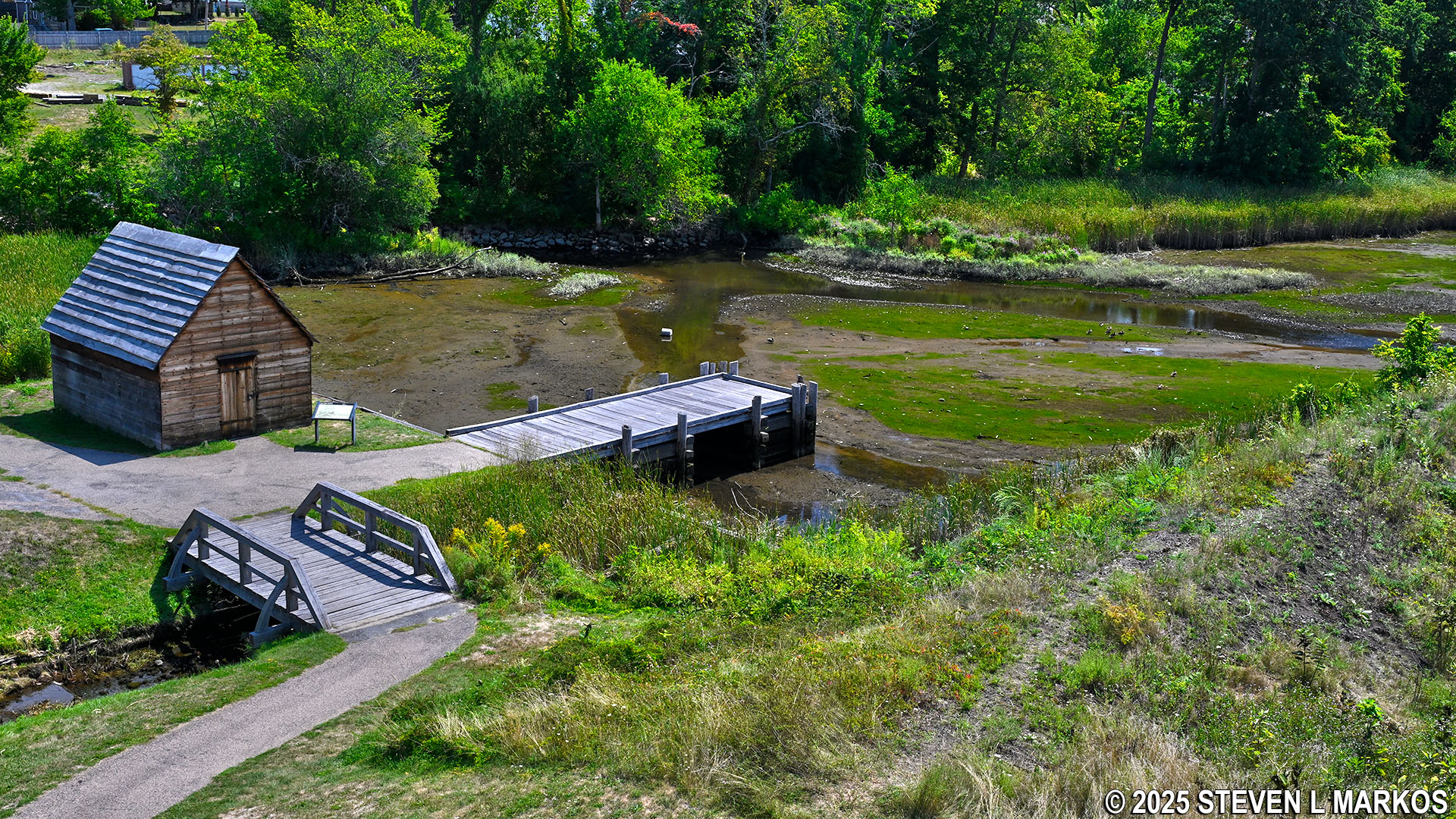
Warehouse at Saugus Iron Works National Historic Site
Note: Saugus Iron Works is a modern name. When in operation, the iron plant was called Hammersmith, and it was located in Lynn, Massachusetts. The town of Saugus was not incorporated until 1815.
As with any other type of manufacturing business at the time, Saugus Iron Works relied on water for both transportation and power, and it was the Saugus River that provided these two necessities. The Saugus Iron Works Industrial Site is only about a mile and a half from the ocean, and up until this point the river is affected by tides. Though nearly drained at low tide, the water is deep enough at high tide for shallow-draft boats to navigate. A small harbor, or turning basin, was created by widening the river, and a dock and warehouse were built at the basin’s edge. Boats carrying supplies to the Iron Works unloaded materials here, and merchant bars and other iron products were transported by boat to distribution warehouses in Boston and Salem. During an archaeological excavation between 1948 and 1953, remnants of the original dock and warehouse were located, and reproductions were constructed on the spot.
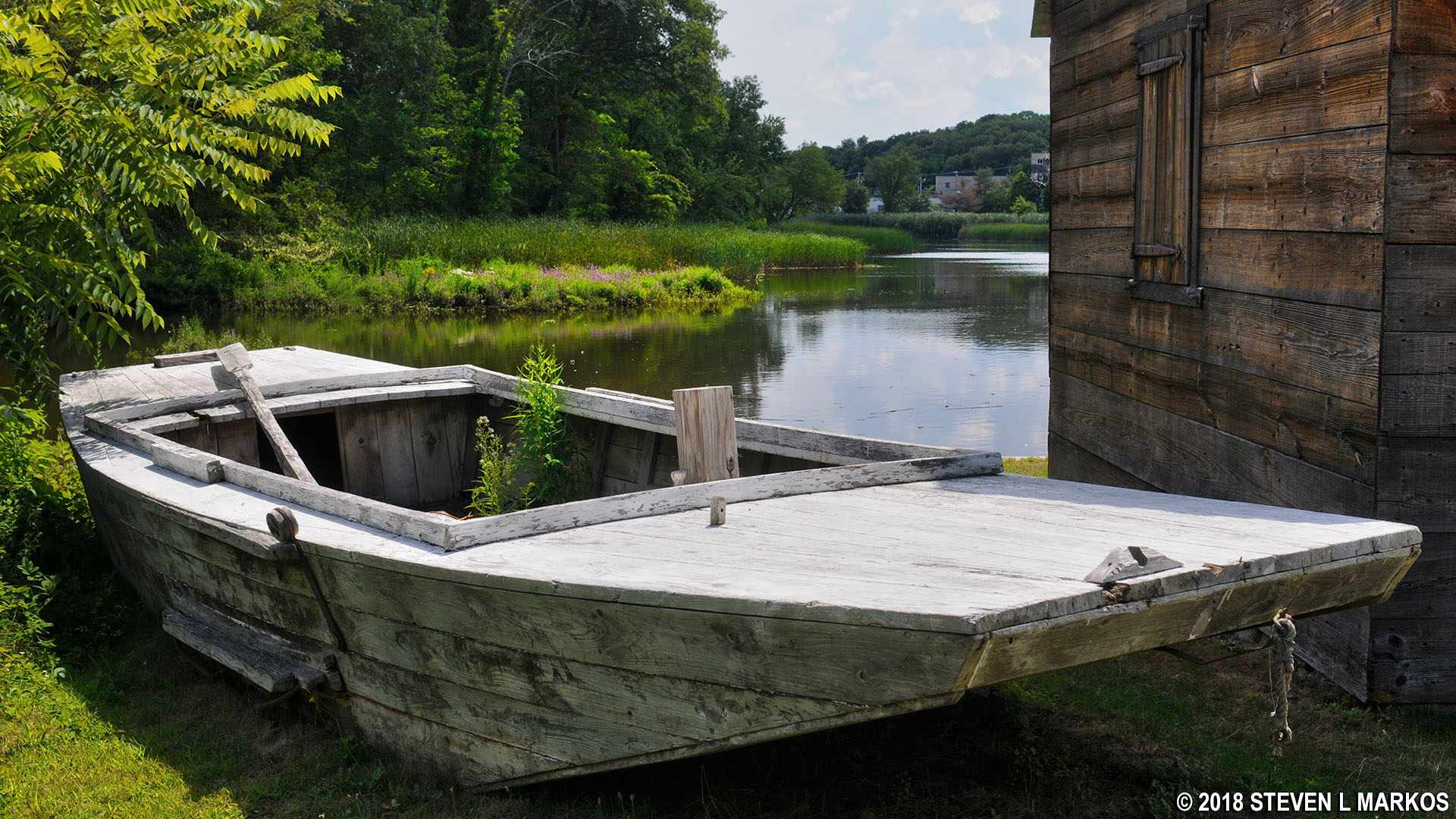
Boat typical of those used to transport iron products on the Saugus River
To provide water power, the Saugus River was dammed a little farther upriver to form a large pond on the hill behind the blast furnace, finery forge, and rolling and slitting mill. The water could be released into wooden flumes and carried to the waterwheels that provided power for the multiple bellows, trip hammer, and iron roller and slitter. Because the pond was at a higher elevation, the water picked up speed as it ran downhill, hitting the buckets or paddles of the waterwheel with a force strong enough to make it spin (think of blowing air into a pinwheel).
Though Saugus Iron Works closed around 1670, the dam remained in place because ownership of the property was in dispute until 1682. The dam caused tension with the locals from the start due to some species of fish no longer being able to make it up the river to spawn, and this had a negative effect on the fishing industry. Residents tried to get the dam removed in the early part of 1678, but had no luck in the courts because of the ongoing litigation. Tired of the red tape, a group of men sneaked down to the dam on two occasions in May to destroy it, and on their second attempt they managed to bust a large hole in it. The breach caused much of the rest of the dam to collapse, and the surrounding Iron Works property was heavily damaged. So much soil and gravel was washed away that it clogged the river. Many of the local farmers were hauled into court, but nobody was ever found guilty.
The waterwheels at today’s Saugus Iron Works National Historic Site still work. While the pond no longer exists, the National Park Service has an underground water tank that holds 12,000 gallons. Water is pumped from the river into the tank, and when the Ranger activates the wheel during a demonstration, the water is pumped up to the flume. To see when waterwheel demonstrations are being held, check the National Park Service’s official Calendar web page.
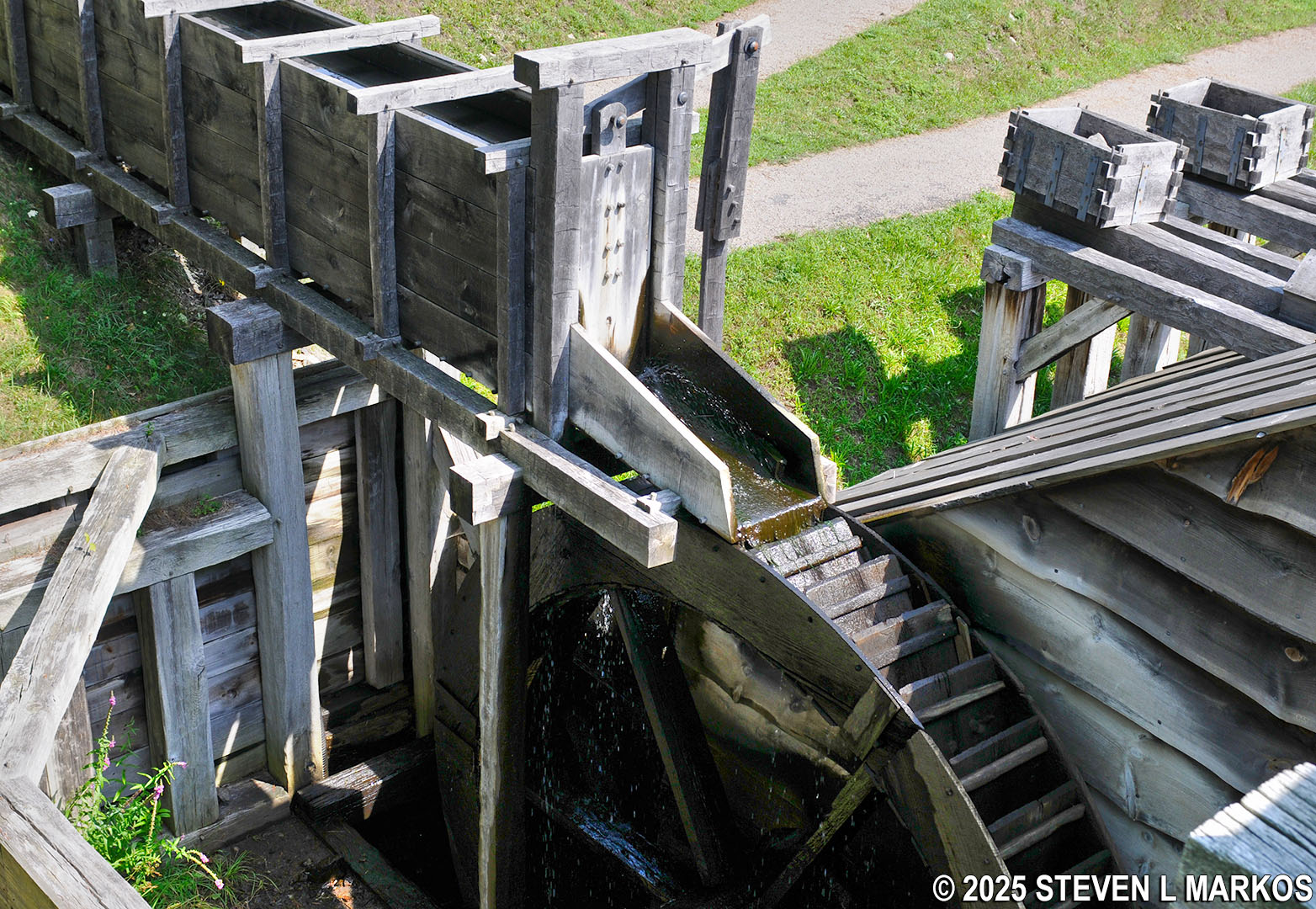
Working waterwheel at Saugus Iron Works National Historic Site
With a few exceptions, use of any photograph on the National Park Planner website requires a paid Royalty Free Editorial Use License or Commercial Use License. See the Photo Usage page for details.
Last updated on November 12, 2025


