

Blast furnace and casting shed at Saugus Iron Works National Historic Site
Note: Saugus Iron Works is a modern name. When in operation, the iron plant was called Hammersmith, and it was located in Lynn, Massachusetts. The town of Saugus was not incorporated until 1815.
The Saugus Iron Works blast furnace is where ore was melted to separate the iron from other impurities in the rock (bog ore used at Saugus is only 30 to 50 percent iron). The furnace is essentially a large chimney that is loaded with materials from the top. Repeated layers of charcoal, ore, and flux—a mineral such as calcium carbonate that causes the waste materials in the ore to collect together like metal to a magnet—are dumped into the furnace via the charging hole. When ready, the furnace is lit and two large bellows “blast” air into it to create a temperature of over 2,500º F. The furnace can hold three tons of ore, two tons of flux, and 250 bushels of charcoal. It takes approximately three days to melt this much ore.

Bridge leads to the charging hole of the blast furnace at Saugus Iron Works National Historic Site

Blast furnace charging hole, Saugus Iron Works National Historic Site
Because water from the Saugus River was needed to turn the waterwheels that powered the bellows, iron production couldn’t begin until the frozen river melted in the spring, and once the furnace was lit, it remained burning around the clock. This required roughly 30 cords of wood each day (3,840 cubic feet), the amount that can be harvested from a typical acre. The inside of the furnace was lined with a heat-resistant layer of sandstone to protect the exterior bricks, and when the sandstone burned off, the furnace had to be shut down, torn down, and rebuilt. If things went as planned, the lining would last through the fall, at which point the furnace would have to be shut down anyway due to the refreezing of the Saugus River.
As the heat produced by the charcoal and the air from the bellows melts the ore and flux, the molten iron and waste materials called slag collect at the bottom of the furnace. This area is protected from rain and snow by a structure called the casting shed.
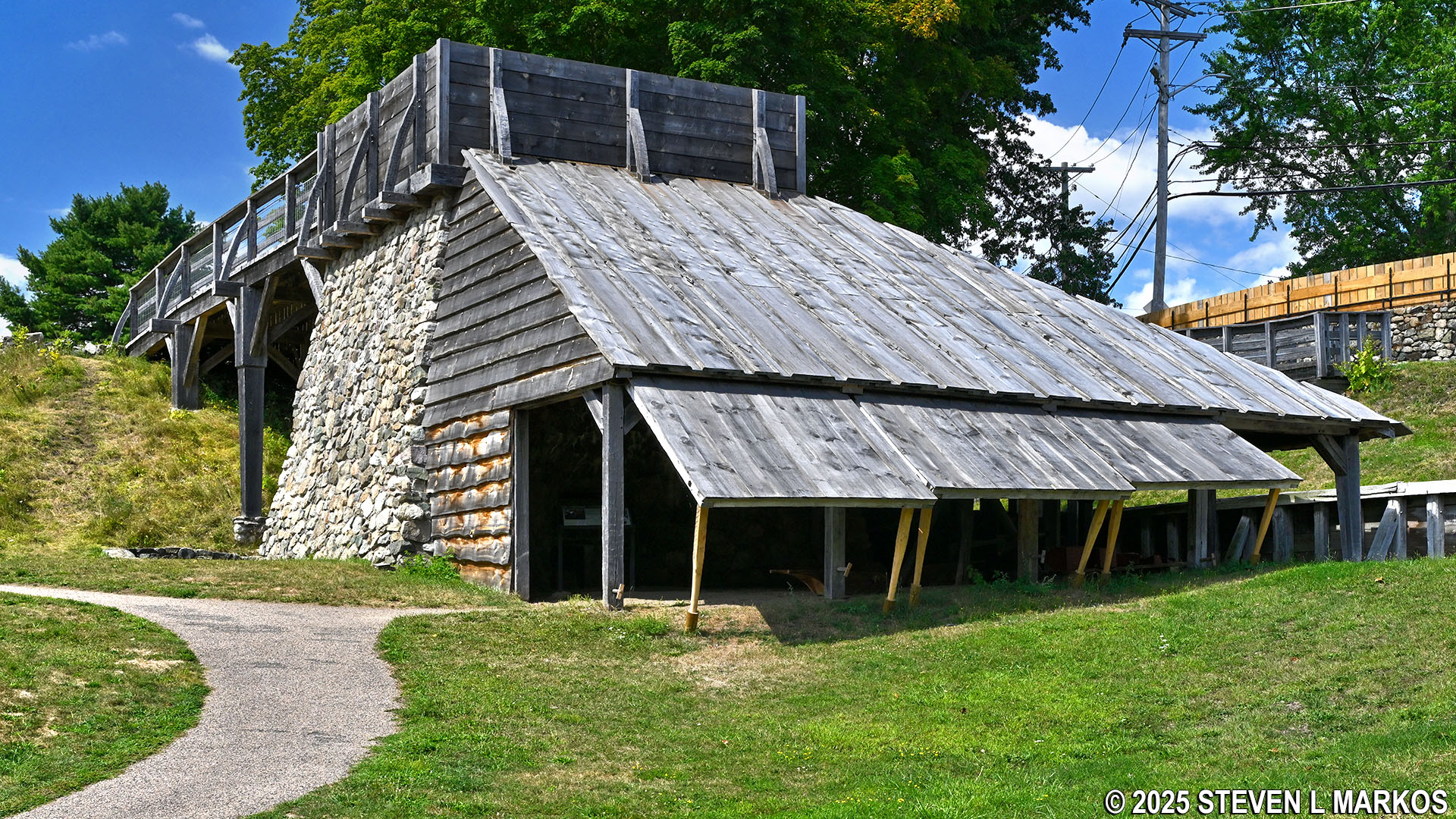
Casting shed attached to the blast furnace at Saugus Iron Works National Historic Site
A couple of times each day, workers in the casting shed release the molten iron and slag through holes at the bottom of the furnace that have previously been plugged with clay. Because the slag is lighter than iron, it floats on top and can easily be removed. When the time comes, the clay plugs are busted with a long rod that allows the workers to stay away from the intense heat. The slag is collected, left to cool, and then disposed of. The molten iron is released so that it flows into trenches dug into the sand floor where it cools to form what are called pig iron bars. As the level of materials in the furnace drops, workers add more charcoal, ore, and flux through the charging hole.

Sand floor of the casting shed at Saugus Iron Works National Historic Site
Saugus Iron Works also produced castware, which are finished products made directly from the cast iron as it comes out of the furnace. Clay molds of things like cooking pots, pans, and large cauldrons were buried in the sand, and molten iron is poured into them through tubes that are part of the molds (think of a snorkel). When cooled, the mold is dug up and broken, leaving the cast iron product. Other items were made simply by carving their shapes in the sand floor and using the ground as a mold.
A waterwheel on the side of the furnace supplied the power to run the massive bellows. When Saugus Iron Works was in operation, a pond created by damming the Saugus River was situated behind and above the buildings. Water from this pond could be released into a flume (a wooden channel) that carried it to the waterwheel. Because the pond was at a higher elevation, the water picked up speed as it ran downhill, hitting the buckets or paddles of the wheel with a force strong enough to make it spin (think of blowing air into a pinwheel). The wheel is connected to a shaft that extends into the building. As it turns, iron cams attached to the shaft trip levers that cause the bellows to expand and fill with air, then contract and blow the air into the furnace. The current waterwheel is based on part of an original waterwheel that was found when the Saugus Iron Works Industrial Site was excavated between 1948 and 1953, so it is an accurate reproduction.

Waterwheel that run the bellows of the blast furnace at Saugus Iron Works National Historic Site
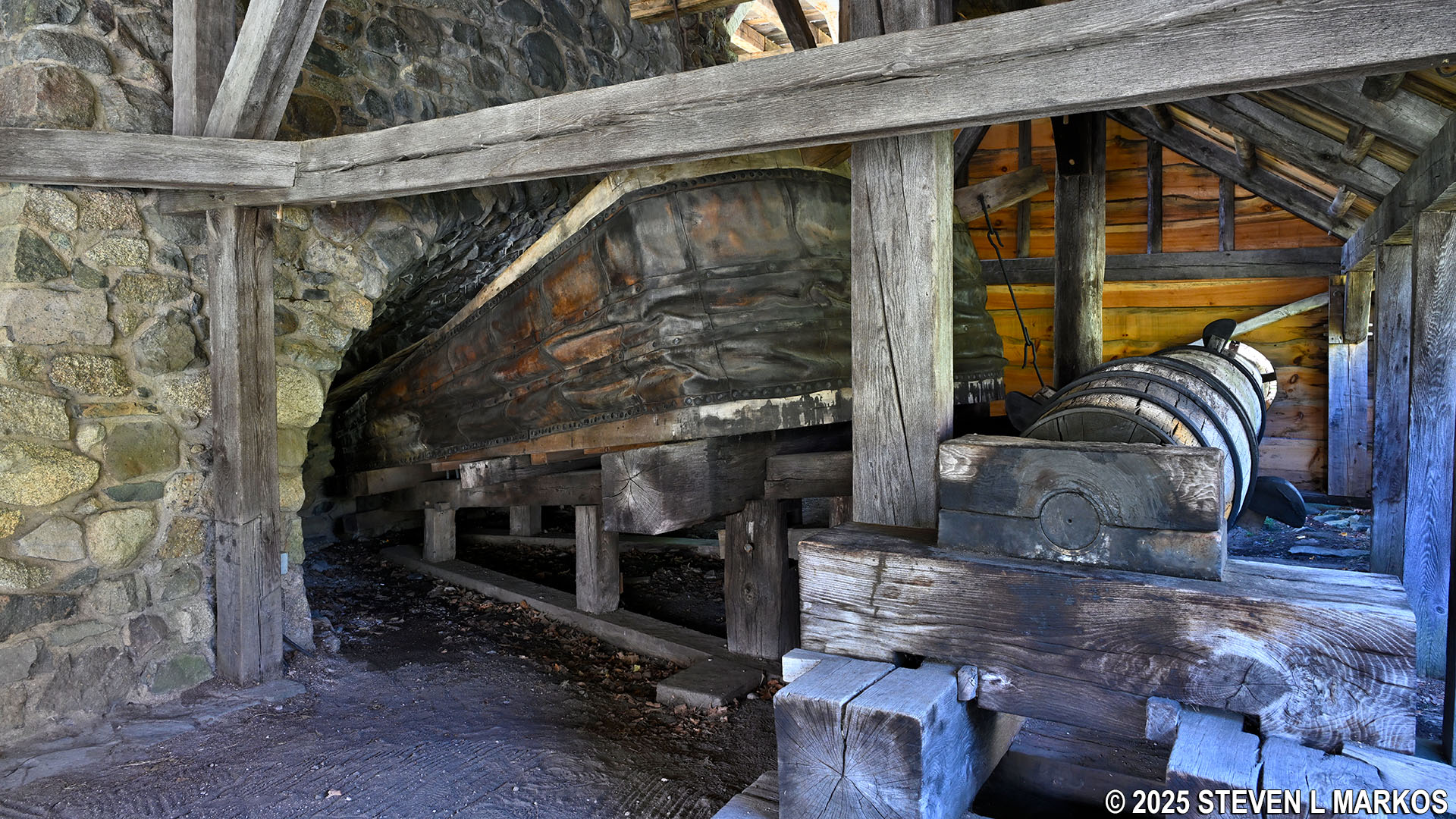
Bellows of the blast furnace at Saugus Iron Works National Historic Site
On select days of the week, park Rangers actually operate the waterwheel and bellows. While the pond no longer exists, the National Park Service has an underground water tank that holds 12,000 gallons. Water is pumped from the river into the tank, and when the Ranger activates the wheel, the water is pumped up to the flume. To see when waterwheel demonstrations are being held, check the Calendar web page for Saugus Iron Works National Historic Site.
With a few exceptions, use of any photograph on the National Park Planner website requires a paid Royalty Free Editorial Use License or Commercial Use License. See the Photo Usage page for details.
Last updated on November 11, 2025


