

Finery Forge at Saugus Iron Works National Historic Site
Note: Saugus Iron Works is a modern name. When in operation, the iron plant was called Hammersmith, and it was located in Lynn, Massachusetts. The town of Saugus was not incorporated until 1815.
When iron ore is melted in a blast furnace, the resulting product is known as cast iron, also called pig iron. In the furnace, the molten iron absorbs a lot of carbon from the reducing agent—charcoal in the days of Hammersmith Iron Works and coke today—and a high carbon content makes iron brittle. This is fine for pots and pans but not for such things as hammers and other tools that must take a beating. To make cast iron stronger, carbon must be removed to some extent, a process that is done at the finery forge. This refined iron is called wrought iron. (Steel is just iron with a specified carbon content.)
To remove carbon from the pig iron, the bars are heated in a finery hearth until they melt and drip onto cast iron plates at the bottom of the hearth. Here the iron cools a little and is stirred into a soft blob. This process is repeated three times, with the final blob worked into a ball called a loop. The two finery hearths at Saugus Iron Works National Historic Site, both located on the right side of the forge, each have their own bellows, and each bellows is powered by its own waterwheel.

Finery hearths in the Finery Forge at Saugus Iron Works National Historic Site

Pig iron bar inside the finery hearth at Saugus Iron Works National Historic Site
The loop is then pounded with a sledgehammer to knock off any slag (waste materials), then pounded some more with the 500-pound trip hammer to form a compact square shape called a bloom. The bloom is cut in half, melted again in the finery hearth to get rid of more impurities, then pounded with the trip hammer to form long iron bars. This requires multiple steps, for when the iron cools it has to be reheated to make it malleable. This is done in the chafery hearth, which is the lone hearth on the left side of the forge near the hammer. The hammer itself was typically replaced six times a year; the anvil was replaced a couple times a year.

Trip hammer in the Finery Forge at Saugus Iron Works National Historic Site

Chafery hearth in the Finery Forge at Saugus Iron Works National Historic Site
The following photo shows wrought iron bars at different stages of pounding, starting with the bloom on the right and ending with the finished product on the left, a merchant bar. A bar starts off looking like a dumbbell because the pounding with the trip hammer begins in the middle. The large ends are the last things to get pounded away.

Iron bars displayed in the Finery Forge at Saugus Iron Works National Historic Site
One of the original 500-pound hammers was found during the archaeological excavation of the Saugus Iron Works Industrial Site between 1948 and 1953, and it is now on display in the Iron Works Museum located next to the Iron Works House. Many heavy items such as the hammer were never removed from the site and were eventually buried and forgotten over time.

Original hammer found during an excavation of the Hammersmith iron works site on display at Saugus Iron Works National Historic Site
Each of the three hearths and the hammer has its own waterwheel that provides the power to operate it automatically. When Hammersmith was in operation, a pond created by damming the Saugus River was situated behind and above the buildings. Water from this pond could be released into a flume (a wooden channel) that carried it to the waterwheel. Because the pond was at a higher elevation, the water picked up speed as it ran downhill, hitting the buckets or paddles of the wheel with a force strong enough to make it spin (think of blowing air into a pinwheel). Each wheel is connected to a shaft that extends into the building. As it turns, iron cams attached to the shaft lift and drop the hammer, or trip levers that cause the bellows to expand and fill with air, then contract and blow the air into the furnace.

Waterwheel that powers the trip hammer of the Finery Forge at Saugus Iron Works National Historic Site

Waterwheel that powers the bellows of the chafery hearth at the Finery Forge, Saugus Iron Works National Historic Site
Some of the waterwheels on the Finery Forge and other reconstructed buildings at Saugus Iron Works National Historic Site are based on part of an original waterwheel that was found during the excavation, so they are fairly accurate reproductions.
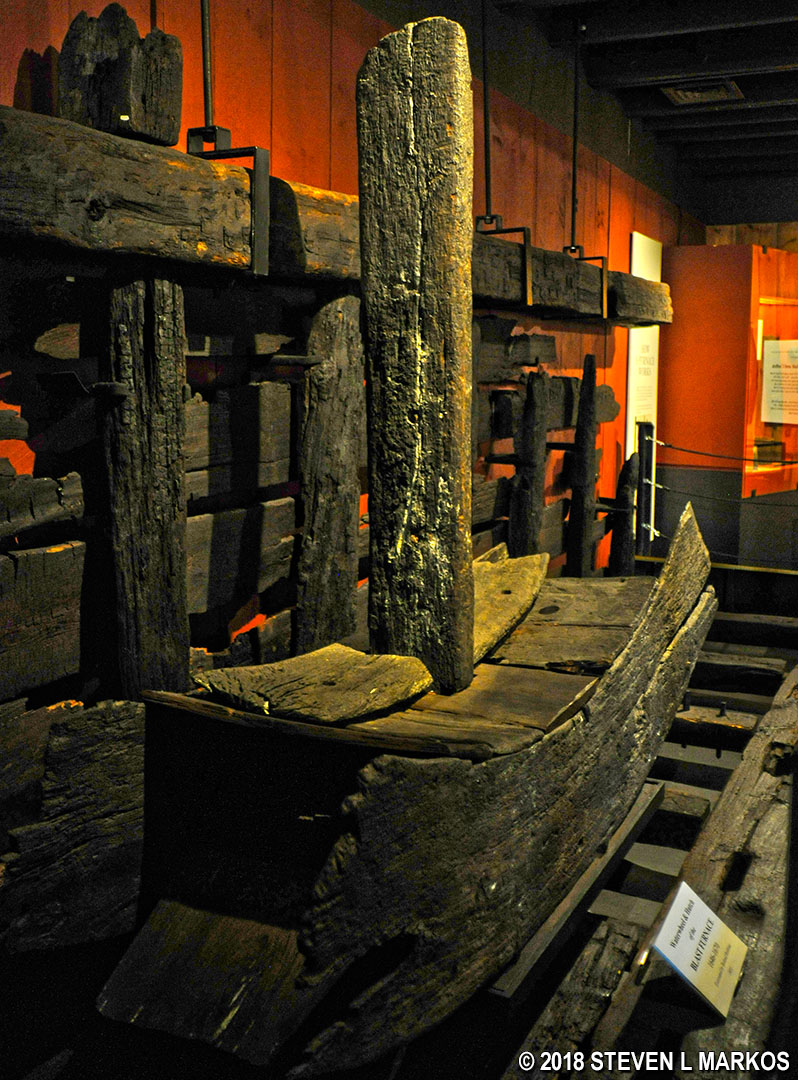
Original waterwheel found during an excavation of the Hammersmith iron works site on display at Saugus Iron Works National Historic Site
On select days of the week, park Rangers actually operate one of the waterwheels in the park. While the pond no longer exists, the National Park Service has an underground water tank that holds 12,000 gallons. Water is pumped from the river into the tank, and when the Ranger activates the wheel, the water is pumped up to the flume. To see when waterwheel demonstrations are being held, check the Calendar web page for Saugus Iron Works National Historic Site.
With a few exceptions, use of any photograph on the National Park Planner website requires a paid Royalty Free Editorial Use License or Commercial Use License. See the Photo Usage page for details.
Last updated on November 13, 2025


