
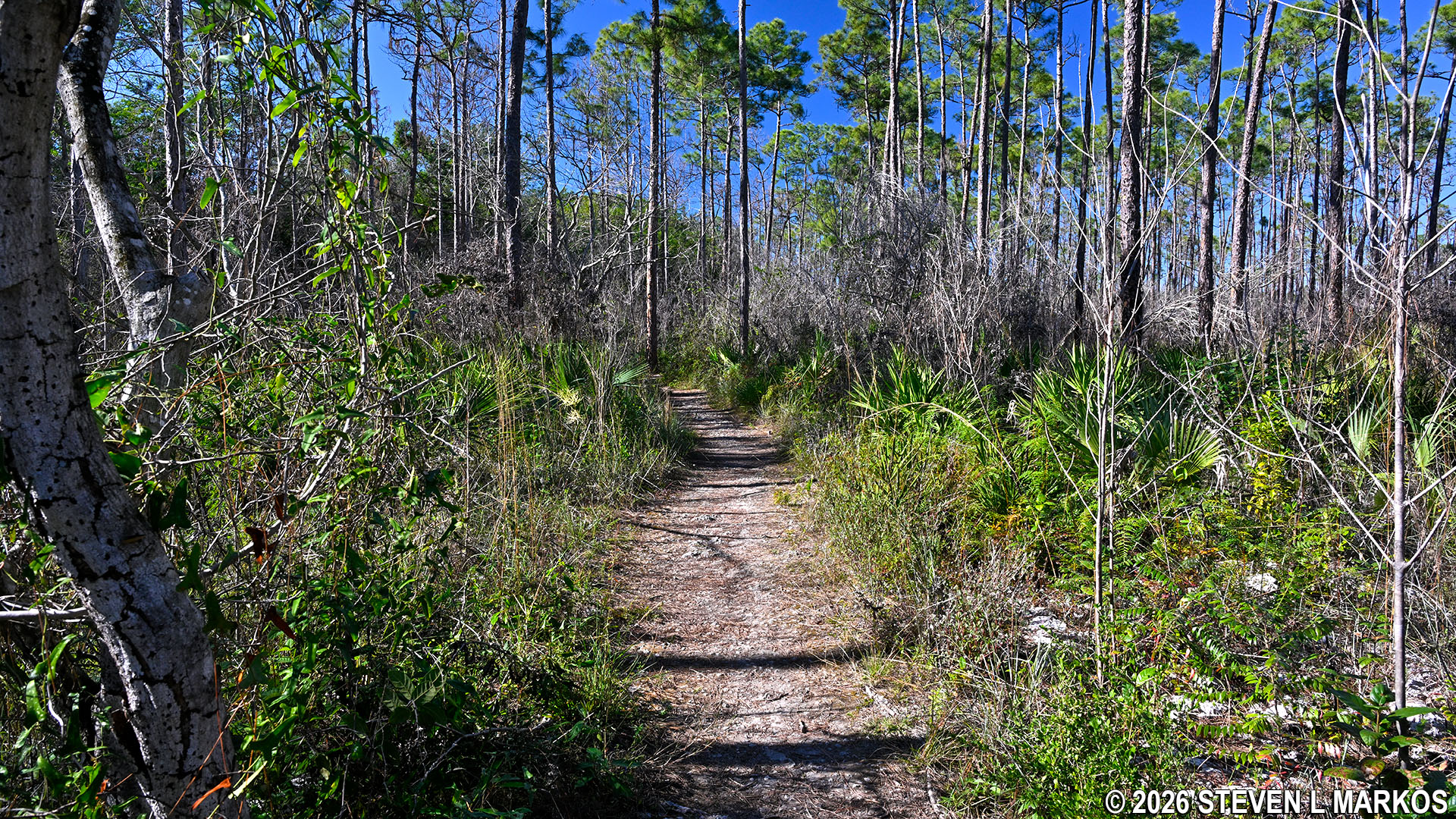
Three-in-One Trail in the Royal Palm unit of Everglades National Park
Length: .6-mile loop
Time: 30 minutes
Difficulty: ★☆☆☆☆
The Three-in-One Trail is located near the Long Pine Key Campground in the Royal Palm area of Everglades National Park. The road to the campground forks, with a left heading to the campground and a right to the Long Pine Key Picnic Area. Head towards the picnic area and look for an information panel on the right side of the road. This is the trailhead for the Three-in-One Trail. Park in the lot directly across from the sign, if possible. There are other parking lots along the road if this is full.
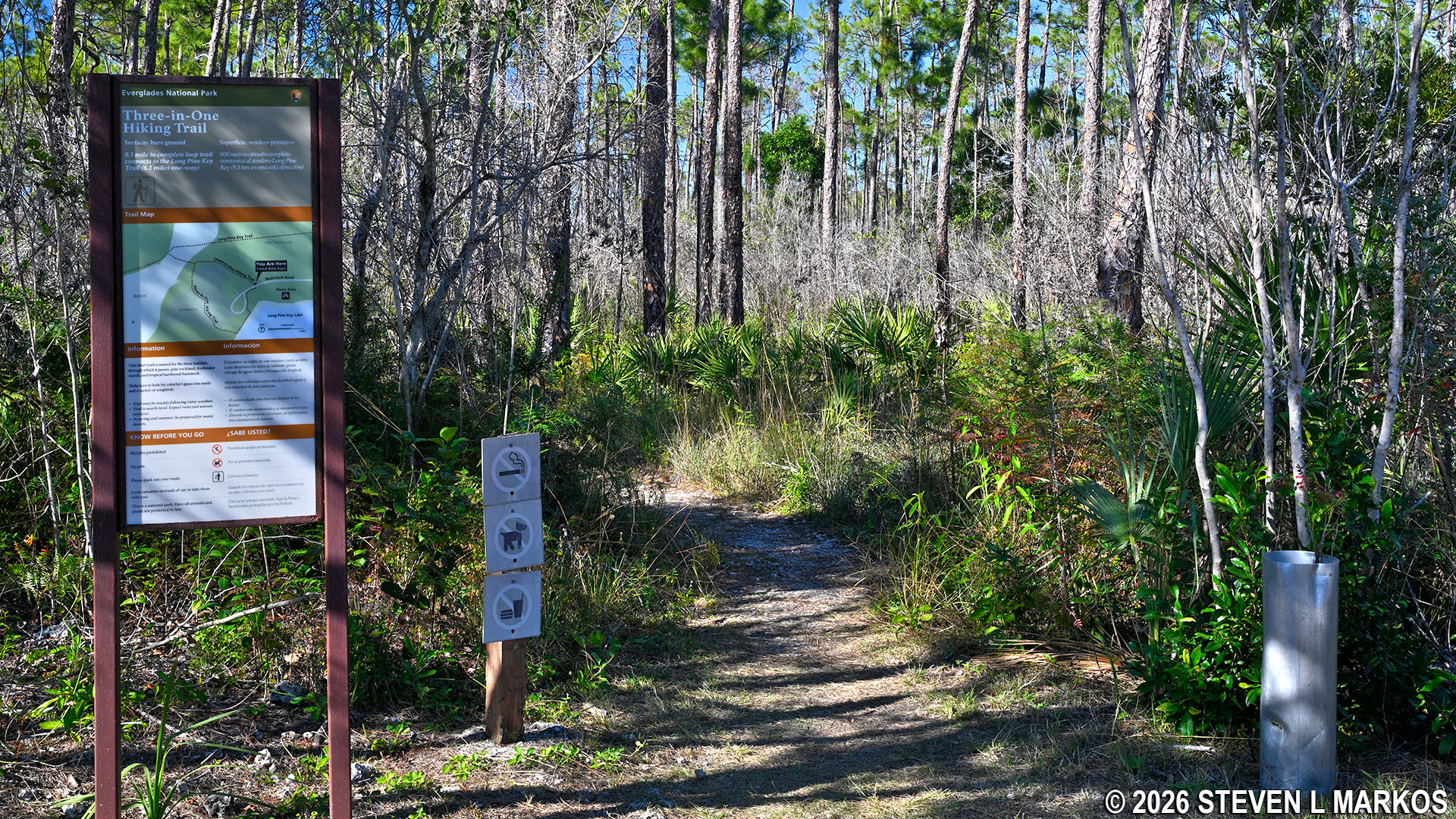
Start of the Three-in-One Trail in the Royal Palm unit of Everglades National Park
The trail gets its name because it passes through three distinct ecosystems: pine rockland, freshwater marsh, and tropical hardwood hammock. Much of the trail is in a designated Wilderness Area, which means no wheeled contraptions of any type are allowed. No dogs are allowed either. Pedestrians and horseback riders only.
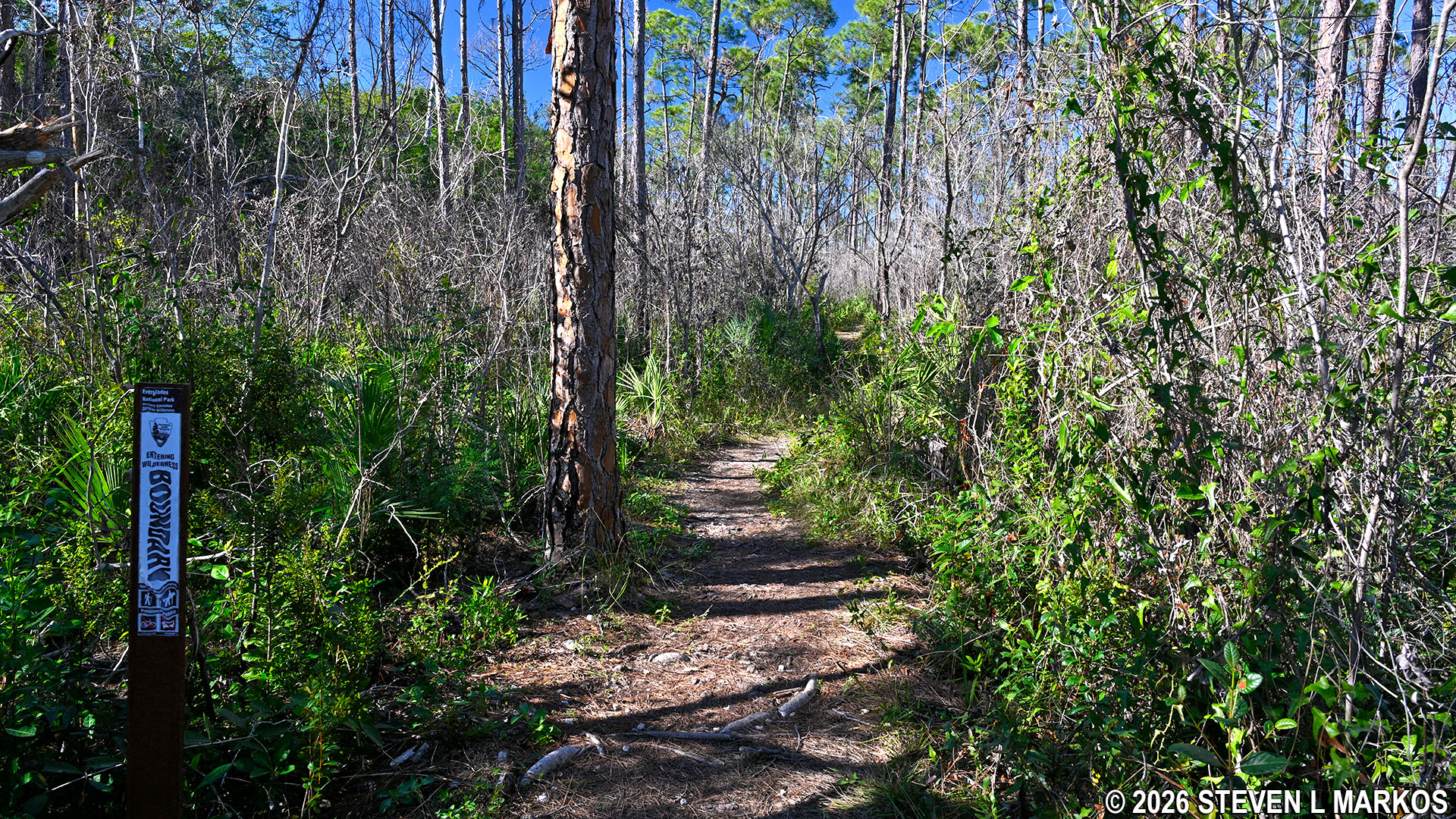
Three-in-One Trail enters the Wilderness Area of Everglades National Park
The Three-in-One Trail starts and ends in the pine rocklands, an environment similar to that on the nearby Pinelands Trail that is characterized by tall pine trees with smaller palms (typically saw and sable palms) covering the surrounding terrain. The trees are spread out, so a lot of sunshine reaches the ground.
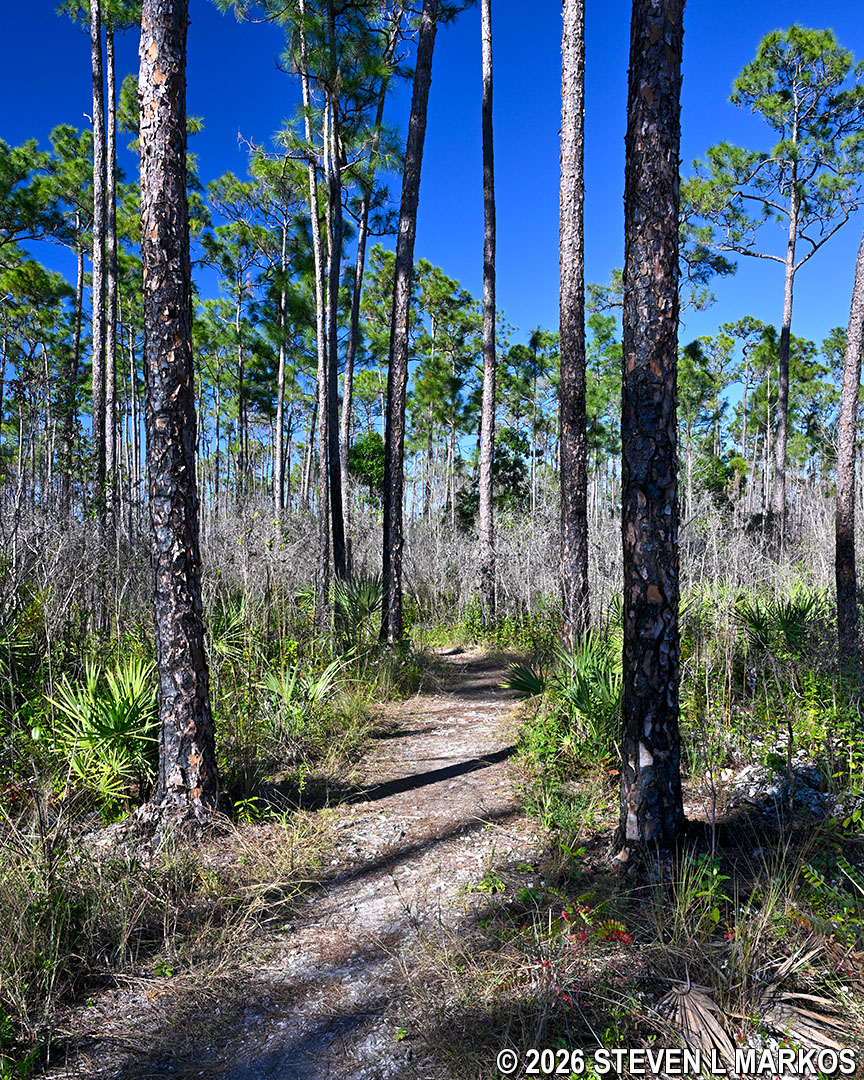
Three-in-One Trail passes through a pine rocklands ecosystem, Everglades National Park
At .2 mile into the hike, the trail forks. To the right is a connector trail to the Long Pine Key Nature Trail. The Three-in-One Trail continues to the left, but be sure to walk a short ways out on the connector to see the second ecosystem on the hike, the marsh wetlands. This is the grassy field between the trees you have been hiking in and another stand of trees on the far side of the field. Both stands are on what is known as a hammock: an area with a slightly higher elevation than the wet areas surrounding it, which allows hardwoods, pines, and other vegetation that cannot grow in the water to flourish. In the Everglades, this difference in elevation may only be a few feet, but it is enough to keep the hammock much drier. From November through May (the dry season in South Florida), there may not be any water in the wetlands, which is why it is possible to walk across to the other side in January when I did my hike.
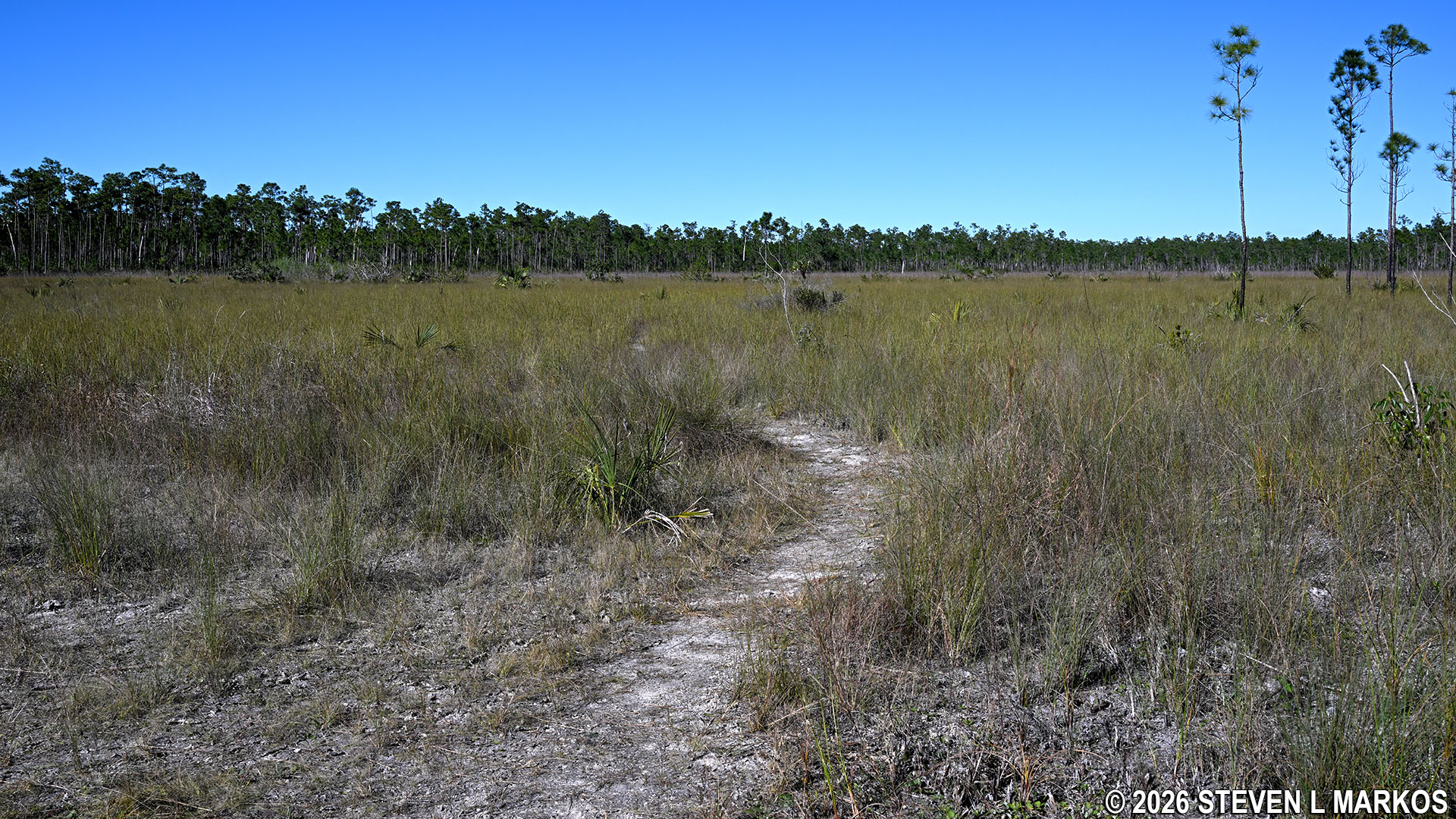
Connector between the Three-in-One and Long Pine Key Nature trails in Everglades National Park
Past the connector trail, the tall trees disappear and the vegetation becomes much denser with less sunlight hitting the ground. In fact, it is an impenetrable jungle on one side of the trail (the other side is the wetland area). The trees are now mainly shorter hardwoods. This is the tropical hardwood section of the Three-in-One Trail.
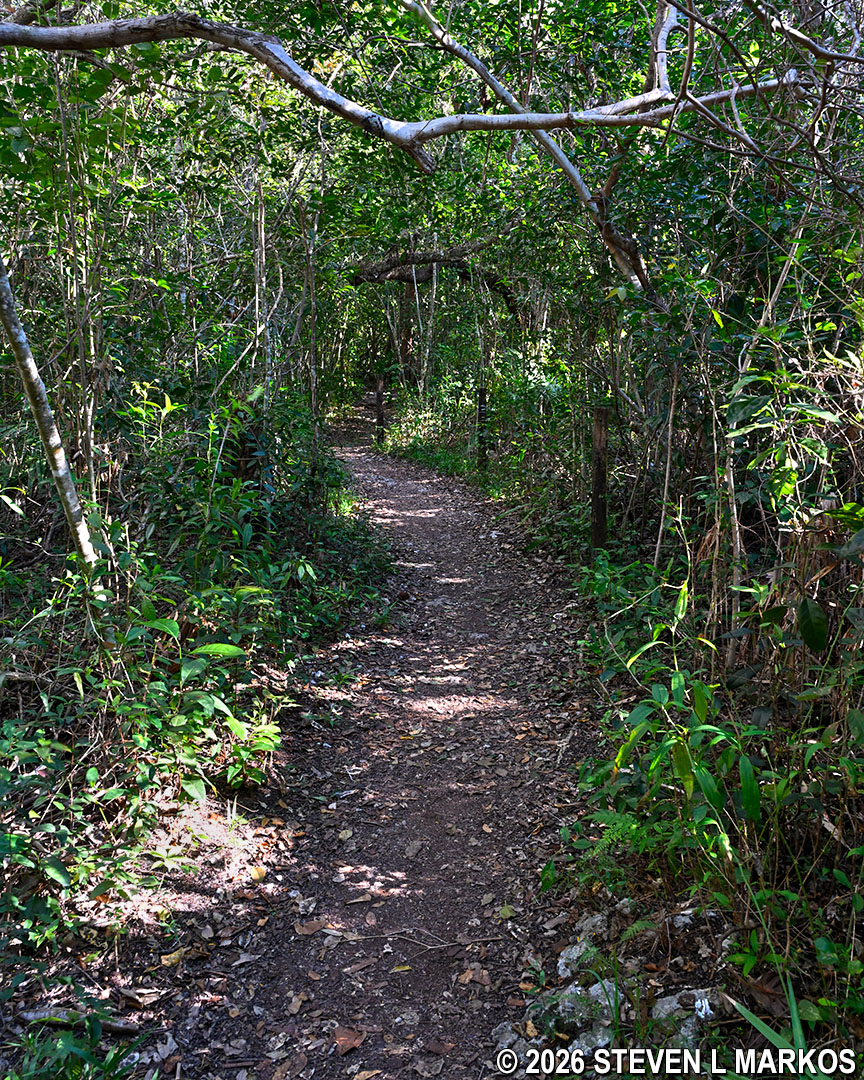
Hardwood hammock terrain on the Three-in-One Trail in Everglades National Park
The trail surface in the pine rocklands was fairly smooth, but once in the denser forest, roots are common on the trail, so be sure to watch your step. Notice that there are some spots with exposed rock, which is limestone. South Florida is basically a sheet of limestone with very little topsoil on it, sometimes no more than a foot. Because the roots cannot grow deep into the ground to anchor the trees, they spread out horizontally on the trail surface.
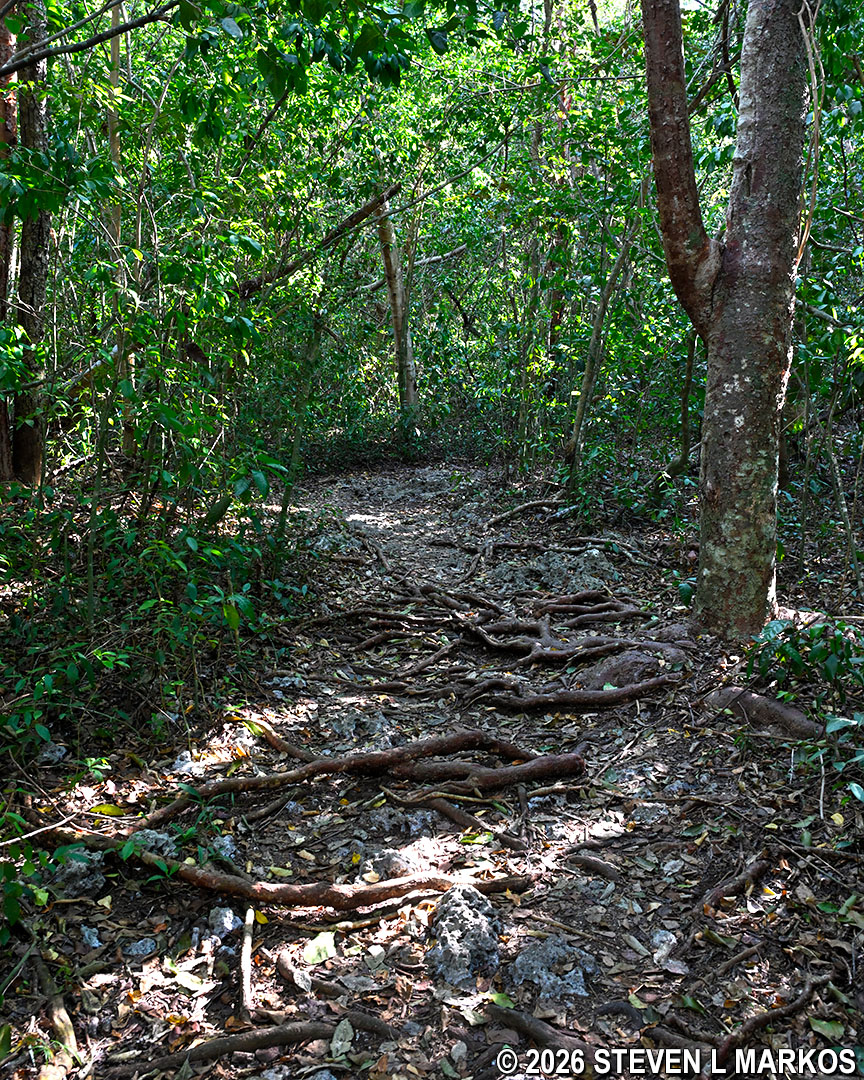
Root-covered trail in the hardwood hammock section of the Three-in-One Trail in Everglades National Park
Also be on the lookout for gumbo limbo trees. These are known as Tourist trees for their red and peeling bark, just like a tourist’s skin after a few days in Florida.
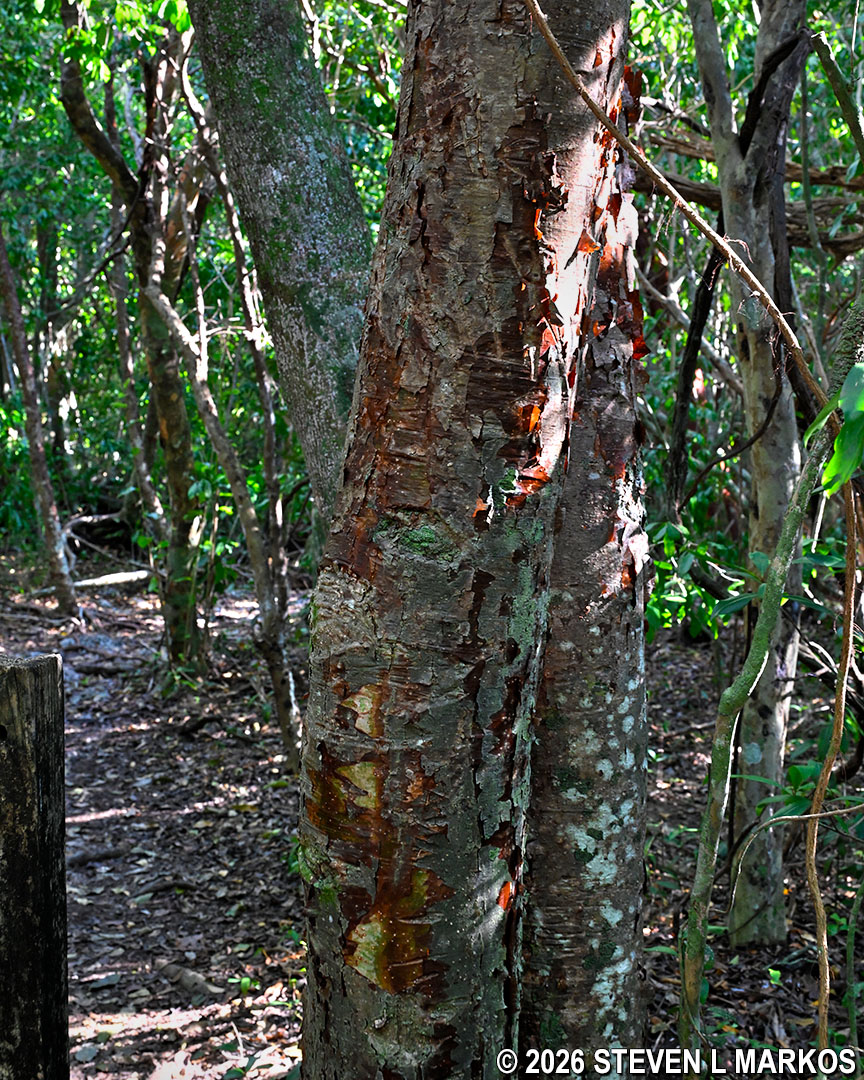
Gumbo limbo tree in the hardwood hammock section of the Three-in-One Trail in Everglades National Park
The last tenth of a mile cuts once again through the pine rocklands where there is plenty of sunshine.
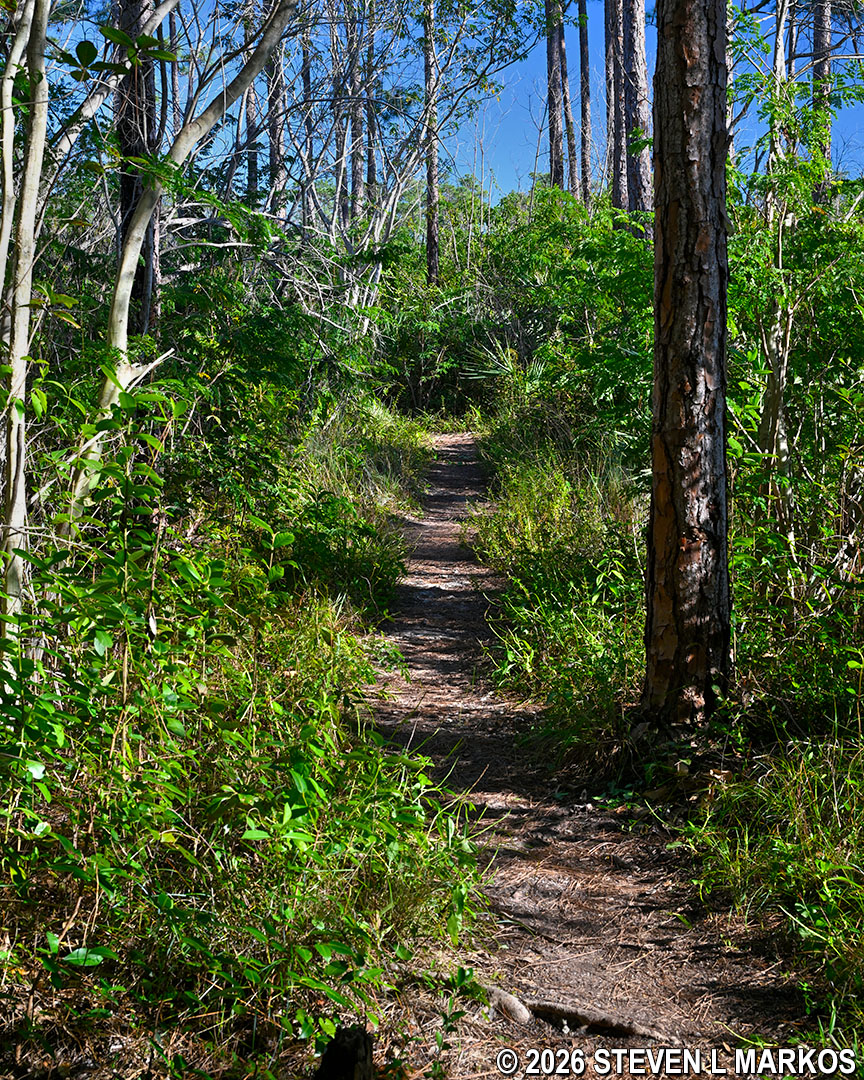
Pine rocklands terrain near Long Pine Key Lake on the Three-in-One Trail in Everglades National Park
The trail eventually comes out at Long Pine Key Lake near the picnic area. A key is another name for an island, and the Long Pine Key is the small island in the middle of the lake. You can see the campground on the other side.
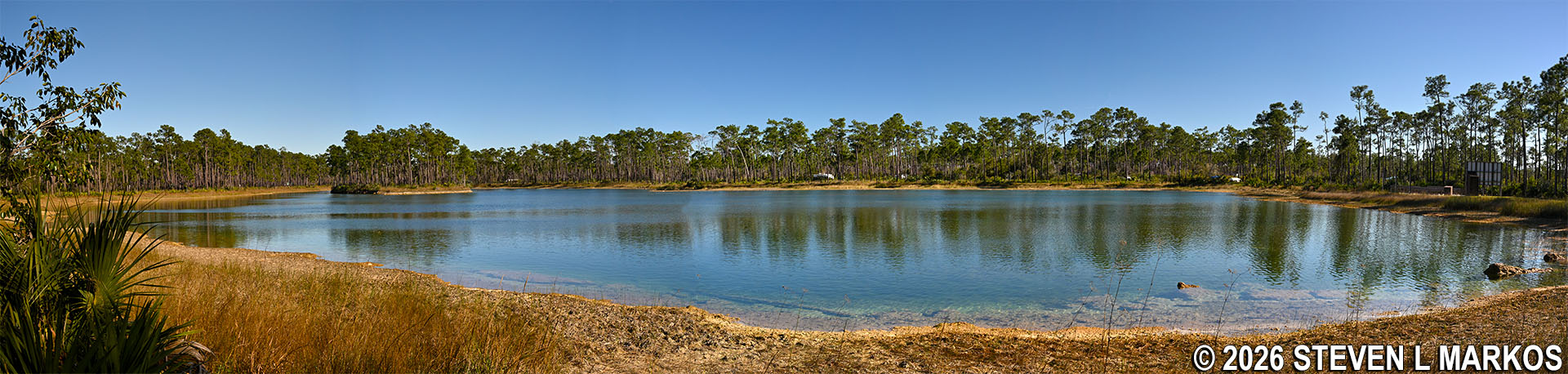
Long Pine Key Lake in Everglades National Park
Follow the trail along the shore to the picnic area. To get back to your car, just continue past the tables. You will eventually end up on the road, but on the other side from the Three-in-One Trail trailhead.
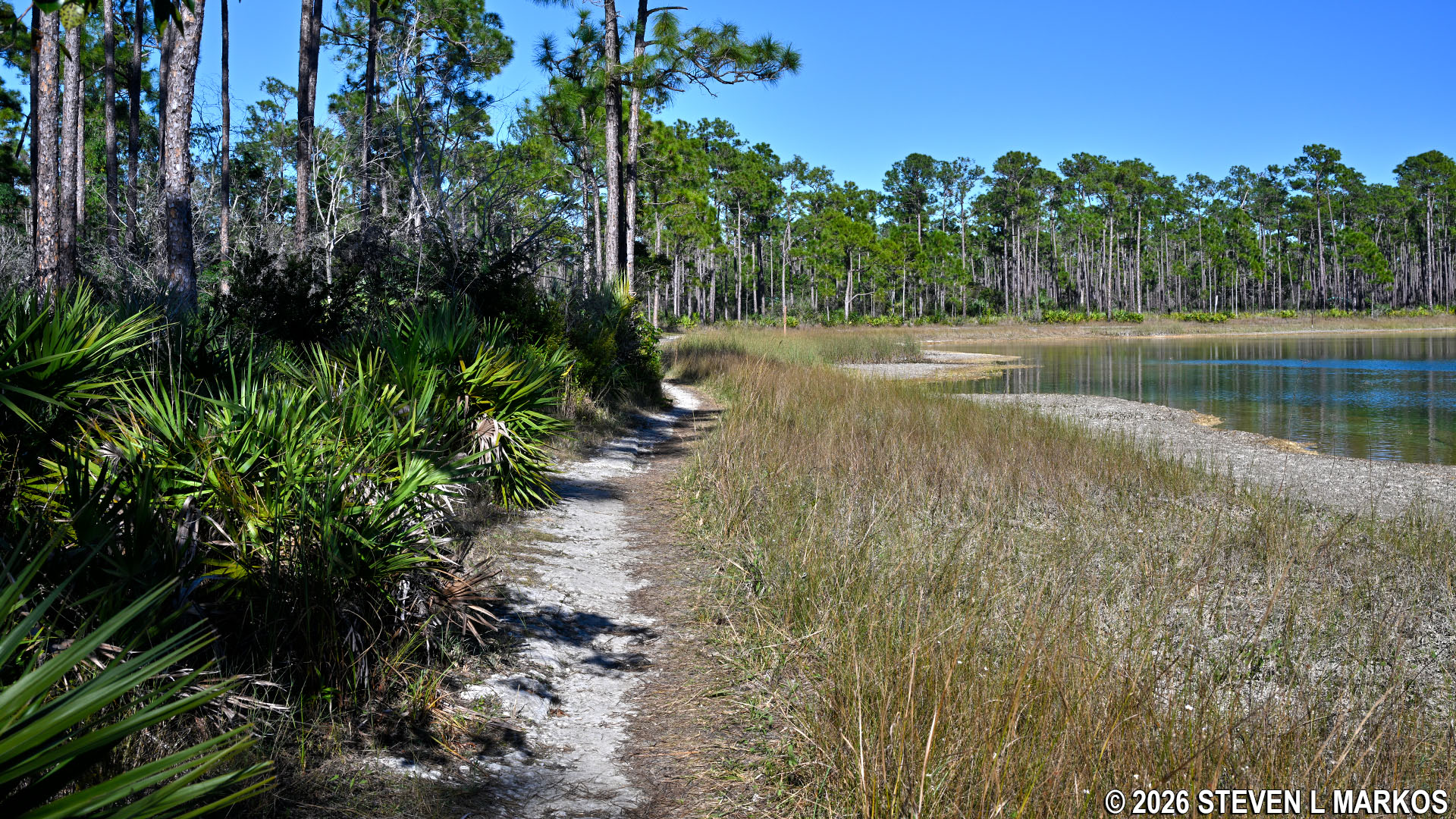
Trail along Long Pine Key Lake in Everglades National Park
The sign at the trailhead states that the hike is .5 miles long, but I’m not sure what this is taking into account. If the Three-in-One Trail officially ends at the lake, it is a half mile. However, the total distance back to the trailhead is .6 miles.
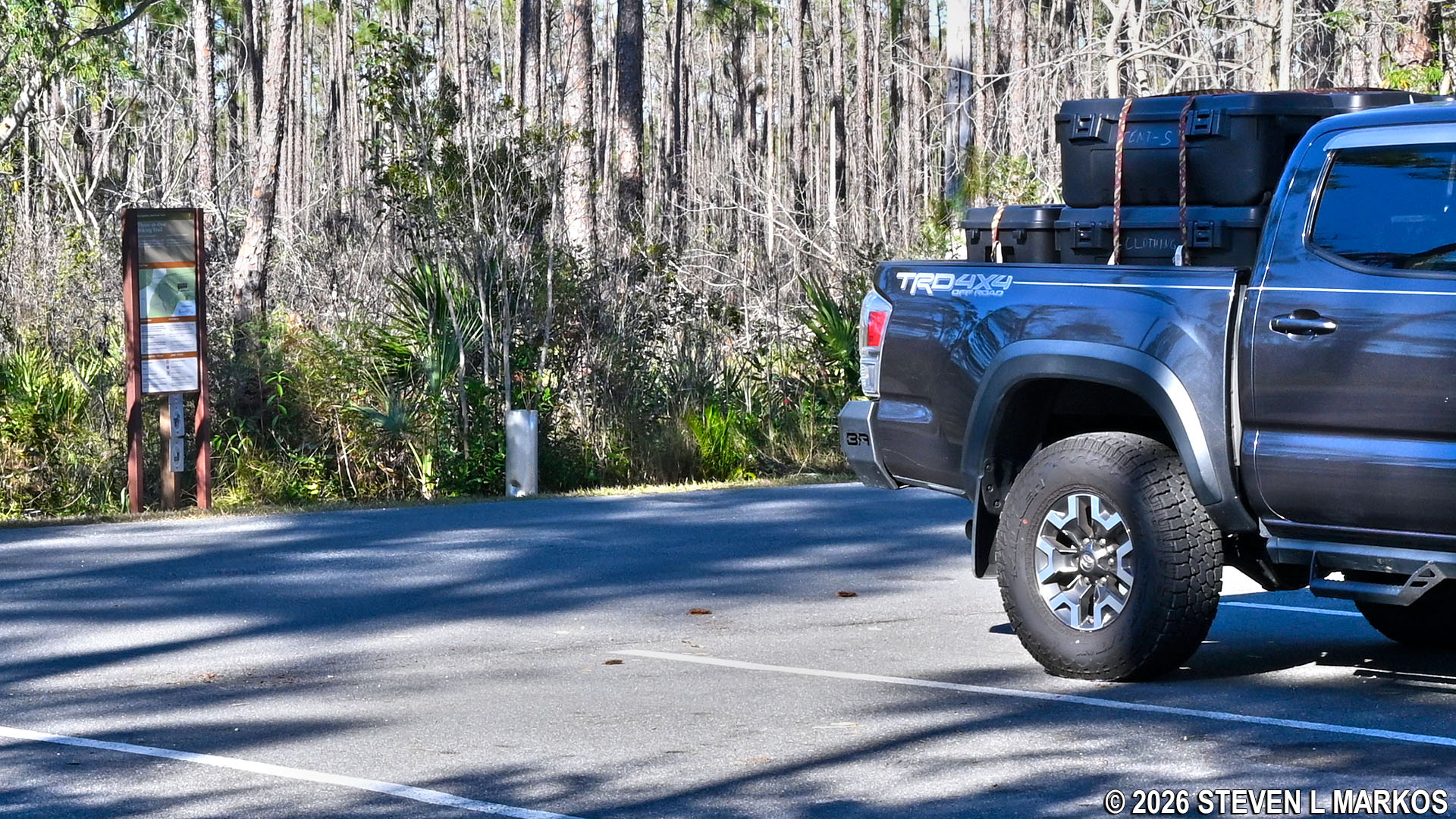
Three-in-One Trail ends on the other side of the road from the trailhead, Everglades National Park
With a few exceptions, use of any photograph on the National Park Planner website requires a paid Royalty Free Editorial Use License or Commercial Use License. See the Photo Usage page for details.
Last updated on July 10, 2026


