
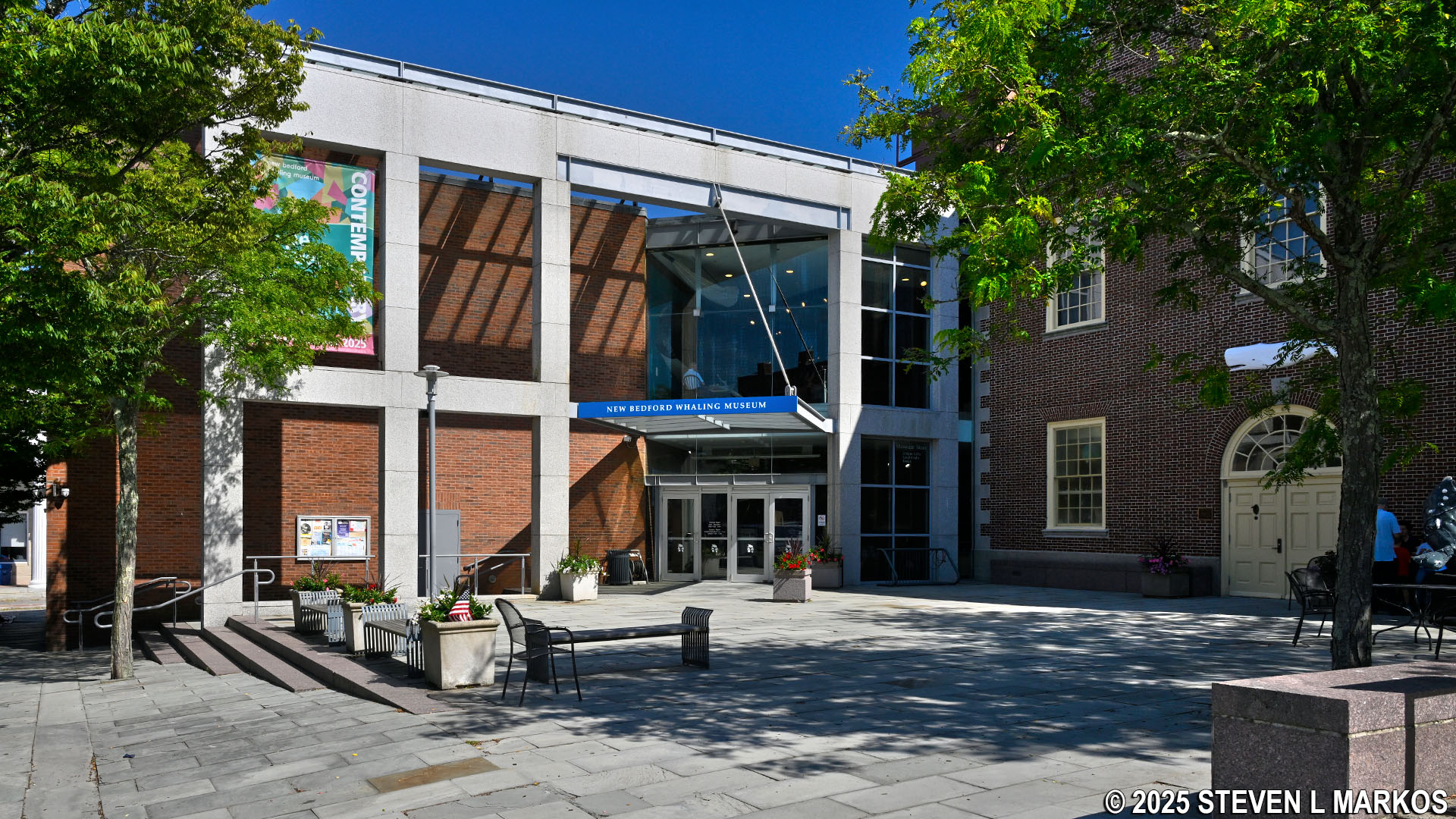
New Bedford Whaling Museum
GENERAL INFORMATION
18 Johnny Cake Hill
The New Bedford Whaling Museum has been around since 1903, long before New Bedford Whaling National Historical Park was created—and over a decade before the National Park Service even existed. It is the largest museum in the world dedicated to whaling. It’s not Smithsonian in size, but it’s large enough that you could spend the entire day without running out of things to see and do.
The museum is privately owned and is part of New Bedford Whaling National Historical Park through a partnership with the National Park Service. There is a fee to enter. Hours of operation vary per season, so before making travel plans be sure to visit the New Bedford Whaling Museum website for the current schedule and entrance fees. Limited street parking is available on Johnny Cake Hill, but unless you are disabled, do yourself a favor and park in the public garage on Elm Street, which is just two blocks away.
In addition to whaling exhibits, the museum hosts lectures, concerts and performances, and special tours and events. While many of these are most likely to appeal to locals who can fit them into their schedules, everyone is welcome. Dates and times are given on the New Bedford Whaling Museum website (choose the What’s Happening menu and then the Programs menu). The museum is also available for birthday parties, corporate meetings, and other gatherings.

Inside the New Bedford Whaling Museum
TOURING THE MUSEUM
Visitors are welcome to tour the museum on their own, but there is also an option to join a guided tour led by either one of the curators or knowledgeable docents who work at the museum. See the Whaling Museum’s Visit the New Bedford Whaling Museum web page for the daily schedule (scroll to the bottom of the page). There is usually at least one guided tour given each day, and most last an hour. Tours are included in the price of admission. There is no need to register, so just show up at the front desk a few minutes before the scheduled tour time.
A second option for an enhanced visit is to either download the New Bedford Whaling Museum’s free app or access the material using a standard web browser. See the Museum Guide web page for more information.
MUSEUM EXHIBITS
The New Bedford Whaling Museum is too large to give a play-by-play synopsis of every exhibit room, but I will list some of my favorite features from the museum’s permanent colletion. The museum also has rotating exhibits that are on display for a limited time.
WHALES
The museum is not strictly about whaling. There are exhibits on whales themselves—biology, physiology, etc.—and a number of whale skeletons are on display. Kids will get a big kick out of them.

Whale skeletons hang from the main lobby ceiling of the New Bedford Whaling Museum
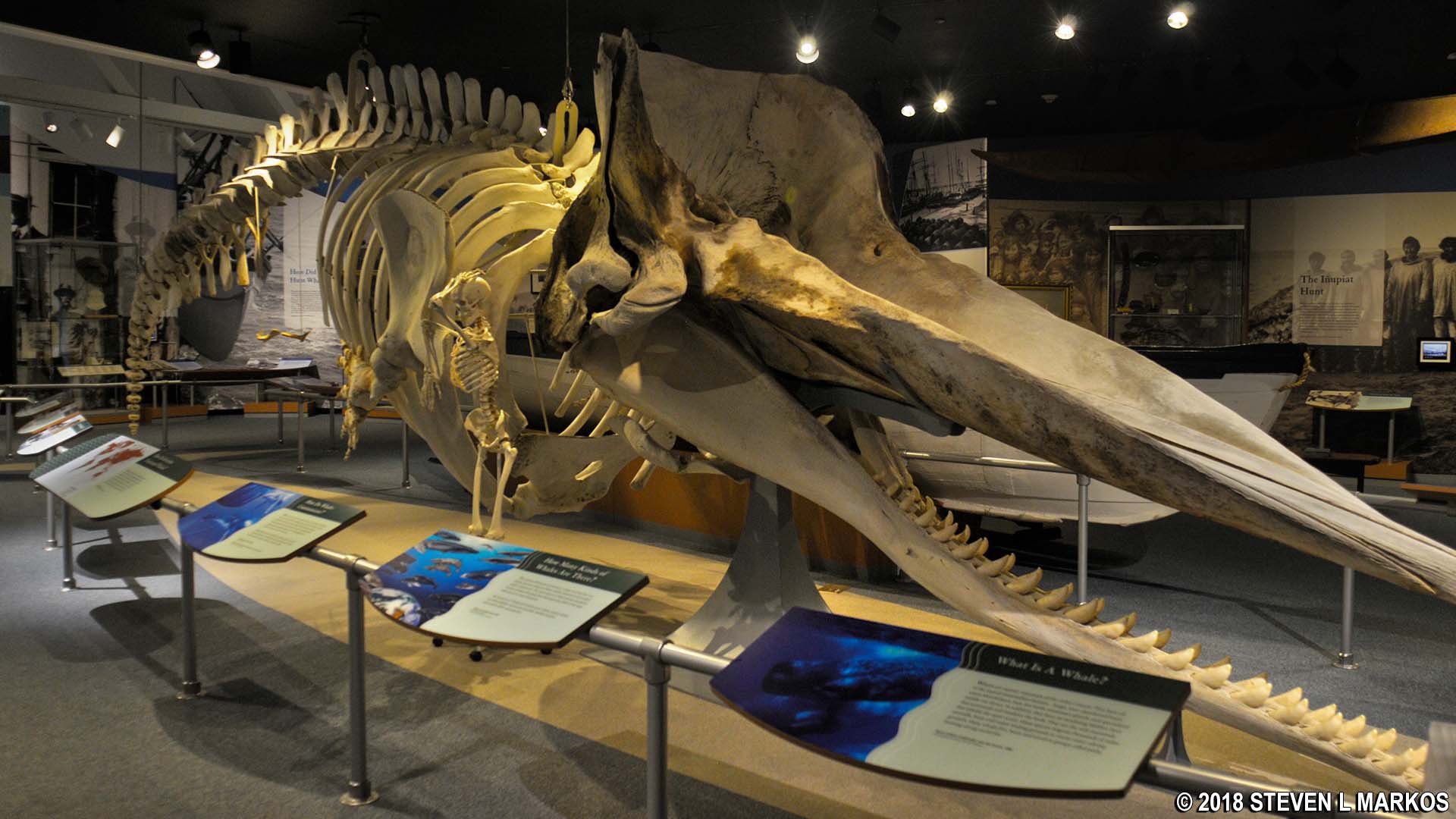
Sperm whale skeleton on display at the New Bedford Whaling Museum
SCRIMSHAW
By the 1800s, whaling voyages lasted anywhere from two to four years, during which time a crew would be lucky to catch twenty whales. Thus, there was a lot of sitting around with nothing much to do. Some sailors passed their time by creating scrimshaw: etching images into whale bone or teeth. Men also carved walrus tusks and made useful products from whale bone. The New Bedford Whaling Museum has a fine collection of scrimshaw and ivory and bone carvings on display.

Scrimshaw exhibit at the New Bedford Whaling Museum
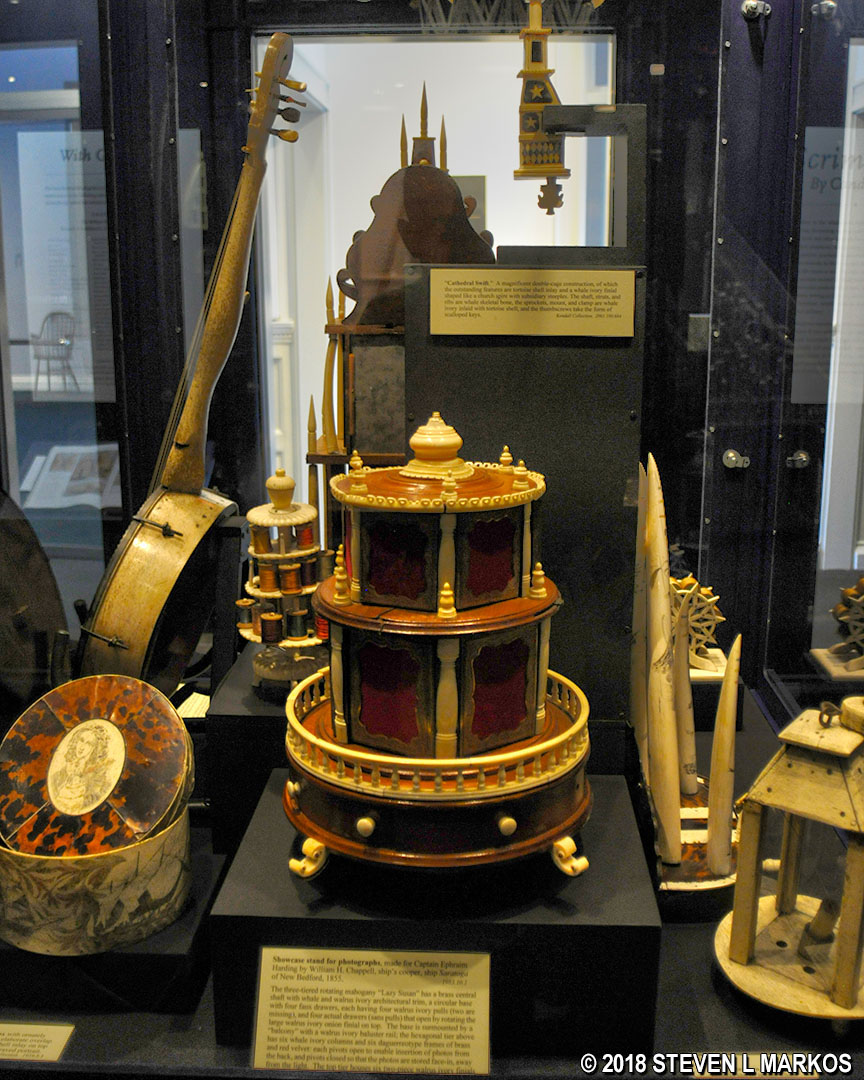
Items carved from walrus ivory and whale bone on display in the New Bedford Whaling Museum
NEW BEDFORD AFTER WHALING
As mentioned, not everything in the New Bedford Whaling Museum pertains to whaling. Once petroleum was discovered in the late 1850s, the whaling industry went into decline and effectively ended by 1920. Replacing it for a time was the textile industry, and even that business eventually moved south. Today fishing is the main industry in New Bedford, and the city brings in more money than any fishing port in the entire United States. Its catch is worth at least double that of the catch of Dutch Harbor, Alaska, the second ranked port city in terms of catch value. However, New Bedford’s catch by pounds is much, much smaller. What’s the “catch?” Scallops. They are more valuable than fish.

Items on display in the New Bedford Whaling Museum that were manufactured in New Bedford after the whaling industry came to an end
SHIPS AND WHALE BOATS
Probably the most popular exhibit in the museum is a model of the whaling ship Lagoda. It is not full size, but it is large enough that you can walk around inside and see what a whaling ship looked like. Supposedly it is the largest model ship in the world.

Model of the whaling ship Lagoda at the New Bedford Whaling Museum

Stern of the whaling ship Lagoda on display at the New Bedford Whaling Museum

Inside whaling ship Lagoda on display at the New Bedford Whaling Museum
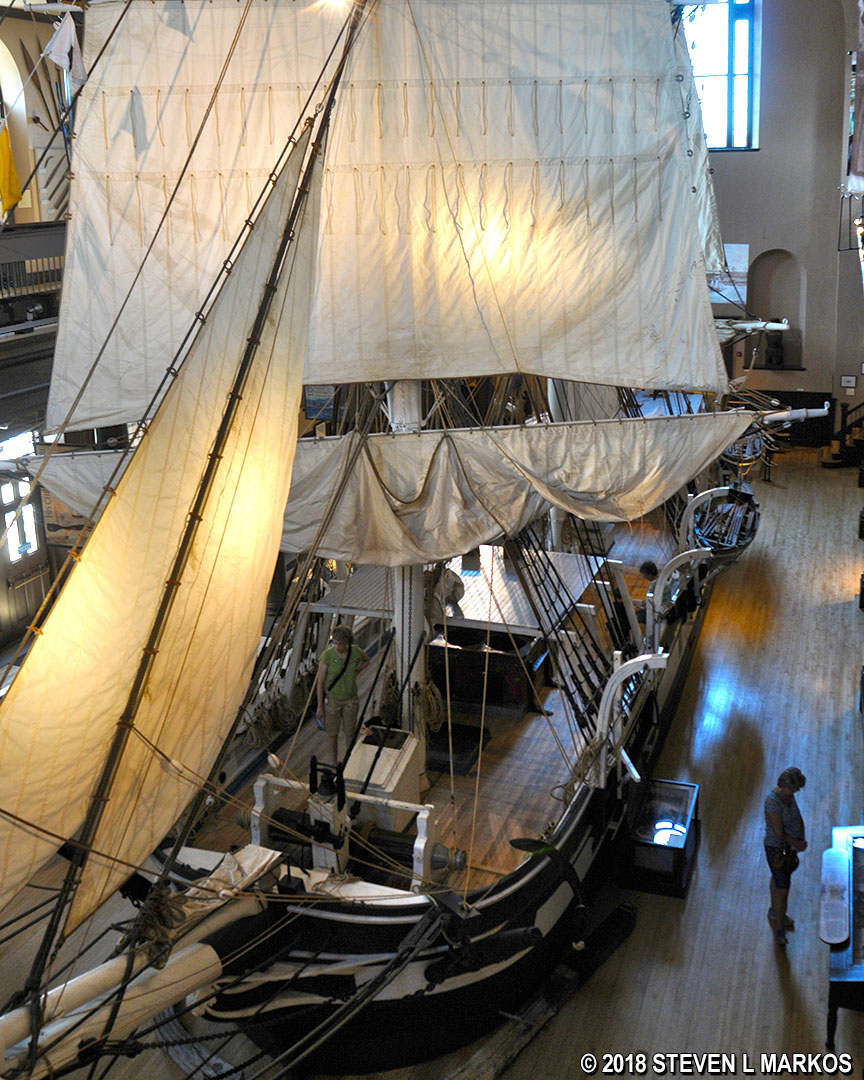
View of the whaling ship Lagoda from the upper level of the New Bedford Whaling Museum
Ships like the Lagoda carried men out to sea in pursuit of whales, but the actual hunts took place in small boats called whaleboats. There are two of these on display, and each is outfitted with the tools that would have been aboard when the whalemen set out after a whale. From the size, you can see why whaling was so dangerous.

Whale boat exhibit at the New Bedford Whaling Museum

Whaleboat at the New Bedford Whaling Museum is displayed next to a whale skeleton to allow size comparisons
Also on display is one of four models used in the 1956 film, Moby Dick.

Model whaleboat used in the 1956 film Moby Dick on display in the New Bedford Whaling Museum
SCHEDULING YOUR TIME
The amount of time you spend at the New Bedford Whaling Museum depends on your interest in whales and whaling. The museum website suggests allowing 2 to 3 hours. I spent 3 hours and certainly could have stayed longer, but the 2 to 3 hour recommendation should work for most people.
With a few exceptions, use of any photograph on the National Park Planner website requires a paid Royalty Free Editorial Use License or Commercial Use License. See the Photo Usage page for details.
Last updated on November 25, 2025


