

Old Bank Building, now the Visitor Center for New Bedford Whaling National Historical Park
GENERAL INFORMATION
The New Bedford Whaling National Historical Park Visitor Center at the corner of North 2nd and William Street is housed in the Old Bank Building from 1853. Over the years it has also been used as the office of the Third District Court of Bristol, a candy factory, a shirt factory, a machine shop, and a piano warehouse. The building was restored in 1978 and reopened once again as a bank. It has served as the park’s Visitor Center since 2000, and it is the only facility within the park that is owned and operated by the National Park Service.
The official address for the Visitor Center is 33 William Street, but if you are using Google Maps for directions, do not use this address for you will end up driving around in circles. Use the address for the parking garage a block away, 51 Elm Street. I recommend the garage as your parking option instead of trying to deal with finding metered street parking.
OPERATING HOURS
- 9 AM to 5 PM
- May-November: Wednesdays though Sundays
- December-April: Wednesdays through Saturdays
- Closed most major holidays except Independence Day and Veterans Day
Times can always change, so be sure to get the current schedule on the National Park Service’s official Basic Information web page for New Bedford Whaling National Historical Park.
AMENITIES
- Ranger-staffed information desk where you can pick up a variety of brochures, including walking tours of various New Bedford neighborhoods
- Meeting place for a Ranger-guided tour of the New Bedford historic district
- Large exhibit area
- Park film
- Gift and Souvenir Store
- Restrooms

Information desk at the Visitor Center for New Bedford Whaling National Historical Park
PARK FILM
A 23-minute film titled The City that Lit the World is shown every half hour. The film focuses on the human side of the whaling industry and the economic impact it had on New Bedford. This is a great way to get a glimpse into the lives of those who worked on the whaling ships and how their meager existence contrasted to the wealthy ship owners who never risked their lives at sea, yet took home most of the profits. The film also touches on the whaling culture of the native Arctic people.
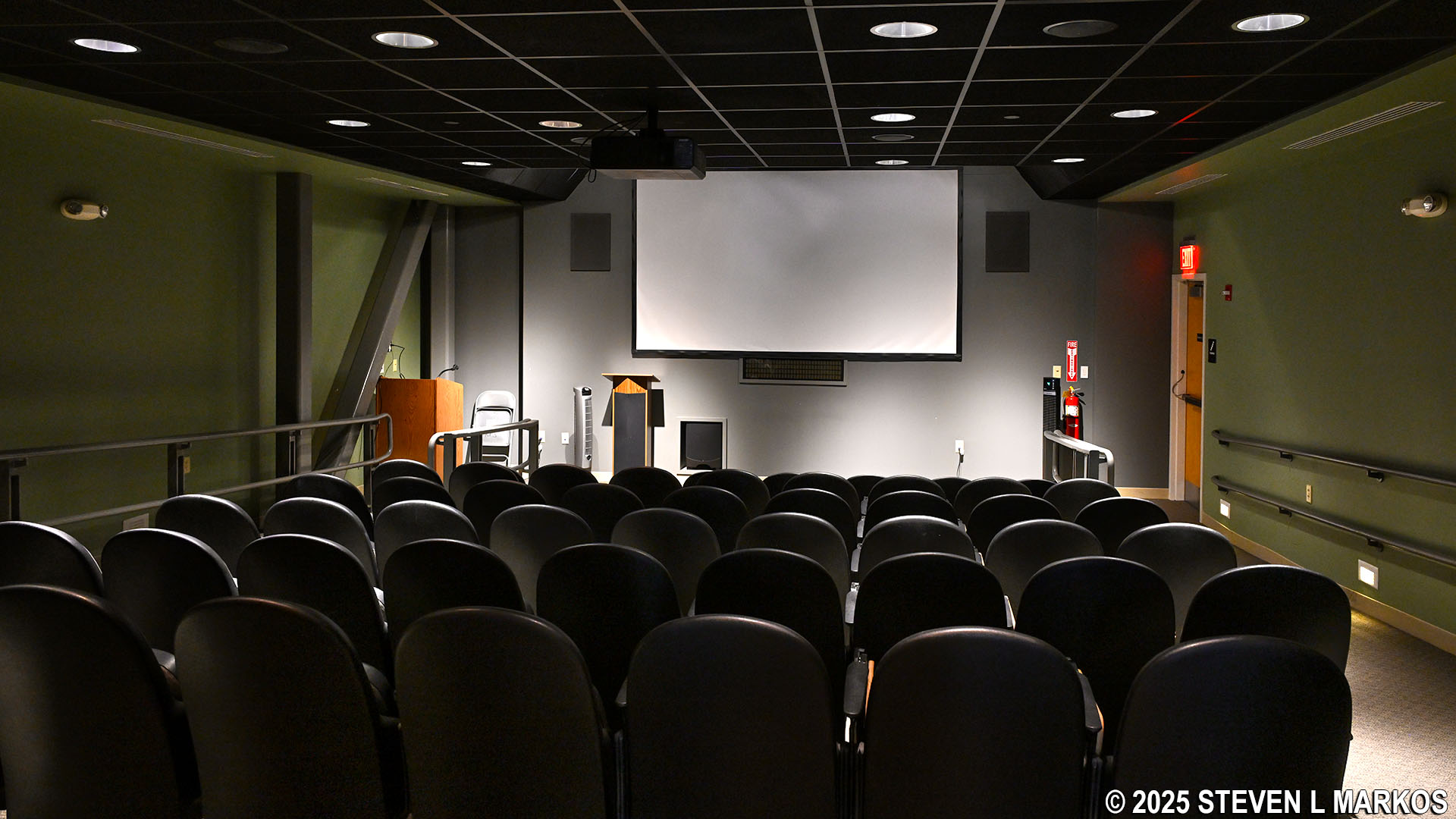
Theater room in the Visitor Center for New Bedford Whaling National Historical Park
EXHIBIT AREA
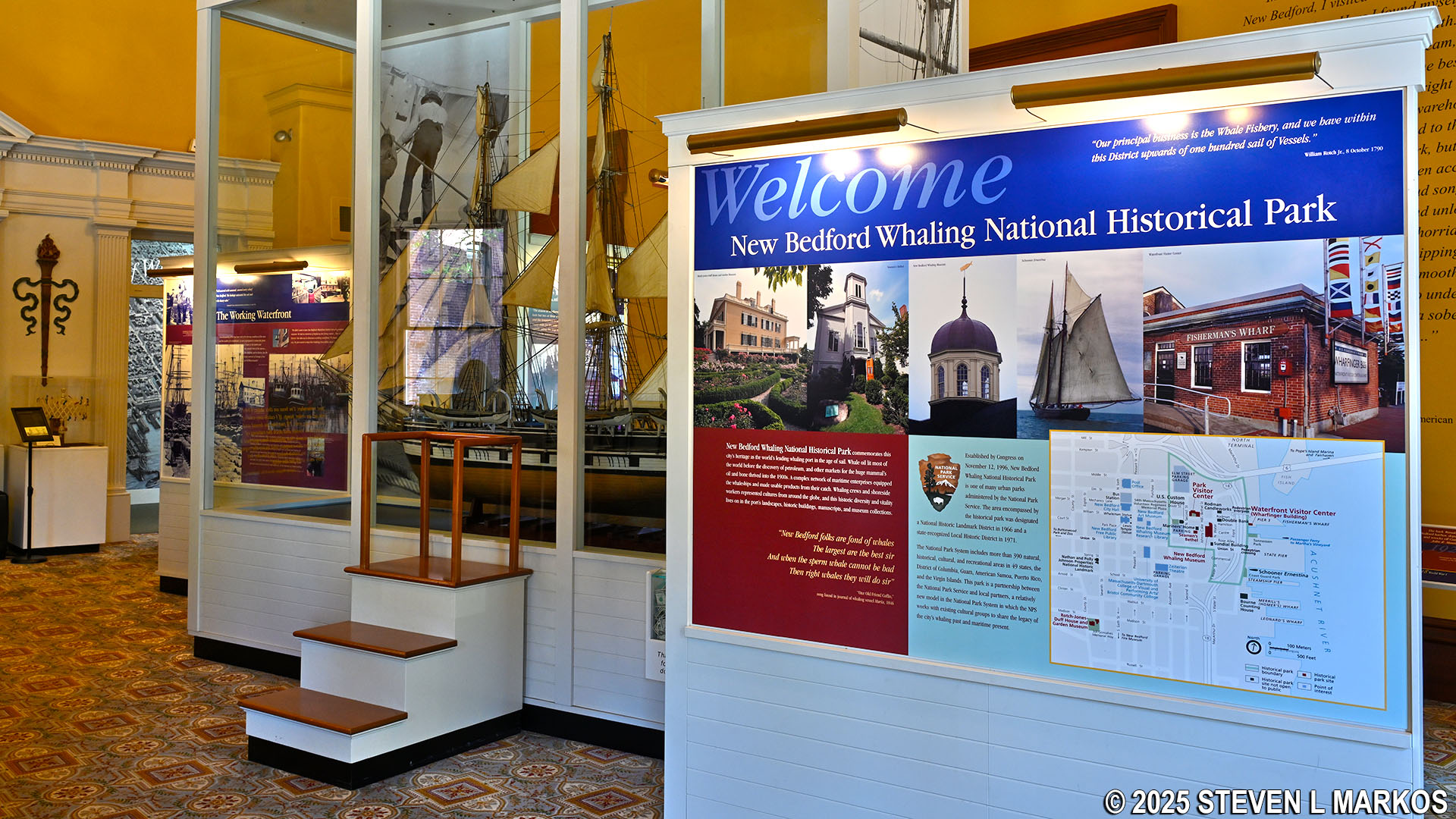
Exhibit area of the New Bedford Whaling National Historical Park Visitor Center
The Visitor Center houses a rather extensive exhibit area dedicated to the whaling industry as it pertains to New Bedford. It consists almost exclusively of information panels with only a few artifacts on display. This is in marked contrast to the New Bedford Whaling Museum, a privately owned museum that covers the entire history of whaling and has a huge display of artifacts, including whale skeletons and actual whaling boats. While the Whaling Museum is certainly the better of the two, the exhibits at the Visitor Center provide a wealth of information about New Bedford and New Bedford Whaling National Historical Park.
The exhibit area is divided into two distinct sections. Near the National Park Service desk is a timeline of the whaling industry and information on the different attractions in the park such as the Seamen’s Bethel, the Mariners’ Home, and the New Bedford Whaling Museum.
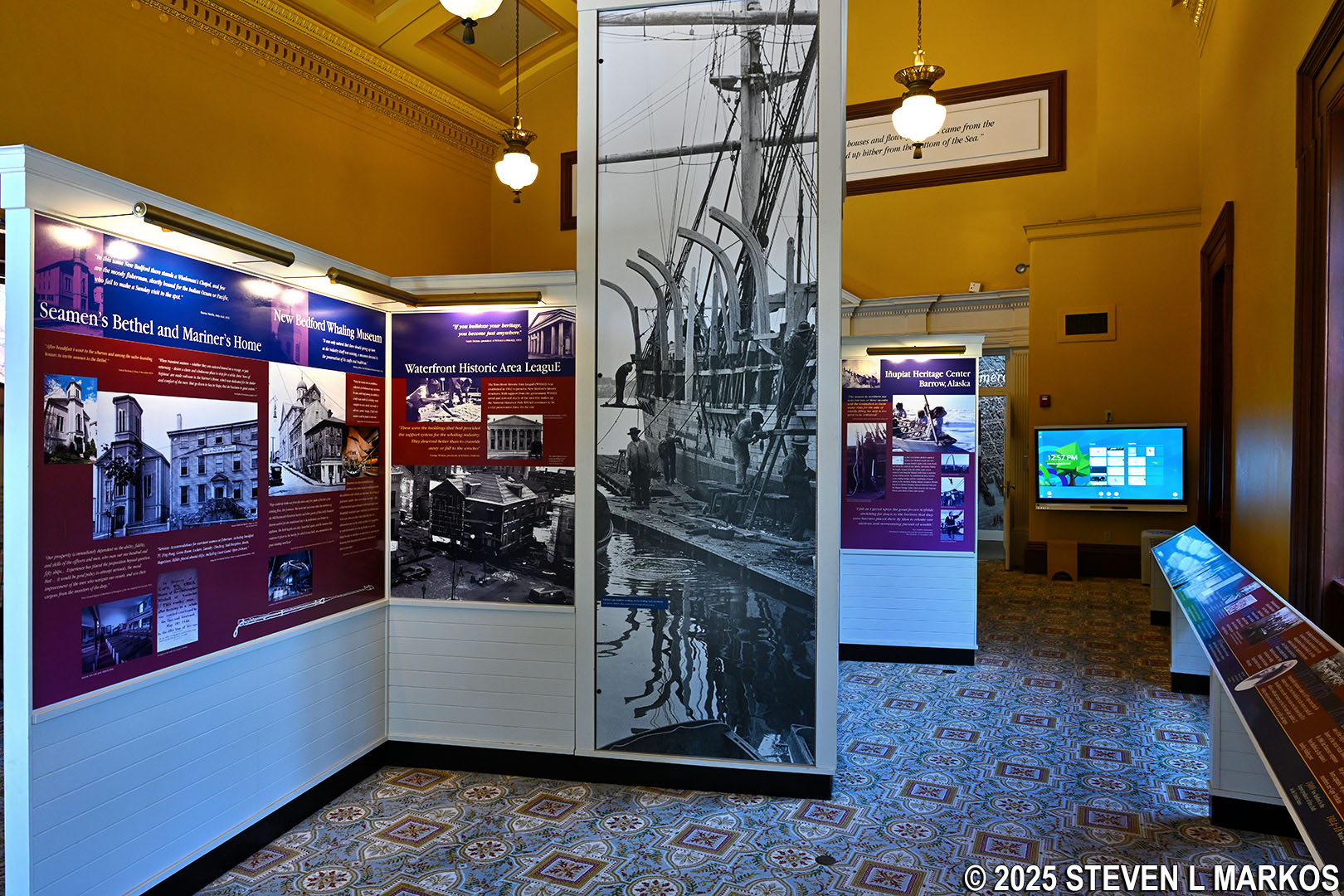
Exhibits in the Visitor Center on the attractions at New Bedford Whaling National Historical Park
A second room contains exhibits on New Bedford and the type of men who entered into the whaling business, similar to topics covered in the park film. You can read about the lives of whalers through excerpts from some of their diaries. The discrepancies in pay between the ship owner, the captain, and the crew are also detailed.

Exhibit in the Visitor Center on the diversity of those who worked in the whaling industry, New Bedford Whaling National Historical Park
SCHEDULING YOUR TIME
The casual tourist should plan to spend an hour at the New Bedford Whaling National Historical Park Visitor Center. This allows time to see the film, talk with a Ranger to get the lay of the land, and look through the museum. For those who want to read all of the information, add an additional half hour, 1.5 hours in total.
With a few exceptions, use of any photograph on the National Park Planner website requires a paid Royalty Free Editorial Use License or Commercial Use License. See the Photo Usage page for details.
Last updated on November 25, 2025


