
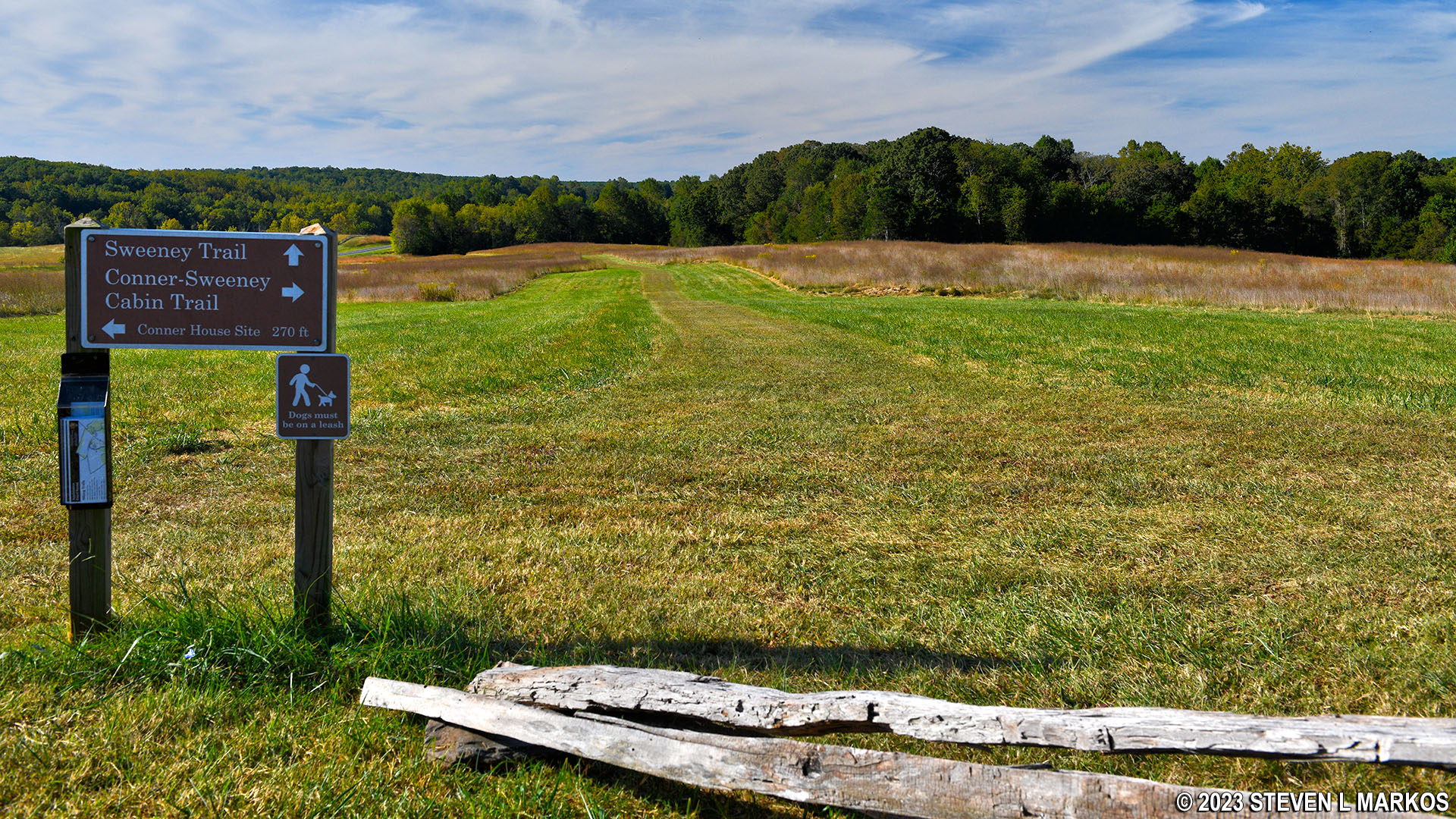
Northern trailhead for the Sweeney Trail at Appomattox Court House National Historical Park
See the Hiking Trails web page for a trail map.
Length: .9 mile
Time: 40 minutes (one way)
Difficulty: Easy
The name Sweeney in the Sweeney Trail at Appomattox Court House National Historical Park refers to Joel Sweeney, the man who made the banjo popular in the 1830s and 40s. In fact, he was one of the most popular musicians in America at the time, and he even toured Europe. He was born and raised in Appomattox County, and the Sweeny Trail passes by the cemetery where he is buried.
The banjo is an instrument that came to America by way of the African slaves, and while black banjo players were some of the best, there certainly was no opportunity for them to tour the country as musicians. Thus, it was the white musicians such as Sweeney who copied their style and made the music popular in minstrel shows. These shows mixed music (banjo, fiddle, hand drums), dance, and comedy, and the songs from this era became the first to reach nationwide popularity.
Being that banjo music was associated with black people, to add to the authenticity of the show, white musicians began performing as black musicians by coloring their faces, what would go on to be known as blackface. Because comedy was also part of the shows, the acts included race-degrading jokes and mannerisms. In fact, black musicians abandoned the banjo after the Civil War, for a black man with a banjo had become as humiliating a stereotype as a black man with a watermelon or a chicken.
Before starting the hike, there are two sites that might be of interest to you if you are at the trail’s northern trailhead on Horseshoe Road. One is a short trip (100 yards) to the spot where the Allan Conner House once stood. The house was used as a Confederate hospital during the fighting at Appomattox Court House on the morning of April 9, 1865. There is nothing at the spot today other than a wayside exhibit about the former house.
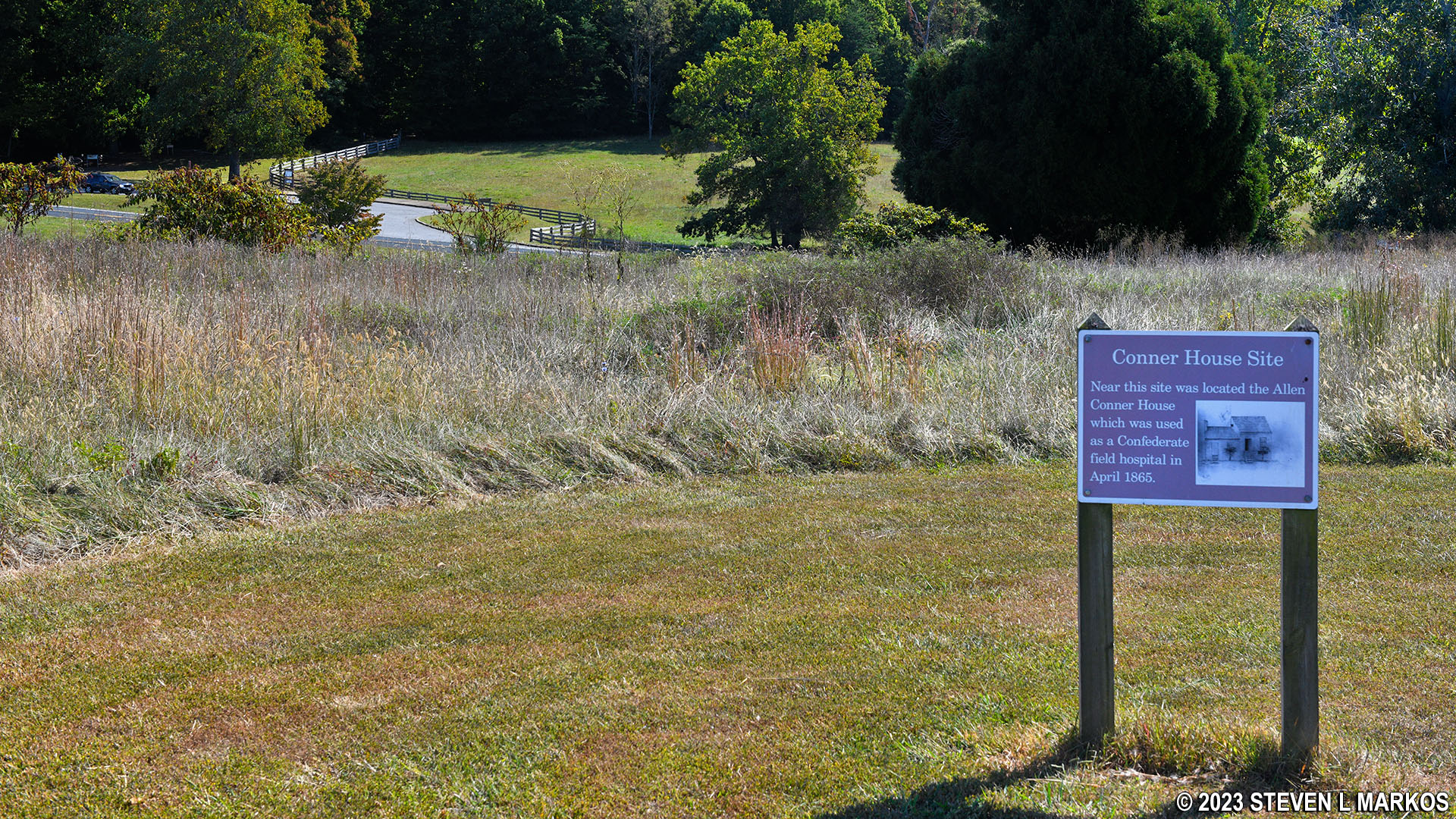
Allan Conner House site at Appomattox Court House National Historical Park
Across the street from the parking lot is a dirt road that leads up a steep hill to the O’Brien Family cemetery. Most of the graves are of people born in the mid-1800s and died in the early to mid-1900s, but there is at least one grave from 2002, so the cemetery appears to still be in use.
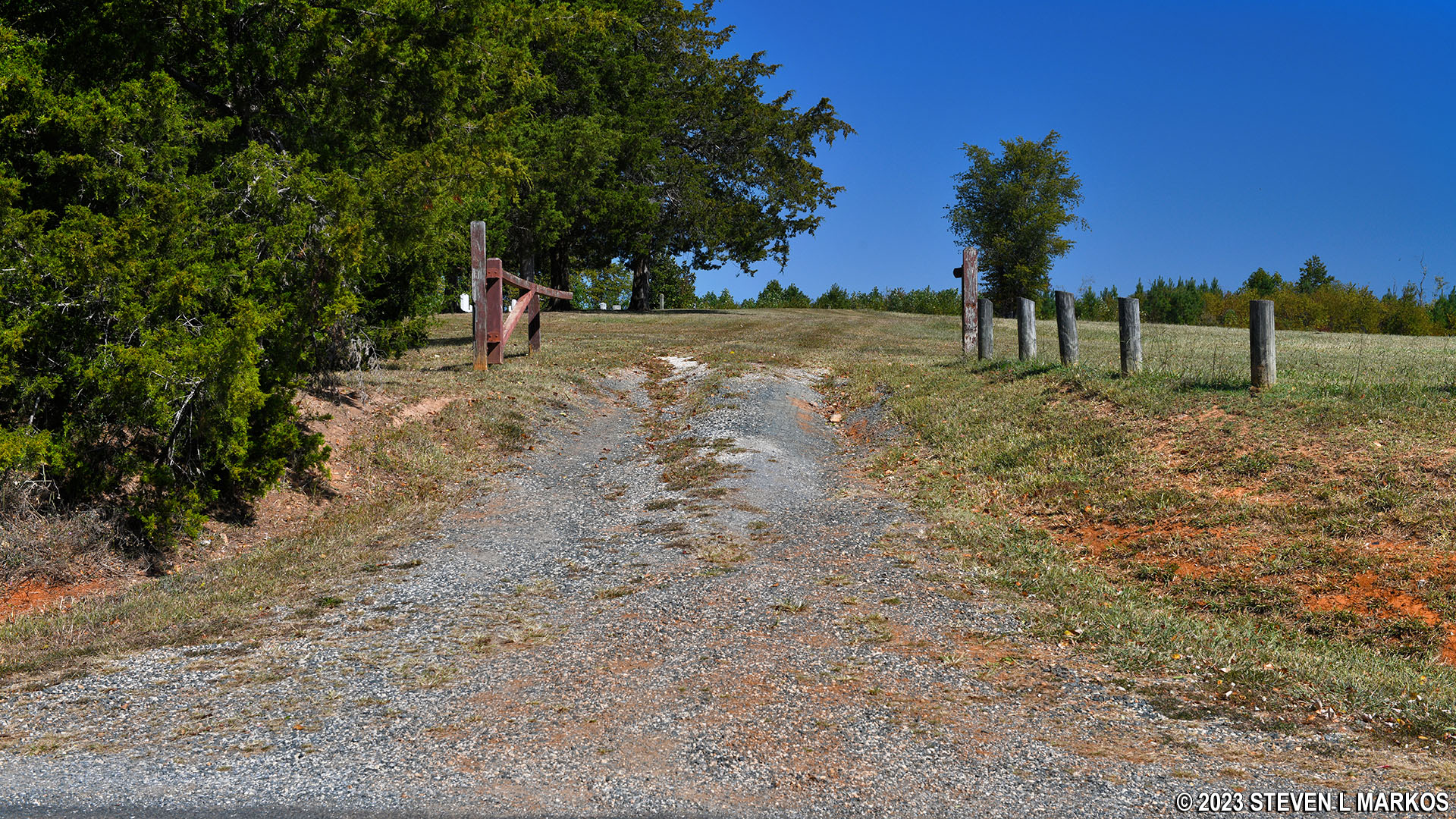
Road to the O’Brien Cemetery at Appomattox Court House National Historical Park
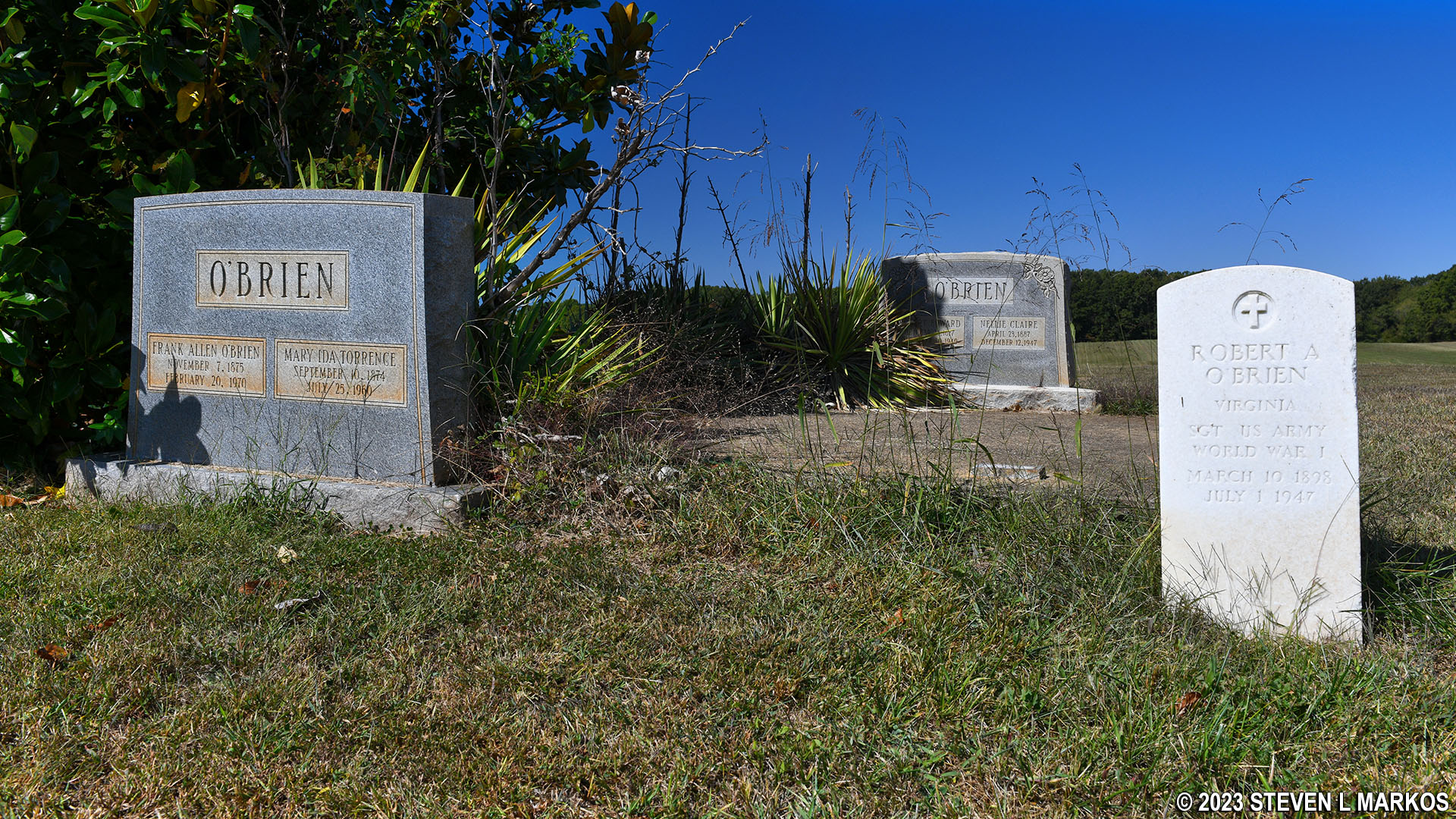
Tombstones in the O’Brien Cemetery at Appomattox Court House National Historical Park
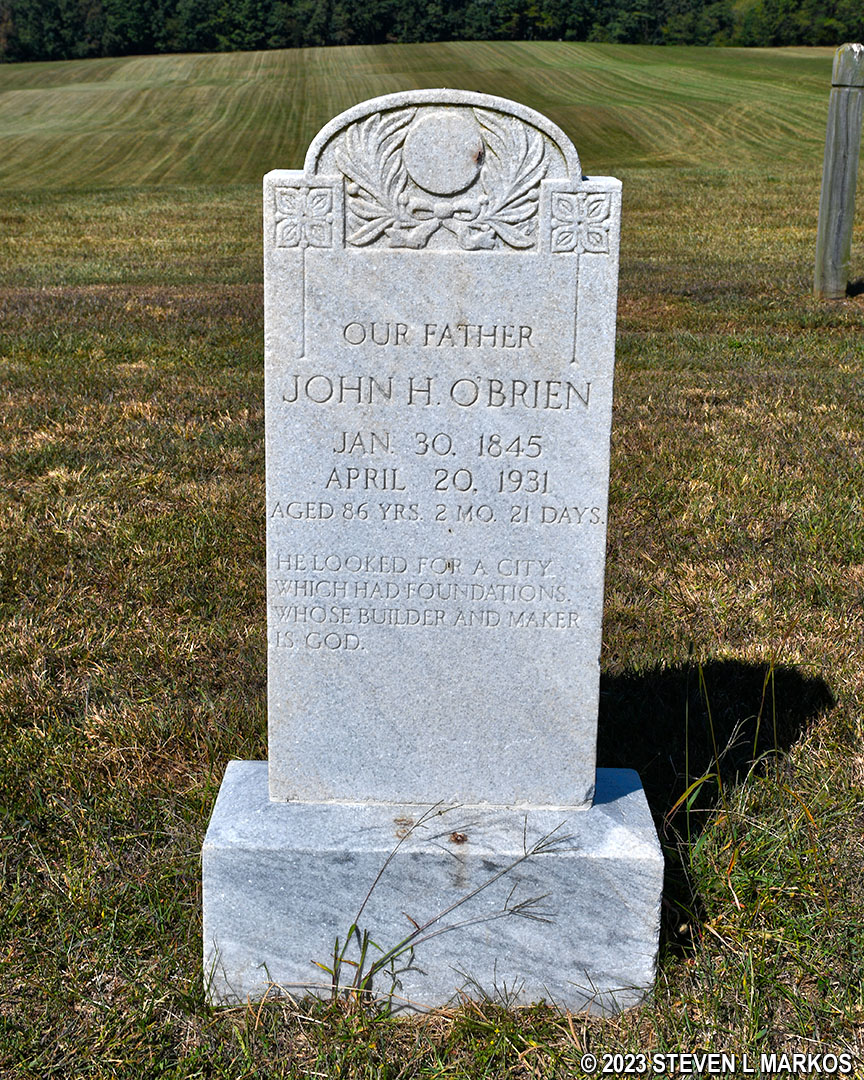
Tombstones in the O’Brien Cemetery at Appomattox Court House National Historical Park
Trail maps for Appomattox Court House National Historical Park are usually available at each trailhead, but just in case the brochure box is empty, you can also pick one up at the Visitor Center. Once on the trails, you don’t really need the map because they are very well marked. There is directional signage at every turn, even if there is only one possible way to go.
Hikers can begin the Sweeney Trail either at its northern trailhead on Horseshoe Road or at the southern trailhead at the parking lot just north of the Appomattox River on Highway 24. The trail is an out-and-back trail, so if you don’t have a ride at the end, you must hike back to the starting point. The trail can be combined with the Conner-Sweeney Cabin Trail on the north end and the Ferguson Wildlife Trail at the south end for a hike of approximately 2.5 miles. This trail report covers only the Sweeney Trail and starts from the north end.
The Sweeney Trail begins by following Highway 24 along a gradual downhill slope, so gradual that you won’t even notice you are walking downhill. This section, which lasts a third of a mile, is through a field and entirely out in the open, so apply sunscreen and wear a hat if avoiding the sun is important to you. I wouldn’t want to do this hike in the dead of summer, but my late September hike was very enjoyable. Keep in mind that even when not within eyesight of the road, the trail is always close enough so that you here the traffic noise.
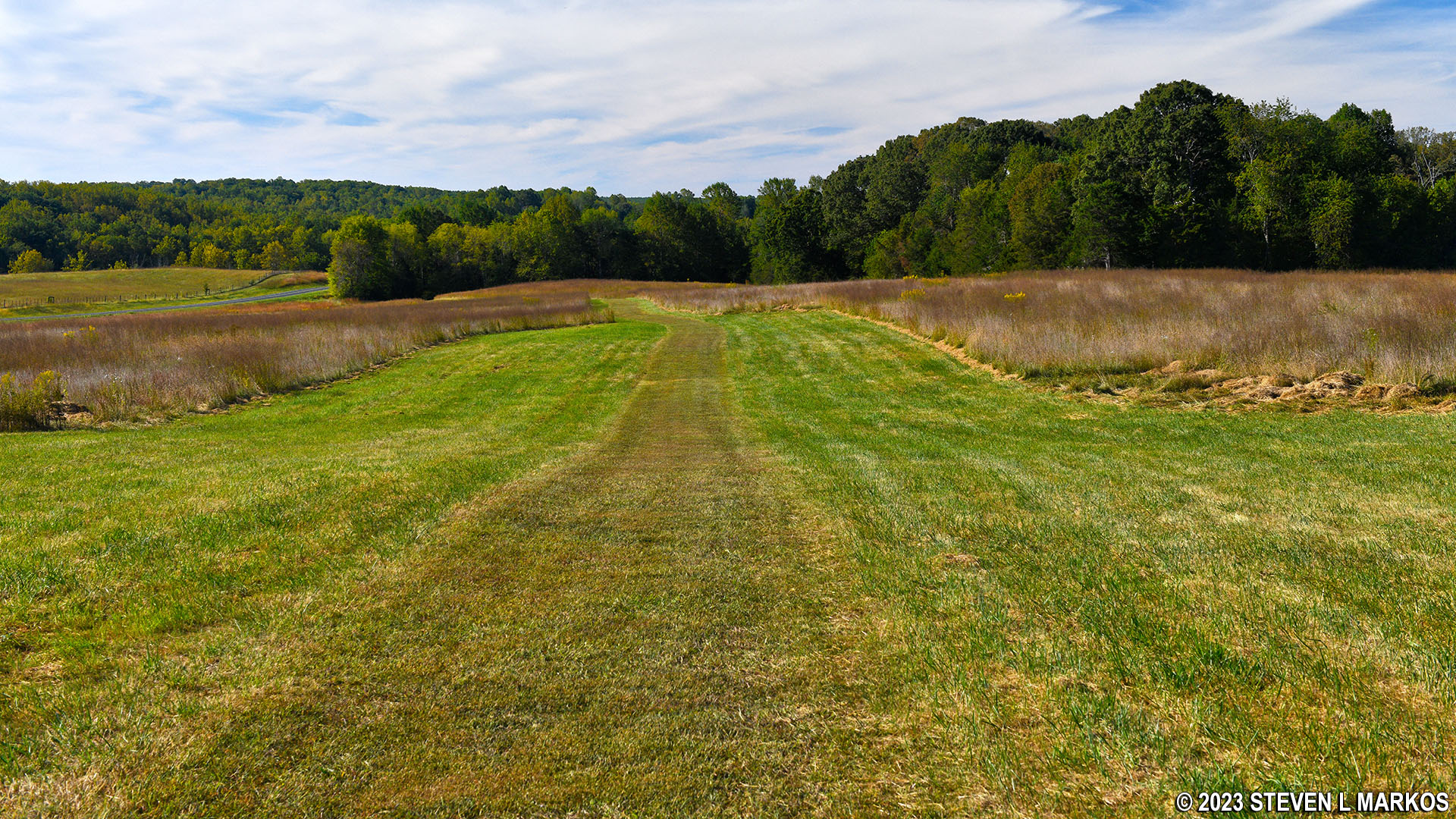
Northern end of the Sweeney Trail at Appomattox Court House National Historical Park
The trail intersects with the southern trailhead for the Connor-Sweeney Cabin Trail after .3 mile, which is also where the field comes to an end at a forest. When you hike back, you might as well take the Cabin Trail to avoid seeing the same things twice. When heading south, the Cabin Trail turns right and follows the tree line. The Sweeney Trail continues straight ahead into the forest.
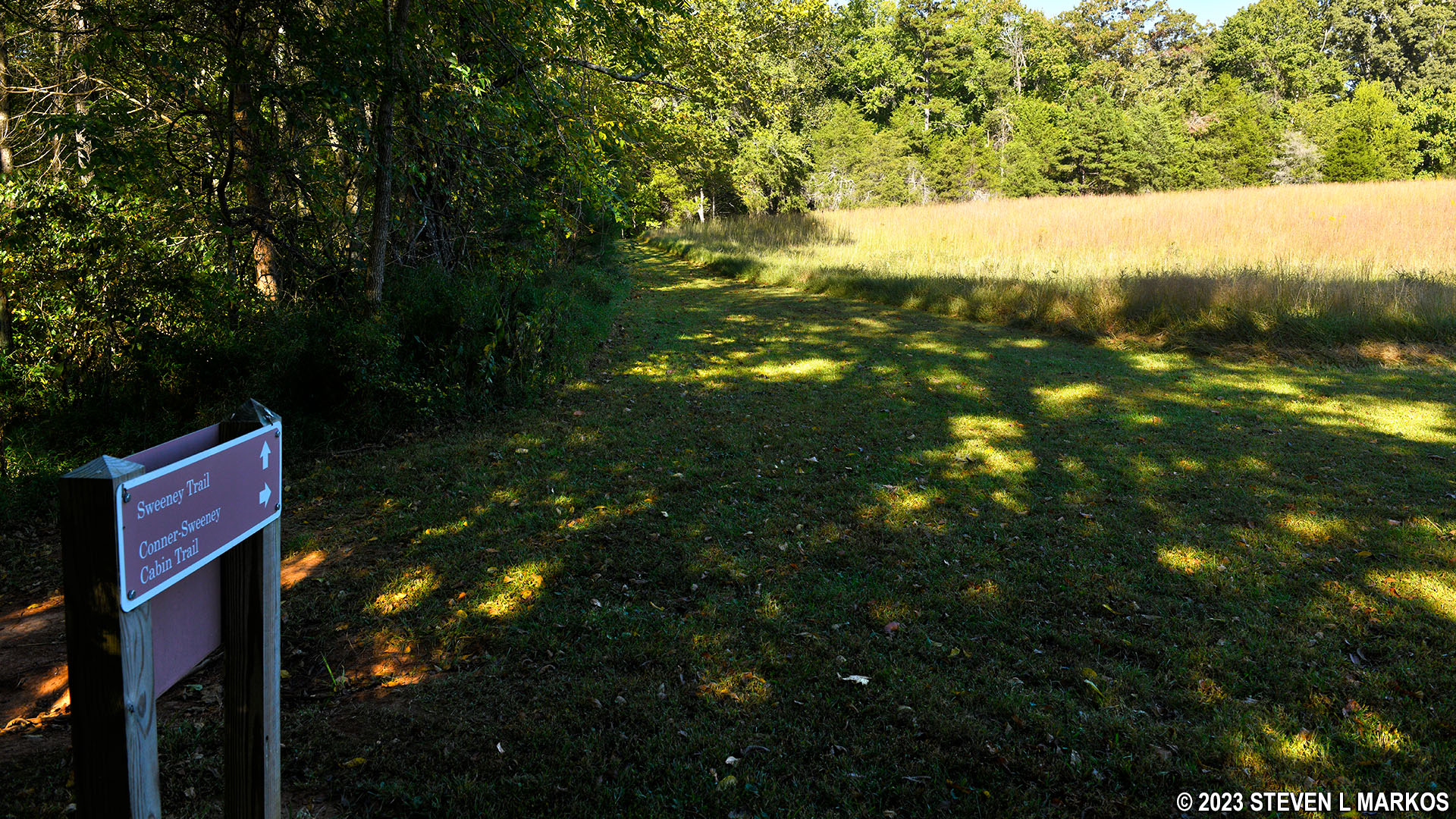
Southern intersection of the Sweeny Trail and the Conner-Sweeney Cabin Trail at Appomattox Court House National Historical Park
The wooded section of the Sweeny Trail isn’t but a few hundred feet long, so you’ll soon be back out in the sunshine. After a tenth of a mile the trail dead ends at a gravel service road. Take a right to continue.
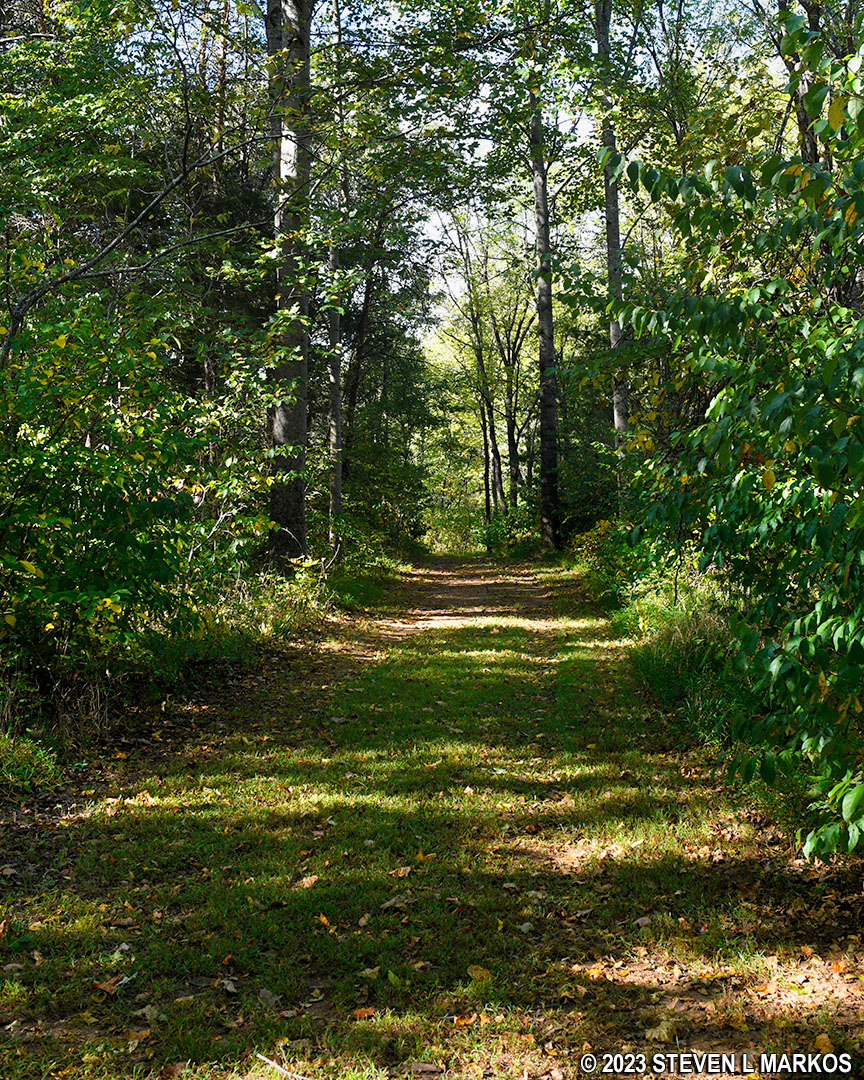
Wooded section of the Sweeney Trail at Appomattox Court House National Historical Park
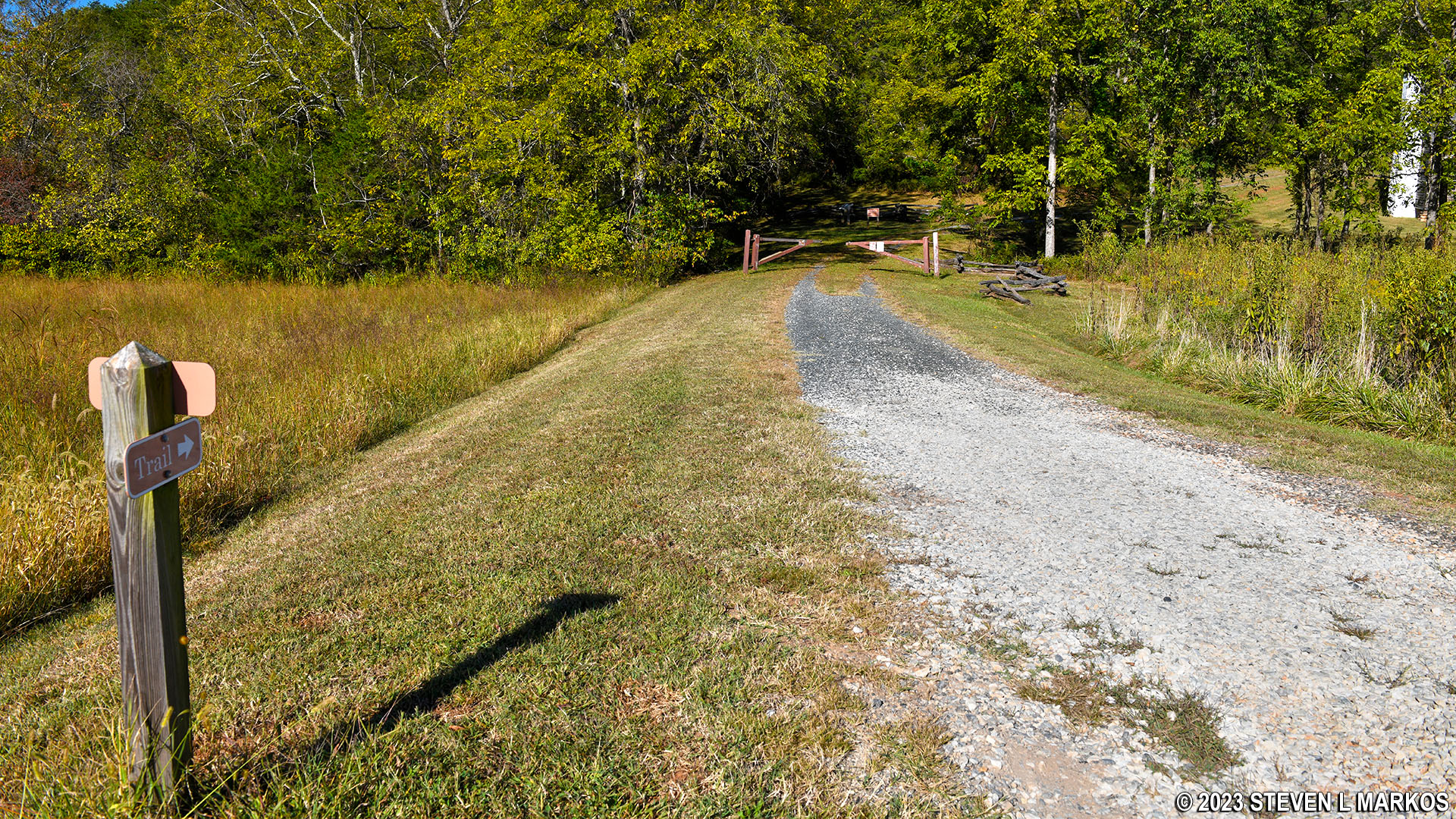
Sweeney Trail at the intersection with a gravel service road, Appomattox Court House National Historical Park
Follow the gravel road for 200 feet, then turn left back onto the earthen Sweeney Trail. A directional sign and the Charles Sweeney Cabin (c. 1830) are at the intersection. Charles was an uncle of Joel Sweeney. He served in the Confederate Army beginning in March 1862, and he ended his fighting days at the Battle of Appomattox Court House, one of the lucky Confederate soldiers to end the war at home.
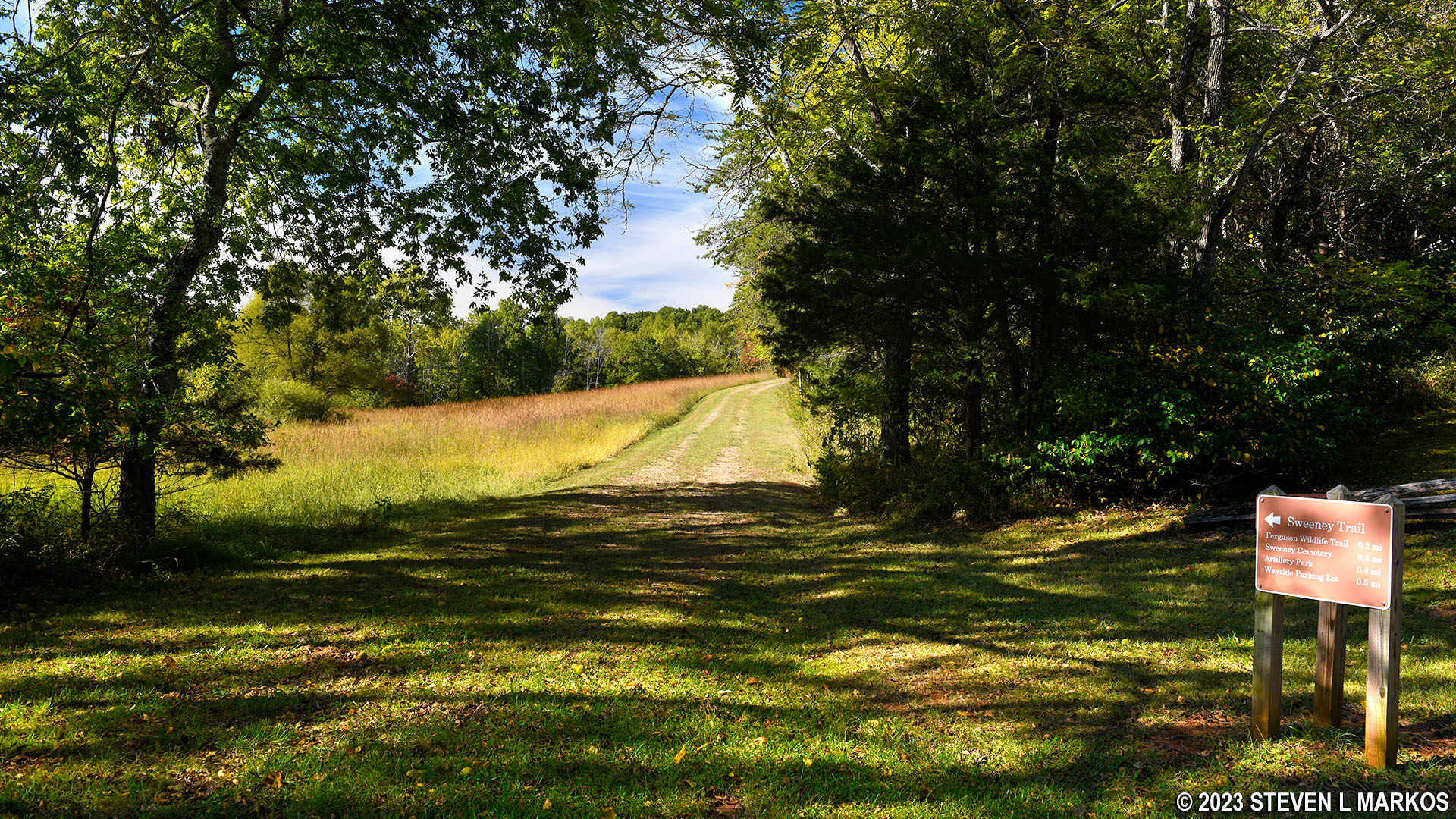
Sweeney Trail continues south from the gravel service road, Appomattox Court House National Historical Park

Charles Sweeney Cabin at Appomattox Court House National Historical Park
From here to the end, the Sweeney Trail is a little hilly, though always easy to hike. It now follows a tree line along another open field for a little over a tenth of a mile before coming to the intersection with the Ferguson Wildlife Trail (.7 mile from the start). If you plan on adding this trail to your hike, do so now. It loops around and connects back to the Sweeney Trail near the Appomattox River parking lot. To stay on the Sweeney Trail, take a right at the intersection.
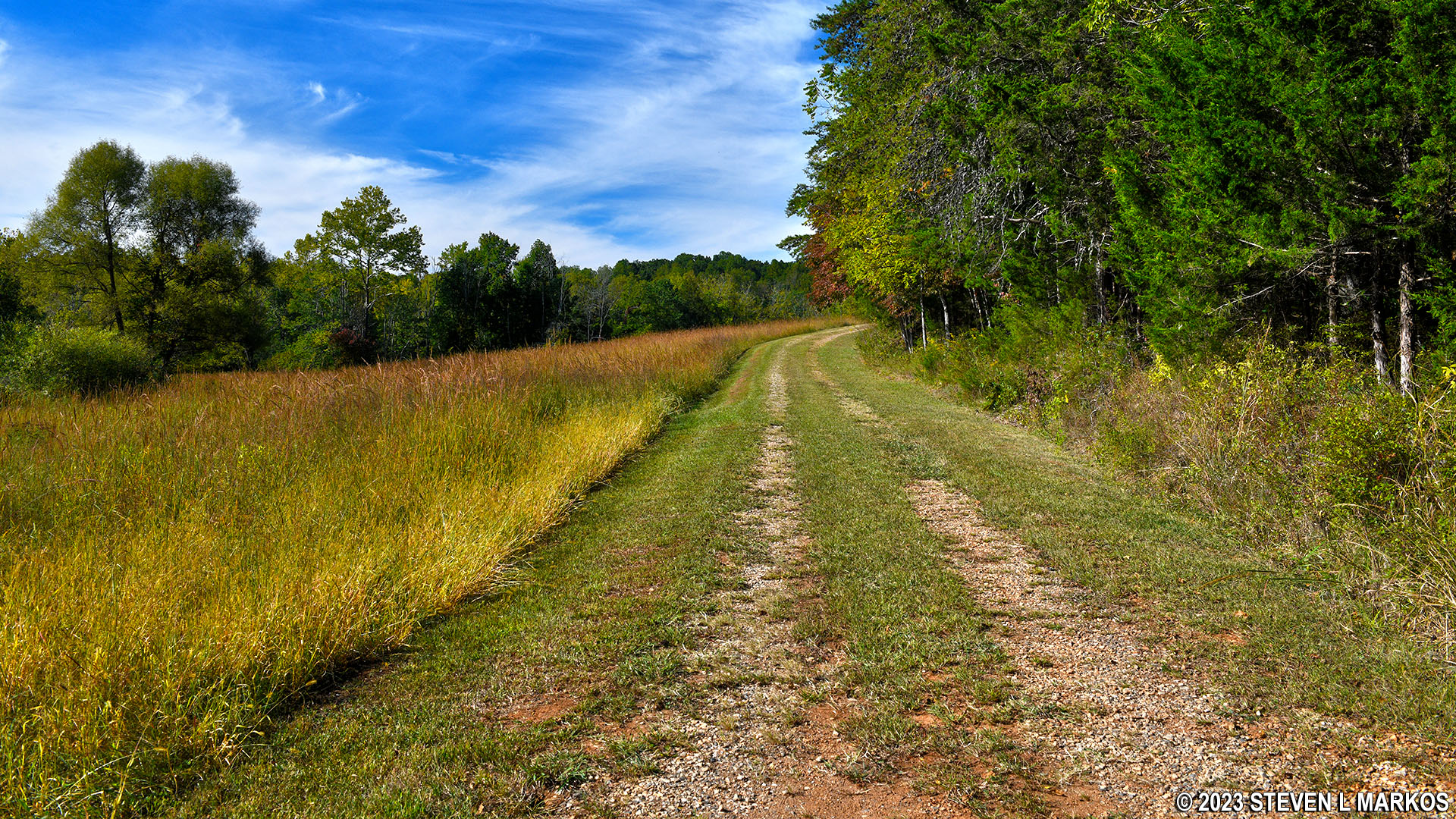
Sweeney Trail north of the intersection with the Ferguson Wildlife Trail at Appomattox Court House National Historical Park
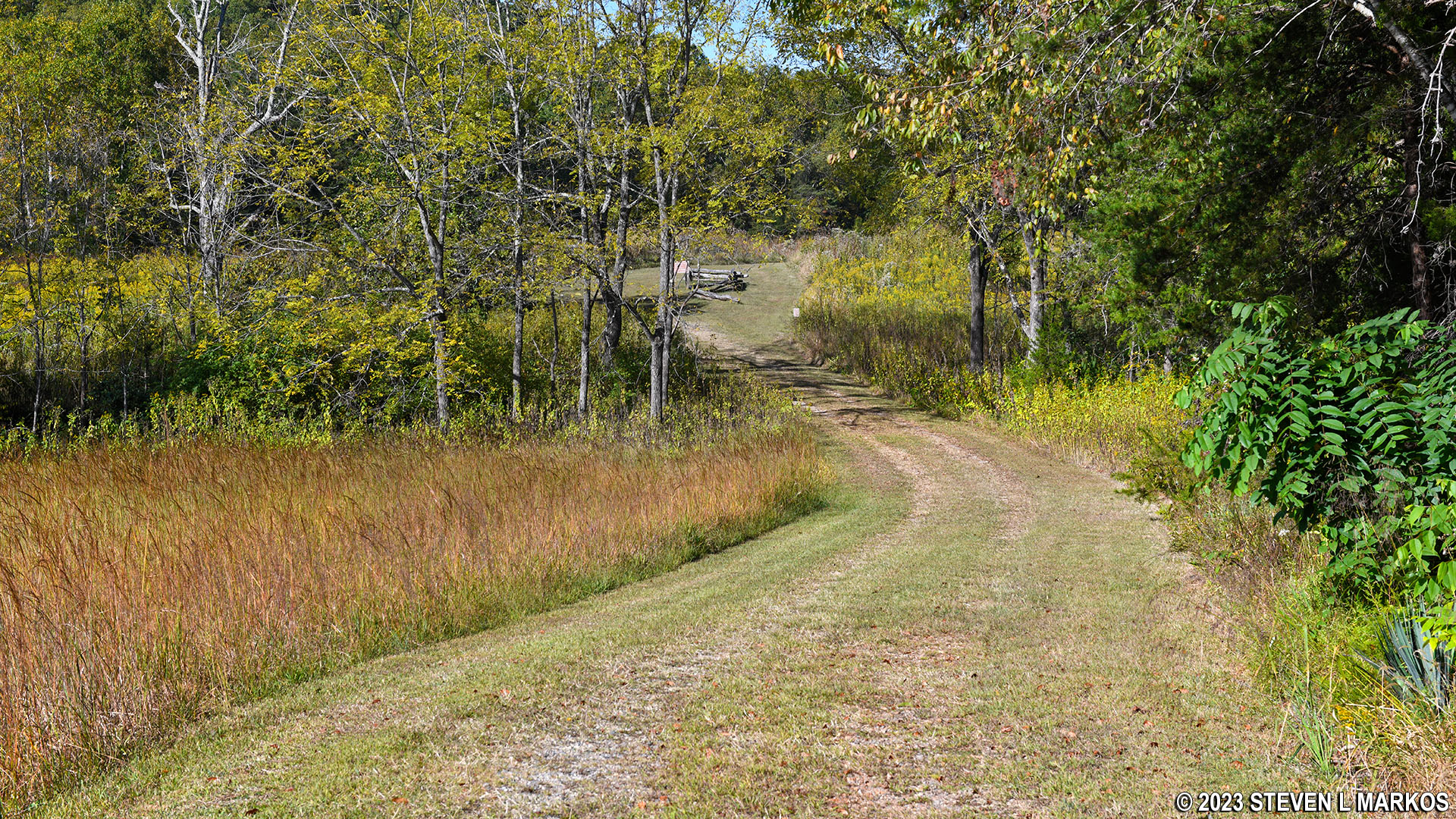
Sweeney Trail approaches the intersection with the Ferguson Wildlife Trail at Appomattox Court House National Historical Park
The second Ferguson Wildlife Trail intersection is a tenth of a mile from the first, but before getting there you’ll come to the Sweeney Family cemetery. Joel Sweeney is buried here.
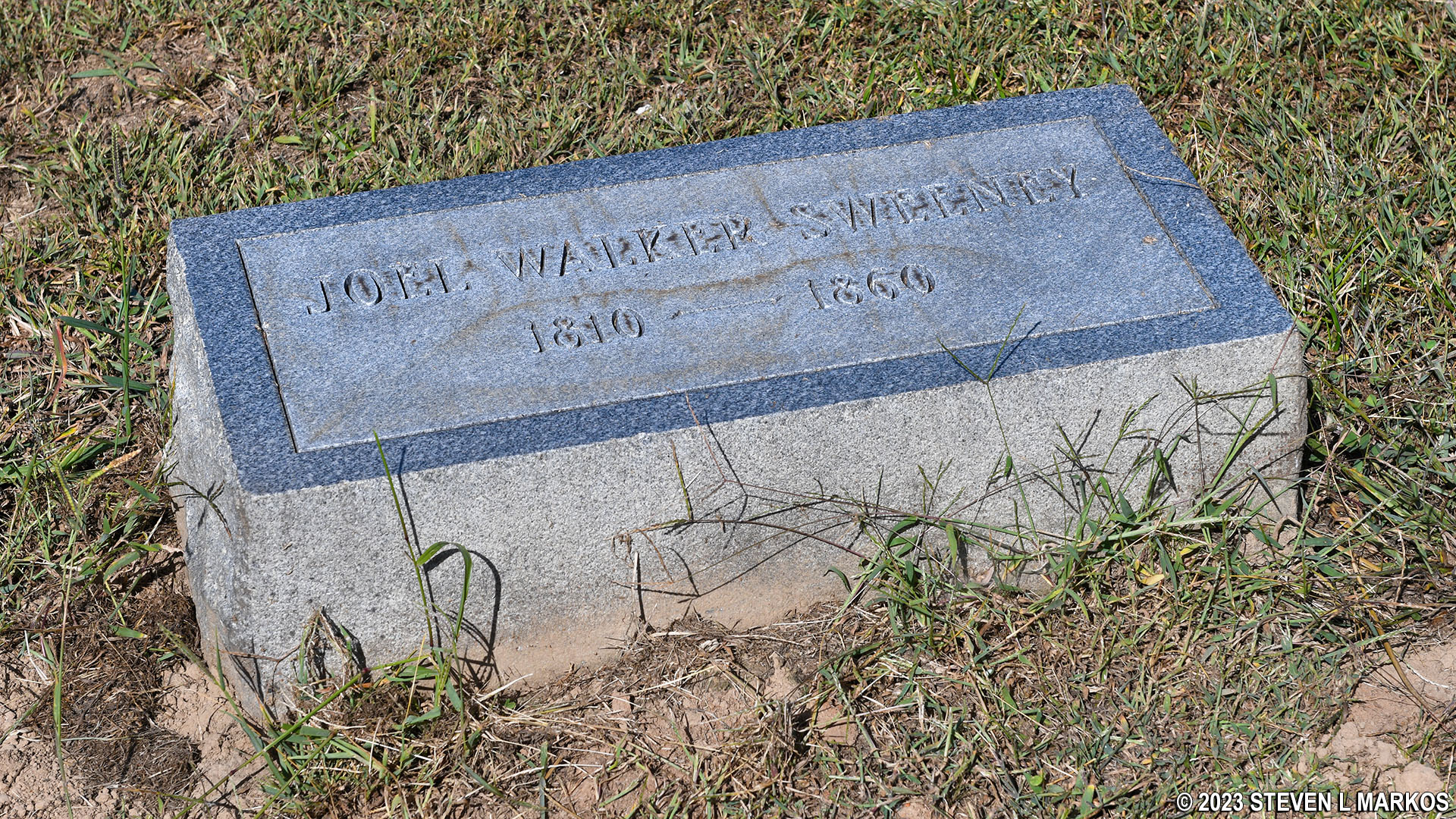
Grave of Joel Sweeney at Appomattox Court House National Historical Park
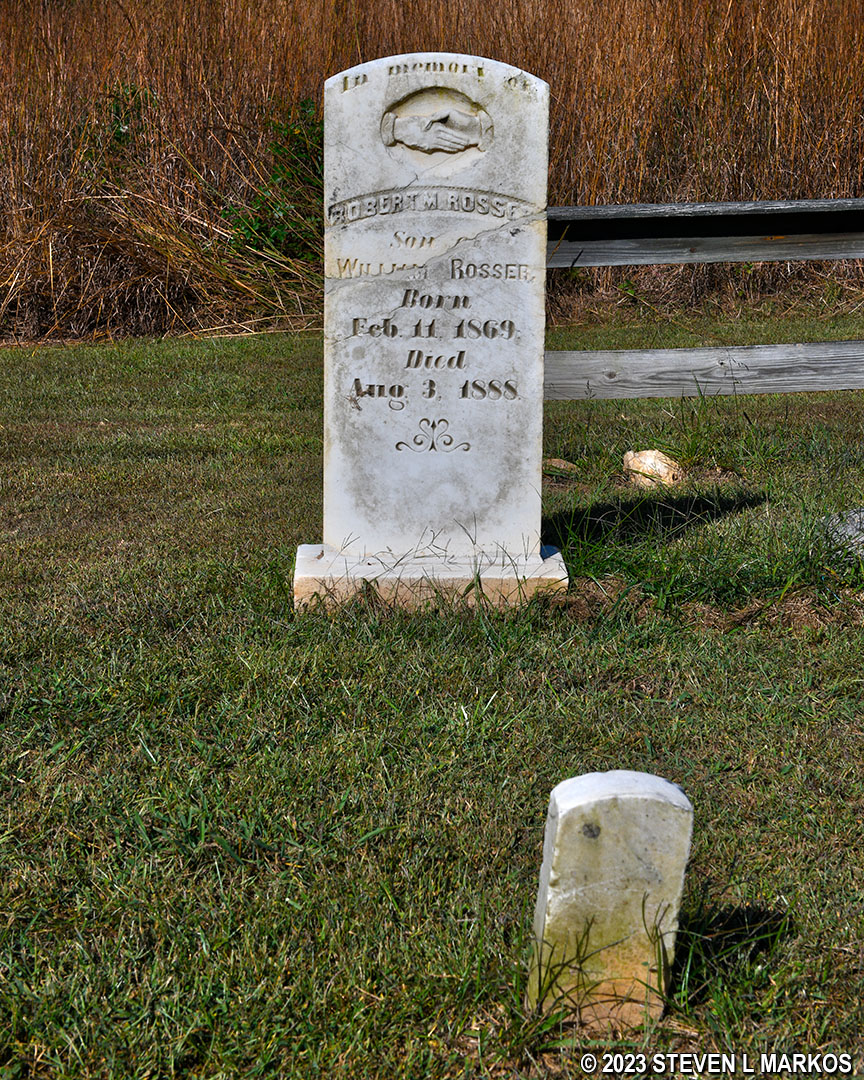
Grave in the Sweeney Cemetery near the Appomattox River, Appomattox Court House National Historical Park
When you get to the second Ferguson Wildlife Trail intersection, continue straight. The southern parking lot near the Appomattox River is only a tenth of a mile away. Just before it is a display of artillery with caissons (supply wagons) at what is known as Artillery Park. This is the area where the Confederates surrendered all of their artillery on April 10, 1865.
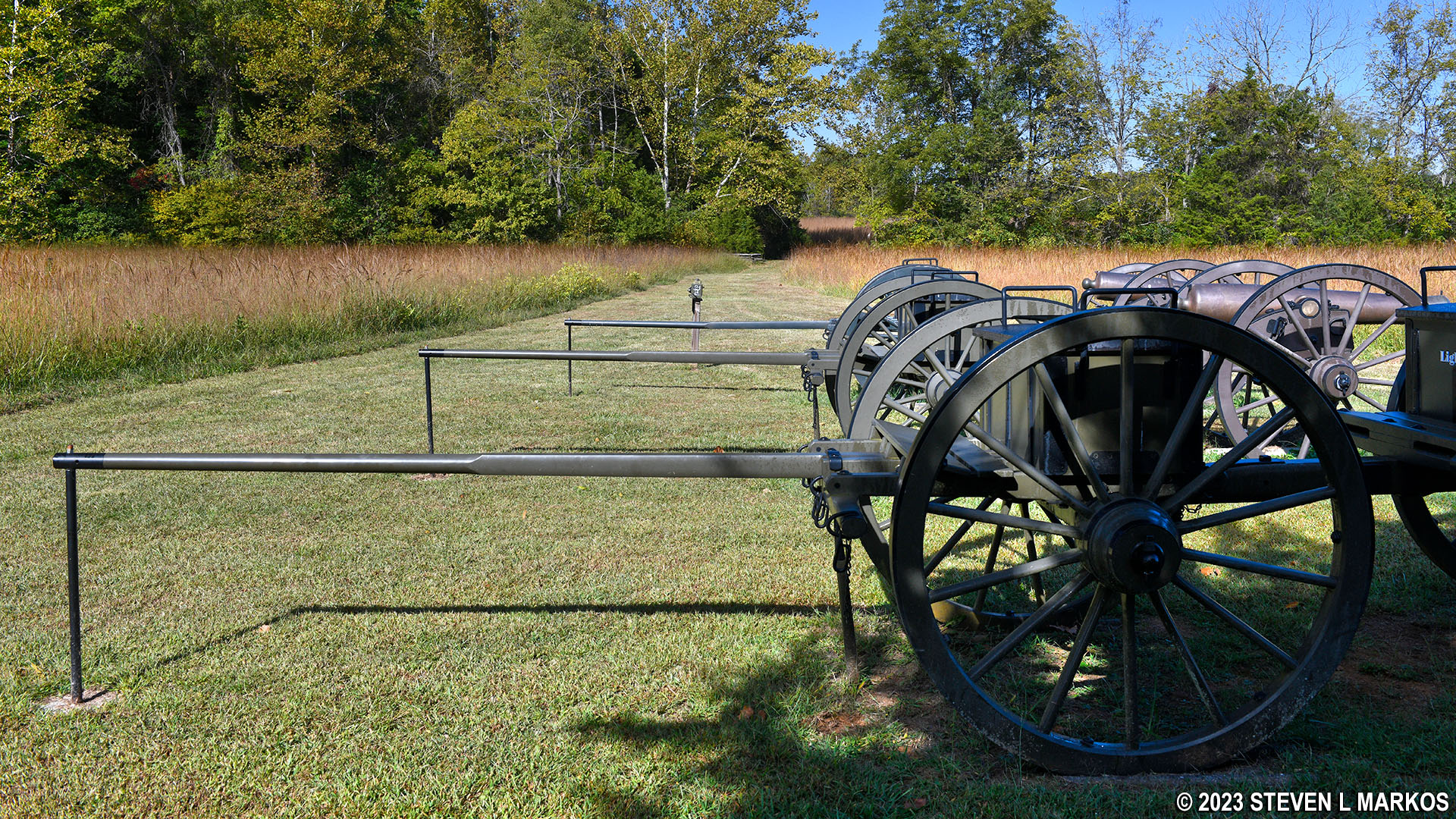
Artillery Park at Appomattox Court House National Historical Park
Thus ends the Sweeney Trail, one that I highly recommend due to the number of historical points of interest, and because you can connect to two other trails that are also worthwhile. The hike took me 45 minutes, which gave me time to take a look at the cabin and cemetery. This time does not include the hike back, either on the Sweeney Trail or via one of the other two trails.
With a few exceptions, use of any photograph on the National Park Planner website requires a paid Royalty Free Editorial Use License or Commercial Use License. See the Photo Usage page for details.
Last updated on June 29, 2023


