

Visitor Center at Alibates Flint Quarries National Monument
OPERATING HOURS
The Alibates Flint Quarries National Monument Visitor Center is open every day from 9 AM to 4 PM, except when closed on New Year’s Day, Thanksgiving, and Christmas. Keep in mind that times can always change, so be sure to get the latest schedule on the National Park Service’s official Operating Hours and Seasons web page for the park.
AMENITIES
- Information desk where you can ask questions and pick up a park brochure
- Reserve spots for a Ranger-guided tour of the Alibates Flint Quarries
- Souvenir and bookstore
- Park film
- Alibates Gardens (outside)
- Exhibit Area
- Restrooms

Information desk and souvenir and bookstore inside the Visitor Center at Alibates Flint Quarries National Monument
PARK FILM
The 9-minute film The Sharp Edge of Survival highlights how prehistoric and modern Native Americans, including the Clovis, Folsom, and Antelope Creek people, used the high-quality Alibates flint found in the Texas Panhandle to make tools, weapons, and other items for daily survival and trade. Through narration and historical photos, it describes how the flint was quarried and shaped into tools. The film also recounts how Charles N. Gould discovered Alibates flint in 1906. The film is suitable for all ages.
EXHIBIT AREA

Exhibit area inside the Alibates Flint Quarries National Monument Visitor Center
The exhibits inside the Visitor Center are mainly comprised of information panels that cover the flint quarried in the area and the Native peoples who utilized it. Alibates flint is only found in a roughly ten square mile area around the Canadian River.
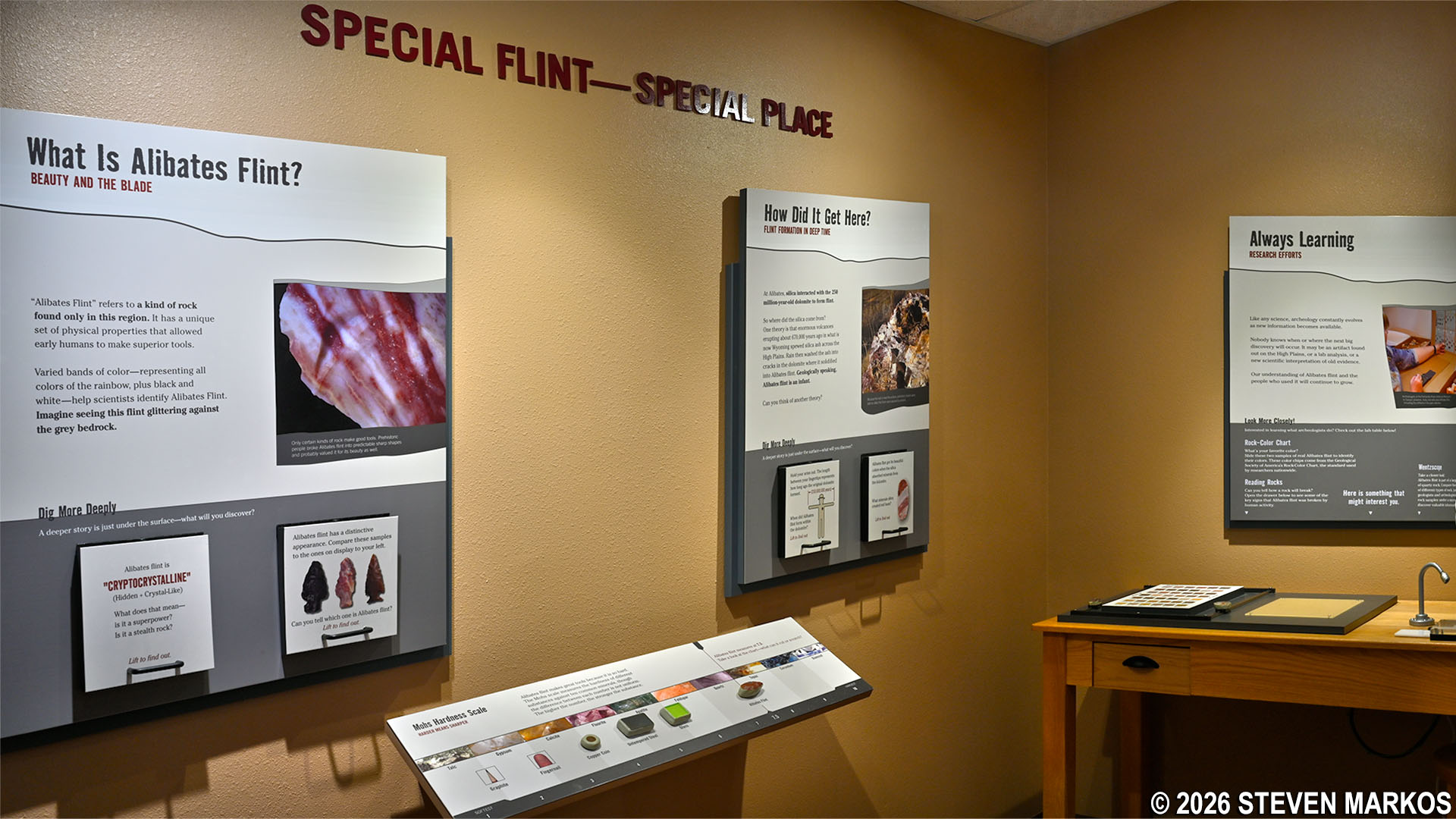
Information panels inside the exhibit area at the Alibates Flint Quarries National Monument Visitor Center
One notable exhibit is a drawer of debitage, the shards and pieces of stone that flake off during knapping (the shaping of flint with a hammer stone). The process of knapping reduces a raw stone into a finished tool. The hundreds of piles of lithic scatter (debris from worked stone) near the quarry pits at Alibates Flint Quarries National Monument are filled with debitage.
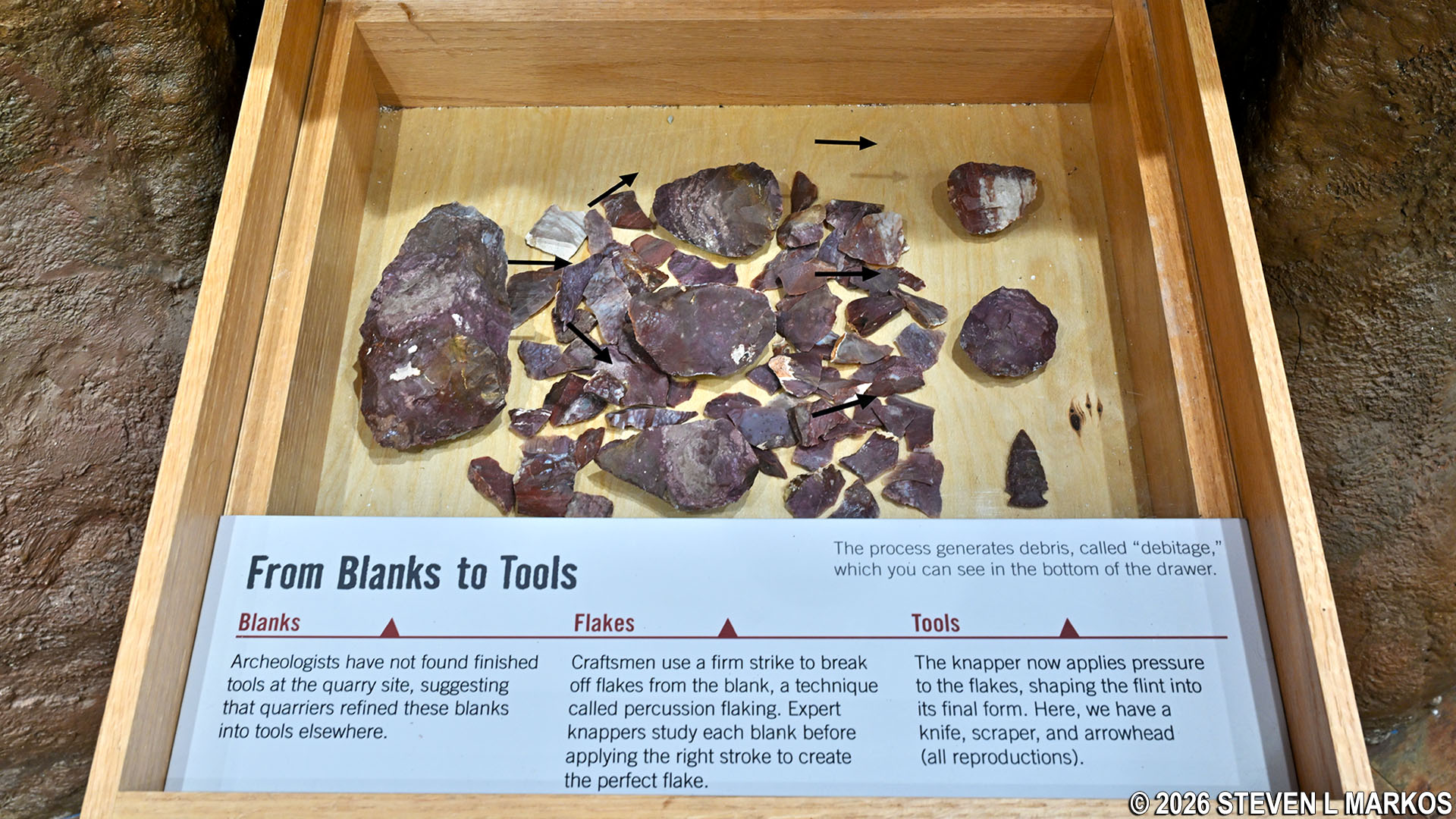
Box of debitage on display at the Alibates Flint Quarries National Monument Visitor Center
Knives, spearheads, and drill points are just a few of the items created from Alibates flint. A display case in the Visitor Center is filled with such tools, and a book below the case contains archeological notes on the specific items.
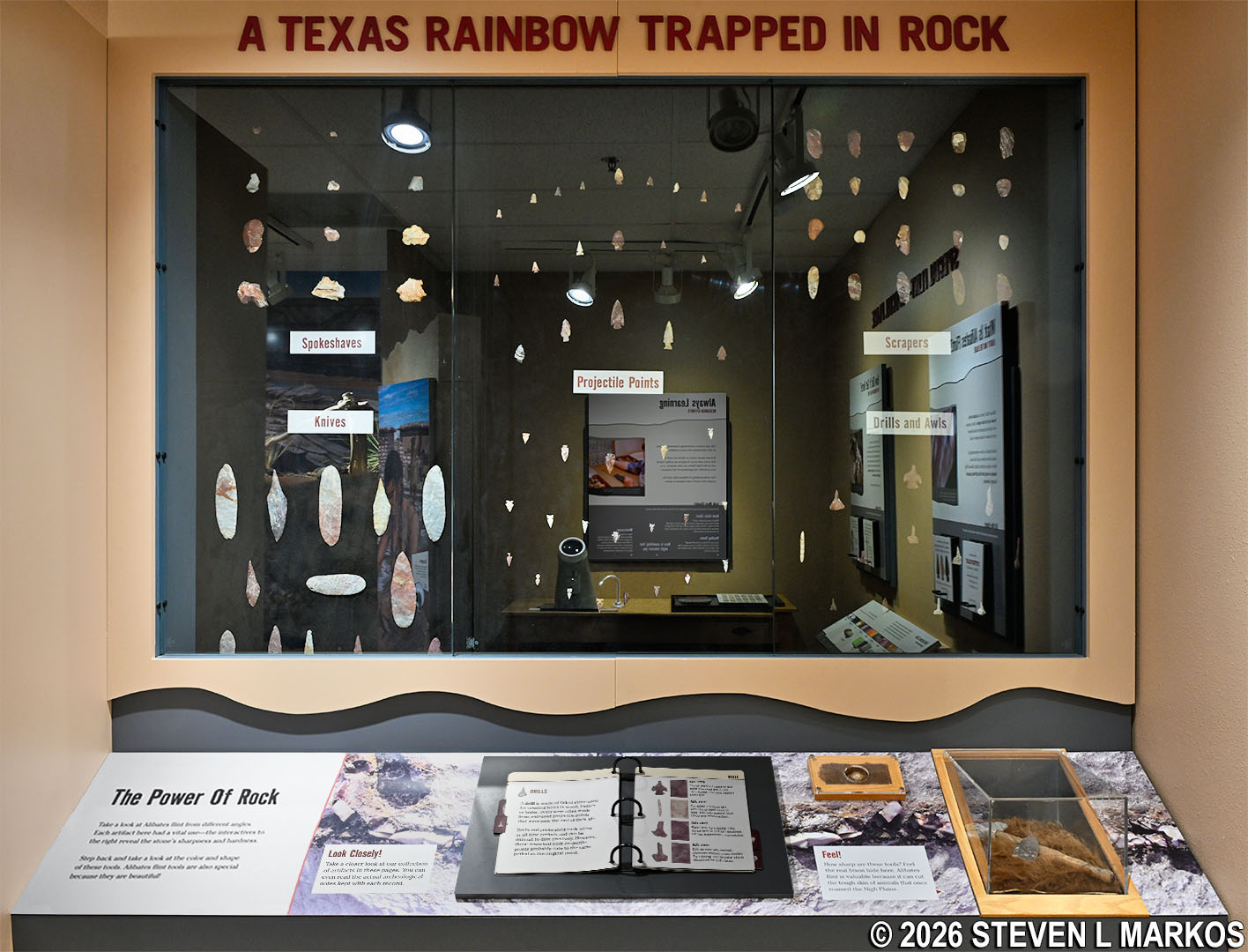
Display on different tools made from Alibates flint at the Alibates Flint Quarries National Monument Visitor Center
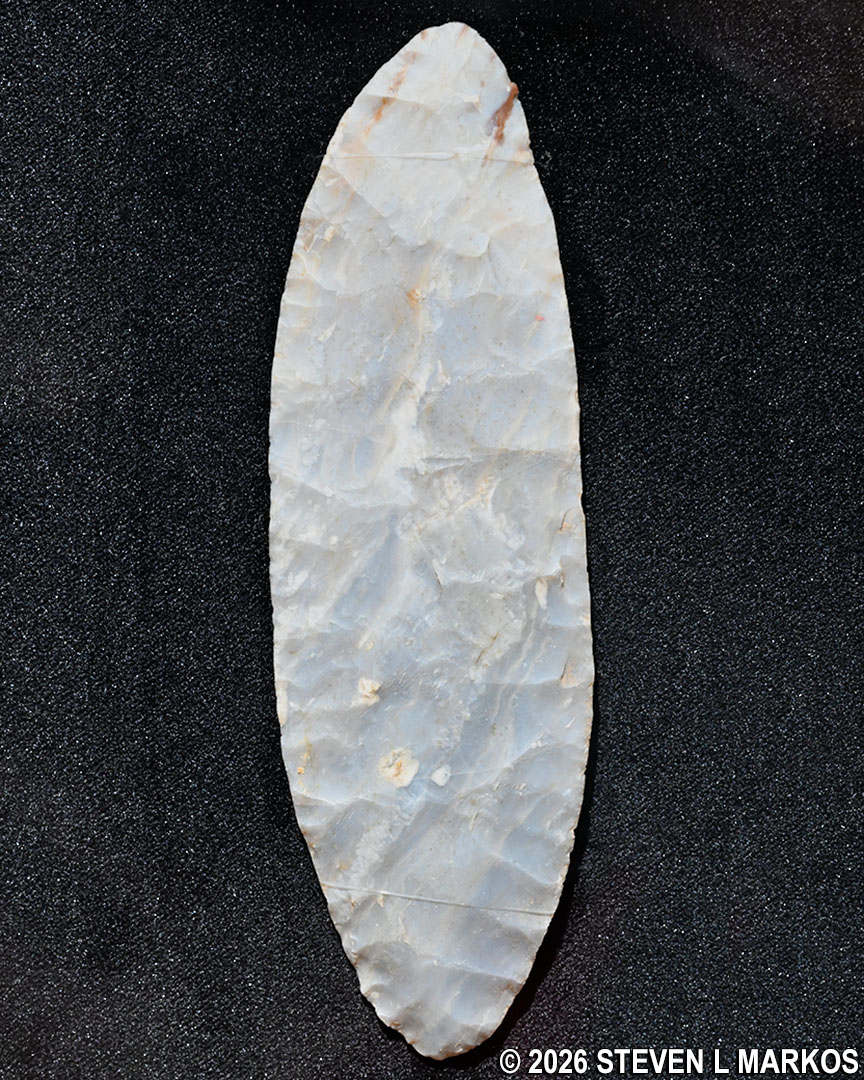
Knife made from Alibates flint on display at the Alibates Flint Quarries National Monument Visitor Center
One of the exhibits is a partial replica of an Antelope Creek quarry site. It depicts what it would have been like to work at the quarry from around 1150 to 1450. Replicas of some of the tools used to dig and break up the flint are also on display.

Replica of an Antelope Creek quarry site at the Alibates Flint Quarries National Monument Visitor Center
Two wall maps show the multiple sites that were quarried in what is now Alibates Flint Quarries National Monument and the adjacent Lake Meredith National Recreation Area. There is also a topography table map of the park and the surrounding area.
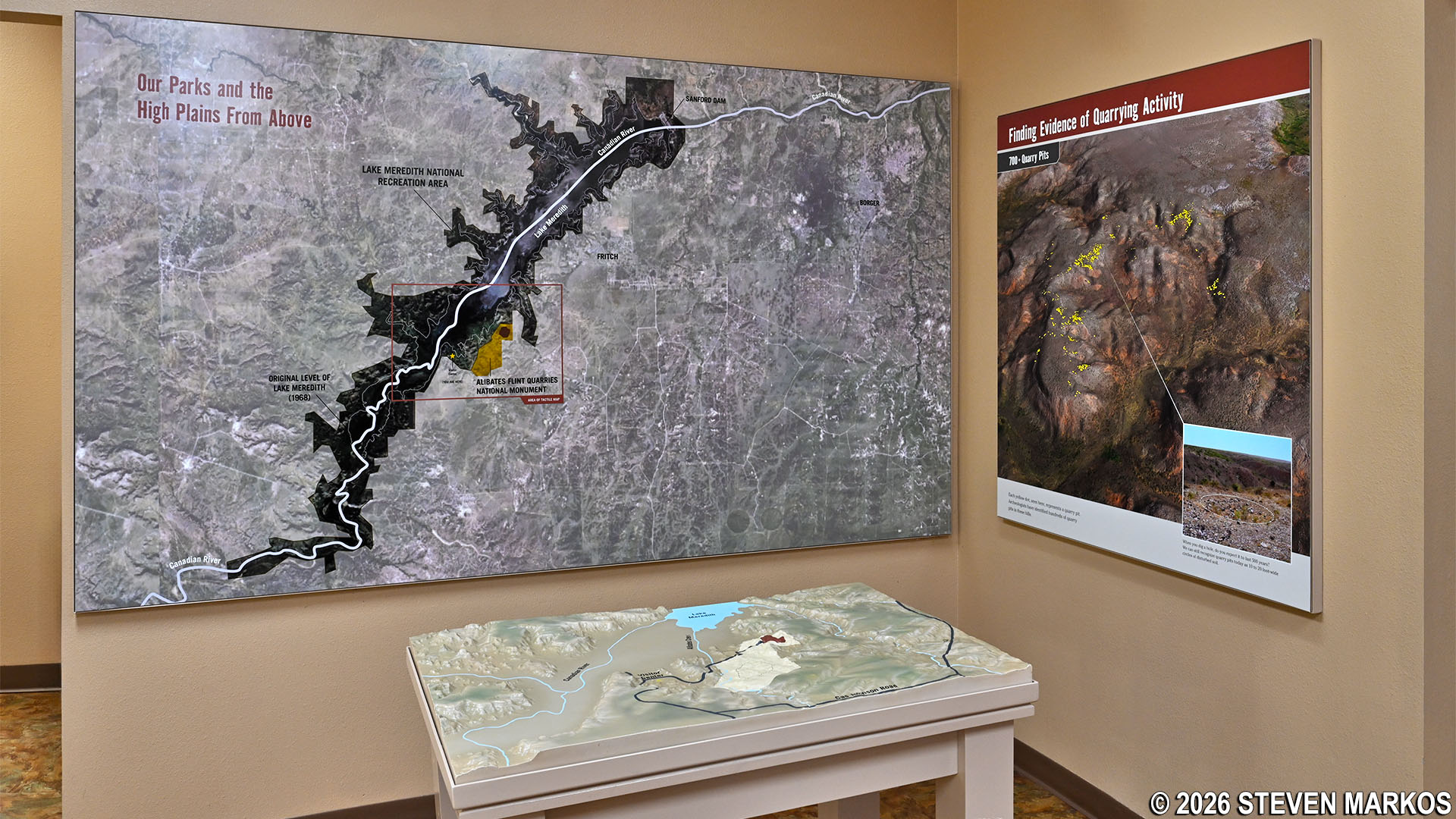
Maps and topography table inside the Alibates Flint Quarries National Monument Visitor Center
Also at the Visitor Center is a modern video on the flint-knapping process. Traditional and modern knapping tools are displayed beneath the video screen. An option to play the video with captions is available.
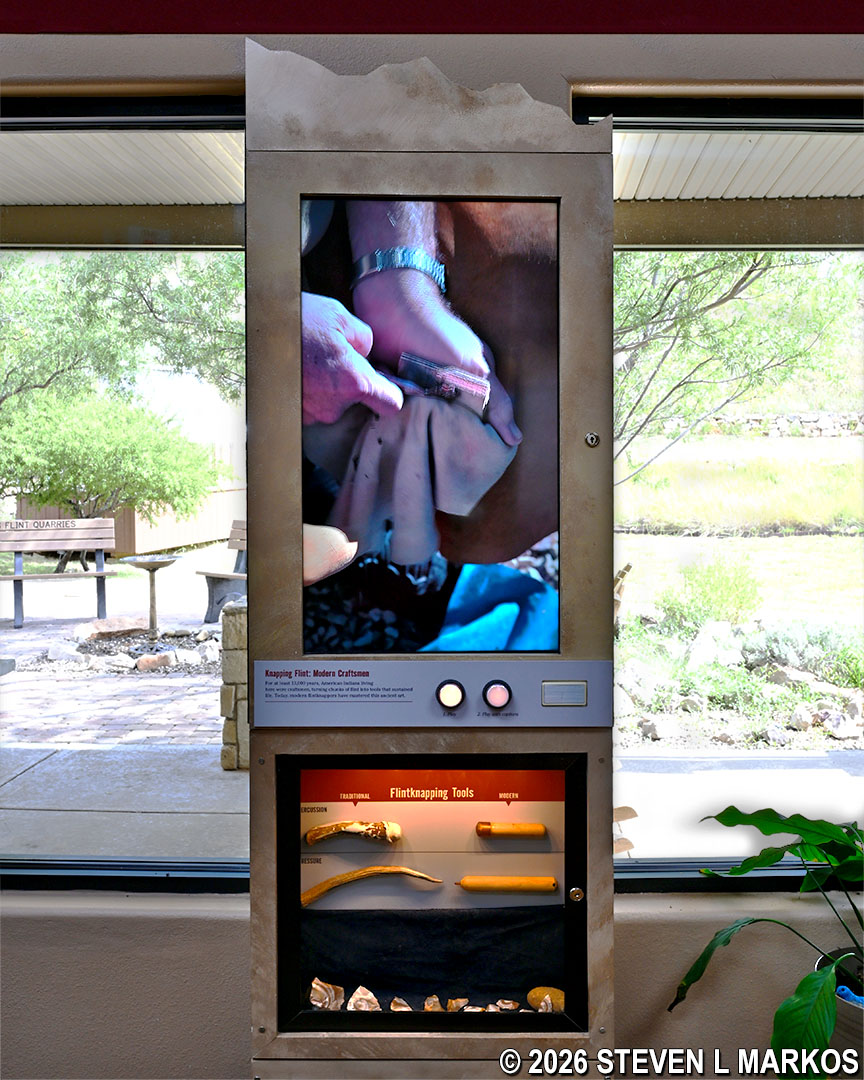
Flintknapping video at the Alibates Flint Quarries National Monument Visitor Center
ALIBATES GARDENS
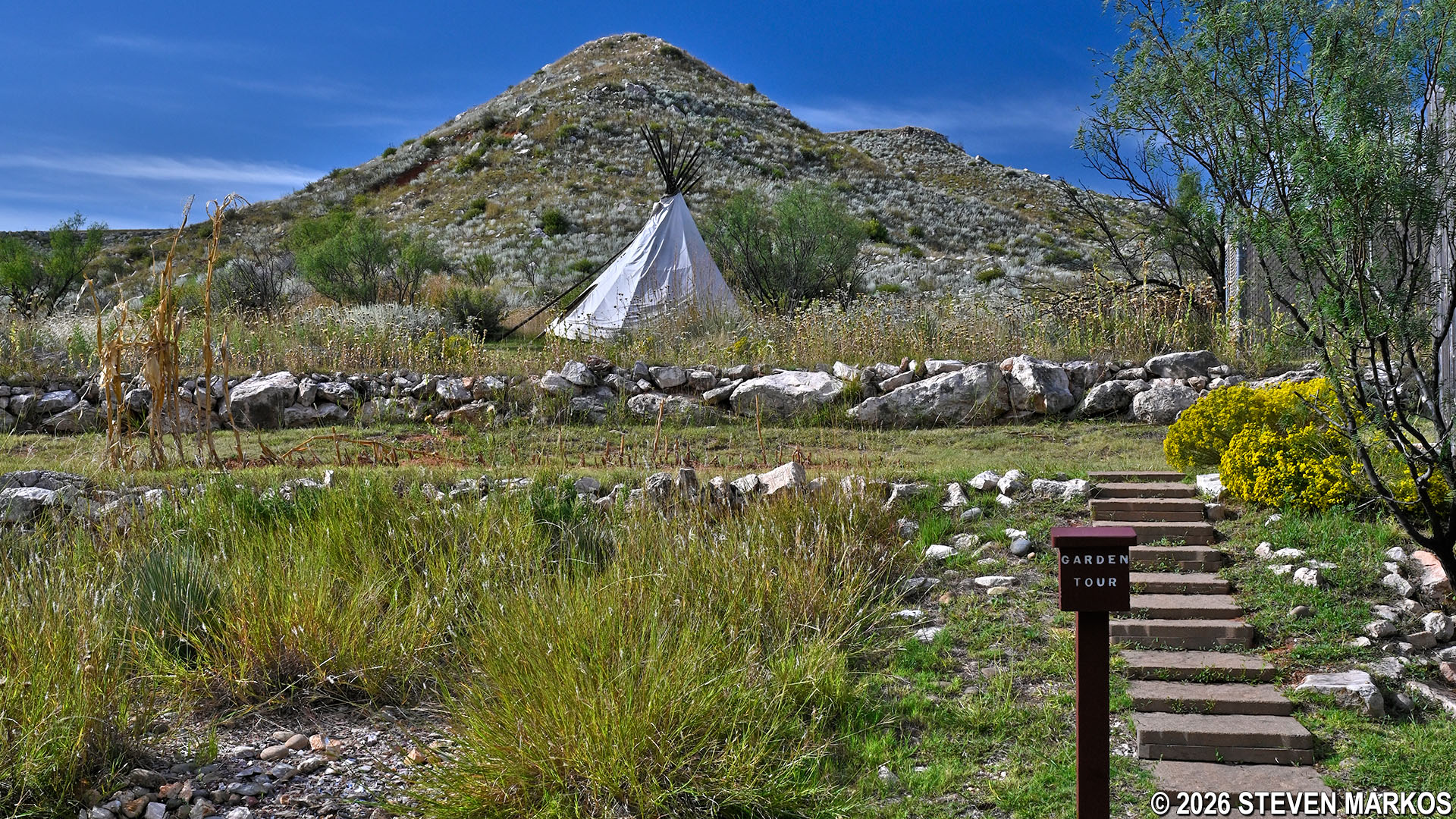
Alibates Gardens outside the Alibates Flint Quarries National Monument Visitor Center
Visitors can tour the gorgeous Alibates Gardens located just outside the Visitor Center building. The gardens are landscaped using xeriscaping, a low-maintenance, sustainable method that uses carefully placed rocks, mulch, and gravel to help retain soil moisture and reduce the need for irrigation in the area’s arid climate.
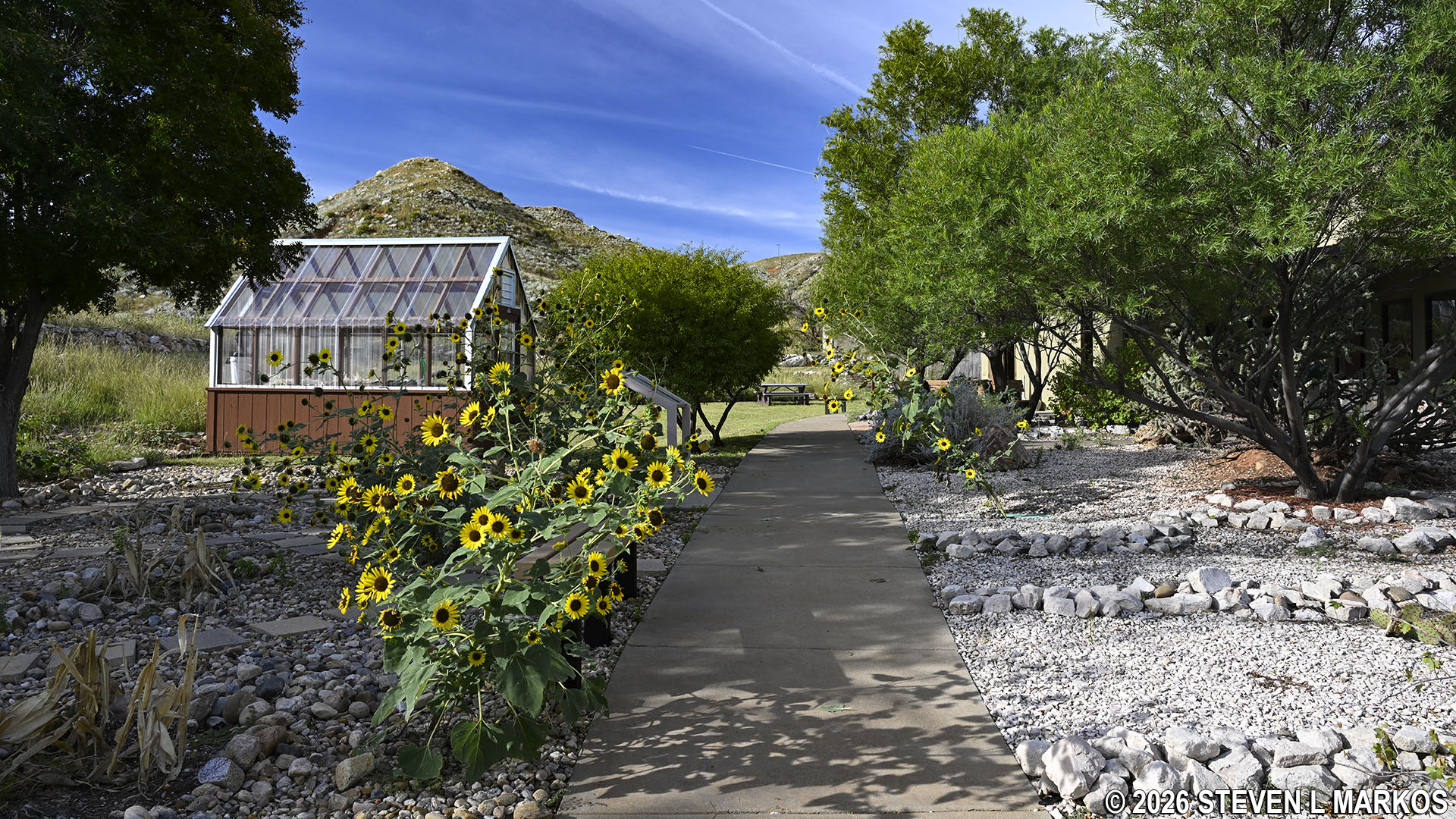
Alibates Gardens at the Alibates Flint Quarries National Monument Visitor Center
Part of the gardens is dedicated to the “three sisters” of corn, beans, and squash. When planted together, they help each other thrive. Corn provides tall stalks for beans to climb, beans add nitrogen to fertilize the soil, and the large leaves of squash shade the ground, helping to retain moisture and prevent weeds.
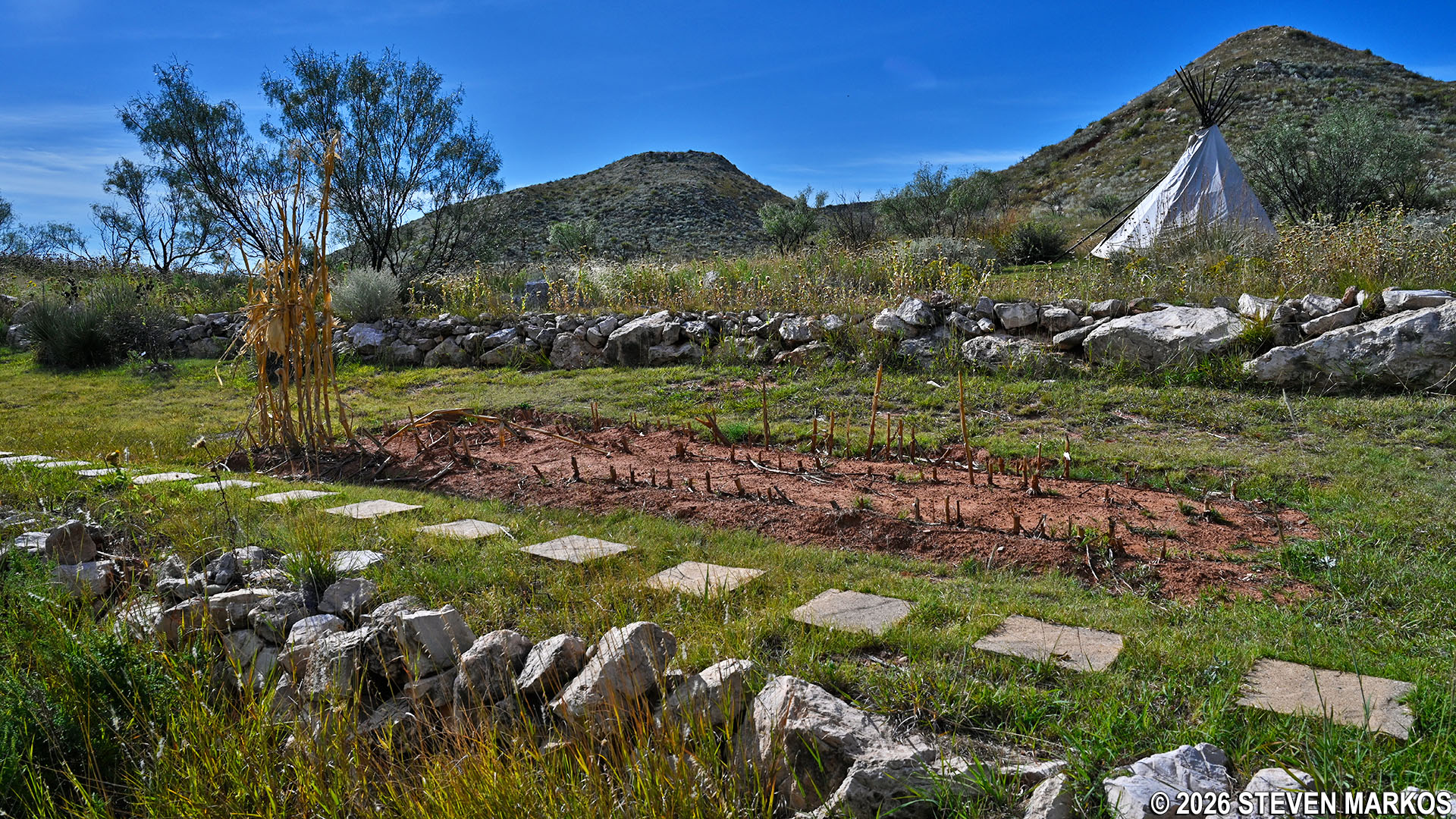
Section of the Alibates Gardens where the “three sisters” are planted, Alibates Flint Quarries National Monument
Another point of interest is the certified Monarch Butterfly Garden. It provides milkweeds, nectar sources, and shelter needed to sustain the butterflies. Monarchs migrate through Texas, typically in the fall, along their path to Mexico. Alibates Flint Quarries National Monument offers a Monarch Butterfly Conservation Workshop in late September that includes a guided tour of the Monarch Waystation and a hands-on watercolor session focused on painting native wildflowers.
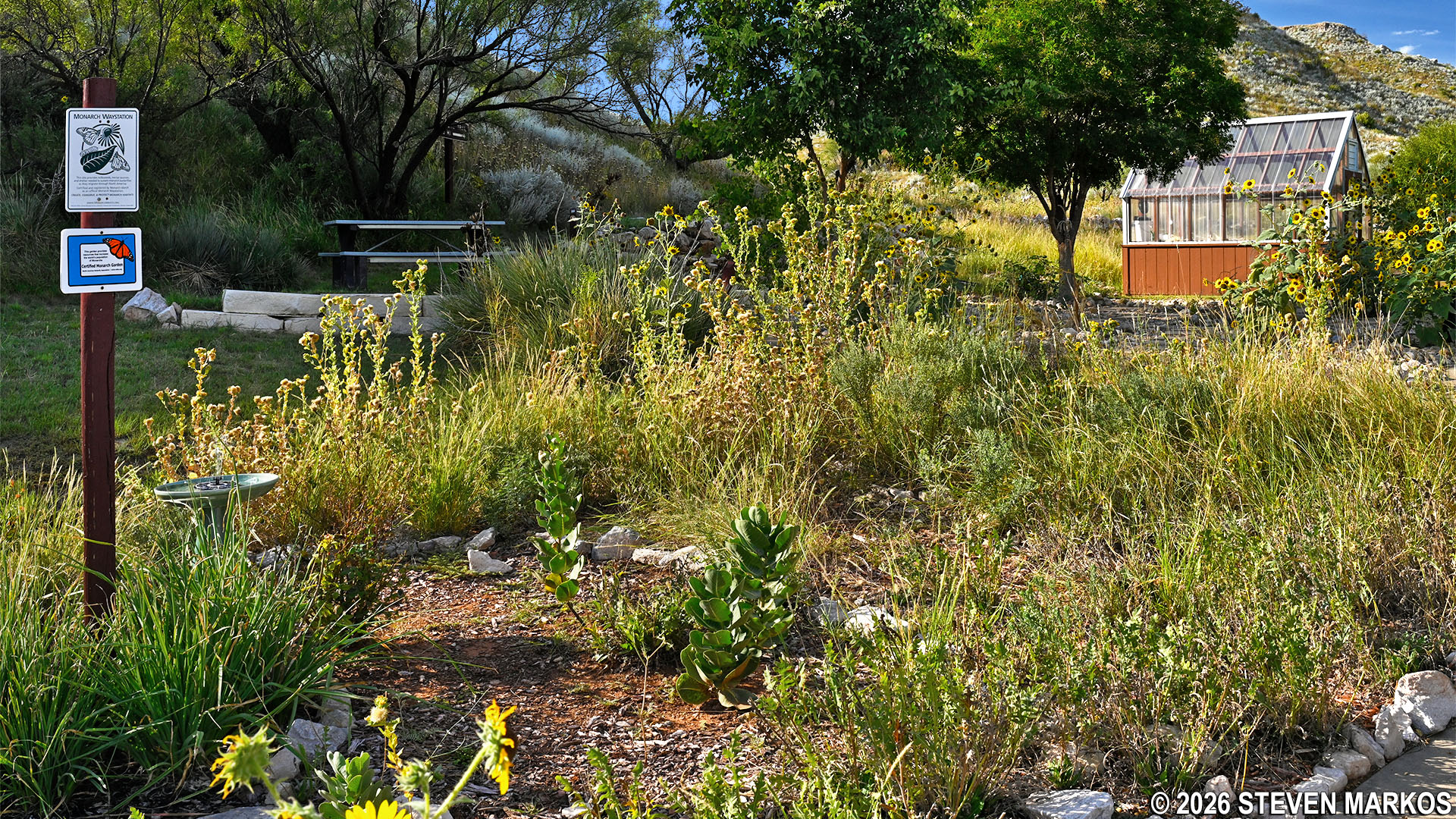
Monarch butterfly station at the Alibates Gardens beside the Alibates Flint Quarries National Monument Visitor Center
In the middle of the gardens is a seating area with a birdbath in the center. Visitors can sit in the gardens and observe the wildlife that makes use of the native plants.
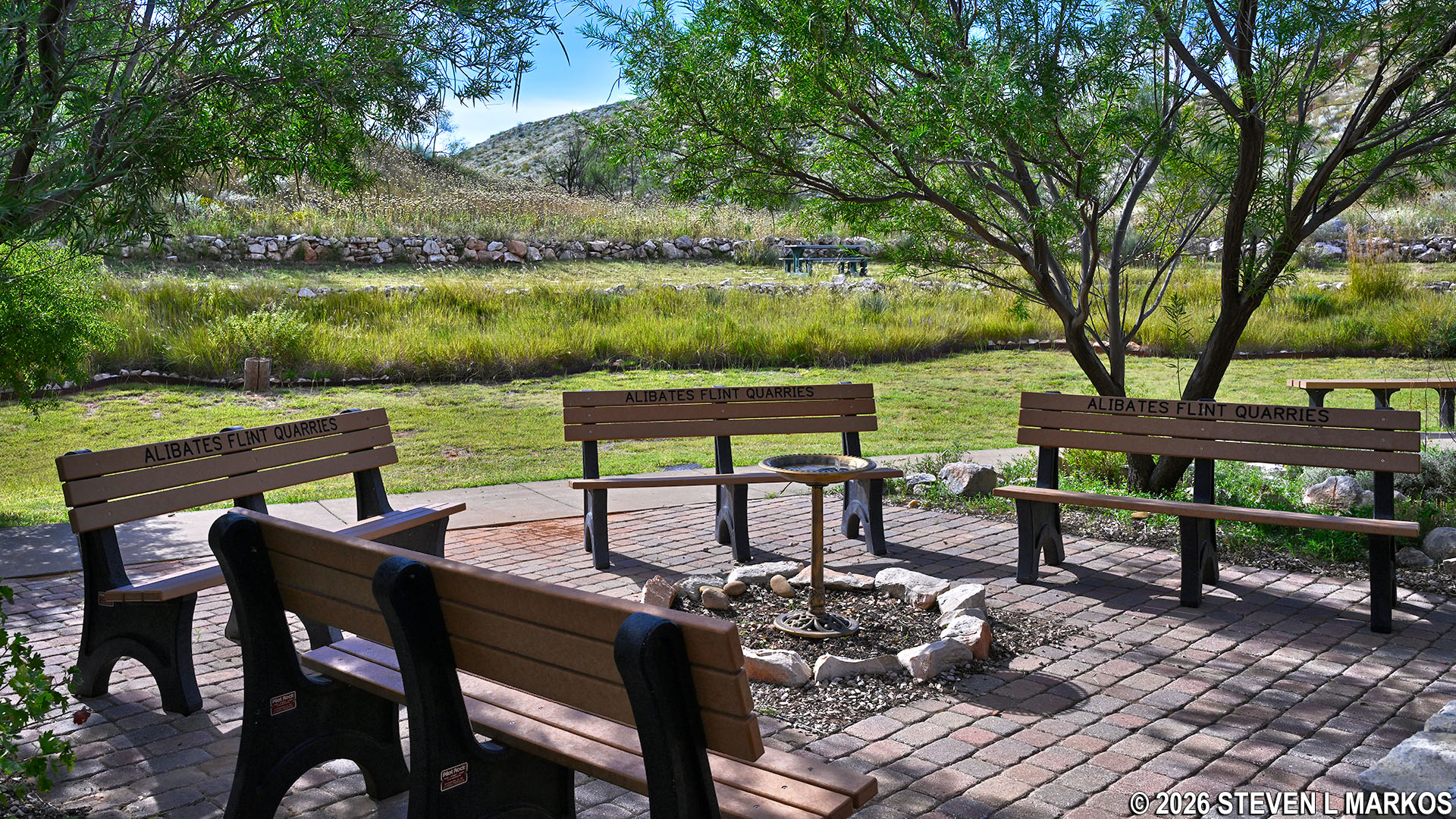
Seating area in the Alibates Gardens at the Alibates Flint Quarries National Monument Visitor Center
The gardens also have a greenhouse to ensure plants thrive throughout the seasons. Medicinal and edible plants such as sunflowers, grapes, and sage were used by Native peoples for health and sustenance, and they continue to be grown in the Alibates Gardens.
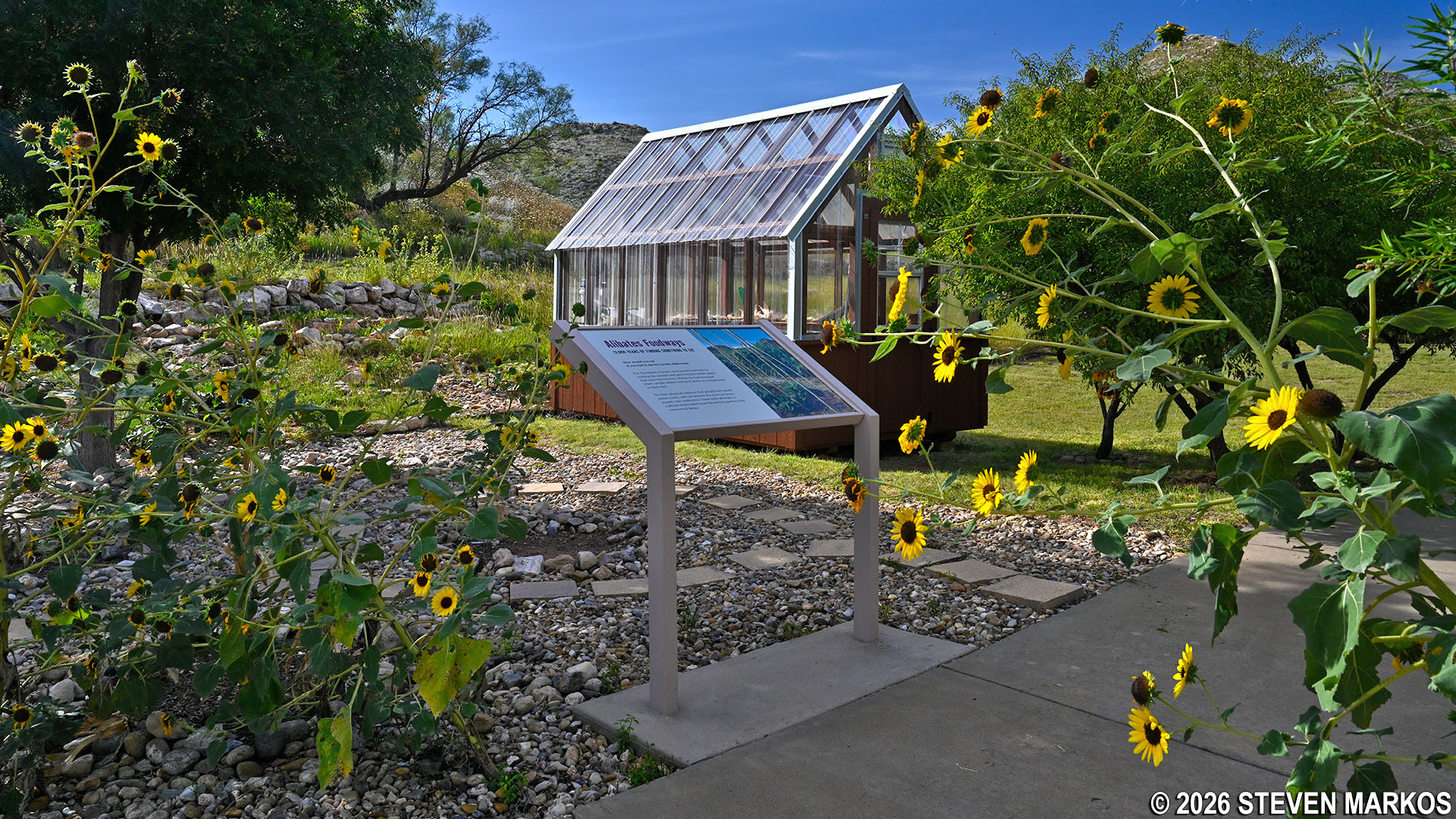
Greenhouse in the Alibates Gardens at the Alibates Flint Quarries National Monument Visitor Center
SCHEDULING YOUR TIME
Plan to spend about 30 to 45 minutes at the Alibates Flint Quarries National Monument Visitor Center. This gives you enough time to watch the park film, check out the exhibit area, and take a walk through the Alibates Gardens.
With a few exceptions, use of any photograph on the National Park Planner website requires a paid Royalty Free Editorial Use License or Commercial Use License. See the Photo Usage page for details.
Last updated on February 7, 2026


