

Oxon Hill Farm in Maryland
The main draw to Oxon Cove Park is Oxon Hill Farm. A big hit with children, but with plenty to enjoy for all ages, the farm offers daily activities such as chicken feeding and guided farm tours. In addition to the scheduled activities, visitors can take a self-guided tour of the farm grounds and see a collection of twenty-two historical and modern farm buildings, antique farm equipment, and small museums that focus on agriculture. Be sure to stop by the Visitor Center and pick up the Self-Guided Farm Walking Tour brochure. Plan to spend 1-2 hours for the tour, and longer if you participate in any of the scheduled Farm Programs.

Oxon Hill Farm Visitor Center Barn (left) and Farm Museum (right)
Oxon Hill Farm dates back to the late 1600s when John Addison owned the property. Addison ran a plantation called Oxon Hill Manor, and using slave labor he grew tobacco, oats, and corn. His descendants kept the farm in the family until selling 206 acres to Samuel DeButts in the early 1800s.
The DeButts renamed the plantation Mount Welby and operated it until 1843. The property had a number of owners after that until the federal government purchased it in 1891 for use as a farm to grow food for the mentally ill patients at St. Elizabeth’s Hospital (founded in 1855). Named Godding Croft after hospital superintendent Dr. William Godding (croft is a Scottish term for small farm), patients did much of the farming, as this was thought to be psychologically and physically therapeutic. The farm continued to operate until 1959. Most of the antique equipment and machinery on the property today is from the Godding Croft era.
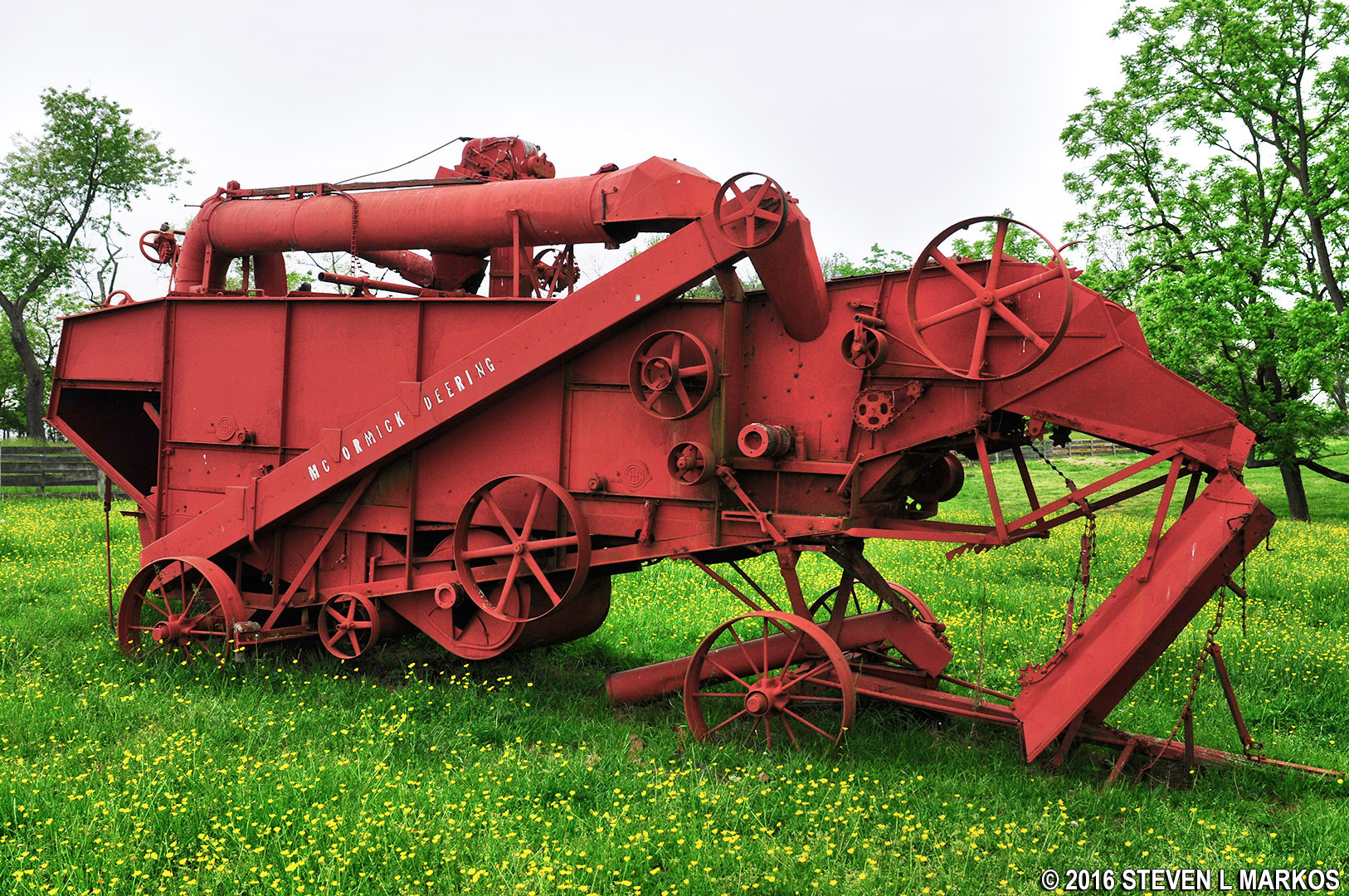
Antique farm machine at Oxon Hill Farm in Maryland
In 1967, the land became part of the National Park system. The idea was to develop a park where inner city residents of Washington, D. C., could come to experience farm life for an afternoon. Oxon Hill Farm re-creates an early 1900s farm, and while it started out as a petting zoo of sorts, today it is much more education-oriented. It is a favorite of families with children and a popular destination for school groups from the Washington area.
The Self-Guided Farm Walking Tour brochure has a description of all twenty-two buildings found on the farm. Three are original to the DeButts era, five are from the Godding Croft era, and the rest were built between 1970 and 2006 by the National Park Service. There is no set route through the farm, so proceed as you wish.
When entering Oxon Hill Farm from the parking lot, if on foot, use the right of two entrances, the one with the posted sign that reads Service Vehicles Only. This does not bar pedestrians, only those driving non-service vehicles. If you are riding your bike into the park, use the entrance on the left.
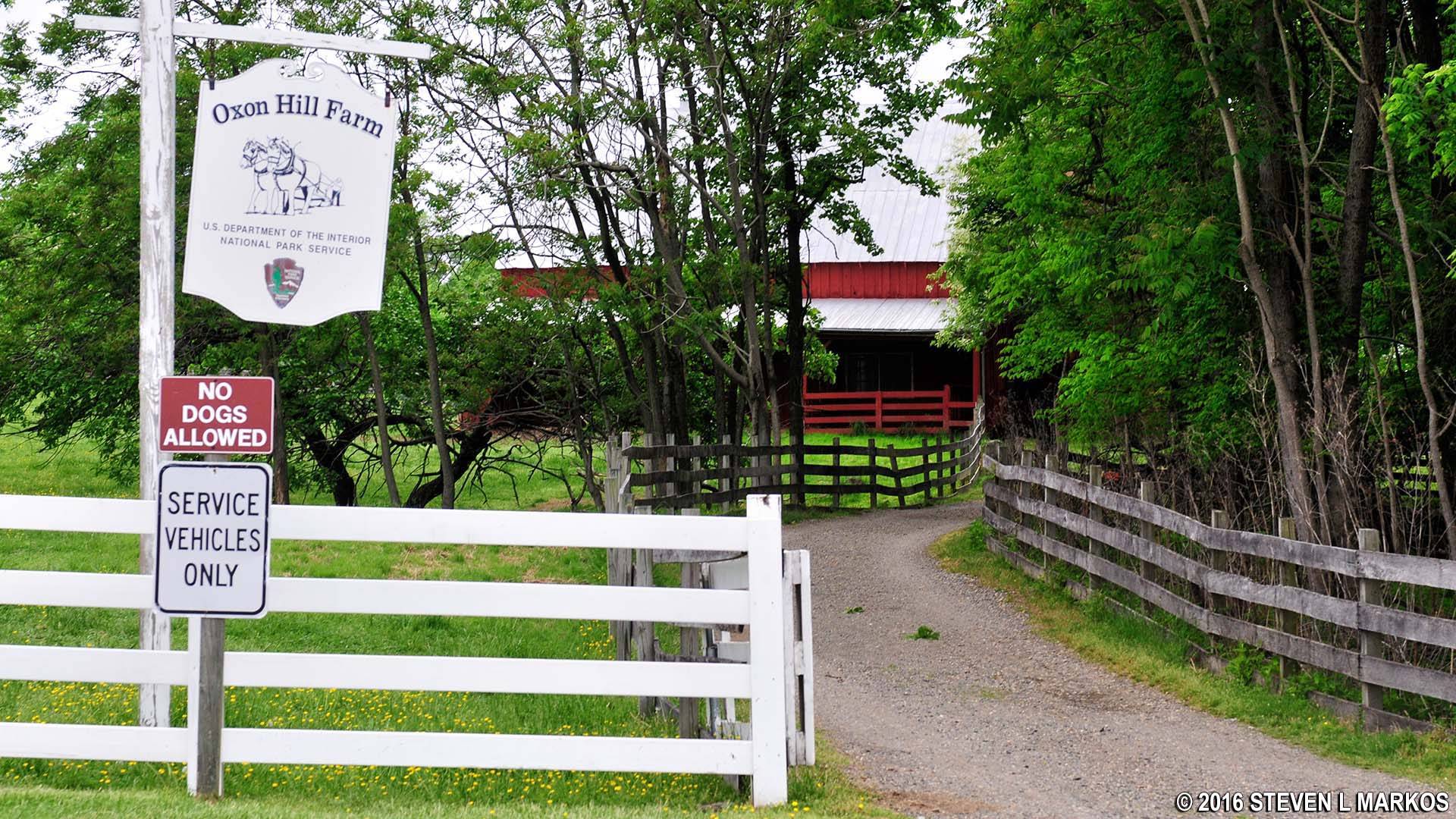
Entrance to Oxon Hill Farm in Maryland
You may see cows, chickens, horses, and pigs during your visit to the farm. However, this is not a petting zoo, and children are asked to stay away from the animals for safety reasons unless accompanied by a park Ranger during daily farm programs.
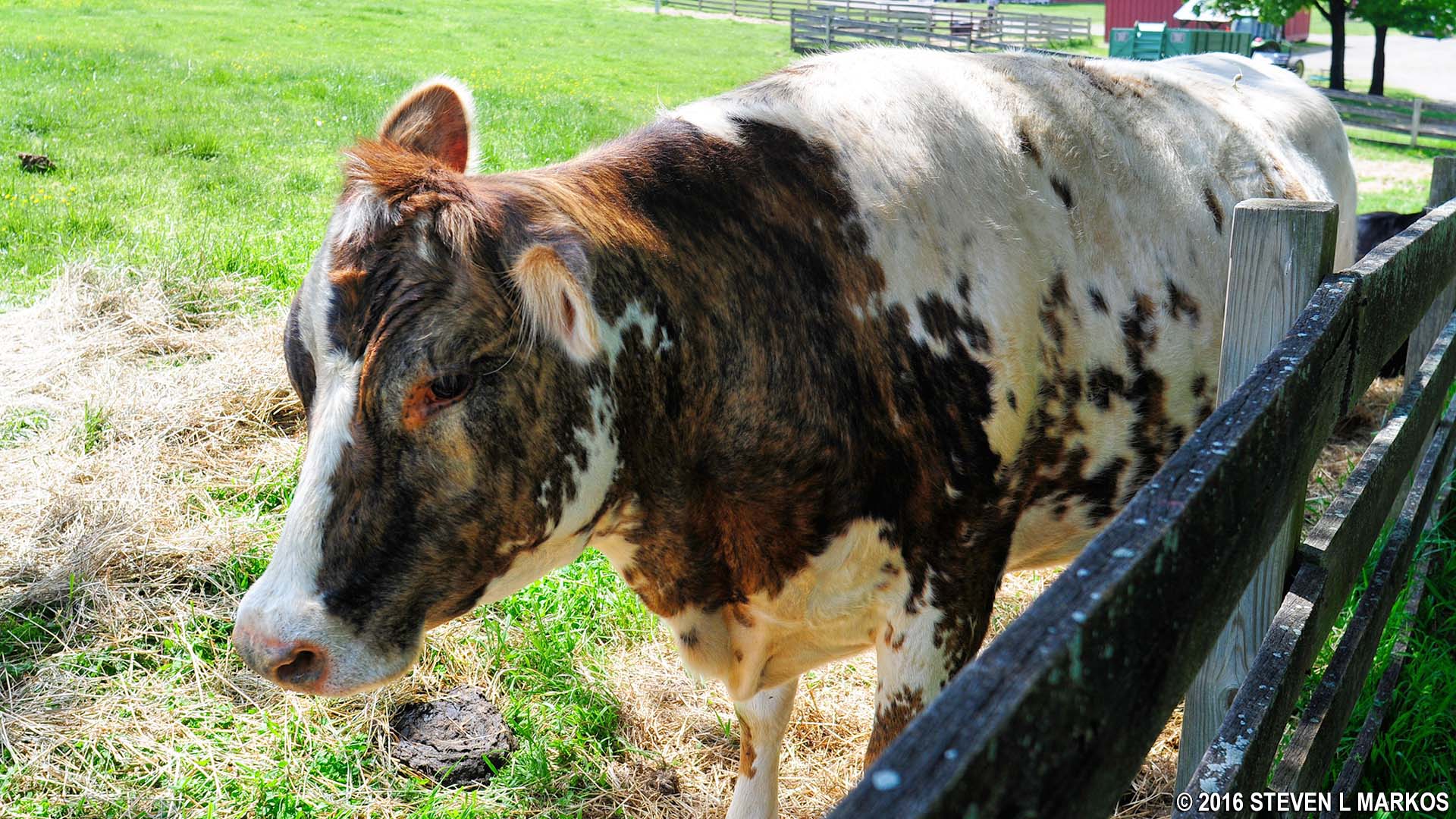
Dairy cow at Oxon Hill Farm in Maryland
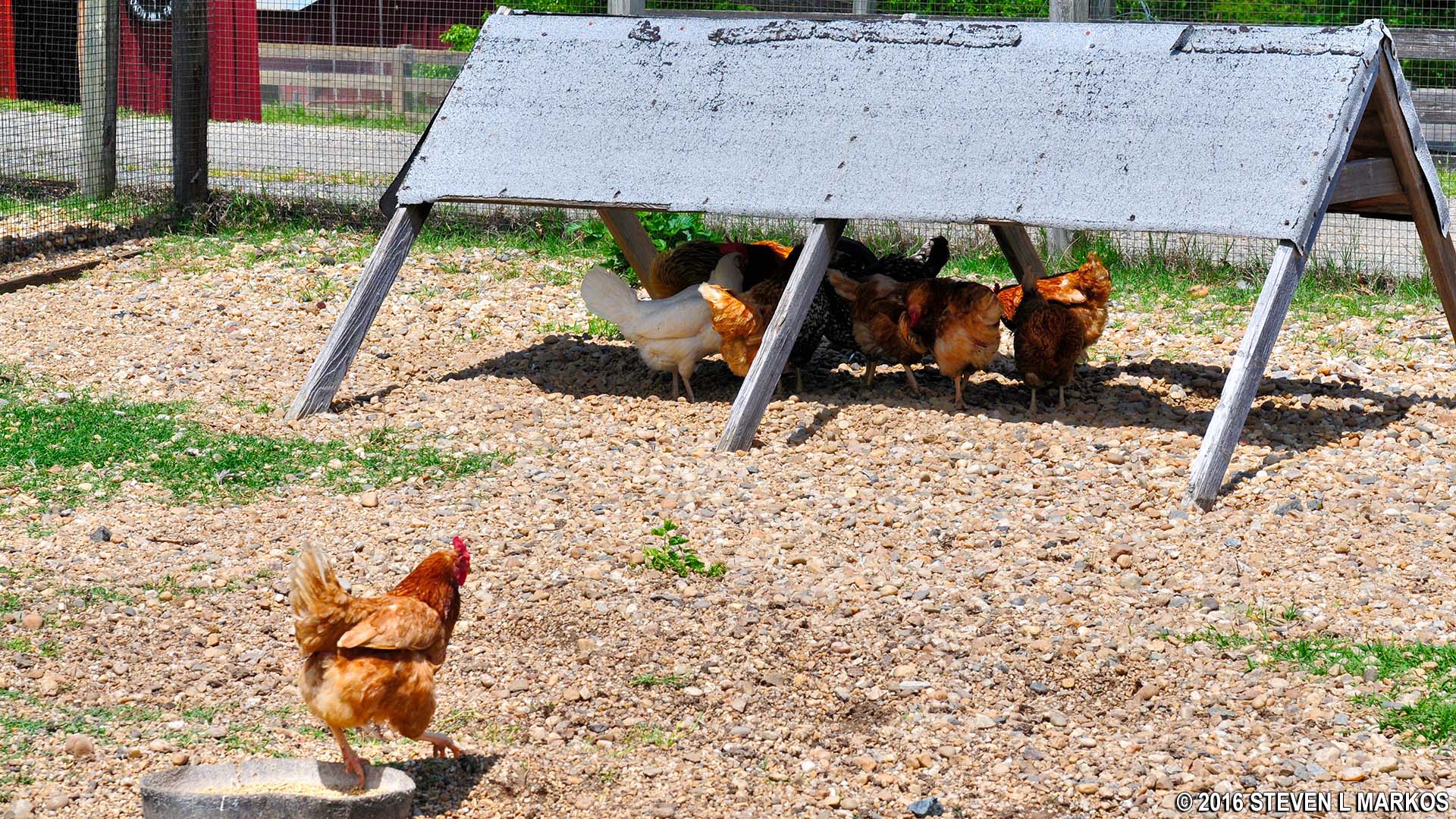
Chickens at Oxon Hill Farm in Maryland
When walking, the first buildings you come to are the dairy barn and grain silo. The barn is modern, having been built in 1980, but the silo is from 1940. There used to be a Godding Croft-era barn at this location. The farm was abandoned for eight years prior to the National Park Service taking over, and many of the buildings from Godding Croft were in ruin and had to be torn down.

Dairy barn and grain silo at Oxon Hill Farm in Maryland
Assuming you want to get to the Visitor Center, take the first left that you come to, a wide dirt road. At this intersection are three buildings of interest. The brick stable was built in 1820 by the DeButts. All of the surviving DeButts buildings are made of brick.
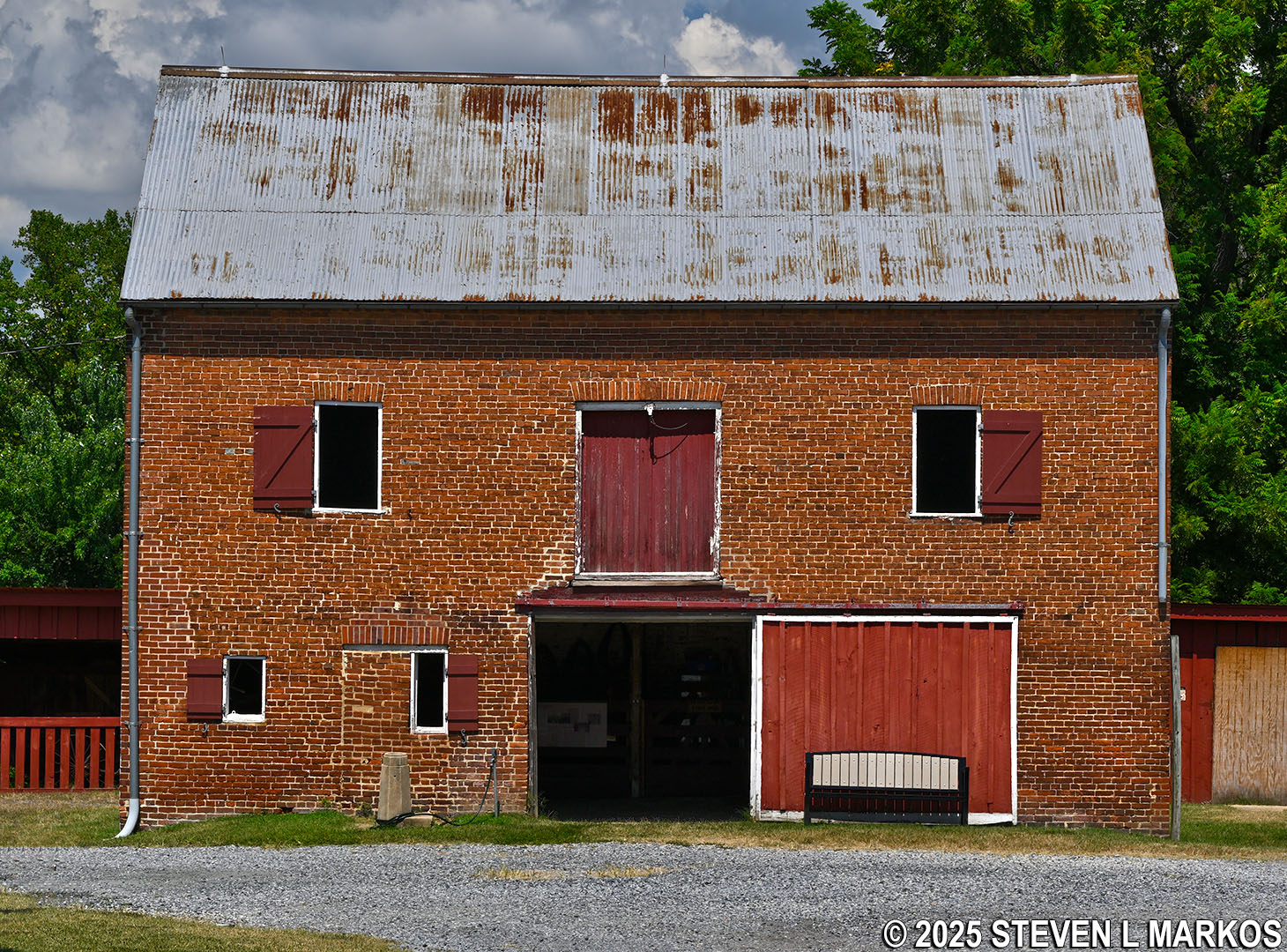
Brick stable from 1820 at Oxon Hill Farm in Maryland
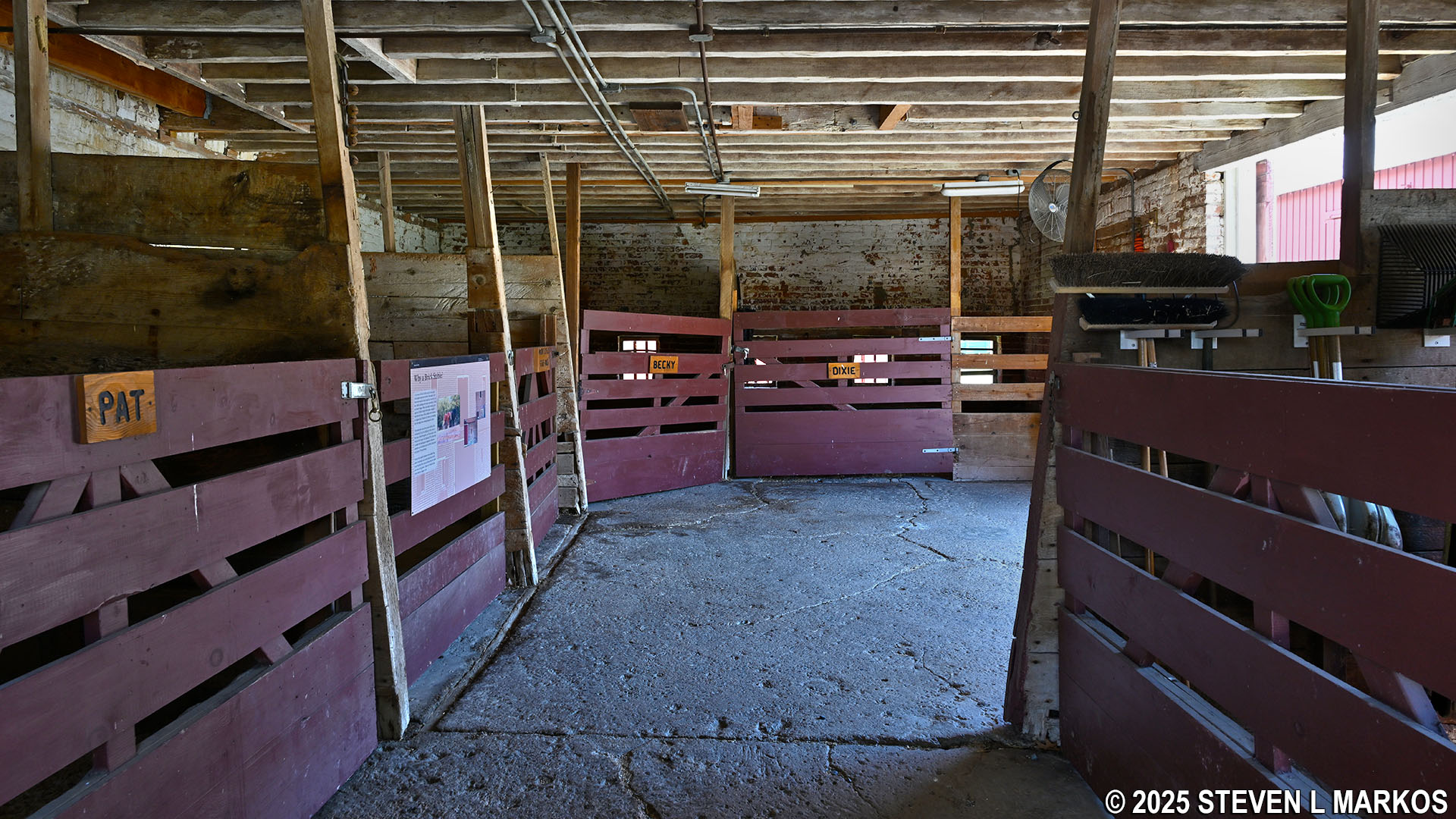
Horse stalls inside the brick stable at Oxon Hill Farm in Maryland
Next to the stable is a feed building constructed in 1891, the first year the federal government took over the farm. The building is used as a feed storage facility even today.
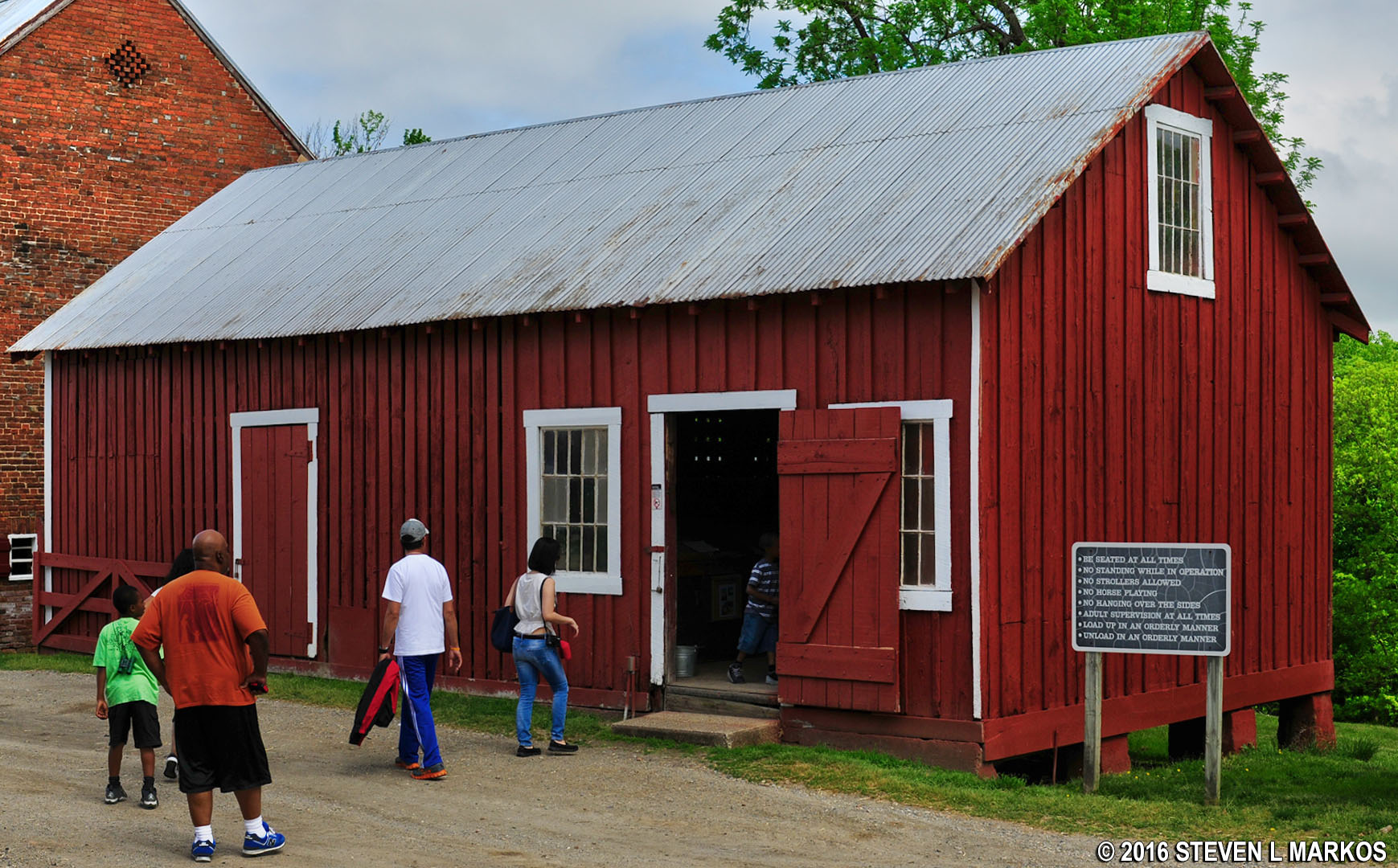
Feed storage building at Oxon Hill Farm in Maryland
Across the street is a barn constructed in 1940, though nobody knows for sure what it was used for. Today it is used to store hay.

Hay barn at Oxon Hill Farm in Maryland
Next the hay barn and Visitor Center is the Oxon Hill Farm Museum (building from 1970). Inside are an old John Deere tractor, a buggy, and antique farm equipment.
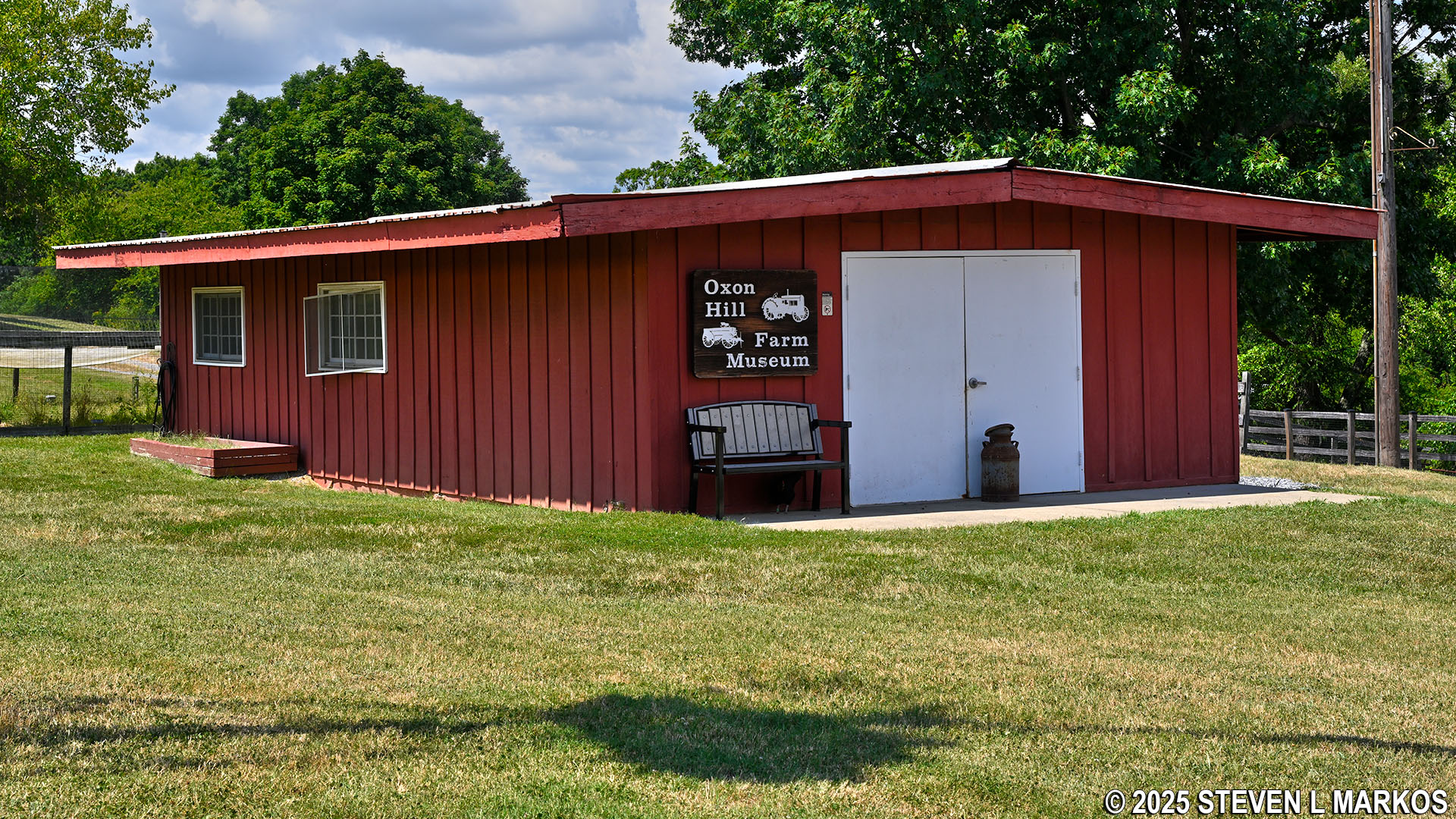
Farm Museum at Oxon Hill Farm in Maryland
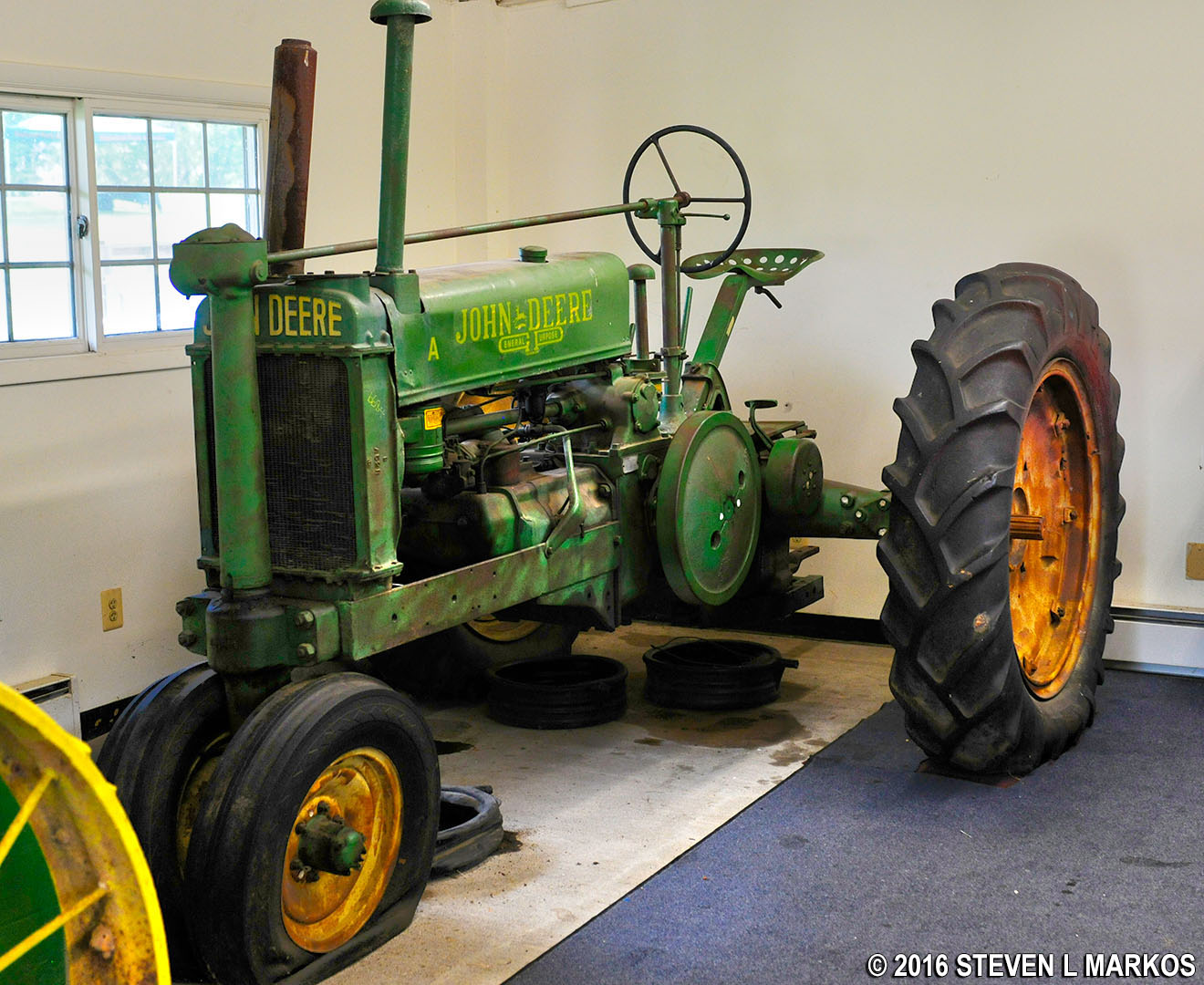
Antique John Deere tractor on display at the Farm Museum at Oxon Hill Farm in Maryland
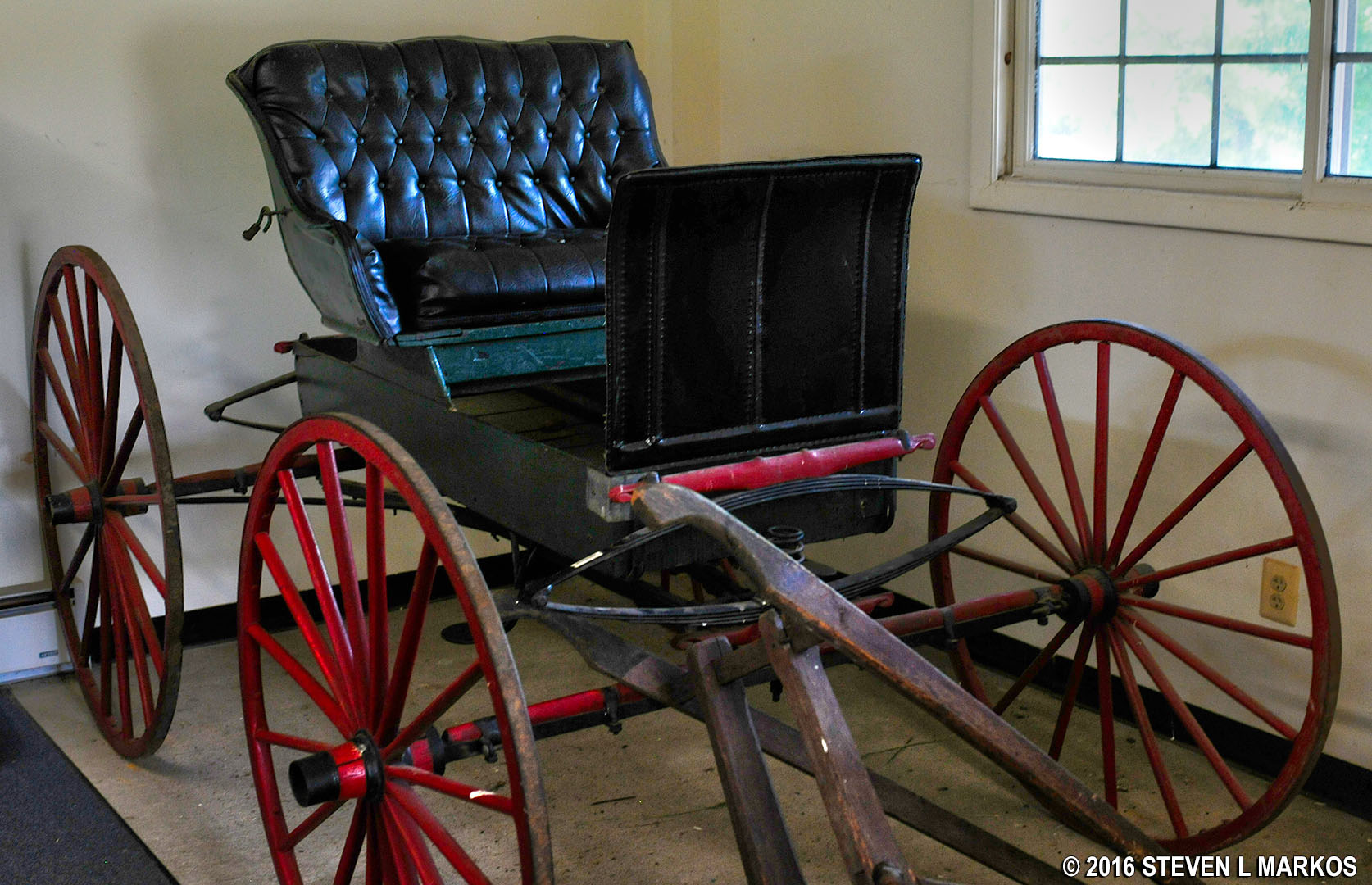
Horse buggy on display at the Farm Museum at Oxon Hill Farm in Maryland
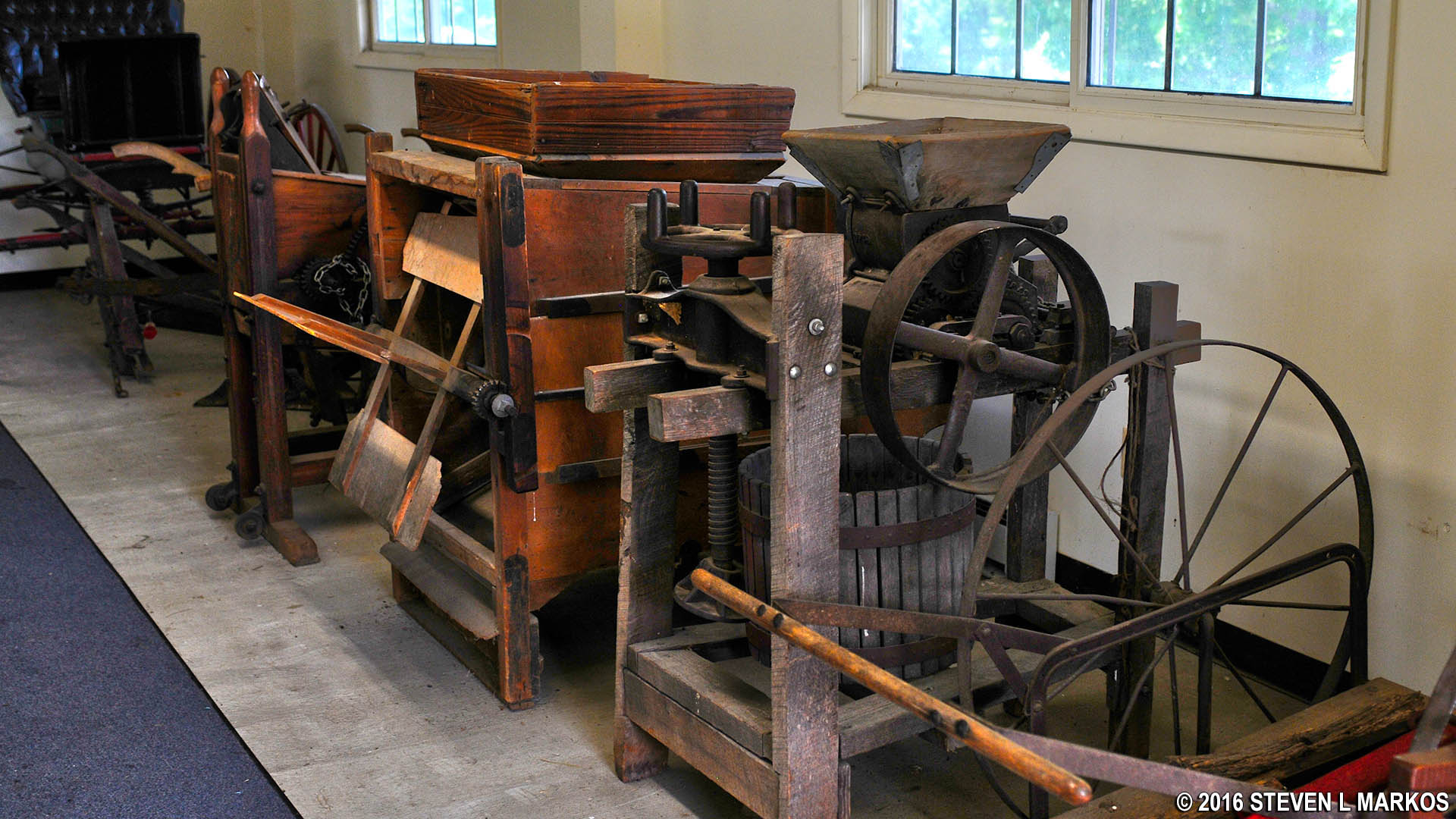
Antique farm equipment on display at the Farm Museum at Oxon Hill Farm in Maryland
A litle farther down the road is another original building from the DeButts era, a root cellar that was constructed in 1830. Built into the ground and well ventilated to keep air flowing through them, root cellars functioned as the refrigerators of their time. This is where beets, carrots, potatoes, and other root-type vegetables were stored, and anything else that needed to be kept cool.
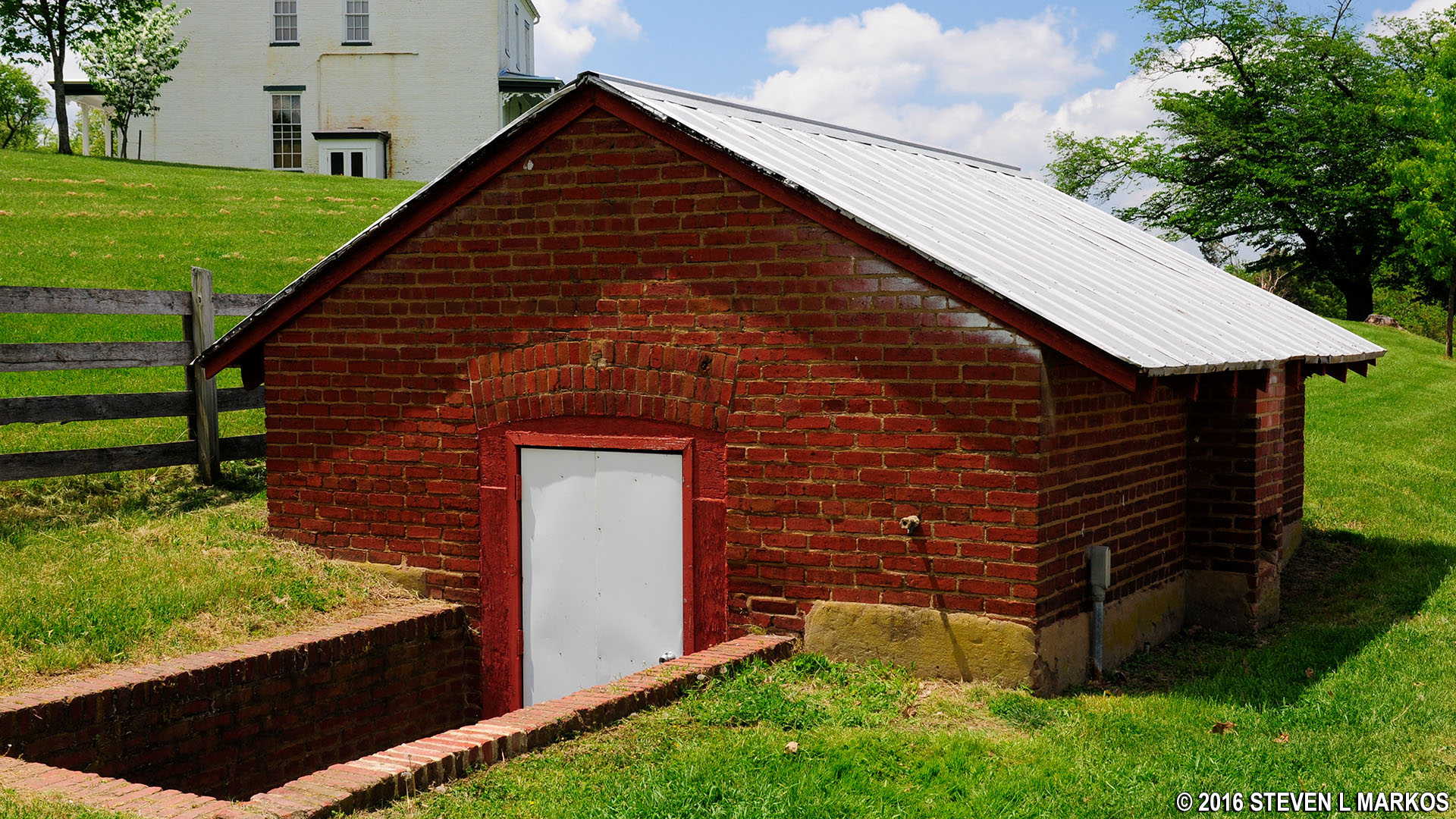
Root cellar from 1830 at Oxon Hill Farm in Maryland
The last building you will come to before heading down the gravel road to Oxon Cove and Oxon Creek is the DeButts’ farmhouse known as Mount Welby. It was built in 1805 and is the oldest building on the property. On August 24, 1814, the DeButts watched the British burn Washington, D. C., from this house (War of 1812). It is now used as office space by the National Park Service and is not open to the public.
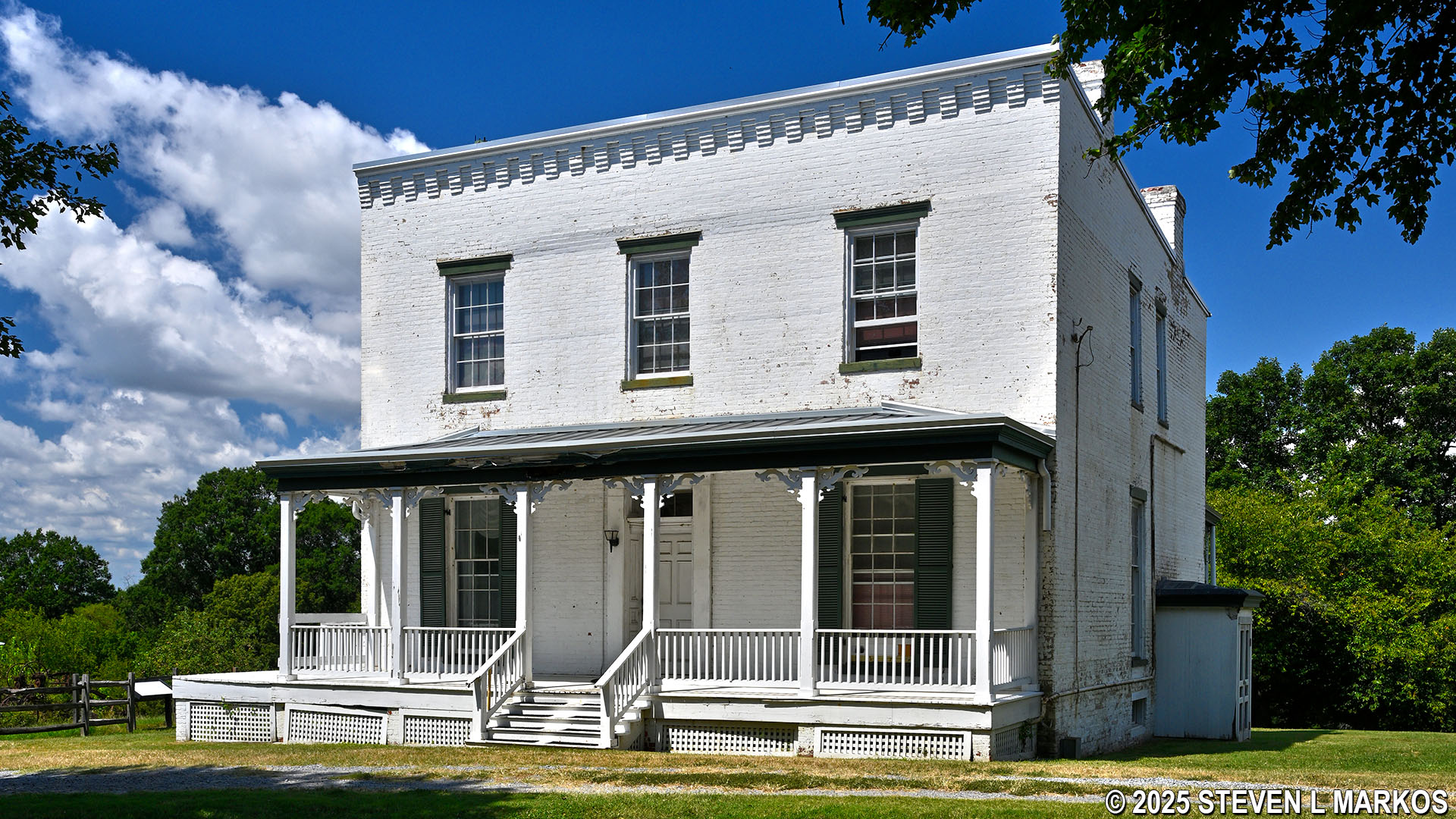
Mount Welby farmhouse (farm side) at Oxon Hill Farm in Maryland
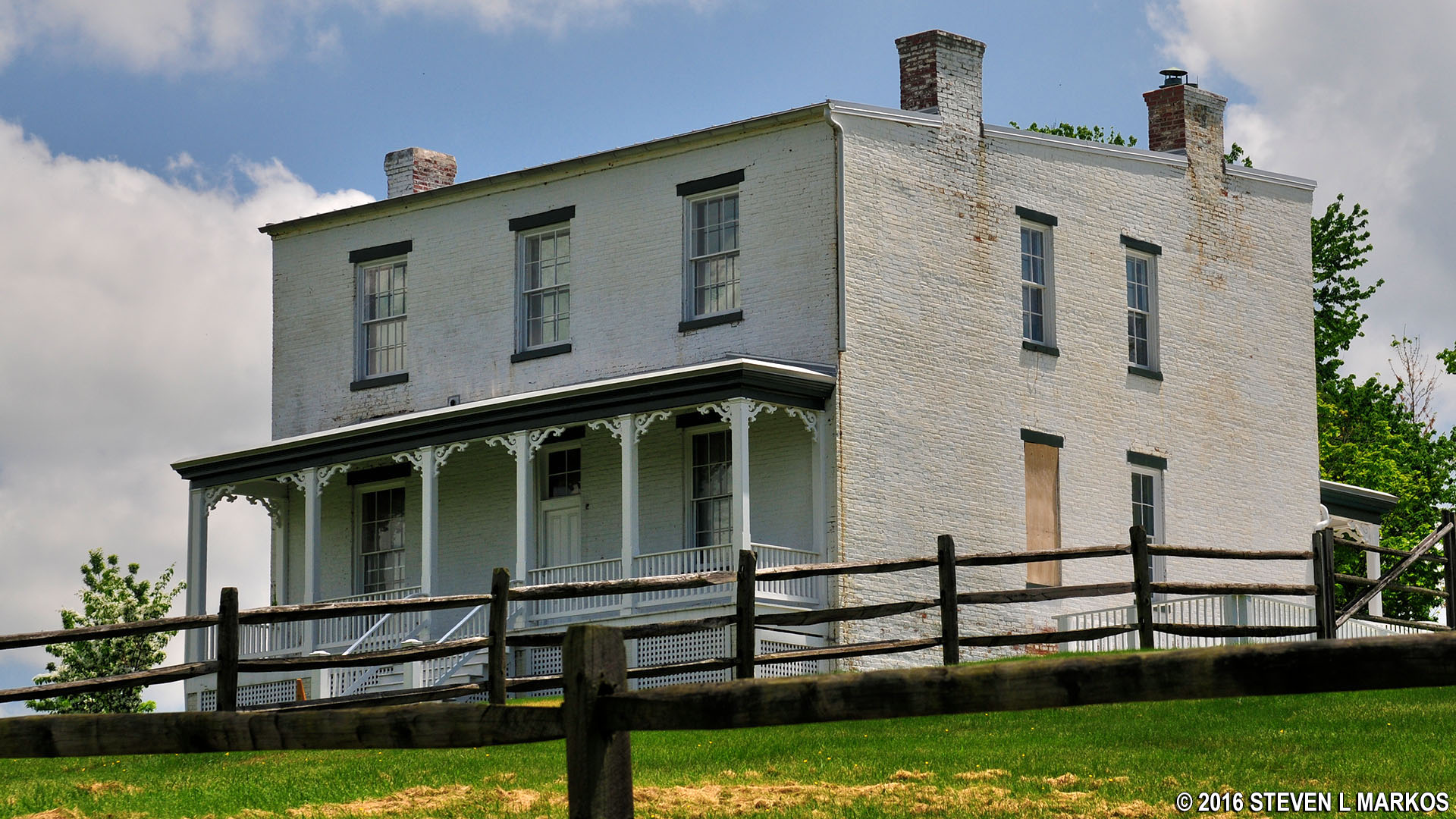
Mount Welby farmhouse (road side) at Oxon Hill Farm in Maryland
There is one other structure on the farm that pre-dates the park. Near Mount Welby is a hexagonal building from around 1900 that was part of the Gooding Croft farm. It is believed to have been a milk house where milk was processed. Today it is a storage shed.
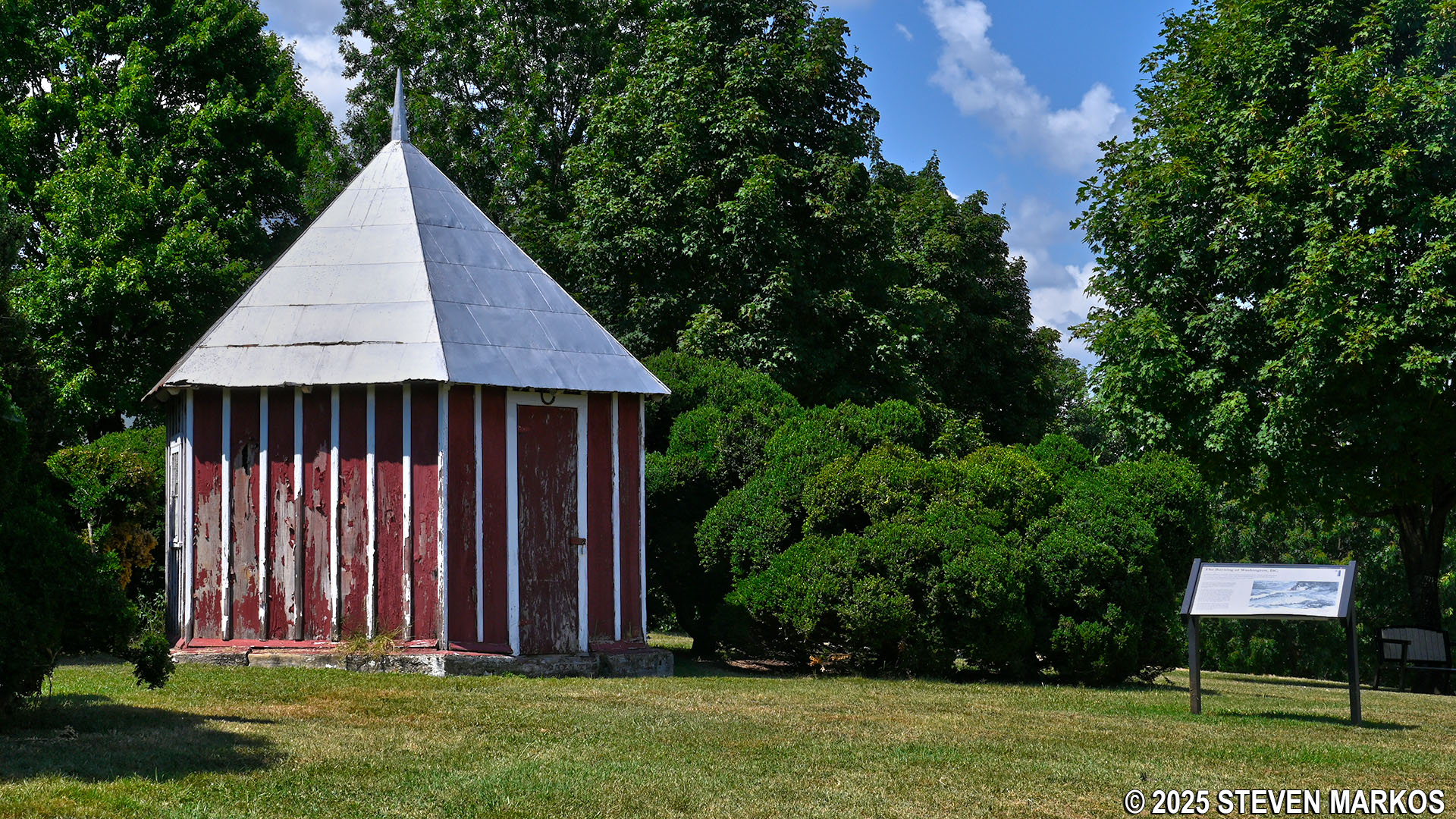
Hexagonal shed at Oxon Hill Farm in Maryland
With a few exceptions, use of any photograph on the National Park Planner website requires a paid Royalty Free Editorial Use License or Commercial Use License. See the Photo Usage page for details.
Last updated on November 25, 2025


