
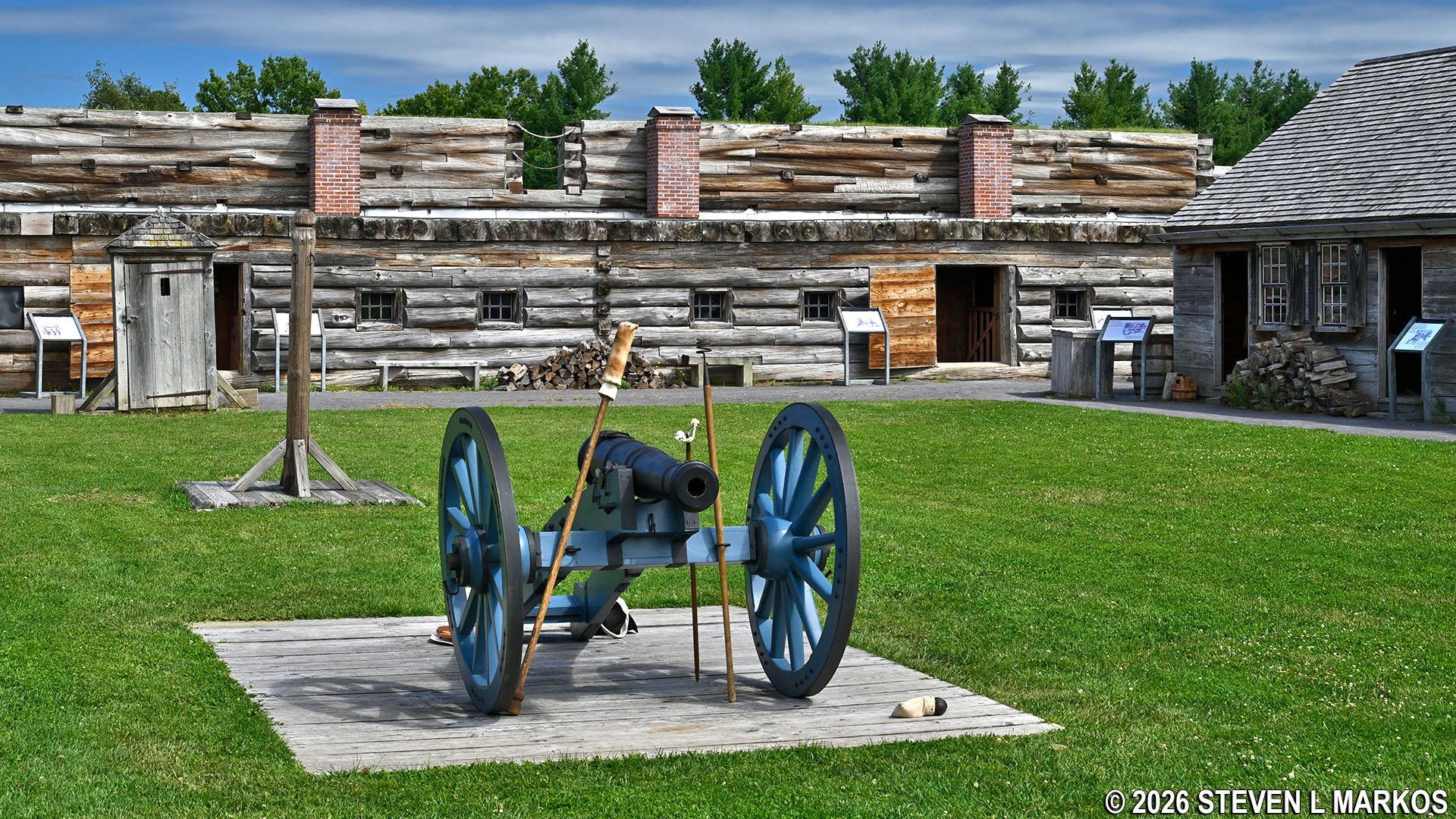
Inside Fort Stanwix, Fort Stanwix National Monument
The Fort Stanwix standing today is a reconstruction of the second iteration of Fort Stanwix built in 1776 (officially called Fort Schuyler at the time). The original was built by the British in 1758 during the French and Indian War, and afterwards it was left to deteriorate. At the start of the American Revolution, the Patriots moved into the old fort and began renovating it into a much more substantial structure than before. It was heavily damaged by fire in 1781 and abandoned, then leveled completely around 1830. What stands today was built between 1974 and 1976 by the National Park Service based on a 1970-72 archeological excavation and existing maps and drawings of the fort that date from 1758 to 1781. It is not one-hundred-percent accurate, but it is considered one of the best fort reconstructions in the country. For more information, see the History of Fort Stanwix article here on National Park Planner.
The grounds that surround Fort Stanwix National Monument are open from dawn until dusk year-round. Operating hours for the fort vary per season (it is closed completely from late December through early April). For the current schedule, see the National Park Service’s official Operating Hours and Seasons web page for the park.
Tours of the fort are self guided, though there are Rangers inside—often dressed in period costume—to answer your questions, give informational talks, and hold demonstrations throughout the day. There is also a cell phone audio tour available. Signs are posted throughout the fort. Dial the phone number, press your stop number, and listen to the narration.

Rangers at Fort Stanwix demonstrate how a cannon is fired, Fort Stanwix National Monument
When the fort is closed, visitors looking for exercise can walk or jog all the way around the fort on a wide and level paved path (city sidewalk on some sides). Total distance is a half mile.
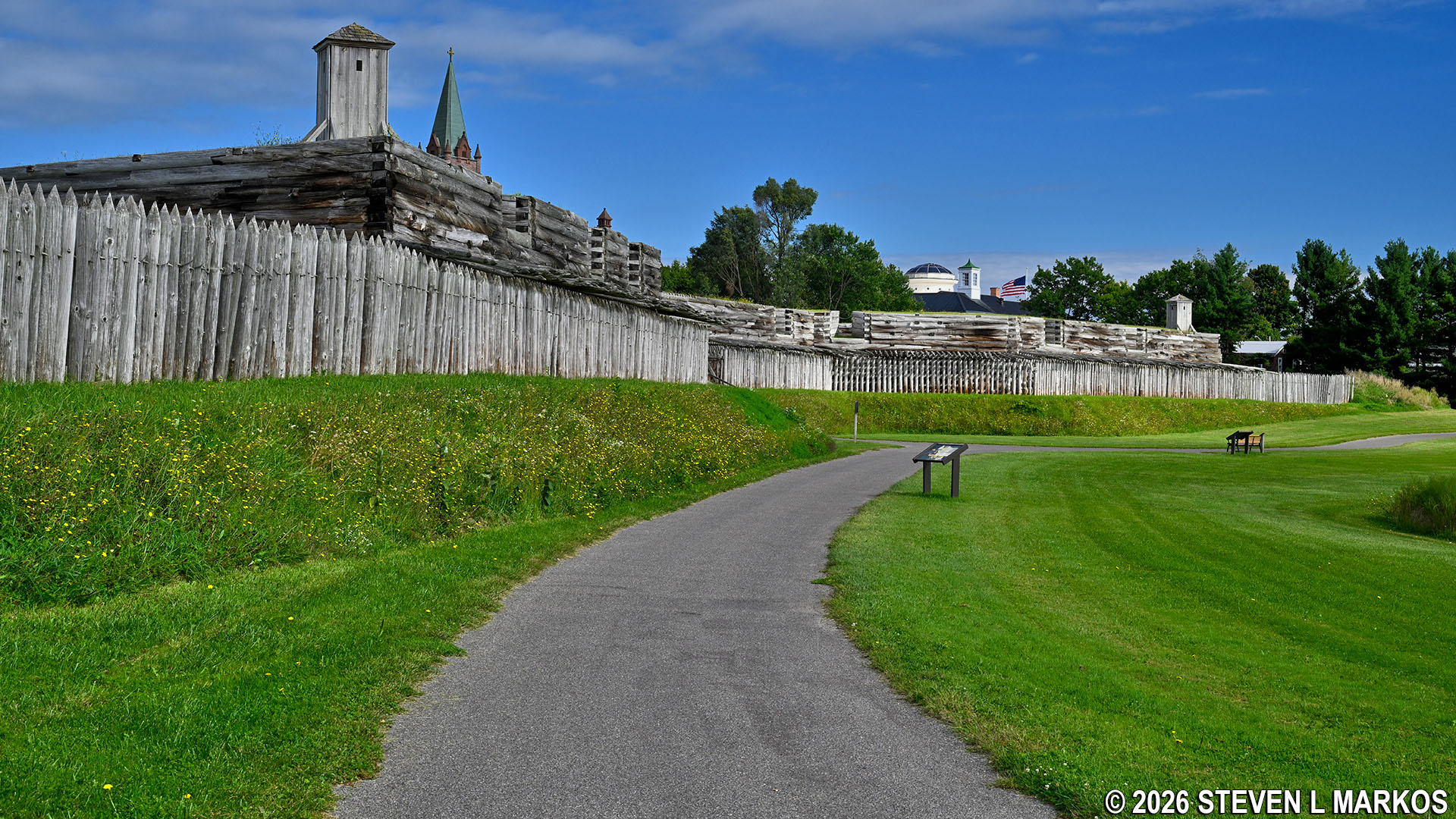
Walking path around Fort Stanwix is open daily from dawn until dusk, Fort Stanwix National Monument
The walk from the Visitor Center to the entrance of Fort Stanwix is .2 miles along the same path that circles the fort.
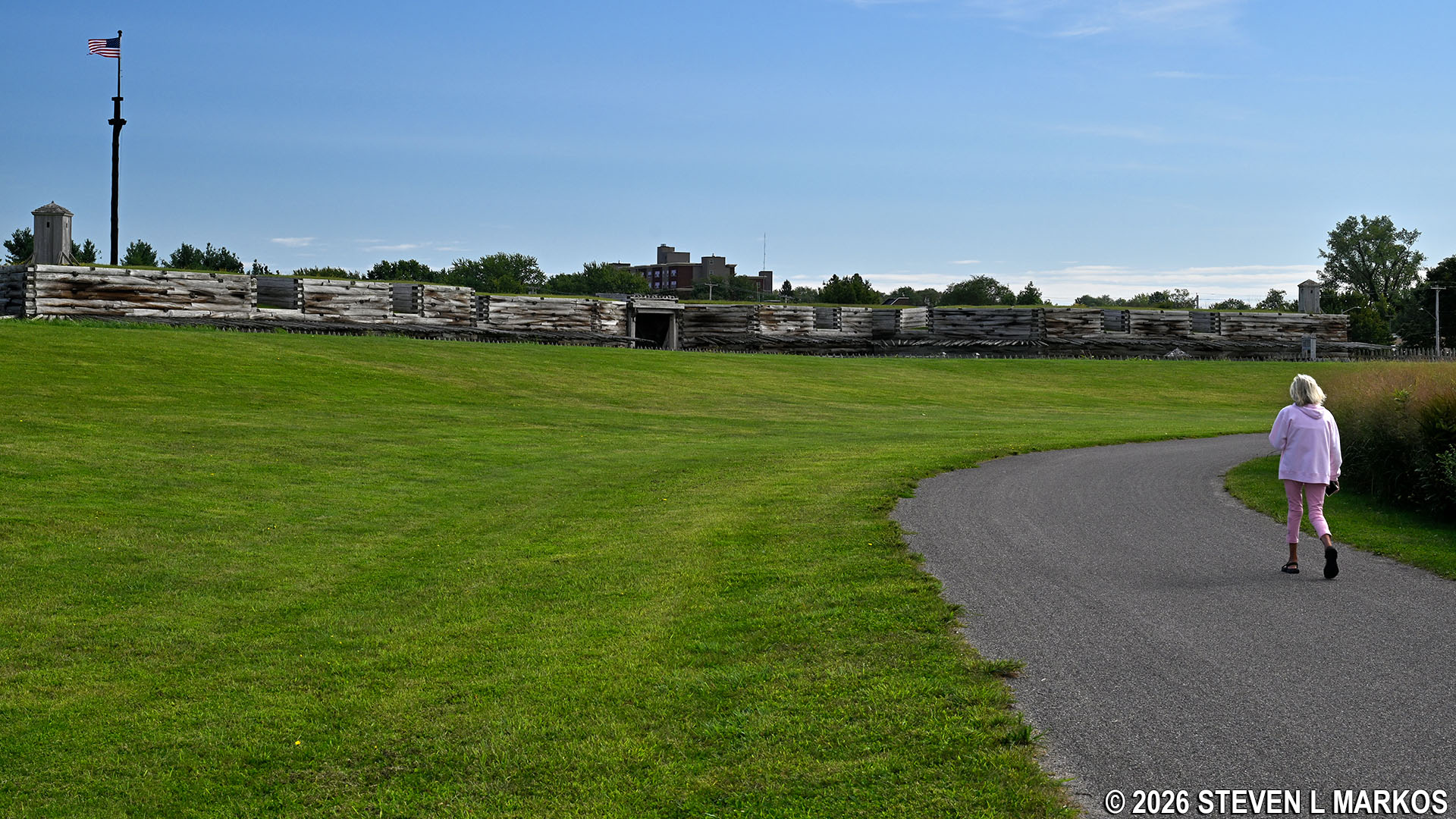
Path from the Visitor Center to the entrance of Fort Stanwix, Fort Stanwix National Monument
Fort Stanwix is a four-sided fort with four diamond-shaped bastions. Bastions are structures that protrude from the corners of a fort that allow men stationed within or on the structure to have a clear view of the fort walls and entrance. In addition to armed soldiers, short range artillery pieces were often mounted on the bastions, and any invader who approached the walls would be trapped in a crossfire between two bastions. If a fort were a simple four-sided structure, it would be hard to shoot at any enemy soldier who made it to the wall, for soldiers within the fort would practically have to hang over the wall to get a shot at him.
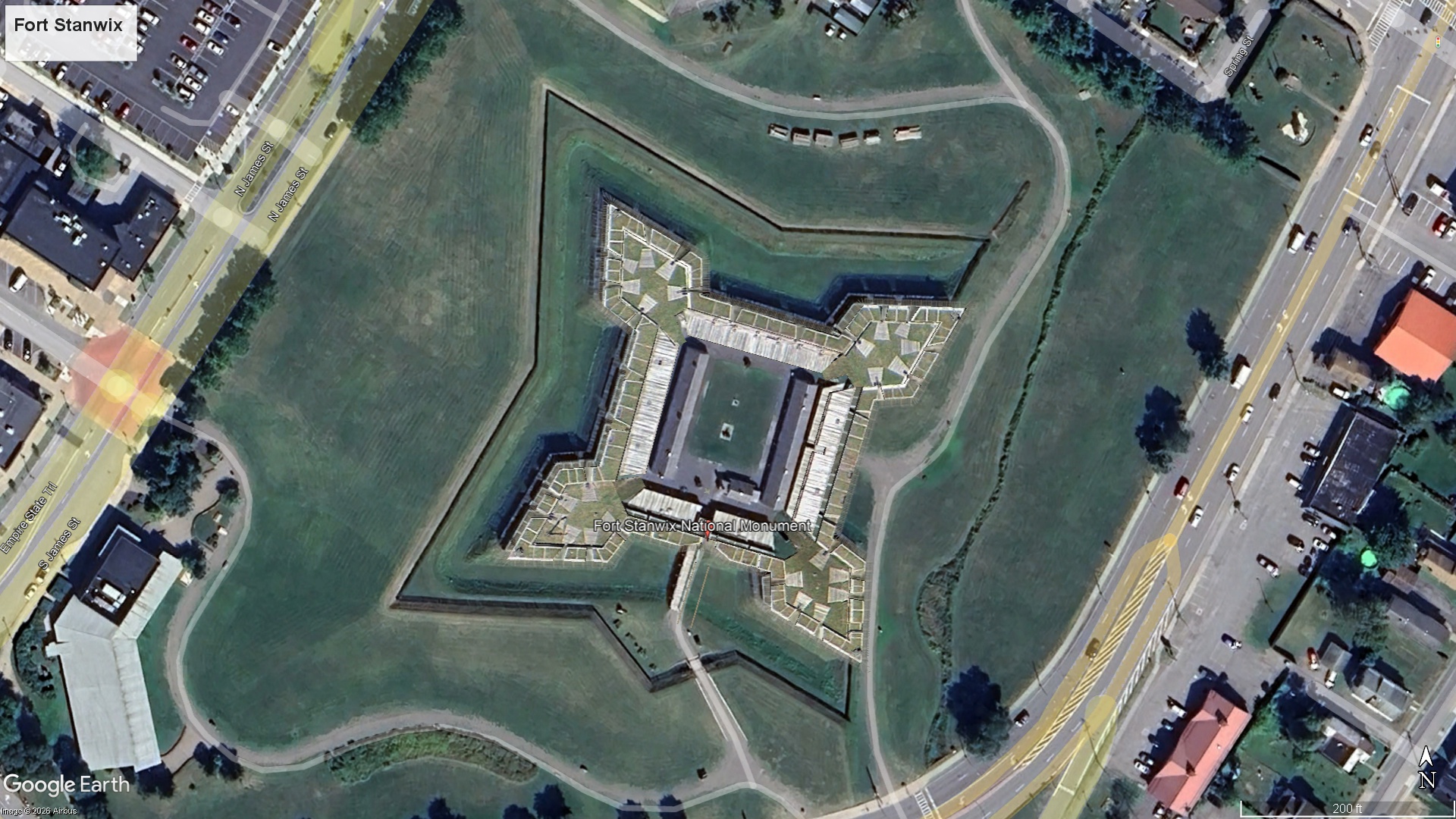
Satellite view of Fort Stanwix

Example of coverage possible by men stationed in a bastion
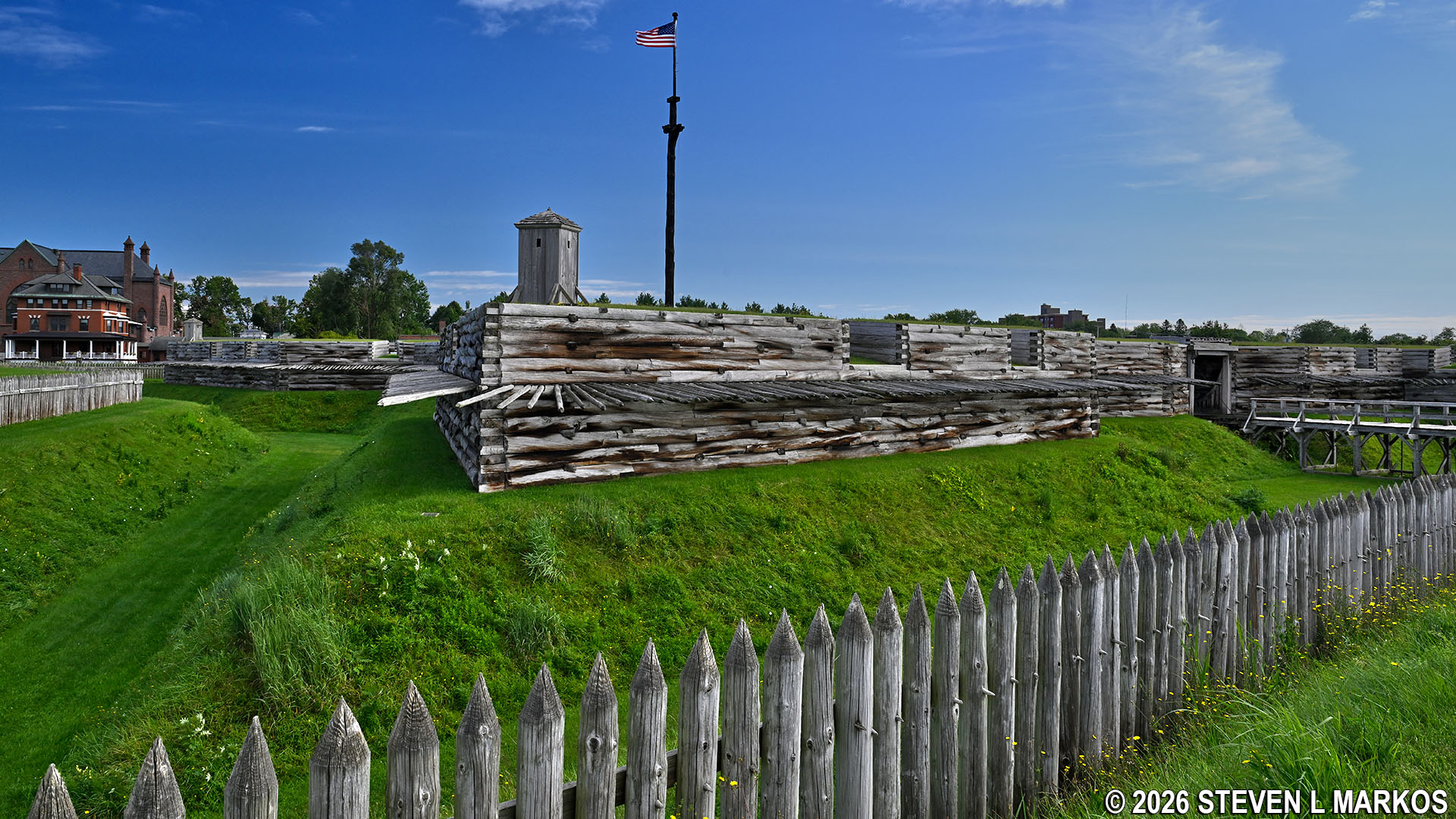
One of Fort Stanwix’s four bastions, Fort Stanwix National Monument
The layout of Fort Stanwix is an outer palisade wall made of logs with pointed tops, a moat (or ditch as it was called when the fort was in operation), and then the fort itself. The moat was dry and only flanked three sides of the fort. One side was surrounded by a swamp, a natural barrier. With most forts during wartime, the dry moat would have been filled with obstacles such as downed trees or even sharpened logs stuck into the ground. Should the enemy get over the outer wall, they now had to get through the obstacles, all the while being fired upon from above. However, at Fort Stanwix, due to a lack of space inside the fort walls, the moat was used to house people in tents and huts and for livestock grazing.
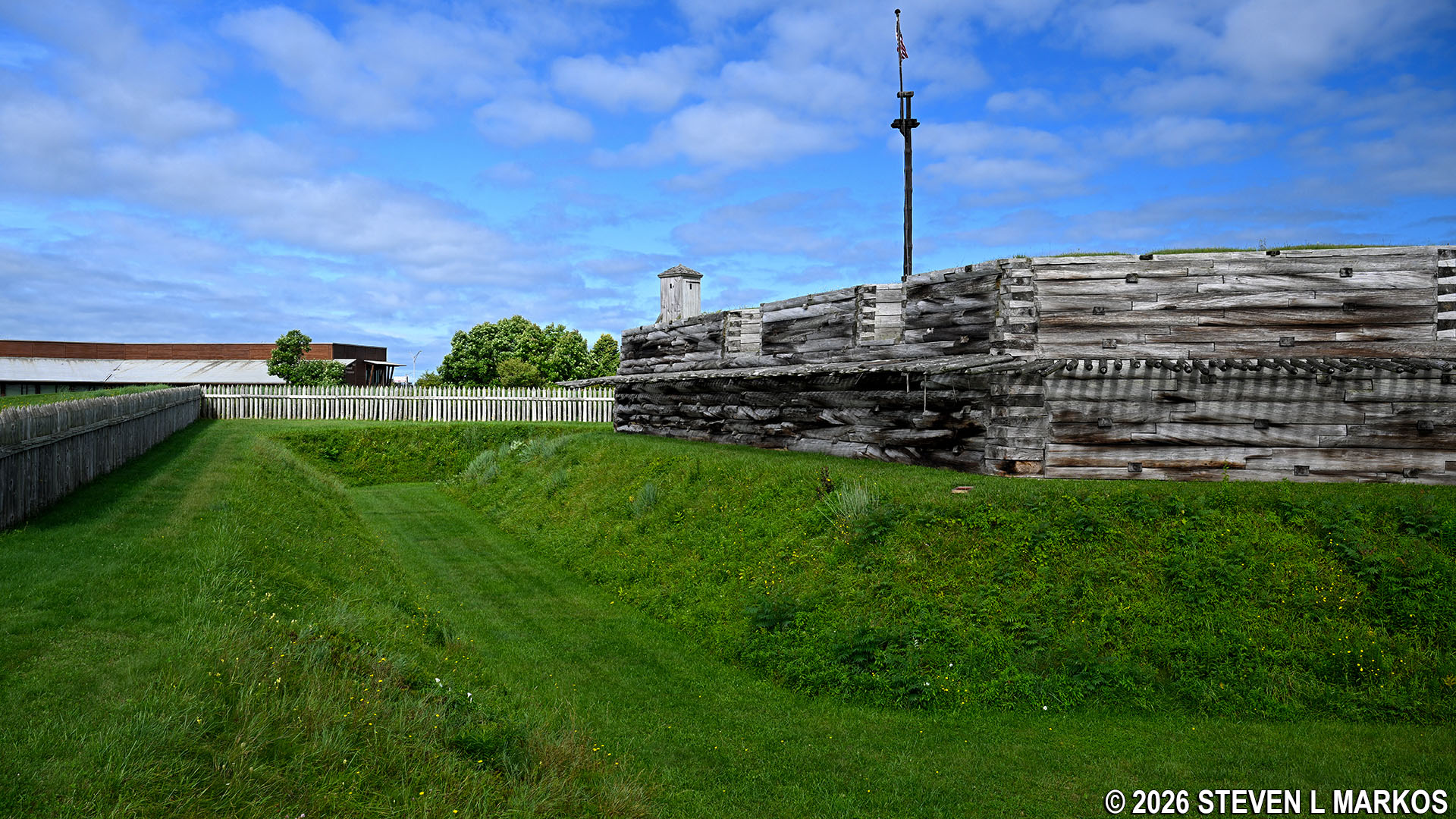
Outer palisade wall, moat, and inner wall of Fort Stanwix, Fort Stanwix National Monument
There are two aspects of the fort’s wall that can be seen from outside the fort. The gaps along the top of the walls, called embrasures, are where cannon would fire out from. Sharpened logs called abatis protrude from the fort walls, adding another obstacle enemies would have to face when attempting to scale the fort wall.
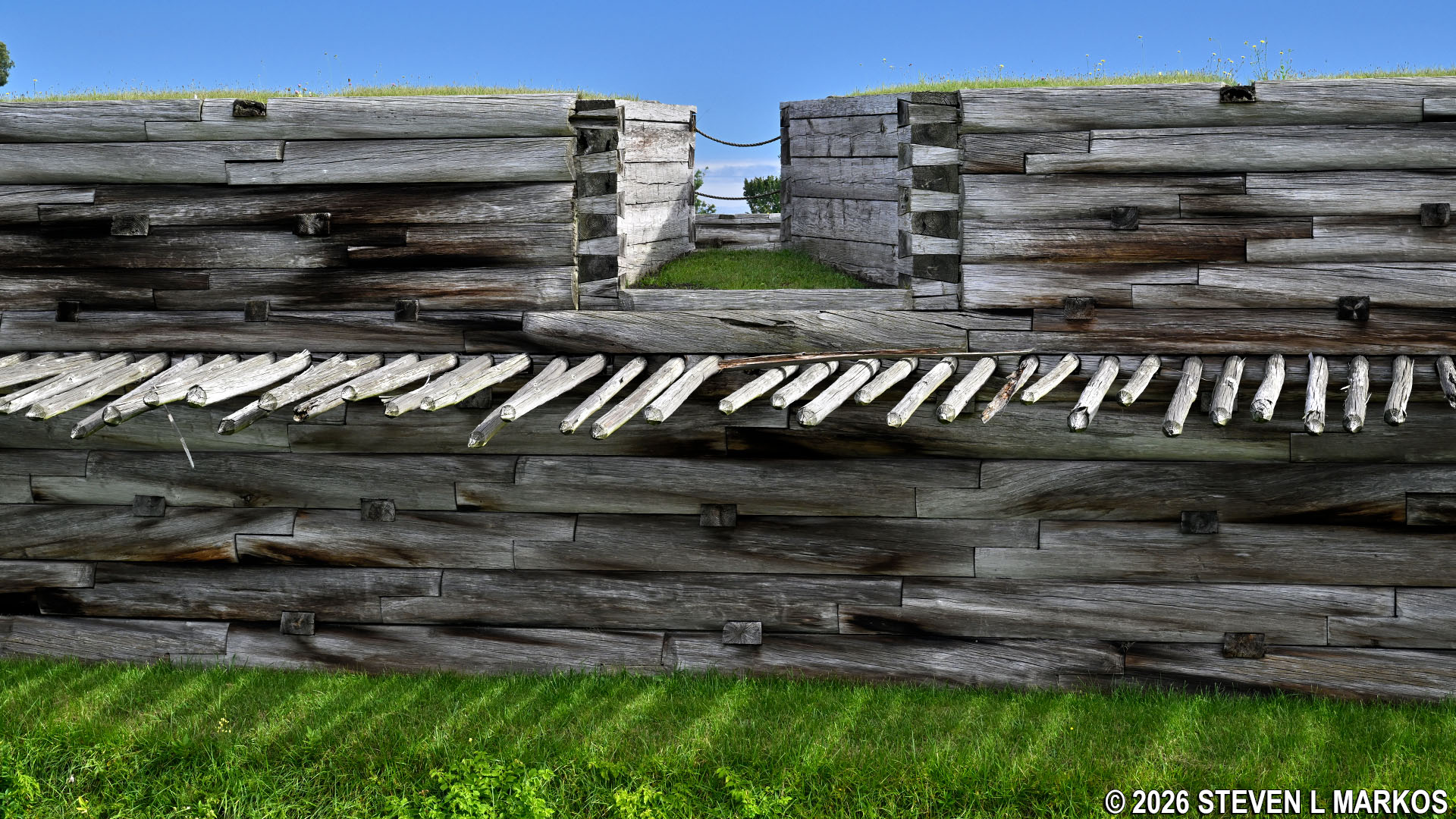
An embrasure in the wall of Fort Stanwix and abatis protruding from the wall, Fort Stanwix National Monument
Fort Stanwix had 35 embrasures, but there were never 35 cannon installed. Each bastion could hold six guns, and the curtains (wall of the fort between two bastions) could hold two each.
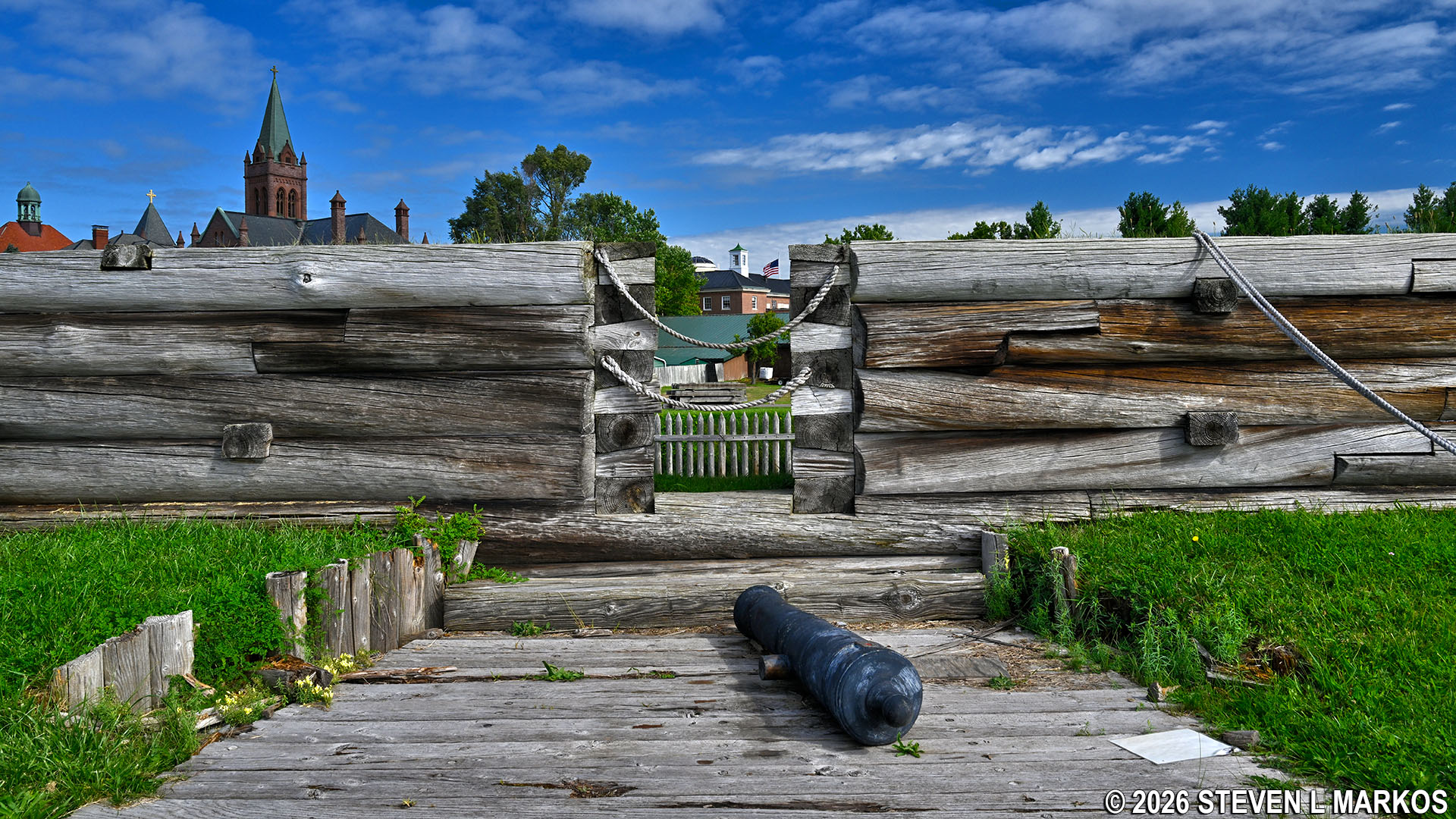
Embrasure as seen from inside Fort Stanwix, Fort Stanwix National Monument
There was also room for three guns in the ravelin (which was not reconstructed when the fort was built by the National Park Service). A ravelin is a separate structure from the fort, usually triangular in shape, that guards the entrance. It resembles a mini-fortification of similar construction to the fort itself, complete with embrasures. When you arrive at the entrance to Fort Stanwix and pass through the outer palisade wall, the ravelin would have occupied the triangular section of land between the wall and the bridge over the moat. The photo below is of a ravelin at Castillo de San Marcos in St. Augustine, Florida (Castillo de San Marcos National Monument).
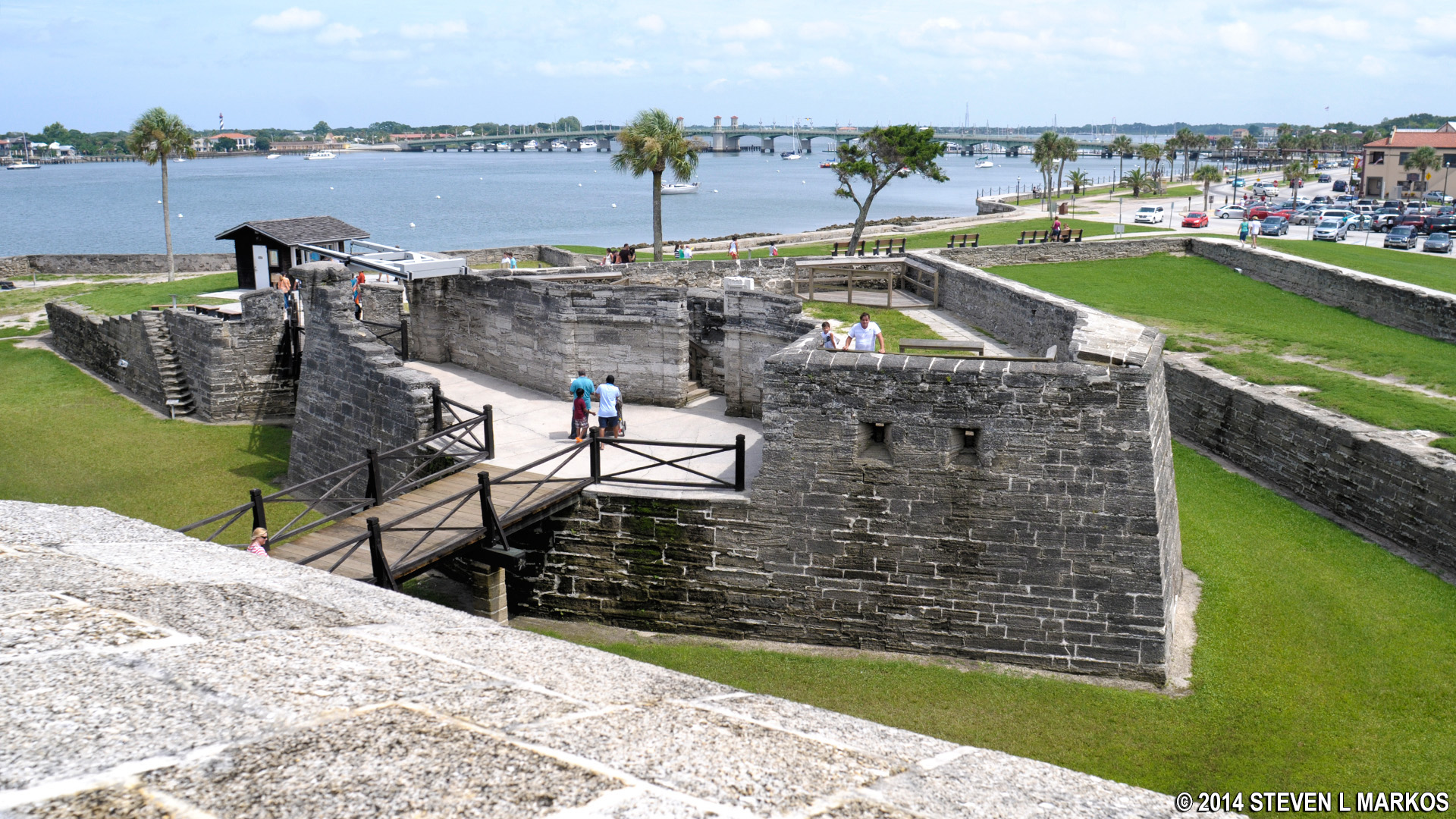
View of the ravelin from the walls of Castillo de San Marcos
The entrance of a fort is called the sally port. At Fort Stanwix, visitors arrive at the sally port after crossing a bridge over the moat.
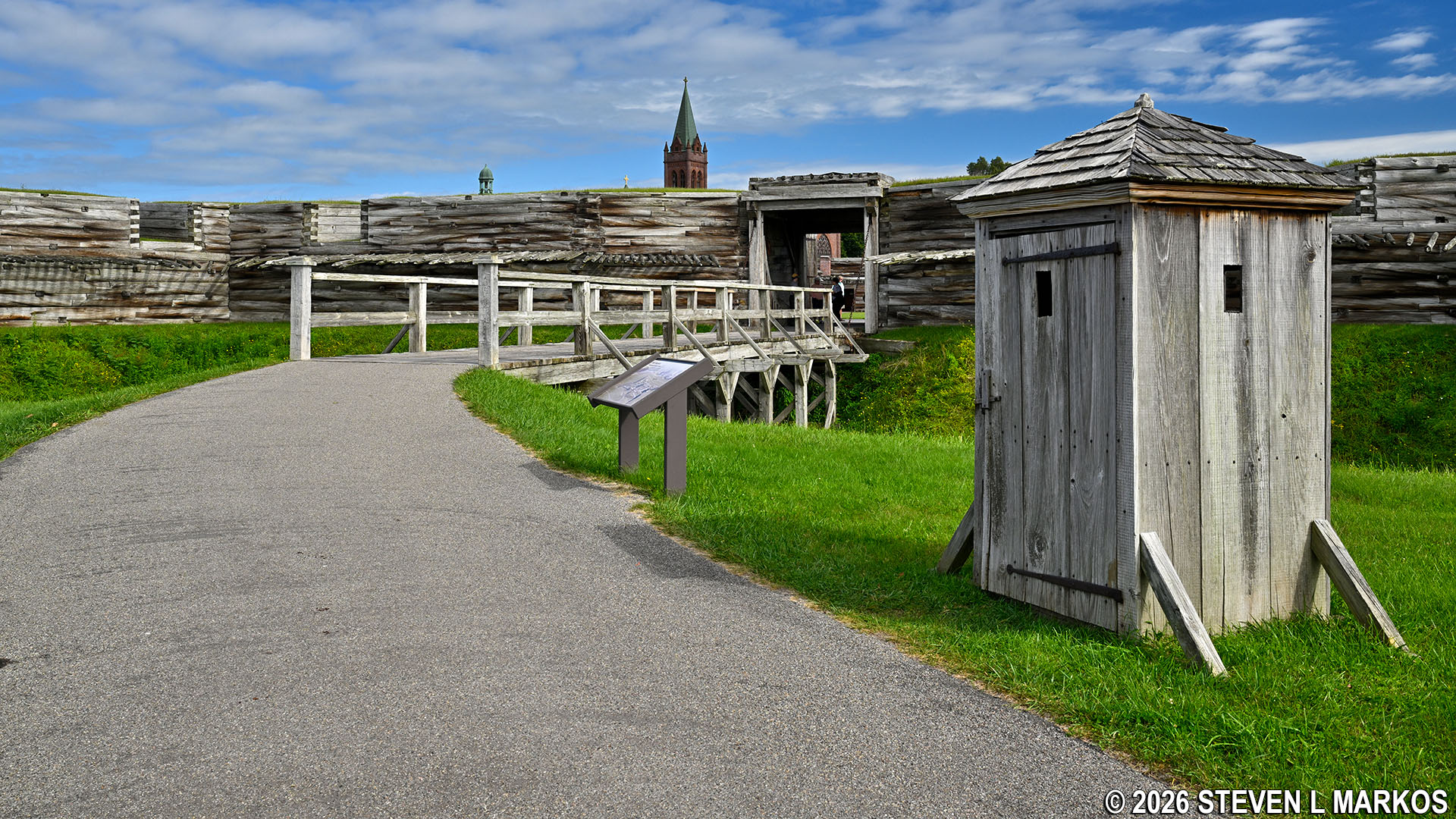
Sally port, bridge, and sentry box at Fort Stanwix, Fort Stanwix National Monument
Once inside the fort, you will find yourself on the parade ground. This is typically where troops came to drill, exercise, and parade for inspection by high-ranking officers and visiting dignitaries. It was also used as an exercise yard and a place for games and entertainment. However, at Fort Stanwix, it was often covered with tents and huts due to a lack of sleeping quarters in the barracks.

Fort Stanwix’s parade ground, Fort Stanwix National Monument
Compared to the forts built after the War of 1812, the interior of Fort Stanwix is very simple. It is a two-level fort, with the bottom consisting of barracks and offices that are located in stand-alone buildings and in rooms built directly into the walls of the fort called casemates. Casemates are usually fortified rooms built to hold artillery pieces, though they are often used as barracks and storage rooms (as was the case at Fort Stanwix). They were much more secure that the stand-alone buildings since their outer walls were the reinforced outer walls of the fort, and they were a lot warmer in the winter. However, they were not as hospitable because they only had windows on the wall facing the parade ground of the fort. The stand-alone buildings could have doors and windows on all sides, but cold air seeped in through the cracks in the logs and window panes and sills.
There are two barracks buildings within the reconstructed fort today. When Fort Stanwix was in operation, there were two other buildings, the headquarters and guard house. Like the ravelin, these were not reconstructed by the National Park Service.
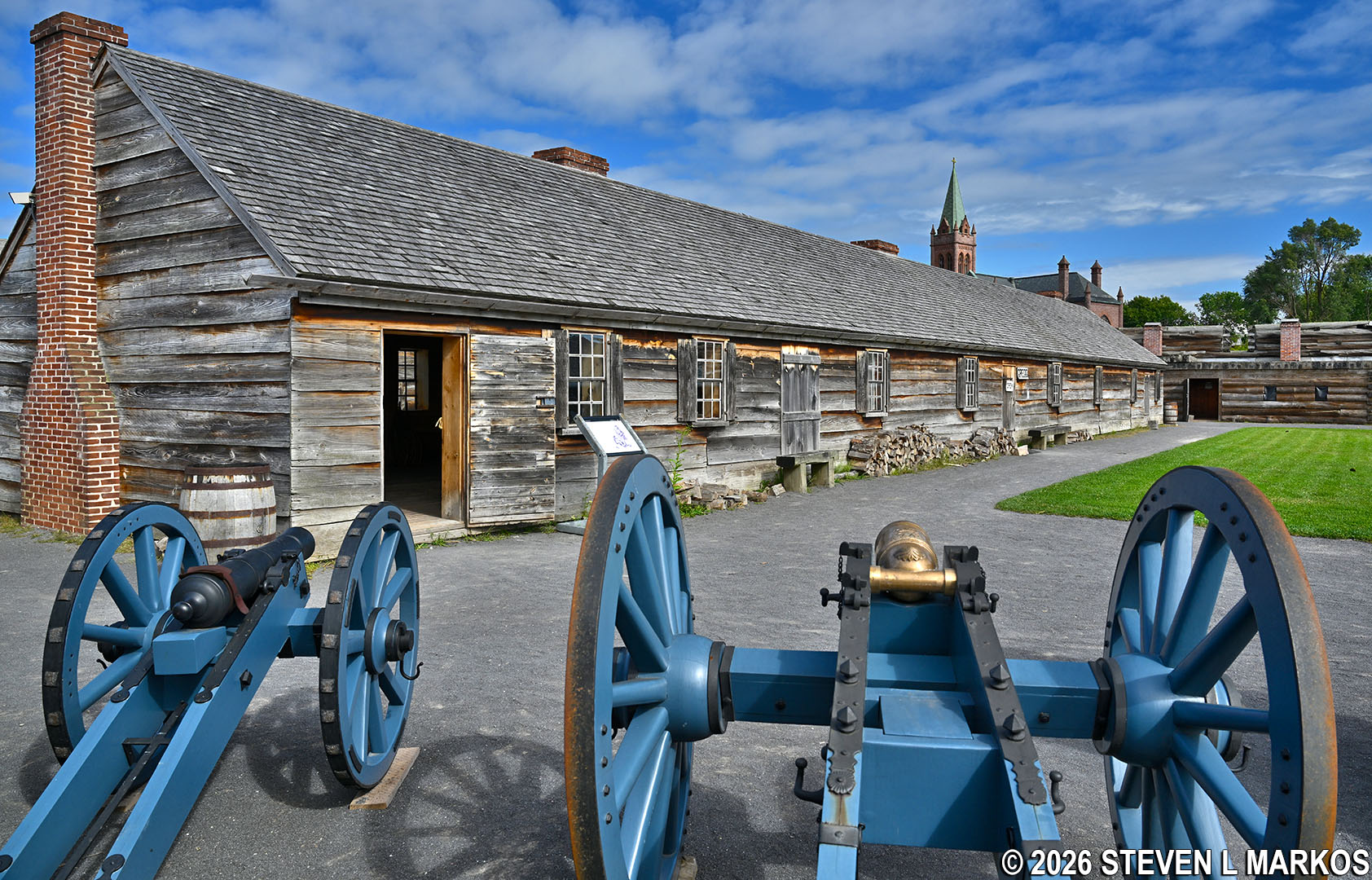
Barracks building at Fort Stanwix, Fort Stanwix National Monument
The second level is where the cannon were mounted. Roofs of the bastions were strong enough to support the weight of the guns and thus served as terrepleins (floor or platform along the wall of the fort where soldiers stood and cannon were placed). Along the curtains, the tops of the casemates served as the terreplein. Visitors to Fort Stanwix can walk up to the top of the bastions but not along the curtain terrepleins.
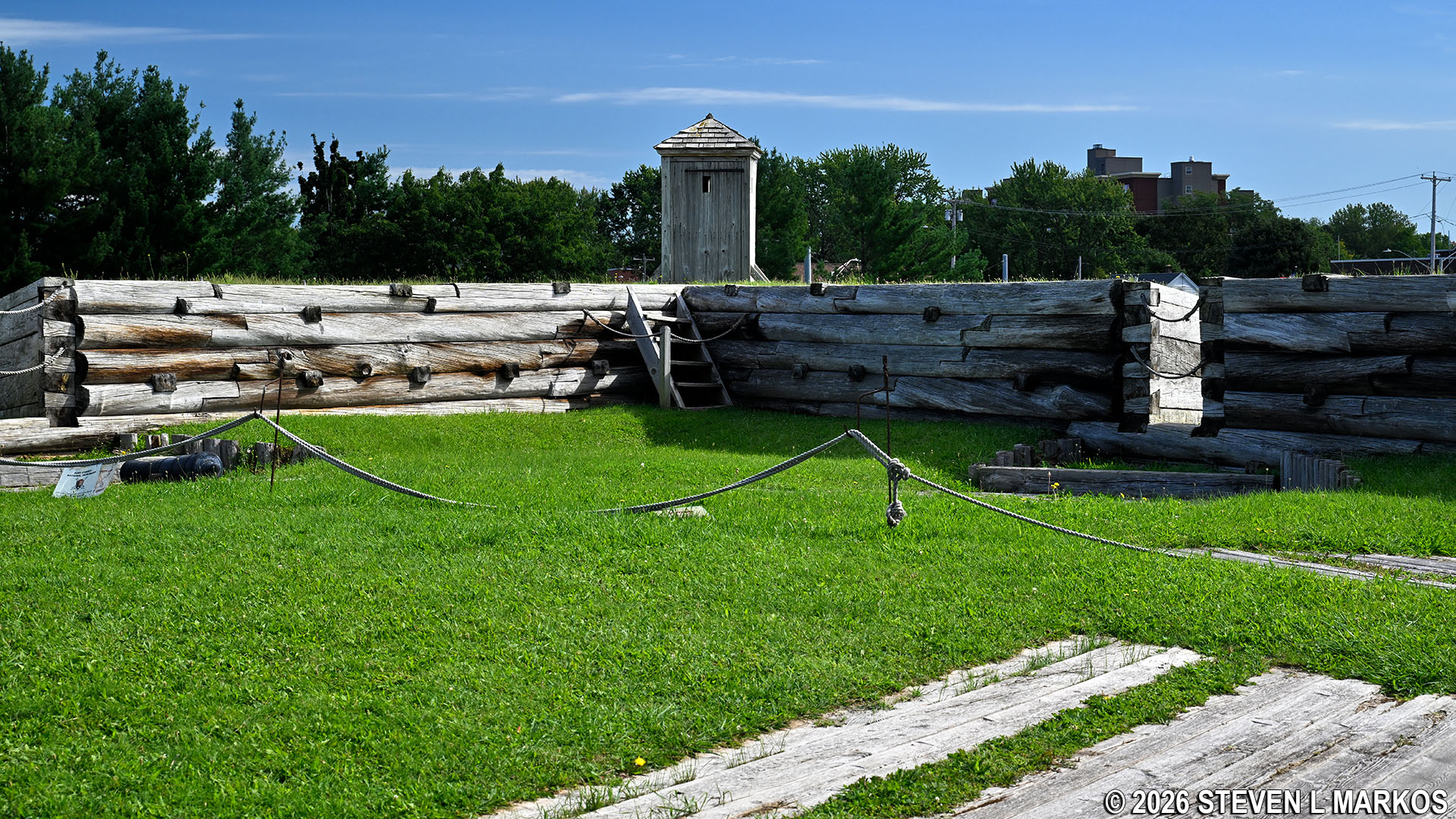
Terreplein of a bastion at Fort Stanwix, Fort Stanwix National Monument
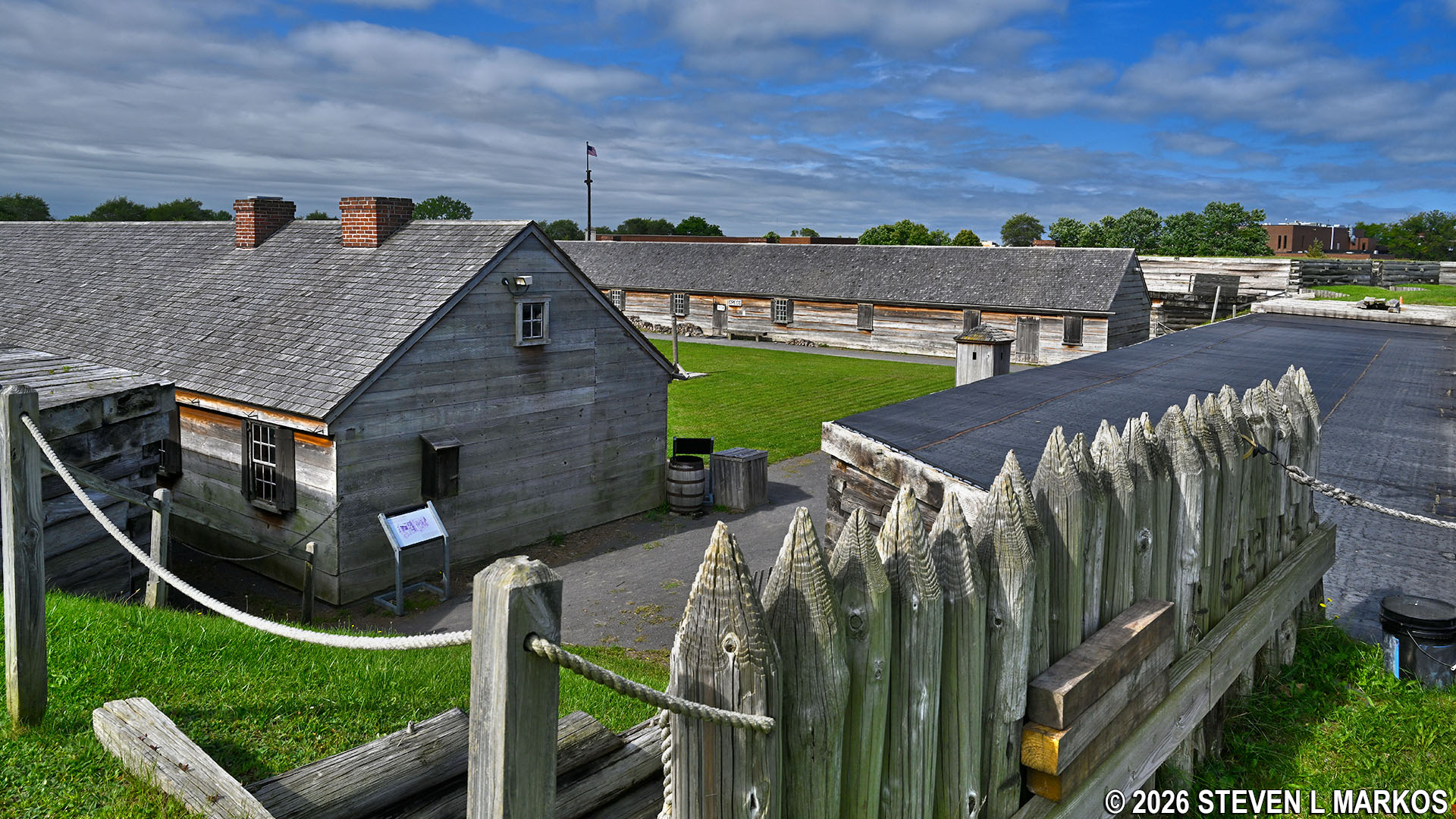
View of Fort Stanwix from the top of a bastion, Fort Stanwix National Monument
Many of the rooms at Fort Stanwix are open to visitors. They are furnished as the various types of rooms that would have been in use when the fort was operational, though nobody knows what the rooms actually looked like or what purpose they served. For example, the room now furnished as the Commandant’s Quarters, where two to three high-ranking officers would have lived, was actually in the headquarters building (not reconstructed by the National Park Service).
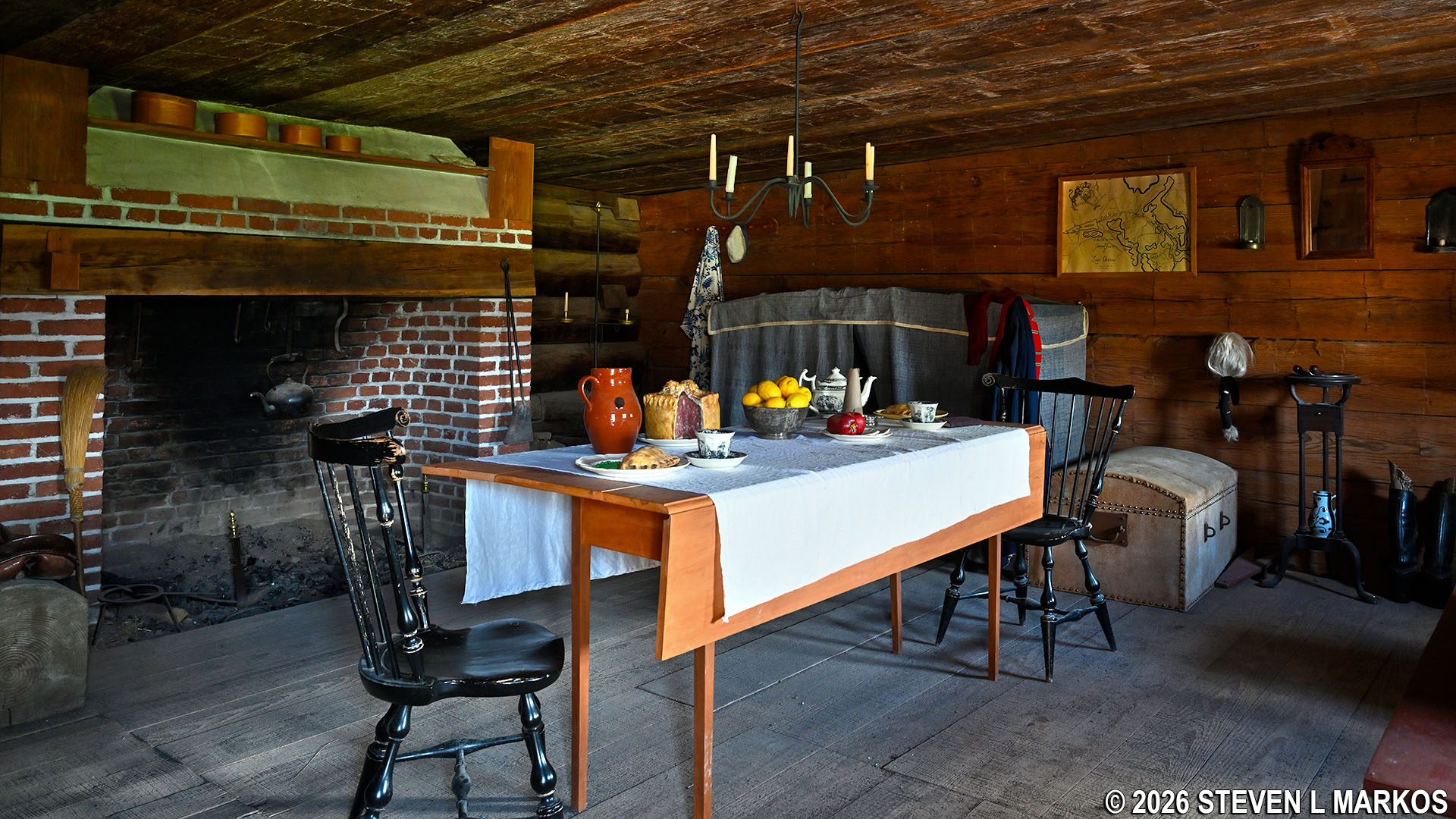
Commandant’s Room at Fort Stanwix, Fort Stanwix National Monument
Patriot officers were often—though not always—upper-class individuals who gained their rank through political connections or who used their personal money to finance their own military units. They usually brought their own furnishings with them, and their quarters had a decent amount of living space, though multiple officers still shared a room.
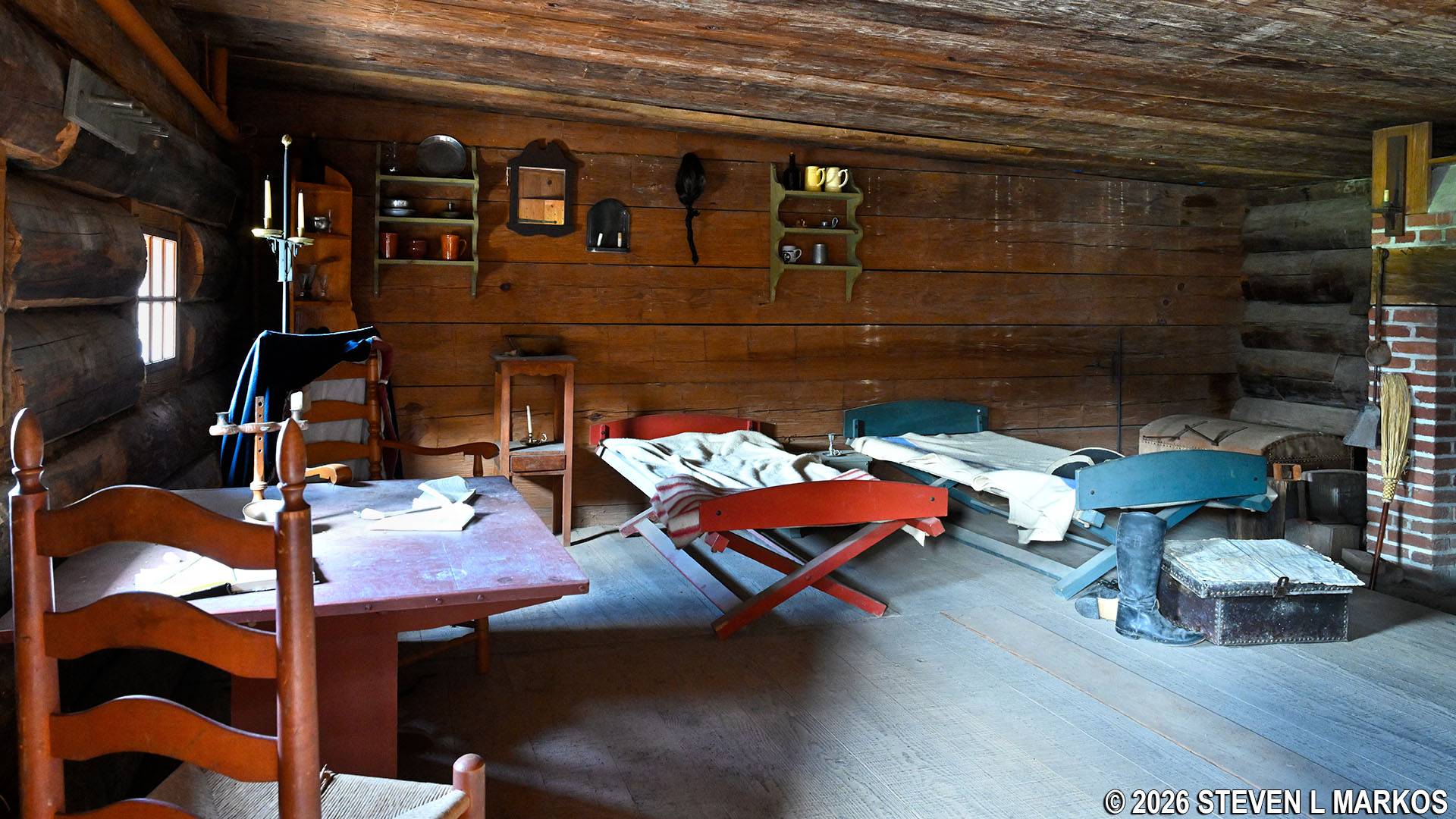
Officers’ Quarters at Fort Stanwix, Fort Stanwix National Monument
Junior officers (e.g. captains and lieutenants) were enlisted men who earned a promotion through valor on the battlefield. While not as spacious as the officers’ quarters, they were much better off than the typical enlisted man.
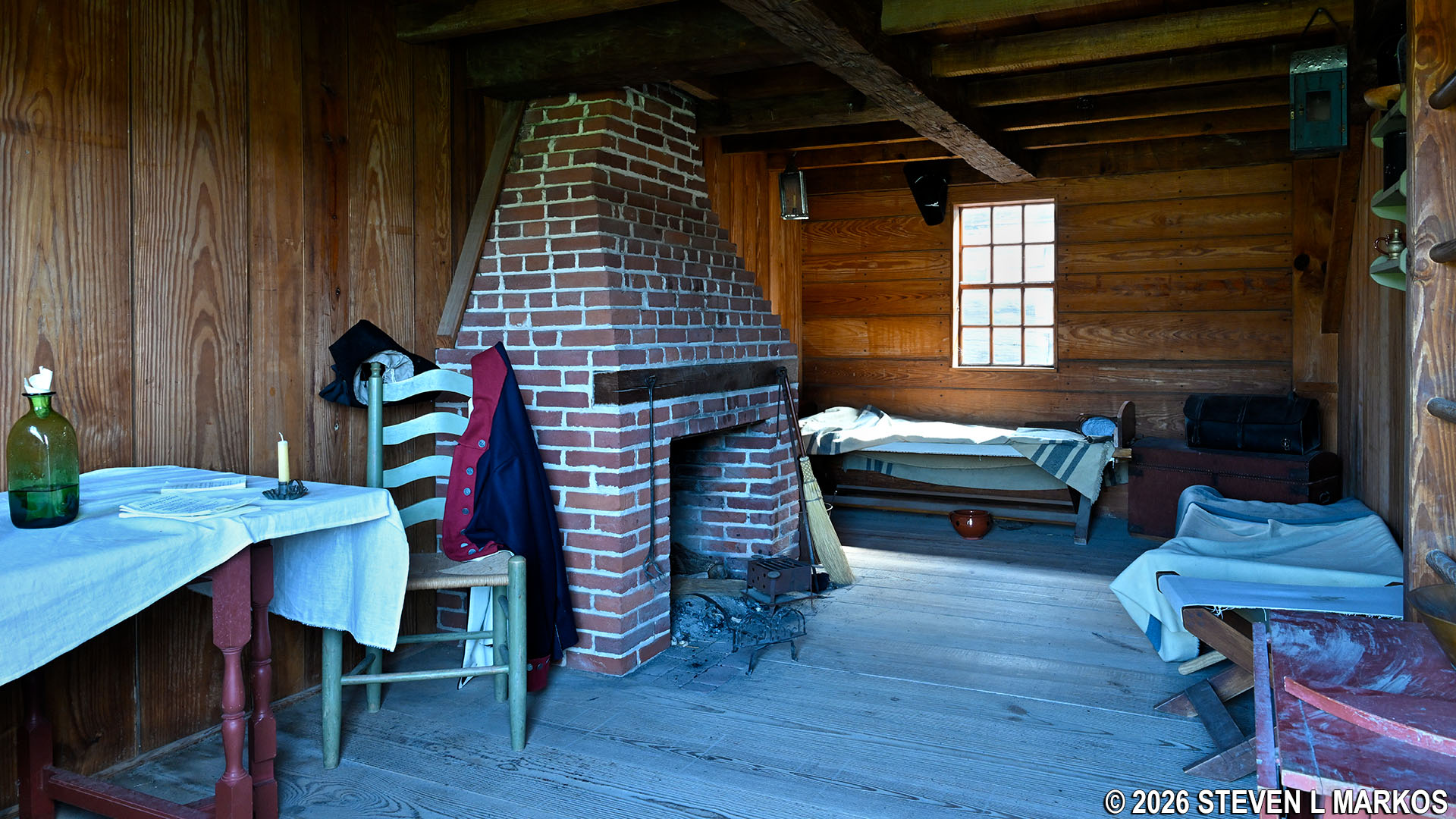
Junior Officers’ Quarters at Fort Stanwix, Fort Stanwix National Monument
In contrast to the officer and junior officer quarters, the enlisted men’s living quarters were cramped, filled with bunkbeds, and had limited amenities. In the stand-alone barracks buildings, fires had to be kept burning all night (a fire hazard) to keep them from freezing during the winter. Casemates were well insulated and warmer, but they had at least 40 men crammed into them each night.
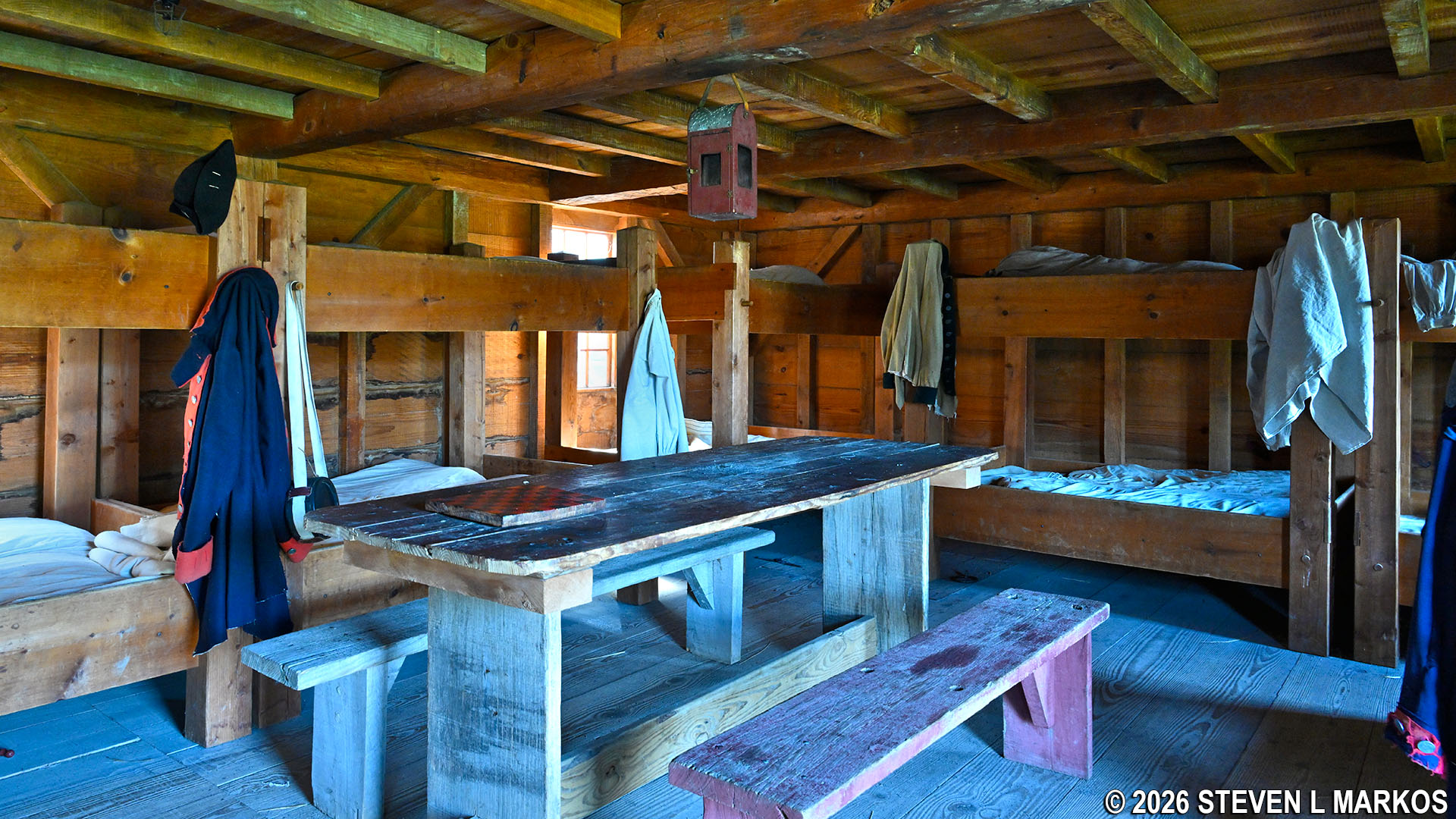
Enlisted Men’s Barracks building at Fort Stanwix, Fort Stanwix National Monument
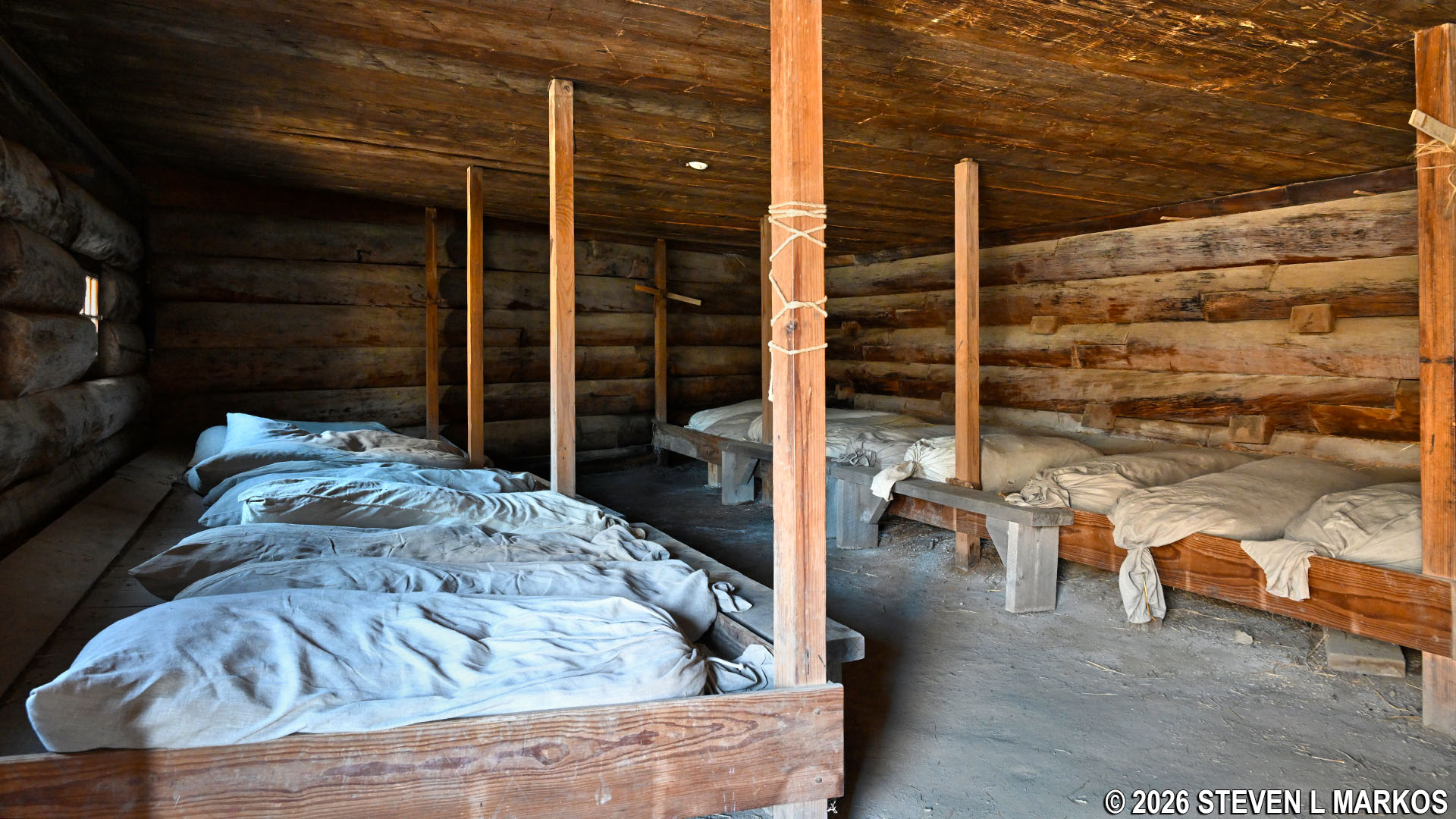
Living quarters for enlisted men inside a casemate at Fort Stanwix, Fort Stanwix National Monument
There were also rooms in the fort for artisans such as blacksmiths and carpenters. Work tables and equipment would have been stored in such rooms.
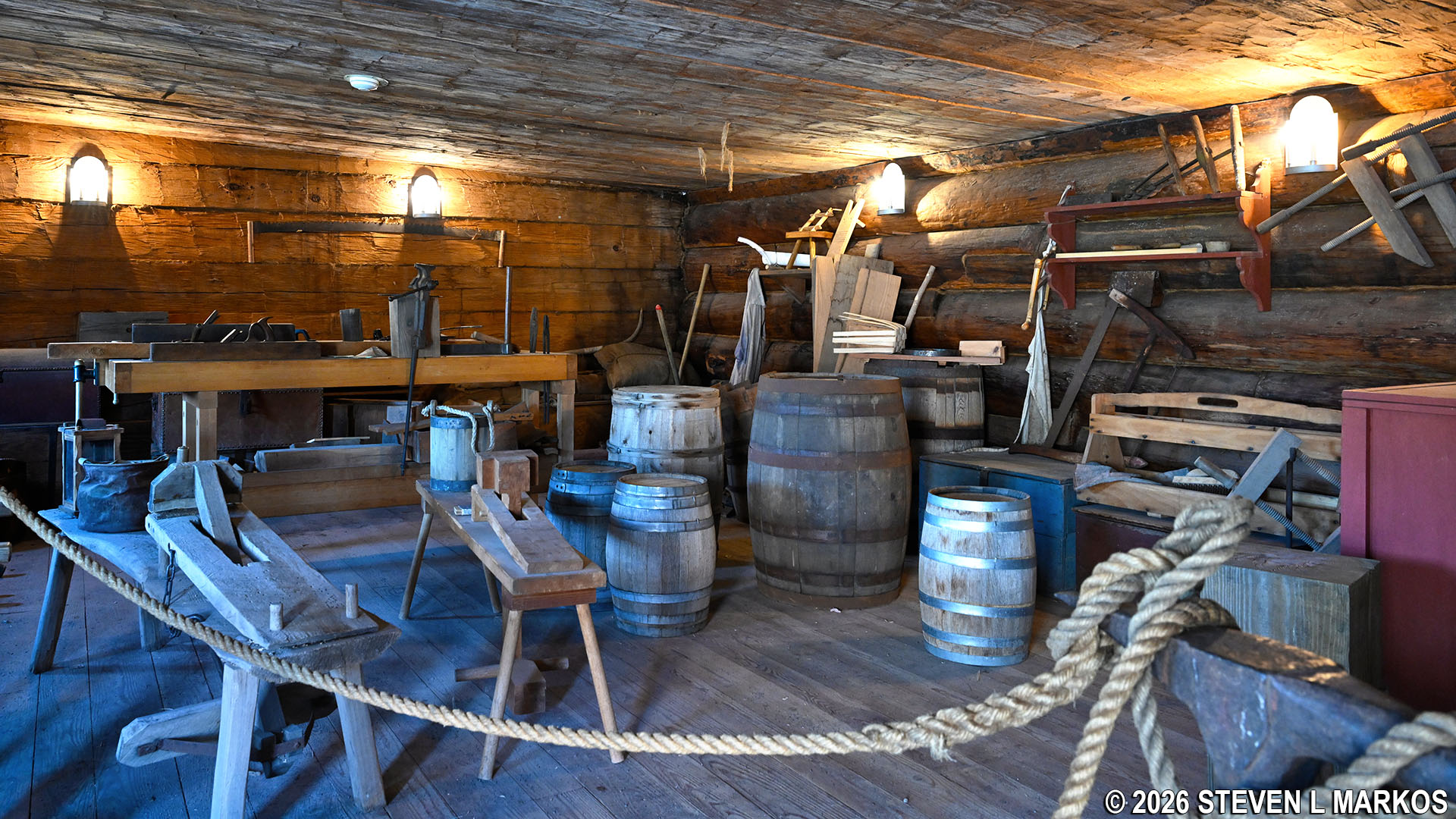
Work room for carpenters and blacksmiths at Fort Stanwix, Fort Stanwix National Monument
Trade between the Europeans and local Indians was an important part of commerce in the mid-1700s, and forts such as Fort Stanwix served as make-shift trading posts. There was typically a civilian merchant called a suttler who was in charge of trade, and he had a store inside the fort. Soldiers could purchase items, but most of the expensive trade goods such as furs were sold to merchants in Albany. One of the rooms at Fort Stanwix is now furnished as a suttler’s store.

Suttler’s store at Fort Stanwix, Fort Stanwix National Monument
Below each bastion was a room called a bombproof. These were typically used for storing food and gunpowder. There was one entrance, and turns in the corridor kept shrapnel from exploding projectiles shot into the fort during battle from entering the main room. A ventilation shaft ran up to the top of the bastion to provide fresh air. During the British siege of Fort Stanwix in August 1777, one of the bombproofs was used as a hospital.
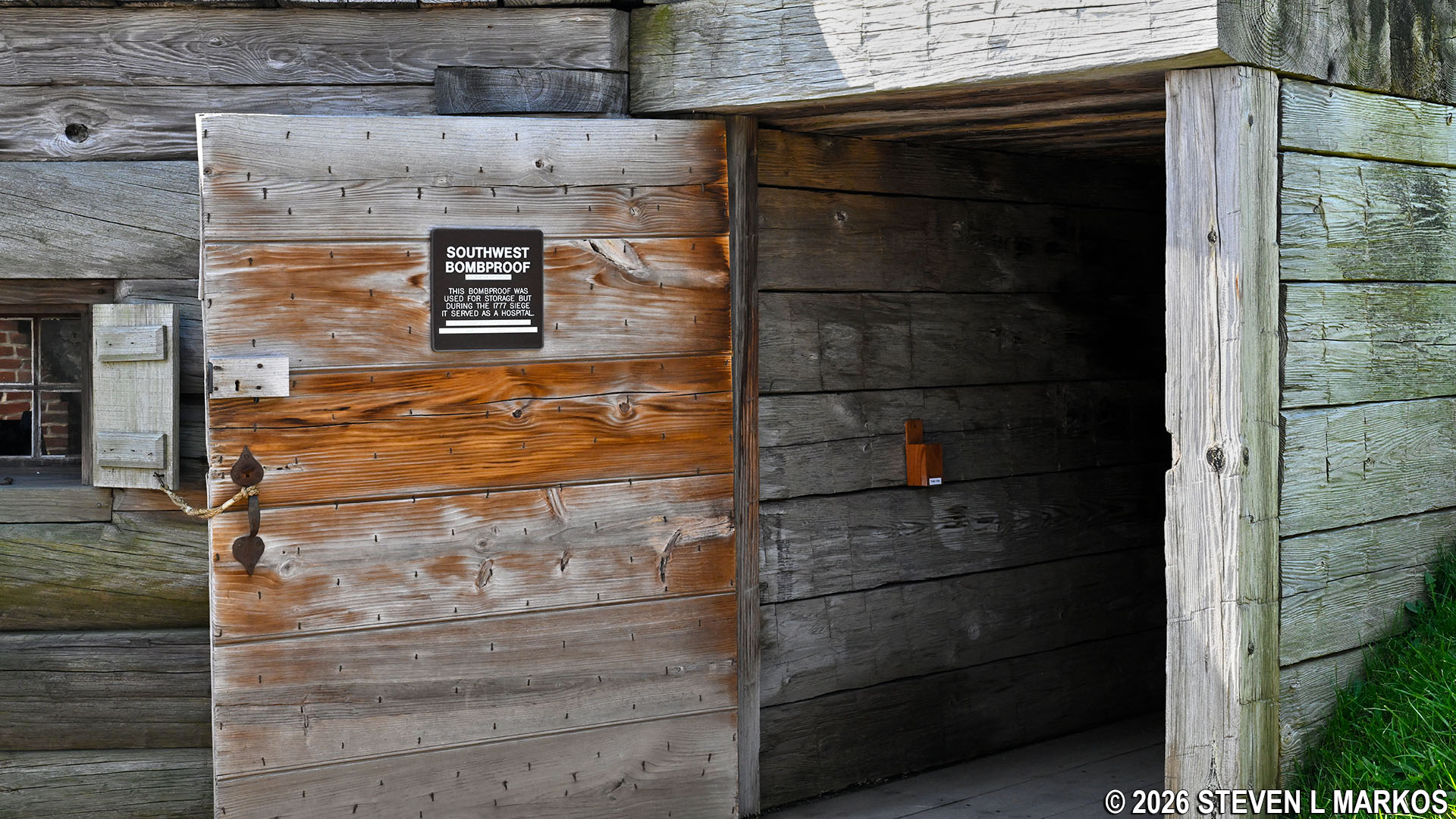
Entrance into one of Fort Stanwix’s bombproofs that are located under a bastion, Fort Stanwix National Monument
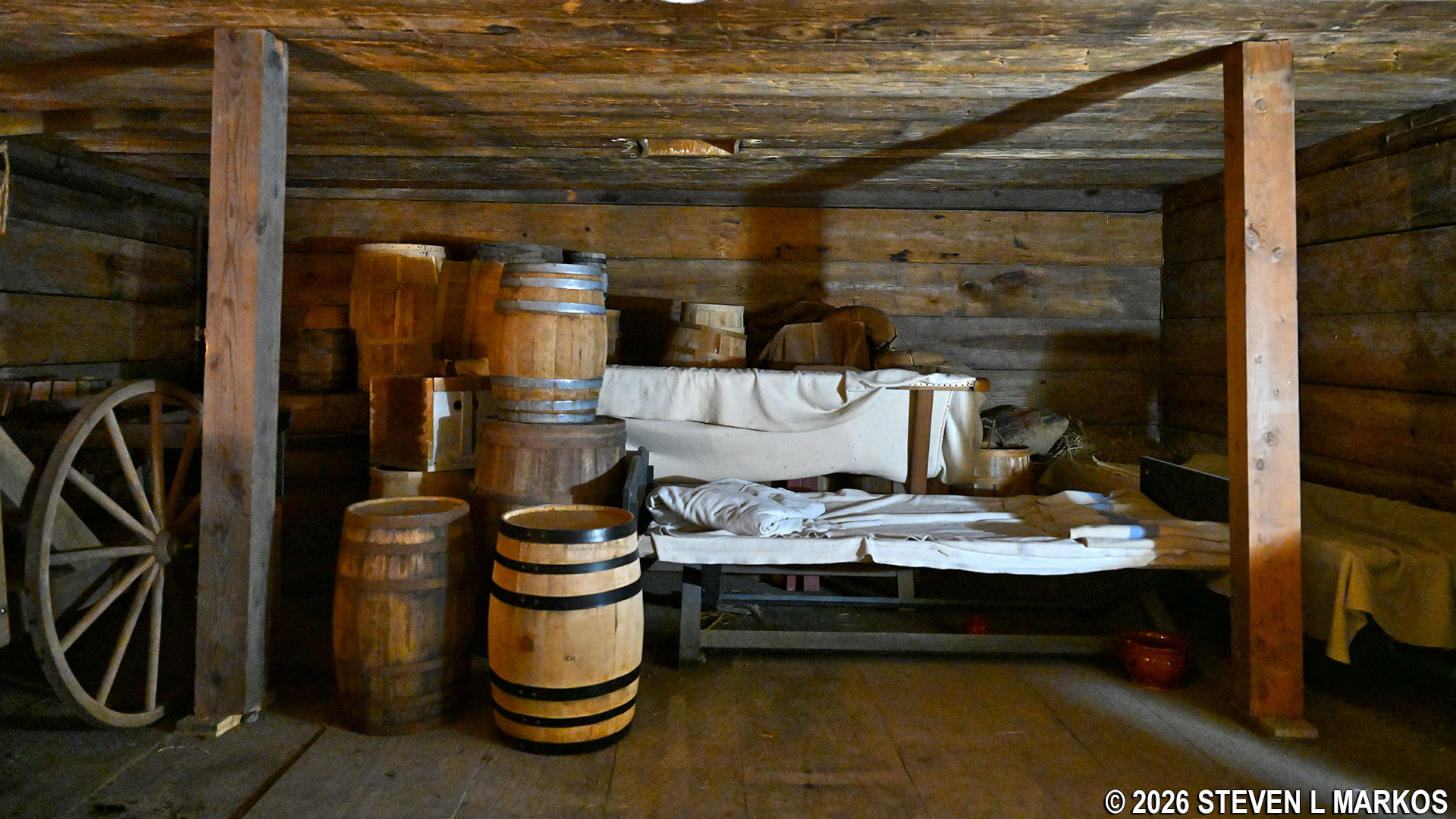
Bombproof at Fort Stanwix furnished as a make-shift hospital used during the failed August 1777 siege by the British, Fort Stanwix National Monument
While most everything about today’s Fort Stanwix is a reconstruction, there is a piece of the original fort that visitors can see: the ruins of a fireplace. This is located in the north casemate, which is thought to have been used as an officers’ quarters.
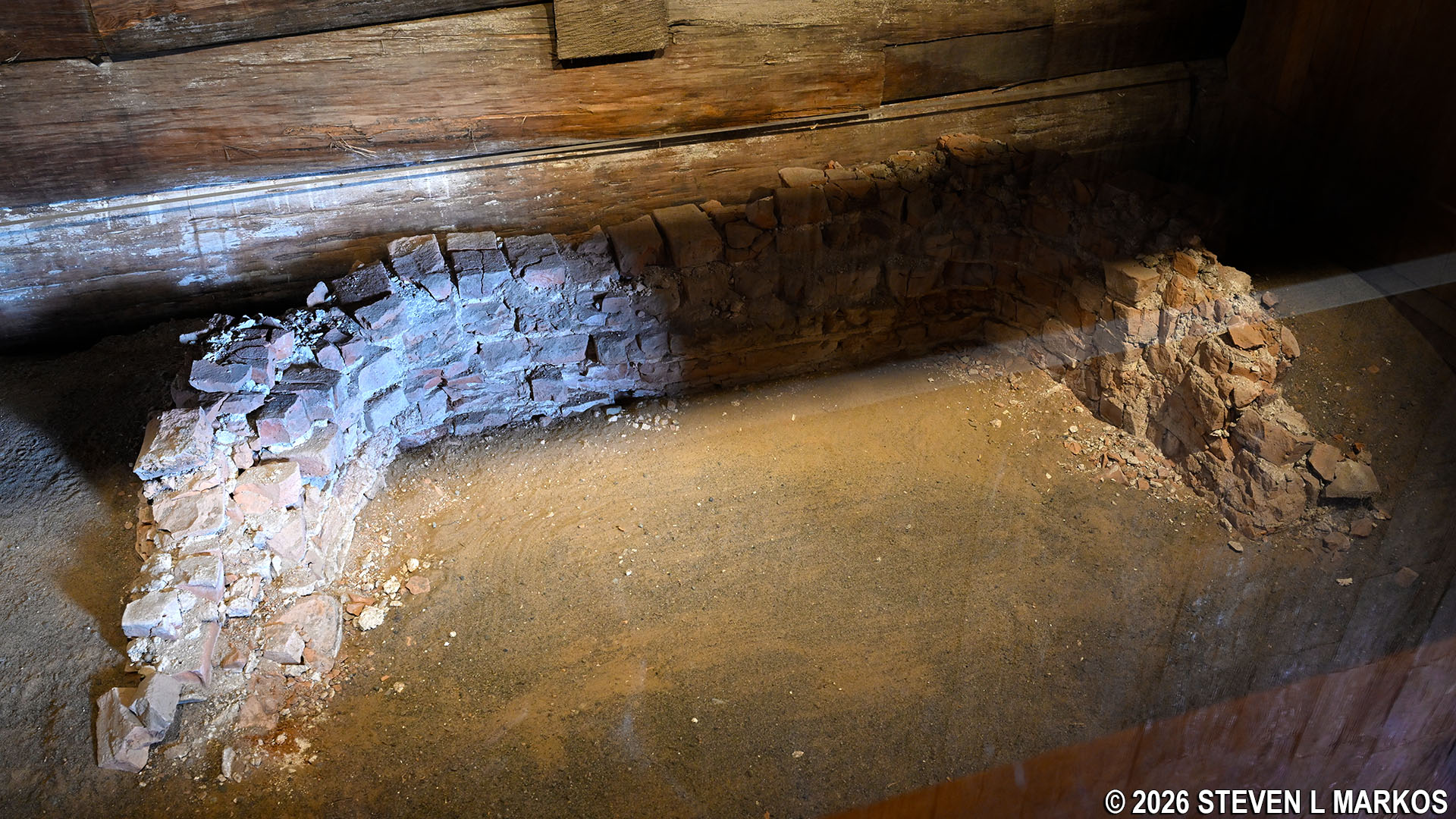
Ruins of an original fireplace at Fort Stanwix, Fort Stanwix National Monument
There are two rooms in the Gregg Barracks (one of the two stand-alone buildings) that are not historically accurate, as they have cement ceilings. One serves as a mini Visitor Center with a small exhibit area. Inside are two models of Fort Stanwix, reproductions of old maps and construction plans, and costume clothing for kids to dress up in.

Exhibit room inside Fort Stanwix, Fort Stanwix National Monument
A second room is used as a movie theater where the 17-minute film I was so Wore Out with Fatigue is shown on the hour and half hour. It is a modern film with actors that covers what happened to Fort Stanwix after the 1777 siege. While men were still killed off by Indians who would often ambush them when they ventured outside the gates, the fort never saw any more battle action. It was located in the middle of nowhere and was definitely not a place any soldier wanted to be stationed. Morale was low, and desertion was not uncommon. If you have ever seen Dances With Wolves, the film makes it look as if Fort Stanwix was just a few months away from being the abandoned fort Kevin Costner ends up at when he headed west.
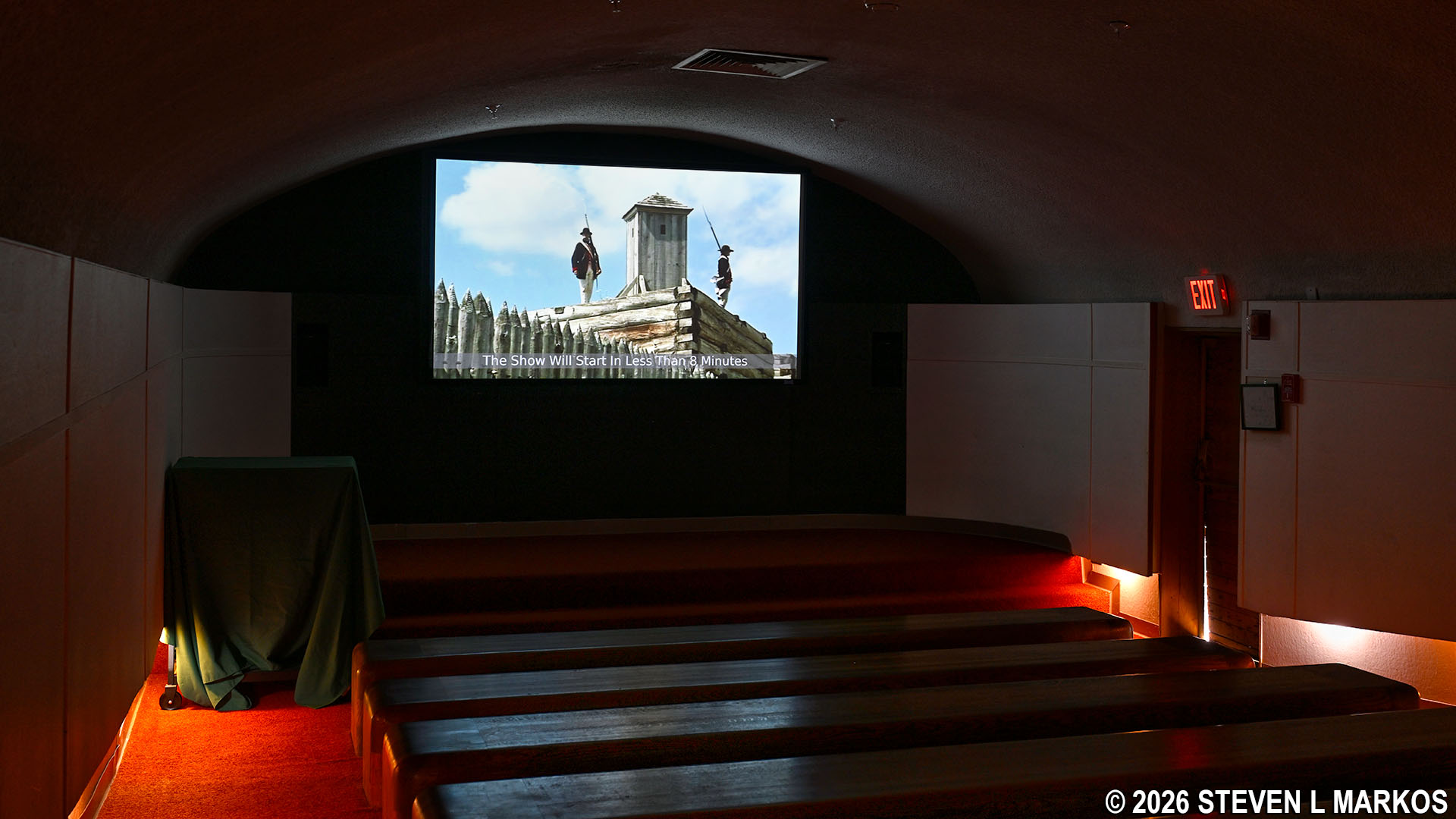
Theater room inside the Gregg Barracks at Fort Stanwix, Fort Stanwix National Monument
Barring attending any demonstrations or history talks at Fort Stanwix, plan to spend at least an hour to explore the fort and watch the film, and up to two hours if you want to read all of the wayside exhibits in every room. Of course, attending an event will add more time to your visit. For a schedule of programs, see the National Park Service’s official Calendar web page for Fort Stanwix National Monument.
With a few exceptions, use of any photograph on the National Park Planner website requires a paid Royalty Free Editorial Use License or Commercial Use License. See the Photo Usage page for details.
Last updated on January 21, 2026


