
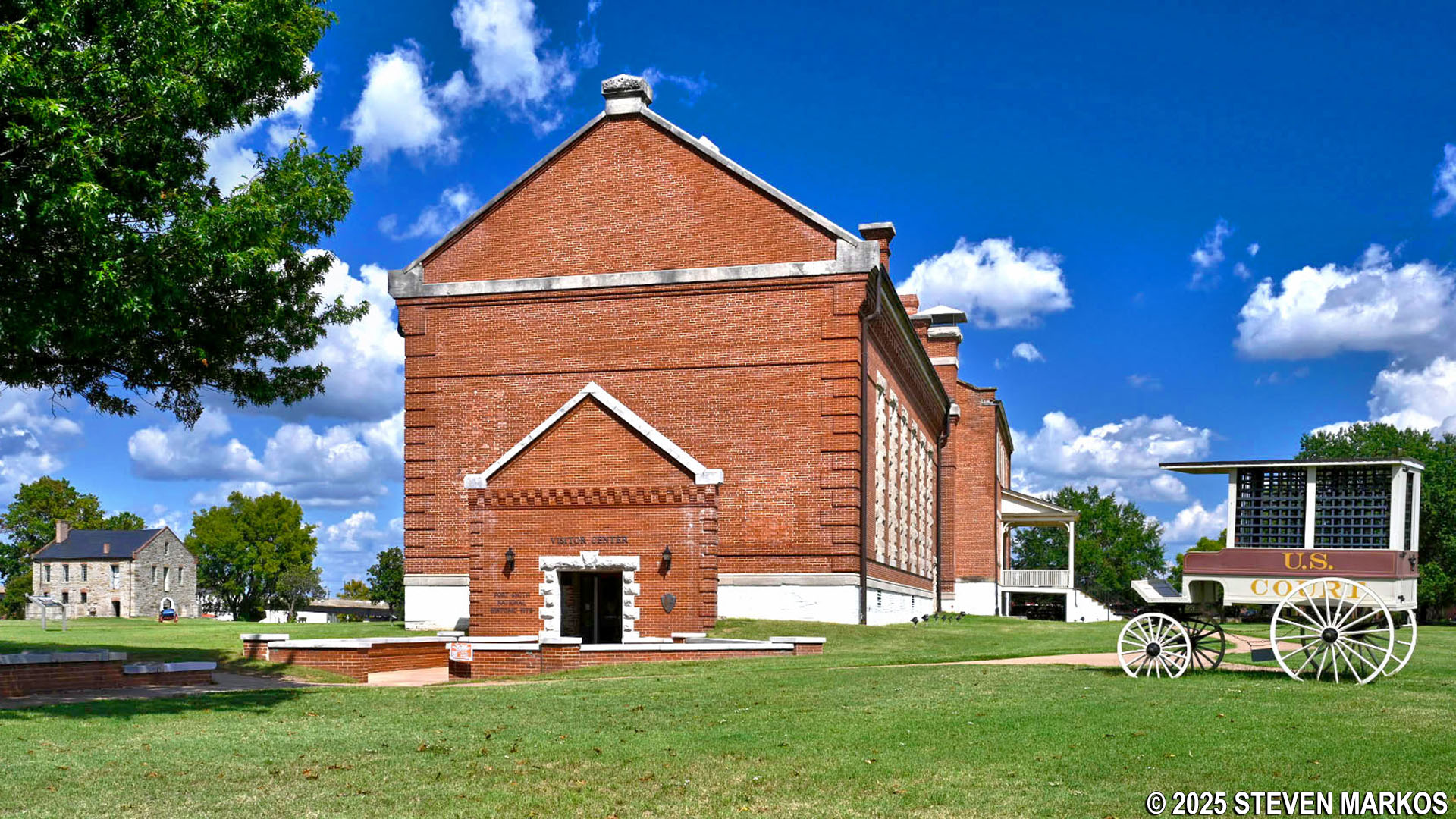
Visitor Center at Fort Smith National Historic Site
GENERAL INFORMATION
After Fort Smith closed in 1871, the Federal Court for the Western District of Arkansas moved into the former military barracks. The first floor was converted into a courtroom on one side and offices for the United States marshals and court clerks on the other. The mess hall in the basement was turned into a primitive jail—nicknamed Hell-on-the-Border—with two large cells, one on each side. A journalist who visited in 1885 wrote a news article about the unsanitary conditions, which prompted Congress to fund a new jail with more modern cell arrangements. The jail was constructed directly next to the barracks starting in 1886, and it was ready for its first inmates two years later. It continued to operate until 1917. The park’s Visitor Center information desk is in the basement of the new jail, and the rest of the two buildings house exhibits about the fort’s history.
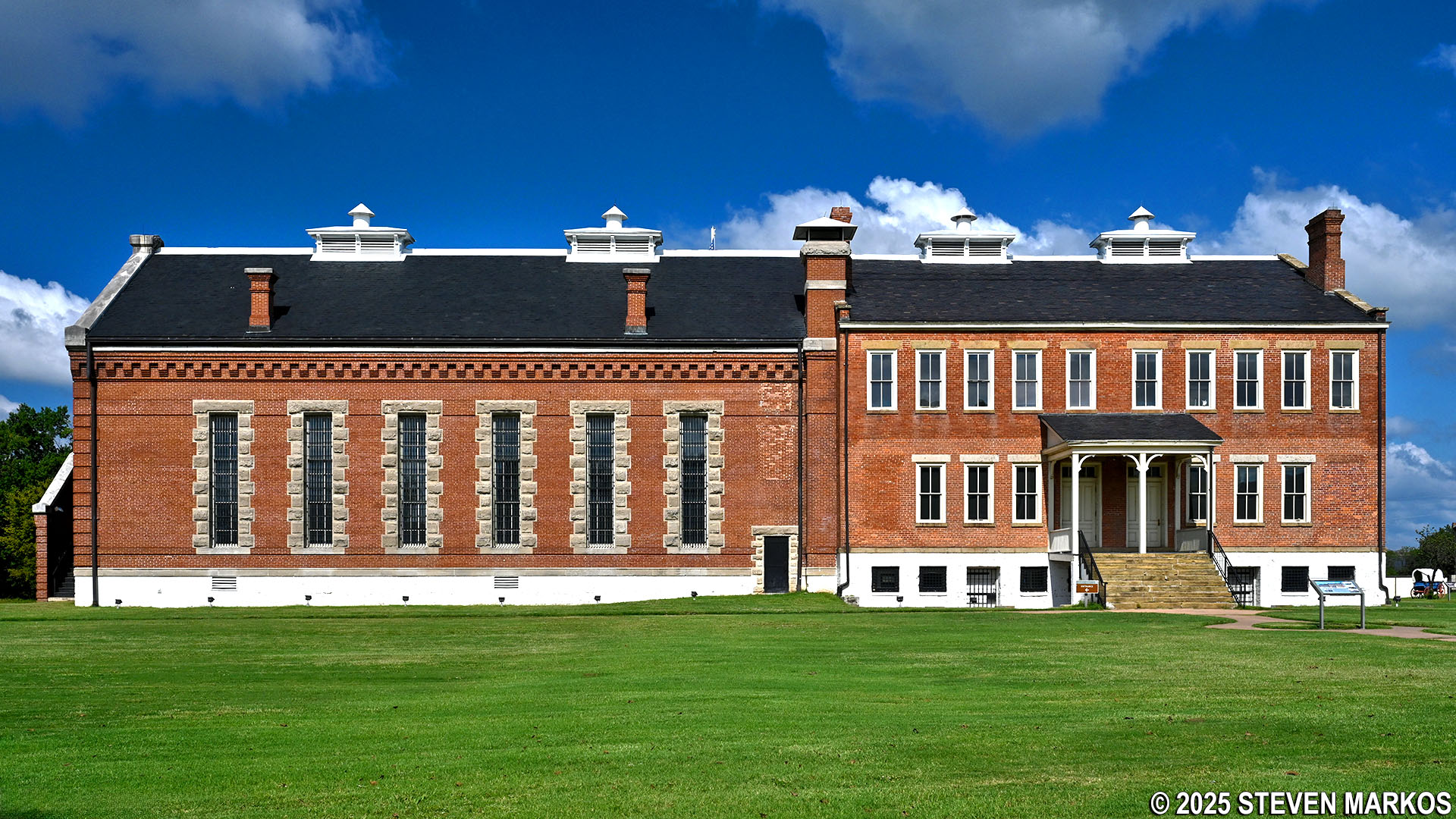
Fort Smith barracks/courthouse (right) and 1886 jail annex (left), Fort Smith National Historic Site
OPERATING HOURS
The Fort Smith National Historic Site Visitor Center is typically open daily from 9 AM to 5 PM during the spring, summer, and fall, and on Tuesdays through Sundays during the winter (same hours). It is closed on Thanksgiving, Christmas, and New Year’s Day. Keep in mind that times can always change, so be sure to check the National Park Service’s official Operating Hours and Seasons web page for the latest schedule.
AMENITIES
- Ranger-staffed information desk where you can ask questions and pick up a park brochure
- Book and souvenir store
- Park film
- Exhibit area
- Restrooms
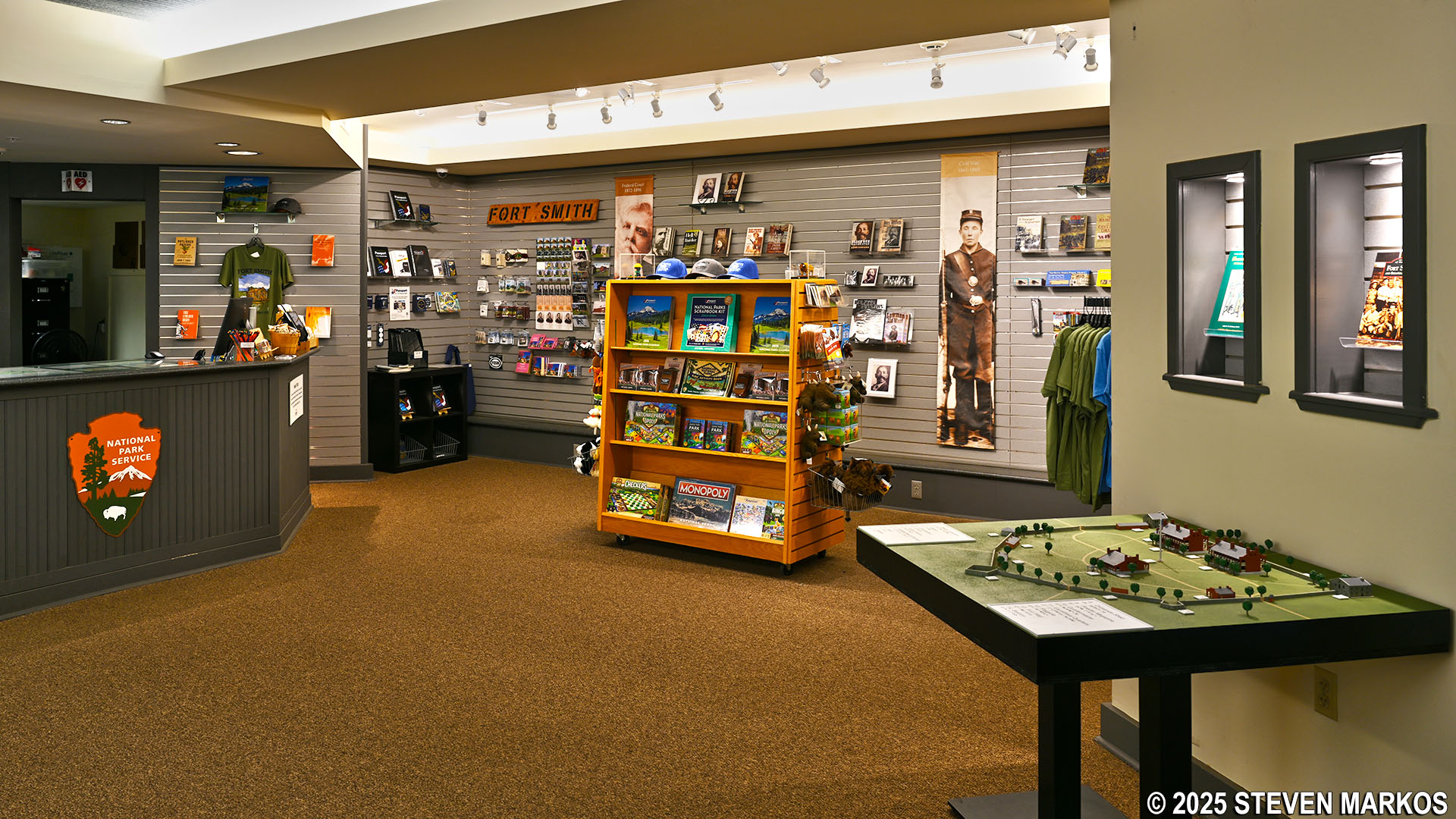
Information desk and souvenir store at the Fort Smith National Historic Site Visitor Center
PARK FILM
The 15-minute film Fort Smith: Peacekeeper of Indian Territory plays on demand in the Visitor Center theater. The film uses historical photos and illustrations accompanied by narration to provide an overview of the history of Fort Smith from 1817 to 1896. Suitable for all ages (unless minimal references to violence are a concern), it is worth watching before heading out to explore the fort grounds so that you have a better understanding of what occurred here.
EXHIBIT AREA
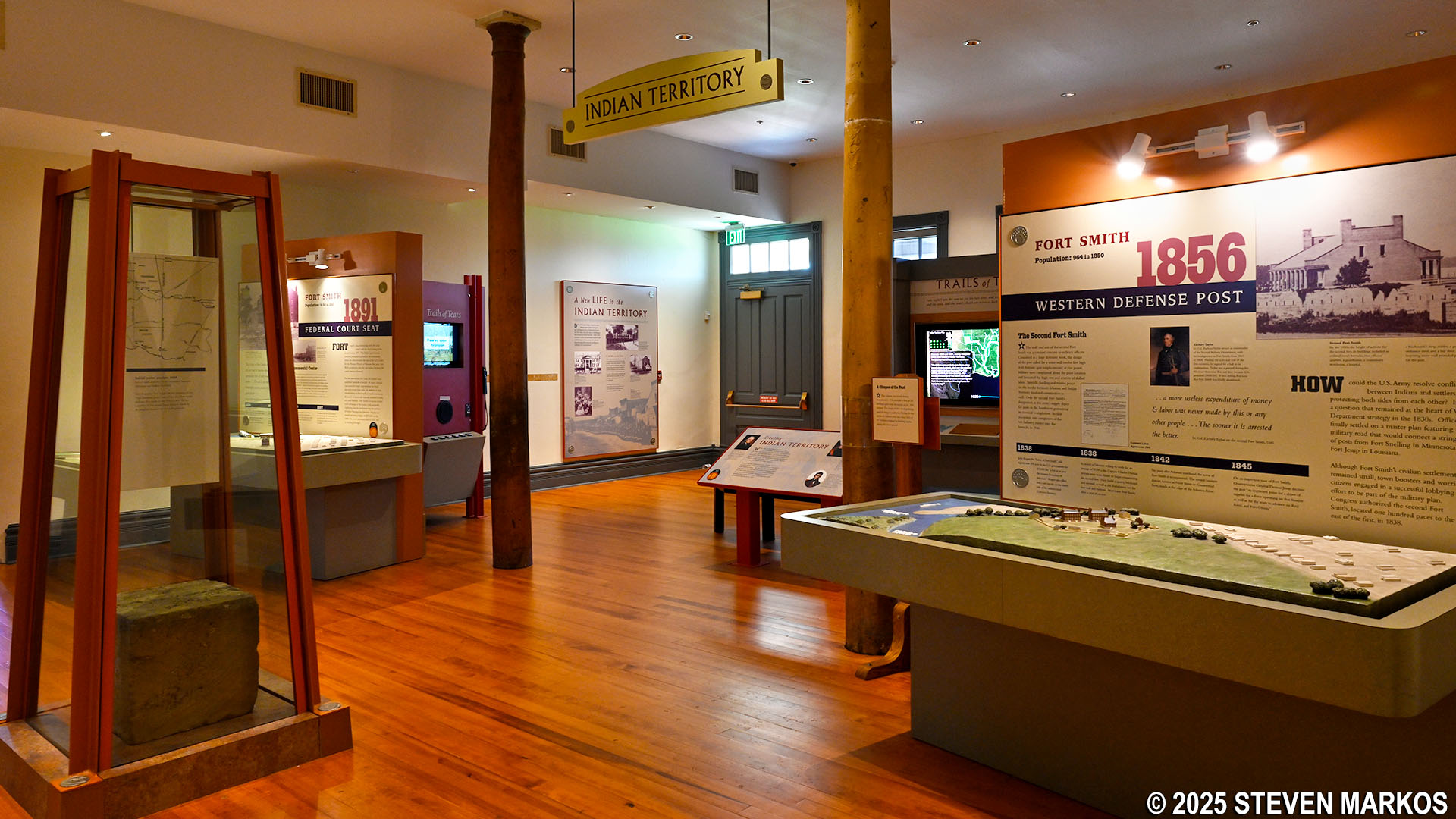
Indian Territory exhibit area at the Fort Smith National Historic Site Visitor Center
There are four different exhibit areas inside the Fort Smith National Historic Site Visitor Center. On the lower level of the courthouse portion of the building is Fort Smith’s first jail. One of the cells has been restored, and information panels along the wall provide some background history about the jail. It was given the nickname “Hell-on-the-Border” because of the horrible and unsanitary conditions that prisoners had to endure. The jail consisted of two large, often overcrowded cells with no heating, outside ventilation, or indoor plumbing. The toilet was a bucket stored in the fireplace, and the only opportunity for washing was a second bucket half-full of dirty water. There was no electric light back then, so the only light in the cell came from the basement windows that were sealed shut.
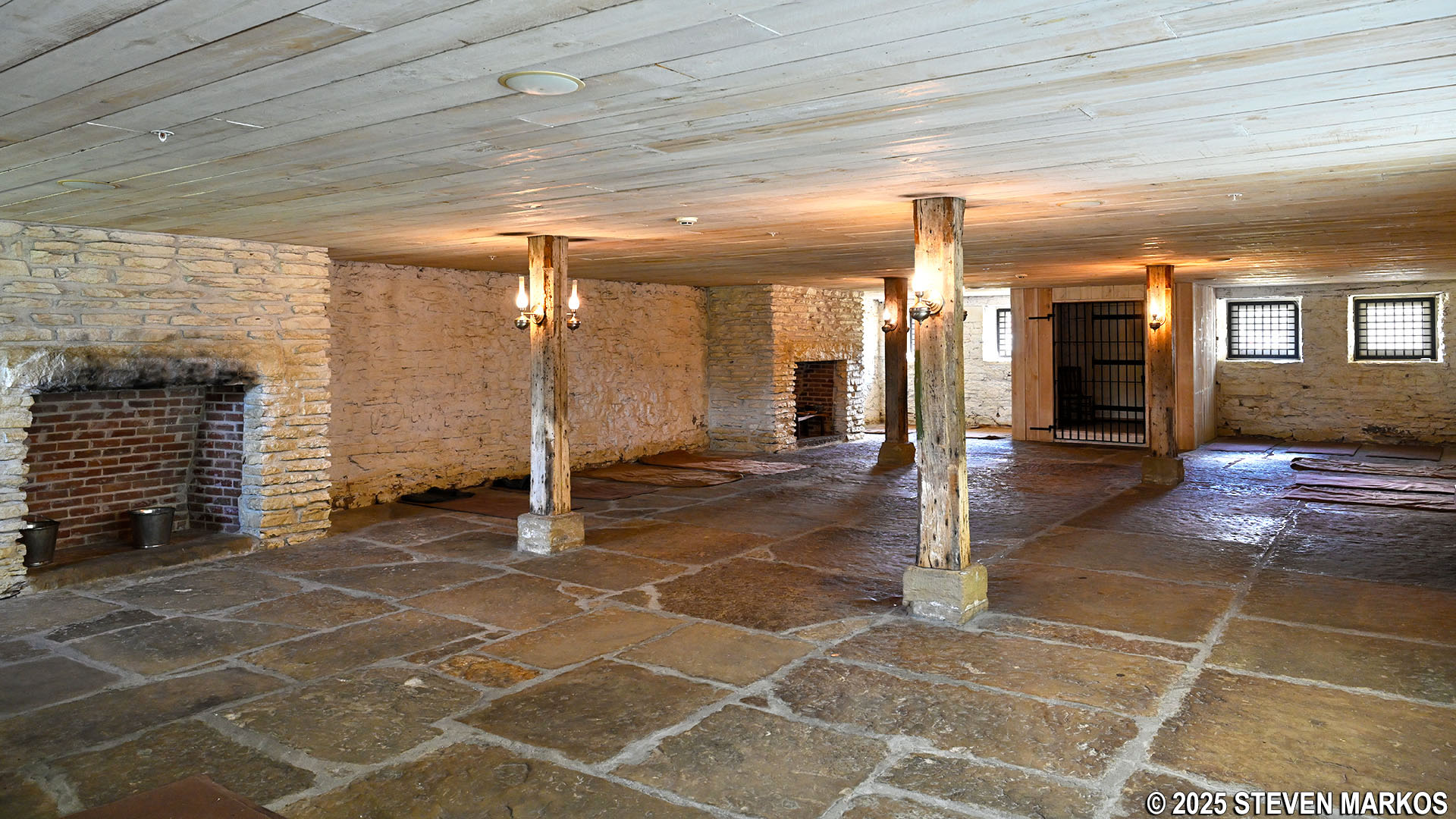
Hell-on-the-Border jail exhibit at the Fort Smith National Historic Site Visitor Center
The original 1886 jail was constructed as three levels, and up until April 1996, visitors to the park were able to see it. Unfortunately, the building was heavily damaged by a massive tornado on April 24th. The idea for a new museum was already in the works by that time, so the National Park Service decided to reconstruct the building as two floors, using the bottom as the Visitor Center and the top as the location for a partial replica of the new jail. Some of the bricks recovered after the tornado were installed in the replica. They were even able to use the original blueprints because the company that built the jail, Pauly Jail Building Company, was still in business and the blueprints were in its archive (the company is in business even today).
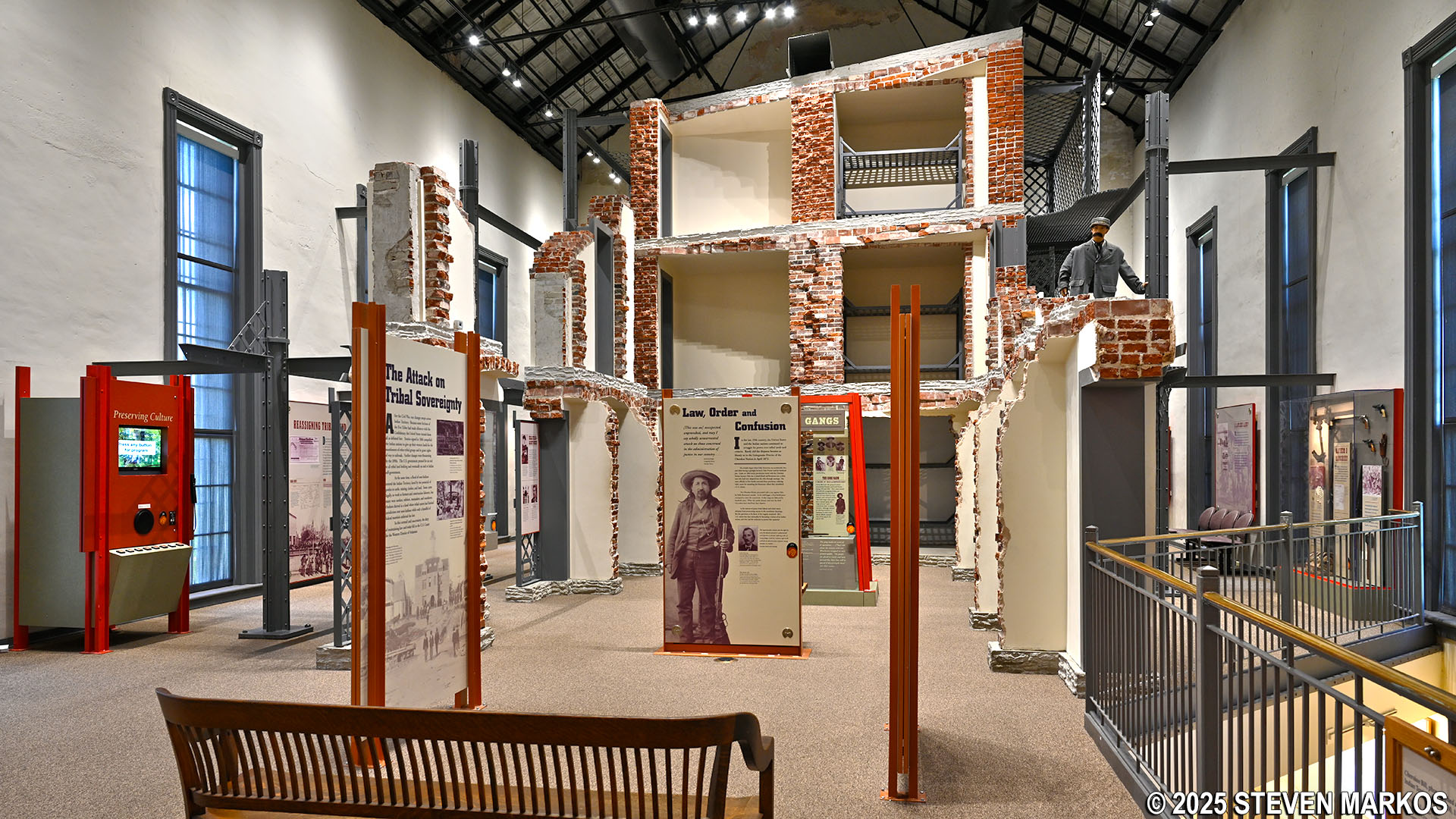
Replica of the second jail at the Fort Smith National Historic Site Visitor Center
The new jail provided better conditions for the prisoners. Instead of up to fifty men per cell as in the old jail, the new cells were designed to house two people, though four were often in a cell due to overcrowding. Bunk beds were added, and each cell had its own toilet bucket and a closeable and ventilated cubby hole in the wall where it could be stored.
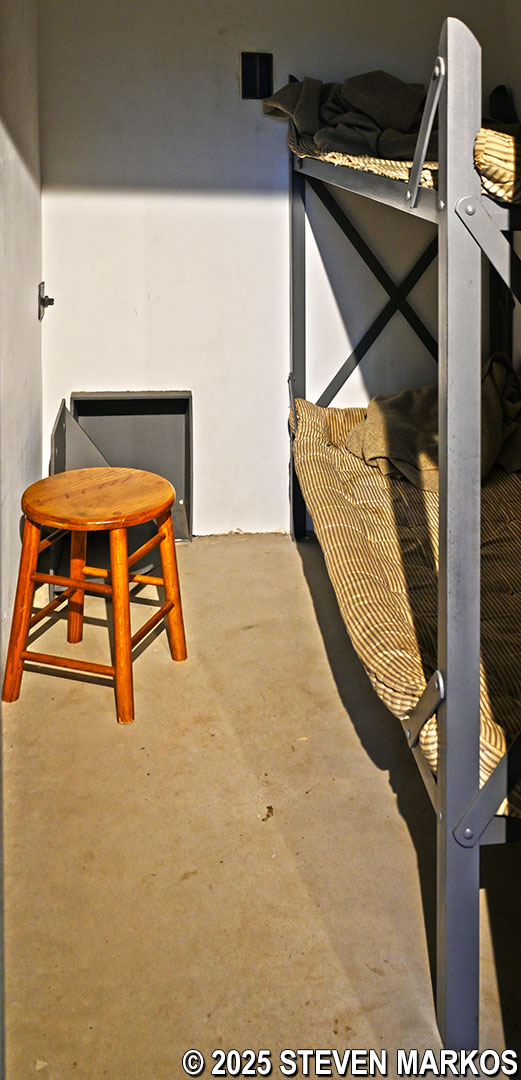
Replica of a cell interior in the second jail at the Fort Smith National Historic Site Visitor Center
A metal-cage wall was also built around the cells, allowing the prisoners to walk freely amongst themselves while the deputies remained on the other side. Wash bins with fresh water that would be changed regularly were also installed. The second jail at Fort Smith was no longer hell on the border, at least not to the same extent.
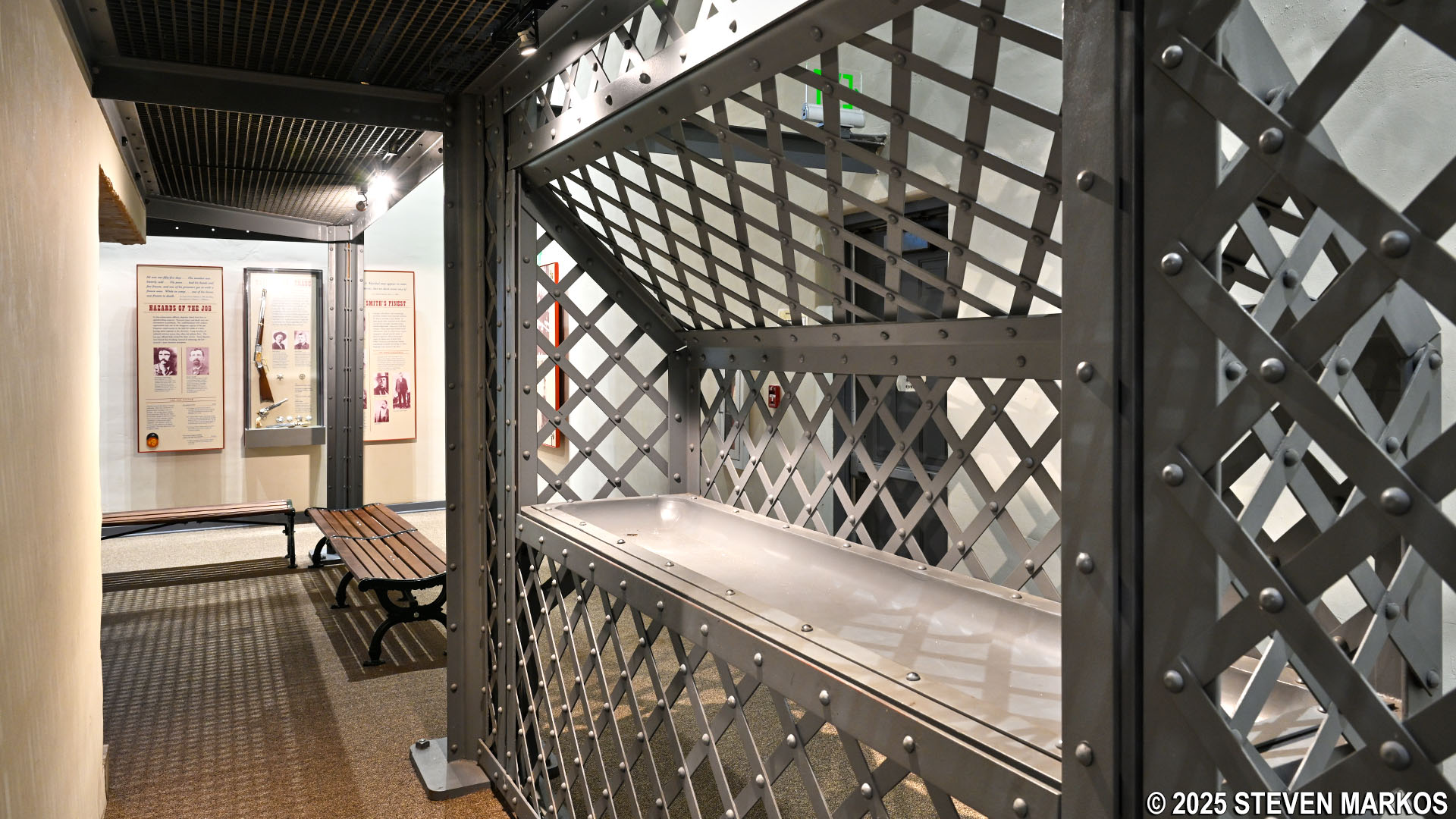
Wash bin and cage wall in the replica second jail exhibit at the Fort Smith National Historic Site Visitor Center
Along the back side of the 1886 jail replica are exhibits that focus on the U.S. Marshals and their role at Fort Smith. A video monitor installed in one of the corner cells plays the 15-minute film It Took Brave Men: Deputy U.S. Marshals of Fort Smith. It tells the story of the men who served as marshals with jurisdiction in the Western District of Arkansas and Indian Territory. A push button resembling a deputy badge starts the film on demand, and there is bench seating for visitors to sit and watch.
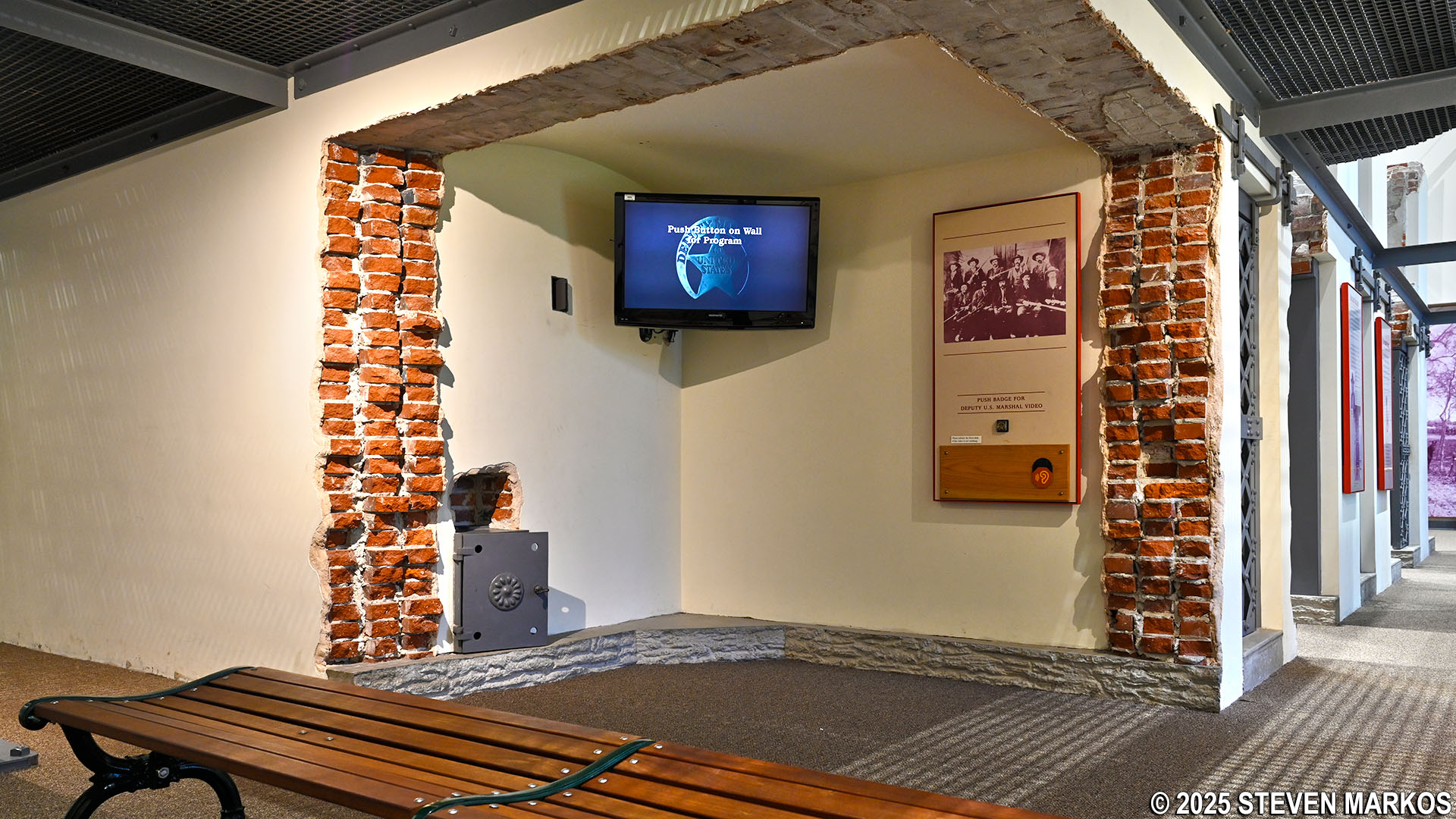
Exhibit with U.S. Marshals film inside the replica second jail at the Fort Smith National Historic Site Visitor Center
On the wall behind the U.S. Marshals video is another exhibit with information on the deputies at Fort Smith. A pair of Colt .45 revolvers owned by one of the marshals is on display, along with original and replica badges.
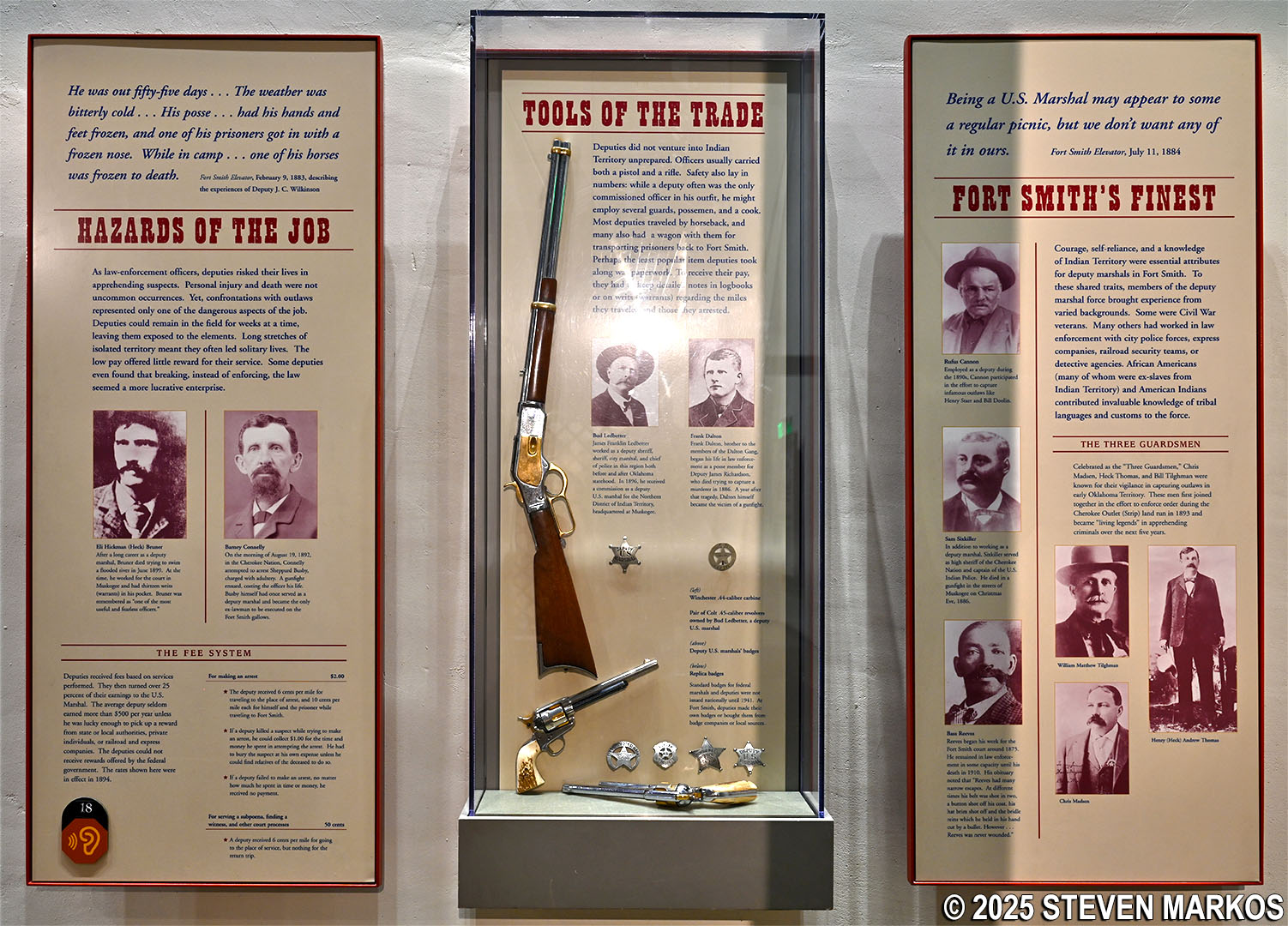
U.S. Marshals exhibit with Colt .45 revolvers on display at the Fort Smith National Historic Site Visitor Center
There are multiple information panels throughout the 1886 jail exhibit area about the outlaws and deputies that called Fort Smith home. One notable exhibit is on the notorious American outlaw Cherokee Bill, who was responsible for eight murders in Indian Territory. He was a prisoner at Fort Smith who unsuccessfully attempted a jail break in 1895. Sentenced to the gallows for his crimes by Judge Isaac Parker, known as the “Hanging Judge”, Cherokee Bill was executed on March 17, 1896. The pistol used by one of the guards during the jail break attempt, the cell lock (and key) with Cherokee Bill’s name on it, and the leg shackles reportedly used on him are all on display.
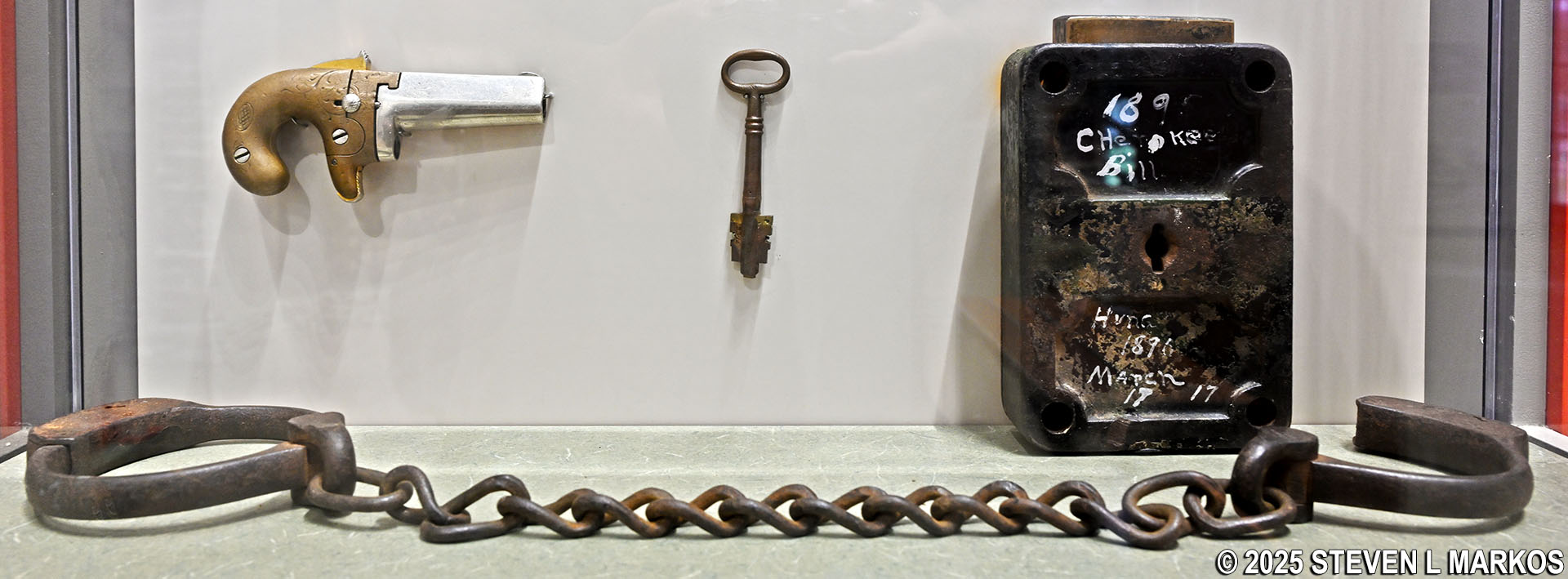
Cherokee Bill’s shackles, lock and key, and guard’s pistol on display at the Fort Smith National Historic Site Visitor Center
The exhibits continue in the rooms on the barracks / courthouse-side the second floor. The middle room focuses on the military history of the fort and the Indian Territory. Four information panels depict Fort Smith, each at a different point in time—from 1822 during its humble beginnings to 1891 during its time as a federal court. A miniature scale model in front of the panels shows how Fort Smith looked at that time.
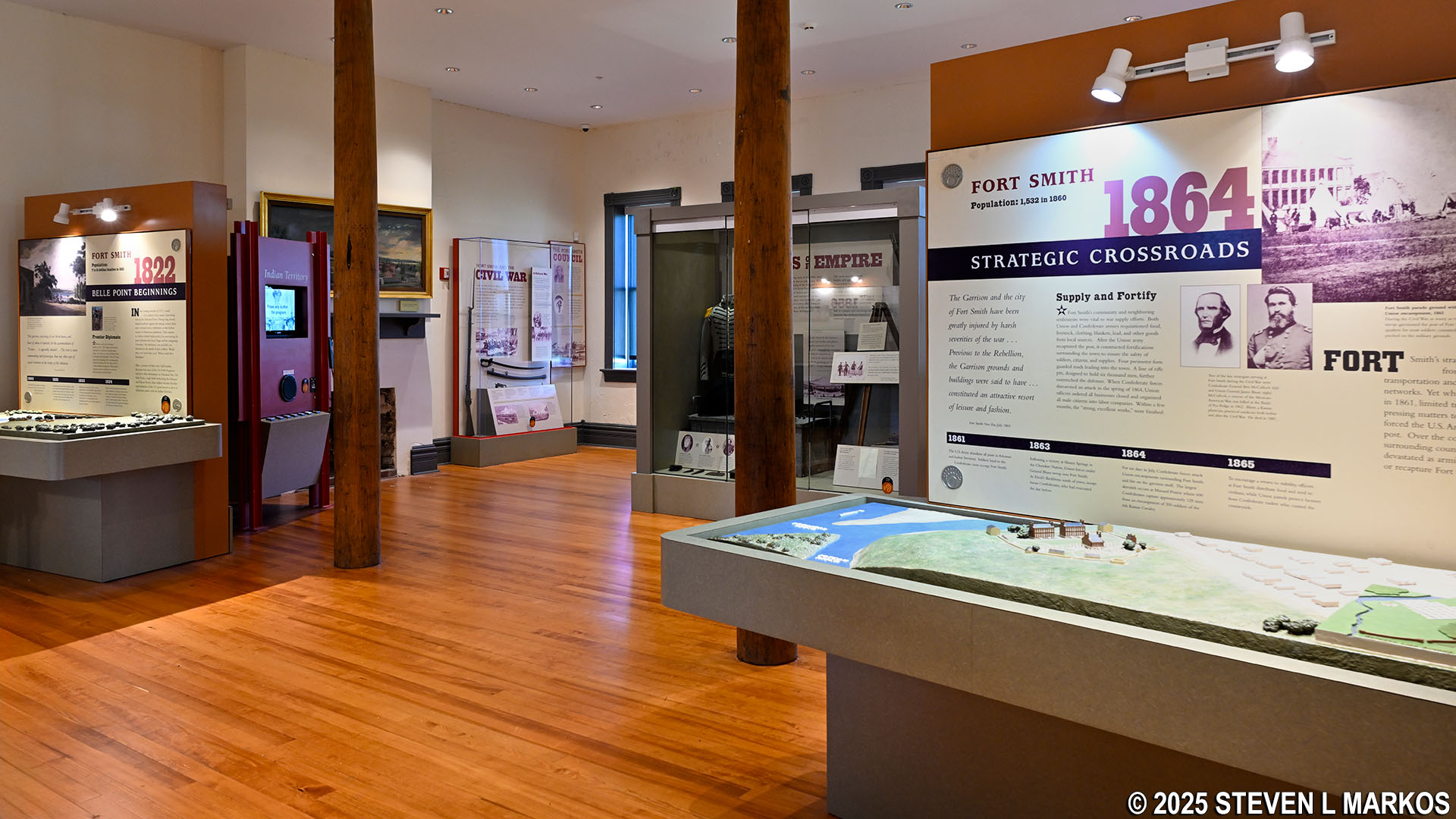
Exhibit area on Fort Smith’s history at the Fort Smith National Historic Site Visitor Center
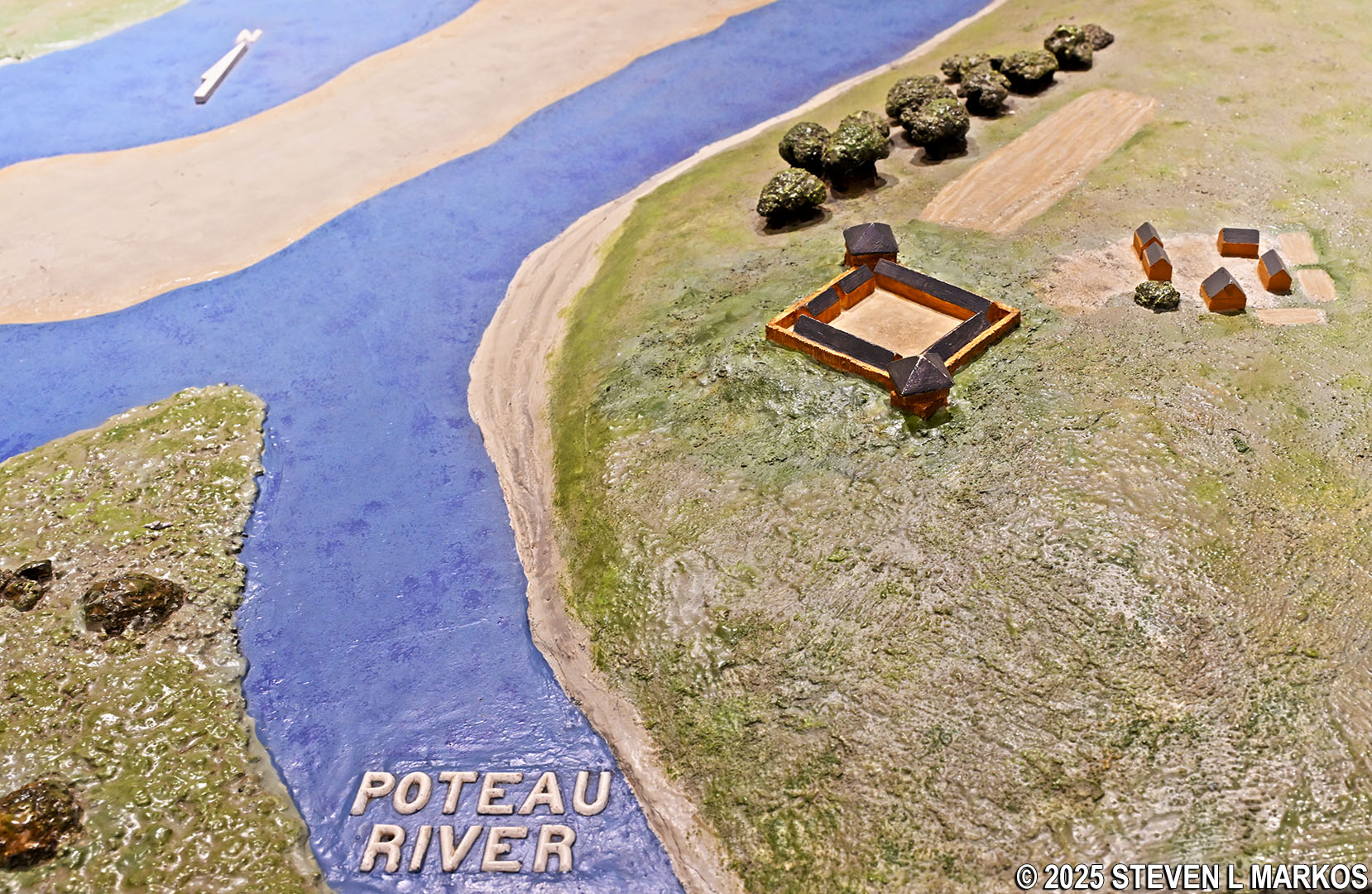
Miniature scale model of the first Fort Smith in 1822 on display at the Fort Smith National Historic Site Visitor Center
A treaty in 1820 between the United States and the Choctaw Indian tribe that determined the boundary of the Choctaw Nation resulted in two thousand Arkansas settlers being left on the wrong side of the line. Instead of removing United States citizens from their homes, the federal government decided to alter the border without consulting the Choctaw. A new treaty in 1825 compensated the tribe for the land that was lost after the alteration. In 1858, a stone marker was placed to commemorate the boundary established in 1825 between the Arkansas Territory and the Choctaw Nation. It marked the initial point one hundred paces east of the first Fort Smith, where the Choctaw line was surveyed. The original marker is on display in the Visitor Center, and a reproduction now sits on the boundary line.
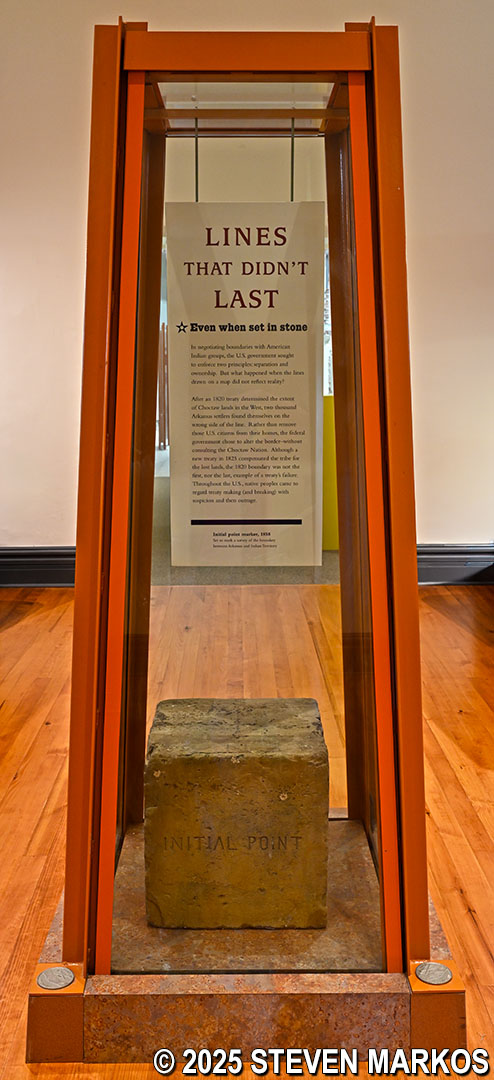
Original 1858 Initial Point Marker on display at the Fort Smith National Historic Site Visitor Center
The middle room exhibit area also includes information on the creation of Indian Territory and the history of the Native tribes. The Indian Removal Act of 1830 was enacted to annex land from the Native tribes and then transfer ownership to the states. It forced the removal of more than 60,000 American Indians from their homelands to new lands west of the Mississippi River. Their march westward, which has of late become collectively known as the Trail of Tears, was plagued by hardships and resulted in a large number of deaths. An interactive animated video map details the journey that each tribe—Cherokee, Creek, Osage, Chickasaw, Choctaw, Seminole—made during its forced migration. It takes about 20 minutes to watch all the presentations (one for each tribe).
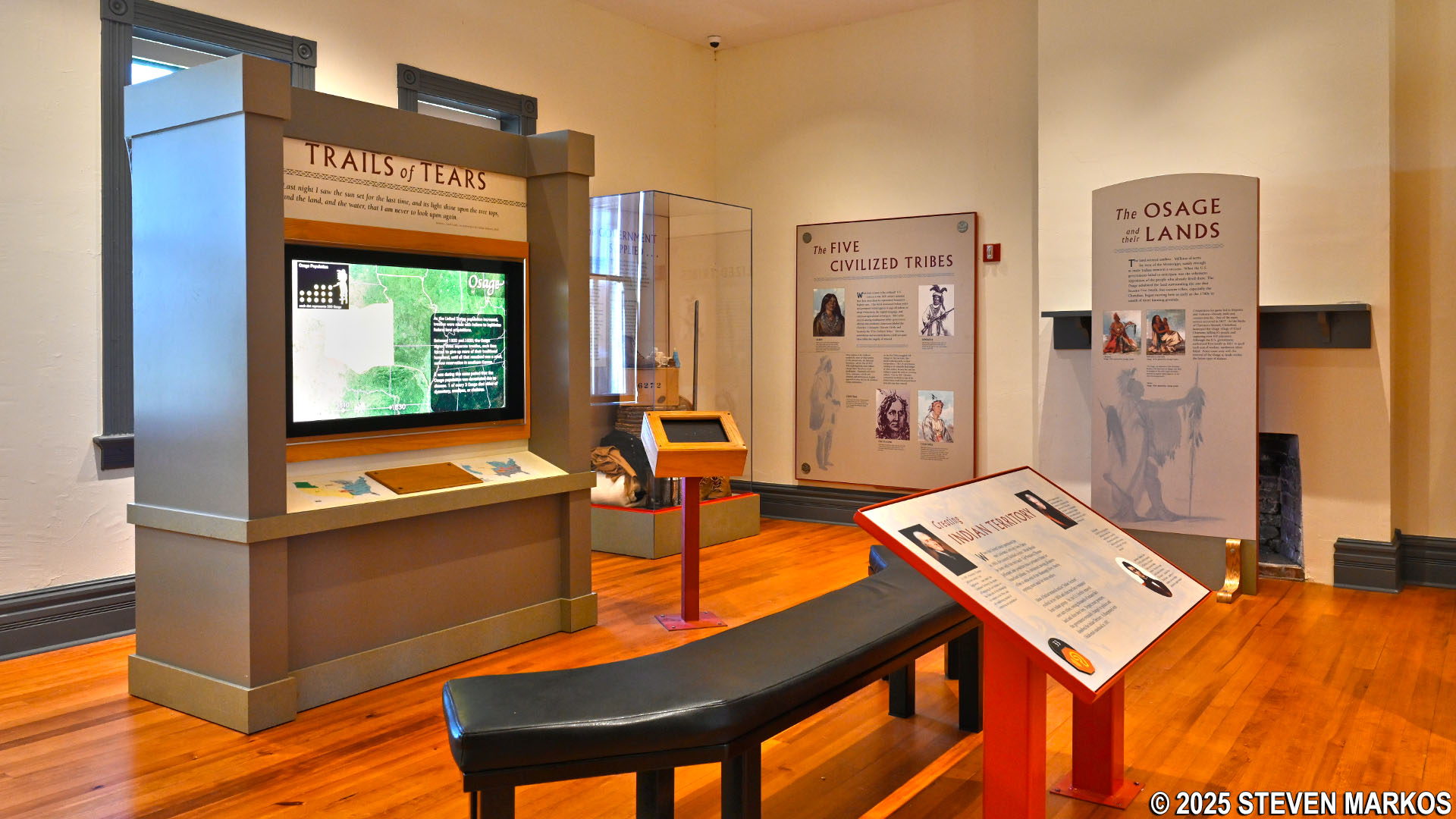
Indian Territory exhibit with Trail of Tears animated map at the Fort Smith National Historic Site Visitor Center
Additional video exhibits are situated throughout the room for visitors to learn more about the Trail of Tears and Indian Territory.
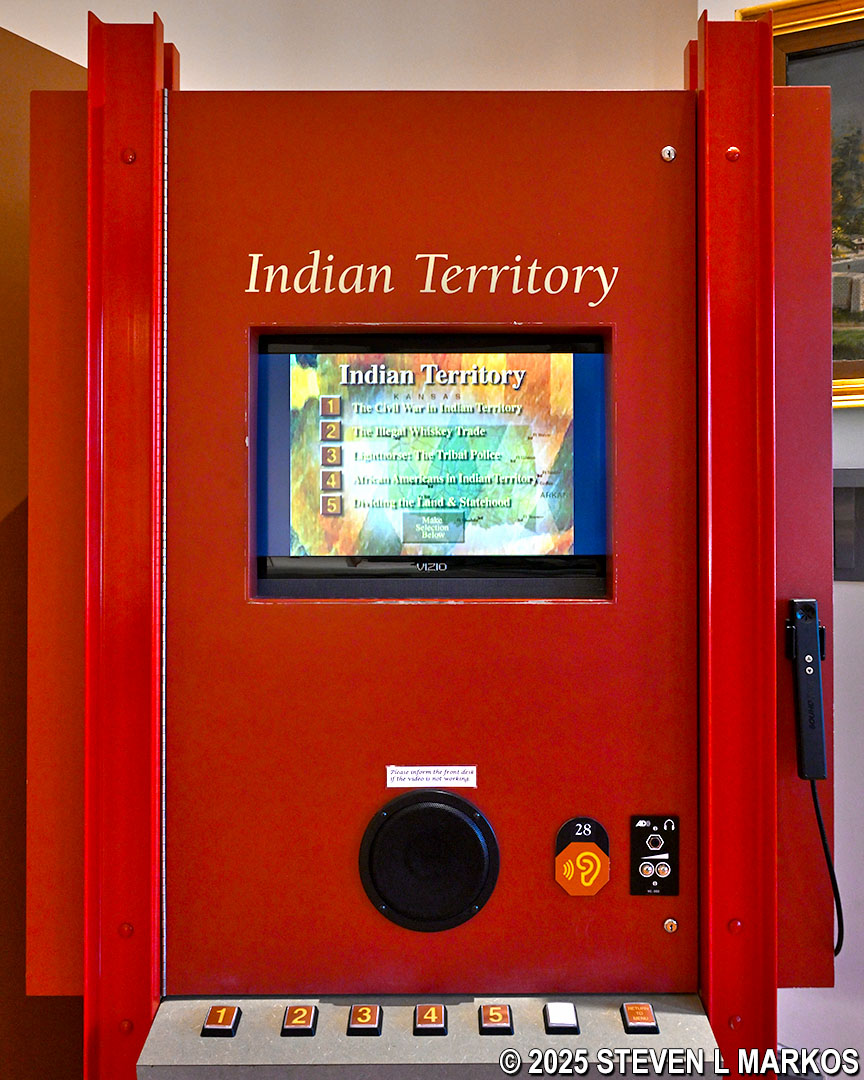
Video exhibit on Indian Territory at the Fort Smith National Historic Site Visitor Center
The last exhibit area is the restored courtroom of Judge Isaac C. Parker. In 1875, he was appointed to the United States District Court for the Western District of Arkansas, which also had jurisdiction over Indian Territory at the time. He served as the judge until he died in 1896. During his 21 years on the bench, Judge Parker presided over 13,000 criminal cases. He became known as the “Hanging Judge” due to the sheer volume of guilty verdicts where the crime carried a federal mandatory death sentence.
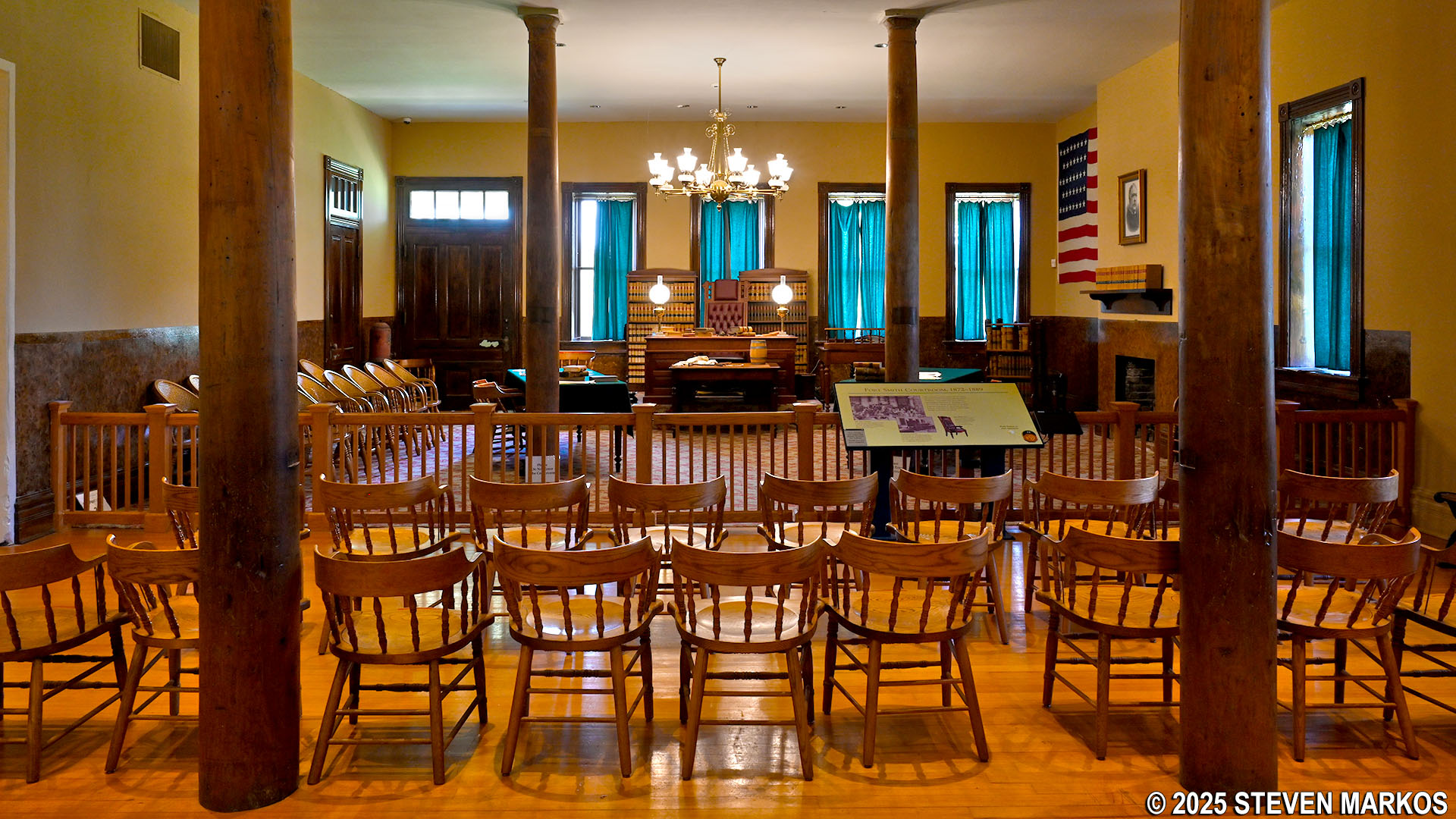
Restored courtroom of Judge Parker at the Fort Smith National Historic Site Visitor Center
The four posts in the restored courtroom are some of the few remaining original items. The clock on the wall behind where the jury would have been seated is the same one that was in use when Judge Parker sat on the bench. Also original is the red water container displayed on the table in the corner.
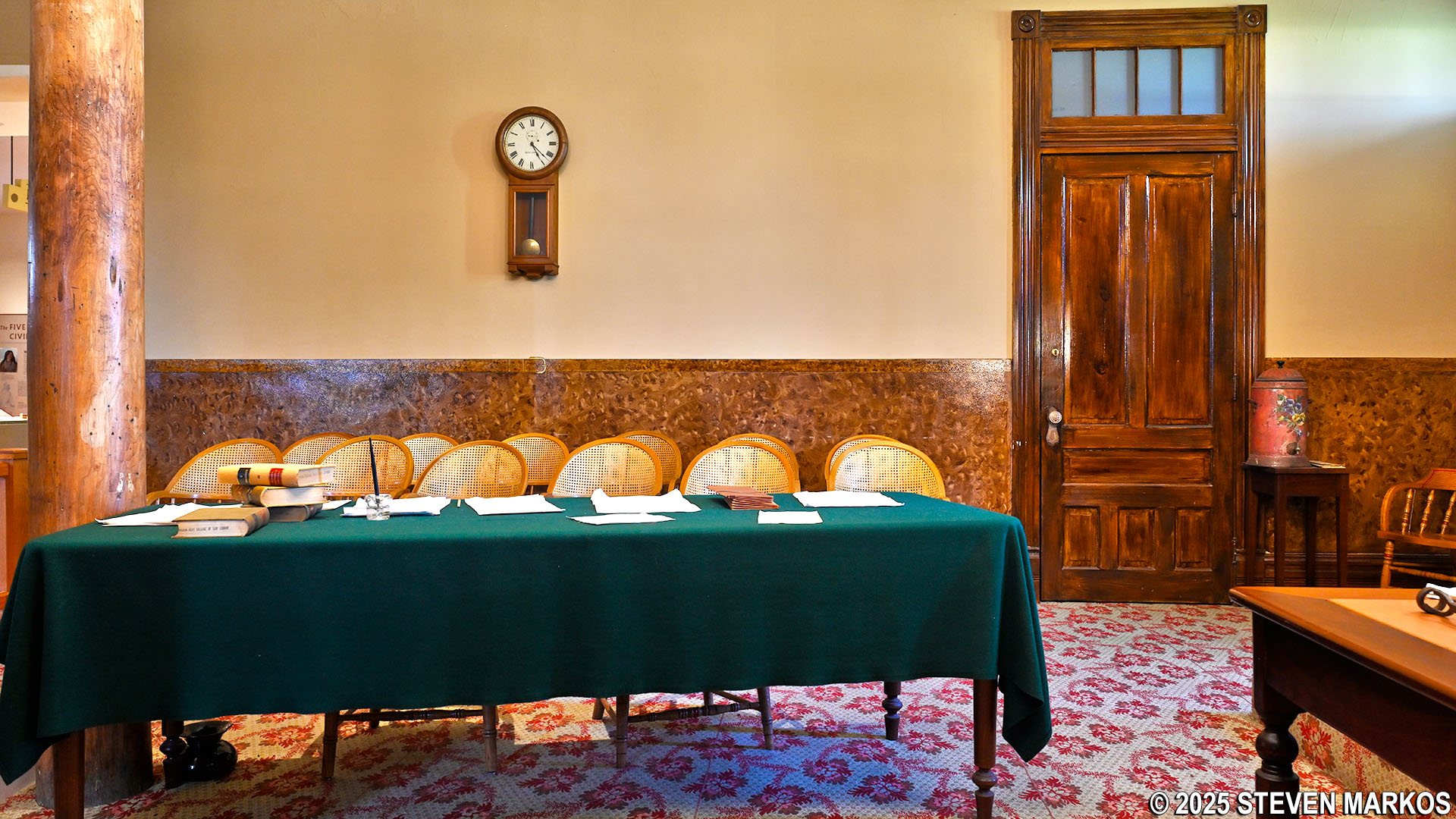
Original clock and water container inside the restored courtroom at the Fort Smith National Historic Site Visitor Center
Before Judge Parker’s appointment to the Western District of Arkansas, he served two terms in the House of Representatives. It was during this time that he developed an interest in Indian affairs. The desk and chair he used while serving those terms are on display behind the spectator gallery in the courtroom. He brought them with him when he first moved to Fort Smith.
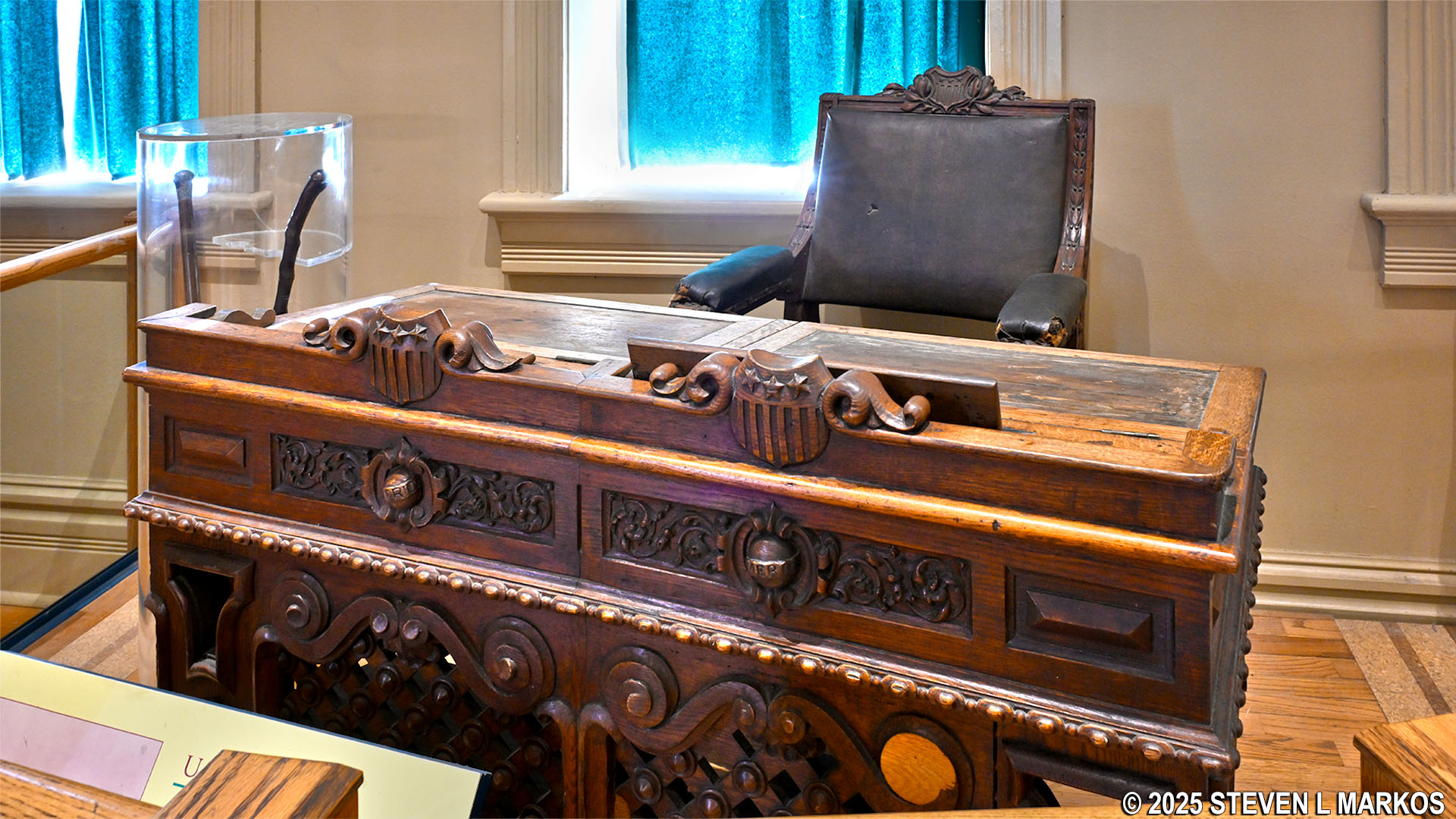
Judge Parker’s desk and chair from his time in the House of Representatives are on display at the Fort Smith National Historic Site Visitor Center
There are information panels placed around the courtroom that cover the history of the court and its judges. One exhibit of note details the process an individual went through when charged with a crime. It features some of the administrative staff who were employed during that time. There are also a few of Judge Parker’s personal items used during court are displayed in the exhibit cases, including his copy of the United States Constitution.
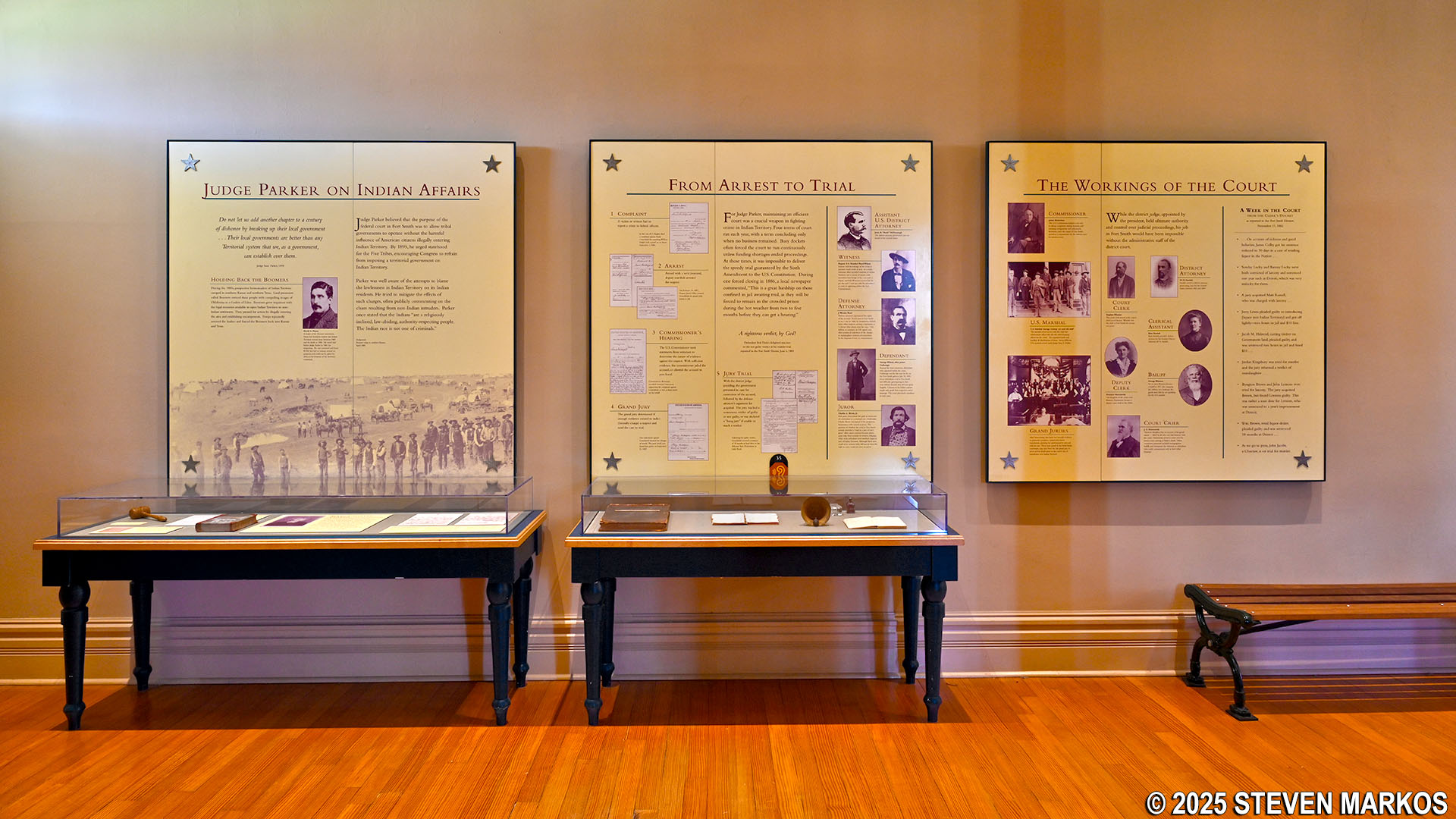
Display cases and information panels on Judge Parker’s court process inside the Fort Smith National Historic Site Visitor Center
SCHEDULING YOUR TIME
Plan to spend at least an hour at the Fort Smith National Historic Site Visitor Center. This will give you enough time to watch the park film and browse through the exhibit area, which is quite extensive, but definitely worth it to learn of the significance of Fort Smith. If you want to read all the information and watch all the videos, plan to spend an additional hour and a half.
With a few exceptions, use of any photograph on the National Park Planner website requires a paid Royalty Free Editorial Use License or Commercial Use License. See the Photo Usage page for details.
Last updated on January 7, 2026


