
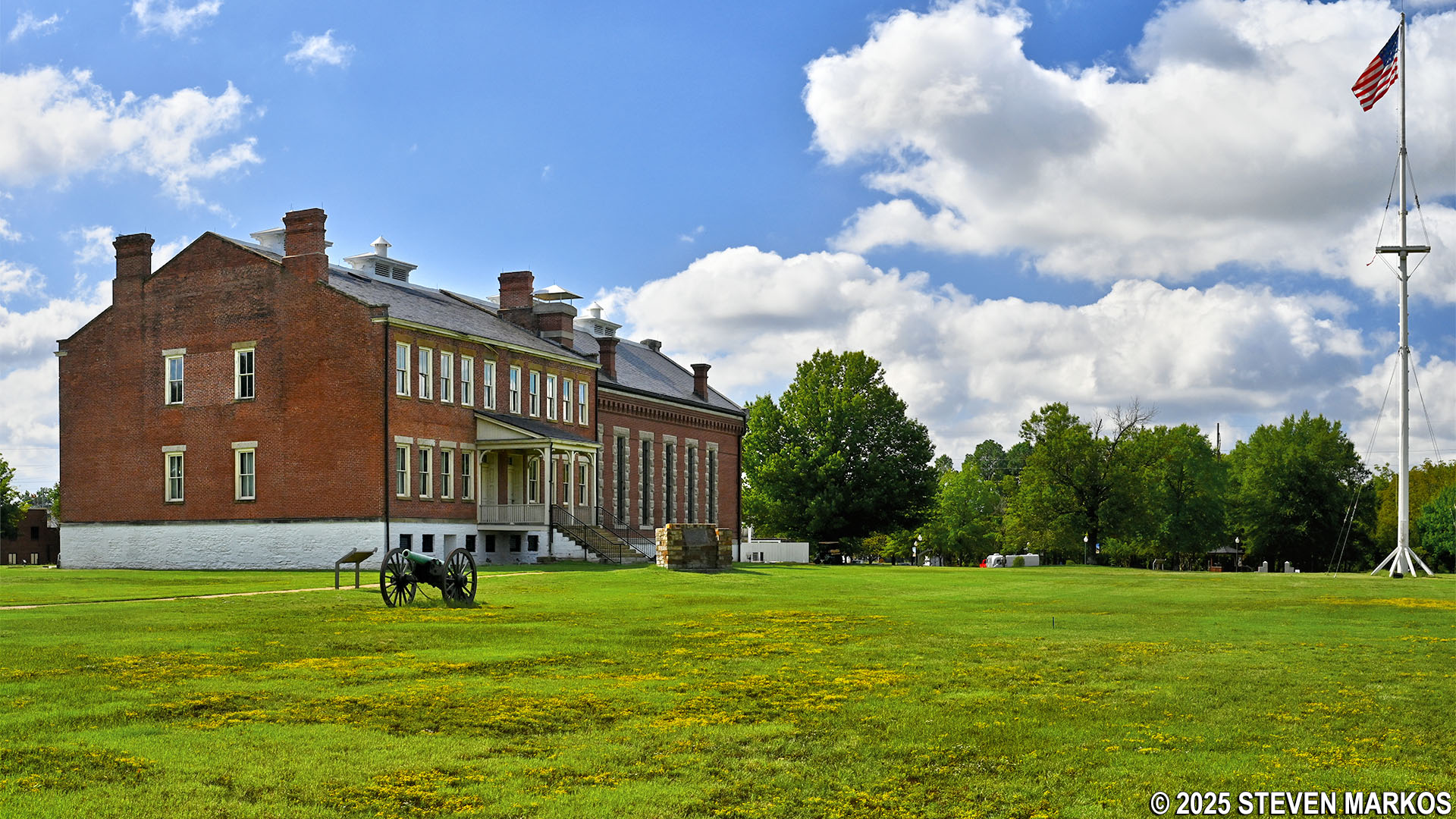
Fort Smith National Historic Site
Fort Smith National Historic Site was established in 1961 to preserve the physical and cultural landscape, along with archeological resources, of the first and second Fort Smiths, including the time period when it was used as a federal court and jail. All that remains today of the first fort are the foundations of a few blockhouses. The second fort has fared much better, as the original enlisted men’s barracks, the 1886 jail, and the commissary building are still standing.
In 1817, the first Fort Smith was established to ease tensions and keep the peace between the local Osage and the migrating Cherokee tribes. After the 1803 Louisiana Purchase, President Thomas Jefferson and his successors viewed much of the newly acquired land as a place to resettle the Native Americans. He began urging southeastern Cherokees to move west of the Mississippi River under the flawed assumption that western lands were vacant. At the same time, the Cherokee were being displaced by American settlers moving further inland. As they fled their native lands and began migrating westward to the Arkansas River Valley, violence erupted between them and the native Osage, leading to the need for a military outpost in the area.
A prominent bluff known as Belle Point was selected for the site of the first Fort Smith due to its significance as an intersection of several important trade routes dating back at least 1,000 years. On Christmas Day in 1817, Major William Bradford arrived at the bluff with 64 riflemen. The land was heavily wooded, so they utilized the trees to construct the log-and-stone first fort. Once completed, the fort was 132 feet square and included two blockhouses and many outbuildings.
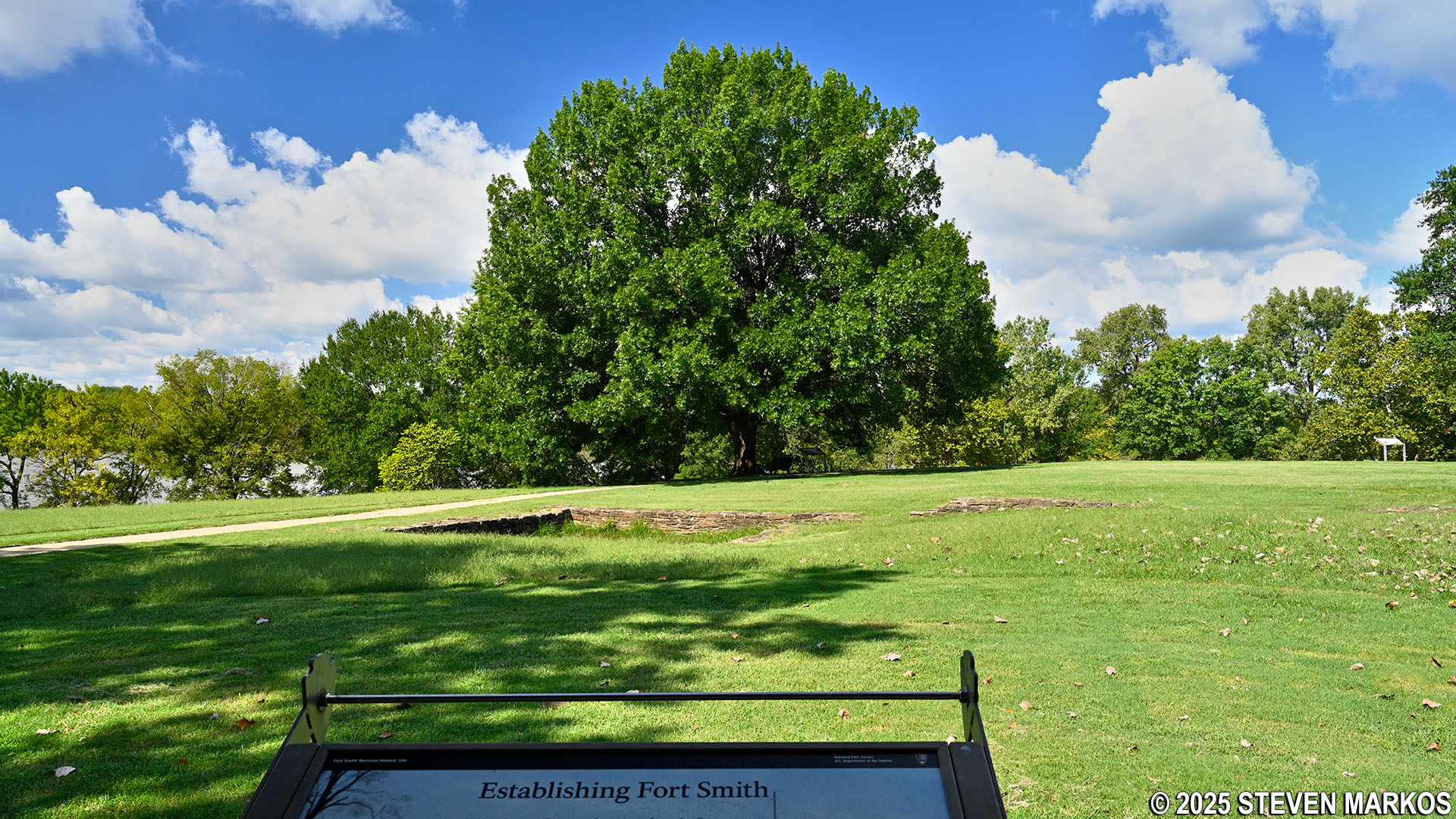
Blockhouse foundation from the first Fort Smith at Fort Smith National Historic Site
As the frontier continued pushing west, the U. S. Army realized it needed to relocate to maintain control and keep the peace. In 1824, Fort Smith was abandoned, and the Army moved 80 miles up the Arkansas River where it established Fort Gibson.
Fourteen years later in 1838, Congress authorized the reoccupation and enlargement of the original military post at Fort Smith. White settlers in the area had petitioned the government for a new fort due to a fear of Indian attacks. At the time, various Indian tribes were passing through the area after being forced from their eastern lands as a result of the Indian Removal Act of 1830. This act of the United States government forced the removal of more than 60,000 American Indians to new lands west of the Mississippi River, known as Indian Territory.
Work on the second Fort Smith began in 1838 and continued over the next eight years. The site chosen was just 500 feet northeast of the first fort. It was built higher up on the bluff on graded and leveled ground, but it was still within view of the river. It featured military barracks and officers’ quarters. Plans also called for building a large, pentagonal-shaped stone wall 12 feet high and 2 feet thick. The fort wall, enclosing an area of 240,000 square feet, was to include a bastion at each corner. However, as construction continued over the years, the need for a massive defensive structure at Fort Smith became unnecessary. While the walls and interior buildings had been completed, only three of the of five bastions were built.
In the mid-1840s, the fort was converted into a supply depot and became one of the largest and busiest in the southwest. It not only provided supplies for the military, but also for the Native tribes in Indian Territory. Many forts and camps along the western frontier depended on Fort Smith for provisions and other necessities.
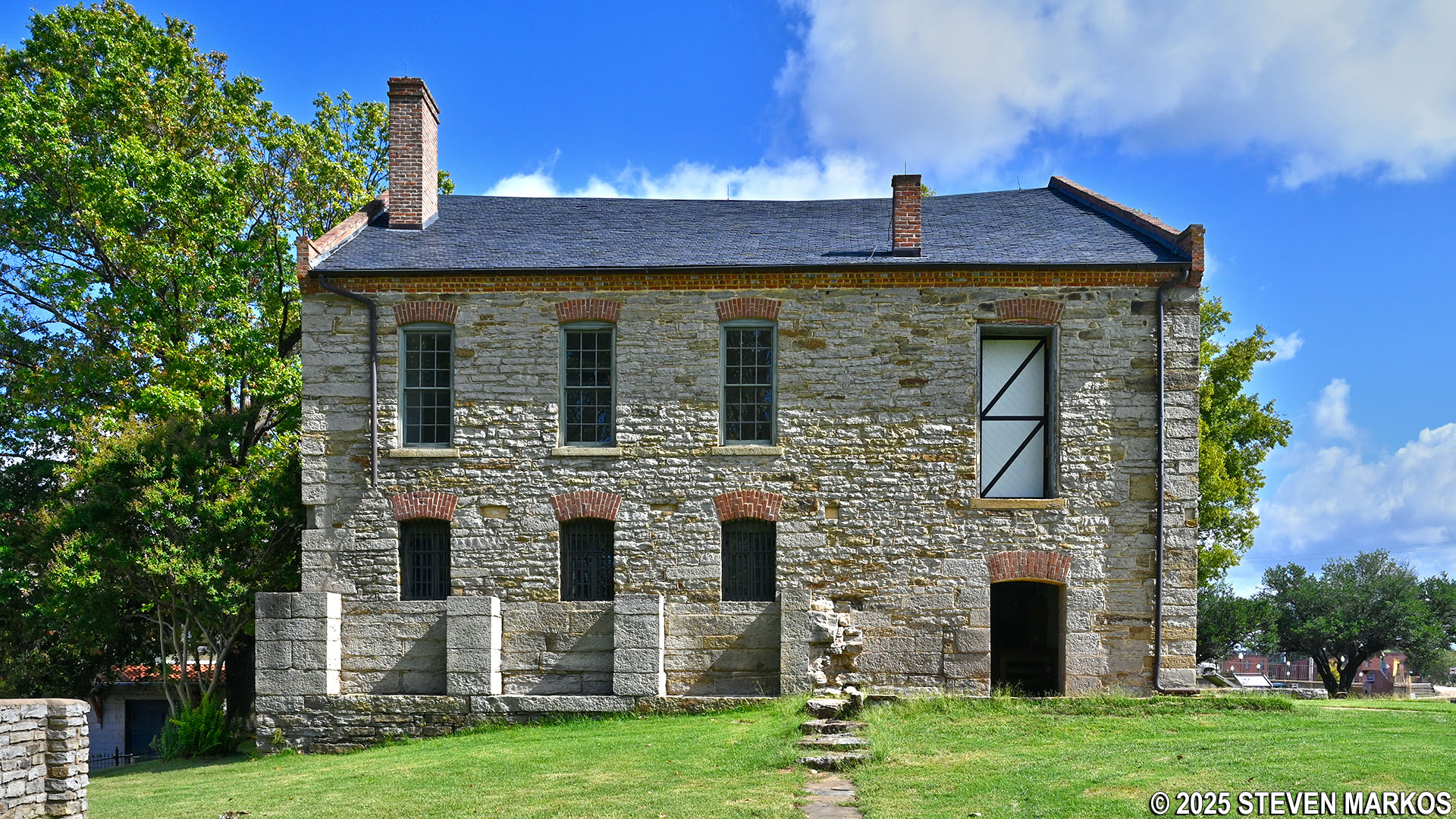
The Commissary building, which was utilized for the supply depot, Fort Smith National Historic Site
During the Civil War, Fort Smith was occupied by both Confederate and Union forces. Fearing that if Arkansas seceded from the United States that his federal troops would be quickly surrounded, Union Captain Samuel Sturgis abandoned the fort on April 23, 1861 (Arkansas left the Union on May 6th). The Arkansas militia moved in within hours, and the Confederates remained in charge until August 31, 1863. By that time, the Confederate Army had lost its hold on Indian Territory after a series of defeats in the area, and the men at Fort Smith found themselves in a similar position as the Union did in April 1861. After the Confederates slipped out of the fort under the cover of darkness, Union troops reoccupied it the next day. While they remained in control for the duration of the war, the Confederates did launch a serious attack in July 1864, but to no avail.
When the Civil War ended in 1865, the commissary building was temporarily used as a field office for the Bureau of Refugees, Freedmen, and Abandoned Lands. Commonly known as the Freedmen’s Bureau, it was established by Congress to help former enslaved people and refugees with transitioning to a new life of freedom.
That same year, the Fort Smith Council was held at the barracks (right side of the building in the photo shown below). Also known as the Indian Council, it was a series of meetings in mid-September that the government organized for the Native tribes living in Indian Territory. Delegates from twelve tribes met with government representatives to discuss future treaties and land allocations and establish relations following the end of the Civil War.
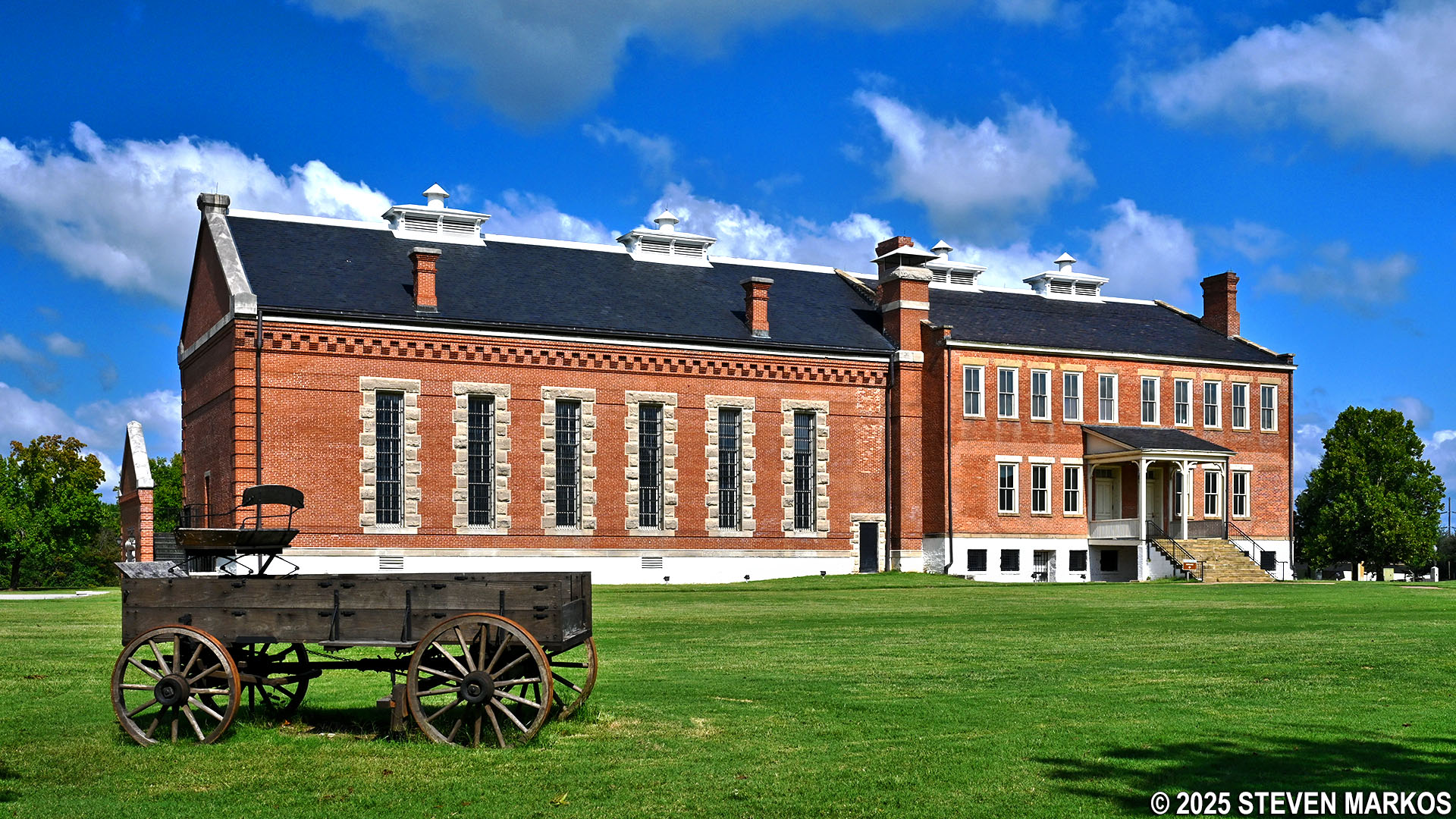
Former military barracks (right side) where the Fort Smith Council was held in 1865, Fort Smith National Historic Site
Indians had fought for both sides during the war, but now they were being treated as defeated enemies. They were informed that by fighting against the United States, they had voided all previous treaties, forfeited all their lands, and now had to negotiate new treaties, which would be executed with each tribe individually. The Council adjourned without a resolution, and it was agreed that the tribes would reconvene the following year in Washington, D.C. to sign their separate treaties.
With little need for Fort Smith now that the Civil War was over, the military decided to close the fort permanently in 1871. In 1872, the Federal Court for the Western District of Arkansas, which had jurisdiction over Indian Territory, relocated to Fort Smith. The military barracks was converted into a courthouse and a jail. On one side of the first floor was the courtroom, and offices for court clerks and federal marshals were on the other. The attic was used for jury deliberations.
The former mess hall in the basement was turned into a primitive jail. Nicknamed “Hell-on-the-Border,” it consisted of two large, overcrowded cells with no heating, outside ventilation, or indoor plumbing. The toilet was a bucket stored in an old fireplace, and the only opportunity for washing was a second bucket half-full of dirty water. There was no electric light back then, so the only light in the cell came from the basement windows that were sealed shut.
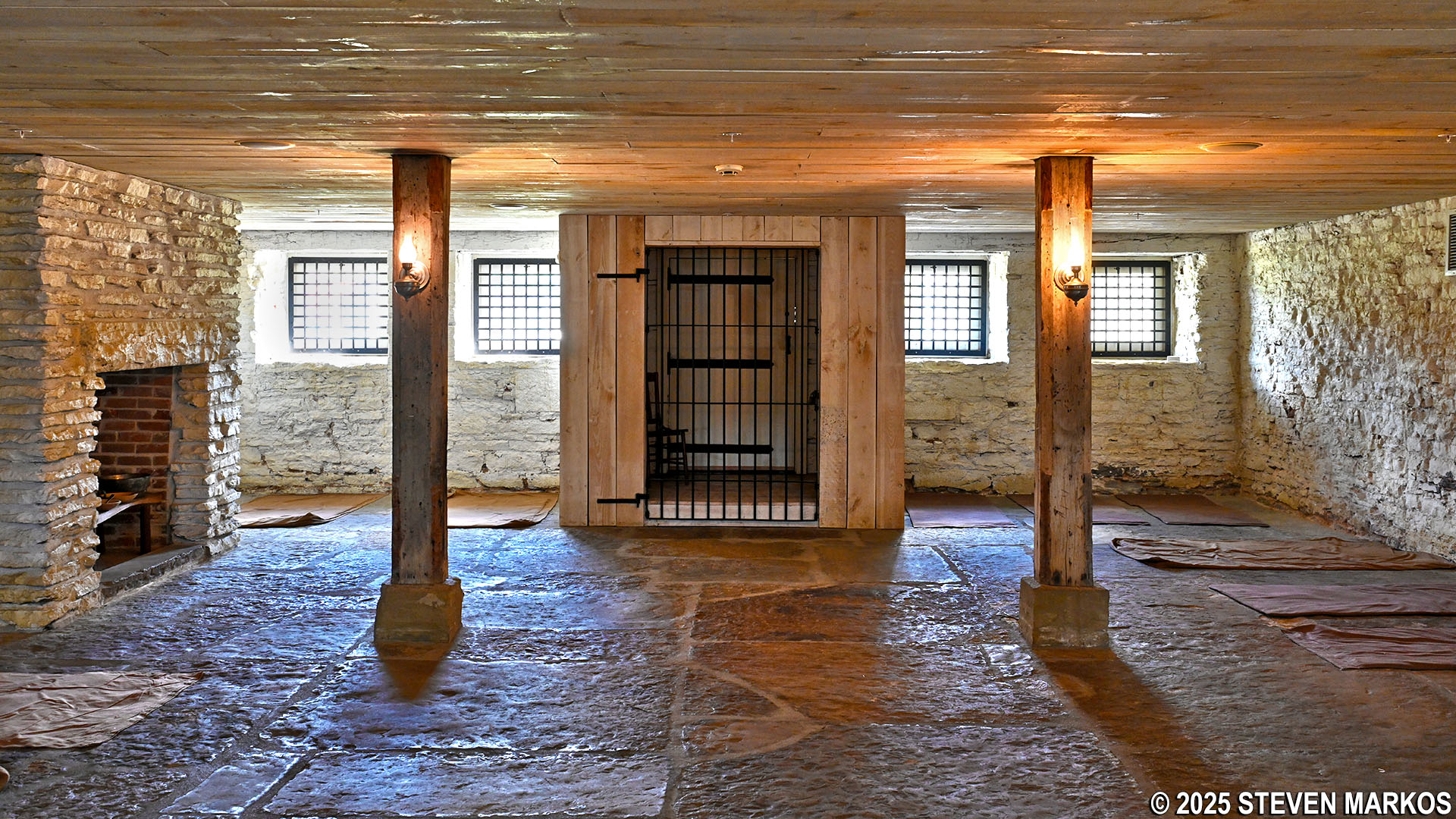
Hell-on-the-Border jail inside the basement of the former military barracks at Fort Smith National Historic Site
After a news article was published in 1885 detailing the deplorable conditions of the Fort Smith jail, Congress authorized funding for a new one. The jail was constructed between 1886 and 1888 and was built directly next to the barracks (building on the left side in the photo referenced earlier). It continued to serve as a federal jail until 1917.
The first judge appointed to the Western District of Arkansas’s federal court, Judge William Story, resigned in 1874 when facing impeachment charges due to corruption. A year later, President Ulysses S. Grant appointed Judge Isaac Charles Parker to take Story’s place. He had previously served two terms in the House of Representatives, where he developed an interest in Indian affairs. Parker remained the judge until Congress closed the federal district court in September of 1896. He died just six weeks later on November 17th.
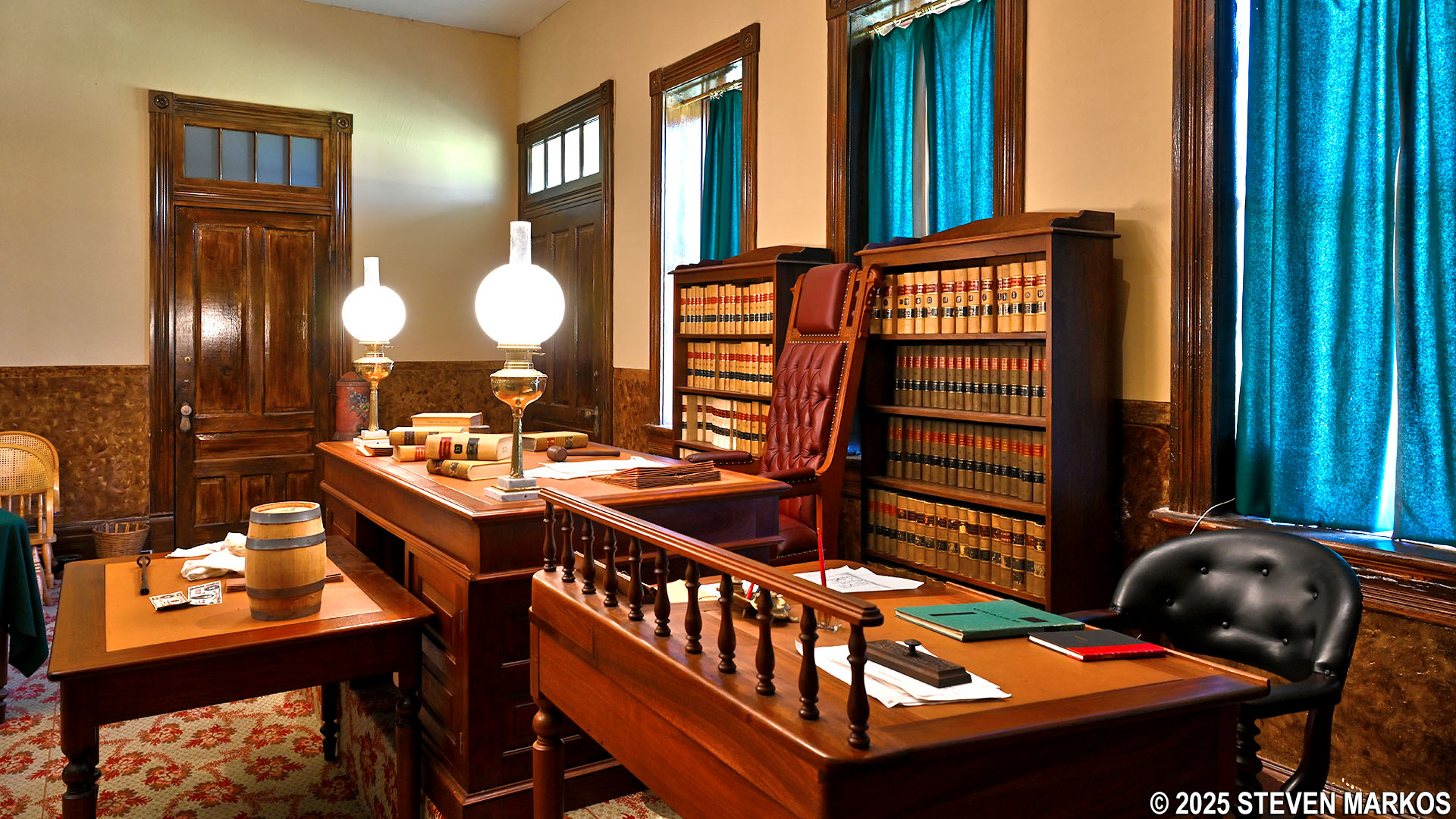
Reconstructed courtroom of Judge Parker at Fort Smith National Historic Site
During his 21 years on the bench, Judge Parker presided over 13,000 criminal cases. He worked to create a strong and fair court by rehabilitating convicts and advocating for the rights of Indian nations. Despite his efforts, Judge Parker became known as the “Hanging Judge” due to the sheer volume of guilty verdicts on capital cases where the crime carried a federal mandatory death sentence. Across all his cases, 344 were for capital crimes. He sentenced 160 convicted criminals to hang (including four women), but between appeals, pardons, commutations, and prison deaths, only 79 actually met their end in the gallows (7 others were hung during Story’s tenure).
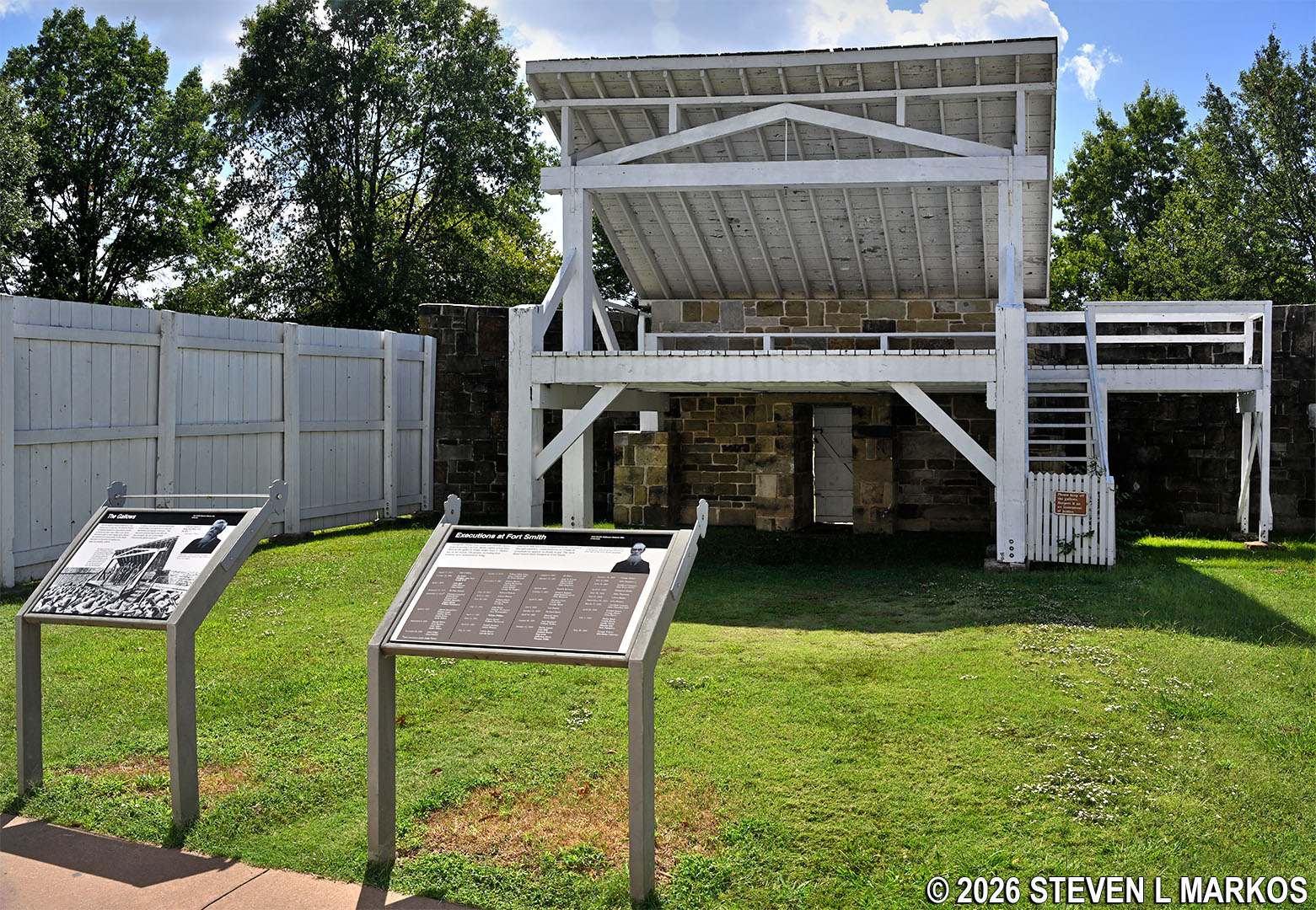
Reconstructed gallows at Fort Smith, Fort Smith National Historic Site
After the federal court’s jurisdiction ended in 1896, the Fort Smith property was deeded to the city of Fort Smith. In the 1950s, efforts began to restore the historic property. An archeological excavation was done at Belle Point in 1959, the courtroom was restored, and the gallows reconstructed. As is typically the case, with funds running low, the city turned to the Federal government to take over the property. Under the Kennedy Administration, Fort Smith National Historic Site was created in September 1961. The park was officially dedicated in 1964 by Lady Bird Johnson, wife of Kennedy’s successor, Lyndon B. Johnson.
With a few exceptions, use of any photograph on the National Park Planner website requires a paid Royalty Free Editorial Use License or Commercial Use License. See the Photo Usage page for details.
Last updated on January 12, 2026


