
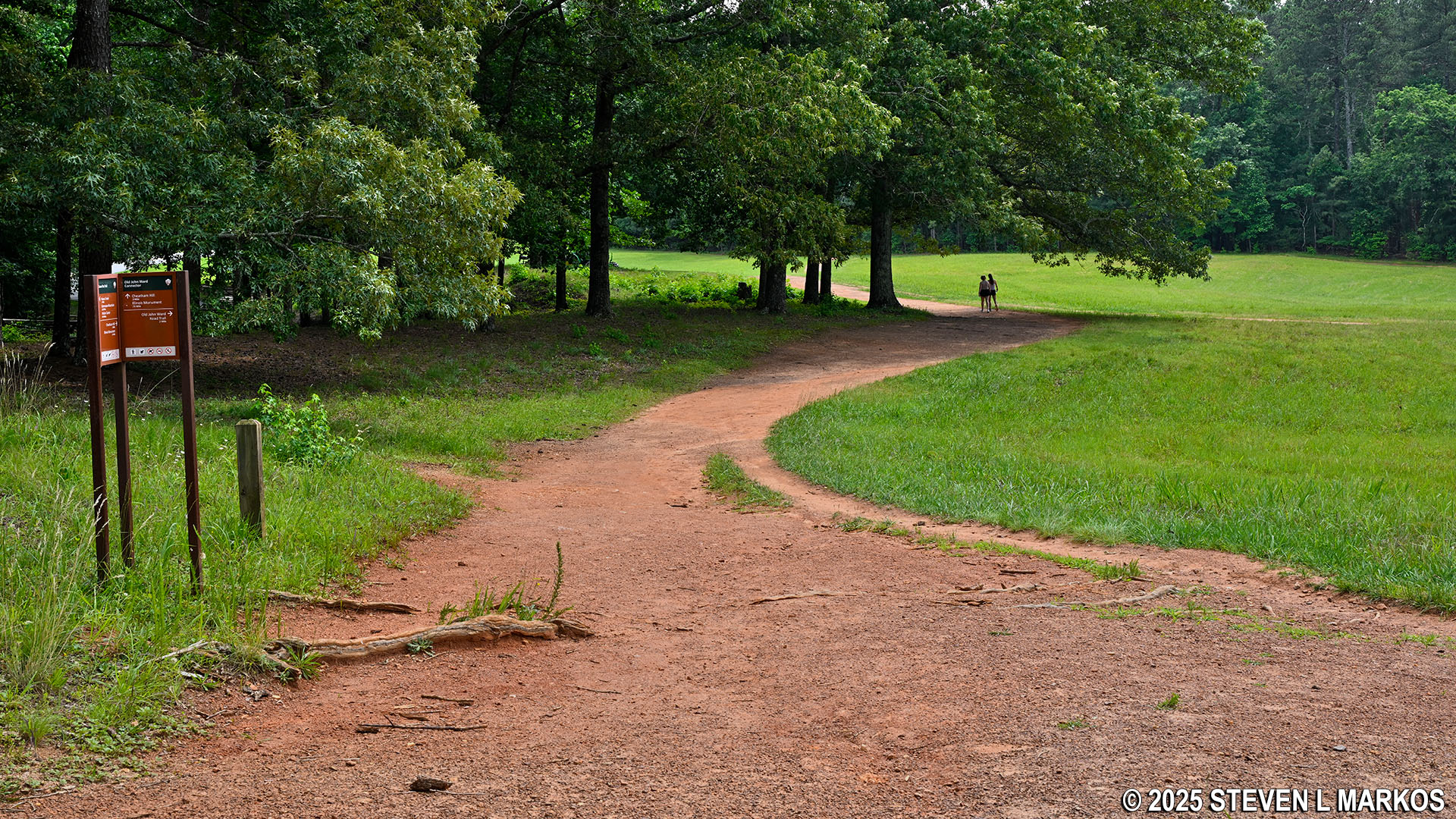
Cease Fire Trail in Kennesaw Mountain National Battlefield Park
Length: .9 mile (one way)
Time: 30 minutes with time to see the exhibits along the trail
Difficulty: Easy
The Cease Fire Trail at Kennesaw Mountain National Battlefield Park runs between the Kolb Farm Loop Trail at its southern end and Dallas Highway at its northern end. Hikers can cross the highway and pick up the Noses Creek Trail, a 3.7-mile loop that covers the central section of the park.
Prior to ending at Dallas Highway, the Cease Fire Trail intersects with the Old John Ward Trail. At its southern end near the Illinois Monument at Cheatham Hill, it intersects with the Assault Trail. A very popular hike is to combine all three trails for a 2.2-mile loop, and on a nice day you won’t be alone.
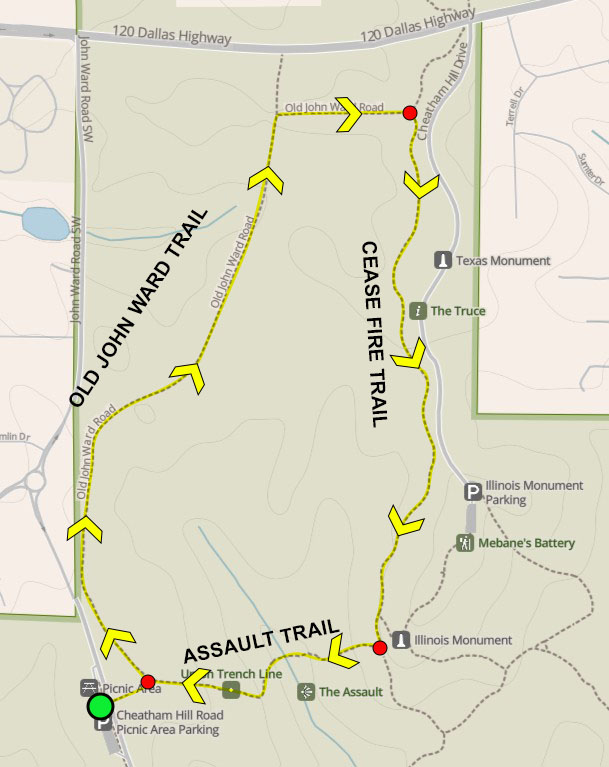
Old John Ward-Cease Fire-Assault Trails Loop Hike map
I did the loop hike as well, but I started on the Old John Ward Trail, picking it up at the Cheatham Hill Road Parking Lot and hiking north. I therefore came to the Cease Fire Trail at its northern end and hiked it south towards the Illinois Monument. This report is written from that perspective.
At the intersection of the Old John Ward and Cease Fire trails is a Confederate redoubt with two cannon on display. The redoubt was manned by Granbury’s Texas Brigade, which was named after its founding commander Colonel Hiram B. Granbury (who was later promoted to brigadier general). A redoubt is a fort that is built in an outlying area, sort of an outpost for soldiers sent to defend a strategic point. Faced with an overwhelming attack, this is a place to where the soldiers can fall back. In fact, the definition of redoubt is “a place of retreat.” Redoubts can be temporary structures made of earth (aka earthworks) or permanent structures made of brick or stone. Keep in mind that the walls of the Granbury redoubt would have been much taller when first built. In most cases, erosion has whittled down the earthworks over the 160-plus years since the Civil War.
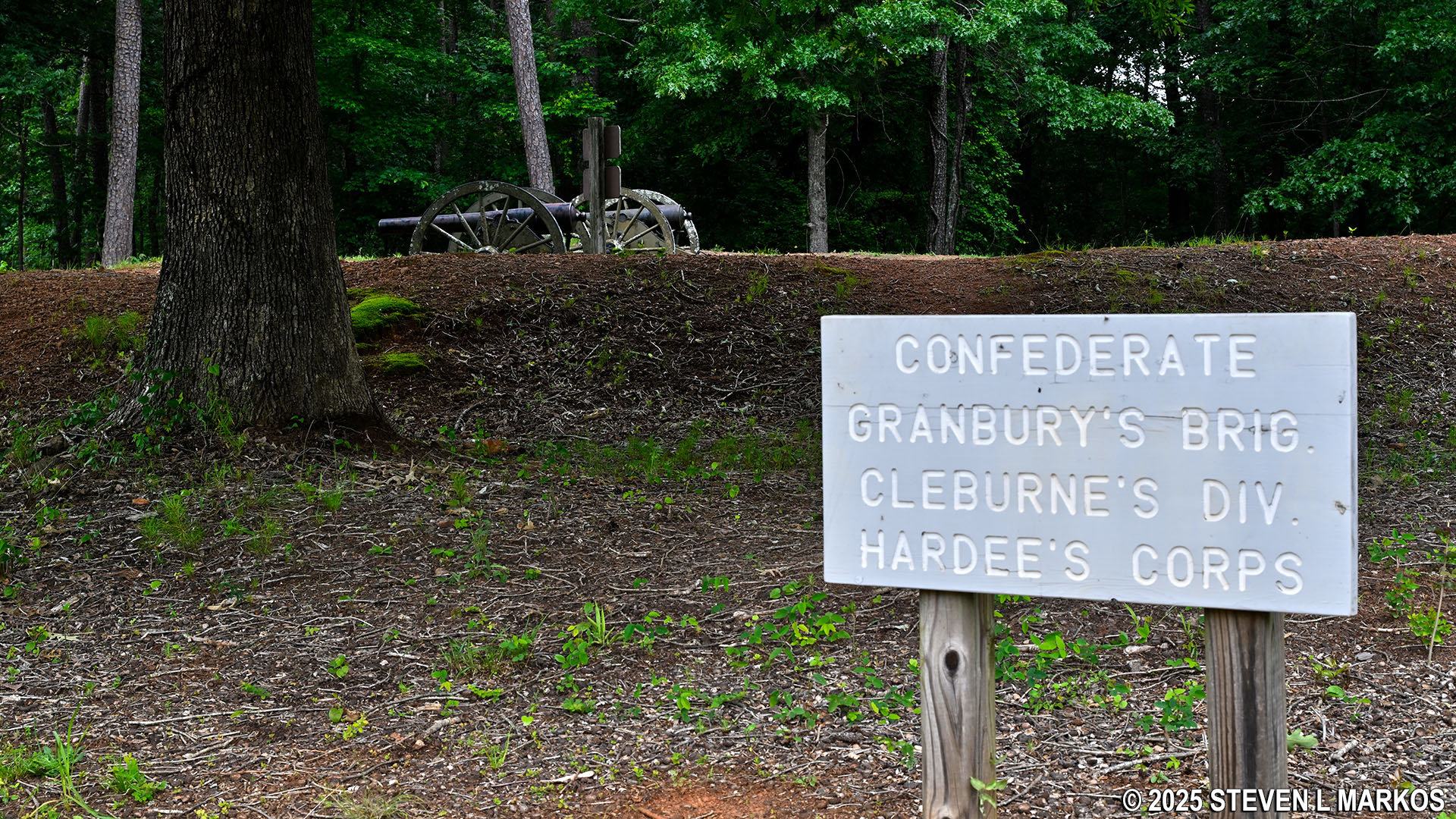
Confederate redoubt and cannon exhibit at the intersection of the Old John Ward and Cease Fire trails, Kennesaw Mountain National Battlefield Park
If you want to get a closer look at the cannon, while you cannot climb over the earthen walls into the redoubt, there is an entrance in the back of the fort near the road (Cheatham Hill Drive). Fort entrances were always on the side where the enemy was least likely to come from. Being a Confederate redoubt, the cannon are facing in the direction from where the Union soldiers would most likely attack.
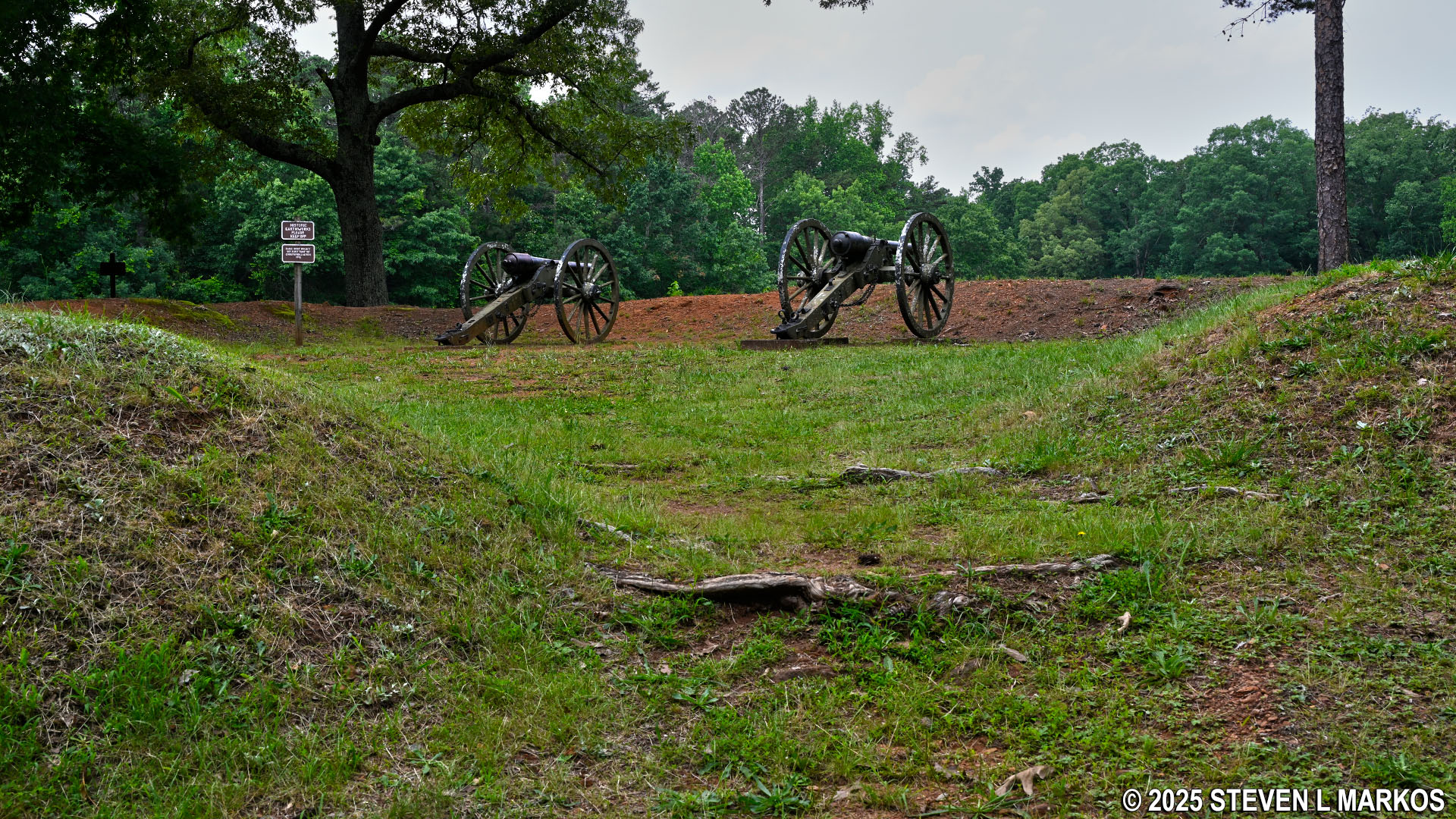
Rear entrance into the Confederate redoubt at the intersection of the Old John Ward and Cease Fire trails, Kennesaw Mountain National Battlefield Park
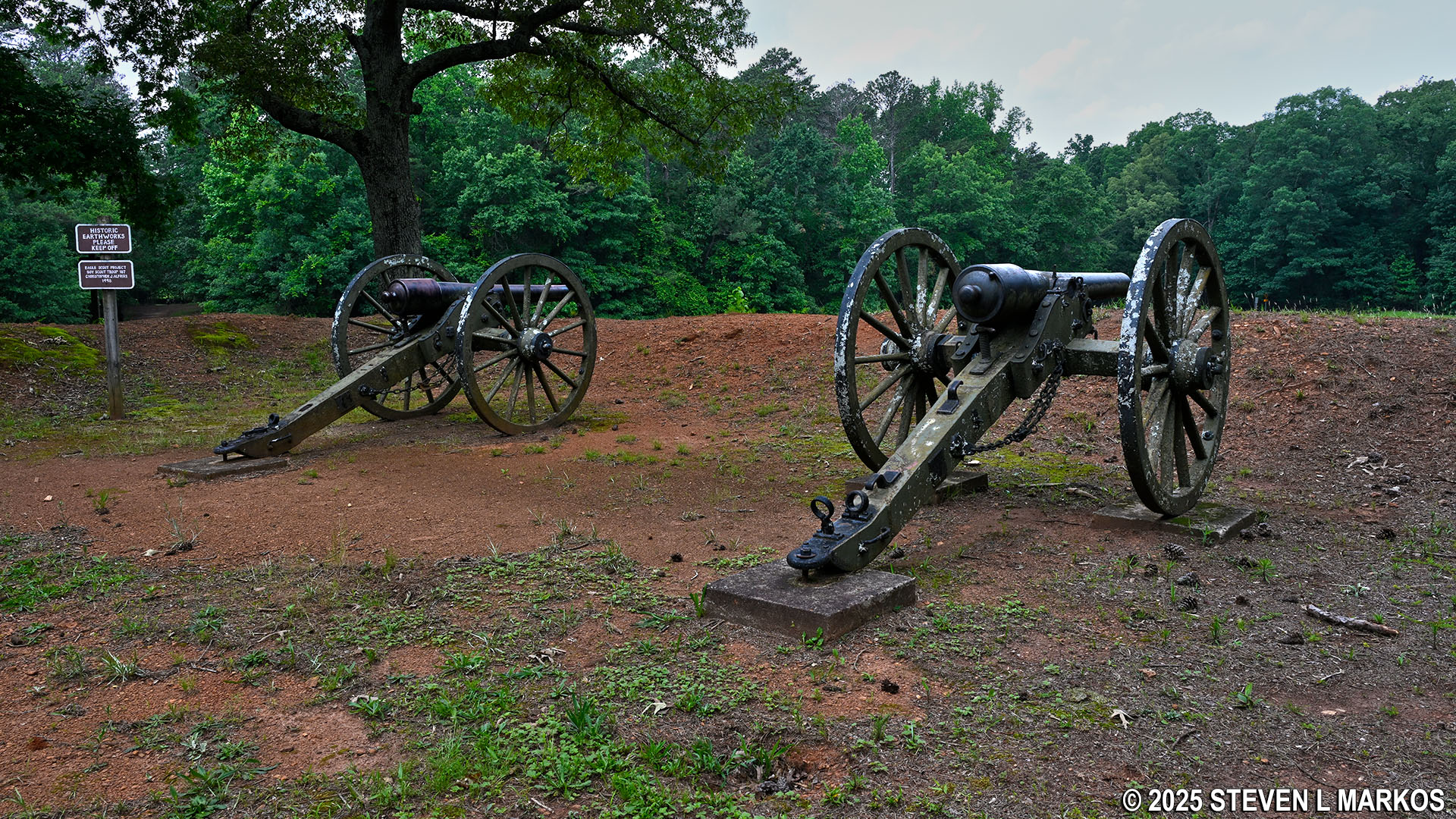
Cannon on display at the Confederate redoubt at the intersection of the Old John Ward and Cease Fire trails, Kennesaw Mountain National Battlefield Park
Like the Old John Ward Trail, the Cease Fire Trail is a wide, former dirt road with a smooth surface free of rocks and roots. It begins by passing through a field, but in a little over a tenth of a mile it enters into the forest where it remains all the way to its intersection with the Assault Trail. From beginning to end, the Cease Fire Trail is about as easy as taking a walk in the neighborhood.
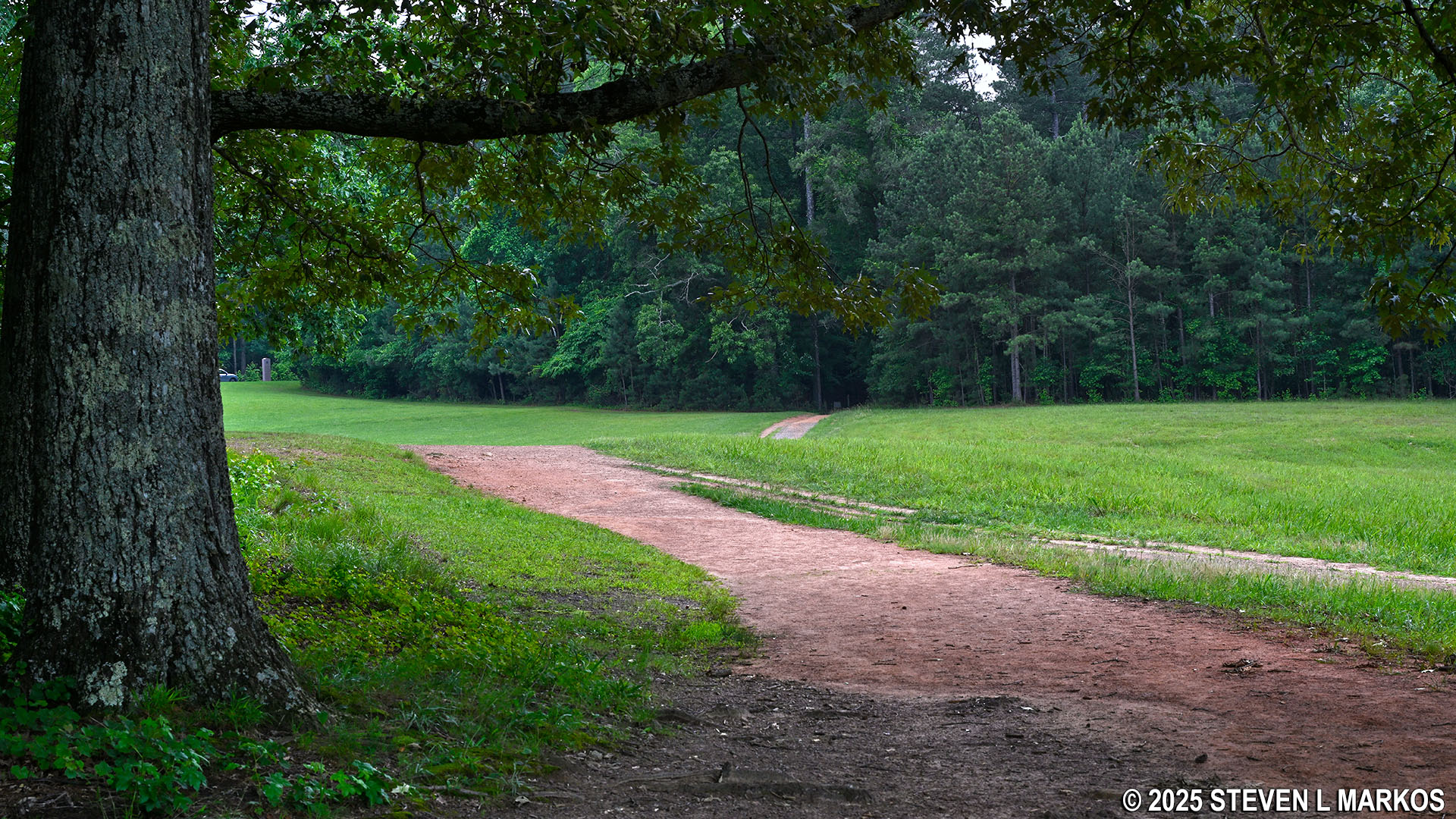
Typical terrain at the northern end of the Cease Fire Trail in Kennesaw Mountain National Battlefield Park
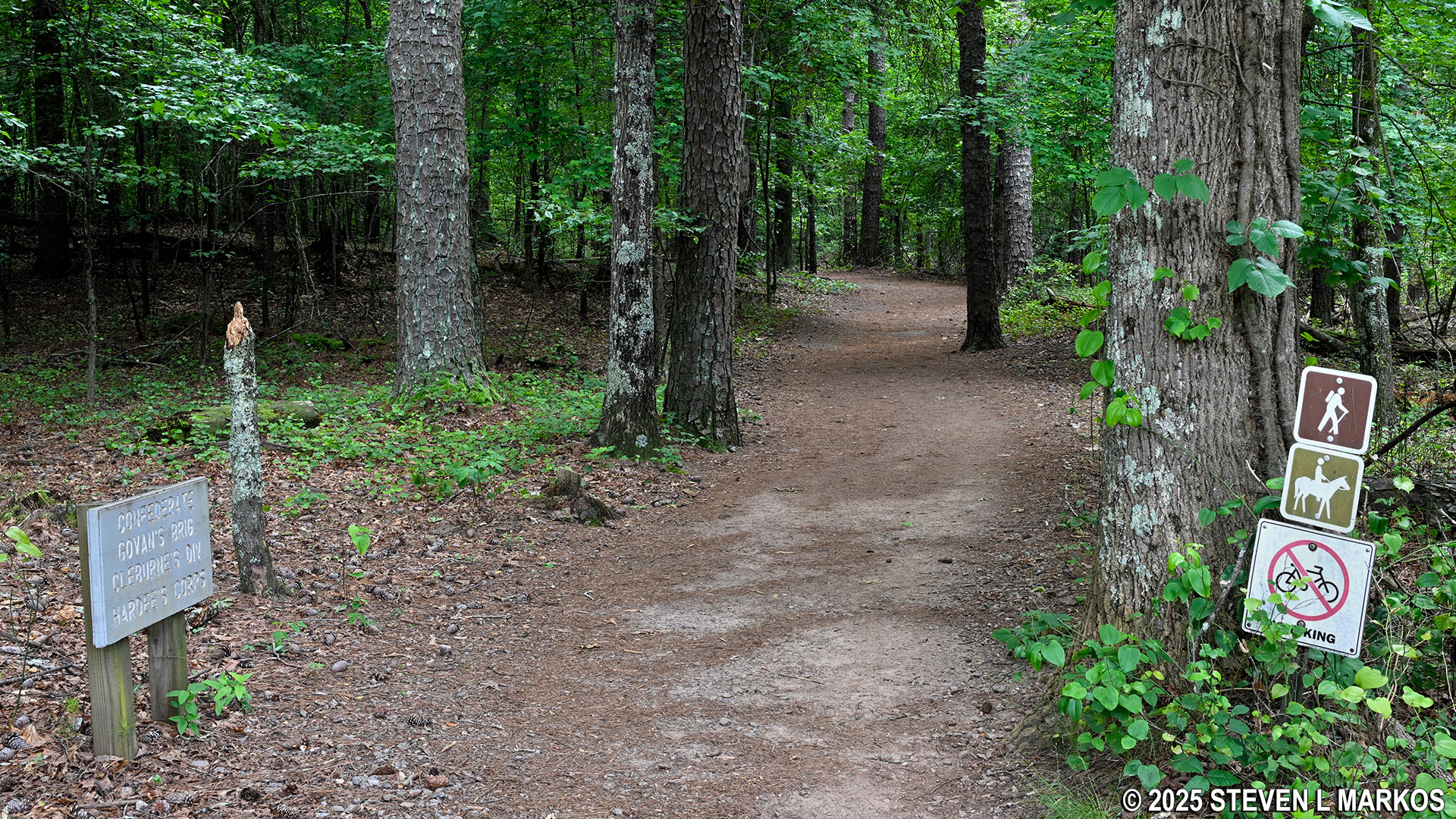
Typical terrain of the forested section of the Cease Fire Trail in Kennesaw Mountain National Battlefield Park
When hiking just about any trail at Kennesaw Mountain National Battlefield Park, if you pay attention, you may see small hills and gullies, most of which the casual visitor to the park will write off as natural features—they are not. These are actually what remains of Union and Confederate defensive earthworks (trenches). Soldiers would dig ditches and pile the dirt high to make protective structures to hide behind. Earthworks extended from the Kennesaw Mountain area at the northern end of the battlefield all the way to the Kolb Farm at the southern end. Most were torn down after the war to make way for farms and cities, and earthworks that do remain have been whittled down by erosion, which is why most are barely noticeable. When built, they were typically six to eight feet tall.
There is a very discernable earthwork at .4 mile into the hike. This area was where the right flank of Confederate lieutenant William B. Turner’s Mississippi Light Artillery Battery was stationed during the Battle of Kennesaw Mountain. Signs like the one located at the earthworks mark the location of various military units during the battle. Gray signs denote Confederate positions and blue signs Union positions.
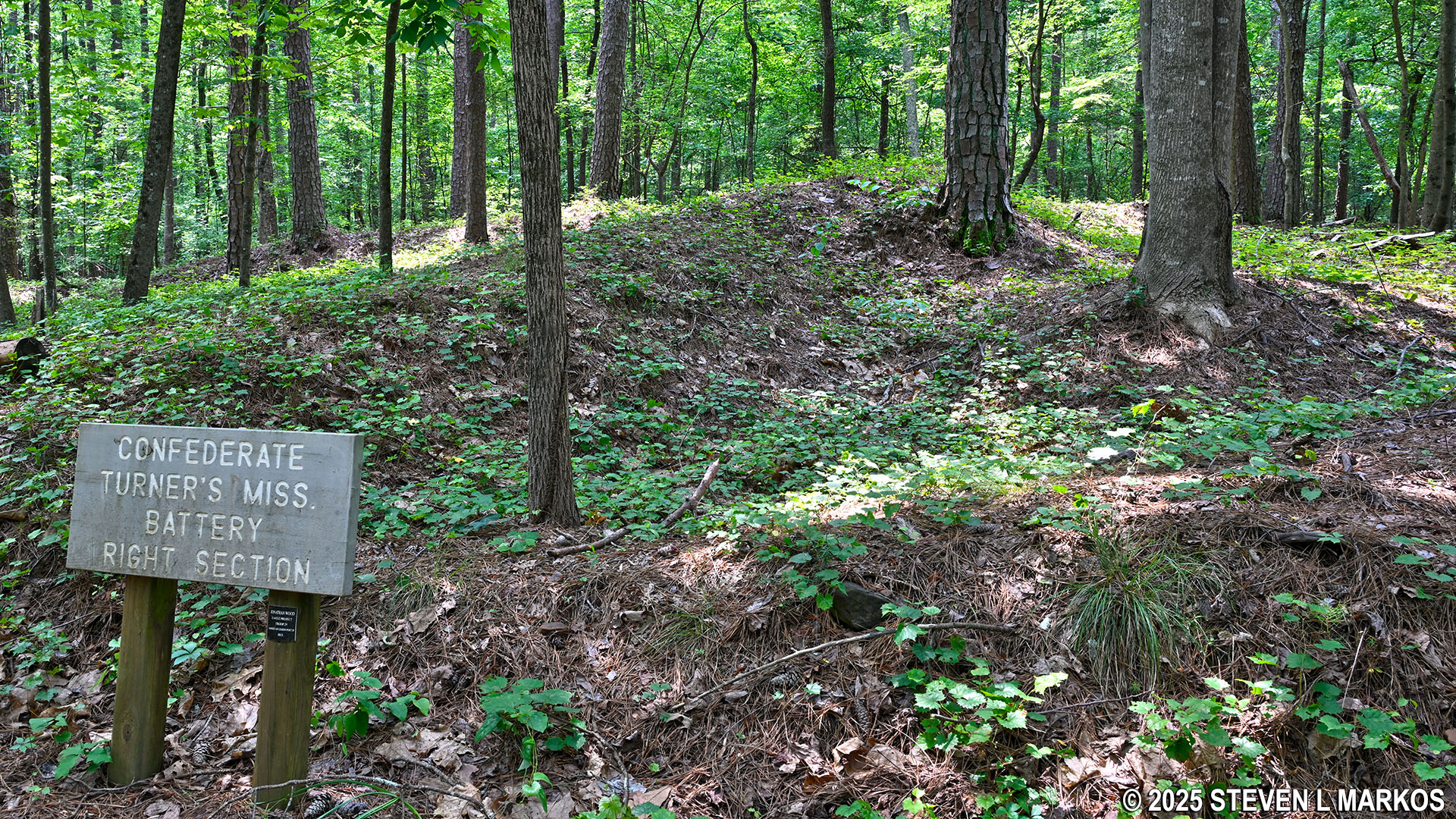
Confederate earthwork along the Cease Fire Trail in Kennesaw Mountain National Battlefield Park
Just a minute’s walk farther is the left flank of Turner’s Battery. Here there are two cannon on display.

Earthworks and cannon at the left flank of William B. Turner’s Mississippi Light Artillery Battery along the Cease Fire Trail in Kennesaw Mountain National Battlefield Park
The left flank of Turner’s Battery is located right along Cheatham Hill Drive, and the Illinois Monument parking lot is within eyesight. There is a modern restroom at the parking lot if you need to make a detour.
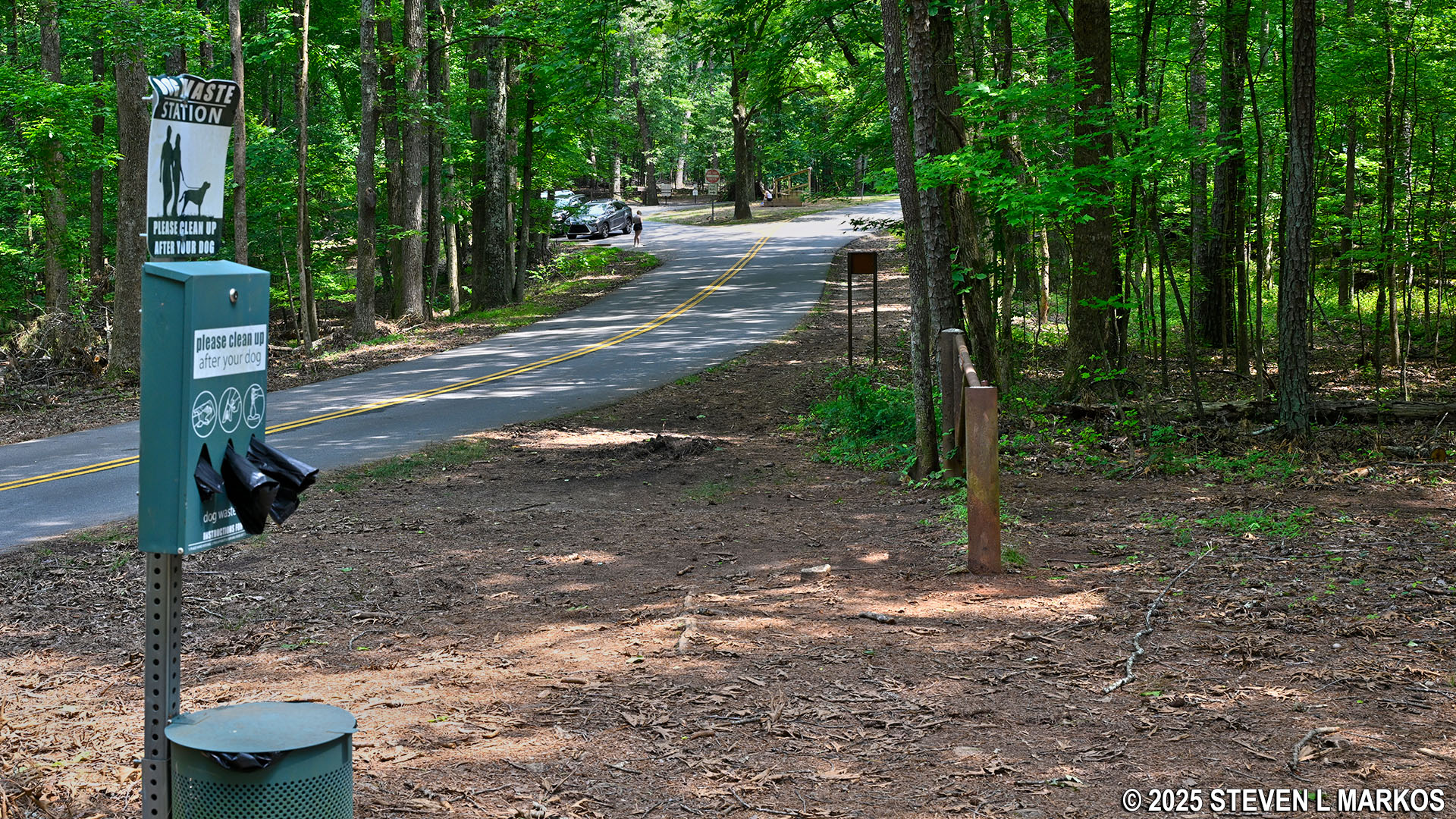
View towards the Illinois Monument parking lot from the Turner’s Battery earthwork exhibit along the Cease Fire Trail in Kennesaw Mountain National Battlefield Park
The Cease Fire Trail curves a little to the right at Turner’s Battery. Follow the directional signage to CHEATHAM HILL / ILLINOIS MONUMENT.
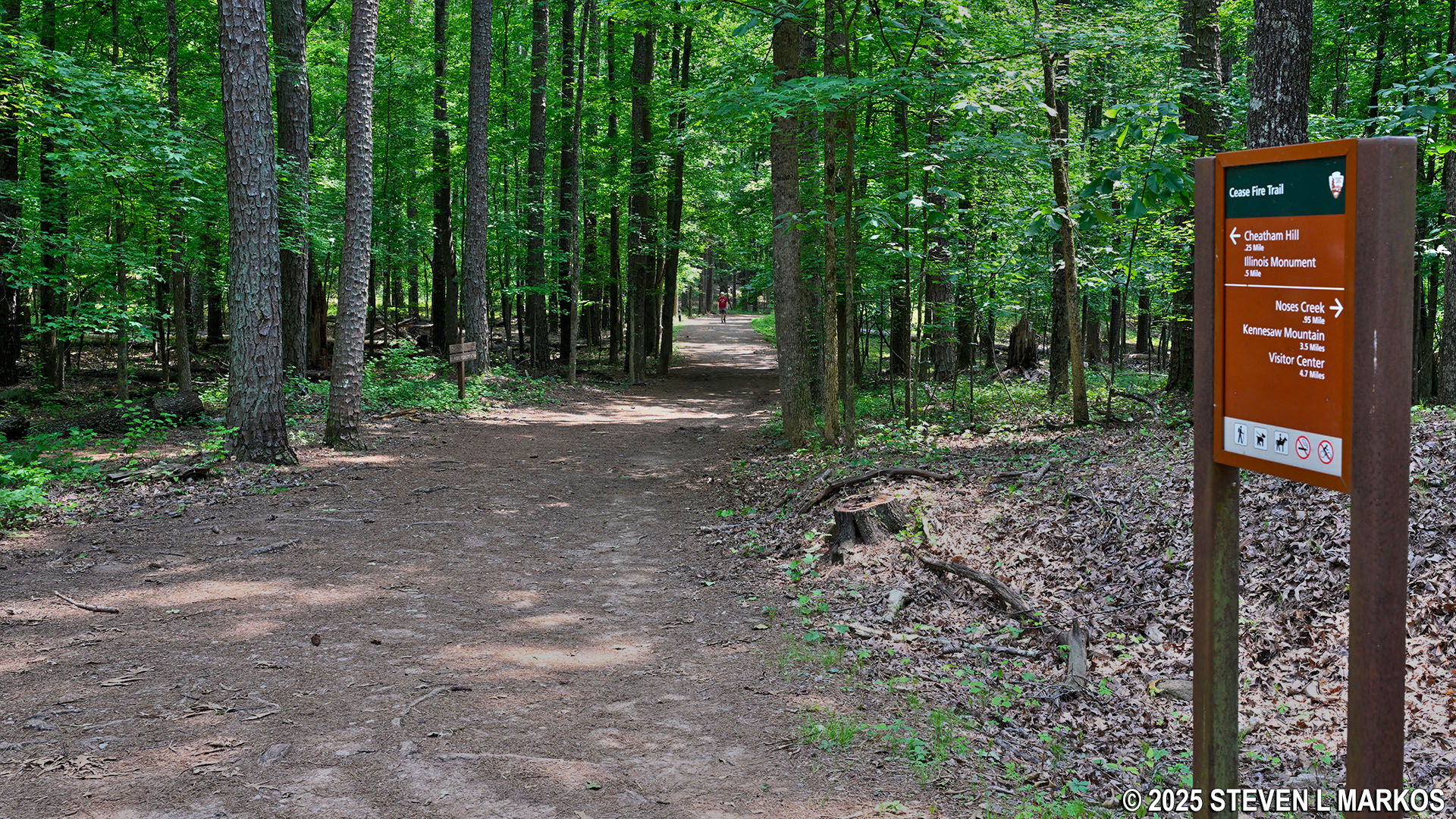
Continuation of the Cease Fire Trail at the Turner’s Battery earthwork, Kennesaw Mountain National Battlefield Park
After a quarter mile, the trail forks. A left leads uphill to the Illinois Monument, which is the largest monument in Kennesaw Mountain National Battlefield Park. If you haven’t seen it, be sure to take the detour. The path comes out below the monument, and from there you can see the field that Union soldiers charged across before they stormed up the side of Cheatham Hill in an unsuccessful attempt to overtake the Confederates positioned at the top. The Illinois Monument sits at the high-water mark of the Union assault. If you have time, take the trail on the left side of the monument back towards the parking lot. There is another redoubt with cannon and a few smaller monuments. See the Cheatham Hill web page here on National Park Planner for more information about this section of the park.
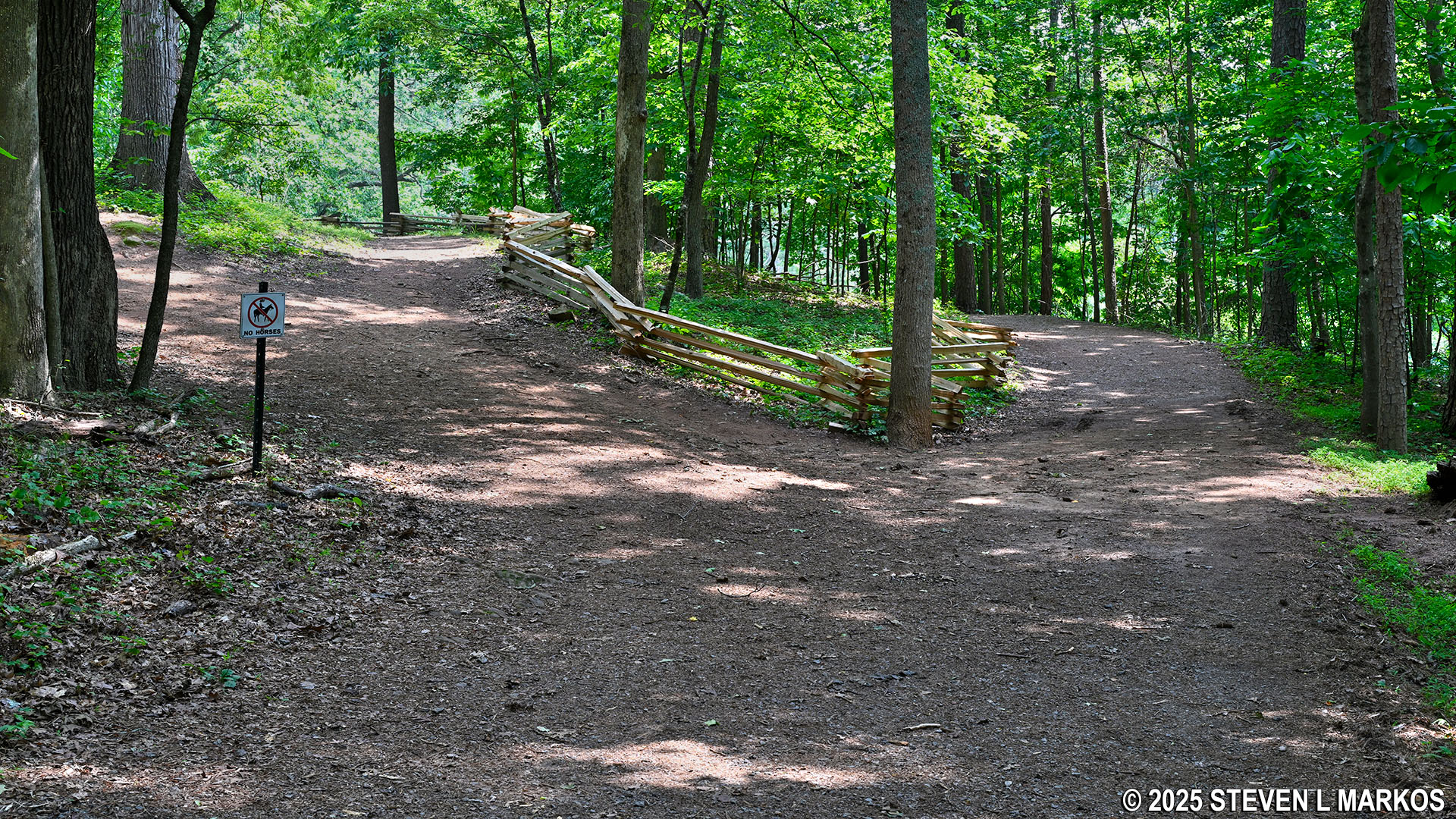
Fork in the Cease Fire Trail for the Illinois Monument at Cheatham Hill, Kennesaw Mountain National Battlefield Park

View from the Confederate position at Cheatham Hill, Kennesaw Mountain National Battlefield Park
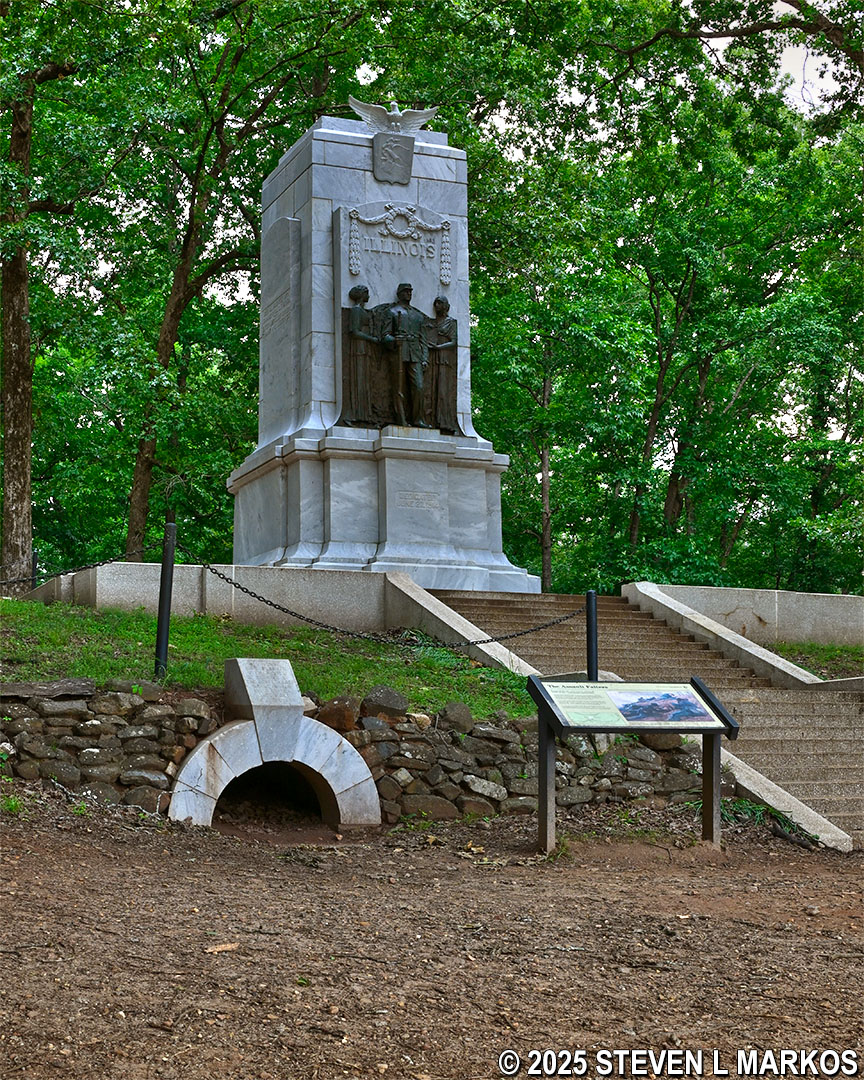
Illinois Monument at Cheatham Hill, Kennesaw Mountain National Battlefield Park
To continue on the Cease Fire Trail, stay right at the fork. This will curve around and come out even farther below the Illinois Monument. Just past a directional sign is a trail that forks off to the right and heads steeply downhill, hugging the tree line along the field below. This is the Assault Trail, but there is no mention of it on the trail signage. If you are doing the Old John Ward—Cease Fire—Assault Trail loop, this is where you must turn. If you want to hike the Cease Fire Trail to its intersection with the Kolb Farm Loop Trail, continue straight. The intersection is a tenth of a mile ahead.
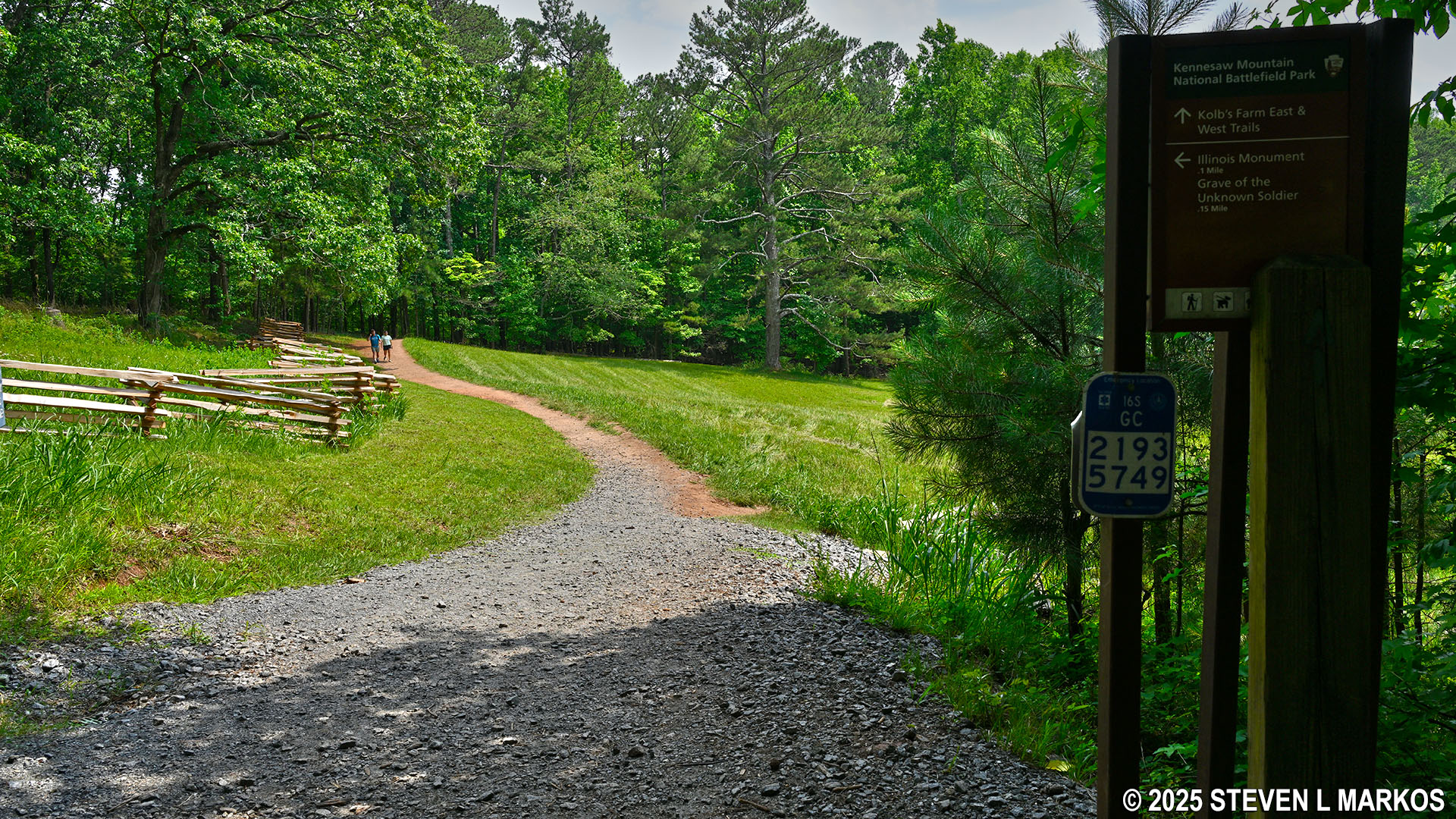
Cease Fire Trail below the Illinois Monument at Cheatham Hill, Kennesaw Mountain National Battlefield Park
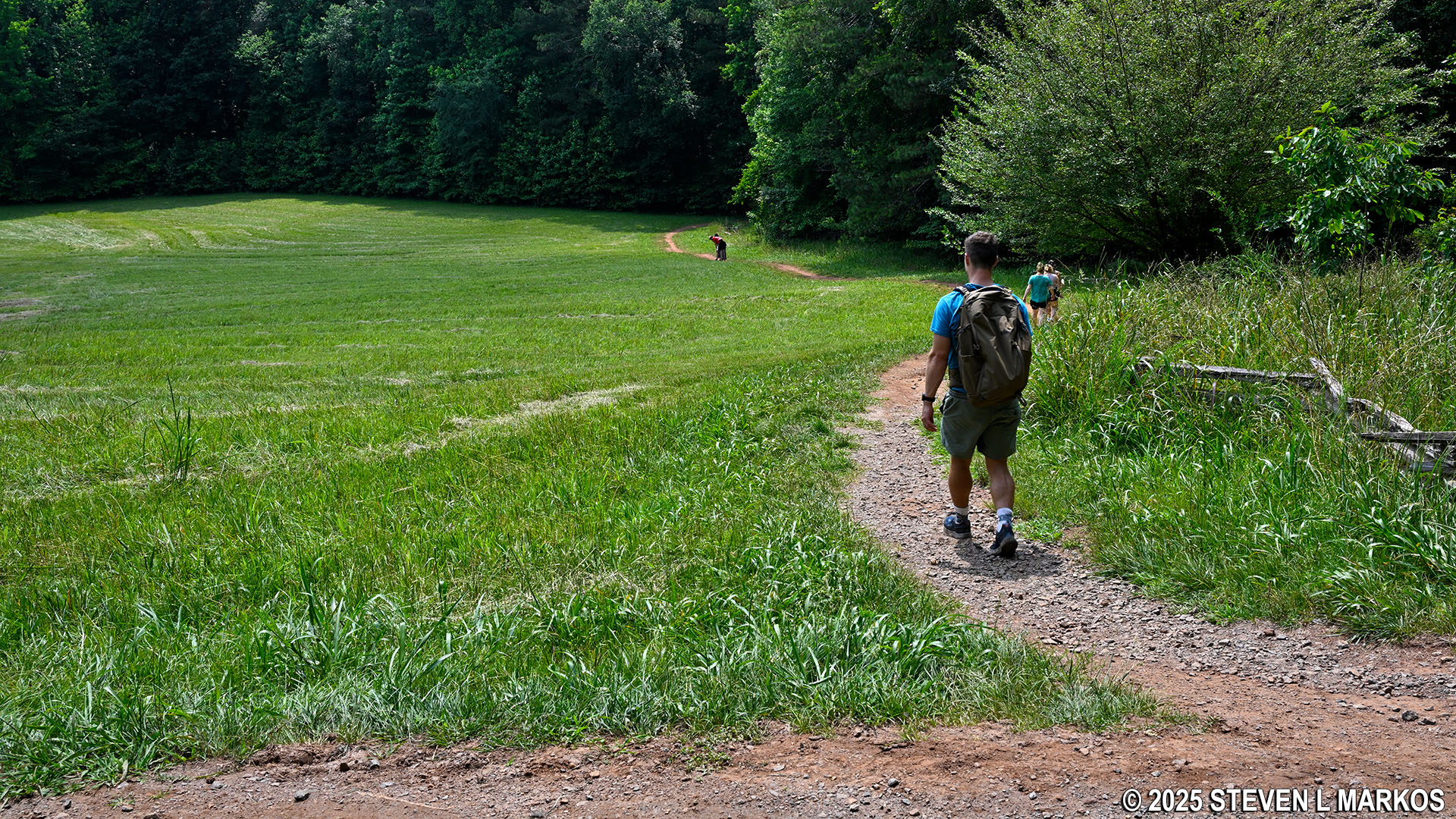
Start of the Assault Trail at the intersection with the Cease Fire Trail, Kennesaw Mountain National Battlefield Park
According to the National Park Service, the Cease Fire Trail is 1.25 mile long. I hiked to its end at the Kolb Farm Loop Trail, and according to my GPS, it is just .9 mile long. The distance between the Old John Ward and Assault trails is .75 mile.
See the Assault Trail report here on National Park Planner for information on the last leg of the Old John Ward—Cease Fire—Assault Trail loop hike.
With a few exceptions, use of any photograph on the National Park Planner website requires a paid Royalty Free Editorial Use License or Commercial Use License. See the Photo Usage page for details.
Last updated on June 20, 2025


