
Exhibits in the Ford’s Theatre Museum, part of Ford’s Theatre National Historic Site
The first stop on a tour of Ford’s Theatre National Historic Site is the Ford’s Theatre Museum. This offers an extremely comprehensive look at Abraham Lincoln’s time as president and the events leading up to his assassination on April 14, 1865. It is a massive undertaking to read through all of the exhibits and watch the various short videos that play on a continuous loop. It took me two hours, and while I did this as part of my job—I’m pretty sure that such an endeavor is beyond the interest of the typical tourist—I was surprised to see many people spending a good deal of time browsing the exhibits. The museum is laid out nicely, with my only complaint being that it is one of the darkest museums I’ve been to, though this gives the place an atmosphere of dread, quite fitting given the subject matter.
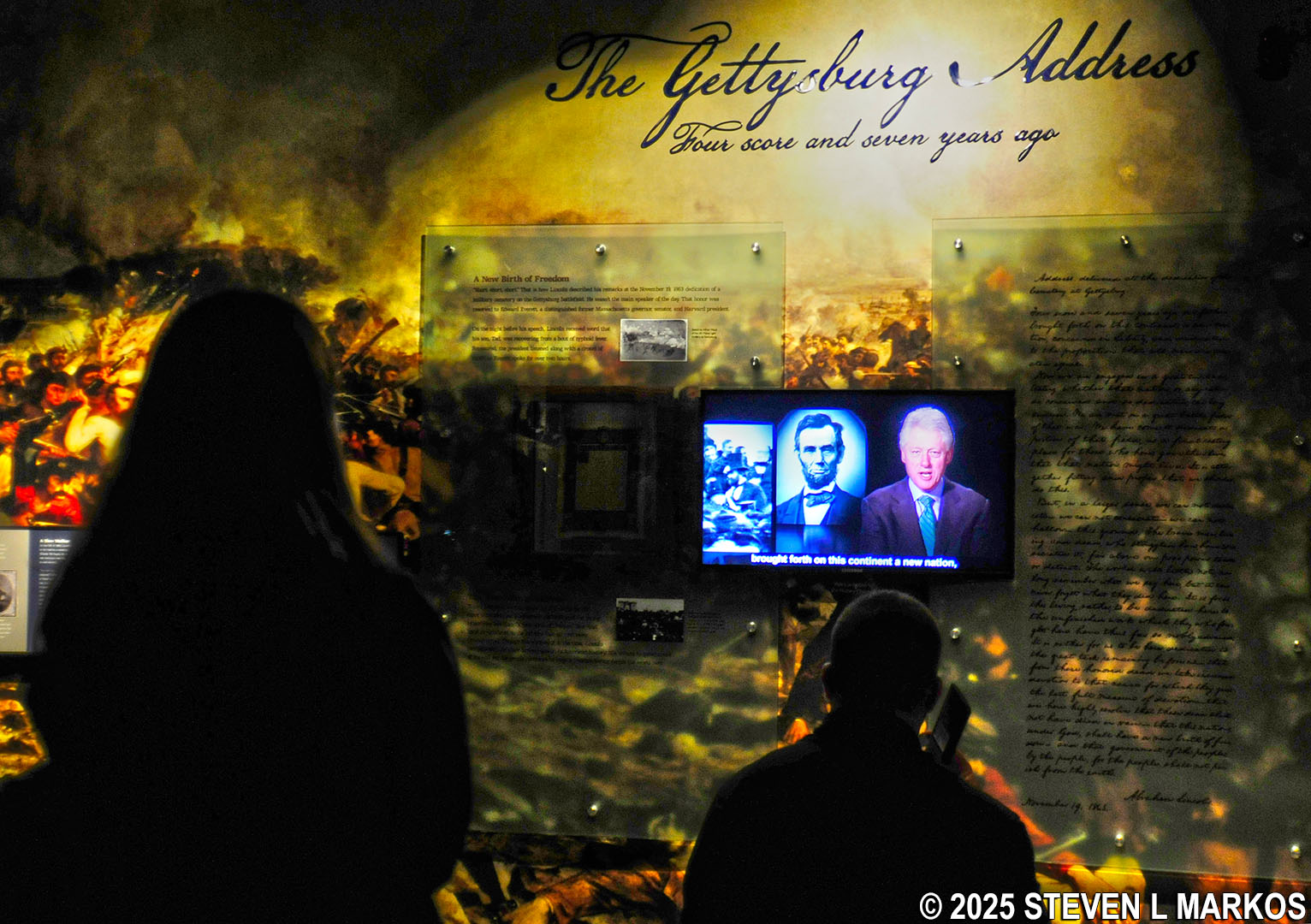
Visitors at the Ford’s Theatre Museum watch a video about Lincoln and the Gettysburg Address, Ford’s Theatre National Historic Site
When purchasing a ticket online or getting a free ticket at the box office of Ford’s Theatre, you have an opportunity to rent an Acoustiguide for a small fee ($5 at the time of this writing). This is an audio device that takes the place of an actual tour guide, and it has a separate tour for adults and children. Stops are located at key exhibits, and instead of reading the material, you can listen to information about the exhibit. Keep in mind that the Acoustiguide tour does not stop at every exhibit or bother with stops at the videos, so there is plenty more to see. I highly recommend adding this to your ticket purchase.

Sasha listening to her Acoustiguide at Ford’s Theatre National Historic Site
The museum begins with an exhibit on Lincoln’s first inauguration and details what it was like to be president in the early days of the United States. One exhibit, a collection of life-size figures, depicts Lincoln handing out government jobs. Back then, if you wanted such a job, you showed up at the White House and put in an application directly with the president. There are also a few exhibits about Lincoln’s boyhood, his marriage, and his family, but the main focus is on his years as president.
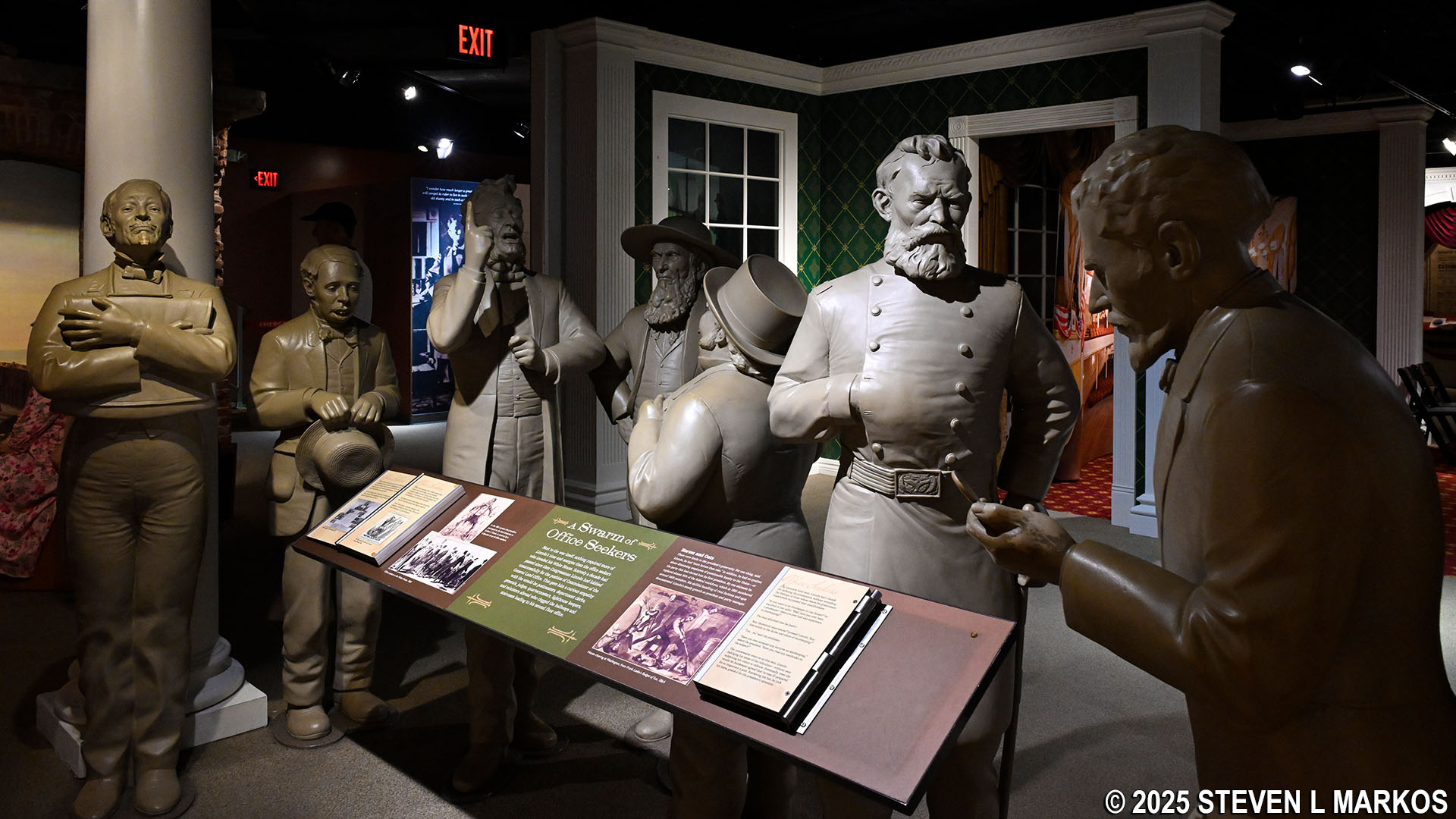
Swarm of Office Seekers exhibit in the Ford’s Theatre Museum, Ford’s Theatre National Historic Site
With any discussion of Lincoln comes a discussion of the Civil War, and the largest portion of the museum covers the war years. Most of the short video presentations are in this section, including one on the attack of Fort Sumter.
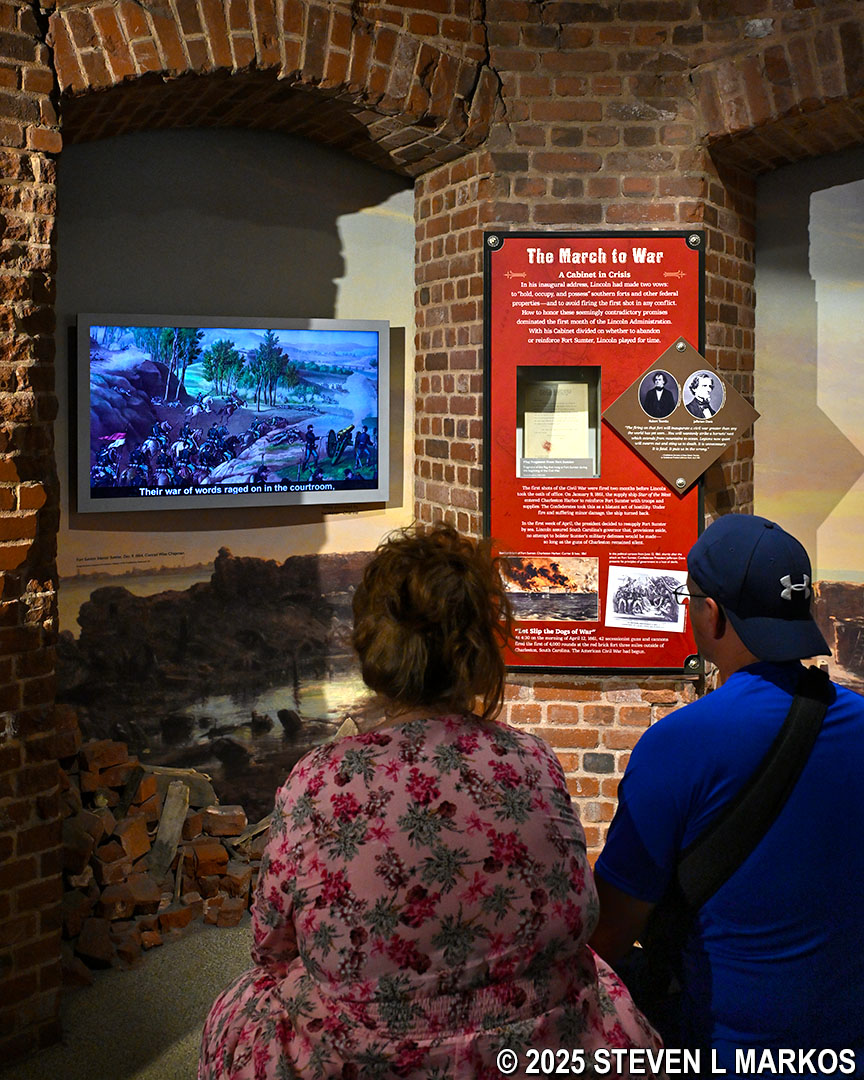
Video on the start of the Civil War shown at the Ford’s Theatre National Historic Site Museum
The most interesting section of the museum is that which covers the assassination conspiracy. Up until this point nearly all of the exhibits have been information panels or videos, but here you get plenty of artifacts, including the highlight of the museum, the .44-caliber Derringer pistol used by John Wilkes Booth to shoot Lincoln. The Derringer was a one-shot weapon, so Booth dropped it immediately after pulling the trigger.
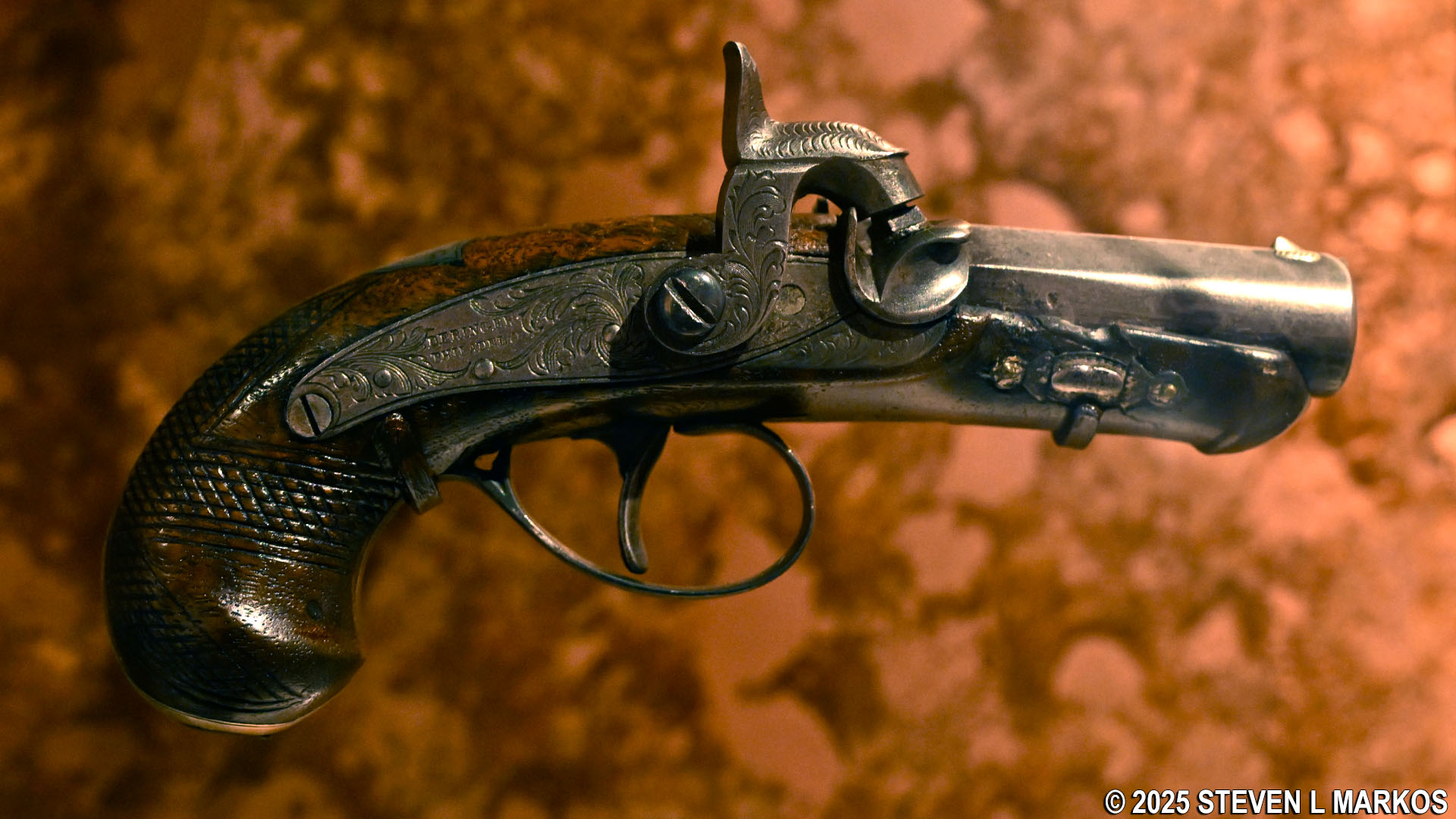
.44-caliber Derringer pistol used to kill Abraham Lincoln on display in the museum at Ford’s Theatre National Historic Site
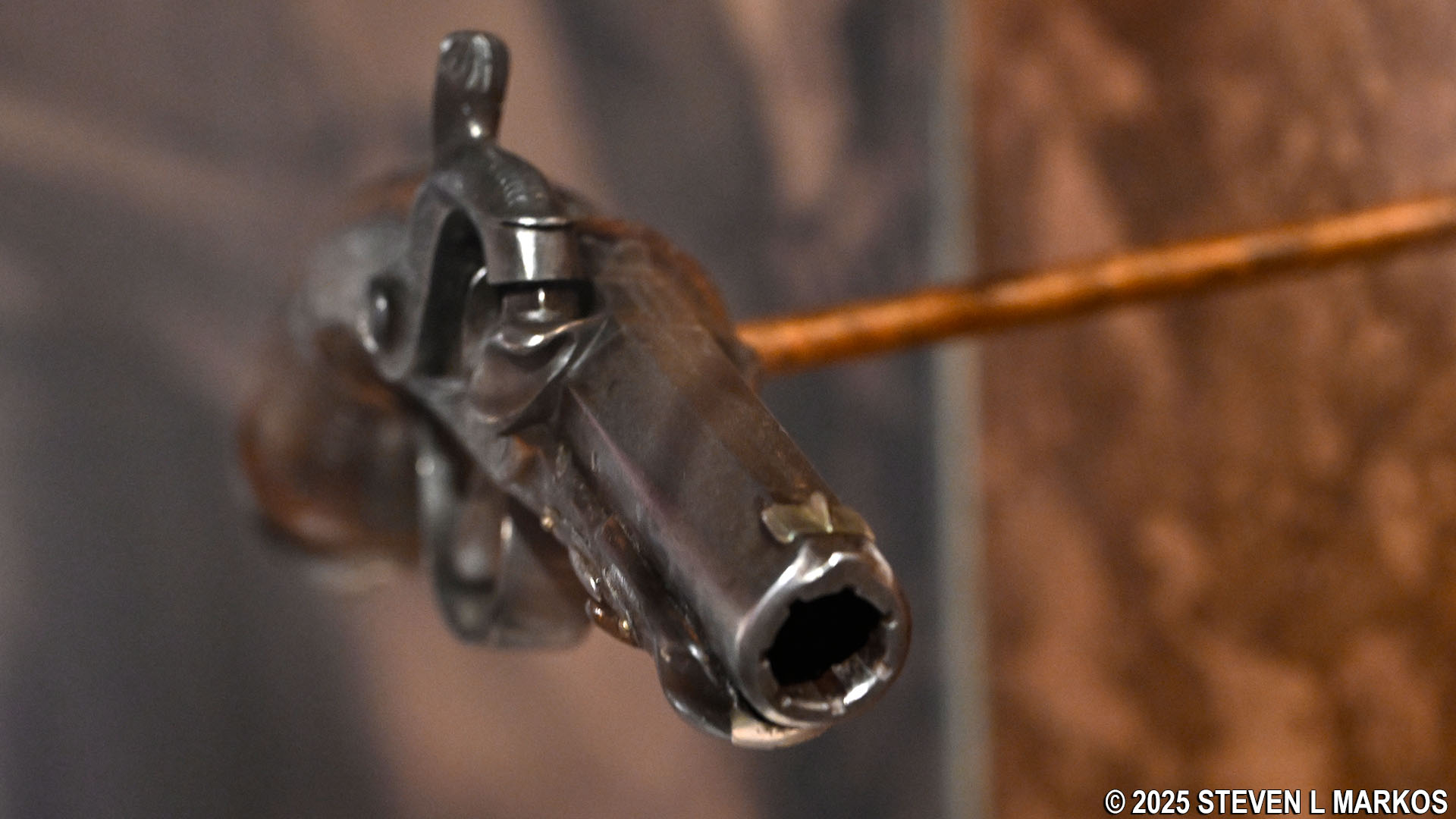
.44-caliber Derringer pistol used to kill Abraham Lincoln on display in the museum at Ford’s Theatre National Historic Site
Other items on display include the boot that was cut off of Booth’s broken ankle by Dr. Samuel Mudd; many of the guns and knives that Booth and his co-conspirators had on them when arrested; Booth’s diary, which is how so much was known about his thought process despite the fact that he was killed twelve days later; and the jacket of orchestra leader William Withers, a man Booth slashed with a knife as he ran across the stage at Ford’s Theatre when attempting his escape. The jacket has two slash marks, plus much of the lower area has been torn away. Withers cut off pieces to sell as souvenirs.
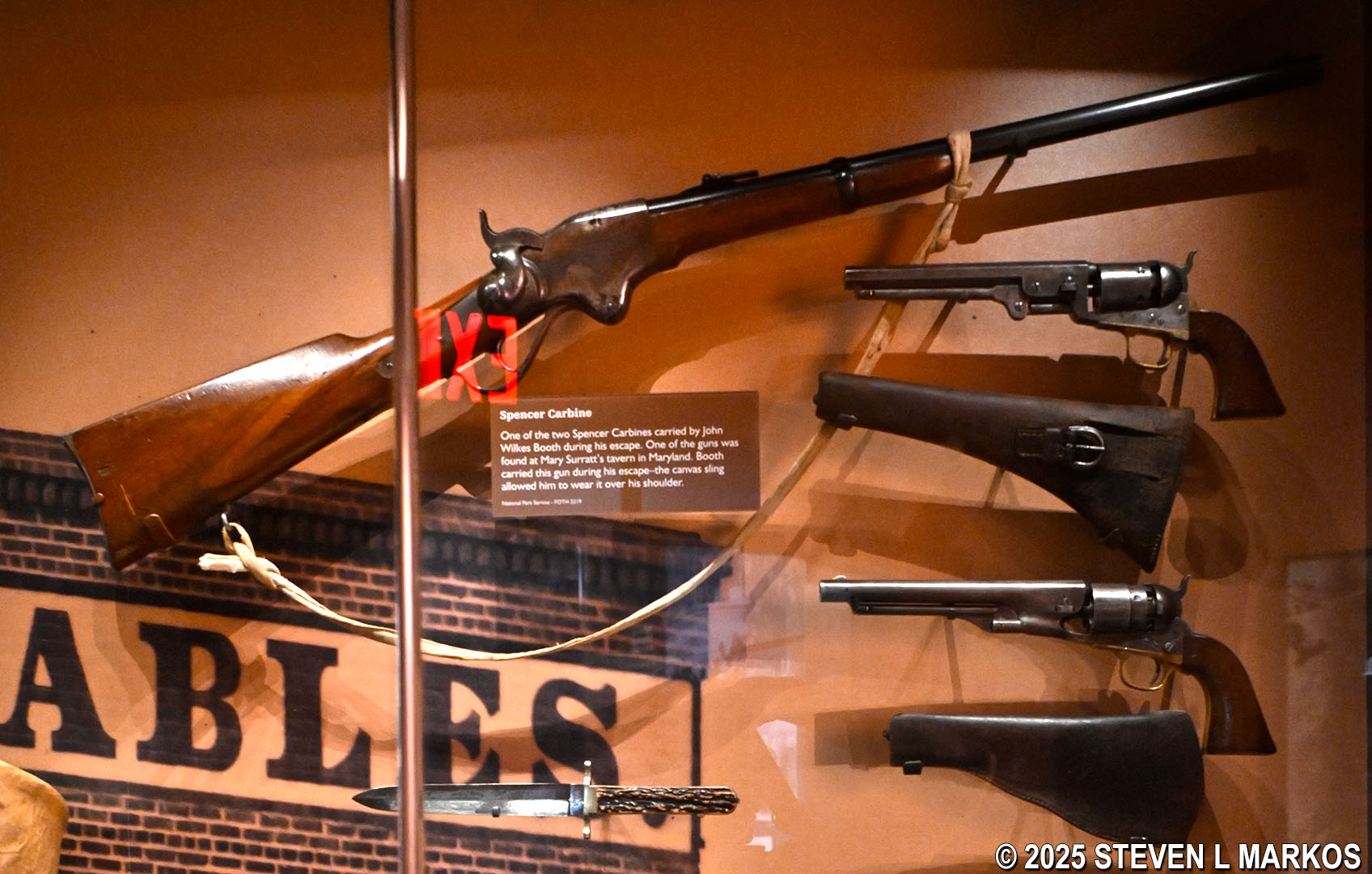
Spencer carbine carried by Booth during his escape on display in the museum at Ford’s Theatre National Historic Site
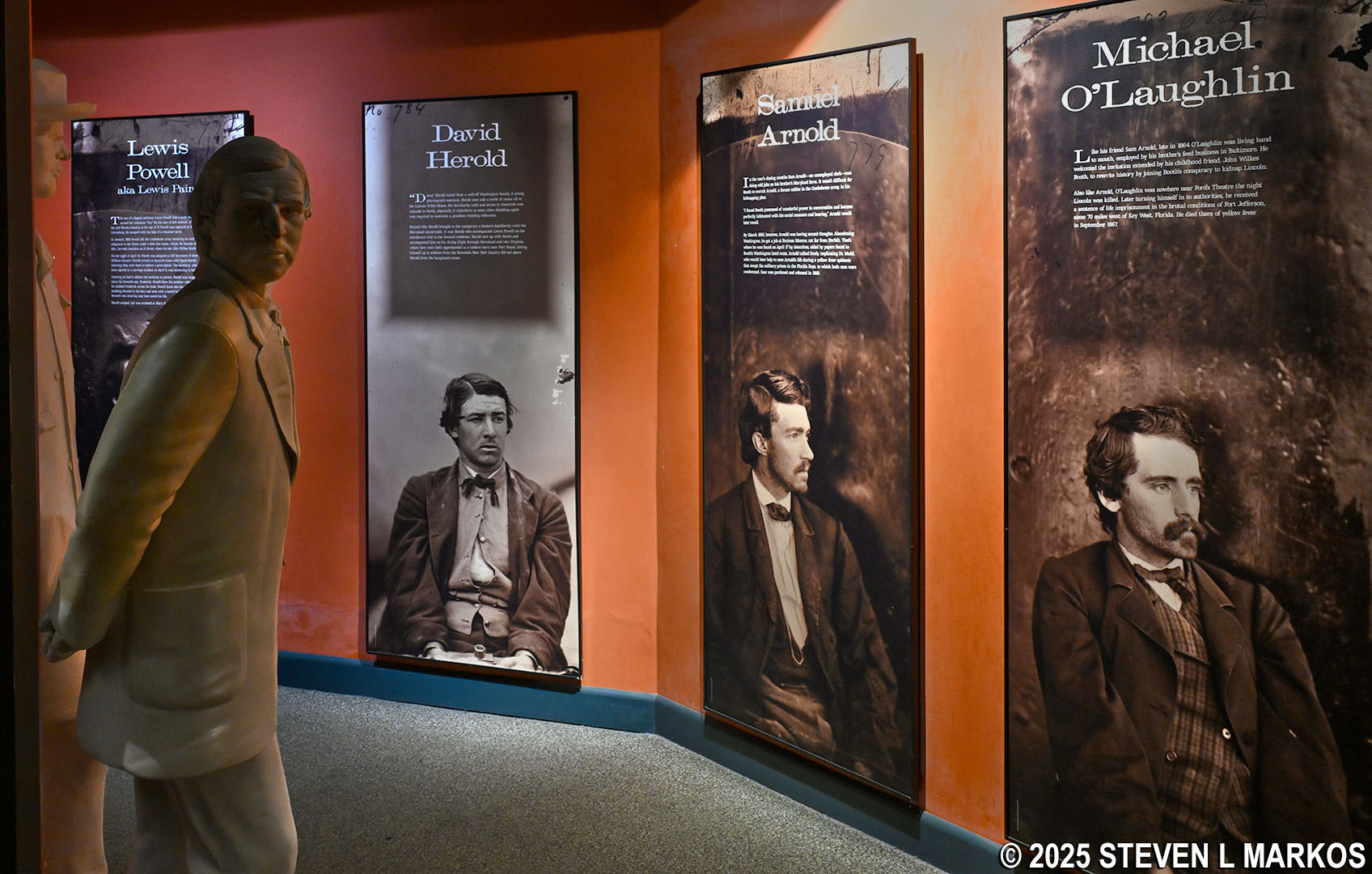
Ironically, for a museum about Lincoln, the biggest impact it had on me was that it put a personality to Booth. Everyone has an idea about Lincoln and his personality, but Booth has always been nothing more than a name. He was a nationally famous actor—the equivalent of someone like Brad Pitt—which is why he was able to pull off the assassination. He was a fixture at Ford’s Theatre, so he could get in and walk around wherever he pleased without drawing any attention. In fact, Lincoln had seen him earlier in a play and liked his performance so much that he invited Booth to the White House, though Booth found excuses not to go because he despised Lincoln so much. He was so popular that he most likely would have been let into Lincoln’s box had guards been posted throughout the theater. Exhibits also bring to life the men and one woman who were involved in the assassination.
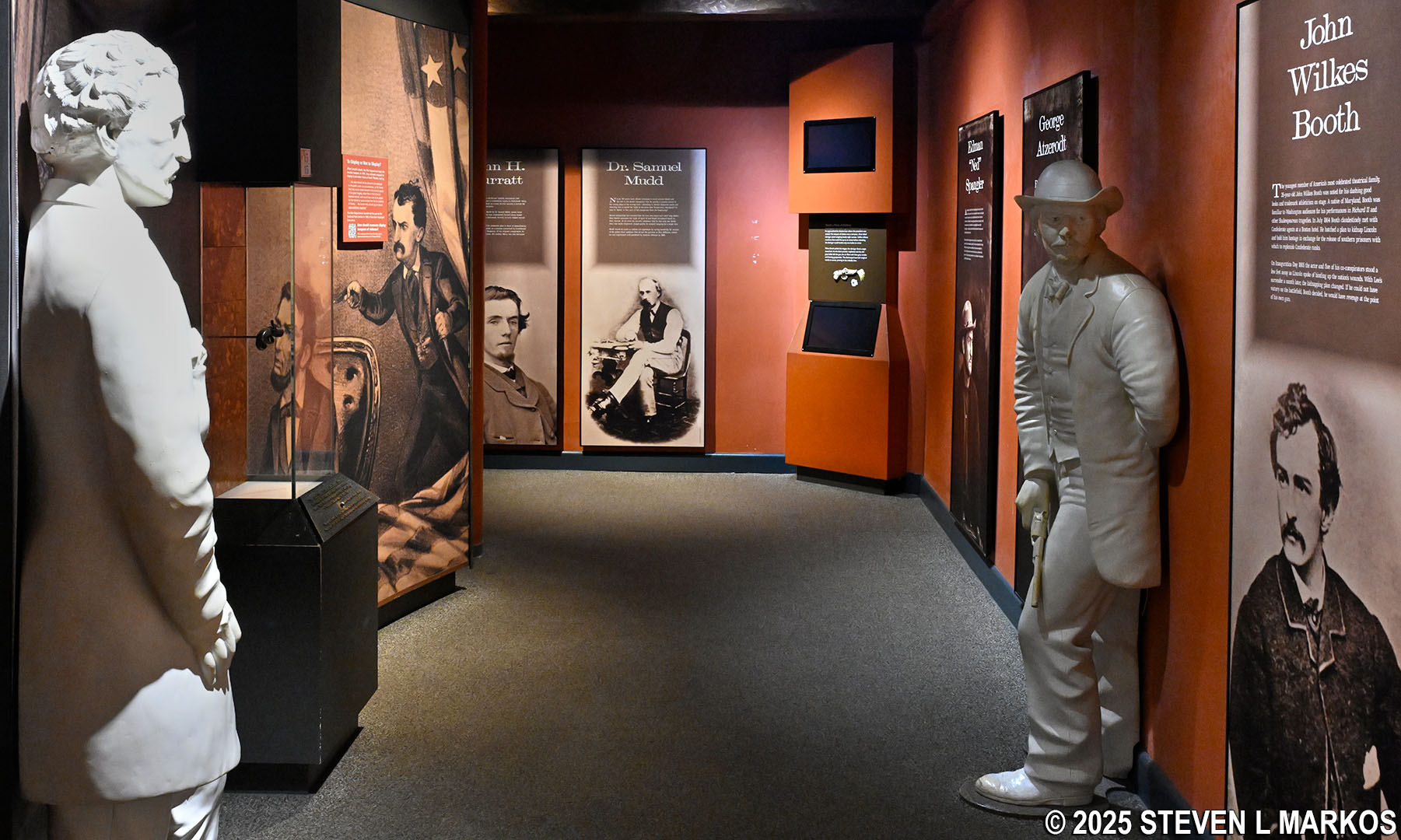
Exhibit in the Ford’s Theatre Museum that focuses on the conspirators in the Lincoln assassination, Ford’s Theatre National Historic Site
Once done at the museum, proceed to the actual theater upstairs. The walk down the hallway towards the theater entrance is an eerie one. On one side of the hall is a timeline of Lincoln’s day leading up to the performance of Our American Cousin on the evening of April 14th. On the other side, the same type of information, but for John Wilkes Booth’s day. All the while a clock ticks. And then you open the door and you are there…Ford’s Theatre.
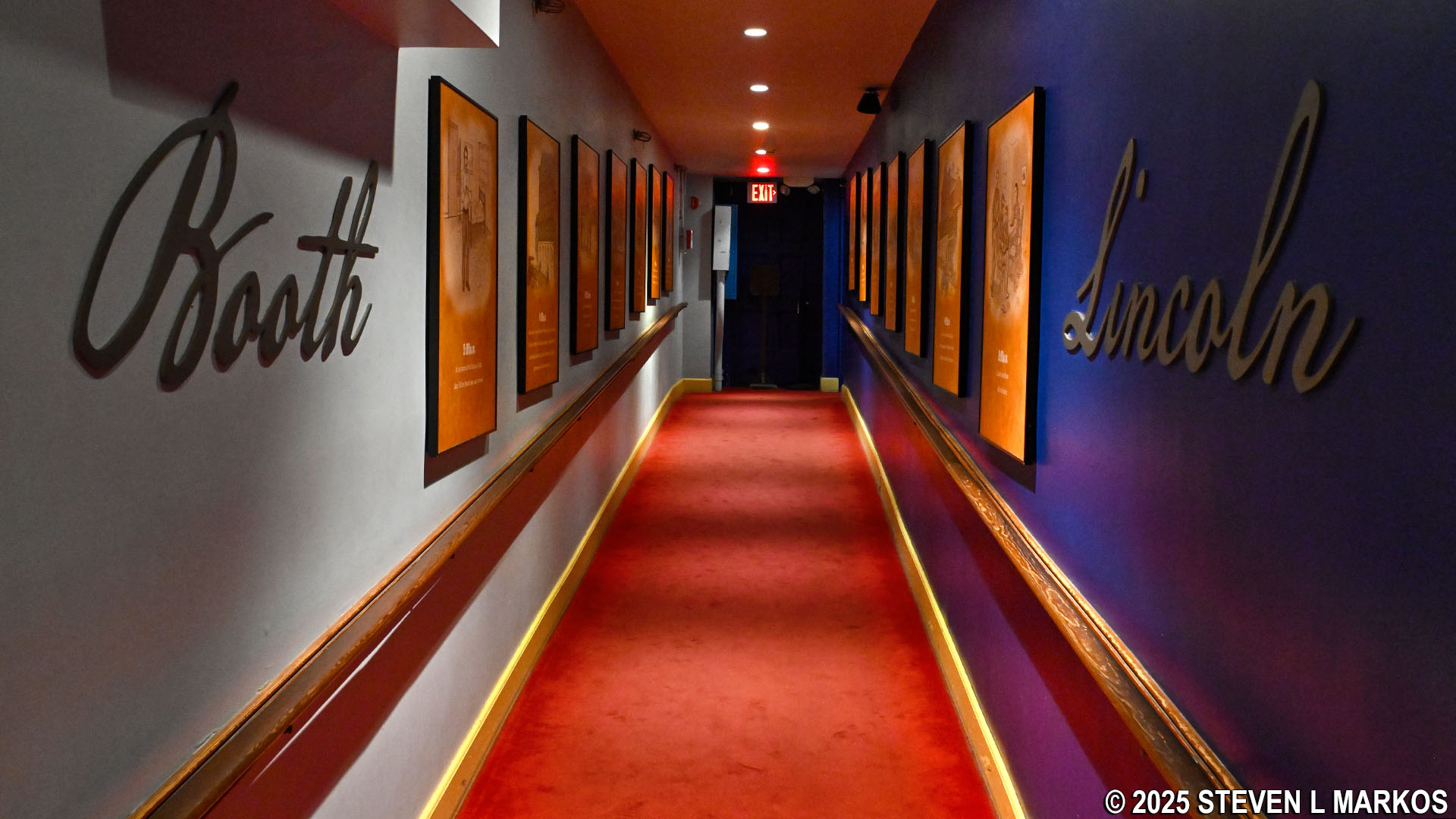
Hallway between the Ford’s Theatre Museum and the actual theater, Ford’s Theatre National Historic Site
With a few exceptions, use of any photograph on the National Park Planner website requires a paid Royalty Free Editorial Use License or Commercial Use License. See the Photo Usage page for details.
Last updated on November 8, 2025


