
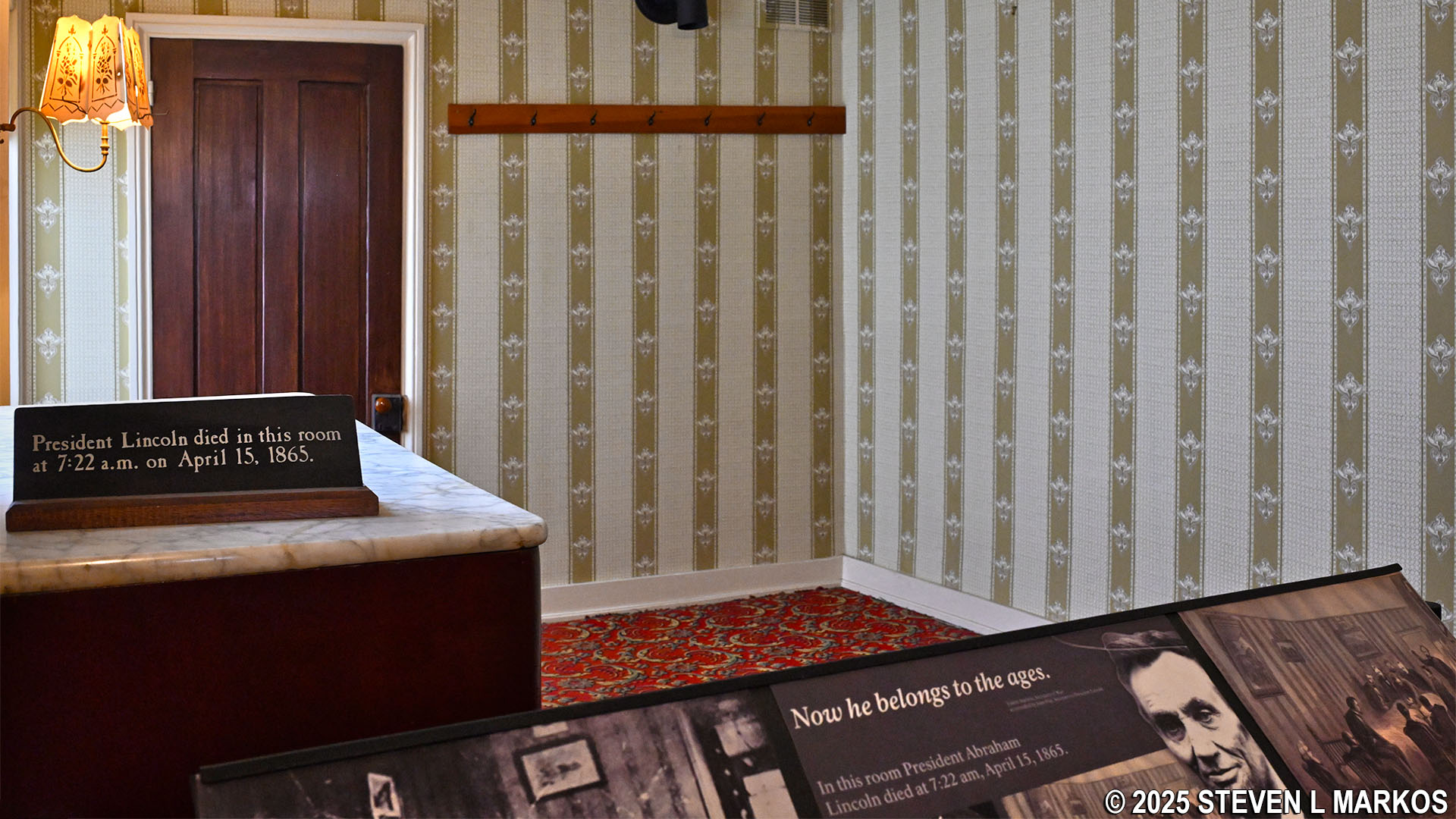
Room in the Peterson House where President Lincoln died, Ford’s Theatre National Historic Site
The third stop on the tour of Ford’s Theatre National Historic Site is the Peterson House, the home that President Lincoln was carried to after being shot at Ford’s Theatre around 10 PM on April 14, 1865. It is here that he died nine hours later. A ticket is required to enter.
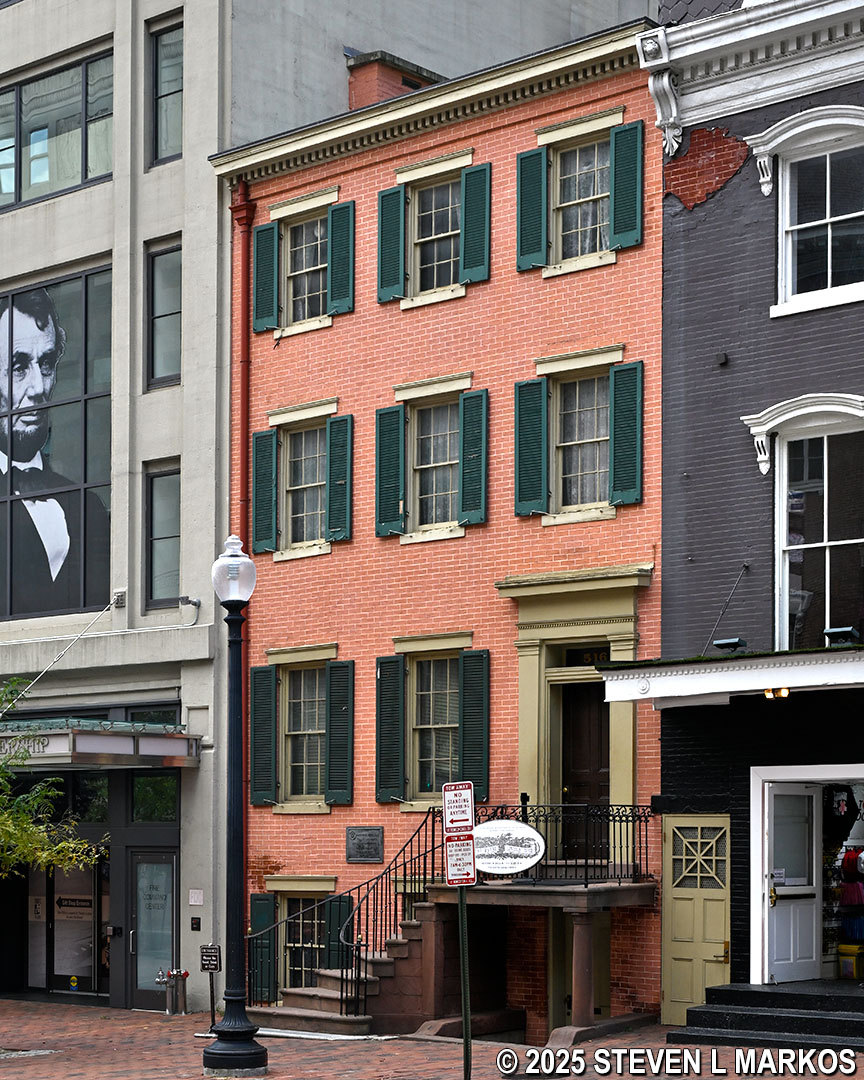
Peterson House, part of Ford’s Theatre National Historic Site
After Lincoln was shot, it was determined that he should not be transported to the White House, as a carriage ride would be much too bumpy. He was carried out of the theater and taken across the street to a house owned by William Peterson after someone was heard shouting to bring the president inside. The Petersons were running a boarding house at the time, and Lincoln was taken to a back room occupied by William Clark.
Today if a president died in a private house after being shot, the owner would be selling tickets the next day, but this was not the case back in the 1860s. The Petersons got so tired of gawkers coming around that they eventually moved, taking all of their furniture and belongings with them other than the bed on which Lincoln died and some of the items in the bedroom. These were purchased by Charles Gunther and are now in the Chicago History Museum. Thus, none of the furnishings in the house are original, but they are actual antiques or accurate reproductions. The house and room were photographed quite thoroughly, so the furnishings and decor should be fairly accurate. The interior layout has never been modified, so unlike Ford’s Theatre, you are standing in the real deal. The room where Lincoln died is blocked off, but you can look in through the doorway.
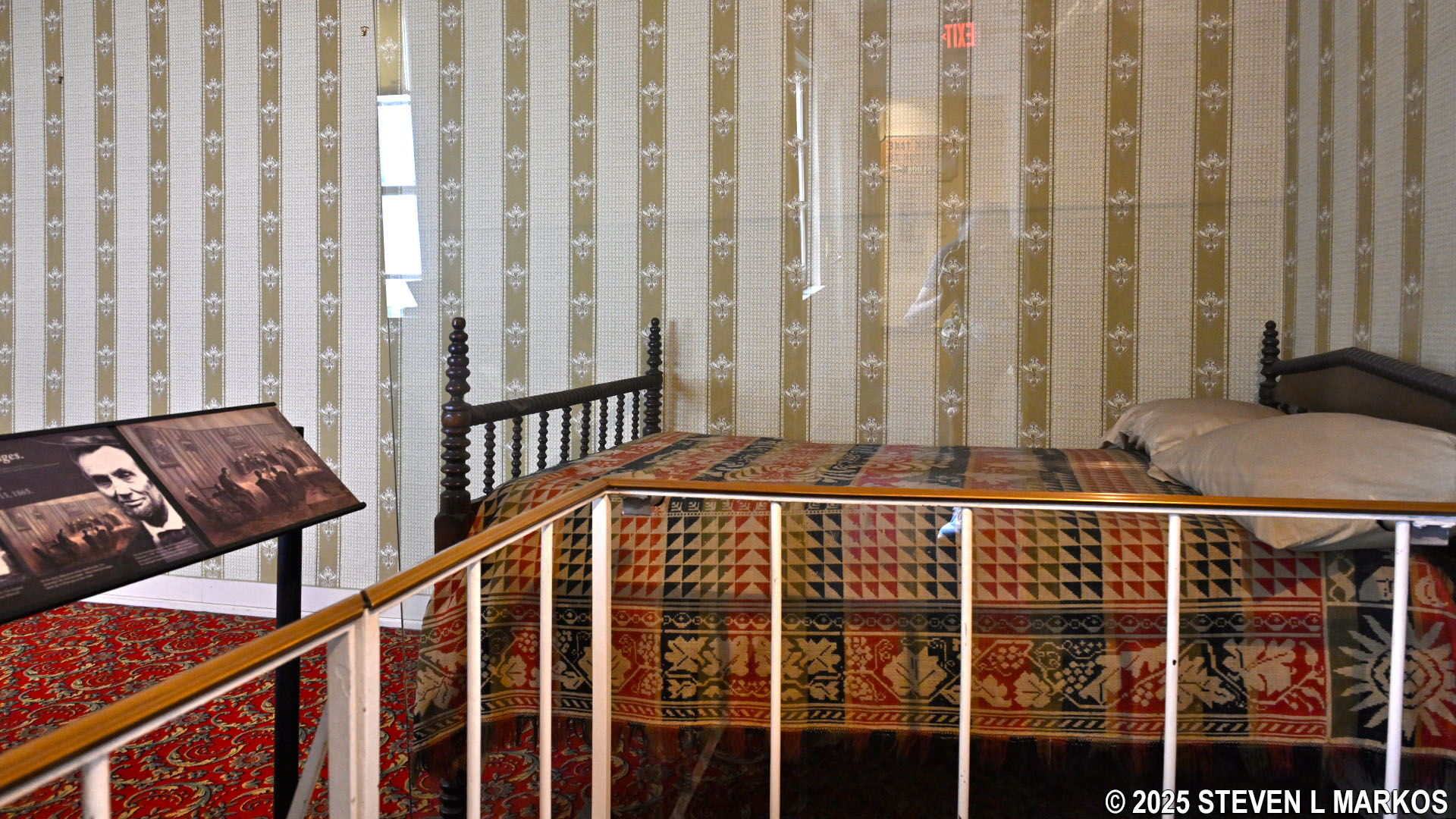
Replica of the bed in the Peterson House on which Abraham Lincoln died, Ford’s Theatre National Historic Site
As with Ford’s Theatre, there’s not much to do at the Peterson House other than take a quick look around at the three rooms that are open to the public and perhaps ask a few questions of the park Ranger on duty. If you rented an Acoustiguide, an audio device on which a narrator guides you through Ford’s Theatre National Historic Site, there are three segments pertaining to the house. You are asked to listen to them before entering, because the Peterson House is very small and there is no room for people to hang around for fifteen minutes while listening to a recording.
When done, exit the house out of the back porch and follow the sign to an elevator that will take you to the Aftermath Museum Gallery on the fourth floor of the Center for Education and Leadership (the two buildings are connected together so you don’t have to go outside). This museum, which is the last stop on the tour, focuses on the aftermath of the assassination and the hunt for John Wilkes Booth and his cohorts.
With a few exceptions, use of any photograph on the National Park Planner website requires a paid Royalty Free Editorial Use License or Commercial Use License. See the Photo Usage page for details.
Last updated on November 8, 2025


