
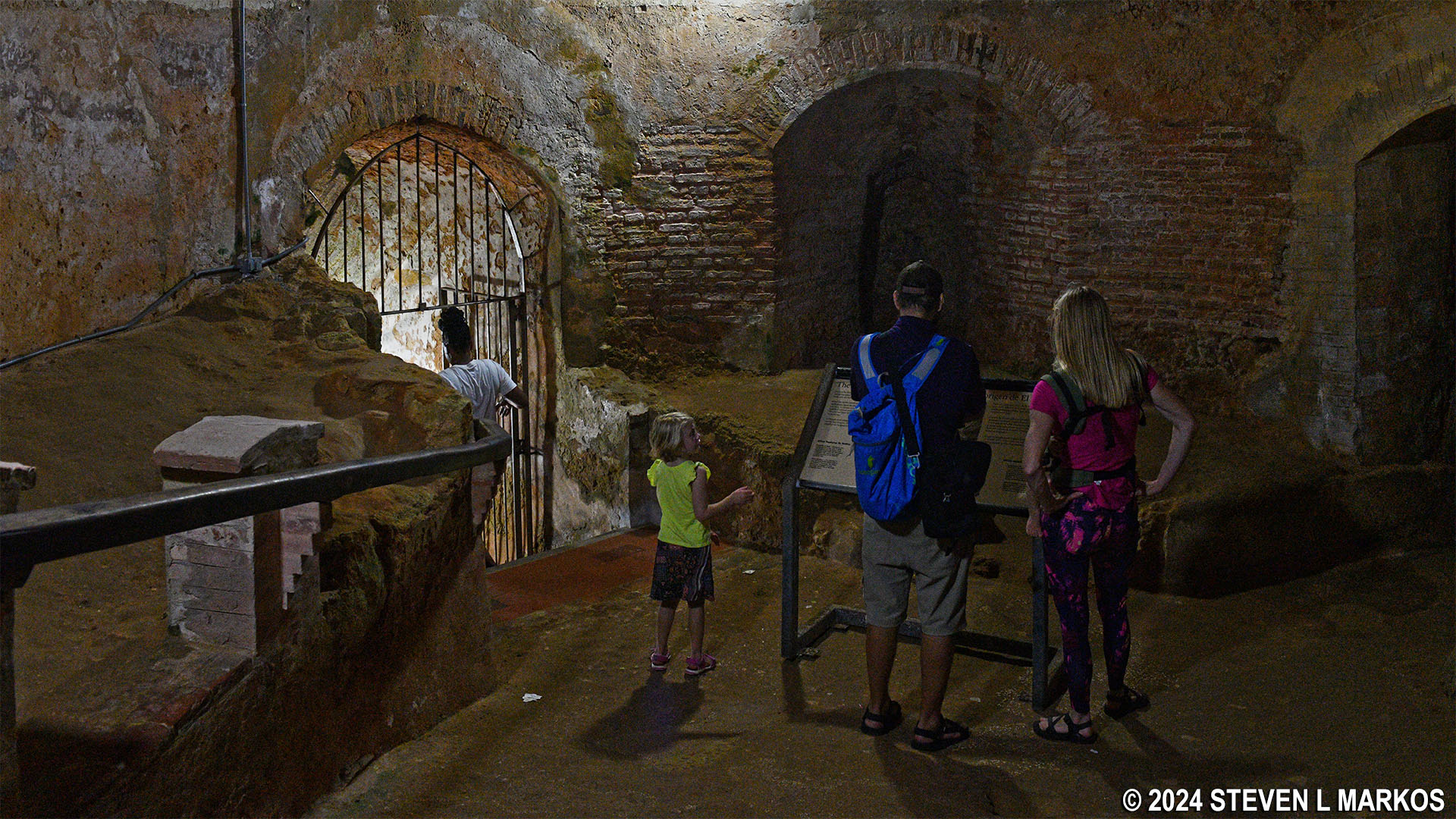
Interior of the 1539 Tower of Castillo San Felipe del Morro, San Juan National Historic Site
Castillo San Felipe del Morro Main Page
When Castillo San Felipe del Morro (aka El Morro) was originally built in 1539, it consisted of a circular tower approximately twelve feet tall and a lower level battery platform (for cannon) similar to today’s Water Battery. The interior of the tower was hollow, like a lighthouse, and there were four embrasures (openings in a wall) facing the ocean from which cannon could fire through. Take a look at the photo below and just imagine that configuration repeated in a semicircle around the inside of the tower. This photo is from Fort Pulaski in Savannah, Georgia, but it is very similar to what would have been inside the El Morro tower.

Cannon installed in the interior of a fort aims through an embrasure
The top of the tower had a parapet (wall that soldiers stand behind for protection) with embrasures that made it look like a typical rook of a chess set. Cannon could have been mounted on the roof as well, but at the time the Spanish only delivered four cannon, and these were all deployed inside. See the photo below and just imagine this configuration repeated in a circle around the top of the tower.
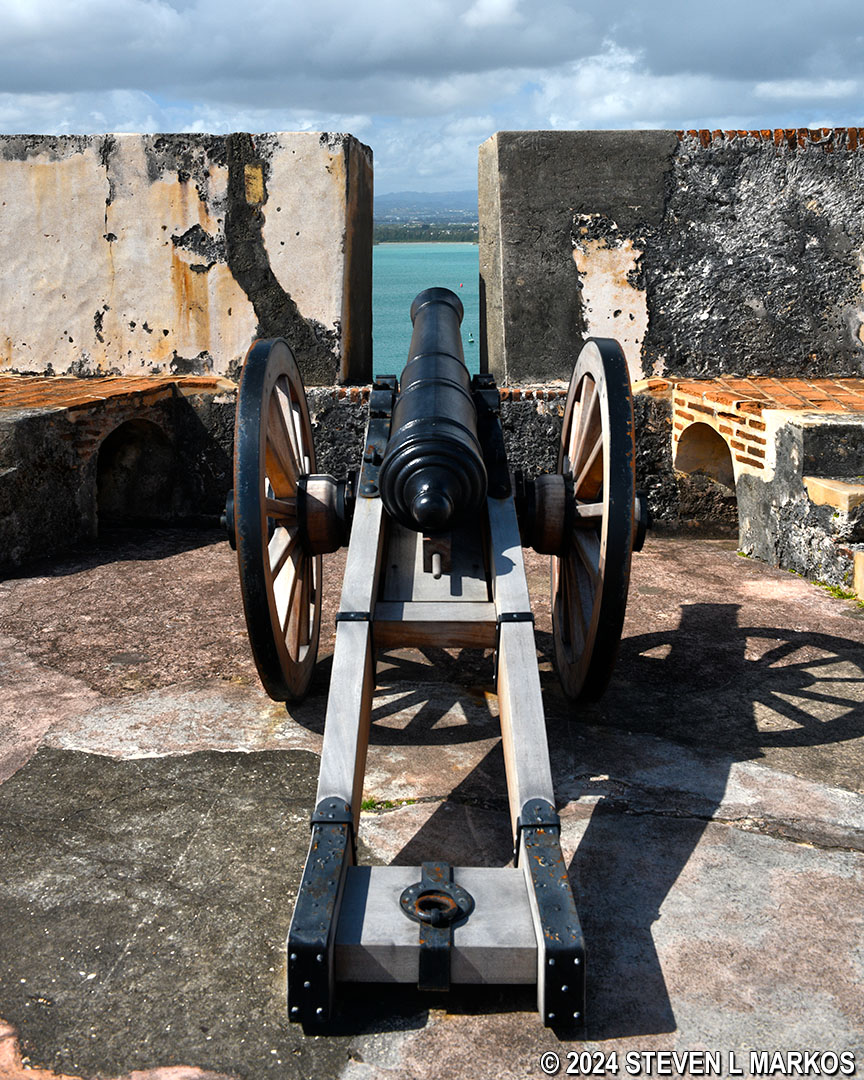
Cannon aims out of an embrasure in the parapet at the Austria Bastion of Castillo San Felipe del Morro, San Juan National Historic Site
A drawing from 1591 shows that a bayside and oceanside battery of some sort had been built along with a rudimentary hornwork at the rear of the fort to protect it from a land invasion. Because El Morro was designed to defend against an attack from the sea, less emphasis was put on the rear fortifications, and as a result, the fort was captured by the English in 1598. However, an outbreak of dysentery two months later forced the English to abandon Puerto Rico, leaving the Spanish in control once again.

1591 Drawing of El Morro
The British defeat prompted the Spanish to overhaul the fort, and starting in 1602 the rear hornwork was the main focus. Once it was completed, which could have been anywhere from 1606 to 1625, work began on what many historians believe was the first version of the Santa Barbara Bastion, the triangular fortification facing the ocean. A structure similar to what stands today appears on an architectural drawing done in 1742, so Santa Barbara could have been built anytime between 1625 and 1742, with some evidence pointing to a 1676 completion date. It is difficult to pin an exact date on much of El Morro’s construction because there are decades between existing historical documents pertaining to the fort.
The new Santa Barbara Bastion replaced the original tower, but instead of tearing it down, the bastion was built around the tower, essentially enclosing it in what is known as the toe: the forward-most section near the ocean. This makes Santa Barbara unique among El Morro’s other bastions: Ochoa, Austria, Carmen, and Mercado. All of these are filled with earth and rubble. With a couple of exceptions, there are no interior rooms. By simply enclosing the 1539 Tower within the bastion, a ready-made interior was created.
The new bastion was much taller than the tower, but there was initially no platform over the top of it as there is today. Documents do point to the eventual construction of a platform, possibly by 1678, though the current platform is from the 1770s. The red circle in the graphic below indicates the tower’s approximate location in the toe.
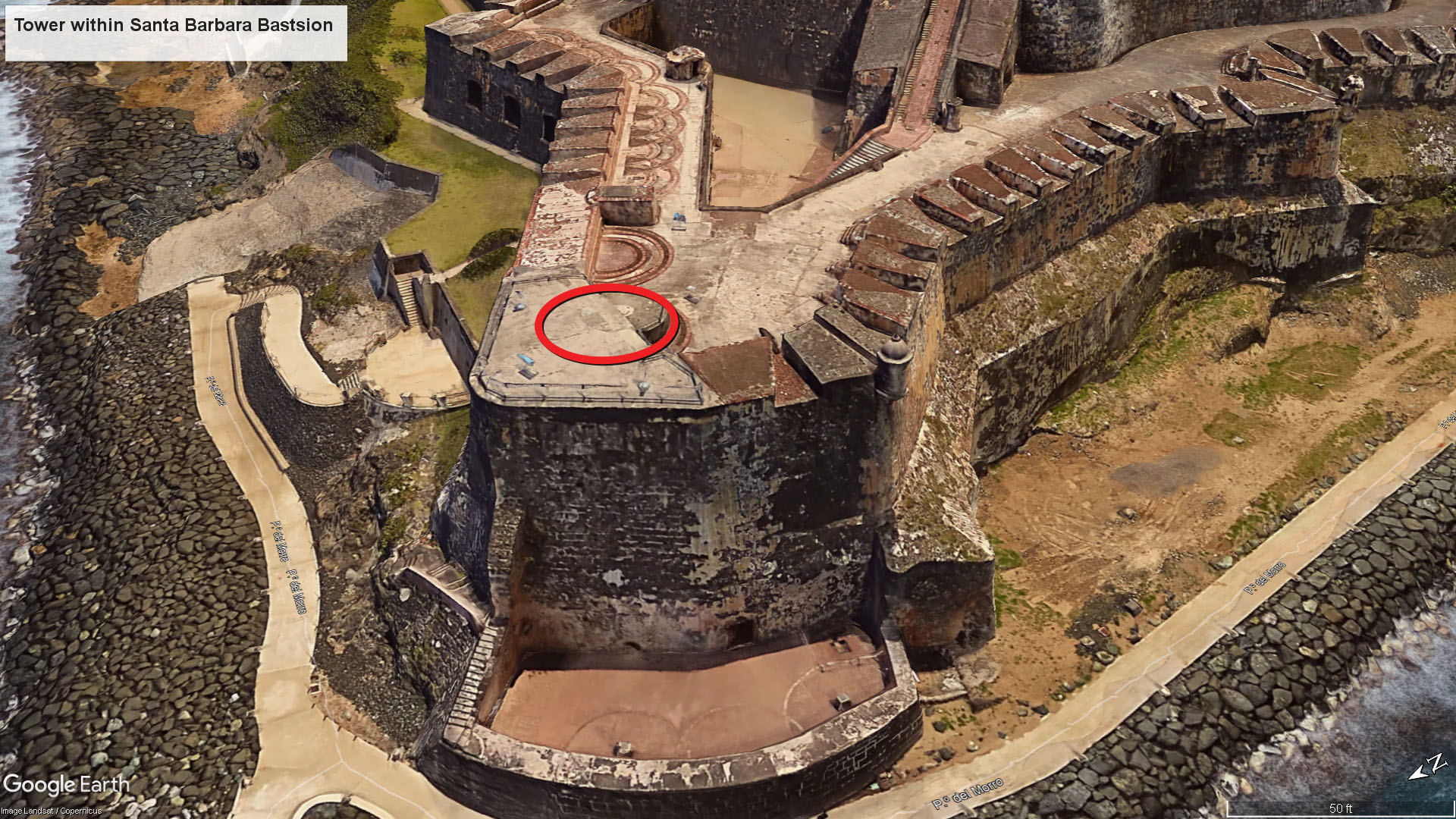
Approximate location of the 1539 Tower within the Santa Barbara Bastion of Castillo San Felipe del Morro
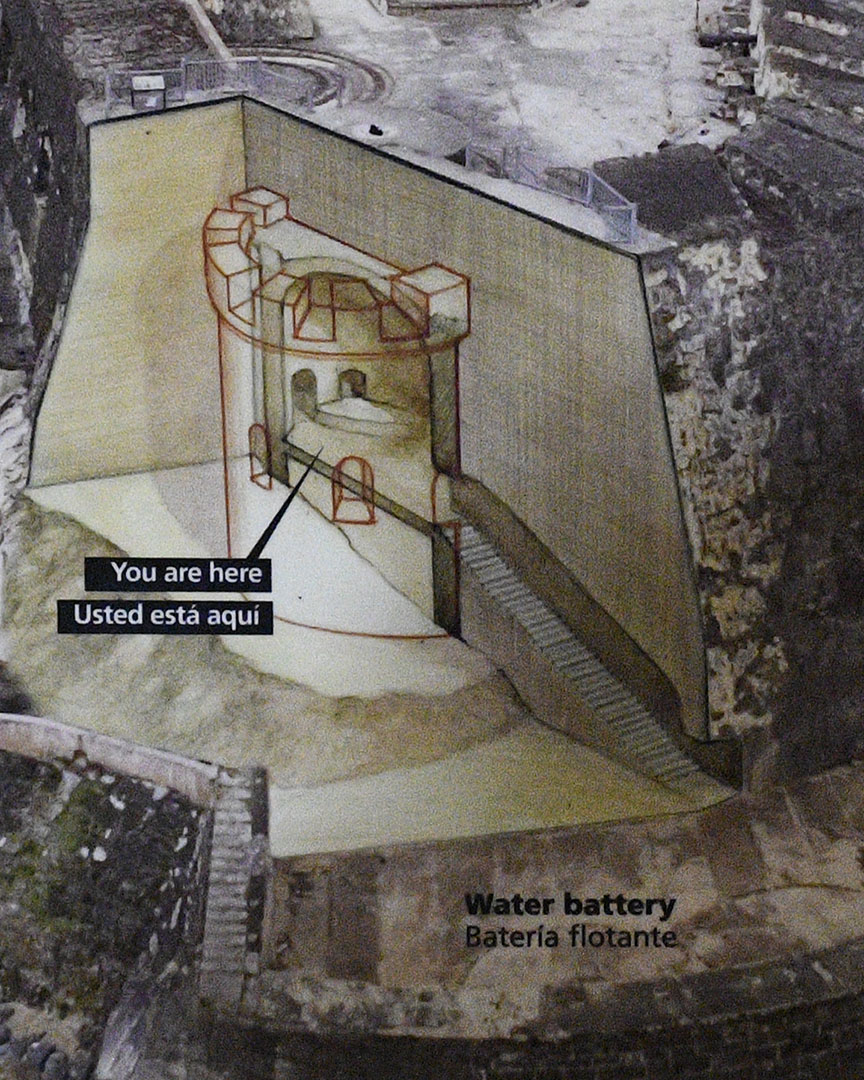
Graphic depicting the 1539 Tower within the Santa Barbara Bastion of Castillo San Felipe del Morro
The 1539 Tower is still accessible to visitors today. To get there you must first make your way down to the Santa Barbara Bastion. When you enter the fort and arrive on the Plaza de Armas (main plaza), there is another large archway directly across from the entrance that leads to a ramp with stairs on either side. This takes you down to the bastion’s terreplein.
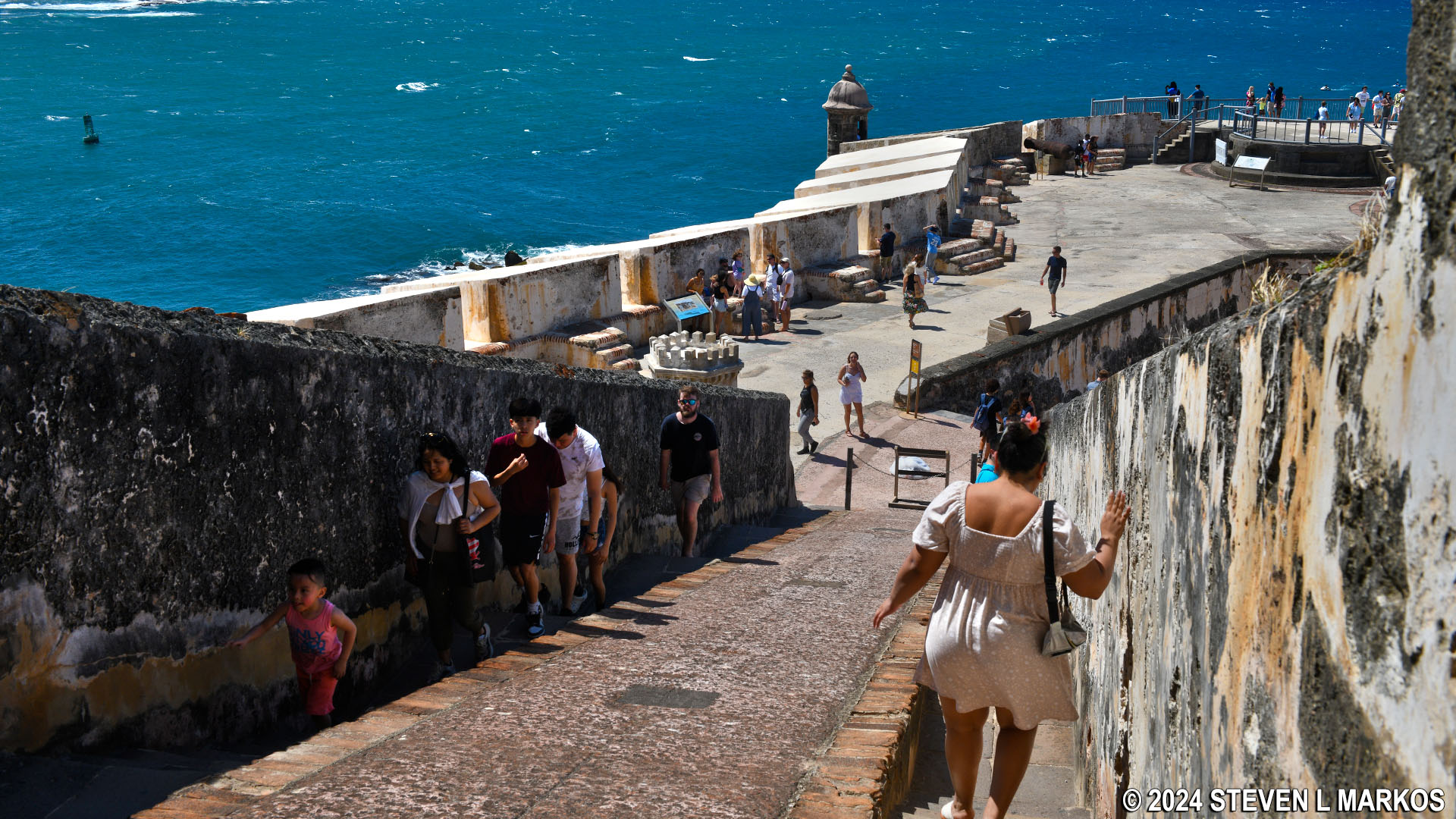
Ramp from the Plaza de Armas of El Morro down to the terreplein of the Santa Barbara Bastion, San Juan National Historic Site
From there, take the second staircase to the Lower Plaza and continue straight ahead through the archway that leads into the covered toe of the bastion. Once inside you will see the signs directing visitors to the ORIGINAL TOWER.
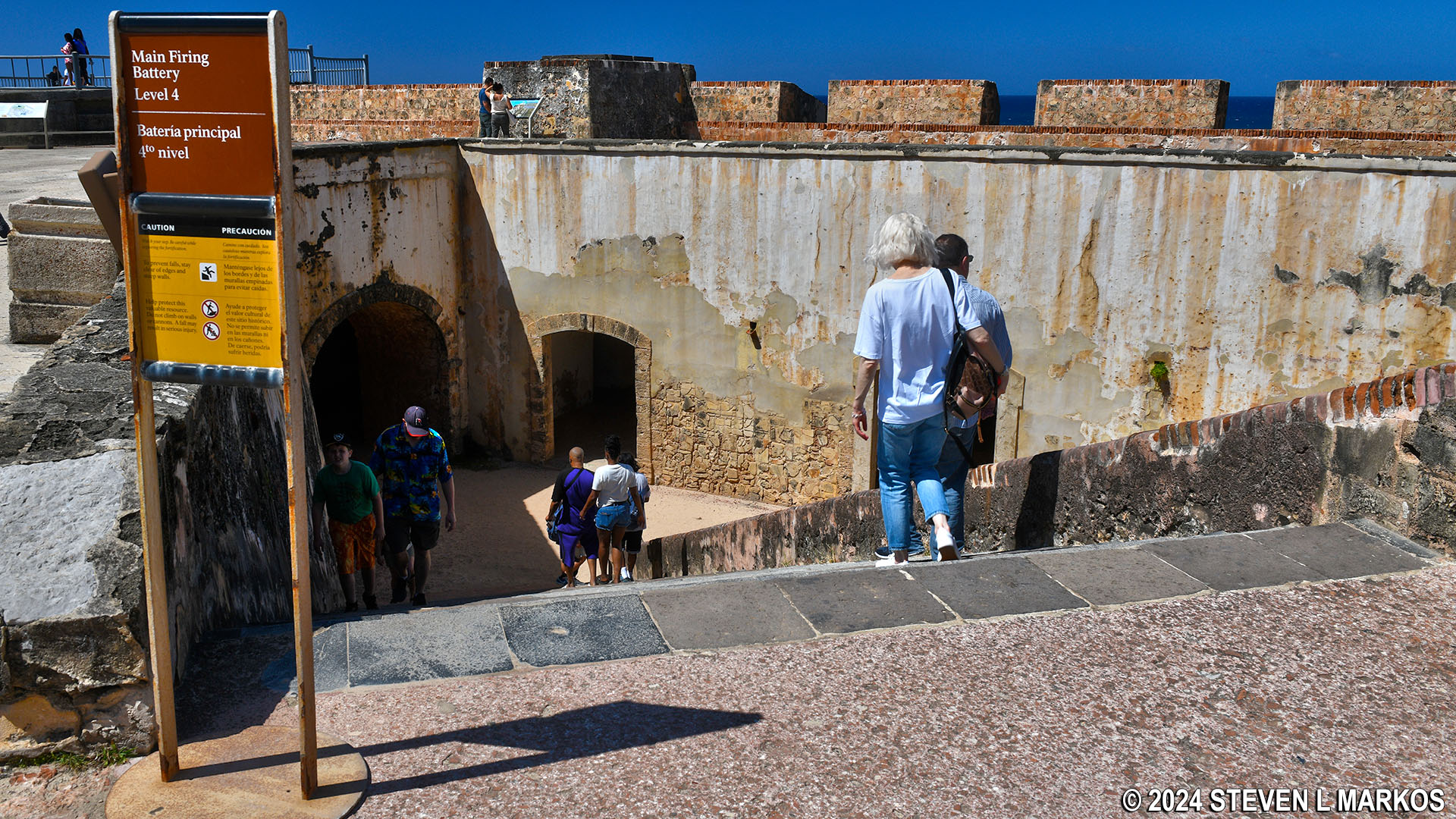
Stairs from the Santa Barbara Bastion terreplein to the Lower Plaza of Castillo San Felipe del Morro, San Juan National Historic Site
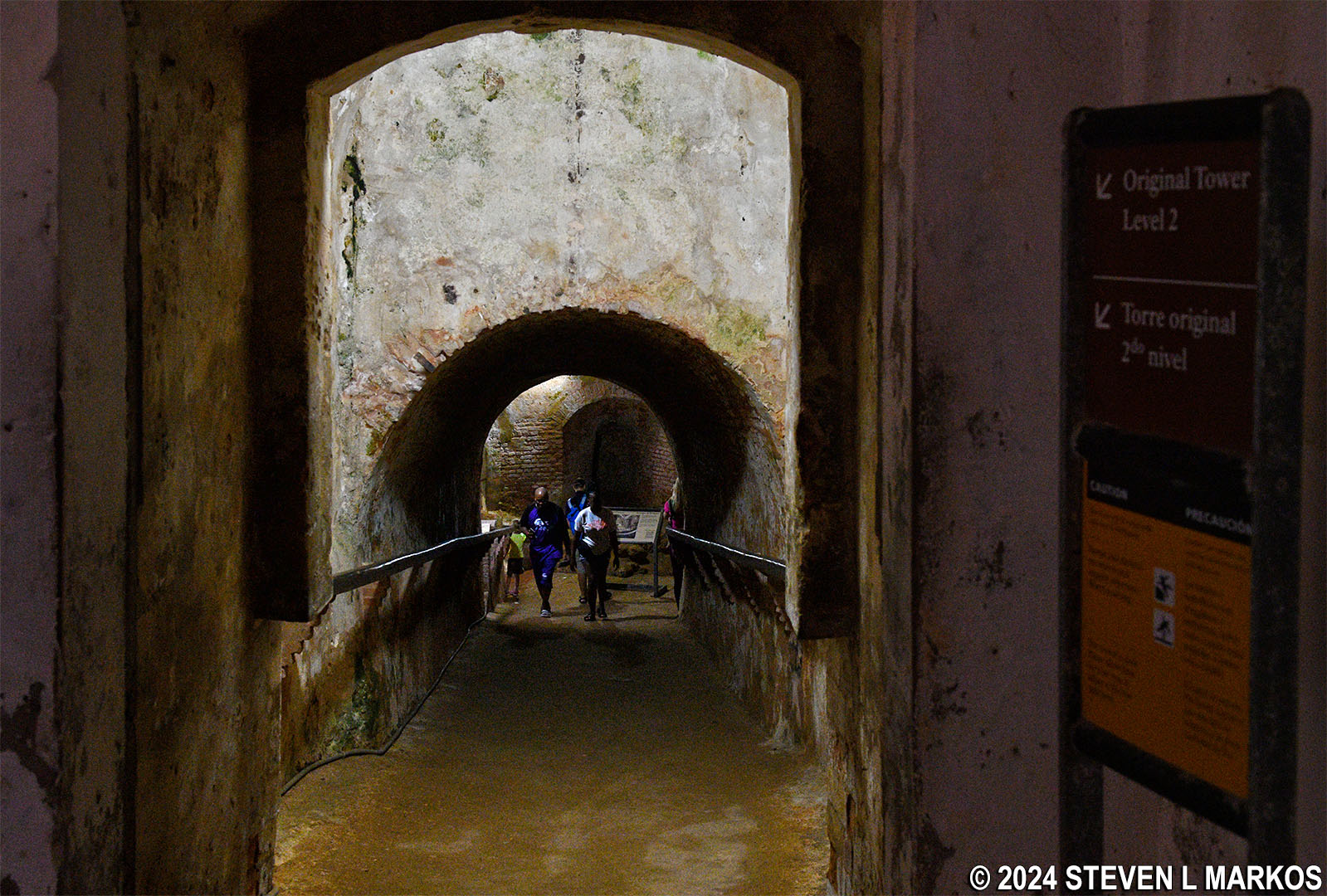
Ramp from the Lower Plaza to the interior of the 1539 Tower of Castille San Felipe del Morro, San Juan National Historic Site
After the tower was enclosed, the second embrasure from the right was converted into a doorway, and stairs were built down to what was then the Lower Battery. This is not the current Water Battery, which wasn’t built until the 1760s, but a battery that was a little higher up in elevation, though in a similar position. Notice the notch cut out of the floor in front of this doorway. It was not possible to raise the height of the embrasure so that people could walk through it, so the floor was lowered.
The Lower Battery doorway was eventually sealed around 1763 when the Water Battery was built. At that time the embrasure on the left was converted into a doorway and new stairs were built to the Water Battery. These are the same stairs used by visitors today.
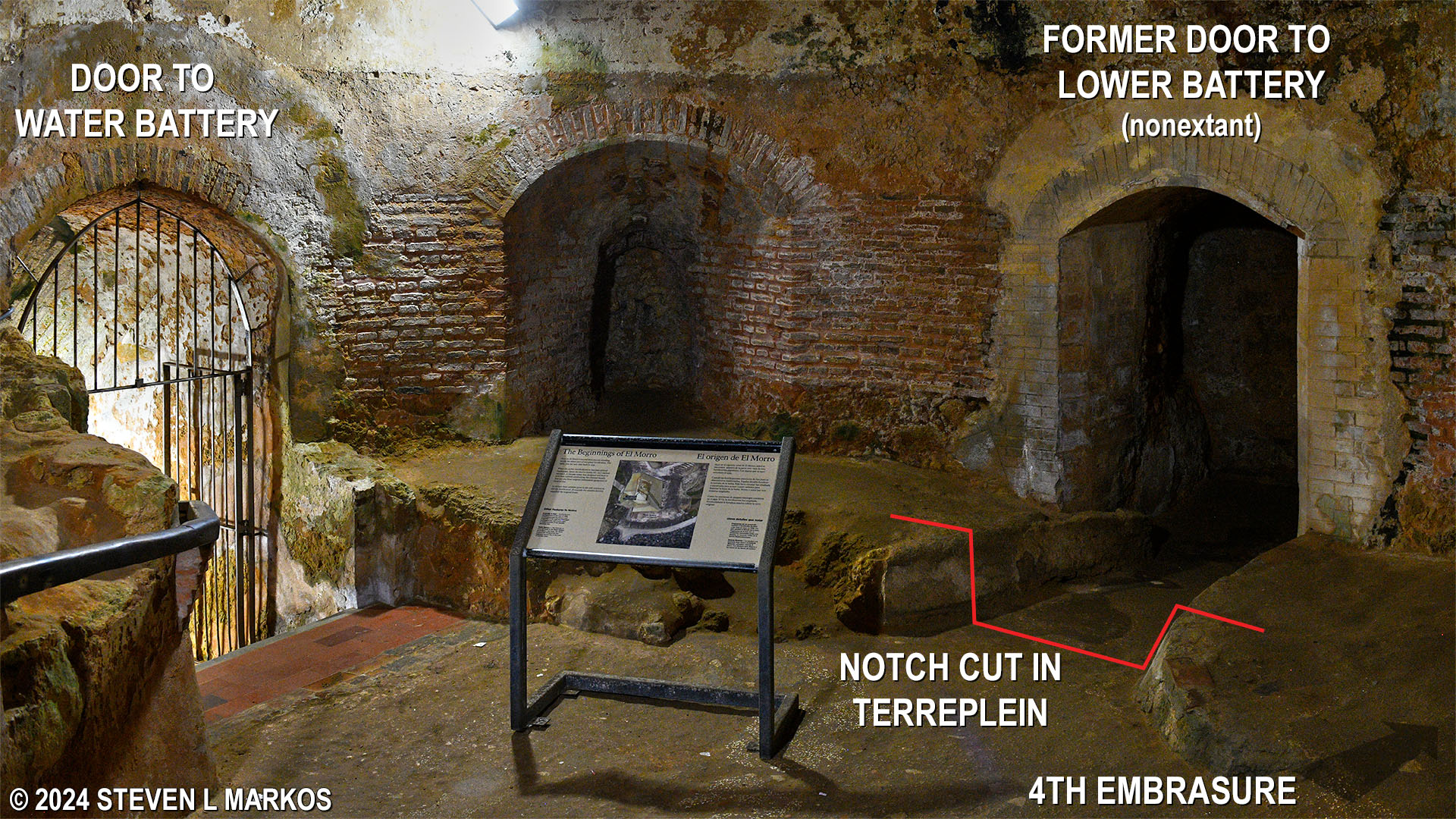
Interior of the 1539 Tower of Castillo San Felipe del Morro, San Juan National Historic Site
With a few exceptions, use of any photograph on the National Park Planner website requires a paid Royalty Free Editorial Use License or Commercial Use License. See the Photo Usage page for details.
Last updated on April 9, 2024


