
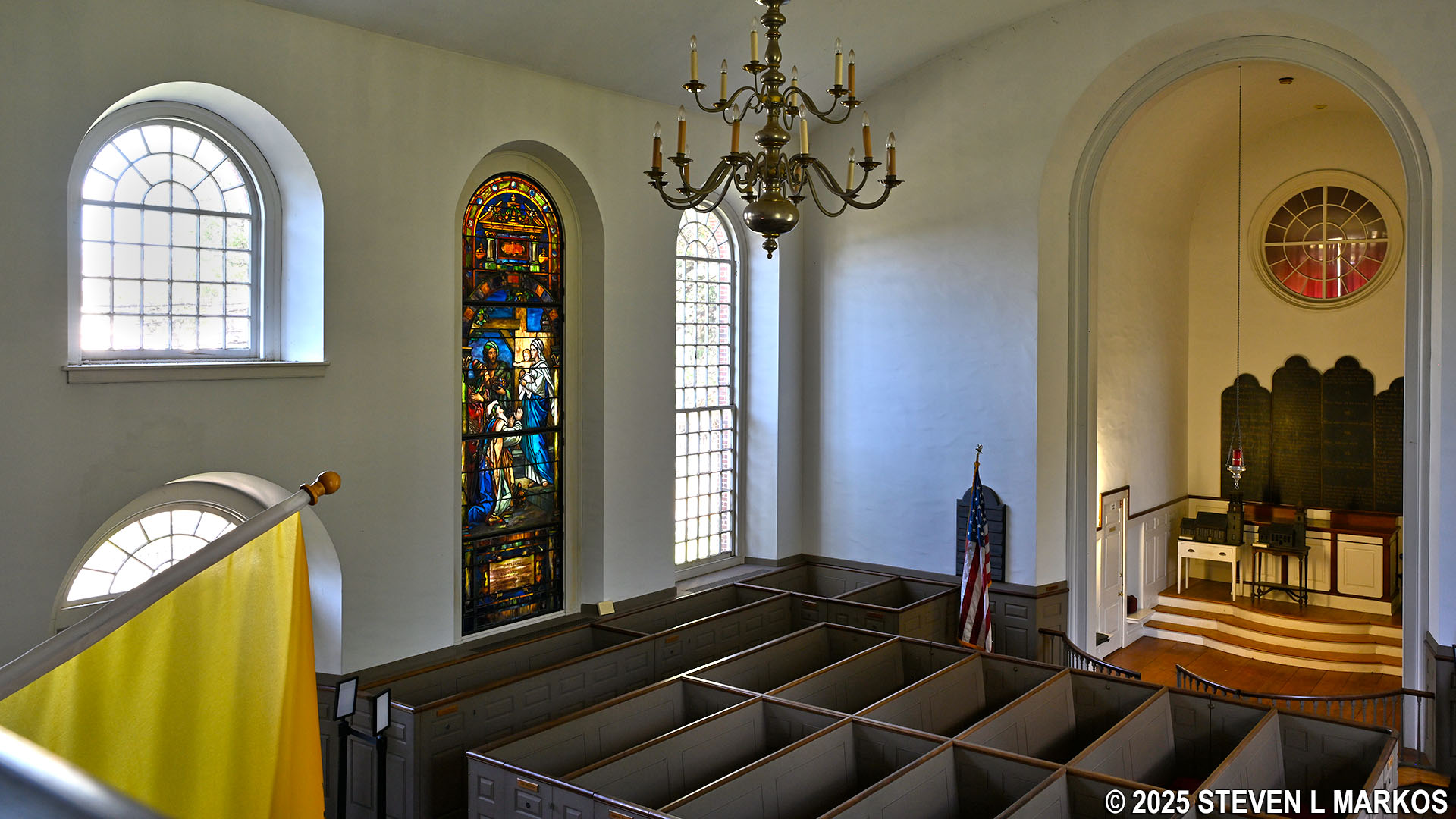
Interior of Saint Paul’s Church, Saint Paul’s Church National Historic Site
Guided tours of Saint Paul’s Church and cemetery are given multiple times each day that Saint Paul’s Church National Historic Site is open (Operating Hours). A tour lasts 1 to 1.5 hours, which includes time to watch the park film and see the exhibits in the Visitor Center. If you don’t have time for a tour, you can walk around the cemetery on your own, but a tour is the only way to get inside the church.
During the school year, school groups get first dibs on tours, and most groups show up in the morning. Thus, the National Park Service recommends visiting after 12 PM in April, May, June, October, and November, the prime school group season. You can also call the park at (914) 667-4116 to see if school groups are scheduled for the day you wish to visit.
St. Paul’s Church is accessed by stairs, but a ramp for those in wheelchairs is available. However, it is not installed on a permanent basis. If you need the ramp to enter the church, please call in advance so that it will be installed by the time you arrive.
The guided tour starts at the Visitor Center where participants first watch the fifteen-minute park film. The focus of the park, and thus the film, is not so much the church itself, but the church’s involvement in significant events that took place in Eastchester, New York, and the surrounding Manchester County during the colonial era up through the American Revolution. After the movie, the guide points out some of the more interesting exhibits in the small museum.
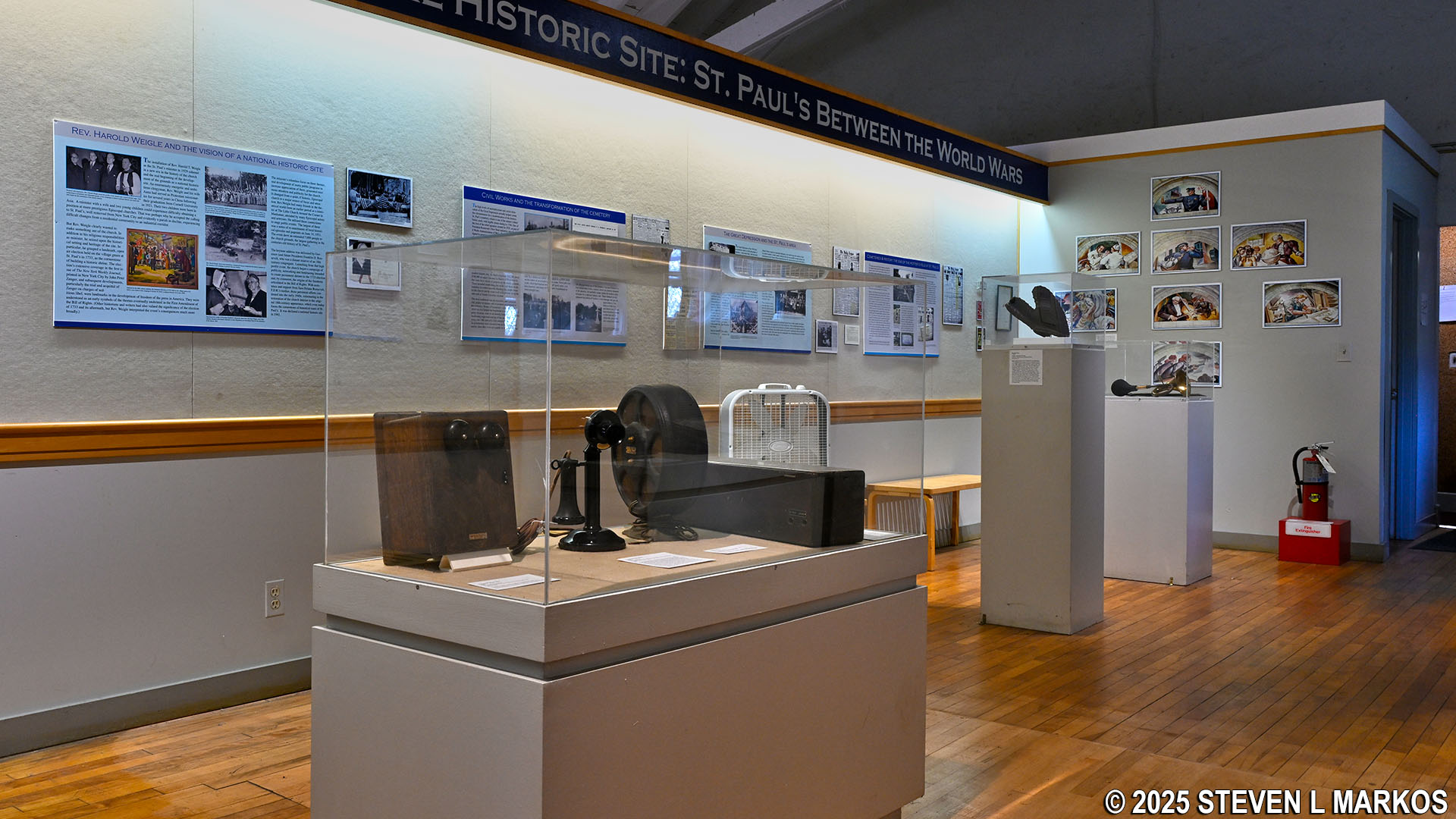
Museum at the Visitor Center for Saint Paul’s Church National Historic Site
The tour then proceeds to the church next door. While construction began before the American Revolution in 1763 and officially finished in 1805, the interior is from a 1942 renovation in which the church was restored back to its late-1700s appearance. This was possible because the original architectural drawings still exist. New pews were built to match the originals and arranged as they were when the church opened; the originals had actually been replaced with benches. It is interesting to note that pews were sold to church members—the better the seat, the higher the price. Plaques now on the pew doors denote the actual families that sat in them when the church first opened.
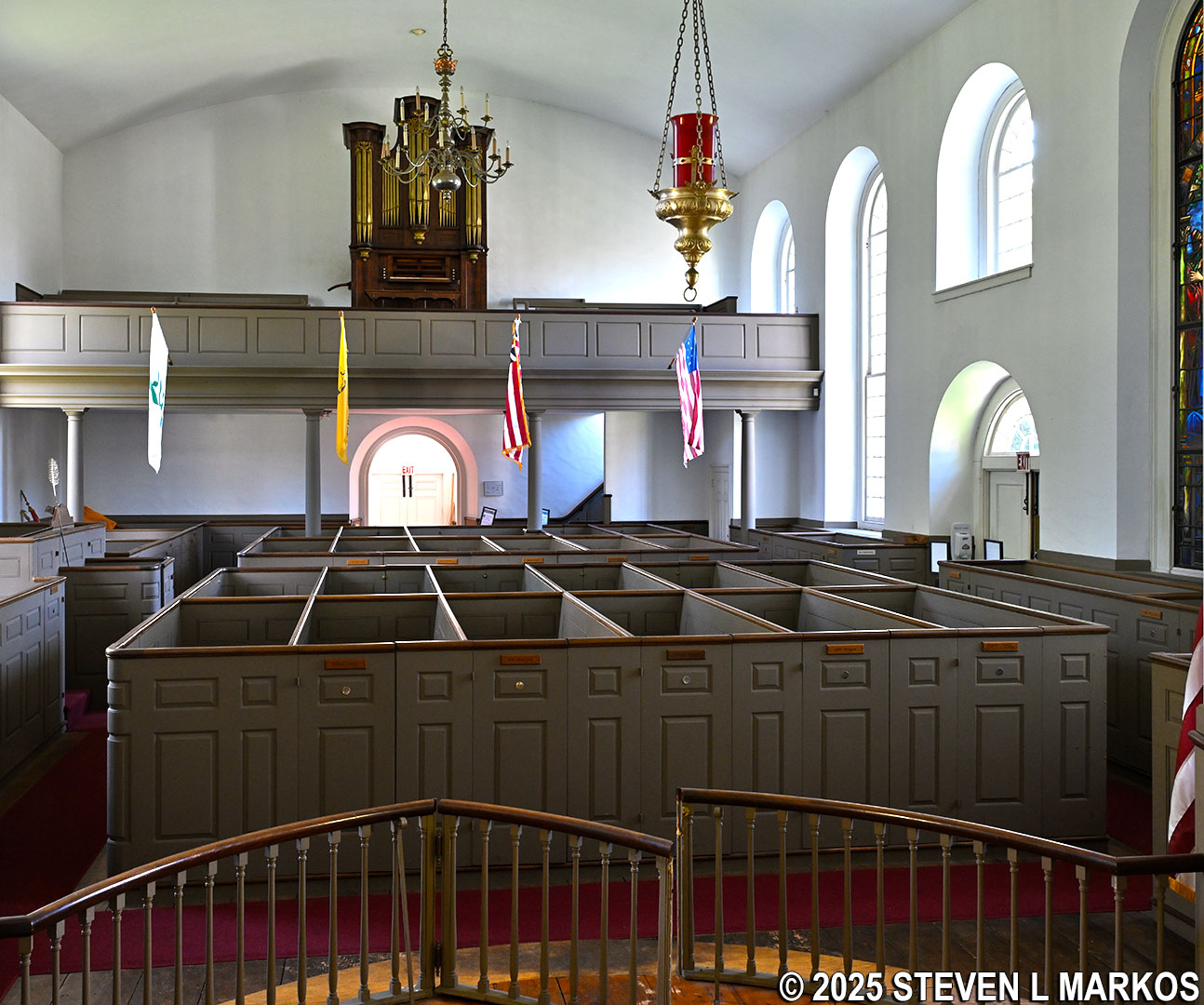
Reconstructed pews at Saint Paul’s Church based on original architectural drawings, Saint Paul’s Church National Historic Site
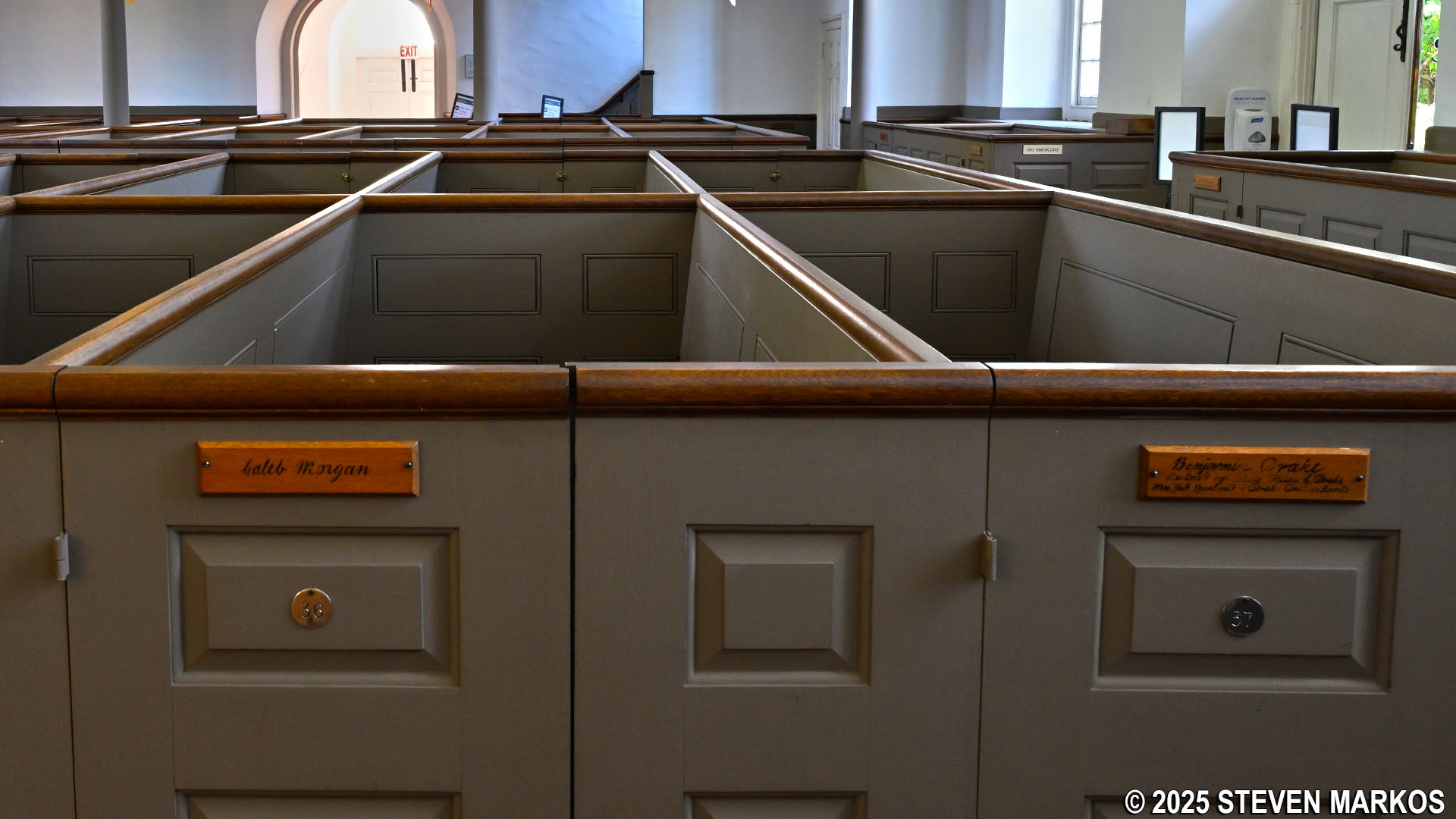
Plaques on the pews at Saint Paul’s Church identify the families that owned them when the church first opened, Saint Paul’s Church National Historic Site
The pulpit was moved to its original location on the southern wall. It is a three-tier pulpit, with the floor-level box being occupied by a clerk whose job was to lead the singing of hymns and to tickle anyone who fell asleep (notice the feather mounted on a long pole in the photo below). The second tier was used by the minister when reading the Scripture. When it came time to give the sermon, he used the uppermost box.
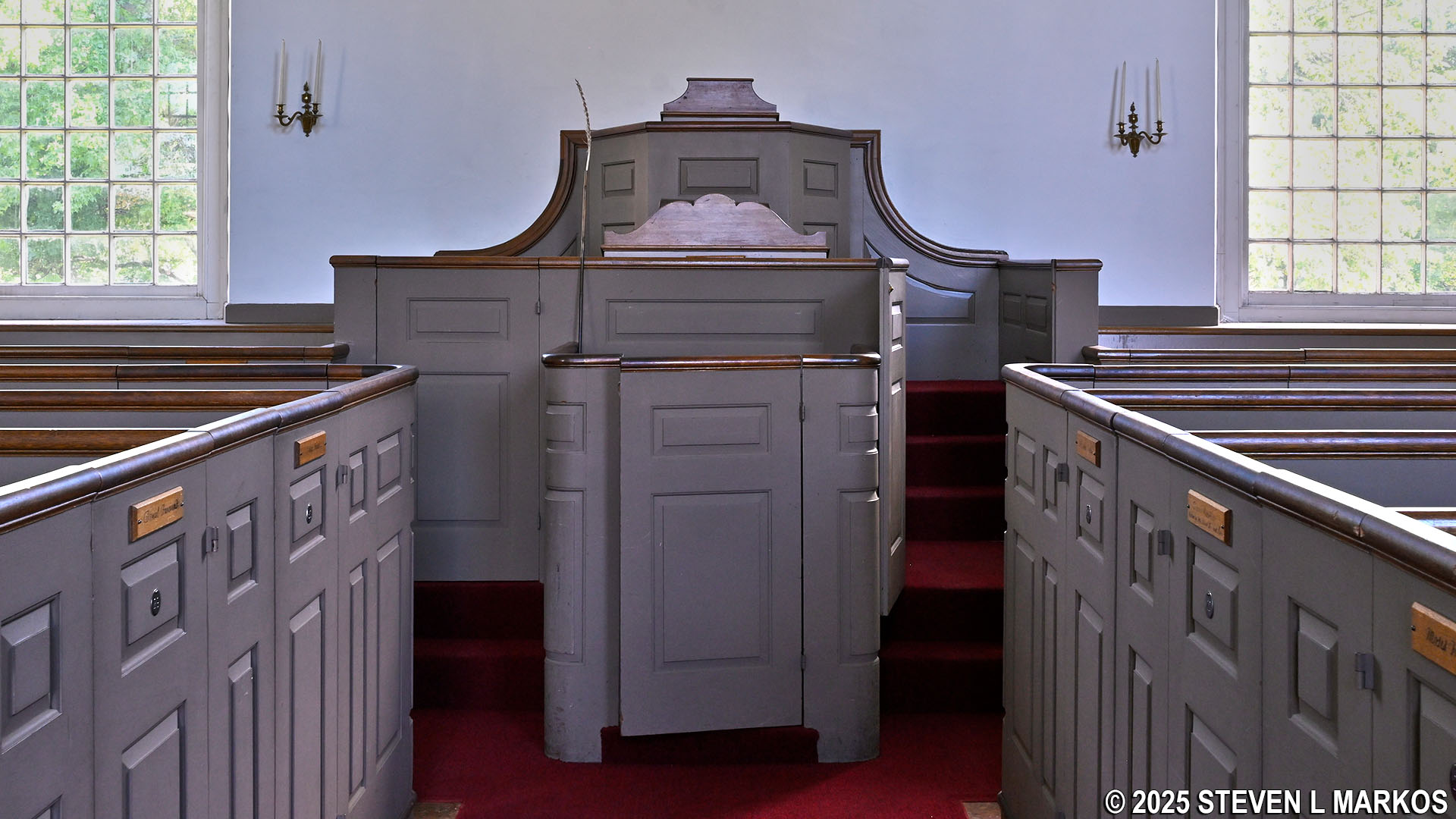
Three-tier pulpit at Saint Paul’s Church, Saint Paul’s Church National Historic Site
The original windows of the church were clear glass, but over the years wealthy people were able to donate and have a stained glass window installed in their honor. All of these were removed during the renovation and replaced with clear glass. The existing stained glass window was reinstalled in 1999. It was funded by the Drake Family, one of the early families to live in Eastchester.

Stained glass window of Saint Paul’s Church funded by the Drake Family, Saint Paul’s Church National Historic Site
On display are two models of St. Paul’s Church that were created in 1865, perhaps by members of the congregation. These show an addition that was added to the rear of the building in 1850 for use as a vestry room and Sunday school. The back wall of the church separated the two structures—they were not connected together by a doorway. During the 1942 renovation, the wall was removed and the alter and chancel were installed, though why this was done is anyone’s guess since the renovation was supposed to restore the church’s interior to its original appearance.
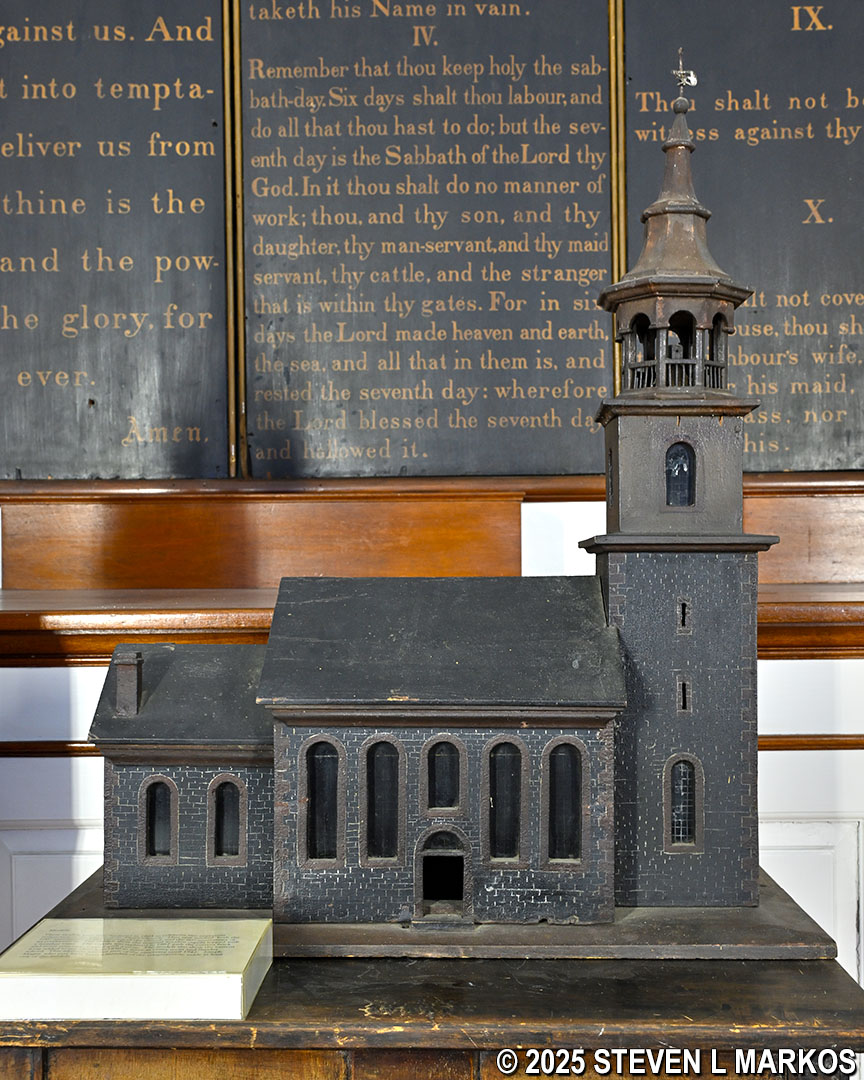
Model created in 1865 of Saint Paul’s Church, Saint Paul’s Church National Historic Site
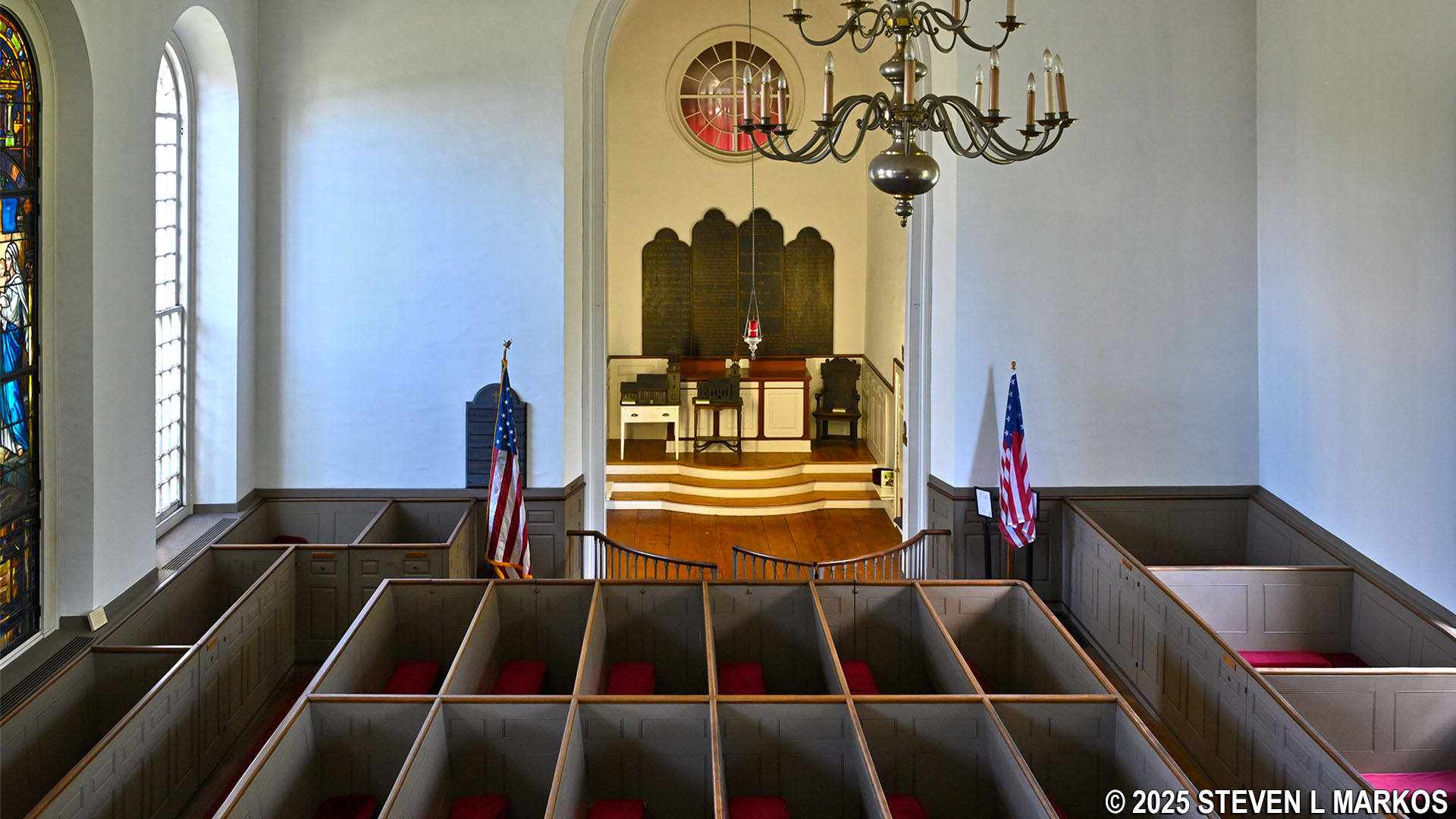
Alter and chancel of Saint Paul’s Church now sit in the 1850s addition to the rear of the building, Saint Paul’s Church National Historic Site
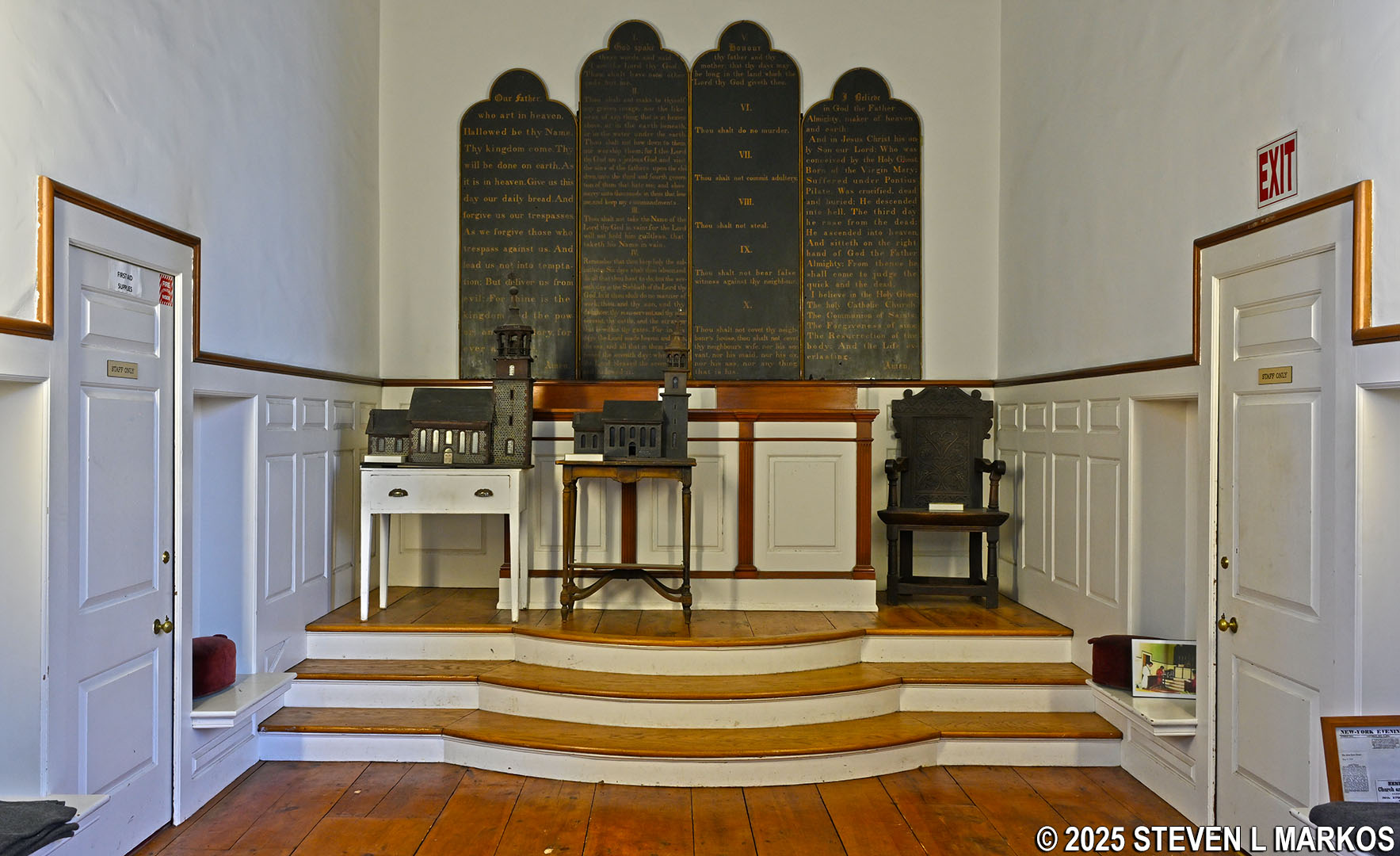
Alter and chancel of Saint Paul’s Church, Saint Paul’s Church National Historic Site
When completed in 1805, Saint Paul’s Church had a wooden cupola with a weather vane on top. This was replaced with the current brick and stone cupola in 1887. Removing exterior additions such as the vestry room and cupola to return the church to its late-1700s appearance was beyond the scope and funding of the 1942 restoration project. It was the interior that was restored back to its original appearance.
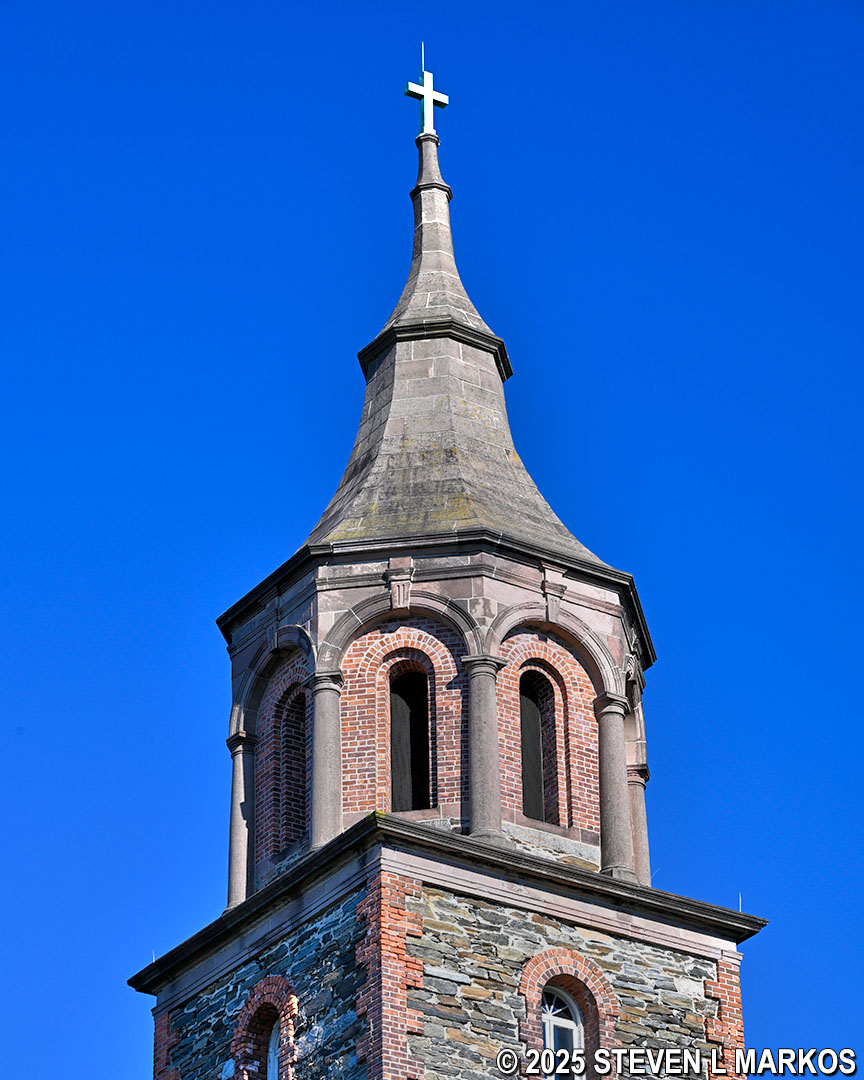
Stone and brick cupola on Saint Paul’s Church, Saint Paul’s Church National Historic Site
The organ on the upper level of the sanctuary is a Hall and Erben organ installed in 1833. It is one of the oldest working pipe organs in the United States. It is played on occasion at concerts held at the church. For a schedule of events, see the National Park Service’s official Calendar web page for Saint Paul’s Church National Historic Site.

Hall and Erben pipe organ on the upper level of the Saint Paul’s Church sanctuary, Saint Paul’s Church National Historic Site
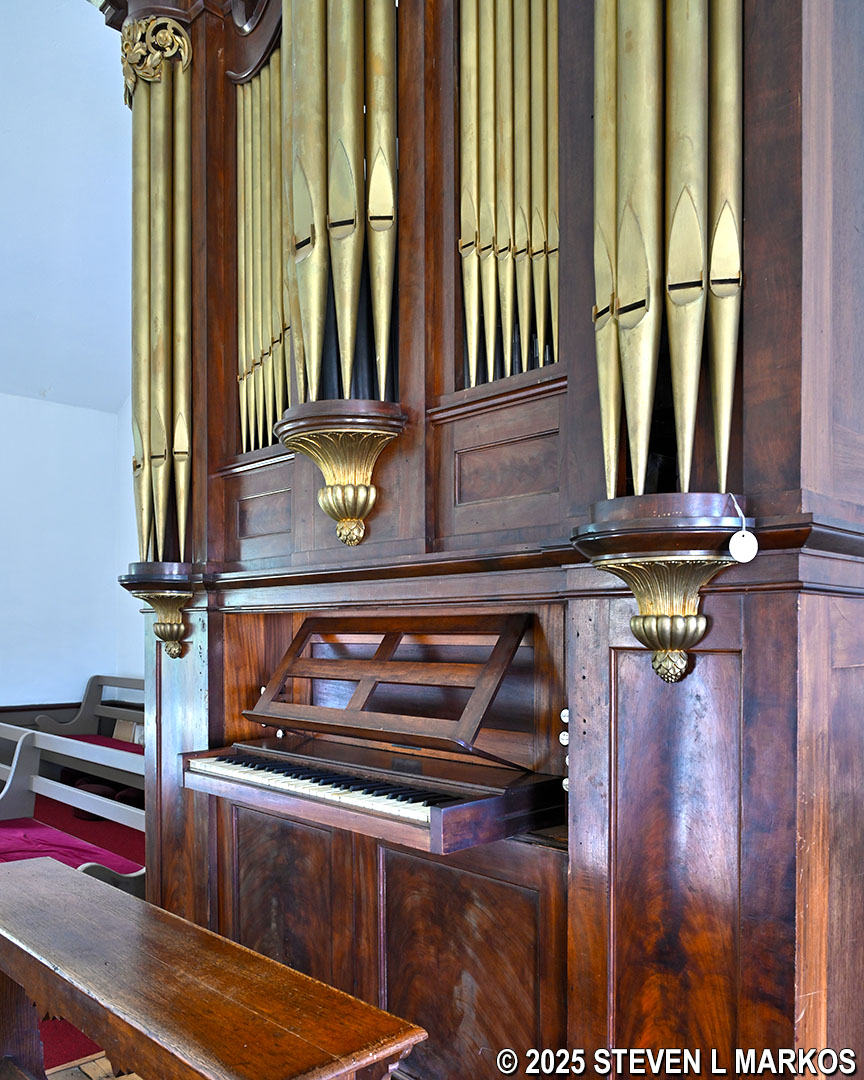
Hall and Erben pipe organ at Saint Paul’s Church, Saint Paul’s Church National Historic Site

Keys of the Hall and Erben pipe organ at Saint Paul’s Church, Saint Paul’s Church National Historic Site
After touring the church, the guide takes visitors to the cemetery and points out the more interesting graves. This is one of the oldest cemeteries in the country, but there aren’t any famous people buried in it. See the Saint Paul’s Church Cemetery web page here on National Park Planner for more information.
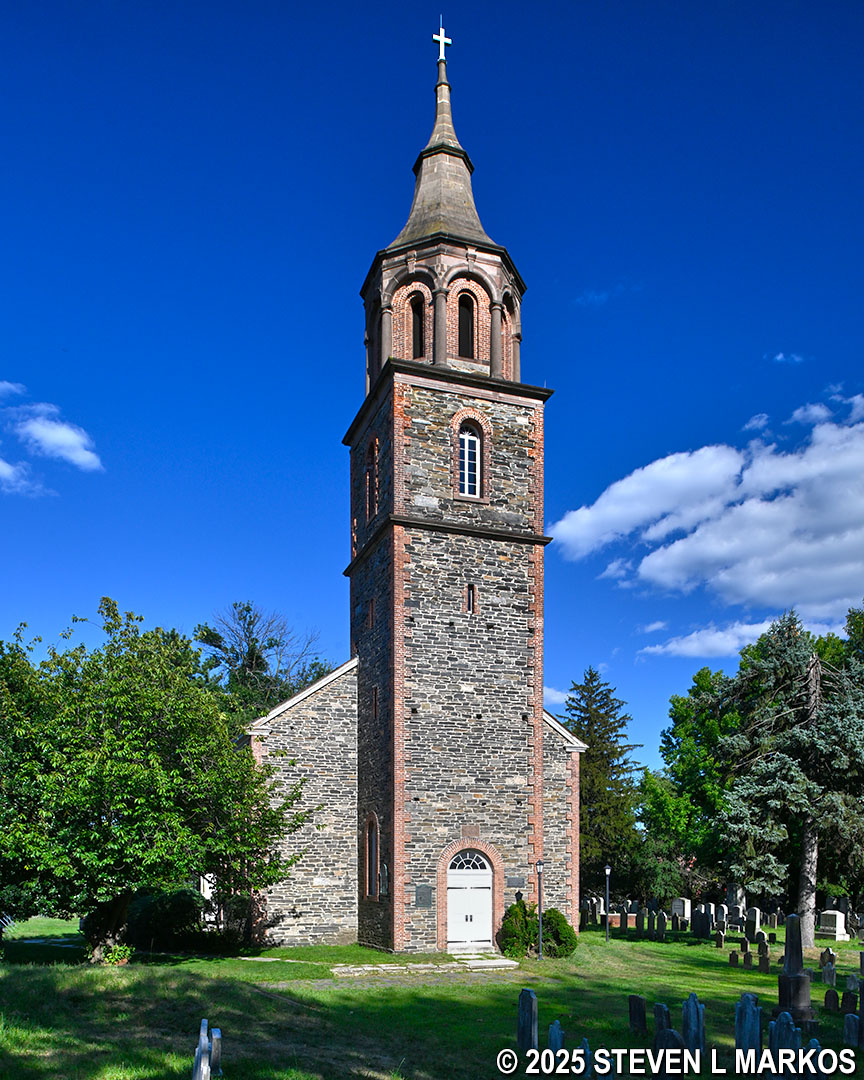
Cemetery surrounds Saint Paul’s Church in Mount Vernon, New York, Saint Paul’s Church National Historic Site
With a few exceptions, use of any photograph on the National Park Planner website requires a paid Royalty Free Editorial Use License or Commercial Use License. See the Photo Usage page for details.
Last updated on September 15, 2026


