
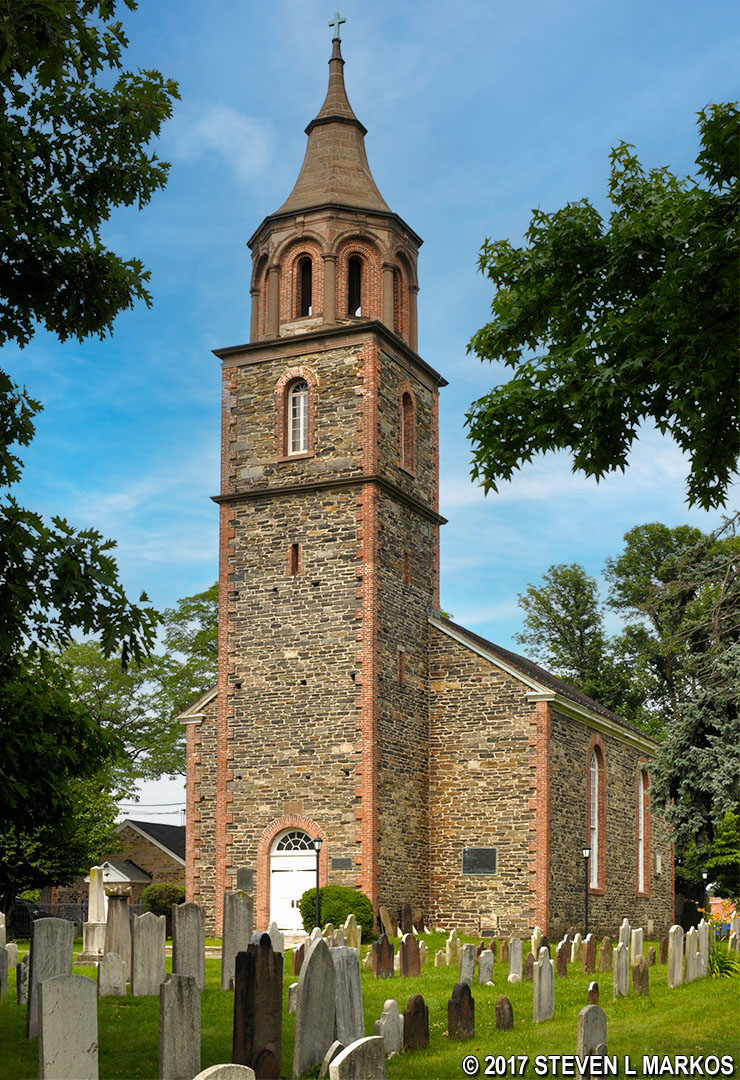
Saint Paul’s Church and cemetery, Saint Paul’s Church National Historic Site
Saint Paul’s Church Cemetery is five acres in size and has roughly 9,000 graves, with the earliest dating back to 1704. It is one of the oldest cemeteries in the United States. If you take a Ranger-guided tour of the church, a tour of the cemetery is included. If you can’t make a tour, you can walk around the cemetery on your own. A brochure that lists the important graves and tells a little about the people currently residing six feet below is available in the Visitor Center. There are no famous people buried here, but the personal stories are interesting nonetheless.

Graves of Elizabeth Wright and her 10-year-old son Calib in Saint Paul’s Cemetery, Saint Paul’s Church National Historic Site
The oldest known grave belongs to Richard Shute, though only the initials RS are on his tombstone. At the time, there were so few residents in Eastchester that initials were sufficient to identify a grave. The original tombstone for Shute is now in the Visitor Center along with some other very early markers so that they won’t be stolen. The actual graves are marked with reproduction tombstones.

Original tombstone for Richard Shute from 1704 on display in the Visitor Center of Saint Paul’s Church National Historic Site
During the American Revolution’s Battle of Pell’s Point, Hessian troops—German soldiers leased to the British by the German government to fight the Americans—used Saint Paul’s Church as a hospital after the battle. Those who died during this time were buried in a pit that was being used to provide sand for the production of mortar, for the church was under construction when the war broke out. Years later when digging new graves, five Hessian bodies were discovered. A tombstone and plaque now mark the spot.

Marker for the mass grave of Hessian soldiers in Saint Paul’s Cemetery, Saint Paul’s Church National Historic Site
There are some burial vaults in the cemetery as well. The Fowler Family has one, and if you take a look from the side, you can see that the vault extends above ground and is covered with grass.
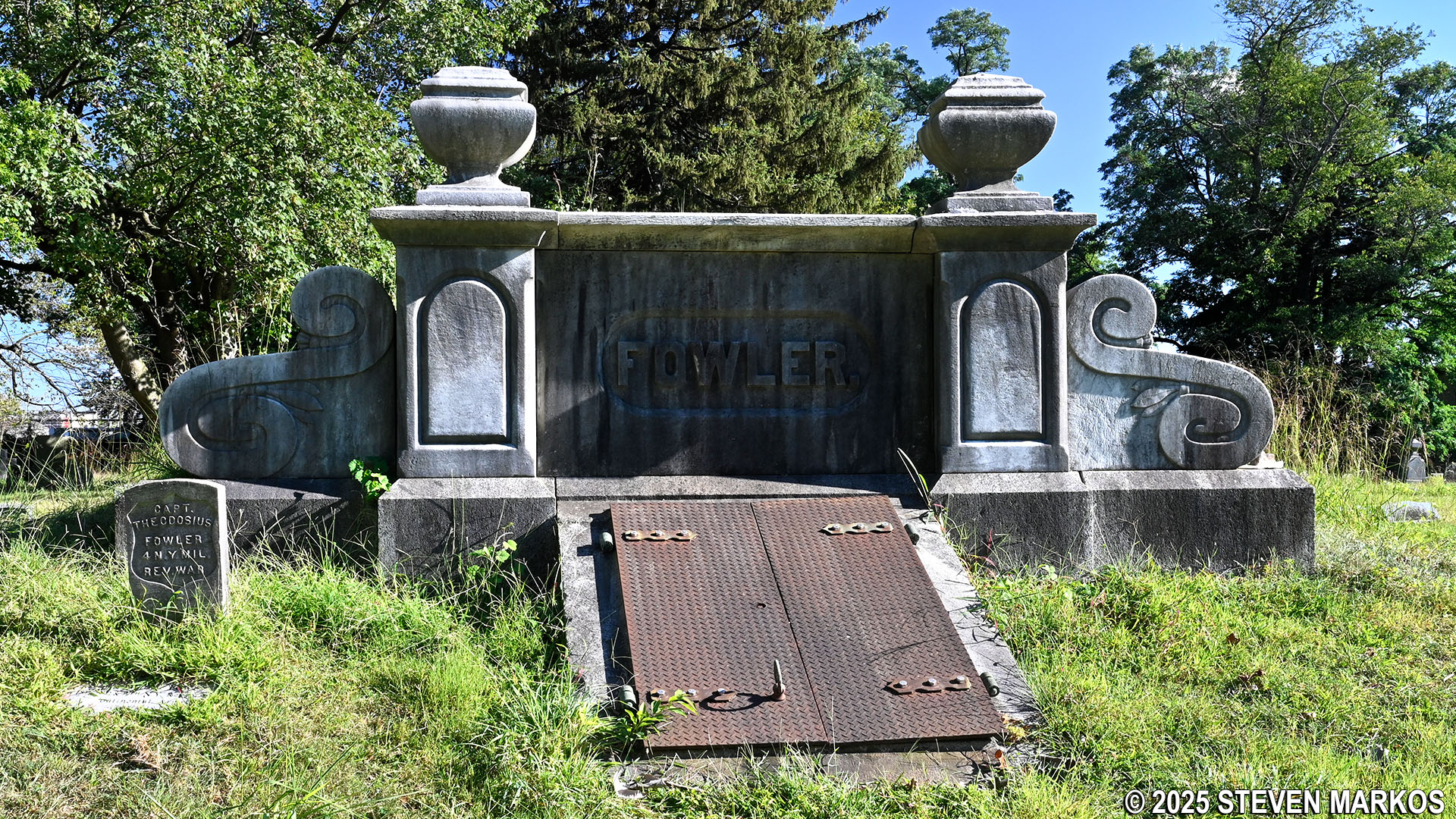
Fowler Family crypt in Saint Paul’s Cemetery, Saint Paul’s Church National Historic Site

Side view of the Fowler Family crypt in Saint Paul’s Cemetery, Saint Paul’s Church National Historic Site
Trends in memorial markers can be observed at the cemetery due to the long span of years that burials took place. The earliest markers are simple fieldstones that are hand-etched with minimal text and no decorations.

Simple fieldstone marker from 1724 in Saint Paul’s Cemetery, Saint Paul’s Church National Historic Site
As the profession of tombstone carving developed during the mid-1700s, memorial markers became more professional looking and were engraved with symbols. If you attend a guided tour, the symbolism is discussed. (Note that the Ezebeth Clements tombstone in the photo below is a reproduction. The original is in the Visitor Center.)

Grave of Elezebeth Clements from 1762 in Saint Paul’s Cemetery, Saint Paul’s Church National Historic Site

Grave of Samuel Pell from 1786 in Saint Paul’s Cemetery, Saint Paul’s Church National Historic Site
As styles changed, tombstones became more and more sophisticated until only a matter of money stood between a plain marker and an elaborate carving.

Elegantly carved markers for Eileen Lemay (1916) and Willet Ward (??) in Saint Paul’s Cemetery, Saint Paul’s Church National Historic Site

Grave marker for Edward and Martha Gay from the late 1920s in Saint Paul’s Cemetery, Saint Paul’s Church National Historic Site
After Saint Paul’s Church closed in 1977 and before it became a National Historic Site in the early 1980s, people would often hang out in the cemetery at night while drinking. This resulted in some tombstones becoming detached, and now nobody knows the location of the graves. A few of these tombstones are now lying against the church wall.

Tombstones in Saint Paul’s Cemetery that are no longer associated with a grave, Saint Paul’s Church National Historic Site
Depending on your interest in cemeteries, plan to spend anywhere from fifteen minutes to an hour exploring Saint Paul’s Church Cemetery.
With a few exceptions, use of any photograph on the National Park Planner website requires a paid Royalty Free Editorial Use License or Commercial Use License. See the Photo Usage page for details.
Last updated on September 15, 2026


