
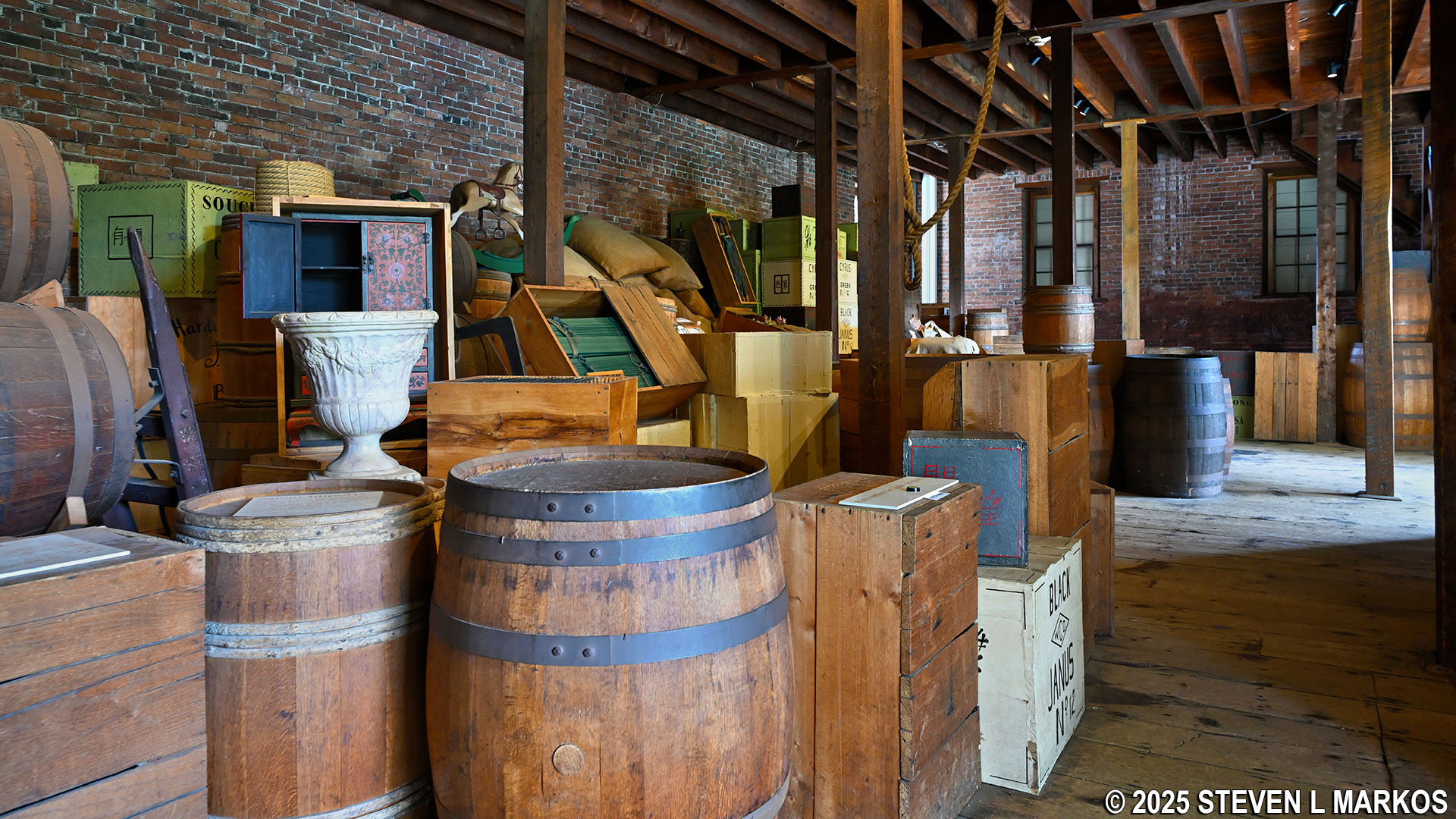
Salem’s Public Stores as it might have been in the 1800s, Salem Maritime National Historical Park
Before the United States’ federal income tax was established in 1913, taxes on imported goods made up 97 percent of federal revenue. Whenever a merchant ship returned from a foreign country, customs workers would set up scales at the wharf and weigh the cargo as it was unloaded. Taxes were determined by the weight or volume of various products, and these taxes were paid inside the Custom House. Even back in the late 1700s and early 1800s, a tax of $50,000 on a ship’s cargo was not uncommon, and it wasn’t unheard of for $100,000 to be collected. If taxes were not paid, the cargo was stored in warehouses known as Public Stores (aka bonded warehouses) until either somebody came up with the money or the cargo was transferred onto a ship destined for another U. S. port (import taxes were paid at the final destination).
The existing Public Stores is located on the backside of the Salem Custom House and is actually attached to the building, though there are no doorways connecting the two. To access the warehouse, customs officials had to exit the Custom House and walk around to the back of the building. There were other smaller warehouse buildings in the yard, but none exist today. The U. S. Customs Service used the Public Stores from when it was built in 1819 all the way up until 1935 when both the stores and the Custom House were transferred to the National Park Service for inclusion in the new Salem Maritime National Historic Site (changed to Historical Park in July 2025).
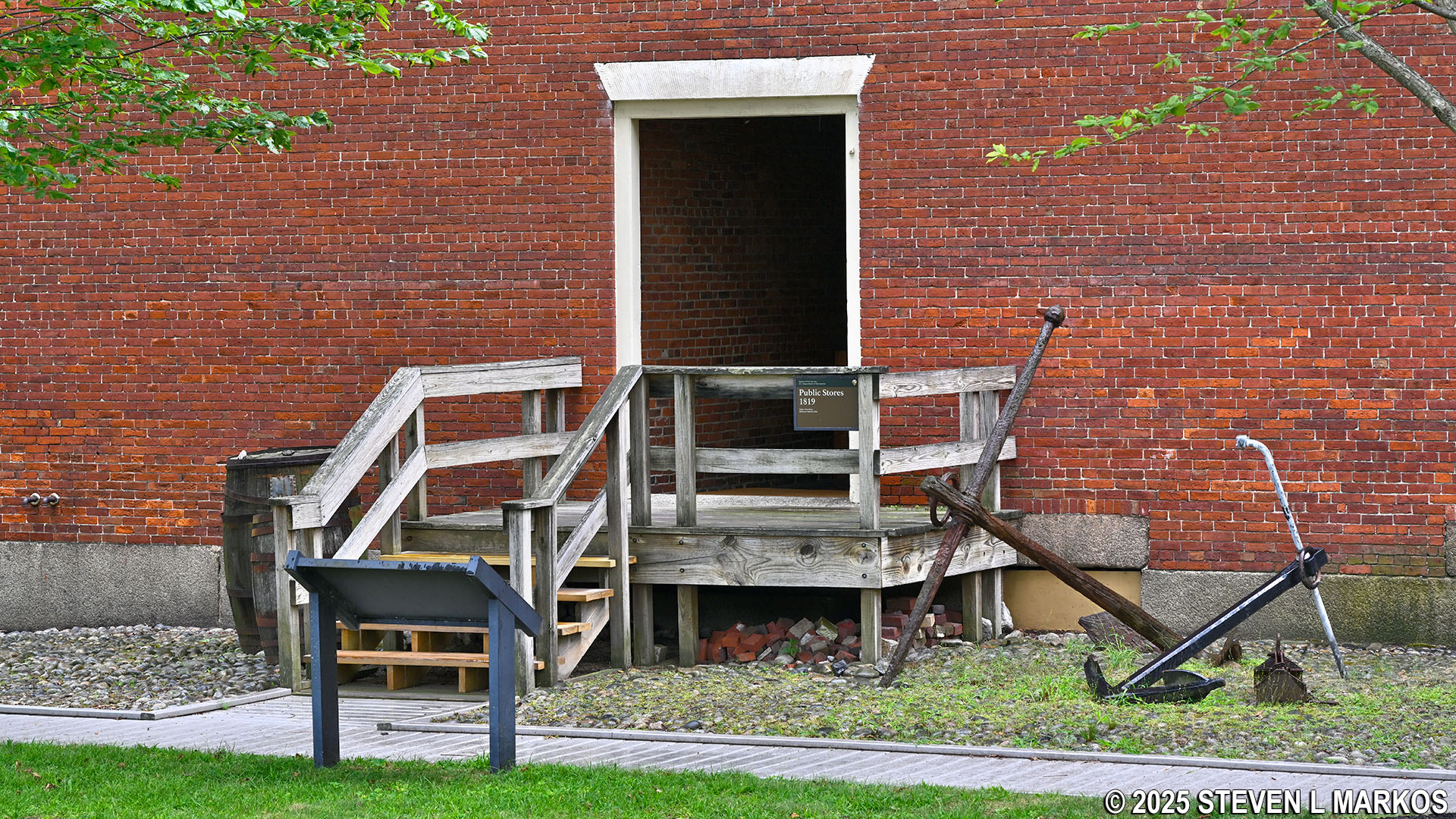
Entrance to the Public Stores on the backside of the Salem Custom House, Salem Maritime National Historical Park
The Public Stores is open whenever the Custom House is open. It is outfitted with goods just as it might have been in the 1800s.
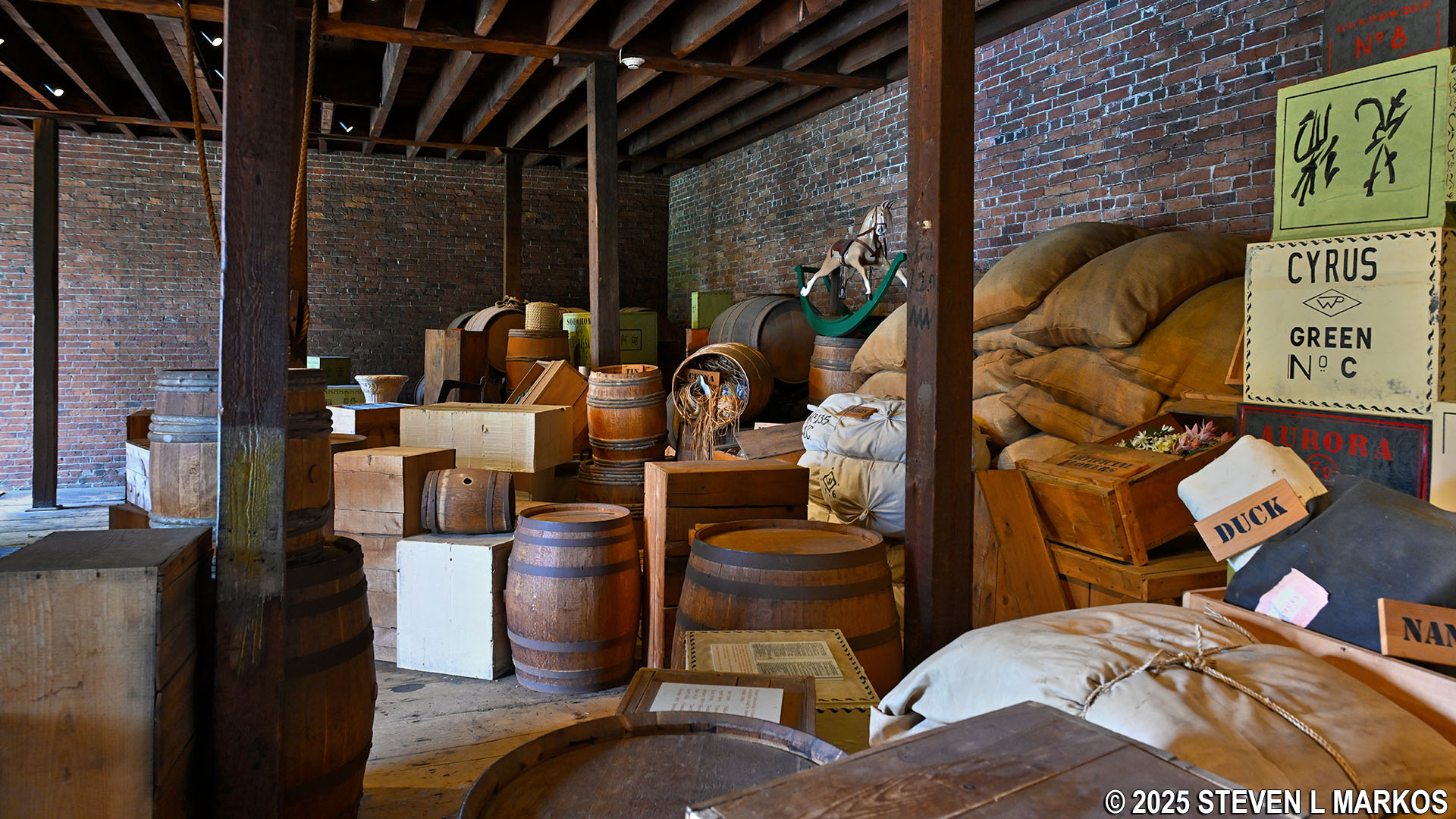
Inside the Public Stores at Salem Maritime National Historical Park
With a few exceptions, use of any photograph on the National Park Planner website requires a paid Royalty Free Editorial Use License or Commercial Use License. See the Photo Usage page for details.
Last updated on November 15, 2025


