
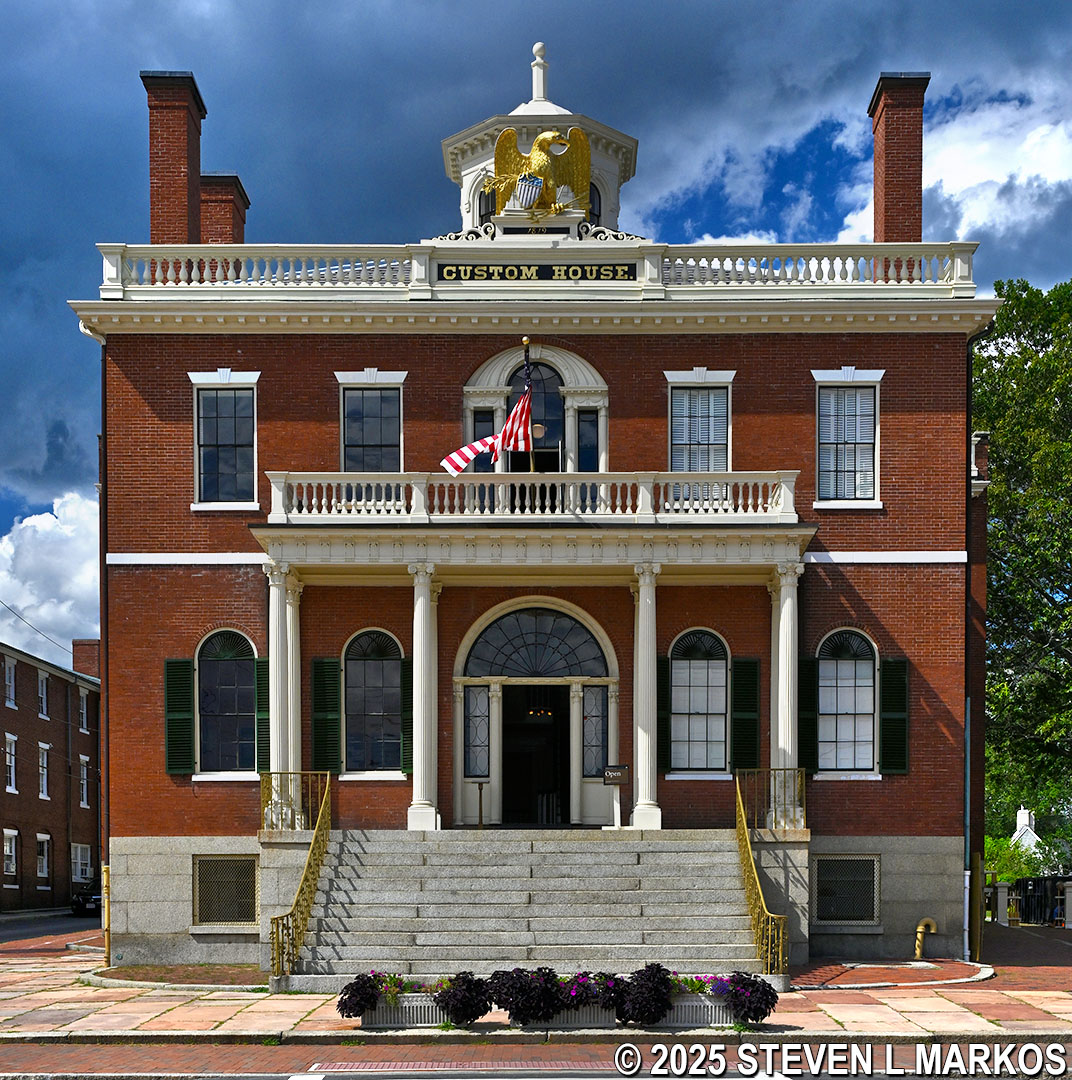
U. S. Customs House, part of Salem Maritime National Historical Park
The United States Custom House on Derby Street was built in 1819 and remained in use as a custom house until 1935. Two years later it became part of the new Salem Maritime National Historic Site (changed to Historical Park in July 2025). Since it was already a federal government building, it did not have to be purchased or donated; it was simply transferred to the National Park Service.
There had been a custom house in Salem as far back as 1649, as duties on imported goods have been collected ever since the concept of taxes was invented. In the United States, before the federal income tax was established in 1913, taxes on imported goods made up 97 percent of federal revenue. Whenever a merchant ship returned from a foreign country, customs workers would set up scales at the wharf and weigh the cargo as it was unloaded. Taxes were determined by the weight or volume of various products, and these taxes were paid inside the custom house. Even in the late 1700s and early 1800s, a tax of $50,000 on a ship’s cargo was not uncommon, and it wasn’t unheard of for $100,000 to be collected.
The Custom House is typically open to the public from mid-May until mid-September on Wednesdays through Sundays from 9:30 AM to 4:30 PM. Keep in mind that times can always change, so be sure to get the latest schedule on the National Park Service’s official Basic Information web page for Salem Maritime National Historical Park.
Tours of the Custom House are self-guided, but there is a Ranger or park volunteer on duty to answer questions. All rooms on the bottom floor are open, plus two rooms upstairs. However, the upper floor may be closed if there is only one staff member on duty, and because the place is run by the Federal government, you never know what to expect. I visited twice, and once it was open and once it was closed.
Included in the Custom House complex are the Public Stores and the Scale House, both of which are open to the public whenever the Custom House is open. To access them, exit the Custom House and walk around to the back side of the building. The Public Stores is actually attached to the Custom House, whereas the Scale House is a separate building.
The Custom House’s claim to fame is that author Nathaniel Hawthorne worked there between 1846 and 1849 as Surveyor of the Port. Back then, federal jobs depended on government connections, so you had to be a member of the political party in office to get or keep a job. Hawthorne was a Democrat, and when Whig candidate Zachary Taylor won the election in 1849, he lost his job. When Democrat Franklin Pierce won the 1852 election, Hawthorne got another government job as United States Consul in England (1853 to 1858). Oddly enough, he was a famous author at this time, though his most popular books were written during the gap between the Surveyor of the Port job in Salem and the consul job in England. I guess famous authors back then didn’t make the same money as they do today. Of course Hawthorne missed out on the movie rights to his books. The Scarlet Letter has been made into a least six movies going back to 1934, and there are at least two House of the Seven Gables movies.
While in Salem, Hawthorne worked in the Surveyor’s Office. Today there is an exhibit of some of the items he used on the job and a replica of his desk. Up until around 1870, federal employees had to provide their own furniture, which is why Hawthorne’s desk is still around and wasn’t sold off as anonymous government surplus long ago. The original desk used to be on display in the Custom House, but now it is in the Peabody Essex Museum (in Salem).
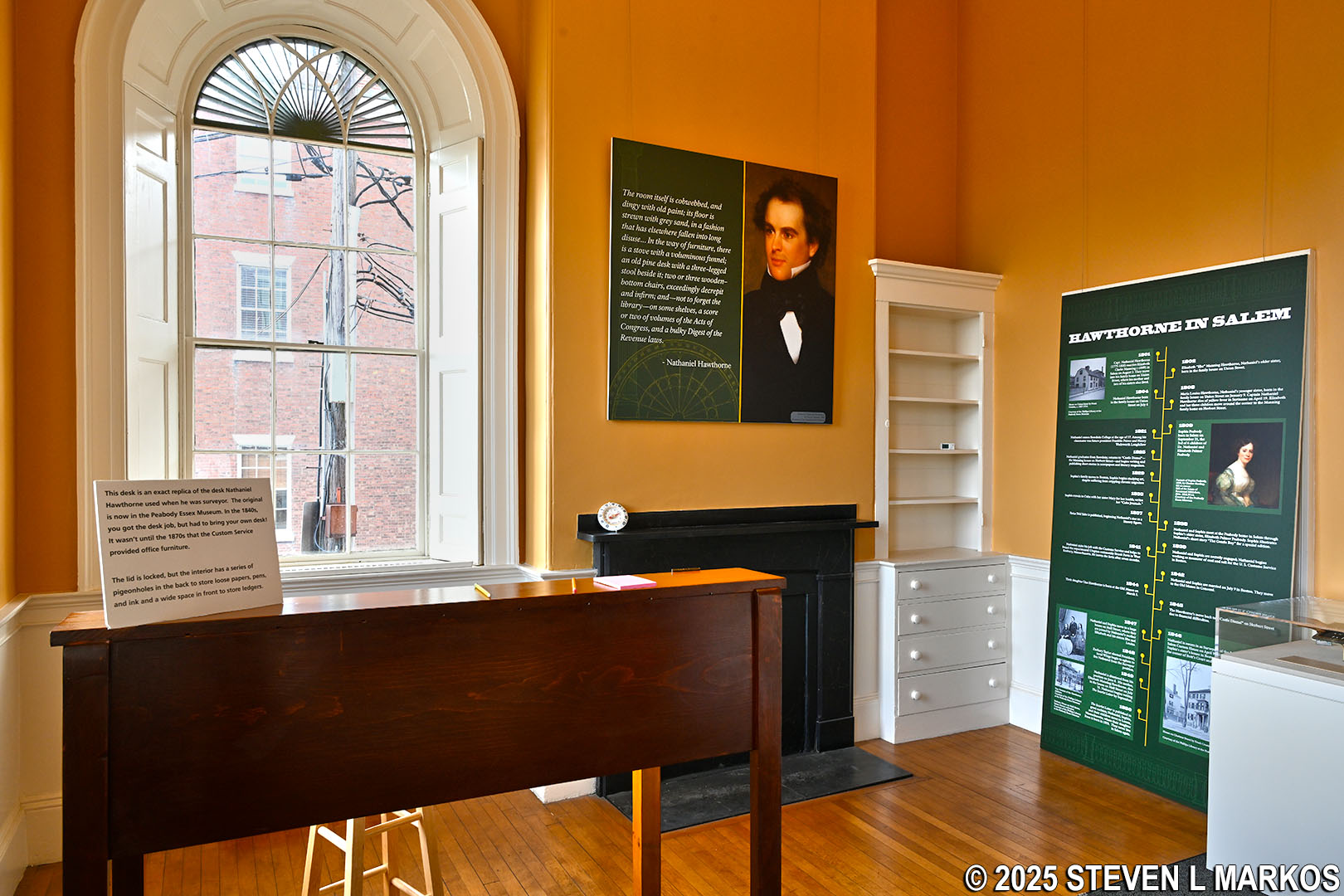
Nathaniel Hawthorne’s office in the U.S. Custom House, part of Salem Maritime National Historical Park

Nathaniel Hawthorne’s original desk
The largest room on the bottom floor of the Custom House is the Collector’s Office. The desk in the room was purchased in the early 1870s by the federal government.
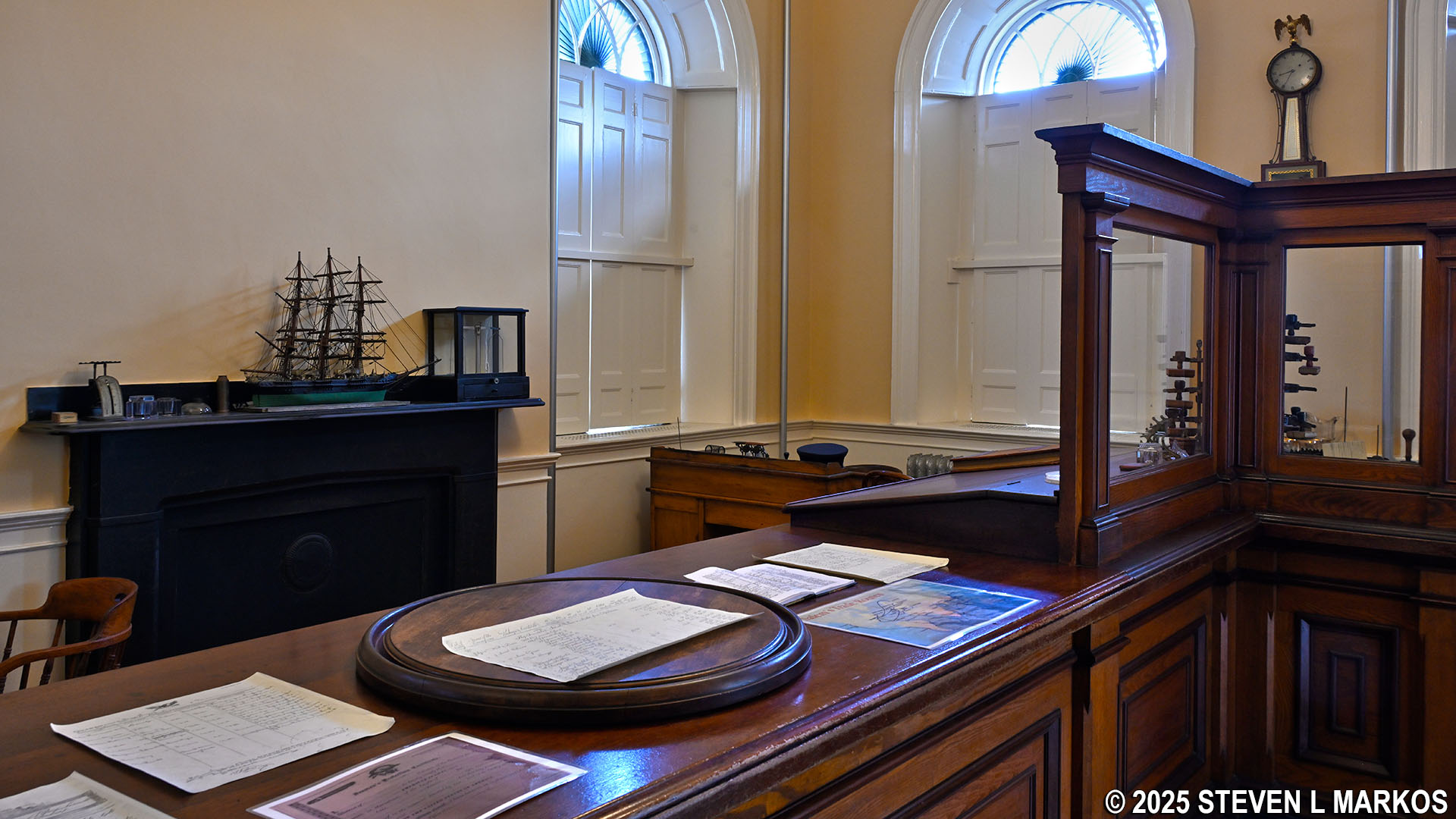
Desk in the Collector’s Office at the U.S. Custom House, part of Salem Maritime National Historical Park
Off to the left is a separate section of the room called the Collector’s Public Office. This is where those who came to pay import duties—merchants, ship captains, etc.—would fill out the necessary paperwork. A door on the right side leads to a fireproof vault where the documents were stored. The vault was installed in 1854, and by the time the Custom House closed in 1935, over 150,000 documents were in the vault.
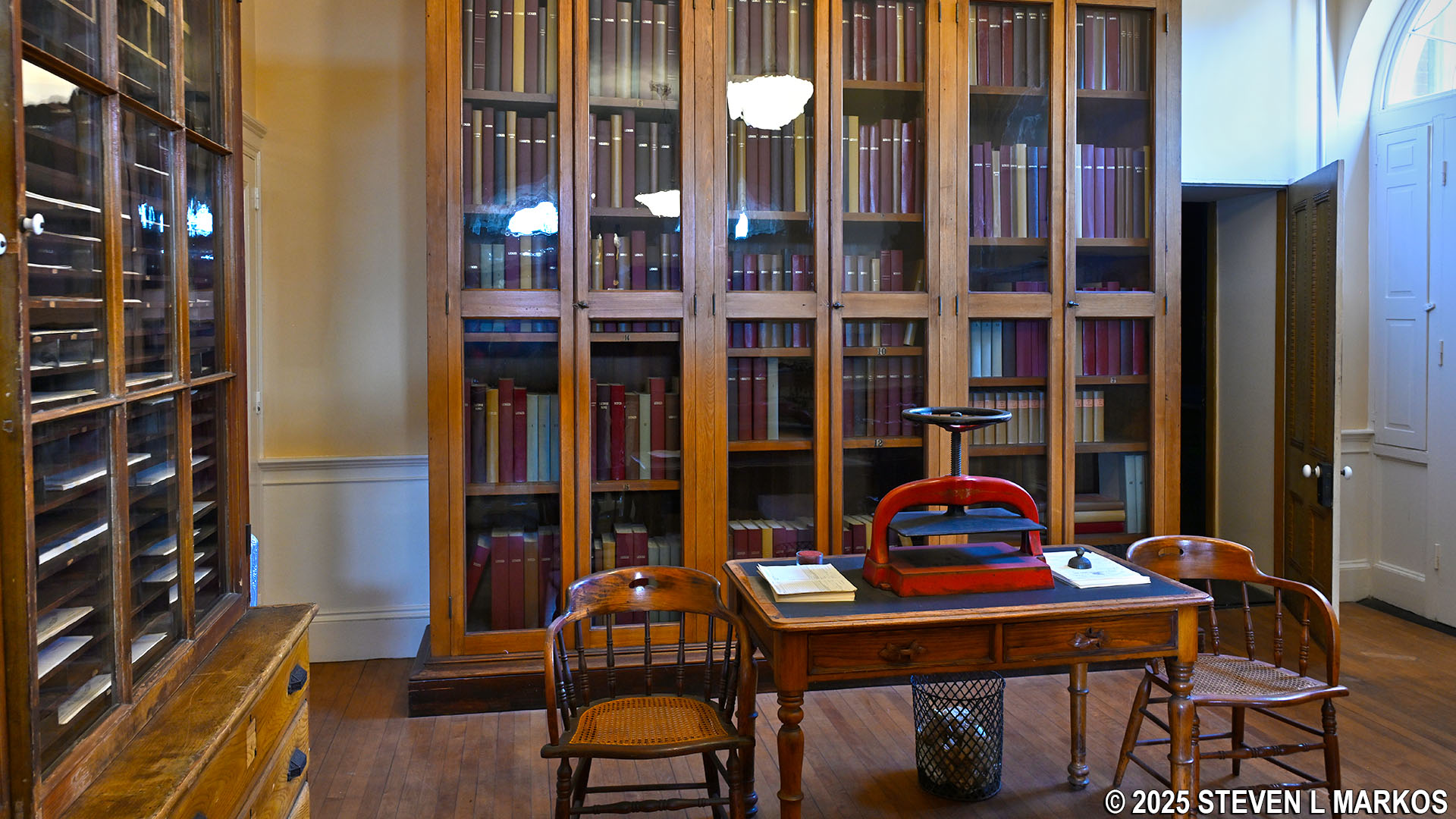
Collector’s Public Office in the U.S. Custom House, part of Salem Maritime National Historical Park
The other room on the first floor is the Deputy Collector’s Office. This room is not furnished but instead holds a collection of scales and other tools used to weigh and measure cargo.
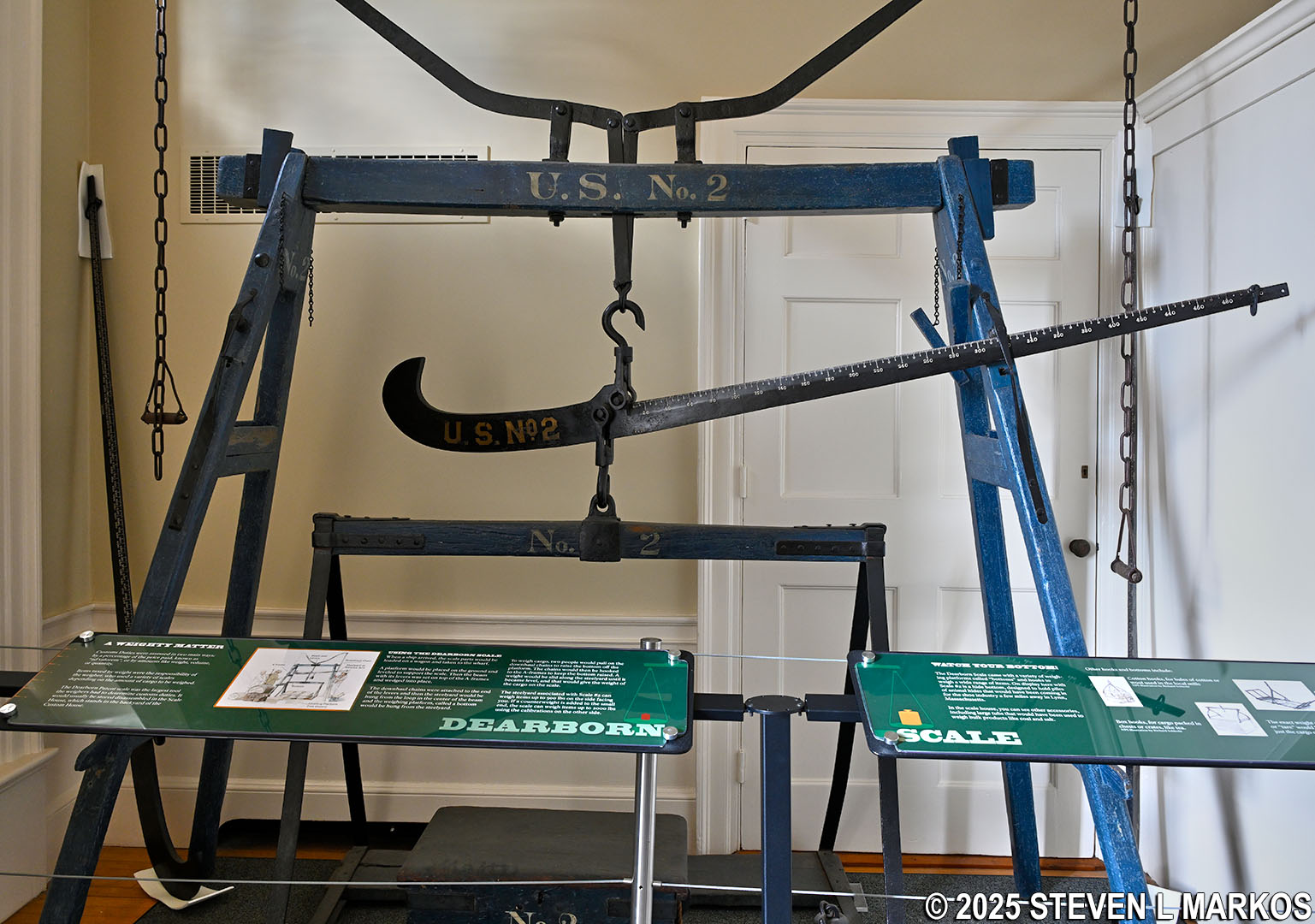
Scales used to weigh cargo on display in the U.S. Custom House, part of Salem Maritime National Historical Park
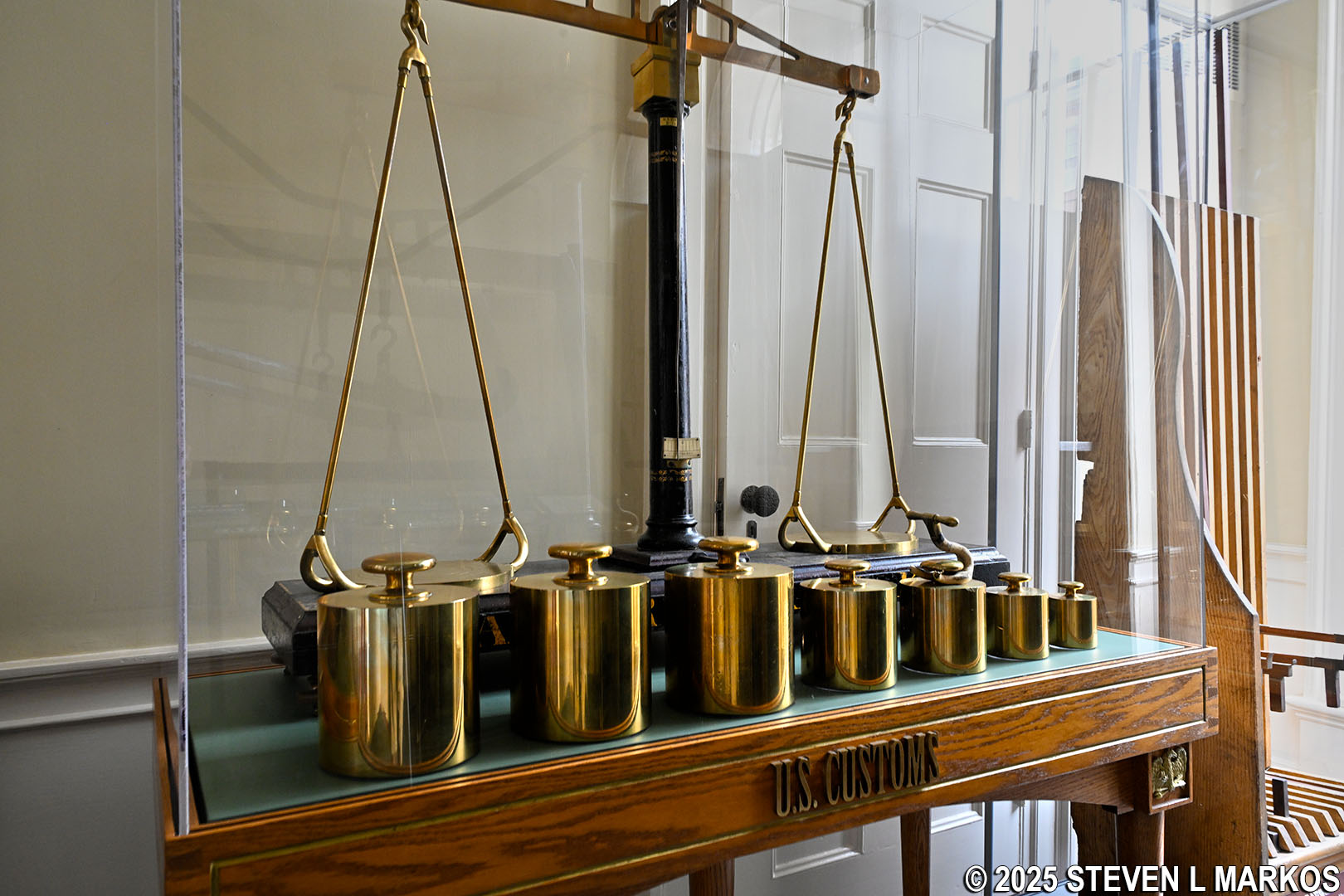
Weights and small scale used for weighing cargo on display in the U.S. Custom House, part of Salem Maritime National Historical Park
The second floor of the U. S. Custom House is where the collector had his two-room private office. One room was where he worked and the other was for holding private meeting. The furniture in both rooms was purchased in 1873 and is original to the building. It is some of the first purchased by the government for the Custom House. The portrait on the wall in the office is of Joseph Hiller, the collector in Salem from 1789 to 1802.
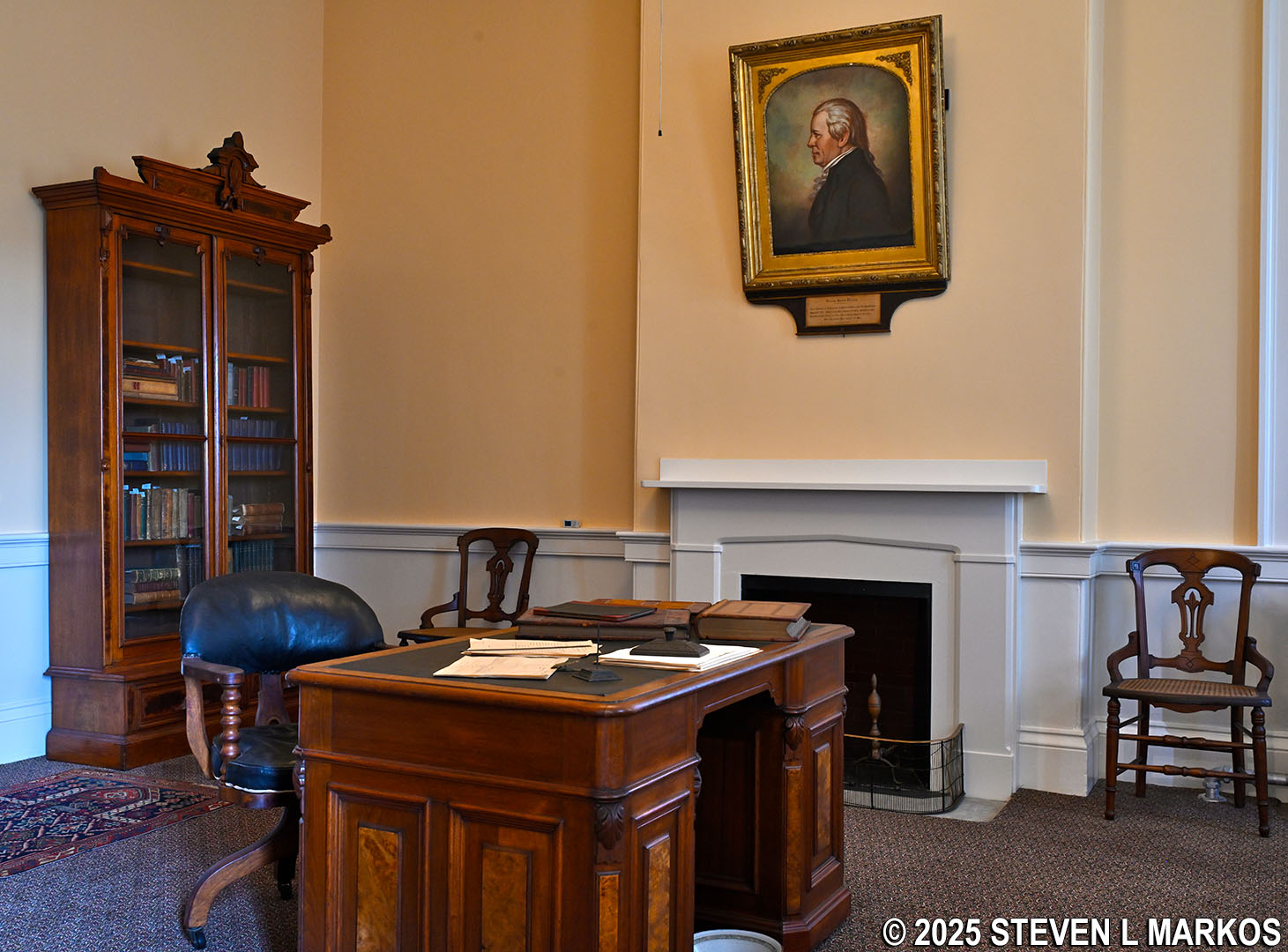
Collector’s private office in the U.S. Custom House, part of Salem Maritime National Historical Park
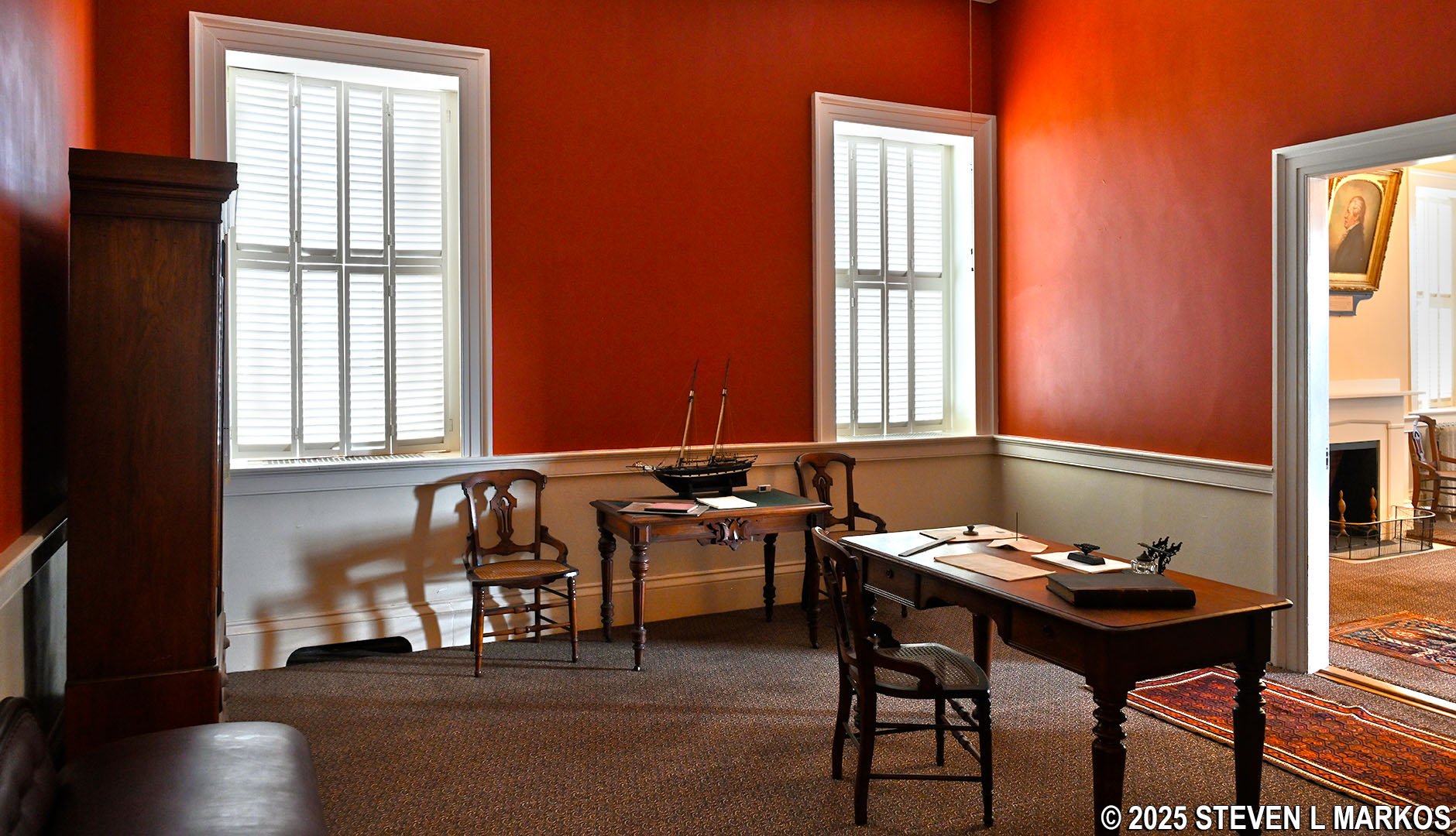
Collector’s private meeting room in the U.S. Custom House, part of Salem Maritime National Historical Park
On display in another room on the floor is the original wood-carved eagle that was on the roof of the Custom House from 1826 until 2002 when it was replaced by a fiberglass replica. After an extensive restoration, the original was put on display for the public to see.
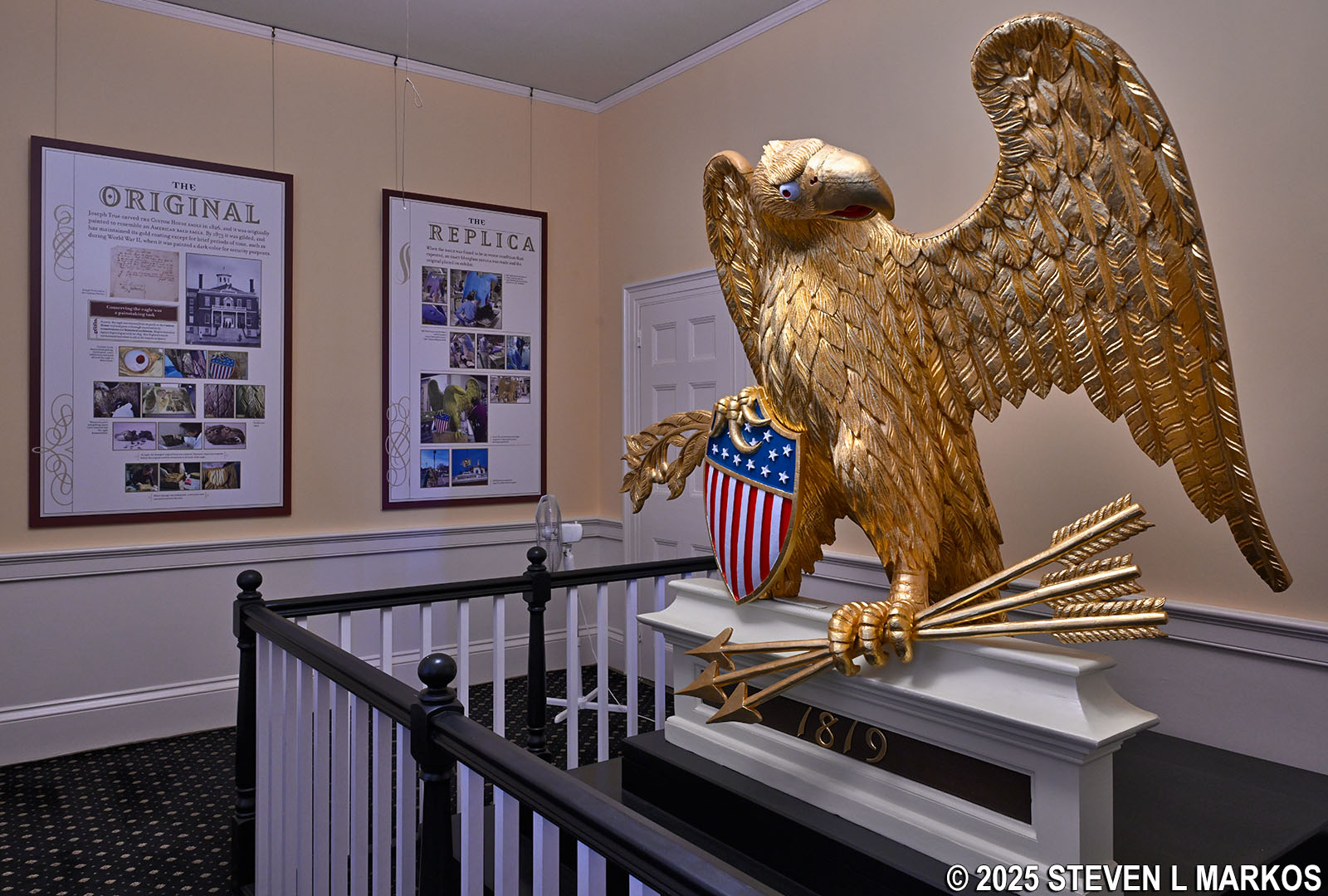
Original 1826 wood-carved eagle that once adorned the roof of the U.S. Custom House in Salem is now on display on the second floor of the building, Salem Maritime National Historical Park

Fiberglass replica eagle on the top of the U.S. Custom House in Salem, part of Salem Maritime National Historical Park
Plan to spend about 45 minutes at the Custom House. This gives you enough time to talk with the Ranger or park volunteer on duty, see the rooms, read through the exhibits, and check out the Public Stores and Scale House.
With a few exceptions, use of any photograph on the National Park Planner website requires a paid Royalty Free Editorial Use License or Commercial Use License. See the Photo Usage page for details.
Last updated on September 15, 2026


