

Home and office of Frederick Law Olmsted in Brookline, Massachusetts
GENERAL INFORMATION
Frederick Law Olmsted’s house on Warren Street in Brookline, Massachusetts, is open seasonally, and not on a daily basis (typically Fridays and Saturdays only). For the latest schedule, be sure to check the National Park Service’s official Operating Hours and Seasons web page for Frederick Law Olmsted National Historic Site.
There is vehicle parking at the house, or you can take public transportation. The walk from the Brookline Hills trolley bus stop is .75 mile (15-minute walk).
HOUSE HISTORY
Frederick Law Olmsted purchased the house, which he named Fairsted, in 1883 when he was hired to design a number of Boston city parks. The house itself was built in 1810, and the owners at the time, sisters Sarah and Susanna Clark, did not want to sell it. Many of Olmsted’s good friends were the Clarks’ neighbors, which is why he had such a keen interest in the house. He was finally able to work a deal by building the women a new house on the property and allowing them to live for free until their deaths.
While Olmsted was already a famous landscape architect by the time he moved to Warren Street, he never had a grand-scale office and production shop until this time. In addition to serving as a residence for his wife and five children (he married his brother’s widow and three were her children), he used much of the lower floor for the firm’s offices. However, not long after he retired in 1895, the firm had grown so large that the house was no longer able to accommodate all of the employees. His sons Frederick Jr. and John (stepson) now ran the firm under the name Olmsted Brothers, and they began building new offices on the property in 1889, creating a monstrosity of haphazard-looking structures in the middle of an extremely wealthy neighborhood. Certainly homeowner and zoning regulations would never permit such additions today, but back in the early 1900s there were no such regulations (plus Olmsted was friends with all of his neighbors). It is ironic that men known for beautiful landscape design would build office spaces with no apparent concern for what they looked like.

Olmsted office complex, Frederick Law Olmsted National Historic Site
After Frederick Jr. died in 1957 (John had died in 1920), associates kept the firm going under the name Olmsted Associates, Landscape Architects, and remained in the house until 1979. By then, business had dwindled to the point where the last owner of the firm, Art Richardson, could no longer afford to maintain the house and property. He sold it to the National Park Service along with the firm’s massive collection of blueprints and photographs so that Frederick Law Olmsted National Historic Site could be created. Richardson moved to New Hampshire and continued in business under the name Olmsted Office until 2000.
It is interesting to note that the demise of the Olmsted firm was a result of the Olmsted firm. When Frederick Law Olmsted began, there was no such field as landscape architecture. In fact, he was originally considered nothing more than a glorified gardener. However, as time progressed, many of the people who worked for him went on to start their own businesses. In 1900, Harvard College began a landscape architecture program, and over the subsequent years more universities followed suit. Thus, by 1979, city planners no longer had to rely on the Olmsted firm in Brookline for design services.
HOUSE TOUR
The lower level of the main house is open to the public for self-guided tours (the upstairs, once bedrooms, is now National Park Service offices). However, this is not a house tour with rooms decorated with original Olmsted furniture. It is a museum that focuses more on landscape architecture and the parks designed by the Olmsted Firm than Frederick Sr. himself. Individual rooms are identified, but only historic photos hint at what they looked like when Olmsted was alive.

Exhibits in the North Parlor of Fairsted, Frederick Law Olmsted National Historic Site

Exhibits inside the main house at the Frederick Law Olmsted National Historic Site
A seven-minute film that deals more with the life of Olmsted than do the museum exhibits is shown on demand (just push a button). There are also plenty of photo books, electronic exhibits, and extensive information on the major parks designed by the Olmsted Firm, such as Central Park in New York City.

Exhibit on landscape projects of the Olmsted Firm on display inside Fairsted, Frederick Law Olmsted National Historic Site

Interactive exhibit and information panels inside the main house at the Frederick Law Olmsted National Historic Site
The main house also serves as the park’s Visitor Center. Here you will find a Ranger-staffed information desk and a small book and souvenir store.

National Park Service information desk inside Fairsted, Frederick Law Olmsted National Historic Site

Book and souvenir store inside Fairsted, the home of Frederick Law Olmsted
The office spaces are also open to the public, but by Ranger-guided tour only. These 30-minute tours are held at various times each day that the house is open. The park is one of the least popular in the National Park system, so don’t expect much of a crowd. I visited in early August and had a personal tour (June and July are the busiest months).

Engineers Office of the Olmsted Firm, Frederick Law Olmsted National Historic Site

Drafting room inside the Olmsted Firm office, Frederick Law Olmsted National Historic Site
Unlike the house, the work spaces are full of original equipment that was used by the firm up until 1979. The peak of business came in the late 1920s, and after the Great Depression it was all downhill. As less and less people were employed at the Olmsted Firm—sixty at peak production and only a dozen towards the end—many of the rooms were simply shuttered so they didn’t have to be heated. As a result, some of the really old equipment that had become technically obsolete never got thrown away. When the firm moved out in 1979, the blueprints, photos, equipment, and office furniture were all sold to the National Park Service.
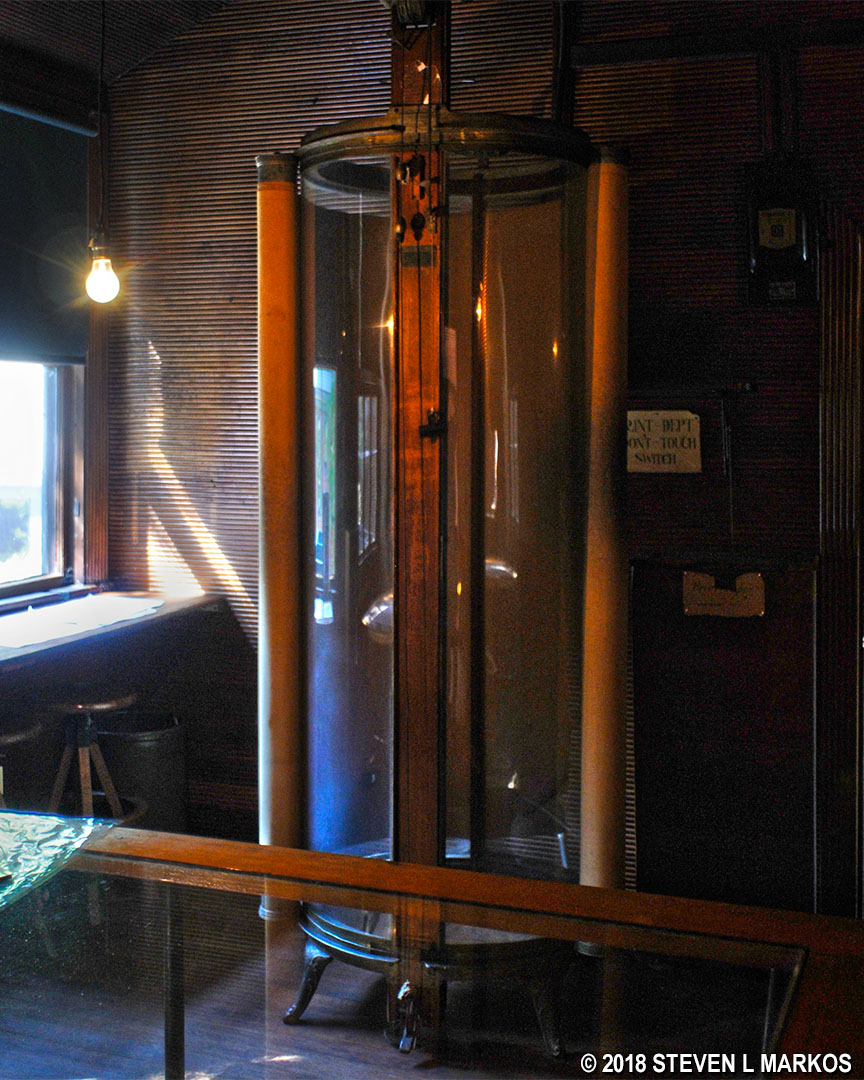
Antique blueprint copying machine inside the Olmstead office, Frederick Law Olmsted National Historic Site
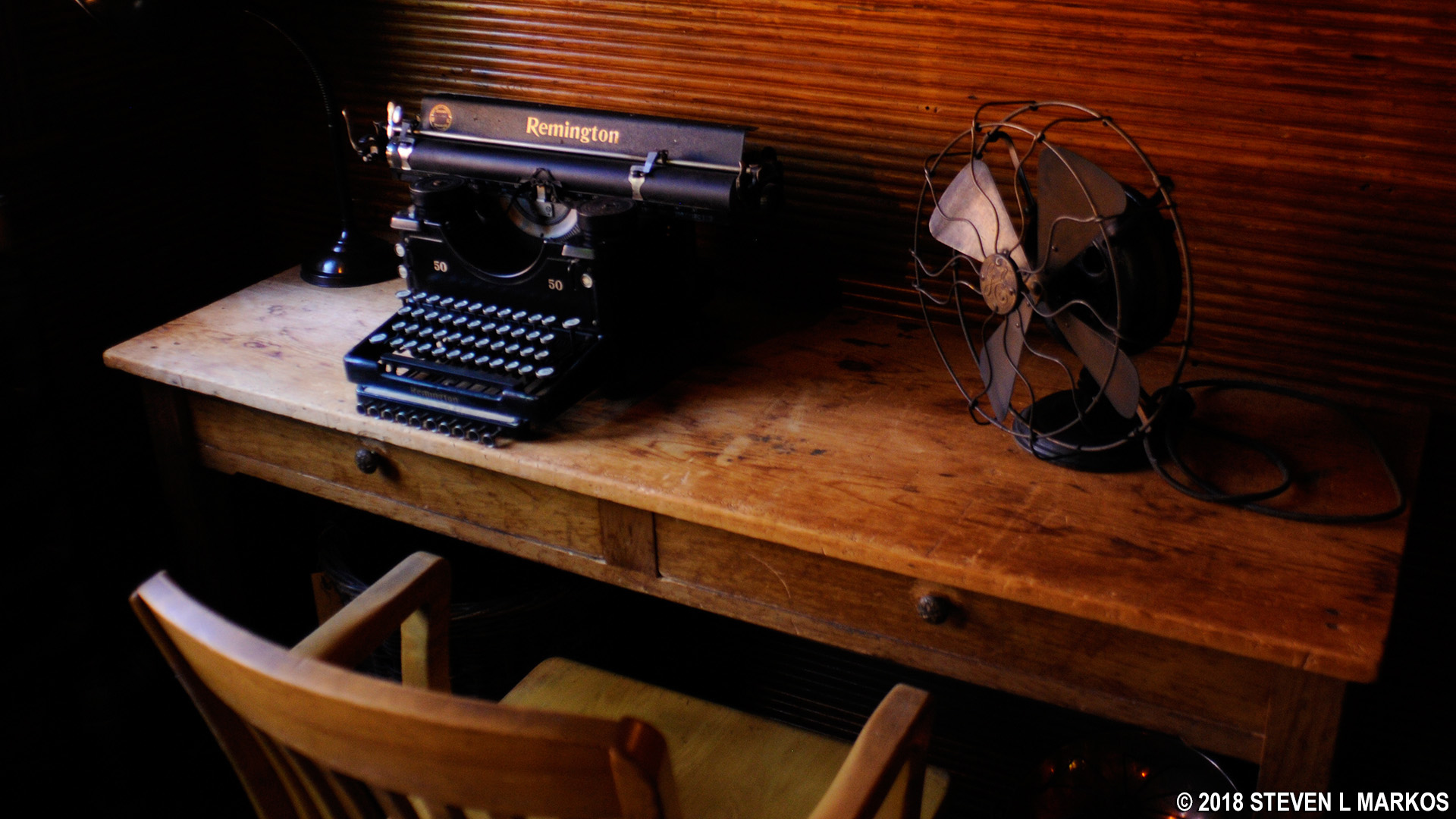
Old typewriter and fan in the Olmsted firm offices, Frederick Law Olmsted National Historic Site
There is so much information at the house and offices that Frederick Law Olmsted National Historic Site doubles as a research facility. It is not uncommon for those overseeing an old Olmsted-designed park in need of renovation to travel to Brookline in order to get a look at the original blueprints.
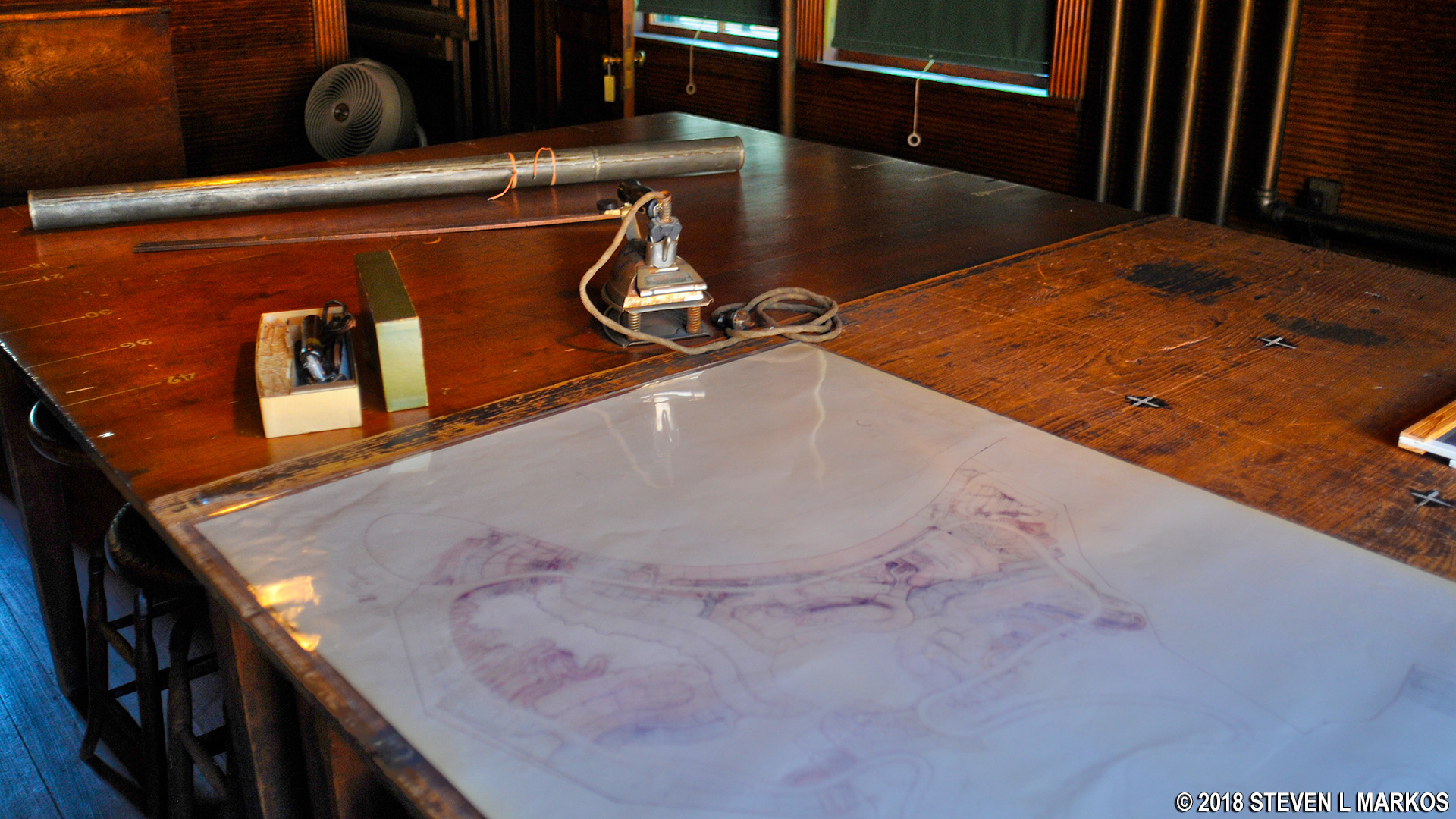
Olmsted blueprint office, Frederick Law Olmsted National Historic Site
With a few exceptions, use of any photograph on the National Park Planner website requires a paid Royalty Free Editorial Use License or Commercial Use License. See the Photo Usage page for details.
Last updated on June 3, 2026


