

Abiel Smith School, home to the Museum of African American History
BLACK HERITAGE TRAIL
STOP 9
The Abiel Smith School opened in 1835 as the new school for black children in Boston. Prior to this, classes were taught at the African Meeting House. At the time, segregation was legal in Massachusetts and wouldn’t be challenged until a lawsuit was filed by Benjamin Roberts in 1849. Roberts lost the suit, and it was this case that established the “separate but equal” reasoning for the continuation of segregation. The only problem was that Abiel Smith was far from equal to the white schools, and parents began pulling their children from the school in protest. It wasn’t until 1855 that segregation was finally outlawed in Massachusetts. The Abiel Smith School closed that same year, and black children began attending the Phillips School at the corner of Pinckney and Anderson streets.
Today the Abiel Smith School is home to the Museum of African American History and is part of a complex that also includes the African Meeting House (both are part of the Black Heritage Trail and are the only two buildings on the tour actually open to the public). The museum is open year-round, typically on Tuesdays through Sundays from 10 AM to 4 PM (closed on Thanksgiving, Christmas, and New Year’s Day). A fee-based, timed ticket is required to enter the facilities, and entrance times are typically 10 AM, 12 PM, and 2 PM. The ticket price covers entrance to the museum and a guided tour of the African Meeting House. National Park Passes are not accepted since the museum is not owned by the National Park Service. For the latest schedule, ticket prices, and to purchase a ticket online in advance, visit the Museum of African American History’s Boston Campus web page. You can also purchase tickets on the day of your arrival at the ticket office inside the Abiel Smith School, subject to availability.
The lower level of the Abiel Smith School now serves as the visitor center and ticket office for the museum. A book and souvenir store is also on this level.
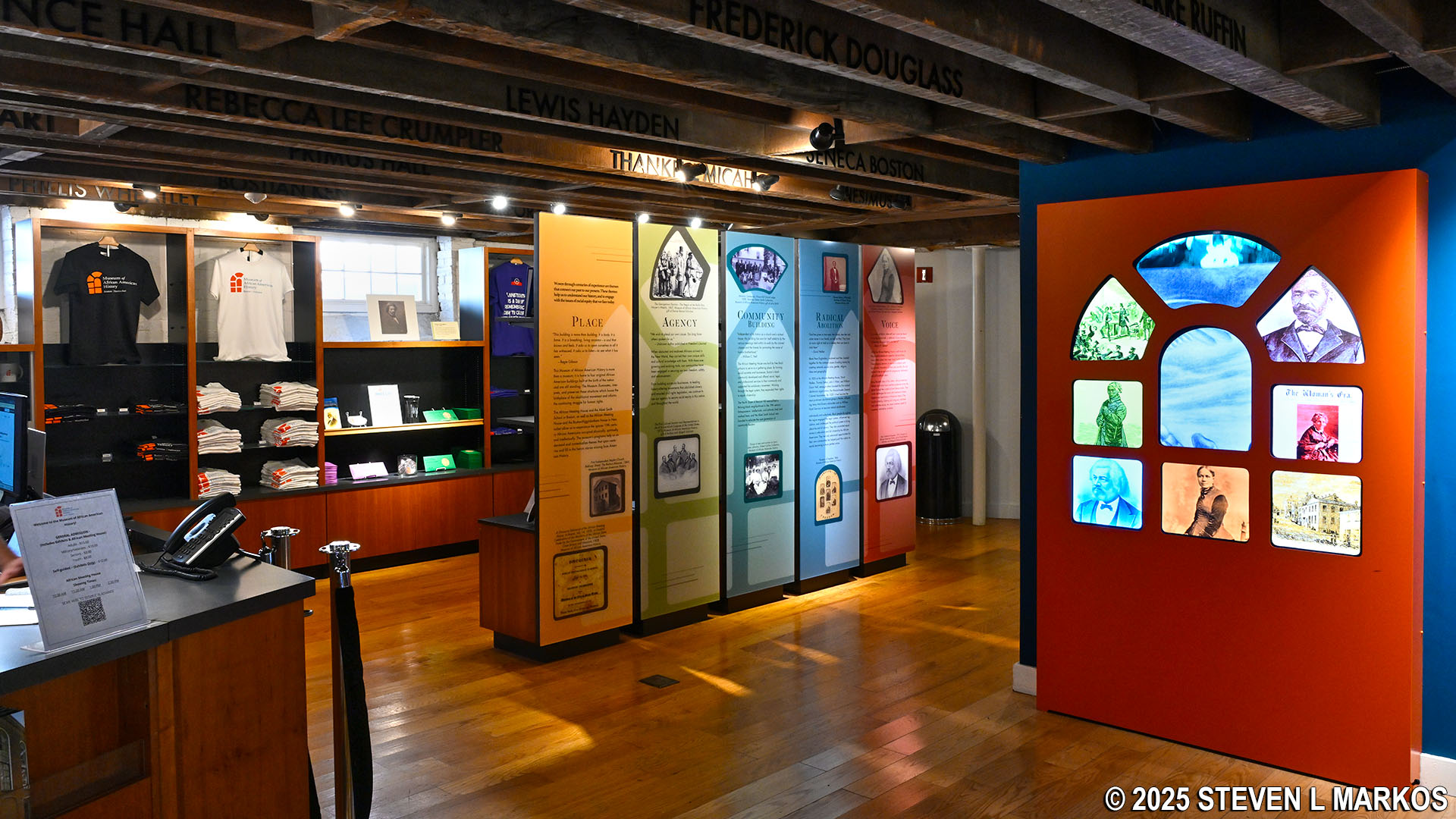
Lower floor of the African American History Museum, part of Boston’s Black History Trail
The second floor is where the museum exhibits are located. There are no permanent exhibits, so the photo on this page is just a representation of the exhibit space. Exhibits change once or twice a year.
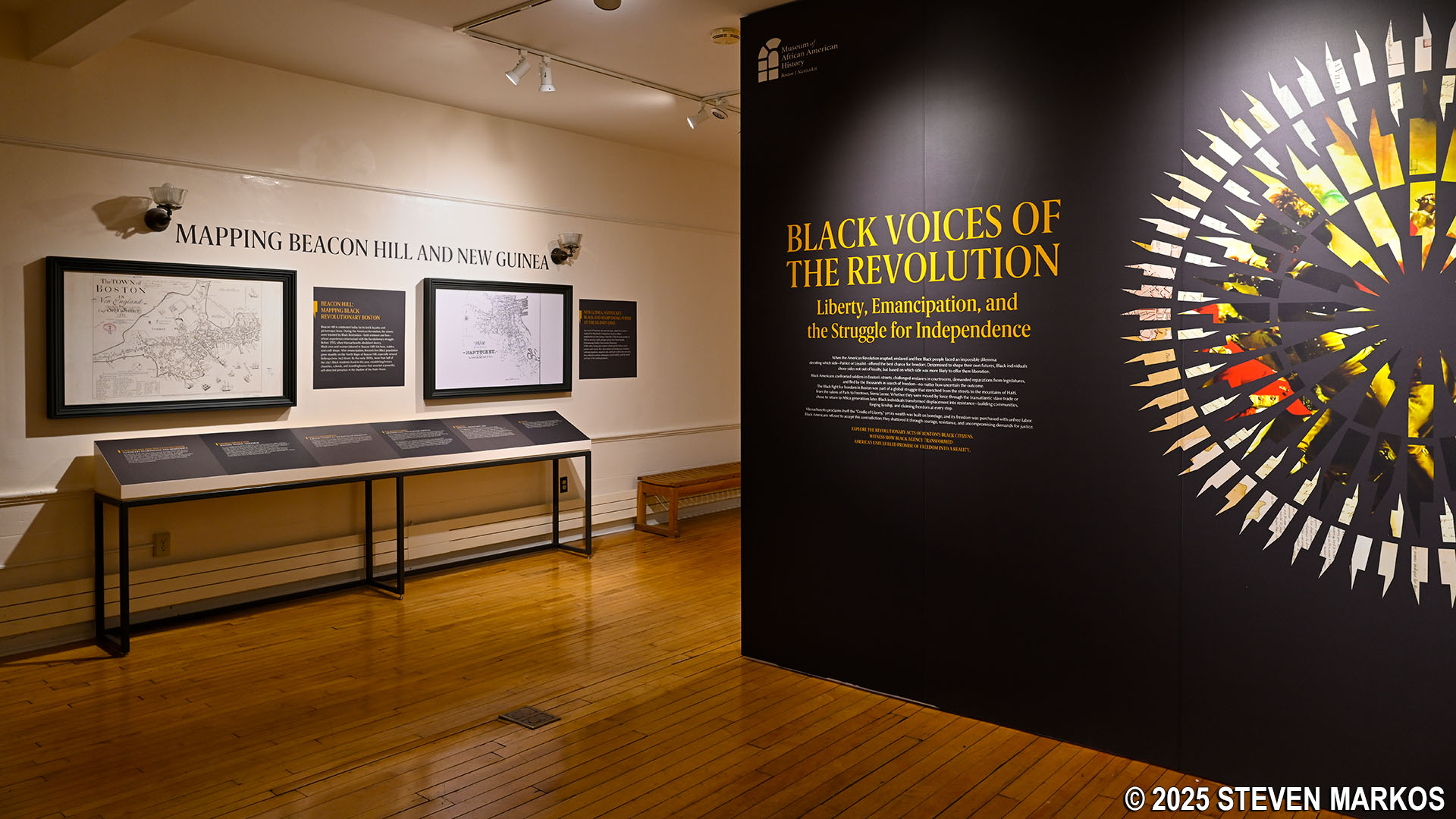
Exhibits on the second floor of African American History Museum in the Abiel Smith School, part of Boston’s Black History Trail
The third floor is used as an over-flow exhibit area, but mainly serves as the museum’s media room. A 17-minute film about the African Meeting House and its place in the black community of Boston during the 1800s is shown. While there is no objectionable material, the film discusses the racial discrimination of the time and the fight to abolish slavery, so young children may not understand what is going on.
Next Stop | Previous Stop | Black Heritage Trail Home Page
With a few exceptions, use of any photograph on the National Park Planner website requires a paid Royalty Free Editorial Use License or Commercial Use License. See the Photo Usage page for details.
Last updated on September 24, 2026


