

Mogan Cultural Center, a restored 1837 boarding house, Lowell National Historical Park
When the textile mills in Lowell first opened in 1823, most of the factory floor jobs that did not involve heavy lifting were done by young, unmarried women who wanted to make their own money—and by young, we’re talking early teens in many instances. Known as Mill Girls, these women were sought after because men were less dependable. After getting paid, many of the men would get drunk and miss work the next day. In order for parents to agree to let their daughters move to Lowell for a job, the mill owners had to guarantee their physical and moral safety, and they did so by building churches, schools, and women-only boarding houses with chaperones. There were approximately 70 corporate-owned boarding houses.
The Mill Girl system worked for a while, but starting in the 1840s, conditions in the mills had become so bad that workers went on strike and tried to form labor unions. Most women quit, and owners simply got rid of the remaining trouble-makers, replacing them with the Irish and other immigrants, both men and women, who were flooding the city at the time.
There are two exhibits featuring the Mill Girls and the immigrants who came to Lowell during the Industrial Revolution housed in the Patrick J. Mogan Cultural Center, an 1837 “restored” boarding house located across from the entrance to Boott Cotton Mills at 40 French Street. I put quotes around restored because by the time the National Park Service got the building in the 1990s, it had been remodeled so many times that if you saw the before and after photos, you wouldn’t even know it was the same building. You might as well say it was rebuilt to resemble the original. And who knows what modifications were done to the interior. Suffice to say, what you see today is merely a building with a connection to a former boarding house.
The Mogan Cultural Center is open year-round, typically from 1:30 PM to 4:30 PM, though hours vary per season. The National Park Service does not publish a schedule for the entire year, but you can get one for the current season on the official Mogan Cultural Center web page for Lowell National Historical Park.
INTO AN 1840s BOARDING HOUSE EXHIBIT
The Into an 1840s Boarding House Exhibit explores the life of the Mill Girls and the immigrants who came to Lowell to work in the textile mills. There are three furnished rooms and a small exhibit area. No furniture is original to the boarding house, but what you see are antiques and reproductions of the type of furniture that would have been used so that you have an idea of how the rooms might have looked in the 1840s.
On the lower floor of the exhibit is a room decorated as a typical boarding-house dining room.

Boarding house dining room at the Into an 1840s Boarding House Exhibit in the Mogan Cultural Center at Lowell National Historical Park
Also on the first floor is a room decorated as the Keeper’s bedroom. The Keeper was the lady hired to oversee the boarding house, which included purchasing furniture, planning meals, and keeping the house clean. Her room rent was deducted from her wages—as was the Mill Girls’—and she was paid based on the number of boarders she had. Keepers with a good reputation were able to attract tenants more easily.
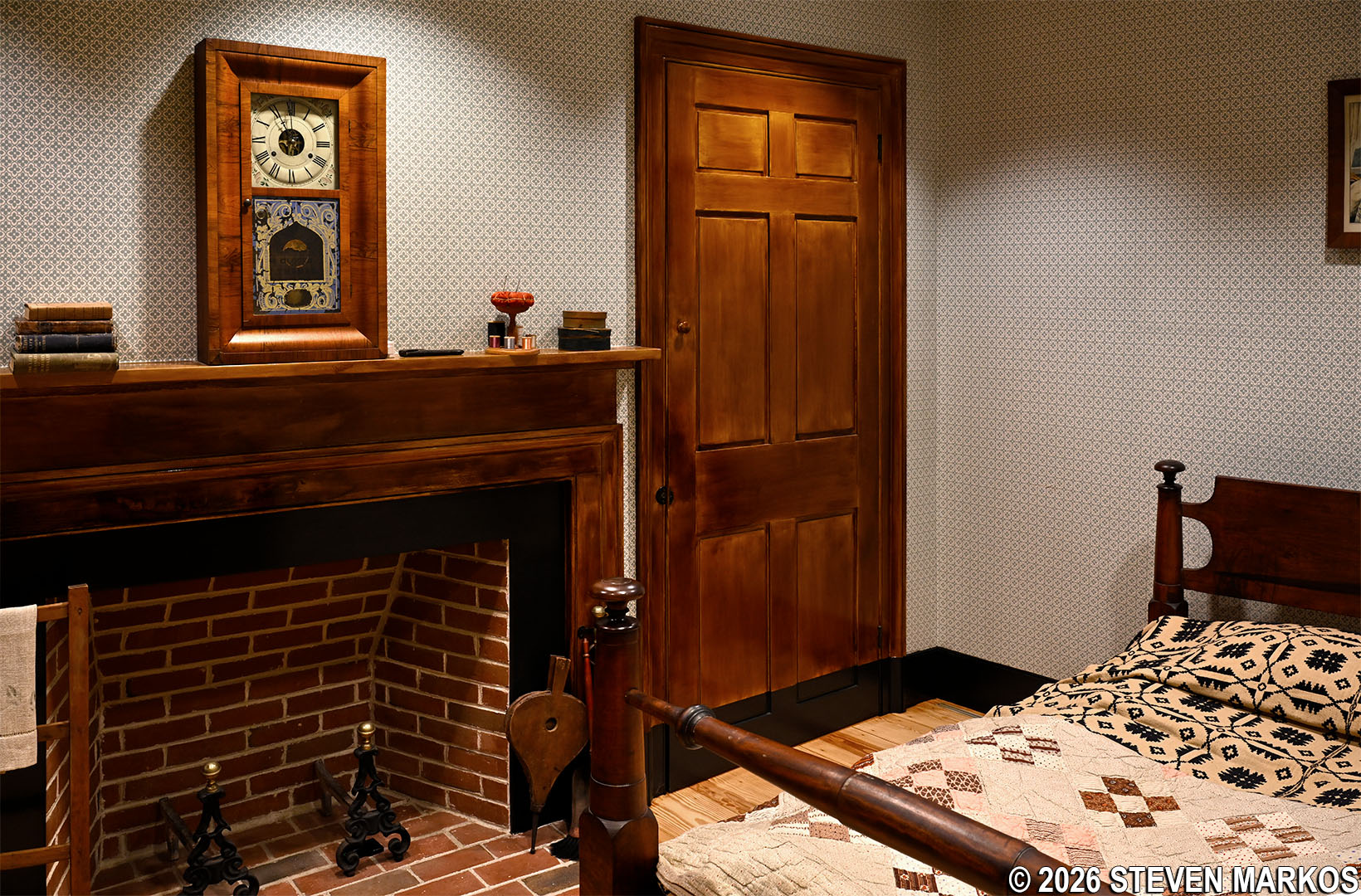
Keeper’s Room at the Into an 1840s Boarding House Exhibit in the Mogan Cultural Center at Lowell National Historical Park
The upper floor of the Into an 1840s Boarding House Exhibit features a room furnished as a Mill Girls’ bedroom. Unlike the Keeper, multiple Mill Girls shared a room.
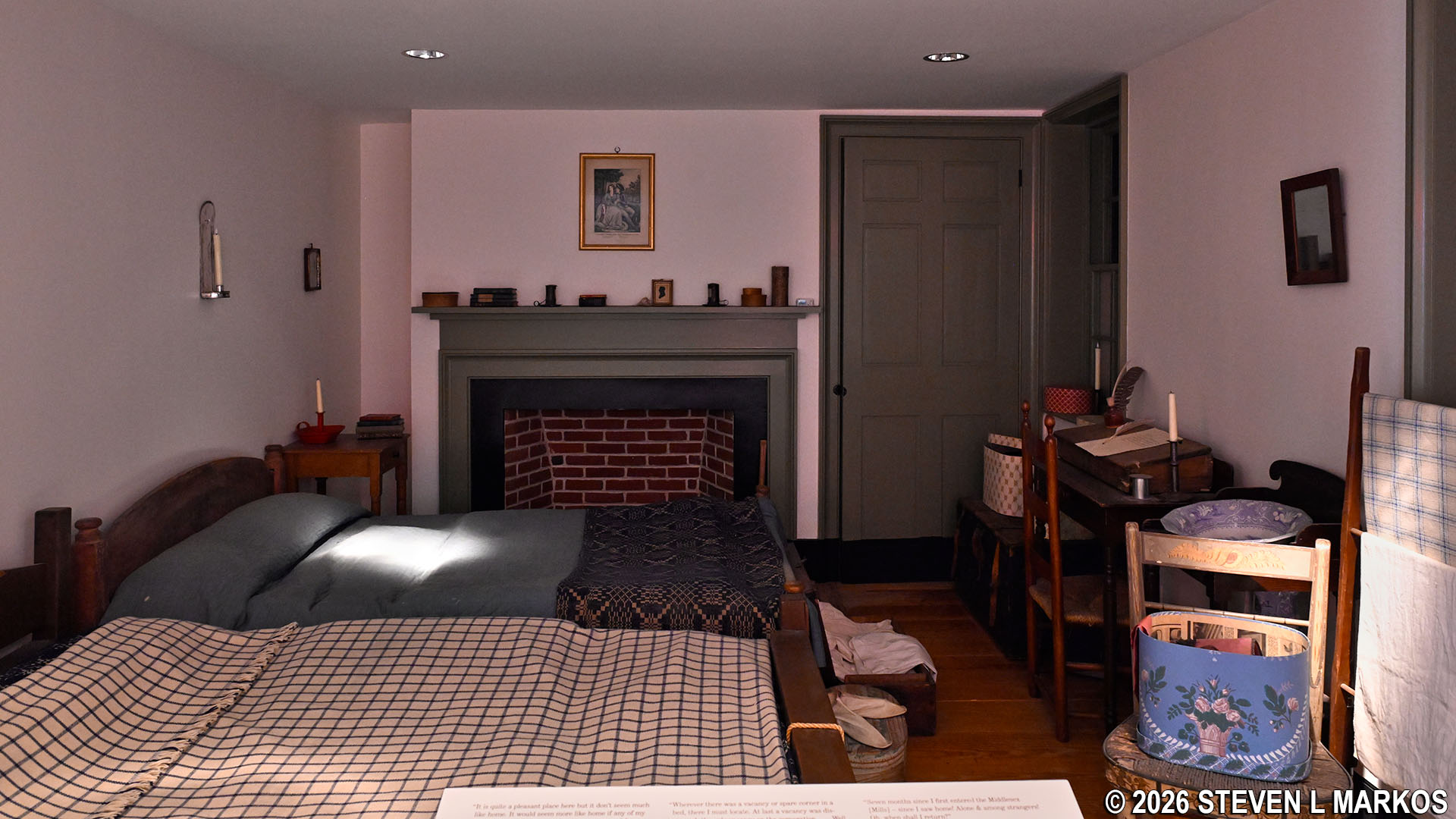
Mill Girls bedroom at the Into an 1840s Boarding House Exhibit in the Mogan Cultural Center, Lowell National Historical Park
There is also an exhibit area that covers the lives of the Mill Girls. A display of clothing worn by a typical working-class female in the 1840s and excepts from diaries and letters from real-life Mill Girls make up the bulk of the exhibits.
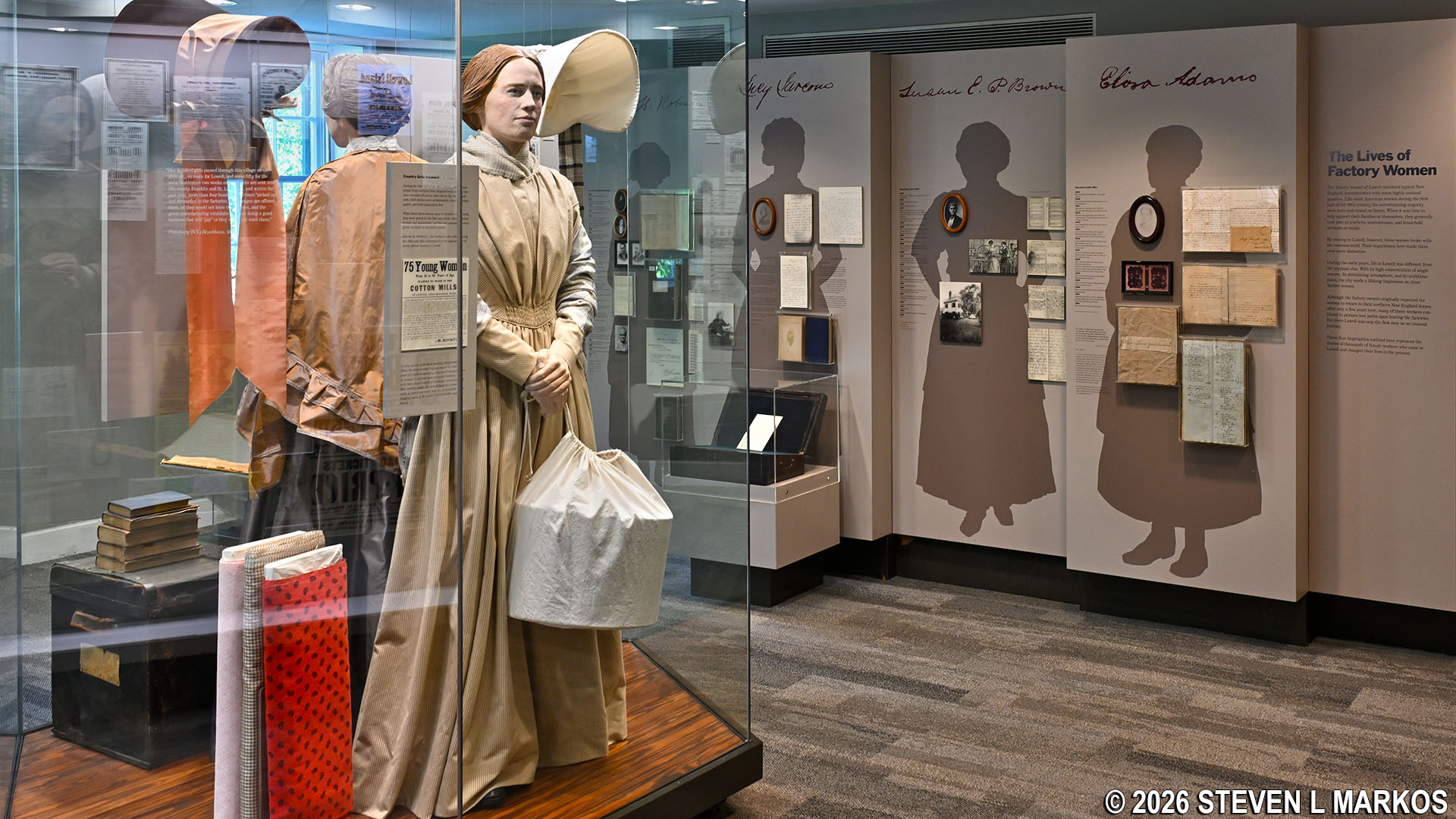
Lives of Mill Girls exhibit at the Into an 1840s Boarding House in the Mogan Cultural Center, Lowell National Historical Park
ONE CITY, MANY CULTURES
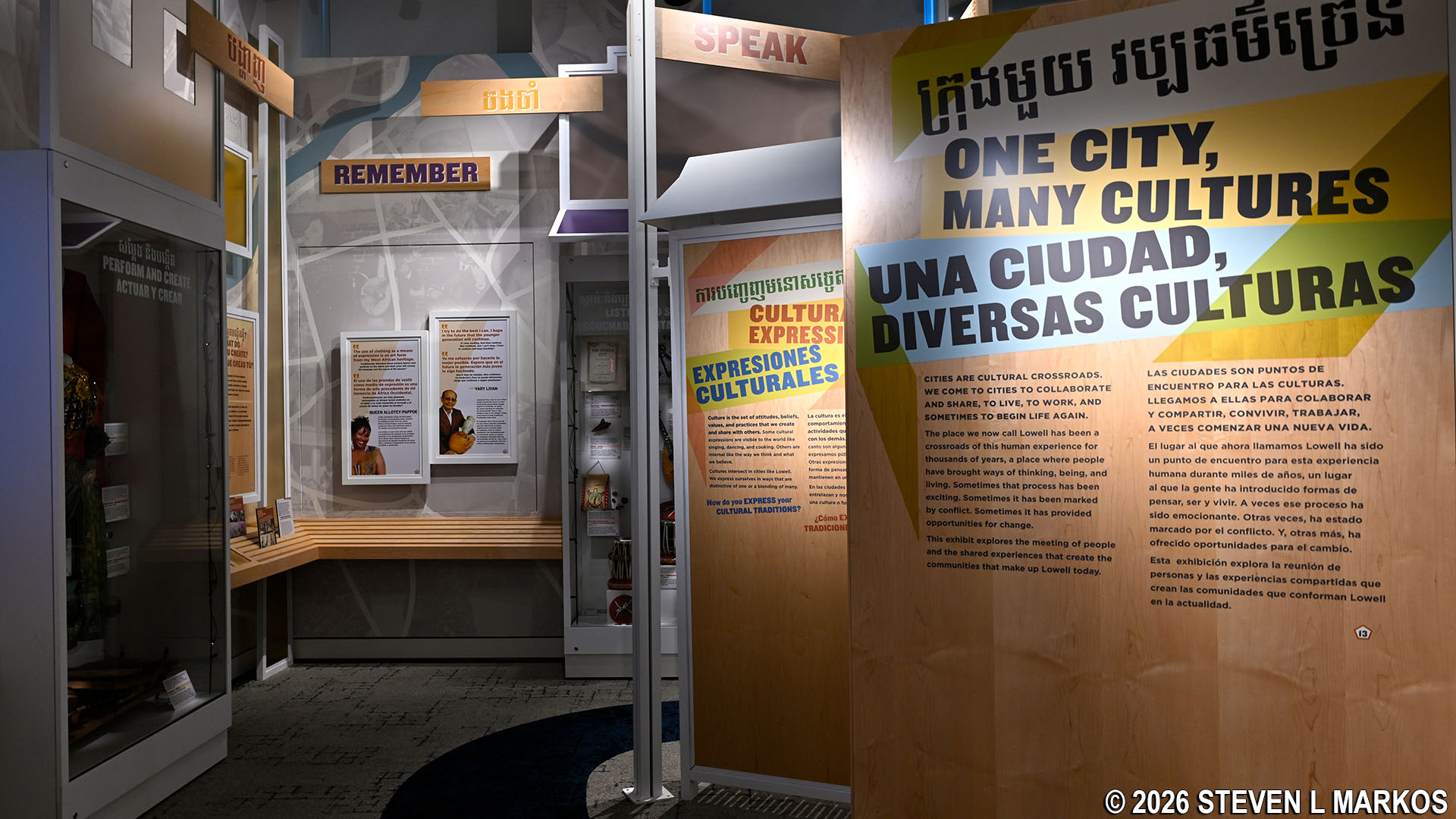
One City, Many Cultures exhibit at the Mogan Cultural Center, Lowell National Historical Park
The second floor also houses the One City, Many Cultures exhibit that focuses on the various ethnic groups who lived in Lowell during the Industrial Revolution up through modern times. After the Civil War, nearly 75 percent of the mill workers were immigrants, largely Irish. In later years, Canadians, Russian and Polish Jews, Greeks, Syrians, and Portuguese made up a hefty percentage of the workers, but there were people from all over the world living and working in Lowell.
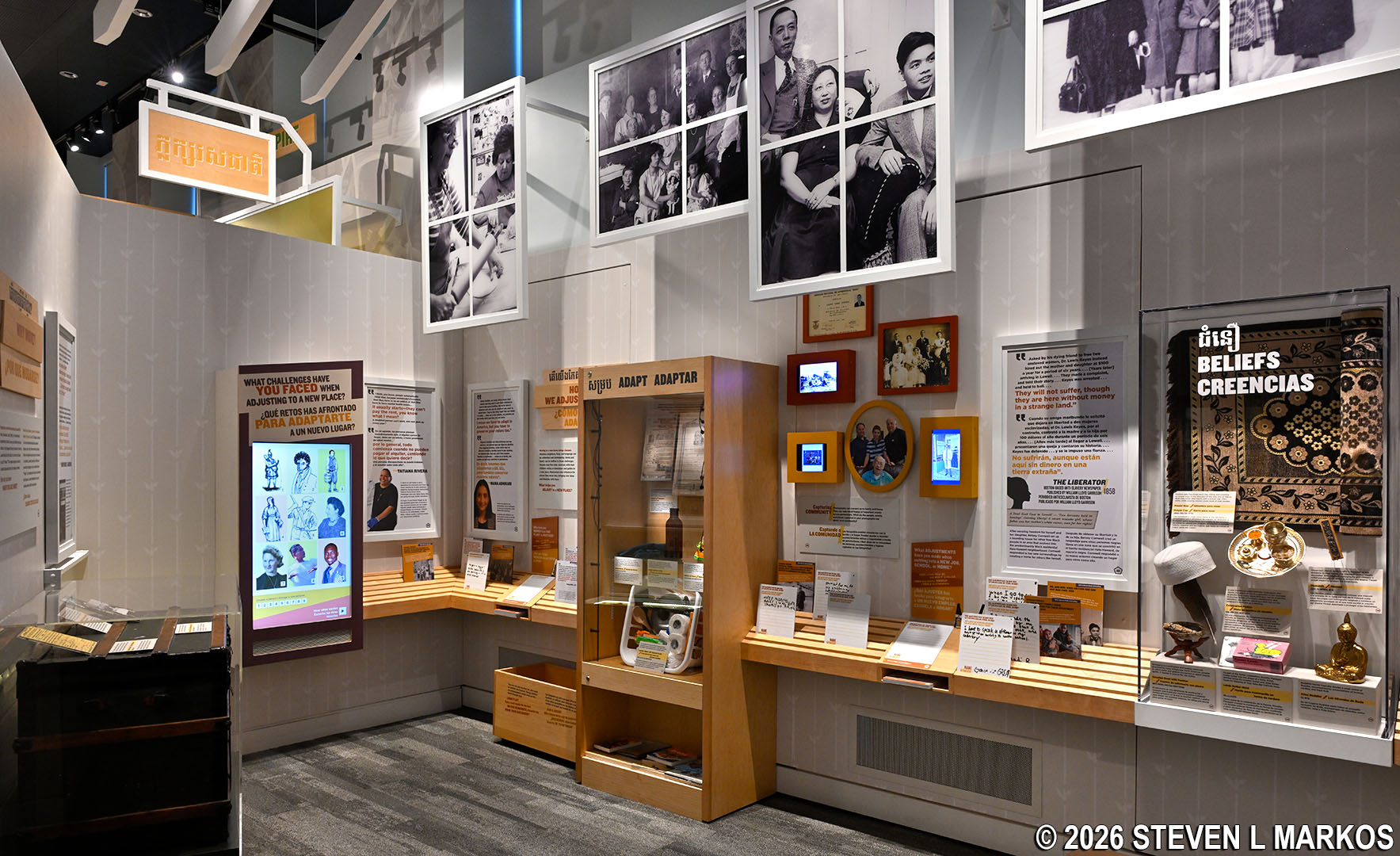
One City, Many Cultures exhibit at the Mogan Cultural Center, Lowell National Historical Park
One City, Many Cultures is a newer exhibit at Lowell National Historical Park, and as such it was designed with modern sensibilities. There are plenty of videos to watch, and the display cases are filled with items typical of the many different cultures represented in Lowell today.
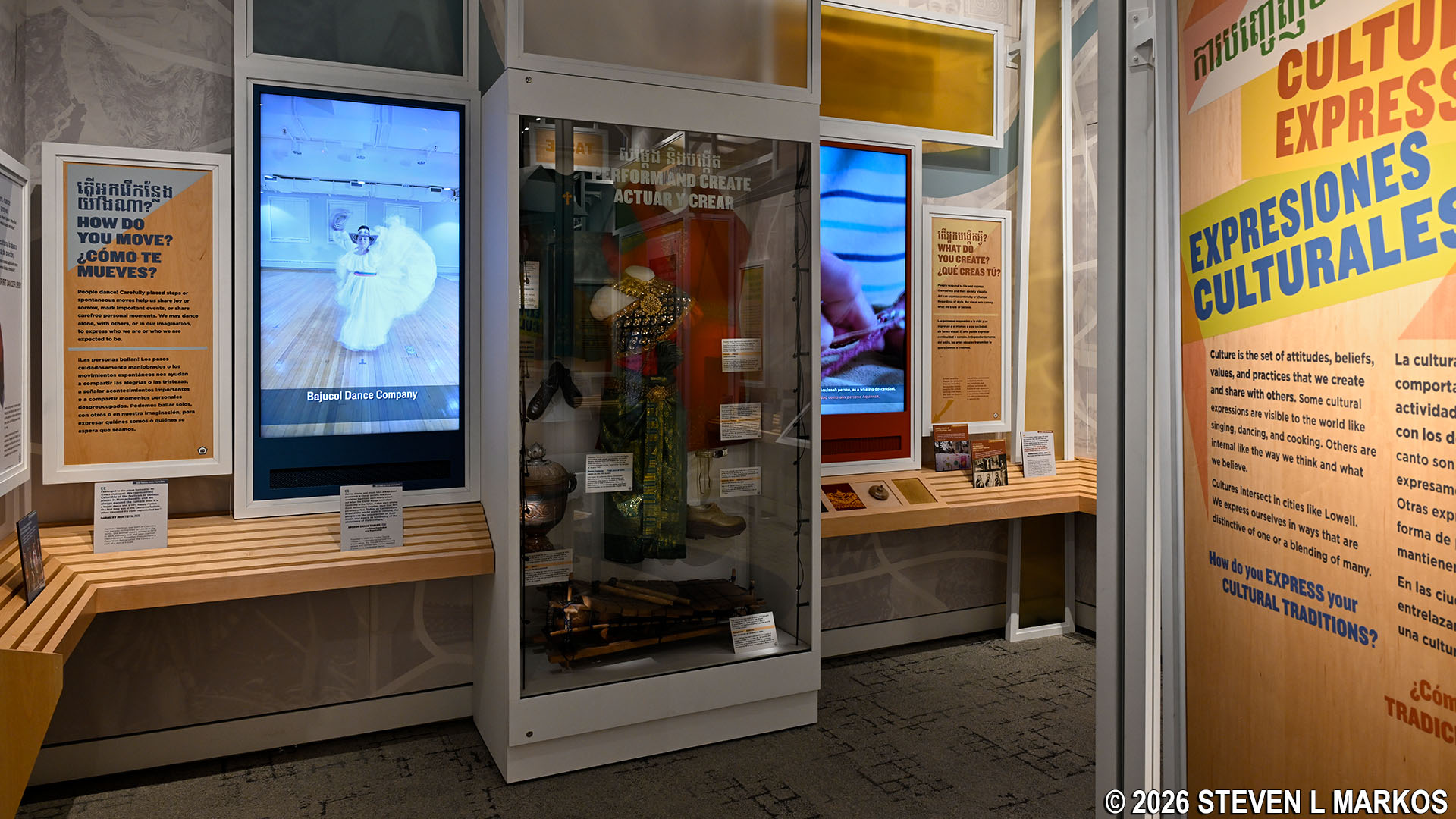
Videos and cultural artifacts are abundant at the One City, Many Cultures exhibit in the Mogan Cultural Center, Lowell National Historical Park
SCHEDULING YOUR TIME
The exhibit areas in the Mogan Cultural Center are much smaller than those at the expansive Boott Cotton Mills Museum. Most people will stop in just to see the furnished rooms and perhaps browse through the second floor exhibits, spending no more than a half hour. I read through all the information and saw all the exhibits, and it took me an hour. I don’t see anyone spending much more time than that.
With a few exceptions, use of any photograph on the National Park Planner website requires a paid Royalty Free Editorial Use License or Commercial Use License. See the Photo Usage page for details.
Last updated on March 27, 2026


