

Park grounds of Roger Williams National Memorial
The land that now makes up the grounds of Roger Williams National Memorial was once the common area of Providence when it was first settled by Roger Williams and his followers in 1636. Today it is essentially a typical inner-city park and offers nothing much for tourists aside from a few wayside exhibits about Williams and the city of Providence. The main draw is the free concerts, plays, and festivals that are held during the summer, but even these appeal mainly to local residents.

Map of Roger Williams National Memorial and Prospect Terrace
I initially thought the memorial grounds was an existing inner-city park that was donated to the Federal government in 1974 to create Roger Williams National Memorial, but except for one small plot of land, it was actually full of buildings at the time. The city of Providence was in the process of urban renewal in the early 1970s, and it purchased the land and tore down all of the buildings. The National Park Service took over at that point and commenced with the landscaping, which continued into the mid-1980s. Though there is nothing on the land that directly pertains to Williams, in addition to being the original commons, Williams’ house once stood just down the street from the Visitor Center. The house, along with about 70 percent of Providence, was burned down in 1676 during an Indian uprising known as King Philip’s War. Philip was the anglicized name of the Pokuneket Indian chief, Chief Metacom, who started the war against the English settlers.
A small park on the block—the only plot of land that was not developed—was already owned by the city of Providence in the 1970s. Named Roger Williams Spring Park, it was founded by Jerome Hahn in the 1930s. His father, Isasc Hahn, was Rhode Island’s first Jewish elected official, serving in the House of Representatives of the General Assembly in the late 1800s. When Jerome purchased the land in 1930, a building stood over the spring that was the source of water for Providence when it was first settled. Hahn had the building torn down and proceeded to create his small park. He erected the Hahn Memorial, a wall and well-shaped monument that not only honored his father, but also marked the location of the spring. Furthermore, the memorial is across the street from the spot where Roger Williams’ house once stood. Hahn then donated the land to the city of Providence, which in turn donated it to the National Park Service in 1984 so that it could be incorporated into Roger Williams National Memorial.
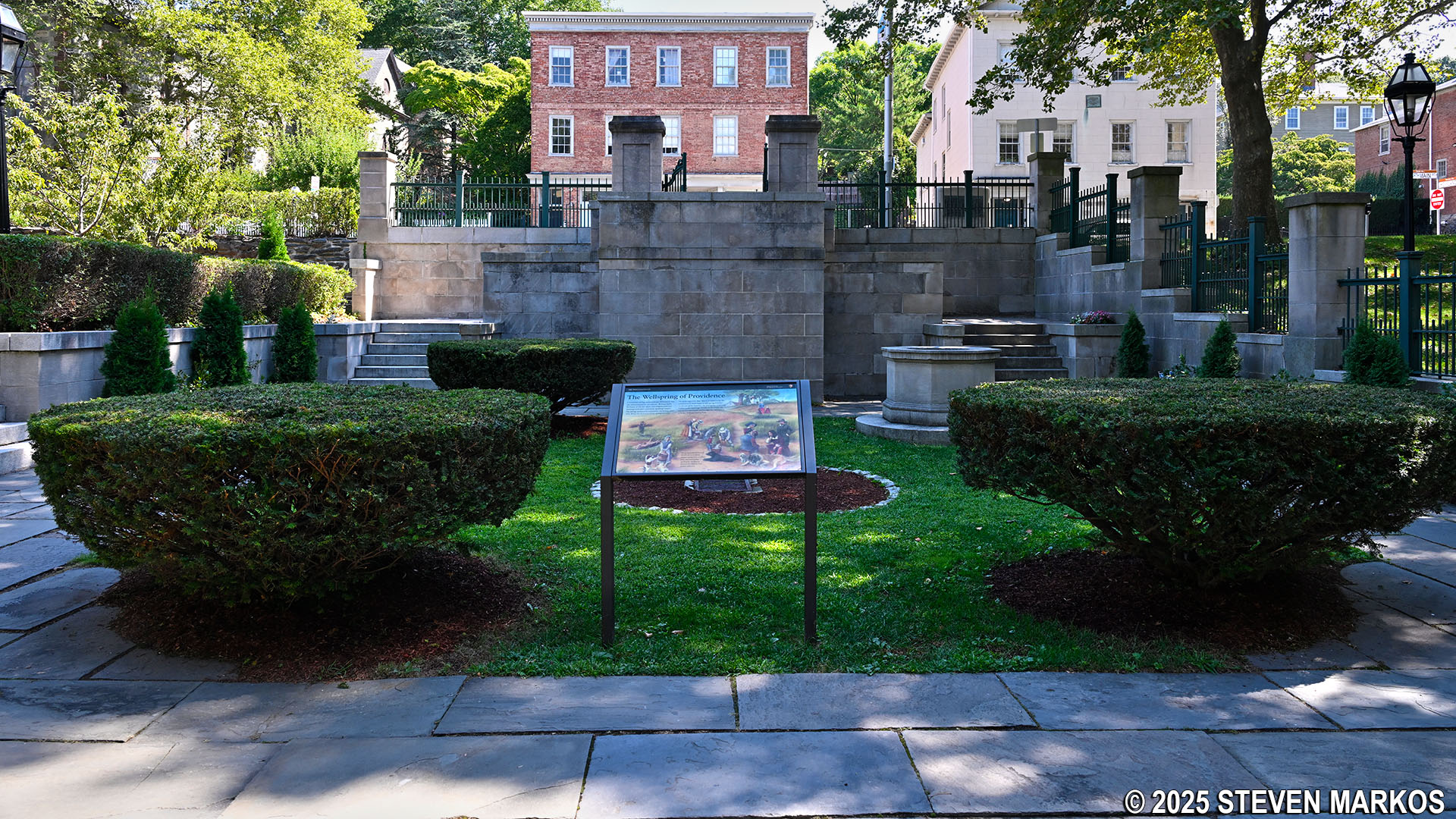
Roger Williams’ house was located on the other side of the street from the Hahn Memorial, now part of Roger Williams National Memorial

Hahn Memorial on the grounds of Roger Williams National Memorial marks the spot of the natural spring that provided Providence, Rhode Island, with fresh water
The memorial grounds are only .2 mile long and .1 mile wide at the widest point, so you can walk the entire perimeter in fifteen minutes. The northern third is where the Visitor Center, parking lot, garden, and picnic area are located. The southern two-thirds consists of a large field surrounded by shade trees. This is where concerts and other performances are held during the summer.
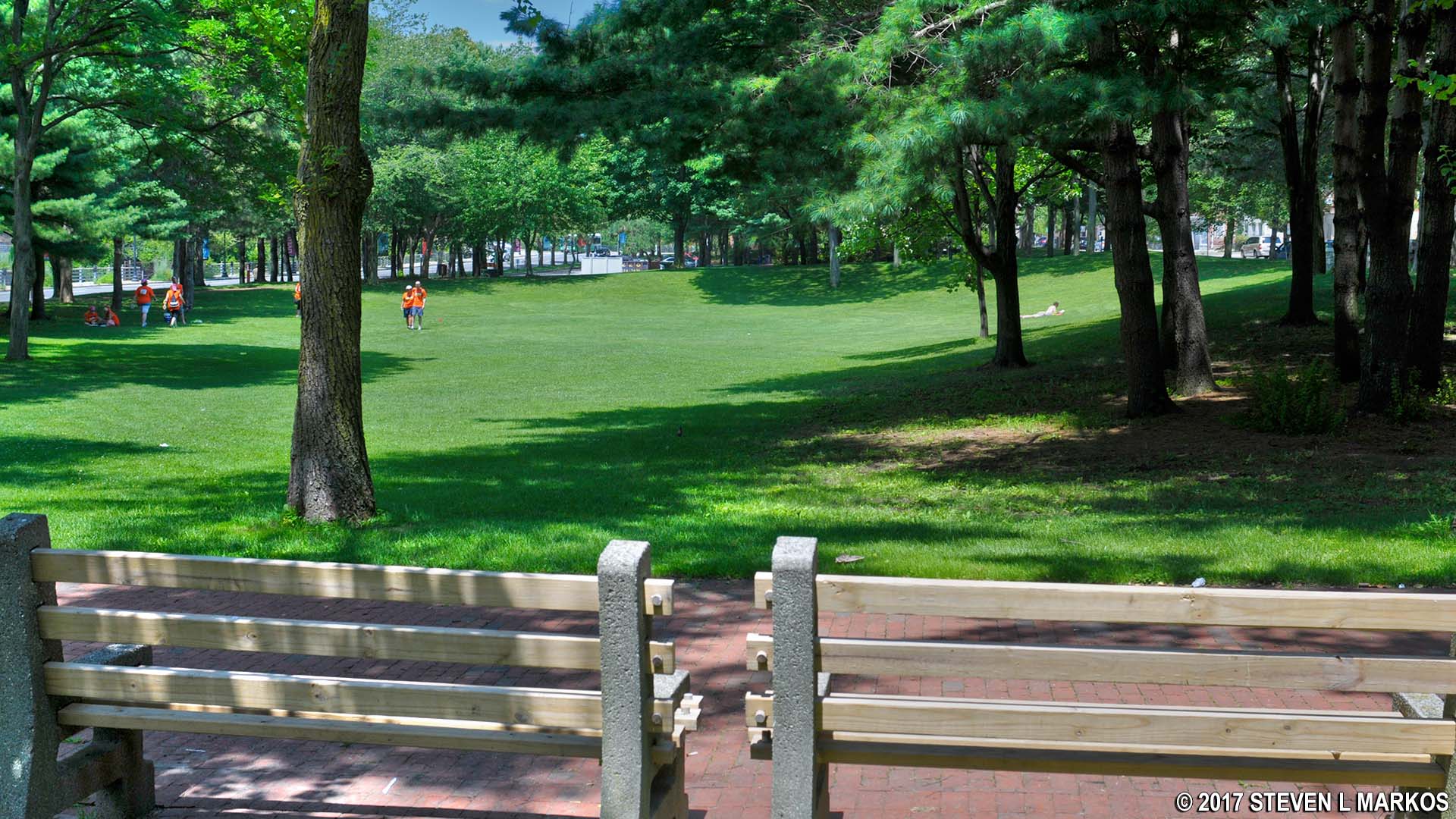
Grounds at the southern end of Roger Williams National Memorial
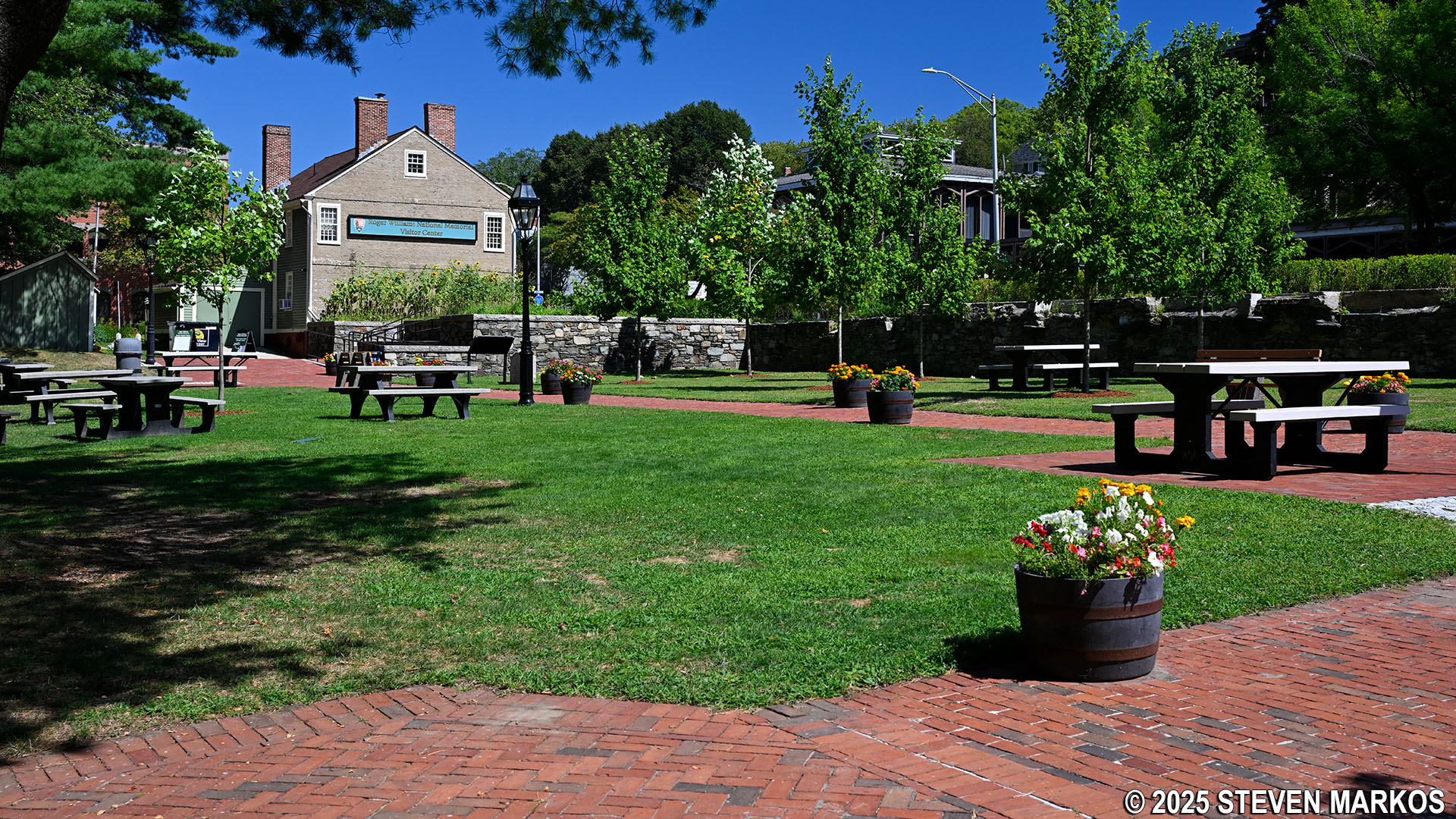
Picnic area at Rogers Williams National Memorial
There is one other memorial on the grounds, one dedicated to Gabriel Bernon. Bernon was a Huguenot who fled France and came to Providence after learning about its commitment to religious freedom. The monument looks like a tombstone, but Bernon is actually buried at St. John’s Cathedral across the street. St John’s is a church he helped start.
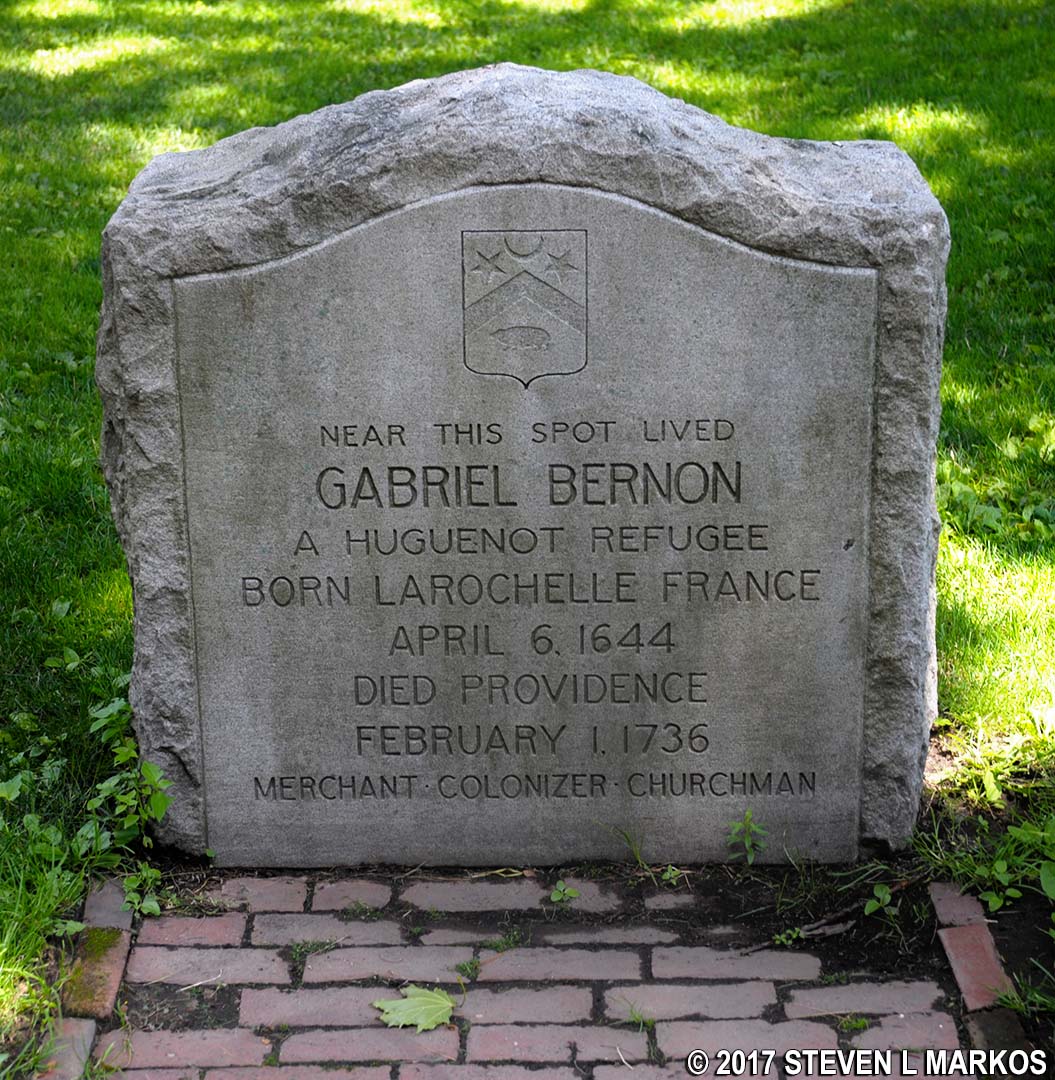
Gabriel Bernon Memorial on the grounds of Roger Williams National Memorial
With a few exceptions, use of any photograph on the National Park Planner website requires a paid Royalty Free Editorial Use License or Commercial Use License. See the Photo Usage page for details.
Last updated on November 22, 2025


