

African Burial Ground National Monument in New York City
The African Burial Ground Memorial marks the location of where a section of a long forgotten African cemetery was found during the initial construction phase of the Ted Weiss Federal Building in 1991. An excavation of the cemetery continued until protests from the local African-American community and New York politicians triggered the United States Congress to halt the project in October 1992. By that time 419 skeletons had been exhumed. While the discovery of George Washington’s body itself couldn’t stop the construction of the federal building, a compromise was reached to reinter the skeletons and build a memorial on the site of the excavated area, the only section of the block not covered by the new building.
The African Burial Ground Memorial is located at the corner of Duane Street and African Burial Ground Way (formerly Elk Street) in New York City. These streets are blocked off by security guards and barriers, so no cars are allowed. To see the memorial you must walk—there is no security check or other hassle for non-suspicious looking pedestrians. However, there is an African Burial Ground Visitor Center and Museum inside the Weiss Federal Building that is also part of African Burial Ground National Monument, and entry does require guests to pass through airport-type security. The entrance is at 290 Broadway.
The outdoor memorial is open year-round on Wednesdays through Sundays between the hours of 10 AM and 4 PM (5 PM from early May to Labor Day). These are the times when visitors can actually enter and walk through the memorial. At other times visitors are only allowed to view the memorial from the sidewalk. The entire park is closed on Thanksgiving, Christmas Day, and New Year’s Day, and anytime the grounds may be dangerous due to bad weather such as ice. Keep in mind that times can always change, so be sure to get the latest schedule on the official National Park Service’s Operating Hours and Seasons web page for African Burial Ground National Monument.
In 1999, a design competition for a physical memorial on the corner of Elk and Duane streets was opened. Sixty-one designs were entered, and in 2002 five semifinalists were chosen to continue to the next phase of the contest. In June 2004, architect Rodney Leon and his team of consultants were announced as the winner, and the design was unveiled to the public in April 2005. The memorial was completed and dedicated on October 5, 2007.
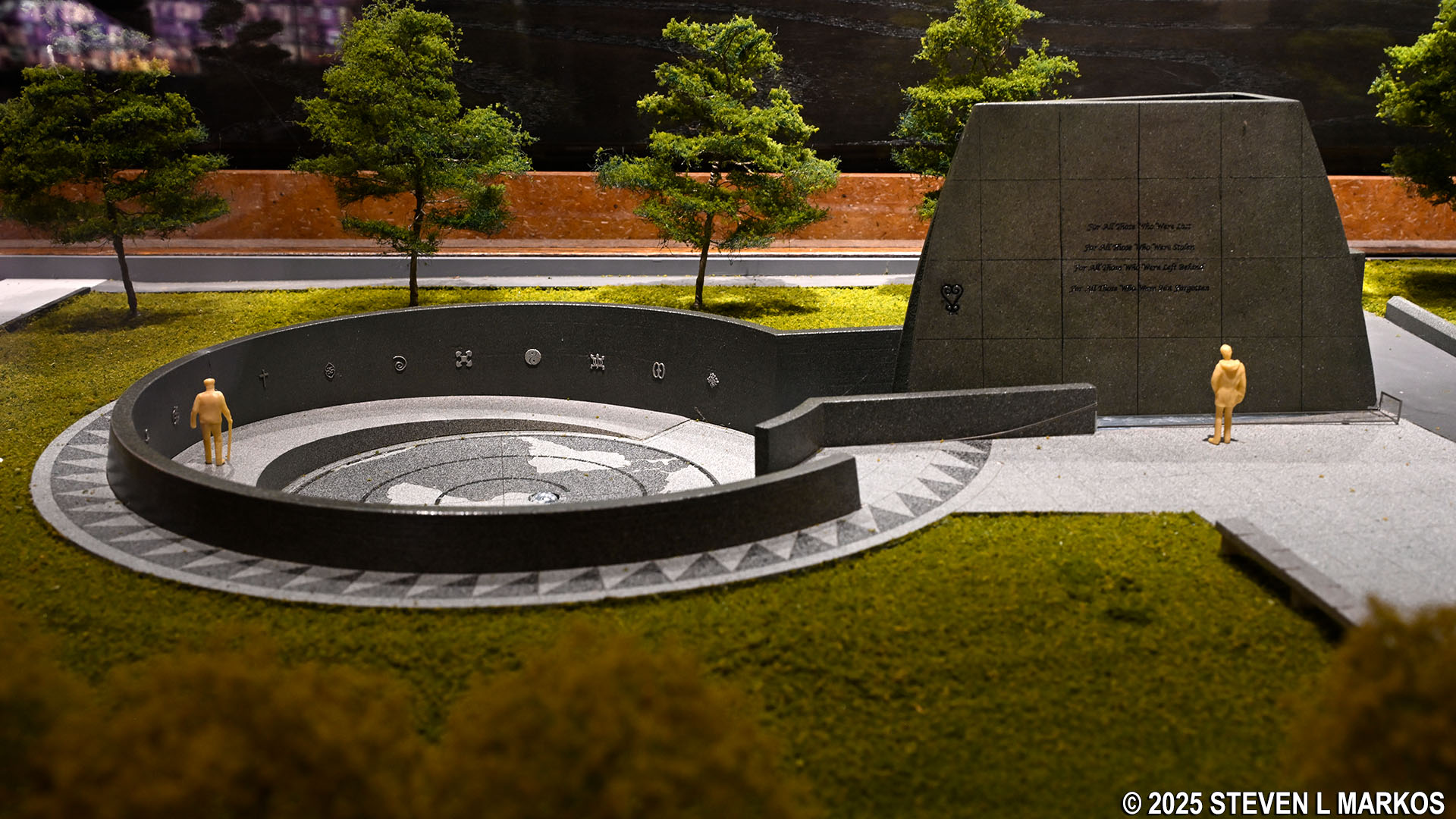
Model of the African Burial Ground Memorial
The African Burial Ground Visitor Center and Museum, the companion piece to the memorial, opened in February 2010. If you are coming specifically to see the African Burial Ground Memorial, I highly suggest stopping at the Visitor Center first.
The memorial entrance is located on Duane Street. A granite plaza leads past seven visible, grass-covered mounds of earth. These are the crypts in which the 419 skeletons exhumed from the cemetery were reinterred on October 3, 2003.

African Burial Ground Memorial and mounds of the crypts in New York City
There are two ways to enter the heart of the African Burial Ground Memorial. One is a walkway that spirals down to a granite courtyard called the Circle of the Diaspora. A wall flanking the walkway is engraved with symbols of various religions. The walkway allows accessibility to the memorial for those in wheelchairs.
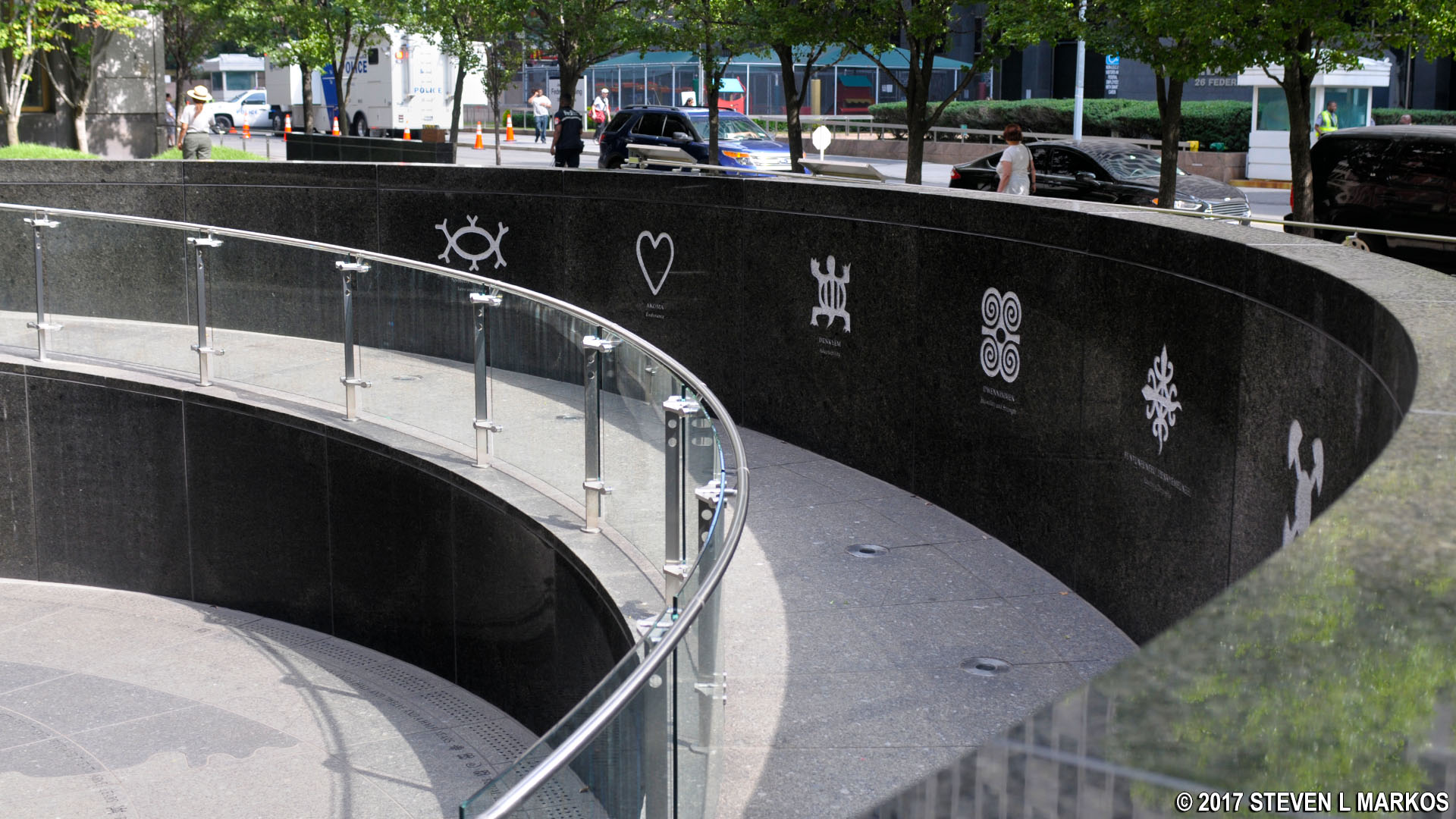
Walkway to the courtyard of the African Burial Ground Memorial in New York City
A second entrance to the courtyard is through the Ancestral Chamber, the large structure shaped like the bow of a ship—a slave ship. This entrance requires walking down stairs. A pool of water that spills over a ledge and down to the courtyard level is on either side of the structure. Exiting from the chamber onto the courtyard is like stepping out of the slave ship and into New York City for the first time.

Ancestral Chamber of the African Burial Ground Memorial in New York City

Exiting the Ancestral Chamber of the African Burial Ground Memorial in New York City
The courtyard itself is below street level to symbolize the graves found 25 feet below ground. Engraved in the courtyard floor are the descriptions of a few of the people exhumed from the cemetery. The information is based on the forensic analysis of the skeletons that was done at Howard University in Washington, D. C. The design etched into the granite floor is of a world map with Africa in the center—the dark gray is the ocean and the light grey the land.

Courtyard design of the African Burial Ground Memorial in New York City
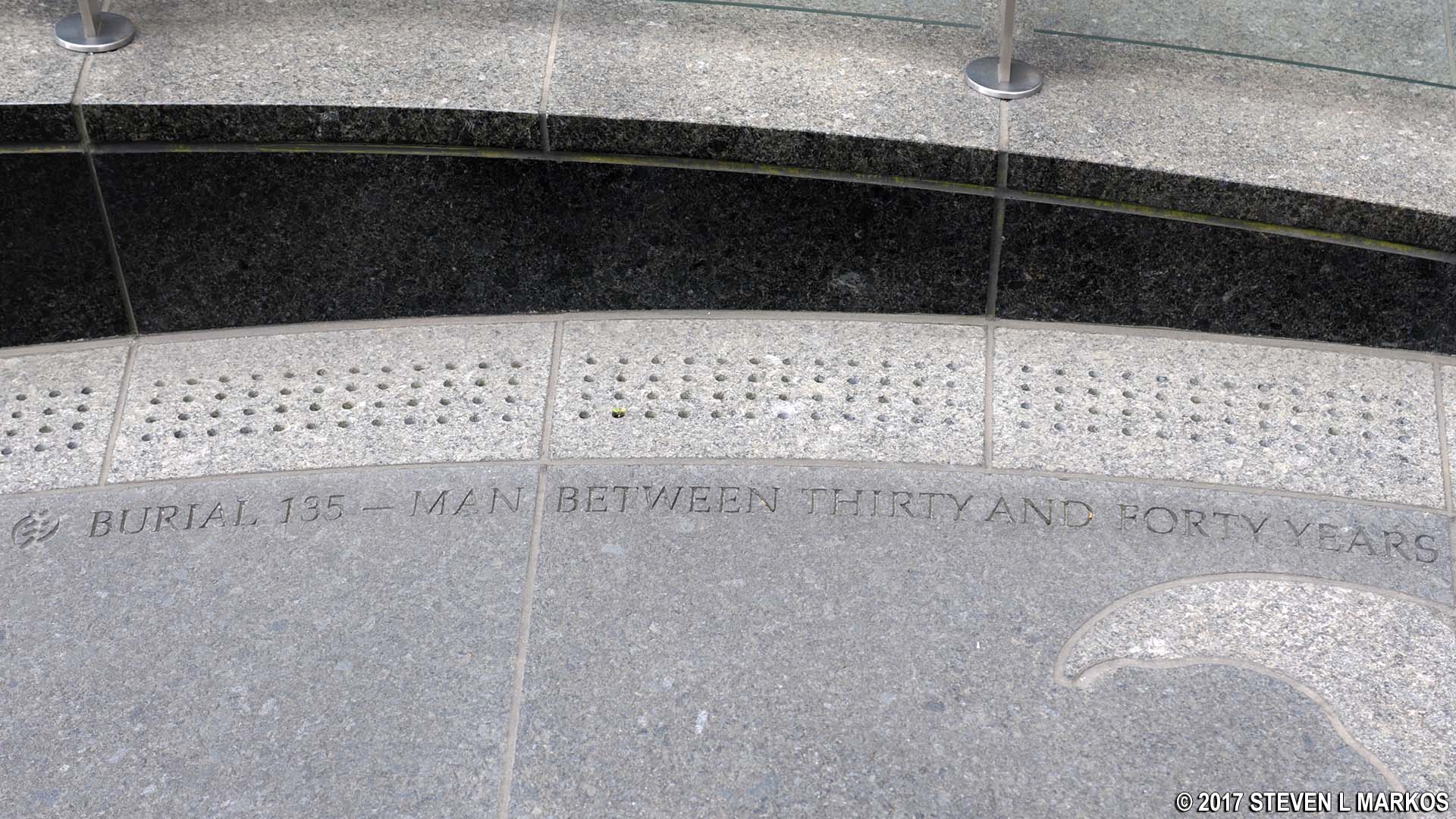
Information engraved into the African Burial Ground Memorial courtyard about the man identified in Burial 135, New York City
The Ancestral Chamber is 24 feet tall, representing the depth at which the graves were found, and made of Verde Fontaine green granite quarried in Africa. A Sankofa symbol adorns one side—Learn from the past to prepare for the future—and a map of the cemetery boundary is on the other side. As you can see, the Weiss Federal Building sits on only a small portion of the African Burial Ground. The rest of the cemetery was covered by other buildings long ago.
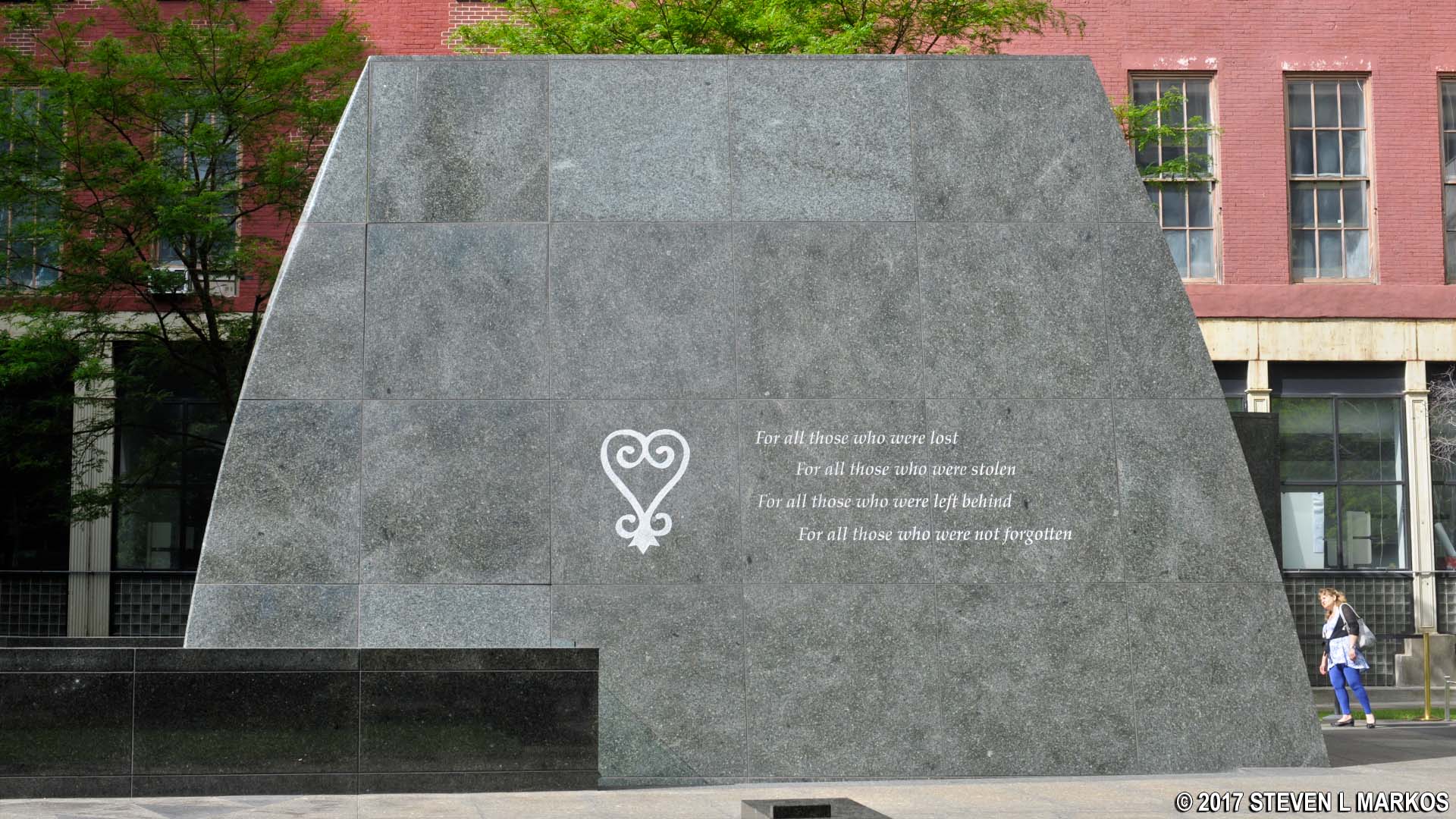
Sankofa symbol on the side of the African Burial Ground Memorial’s Ancestral Chamber facing Duane Street in New York City

Map of African Burial Ground National Monument adorns one side of the memorial’s Ancestral Chamber in New York City
Each year millions of people pass by the outdoor memorial, but the official visitation statistics for the park only count those who enter the Visitor Center. Due to the hassle of passing through airport-type security and the lack of knowledge that a Visitor Center even exists, the African Burial Ground National Monument is technically one of the least visited properties in the National Park system, with typically less than 50,000 visitors a year.
With a few exceptions, use of any photograph on the National Park Planner website requires a paid Royalty Free Editorial Use License or Commercial Use License. See the Photo Usage page for details.
Last updated on September 22, 2026


