
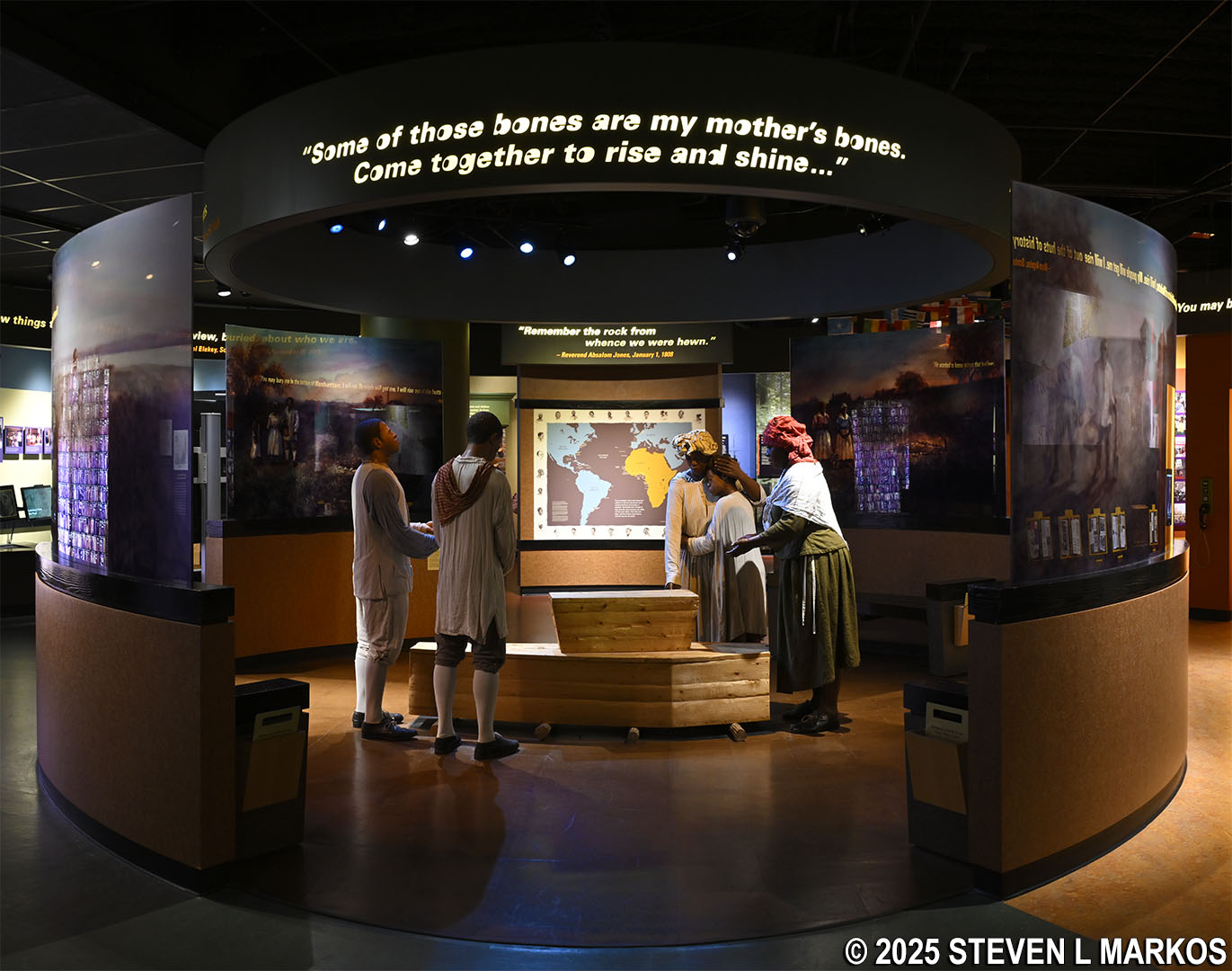
Interior of the African Burial Ground National Monument Visitor Center in New York City
GENERAL INFORMATION
The African Burial Ground National Monument Visitor Center in located in the Ted Weiss Federal Building in downtown New York City. It has its own entrance at 290 Broadway, so do not attempt to use any other entrance to the building because you will be turned away. Visitors must pass through airport-type security, and adults must show identification.
OPERATING HOURS
The Visitor Center and Museum are open year-round on Wednesdays through Sundays from 10 AM to 4 PM, except when closed on Thanksgiving, Christmas Day, and New Year’s Day. Times can always change, so before making travel plans be sure to get the latest schedule on the National Park Service’s official Operating Hours and Seasons web page for African Burial Ground National Monument.
AMENITIES
- Information desk where you can pick up a park brochure
- Large museum
- Book and souvenir store
- Park film
- Restrooms
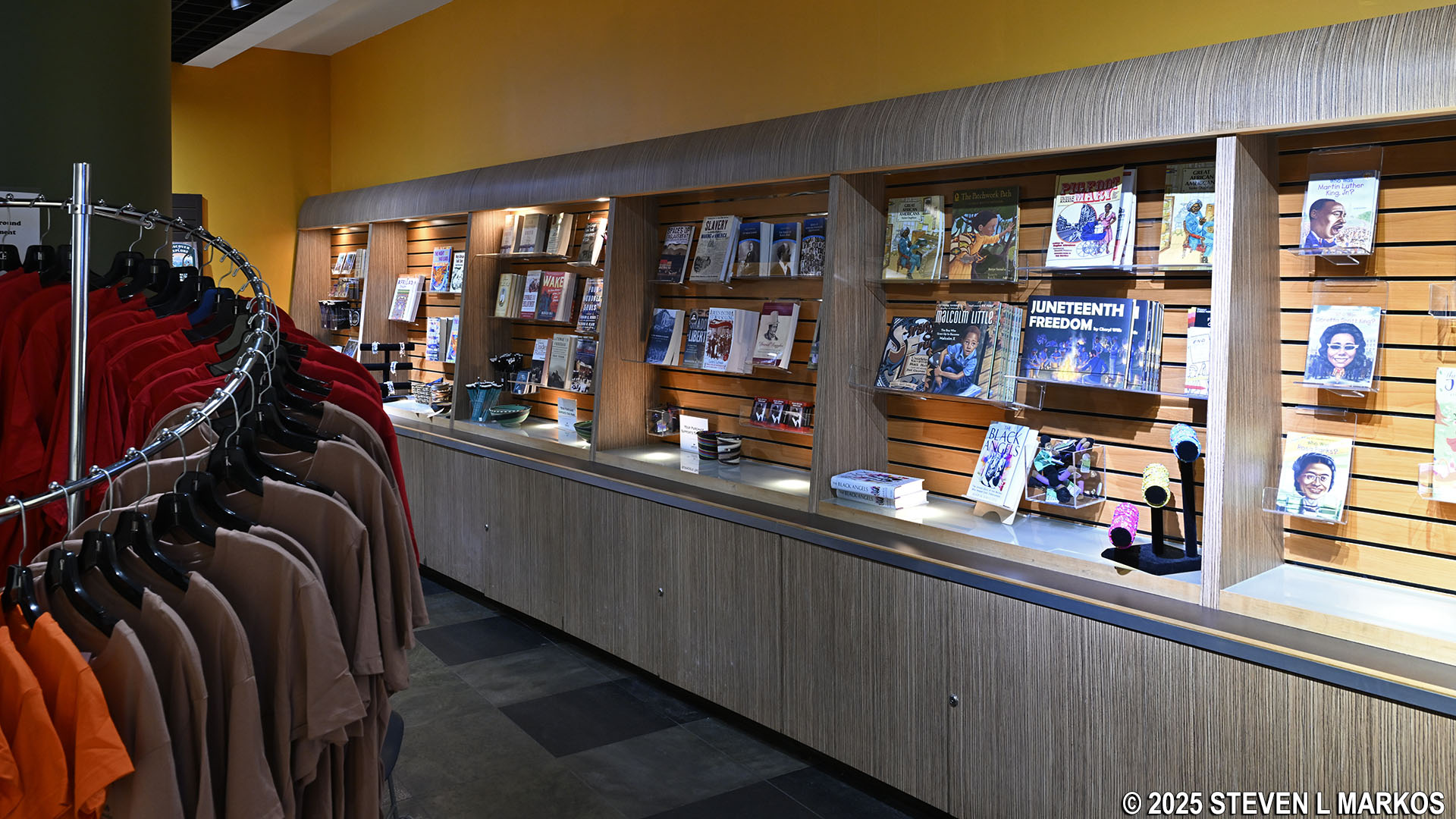
Book and souvenir store in the Visitor Center of African Burial Ground National Monument in New York City
PARK FILM
The 21-minute film Our Time of Life is shown in a media room. The first third of the film uses a combination of actual actors and interviews with historians to tell the story of the African Burial Ground and slavery in New York. The second third switches focus to the controversy surrounding the discovery of the burial ground during the construction of the Ted Weiss Federal Building and the subsequent creation of the park. The final chapter of the story returns to the past and details the traditional burial practices used by the Africans. Actors reenact the scene. The film has no objectionable material and is suitable for all ages.
MUSEUM
The museum at the African Burial Ground National Monument was designed by a professional company, and it shows. It is wonderfully lit, full of vibrant colors, and contains exhibits that are well laid out and interesting to the eye upon first glance. Exhibits consist of information panels, copies of old newspaper articles, photos of the archaeological excavation of the cemetery, and reproductions of artifacts found at the burial site.
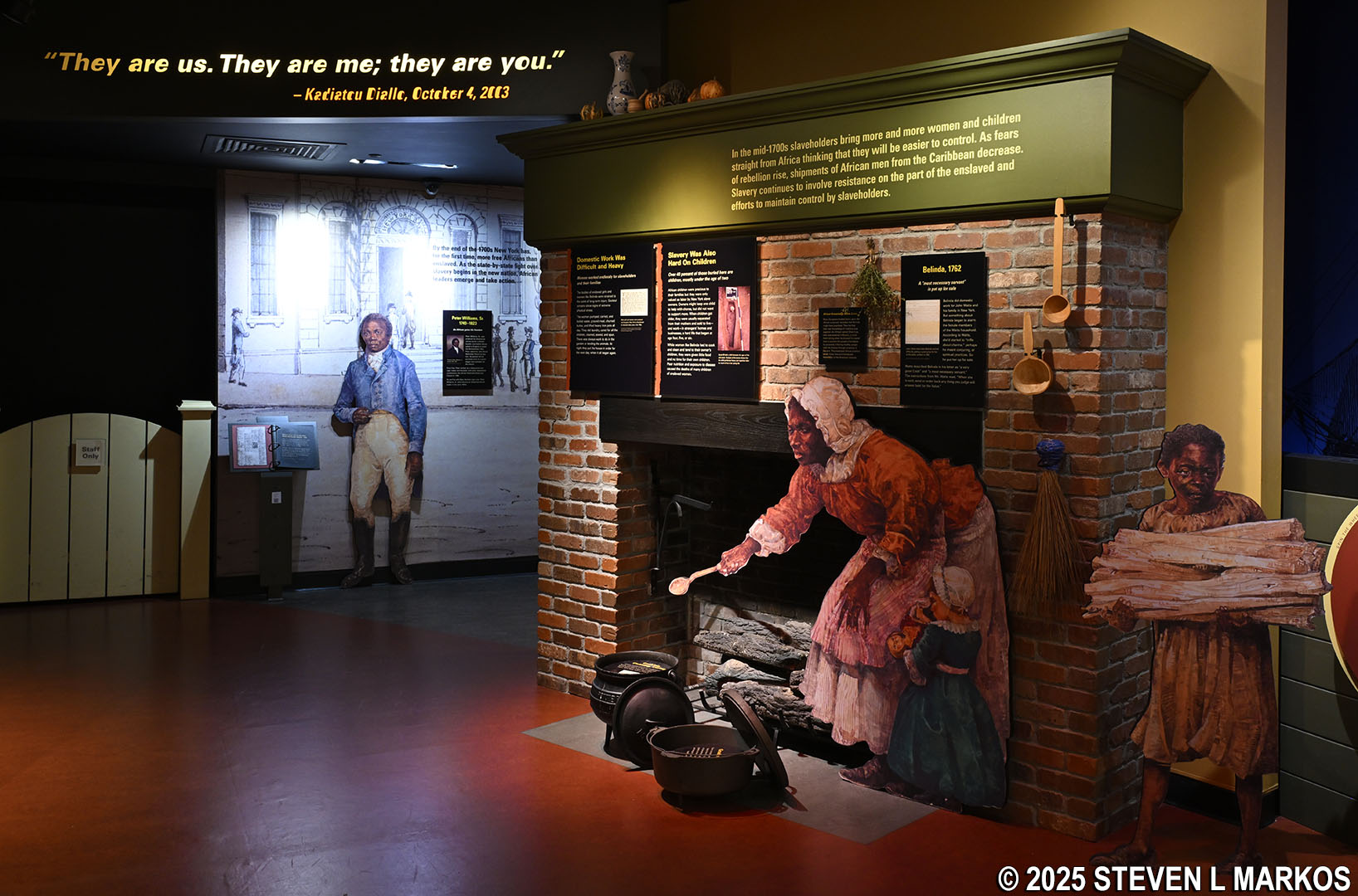
Museum in the African Burial Ground National Monument Visitor Center in New York City
The centerpiece of the museum is a diorama depicting an 18th century African funeral as it may have been carried out by slaves living in New York. This same scene is reenacted in the last part of the park film, and the exhibit features the same audio as in the film.
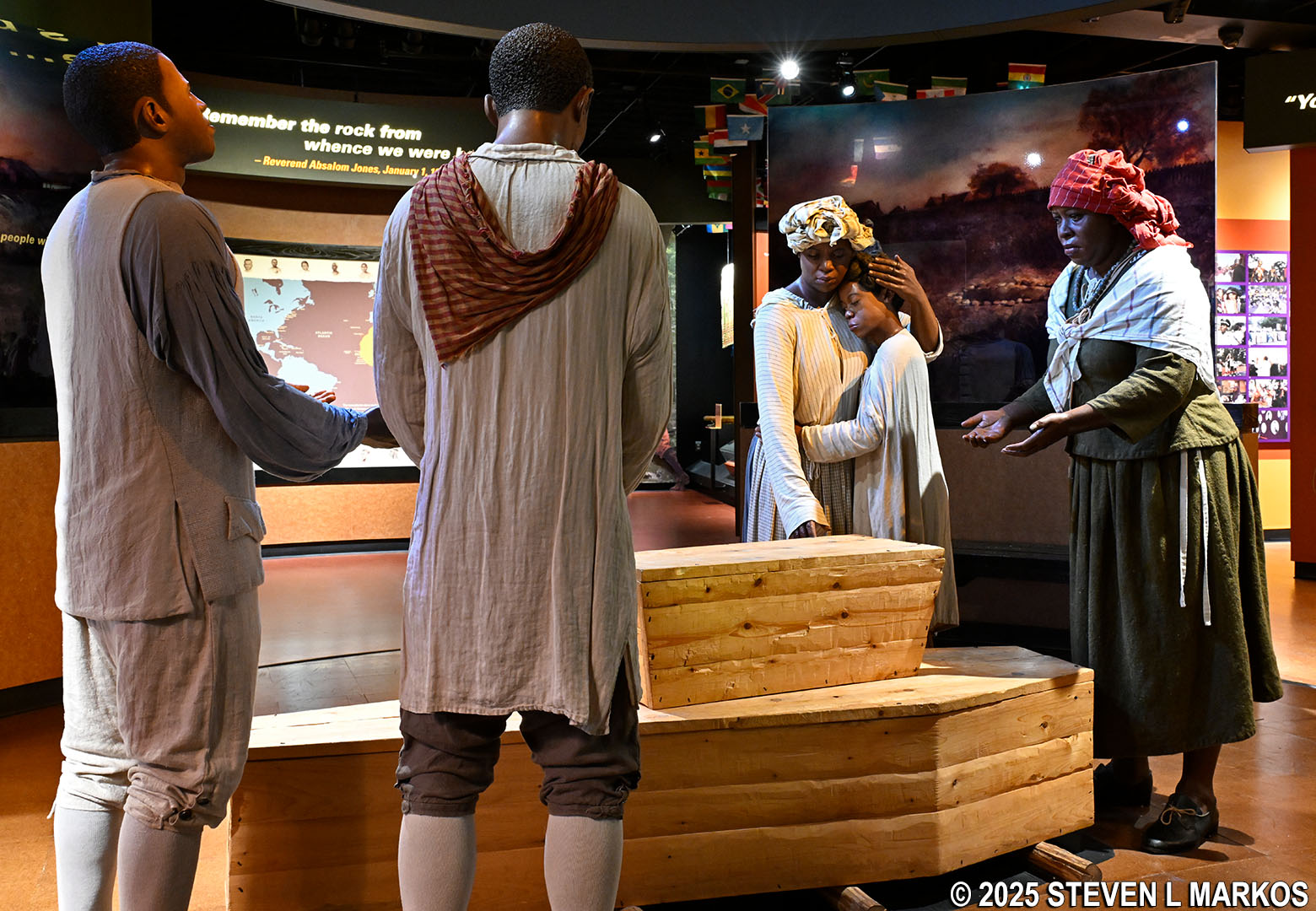
Diorama of an African funeral in 18th century New York on display at the African Burial Ground National Monument Visitor Center in New York City
The focus of the museum is on slavery in New York. While most people think of slavery as a southern institution, it wasn’t completely phased out in most northern states until the early 1800s. New York allowed slavery until 1827, and even then it was legal for out-of-state visitors to bring their slaves with them. There is an interesting exhibit based on historical records about the original eleven Africans who were brought to America by the Dutch in 1625 to what was then New Amsterdam. Most were later freed and given land, but once the British took the settlement by force from the Dutch, their land was confiscated.
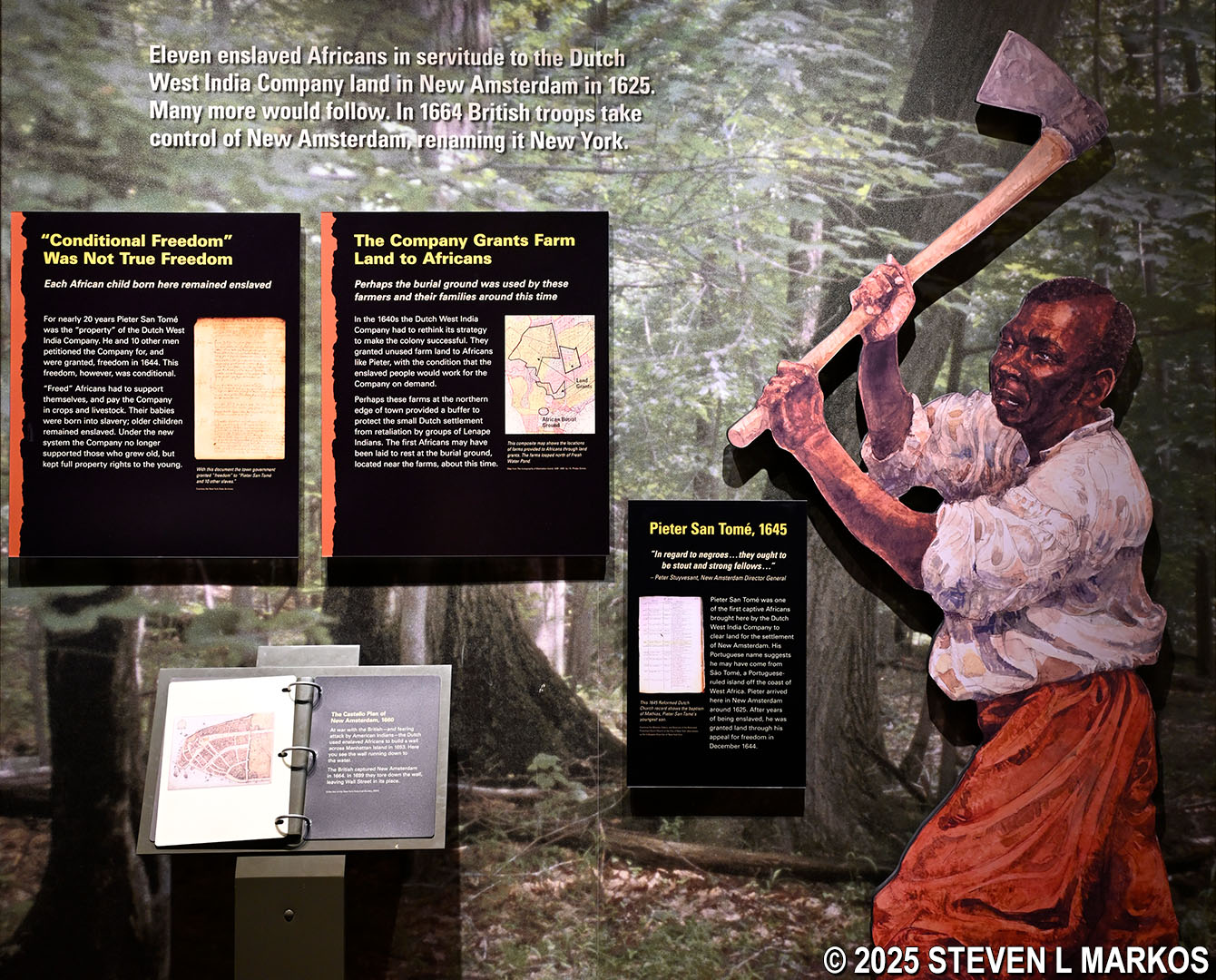
Exhibit at the African Burial Ground National Monument Visitor Center about the original slaves brought to New Amsterdam by the Dutch in New York City
Also depicted in similar exhibits are slaves from later times. Information on these individuals is based on news reports, court records, and other historical documents. These men and women were most likely among those buried in the African Burial Ground. Telling the stories of actual individuals personalizes slavery, whereas the simple recounting of facts and statistics permits slavery to remain an abstract idea for most people today.
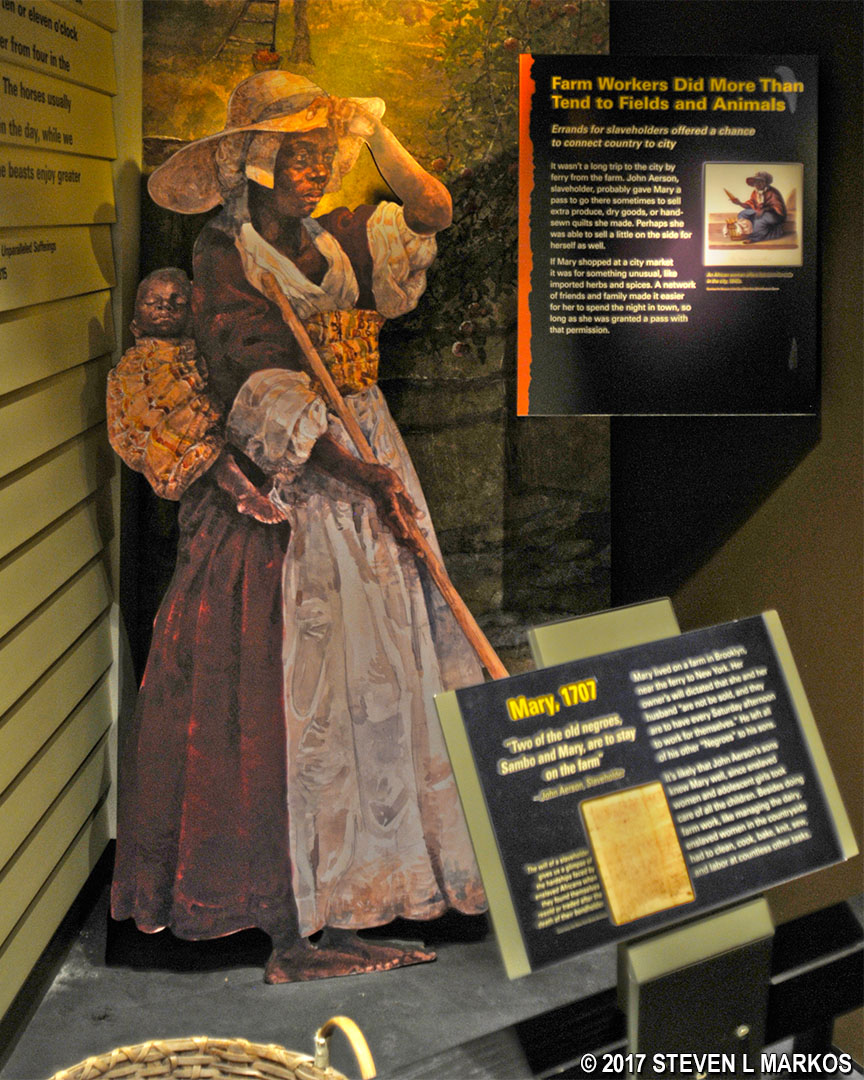
Exhibit at the African Burial Ground National Monument Visitor Center about the life of a typical slave in New York
Another large section of the museum deals with the discovery of the cemetery, the ensuing controversy over the federal building being constructed on the site, and the creation of African Burial Ground National Monument. You can also watch interviews with all of the major players involved with the cemetery, both government officials and activists. For more information, be sure to read through some of the newspaper articles that are collected in a series of African Burial Ground Scrapbooks.
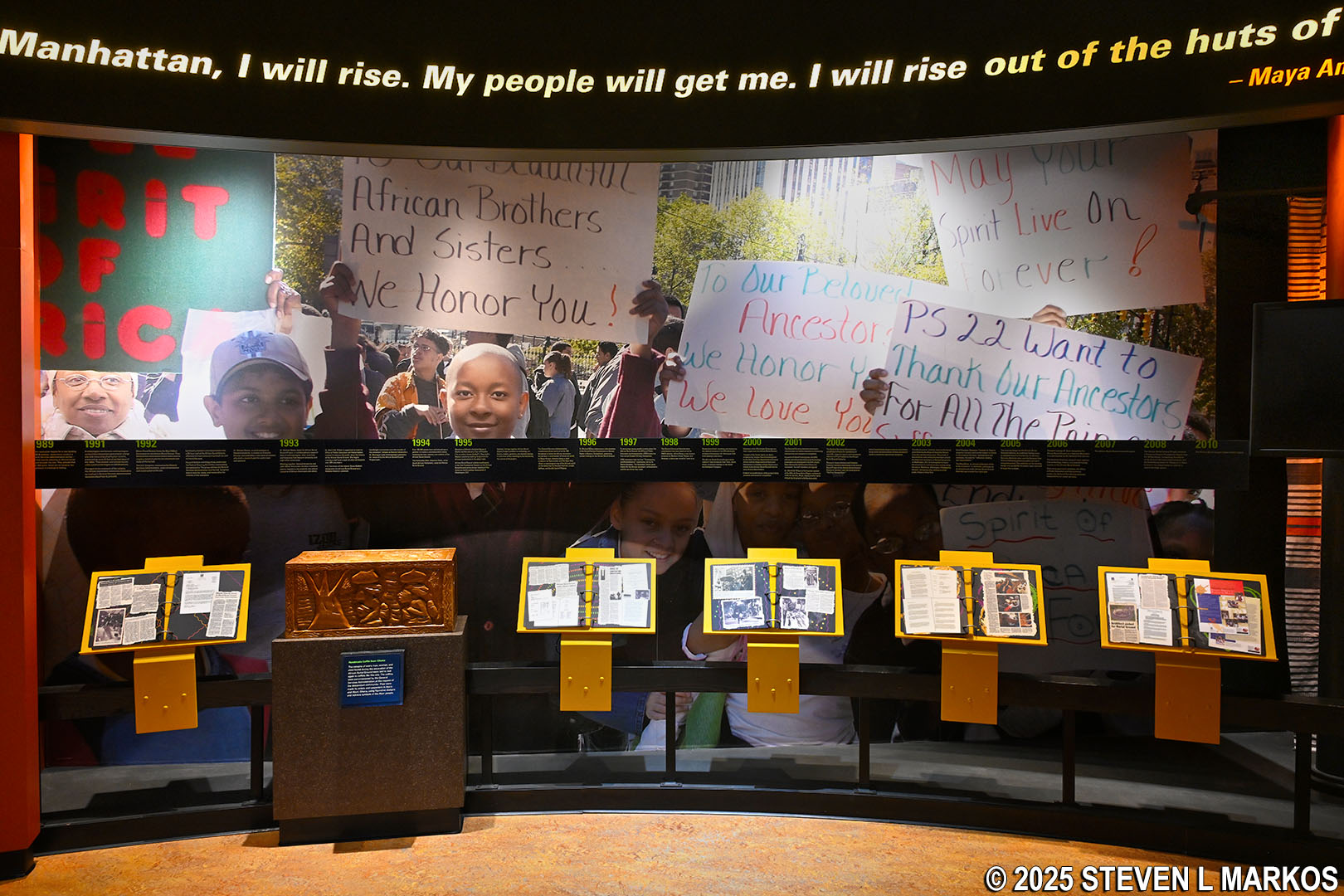
Exhibit on the creation of the African Burial Ground National Monument in New York City
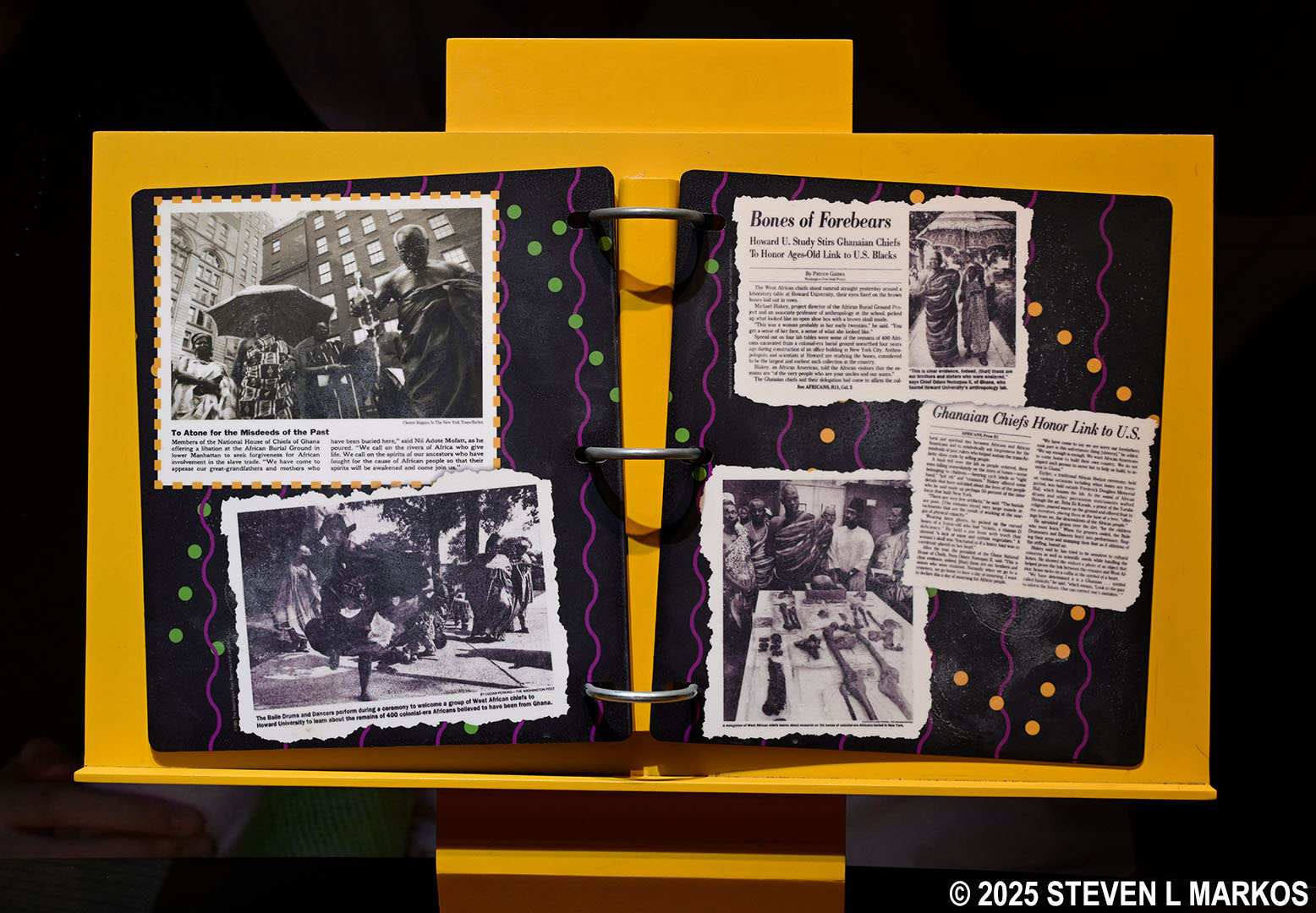
African Burial Ground Scrapbook on display at the African Burial Ground National Monument Visitor Center in New York City
The results of the research on the exhumed skeletons is imparted through an exhibit on the archaeology of the site. Over 400 skeletons were removed from the cemetery before the excavation was shut down by Congress at the request of local activists and politicians. The bones were eventually taken to Howard University in Washington, D. C., for examination. In October 2003, all remains were returned to New York and reinterred in seven crypts on the ground of the excavation site. When visiting the outdoor memorial at the corner of Duane and Elk streets, these seven mounds are clearly visible.
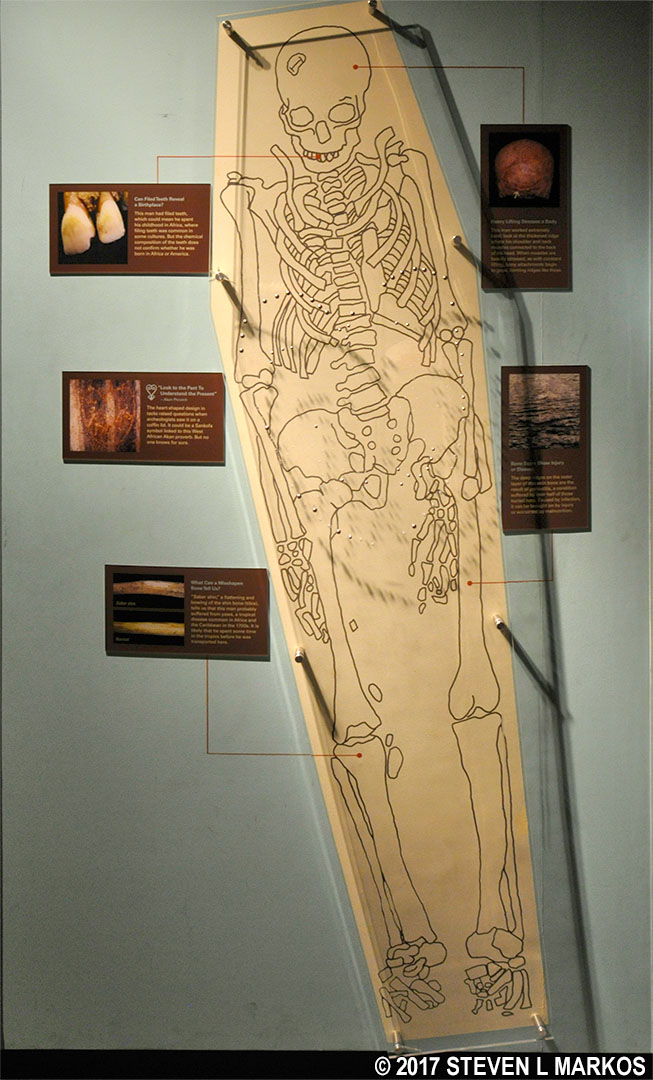
Forensic information on one of the skeletons exhumed at the African Burial Ground in New York City
SCHEDULING YOUR TIME
It takes a full hour and a half for a thorough visit to the African Burial Ground National Monument Visitor Center and Museum, which entails watching the park film, seeing and reading through all of the main exhibits, and listening to some of the interviews with the people involved with the creation of the park. However, most people do not have that level of interest, but I still suggest scheduling at least an hour for your visit so you can watch the film and see the highlights of the museum.
With a few exceptions, use of any photograph on the National Park Planner website requires a paid Royalty Free Editorial Use License or Commercial Use License. See the Photo Usage page for details.
Last updated on September 22, 2026


