
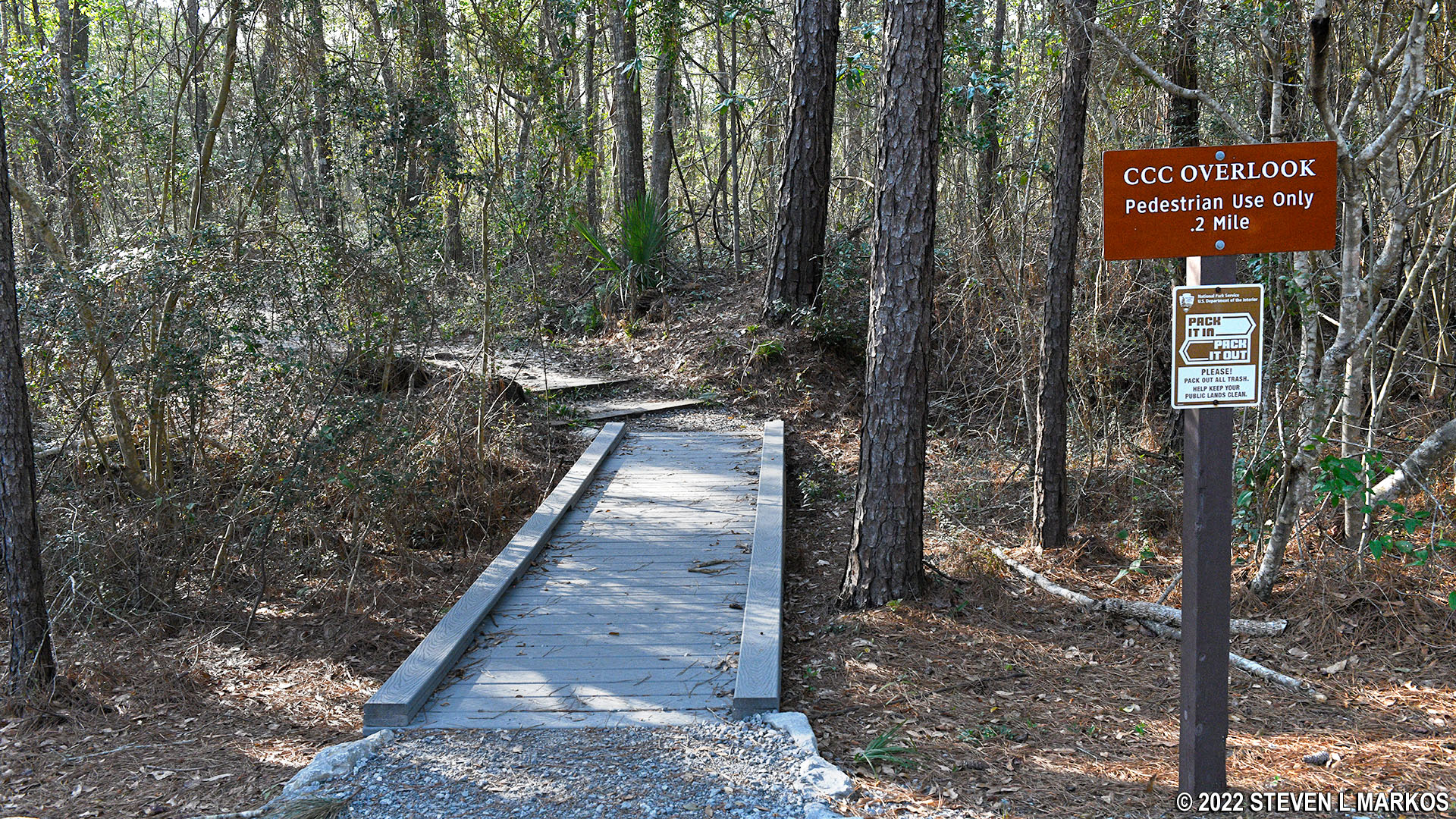
CCC Spur Trail at Davis Bayou, Gulf Islands National Seashore
See the Hiking web page for a trail map.
Length: .4-mile, round trip
Time: 15 minutes
Difficulty: Easy
The CCC Spur Trail does not have a parking lot of its own, so you must hike to it along the Davis Bayou Trail from either the trailhead at the Visitor Center or from the trailhead at the picnic area near the corner of Robert McGhee Road and Boat Launch Road. It is .35 mile from the Visitor Center and .5 mile from the picnic area. Nearly everyone walking this trail does so as a side trip while hiking the Davis Bayou Trail.
The trail is flat and easy with smooth terrain. You’ll depart from the sunshine once you leave the openness of the Davis Bayou Trail—which is nothing more than a gravel path that follows the park roads—and enter into the forest.
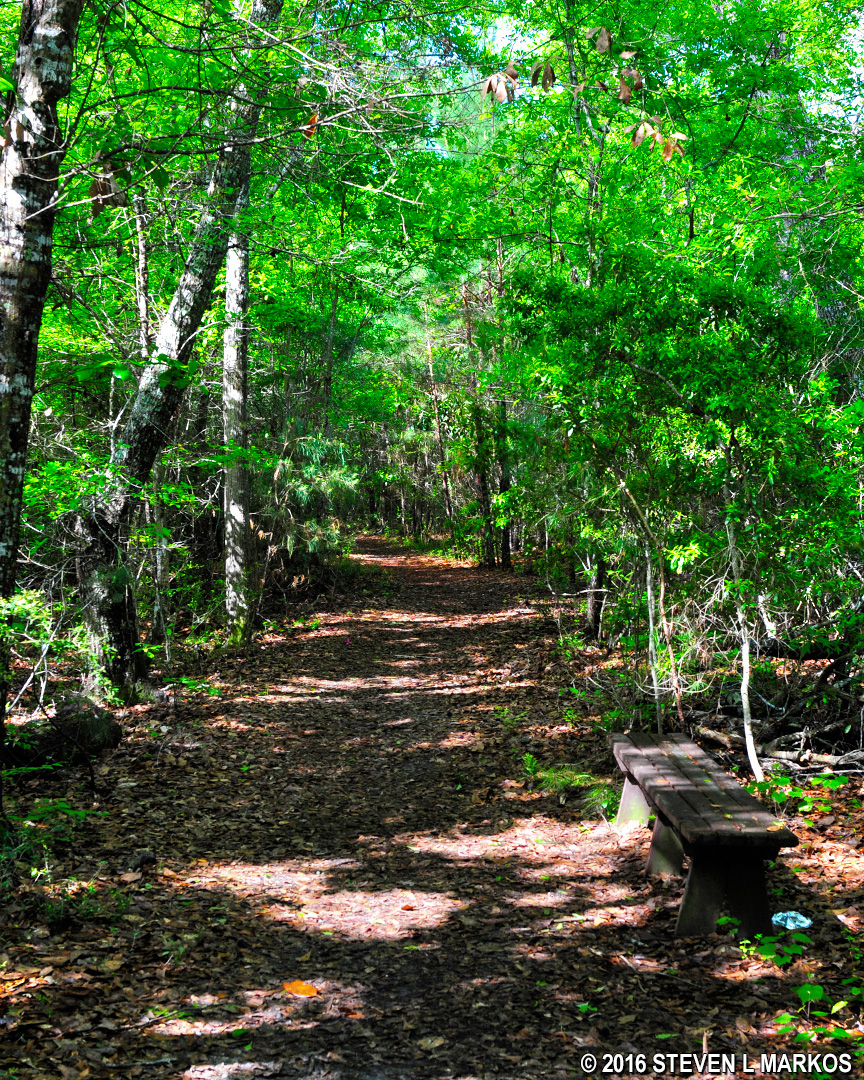
Typical terrain of the CCC Spur Trail at Davis Bayou, Gulf Islands National Seashore
About .2 mile from the start is an unmarked intersection with a short trail veering off to the right. At the end of the trail is a wayside exhibit, and you can see this from the intersection. The main trail continues farther, but it quickly dead ends at a thicket of saw palmetto bushes, so don’t bother. Take a right on the side trail, as this leads to the ruins of an old CCC camp (thus the name CCC Spur Trail).
CCC stands for Civilian Conservation Corps, which was an organization conceived by the Franklin D. Roosevelt administration to help young, unmarried men get back to work in the wake of the Great Depression (1929-39). Many of the National and State Park trails and campgrounds were built by members of the CCC during this time. In many instances, housing was constructed at the park so the men had a place to stay. What you see at the end of this short trail is the foundation of a dining room / recreation building. The park they helped build was Magnolia State Park, which became part of Gulf Islands National Seashore when it was created in 1971.

Ruins of the CCC building on the CCC Spur Trail at Davis Bayou, Gulf Islands National Seashore
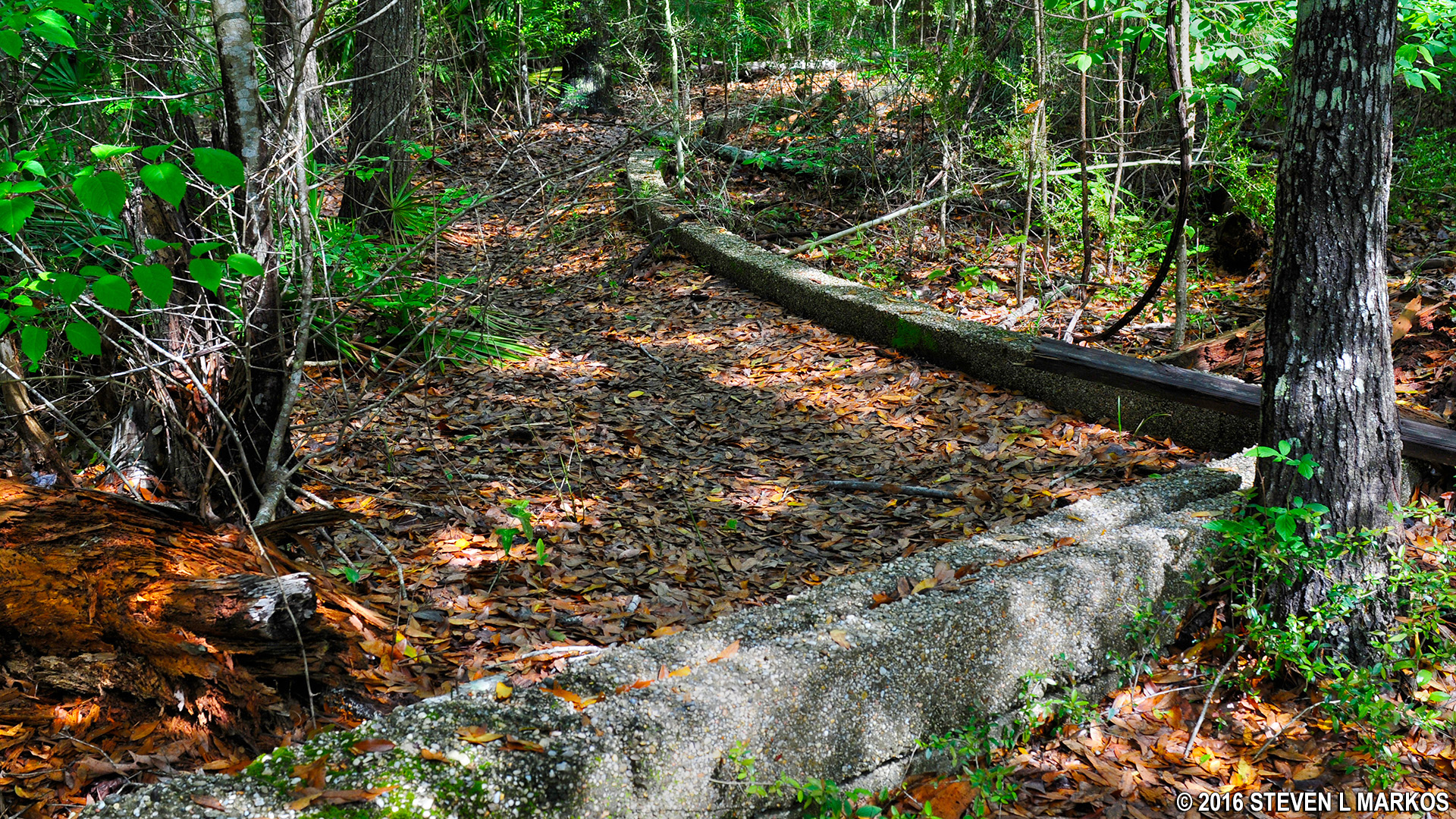
Foundation of the CCC dining/recreation building in the Davis Bayou unit of Gulf Islands National Seashore
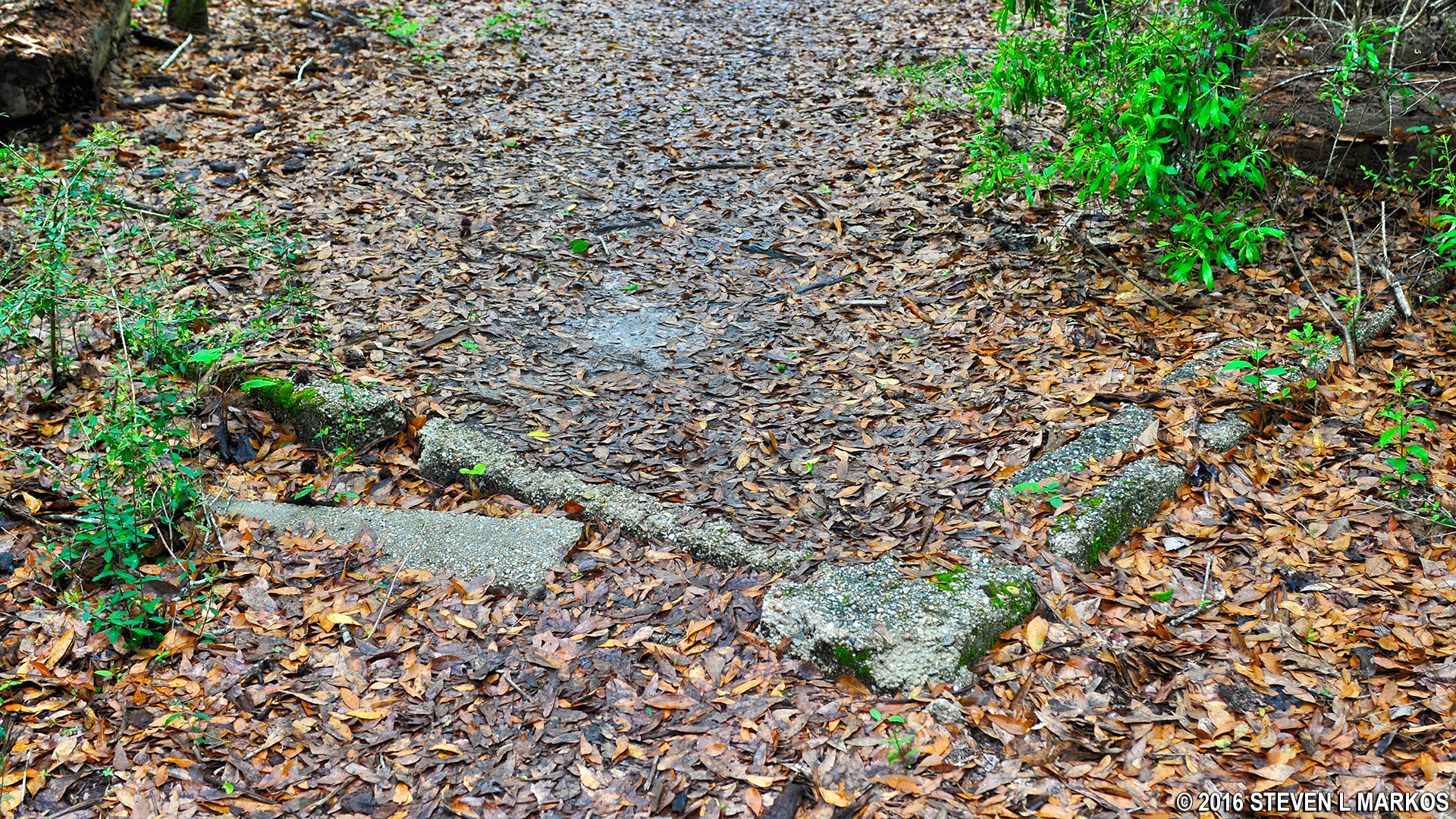
Foundation of the CCC dining/recreation building in the Davis Bayou unit of Gulf Islands National Seashore
The presence of the CCC can be seen at more locations than just the end of the spur trail. On your way back, keep a watchful eye on the woods and you may see remnants, mainly cement blocks, of other CCC buildings. There is no way to get to them due to excessive vegetation and debris.
If you have an interest in historical ruins, you might want to hike the CCC Spur Trail, otherwise just continue your hike along the Davis Bayou Trail (if that is indeed the trail you are on when passing the CCC Spur Trail). Other than the ruins, the trail offers nothing more than a short walk in the woods.
With a few exceptions, use of any photograph on the National Park Planner website requires a paid Royalty Free Editorial Use License or Commercial Use License. See the Photo Usage page for details.
Last updated on March 13, 2025


