
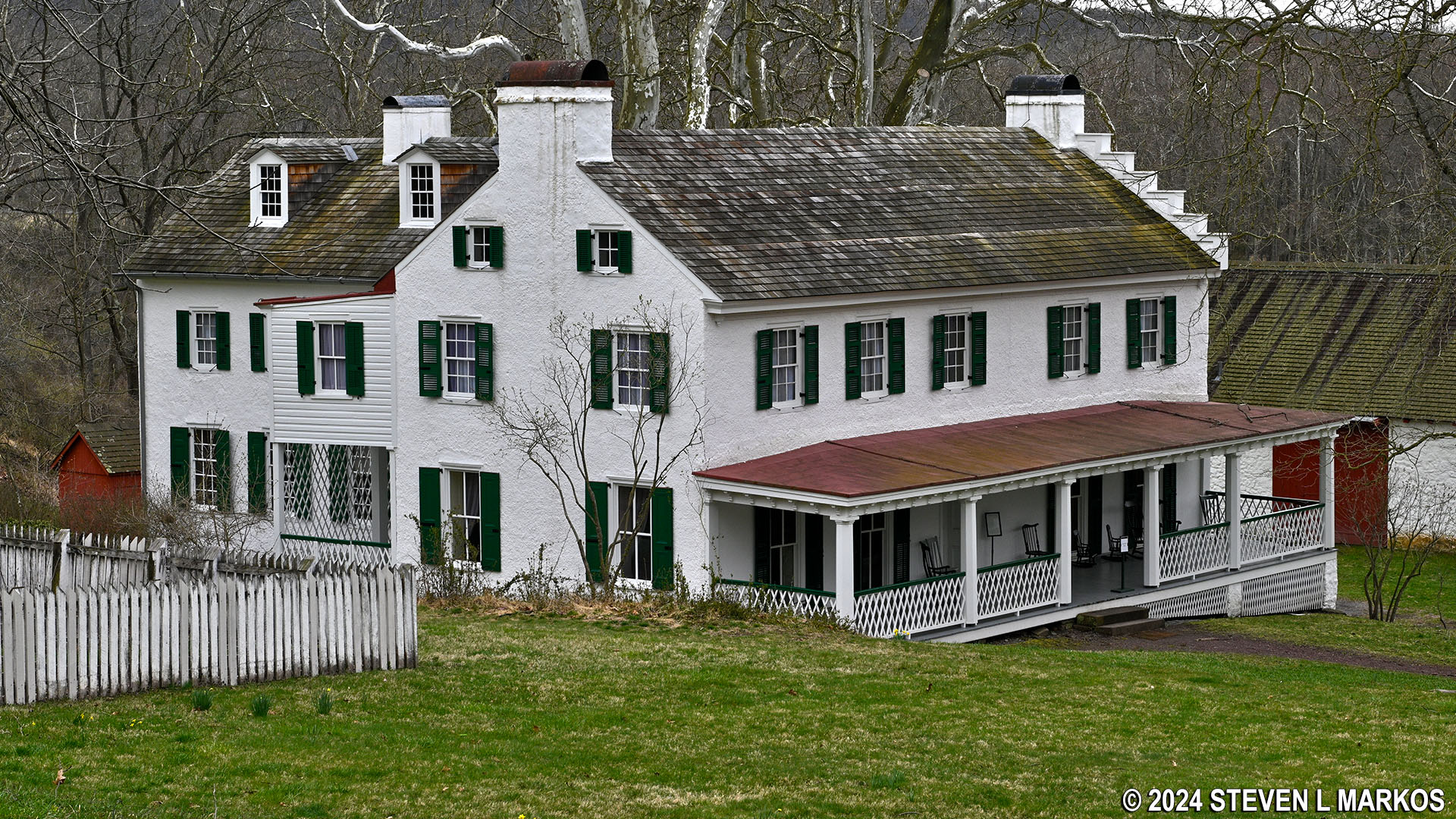
Ironmaster’s House at Hopewell Furnace National Historic Site
Historical Furnace Village Main Page
The Ironmaster’s House was always the largest house at an iron furnace. Also called the Big House, this is where the manager, aka the Ironmaster, lived with his family. The Ironmaster was typically the owner of the business, but that was not always the case. In addition to being a residence, the Big House at Hopewell Furnace was used as an office, a guest house, and even a boarding house for single male workers.
The oldest part of the Big House at Hopewell Furnace dates to the early 1770s when founder Mark Bird first built the furnace. This original section is the part of the house where the front door and the porch are located (the porch itself was added in the 1860s). The addition to the rear was built around 1830 by Clement Brooke, the ironmaster at the time, for his family and servants. When the addition was completed, the house had a total of 19 rooms.
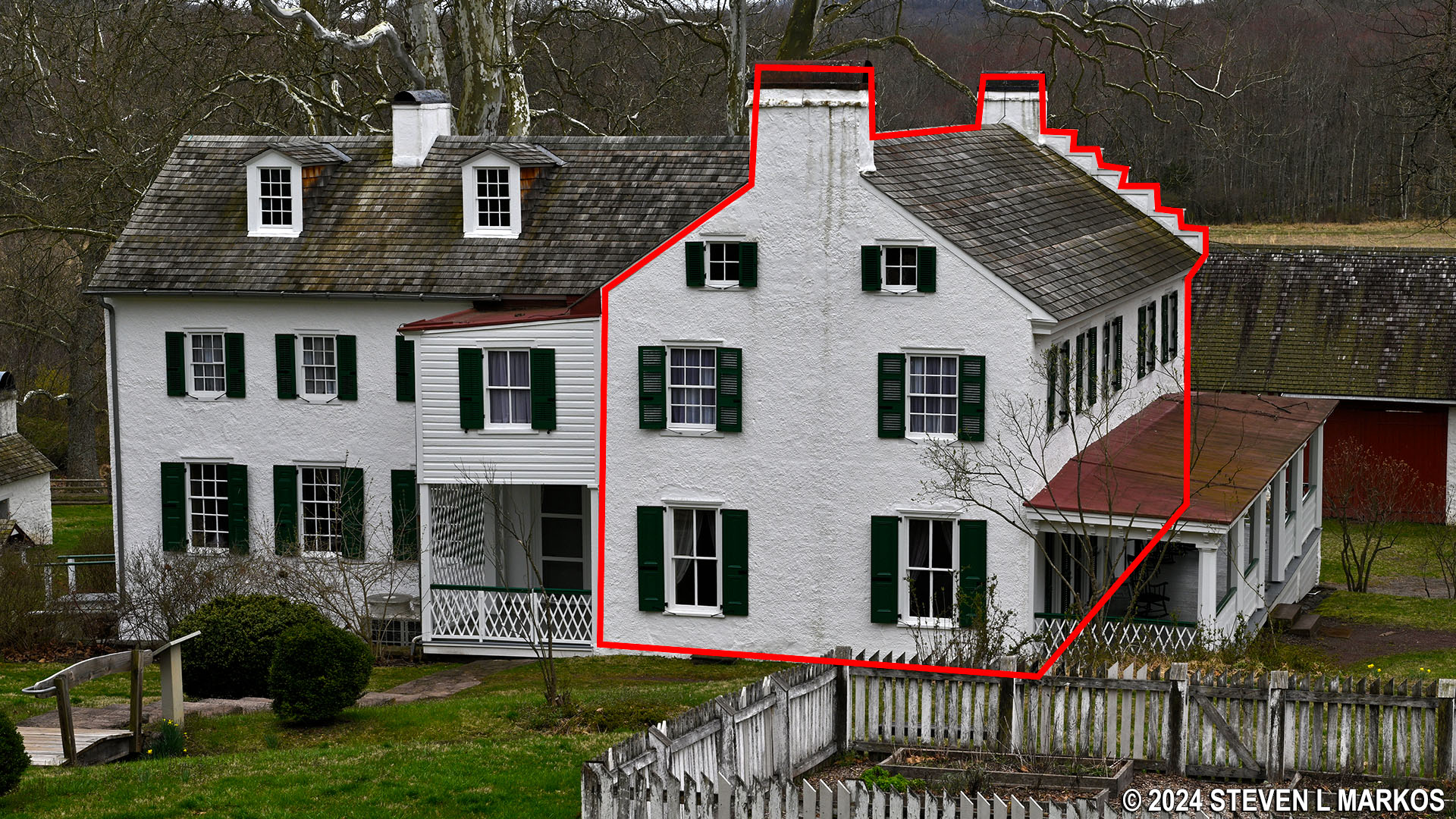
Red outline indicates the original section of the Ironmaster’s House at Hopewell Furnace National Historic Site
The first floor of the Ironmaster’s House is open, and three rooms are furnished as they might have been between 1820 and 1840 when Hopewell Furnace was in its heyday. Some of the furniture was owned by the Brooke and Clingan families. The Brookes were partners in the furnace starting in 1800, and the Clingans came into the family by marriage. The descendants of these families owned the property up until the time it was sold to the United States government in 1935.
The first floor was the busiest in the house for it catered to guests, business associates, furnace managers, and the Ironmaster’s family. Rooms on the first floor include the formal sitting room, which doubled as the main office of Hopewell Furnace, the parlor, and dining room for family, guests, and clients. There were almost always visitors at Hopewell Furnace, and the Big House is where they slept and ate.
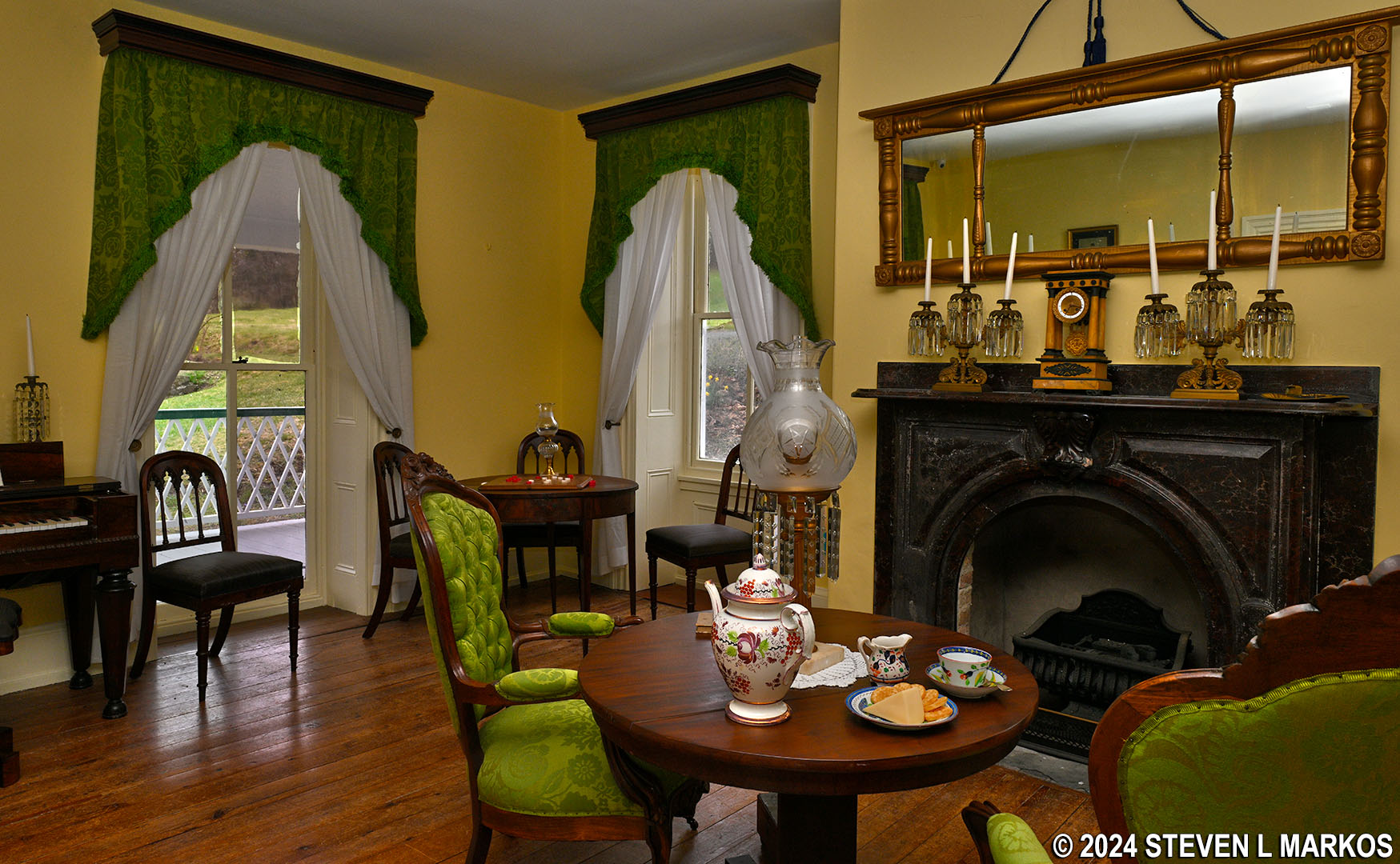
Parlor on the first floor of the Ironmaster’s House at Hopewell Furnace National Historic Site
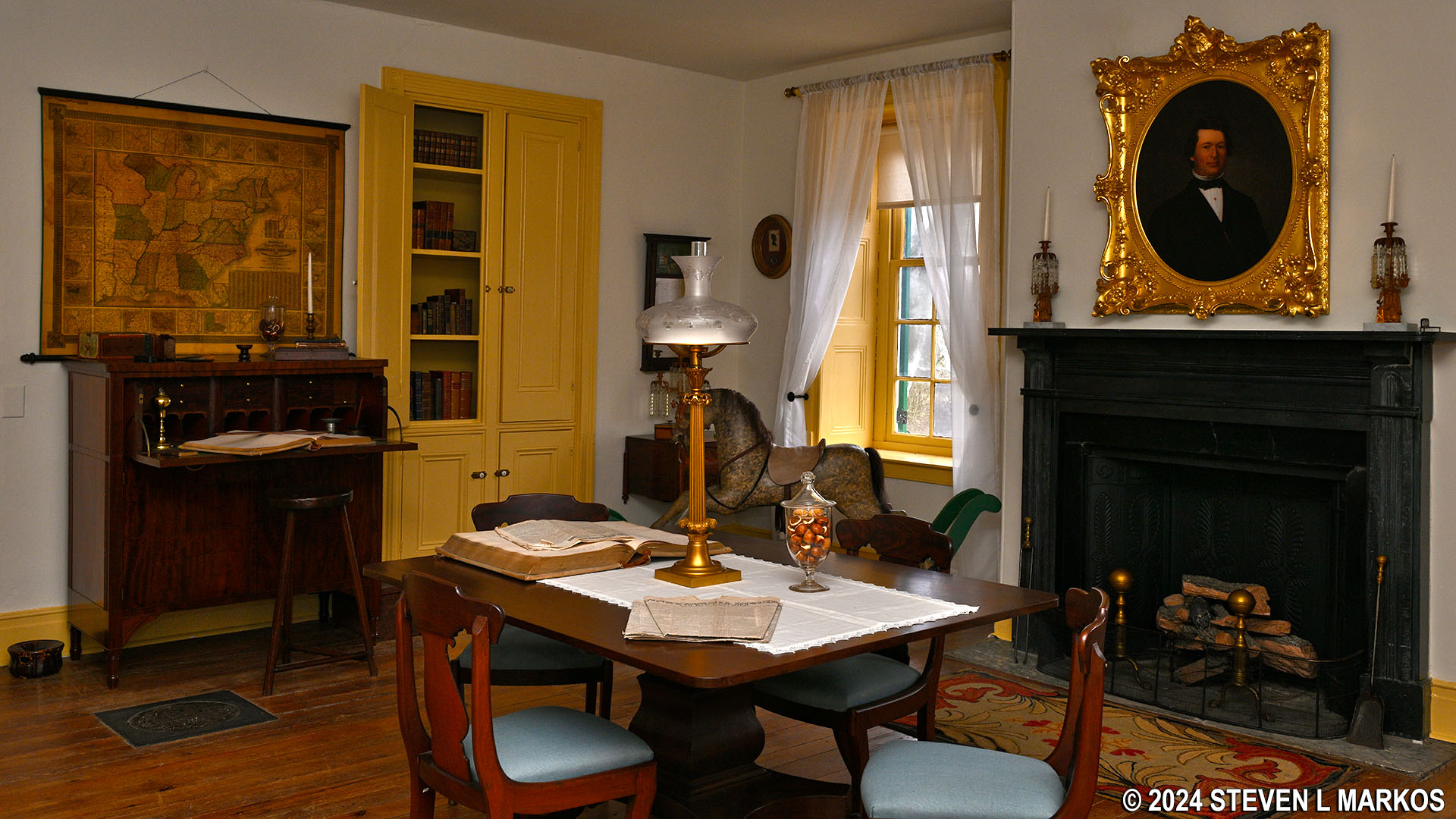
Sitting room and office inside the Ironmaster’s House at Hopewell Furnace National Historic Site
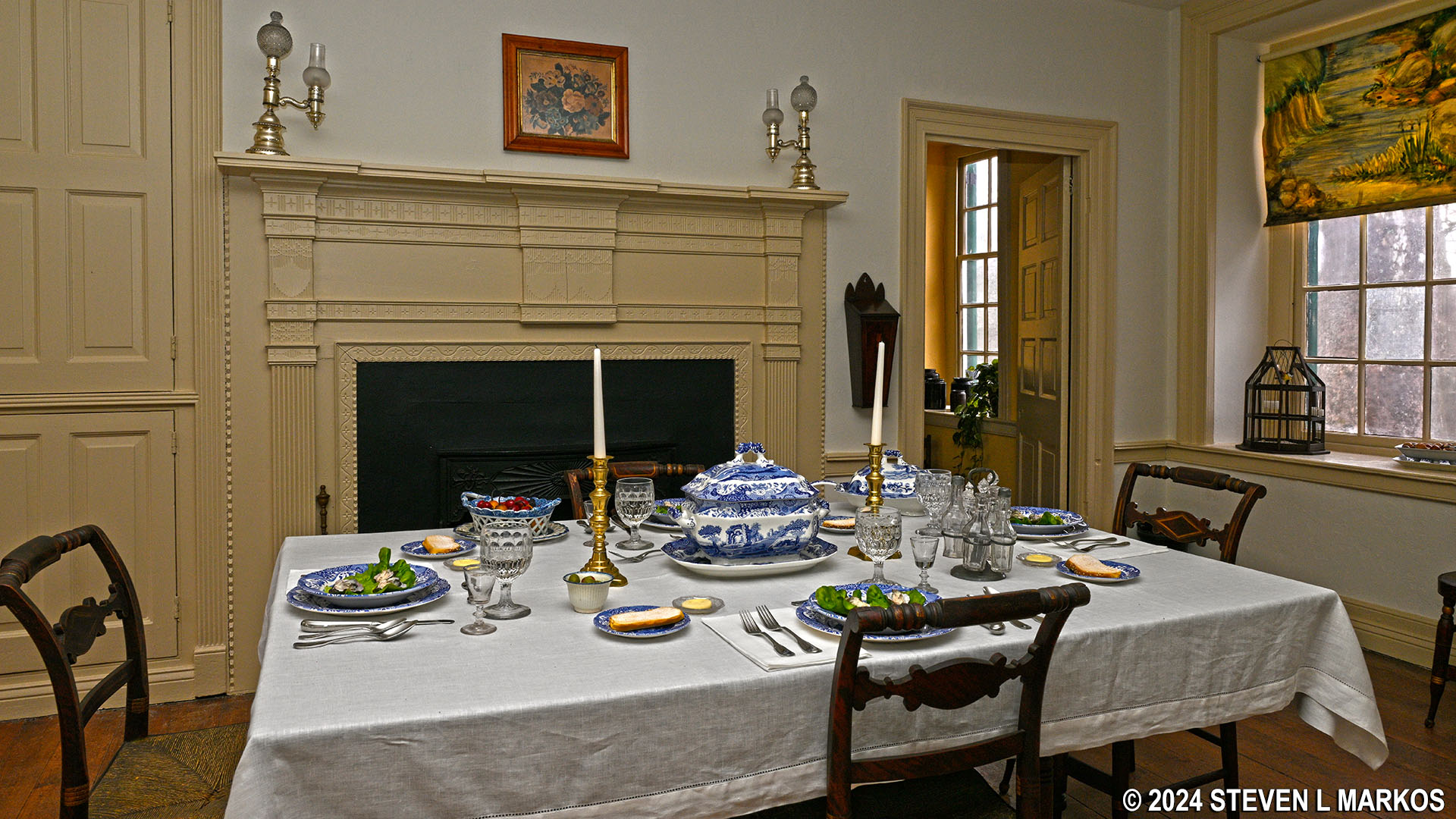
Dining room on the first floor of the Ironmaster’s House at Hopewell Furnace National Historic Site
The basement of the house is where the kitchen and dining room for the workers were located. The second floor contained the family and guest bedrooms. The attic is where the servants and some of the Ironmaster’s younger children would have lived. None of these floors are open to the public.
With a few exceptions, use of any photograph on the National Park Planner website requires a paid Royalty Free Editorial Use License or Commercial Use License. See the Photo Usage page for details.
Last updated on March 20, 2025


