
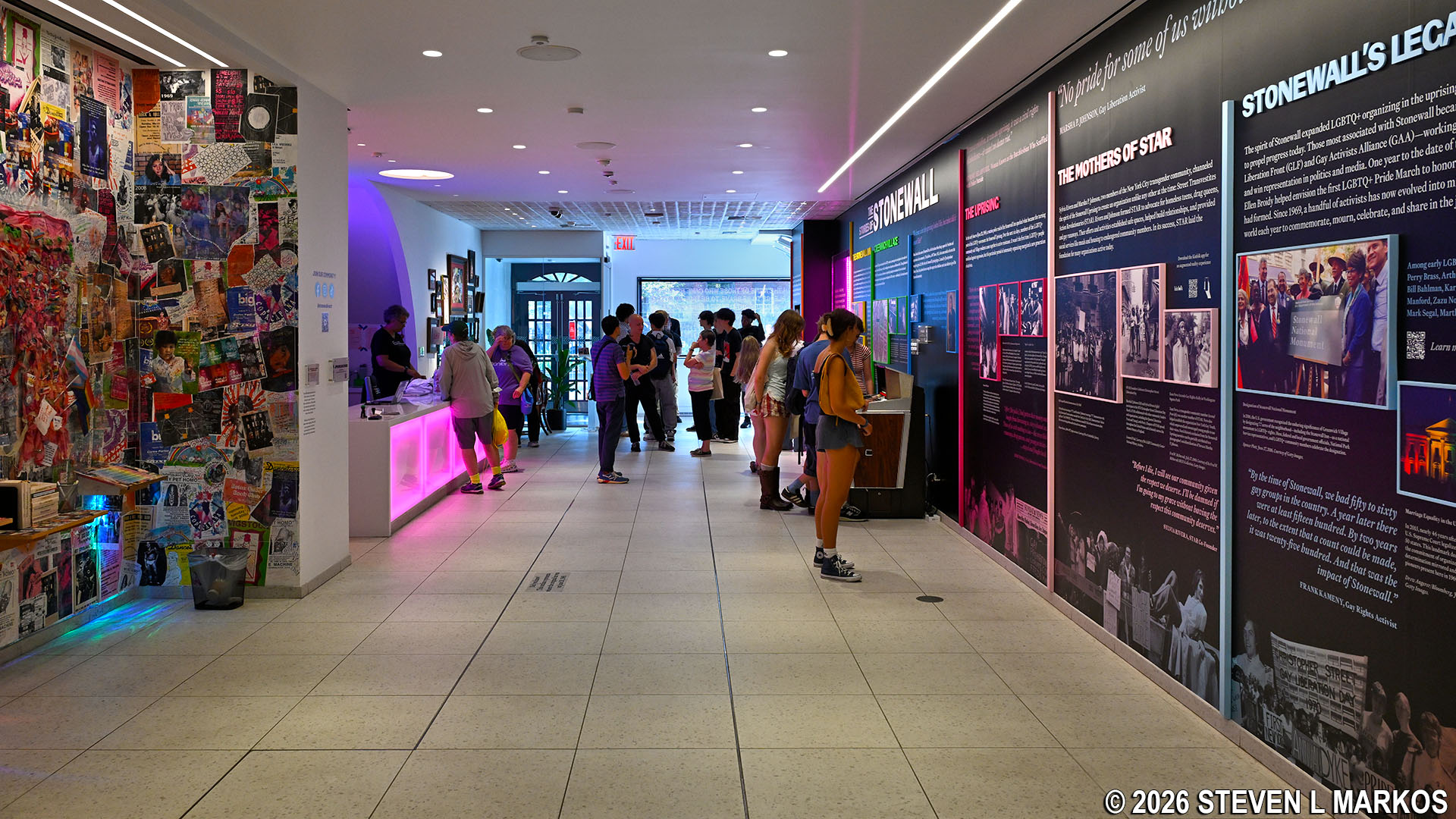
Interior of the Stonewall National Monument Visitor Center
GENERAL INFORMATION
The Stonewall National Monument Visitor Center is a privately owned facility operated by the nonprofit Pride Live that has partnered with the National Park Service. It does not receive any government funding, but National Park Service Rangers are on duty and use the Visitor Center as their base for lectures and weekend tours of the monument grounds. While there is no entrance fee, donations are greatly appreciated.
The Visitor Center is located in one half of the retail space that was once occupied by the Stonewall Inn, which closed shortly after the June 1969 uprising / riot. The original Stonewall Inn bar consisted of two storefronts–51 and 53 Christopher Street—with a common brick wall between them. Two doorways were knocked through the wall, allowing patrons to pass from one side to the other. The bar entrance was at 53 Christopher Street, which is where a modern version of the Stonewall Inn now operates (left side if looking at the building from the street). The Visitor Center occupies the 51 Christopher Street side of the building.
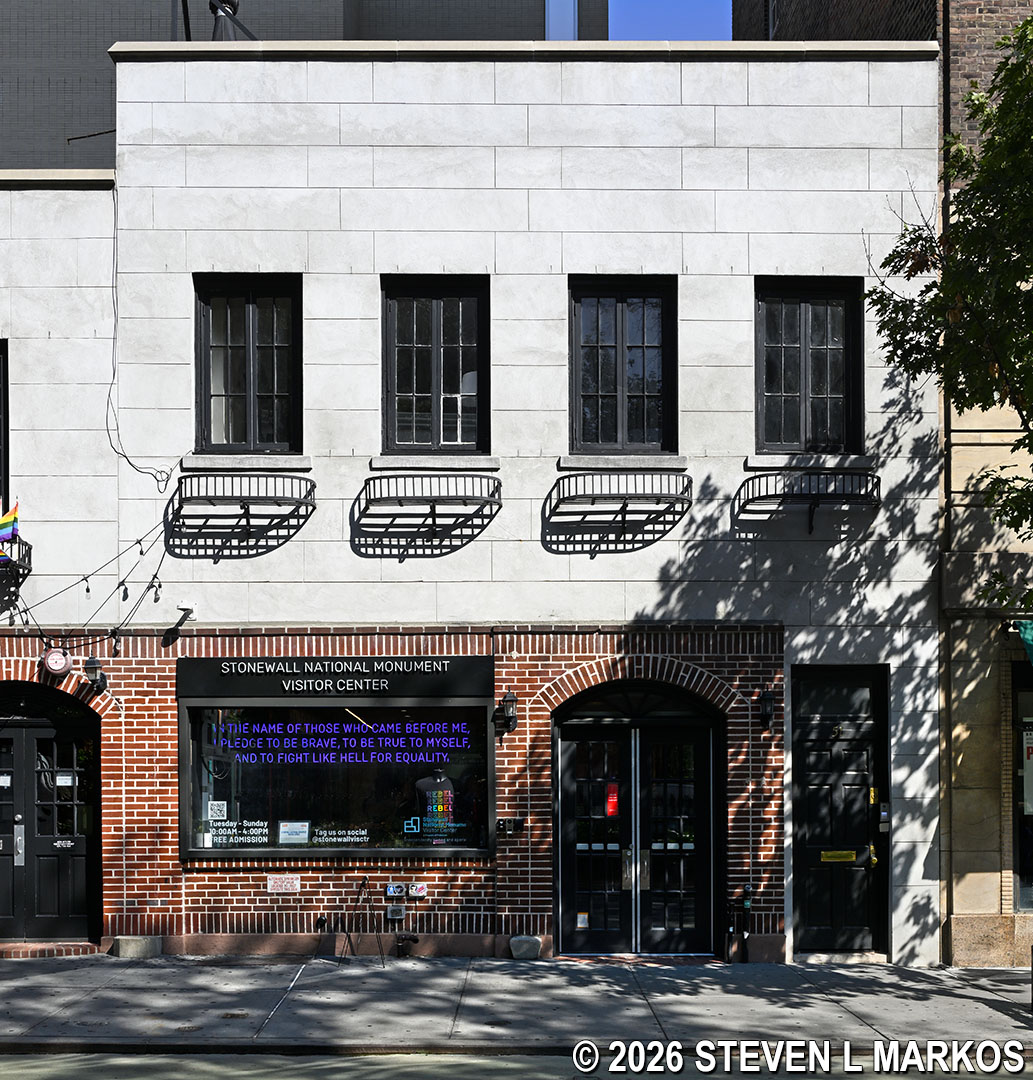
Stonewall National Monument Visitor Center
OPERATING HOURS
The Stonewall National Monument Visitor Center is typically open year-round on Tuesdays through Sundays from 10 AM to 4 PM. Keep in mind that times can always change, so be sure to get the latest schedule on the Visitor Center’s official General Information web page.
AMENITIES
- Information desk
- Meeting place for guided tours
- Gift store
- Theater
- Exhibit area
- Restrooms
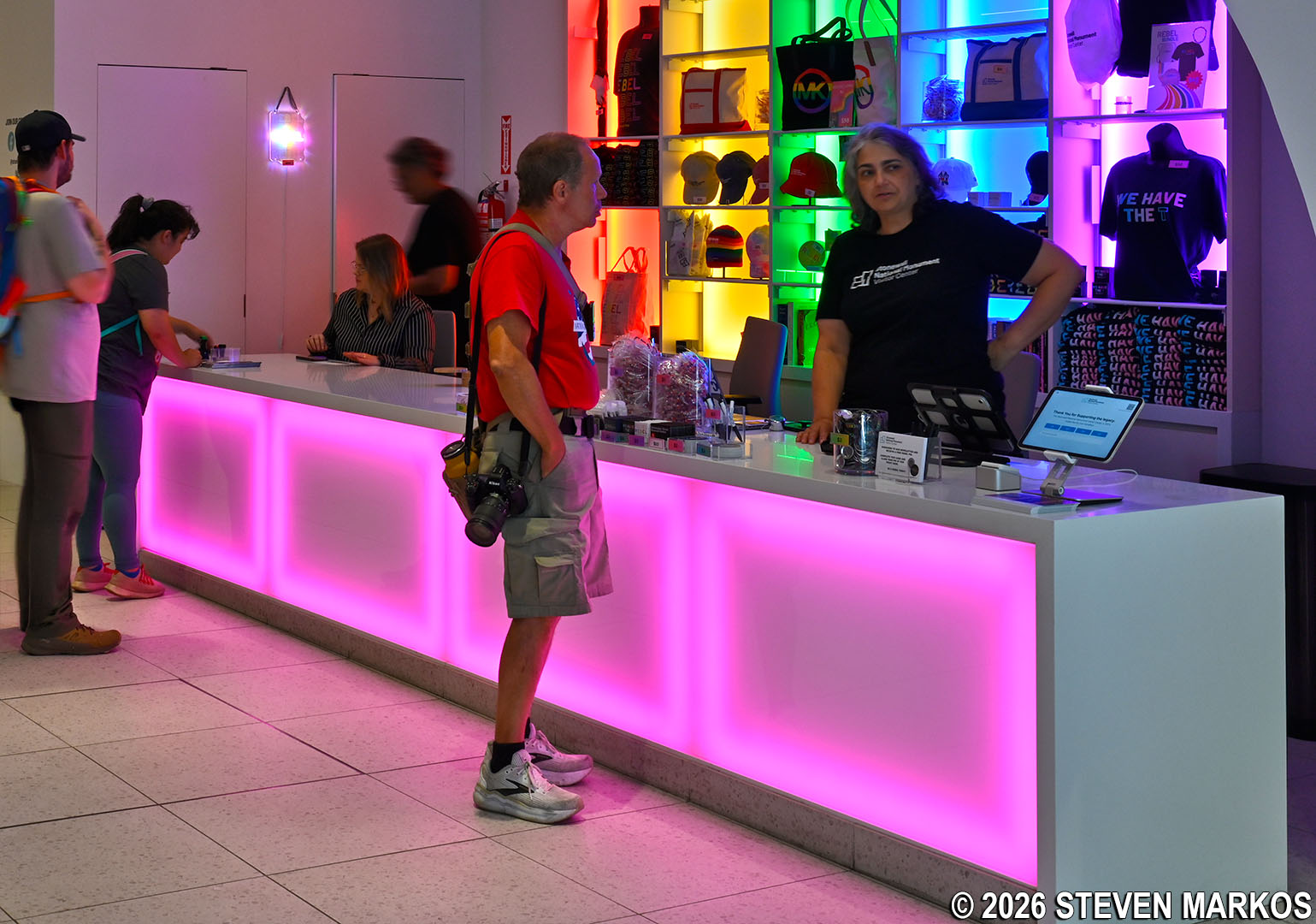
Information desk and gift store in the Stonewall National Monument Visitor Center
PARK FILMS
A medley of short films is shown in the Visitor Center theater located in the back of the building. Since the Visitor Center is privately funded, some of the films have corporate sponsors, which will startle those who are used to seeing traditional National Park Service films. In fact, the theater itself is the Booking.com Theater.
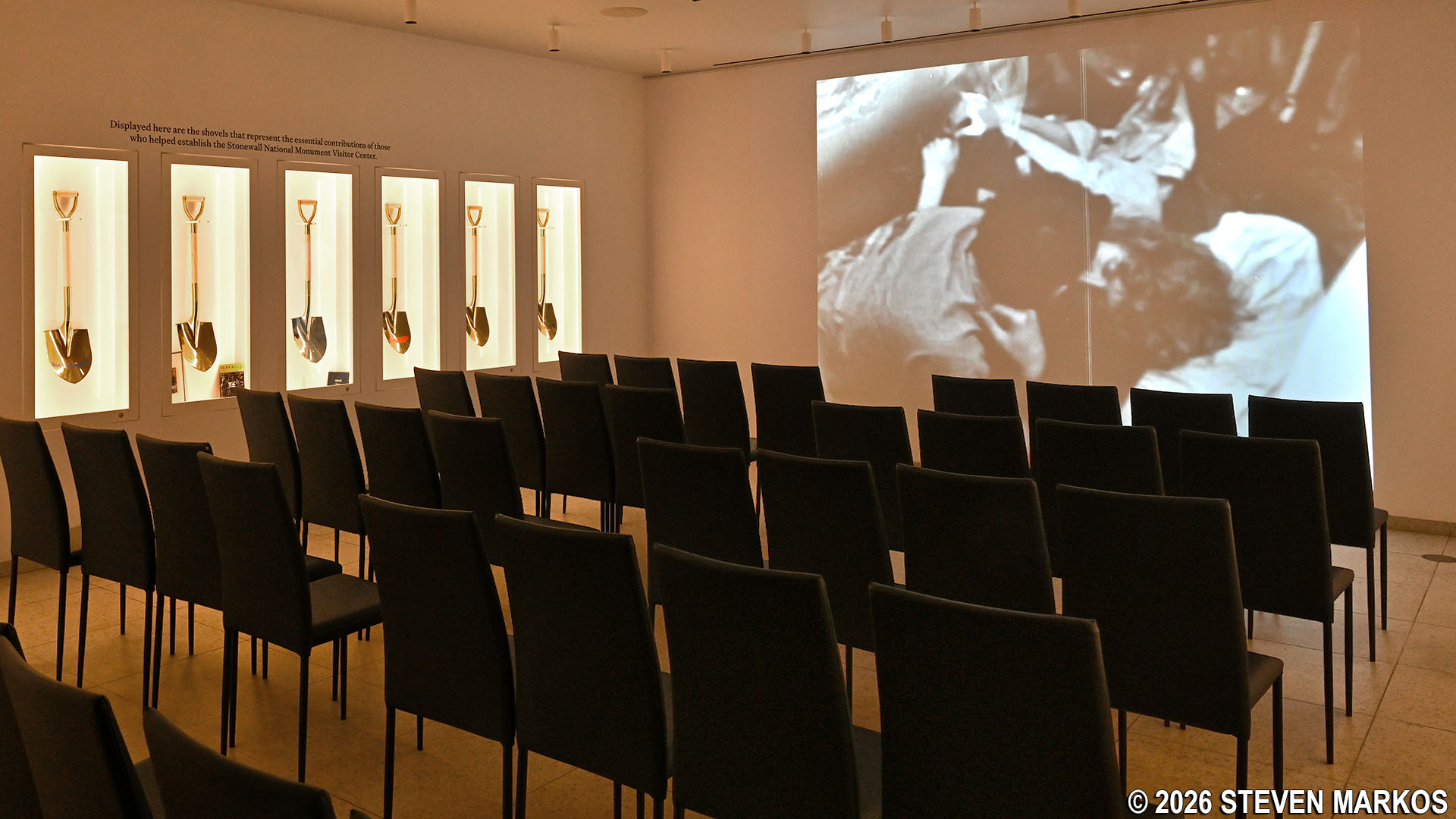
Theater in the Stonewall National Monument Visitor Center
The films take up about 35 minutes, but they really have nothing to do with the Stonewall Uprising. The first two are nothing more than sponsor promotions and include a travelog by Booking.com that features popular LGBTQ+ destinations in the United States and a short film the promotes Philadelphia’s connection to the LGBTQ+ community.
The main film is the 22-minute Legacy of Liberation. The film clearly lacks focus, for much of the content is random LGBTQ+ experiences from contemporary people and people who grew up during the Gay Liberation Movement of the late 1960s and 1970s. There is a huge focus on the transgender community. AIDS comes up. Modern and historical footage is shown. Footage of the Visitor Center’s construction is shown. Everything comes and goes without any rhyme or reason. An interview with Mark Segal, who was actually at the Stonewall Inn on the night of the uprising, is the only connection to the National Monument’s history. Maybe I’m just too old to appreciate it, but it seems to me like a film by a student who was trying to be a little more hip than necessary.
A fourth film is hosted by Honey Dijon, the DJ who selected the music for the Visitor Center jukebox that is on display. The selection is based on interviews with Stonewall patrons and their recollections of the most popular songs played at the bar.
There is also a cubbyhole where you can watch various Stonewall Generations films, a collection of interviews with various people in the LGBTQ+ community. These range from 10 to 20 minutes each.
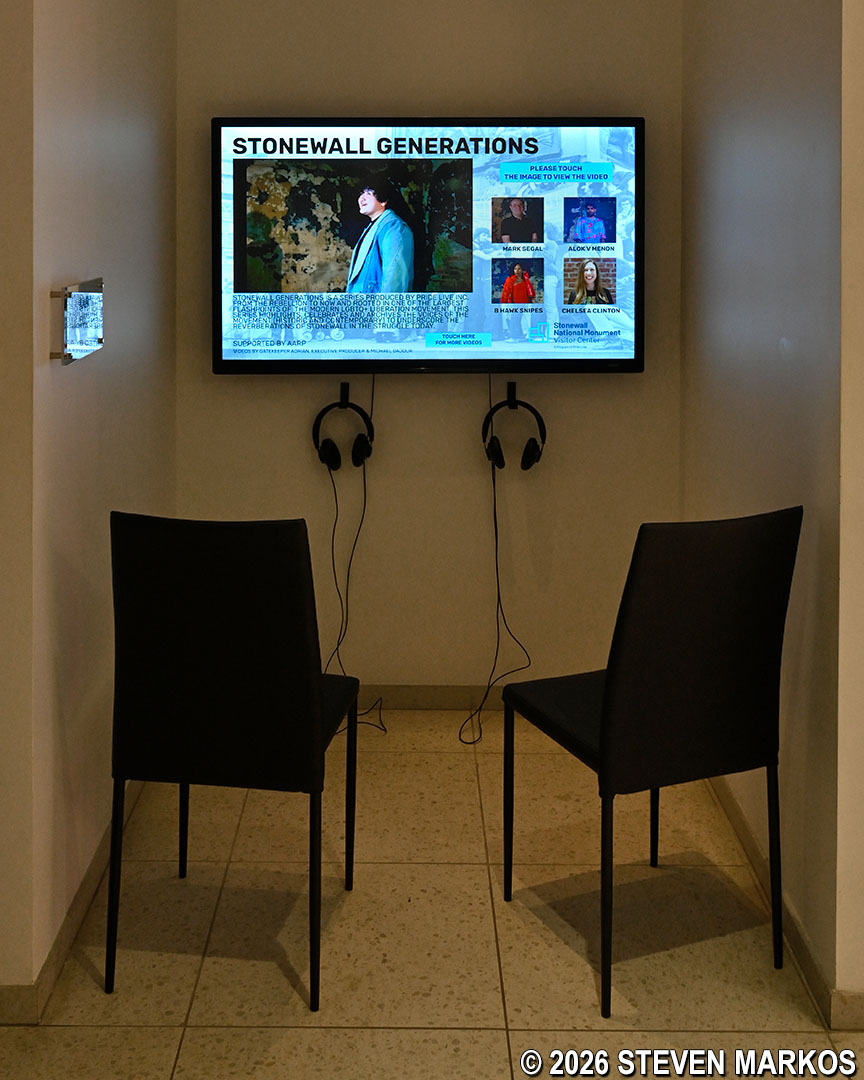
Viewing area for the Stonewall Generations films shown at the Stonewall National Monument Visitor Center
EXHIBITS
On the wall that separated the two halves of the Stonewall Inn is the exhibit The Stories of Stonewall, which covers the Stonewall Uprising that took place on June 28, 1969, and continued for five more nights.
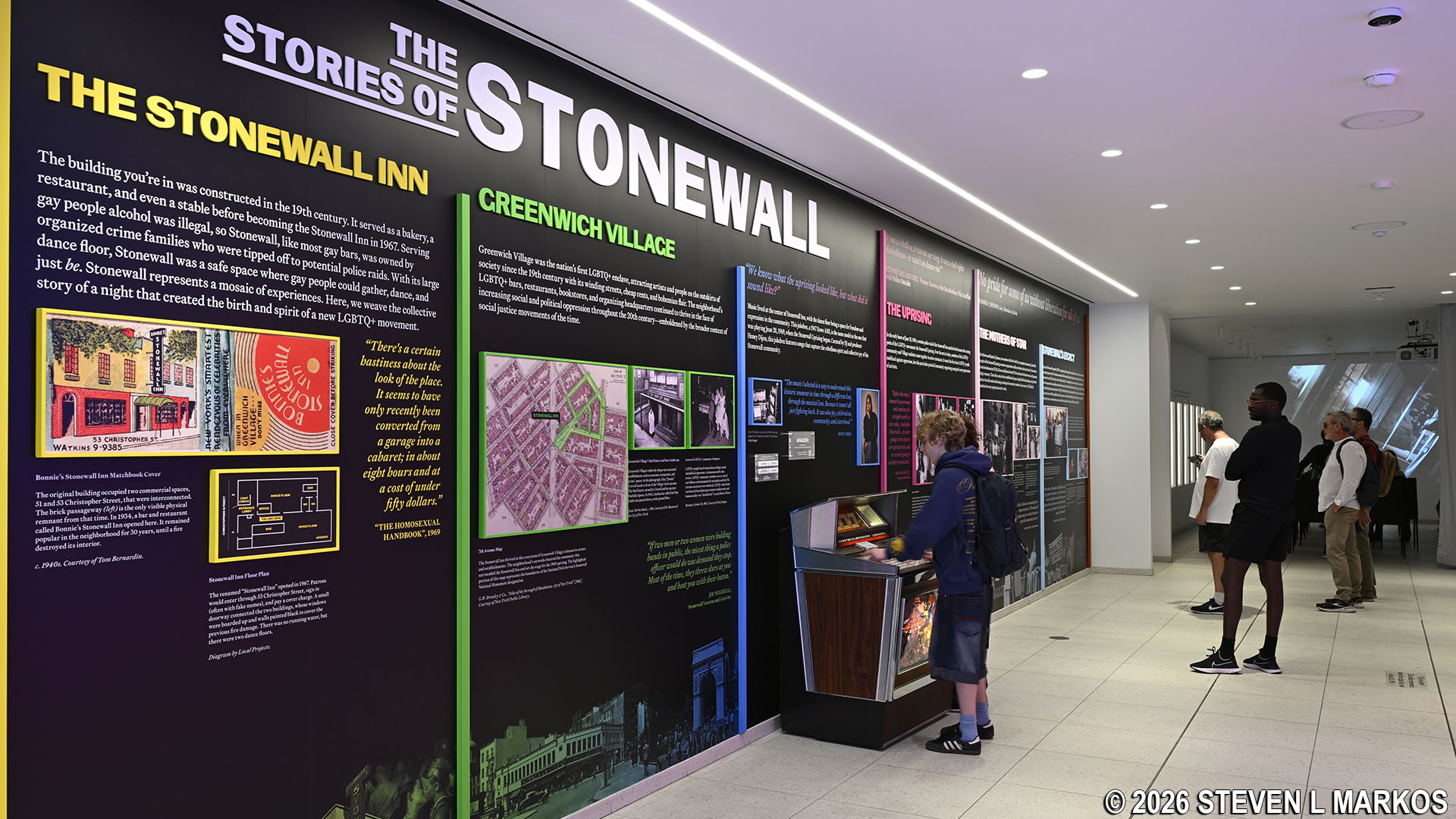
The Stories of Stonewall exhibit in the Stonewall National Monument Visitor Center
There are no physical artifacts on display from the uprising, but there is a 1967 Rowe AMI jukebox, which is the same model that was used at the Stonewall Inn. The original jukebox was busted beyond repair during the first night of protest. Whether the damage sustained was a result of the general chaos that ensued during the riot or whether the police busted it in spite is not known for certain.
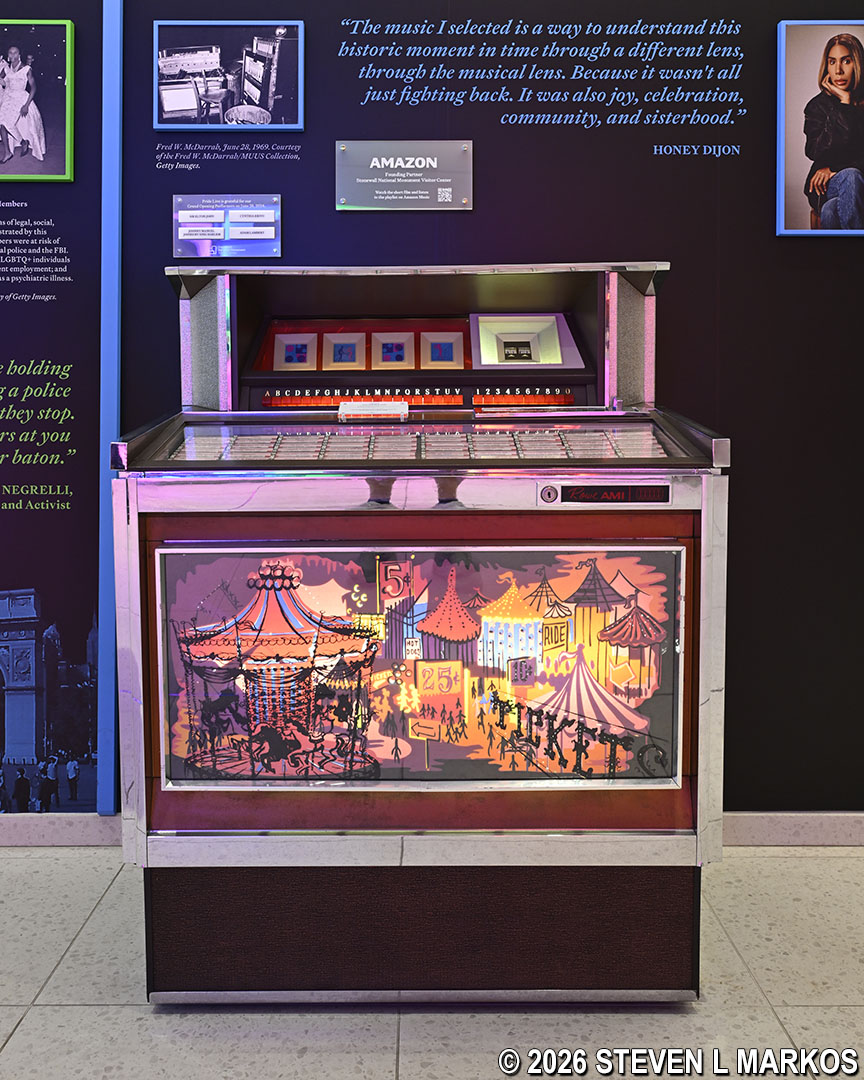
1967 Rowe AMI jukebox on display in the Stonewall National Monument Visitor Center
The bare brick walls of the retail space have all been covered with drywall except for where one of two doorways between the two halves of the Stonewall Inn used to be. When the bar closed shortly after the uprising, the doorways were bricked up, and the two halves of the building were rented to separate businesses. There was no actual door at the time. Two red curtains hung in the doorway, and these were parted by those entering into the bar and dance floor from the coat check area.
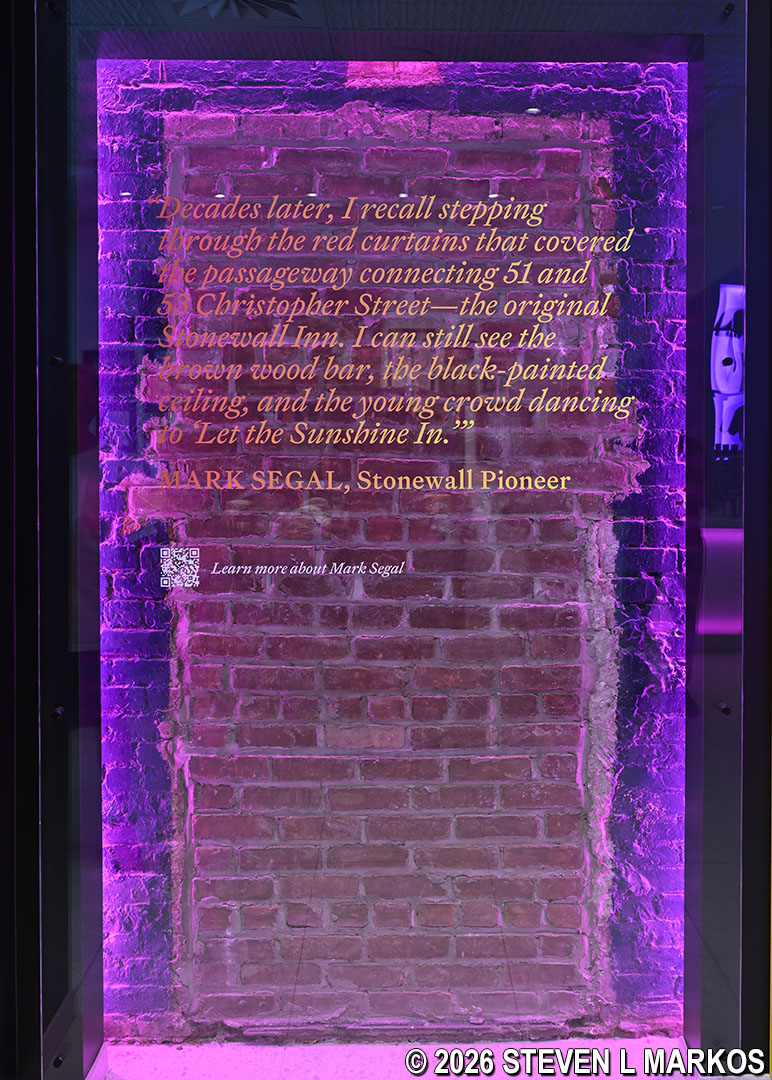
Bricked-up doorway in the wall between the two halves of the Stonewall Inn, Stonewall National Monument
There are also a few permanent and rotating art exhibits and selections of historical photographs on display.
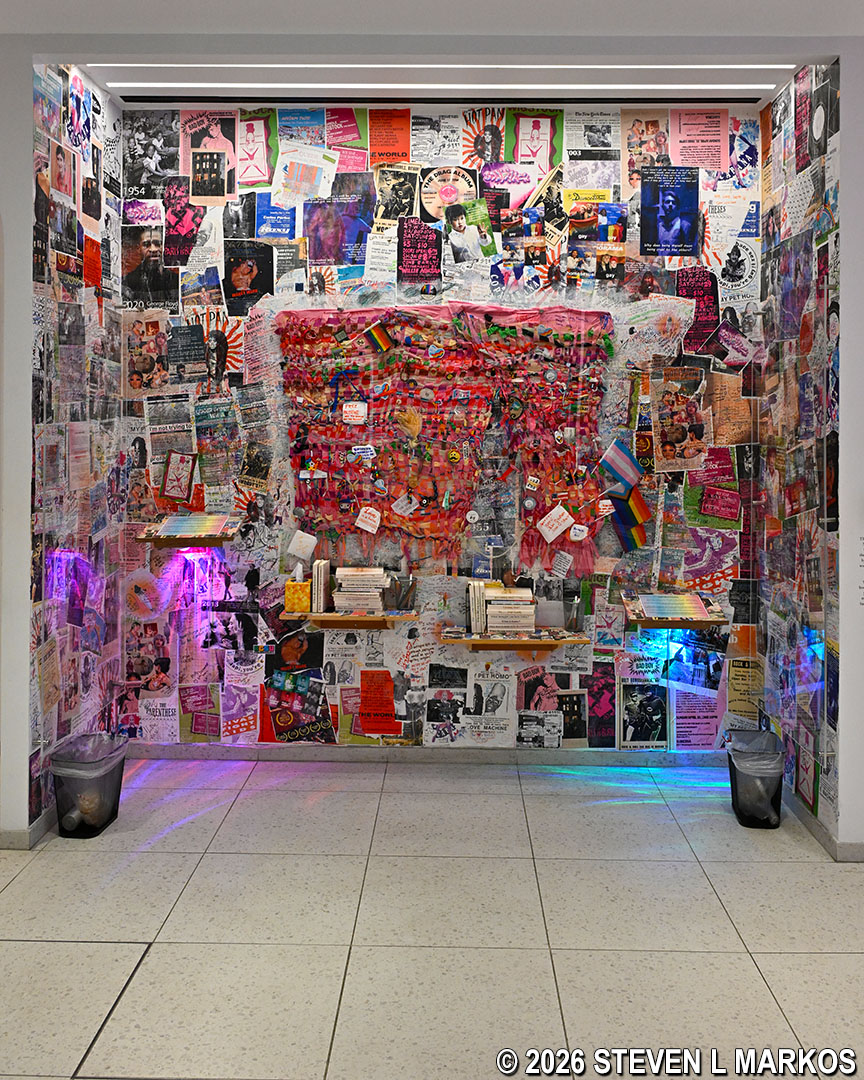
Collage of items contributed by the first 70,000 visitors to the Stonewall National Monument Visitor Center
SCHEDULING YOUR TIME
Plan to spend about 15 minutes to read through the information in the Stories of Stonewall exhibit, and of course another 35 minutes if you want to watch all the films in the theater. Add more time for each Stonewall Generations film you watch. In truth, if you are at the Stonewall National Monument Visitor Center to learn about the Stonewall Uprising, watching the films isn’t going to do you much good. I personally spent an hour in the Visitor Center, but I did not watch any of the Generations films. I did, however, talk at length with one of the founders of the facility, Diana Rodriquez.
With a few exceptions, use of any photograph on the National Park Planner website requires a paid Royalty Free Editorial Use License or Commercial Use License. See the Photo Usage page for details.
Last updated on July 26, 2026


