
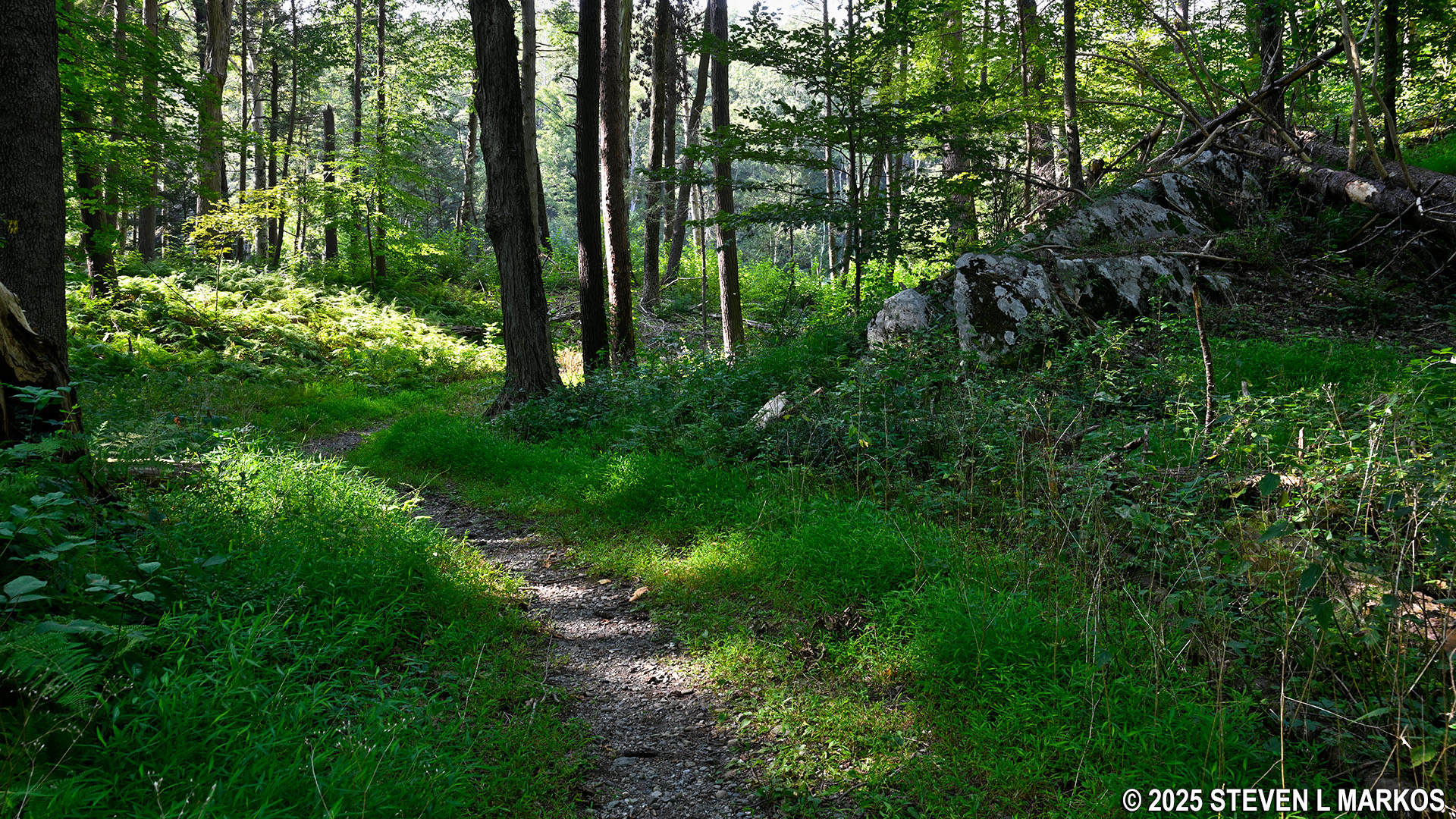
Forest Trail at Home of Franklin D. Roosevelt National Historic Site
Length: 2.5 miles
Time: 1.5 hours
Difficulty: Between easy and moderate with a few steep hills
The Forest Trail at Home of Franklin D. Roosevelt National Historic Site is located on the west side of the park close to the Hudson River. It is lollipop shaped, meaning that you hike out on the stick portion of trail before coming to a loop at the end.

Home of Franklin D. Roosevelt National Historic Site Trail Map (click to enlarge)
To get to the Forest Trail from the parking lot, head towards the Franklin D. Roosevelt Presidential Library and Museum on the paved path that runs between the short edge of a rectangular vegetable garden and the library. As soon as you get past the garden, take the path on the right that runs parallel to the long edge of the garden, away from the library. At the end of this path is a road with a wayside exhibit about security during World War II at Roosevelt’s home, Springwood.
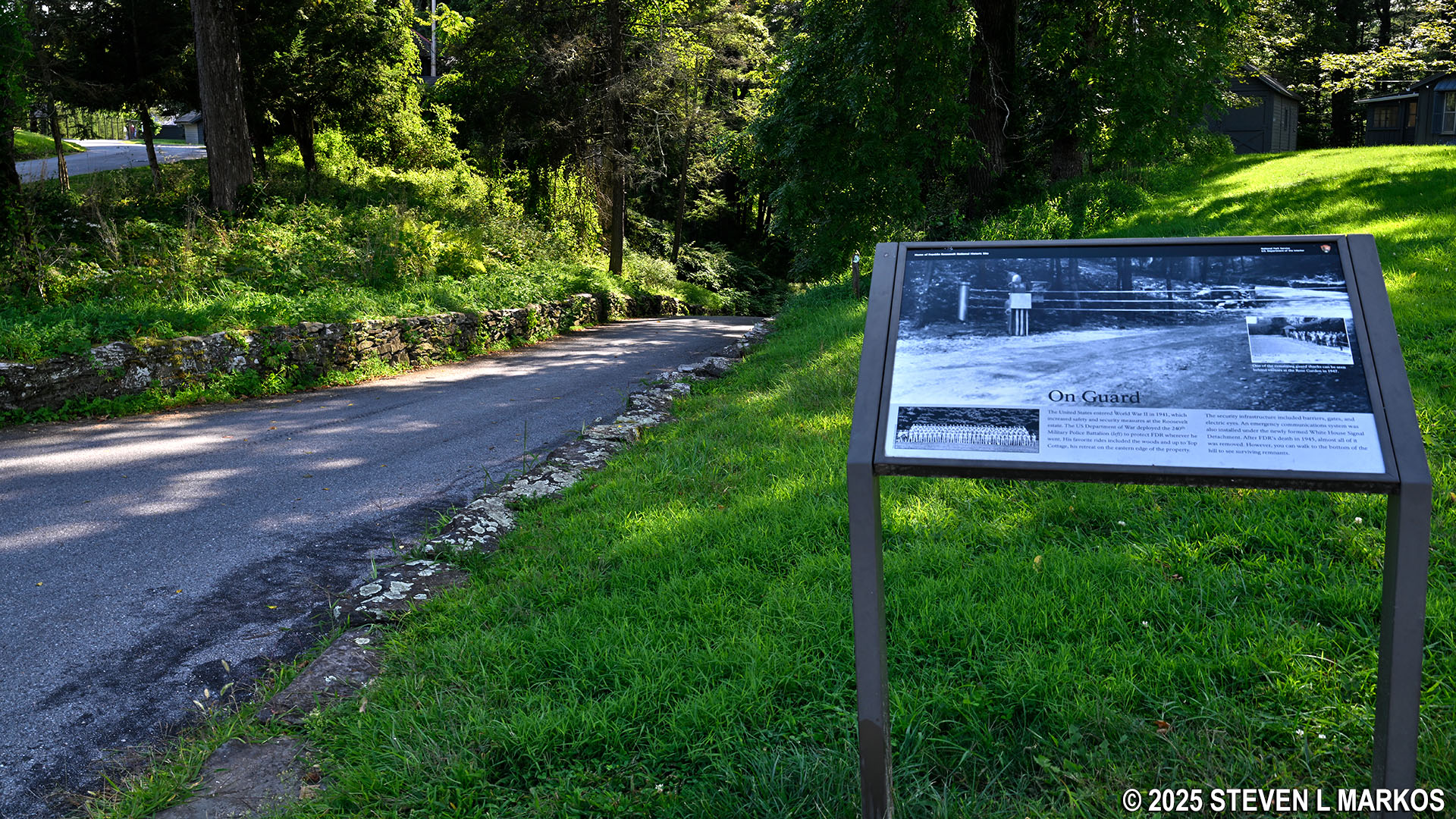
Road at the southwestern end of the Home Garden leads to the Forest Trail at Home of Franklin D. Roosevelt National Historic Site
The Forest Trail is on the left about 100 yards down the road. The bulk of the west-side trails are located in the valley near the Hudson River, and Springwood is on a plateau a hundred feet above, so it should come as no surprise that you must walk down a hill to get to the Forest Trail (and uphill on the way back). In fact, the road to the trailhead is probably the steepest hill in the park.
The Forest Trail officially starts on a gravel road that forks off from the paved one. An old guard station is at the intersection. You will have already walked a little over a tenth of a mile from the parking lot by the time you reach the trailhead.
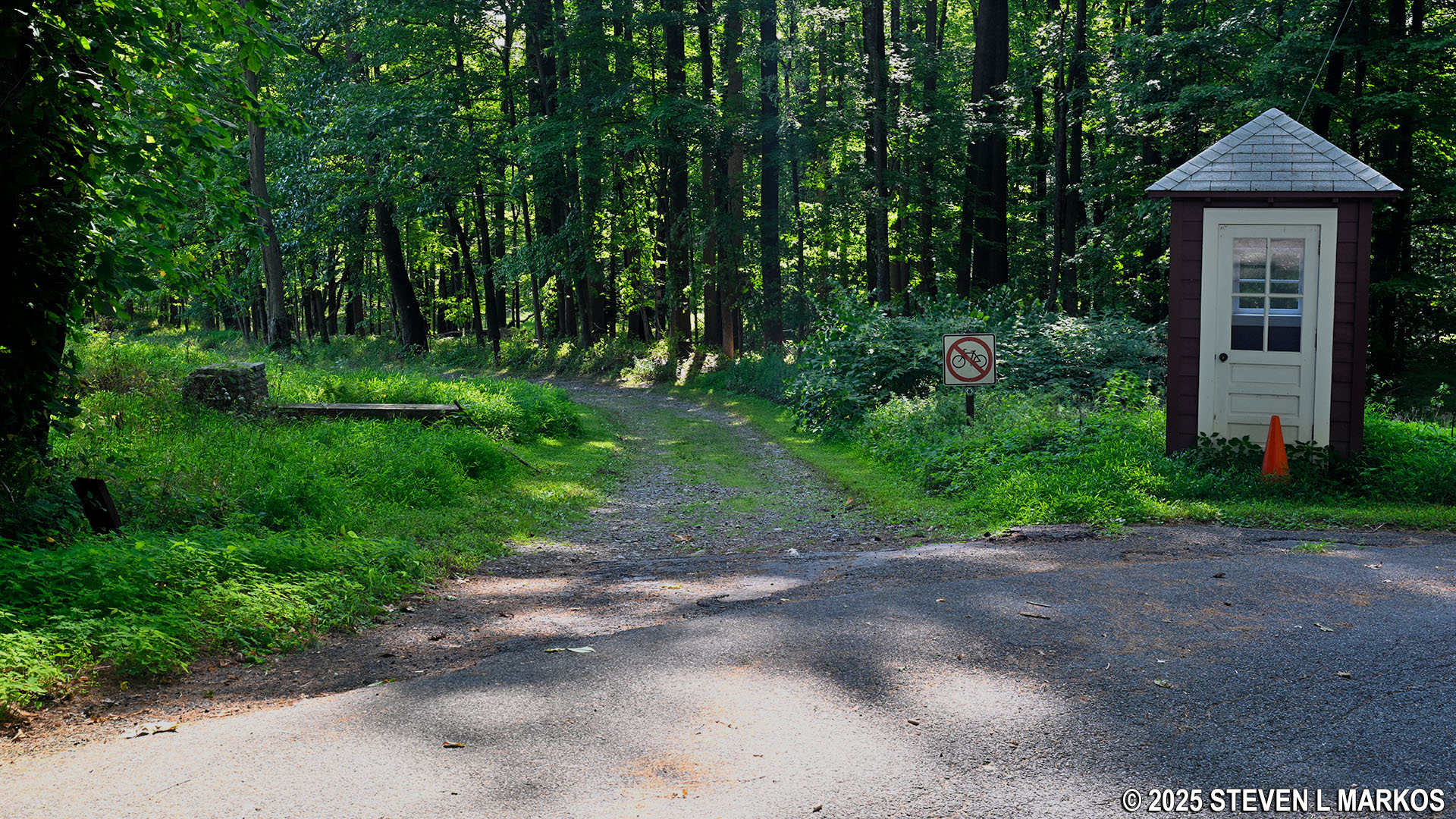
Start of the Forest Trail at Home of Franklin D. Roosevelt National Historic Site
The Forest Trail continues downhill, but the slope isn’t nearly as steep as the road. It passes through an orchard before coming to the eastern intersection with the Meadow Trail, .15 mile from the guard house.
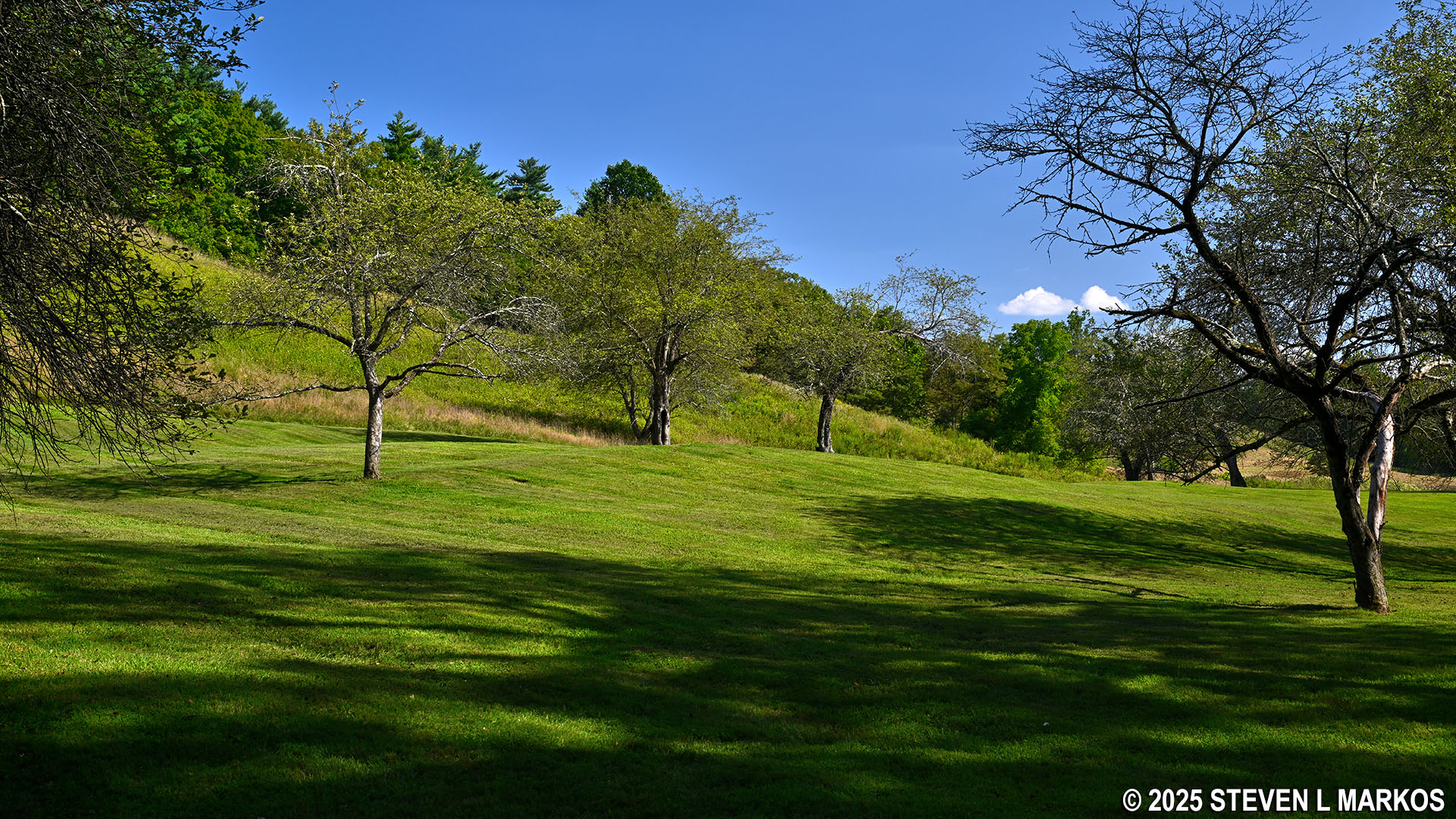
Orchard at the start of the Forest Trail at Home of Franklin D. Roosevelt National Historic Site
The Meadow Trail is U-shaped and reconnects with the Forest Trail a little farther down. Since you will be hiking out and back on the stick portion of the Forest Trail, to change things up a little and to tack on an extra .2 mile to the hike, take the Meadow Trail either on the way out or on the way back. If hiking it on the way out, you want to do it now, so stay straight at the intersection. When the Meadow Trail dead ends back into the Forest Trail, take a left to continue on towards the loop.
To stay on the Forest Trail, take a right at the intersection. This may be a little confusing since the directional signage indicates that a right turn is the Hyde Park Trail. What you need to know is that the Hyde Park Trail is a longer trail that starts at Eleanor Roosevelt National Historic Site, runs through Home of Franklin D. Roosevelt National Historic Site, and continues north along the Hudson River to Vanderbilt Mansion National Historic Site. At this point, the Hyde Park Trail and the Forest Trail are one and the same.
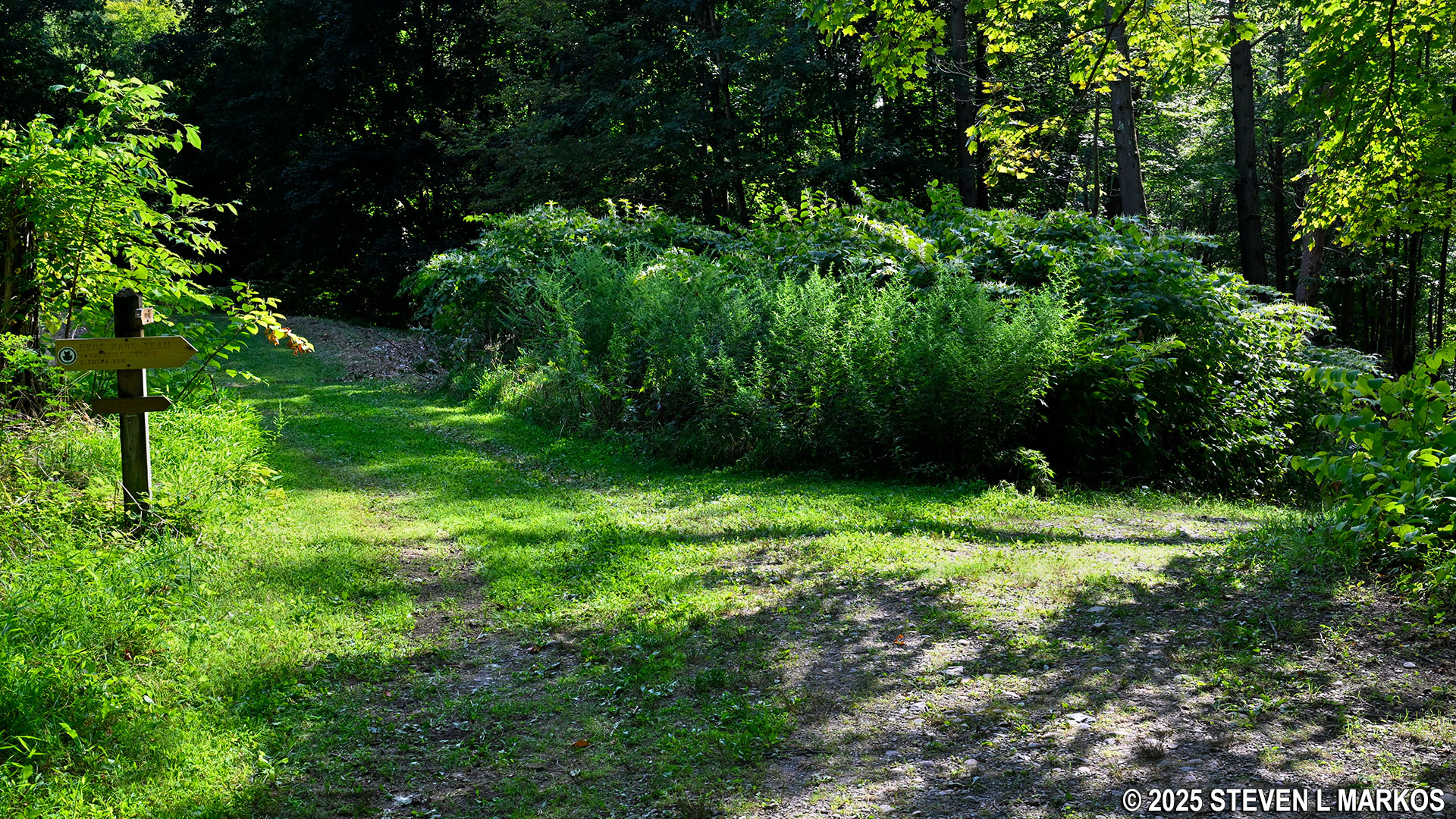
Eastern intersection of the Forest and Meadow trails at Home of Franklin D. Roosevelt National Historic Site
The blazes on this trail are green paint splotches for the Forest Trail and a leaf logo for the Hyde Park Trail. Blazes are markers that serve as Hansel and Gretel breadcrumbs for hikers to follow, though on the Forest Trail they aren’t all that necessary, for the trail is very easy to follow, and there is directional signage at all intersections.
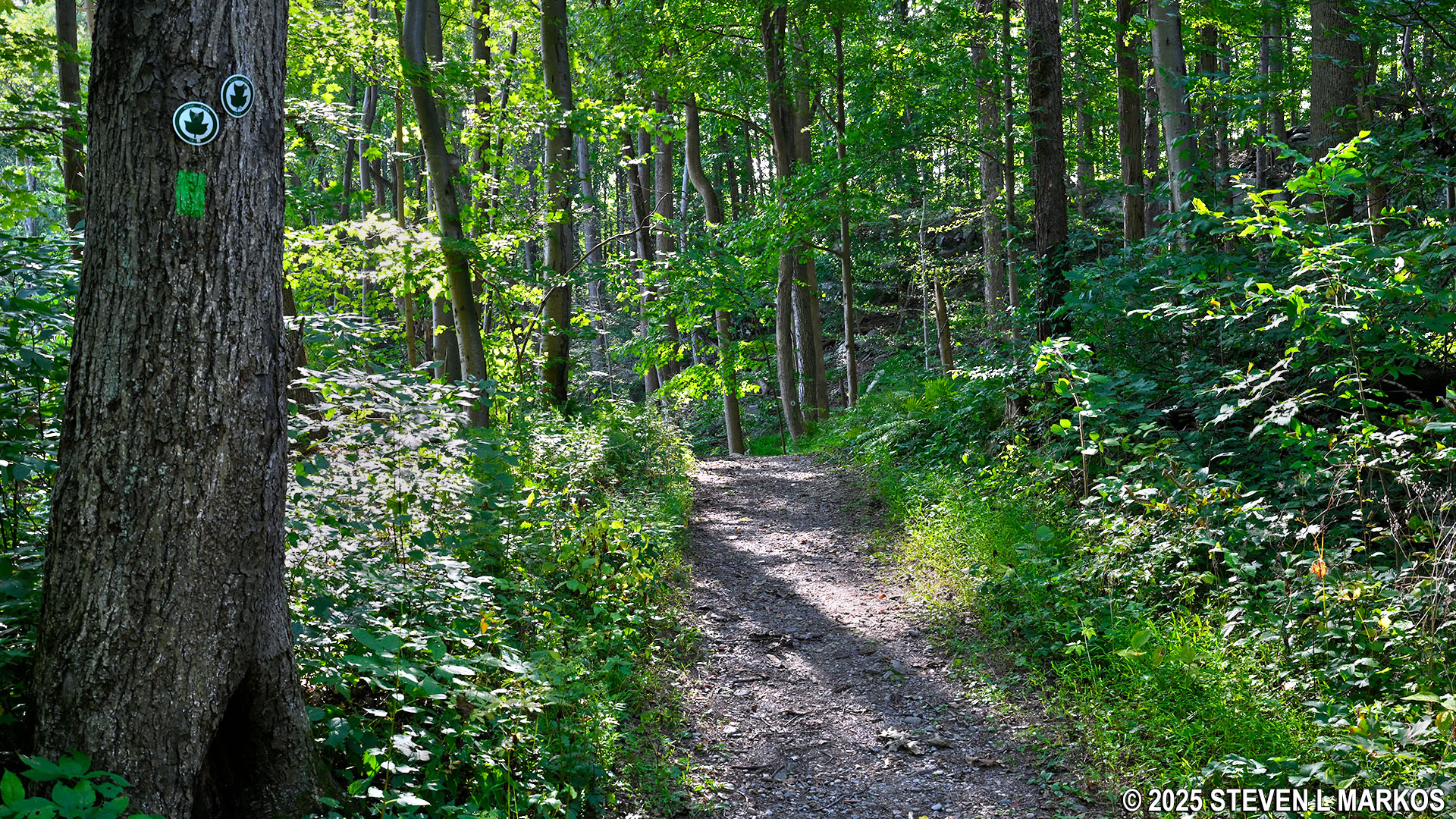
Blazes on the Forest / Hyde Park Trail at Home of Franklin D. Roosevelt National Historic Site
Between the eastern and western intersections with the Meadow Trail is the Ice Pond. James Roosevelt, Franklin’s father, built a dam on a small creek in 1881 to create the pond. When the water froze in the winter, blocks of ice were cut and hauled to the ice houses at Springwood. A properly built ice house could preserve ice long enough for it to last until the following winter. This method for producing and storing ice was used at Springwood up until 1941.
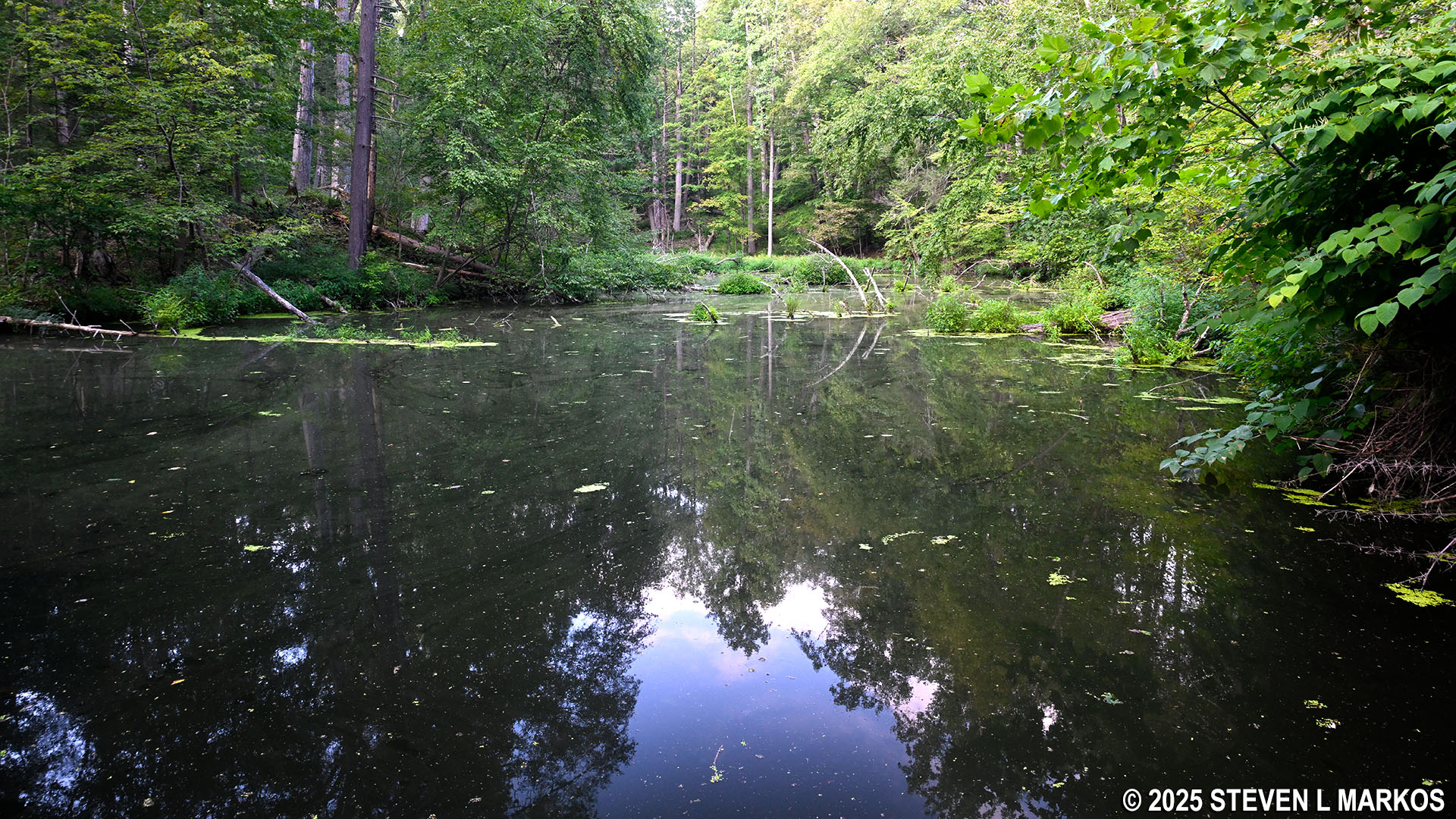
The Forest Trail passes the Ice Pond at Home of Franklin D. Roosevelt National Historic Site
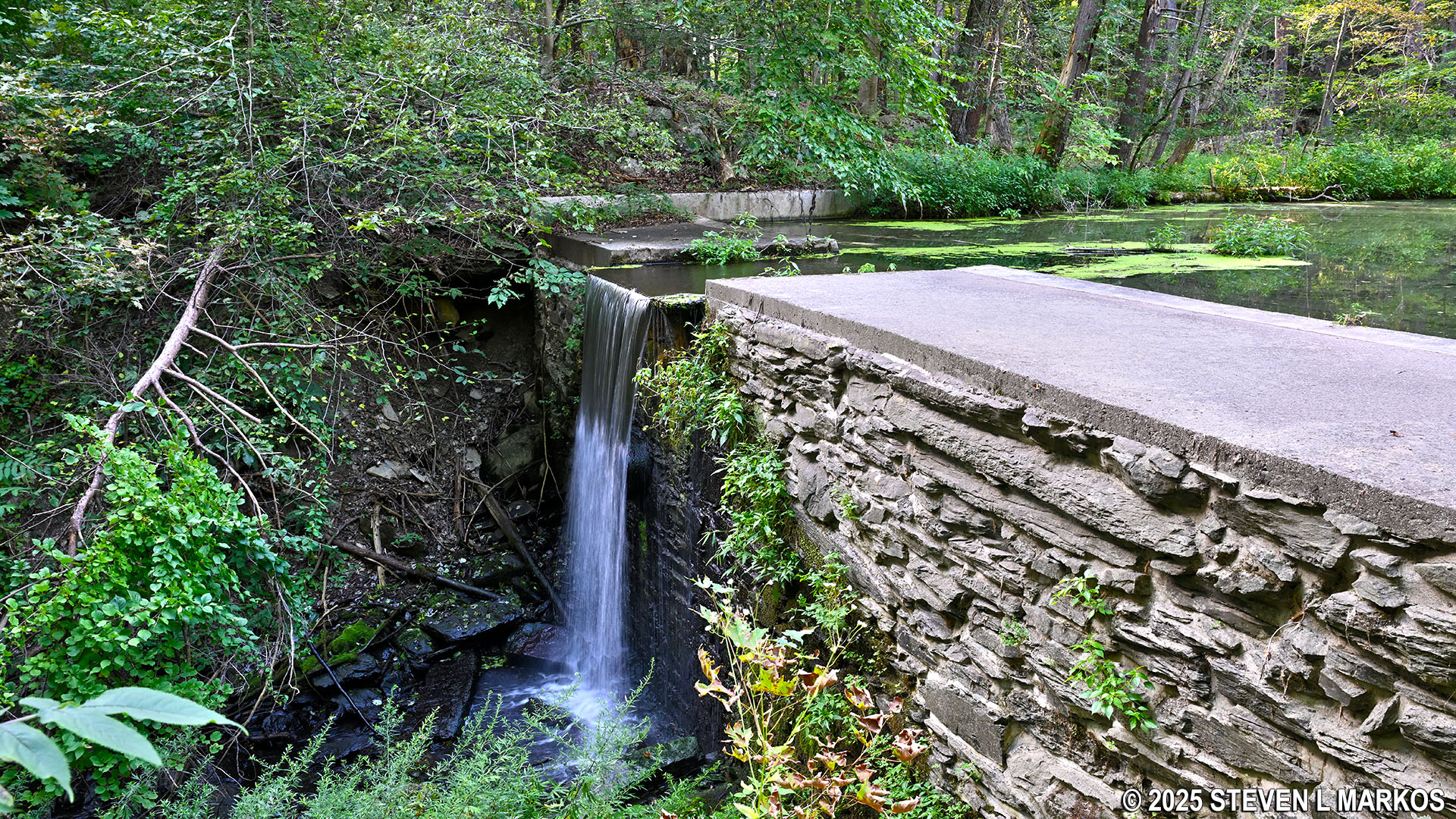
Dam that creates the Ice Pond at Home of Franklin D. Roosevelt National Historic Site
The western intersection with the Meadow Trail is .2 mile from the eastern intersection. At this point the trail gets a little narrower, but it still appears to be an old road. The terrain is like a kiddie roller coaster with a lot of short ups and downs, some quite steep. However, after about a tenth of a mile things level out a little and the Forest Trail begins following a creek.
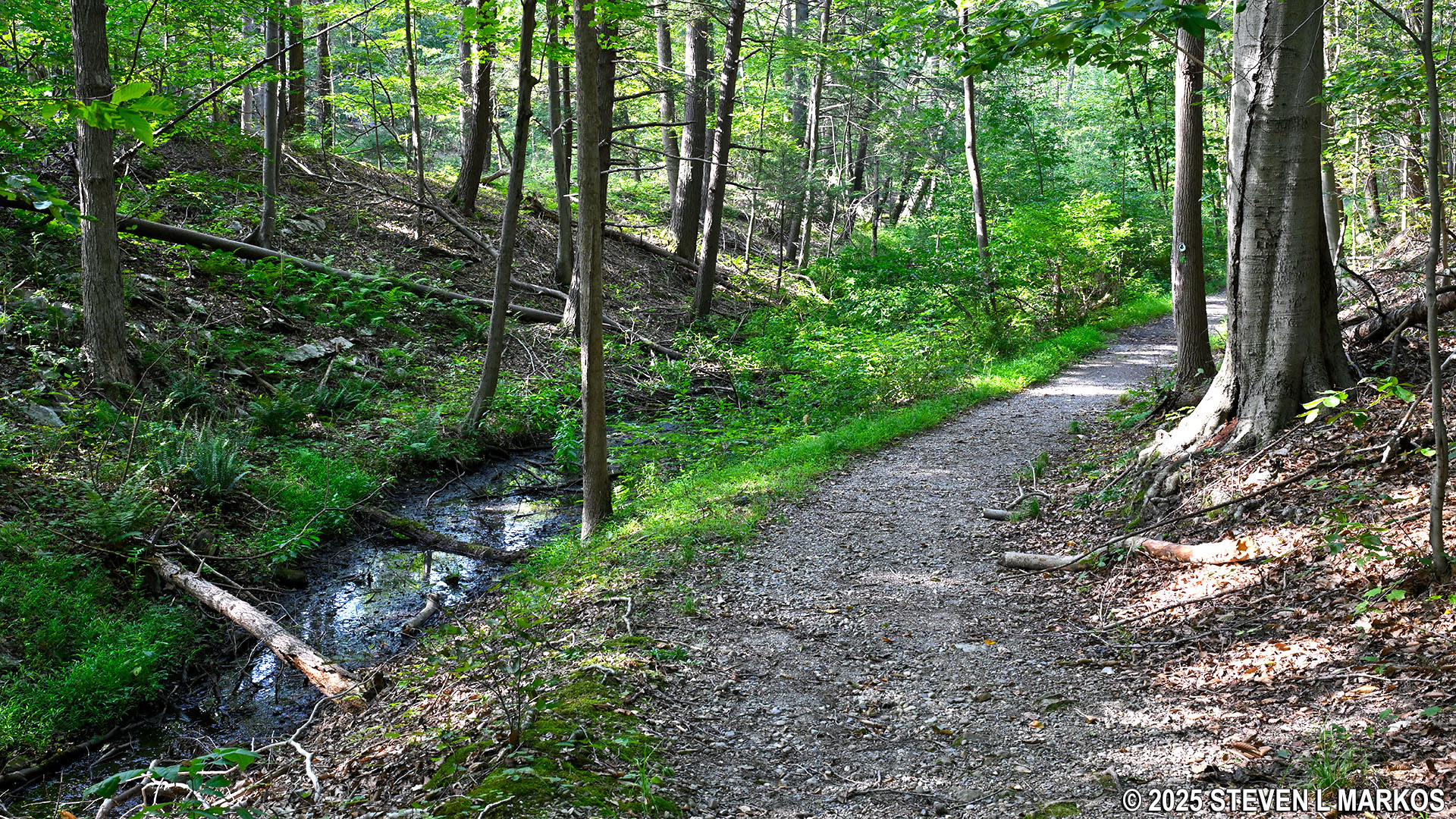
Creek along the Forest Trail just west of the western intersection with the Meadow Trail, Home of Franklin D. Roosevelt National Historic Site
The loop portion of the Forest Trail starts .3 mile past the western intersection with the Meadow Trail, .7 mile from the official start at the guard house. If you are hiking to the Vanderbilt Mansion on the Hyde Park Trail, stay left at the intersection. If you are hiking the Forest Trail, it doesn’t matter which way you go around the loop. I took a left and hiked in the clockwise direction, and this report is written from that perspective.
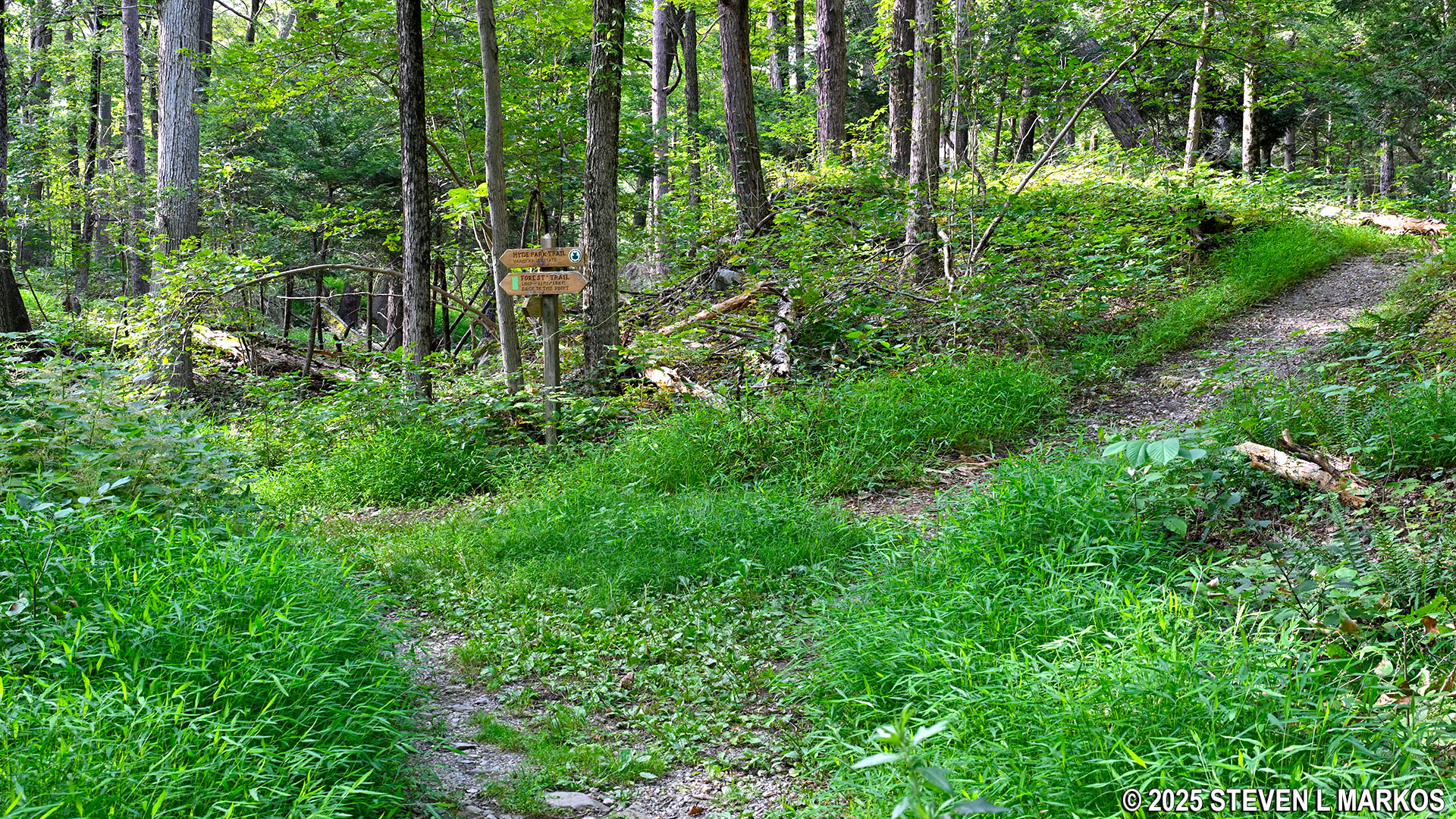
Start of the loop section of the Forest Trail at Home of Franklin D. Roosevelt National Historic Site
While deciding which way to go, I was swarmed by mosquitoes. If you keep walking the entire time, they probably won’t bother you, but if you are constantly stopping to enjoy the scenery or to take photos as I was, you might as well break out the bug spray. I did, and I hate applying bug spray.
The loop portion of the Forest Trail is a traditional hiking trail, not a former road. On the western side—the Hyde Park Trail side—the trail surface is smooth and the terrain remains hilly. Not far past the start of the loop is a 100-yard downhill section that is quite steep.
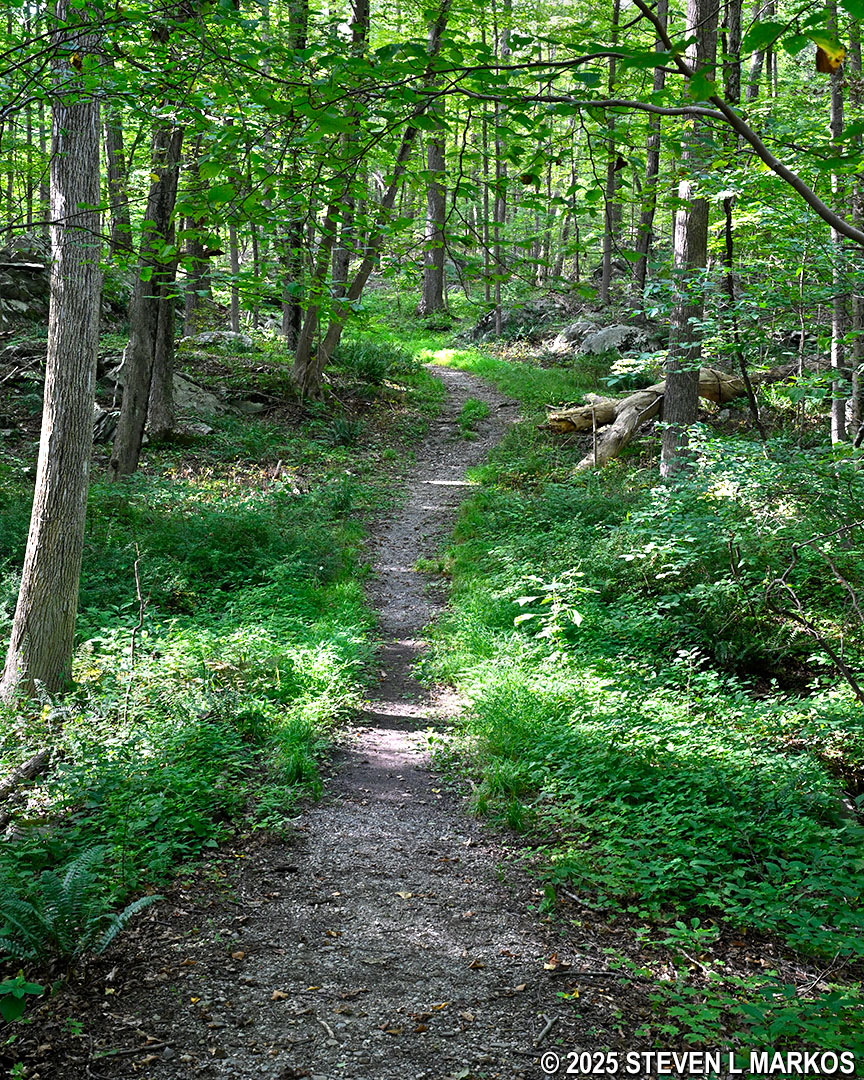
Typical terrain on the western half of the Forest Trail loop, Home of Franklin D. Roosevelt National Historic Site
A half mile from where the loop starts, the Forest Trail comes to a T-intersection. This is where it splits from the Hyde Park Trail. Take a left to hike to the Vanderbilt Mansion on the Hyde Park Trail or a right to continue on the Forest Trail.
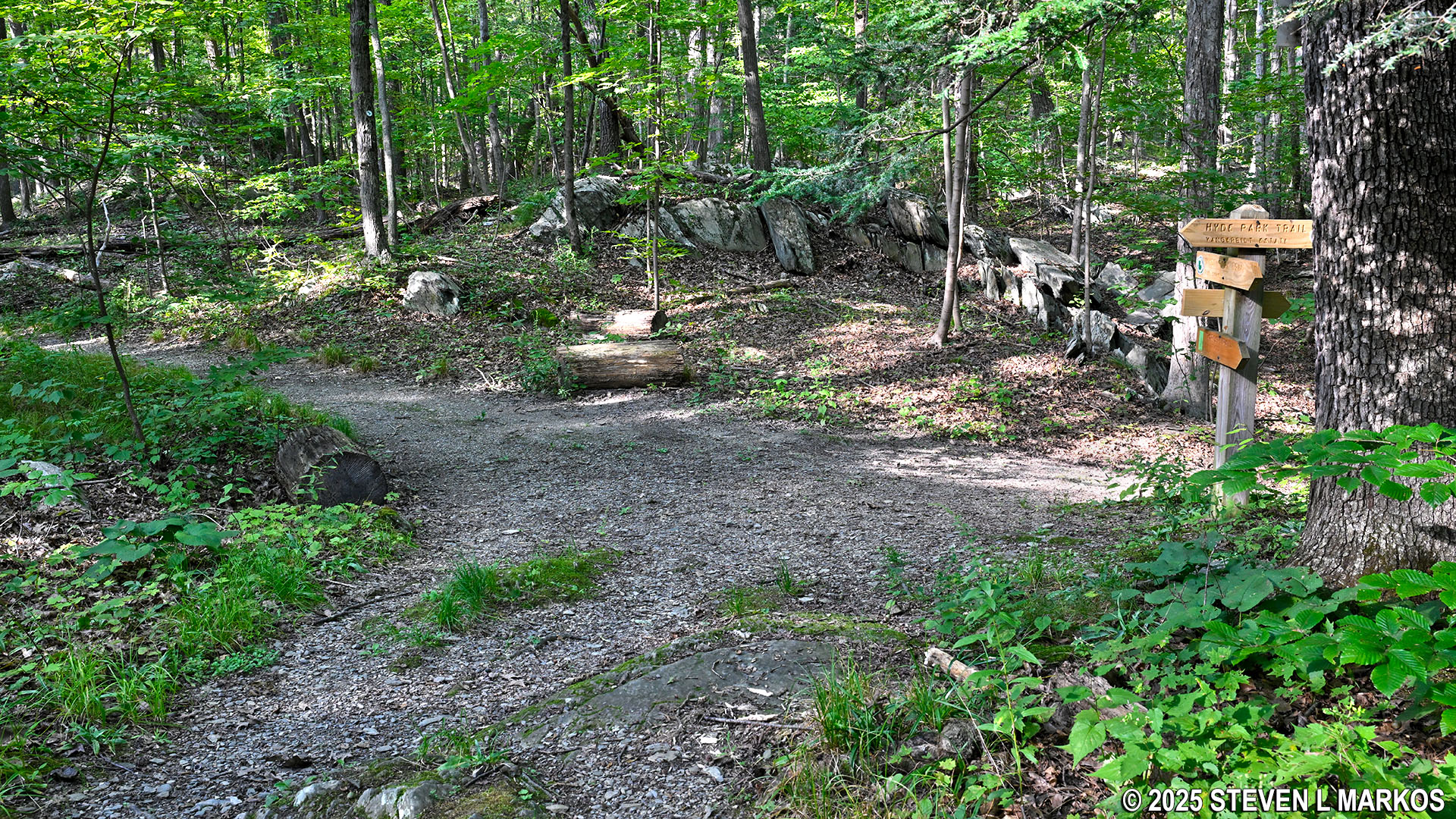
Split with the Hyde Park Trail on the loop portion of the Forest Trail, Home of Franklin D. Roosevelt National Historic Site
The easiest part of the entire Forest Trail is the eastern half of the loop. The terrain is fairly level, and the trail surface remains free of rocks and roots that you can trip over.
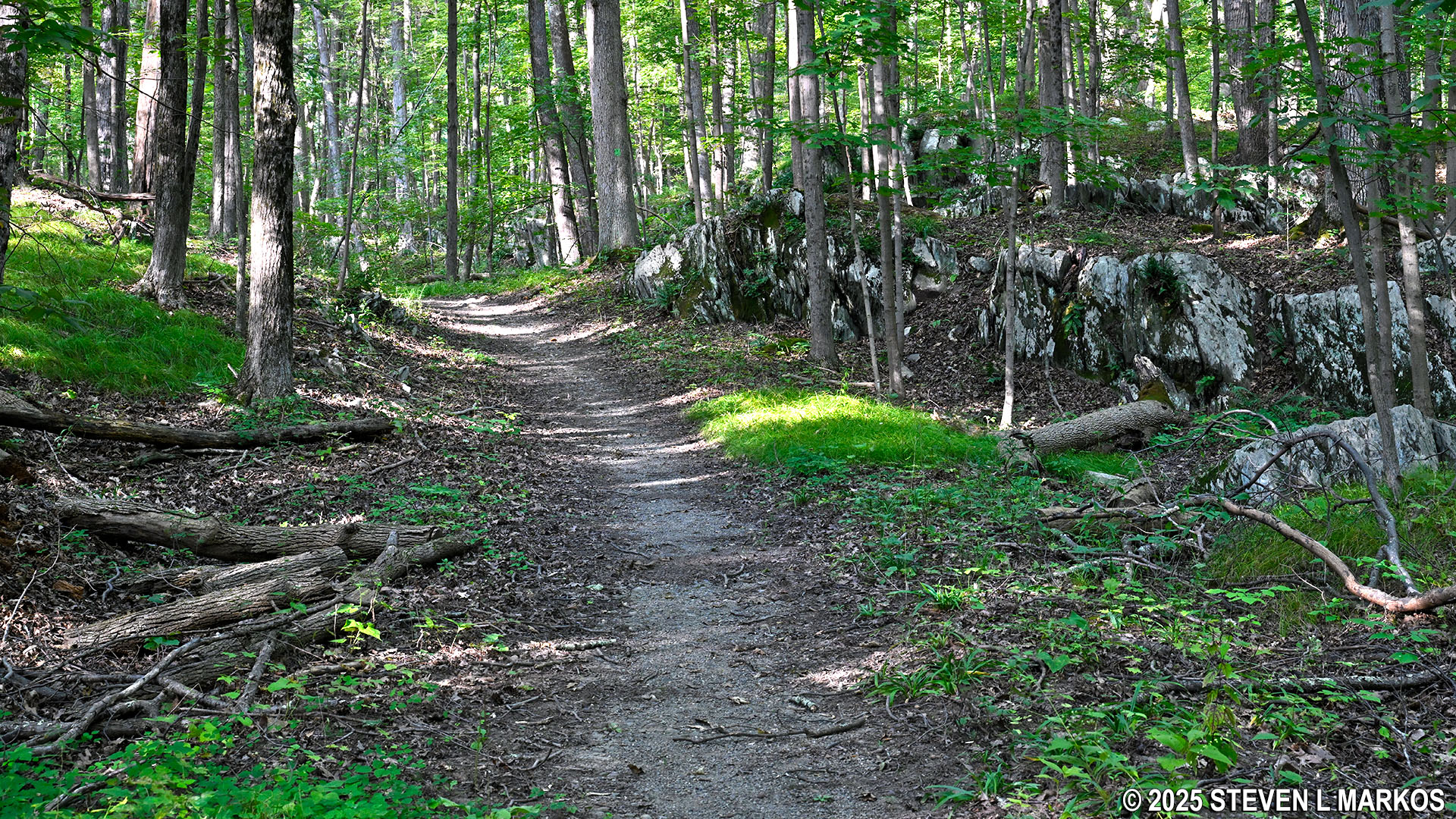
Typical terrain on the eastern half of the Forest Trail loop, Home of Franklin D. Roosevelt National Historic Site
Two tenths of a mile past the split with the Hyde Park Trail is a creek crossing. On one side the creek is a narrow body of water, but on the other side it looks like a swamp. There is a second creek just up ahead.
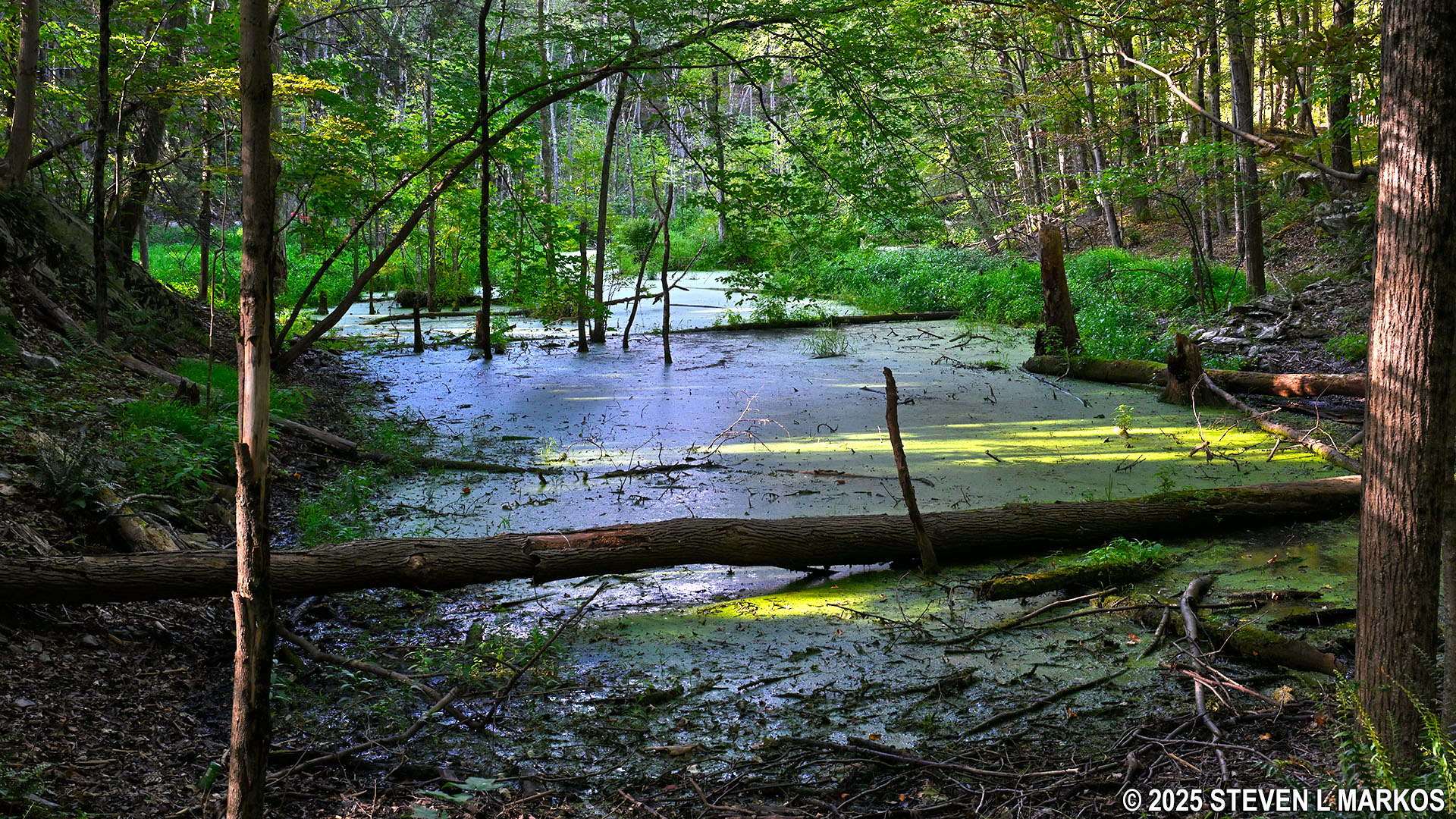
The Forest Trail crosses a creek at the northern end of the loop, Home of Franklin D. Roosevelt National Historic Site
There are a few narrow segments on the eastern half of the loop. Ticks love this type of vegetation, so check you legs whenever you brush up against greenery. For the record, I did not pick up any ticks on this hike.
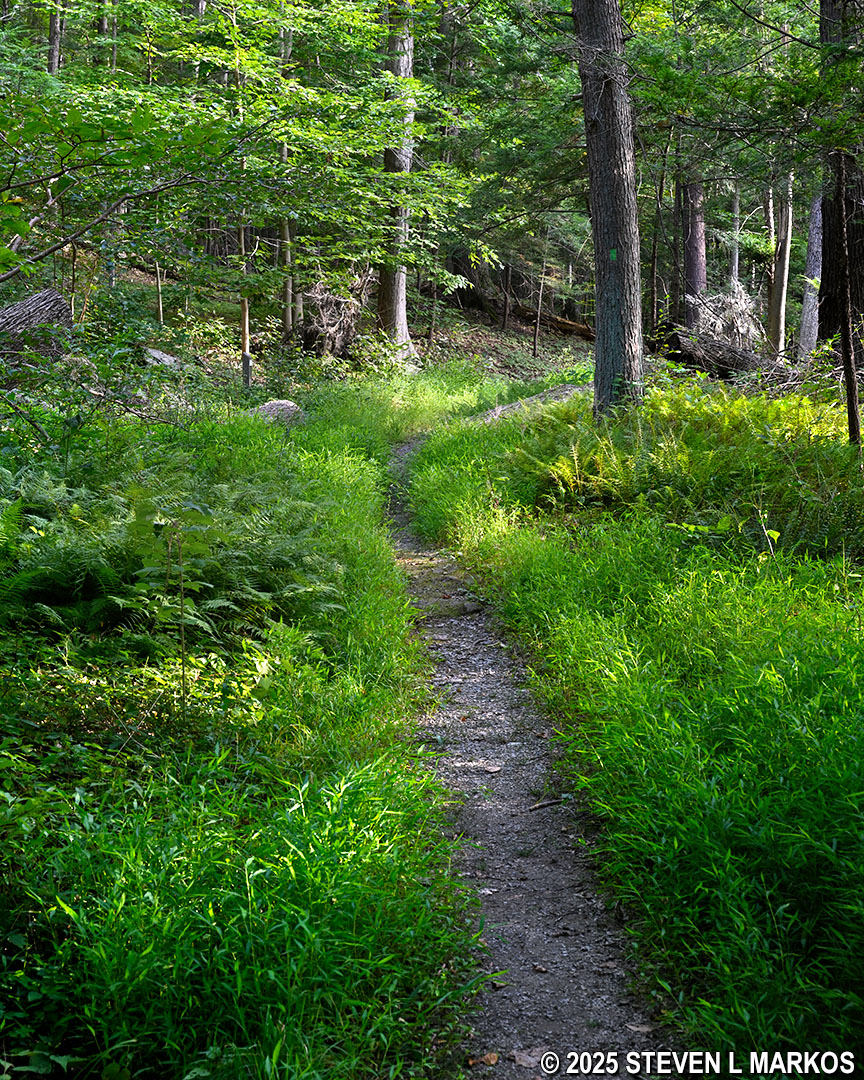
Narrow section on the eastern half of the Forest Trail loop, Home of Franklin D. Roosevelt National Historic Site
There is also a short segment that passes through a pine tree forest. The trail surface is covered with pine needles and cones, and the trees are as tall and straight as telephone poles.
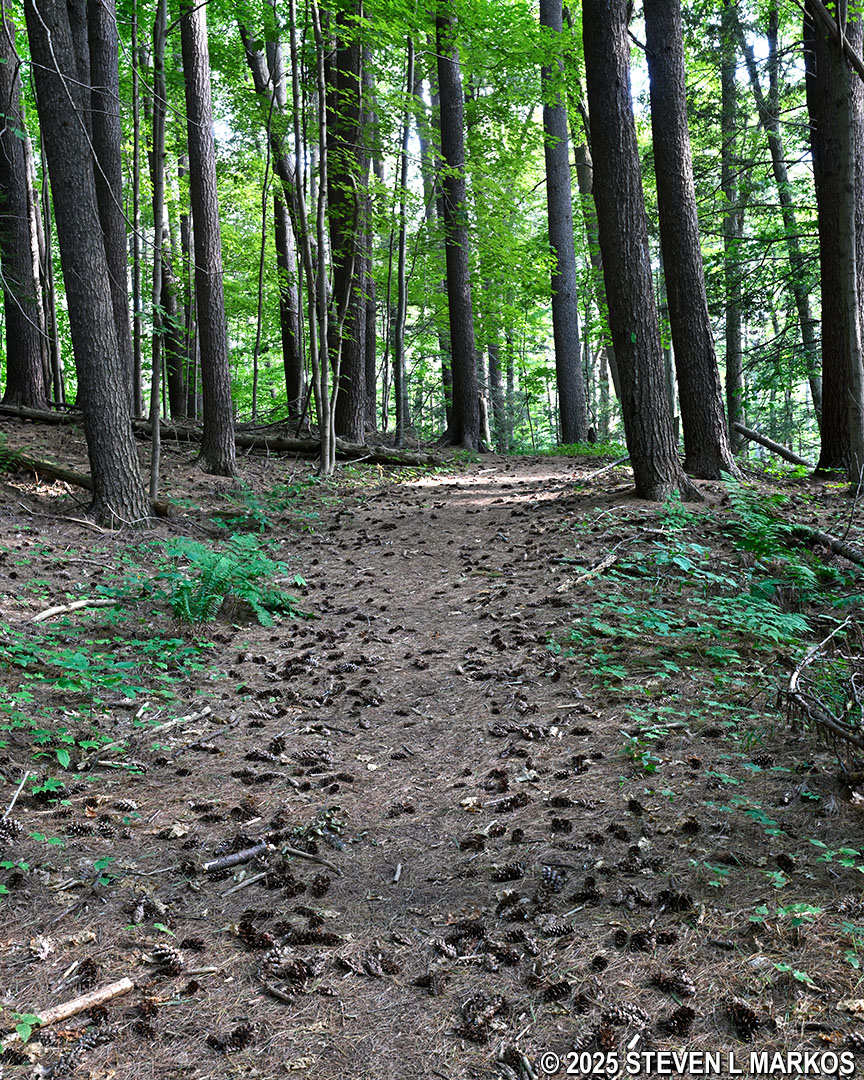
Section of the Forest Trail that passes through a pine tree forest, Home of Franklin D. Roosevelt National Historic Site
Regardless of which way you hike around the loop, when you get back to the start, just keep walking straight and you will naturally merge back onto the stick portion of the Forest Trail. The loop itself is 1.1 mile long, and from here back to the parking lot it is another .9 mile along terrain that has already been hiked. If you didn’t take the Meadow Trail earlier and want to change things up a bit, but sure to catch it on the way back.
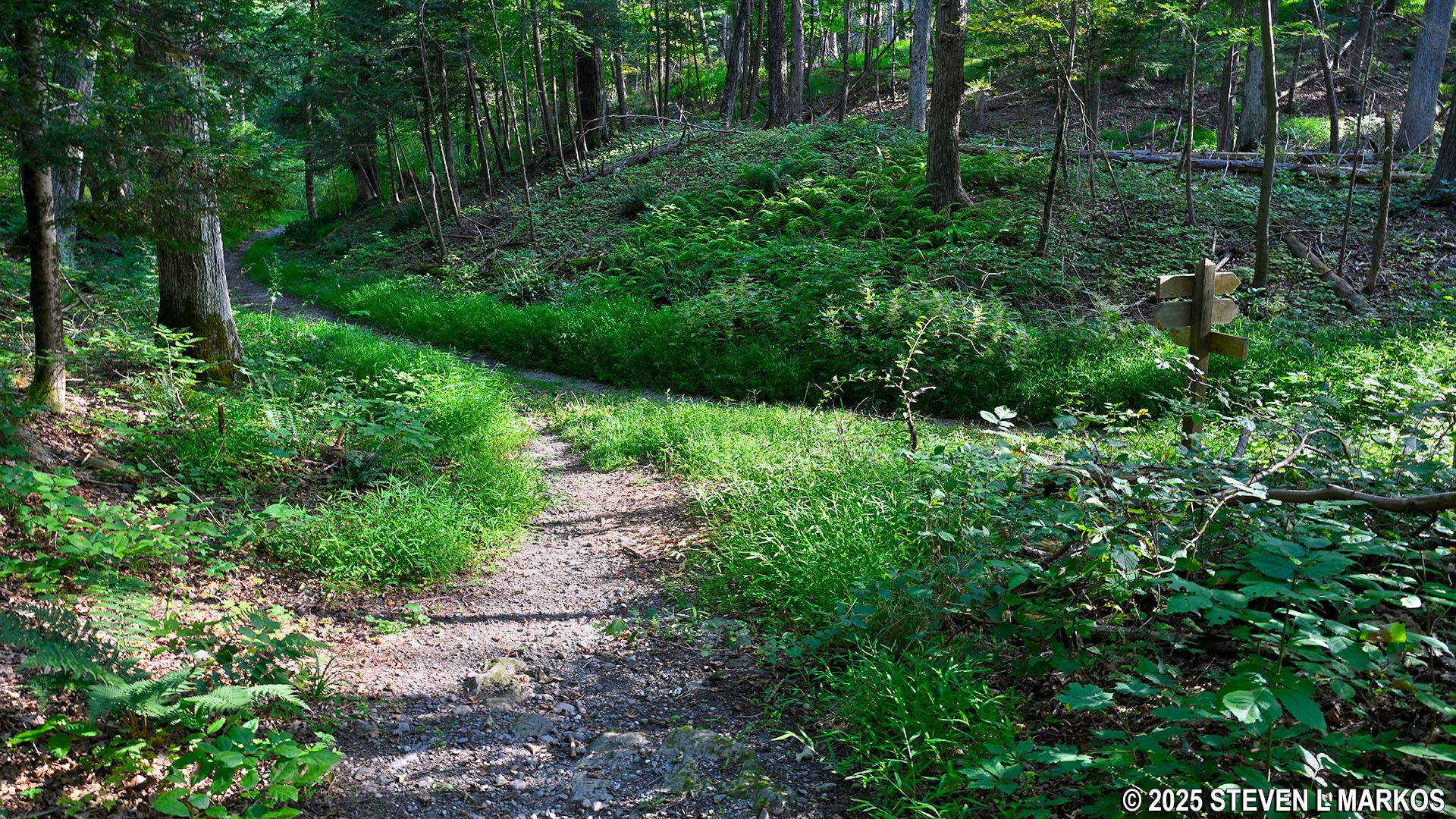
Back at the start of the loop on the Forest Trail at Home of Franklin D. Roosevelt National Historic Site
Other than the Ice Pond, the Forest Trail adds nothing to the Franklin Roosevelt experience, so hike it only if you are looking for exercise. It’s not a bad trail, but ultimately it is nothing more than a walk in the woods.
With a few exceptions, use of any photograph on the National Park Planner website requires a paid Royalty Free Editorial Use License or Commercial Use License. See the Photo Usage page for details.
Last updated on April 3, 2025


