
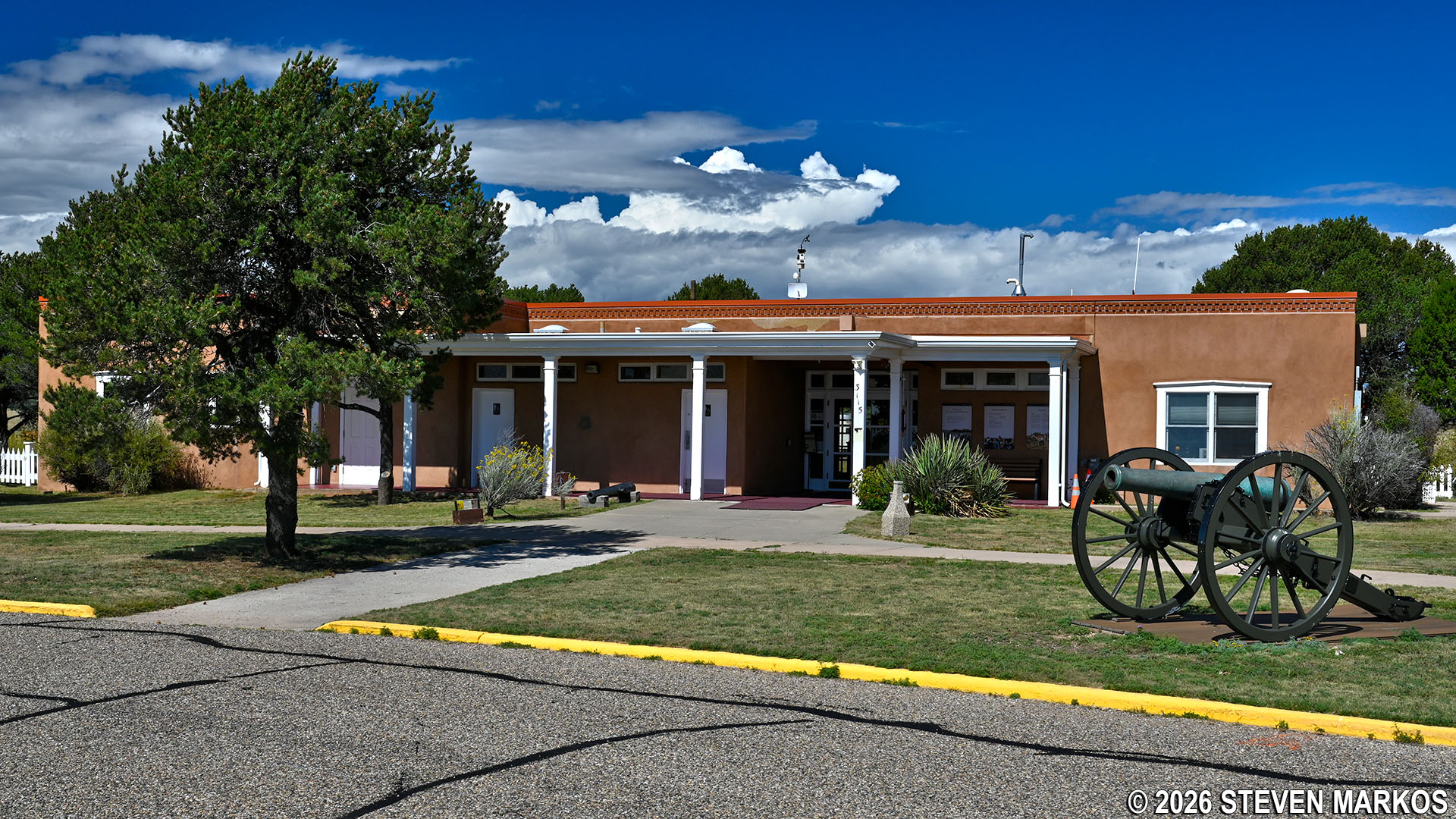
Visitor Center at Fort Union National Monument
OPERATING HOURS
The Fort Union National Monument Visitor Center is open year-round from 8 AM to 4 PM, except when closed for New Year’s Day, Thanksgiving, and Christmas. Keep in mind that times can always change, so be sure to check the National Park Service’s official Operating Hours and Seasons web page for the latest schedule.
AMENITIES
- Ranger-staffed information desk where you can ask questions and pick up a park brochure
- Souvenir and bookstore
- Park film
- Exhibit area
- Restrooms
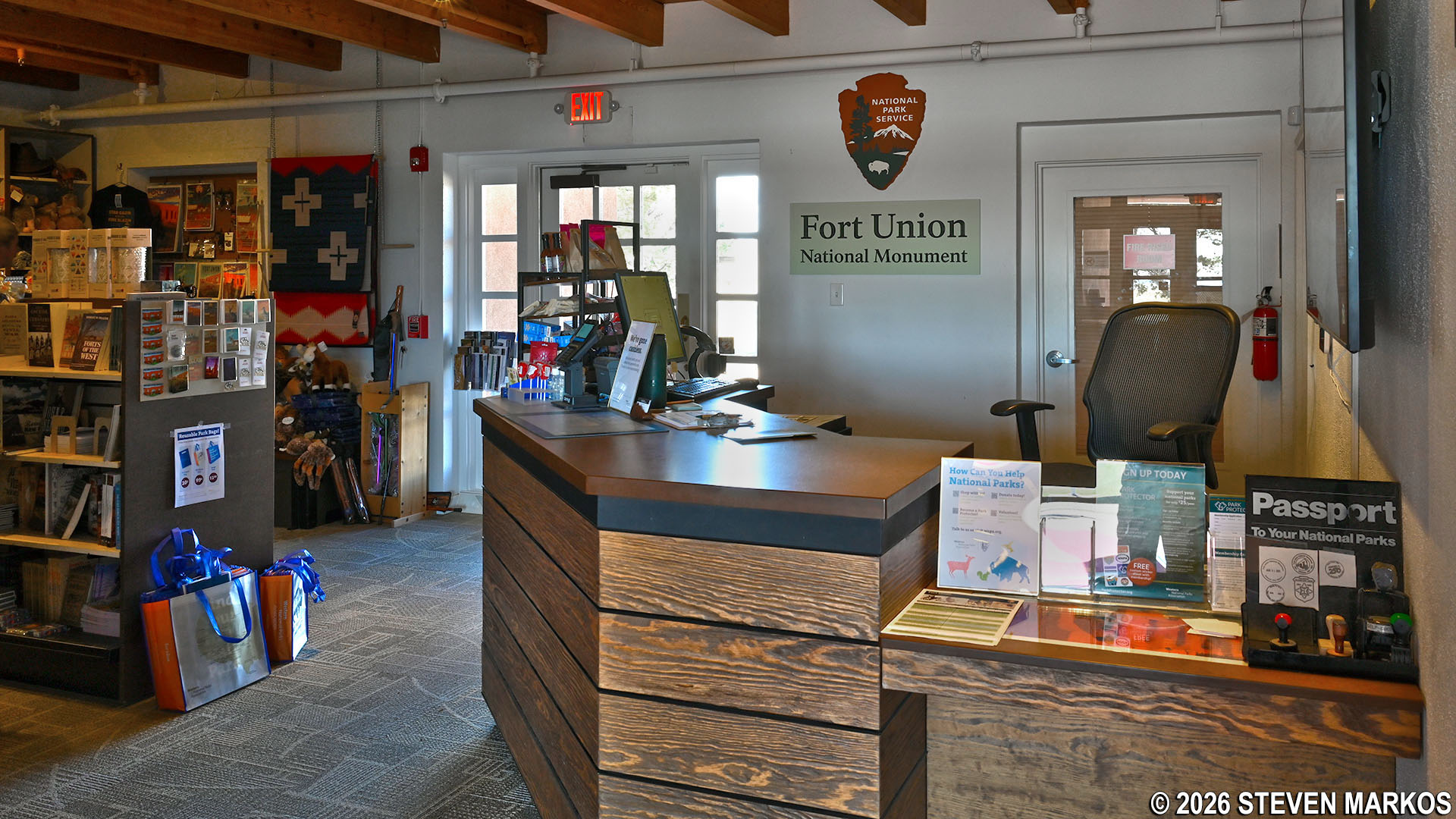
Information desk and souvenir store at the Fort Union National Monument Visitor Center
PARK FILM
The 15-minute film shown in the Visitor Center, Fort Union: Monument to a Young America, covers the 40-year history of Fort Union. Through narration and historical photos, the film depicts how the fort evolved over three different construction phases (referred to as chapters) between 1851 and 1863 to become the largest military and supply post in the southwestern United States. It also discusses how life was for those living at Fort Union. The film is suitable for all ages.
EXHIBIT AREA
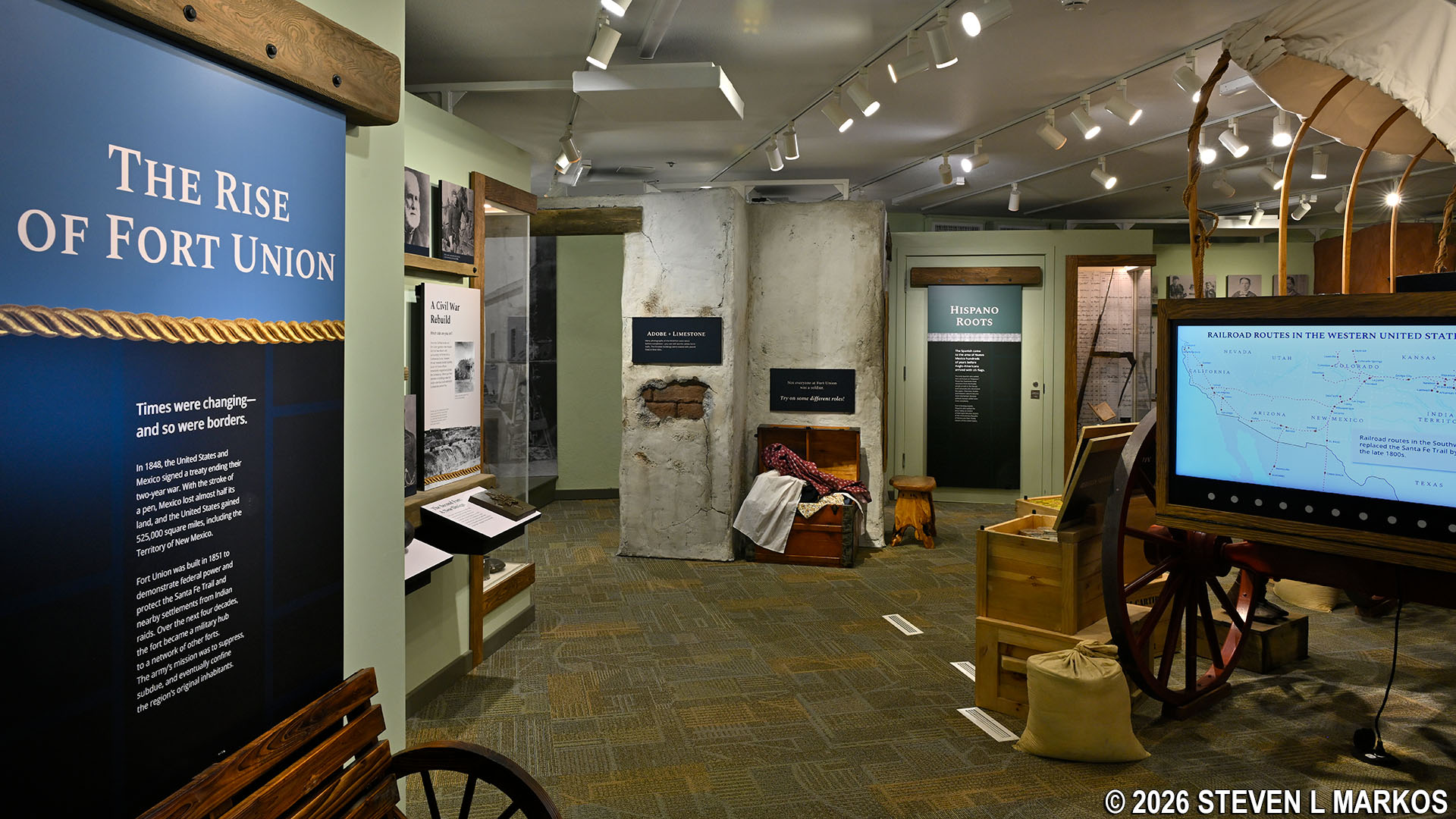
Exhibit area inside the Fort Union National Monument Visitor Center
The exhibit area at the Fort Union National Monument Visitor Center is comprised of information panels and artifacts that cover the history of Fort Union and what it was like to live there in the mid- to late 1800s. As the military’s needs changed, three different forts were built at Fort Union. The first one was constructed in 1851 to protect local settlements and travelers on the Santa Fe Trail from Native American raids.
After the Civil War broke out in 1861, Union military commanders decided to fortify western-territory forts in preparation for possible Confederate attacks. A second Fort Union with earthen fortifications was built, and the first was abandoned. However, by 1863 it was clear that there was no longer a Confederate threat in the West, so construction on a significantly larger third Fort Union commenced. This time the fort was to serve as a major supply depot for the ever-expanding region. A section in the exhibit area highlights each construction phase. There is also a display case of items used by soldiers of the time.
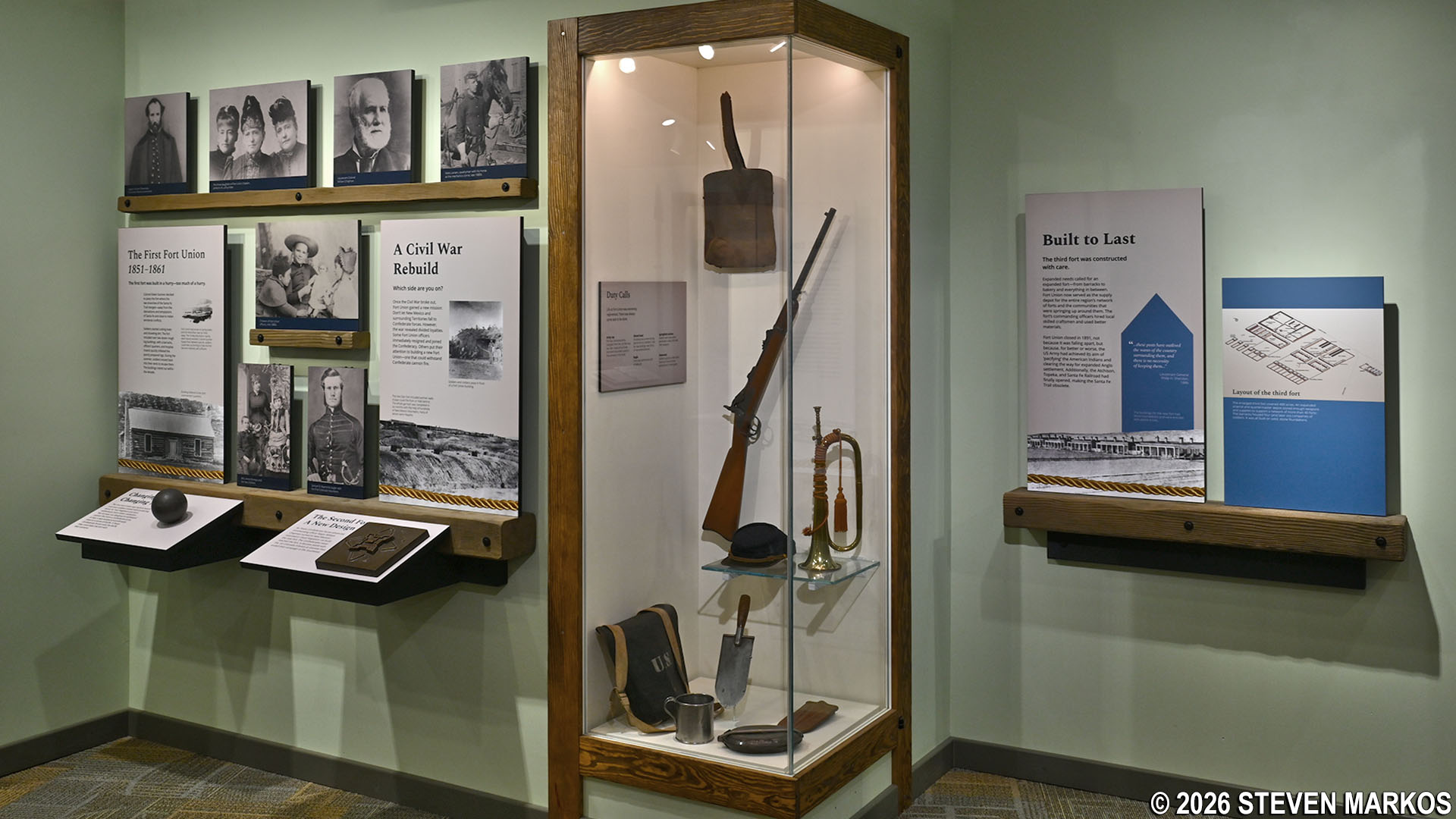
Exhibit on the three phases of Fort Union and a display of military items at the Fort Union National Monument Visitor Center
Bronze statues of the types of people who populated Fort Union are incorporated throughout the exhibits to give visitors a sense of what life was like at the fort. The majority of the men were in the military. For the few soldiers who were married, their wives were allowed to live at the fort only if they agreed to work as a laundress.
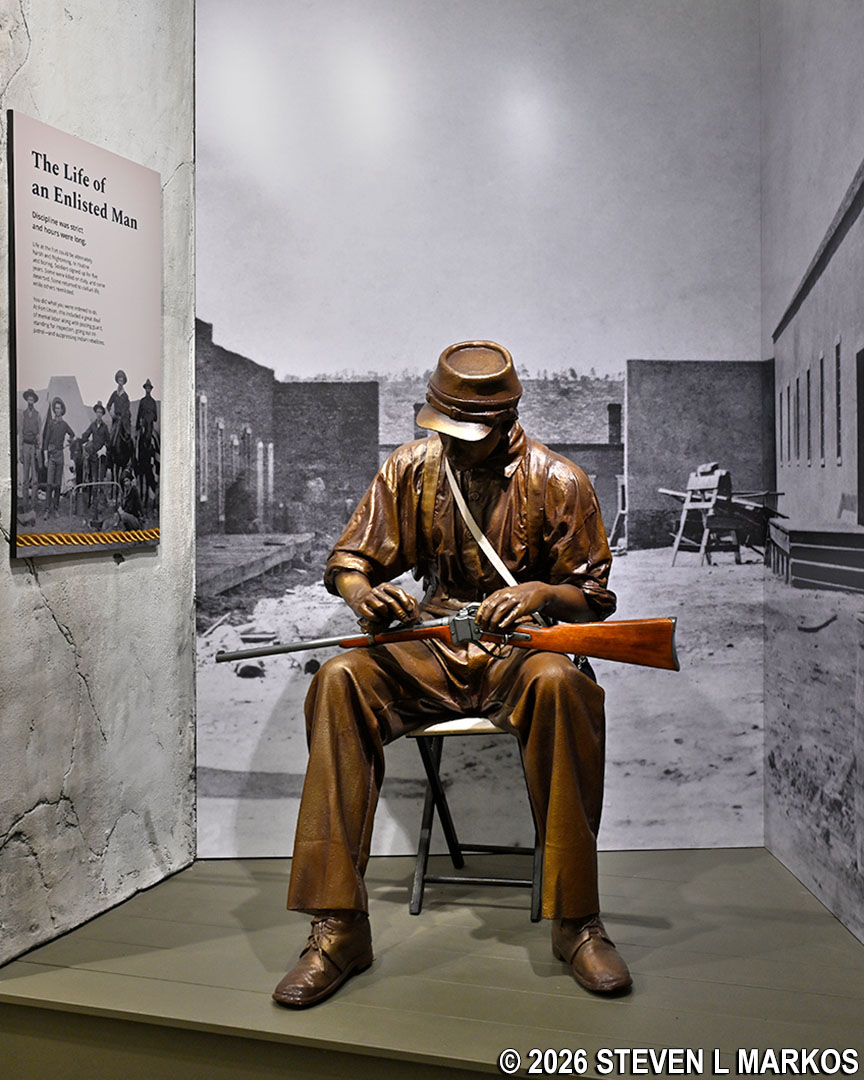
Statue of an enlisted man in the exhibit area at the Fort Union National Monument Visitor Center
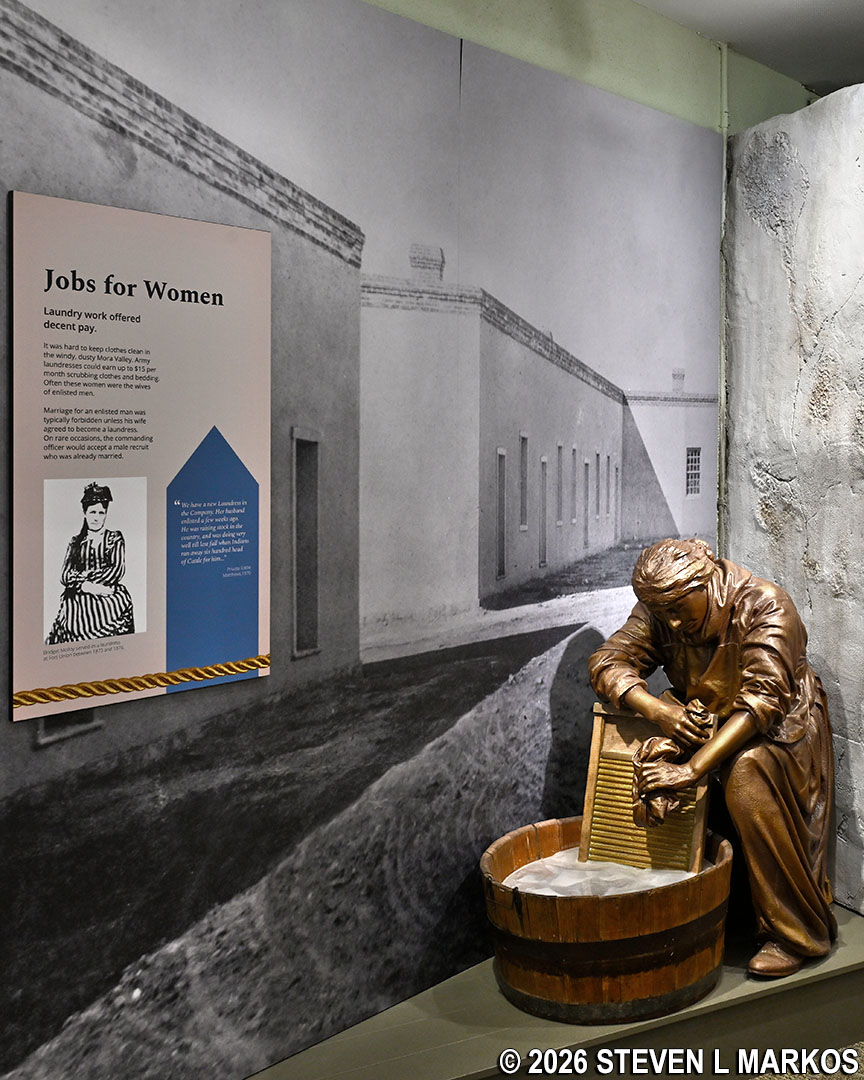
Statue of a woman laundress in the exhibit area at the Fort Union National Monument Visitor Center
Before American settlers moved into the region, many local residents were descendants of the early Spanish who had arrived after New Spain was established in the 1500s. Known as Hispanos, they lived on and farmed the land in the Mora River Valley decades before Fort Union was built. A group of exhibits focuses on the role the Hispanos had at the fort, from volunteering for military service in the Union army during the Civil War to working on the farms used to supply Fort Union with food. A Spanish language bible carried by one of the Hispano soldiers and an enlarged facsimile of a roster with names of some of the volunteers are part of the exhibits.
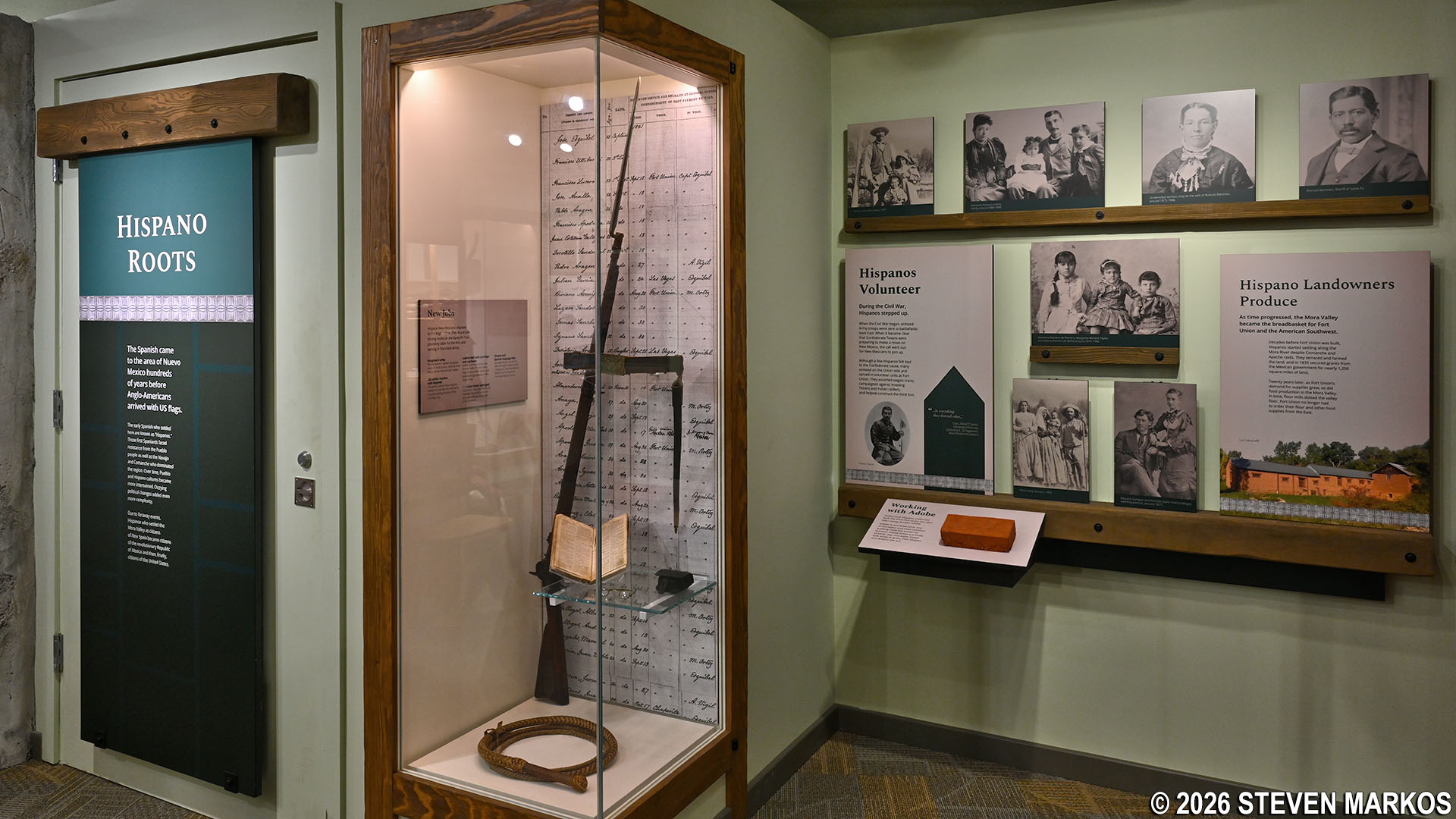
Exhibits on the Hispanos at the Fort Union National Monument Visitor Center
One of the larger and more notable exhibits in the Visitor Center is a replica of a supply wagon. After the third fort was constructed in the 1860s, Fort Union became the largest supply depot in the Southwest. With five large storehouses at its disposal, it supplied provisions to every other fort and camp across the region.
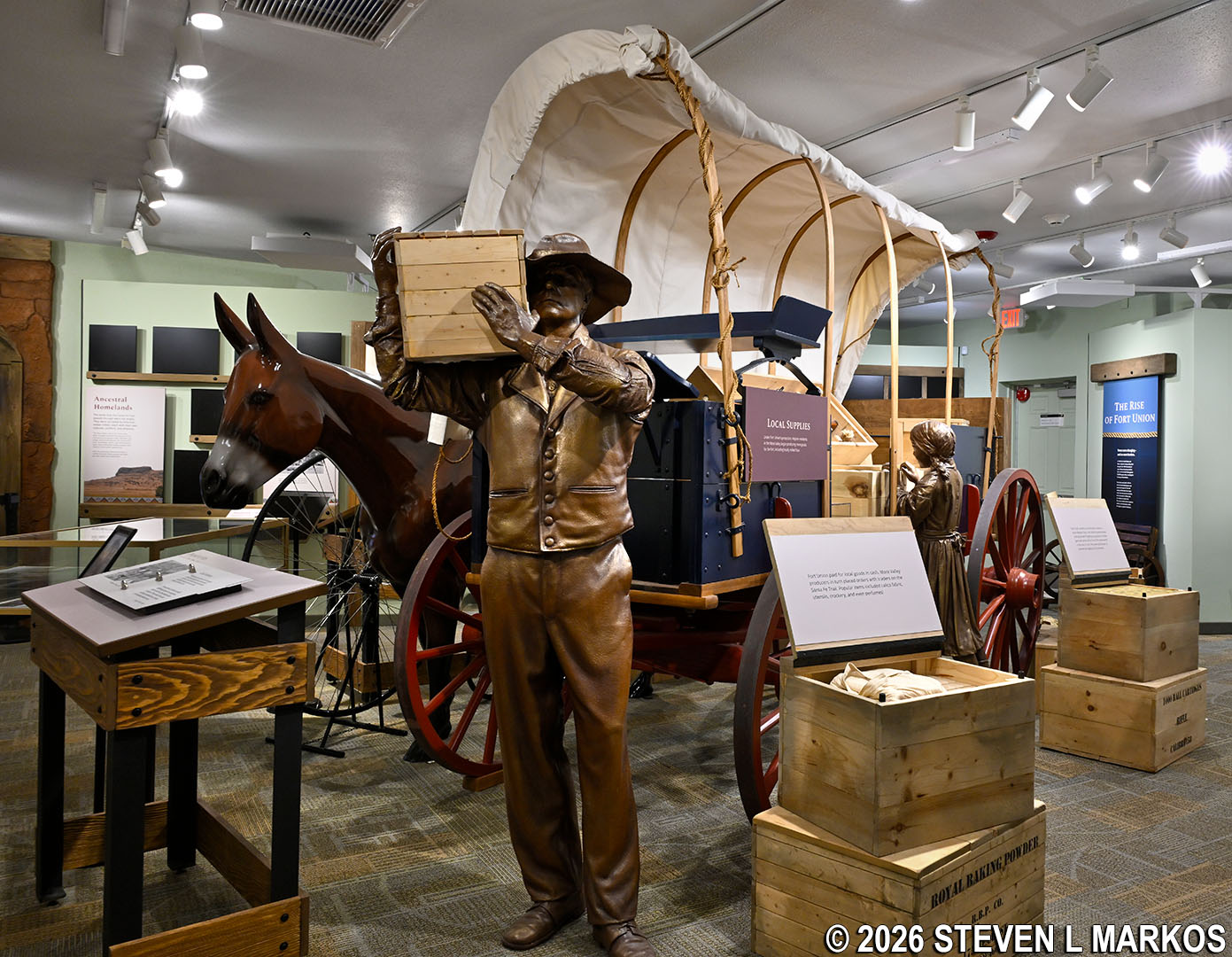
Replica supply wagon in the exhibit area at the Fort Union National Monument Visitor Center
SCHEDULING YOUR TIME
Plan to spend about 45 minutes at the Fort Union National Monument Visitor Center. This gives you enough time to watch the park film, check out the exhibit area, and talk with a Ranger about what there is to see and do at the park.
With a few exceptions, use of any photograph on the National Park Planner website requires a paid Royalty Free Editorial Use License or Commercial Use License. See the Photo Usage page for details.
Last updated on April 6, 2026


