

Lock and Lockhouse 7 at Mile 7 on the Chesapeake and Ohio Canal towpath
Lock and Lockhouse 7 are located at Mile 7 on the Chesapeake and Ohio Canal towpath. There is a small parking lot capable of holding a half dozen cars right along the Clara Barton Parkway, but it can only be reached from the southbound lane (heading towards Georgetown). See the Locks and Lockhouses web page for an interactive location map.
Lock and Lockhouse 7 on the Chesapeake and Ohio Canal are a stone’s throw from the Clara Barton Parkway. Glen Echo Park and the Clara Barton National Historic Site, both units of the National Park system, are just across the road.
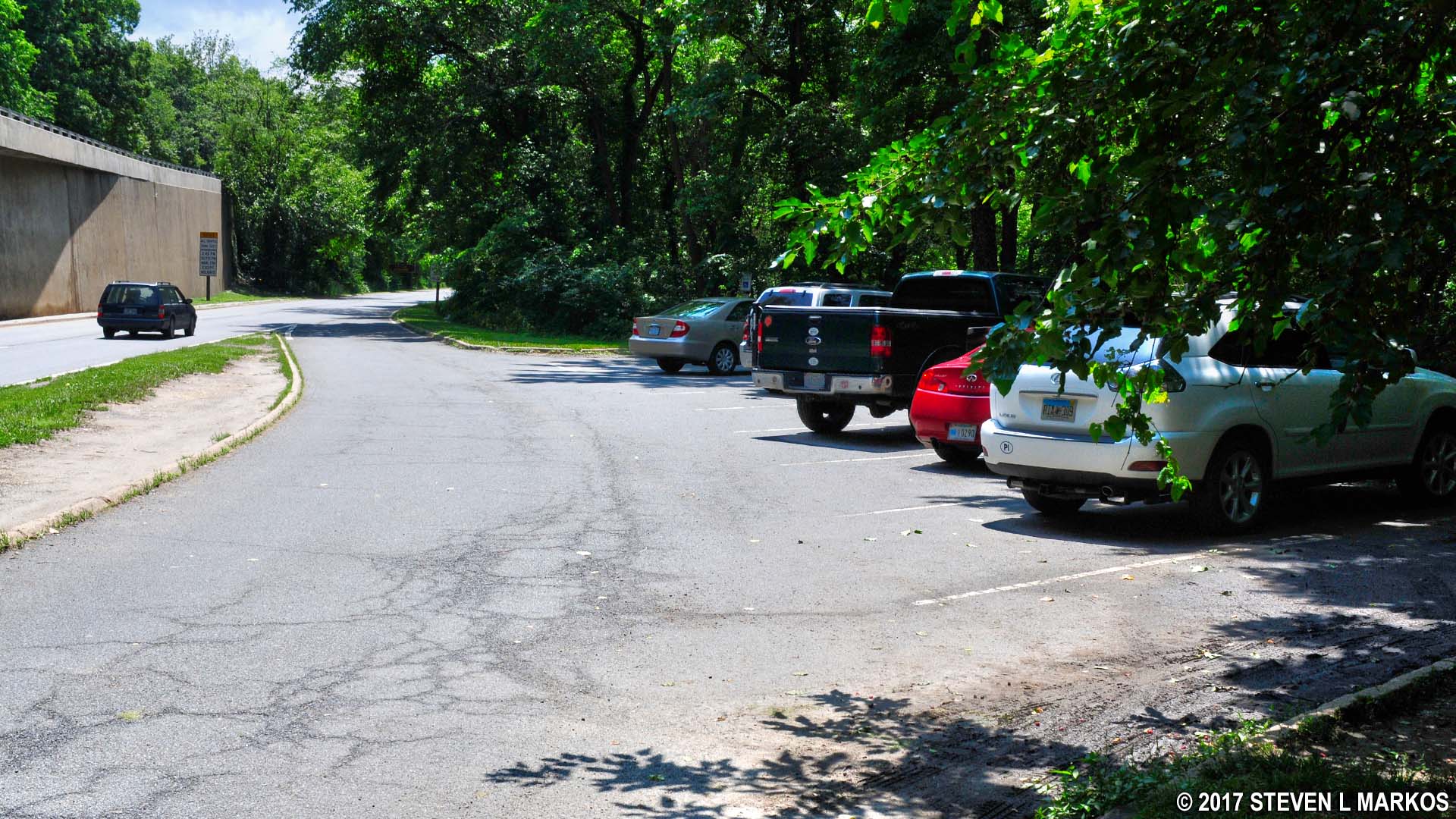
Parking area on Clara Barton Parkway for Lock 7 on the Chesapeake and Ohio Canal
Lock 7 is the first downstream lock to still have a drop gate on its upstream end instead of the more traditional miter gate. A miter gate has two doors that meet at an angle pointing upstream. The pressure of the downstream flowing water keeps them shut naturally. These are easily identified by their long, wooden balance beams, or levers, which are used to open and close the gate doors.

Miter gate with beams on the Chesapeake and Ohio Canal’s Lock 2
A drop gate, on the other hand, is a single door that opens by falling in the upstream direction like a tailgate on a pick-up truck and closes by being hoisted back in place with mechanical gears. It cannot fall downstream because it rests against notches in the stone retaining walls of the canal. Drop gates are identified by the gears and pulleys next to the gate.

Illustration of a drop gate

Drop gate hardware of Lock 7 on the Chesapeake and Ohio Canal
The upstream gate was converted to a drop gate when the entire lock was lengthened by ten feet on the upstream end so it could accommodate larger boats. The C&O Canal Company figured that if a new gate had to be built anyway, might as well try out the drop gate technology. Only a few locks in this area were enlarged, and the longer boat idea never gained much ground.
Lock 5 and Lock 6 were also converted to drop gates, but when the Civilian Conservation Corps began restoring the canal in the late 1930s, it reinstalled miter gates. Locks 9, 10, and 12 all have drop gates, with Lock 10’s being the best preserved.
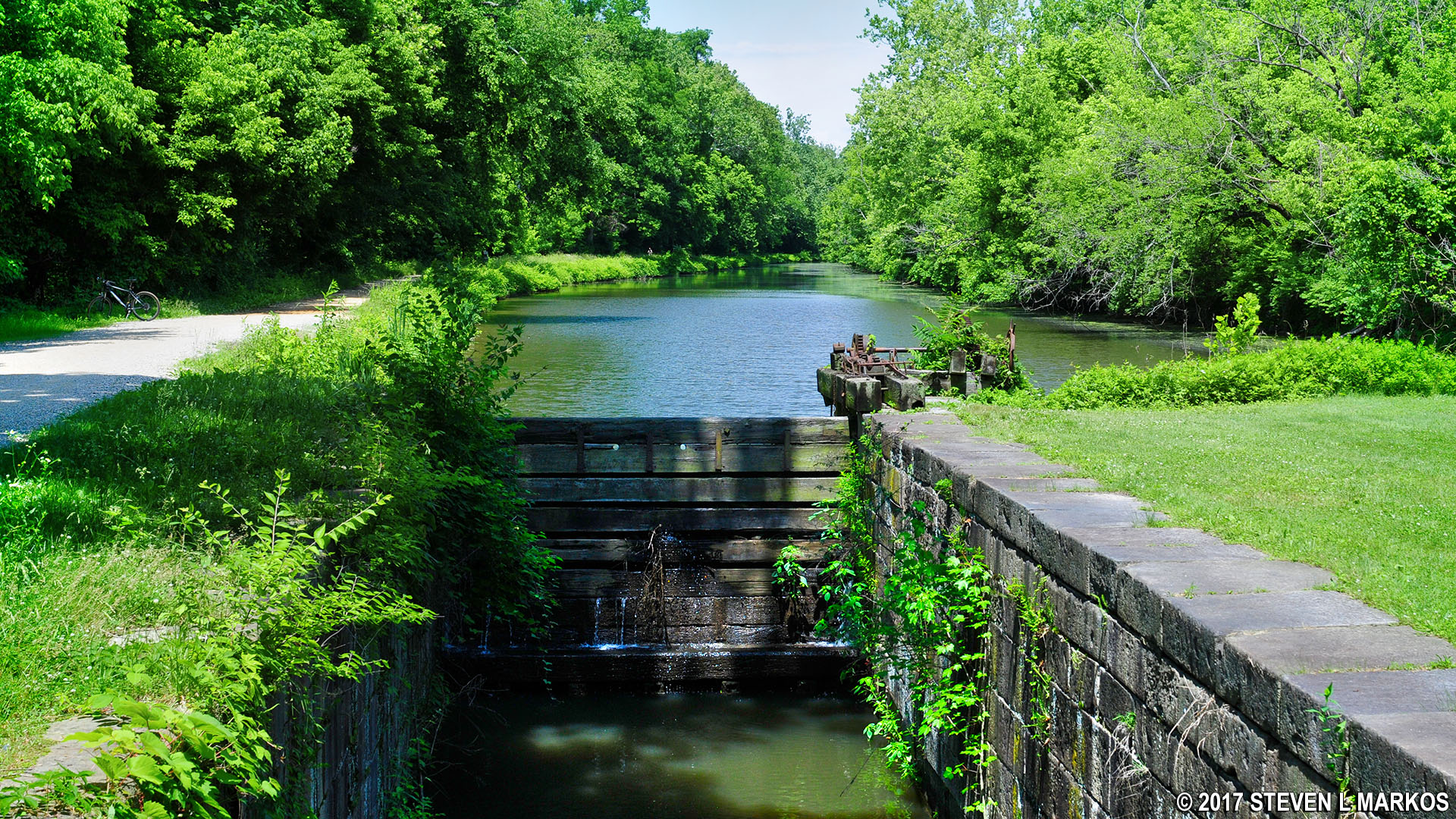
Upstream view of the Chesapeake and Ohio Canal from Lock 7
Along with the lock itself stands Lockhouse 7, though it is not open to the public. A lockhouse is the residence of the man who is hired to operate the lock. In addition to a yearly salary, he and his family—almost all lockkeepers were family men—lived in the company provided lockhouse and had use of an acre of land for farming. Those who tended multiple locks got extra money per lock, up to two. The locks had to be very close together for the C&O Canal Company to assign multiple locks to one person.
Operating the lock was a year-round, 24-hour-a-day job. When a canal boat approached, the captain would blow a whistle to notify the lockkeeper. If it were nighttime, somebody had to wake up and go to work. Of course that’s the benefit of being a family man—your kids had to get up for the late night and early morning arrivals!
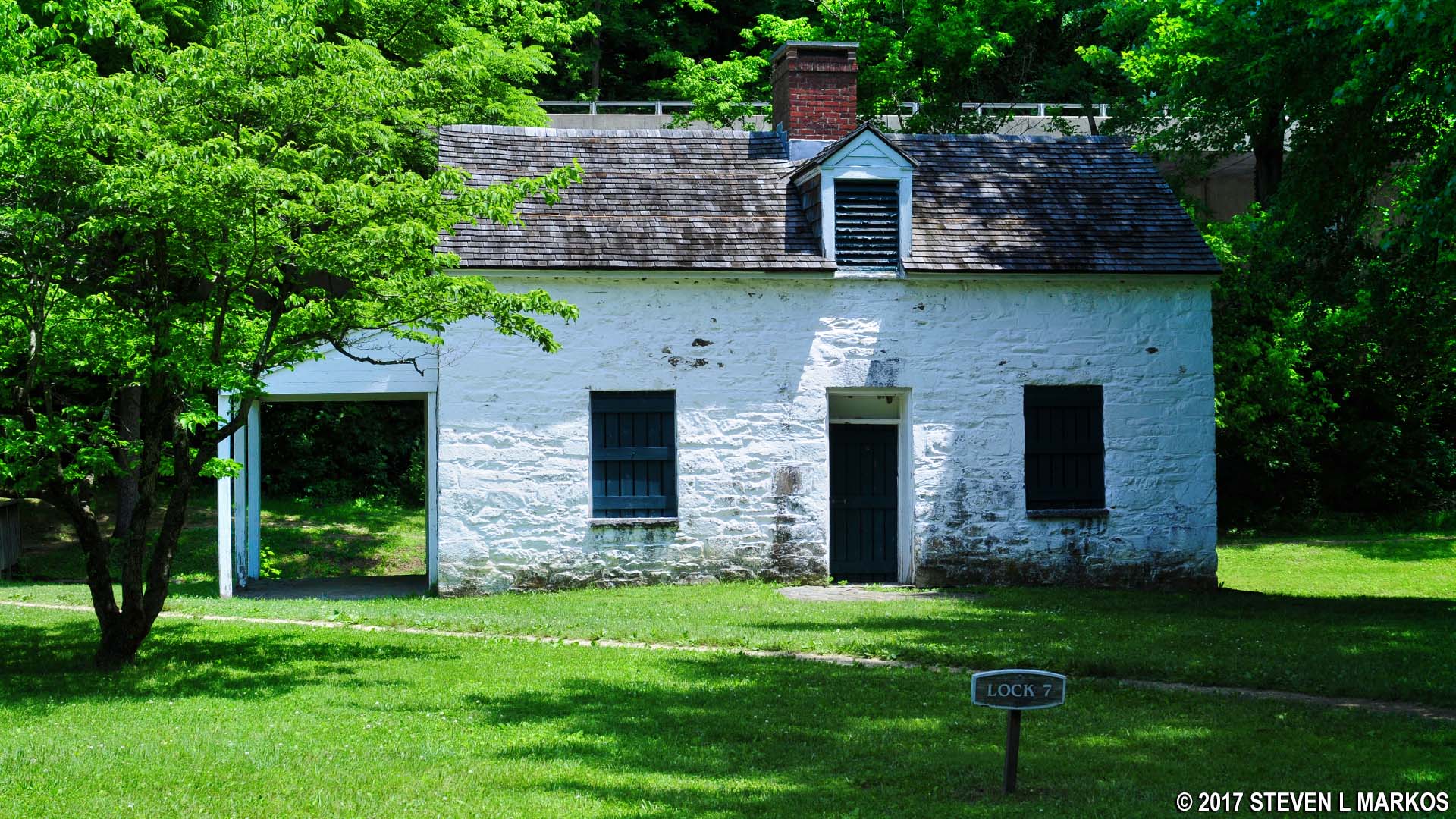
Lockhouse 7 on the Chesapeake and Ohio Canal
With a few exceptions, use of any photograph on the National Park Planner website requires a paid Royalty Free Editorial Use License or Commercial Use License. See the Photo Usage page for details.
Last updated on June 24, 2024


