
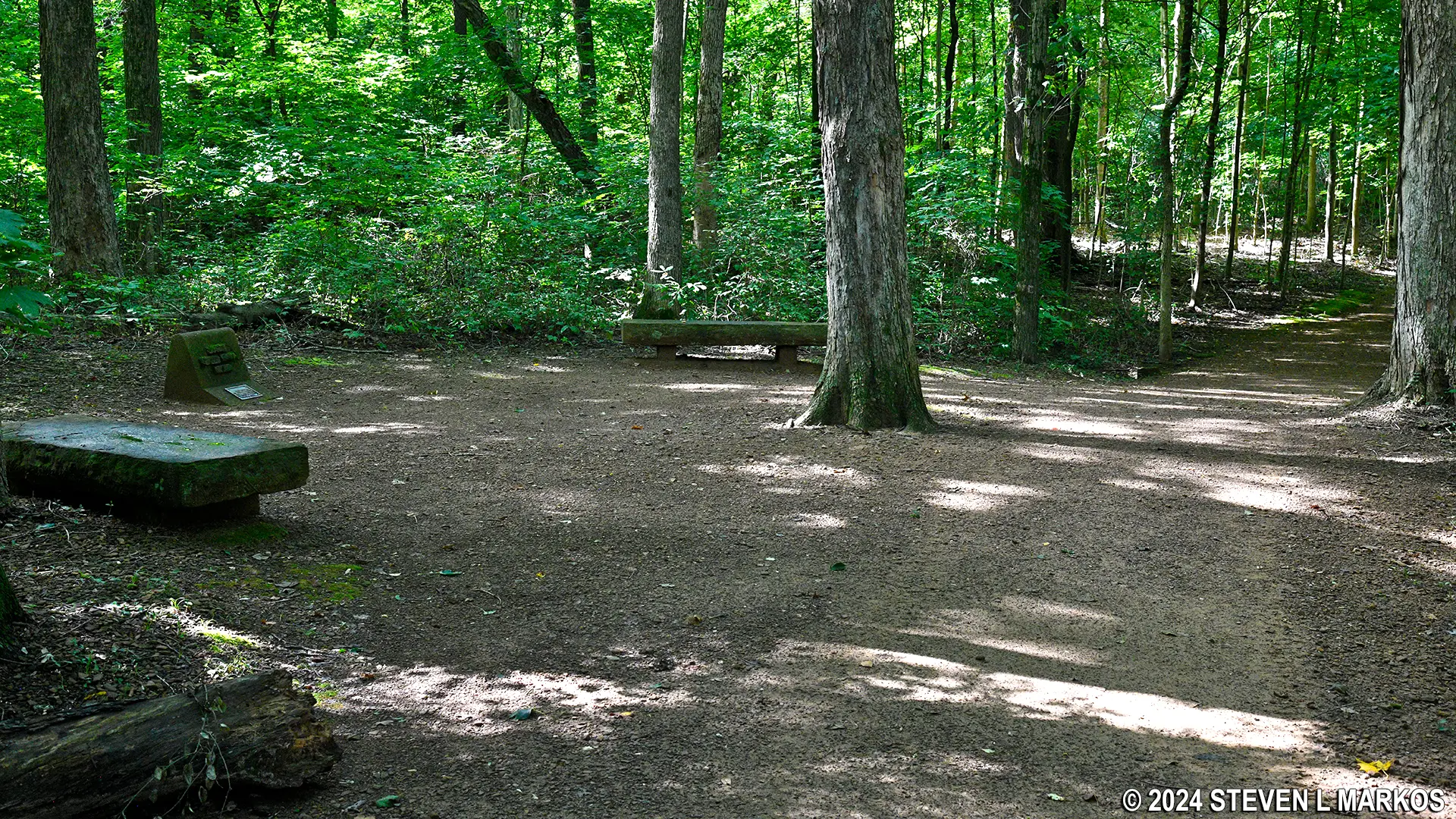
Trail of Twelve Stones at Lincoln Boyhood National Memorial
Length: .6 mile, one way from the Visitor Center
Time: 30 minutes
Difficulty: Easy
The Trail of Twelve Stones at Lincoln Boyhood National Memorial is a unique trail with twelve exhibits along its route comprised of rocks, bricks, stones, monuments, and other such materials culled from various places that were important in the life of Abraham Lincoln. Most are embedded in concrete to prevent people from stealing them, and a few are just too big to steal. Nevertheless, I’m surprised somebody hasn’t shown up at night with a shovel or jackhammer and hauled off a few, especially considering that they have been here since 1934 when the trail first opened.
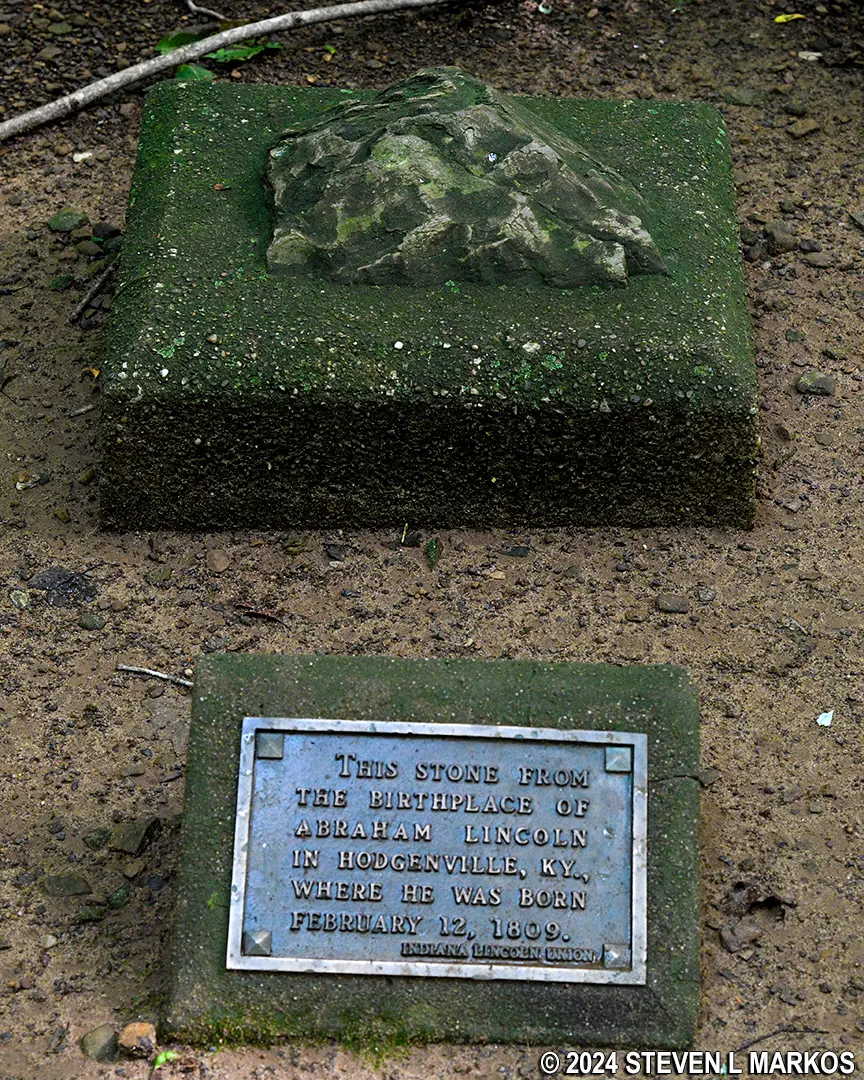
Stone from Abraham Lincoln’s birthplace in Hodgenville, Kentucky, on the Trail of Twelve Stones at Lincoln Boyhood National Memorial
The layout of the trails at Lincoln Boyhood National Memorial is two loops, a northern and a southern loop, with a short connector between them. The southern loop is actually comprised of two trails, with the Lincoln Boyhood Trail making up the western side and the Trail of Twelve Stones the eastern side. The Boyhood Trail runs from the Pioneer Cemetery to the Lincoln Living Historical Farm, while the Trail of Twelve Stones picks up at the farm and circles back to the cemetery.

Lincoln Boyhood National Memorial map (click to enlarge)
The Trail of Twelve Stones is meant to be hiked starting at the farm, which means you must begin the southern loop in the clockwise direction on the Lincoln Boyhood Trail. This is because the first stone you come to in this direction is a rock taken from Lincoln’s birthplace in Hodgenville, Kentucky, and the last is a monument to his mother that was sculpted from granite taken from his tomb in Springfield, Illinois. Since anyone hiking the Trail of Twelve Stones is ultimately going to hike the entire loop, might as well do it the way the hike was intended.
Regardless of what trail you hike at Lincoln Boyhood National Memorial, if you start at the Visitor Center, you must first walk down the allée, the long, grass field flanked by the forest on either side and with a flagpole at the far end. If you want to go around the southern loop in the counterclockwise direction by starting on the Trail of Twelve Stones—which you don’t—walk down the righthand sidewalk and you will see a trail forking off into the forest before getting to the flagpole. If you want the Lincoln Boyhood Trail—which you do—regardless of which sidewalk you take, just continue past the flagpole to the Pioneer Cemetery where Abraham Lincoln’s mother, Nancy, is buried. Once there, follow the signs to the Lincoln Farm.

The allée at Lincoln Boyhood National Memorial
The Trail of Twelve Stones starts at the northern end of the farm. There really isn’t an official start. It’s more as if the Lincoln Boyhood Trail just turns into the Trail of Twelve Stones, which you know has happened when you reach the first stone.

Trail of Twelve Stones begins just past the Lincoln Living Historical Farm at Lincoln Boyhood National Memorial
As with all trails at Lincoln Boyhood National Memorial, the Trail of Twelve Stones is a wide dirt path with a smooth surface, similar to a dirt road. Hiking it starting at the farm, the general trajectory is downhill most of the way, but the slope is long and gradual, and the trail is always easy to hike.
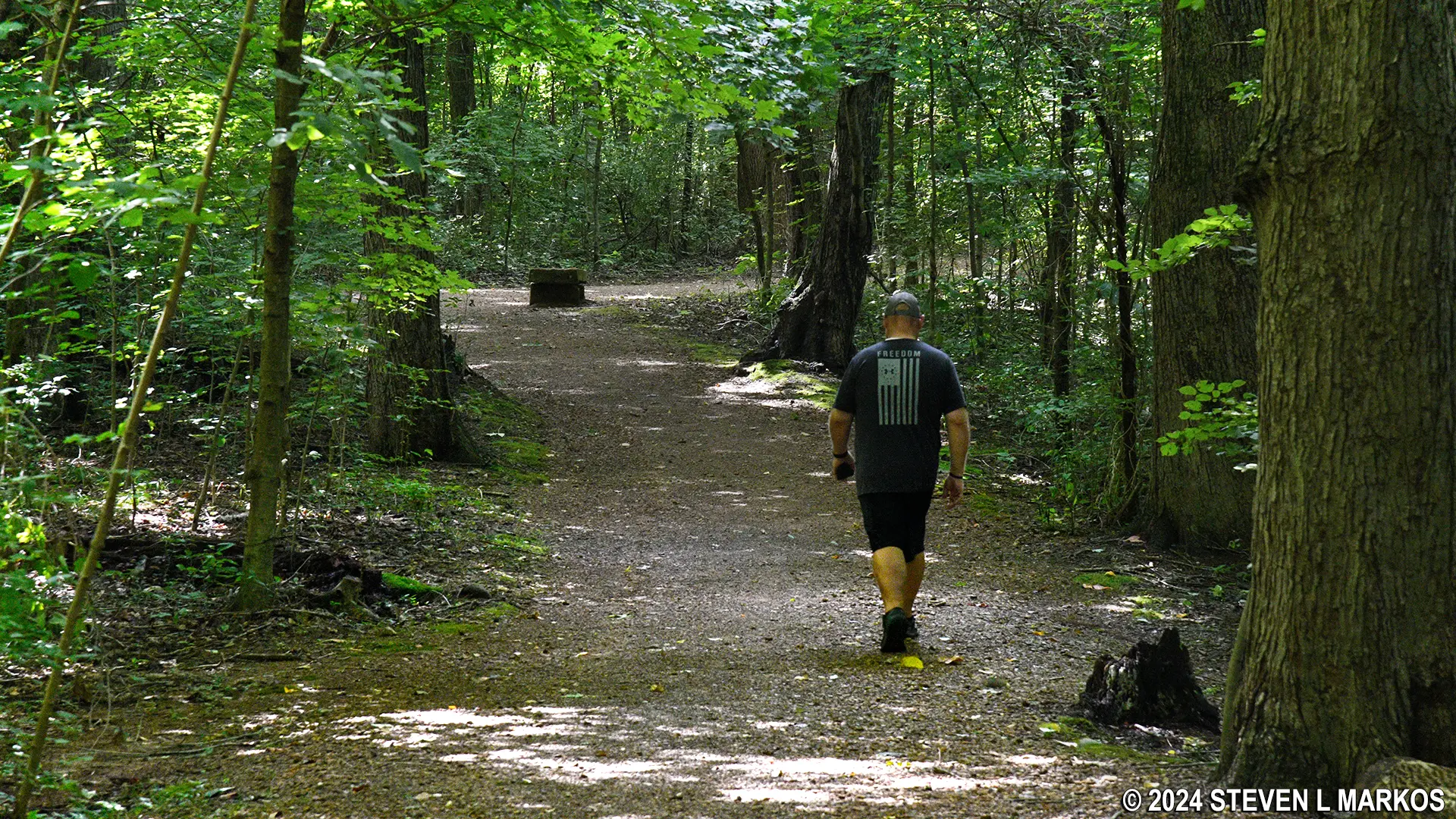
Typical terrain on the Trail of Twelve Stones at Lincoln Boyhood National Memorial
A tenth of a mile from the farm is the intersection with a trail that connects to the Boyhood Nature Trail. A sign marks the intersection. If you want another mile of walking, take the Boyhood Nature Trail and then continue on the Trail of Twelve Stones back to the Visitor Center.
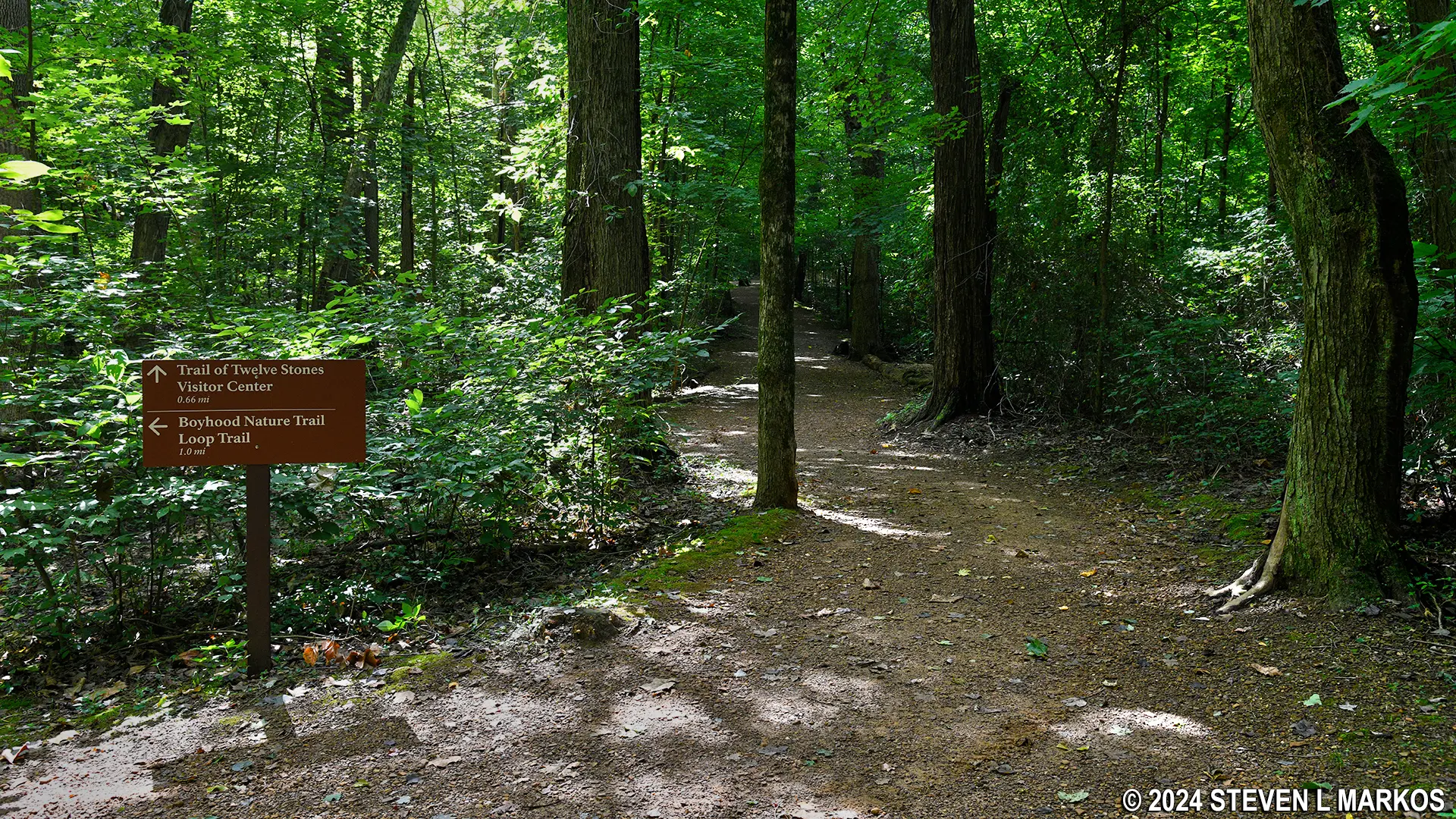
Intersection of the Trail of Twelve Stones and the Boyhood Nature Trail, Lincoln Boyhood National Memorial
The stones along the Trail of Twelve Stones are as follows:
- Rock from Hodgenville, Kentucky, where Lincoln was born.
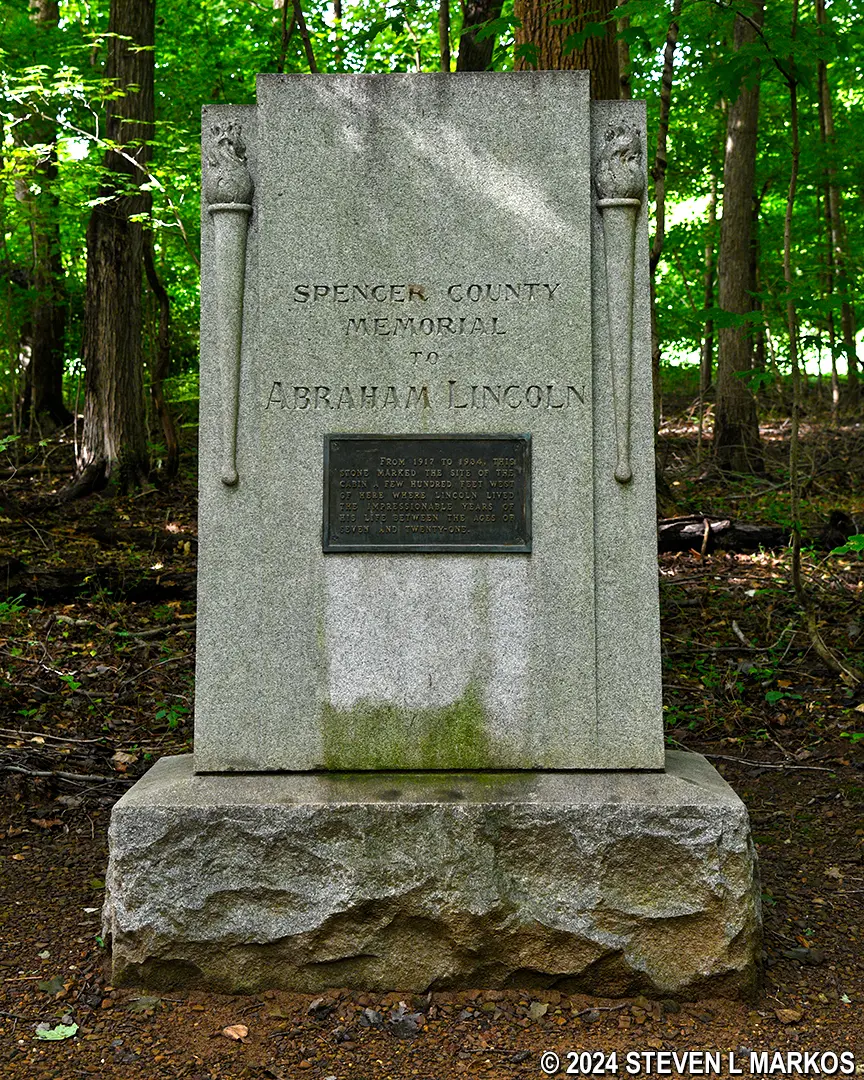
- Monument that marked the supposed site of the Lincoln Family log cabin from 1917 until 1934. You will pass the cabin site on the Lincoln Boyhood Trail just before arriving at the farm.

Original monument placed on the Lincoln Family cabin site at Lincoln Boyhood National Memorial
- Stone from the foundation of a store where Lincoln worked as a teenager.
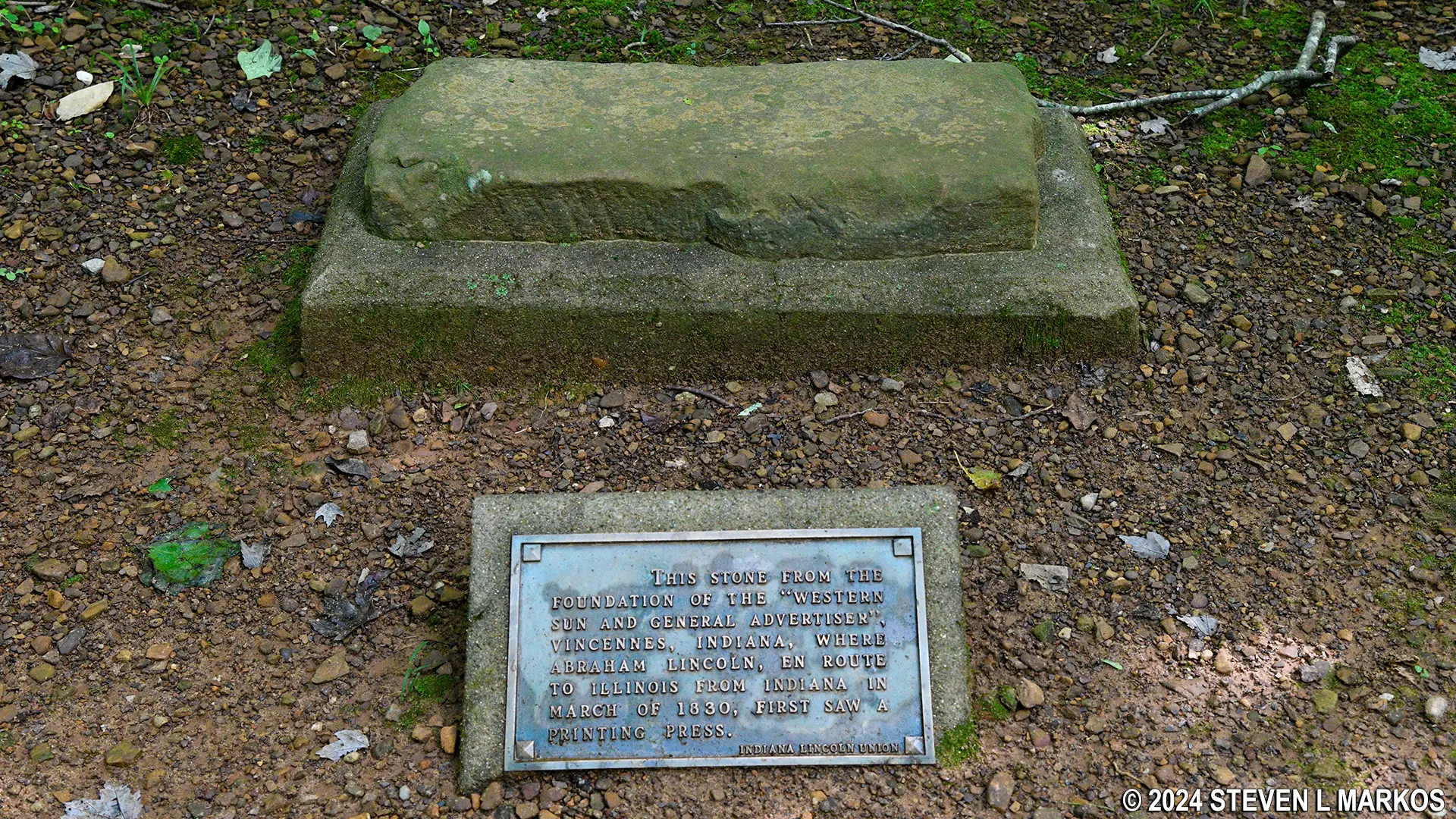
- Stone from the foundation of the Western Sun and General Advertiser newspaper building in Vincennes, Indiana, where Lincoln first saw a printing press. The family stopped for the night in Vincennes when moving from their Indiana home to Illinois in March 1830.

Stone 4 on the Trail of Twelve Stones at Lincoln Boyhood National Memorial
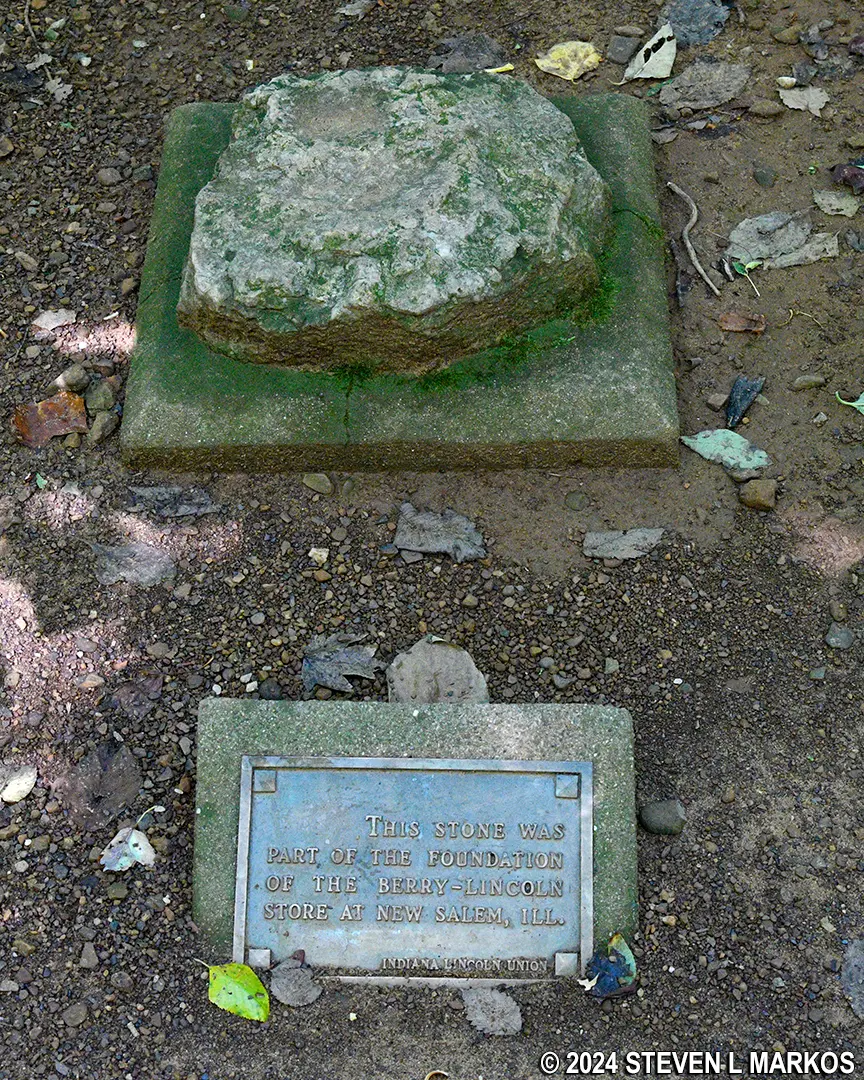
- Stone from the foundation of the Barry-Lincoln Store in New Salem, Illinois, a business Lincoln owned with William Berry in 1832. It was a bad decision, and the store closed the next year, leaving Lincoln in debt. He lived in New Salem from 1831 to 1837.
Stone 5 on the Trail of Twelve Stones at Lincoln Boyhood National Memorial
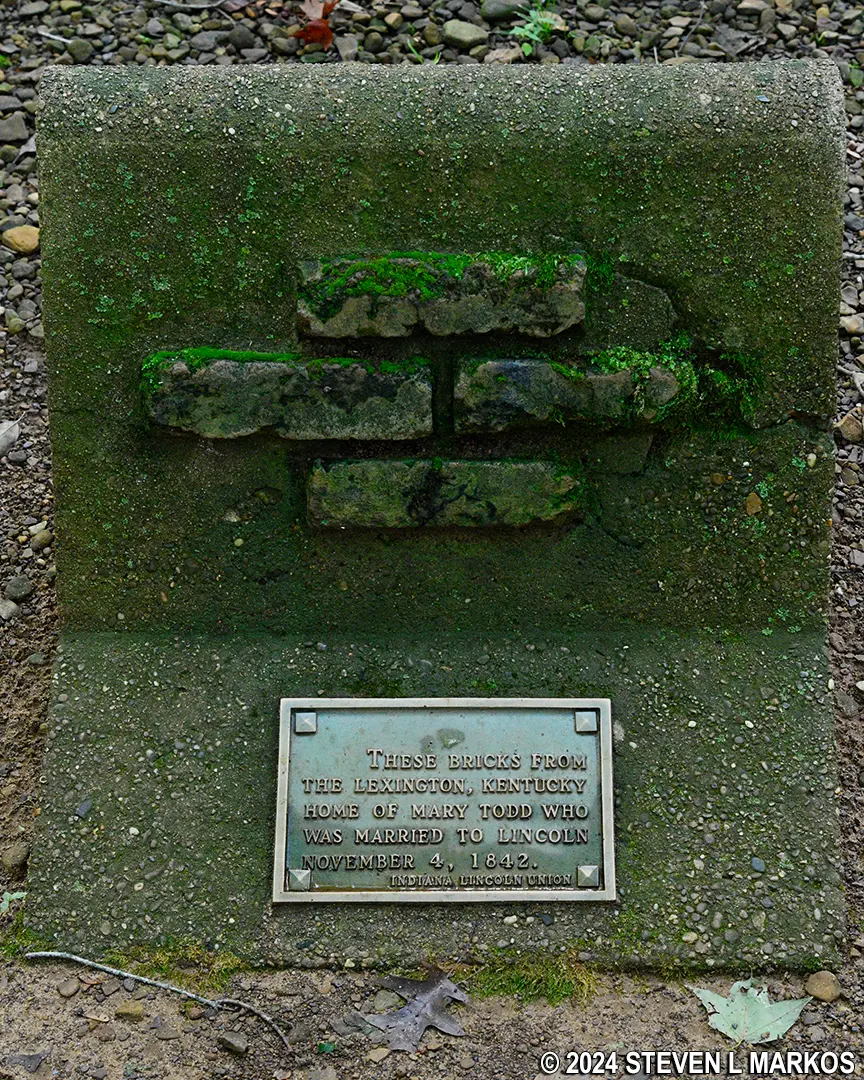
- Bricks from the Lexington, Kentucky, home of Mary Todd, whom Lincoln married in November 1842. He was living in Springfield, Illinois, at that time.
Stone 6 on the Trail of Twelve Stones at Lincoln Boyhood National Memorial
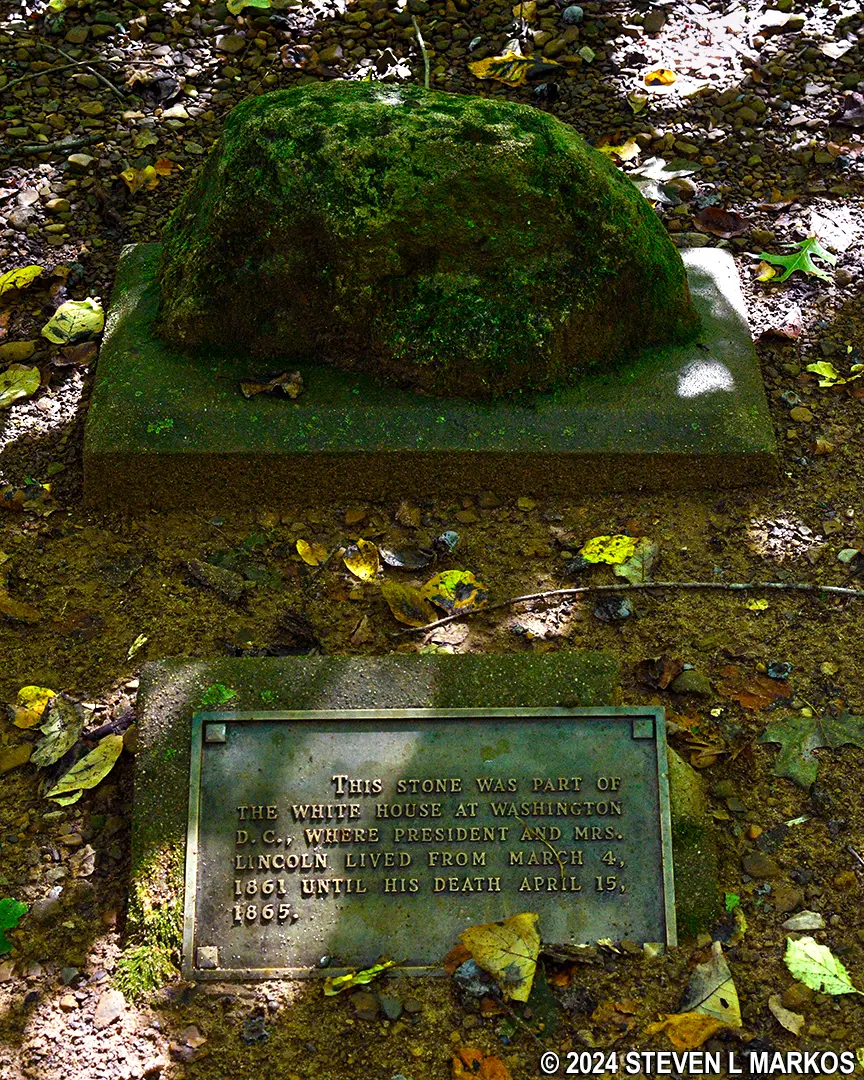
- Stone from the grounds of the White House where Lincoln lived from March 4, 1861, until being assassinated on April 15, 1865.
Stone 7 on the Trail of Twelve Stones at Lincoln Boyhood National Memorial
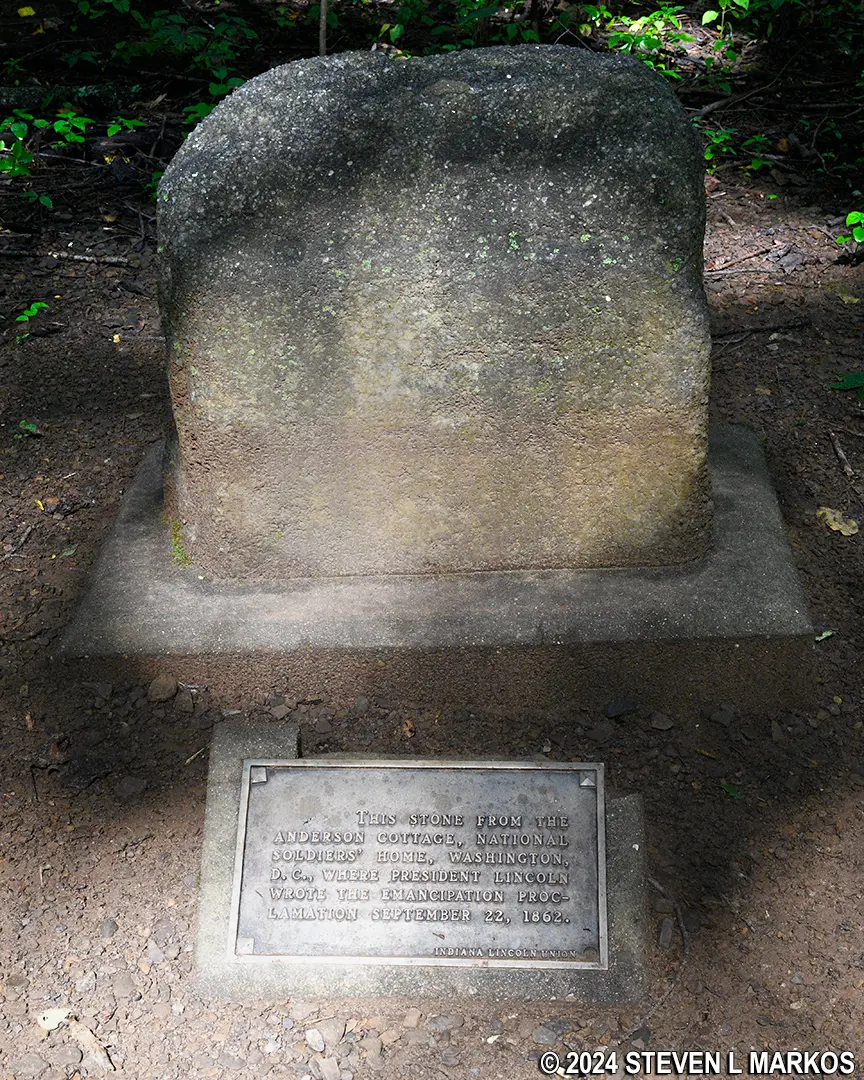
- Stone from the grounds of Anderson Cottage, Lincoln’s summer White House. He wrote the Emancipation Proclamation while staying there in September 1862.
Stone 8 on the Trail of Twelve Stones at Lincoln Boyhood National Memorial
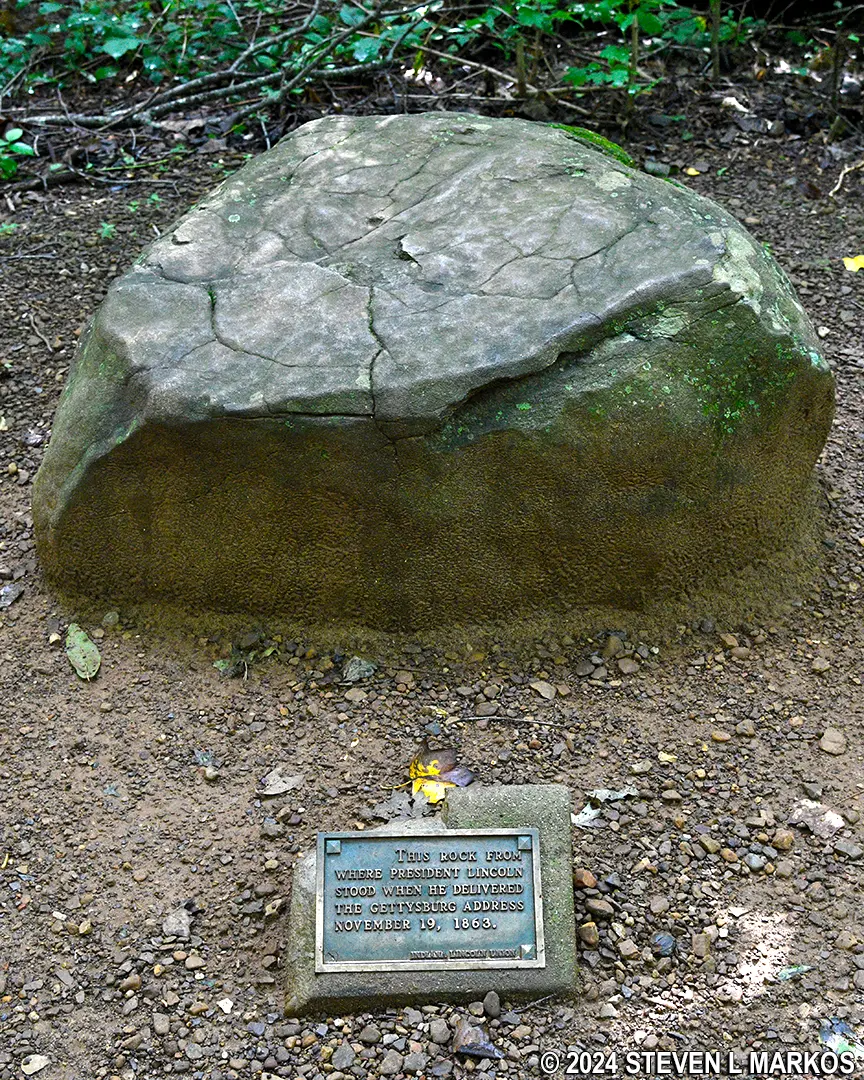
- Rock near to where Lincoln stood when he gave the Gettysburg Address.
Stone 9 on the Trail of Twelve Stones at Lincoln Boyhood National Memorial
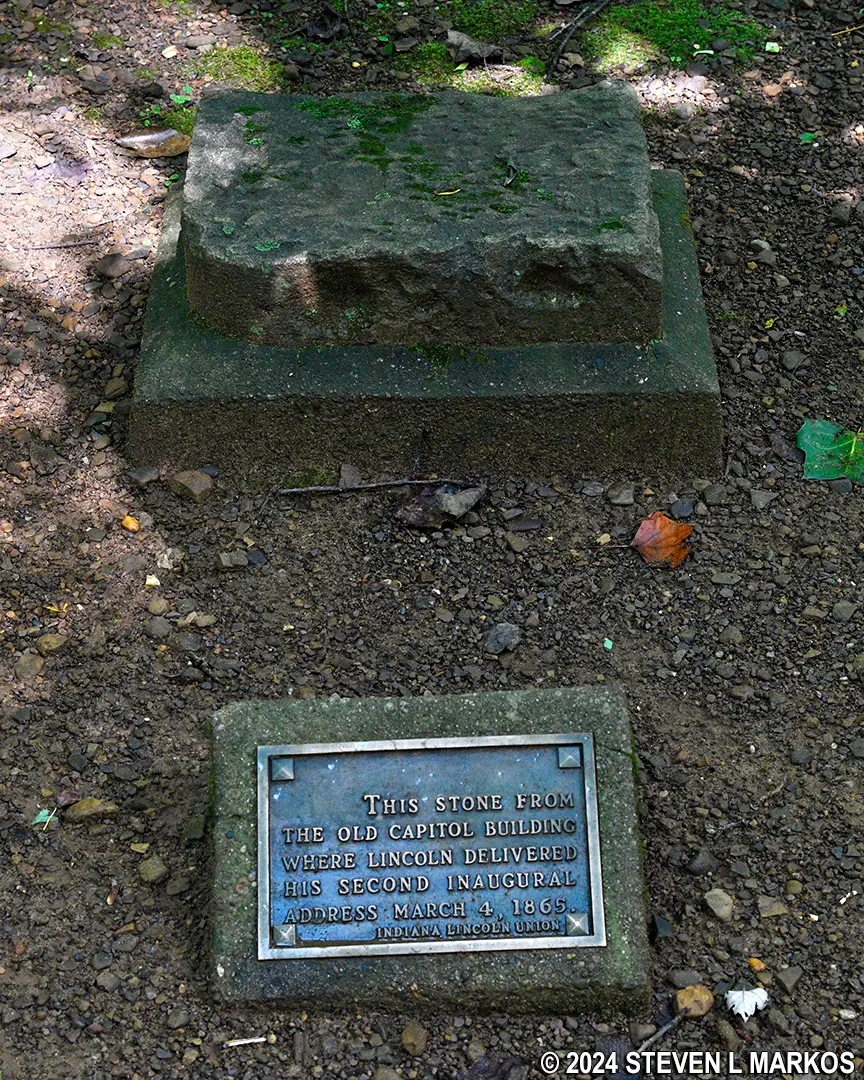
- Stone from the Old Capitol Building in Washington, D. C., where Lincoln made his second inaugural address on March 4, 1865.
Stone 10 on the Trail of Twelve Stones at Lincoln Boyhood National Memorial
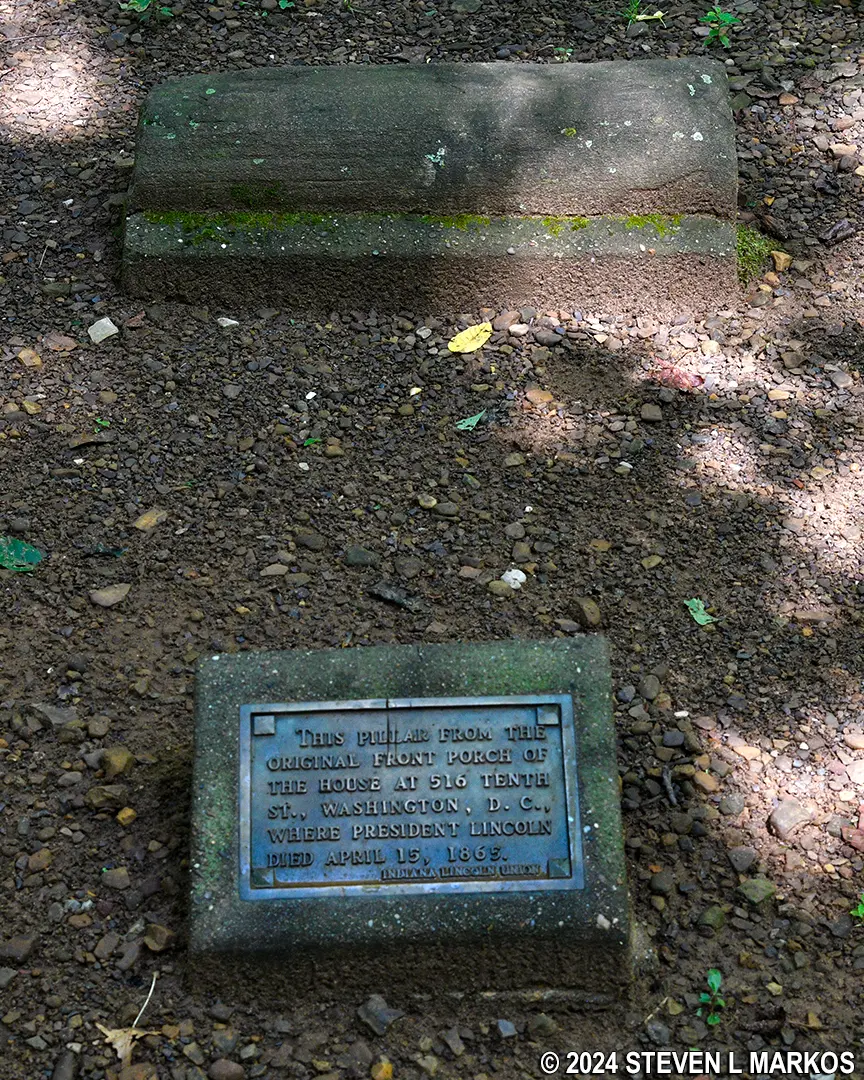
- Pilar from the front porch of the Peterson House where Lincoln was taken after being shot at Ford’s Theatre. He died in the house.
Stone 11 on the Trail of Twelve Stones at Lincoln Boyhood National Memorial
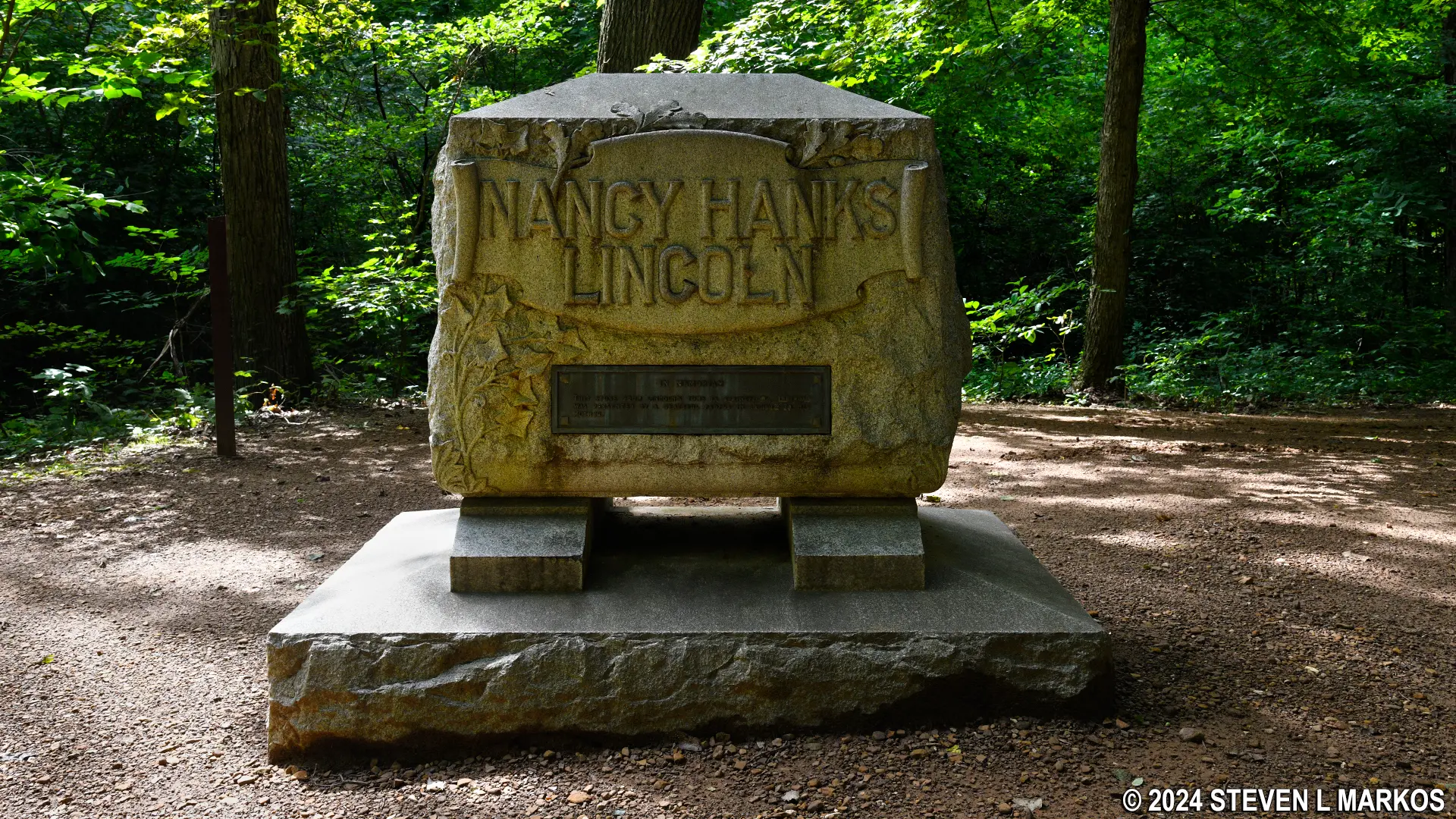
- Stone that once marked the grave site of Nancy Lincoln in the Pioneer Cemetery. It is an extra piece of granite from a 1899-1902 renovation of Lincoln’s Tomb at Oakridge Cemetery in Springfield. The grave marker was paid for by J. S. Culver and has now become known as the Culver Stone. It was moved from the Pioneer Cemetery in 1933.
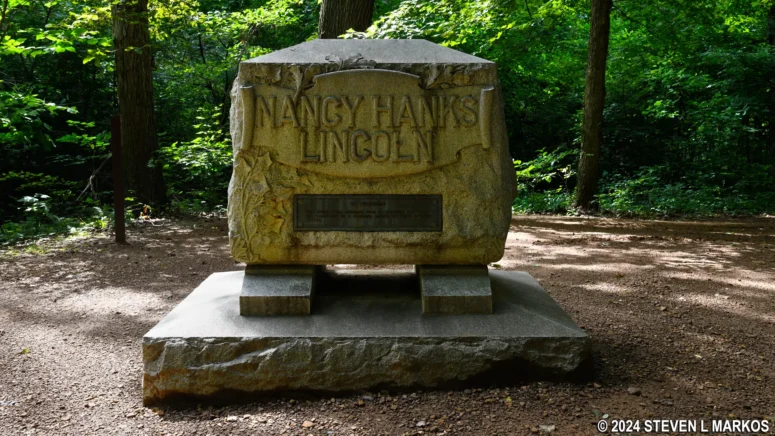
Stone 12 on the Trail of Twelve Stones at Lincoln Boyhood National Memorial once marked the grave of Abraham Lincoln’s mother, Nancy
At the last stone, the Nancy Lincoln / Culver Stone, you have the option to cut over to the cemetery or walk out to the allée where the trail ends. The overall hike around the southern loop starting and ending at the Visitor Center is 1.1 mile.
With a few exceptions, use of any photograph on the National Park Planner website requires a paid Royalty Free Editorial Use License or Commercial Use License. See the Photo Usage page for details.
Last updated on November 27, 2024


