
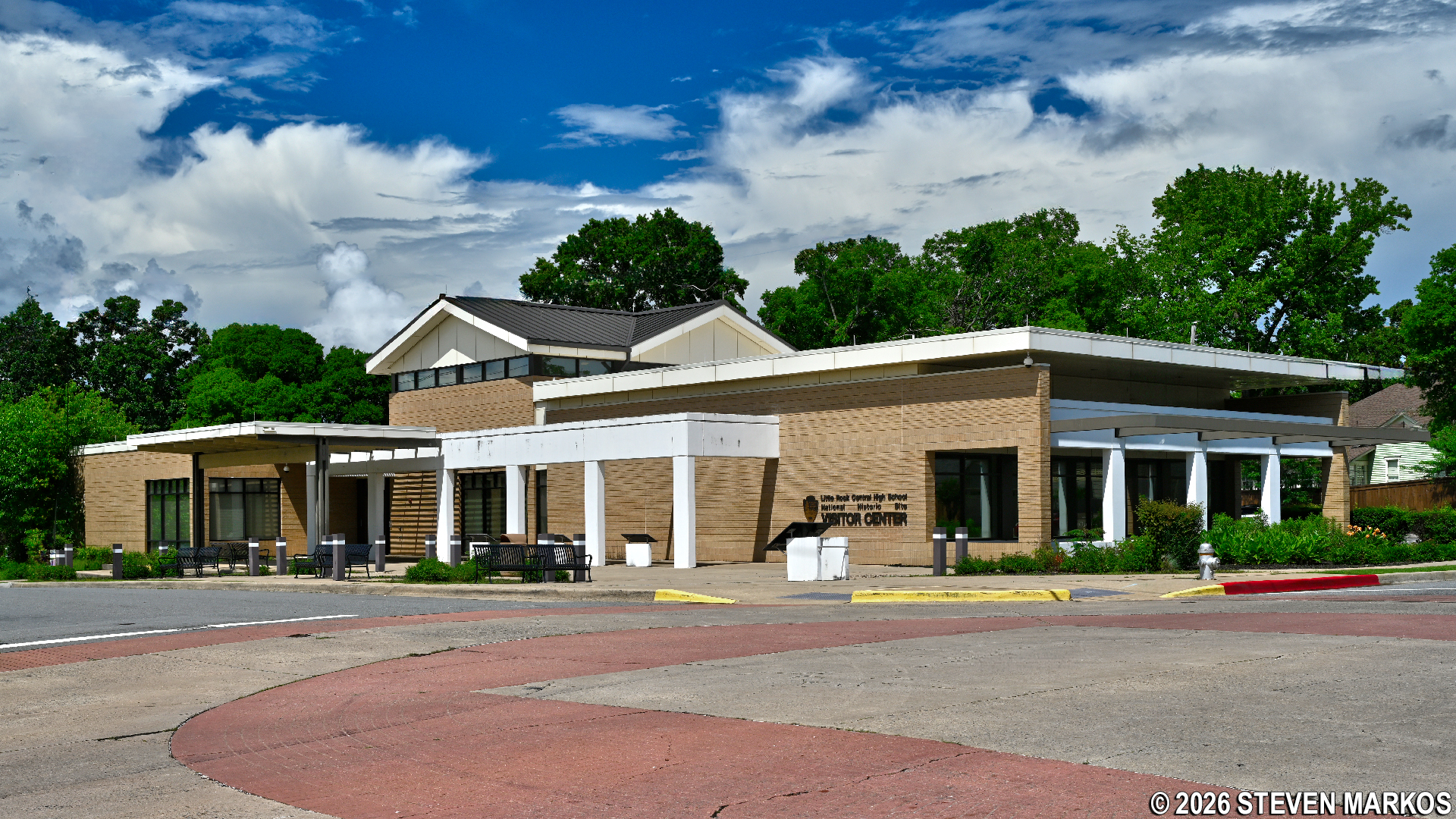
Visitor Center at Little Rock Central High School National Historic Site
OPERATING HOURS
The Visitor Center at Little Rock Central High School National Historic Site is typically open Tuesdays through Saturdays from 10 AM to 4 PM. Keep in mind that times can always change, so be sure to check the National Park Service’s official Operating Hours and Seasons web page for the latest schedule.
Little Rock Central High School is still a functioning high school, and it is located right around the corner from the Visitor Center. Therefore, traffic and parking can be congested on school days during morning drop-offs and afternoon pick-ups.
AMENITIES
- Ranger-staffed information desk where you can ask questions and pick up a park brochure
- Souvenir and bookstore
- Meeting place for Ranger-guided tours
- Park film
- Exhibit area
- Restrooms
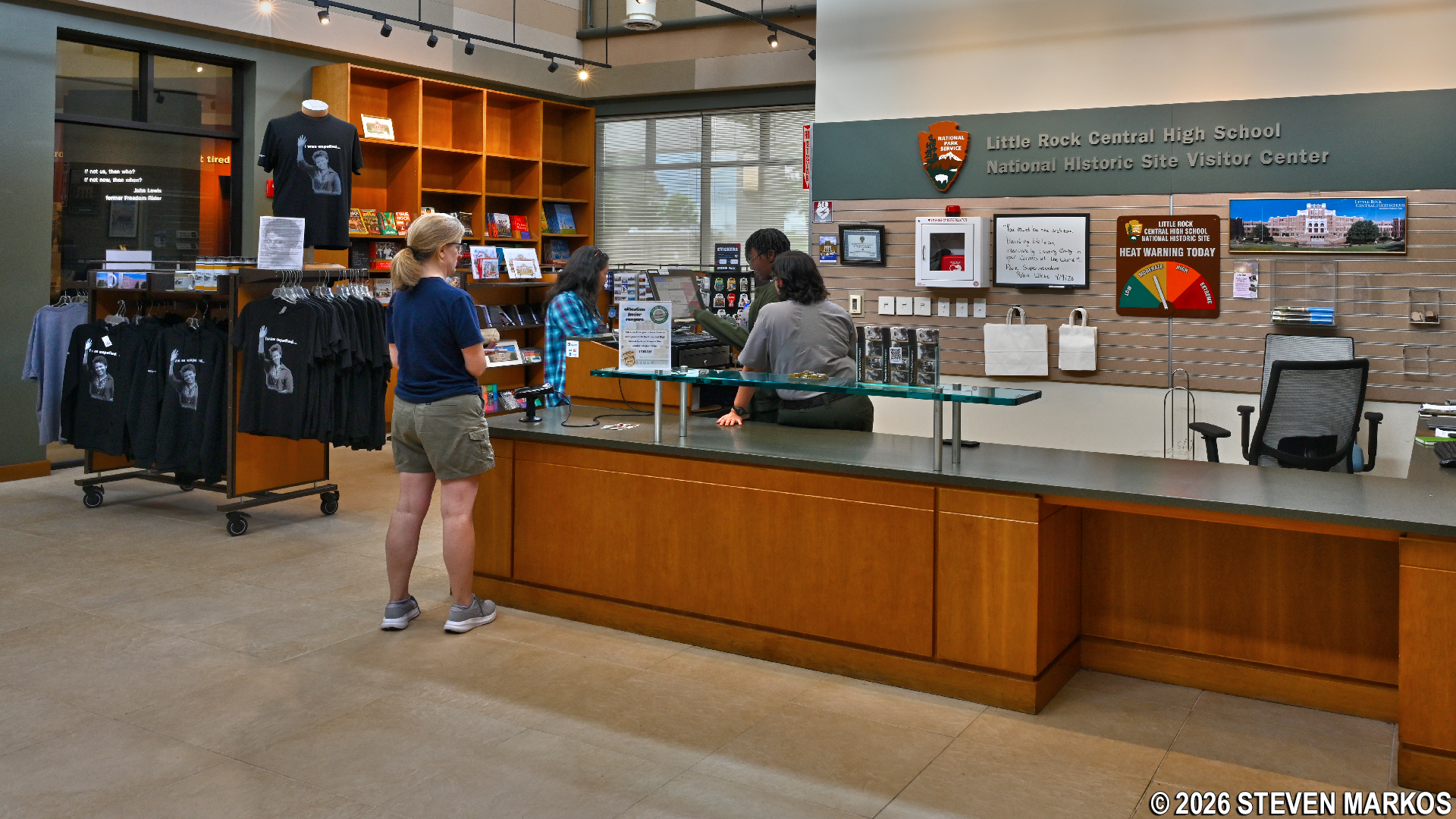
Information desk and souvenir store at the Visitor Center for Little Rock Central High School National Historic Site
PARK FILM
The 21-minute film Step Up and Change the Future plays on demand at the Visitor Center. While the film does include interviews with some of the nine black students who enrolled at Little Rock Central High School in the fall of 1957 (the Little Rock Nine) and a few of their classmates, it is not specifically a documentary about the racial integration of Little Rock Central High School. Its main focus is on current high school students and the political actions they are taking today to change the future for all. The tie-in with the park is that these kids were supposedly inspired by the Little Rock Nine—of which I have my doubts—but that’s the film’s angle. For history, watch the various short documentary films and newsreels shown in the exhibit area. Step Up and Change the Future is suitable for all ages.
EXHIBIT AREA
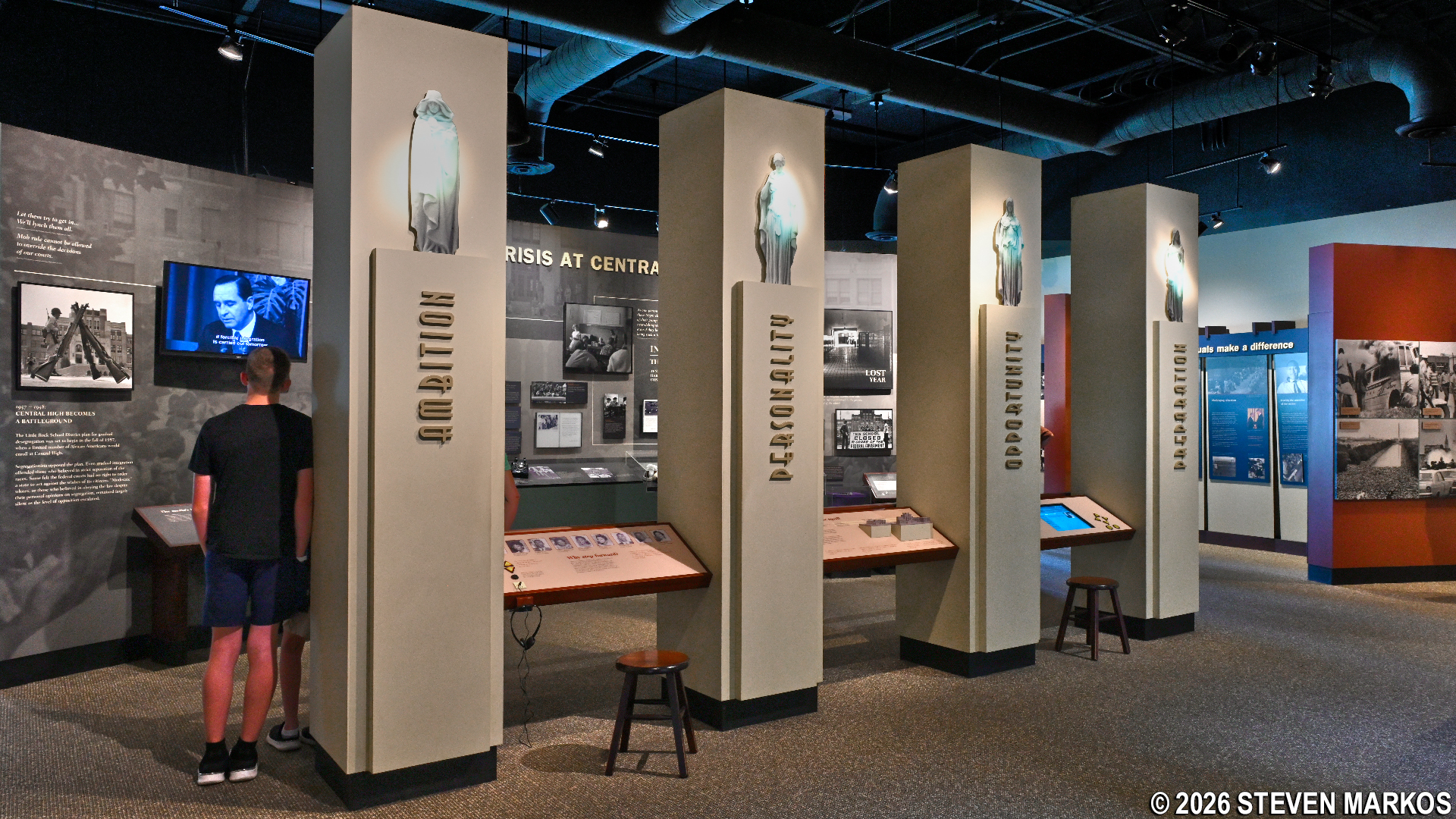
Exhibit area at the Little Rock Central High School National Historic Site Visitor Center
The exhibit area at the Visitor Center for Little Rock Central High School National Historic Site consists of information panels and interactive stations that cover all aspects of the efforts to integrate schools in the 1950s, though the main focus is on the racial integration of Little Rock Central High School in 1957 and the Little Rock Nine. One topic covered is the legal outcomes of the various court cases that led up to the Supreme Court’s decision in Brown v. Board of Education that the segregation of public schools was unconstitutional.
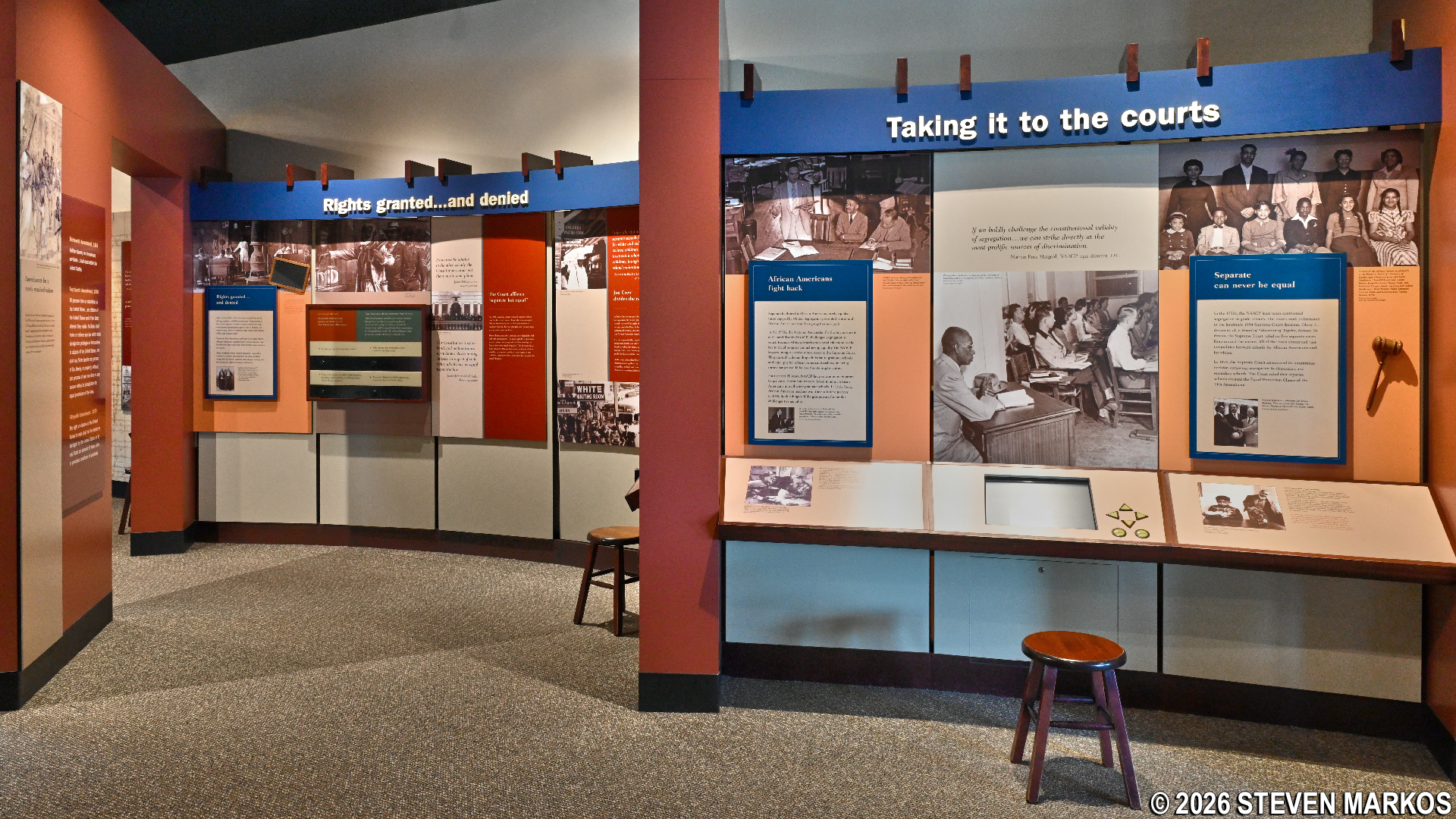
Exhibits covering the legal battles for public school desegregation at the Little Rock Central High School National Historic Site Visitor Center
Being a modern historical event, what happened at Little Rock Central High School was covered by many news outlets, and in the years since, dozens of the major and minor players in the events have been interviewed about their experiences. This abundance of audio and visual history is on full display at the Visitor Center exhibit. There are oral history listening stations, video screens showing news and other documentary footage, and interactive exhibits where you can learn about court cases and personal experiences of eyewitnesses to the events, all with the tap on a computer screen. One interactive kiosk could have twenty different options. I spent over two hours at the Visitor Center and didn’t get to half of these.
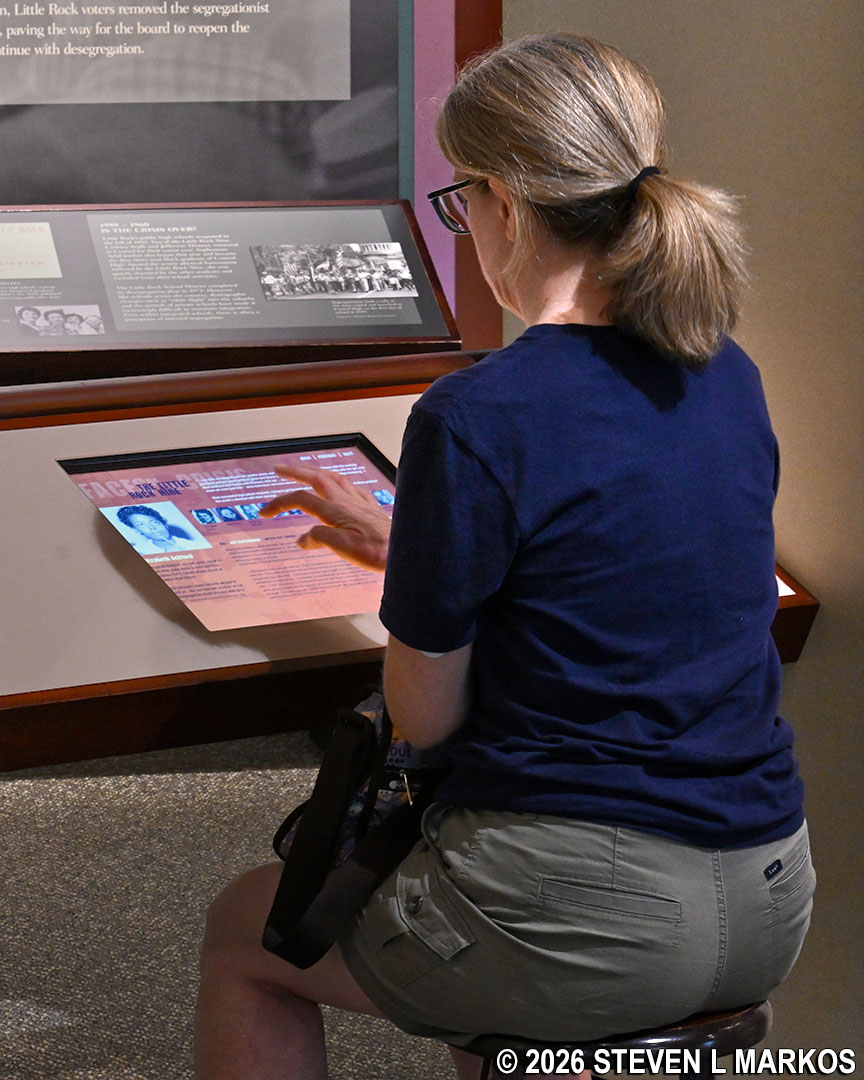
Visitor to the Little Rock Central High School Visitor Center at one of the many interactive exhibits, Little Rock Central High School National Historic Site
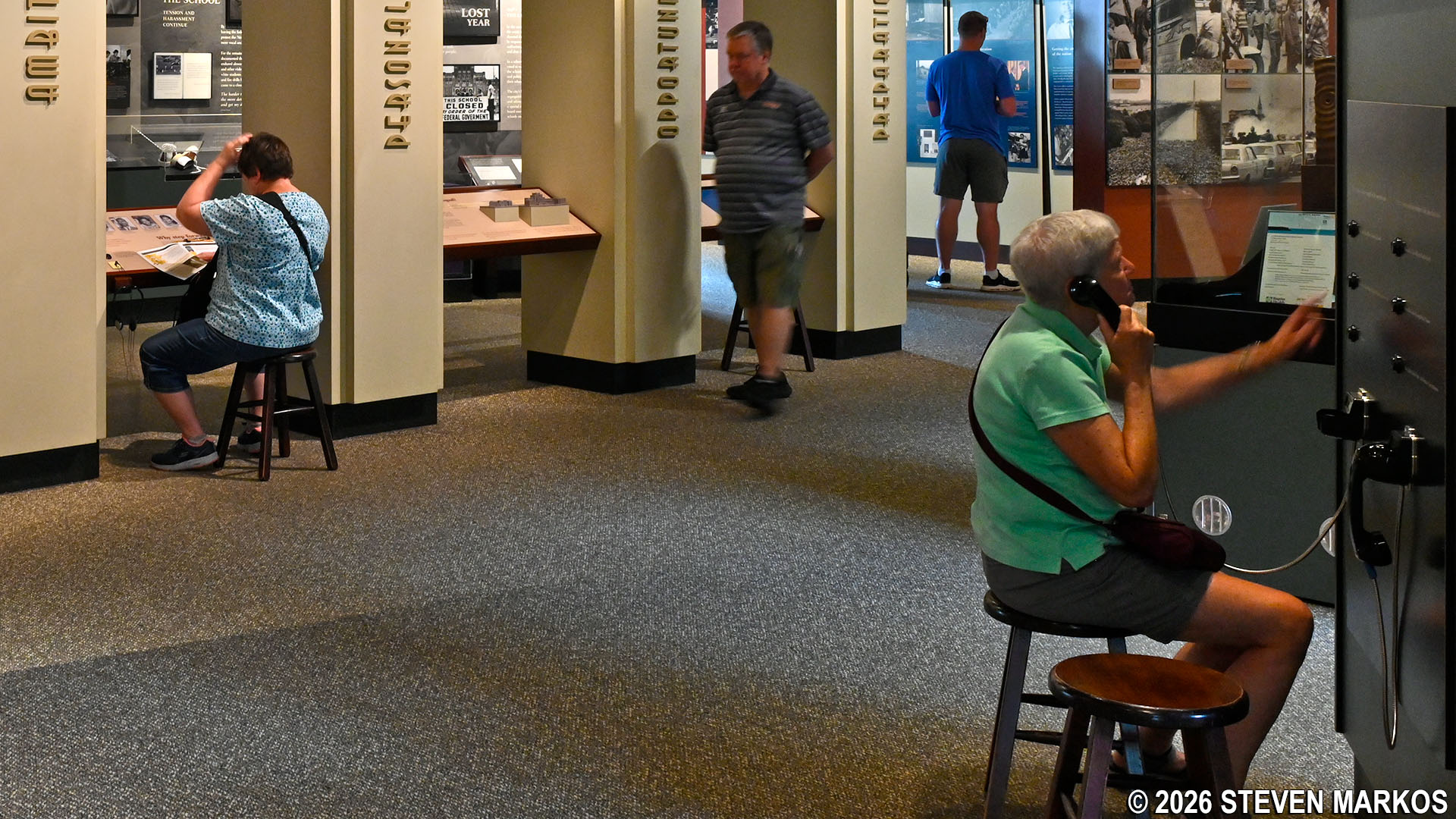
Visitor at the Little Rock Central High School Visitor Center listens to oral histories given by witnesses to the events that took place at the high school in 1957, Little Rock Central High School National Historic Site
One interactive station, Memories of the Crisis, lets visitors watch and listen to what the Little Rock Nine and others experienced at the time, in their own words. The video clips (of which there are many) vary in length, with some running almost ten minutes. I sat there for thirty minutes alone, but it is really worth it to truly understand the impact of what happened.
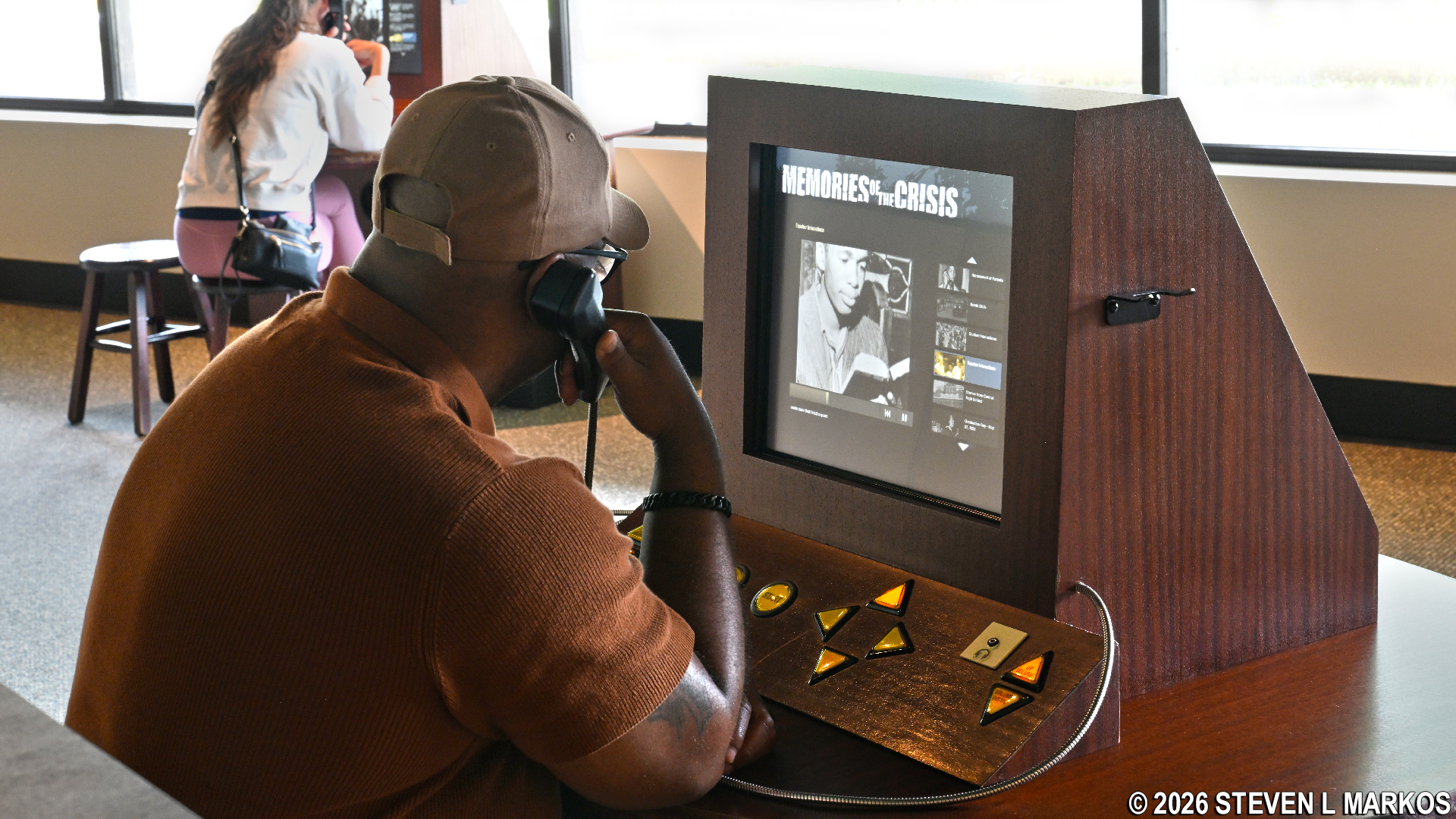
Memories of the Crisis interactive station at the Little Rock Central High School National Historic Site Visitor Center
The largest section of the exhibit area, Crisis at Central High, is located in the middle of the room. This is dedicated to the events that took place at Little Rock Central High School. A video screen on one end shows a short 5-minute newsreel with interviews from people who were there at the time.
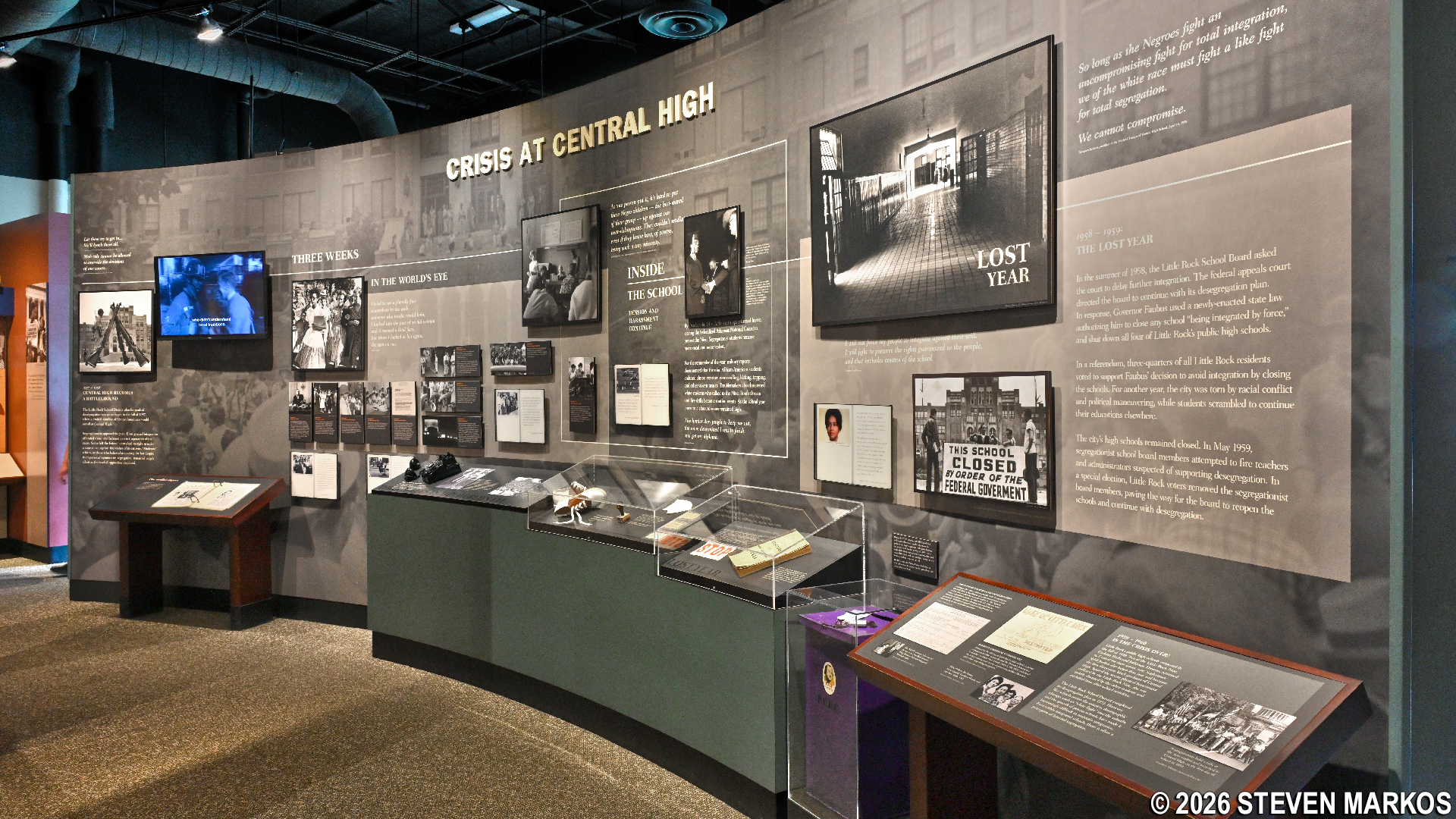
Central High exhibit at the Little Rock Central High School National Historic Site Visitor Center
To protest integration, the Arkansas General Assembly at the request of Governor Orval Faubus passed laws that allowed any schools that were in jeopardy of being desegregated to be closed. As a result, all schools in Little Rock (Pulaski County) were closed completely for the entire 1958-59 school year. The governor did allow the Little Rock schools’ football seasons to continue. Afterall, you can’t miss football season due to a bunch of black instigators.
In May 1959, a special recall election of school board members was held in Pulaski County. The Women’s Emergency Committee to Open Our Schools (WEC) in conjunction with STOP (Stop This Outrageous Purge, referring to a mass firing of teachers due to political affiliations) campaigned to have segregationist board members removed, while the Committee to Retain Our Segregated Schools campaigned for the removal of moderate board members. The result of the vote on May 25, 1959, was that three segregationist members were removed. This eventually led to the reopening of the schools for the 1959-60 school year. On display at the Crisis at Central High exhibit is a Pulaski County ballot box that the WEC used to train poll workers on how to detect voter fraud.
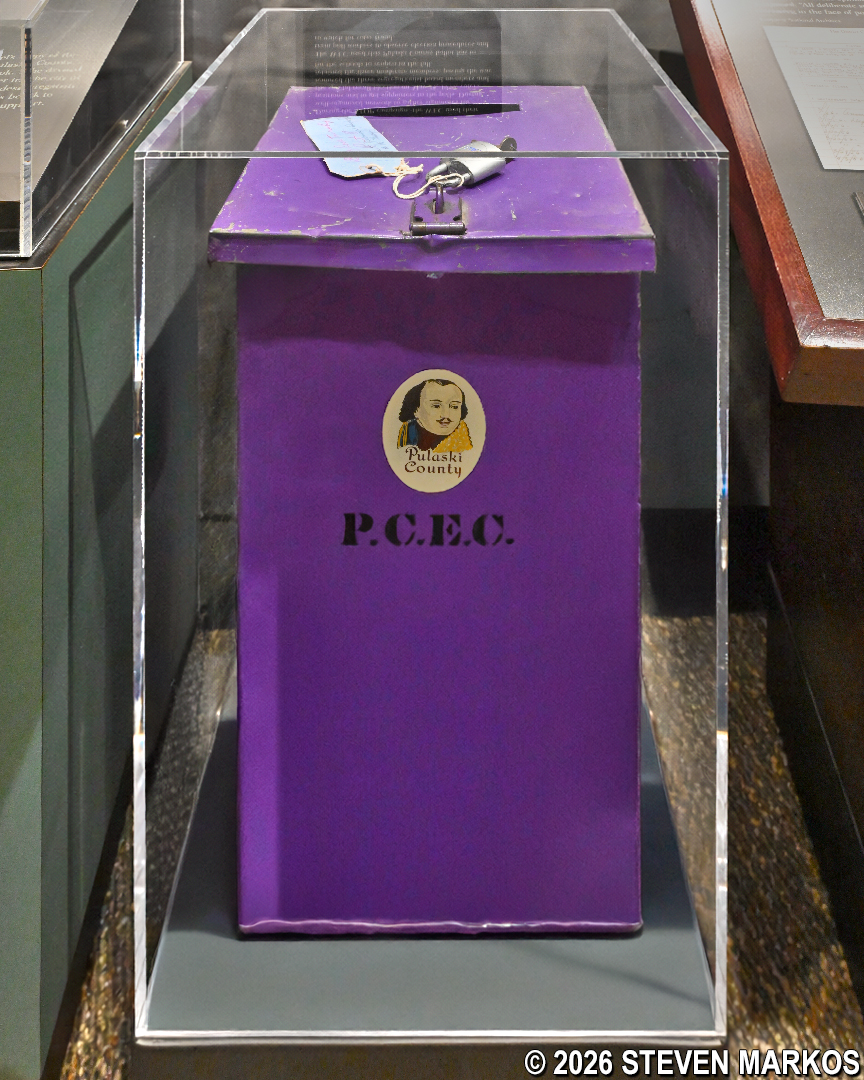
Ballot box used in the 1959 special election on display at the Little Rock Central High School National Historic Site Visitor Center
The last section of exhibits features information about the aftermath of the events at Little Rock Central High School and other struggles for civil rights. Highlighted are the Black American Civil Rights movement of the 1960s; the farm workers rights movement of the 1960s and 70s; women’s rights in both the 1920s (voting rights) and the 1970s and early 1980s when the Equal Rights Amendment was up for ratification; and the disabled Americans rights movement in the 1990s.
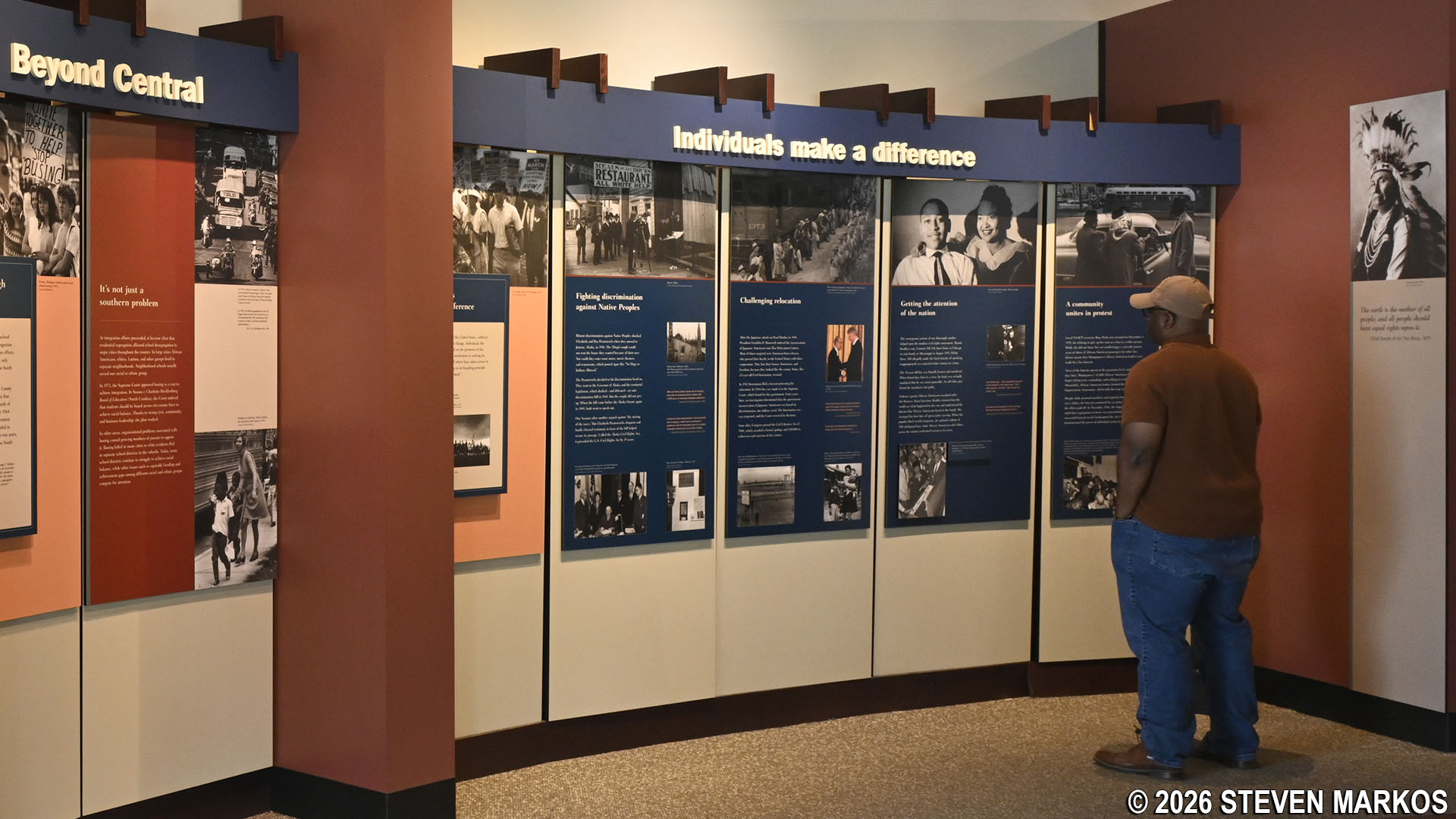
Exhibit in the Little Rock Central High School Visitor Center on the aftermath of the integration events and other civil rights struggles, Little Rock Central High School National Historic Site
SCHEDULING YOUR TIME
Plan to spend at least an hour and up to three hours or even more at the Little Rock Central High School National Historic Site Visitor Center. An hour gives you enough time to watch the park film, check out the exhibit area, and talk with a Ranger about what there is to see and do at the park. Extra time is needed if you want to read everything and utilize the available audio and video programs. And I’m convinced you could spend an entire day doing so.
With a few exceptions, use of any photograph on the National Park Planner website requires a paid Royalty Free Editorial Use License or Commercial Use License. See the Photo Usage page for details.
Last updated on September 18, 2026


