
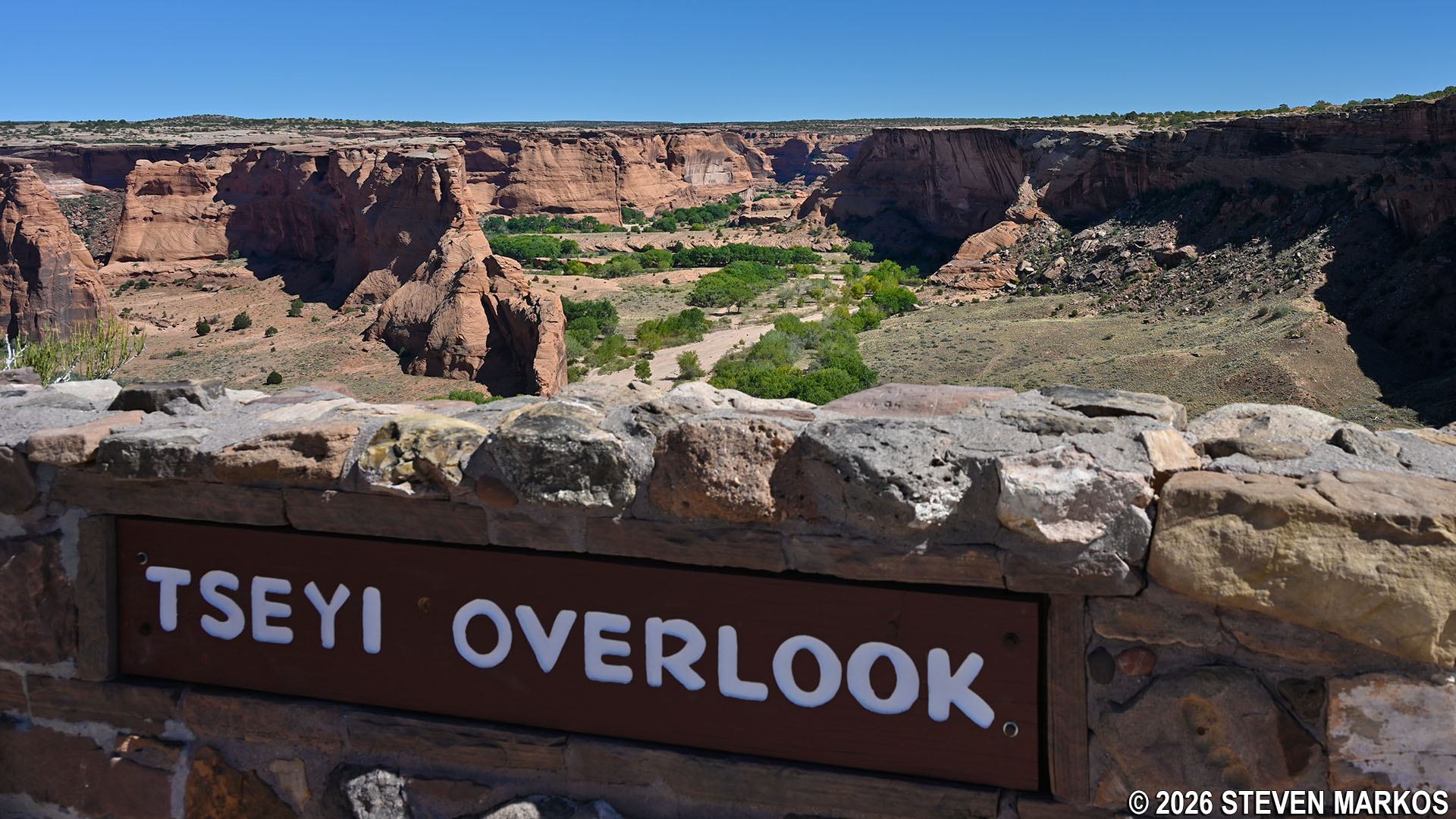
Tséyi’ Overlook on the South Rim Drive at Canyon de Chelly National Monument
SOUTH RIM DRIVE
STOP 2: TSÉYI’ OVERLOOK
The second stop on the South Rim Drive at Canyon de Chelly National Monument is Tséyi’ Overlook (pronounced say-yee). A pull-off parking lot is right next to the viewing area, so this stop is accessible for those in wheelchairs or who have trouble walking.
Tséyi’ is Navajo for “rock canyon.” The name Chelly actually comes from a Spanish borrowing of tséyi’. Their pronunciation was adapted into English and modeled after a French-like spelling, which resulted in today’s Canyon de Chelly (pronounced de Shay).
Although there are no visible archeological sites at the outlook, there is one named rock formation, Blade Rock. It resembles a long, curved fin and extends all the way to the Chinle Wash, the creek that runs through the canyon. During winter and spring, there is a steady flow of water from melting snow in the nearby Chuska Mountains. In the dry summer months, there is only water flowing after heavy rainfall.
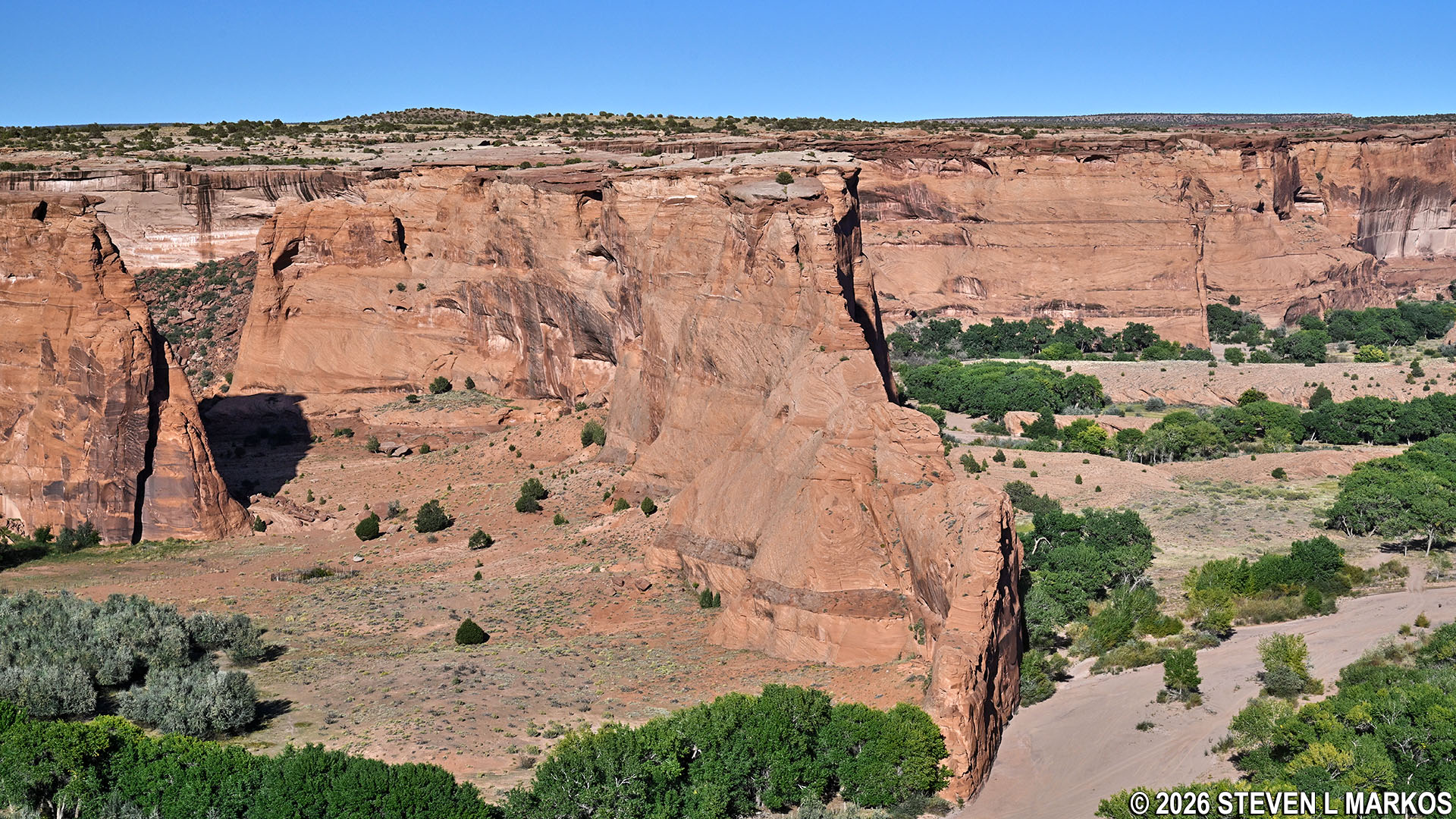
View of Blade Rock from Tséyi’ Overlook on the South Rim Drive, Canyon de Chelly National Monument
The Navajo home and farm visible on the canyon floor below overlook is typically occupied during the warmer months. The family grows crops such as corn, squash, peaches, and apples before it gets too cold to do so.
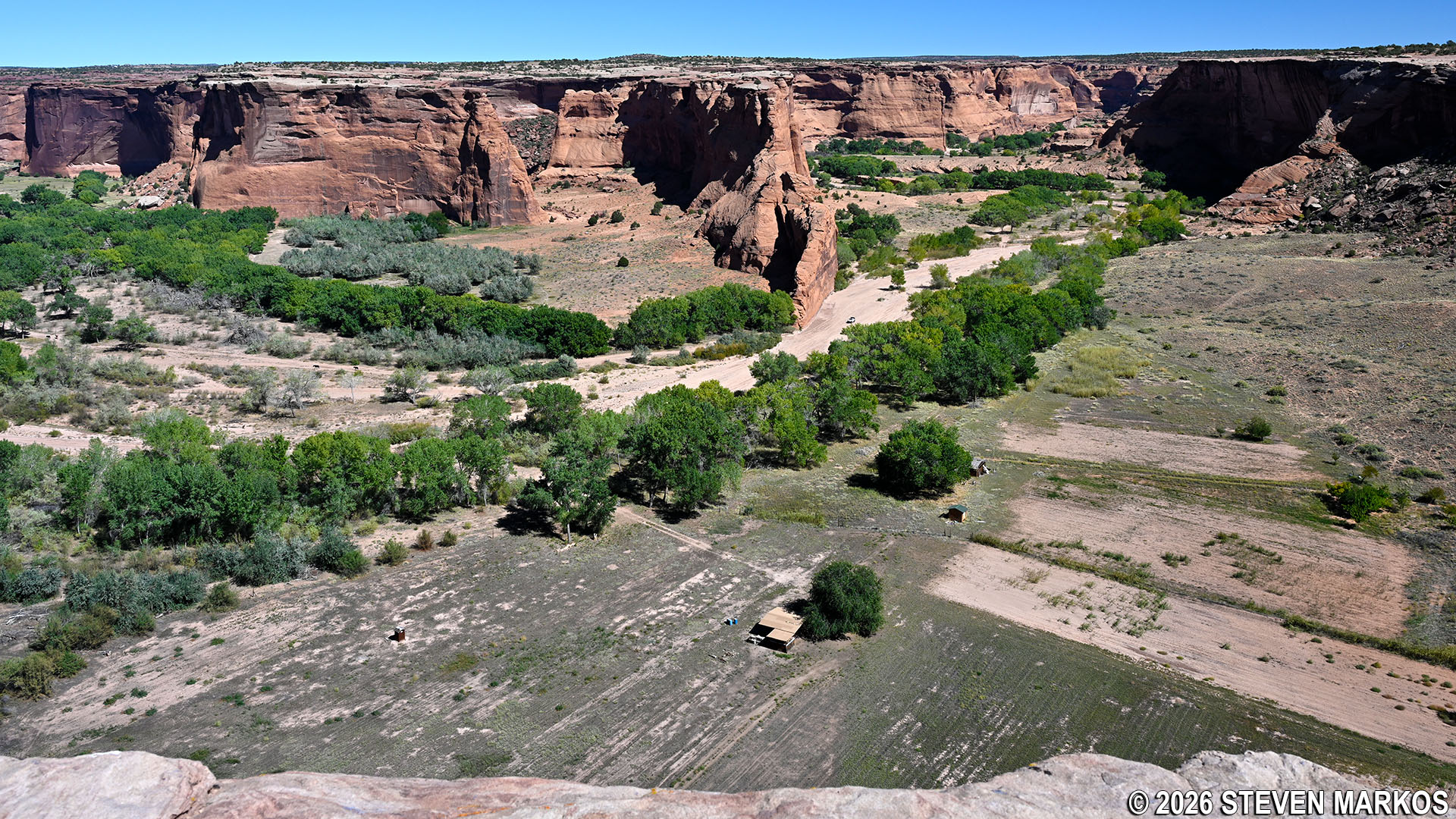
View of the canyon floor from the Tséyi’ Overlook on the South Rim Drive, Canyon de Chelly National Monument
Next Stop | Previous Stop | South Rim Drive Home Page
With a few exceptions, use of any photograph on the National Park Planner website requires a paid Royalty Free Editorial Use License or Commercial Use License. See the Photo Usage page for details.
Last updated on March 17, 2026


