
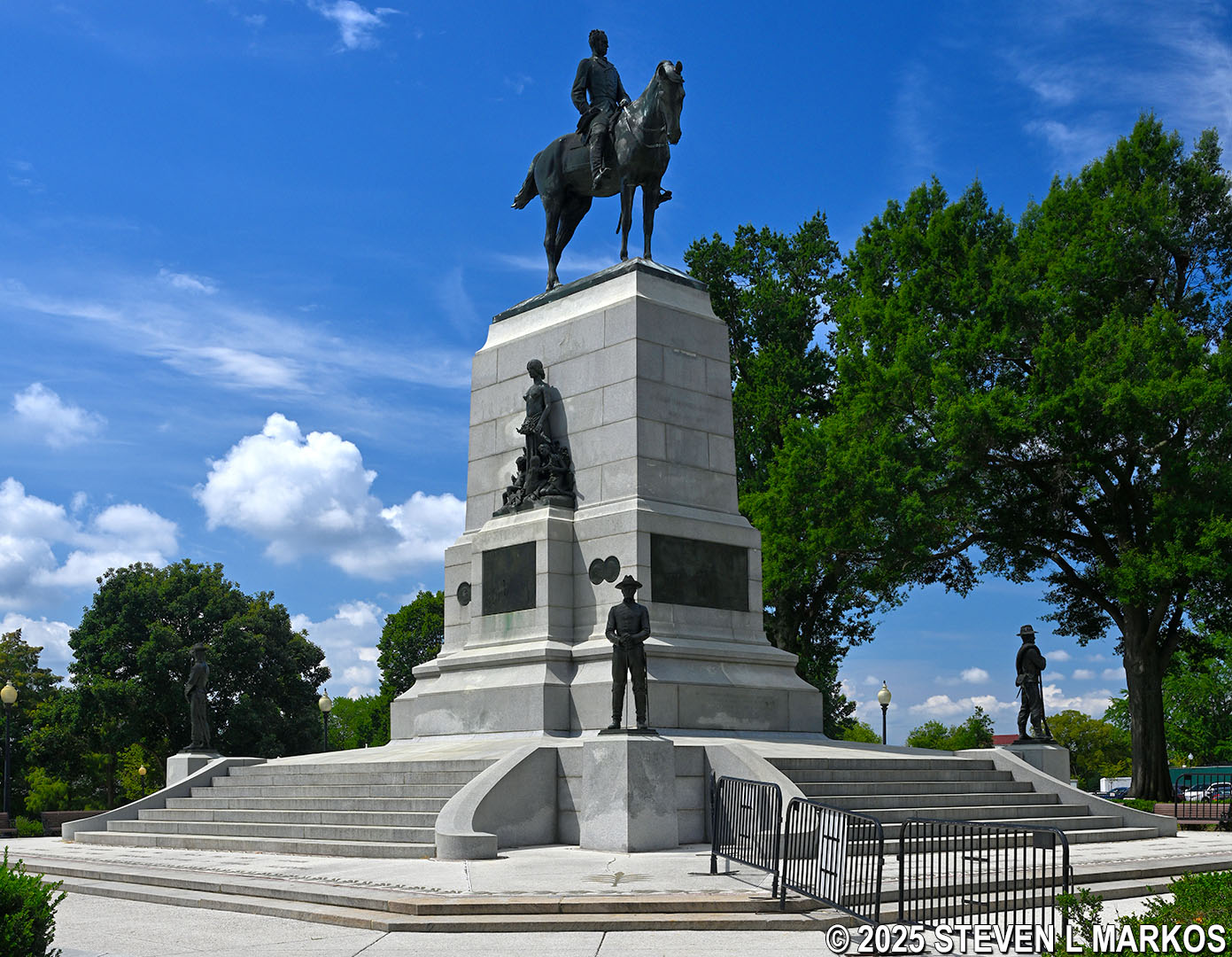
General William Tecumseh Sherman, part of the President’s Park in Washington, D.C.
See the White House Grounds Tour web page for a map and links to other attractions on the grounds of President’s Park.
The Sherman Monument is located in a small park south of the Treasury Building. It honors Civil War General William Tecumseh Sherman and sits on the spot where he once inspected his troops. The memorial was funded mainly by the U. S. Government with some financial help from the Society of the Army of the Tennessee, a group comprised of former members of Sherman’s army.
Within months of Sherman’s death in 1891, Society members began talks of a memorial for their former commander. A monument design competition was established and opened to American artists only. Twenty-three sculptors submitted proposals, including Carl Rohl-Smith, who was eventually awarded the commission. Though his design was the most popular with the public, the National Sculpture Society (NSS), which had been asked to judge the competition by the Sherman Memorial Commission, ranked it last. Controversy came about when the Memorial Commission dismissed the NSS’s choice and gave the commission to Rohl-Smith. The NSS protested that Rohl-Smith had used his political influence to have its decision reversed and demanded a congressional hearing, though nothing came of it.
Rohl-Smith’s design called for numerous sculpted figures. Sherman sits on his horse at the top of the monument, and figures representing the four branches of the army are on each corner: artillery, infantry, cavalry, and engineers. In addition, bas-relief sculptures adorn the four sides of the main column. These depict the march through Georgia, the Battle of Atlanta, Sherman by a campfire, and the Battle of Missionary Ridge, which was part of the fighting in Chattanooga. An intricate mosaic around the base completes the design.
Unfortunately, Rohl-Smith died before finishing his work. His wife and assistant were put in charge, and at least a half dozen artists were called in to complete various sections. The memorial was finally dedicated by President Theodore Roosevelt in 1903. A year later the park was renamed Sherman Plaza, the name that is still used today.
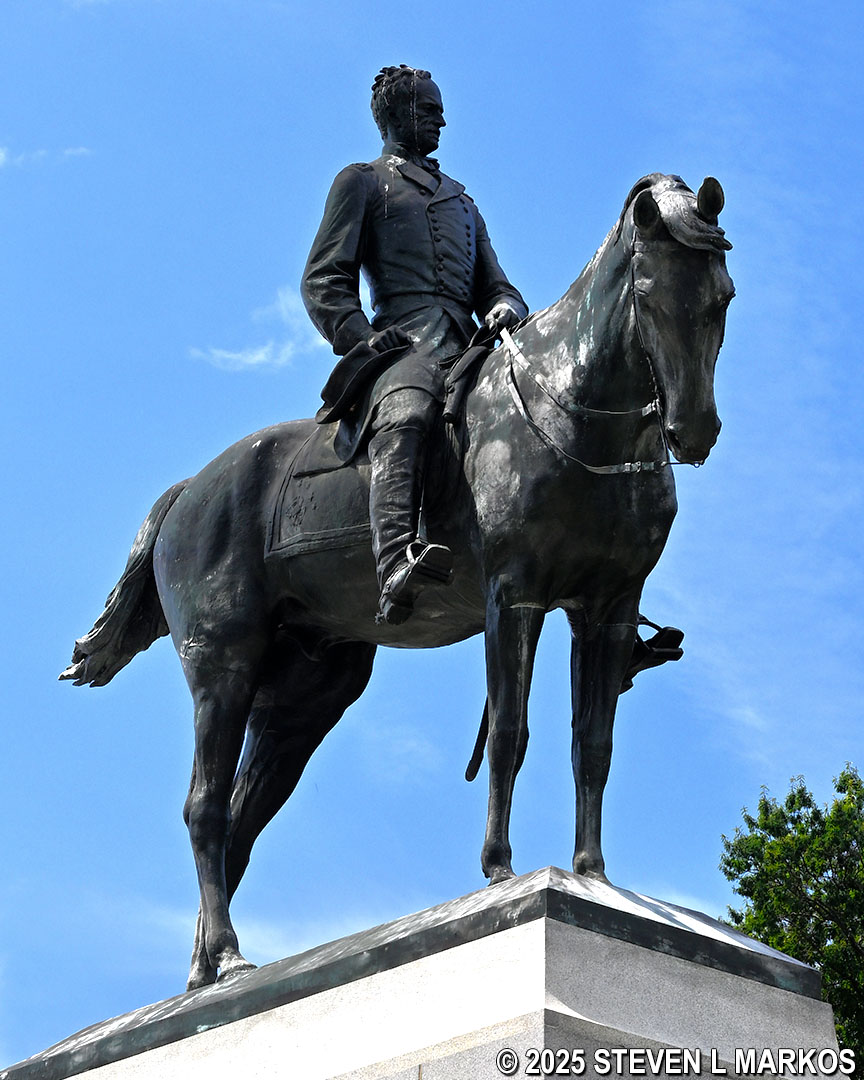
Sherman sculpture of the General William Tecumseh Sherman Monument, part of the President’s Park in Washington, D.C.
With a few exceptions, use of any photograph on the National Park Planner website requires a paid Royalty Free Editorial Use License or Commercial Use License. See the Photo Usage page for details.
Last updated on November 23, 2025


