

Roebling Delaware Aqueduct in Lackawaxen, Pennsylvania
The Roebling Delaware Aqueduct, which was part of the Delaware and Hudson Canal, is the oldest suspension bridge in the United States. It was designed by John Augustus Roebling, as were three other aqueducts on the canal. Construction on the aqueduct at Lackawaxen began in 1847, and it was put into service the next year. It is the only one of the four aqueducts that still exists. Roebling would go on to design the Brooklyn Bridge, one of only two of his traditional bridges still standing (the other is the Cincinnati-Covington Bridge).

Roebling Aqueduct at Lackawaxen, Upper Delaware Scenic and Recreational River
A canal aqueduct is a nifty little feat of engineering that solves the problem of what to do when a canal crosses paths with a creek or river just as the Delaware and Hudson Canal did with the Delaware River here in Lackawaxen. Prior to the construction of the aqueduct, canal boats had to float across the open river, battling the current, to get from one section of the canal to the other. The difficulty of this task created a major bottleneck. The solution was to elevate the canal over the river via a bridge called an aqueduct. In essence, a large, elevated bathtub was built—water could not be leaking out of the bottom and sides. This is done with a thick layer of clay and stone on the bottom and solid wood or stone walls for sides. Roebling’s suspension bridge design was chosen because it provided more room underneath for river traffic.

Illustration of an aqueduct–the Catoctin Aqueduct–in use
The Lackawaxen aqueduct remained in operation until the canal closed in 1898. Due to its location, it was not abandoned as the others were but was instead turned into a toll bridge for automobiles and carriages. It continued to operate as a vehicle bridge until 1979 when the National Park Service purchased it for inclusion in the Upper Delaware Scenic and Recreational River park.
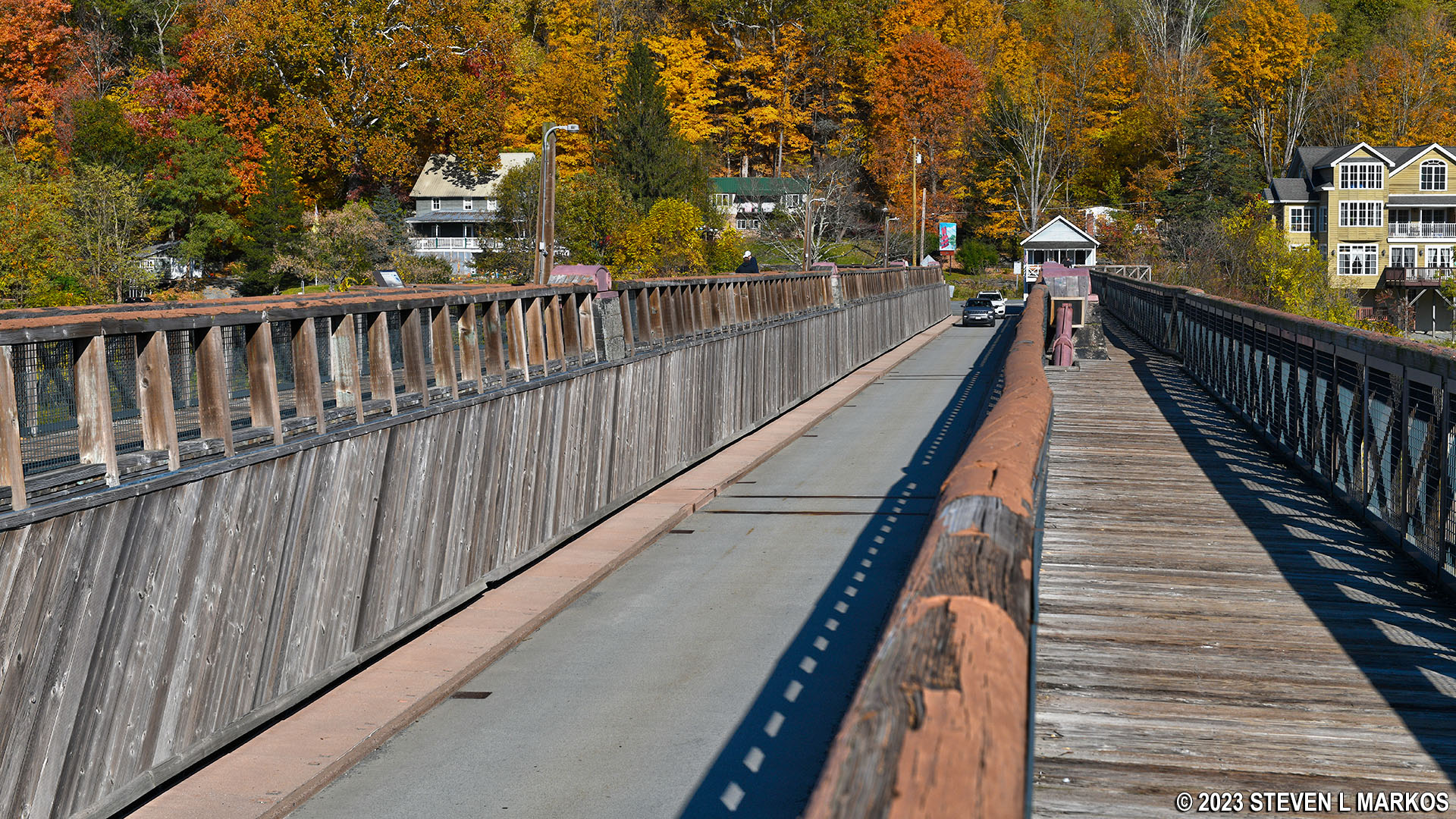
The Roebling Delaware Aqueduct in Lackawaxen, Pennsylvania, is now used as a vehicle bridge
The vehicle bridge was restored to its aqueduct appearance during the 1980s (minus the actual water). Nearly all of the original ironworks still remain. The cables were tested and shown to be in great condition. Only the wooden parts of the bridge were replaced. While now aqueduct in appearance, the structure still functions as a vehicle bridge, though there is no longer a toll.
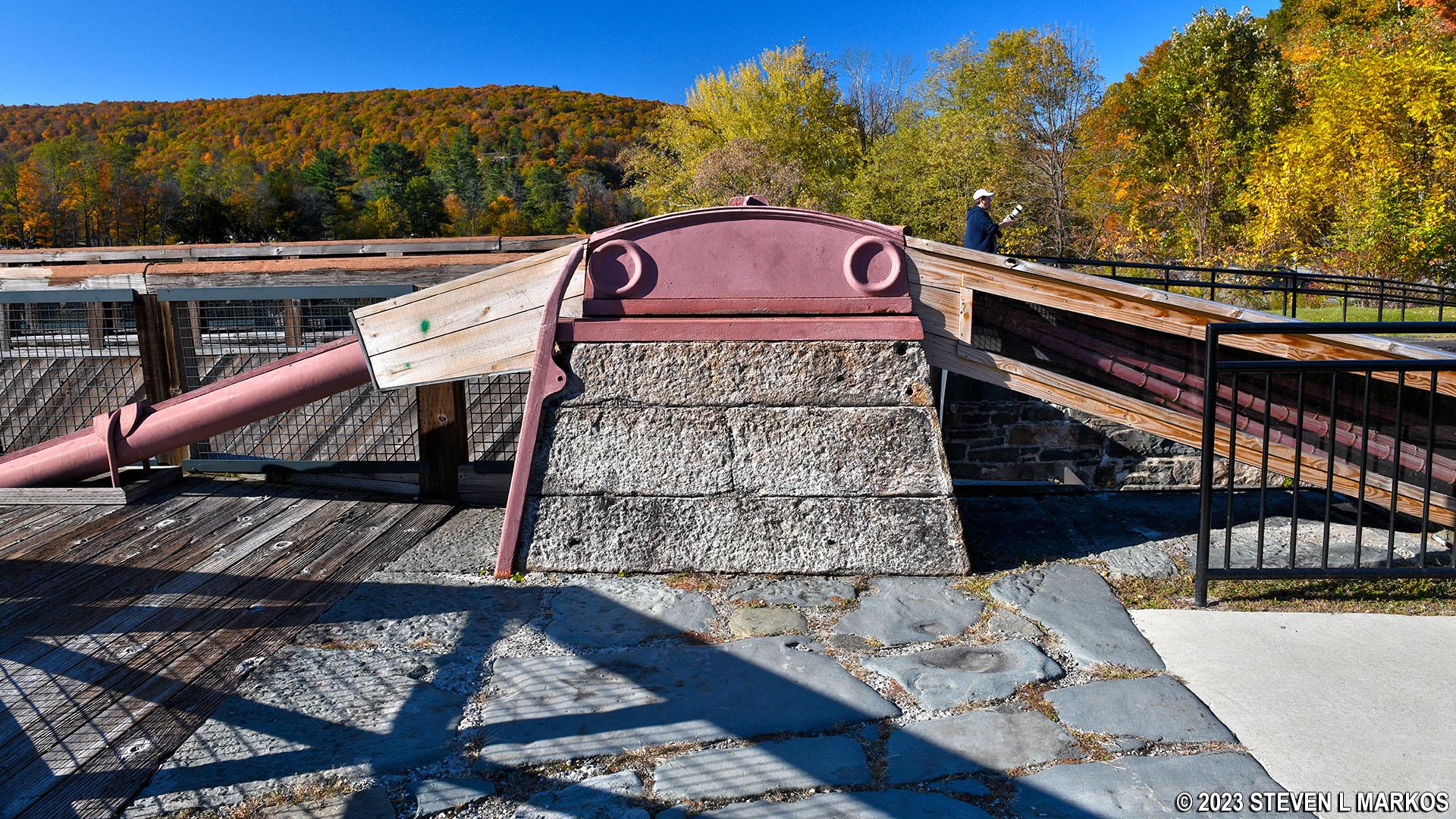
Original ironworks from the Roebling Delaware Aqueduct in Lackawaxen, Pennsylvania
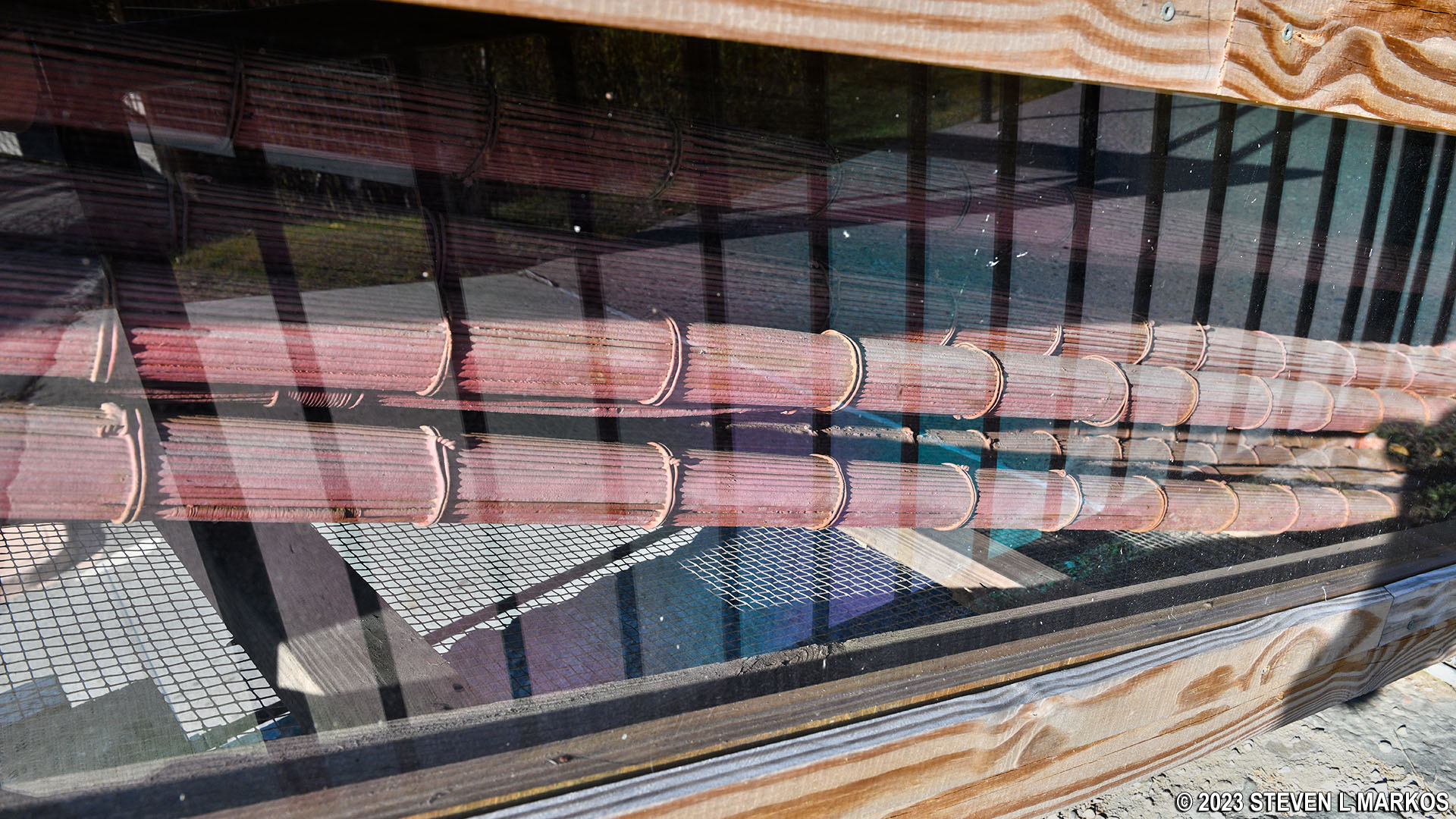
Steel cables used on the Roebling Delaware Aqueduct were actually bundles of 2,150 wires
There are visitor parking lots on either side of the bridge, and on the New York side is the toll house built around 1900 to collect vehicle tolls. It now contains a small Delaware and Hudson Canal exhibit. Inside are information panels about the canal and the canal boats and operators. The Toll House is usually open during normal business hours. Plan to spend 20-30 minutes at the Roebling Aqueduct if the Toll House is open. This gives you time to read through the exhibits and walk across the bridge.
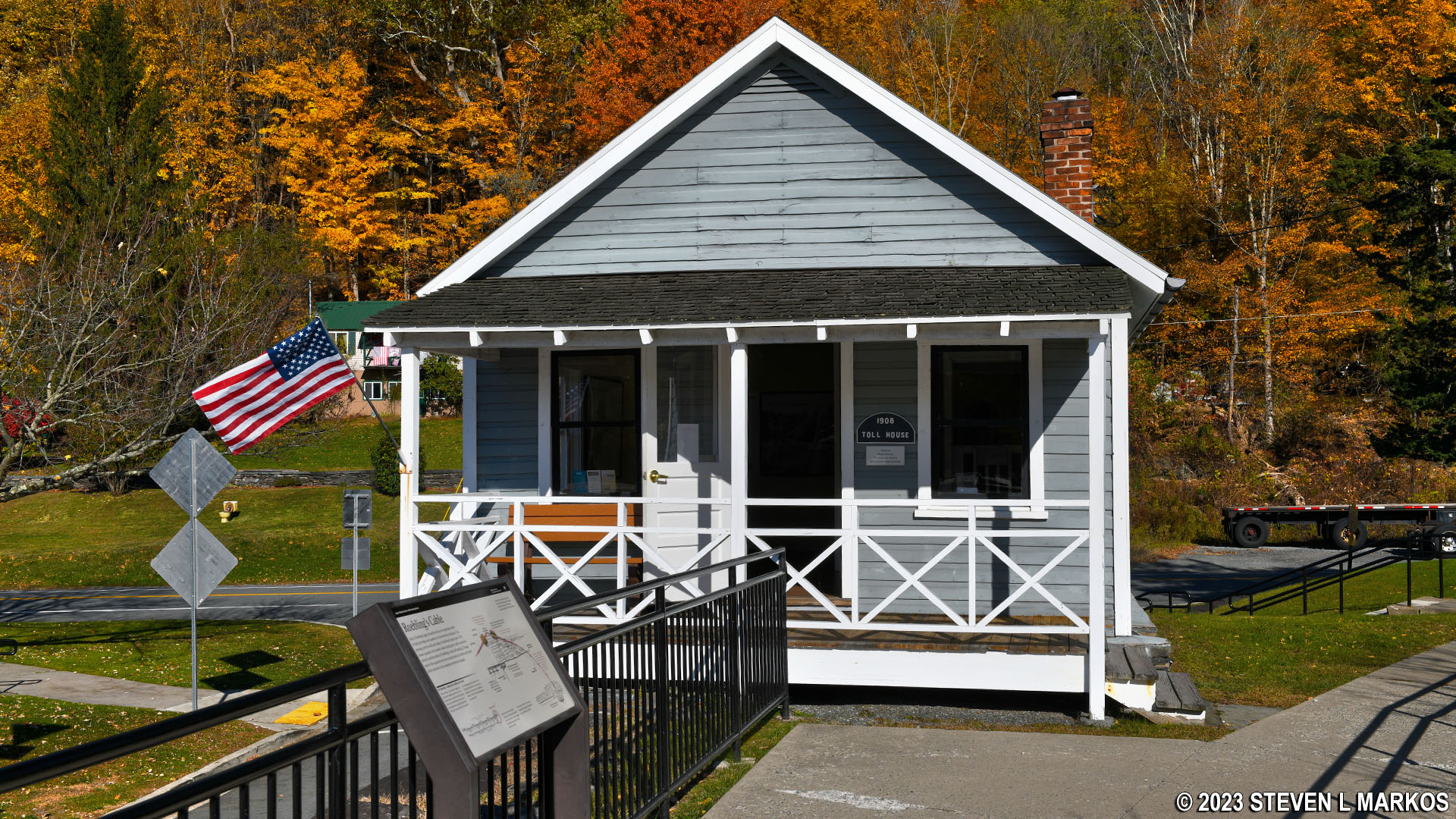
Toll house installed when the Roebling Delaware Aqueduct was converted into a vehicle bridge
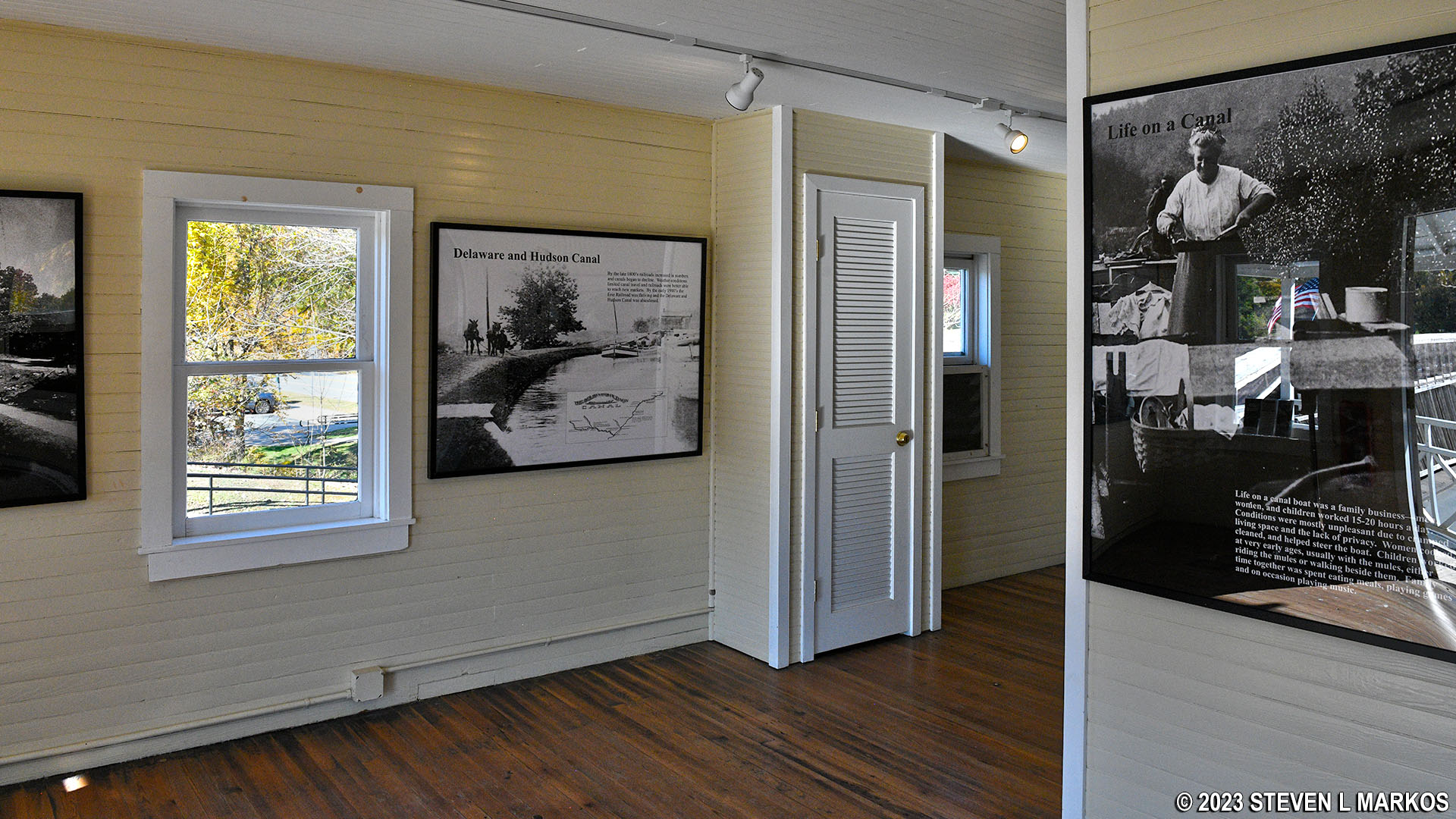
Exhibits inside the toll house at the Roebling Delaware Aqueduct in Lackawaxen, Pennsylvania
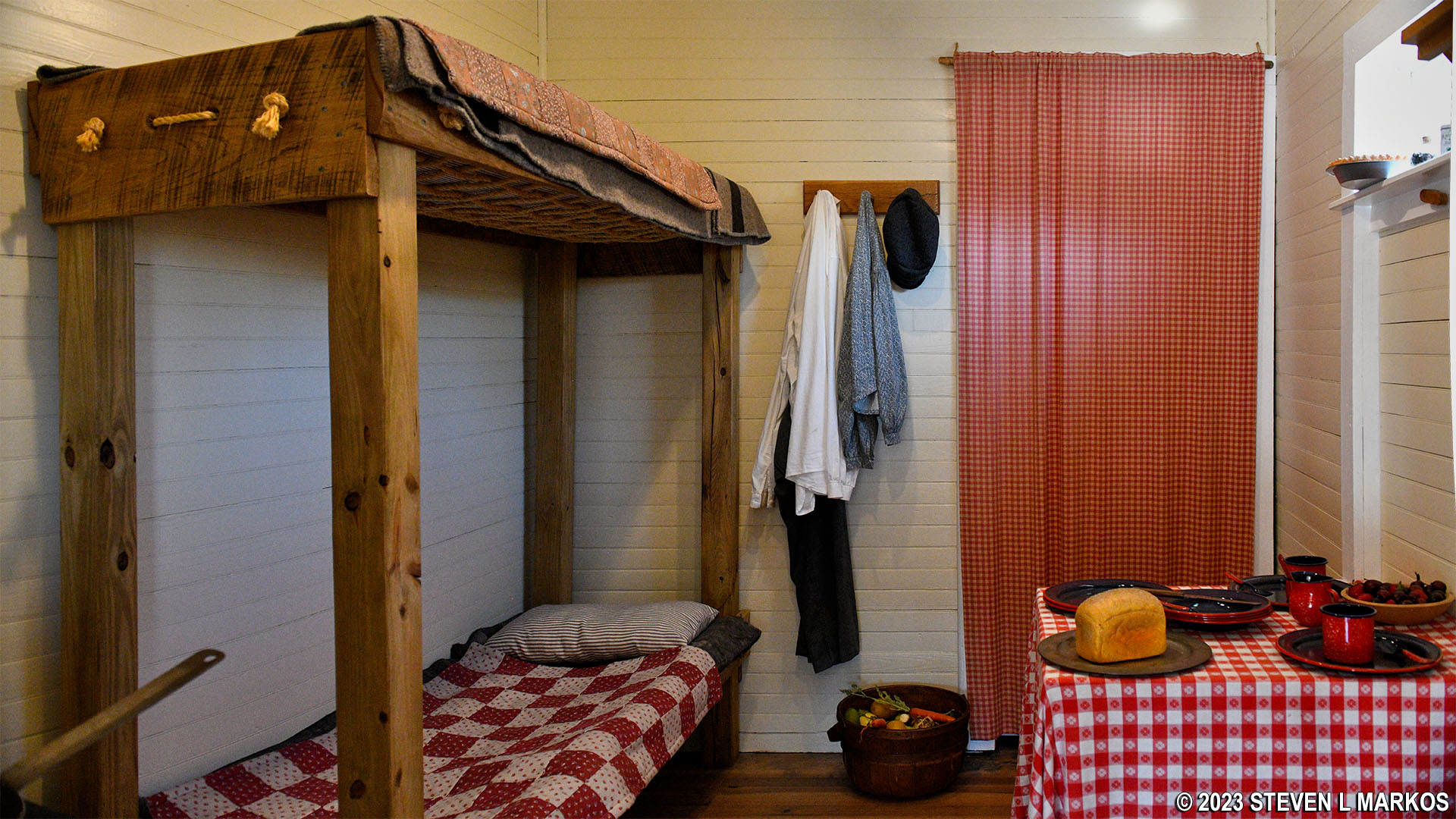
Room in the Roebling Aqueduct Toll House is decorated as a canal boat cabin, Lackawaxen, Pennsylvania
For information on the Roebling Delaware Aqueduct, wayside exhibits are located along the bridge.
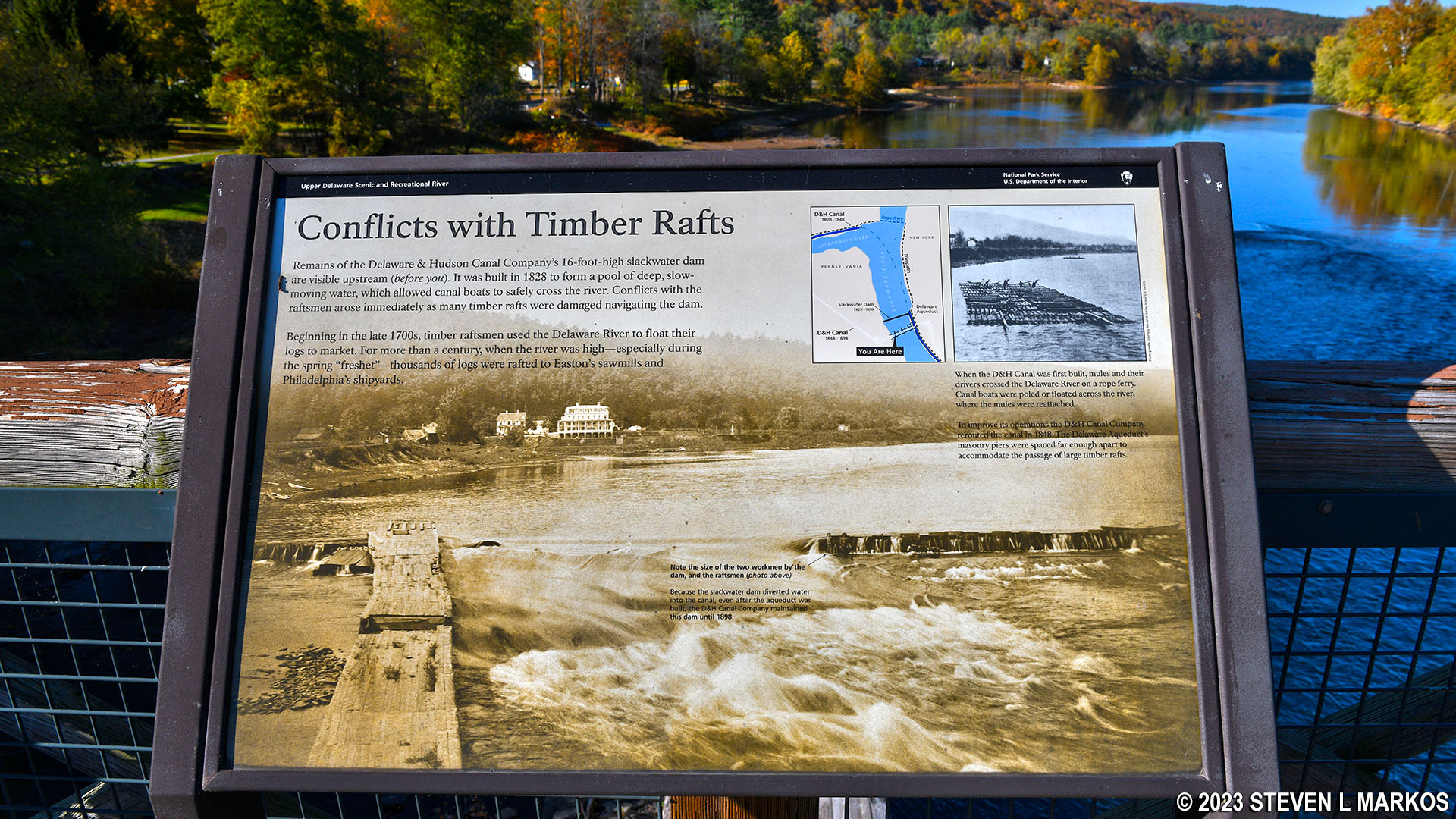
Wayside exhibit at the Roebling Delaware Aqueduct in Lackawaxen, Pennsylvania
One interesting feature of the bridge that can be seen on the upriver side are wooden structures called icebreakers. These help break up ice flows so that they don’t damage the piers. During a cold winter, the ice can be six feet thick.

Icebreakers installed on the Roebling Delaware Aqueduct in Lackawaxen, Pennsylvania
Prior to the aqueduct being built, to slow the Delaware River’s current so that the canal boats could cross a little easier, a 16-foot tall dam was built to create a slackwater pool. The remnants of the dam can be seen from the bridge. If you are floating down the river, be sure to avoid this obstacle, otherwise you’ll end up getting stuck and having to get out and pull your boat over the stones. I know this because I got stuck.

View of the remnants of the Delaware and Hudson Canal slackwater dam from the Roebling Aqueduct, Upper Delaware Scenic and Recreational River

Remnants of the Delaware and Hudson Canal slackwater dam just upstream from the Roebling Aqueduct, Upper Delaware Scenic and Recreational River
It is also possible to walk along the canal towpath from the Roebling Aqueduct for a third of a mile. When the canal was in operation, mules pulled the canal boats. However, mules won’t typically walk without somebody dragging them along, so a person, usually a member of the canal boat operator’s family (often a kid), had to walk along the path as well.

Section of the Delaware and Hudson towpath in Lackawaxen, Pennsylvania

Mule-drawn canal boat (photo take at Chesapeake and Ohio Canal National Historical Park)
With a few exceptions, use of any photograph on the National Park Planner website requires a paid Royalty Free Editorial Use License or Commercial Use License. See the Photo Usage page for details.
Last updated on September 22, 2026


