

East side of the Longfellow House in Cambridge, Massachusetts, Longfellow House – Washington’s Headquarters National Historic Site
Visitors to Longfellow House-Washington’s Headquarters National Historic Site can see the interior of the Longfellow House by guided tour only. Tours are typically held from late May until the end of October on Fridays through Mondays. There are multiple tour options, but the Standard Tour is the most popular. This is a one-hour tour that visits the first and second floors of the house. Tours are typically held every hour starting at 10 AM. For information on other tour options, see the Longfellow House Guided Tours web page here on National Park Planner.
While both Henry Longfellow and George Washington are associated with the house, the main focus of the Standard Tour is Longfellow and his family, and to a lesser extent, the house itself. All of the furnishings belonged to either Longfellow or his descendants who lived here after his death in 1882. The Washington-related history is much farther back in time, and there are no artifacts related to his stay.
The house, which was built in 1759 by John Vassall, was originally a 5,000-square-foot structure of Georgian design. In the 1790s, the new owner, Andrew Craigie, doubled its size with additions to the backside. The tour covers both the original and new sections of the house.
FIRST FLOOR
BLUE ENTRY
The Craigies built a driveway for carriages on the west side of the house. Instead of having guests walk back around to the front, they built an entrance and hallway that ran along the backside of the original house and connected to the library, a room in the original house that they had also extended when remodeling. The hallway connected to the new addition at the back of the house as well.

Blue Entry to the Longfellow House in Cambridge, Massachusetts, Longfellow House – Washington’s Headquarters National Historic Site
DINING ROOM
While the dining room was part of the original house, it was the kitchen until the Craigies remodeled and moved the kitchen to the new addition. The room is currently decorated as it would have been when Longfellow’s daughter Alice lived in the house after her father’s death in 1882.
The portrait on the wall of three girls is that of Longfellow’s daughters, Alice, Annie, and Edith. This was painted by Thomas Buchanan Read in 1859. On the left of the painting is a portrait of Fanny Appleton, Longfellow’s second wife and the woman he was married to when living in the house. On the right is a portrait of Fanny’s sister Mary. Both were painted by George Healy in 1834.
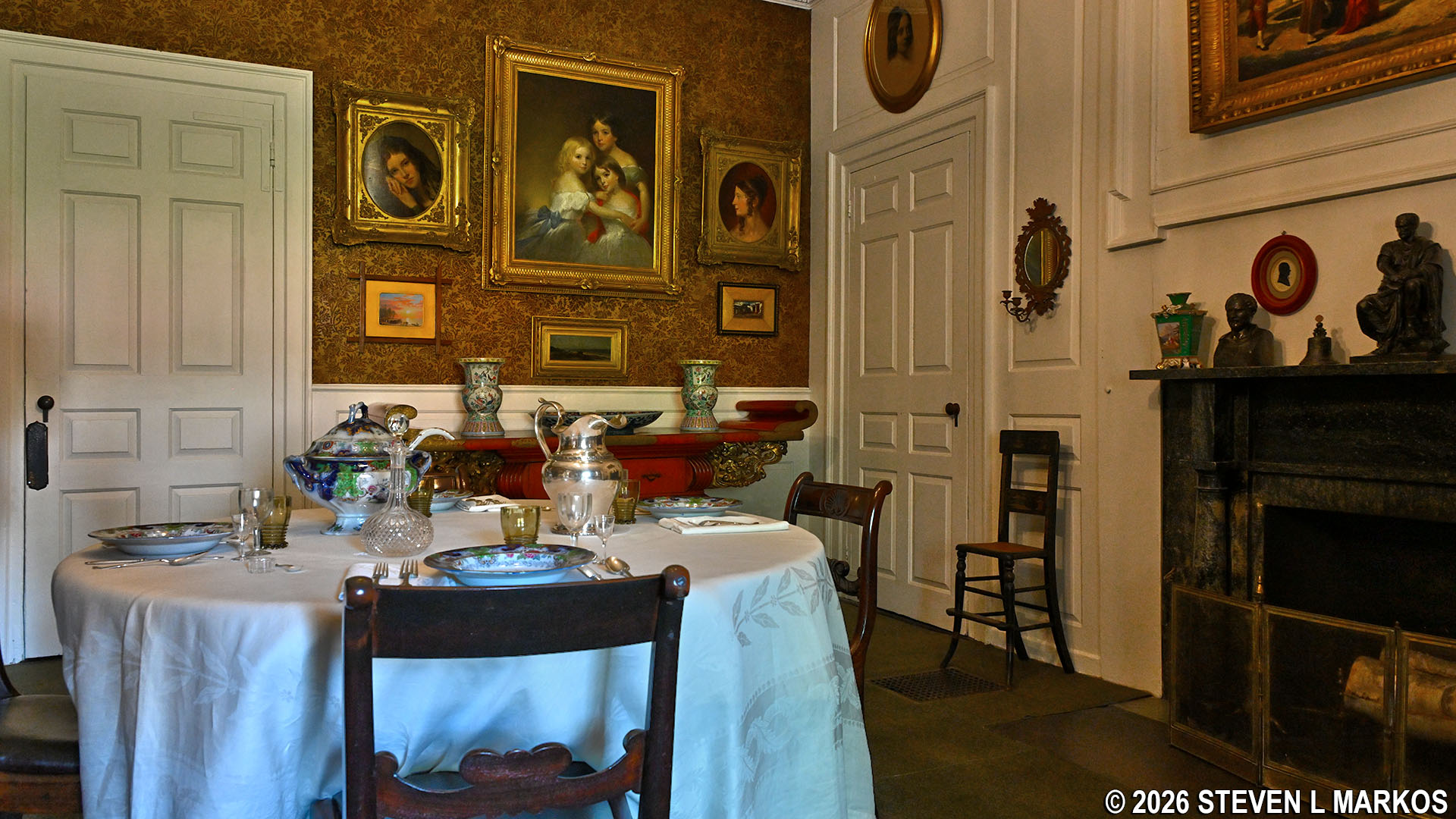
Dining room at the Longfellow House in Cambridge, Massachusetts, Longfellow House – Washington’s Headquarters National Historic Site
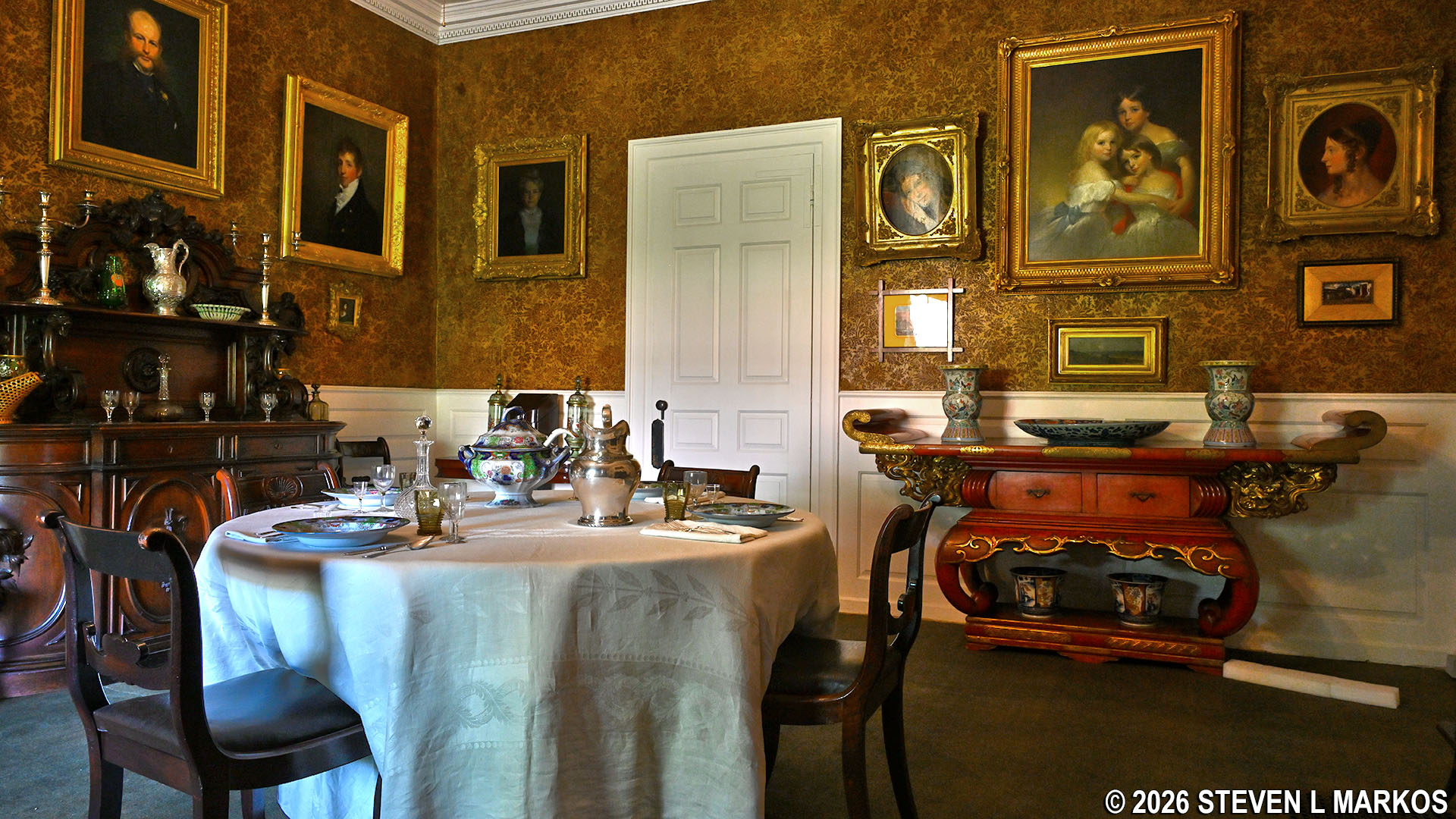
Dining room at the Longfellow House in Cambridge, Massachusetts, Longfellow House – Washington’s Headquarters National Historic Site
PARLOR
The parlor is located in the original house. It was used as a reception room by George Washington and the main entertainment room by the Craigies. Some of the furniture now on display was purchased by Longfellow from the Craigies. Most of the Asian decorations were bought around 1870 by Longfellow’s son Charles.
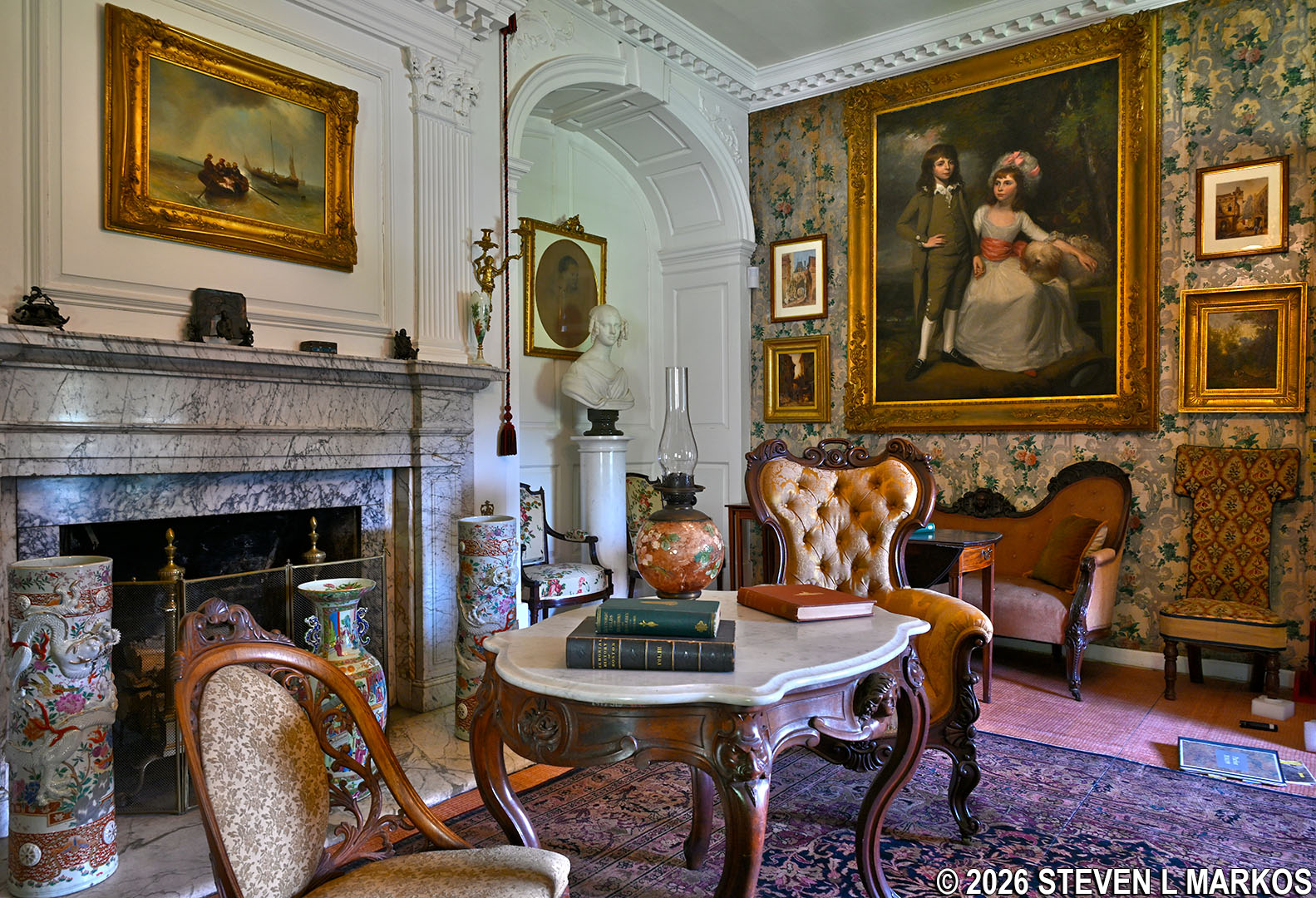
Parlor of the Longfellow House in Cambridge, Massachusetts, Longfellow House – Washington’s Headquarters National Historic Site
The portrait above the clock is that of Longfellow’s sons Charles (left) and Ernest (right).

Portrait of Charles and Ernest Longfellow, Longfellow House – Washington’s Headquarters National Historic Site
ORIGINAL ENTRANCE AND STAIRCASE TO THE UPPER FLOOR
The original entrance to the house is on Brattle Street. The bust of George Washington was purchased and placed in the front entrance foyer by Henry Longfellow. The Dutch clock from the 1700s was purchased by him in 1877. This is not, however, the clock that inspired his poem, The Old Clock on the Stairs. That clock was one from his childhood, not to mention the poem was written in 1843.
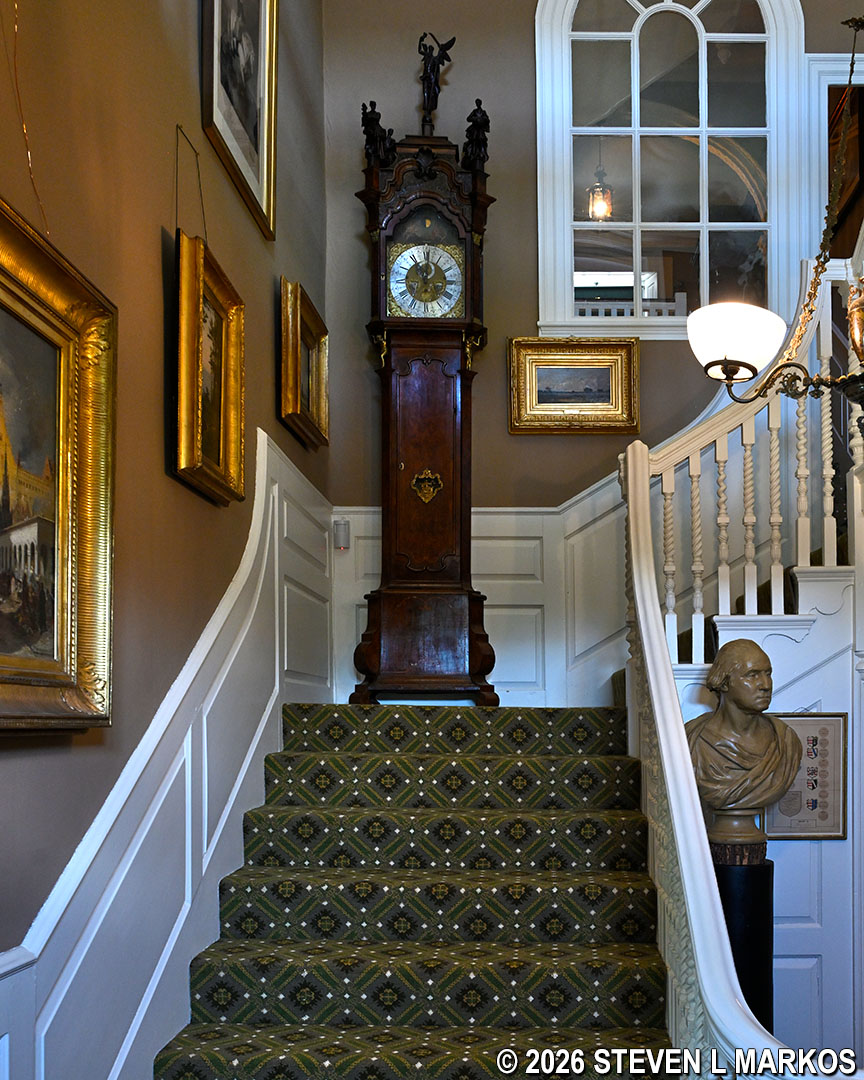
Original entrance foyer of the Longfellow House in Cambridge, Massachusetts, Longfellow House – Washington’s Headquarters National Historic Site
STUDY
The room now designated as the Study was used as a dining room and office by George Washington. Longfellow used it as an office where he did his writing and a place where his male guests would gather to talk. The portrait of him was done by his son Ernest, who became a painter.
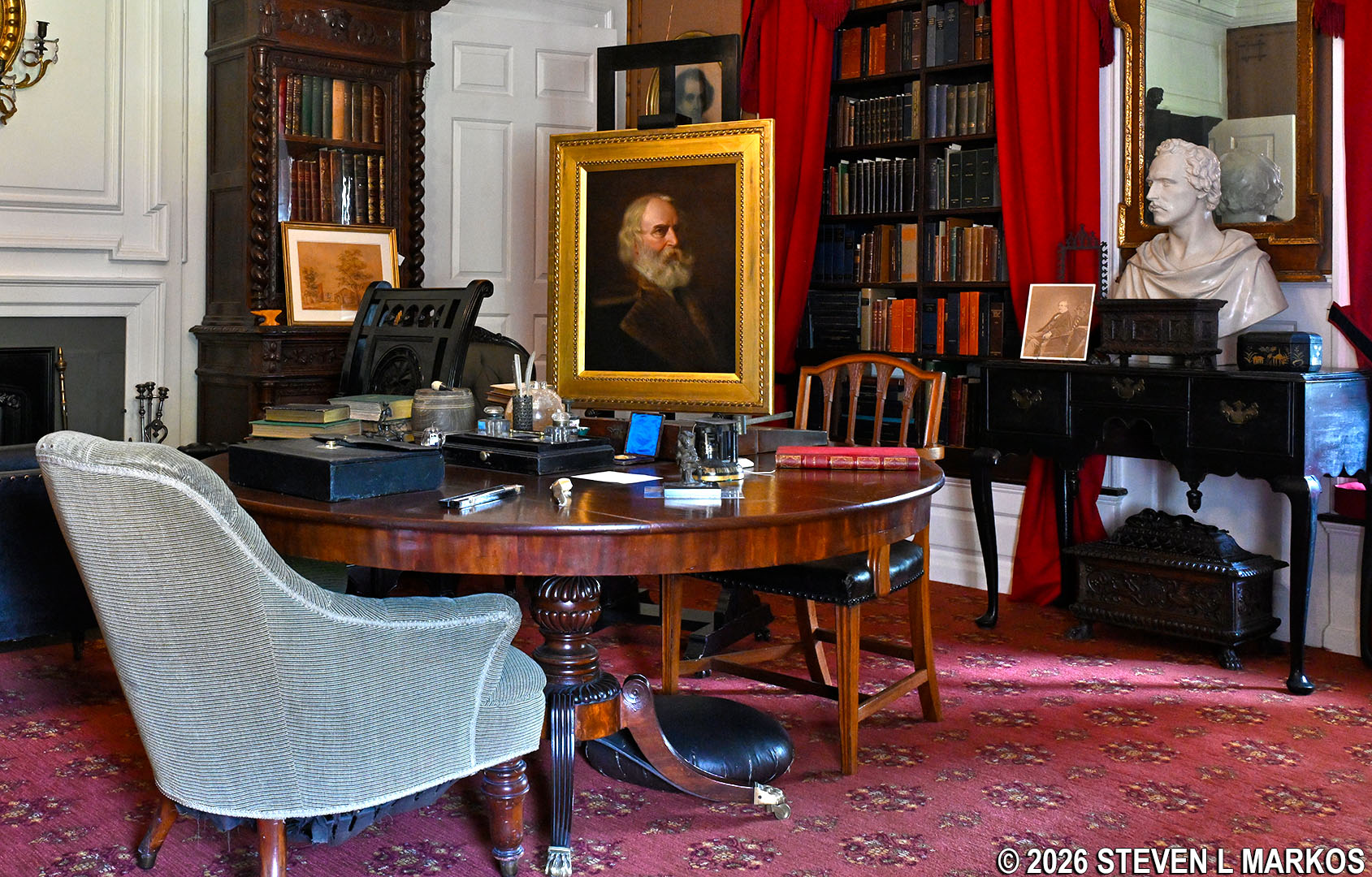
Longfellow’s study at the Longfellow House in Cambridge, Massachusetts, Longfellow House – Washington’s Headquarters National Historic Site
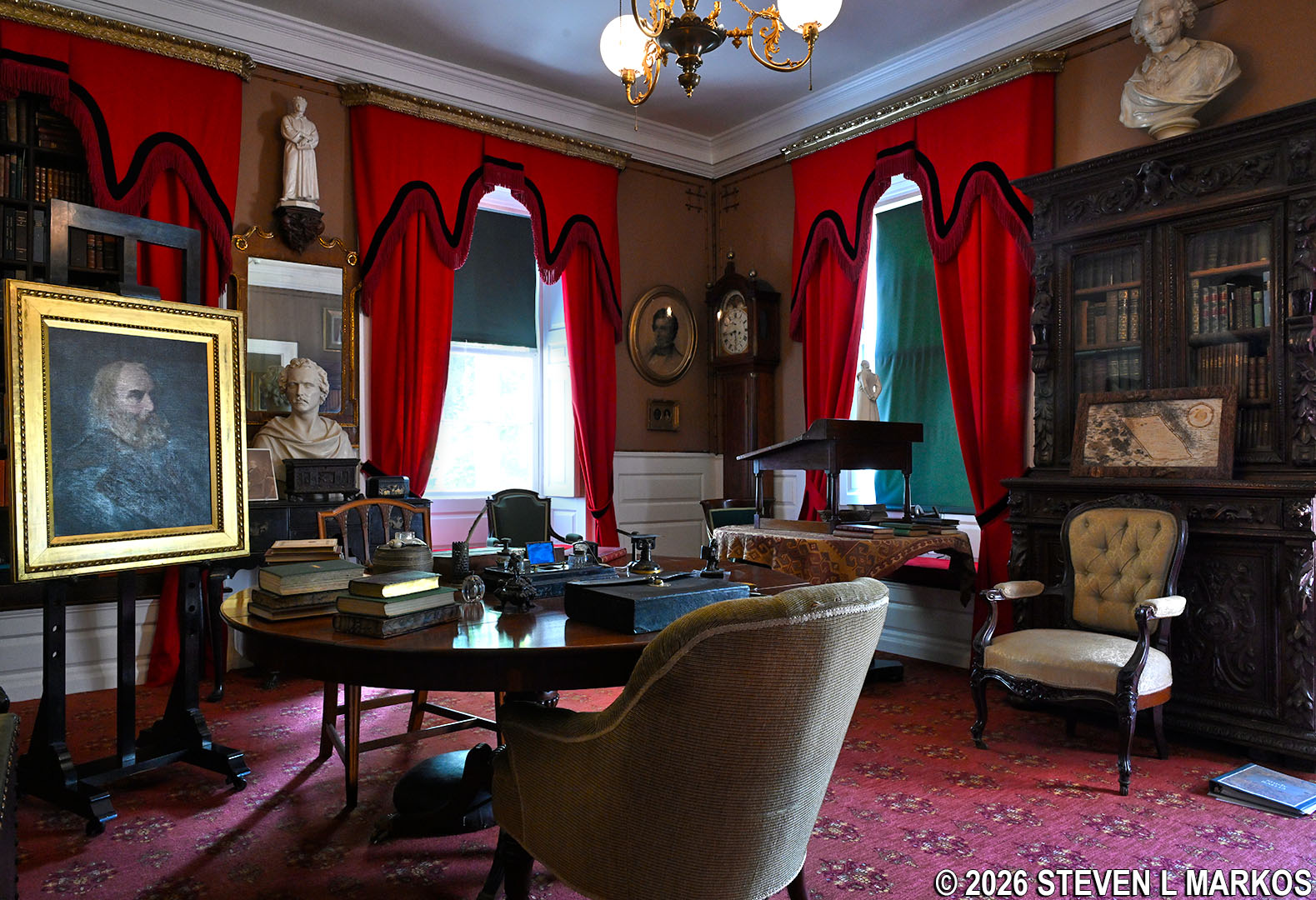
Longfellow’s study at the Longfellow House in Cambridge, Massachusetts, Longfellow House – Washington’s Headquarters National Historic Site
LIBRARY
The library was once smaller and was contained within the original walls of the house, but it was extended as part of the 1790s additions done by the Craigies, who then used it as a ballroom. George Washington used it as his staffs’ office. It was the Longfellows who turned it into a library, a music room, and a room for general family activities, parties, and dances.
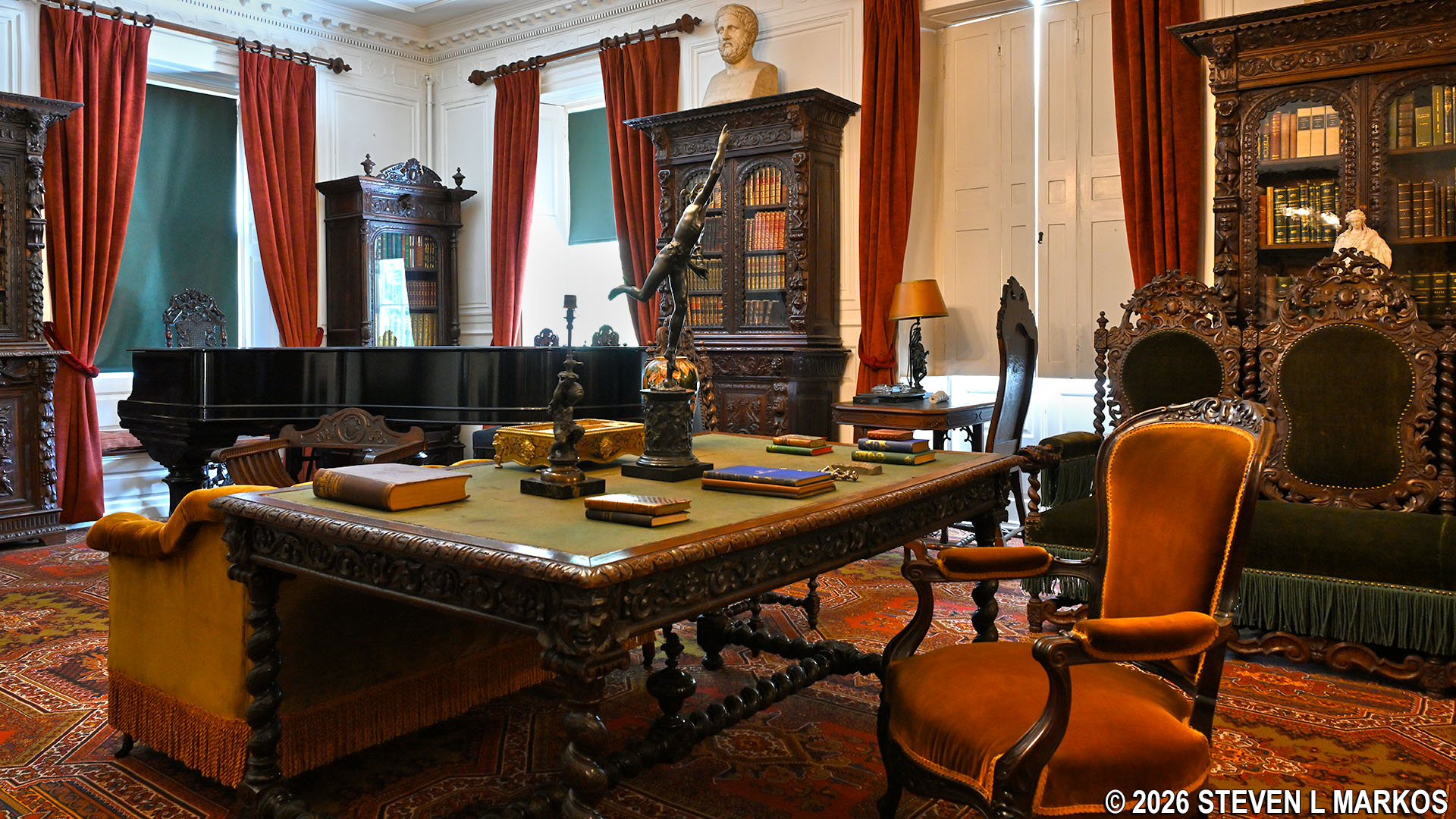
Library at the Longfellow House in Cambridge, Massachusetts, Longfellow House – Washington’s Headquarters National Historic Site
This is also the room where tragedy struck on July 9, 1861. Fanny was working with hot wax when her dress caught on fire. By the time Henry could put out the flames, she was badly burned; she died the next morning. Their daughter Anne later said that it was not the wax that caused the fire, but a self-lighting match that fell on the floor and lit. Henry was also seriously injured while attempting to put out the flames. The beard he would become known for was grown because his face was so burned that he could no longer shave.
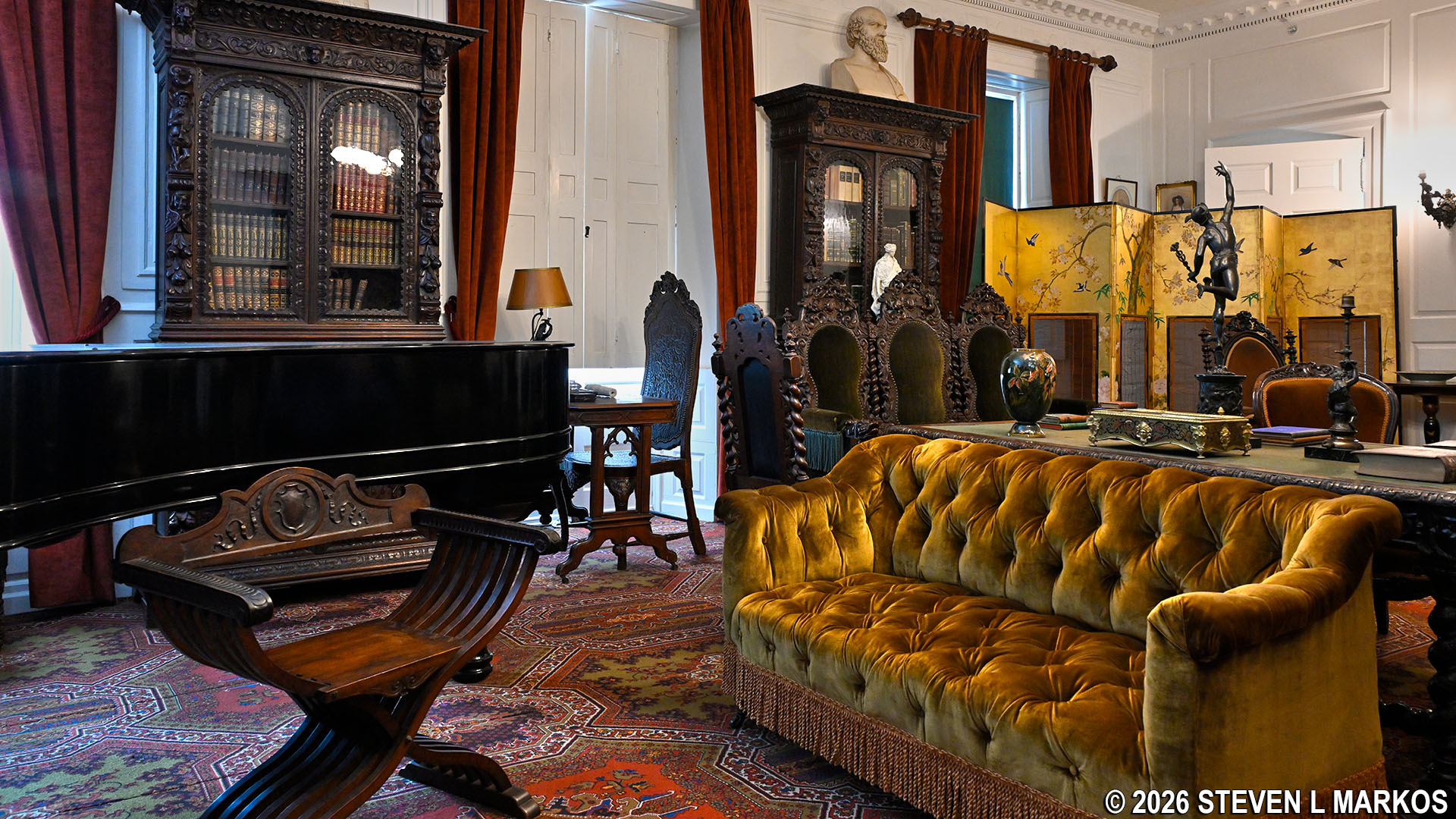
Library at the Longfellow House in Cambridge, Massachusetts, Longfellow House – Washington’s Headquarters National Historic Site
KITCHEN
The kitchen of the Longfellow House is located on the lower floor of the ell that the Craigies added to the back of the house in the early 1790s. This floor housed other servant-related rooms as well, such as the pantry and the laundry room. The ell was connected to the main house via the Blue Entry Hall.
The kitchen has been updated many times. In the room today are the original 1790s oven, and coal stove from 1901, and a 1950s kitchenette.
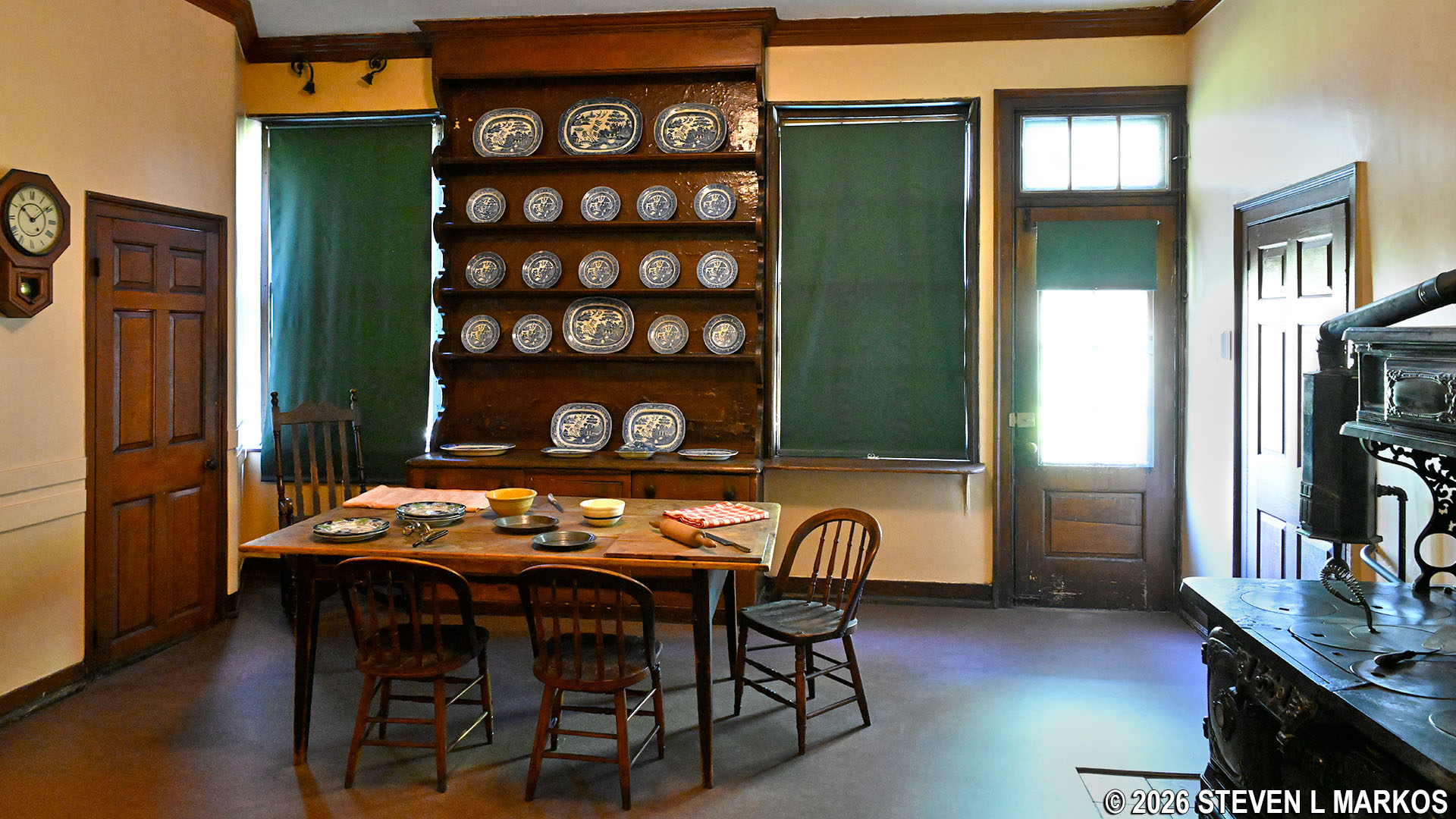
Kitchen of the Henry Longfellow House in Cambridge, Massachusetts, Longfellow House – Washington’s Headquarters National Historic Site
SERVANT’S DINING ROOM AND PANTRY
The Servant’s Dining Room, which is also located in the 1790s ell, is now used as a rotating exhibit gallery (notice the servant bell hanging near the ceiling). This is the last room visited on the tour, and participants are welcome to stay as long as they would like to read through the information. When I visited, the theme was the American Revolution.
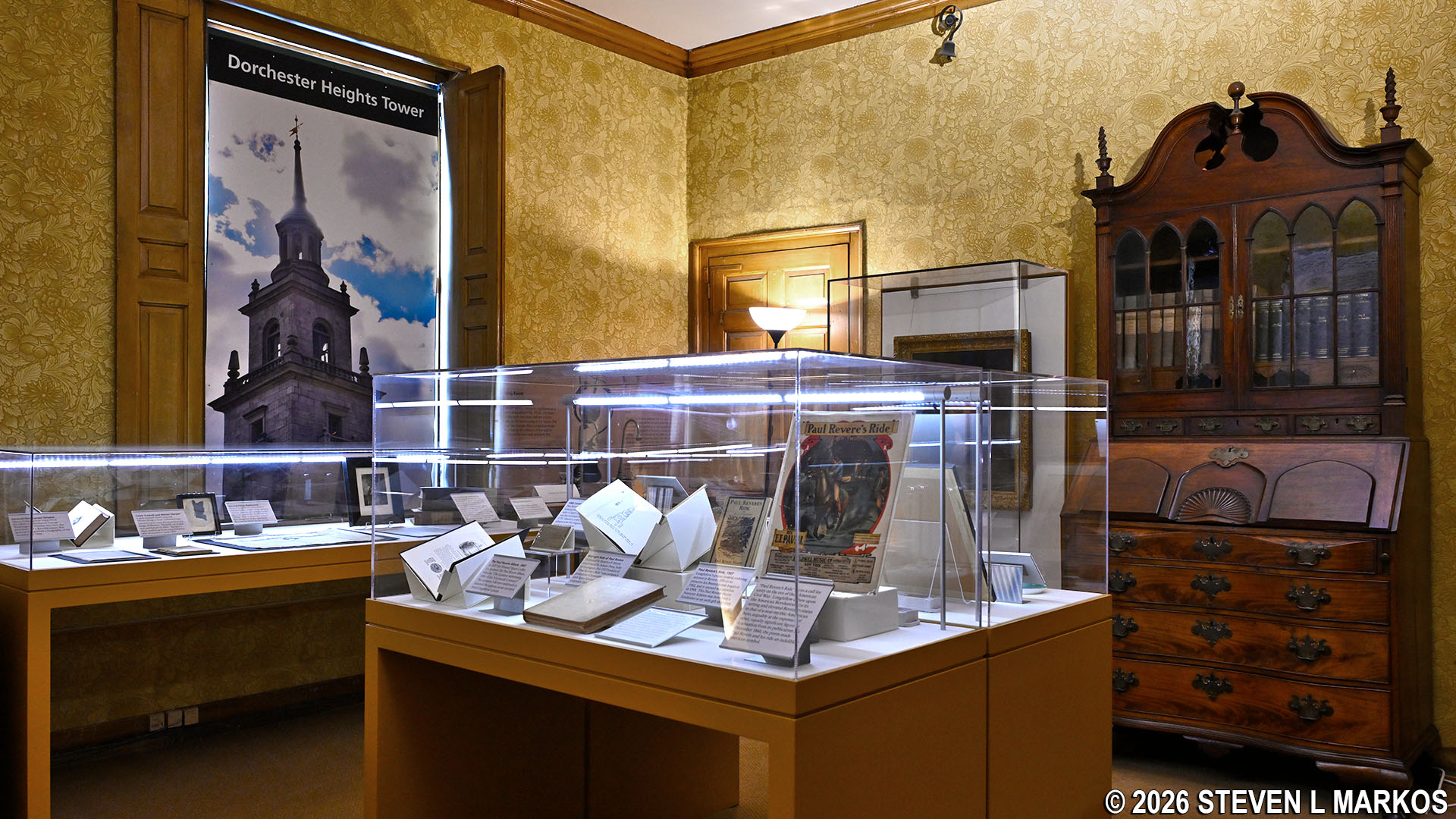
Temporary Exhibit Gallery in the Servant’s Dining Room of the Longfellow House in Cambridge, Massachusetts, Longfellow House – Washington’s Headquarters National Historic Site
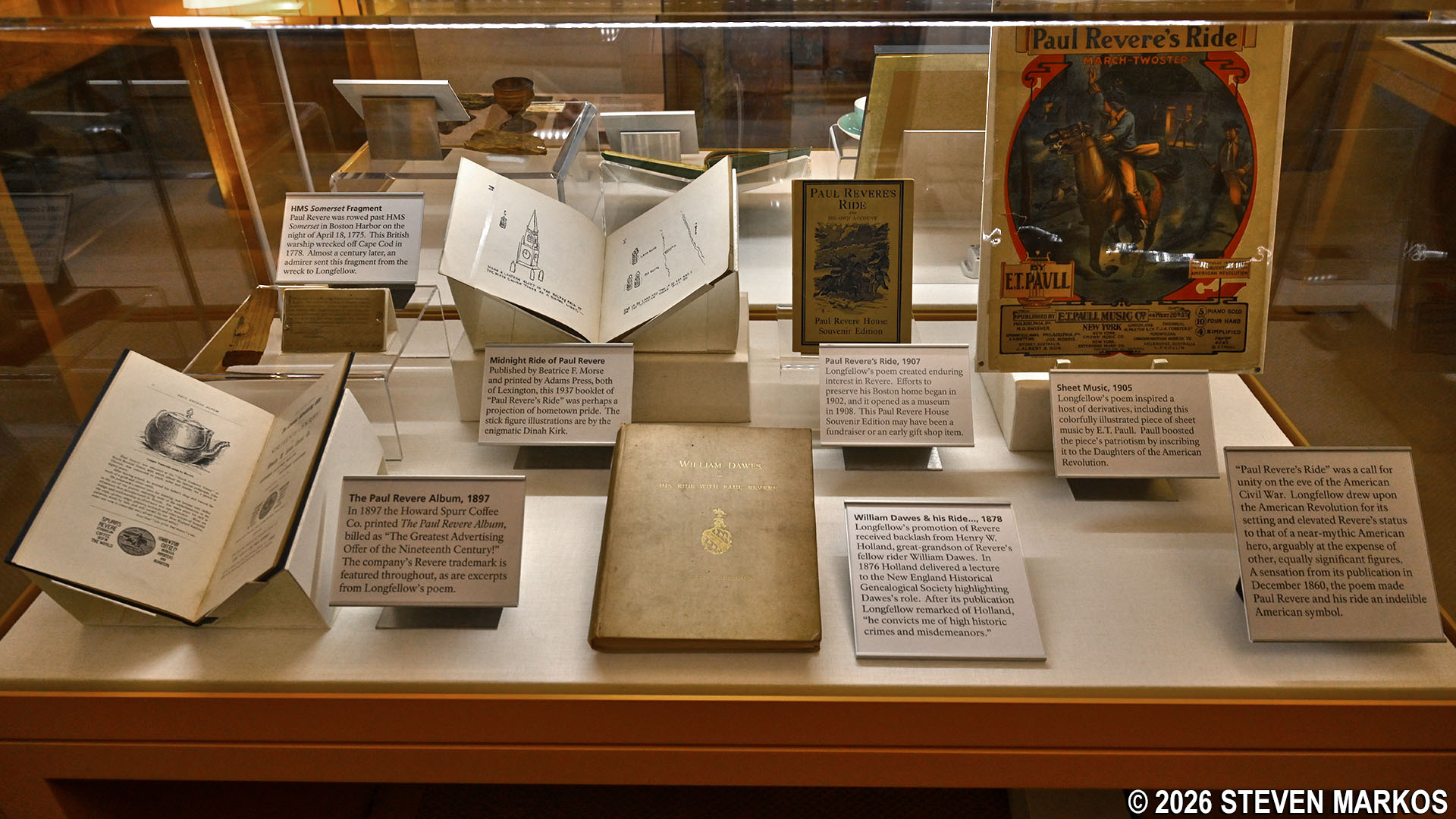
Exhibits in the Temporary Exhibit Gallery now housed in the Servant’s Dining Room of the Longfellow House in Cambridge, Massachusetts, Longfellow House – Washington’s Headquarters National Historic Site
SECOND FLOOR
LONGFELLOW’S BEDROOM
What is today called the Gold Ring Room due to a gold ring hanging above the bed is the room that Henry and Fanny Longfellow used as their master bedroom when they owned the house. The furniture was given to them by Fanny’s father when they got married. Most of the Longfellow children were born in this room, as hospital births were not common. This is also where Fanny died after being burned downstairs, and where Henry also died in 1882.
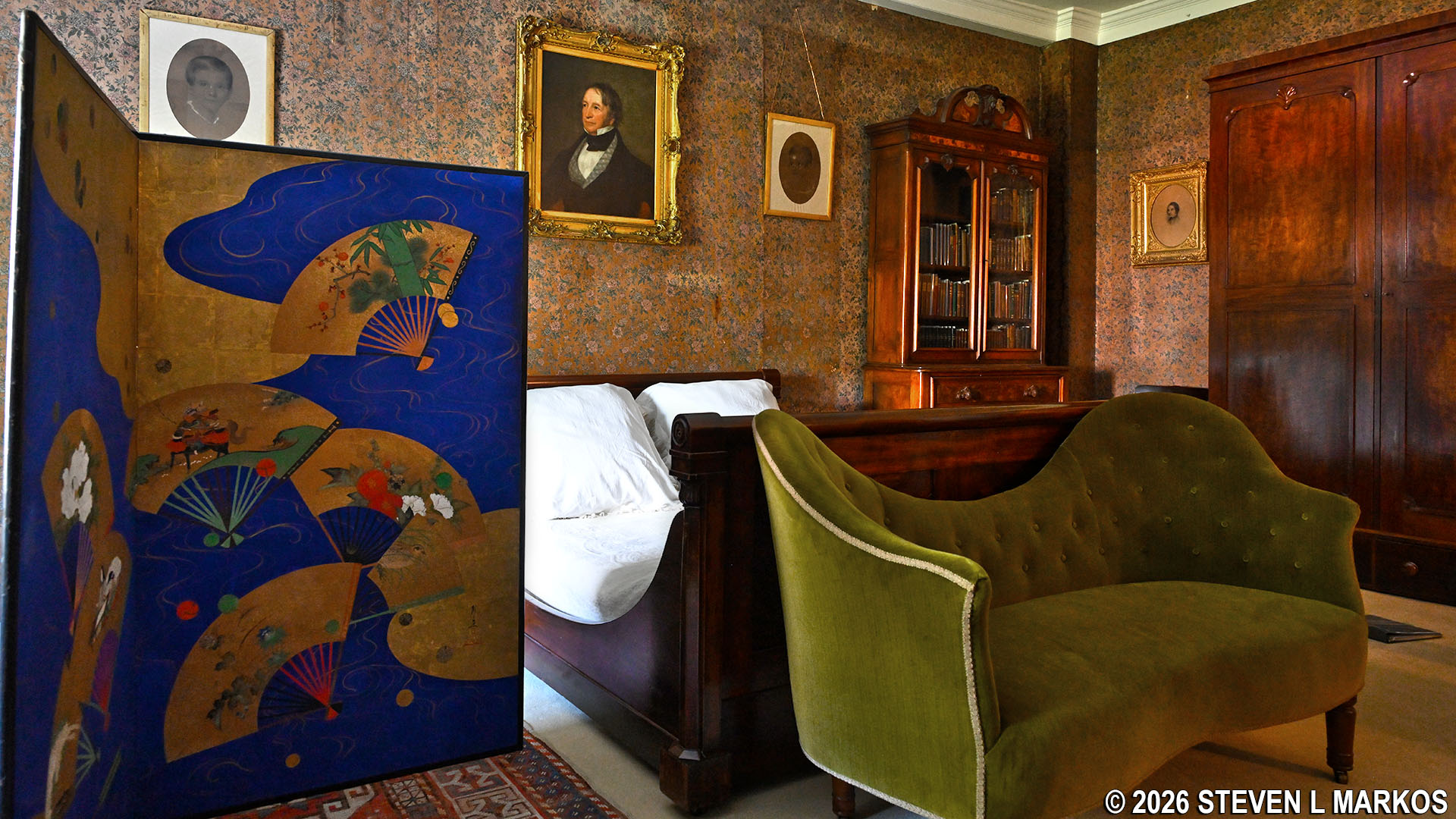
Henry and Fanny Longfellow’s master bedroom at their house in Cambridge, Massachusetts, Longfellow House – Washington’s Headquarters National Historic Site
GUEST BEDROOM
What was eventually used as the guest bedroom after Longfellow purchased the house in 1843 is actually the room he rented from Elizabeth Craigie in 1837 when he was a professor at Harvard. It is also rumored to be the room used by George Washington when he used the house as his headquarters from July 1775 to April 1776.
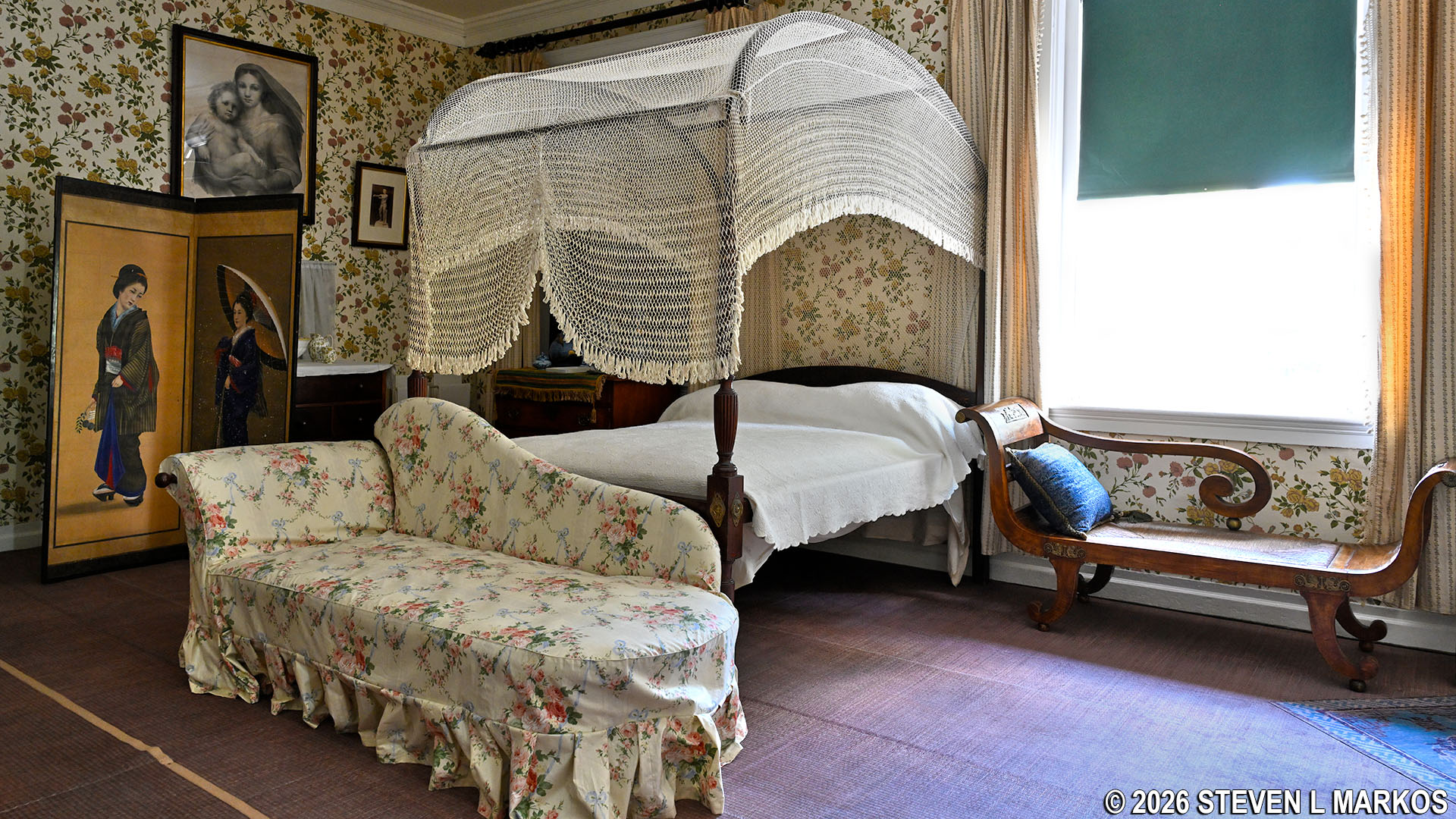
Guest Bedroom of the Longfellow House in Cambridge, Massachusetts, Longfellow House – Washington’s Headquarters National Historic Site
ALICE’S STUDY
When Henry Longfellow rented from Elizabeth Craigie, what is now known as Alice’s Study was one of the rooms that was part of the rental agreement. He used it as his study and library. Once he purchased the house, the room was used as a nursery, and most of his children slept here when they were young.
When Longfellow died, his estate was split among his five living children. The only one who was not married was Alice, so she got the Longfellow House as part of her inheritance. Like her father, Alice also used this room as a study.
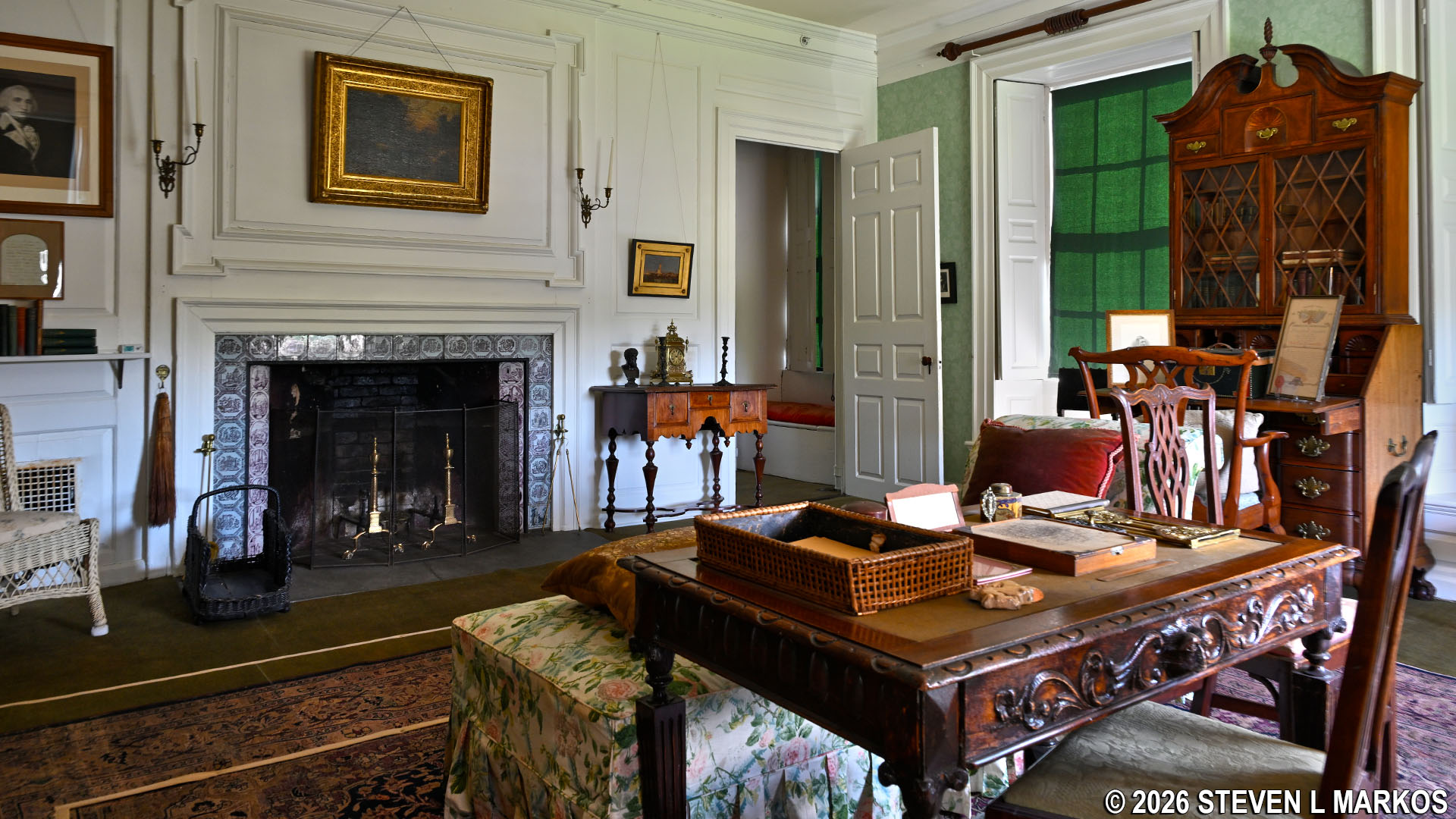
Alice Longfellow’s Study in the Longfellow House in Cambridge, Massachusetts, Longfellow House – Washington’s Headquarters National Historic Site
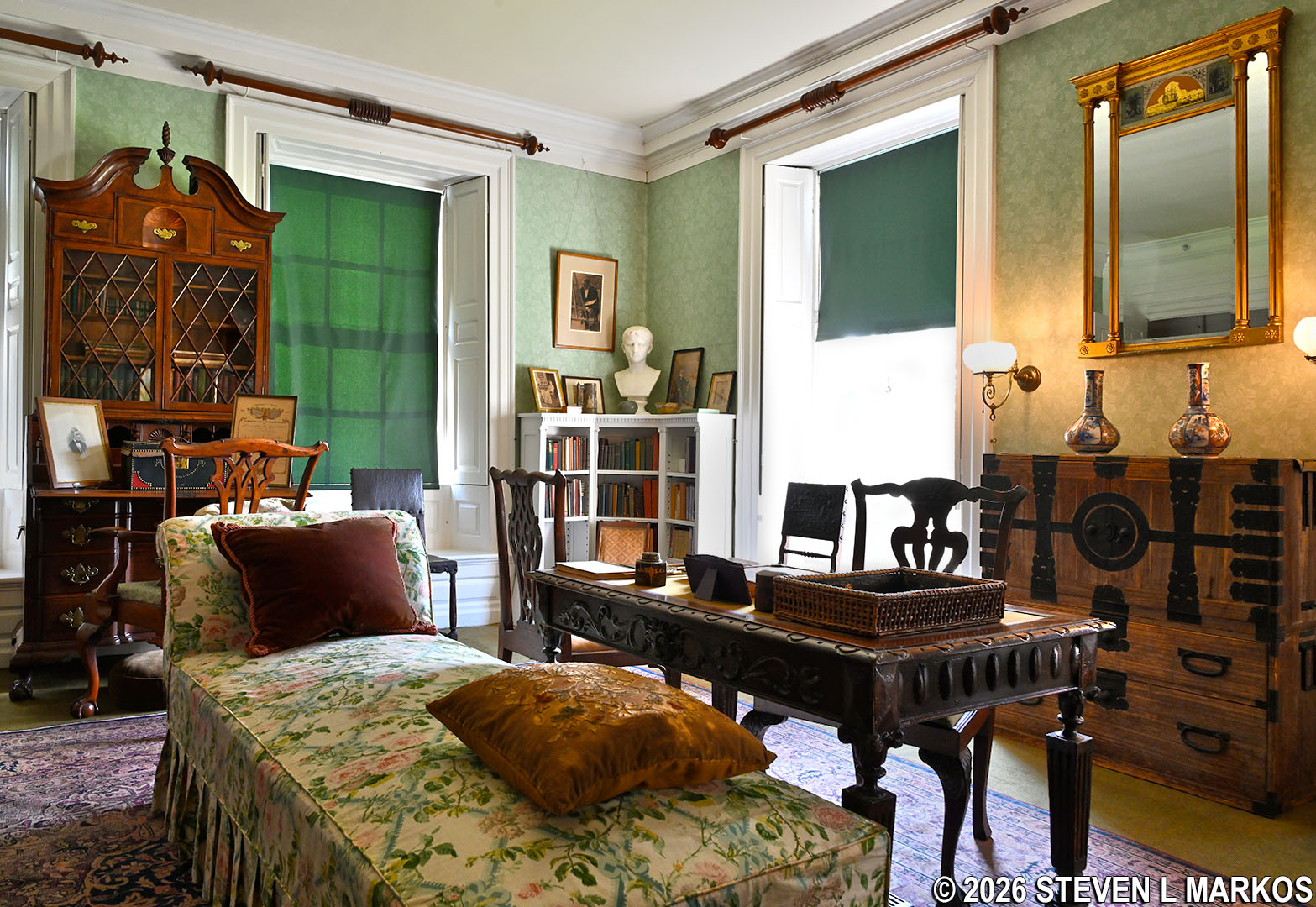
Alice Longfellow’s Study in the Longfellow House in Cambridge, Massachusetts, Longfellow House – Washington’s Headquarters National Historic Site
ALICE’S BEDROOM
Alice used the room across the hall from her study as her bedroom. Her younger sister Annie was born in this room.
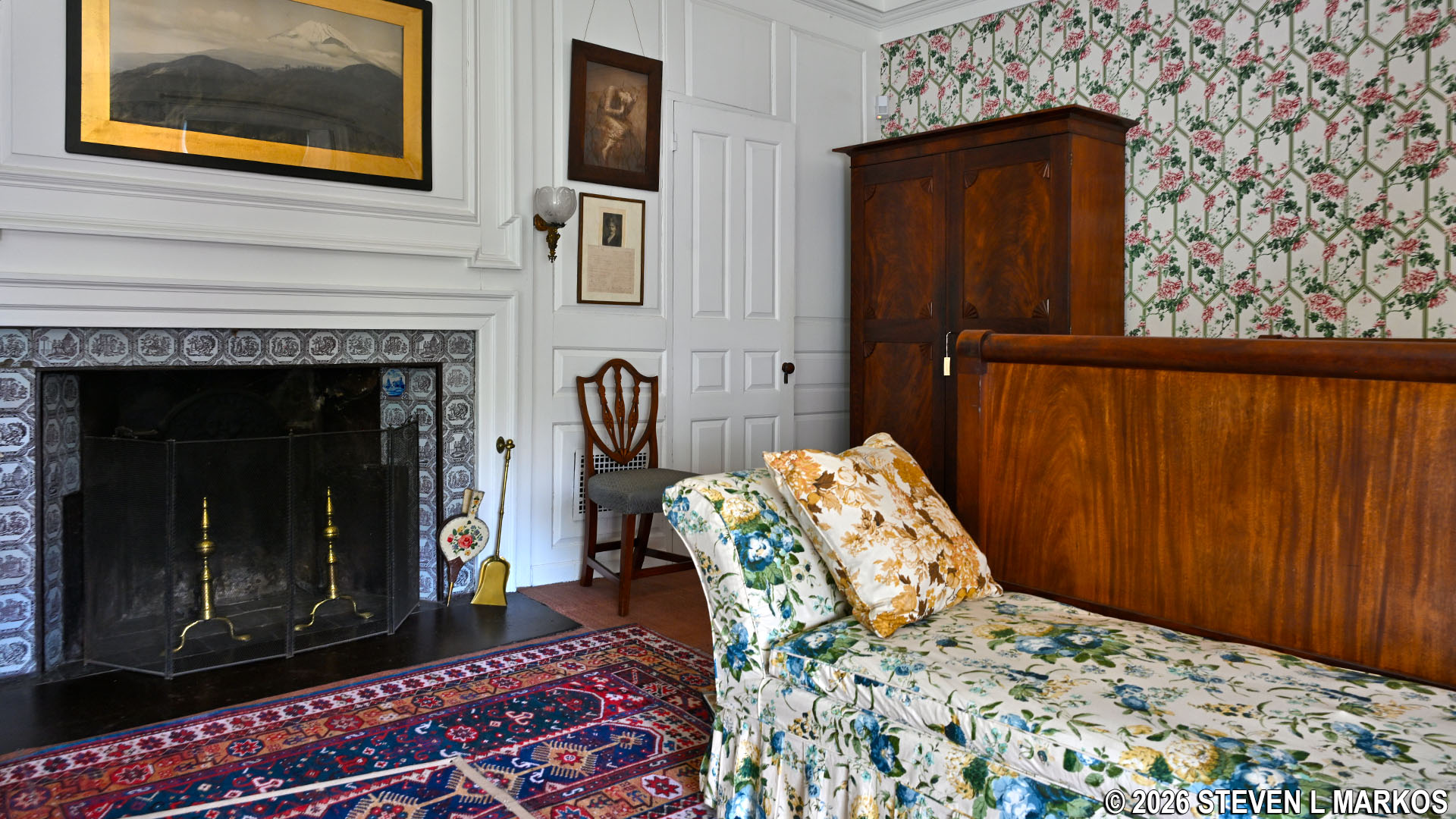
Alice Longfellow’s bedroom in the Longfellow House in Cambridge, Massachusetts, Longfellow House – Washington’s Headquarters National Historic Site
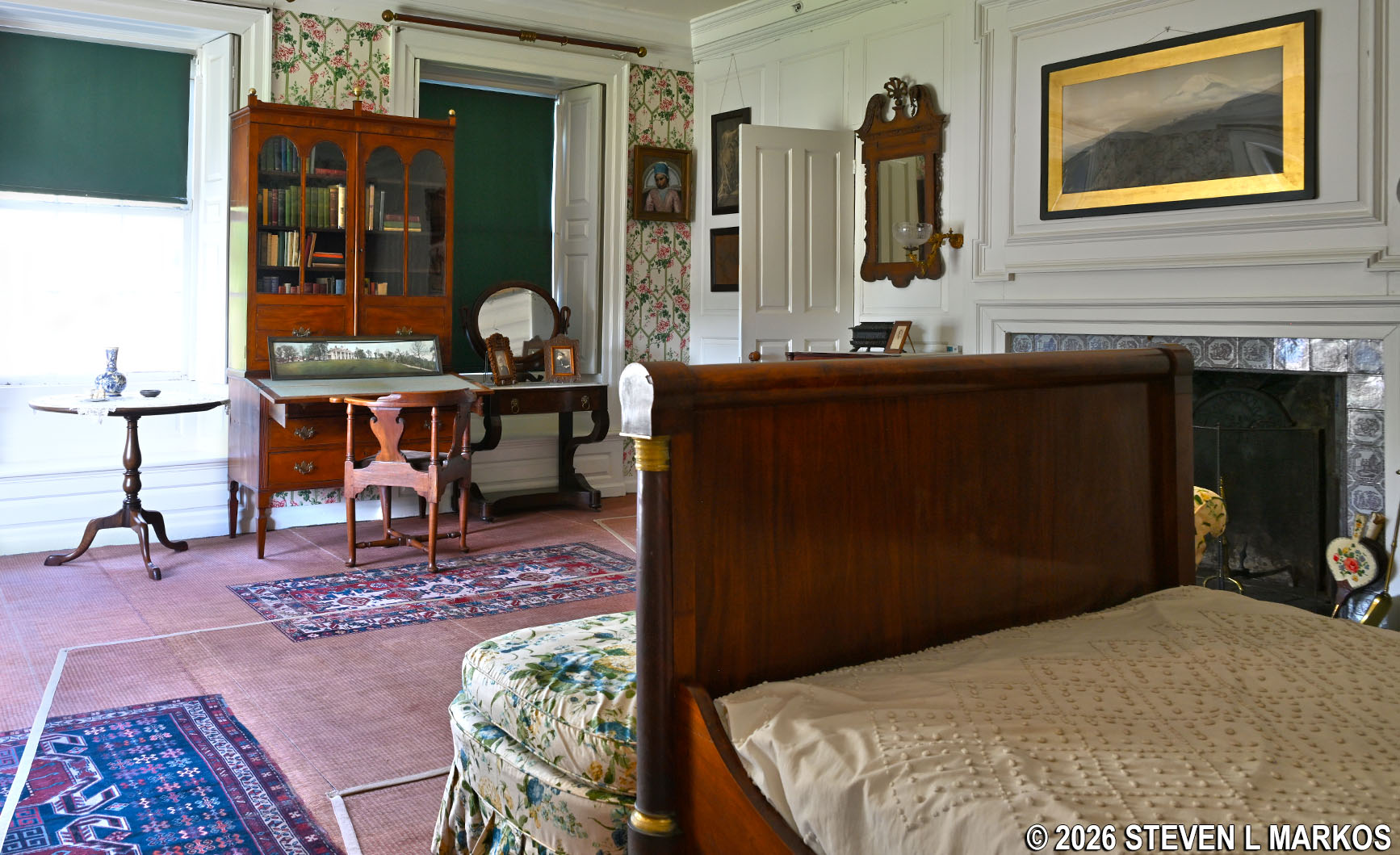
Alice Longfellow’s bedroom in the Longfellow House in Cambridge, Massachusetts, Longfellow House – Washington’s Headquarters National Historic Site
With a few exceptions, use of any photograph on the National Park Planner website requires a paid Royalty Free Editorial Use License or Commercial Use License. See the Photo Usage page for details.
Last updated on March 29, 2026


